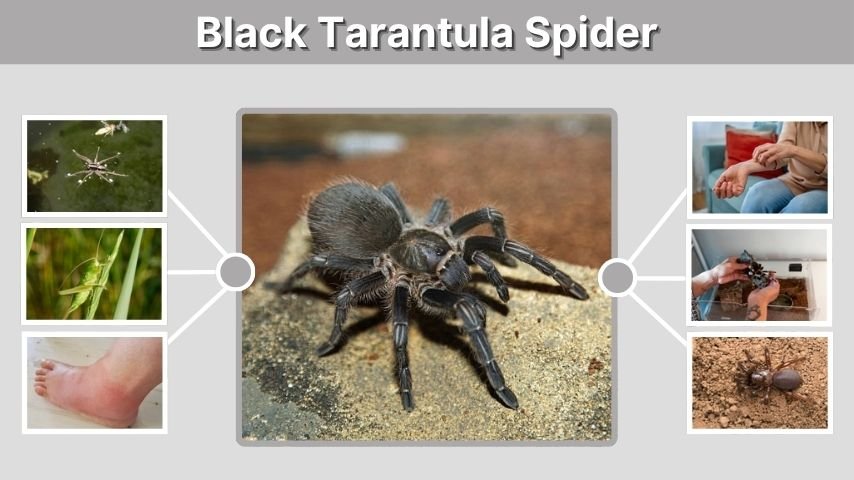
A black tarantula spider can look scary because of its large body, hairy legs, and dark color. However, most tarantulas are shy spiders that prefer hiding instead of attacking. People often search for black tarantulas to identify one at home, compare it with a black widow, or find one for sale. This guide explains what a black tarantula is, how dangerous it may be, and what buyers should know.
What Is a Black Tarantula Spider?
A black tarantula spider is not always one single species. The phrase usually describes any dark-colored tarantula with a large, hairy body. Some species are fully black, while others may appear black with brown, orange, white, or yellow markings.
Tarantulas belong to the family Theraphosidae. They are known for their thick bodies, strong legs, and slow, deliberate movement. Unlike small house spiders, tarantulas are usually easy to notice because of their size and hair-covered appearance.
Many people use search terms like “tarantula spider black,” “black spider tarantula,” and “tarantula black spider” when they find a large dark spider and want to know whether it is dangerous. In many cases, the spider may be a tarantula, wolf spider, trapdoor spider, or another large ground-dwelling species.
Common Features of Black Tarantulas
A black tarantula usually has:
- A large, rounded body
- Thick, hairy legs
- Dark black, brown, or charcoal coloring
- Slow movement unless disturbed
- A tendency to hide in burrows, cracks, or dark corners
- Noticeable fangs, though they are not used unless the spider feels threatened
Tarantulas are mostly nocturnal. This means they are more active at night and usually stay hidden during the day.
How to Identify a Black Spider That Looks Like a Tarantula
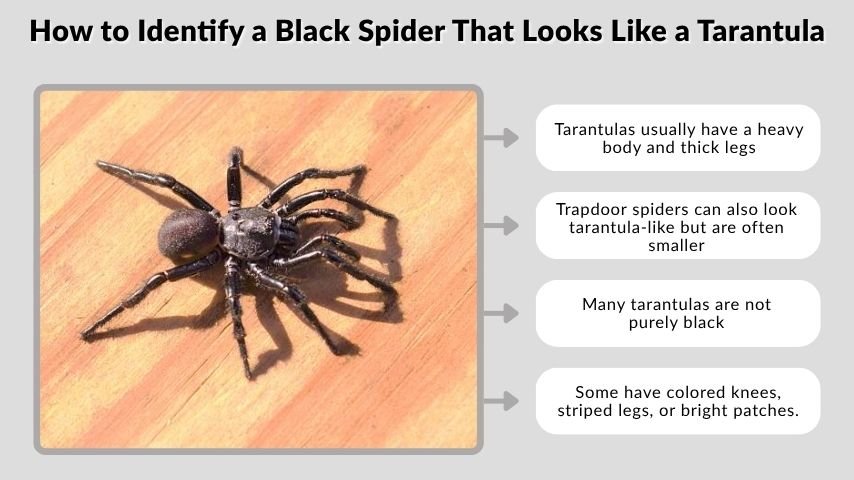
Not every big black hairy spider is a tarantula. Many spiders can look similar at first glance, especially if you see them quickly or in poor lighting.
Look at Body Shape and Movement
Tarantulas usually have a heavy body and thick legs. They often move slowly unless they are startled. A wolf spider, on the other hand, may run much faster and has a slimmer shape. Trapdoor spiders can also look tarantula-like but are often smaller and live near silk-lined burrows.
If the spider is very fast, small, and glossy, it may not be a tarantula. If it is large, hairy, and slow-moving, it is more likely to be a tarantula or a tarantula-like ground spider.
Check the Color Pattern
Searches such as “black and orange spider tarantula,” “black and white tarantula spider,” and “black and yellow tarantula spider” show that people notice color markings. Many tarantulas are not purely black. Some have colored knees, striped legs, or bright patches.
A spider with orange knees or reddish hairs may be a species often kept in the pet trade. A black spider with a red hourglass marking on the underside is more likely to be a black widow, not a tarantula.
Consider the Location
Location-based searches include “black tarantula spider Texas,” “black tarantula spider Arizona,” “black tarantula spider California,” and “tarantula spider black in GA.” Tarantulas are more common in warm, dry, or semi-dry regions. In the United States, they are often associated with the Southwest, including Texas, Arizona, New Mexico, and parts of California.
In places where tarantulas are not common, a large black spider may be a wolf spider, fishing spider, or trapdoor spider instead.
Is a Black Tarantula Spider Poisonous?
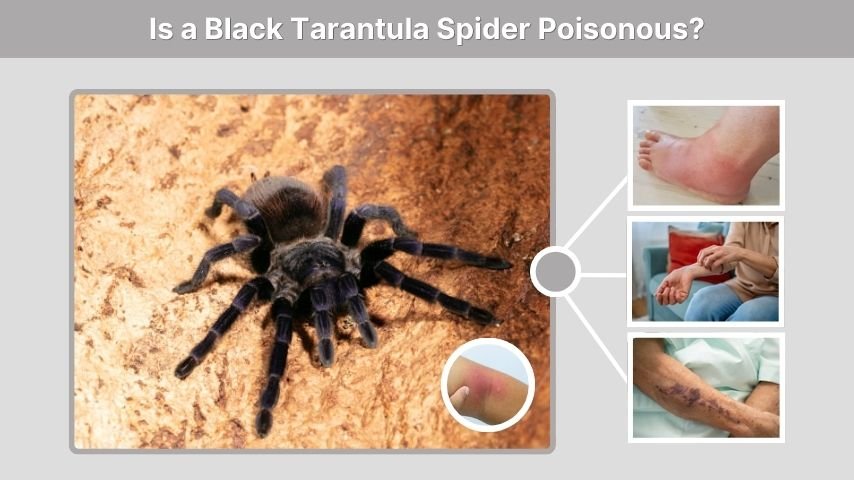
Many people ask whether a black tarantula spider is poisonous, but “venomous” is the more accurate word. Poison is harmful when touched or eaten, while venom is injected through a bite. Tarantulas are venomous, but most species are not considered deadly to healthy adults.
A tarantula bite may feel like a bee sting. It can cause pain, redness, swelling, and irritation. The bigger concern with many New World tarantulas is not the bite but their urticating hairs. These tiny defensive hairs can irritate the skin, eyes, and nose.
Possible Bite Symptoms
A black tarantula spider bite may cause:
- Local pain near the bite area
- Mild swelling or redness
- Itching or irritation
- A burning feeling
- Rare allergic reactions
- Stress or panic because of the spider’s size
Medical attention is important if symptoms are severe, the bite victim is a child, or there are signs of an allergic reaction such as difficulty breathing, dizziness, or swelling of the face.
Black Widow Spider vs Tarantula: Key Differences
The keywords “tarantula black widow spider,” “black widow spider tarantula,” and “black widow spider vs tarantula” suggest that many readers confuse these spiders. They are very different in appearance, behavior, and medical importance.
Appearance Difference
A tarantula is large, hairy, and heavy-bodied. A black widow is much smaller, smoother, and shinier. Female black widows are usually recognized by a red hourglass marking on the underside of the abdomen.
Tarantulas may look more frightening because of their size, but black widows are generally more medically significant because their venom can cause serious symptoms.
Bite Risk Difference
Tarantulas usually bite only when handled, trapped, or threatened. They often try to escape first. Black widows are also not aggressive, but their bites can cause intense pain, muscle cramps, sweating, nausea, and other symptoms.
If you suspect a black widow bite, it is safer to contact a doctor or poison control center. If you suspect a tarantula bite, clean the area and monitor symptoms, but seek medical help if pain, swelling, or allergic signs become severe.
Which One Is More Dangerous?
A black widow is generally more dangerous to humans than a tarantula. A tarantula is larger and more dramatic-looking, but most tarantula bites are not life-threatening. Black widow bites are rarely fatal, but they can be painful and medically serious.
Big Black Spider That Looks Like a Tarantula
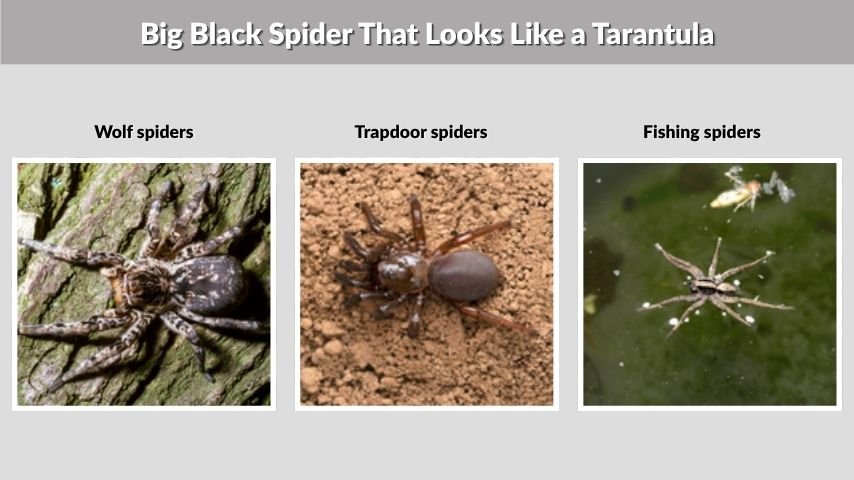
A “big black spider that looks like a tarantula” may be one of several species. Before assuming it is dangerous, observe from a safe distance.
Possible Lookalikes
Common tarantula lookalikes include:
- Wolf spiders
- Trapdoor spiders
- Fishing spiders
- Large house spiders
- Funnel-web-like ground spiders in some regions
- Male tarantulas wandering during mating season
Wolf spiders are often mistaken for baby tarantulas because they are hairy and brown or black. Trapdoor spiders can look like small tarantulas and may have a strong, compact body.
What to Do If You Find One
Do not pick it up with bare hands. Use a clear container and a piece of cardboard if you need to move it. If you are unsure about the species, take a clear photo from a safe distance and ask a local pest expert, wildlife group, or experienced arachnid keeper.
Avoid crushing large spiders unless there is an immediate safety concern. Many spiders help control insects and are not interested in humans.
Black Tarantula Spider for Sale in Pakistan
The keyword “black tarantula spider for sale in Pakistan” has clear buying intent. Some people want tarantulas as exotic pets because they are quiet, interesting, and do not need daily interaction. However, buying a tarantula should not be an impulse decision.
Things to Check Before Buying
Before buying a black tarantula in Pakistan or any other country, check:
- Whether exotic spider ownership is legal in your area
- Whether import or wildlife permits are required
- Whether the seller offers captive-bred tarantulas
- The species name, not just the color description
- Adult size, temperament, and care needs
- Whether the tarantula is beginner-friendly
- The spider’s health, age, and molting history
Avoid sellers who cannot provide the scientific name. “Black tarantula” is too vague for proper care. Different species need different humidity, enclosure size, substrate depth, and temperature.
Captive-Bred vs Wild-Caught
Captive-bred tarantulas are usually the better option. They are less harmful to wild populations and often adapt better to life in an enclosure. Wild-caught tarantulas may be stressed, injured, or carrying parasites.
A responsible buyer should choose ethical sellers, avoid illegal wildlife trade, and learn care requirements before purchasing.
Basic Care for a Pet Black Tarantula

A pet tarantula is mostly an observation pet. It does not need affection, handling, or playtime. In fact, handling can be risky for both the owner and the spider. A fall from a short height can seriously injure a tarantula.
Enclosure Setup
A ground-dwelling tarantula needs a secure enclosure with enough floor space, proper ventilation, and a tight lid. The enclosure should include substrate for burrowing, a hide, and a shallow water dish.
The setup depends on the species. Some tarantulas need dry conditions, while others need more humidity. Never copy care advice without knowing the exact species.
Feeding
Most pet tarantulas eat live insects such as crickets, roaches, or mealworms. Uneaten prey should be removed because it can stress or injure the spider, especially during molting.
Young tarantulas may eat more often than adults. Adult tarantulas can go long periods without food, especially before molting.
Handling
Handling is not recommended for most beginners. Tarantulas may kick hairs, bolt suddenly, or bite if stressed. A calm-looking spider can still react quickly when frightened.
Black and Colored Tarantula Variations
Some searches mention black and orange, black and white, black and yellow, and black and brown tarantula spiders. These colors may describe real tarantula species or similar spiders.
Why Color Alone Is Not Enough
Color can change with age, lighting, sex, and molting stage. A tarantula may look dull before a molt and brighter after molting. Young tarantulas may also look different from adults.
For accurate identification, use:
- Body size
- Leg markings
- Hair color
- Abdomen pattern
- Location
- Behavior
- Scientific species name if purchased
Photos can help, but expert identification is better when safety or pet care is involved.
Black Tarantula Spider Bite: What Should You Do?
If a tarantula bites, stay calm. Most bites are local and mild, but you should still clean and monitor the area.
First Aid Steps
Wash the bite with soap and water. Apply a cold compress to reduce pain and swelling. Avoid scratching the area. If hairs are stuck in the skin, tape may help lift some of them, but avoid rubbing your eyes or face.
Get medical help if symptoms spread, pain becomes intense, the bite area looks infected, or the person has breathing problems. Children, elderly people, and people with allergies should be treated more carefully.
FAQs
Are black tarantula spiders dangerous?
Black tarantula spiders can bite, but most are not dangerously venomous to healthy adults. Their bite may cause pain, swelling, and redness. Some species also release irritating hairs that can affect the skin or eyes. They should be respected, not handled casually, and observed from a safe distance.
Is a black tarantula more poisonous than a black widow?
No, a black widow is generally more medically dangerous than a tarantula. Tarantulas are larger and more intimidating, but most bites are mild compared with black widow bites. Black widow venom can cause severe pain, muscle cramps, and systemic symptoms, so suspected bites need medical advice.
What spider looks like a small black tarantula?
A small black spider that looks like a tarantula may be a wolf spider, trapdoor spider, young tarantula, or another ground-dwelling spider. Look at the body shape, speed, hairiness, and location. If you are unsure, take a clear photo and ask a local expert.
Can I buy a black tarantula spider in Pakistan?
You may find sellers advertising black tarantulas in Pakistan, but you should first check local laws, import rules, and wildlife restrictions. Always ask for the scientific name and choose captive-bred spiders from ethical sellers. Avoid wild-caught animals or sellers who cannot explain care requirements.
What should I do if I find a black tarantula at home?
Do not touch it with bare hands. Keep children and pets away, then gently move it using a container and cardboard if necessary. If you cannot identify it, take a photo from a safe distance. Contact a local pest control expert or wildlife group for proper identification.