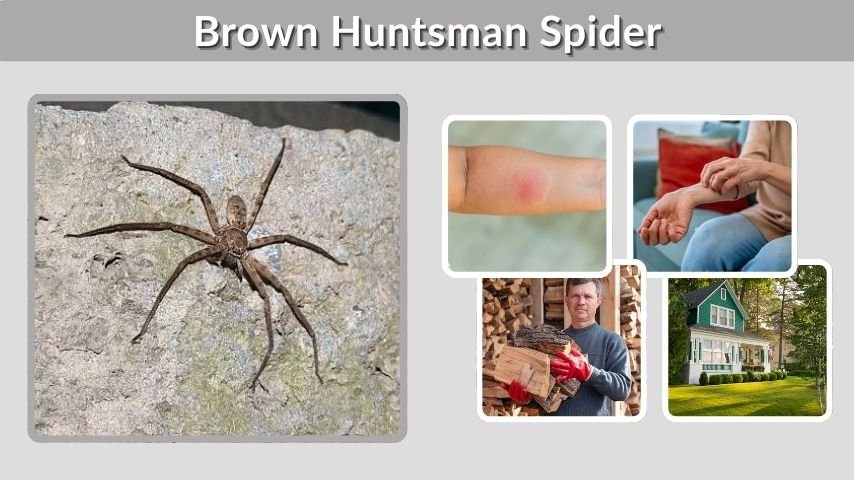
A brown huntsman spider can look frightening because of its large size, long legs, and fast movement. Many people notice it on walls, ceilings, tree trunks, garages, or behind furniture and wonder whether it is dangerous. In most cases, a brown huntsman spider is not considered highly dangerous to humans. It may bite if handled or trapped, but it usually prefers to run away.
What Is a Brown Huntsman Spider?
A brown huntsman spider is usually a large, flat-bodied spider from the huntsman family, Sparassidae. Huntsman spiders are known for their long legs, sideways crab-like stance, and quick movement. Many species are grey, tan, or brown, which helps them blend with bark, rocks, walls, and dry leaves.
One well-known brown huntsman is Heteropoda venatoria, also called the pantropical huntsman spider or giant crab spider. It is found in many warm regions and is sometimes seen around homes. The University of Florida notes that this species has a flattened brown body and may be found in human habitations, especially indoors during cold weather.
Common Appearance
A brown huntsman spider often has:
- A flat brown or grey-brown body
- Long legs that spread sideways
- Banded or spotted legs
- A crab-like resting position
- A wide leg span compared with body size
- Fast movement across walls or ceilings
The Australian Museum describes huntsman spiders as large, long-legged spiders that are mostly grey to brown, sometimes with banded legs. Many have flattened bodies that help them live in narrow spaces under bark or rocks.
Brown Huntsman Spider Size
Brown huntsman spiders can look very large because most of their size comes from leg span. Their body is usually much smaller than the full spread of their legs. A spider that looks hand-sized on a wall may have a body only around an inch long.
Some common huntsman spiders reach several inches across. The pantropical huntsman can have a leg span of roughly 3 to 5 inches, depending on the individual. Females may have a heavier abdomen, while males may appear leggier.
Why They Look Bigger Than They Are
Brown huntsman spiders look bigger because their legs are long, thin, and spread widely. Their flat body shape also makes them appear wide on walls and ceilings. When seen indoors, their size feels even more dramatic because they contrast strongly against plain surfaces.
Camera angles can also exaggerate size. A close-up photo may make a normal huntsman spider look much larger than it is.
Where Brown Huntsman Spiders Live
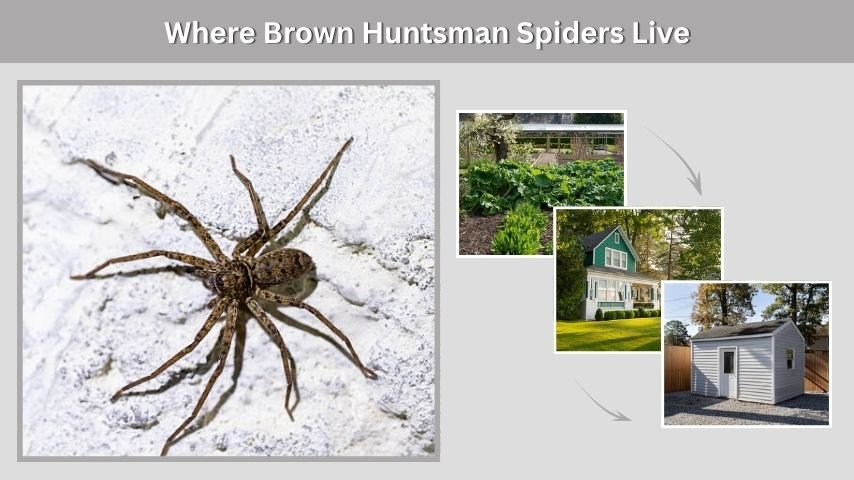
Brown huntsman spiders are common in warm regions. They may live under bark, in tree crevices, around rocks, in sheds, in garages, behind furniture, or inside homes. They are active hunters and do not rely on classic sticky webs to catch prey.
Brown Huntsman Spider in Australia
Australia is strongly associated with huntsman spiders. Brown huntsman spiders are commonly seen in houses, gardens, sheds, and cars. They often rest flat against walls or ceilings and may run quickly when disturbed.
In Australia, many huntsman spiders are considered useful because they eat insects and other small pests. Their size can be alarming, but they are usually shy and prefer escape over biting.
Brown Huntsman Spider in Florida
Florida has the pantropical huntsman spider, a brown species often called the giant crab spider. It may appear in homes, garages, closets, sheds, and warm outdoor spaces. According to the University of Florida, Heteropoda venatoria is not a dangerous spider, though its bite can be locally painful and may cause noticeable swelling if the spider is handled or trapped.
Brown Huntsman Spider in Other Regions
Brown huntsman spiders or similar huntsman species may also be found in tropical and subtropical regions such as India, Sri Lanka, the Philippines, Bali, Hawaii, Japan, Taiwan, and parts of the Caribbean. Their exact identity can vary by location, so color alone is not enough for accurate identification.
Is the Brown Huntsman Spider Poisonous?
The brown huntsman spider is venomous, not poisonous. Venom is injected through a bite, while poison harms when touched or eaten. Huntsman spiders use venom to subdue insects and other small prey.
For humans, a brown huntsman bite is usually not medically serious. It can cause local pain, redness, swelling, and tenderness. Serious reactions are uncommon, but they can happen in sensitive individuals or if the bite becomes infected.
Can a Brown Huntsman Spider Bite?
Yes, a brown huntsman spider can bite. However, it usually bites only when it feels threatened. Bites may happen if someone grabs the spider, presses it against skin, traps it inside clothing, or steps into a shoe where it is hiding.
Most huntsman spiders would rather run away than fight. They are fast and often use speed as their first defense.
Brown Huntsman Spider Bite Symptoms
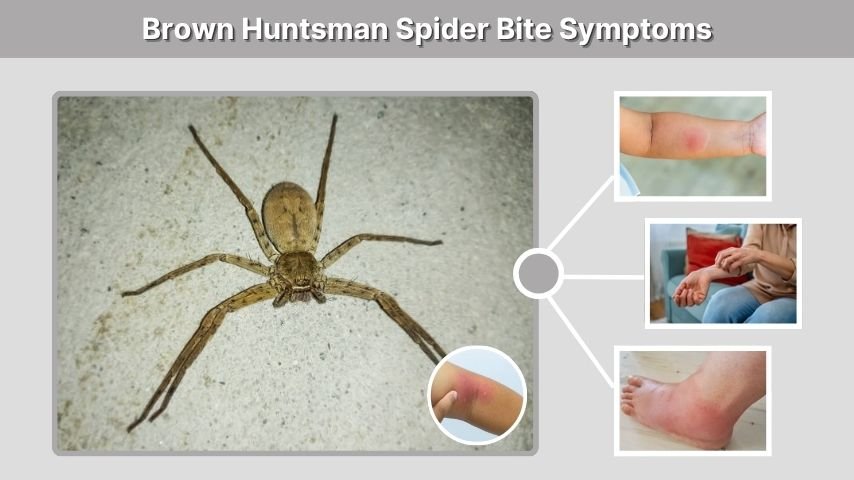
A brown huntsman spider bite may feel like a sharp pinch or bee sting. The bite area may become red, swollen, itchy, or sore. Some people may see small puncture marks, but they are not always visible.
Common Symptoms
A mild brown huntsman bite may cause:
- Sharp local pain
- Redness around the bite
- Mild swelling
- Itching or burning
- Tenderness when touched
- Minor bleeding
- Warmth near the bite area
These symptoms usually stay near the bite site and improve with basic first aid.
When to Seek Medical Help
Get medical advice if the pain is severe, swelling spreads quickly, redness worsens, pus appears, or the person develops fever, dizziness, nausea, breathing trouble, or widespread symptoms. Children, elderly people, people with allergies, and anyone with a weak immune system should be monitored more carefully.
Brown Huntsman Spider vs Brown Recluse
Brown huntsman spiders and brown recluse spiders are often confused because both can be brown. However, they are very different spiders. This comparison matters because brown recluse bites can be more medically concerning.
| Feature | Brown Huntsman Spider | Brown Recluse Spider |
|---|---|---|
| Body shape | Flat, wide, long-legged | Smaller, smoother, more compact |
| Leg position | Legs spread sideways like a crab | Legs are not as sideways-spread |
| Speed | Very fast runner | More secretive and less showy |
| Common size | Often looks large due to leg span | Usually smaller than huntsman |
| Bite concern | Usually local pain and swelling | Can cause wounds and tissue damage |
| Typical behavior | Runs away quickly | Hides in dry, undisturbed places |
The CDC lists brown recluse spiders among venomous spiders in the United States that can be dangerous to outdoor workers, while also noting that spiders are usually not aggressive and most bites happen when a spider is trapped or touched. Cleveland Clinic states that a brown recluse bite can cause itching, pain, and wounds, and that proper identification helps with symptom management.
Difference Between Huntsman Spider and Brown Recluse
The easiest difference is shape. A huntsman spider has very long legs that extend outward and a flattened body. A brown recluse is smaller, less leggy, and usually has a violin-shaped marking on the top of the body, although markings can be hard to see.
A huntsman spider is often seen running across walls or ceilings. A brown recluse is more likely to hide in quiet, dark, dry places such as boxes, closets, basements, attics, or stored clothing.
Huntsman Spider Brown Recluse Look-Alike Confusion
Many brown spiders are misidentified as brown recluse spiders. Color alone is not reliable. A brown spider in Florida, Australia, Hawaii, or the Philippines is not automatically a brown recluse. Location, body shape, eye pattern, markings, and behavior all matter.
If you are unsure and a bite is worsening, focus on symptoms rather than trying to diagnose from a photo.
Brown Huntsman Spider vs Wolf Spider
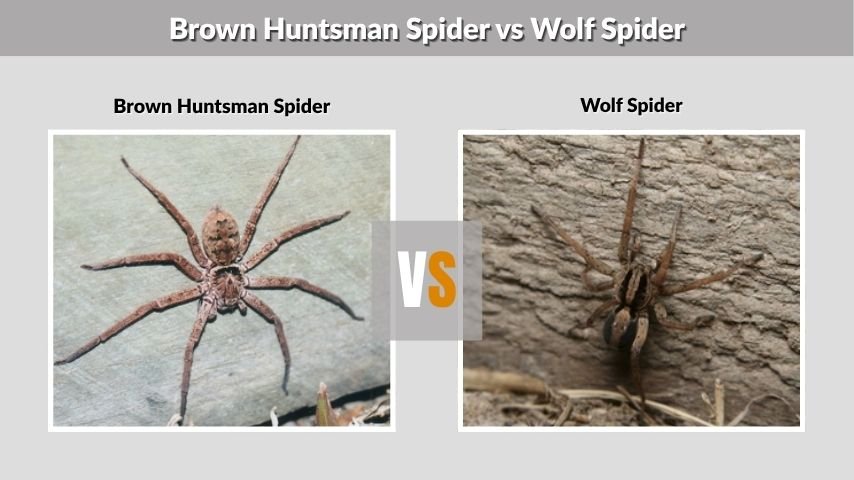
Wolf spiders are another common source of confusion. They can be brown, hairy, and fast. However, wolf spiders usually have a more compact body and do not have the same sideways crab-like leg stance as huntsman spiders.
Wolf spiders are usually ground hunters. Huntsman spiders are often seen on walls, ceilings, trees, and flat surfaces. Both can bite if handled, but both usually avoid humans.
Are Brown Huntsman Spiders Good or Bad?
Brown huntsman spiders can be helpful because they eat insects and other small pests. They may reduce cockroaches, moths, flies, and other unwanted bugs around homes. For this reason, some people leave them alone if they are outside or in a garage.
However, many people do not want large spiders indoors. If you need to remove one, use a safe method instead of touching it with bare hands.
How to Remove One Safely
To remove a brown huntsman spider:
- Place a clear container over the spider
- Slide a stiff piece of paper or cardboard underneath
- Keep the container sealed while moving
- Release the spider outside away from doors
- Avoid crushing it if safe removal is possible
- Do not use bare hands
If the spider is in a hard-to-reach area or you are uncomfortable, contact a pest control professional.
How to Prevent Brown Huntsman Spiders Indoors
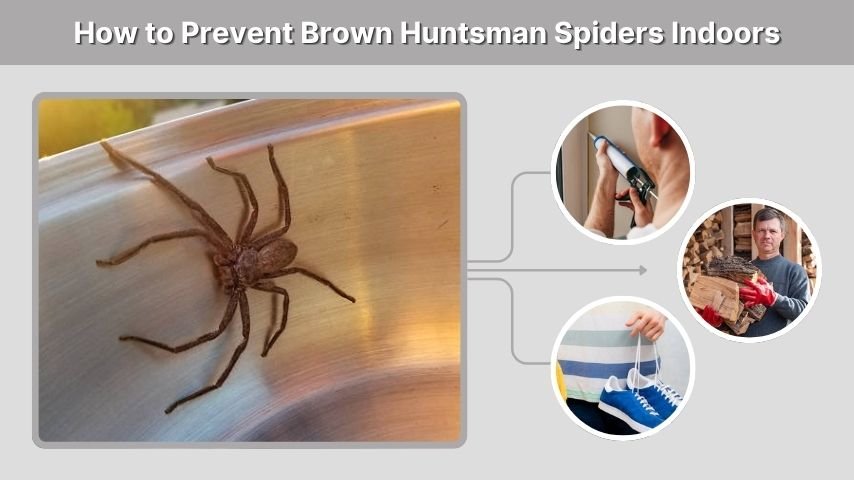
Brown huntsman spiders may enter homes while hunting prey or looking for shelter. You can reduce indoor encounters by limiting hiding spots and insect activity.
Prevention Tips
Simple prevention steps include:
- Seal gaps around doors and windows
- Repair torn screens
- Reduce insects inside the home
- Shake out shoes and clothing
- Wear gloves when moving boxes or firewood
- Keep garages and sheds less cluttered
- Move stored items away from walls
- Check behind curtains and wall hangings
These steps do not guarantee spiders will never enter, but they can reduce surprise encounters.
Should You Worry About a Brown Huntsman Spider?
Most people do not need to panic if they see a brown huntsman spider. It may look large and move quickly, but it is usually not aggressive. The main risk comes from accidental contact, such as trapping it in clothing or trying to handle it.
If you live in an area with brown recluse spiders, black widows, redbacks, or other medically important spiders, learn the key identification differences. When in doubt, keep distance, take a photo if safe, and ask a local expert.
FAQs
Is a brown huntsman spider dangerous?
A brown huntsman spider is usually not considered dangerous to healthy adults. It can bite if handled, trapped, or pressed against the skin, but most bites cause local pain, redness, and swelling. Medical help is needed if symptoms become severe, spread, or show signs of infection.
Is a brown huntsman spider the same as a brown recluse?
No, a brown huntsman spider is not the same as a brown recluse. Huntsman spiders are larger, flatter, faster, and have long sideways legs. Brown recluse spiders are smaller and medically more concerning because some bites can cause wounds and tissue damage.
What does a brown huntsman spider bite feel like?
A brown huntsman spider bite may feel like a sharp pinch, needle prick, or bee sting. The area may become sore, red, itchy, or swollen. Most symptoms remain near the bite and improve with basic care, but worsening symptoms should be checked by a medical professional.
Where do brown huntsman spiders live?
Brown huntsman spiders live in warm regions around the world. They are common in Australia and may also be found in Florida, parts of Asia, islands, and other tropical or subtropical areas. They hide under bark, rocks, furniture, wall hangings, cabinets, garages, and sheds.
How can I tell a huntsman from a wolf spider or brown recluse?
A huntsman spider has a flat body and long legs that spread sideways like a crab. A wolf spider is usually more compact and ground-dwelling. A brown recluse is smaller, more secretive, and may have a violin-shaped marking. Color alone is not enough for identification.