Mealybugs are small, sap-sucking insects that belong to the family Pseudococcidae. They are notorious agricultural pests, affecting a wide range of crops, fruits, and ornamental plants. Characterized by their waxy coating and cotton-like ovisacs, mealybugs weaken plants by draining nutrients, causing leaf curling, fruit drop, and stunted growth. Their honeydew secretion also promotes sooty mold and attracts ants, making infestations difficult to control in both farms and gardens.
1. Planococcus citri (Citrus Mealybug)

The citrus mealybug (Planococcus citri) is one of the most widespread and economically important mealybug species. It is a serious pest of citrus, grapes, coffee, and many ornamental plants. Known for its waxy coating and rapid reproduction, it weakens plants by sucking sap and promotes the growth of sooty mold through honeydew secretion.
Identification
- Small, soft-bodied insect (3–4 mm long)
- Covered with a white, powdery wax coating
- Oval shape with slightly segmented appearance
- Short wax filaments around the body margin
- Two longer filaments at the posterior end
- Eggs laid in cottony, white ovisacs
Habitat
Citrus mealybugs thrive in warm, humid climates. They are found on the leaves, stems, roots, and fruits of host plants. Greenhouses, orchards, and gardens provide ideal conditions for their survival and spread.
Behaviors
These mealybugs form dense colonies on plants, often hiding in leaf axils, under bark, or between fruits. They excrete honeydew that attracts ants, which in turn protect them from natural predators. Their populations can increase rapidly, especially in controlled environments like greenhouses.
Diet
Planococcus citri feeds on plant sap using its piercing-sucking mouthparts. Host plants include citrus, grapes, coffee, avocado, and ornamental species. Feeding leads to leaf yellowing, stunted growth, fruit drop, and reduced yield.
2. Phenacoccus solenopsis (Cotton Mealybug)

The cotton mealybug (Phenacoccus solenopsis) is a destructive pest that infests cotton, vegetables, ornamentals, and fruit crops. It is highly invasive and has spread across Asia, Africa, and parts of the Americas, causing significant agricultural losses. Its rapid reproduction and adaptability make it a major concern for farmers.
Identification
- Small, oval-shaped insect, usually 3–4 mm long
- Covered with white, powdery wax secretion
- Body has short lateral waxy filaments
- Two slightly longer posterior filaments at the tail end
- Eggs laid in white cottony ovisacs, often attached to plant parts
Habitat
This species thrives in warm and humid environments. It is commonly found on the stems, leaves, buds, and fruit of cotton and other host plants. Infestations are particularly severe in agricultural fields, greenhouses, and home gardens.
Behaviors
Cotton mealybugs form dense colonies and produce large amounts of honeydew, which encourages the growth of black sooty mold on plants. They are often tended by ants, which protect them from predators in exchange for honeydew. Infestations can weaken plants, causing leaf curling, fruit shedding, and in severe cases, plant death.
Diet
Phenacoccus solenopsis feeds on plant sap through piercing-sucking mouthparts. Its primary host is cotton, but it also attacks tomato, okra, brinjal, sunflower, hibiscus, and many ornamental plants. Continuous feeding results in significant yield reduction and crop damage.
3. Maconellicoccus hirsutus (Pink Hibiscus Mealybug)

The pink hibiscus mealybug (Maconellicoccus hirsutus) is a highly invasive pest known for its devastating effects on a wide variety of host plants. Native to Asia, it has spread to Africa, the Caribbean, and the Americas, where it is considered a quarantine pest due to its destructive feeding habits.
Identification
- Small, oval-shaped insect, about 3 mm long
- Body covered with a thick white wax coating
- Pinkish body color visible when squashed
- Females are wingless, while males are smaller and winged
- Egg masses appear as fluffy, white waxy ovisacs attached to host plants
Habitat
This mealybug prefers warm tropical and subtropical climates. It colonizes the stems, buds, fruits, and leaves of host plants. Infestations are most severe in orchards, ornamental gardens, and plantations where humidity is high.
Behaviors
- M. hirsutus* is extremely polyphagous, attacking over 200 plant species. Infested plants show leaf curling, shoot malformation, stunted growth, and sometimes complete dieback. The mealybug excretes honeydew, leading to sooty mold growth and further weakening of plants. Its rapid reproduction and ability to disperse make it a difficult pest to control.
Diet
The pink hibiscus mealybug feeds on plant sap, weakening its hosts and reducing their productivity. It attacks hibiscus, cotton, grapes, citrus, mango, avocado, guava, and many ornamental plants. Heavy infestations cause severe economic losses in agriculture and horticulture.
4. Ferrisia virgata (Striped Mealybug)

The striped mealybug (Ferrisia virgata) is a common pest that infests a wide variety of crops and ornamental plants. Recognized by the two dark longitudinal stripes along its back, this species is a significant problem in tropical and subtropical agricultural regions.
Identification
- Elongated oval body, about 4–5 mm long
- White body covered with thin wax secretion
- Two distinct dark dorsal stripes running lengthwise
- Long waxy filaments extending from the posterior end
- Eggs laid in fluffy, cottony ovisacs
Habitat
F. virgata thrives in warm climates and is commonly found in orchards, gardens, and greenhouses. It inhabits plant stems, leaves, and fruits, where colonies cluster together. It is especially abundant in tropical Asia, Africa, and the Americas.
Behaviors
This mealybug forms medium-sized colonies on its host plants. It secretes honeydew, which encourages sooty mold development and attracts ants that protect them from predators. Infestations cause yellowing, leaf curling, and fruit malformation.
Diet
The striped mealybug feeds on plant sap by inserting its piercing-sucking mouthparts. It attacks crops such as cotton, coffee, cocoa, citrus, guava, and ornamentals. Continuous feeding leads to weakened plants and reduced productivity.
5. Paracoccus marginatus (Papaya Mealybug)

The papaya mealybug (Paracoccus marginatus) is a highly invasive pest native to Central America but now widely distributed in Asia, Africa, and the Pacific. It is a notorious agricultural pest that attacks papaya and over 60 other plant species, causing severe economic losses.
Identification
- Small, oval-shaped insect, about 2–3 mm long
- Body covered in white, waxy secretion
- Yellowish body visible beneath the wax coating
- Short wax filaments around the body margin
- Eggs laid in white, cottony ovisacs on plant surfaces
Habitat
This mealybug thrives in tropical and subtropical regions. It colonizes leaves, stems, fruits, and flower buds of host plants. It is commonly found in orchards, gardens, and agricultural fields where papaya, cassava, and other crops are grown.
Behaviors
P. marginatus reproduces rapidly and forms dense colonies, often covering large portions of the host plant. Infested plants show leaf yellowing, curling, and distortion. Honeydew excretion promotes sooty mold growth, which interferes with photosynthesis and further weakens the plant.
Diet
The papaya mealybug feeds on plant sap using its piercing-sucking mouthparts. While papaya is its primary host, it also attacks cassava, hibiscus, tomato, avocado, cotton, and several other crops. Heavy infestations can kill young plants and drastically reduce crop yields.
6. Dysmicoccus brevipes (Pineapple Mealybug)
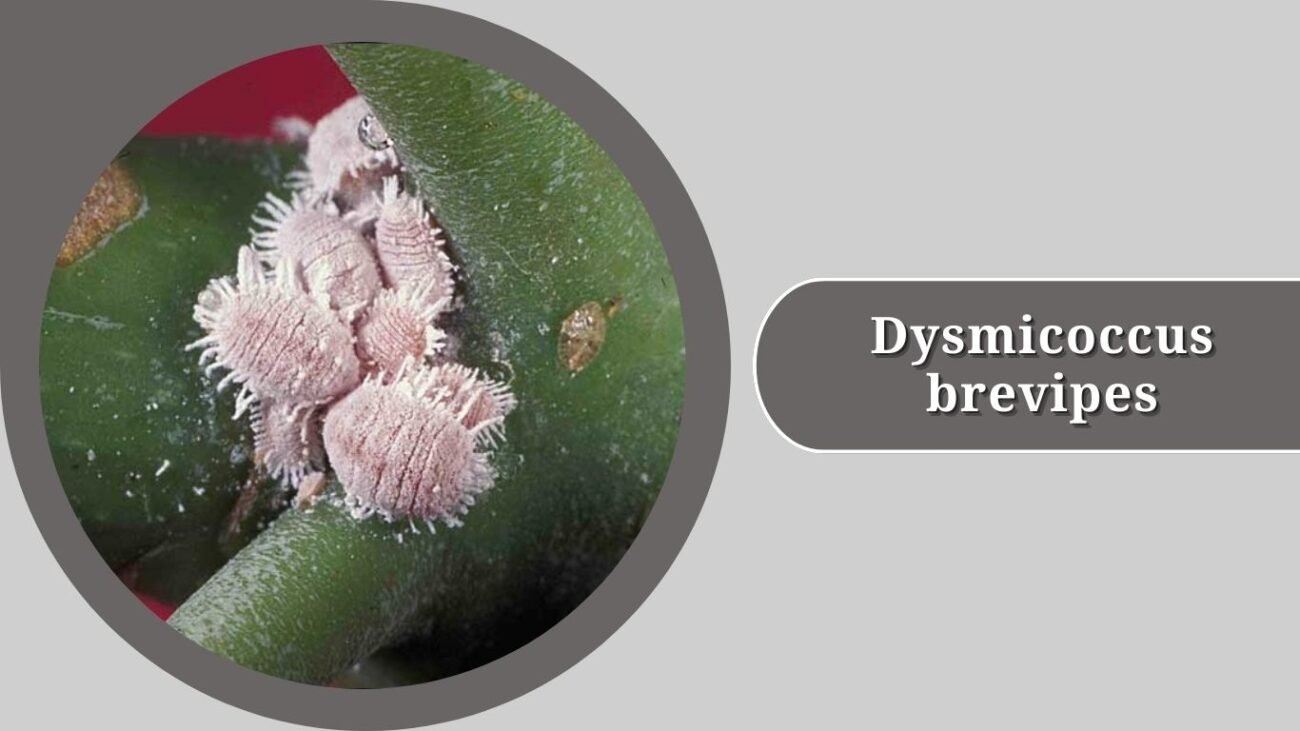
The pineapple mealybug (Dysmicoccus brevipes) is a notorious pest of pineapple and several other tropical crops. It is particularly harmful because of its association with mealybug wilt disease in pineapple, which is transmitted through its feeding activity.
Identification
- Small, oval insect, about 3–4 mm long
- Covered with white, powdery wax coating
- Pink to reddish body visible beneath wax when crushed
- Short lateral wax filaments surrounding the body
- Eggs laid in white, cottony ovisacs at plant bases or roots
Habitat
This mealybug is found in tropical and subtropical regions worldwide. It inhabits pineapple plantations, as well as sugarcane and banana fields. It commonly infests roots, crowns, stems, and leaves, often forming clusters around the base of plants.
Behaviors
D. brevipes often colonizes the lower parts of the plant and roots, making infestations harder to detect. Its feeding weakens host plants and transmits toxins that cause mealybug wilt in pineapples. Colonies excrete honeydew, attracting ants that tend and protect them, leading to larger infestations.
Diet
The pineapple mealybug feeds on plant sap. While pineapple is its primary host, it also infests sugarcane, banana, coffee, and other tropical crops. Feeding reduces plant vigor, causes leaf reddening, and significantly decreases fruit yield and quality.
7. Saccharicoccus sacchari (Pink Sugarcane Mealybug)

The pink sugarcane mealybug (Saccharicoccus sacchari) is a specialized pest of sugarcane, widely distributed in tropical and subtropical regions. Its infestations can reduce sugar yield and weaken plants, making it an economically important pest for the sugarcane industry.
Identification
- Small, oval body, about 2–3 mm long
- Pinkish body color, covered with thin white wax secretion
- Lacks long lateral wax filaments seen in other mealybugs
- Appears in clusters on sugarcane nodes and leaf sheaths
- Eggs deposited in cottony, white ovisacs
Habitat
This species primarily inhabits sugarcane fields. It is found under the leaf sheaths, around the nodes, and sometimes on the roots of sugarcane plants. Warm, humid climates favor its development and spread.
Behaviors
Saccharicoccus sacchari forms dense colonies that suck plant sap and weaken the sugarcane stalks. Infested plants show reduced vigor, thin stalks, and lower sucrose content. Ants are commonly seen tending the colonies for honeydew, which promotes the growth of sooty mold on plant surfaces.
Diet
This mealybug feeds almost exclusively on sugarcane sap, making it a host-specific pest. Heavy infestations not only reduce sugarcane productivity but also compromise the quality of the extracted juice, lowering overall yield.
8. Pseudococcus longispinus (Long-tailed Mealybug)

The long-tailed mealybug (Pseudococcus longispinus) is a widely distributed pest of ornamental and fruit crops. It is easily recognizable by its unusually long tail filaments. This species is highly polyphagous, infesting many greenhouse plants, fruit trees, and ornamentals, and is considered a major pest in horticulture.
Identification
- Oval, soft-bodied insect, about 4–5 mm long
- Covered with a white, powdery wax coating
- Two characteristic long wax filaments extending from the posterior (often longer than the body)
- Shorter lateral filaments surrounding the body margin
- Females are wingless; males are winged but short-lived
Habitat
P. longispinus thrives in warm and humid environments. It is commonly found in greenhouses, orchards, and gardens. Infestations usually occur on leaves, stems, fruits, and sometimes roots, where colonies develop in protected plant crevices.
Behaviors
This mealybug reproduces rapidly and forms large colonies on its host plants. It excretes large amounts of honeydew, which fosters sooty mold growth. Ants are often associated with these colonies, protecting the mealybugs in exchange for honeydew. Infestations lead to stunted growth, leaf drop, and poor fruit development.
Diet
The long-tailed mealybug feeds on plant sap using piercing-sucking mouthparts. It attacks a wide range of hosts, including citrus, grapes, mango, avocado, pineapple, coffee, and numerous ornamental plants. Heavy feeding reduces vigor, yield, and fruit quality.
9. Pseudococcus viburni (Obscure Mealybug)

The obscure mealybug (Pseudococcus viburni) is a destructive pest affecting fruit crops, ornamentals, and vineyard plants. It is notorious in viticulture, where infestations reduce grape yield and quality. Its ability to hide in bark crevices and roots makes it difficult to control.
Identification
- Oval-shaped insect, about 3–4 mm long
- Covered with white, mealy wax secretion
- Body color ranges from grayish to pinkish beneath the wax
- Short lateral wax filaments around the margins
- Ovisacs are cottony and deposited in bark cracks or hidden plant parts
Habitat
This species inhabits orchards, vineyards, and gardens in temperate and subtropical regions. It is commonly found under bark, in leaf axils, and around roots. Because of its cryptic habits, infestations often go unnoticed until damage becomes severe.
Behaviors
P. viburni forms concealed colonies that protect them from natural enemies and chemical treatments. They secrete honeydew, which leads to the development of sooty mold, further reducing plant health. Their presence in vineyards is particularly harmful, as they weaken vines and lower fruit market value.
Diet
The obscure mealybug feeds on the sap of a wide range of host plants. It is especially damaging to grapevines, apples, pears, stone fruits, citrus, and ornamentals. Continuous feeding leads to reduced vigor, poor fruit development, and economic losses.
10. Pseudococcus maritimus (Grape Mealybug)

The grape mealybug (Pseudococcus maritimus) is a serious pest of vineyards and orchards. It is especially problematic in viticulture, where infestations damage vines directly and indirectly by spreading plant viruses such as grapevine leafroll-associated viruses.
Identification
- Oval, soft-bodied insect, about 4 mm long
- Covered with a white, powdery wax coating
- Pink to purple body visible when crushed
- Short wax filaments surrounding the body margin
- Two slightly longer posterior filaments at the tail end
- Eggs laid in cottony, white ovisacs under bark or in hidden crevices
Habitat
P. maritimus is primarily associated with grapevines but is also found on pome fruits, stone fruits, and ornamentals. It prefers sheltered locations such as bark crevices, roots, and beneath leaf litter, making early detection difficult.
Behaviors
This mealybug often forms hidden colonies, protecting itself from predators and pesticides. It secretes honeydew, which encourages sooty mold growth, reducing photosynthesis. Ants frequently attend these colonies, defending them in exchange for honeydew. In vineyards, it is a key vector of viral diseases, compounding its economic impact.
Diet
The grape mealybug feeds on plant sap, extracting nutrients from phloem tissues. While grapes are its main host, it also infests apple, pear, plum, and several ornamental plants. Infestations reduce plant vigor, lower fruit quality, and spread harmful plant pathogens.
11. Phenacoccus madeirensis (Madeira Mealybug)

The Madeira mealybug (Phenacoccus madeirensis) is a widespread agricultural pest known for infesting a wide range of ornamental and food crops. Its adaptability to various environments and polyphagous nature make it a serious concern for farmers and horticulturists.
Identification
- Oval, soft-bodied insect, about 3–4 mm long
- Covered with a powdery white wax coating
- Pale yellow to pinkish body beneath the wax
- Short wax filaments around the body margin
- Cottony ovisacs attached to leaves and stems
Habitat
This mealybug thrives in tropical and subtropical climates, especially in greenhouses, orchards, and gardens. It commonly inhabits stems, leaves, flower buds, and fruits, where it forms noticeable colonies.
Behaviors
P. madeirensis forms medium to dense colonies that feed collectively, weakening host plants. It secretes honeydew, which leads to black sooty mold on plant surfaces. Ants are often seen tending colonies for honeydew, which also helps protect them from natural predators.
Diet
The Madeira mealybug feeds on plant sap from a wide variety of crops. Its hosts include tomato, potato, citrus, papaya, cassava, cotton, ornamentals, and many fruit trees. Prolonged feeding reduces crop yield, stunts plant growth, and lowers fruit quality.
12. Rastrococcus invadens (Mango Mealybug)
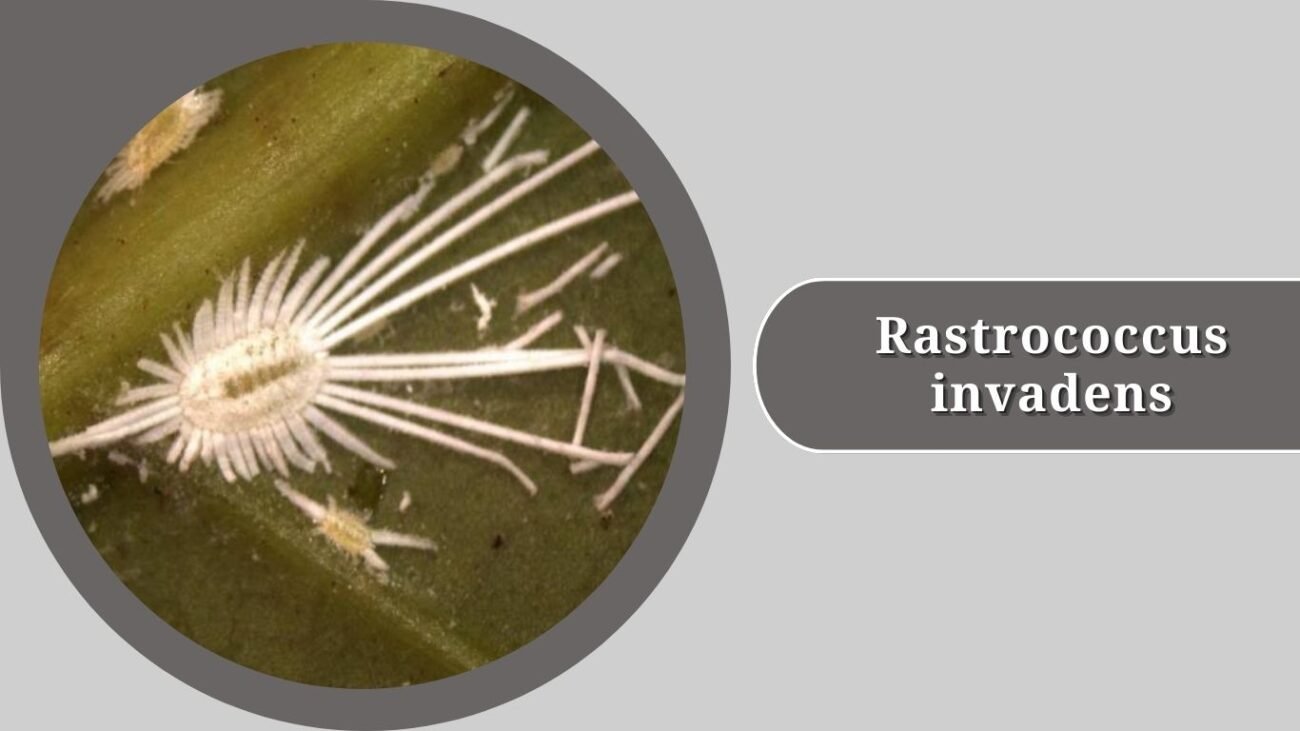
The mango mealybug (Rastrococcus invadens) is a destructive pest that attacks mango and several other tropical fruit trees. Native to Asia, it has spread across Africa, where it causes severe economic losses in mango production due to heavy infestations.
Identification
- Oval, soft-bodied insect, about 3–4 mm long
- Body covered with a dense white, waxy secretion
- Yellowish to pale green body beneath the wax
- Short wax filaments around the body edge
- Eggs laid in white, cottony ovisacs on twigs and leaves
Habitat
This mealybug is common in mango orchards and other tropical fruit plantations. It colonizes twigs, shoots, young fruits, and leaves. Warm, dry climates favor its rapid multiplication, and infestations are usually most severe during fruiting seasons.
Behaviors
R. invadens forms large, visible colonies on young plant parts. Its feeding causes leaf yellowing, curling, and fruit drop. The honeydew it produces attracts ants and fosters sooty mold growth, further weakening host plants. Heavy infestations can cover entire branches, leading to reduced yields.
Diet
The mango mealybug feeds primarily on mango sap, but it also attacks guava, citrus, papaya, and other tropical fruit trees. Feeding reduces plant vigor, hampers fruit development, and lowers both yield and quality of produce.
13. Nipaecoccus viridis (Spherical Mealybug)
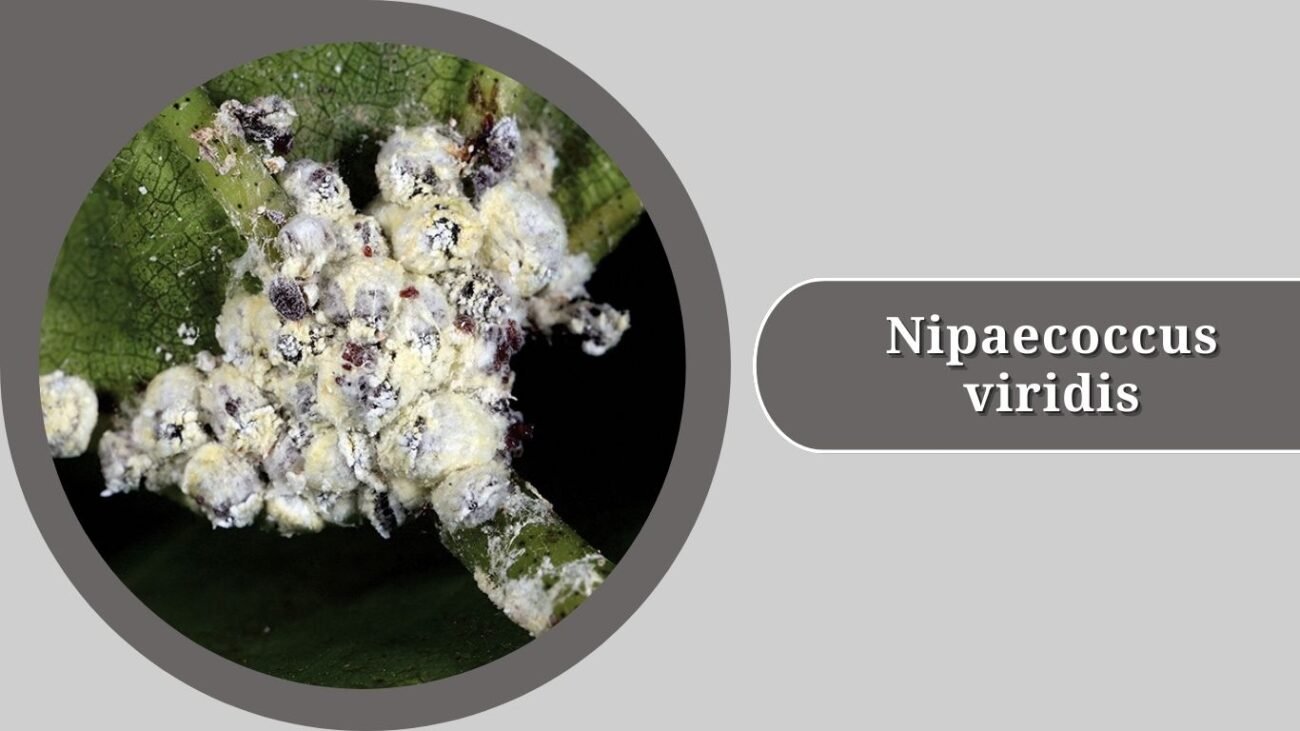
The spherical mealybug (Nipaecoccus viridis) is an important agricultural pest found in tropical and subtropical regions. It is recognized for its nearly round body shape and its tendency to attack a wide range of fruit trees and ornamentals, causing significant damage to crops.
Identification
- Small, nearly spherical body, about 2–3 mm in diameter
- Covered with a thick white, powdery wax coating
- Greenish to yellow body beneath the wax
- Short marginal wax filaments evenly distributed
- Cottony ovisacs deposited on leaves, stems, and fruits
Habitat
This species inhabits orchards, gardens, and plantations, particularly in warm and humid regions. It colonizes stems, leaves, and fruits of host plants. Infestations are often found on the undersides of leaves or in protected plant crevices.
Behaviors
N. viridis forms dense colonies on host plants, producing honeydew that attracts ants and supports sooty mold growth. Heavy infestations result in stunted growth, premature fruit drop, and overall decline in plant health. Because of its cryptic habits, infestations can become severe before being noticed.
Diet
The spherical mealybug feeds on plant sap. It attacks a variety of hosts, including citrus, coffee, guava, papaya, mango, avocado, and ornamentals. Prolonged feeding reduces vigor and crop yield, making it a serious agricultural pest.