Soldier flies (Stratiomyidae) are a diverse family of insects known for their wasp-like appearance, ecological importance, and fascinating life cycles. Found worldwide, they thrive in wetlands, woodlands, and gardens, where their larvae play a key role in decomposition. This guide explores 15 types of soldier flies, highlighting their identification, habitats, behavior, diets, and lifecycles in detail.
1. Hermetia illucens (Black Soldier Fly)
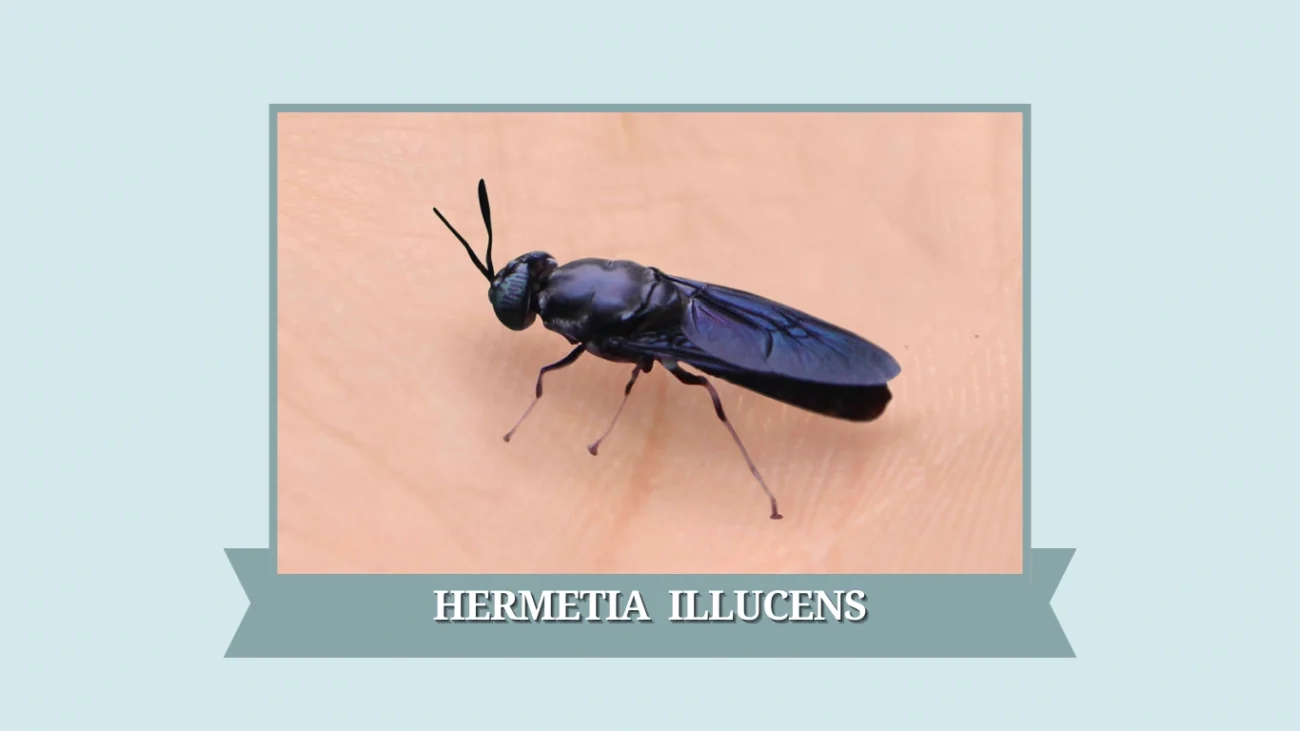
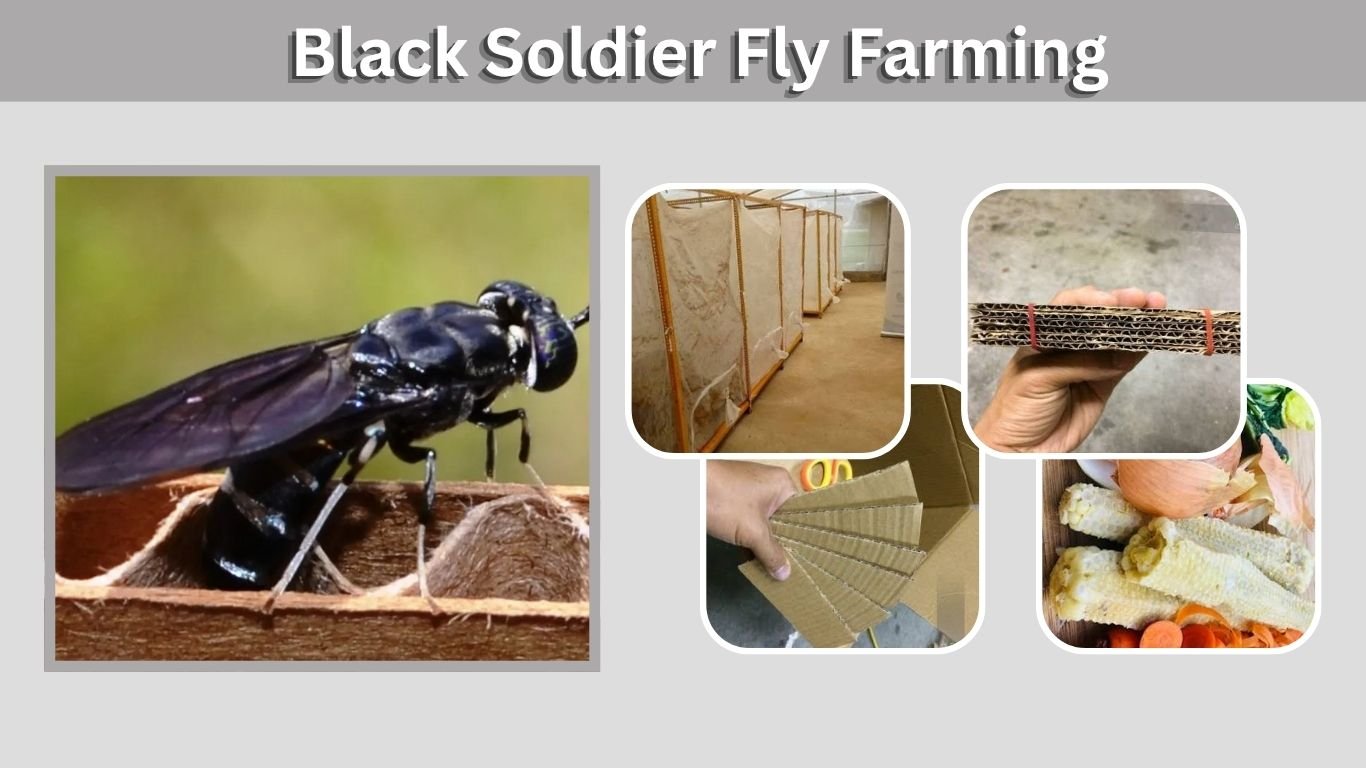
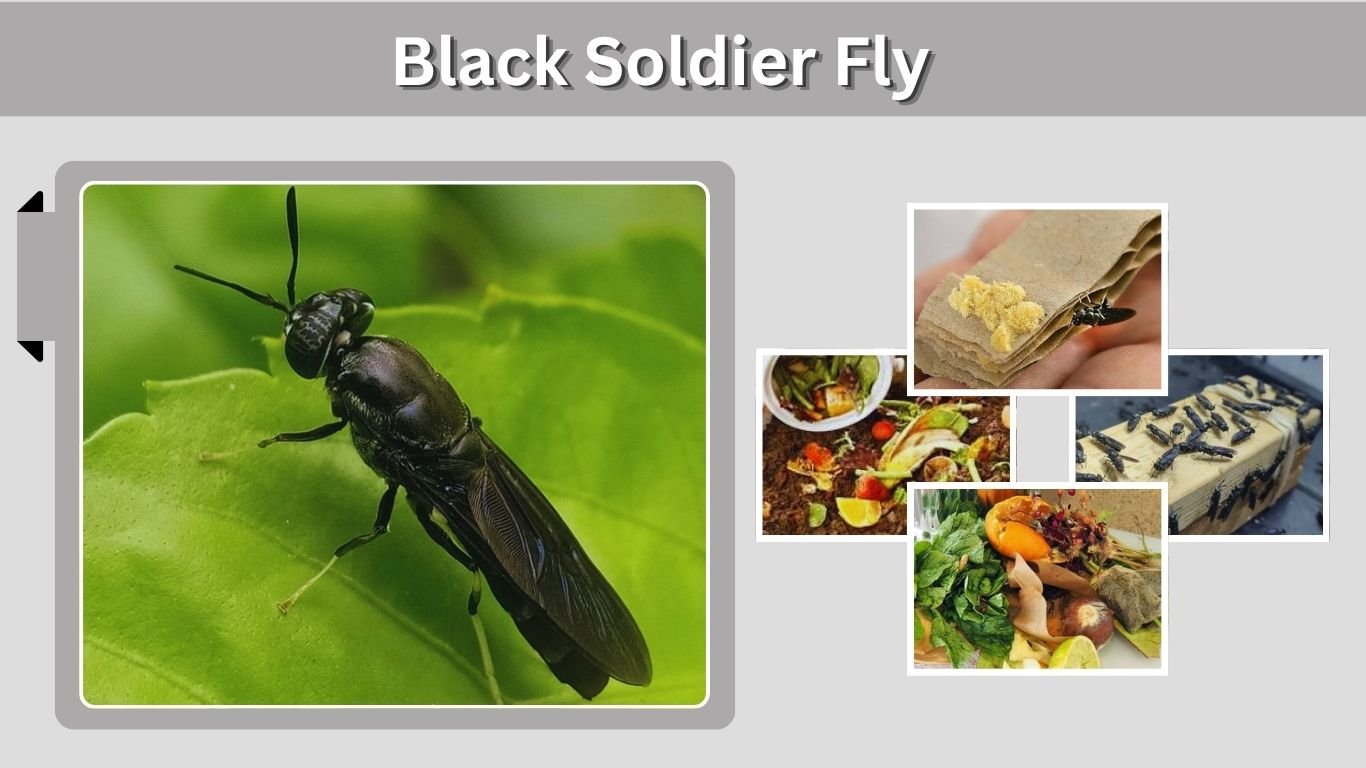
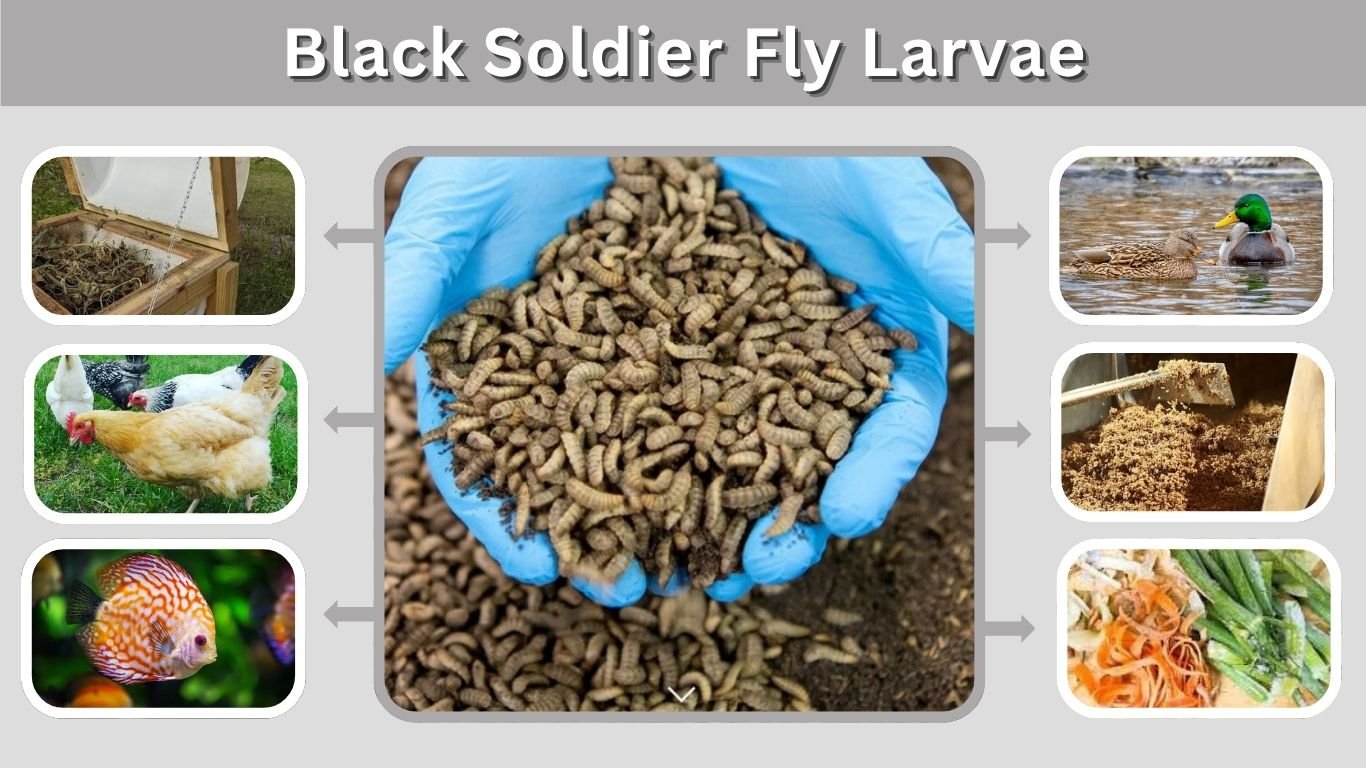
The Black Soldier Fly (Hermetia illucens) is one of the most widely recognized species of soldier flies. Native to the Americas but now found worldwide, it plays an important ecological role in recycling organic matter. Its larvae are also commercially valuable as a sustainable protein source for animal feed and waste management.
Identification
- Medium-sized fly, about 15–20 mm in length
- Distinctive black body with metallic blue or green reflections
- Clear wings with a dark tint near the tips
- Antennae long and projecting forward
- Resembles a wasp in shape and coloration
Habitat
The Black Soldier Fly thrives in warm, moist environments, particularly where organic waste is abundant. They are commonly found around compost piles, farms, and areas with decaying vegetation or manure.
Behavior
Adults are not pests; they rarely enter homes and do not feed on human food. They are weak fliers and are mostly seen resting. Their larvae, however, are voracious decomposers, breaking down organic matter efficiently.
Diet
Adults consume little to no food, sometimes taking in nectar or water, while larvae feed intensively on decomposing organic matter such as food scraps, animal manure, and decaying vegetation. This makes them powerful natural recyclers.
Lifecycle
The Black Soldier Fly completes its lifecycle in about six weeks. Eggs are deposited near decaying matter, and larvae hatch within a few days, feeding vigorously for two to four weeks. Once fully grown, they pupate in drier areas and transform into adults. Adult flies live only five to eight days, with their primary focus being reproduction rather than feeding.
2. Stratiomys chamaeleon
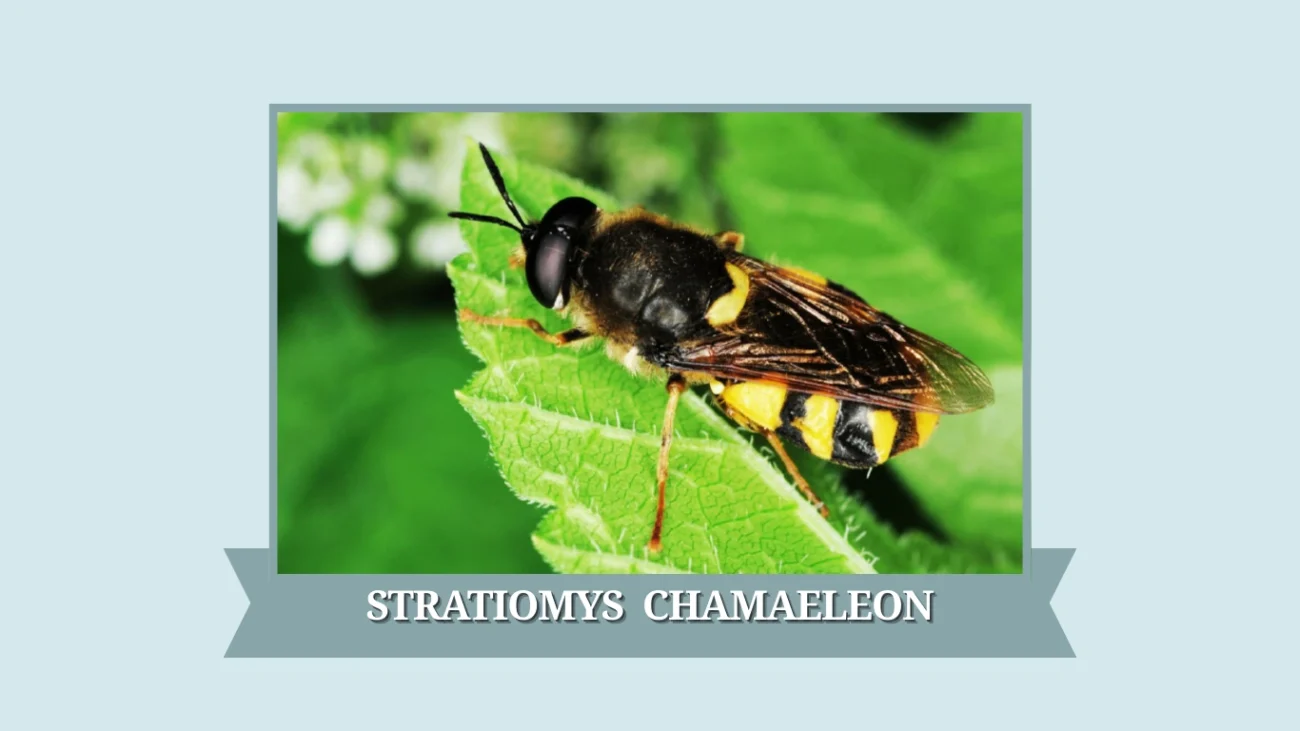
The Stratiomys chamaeleon is a striking member of the soldier fly family, known for its bright, colorful patterns. It is commonly found in Europe and parts of Asia, particularly in wetland habitats. Its vibrant markings make it one of the more recognizable soldier flies.
Identification
- Medium to large fly, about 10–14 mm long
- Yellow and black banded body, giving a wasp-like appearance
- Transparent wings with a slight smoky tint
- Large compound eyes, especially prominent in males
- Flattened, broad abdomen with vivid coloration
Habitat
This species favors wetland environments such as marshes, reed beds, and damp meadows. They are often observed resting on vegetation near water sources, where they can find food and lay eggs.
Behavior
Stratiomys chamaeleon adults are active during sunny days, frequently seen basking on leaves. They are generally slow fliers and not aggressive. The larvae develop in shallow water or damp soil, where they feed on decaying plant matter.
Diet
Adults primarily feed on nectar and pollen, often visiting flowers around their wetland habitats. The larvae consume decomposing organic matter found in moist soil and waterlogged environments, helping recycle nutrients in the ecosystem.
Lifecycle
Females lay eggs near or directly in shallow water. The larvae live in aquatic or semi-aquatic conditions, feeding and growing until they pupate. After pupation, adults emerge during warmer months and live for only a short period, focusing on reproduction and feeding on nectar.
3. Stratiomys potamida

The Stratiomys potamida is another colorful soldier fly species, widespread in Europe and parts of Asia. Like its close relatives, it thrives in wetland ecosystems and plays an important role in nutrient recycling. Its distinct banded appearance makes it easy to identify among soldier flies.
Identification
- Medium-sized fly, usually 11–14 mm long
- Body with bright yellow and black markings, mimicking wasps
- Flattened abdomen with clear banding
- Transparent wings, sometimes with a light brown shade
- Large compound eyes, more prominent in males
Habitat
This species is commonly found in marshes, floodplains, and wet meadows. It prefers sunny areas near water bodies where vegetation is abundant, as these places provide both nectar sources for adults and breeding grounds for larvae.
Behavior
Adults are often seen resting on flowers and vegetation near water. They fly slowly and spend much of their time feeding on flower nectar. Larvae, in contrast, live in damp or submerged organic matter, contributing to decomposition in aquatic systems.
Diet
Adults feed primarily on nectar and pollen from flowering plants, especially those growing near wetlands. Larvae consume decaying plant and organic material in moist or semi-aquatic environments, helping break down matter into nutrients usable by other organisms.
Lifecycle
Females lay eggs near shallow water or in wet soil. The larvae develop in submerged or damp conditions, feeding as decomposers until they pupate. Adults emerge in the warmer months and live briefly, focusing on reproduction and pollination activities before completing their life cycle.
4. Odontomyia cincta
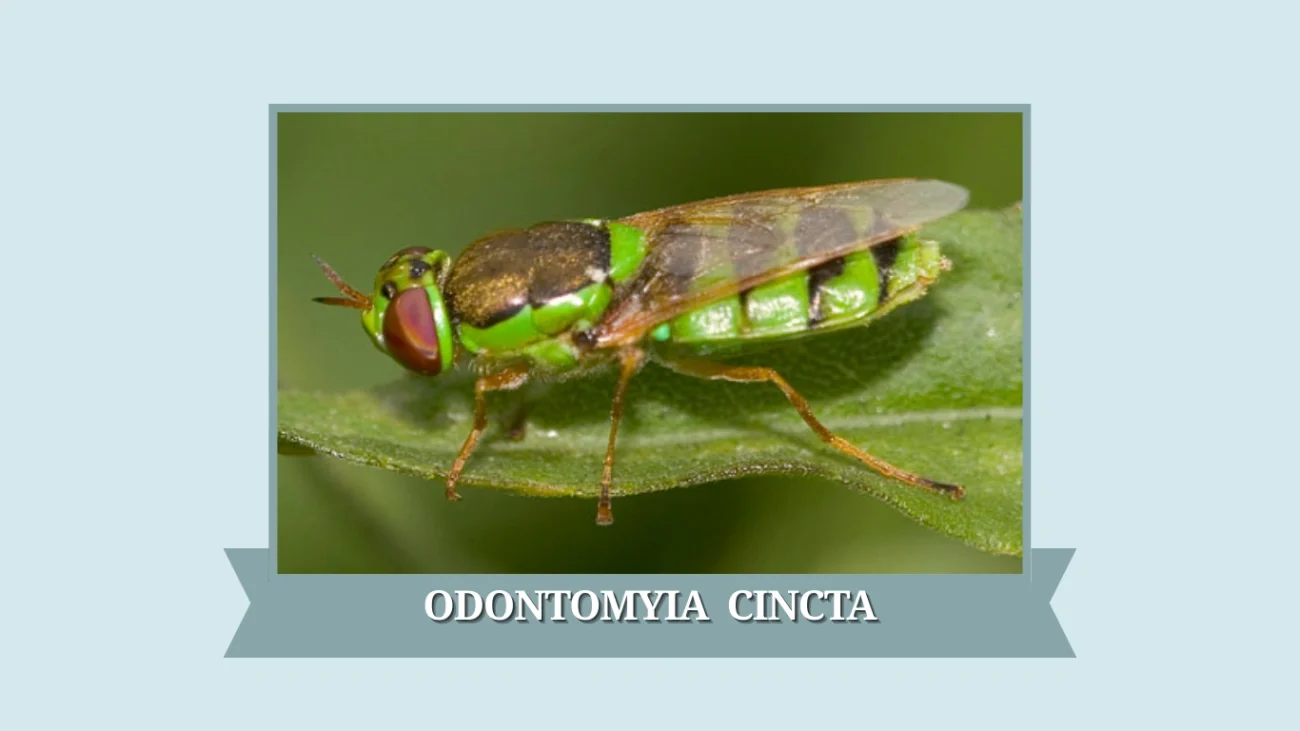
The Odontomyia cincta is a vividly marked soldier fly belonging to the subfamily Stratiomyinae. It is commonly found in Europe and prefers habitats with abundant moisture. Its bright green and yellow coloration makes it stand out among soldier flies, and it is often associated with flowering plants near wetlands.
Identification
- Medium-sized fly, about 8–12 mm long
- Distinctive green and yellow body with metallic reflections
- Transparent wings with a slight smoky hue
- Large, rounded compound eyes
- Short antennae compared to other soldier flies
Habitat
Odontomyia cincta is closely tied to wetland ecosystems such as marshes, ponds, riverbanks, and wet meadows. Adults are typically found perched on vegetation or flowers in sunny spots near water.
Behavior
Adults are diurnal and spend most of their time feeding on nectar and resting on plants. They are not strong fliers but move between flowers and vegetation frequently. Larvae inhabit damp soils or shallow water, where they act as decomposers, breaking down organic matter.
Diet
Adults feed primarily on nectar and pollen, playing a minor role in pollination. Larvae feed on decaying plant material and organic debris in moist or semi-aquatic environments, contributing to nutrient cycling within wetland ecosystems.
Lifecycle
Females lay their eggs in moist soil or near shallow water. The larvae live in semi-aquatic habitats, feeding and developing until pupation. After pupating in drier ground, adults emerge in summer, living for a short period during which they focus on reproduction and nectar feeding.
5. Odontomyia tigrina
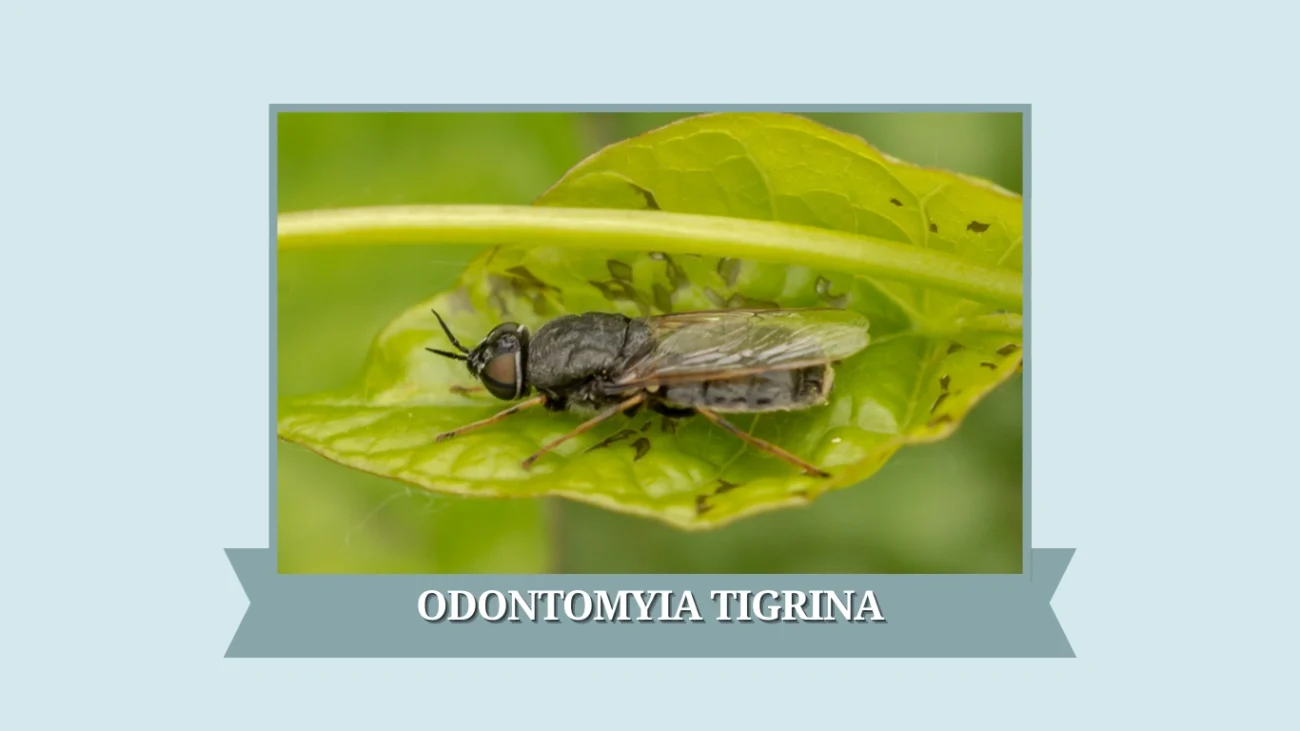
The Odontomyia tigrina is one of the more widespread species in the Odontomyia genus, known for its distinct body markings and preference for wetland habitats. It is commonly found in Europe and parts of Asia, usually near water sources where its larvae can thrive.
Identification
- Medium-sized fly, typically 9–12 mm in length
- Body with yellow and black patterns resembling a wasp
- Metallic green or bronze sheen visible in sunlight
- Clear wings, often with a slight brownish tint near the base
- Large compound eyes, with males having eyes that nearly meet at the top
Habitat
This species inhabits marshes, ponds, and damp meadows. It prefers sunny, open wetlands with abundant flowering plants. Adults are most active during warm summer months, particularly from June to August.
Behavior
Adults are often seen resting on vegetation or visiting flowers. They are slow fliers and non-aggressive. Larvae develop in wet or semi-aquatic conditions, especially in mud or decaying organic matter around water.
Diet
Adults feed on nectar and pollen from a variety of flowers, making them minor pollinators in wetland ecosystems. Larvae sustain themselves on decomposing organic material found in moist soils or shallow water, helping recycle nutrients back into the ecosystem.
Lifecycle
Females deposit eggs in wet soils or near aquatic vegetation. The larvae live in semi-aquatic environments, where they feed and grow until pupation. Adults emerge in summer and live briefly, focusing mainly on mating and feeding from flowers.
6. Odontomyia hydroleon
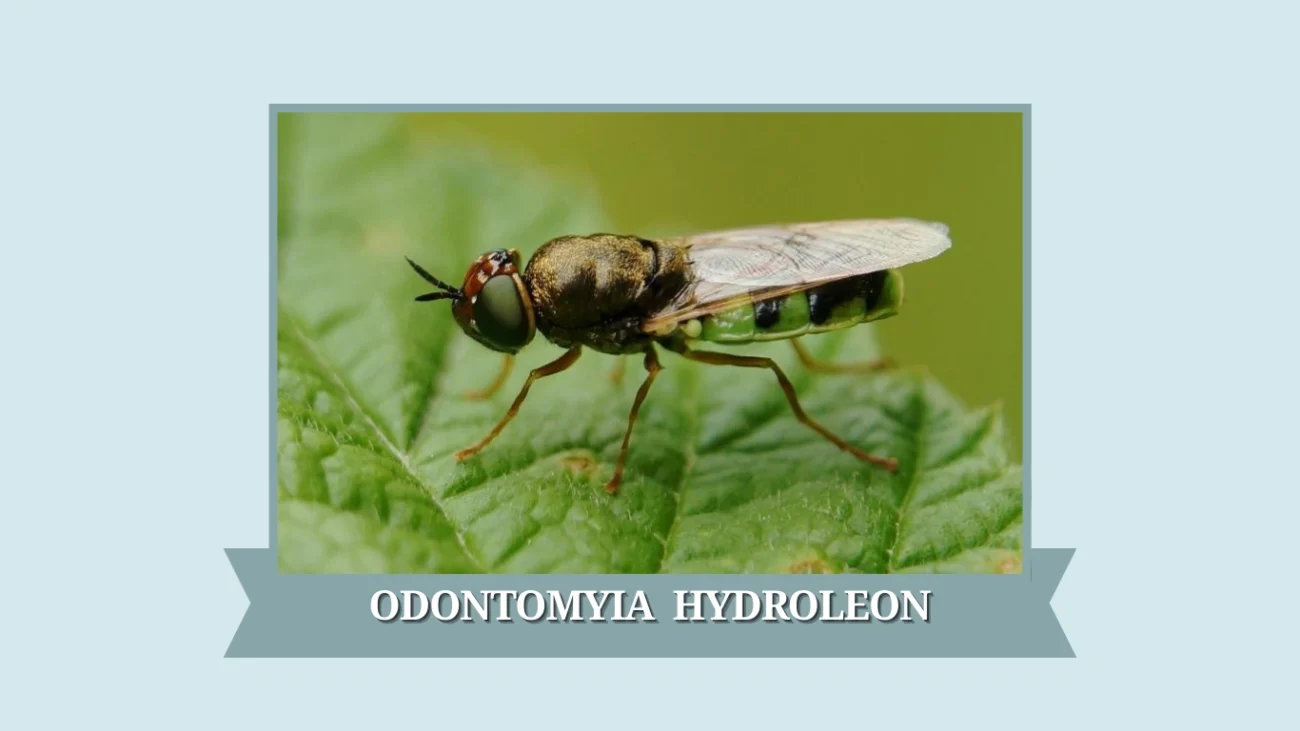
The Odontomyia hydroleon is a colorful soldier fly that thrives in moist habitats. It is less commonly encountered than some of its relatives but is still notable for its bright body patterns and preference for wetland ecosystems. This species is often spotted during warm summer months in Europe and parts of Asia.
Identification
- Medium-sized fly, about 9–13 mm in length
- Body with striking yellow and black markings
- Greenish or metallic reflections on thorax and abdomen
- Clear wings with a faint brownish shade
- Large compound eyes, especially prominent in males
Habitat
This species prefers marshes, wet meadows, riverbanks, and areas with shallow standing water. It is closely associated with aquatic or semi-aquatic vegetation, which provides both adult food sources and larval breeding sites.
Behavior
Adults are active during sunny weather, often seen basking on leaves or hovering around flowers. They are slow-moving and not aggressive. Larvae live in aquatic or damp environments, feeding on decaying plant matter and contributing to wetland decomposition cycles.
Diet
Adult flies consume nectar and pollen, which makes them occasional visitors to wetland flowers. Larvae feed on decomposing organic material in moist soil or shallow water, playing a role in breaking down waste and recycling nutrients.
Lifecycle
Eggs are laid near shallow water or damp vegetation. The larvae develop in aquatic or semi-aquatic habitats, feeding and growing until pupation. After metamorphosis, adults emerge in summer and live briefly, devoting their time to reproduction and feeding on nectar.
7. Odontomyia virgo
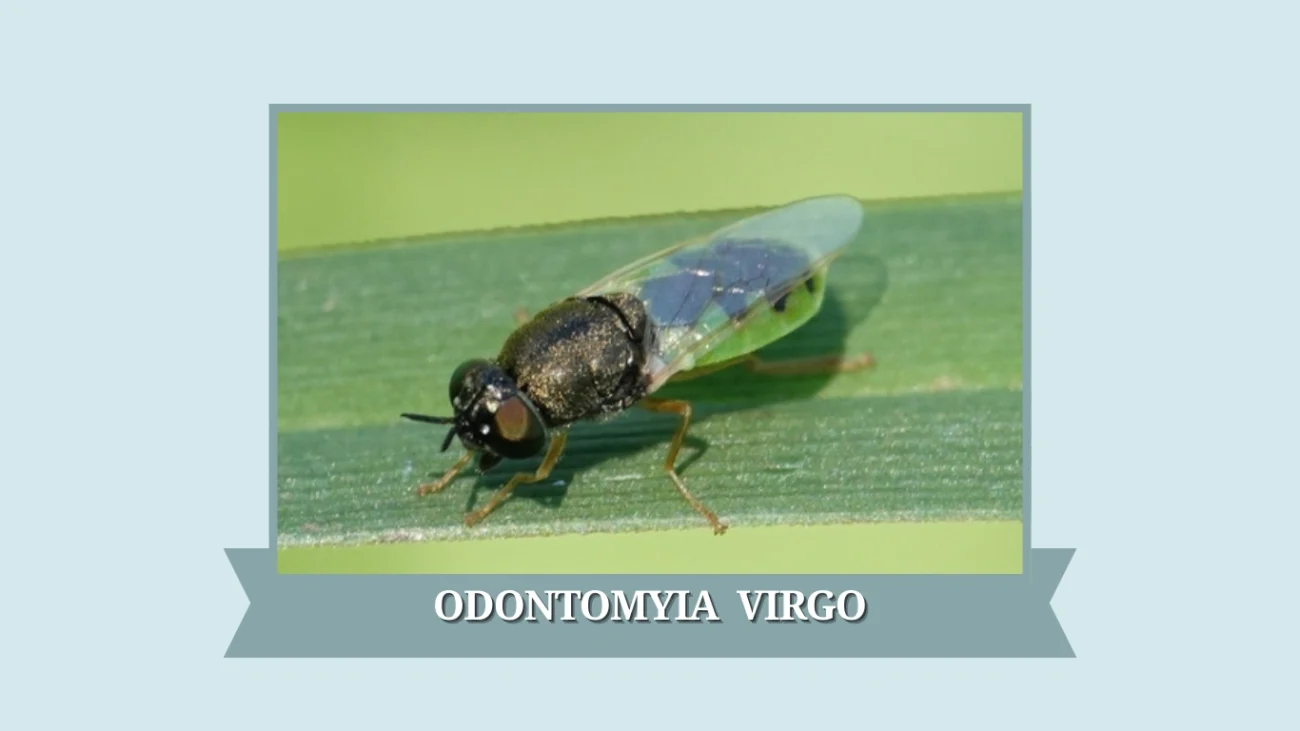
The Odontomyia virgo is a lesser-known but visually striking soldier fly species within the Odontomyia genus. It is typically associated with wetland and riparian habitats, where both larvae and adults play ecological roles in decomposition and pollination.
Identification
- Medium-sized fly, about 8–11 mm long
- Shiny black or metallic green body with bright yellow markings
- Distinct banding on the abdomen that mimics wasps
- Clear wings with a faint smoky tint
- Large, rounded compound eyes
Habitat
This species is usually found in wetlands, pond margins, and marshes. It thrives in moist areas with abundant vegetation, particularly where flowers are available for adults and decaying matter for larvae.
Behavior
Adults are diurnal and spend much of their time resting on flowers or vegetation near water. They are weak fliers and non-aggressive. Larvae live in damp soils or shallow aquatic zones, helping break down organic matter.
Diet
Adults feed mainly on nectar and pollen, contributing to the pollination of wetland plants. Larvae consume decomposing vegetation and organic material in damp or semi-aquatic environments, aiding in nutrient recycling.
Lifecycle
Females lay eggs in damp soils or close to aquatic plants. Larvae grow in wet environments, feeding and developing until pupation. Adults emerge during the warmer months, living only briefly while focusing on reproduction and flower visitation.
8. Odontomyia argentata
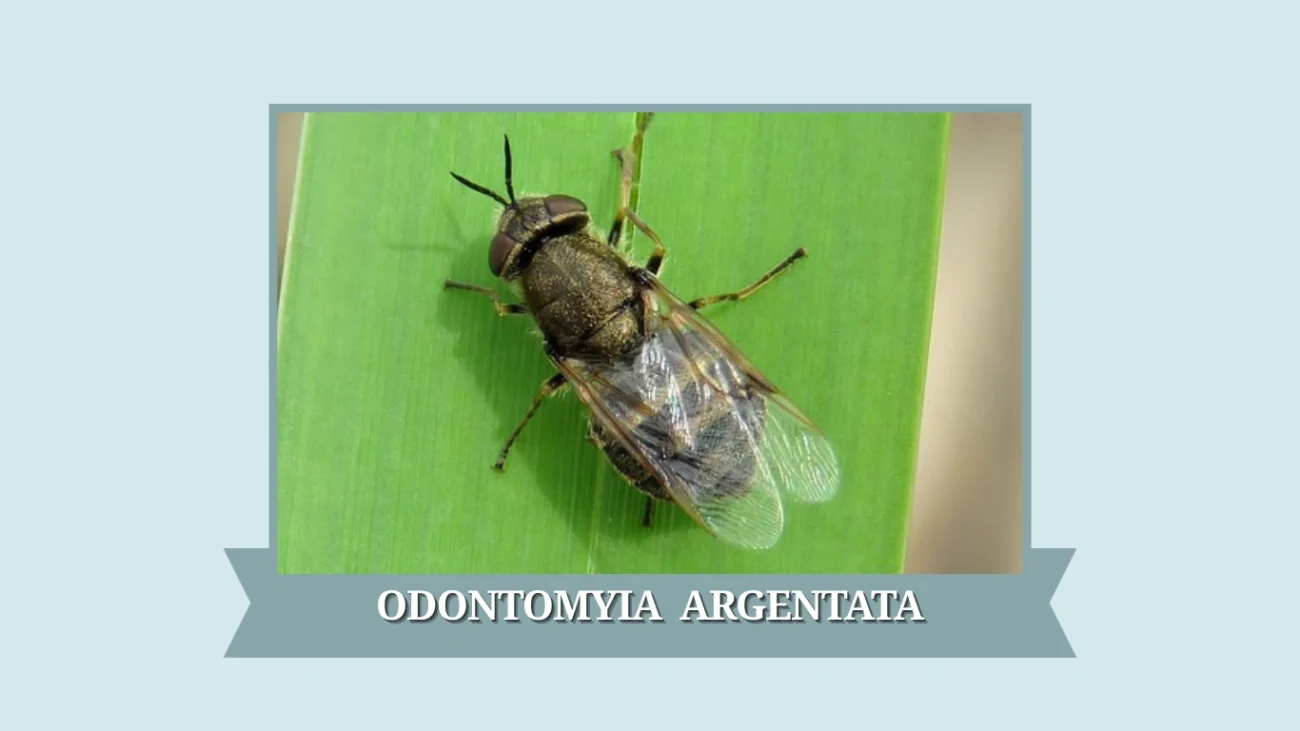
The Odontomyia argentata is a distinctive soldier fly recognized for its silvery markings, which set it apart from many of its close relatives. It inhabits moist environments across parts of Europe and Asia, thriving particularly in wetland areas with abundant vegetation.
Identification
- Medium-sized fly, about 9–12 mm long
- Body with metallic green or bronze sheen and noticeable silvery spots
- Abdomen broad and somewhat flattened with band-like markings
- Clear wings, slightly tinted at the base
- Large compound eyes, more prominent in males
Habitat
This species is strongly associated with marshes, wet meadows, ponds, and slow-flowing streams. Adults are often found resting on flowers and grasses near water, while larvae develop in damp or semi-aquatic substrates.
Behavior
Adults are slow-moving and commonly perch on vegetation in sunny areas. They are often observed visiting flowers during summer. Larvae play an important role in breaking down organic matter in damp soils or waterlogged conditions.
Diet
Adults feed primarily on nectar and pollen from flowering plants, especially those near wetlands. Larvae consume decomposing organic matter in moist soil or shallow water, assisting in nutrient cycling within their ecosystems.
Lifecycle
Females lay their eggs in wet soils or near aquatic vegetation. The larvae grow in semi-aquatic or moist environments, feeding until they pupate. Adults emerge in the warmer months, living only briefly while focusing on mating and nectar feeding.
9. Oplodontha viridula (Common Green Soldier Fly)
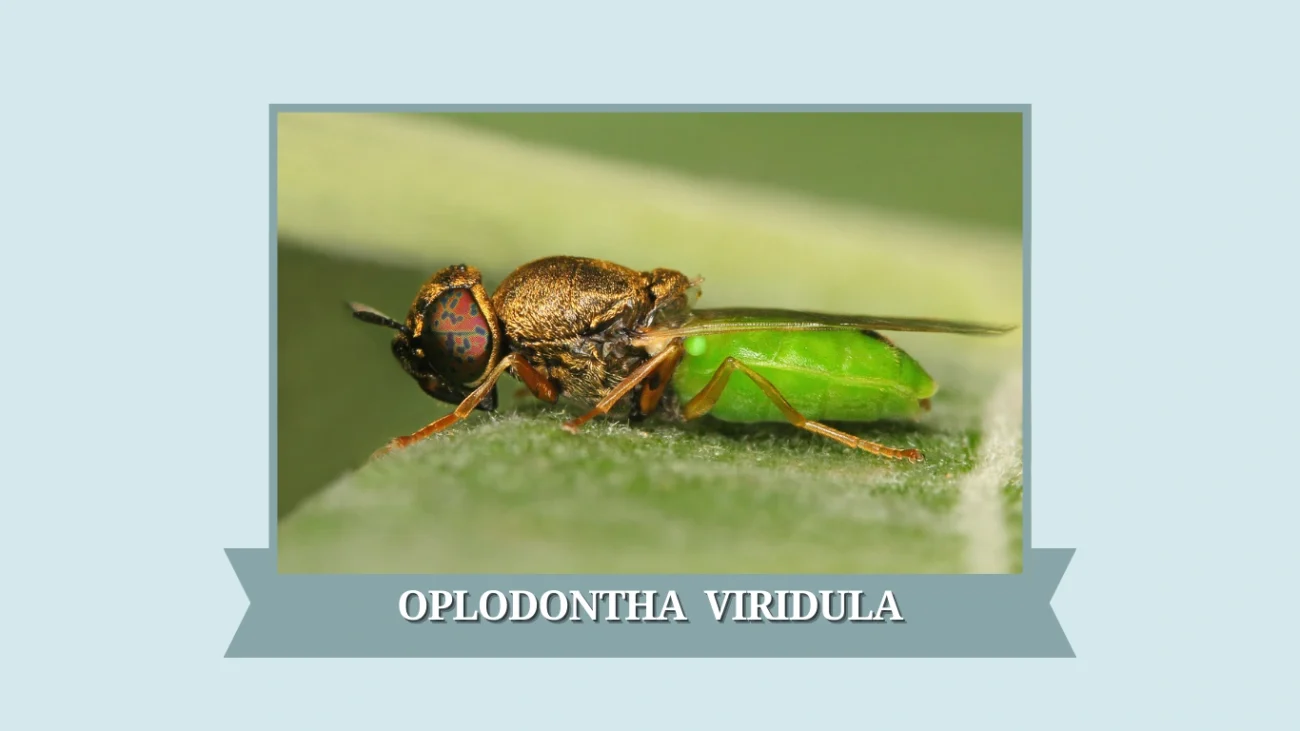
The Oplodontha viridula, commonly known as the Common Green Soldier Fly, is a bright and metallic-looking species that stands out for its vivid coloration. Widespread across Europe and Asia, it is frequently associated with wet and sunny habitats.
Identification
- Small to medium-sized fly, about 7–10 mm long
- Bright metallic green body, sometimes with golden reflections
- Rounded abdomen with smooth, shiny surface
- Clear wings with a faint yellowish tint
- Distinctive large, reddish-brown compound eyes
Habitat
This species favors warm, open wetland areas such as marshes, riverbanks, and meadows near water. It is especially abundant in places with flowering plants that provide nectar.
Behavior
Adults are active on warm, sunny days and often seen perched on flowers or resting on vegetation. They are relatively weak fliers and non-aggressive. Larvae develop in damp soil or muddy areas, helping decompose organic matter.
Diet
Adults feed mainly on nectar and pollen from a variety of flowers, contributing to pollination. Larvae consume decaying vegetation and organic debris in moist habitats, playing a role in recycling nutrients within ecosystems.
Lifecycle
Eggs are laid in damp soils or near aquatic vegetation. The larvae live in moist or semi-aquatic conditions, feeding until they pupate. Adults emerge in late spring and summer, living only briefly while focusing on feeding and reproduction.
10. Oxycera nigricornis
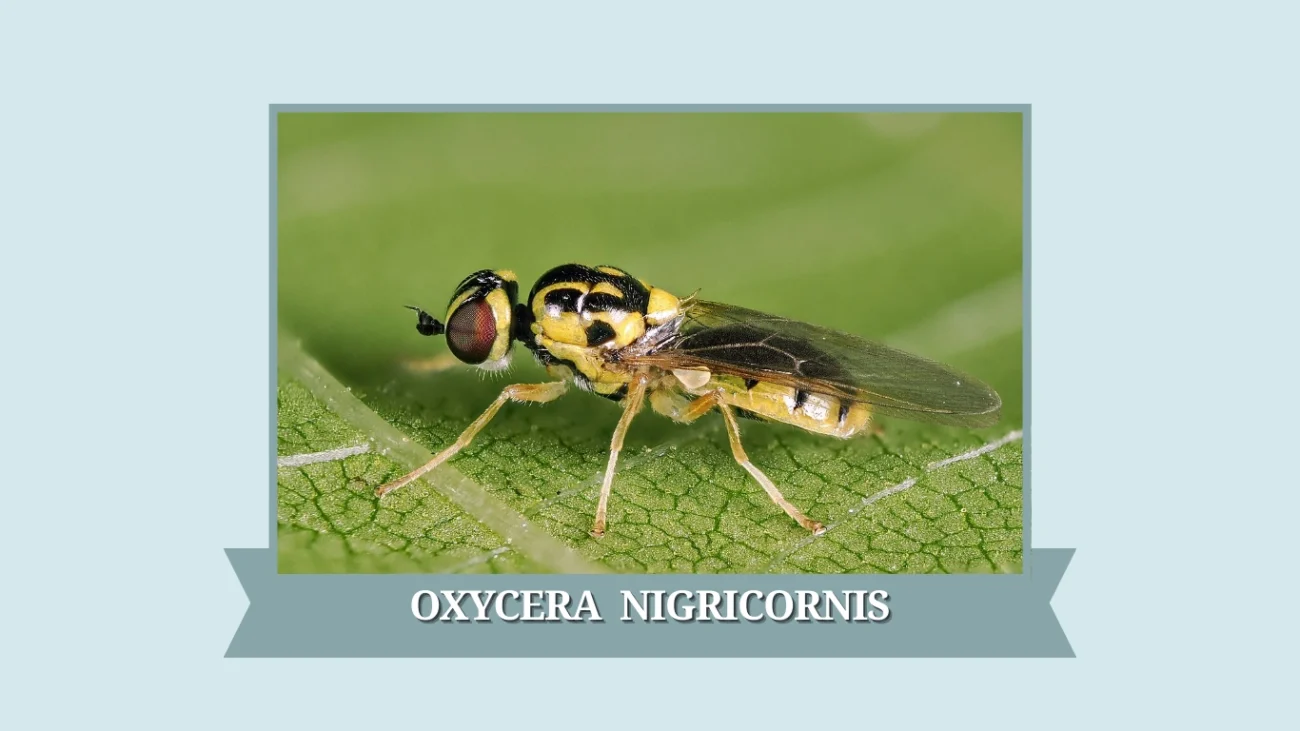
The Oxycera nigricornis is a small but striking species of soldier fly, known for its bright coloration and preference for moist, shaded habitats. It is found across much of Europe, especially in areas rich in wetland vegetation.
Identification
- Small-sized fly, about 5–7 mm long
- Black body with distinct yellow spots and markings
- Characteristic black antennae, which give the species its name
- Clear wings with a slight smoky tint
- Compact, short body shape typical of the genus Oxycera
Habitat
This species is closely linked to damp and shaded environments such as marshes, woodland edges, and riverbanks. It is often found near clean, slow-moving water where its larvae can develop.
Behavior
Adults are generally short-lived and spend much of their time resting on vegetation in sunny patches. They are not strong fliers and tend to stay close to their breeding grounds. Larvae develop in moist soils and muddy areas, contributing to decomposition processes.
Diet
Adult flies feed on nectar and occasionally pollen from flowers around wetlands. Larvae feed on decaying organic matter in damp soils or shallow aquatic environments, playing a vital role in nutrient recycling.
Lifecycle
Eggs are laid in damp soil or near aquatic vegetation. Larvae live in moist, shaded areas, feeding on decaying matter until they are ready to pupate. Adults emerge in summer, living only a few weeks to mate and reproduce.
11. Oxycera rara (Four-barred Major)
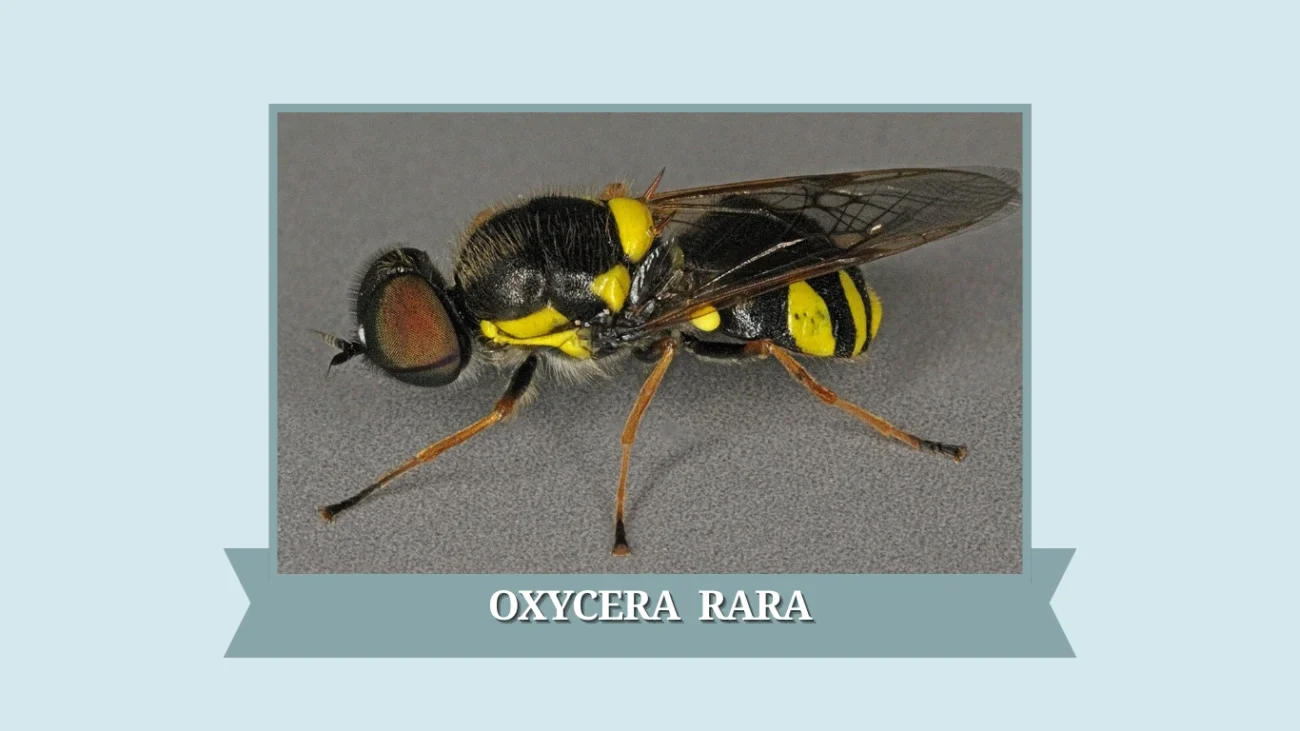
The Oxycera rara, commonly called the Four-barred Major, is one of the most distinctive soldier flies due to its unique wing and body markings. It is widely distributed across Europe and is strongly tied to wetland ecosystems.
Identification
- Small to medium-sized fly, about 6–9 mm long
- Black body with four prominent yellow bars across the thorax
- Abdomen short and broad, with additional yellow markings
- Transparent wings with subtle dark veins
- Antennae short and dark-colored
Habitat
This species prefers wetlands, damp meadows, fens, and the edges of streams or ponds. It thrives in sunny but moist habitats, especially where lush vegetation provides shelter and food sources.
Behavior
Adults are usually seen resting on leaves or flowers in wetland areas. They are not strong fliers and generally stay close to their larval habitats. Larvae grow in moist soils rich in decaying organic matter.
Diet
Adults feed on nectar and pollen, often visiting small wetland flowers. Larvae consume decomposing organic debris in damp soil or shallow water, making them important contributors to nutrient cycling in wet ecosystems.
Lifecycle
Eggs are deposited in wet soil or vegetation close to water. The larvae develop in moist habitats, feeding on organic waste until pupation. Adults emerge in summer, active mainly from June to August, with their brief lifespan focused on reproduction.
12. Oxycera pardalina
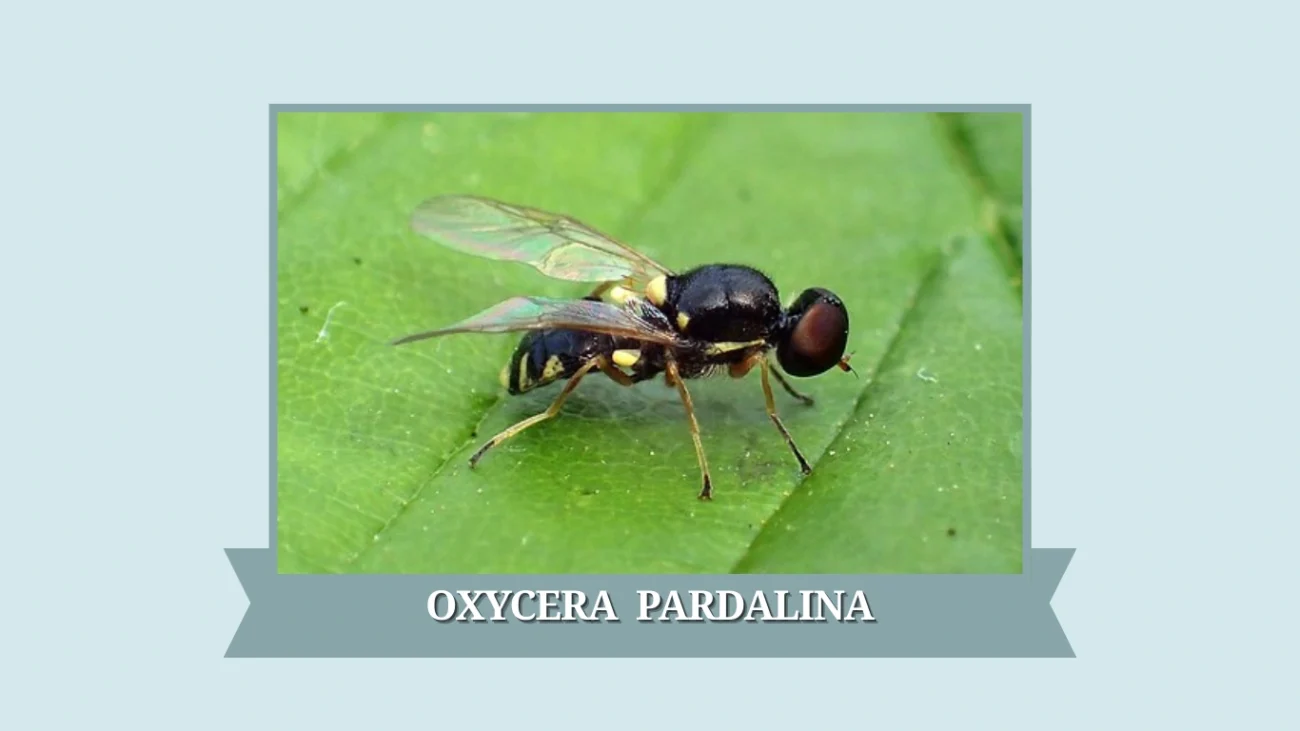
The Oxycera pardalina is a small but eye-catching soldier fly, recognized for its spotted body patterns. It is native to Europe and closely associated with wetland habitats, often seen in shaded and damp environments during the summer months.
Identification
- Small fly, usually 5–7 mm in length
- Black body decorated with distinct yellow or white spots
- Short, compact abdomen with bright lateral markings
- Clear wings with fine venation
- Antennae short and dark, typical of the genus Oxycera
Habitat
This species prefers shaded wetlands, marshy woodland edges, and areas along streams or rivers. It requires clean, damp soils or shallow aquatic zones for larval development.
Behavior
Adults are weak fliers, spending much of their time perched on low vegetation or flowers. They are active during warm, sunny days but remain close to wetland habitats. Larvae play a vital role in decomposition by thriving in moist organic substrates.
Diet
Adults feed on nectar and sometimes pollen, making them minor pollinators of small flowers near wetlands. Larvae consume decaying plant material and organic matter in damp soils, contributing to nutrient recycling.
Lifecycle
Eggs are laid in wet or semi-aquatic soils. The larvae develop in moist habitats, feeding on decomposing material until they pupate. Adults emerge in summer, with activity peaking from June to August, and live only briefly to reproduce.
13. Beris chalybata (Murky-legged Black Colonel)
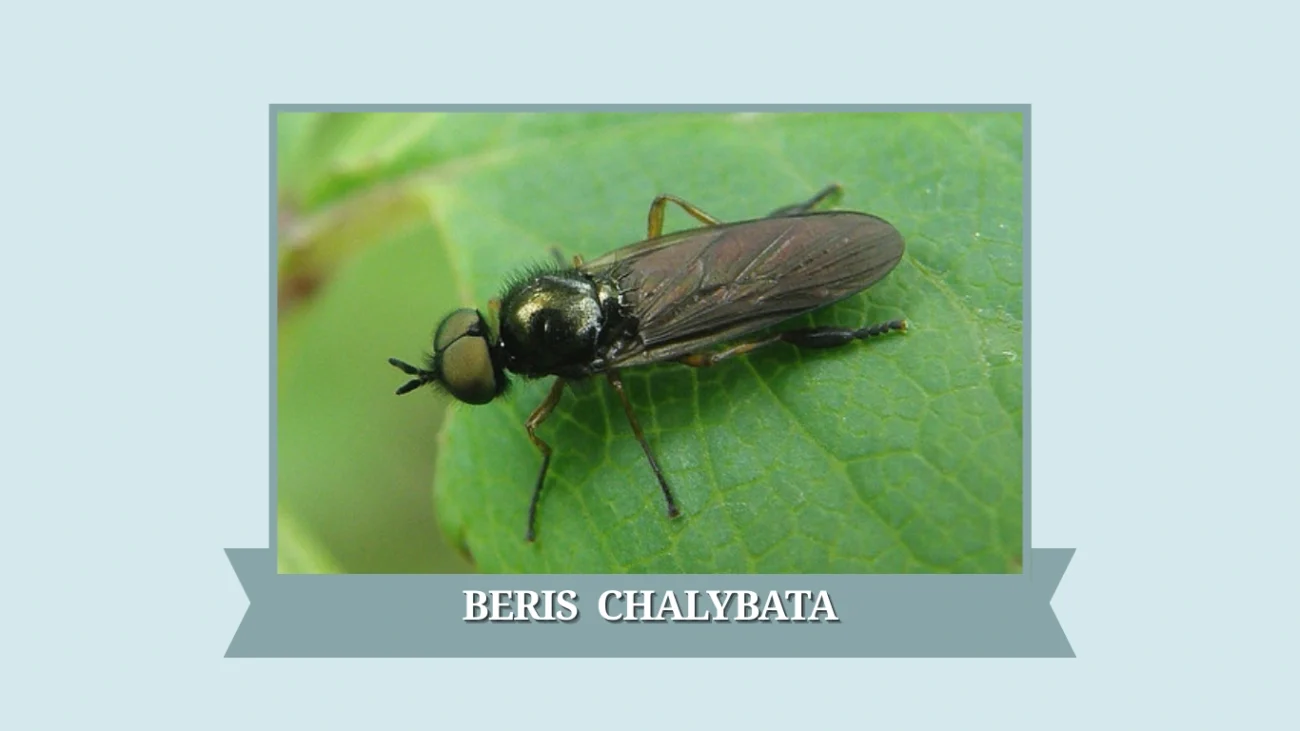
The Beris chalybata, also known as the Murky-legged Black Colonel, is a distinctive soldier fly with metallic coloration and dark, contrasting legs. It is fairly common in Europe and is often encountered in damp, shaded habitats.
Identification
- Small to medium-sized fly, about 7–9 mm long
- Metallic green or bronze body with a shiny appearance
- Legs dark or “murky,” giving the species its common name
- Clear wings with a slight brownish tint near the base
- Antennae short and positioned low on the head
Habitat
This species inhabits damp woodland edges, shaded wetlands, and hedgerows. It is frequently seen in places with rich vegetation and moist soils, which provide ideal conditions for larval development.
Behavior
Adults are calm and often found resting on low vegetation in shady spots. They are not strong fliers and typically stay close to their breeding sites. Larvae develop in damp soil rich in organic matter, feeding on decaying material.
Diet
Adults feed mainly on nectar and pollen from small flowers, occasionally visiting umbellifers and other low-growing plants. Larvae consume decaying vegetation and organic debris in moist soils, assisting in decomposition.
Lifecycle
Eggs are laid in damp soils or decaying vegetation. Larvae develop in rich organic material, feeding until they pupate. Adults emerge in summer, generally from June to August, and live only a short time to reproduce and feed on flowers.
14. Beris vallata
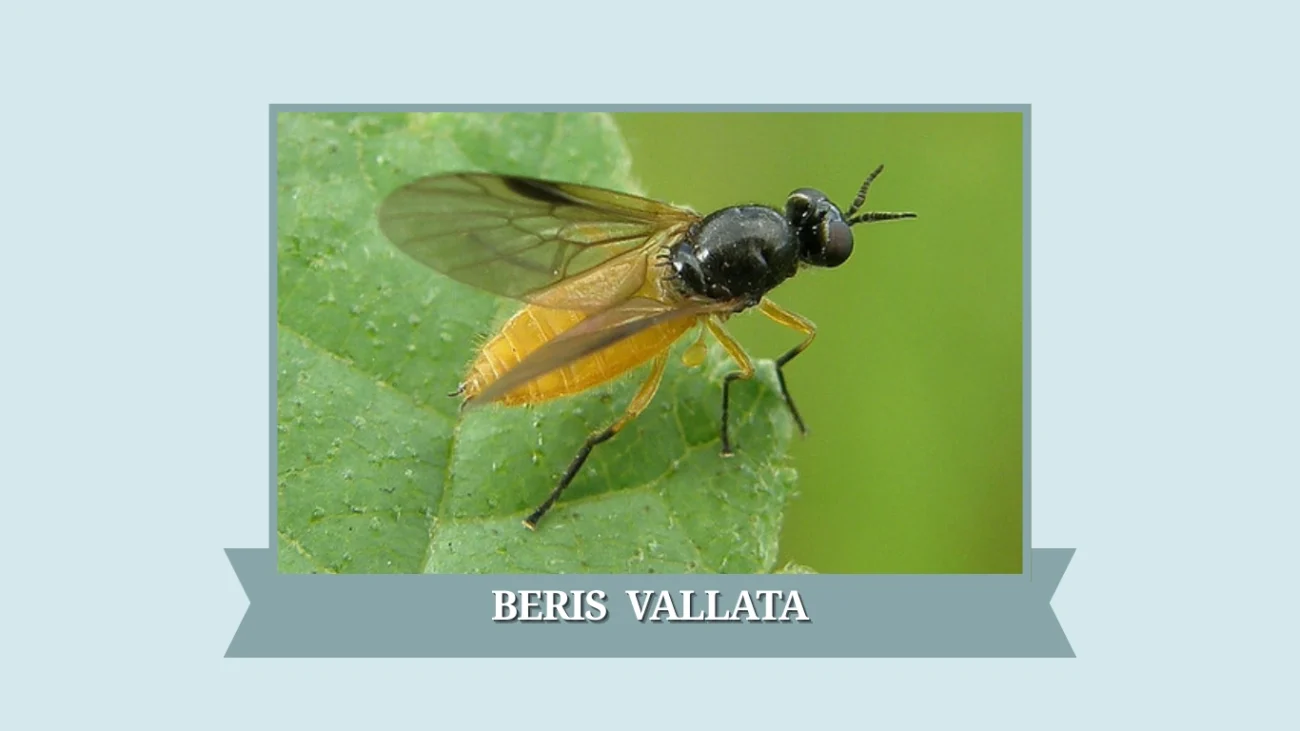
The Beris vallata is a widespread soldier fly found throughout Europe, especially in habitats with rich vegetation and damp soils. It is closely related to other Beris species and is often recognized by its metallic sheen and characteristic body shape.
Identification
- Small fly, about 6–8 mm in length
- Metallic green or bronze body with a glossy finish
- Antennae short and positioned low on the head
- Clear wings, sometimes slightly tinted
- Abdomen short and somewhat rounded, typical of the Beris genus
Habitat
This species is most commonly found in damp woodlands, hedgerows, and shaded meadows. It thrives in environments with moist soils rich in organic matter, which support larval development.
Behavior
Adults are usually seen resting quietly on low vegetation. They are weak fliers and tend to stay close to their breeding areas. Activity is strongest during sunny summer days. Larvae play an ecological role as decomposers in damp soils.
Diet
Adult flies feed on nectar and pollen, especially from small flowering plants such as umbellifers. Larvae consume decaying plant material and organic debris in moist environments, aiding in nutrient cycling.
Lifecycle
Females lay eggs in damp soils or rotting vegetation. The larvae feed and develop within decomposing organic matter until pupation. Adults emerge in summer, typically from June to August, living briefly while focusing on reproduction and flower visitation.
15. Sargus bipunctatus (Twin-spot Sargus)
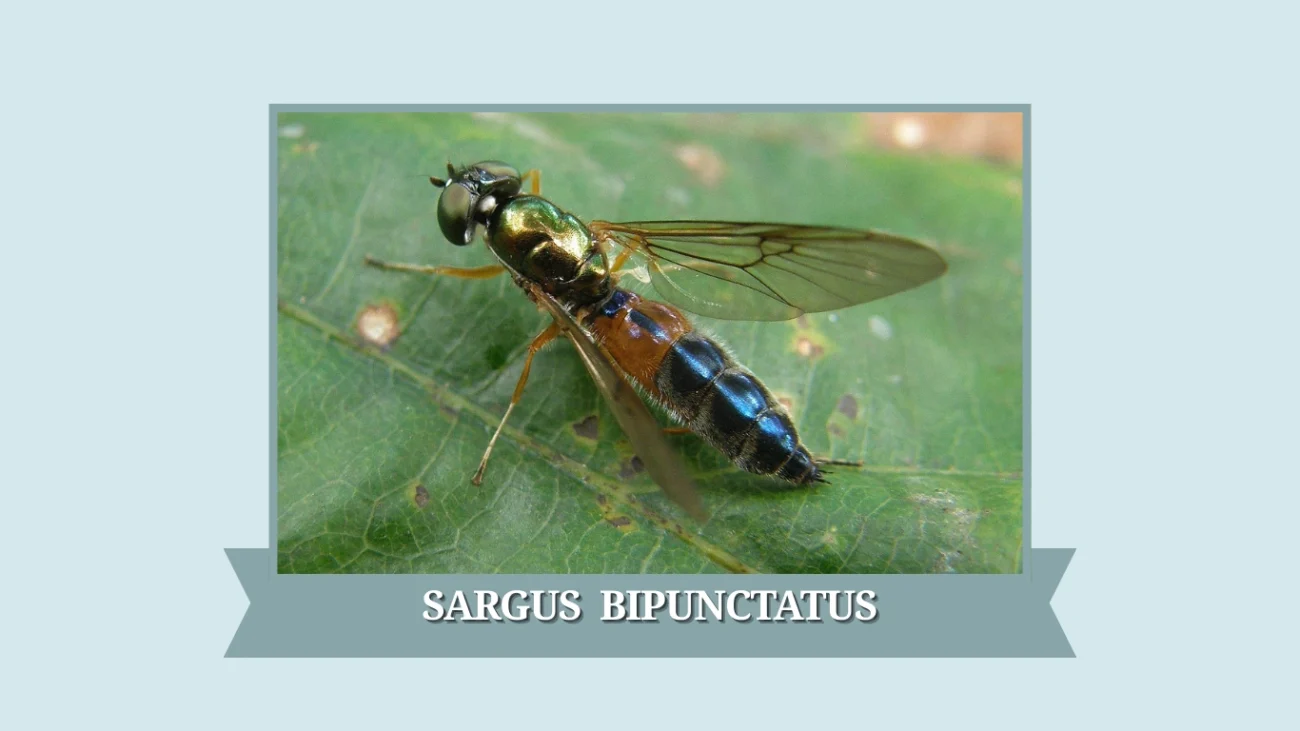
The Sargus bipunctatus, commonly called the Twin-spot Sargus, is a colorful and easily recognized soldier fly. It is widely distributed across Europe and parts of Asia, often appearing in late summer and autumn. Its shimmering body colors and distinct abdominal spots make it stand out among other soldier flies.
Identification
- Medium-sized fly, about 8–12 mm long
- Metallic green or blue body with iridescent reflections
- Two distinctive pale spots on the abdomen (the “twin-spots”)
- Clear wings with a slight smoky tint
- Long legs compared to many other soldier fly species
Habitat
This species inhabits woodland edges, meadows, hedgerows, and gardens. It is frequently found near compost heaps or rotting vegetation, which provide suitable environments for larval development.
Behavior
Adults are most active from late summer into autumn, often resting on vegetation or visiting flowers. They are relatively weak fliers and usually stay near their breeding grounds. Larvae develop in decaying plant matter, compost, and other organic waste.
Diet
Adults feed mainly on nectar and pollen, visiting a wide variety of flowers. Larvae consume decomposing vegetation and organic material, making them valuable contributors to the recycling of nutrients.
Lifecycle
Females lay eggs in decaying vegetation, compost heaps, or moist soil rich in organic matter. Larvae feed and grow within this material until they pupate. Adults emerge in late summer and autumn, with their short lifespan centered on feeding and reproduction.