




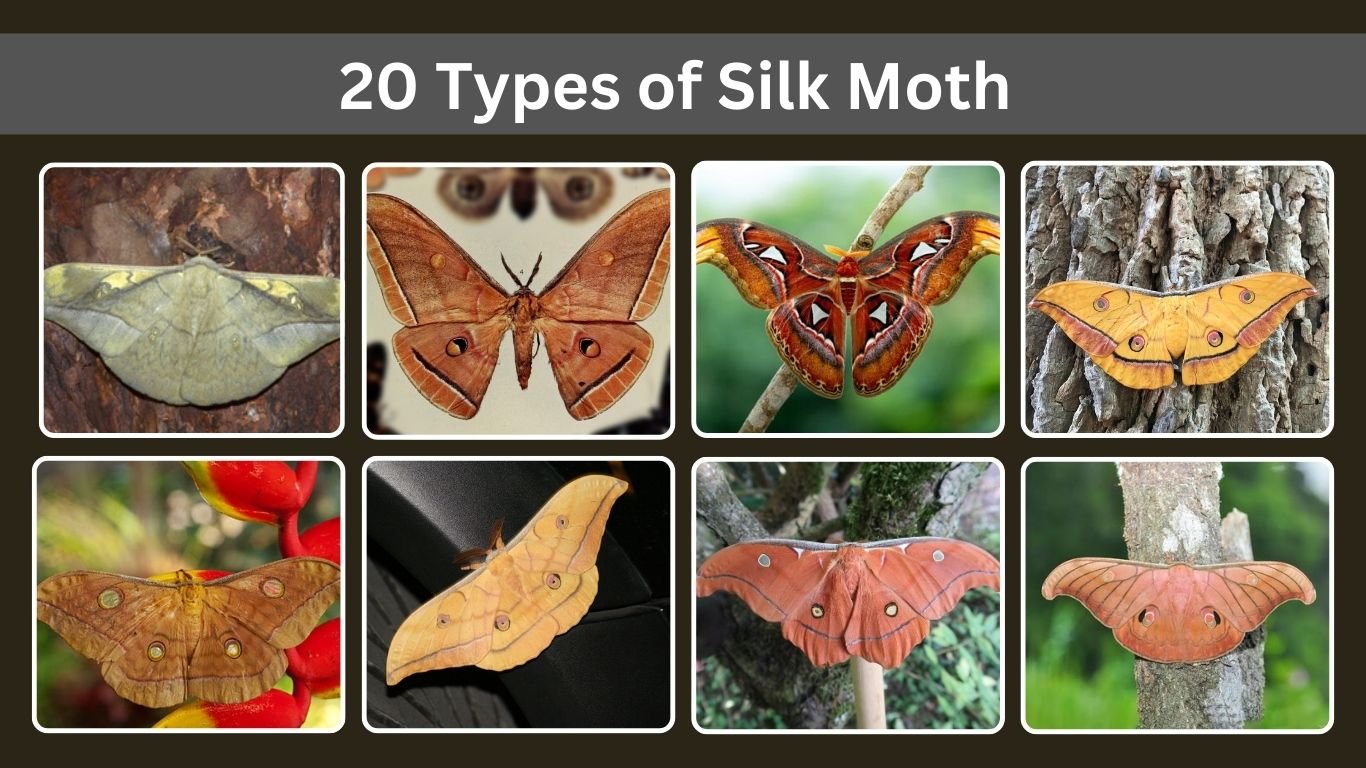
Silk moths are a fascinating group of insects belonging to the family Saturniidae, renowned for their ability to produce silk. From the domesticated Bombyx mori to wild species like Antheraea assamensis and Samia ricini, these moths play vital roles in culture, ecology, and textile industries. This guide introduces 25 types of silk moths, highlighting their identification, habitat, behavior, and unique lifecycles in a structured, easy-to-follow format.
1. Bombyx mori (Domestic Silk Moth)

The domestic silk moth (Bombyx mori) is the best-known and most economically important silk-producing insect. Domesticated for thousands of years, it no longer exists in the wild and depends entirely on humans for survival. It is the primary source of commercial silk worldwide.
Identification
- Medium-sized moth with a wingspan of about 3–5 cm
- Creamy white body and wings with minimal markings
- Reduced mouthparts, meaning adults cannot feed
- Short, stout antennae in females; larger and feathery in males
- Caterpillars are white or pale yellow with a soft cylindrical body
Habitat
Since Bombyx mori is fully domesticated, its habitat is restricted to controlled environments maintained by humans. Rearing typically occurs in trays or shelves with regulated temperature and humidity.
Behavior
The adult moths are flightless and relatively inactive. Males flutter slightly in search of females, guided by pheromones, while females remain stationary after emerging. The species relies entirely on humans for feeding, breeding, and cocoon harvesting.
Lifecycle
The lifecycle includes four stages: egg, larva (caterpillar), pupa (cocoon), and adult. Eggs hatch into larvae that feed exclusively on mulberry leaves. After several molts, the larvae spin cocoons of silk, within which they pupate. Humans usually harvest the cocoons for silk before the adult moth emerges. The entire cycle typically lasts 6–8 weeks under managed conditions.
2. Antheraea pernyi (Chinese Tussar Moth)
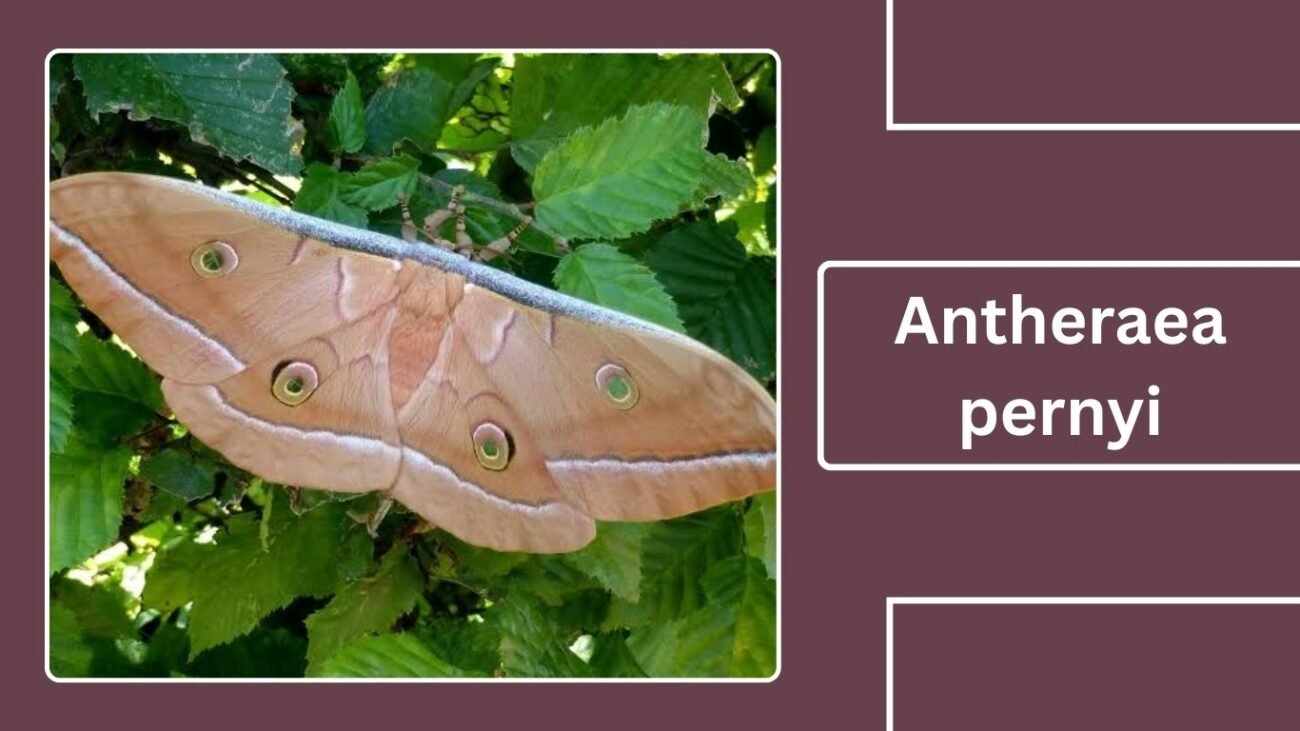
The Chinese tussar moth (Antheraea pernyi) is a wild silk moth native to China. It is a major producer of tussar silk, which is stronger and coarser than mulberry silk. This species has been semi-domesticated for large-scale silk production.
Identification
- Large moth with a wingspan of 10–15 cm
- Brownish-yellow wings with eye-like spots on both forewings and hindwings
- Males are smaller with more feathery antennae, while females are larger and rounder
- Caterpillars are green with small tubercles and spines, often with bluish spots
Habitat
This species is native to China but has been introduced to other Asian and European regions for silk farming. Its larvae feed on a wide range of trees, including oak, birch, and chestnut, which serve as their primary habitat.
Behavior
Adults are nocturnal and generally short-lived, surviving only long enough to reproduce. Caterpillars are voracious feeders, consuming large amounts of foliage. The moths are relatively sedentary and rely on chemical communication for mating.
Lifecycle
The lifecycle consists of egg, larva, pupa, and adult stages. Females lay eggs on host tree leaves. Caterpillars pass through several instars before spinning large, tough cocoons used in tussar silk production. Pupation occurs within the cocoon, and adults emerge after metamorphosis, completing the cycle. Multiple generations may occur annually in warmer climates.
3. Antheraea mylitta (Tropical Tasar Moth)

The tropical tasar moth (Antheraea mylitta) is a wild silk moth widely found in India and parts of South Asia. It produces tasar silk, which is coppery in color, strong, and widely used in traditional textiles. Unlike mulberry silk, tasar silk has a natural sheen and rough texture.
Identification
- Large moth with a wingspan of 12–16 cm
- Brownish or reddish wings with prominent eye-like spots on each wing
- Sexual dimorphism: males are smaller with bushy antennae, while females are larger and fuller-bodied
- Caterpillars are green with yellow lateral lines and small tubercles
Habitat
Natively distributed in India, this moth thrives in tropical forests and semi-arid regions. The larvae feed on the leaves of trees like Terminalia (Arjun, Asan) and Shorea (Sal), which serve as their natural habitat.
Behavior
Adults are nocturnal and live only a few days, focusing solely on reproduction. Caterpillars are heavy feeders, consuming large amounts of foliage before spinning their durable cocoons. The moths are wild and less dependent on humans compared to fully domesticated silk moths.
Lifecycle
The lifecycle includes egg, larva, pupa, and adult stages. Females lay hundreds of eggs on host trees. Caterpillars undergo multiple molts before spinning their thick, single-shelled cocoons. Pupation occurs inside the cocoon, and adult moths emerge after several weeks. In tropical regions, multiple broods may occur annually, depending on environmental conditions.
4. Antheraea assamensis (Muga Silk Moth)

The Muga silk moth (Antheraea assamensis) is native to Assam and northeastern India. It is famous for producing the rare and luxurious Muga silk, which has a natural golden-yellow sheen and is highly prized in traditional Assamese textiles.
Identification
- Medium to large moth with a wingspan of 10–12 cm
- Golden-brown wings with subtle eye-like markings
- Females are larger and more robust, while males are slightly smaller with bushier antennae
- Caterpillars are green with yellowish bands and small tubercles along the body
Habitat
This species is endemic to Assam and neighboring regions, thriving in the subtropical and humid climate. The larvae feed on the leaves of Som (Machilus bombycina) and Soalu (Litsea polyantha) trees, which are essential for successful rearing.
Behavior
Adults are nocturnal and live only a short time, mainly to mate and lay eggs. Caterpillars are heavy feeders, consuming host plant leaves rapidly before spinning their dense golden cocoons. Unlike fully domesticated silk moths, A. assamensis still relies heavily on natural and semi-domesticated environments.
Lifecycle
The lifecycle follows egg, larva, pupa, and adult stages. Eggs are laid on host plant leaves, and larvae pass through several instars before cocooning. The cocoon is strong and golden in color, giving rise to the unique Muga silk. Typically, two to three generations occur per year, with the best silk quality produced during cooler months.
5. Antheraea yamamai (Japanese Silk Moth)
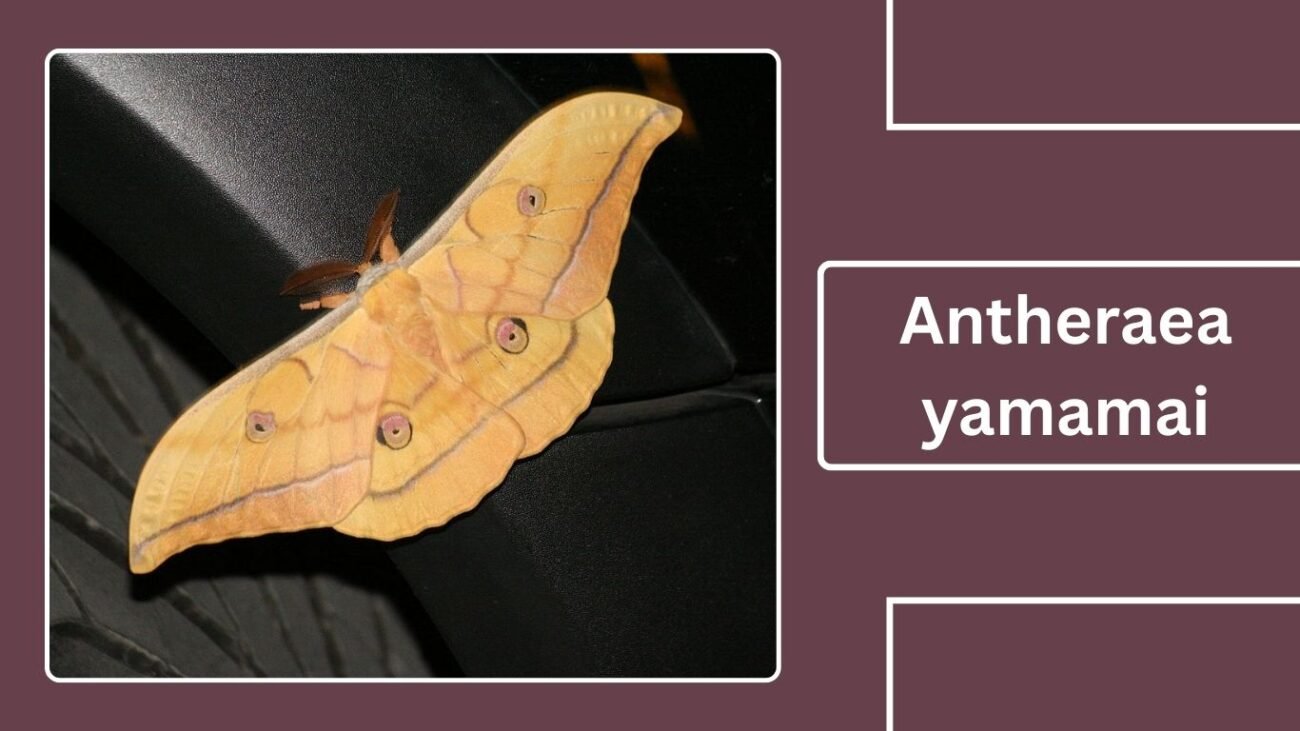
The Japanese silk moth (Antheraea yamamai) is native to Japan and parts of East Asia. It is valued for producing a strong, naturally white silk that is thicker and more elastic than mulberry silk. Though less common commercially, this silk is prized for luxury textiles.
Identification
- Large moth with a wingspan of 12–15 cm
- Pale greenish-yellow wings with distinct eye-like spots on all four wings
- Males are smaller with feathery antennae; females are larger and fuller-bodied
- Caterpillars are green with bluish tubercles and small spines along their body
Habitat
This species is primarily found in Japan, Korea, and parts of China. The larvae feed mainly on oak (Quercus) leaves, particularly sawtooth oak, which is abundant in its native regions.
Behavior
Adults are nocturnal and live only long enough to reproduce. Males actively seek females by detecting pheromones, while females remain largely stationary. Caterpillars are voracious feeders, consuming large amounts of oak foliage before spinning their strong, white cocoons.
Lifecycle
The lifecycle includes egg, larva, pupa, and adult stages. Eggs are laid on oak leaves, and larvae undergo several molts before cocooning. Pupation occurs inside the silken cocoon, and adult moths emerge after several weeks. Typically, the species produces a single generation per year, aligned with seasonal oak leaf availability.
6. Antheraea polyphemus (Polyphemus Moth)

The Polyphemus moth (Antheraea polyphemus) is one of the largest and most widespread silk moths in North America. Although not a major commercial silk producer, it is admired for its striking appearance and the durability of its cocoon silk.
Identification
- Very large moth with a wingspan of 12–15 cm
- Reddish-brown to tan wings with prominent large eye spots on the hindwings
- Hindwing eyespots have transparent “windows” surrounded by yellow, black, and blue rings
- Males are smaller with broad, feather-like antennae, while females are larger with narrower antennae
- Caterpillars are bright green with diagonal yellow lines and reddish tubercles
Habitat
This species is native to North America, commonly found in deciduous forests, woodlands, orchards, and suburban areas. The caterpillars feed on a wide range of host trees, including oak, maple, willow, birch, and fruit trees.
Behavior
Adults are nocturnal and have very short lifespans, surviving only about a week. They do not feed and rely entirely on stored energy. Males actively fly in search of females at night, while females remain still, releasing pheromones to attract mates. Caterpillars are solitary and feed heavily before spinning their large, tough, oval-shaped cocoons.
Lifecycle
The lifecycle includes egg, larva, pupa, and adult stages. Females lay eggs on host plant leaves. The caterpillars undergo five instars before spinning a dense cocoon of brownish silk, usually attached to twigs or leaves. Adults emerge after pupation, with one or two generations per year depending on the climate.
7. Antheraea paphia (Indian Tasar Moth)

The Indian tasar moth (Antheraea paphia) is another important wild silk moth of India, contributing to the production of tasar silk. The silk is coarse, durable, and widely used in traditional Indian textiles, especially in sarees and handcrafted fabrics.
Identification
- Large moth with a wingspan of 12–14 cm
- Brownish to yellowish wings with eye-like spots on both forewings and hindwings
- Males are smaller with broad, feathery antennae, while females are larger and rounder
- Caterpillars are green with bluish tubercles and fine spines along their body
Habitat
This species is native to India and surrounding South Asian regions. It inhabits tropical and subtropical forests. The larvae feed on host plants such as Terminalia (Arjun, Asan) and Shorea (Sal), which are abundant in these regions.
Behavior
Adults are nocturnal and live for only a short period, mainly for reproduction. Caterpillars are solitary feeders and consume large amounts of foliage before spinning their dense cocoons. The species is semi-domesticated, with rearing carried out in both forest and village-based systems.
Lifecycle
The lifecycle includes egg, larva, pupa, and adult stages. Females lay eggs on the leaves of host trees. The caterpillars undergo several molts before spinning single-shelled, hard cocoons that are used for tasar silk production. Depending on climatic conditions, two or more generations can occur annually.
8. Antheraea frithi (Frith’s Silkmoth)

The Frith’s silkmoth (Antheraea frithi) is a wild silk moth found in parts of South and Southeast Asia. It is valued for producing coarse wild silk, though it is less commercially important than other species like A. mylitta or A. assamensis.
Identification
- Large moth with a wingspan of 11–15 cm
- Brownish-yellow to reddish wings with distinct eye-like spots on all four wings
- Males are smaller with broad, feathery antennae; females are larger and heavier-bodied
- Caterpillars are green with small bluish tubercles and fine spines
Habitat
This species inhabits forested regions of India, Nepal, Myanmar, and Thailand. The larvae primarily feed on host plants such as Terminalia (Arjun, Asan) and Shorea (Sal), similar to other tasar silk moths.
Behavior
Adults are nocturnal and survive only for a few days, their primary purpose being reproduction. Caterpillars are solitary and feed voraciously on host plant leaves. The cocoons are strong and dense, providing durable silk used in wild silk production.
Lifecycle
The lifecycle consists of egg, larva, pupa, and adult stages. Females lay eggs on the leaves of host trees. After multiple molts, caterpillars spin large, oval, and hard-shelled cocoons. Pupation occurs inside, and adults emerge after several weeks. Depending on environmental conditions, one or two generations may occur annually.
9. Antheraea helferi (Helfer’s Silk Moth)
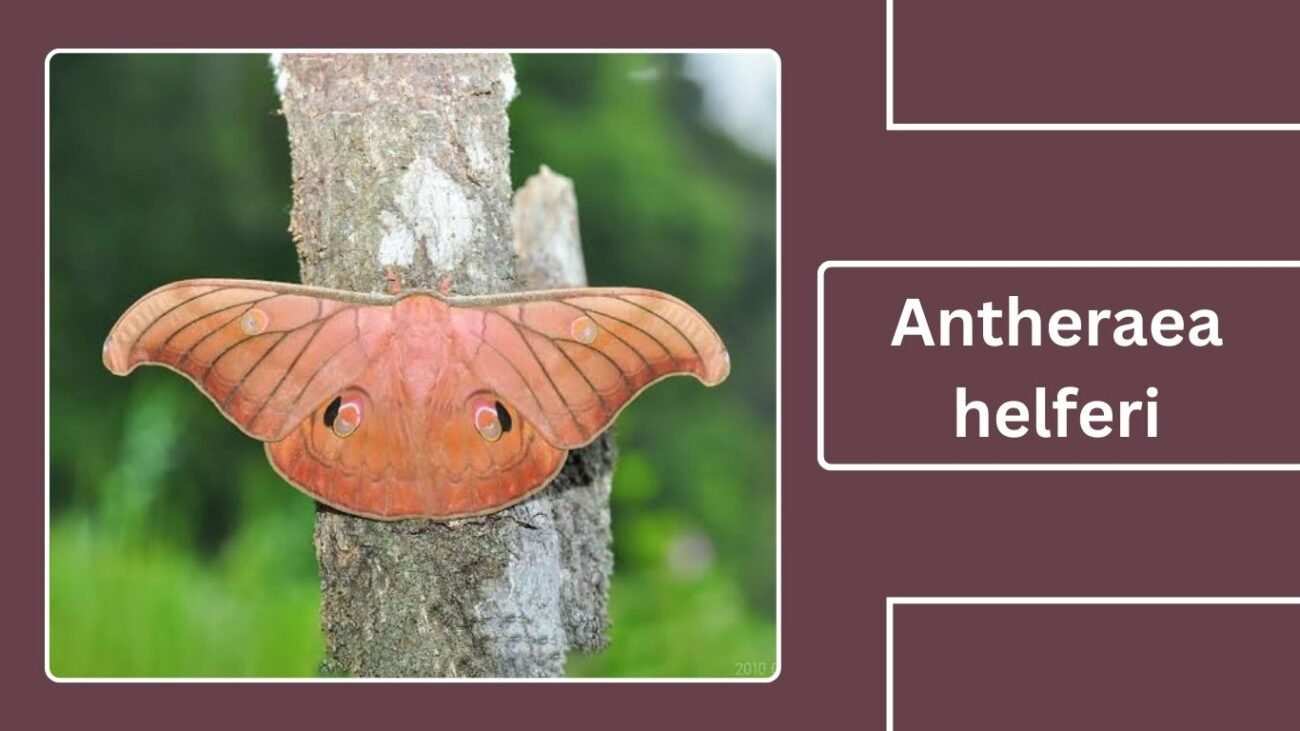
The Helfer’s silk moth (Antheraea helferi) is a wild silk moth native to parts of South and Southeast Asia. Though not as commercially significant as A. mylitta or A. assamensis, it contributes to the diversity of wild silk-producing moths.
Identification
- Medium to large moth with a wingspan of 10–13 cm
- Brownish to yellowish wings with eye-like spots on both forewings and hindwings
- Males are smaller with more feathery antennae, while females are larger with rounded abdomens
- Caterpillars are bright green with small tubercles and faint yellow stripes along the sides
Habitat
This species is distributed across India, Myanmar, and neighboring regions. It inhabits subtropical forests and woodlands, where host trees such as Terminalia and Shorea provide food for the larvae.
Behavior
Adults are nocturnal and short-lived, surviving only long enough to mate and lay eggs. Males are more active in flight, while females remain stationary after releasing pheromones to attract mates. Caterpillars feed extensively on host tree leaves before spinning their tough silk cocoons.
Lifecycle
The lifecycle includes egg, larva, pupa, and adult stages. Females deposit eggs on suitable host plants. The larvae undergo several instars before pupating in large, oval cocoons. After metamorphosis, adult moths emerge to complete the cycle. Generally, one or two generations occur per year, depending on the climate.
10. Antheraea roylii (Himalayan Tasar Moth)
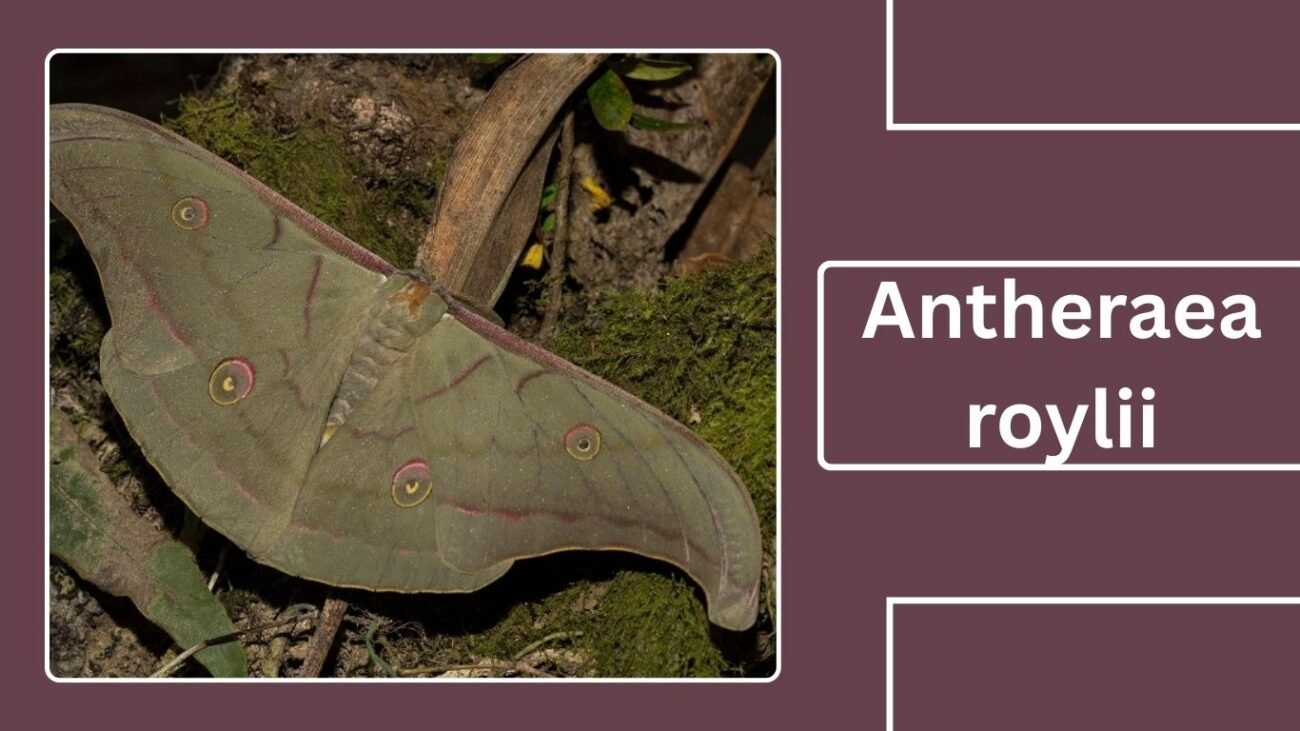
The Himalayan tasar moth (Antheraea roylii) is a wild silk moth native to the Himalayan region. It produces a strong, coarse silk similar to other tasar varieties, though it is less commonly used in commercial silk production.
Identification
- Large moth with a wingspan of 11–14 cm
- Brownish to reddish wings with distinct eye-like spots on both forewings and hindwings
- Males are smaller with broad, feathery antennae; females are larger and more robust
- Caterpillars are green with bluish tubercles and fine spines along the sides
Habitat
This species inhabits Himalayan forests and foothills of India, Nepal, and Bhutan. The larvae feed on leaves of oak (Quercus), castor, and other broad-leaved trees found in these regions.
Behavior
Adults are nocturnal and short-lived, living only long enough to reproduce. Males are active fliers, while females stay mostly stationary, releasing pheromones to attract mates. Caterpillars are solitary and feed heavily before spinning dense, oval-shaped cocoons.
Lifecycle
The lifecycle includes egg, larva, pupa, and adult stages. Females lay eggs on host plant leaves, and caterpillars undergo several instars before forming their strong cocoons. Pupation occurs inside, and adults emerge after metamorphosis. Typically, one or two generations occur per year, depending on altitude and climate.
11. Antheraea knyvetti (Knyvett’s Silk Moth)
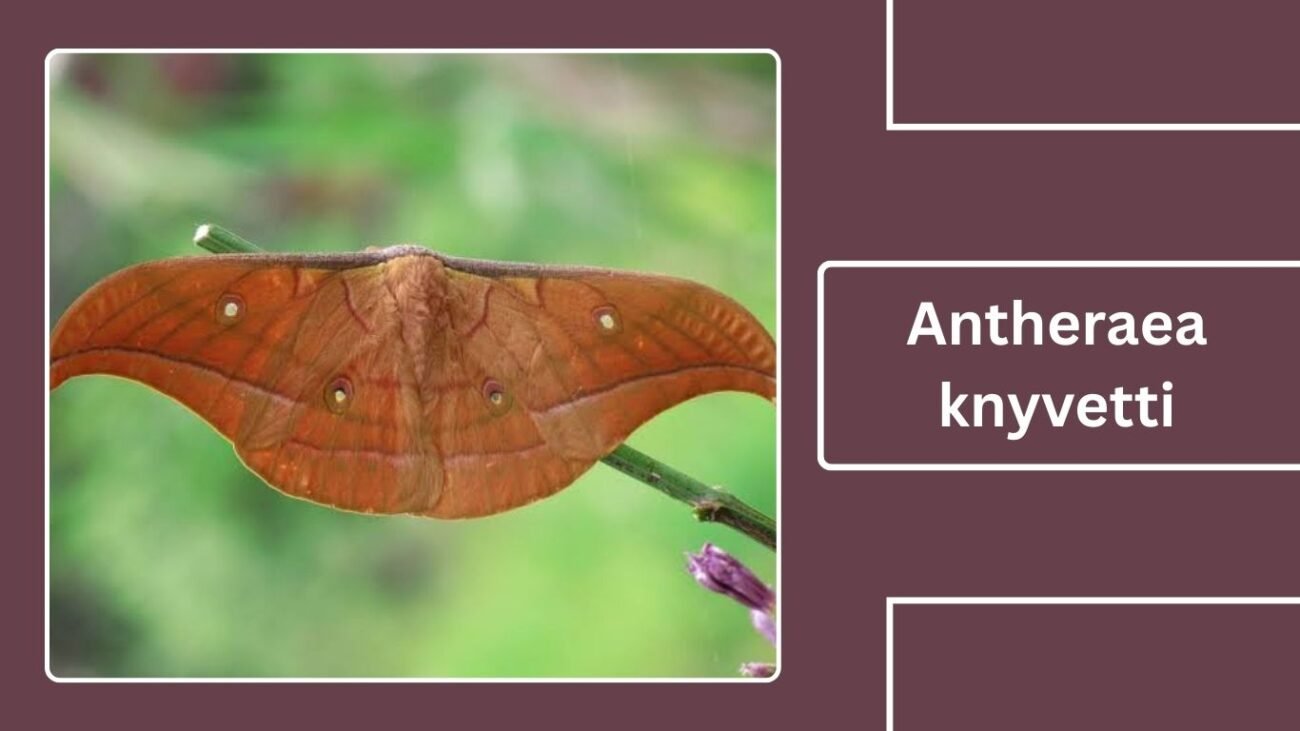
The Knyvett’s silk moth (Antheraea knyvetti) is a wild silk moth belonging to the Saturniidae family. It is less studied compared to other Antheraea species but is recognized as part of the broader group of tussar silk moths.
Identification
- Medium to large moth with a wingspan of around 10–13 cm
- Brown to yellowish wings with characteristic eye-like spots on both forewings and hindwings
- Males are smaller and equipped with broad, feathery antennae; females are larger and fuller-bodied
- Caterpillars are green, featuring small tubercles and faint lateral lines
Habitat
This species is found in forested regions of South and Southeast Asia. Its larvae feed on a range of host plants, including Terminalia and Shorea species, which provide the essential foliage for their development.
Behavior
Adults are nocturnal and live only briefly, focusing on reproduction. Males are active fliers in search of females, while females release pheromones to attract mates. Caterpillars are heavy feeders and build strong, oval-shaped cocoons.
Lifecycle
The lifecycle follows the standard silk moth pattern: egg, larva, pupa, and adult. Females lay eggs on host plants. After several larval stages, caterpillars spin robust cocoons, inside which pupation occurs. Depending on local climate conditions, one or two generations may occur annually.
12. Antheraea jana (Jana Silk Moth)
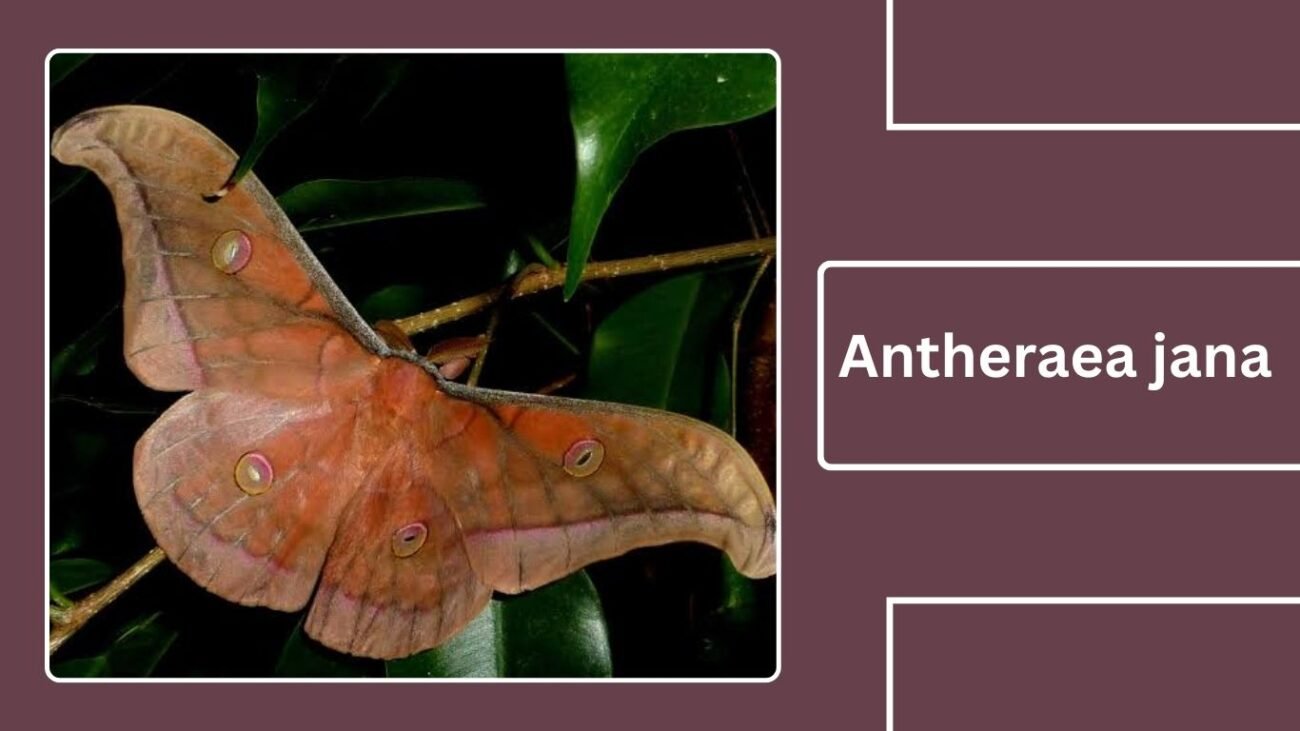
The Jana silk moth (Antheraea jana) is a wild silk moth species within the Saturniidae family. While not as commercially significant as Bombyx mori or Antheraea assamensis, it contributes to the diversity of silk-producing moths found in Asia.
Identification
- Large moth with a wingspan of about 11–14 cm
- Brownish to reddish wings marked with eye-like spots on forewings and hindwings
- Males are smaller with feathery antennae, while females are larger and bulkier
- Caterpillars are green, with small tubercles and light lateral stripes
Habitat
This species is distributed in forested regions of South and Southeast Asia. Its larvae feed on a variety of broad-leaved host plants, including species of Terminalia and Shorea.
Behavior
Adults are nocturnal, living only long enough to reproduce. Males are strong fliers in search of mates, while females emit pheromones to attract them. Caterpillars feed extensively on host leaves and construct strong cocoons for pupation.
Lifecycle
The lifecycle follows the standard silk moth pattern: egg, larva, pupa, and adult. Eggs are deposited on host tree leaves, larvae undergo several instars, and finally spin robust cocoons. Adults emerge after metamorphosis to complete the cycle. Depending on local climate, one or more generations may occur per year.
13. Antheraea andamana (Andaman Silk Moth)
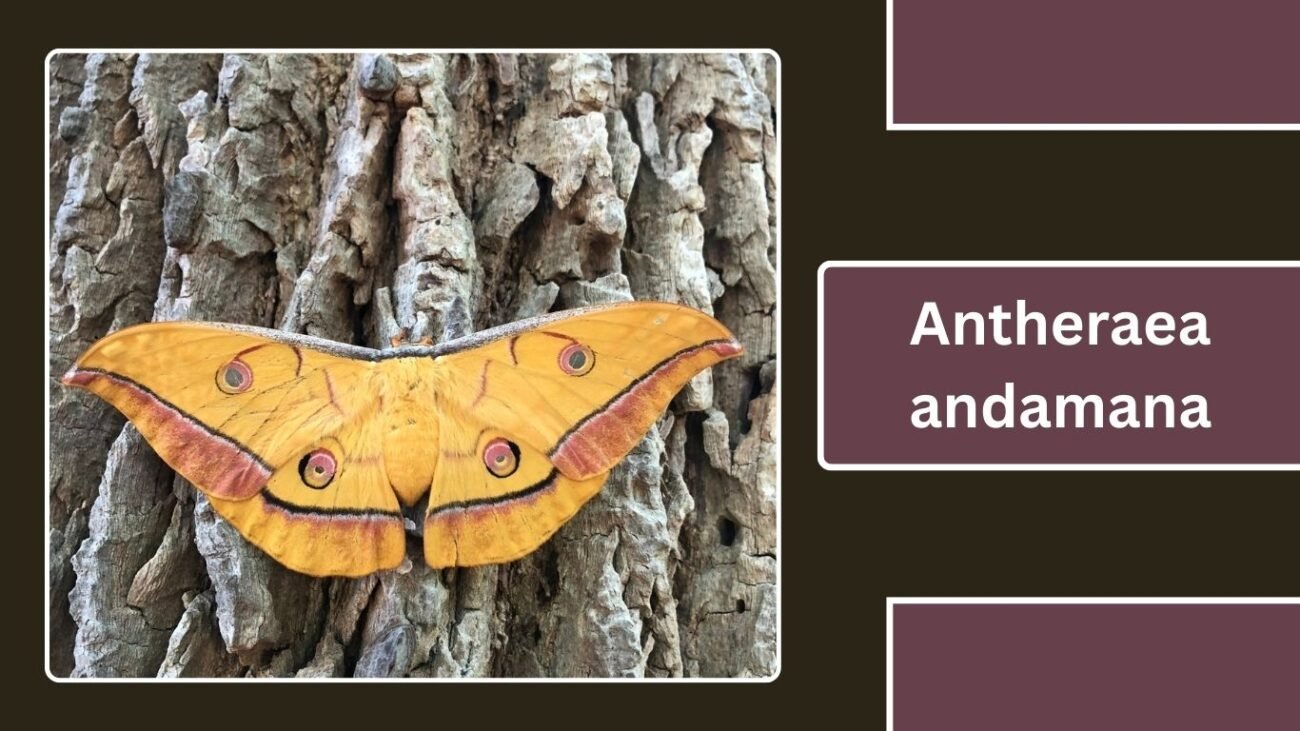
The Andaman silk moth (Antheraea andamana) is a wild silk moth native to the Andaman and Nicobar Islands of India. It is less commercially significant compared to other Antheraea species but remains an important representative of wild silk moth biodiversity.
Identification
- Large moth with a wingspan of 11–14 cm
- Wings are brownish-yellow with characteristic eye-like spots on forewings and hindwings
- Males are smaller and more active, with bushy antennae; females are larger and round-bodied
- Caterpillars are green with yellowish bands and small tubercles
Habitat
This species is restricted to the Andaman and Nicobar Islands, thriving in tropical forests. The larvae feed on local host plants, including Terminalia and Shorea species, which are abundant in the islands’ ecosystem.
Behavior
Adults are nocturnal and short-lived, surviving only long enough to mate and reproduce. Males are active fliers, while females attract mates with pheromones. Caterpillars feed heavily on leaves before constructing dense, oval cocoons.
Lifecycle
The lifecycle follows the typical silk moth pattern: egg, larva, pupa, and adult. Eggs are laid on host plant leaves, and larvae pass through multiple instars before spinning their strong cocoons. Pupation occurs within the cocoon, and adults emerge after several weeks. One or two generations may occur annually, depending on the local climate.
14. Antheraea godmani (Godman’s Silk Moth)
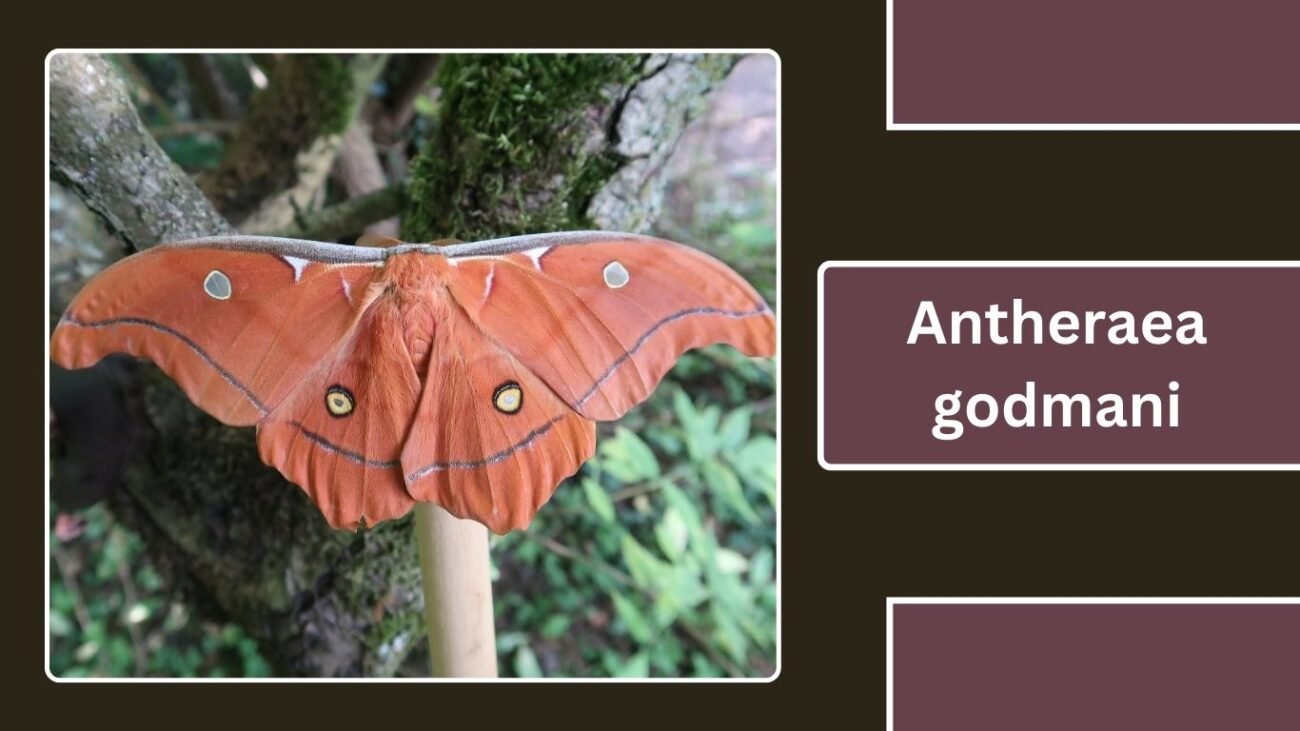
The Godman’s silk moth (Antheraea godmani) is a wild silk moth belonging to the Saturniidae family. Though not widely used for silk production, it is part of the diverse group of Antheraea moths found in Asia and valued for their ecological and entomological importance.
Identification
- Large moth with a wingspan of about 11–15 cm
- Wings are reddish-brown to yellowish, each marked with distinct eye-like spots
- Males are smaller and more agile, with broad feathery antennae; females are larger and fuller-bodied
- Caterpillars are green with fine tubercles and pale lateral stripes
Habitat
This species is found in South and Southeast Asian forests, where its larvae depend on host trees such as Terminalia and Shorea. These forests provide the necessary environment for the growth and reproduction of the species.
Behavior
Adults are nocturnal and have a short lifespan, surviving mainly to reproduce. Males actively search for females, guided by pheromones, while females remain mostly stationary. Caterpillars are solitary feeders and consume large amounts of foliage before cocooning.
Lifecycle
The lifecycle follows the typical silk moth stages: egg, larva, pupa, and adult. Eggs are deposited on host plant leaves, and larvae undergo several instars before spinning tough, oval-shaped cocoons. Pupation occurs within, and adults emerge after metamorphosis. Depending on climate conditions, one or two generations may occur per year.
15. Antheraea roylei (Roylei’s Silk Moth)

The Roylei’s silk moth (Antheraea roylei) is a wild silk moth of the Saturniidae family, closely related to other tasar silk moths. Though not as commercially significant as Bombyx mori or Antheraea assamensis, it adds to the diversity of wild silk moths in Asia.
Identification
- Large moth with a wingspan of 11–14 cm
- Wings are yellowish-brown to reddish, each with prominent eye-like spots
- Males are smaller and more agile, with broad feathery antennae; females are larger and more robust
- Caterpillars are green with tubercles and faint pale bands on the sides
Habitat
This species occurs in Himalayan foothills and surrounding regions of India, Nepal, and Bhutan. Its larvae feed on oak (Quercus), castor, and other broad-leaved host trees, which thrive in these temperate forests.
Behavior
Adults are nocturnal and survive only for reproduction. Males fly actively at night in search of females, which attract them with pheromones. Caterpillars are solitary feeders, consuming large amounts of foliage before spinning their strong silk cocoons.
Lifecycle
The lifecycle includes egg, larva, pupa, and adult stages. Females lay eggs on the leaves of host plants, larvae undergo several molts, and then spin robust, oval-shaped cocoons. After pupation, adults emerge to continue the cycle. Depending on altitude and climate, generally one or two generations occur each year.
16. Antheraea compta (Compta Silk Moth)
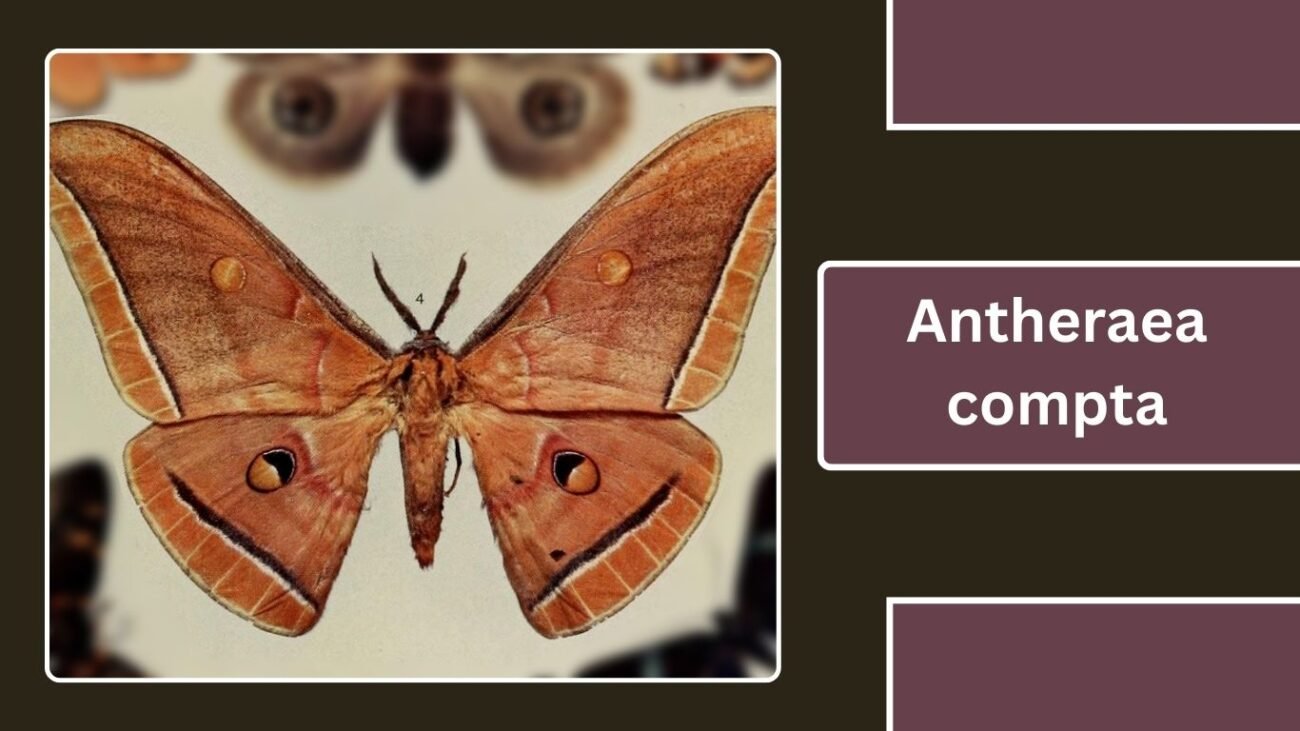
The Compta silk moth (Antheraea compta) is a lesser-known member of the Saturniidae family. While it does not have the same commercial significance as Bombyx mori or Antheraea assamensis, it is still important in the ecological diversity of wild silk moths.
Identification
- Large moth with a wingspan of around 11–13 cm
- Wings are brownish to reddish with characteristic eye-like spots on forewings and hindwings
- Males are smaller with broad, feathery antennae; females are larger and heavier-bodied
- Caterpillars are green with small tubercles and pale side stripes
Habitat
This species is found in forests of South and Southeast Asia, where its larvae feed on host trees like Terminalia and Shorea. It thrives in subtropical and tropical environments.
Behavior
Adults are nocturnal and short-lived, surviving only a few days to reproduce. Males are active fliers, while females attract them by releasing pheromones. Caterpillars are solitary feeders, consuming large amounts of foliage before spinning tough cocoons.
Lifecycle
The lifecycle consists of egg, larva, pupa, and adult stages. Eggs are laid on host tree leaves. Caterpillars pass through several instars before spinning dense, oval cocoons for pupation. Adults emerge after metamorphosis, usually producing one or two generations per year depending on climate.
17. Antheraea cynthia (Ailanthus Silk Moth)

The Ailanthus silk moth (Antheraea cynthia) is a wild silk moth native to Asia and later introduced to Europe and North America. It is famous for producing coarse silk known as “ailanthus silk,” though it is not as widely used as mulberry silk.
Identification
- Large moth with a wingspan of 11–14 cm
- Forewings are brownish with triangular transparent spots; hindwings show rounded eye-like markings
- Males are smaller and slimmer, with broad feathery antennae; females are larger with rounder abdomens
- Caterpillars are green, thick-bodied, with bluish tubercles and a slightly wrinkled texture
Habitat
This species thrives in China, India, and Southeast Asia, and has been introduced in other regions for silk rearing. Its primary host plant is the Tree of Heaven (Ailanthus altissima), though larvae may also feed on other broad-leaved trees.
Behavior
Adults are nocturnal and live briefly, only to reproduce. Males actively seek females, guided by pheromones, while females remain still after emergence. Caterpillars feed extensively on host tree foliage before cocooning.
Lifecycle
The lifecycle includes egg, larva, pupa, and adult stages. Eggs are laid on the underside of host leaves. After several instars, caterpillars spin tough, elongated cocoons. Pupation occurs inside, and adults emerge after several weeks. Depending on the climate, one or more generations may occur annually.
18. Antheraea perrotteti (Perrottet’s Silk Moth)
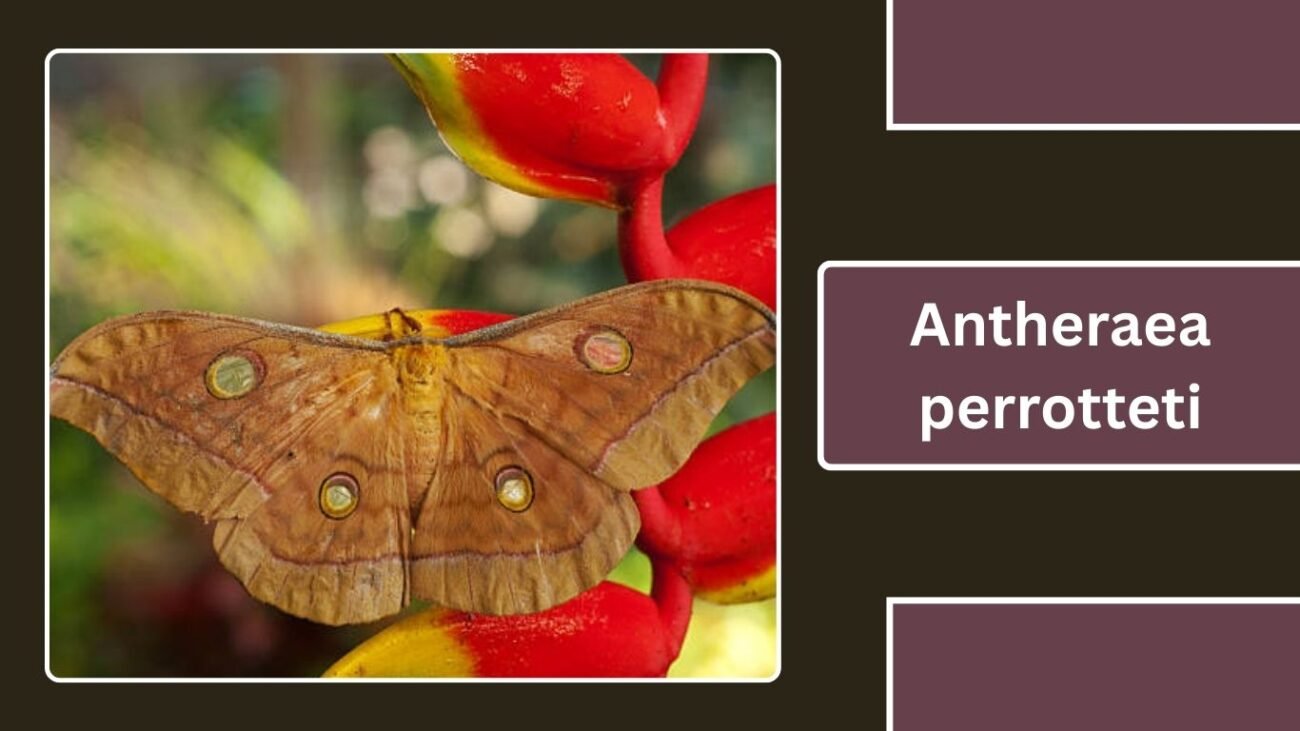
The Perrottet’s silk moth (Antheraea perrotteti) is a wild silk moth found in parts of South and Southeast Asia. Although it does not play a major role in commercial sericulture, it contributes to the ecological diversity of tussar silk moths.
Identification
- Large moth with a wingspan of about 11–14 cm
- Wings are brownish to reddish with distinct eye-like spots on both forewings and hindwings
- Males are smaller with prominent feathery antennae; females are larger and more robust
- Caterpillars are green with bluish tubercles and faint pale bands along the body
Habitat
This species inhabits tropical and subtropical forests across India and neighboring regions. Larvae feed primarily on Terminalia and Shorea species, common host plants for many wild silk moths.
Behavior
Adults are nocturnal and live only a few days, their main purpose being reproduction. Males are strong fliers in search of females, which emit pheromones to attract mates. Caterpillars are solitary feeders, consuming host tree foliage before spinning tough, protective cocoons.
Lifecycle
The lifecycle consists of egg, larva, pupa, and adult. Females lay eggs on leaves of host plants, larvae pass through several instars, and then spin large, oval-shaped cocoons for pupation. Depending on climate, the species may produce one or two generations annually.
19. Antheraea korintjiana (Korintji Silk Moth)
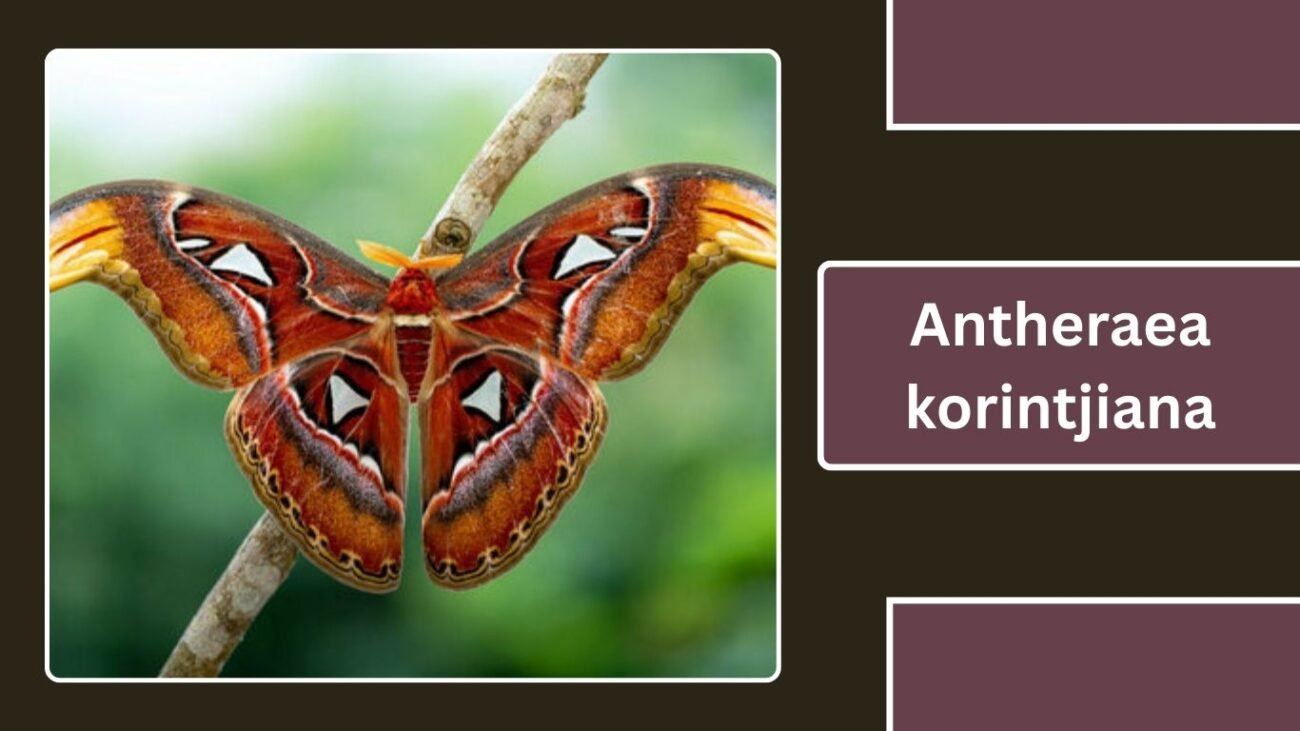
The Korintji silk moth (Antheraea korintjiana) is a wild silk moth of the Saturniidae family, found in parts of Southeast Asia. It is one of the lesser-known species within the genus but still contributes to the diversity of tussar silk moths.
Identification
- Large moth with a wingspan of about 11–14 cm
- Wings are yellowish-brown with eye-like spots on both forewings and hindwings
- Males are smaller with broad, feather-like antennae; females are larger with fuller bodies
- Caterpillars are green with bluish tubercles and fine pale stripes along the sides
Habitat
This species inhabits tropical forests of Indonesia and nearby regions, where host plants such as Terminalia and other broad-leaved trees provide the necessary food supply for larvae.
Behavior
Adults are nocturnal and survive only for reproduction. Males are strong fliers, actively searching for females, while females release pheromones to attract mates. Caterpillars are solitary feeders and spin robust cocoons before pupation.
Lifecycle
The lifecycle follows the typical pattern: egg, larva, pupa, and adult. Eggs are deposited on host leaves. After several instars, larvae spin tough, oval cocoons. Pupation occurs within, and adult moths emerge to continue the cycle. Usually, one or two generations occur per year depending on the regional climate.
20. Antheraea rosieri (Rosier’s Silk Moth)
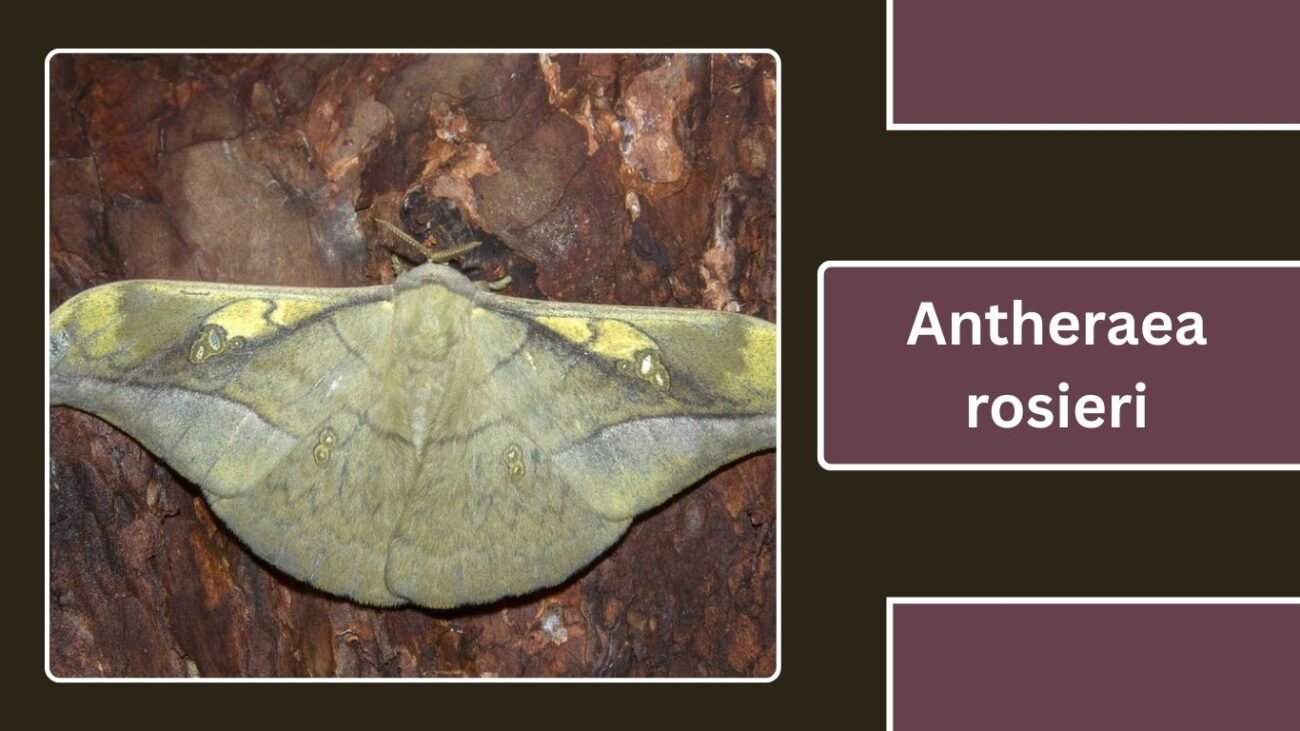
The Rosier’s silk moth (Antheraea rosieri) is a wild silk moth of the Saturniidae family. Although not as commercially important as other silk moths like Bombyx mori or Antheraea assamensis, it is part of the wide diversity of tussar silk-producing moths in Asia.
Identification
- Large moth with a wingspan of about 11–14 cm
- Wings are brownish to reddish with clear eye-like spots on forewings and hindwings
- Males are smaller, more agile, and equipped with broad feathery antennae; females are larger with bulkier bodies
- Caterpillars are bright green, with bluish tubercles and faint side stripes
Habitat
This species is distributed in South and Southeast Asian forests, where its larvae depend on host trees such as Terminalia and Shorea. These broad-leaved trees provide the essential diet for the caterpillars.
Behavior
Adults are nocturnal and live briefly, their main purpose being reproduction. Males actively fly in search of females, while females attract mates by releasing pheromones. Caterpillars are solitary and feed heavily before spinning dense silk cocoons.
Lifecycle
The lifecycle includes four stages: egg, larva, pupa, and adult. Eggs are laid on leaves of host plants, and larvae undergo several molts before cocooning. Pupation takes place within the cocoon, and adults emerge after several weeks. Generally, one or two generations occur annually depending on environmental conditions.
21. Antheraea assamensis barama (Barama Muga Moth)
The Barama muga moth (Antheraea assamensis barama) is a regional variant of the famous muga silk moth. It is found in parts of northeastern India, particularly Assam, and is valued for producing golden muga silk with a slightly different texture and quality compared to the main species.
Identification
- Medium to large moth with a wingspan of 10–12 cm
- Golden-brown wings with faint eye-like spots on both forewings and hindwings
- Females are larger with rounded bodies; males are smaller with bushy, feathery antennae
- Caterpillars are green with yellow bands and small tubercles
Habitat
This subspecies thrives in the Assam region of India. The larvae feed primarily on Machilus bombycina (Som) and Litsea polyantha (Soalu), the same host plants as A. assamensis, but rearing is concentrated in specific areas like Barama.
Behavior
Adults are nocturnal and short-lived, existing mainly for reproduction. Males are active seekers of females, guided by pheromones, while females remain stationary to attract mates. Caterpillars feed heavily on host plant leaves before spinning their dense golden cocoons.
Lifecycle
The lifecycle includes egg, larva, pupa, and adult. Eggs are laid on host leaves, and larvae pass through several instars before spinning oval, golden-colored cocoons. Pupation occurs within, and adults emerge after metamorphosis. Depending on seasonal conditions, two or three generations may occur annually.
22. Samia cynthia ricini (Eri Silk Moth)
The Eri silk moth (Samia cynthia ricini) is one of the most important silk moths in India and parts of Southeast Asia. It is best known for producing Eri silk, also called “peace silk,” since the moth is allowed to emerge from the cocoon without being harmed.
Identification
- Large moth with a wingspan of 11–15 cm
- Forewings are brownish with white, comma-shaped markings
- Hindwings display rounded patterns with pale patches
- Males are smaller with broad, feathery antennae; females are larger with fuller abdomens
- Caterpillars are thick, pale green with bluish tubercles and covered with fine hair
Habitat
This species is native to India, Bhutan, and other parts of Southeast Asia, commonly reared in domestic conditions. Its main host plants include castor (Ricinus communis), Kesseru (Heteropanax fragrans), and payam (Evodia flaxinifolia).
Behavior
Adults are nocturnal and short-lived, with reproduction as their sole purpose. Caterpillars are voracious feeders and grow rapidly on castor leaves, making them well-suited for large-scale cultivation. Unlike other silk moths, they produce open-ended cocoons, which makes the silk easier to spin.
Lifecycle
The lifecycle includes egg, larva, pupa, and adult stages. Eggs hatch into larvae that pass through several instars before spinning their open-mouthed cocoons. Pupation occurs within, and adults emerge after metamorphosis. Multiple generations occur annually, making it one of the most sustainable silk producers.
23. Samia walkeri (Walker’s Silk Moth)
The Walker’s silk moth (Samia walkeri) is a wild silk moth species in the Saturniidae family. Though not as commercially important as Samia cynthia ricini (Eri silk moth), it is part of the broader diversity of wild silk moths found in Asia.
Identification
- Medium to large moth with a wingspan of about 10–13 cm
- Forewings are brownish with white, crescent-shaped markings
- Hindwings display rounded pale bands and eye-like spots
- Males are smaller and slimmer with broad, feathery antennae; females are larger with rounded abdomens
- Caterpillars are green with bluish tubercles and covered in fine short hairs
Habitat
This species is distributed across South and Southeast Asia, inhabiting forests and semi-tropical regions. Its larvae feed on a variety of host plants, including Ailanthus, Castor, and other broad-leaved trees.
Behavior
Adults are nocturnal and short-lived, surviving mainly to mate and reproduce. Males actively search for females, while females release pheromones to attract them. Caterpillars are solitary feeders and construct strong cocoons before pupation.
Lifecycle
The lifecycle consists of egg, larva, pupa, and adult stages. Eggs are laid on host plant leaves. Caterpillars undergo multiple instars before spinning oval-shaped cocoons. Pupation occurs inside, and adults emerge after several weeks. Depending on the climate, one or two generations may occur annually.
24. Samia canningi (Canning’s Silk Moth)
The Canning’s silk moth (Samia canningi) is a wild silk moth belonging to the Saturniidae family. It is closely related to other Samia species and contributes to the diversity of silk moths in Asia, though it is not widely used in commercial silk production.
Identification
- Large moth with a wingspan of 11–14 cm
- Forewings are brownish with white, crescent-shaped markings
- Hindwings have pale bands and rounded spots
- Males are smaller and slimmer with wide, feathery antennae; females are larger with heavier abdomens
- Caterpillars are pale green with bluish tubercles and fine hair covering their bodies
Habitat
This species occurs in South and Southeast Asia, where it inhabits subtropical forests. Its larvae feed on a range of host plants, including Ailanthus and other broad-leaved trees, similar to its close relatives.
Behavior
Adults are nocturnal and short-lived, surviving only to mate and lay eggs. Males are active fliers, while females attract them with pheromone release. Caterpillars feed extensively on host plant foliage before spinning strong cocoons.
Lifecycle
The lifecycle follows the standard moth stages: egg, larva, pupa, and adult. Eggs are laid on host leaves, larvae pass through several instars, and then spin oval cocoons for pupation. Adults emerge after metamorphosis, with one or two generations occurring annually depending on the climate.
25. Samia pryeri (Pryer’s Silk Moth)
The Pryer’s silk moth (Samia pryeri) is a wild silk moth native to East Asia, particularly Japan and surrounding regions. Although not a major contributor to commercial silk, it is valued for its ecological role and as part of the biodiversity of the Saturniidae family.
Identification
- Medium to large moth with a wingspan of 10–13 cm
- Forewings are brownish with white, crescent-shaped patterns similar to other Samia species
- Hindwings display rounded pale bands with subtle eye-like spots
- Males are smaller and slimmer, with large, feathery antennae; females are bulkier and larger
- Caterpillars are green, with bluish tubercles and fine hair covering their bodies
Habitat
This species is native to Japan, Taiwan, and nearby East Asian regions. It inhabits temperate forests, where its larvae feed on Ailanthus and various broad-leaved host plants.
Behavior
Adults are nocturnal and short-lived, existing only for reproduction. Males actively fly in search of females, while females emit pheromones to attract mates. Caterpillars are solitary feeders, consuming large amounts of host foliage before cocooning.
Lifecycle
The lifecycle includes egg, larva, pupa, and adult stages. Eggs are laid on host plant leaves. Caterpillars pass through several instars before spinning oval-shaped cocoons. Pupation occurs inside the cocoon, and after metamorphosis, adults emerge. Typically, one generation occurs per year in temperate climates.


