






Monarch butterflies and their close relatives in the Danaus genus are among the most fascinating insects in the world. Known for their vivid coloration, toxic defenses, and unique ecological roles, these butterflies inhabit diverse regions across the globe. Each species has distinctive features, behaviors, and adaptations that set it apart. This guide explores 15 types of Monarch butterflies, highlighting their identification, habitat, diet, behavior, and lifecycle.
1. Danaus plexippus (Common Monarch)

The Common Monarch is the most widely recognized butterfly in the Danaus genus, famous for its striking orange and black wings and its extraordinary long-distance migration across North America. It serves as a symbol of resilience and transformation in many cultures.
Identification
- Bright orange wings with bold black veins
- White spots on black wing margins
- Wingspan ranges from 8.9 to 10.2 cm
- Males have distinct black scent glands on hindwings
- Caterpillars are banded with black, white, and yellow stripes
Habitat
The Common Monarch thrives in open fields, meadows, prairies, and gardens. They are closely associated with areas where milkweed plants grow, as these are essential for reproduction.
Behavior
Known for their annual migration, millions of monarchs travel thousands of kilometers from Canada and the United States to central Mexico for overwintering. They are strong fliers and exhibit sun-compass orientation during migration.
Diet
Adult monarchs feed on nectar from a wide variety of flowers, including milkweed, goldenrod, and asters. Caterpillars feed exclusively on milkweed leaves, which make them toxic to many predators.
Lifecycle
The lifecycle consists of four stages: egg, larva (caterpillar), pupa (chrysalis), and adult butterfly. Depending on the generation, lifespans vary: summer monarchs live for 2–6 weeks, while migratory monarchs can survive up to 8 months.
2. Danaus erippus (Southern Monarch)

The Southern Monarch is a close relative of the Common Monarch, primarily found in South America. It shares many physical traits with Danaus plexippus but can be distinguished by subtle differences in wing patterns and geographic distribution.
Identification
- Orange wings with black veins, resembling the Common Monarch
- Black wing borders with white spots
- Slightly darker and richer orange hue compared to D. plexippus
- Wingspan typically ranges from 8.5 to 10 cm
- Caterpillars display black, yellow, and white banding similar to their northern relatives
Habitat
Danaus erippus inhabits open fields, grasslands, and agricultural areas across South America, particularly in Brazil, Argentina, Uruguay, and Paraguay. It is closely tied to milkweed plants, which are essential for reproduction.
Behavior
Unlike the Common Monarch, the Southern Monarch does not undertake long-distance continental migrations. However, it exhibits local seasonal movements in search of suitable breeding grounds and food sources.
Diet
Adults feed on nectar from flowering plants such as milkweed, lantana, and verbena. The caterpillars rely exclusively on milkweed species, which provide them with toxic compounds for defense against predators.
Lifecycle
The lifecycle mirrors that of other monarch species, with four stages: egg, larva, pupa, and adult. Multiple generations occur throughout the year due to the favorable warm climate in their range, allowing for continuous breeding cycles.
3. Danaus cleophile (Jamaican Monarch)

The Jamaican Monarch is a striking butterfly native to the Caribbean region. While closely related to the Common and Southern Monarchs, it has a smaller distribution and unique markings that distinguish it from its relatives.
Identification
- Bright orange wings with prominent black veins
- Broader black margins than the Common Monarch
- White spots along the black borders of the wings
- Slightly smaller wingspan, averaging 7–9 cm
- Caterpillars show the same black, white, and yellow stripes seen in other Danaus species
Habitat
Danaus cleophile is found mainly in Jamaica, Hispaniola, and nearby Caribbean islands. It favors open woodlands, coastal regions, meadows, and areas with abundant milkweed plants.
Behavior
This species is more localized and does not perform the long-distance migrations seen in North American monarchs. Instead, populations remain relatively stable within their island habitats, moving locally for resources.
Diet
Adults feed on nectar from a wide variety of flowering plants, particularly lantana and milkweed blossoms. The larvae feed exclusively on milkweed, which provides chemical protection against predators.
Lifecycle
The Jamaican Monarch undergoes the typical four-stage lifecycle of Danaus butterflies: egg, larva, pupa, and adult. In the warm Caribbean climate, it can reproduce year-round, resulting in multiple overlapping generations.
4. Danaus chrysippus (Plain Tiger / African Monarch)

The Plain Tiger, also known as the African Monarch, is one of the most widespread members of the Danaus genus. It is admired for its vibrant coloration and is often considered the model species in mimicry systems across Africa and Asia.
Identification
- Orange wings with black and white margins
- Forewings feature a black apex with white spots
- Hindwings are mostly orange with a broad black border
- Wingspan typically ranges from 7 to 8.5 cm
- Caterpillars are striped in black, white, and yellow with fleshy filaments
Habitat
Danaus chrysippus is highly adaptable, found in Africa, Asia, and parts of Australia. It thrives in grasslands, open scrub, agricultural areas, gardens, and roadsides, especially where milkweed plants are abundant.
Behavior
Unlike the Common Monarch, the Plain Tiger does not migrate over vast distances. However, it displays local seasonal movements. It is slow-flying, confident in its chemical defenses, and often seen basking in the sun.
Diet
Adults feed on nectar from a wide range of flowering plants including milkweed, lantana, and verbena. Caterpillars rely entirely on milkweed species, accumulating toxic alkaloids that make them unpalatable to predators.
Lifecycle
The lifecycle follows the typical four-stage pattern: egg, larva, pupa, and adult. Thanks to favorable tropical and subtropical climates, Danaus chrysippus breeds throughout the year, producing several generations annually.
5. Danaus genutia (Striped Tiger)

The Striped Tiger is a close relative of the Plain Tiger and is commonly found across South and Southeast Asia. It is often confused with Danaus chrysippus but can be identified by its more prominent black striping on the wings.
Identification
- Bright orange wings with thick black veins, giving a striped appearance
- Black margins with distinct white spots
- Hindwings are orange with a black border
- Wingspan generally ranges between 7 to 9 cm
- Caterpillars are banded in black, white, and yellow with paired filaments
Habitat
Danaus genutia inhabits tropical and subtropical regions of South Asia, Southeast Asia, and parts of southern China. It is commonly found in gardens, open fields, forest edges, and near villages where milkweed grows.
Behavior
This species is non-migratory but makes short-distance movements in search of breeding and feeding grounds. It has a graceful, gliding flight and is often seen flying low over vegetation or basking in sunny spots.
Diet
Adults feed on nectar from flowers such as lantana, milkweed, and ixora. Caterpillars depend exclusively on milkweed plants, which supply them with chemical defenses against predators.
Lifecycle
Like other Danaus species, it undergoes four stages: egg, larva, pupa, and adult. In warm climates, it breeds throughout the year, producing multiple overlapping generations.
6. Danaus gilippus (Queen)

The Queen butterfly is a close relative of the Common Monarch, widely distributed across the Americas. Known for its deep chestnut coloration, it is often mistaken for the Monarch but can be distinguished by its richer, darker hues and subtle differences in wing patterns.
Identification
- Rich reddish-brown or chestnut wings
- Black borders with white spots, more prominent near the forewings
- Lacks the bold black venation seen in Monarchs
- Wingspan usually between 7.5 to 10 cm
- Caterpillars are striped in black, white, and yellow with fleshy filaments similar to other Danaus species
Habitat
The Queen butterfly thrives in warm, open habitats such as fields, meadows, deserts, and roadsides. It is commonly found in the southern United States, Central America, South America, and parts of the Caribbean.
Behavior
This species does not undertake long-distance migrations like the Monarch, but it can disperse widely within its range. Queens are slow, confident fliers, relying on their chemical defenses for protection.
Diet
Adults feed on nectar from a variety of flowers including milkweed, lantana, and dogbane. Caterpillars depend exclusively on milkweed, making them distasteful to predators. Adults also feed on pyrrolizidine alkaloids from certain plants, enhancing their chemical defenses.
Lifecycle
The Queen follows the typical butterfly lifecycle of egg, larva, pupa, and adult. Several generations may occur each year in warm climates, ensuring a stable population.
7. Danaus eresimus (Soldier / Tropical Queen)

The Soldier, also called the Tropical Queen, is a close relative of both the Monarch and the Queen butterfly. It is less commonly encountered but is notable for its darker orange-brown coloration and subtle wing patterns.
Identification
- Dark orange to brown wings with faint black veins
- Black wing borders with small white spots, especially near the forewings
- More muted coloration compared to the Monarch and Queen
- Wingspan ranges between 7.5 to 9 cm
- Caterpillars are banded in black, white, and yellow with characteristic filaments
Habitat
Danaus eresimus is found in the southern United States (especially Florida and Texas), Central America, the Caribbean, and parts of South America. It favors warm, open areas such as fields, pastures, and scrublands where milkweed grows.
Behavior
The Soldier butterfly is non-migratory but may move locally in response to food availability. It is less conspicuous than the Monarch and Queen, often flying low and remaining close to host plants.
Diet
Adults feed on nectar from a wide variety of flowers, including milkweed, lantana, and shepherd’s needle. Caterpillars feed exclusively on milkweed species, gaining chemical compounds that provide defense against predators.
Lifecycle
Like its close relatives, the Soldier undergoes the four standard stages: egg, larva, pupa, and adult. It produces multiple broods each year in warm climates, maintaining steady populations.
8. Danaus melanippus (Black-veined Tiger)
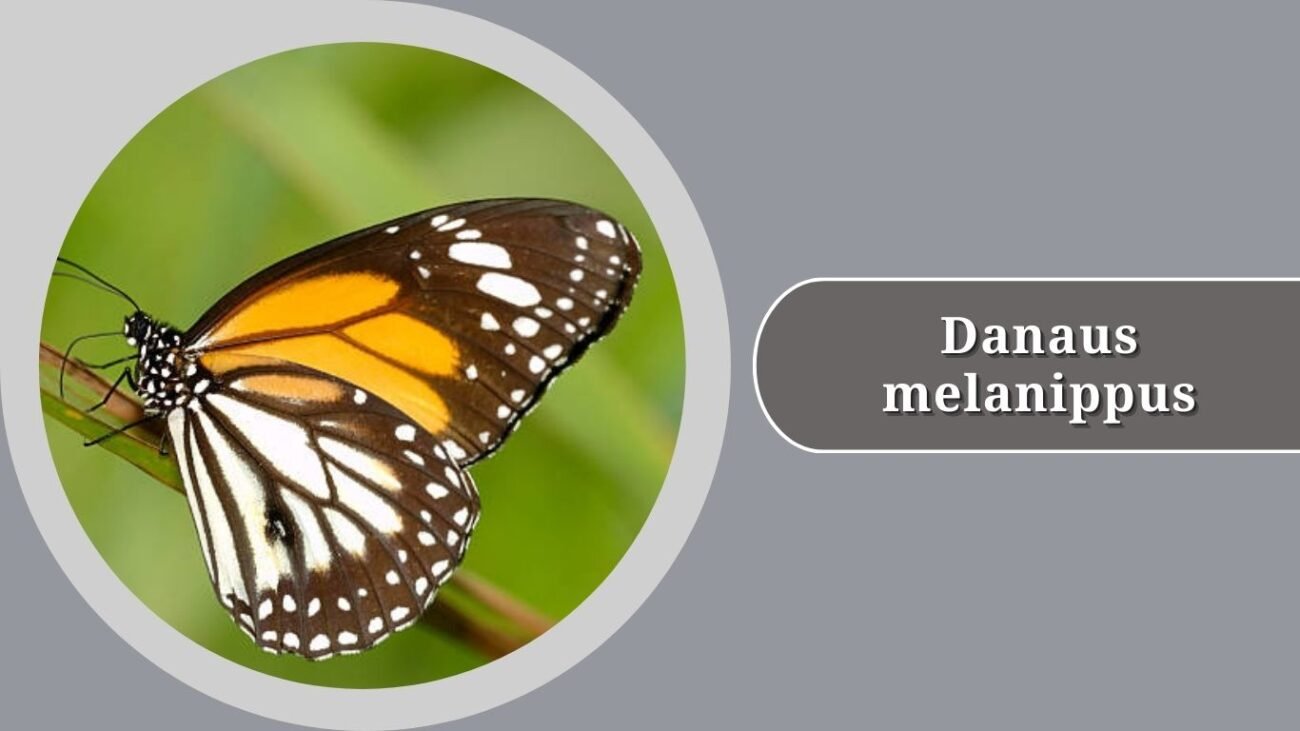
The Black-veined Tiger is a striking butterfly species in the Danaus genus, known for its bold black venation and wide distribution across Asia. It is often confused with other “tiger” butterflies but can be distinguished by its distinctive wing patterning.
Identification
- Bright orange wings with strong, thick black veins
- Black margins with a series of white spots
- Hindwings show orange coloration bordered by black edges
- Wingspan typically ranges from 7 to 9.5 cm
- Caterpillars are striped in black, white, and yellow, with paired fleshy filaments
Habitat
Danaus melanippus inhabits tropical and subtropical Asia, including India, Southeast Asia, southern China, and Indonesia. It prefers open woodlands, forest edges, gardens, and areas where milkweed plants are abundant.
Behavior
This species is non-migratory and usually remains within its breeding range. It is a slow and graceful flier, often seen gliding or basking in sunny spots. It is also a common participant in mimicry complexes with other butterflies.
Diet
Adults feed on nectar from various flowering plants, including milkweed, lantana, and ixora. Caterpillars are milkweed specialists, depending on the plant for food and chemical protection.
Lifecycle
The lifecycle includes the four familiar stages: egg, larva, pupa, and adult. In warm tropical environments, multiple overlapping generations occur throughout the year.
9. Danaus ismare (Ismare Tiger)
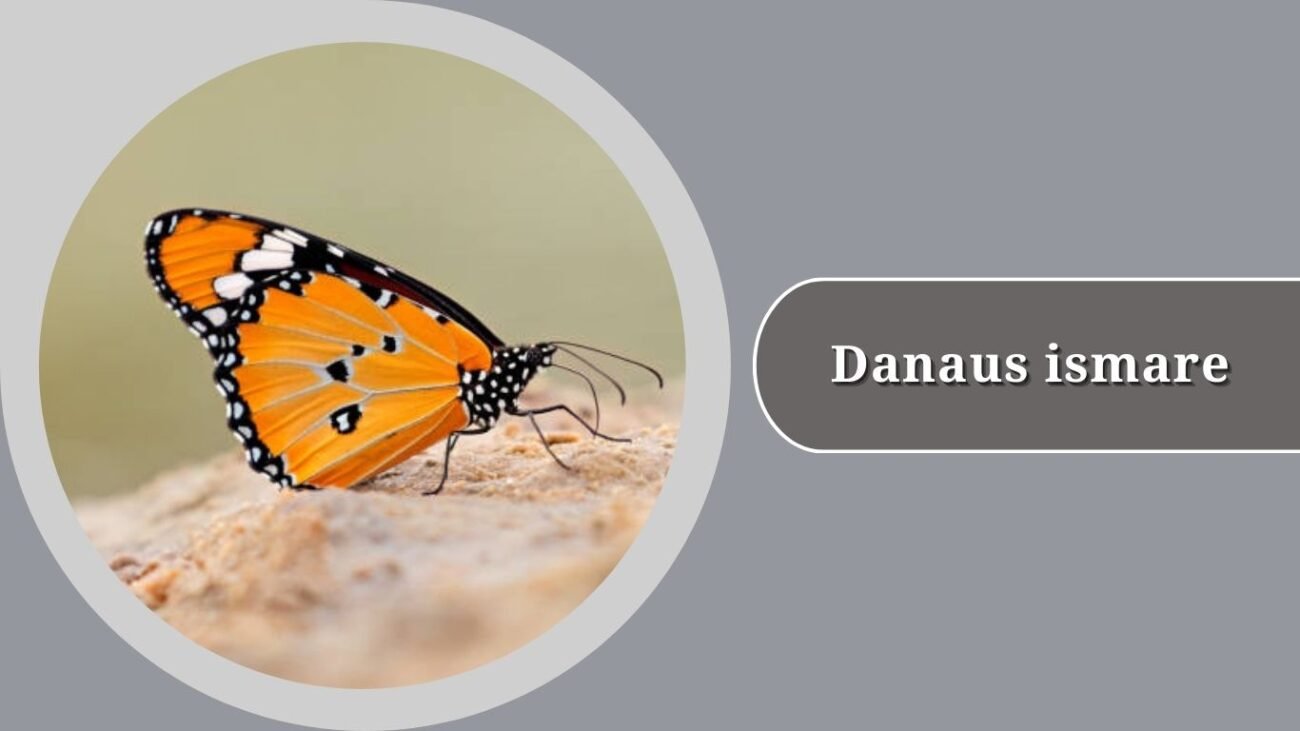
The Ismare Tiger is a lesser-known but beautiful member of the Danaus genus, native to Southeast Asia. It is characterized by its orange wings and bold black markings, closely resembling other tiger-patterned Danaus species.
Identification
- Orange wings with prominent black veins and borders
- White spots scattered along the black wing margins
- Hindwings with orange centers and dark outer edges
- Wingspan generally between 7 and 9 cm
- Caterpillars exhibit the classic black, white, and yellow stripes with filamentous appendages
Habitat
Danaus ismare is primarily found in Southeast Asia, including Indonesia, Malaysia, and the Philippines. It inhabits forest edges, clearings, coastal regions, and meadows where milkweed plants grow.
Behavior
The Ismare Tiger is non-migratory, spending its life within localized habitats. It is a slow flier and often participates in mimicry systems, where its appearance helps deter predators.
Diet
Adults feed on nectar from a variety of flowers such as lantana, milkweed, and ixora. The larvae depend exclusively on milkweed, storing toxic compounds that provide protection against predation.
Lifecycle
The butterfly passes through four stages: egg, larva, pupa, and adult. In its tropical range, it breeds year-round, producing multiple generations annually.
10. Danaus affinis (Swamp Tiger)
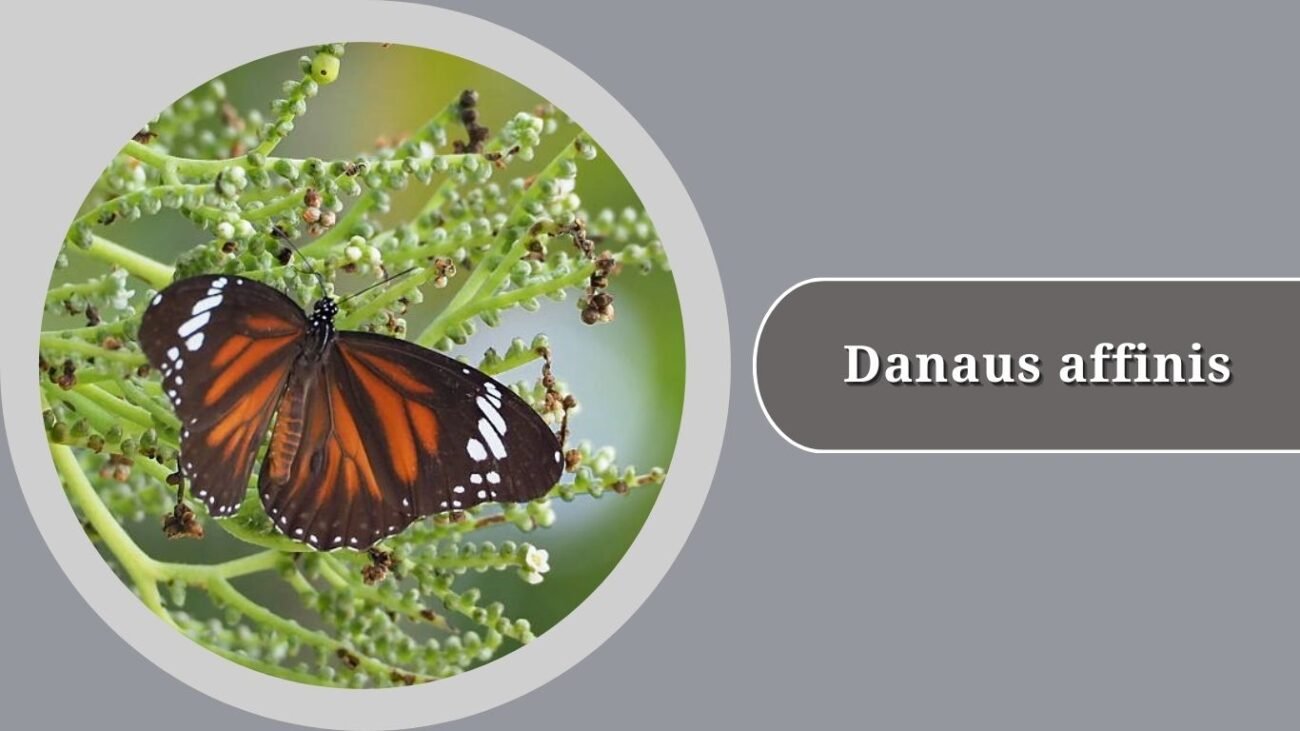
The Swamp Tiger is a distinctive butterfly in the Danaus genus, widely distributed across Southeast Asia and the Pacific region. Its name comes from its preference for swampy and coastal habitats, making it unique among its relatives.
Identification
- Orange-brown wings with black veins and broad black margins
- Rows of white spots along the black borders of the wings
- Hindwings mostly orange with dark outer edges
- Wingspan typically between 7 and 9 cm
- Caterpillars are striped in black, white, and yellow, bearing characteristic fleshy filaments
Habitat
Danaus affinis inhabits coastal mangroves, swamps, wetlands, and lowland forests. It is commonly found in Indonesia, Papua New Guinea, the Solomon Islands, and parts of northern Australia.
Behavior
The Swamp Tiger is a localized, non-migratory species. It is commonly seen fluttering low over swampy vegetation and coastal areas. Its flight is slow and deliberate, relying on its chemical defenses for protection.
Diet
Adult butterflies feed on nectar from a wide range of plants, including milkweed, lantana, and mangrove flowers. Caterpillars feed exclusively on milkweed species, which supply them with toxic alkaloids for defense.
Lifecycle
Like other Danaus butterflies, it undergoes four stages: egg, larva, pupa, and adult. Breeding occurs year-round in its tropical and coastal habitats, leading to multiple overlapping generations.
11. Danaus petilia (Lesser Wanderer)

The Lesser Wanderer, also known as the Australian Wanderer, is a smaller relative of the Common Monarch. It is well adapted to Australia and nearby regions, where it thrives in open habitats with milkweed.
Identification
- Orange wings with black veins and narrow black margins
- White spots along the black borders of wings
- Paler orange coloration compared to the Common Monarch
- Smaller size, with wingspan ranging from 6 to 8 cm
- Caterpillars have the typical black, white, and yellow stripes with fleshy filaments
Habitat
Danaus petilia is native to Australia and parts of Papua New Guinea and the Pacific Islands. It prefers grasslands, open woodlands, and gardens where milkweed plants are abundant.
Behavior
This species does not undertake long migrations like the Common Monarch. Instead, it shows local movements depending on food plant availability. It is often seen gliding slowly around host plants.
Diet
Adults feed on nectar from a variety of flowering plants, including milkweed, lantana, and verbena. Caterpillars depend exclusively on milkweed, which provides them with chemical defenses against predators.
Lifecycle
The Lesser Wanderer follows the classic four stages: egg, larva, pupa, and adult. In its warm habitat, it breeds continuously throughout the year, with several overlapping generations.
12. Danaus hamata (Blue Tiger)
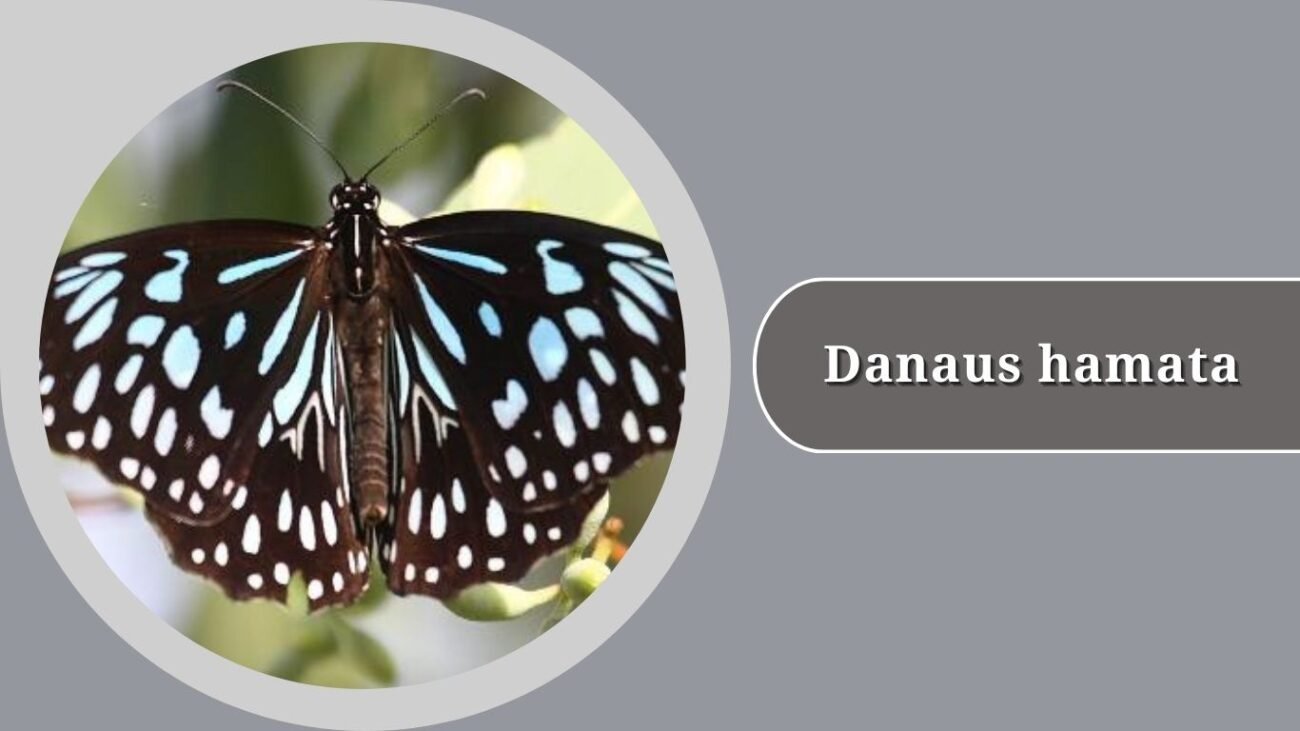
The Blue Tiger is a vibrant and eye-catching member of the Danaus genus, best known for its bluish-white streaks against a dark background. It is a common sight in South and Southeast Asia and participates in large seasonal migrations in certain regions.
Identification
- Dark brown to black wings with striking bluish-white streaks and spots
- Hindwings carry a network of pale blue lines
- Wingspan ranges from 7 to 9 cm
- More slender build compared to other Danaus species
- Caterpillars are striped in black, white, and yellow with fleshy filaments, typical of the genus
Habitat
Danaus hamata inhabits tropical and subtropical regions across South Asia, Southeast Asia, and northern Australia. It is commonly found in forests, gardens, coastal areas, and open fields where milkweed is available.
Behavior
The Blue Tiger is known for seasonal mass movements in parts of India, where thousands can be seen migrating together. Its flight is slow and graceful, and it often basks with wings open under the sun.
Diet
Adults feed on nectar from flowers such as lantana, ixora, and milkweed. They are also known to feed on pyrrolizidine alkaloids from specific plants, enhancing their chemical defense. Caterpillars feed solely on milkweed species.
Lifecycle
Like other Danaus species, the Blue Tiger undergoes the four stages: egg, larva, pupa, and adult. In tropical regions, it breeds year-round, producing multiple generations.
13. Danaus vulgaris (Common Tiger)
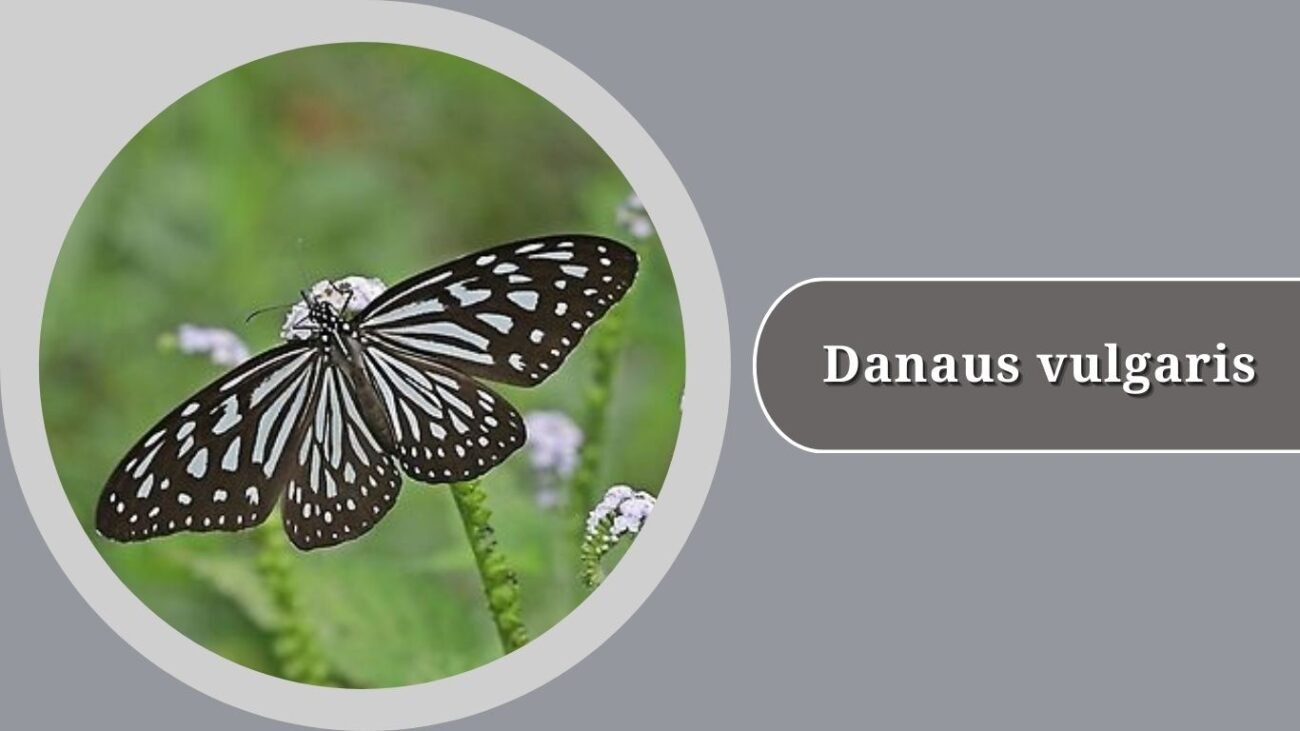
The Common Tiger is a widespread butterfly in the Danaus genus, closely resembling both the Striped Tiger and the Plain Tiger. It is admired for its bold coloration and plays an important role in mimicry systems across Asia.
Identification
- Bright orange wings with strong black venation
- Black margins dotted with prominent white spots
- Hindwings mostly orange with a thick black border
- Wingspan generally between 7 and 9 cm
- Caterpillars are striped in black, white, and yellow with fleshy filaments
Habitat
Danaus vulgaris is common in South and Southeast Asia, inhabiting fields, gardens, forest edges, and roadsides. It thrives in areas where milkweed grows, as this plant is vital for its reproduction.
Behavior
This species is non-migratory, but individuals may disperse locally. It has a calm and slow flight, often gliding over vegetation. It is also part of mimicry complexes, where other butterflies copy its warning coloration.
Diet
Adults feed on nectar from a variety of flowers, including lantana, ixora, and milkweed. Caterpillars feed exclusively on milkweed species, acquiring toxins that make them unpalatable to predators.
Lifecycle
The lifecycle consists of four stages: egg, larva, pupa, and adult. In warm climates, it reproduces throughout the year, with multiple overlapping generations ensuring population stability.
14. Danaus santana (Santana Tiger)

The Santana Tiger is a less familiar member of the Danaus genus, found mainly in parts of Southeast Asia. Though not as widely recognized as the Monarch or Plain Tiger, it shares the bold coloration typical of the group and serves as part of local mimicry systems.
Identification
- Orange wings with thick black venation and borders
- Black wing margins marked with distinct white spots
- Hindwings predominantly orange with a black outer band
- Wingspan typically between 7 and 9 cm
- Caterpillars exhibit the common Danaus pattern of black, white, and yellow stripes with fleshy filaments
Habitat
Danaus santana inhabits Southeast Asian regions, particularly forest edges, open fields, and coastal scrublands. Its presence is strongly tied to the availability of milkweed plants.
Behavior
This species is non-migratory and tends to remain localized within suitable habitats. It has a steady, gliding flight and often mingles with other Danaus butterflies, contributing to mimicry complexes that discourage predators.
Diet
Adult butterflies feed on nectar from milkweed, lantana, and other flowering plants. Caterpillars feed exclusively on milkweed species, absorbing toxins that provide defense against predators.
Lifecycle
The Santana Tiger passes through the standard four stages: egg, larva, pupa, and adult. In tropical climates, it reproduces throughout the year, producing multiple generations.
15. Danaus septentrionalis (Northern Monarch)

The Northern Monarch is a rare and lesser-known relative of the Common Monarch, primarily found in northern parts of the Americas. It is closely related to Danaus plexippus and sometimes considered a subspecies rather than a fully separate species.
Identification
- Bright orange wings with black venation, similar to the Common Monarch
- Slightly narrower black wing borders compared to Danaus plexippus
- White spots on wing edges, less pronounced than in the Common Monarch
- Wingspan typically 8 to 9.5 cm
- Caterpillars resemble those of the Monarch, striped in black, white, and yellow with fleshy filaments
Habitat
Danaus septentrionalis is found in parts of North and Central America, especially in northern habitats where milkweed species are abundant. It prefers open meadows, grasslands, and forest edges.
Behavior
Like the Common Monarch, the Northern Monarch is capable of long flights, but its migratory patterns are less well-studied. It tends to remain localized but may disperse seasonally.
Diet
Adults feed on nectar from flowers such as milkweed, goldenrod, and asters. Caterpillars rely exclusively on milkweed, absorbing toxins that protect them from predators.
Lifecycle
This butterfly undergoes the classic four-stage lifecycle: egg, larva, pupa, and adult. Depending on climate, it may produce multiple generations annually, with seasonal variations in lifespan similar to the Common Monarch.


