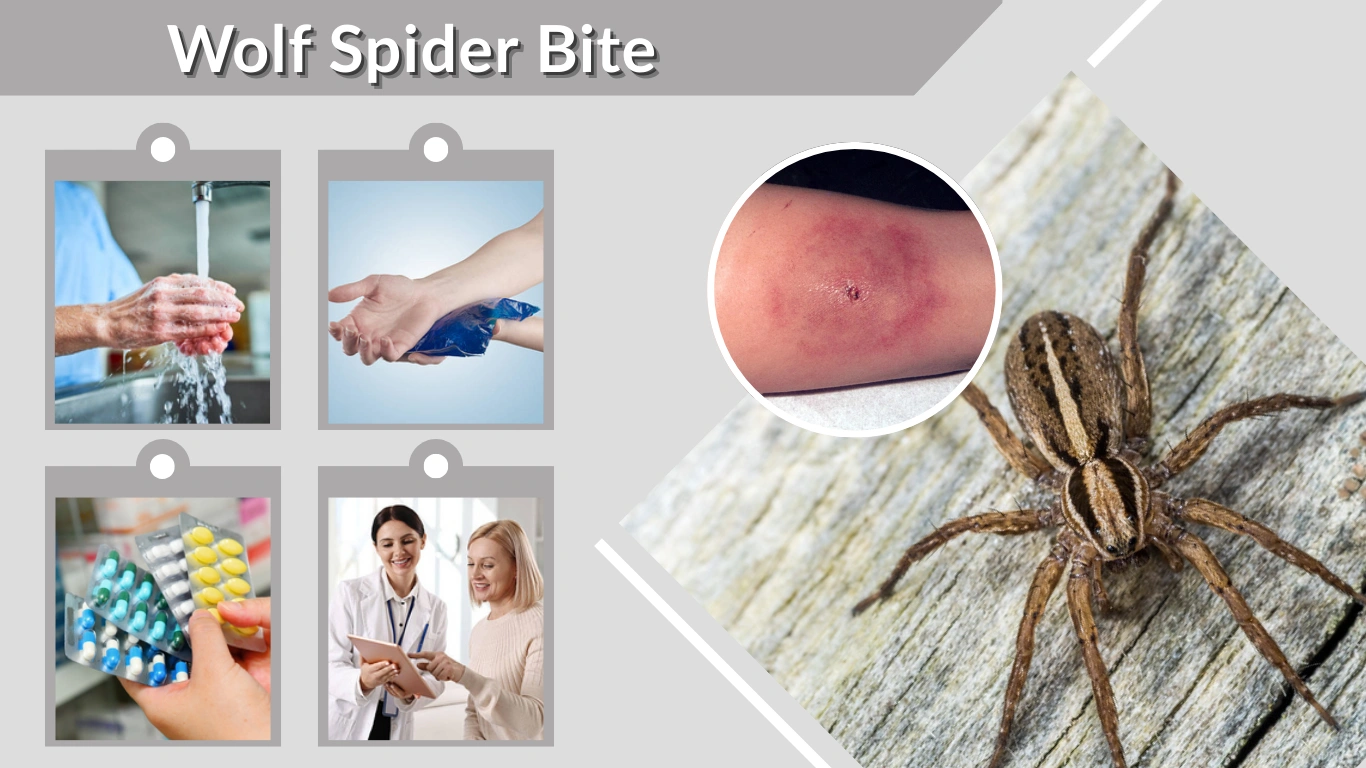
A wolf spider bite can be alarming, especially if you’re unsure what bit you. Wolf spiders are large, fast-moving spiders commonly found in gardens, basements, and garages. Because of their size and hairy appearance, they’re often mistaken for more dangerous species. The good news is that wolf spider bites are usually mild and rarely cause serious medical problems. In this guide, you’ll learn what a wolf spider bite looks like, common symptoms, and how to treat it properly.
What Is a Wolf Spider?
Wolf spiders belong to the Lycosidae family and are known for their speed and hunting skills. Unlike many other spiders, they do not spin webs to catch prey. Instead, they actively hunt insects, chasing them down like wolves — which is how they got their name.
These spiders are typically brown, gray, or tan with darker markings that help them blend into their surroundings. They range in size from about half an inch to over two inches long, including their legs. Wolf spiders are commonly found outdoors in grass, under rocks, or in leaf litter, but they may enter homes in search of food or shelter.
Despite their intimidating appearance, wolf spiders are not aggressive toward humans. They prefer to flee rather than bite.
Can a Wolf Spider Bite You?
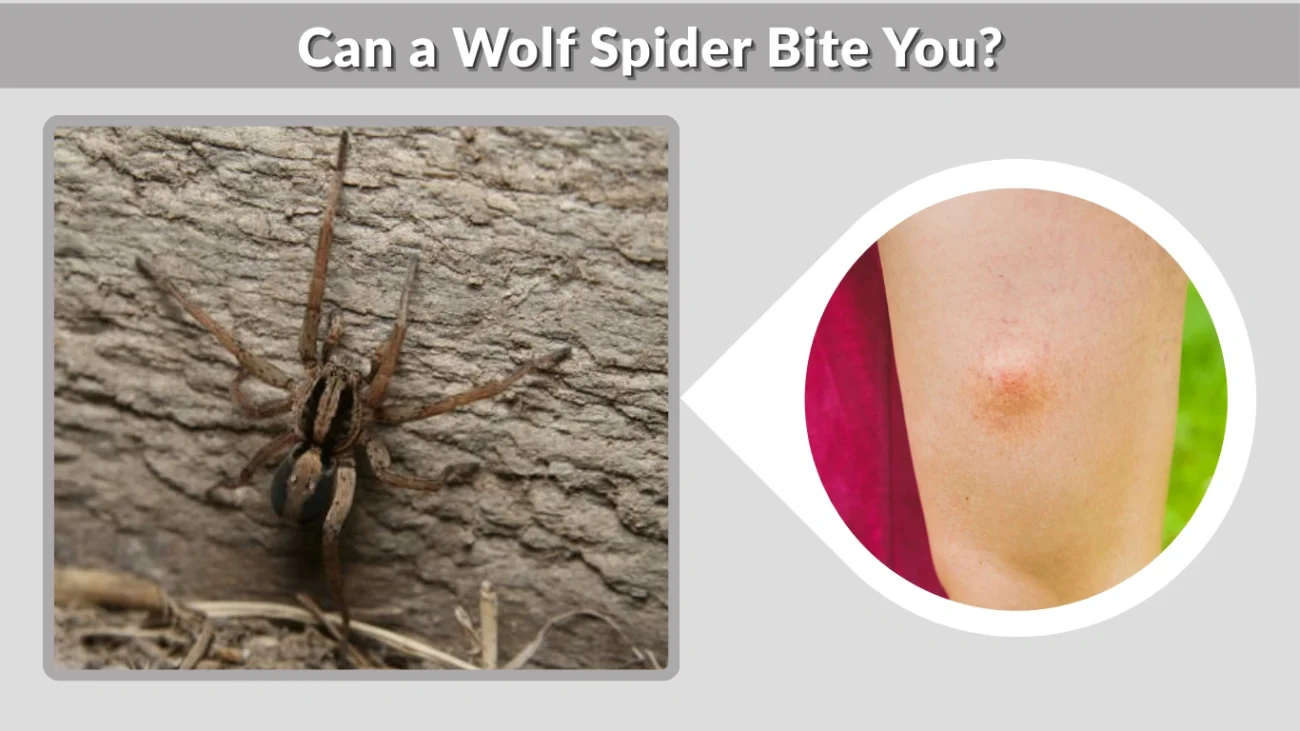
Yes, a wolf spider can bite you — but it’s uncommon. Bites usually happen when the spider feels threatened, such as when it becomes trapped in clothing, shoes, or bedding. Handling a wolf spider or accidentally pressing against it may also trigger a defensive bite.
Wolf spiders do not seek out humans to attack. In fact, most encounters end with the spider running away. Their fangs are strong enough to penetrate human skin, but they use venom primarily to subdue insects, not people.
Are Wolf Spiders Venomous?
Wolf spiders are venomous, but their venom is mild and not considered medically significant for healthy adults. The venom helps immobilize their prey but typically causes only localized reactions in humans.
Serious complications from a wolf spider bite are extremely rare. Most symptoms are similar to a bee sting and resolve within a few days.
Wolf Spider Bite Symptoms
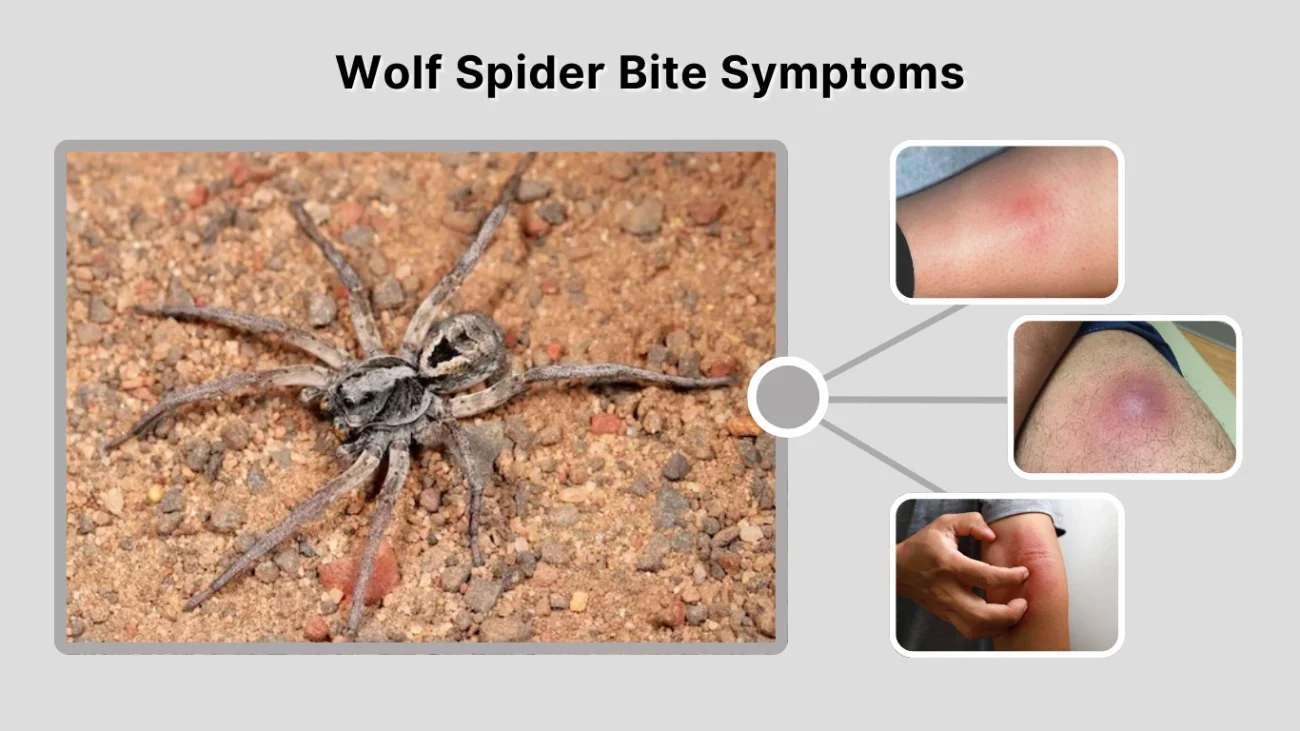
The symptoms of a wolf spider bite are usually mild and temporary. Reactions can vary depending on the individual’s sensitivity and the location of the bite.
Immediate Symptoms
Right after the bite, you may experience:
- Sharp or stinging pain
- Redness at the bite site
- Mild swelling
- Itching
The pain is often described as similar to a bee sting. In most cases, discomfort decreases within a few hours.
Symptoms Within 24 Hours
As time passes, you may notice:
- Continued mild swelling
- Tenderness around the area
- Slight warmth near the bite
- A small raised bump
Some people may develop minor blistering, although this is uncommon. Unlike bites from more dangerous spiders, wolf spider bites do not typically cause severe tissue damage.
Rare or Severe Reactions
Although uncommon, certain individuals may experience stronger reactions, including:
- Headache
- Nausea
- Dizziness
- Mild fever
Allergic reactions are very rare but possible. Signs of an allergic response include difficulty breathing, swelling of the face or throat, and widespread hives. These symptoms require immediate medical attention.
Importantly, wolf spider bites are not known to cause necrosis (tissue death), a symptom often associated with brown recluse spider bites.
What Does a Wolf Spider Bite Look Like?
A wolf spider bite typically appears as a small, red, raised bump on the skin. You may notice slight swelling and tenderness around the area. In some cases, two tiny puncture marks from the spider’s fangs may be visible, though they are often too small to see clearly.
The bite can resemble:
- A mosquito bite
- A bee sting
- A minor skin irritation
Unlike more dangerous spider bites, a wolf spider bite does not usually form an expanding ulcer or deep wound. The redness tends to remain localized and gradually fades over several days.
Because many skin conditions can mimic spider bites, proper identification can be difficult without actually seeing the spider. Misidentification is common, especially when brown recluse bites are suspected.
Wolf Spider Bite vs Brown Recluse Bite
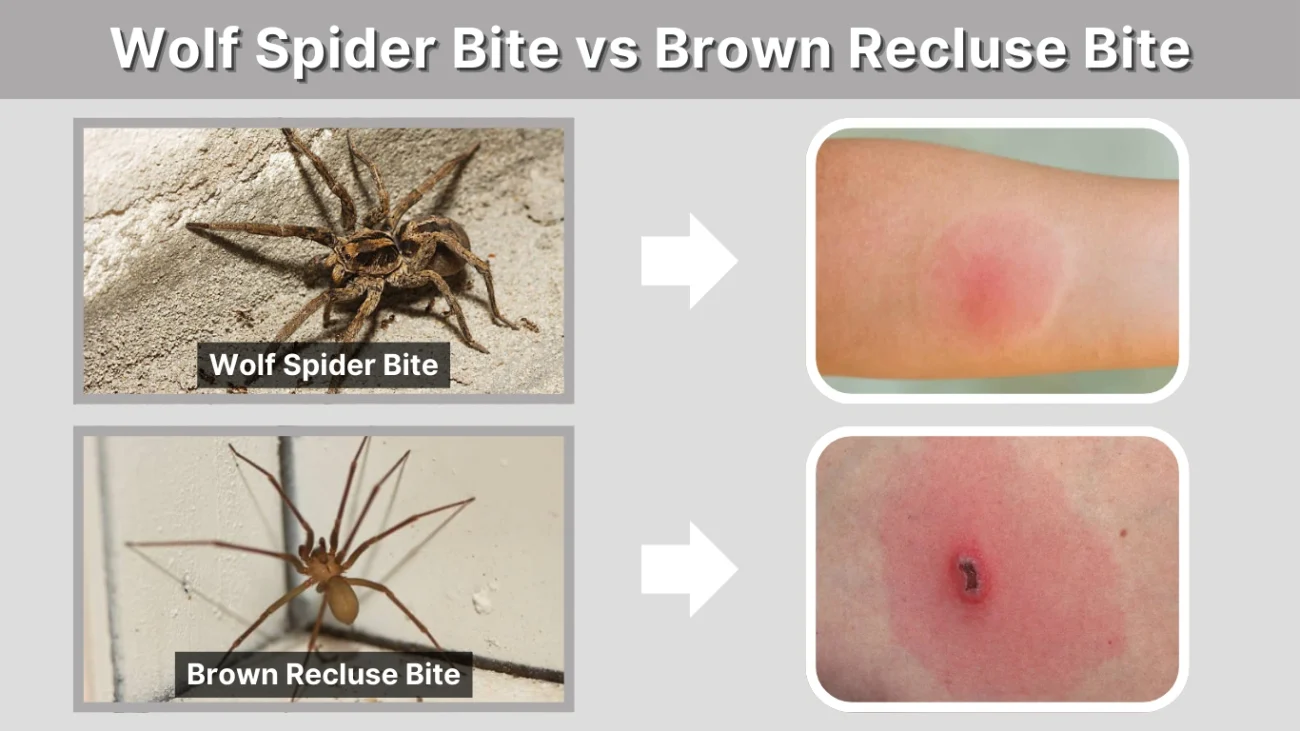
One of the biggest concerns people have after a spider bite is whether it could be from a brown recluse. Wolf spiders are often mistaken for brown recluse spiders because of their similar size and coloring. However, their bites are very different in severity and progression.
Key Differences
Pain timeline:
A wolf spider bite usually causes immediate pain, similar to a bee sting. In contrast, a brown recluse bite may be painless at first, with discomfort increasing several hours later.
Skin reaction:
Wolf spider bites typically remain red, slightly swollen, and localized. Brown recluse bites may develop a blister that worsens over time and can lead to an open sore.
Tissue damage:
Wolf spider venom does not typically cause necrosis (tissue death). Brown recluse venom, however, can cause skin tissue to break down in some cases.
Healing time:
Most wolf spider bites heal within a week. Brown recluse bites may take weeks or even months to fully heal if complications develop.
If the bite area becomes increasingly painful, darkens in the center, or forms a deep ulcer, it’s important to seek medical evaluation.
Wolf Spider Bite Treatment
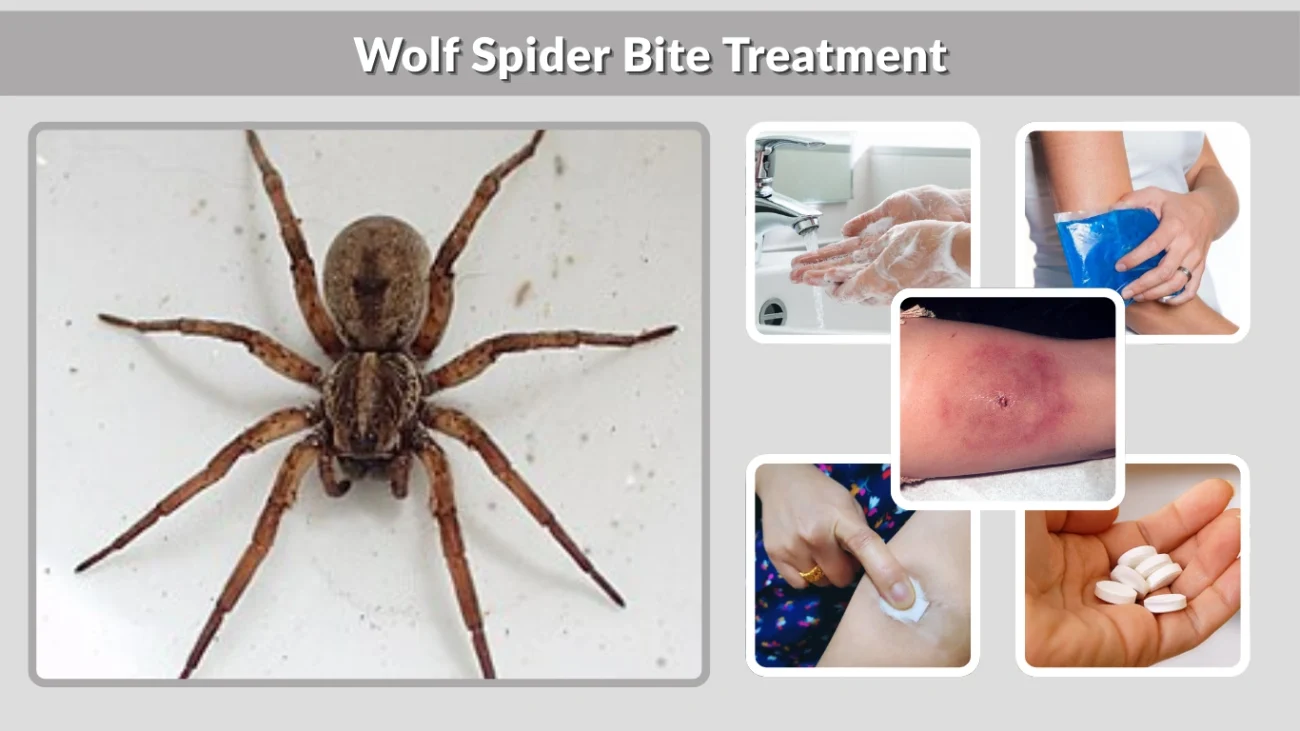
Treating a wolf spider bite is usually simple and can be done at home. The goal is to reduce pain, minimize swelling, and prevent infection.
Immediate First Aid
If you suspect a wolf spider bite:
- Wash the area thoroughly with soap and water
- Apply a cold compress for 10 minutes at a time
- Elevate the affected limb (if applicable)
- Keep the area clean and dry
A cold pack can help reduce swelling and numb discomfort. Avoid placing ice directly on the skin — wrap it in a cloth instead.
Medications and Home Care
To relieve symptoms, you can use:
- Over-the-counter antihistamines for itching
- Ibuprofen or acetaminophen for pain
- Hydrocortisone cream to reduce inflammation
- Calamine lotion for soothing relief
Try not to scratch the bite, as this can increase irritation and raise the risk of infection.
What Not to Do
There are many myths about treating spider bites. Avoid:
- Cutting the bite site
- Attempting to suck out venom
- Applying harsh chemicals
- Using unnecessary antibiotics without medical advice
These methods do not help and may make the injury worse.
How Long Does a Wolf Spider Bite Last?
In most cases, symptoms improve quickly. Pain typically decreases within a few hours, while swelling and redness may last two to three days. The bite often heals completely within about a week.
Mild itching can persist for several days as the skin recovers. If symptoms last longer than 7–10 days, worsen instead of improve, or show signs of infection (such as pus or spreading redness), it’s important to consult a healthcare provider.
Overall, recovery from a wolf spider bite is straightforward for most healthy individuals.
When to See a Doctor
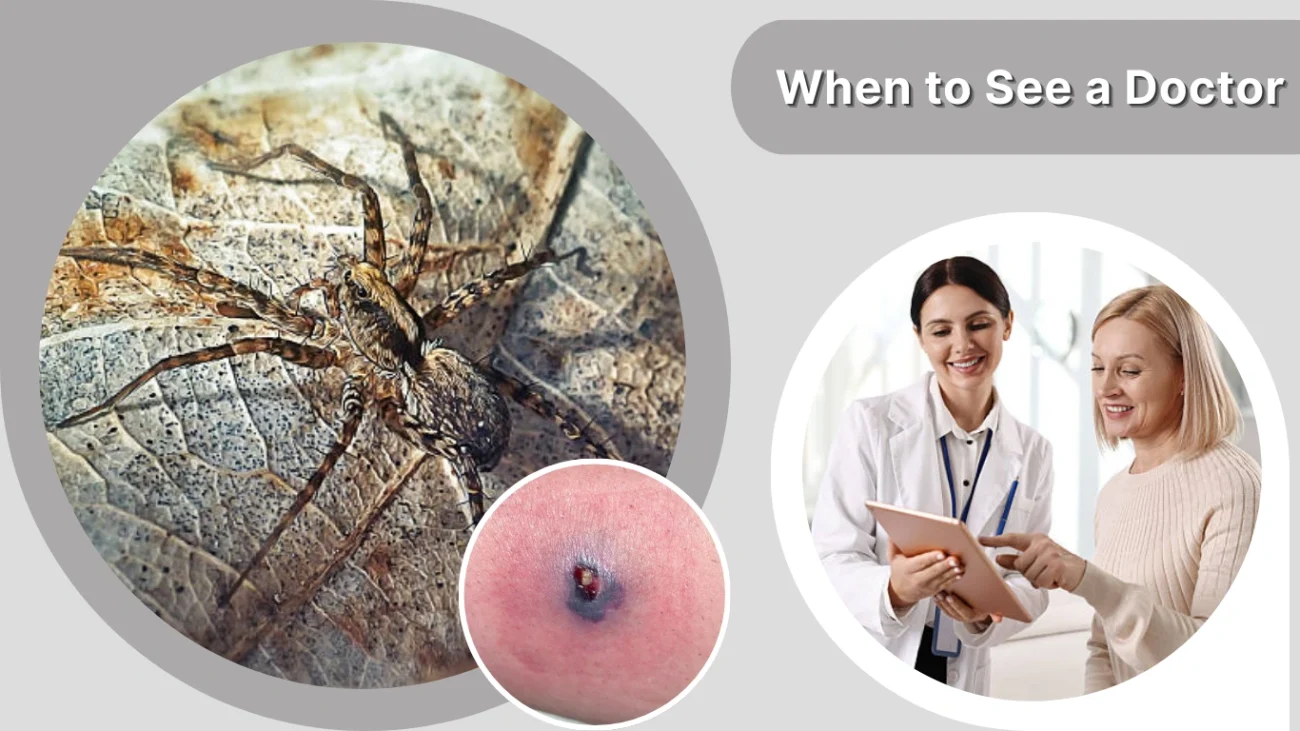
Although wolf spider bites are rarely dangerous, certain symptoms should not be ignored. Seek medical attention if you notice:
- Severe or worsening pain
- Rapidly spreading redness
- Pus or drainage
- Fever
- Swelling of the face or throat
- Difficulty breathing
These signs could indicate an allergic reaction, infection, or a different type of spider bite altogether.
Children, elderly individuals, and people with weakened immune systems may also benefit from medical evaluation if symptoms seem unusual.
How to Prevent Wolf Spider Bites
Preventing wolf spider bites mostly involves reducing contact with spiders in and around your home.
Practical prevention tips include:
- Sealing cracks and gaps around doors and windows
- Reducing indoor clutter where spiders can hide
- Shaking out shoes, clothing, and bedding
- Wearing gloves when gardening or moving firewood
- Installing proper outdoor lighting to limit insect attraction
Because wolf spiders hunt insects, reducing insect populations around your home can also decrease spider activity.
FAQs
How painful is a wolf spider bite?
A wolf spider bite is usually mildly to moderately painful. Most people describe it as similar to a bee sting, with sharp pain at first followed by mild swelling and itching. The discomfort typically improves within a few hours and rarely becomes severe.
Do wolf spider bites cause necrosis?
No, wolf spider bites are not known to cause necrosis or tissue death. This symptom is commonly associated with brown recluse spider bites. A wolf spider bite usually remains localized and heals without causing deep skin damage.
Can a wolf spider bite kill you?
A wolf spider bite is not considered life-threatening for healthy individuals. Serious complications are extremely rare. In very unusual cases, an allergic reaction could occur, which would require immediate medical attention.
How do I know if a spider bite is serious?
A spider bite may be serious if pain worsens over time, the skin turns dark or forms an ulcer, or symptoms like fever and difficulty breathing develop. If you’re unsure about the type of spider or your symptoms are severe, seek medical advice.
Should I go to the ER for a wolf spider bite?
Emergency care is usually not necessary unless you experience signs of a severe allergic reaction, such as trouble breathing or swelling of the throat. For typical mild symptoms, home treatment is generally sufficient.
Conclusion
A wolf spider bite can be uncomfortable, but it is rarely dangerous. Most bites cause mild pain, redness, and swelling that resolve within a few days. Understanding the symptoms and knowing how to treat the bite properly can help ease anxiety and speed recovery. If symptoms worsen or you suspect a more serious spider bite, seeking medical advice is always the safest choice.