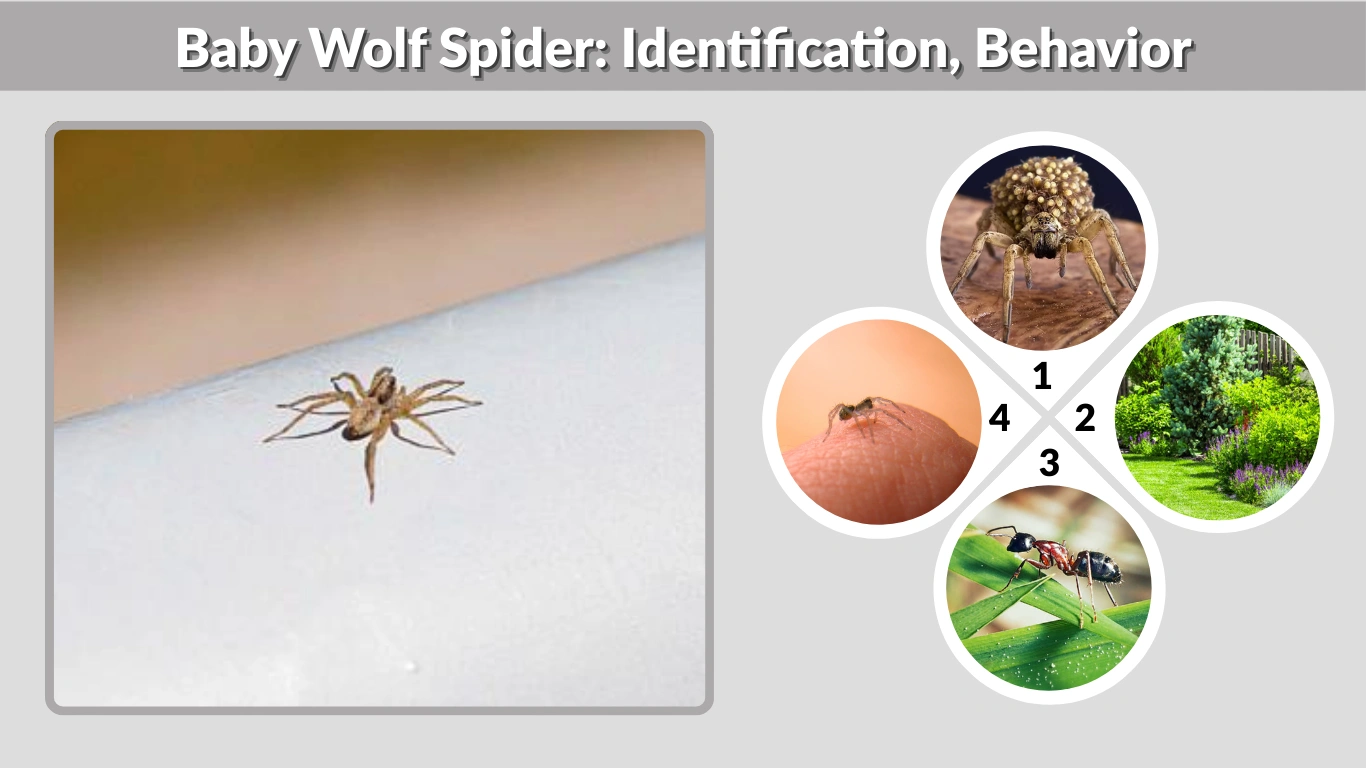
Seeing dozens — or even hundreds — of tiny spiders clustered together can be alarming. If you’ve recently spotted small spiders that look like miniature versions of a larger one, you may be dealing with a baby wolf spider group. Wolf spiders are known for their unique maternal behavior and fast movement, and their young share many of the same traits. The good news is that baby wolf spiders are generally harmless to humans. In this guide, we’ll explain how to identify them, why they gather together, and whether you should be concerned.
What Is a Baby Wolf Spider?
A baby wolf spider is the juvenile stage of a wolf spider, a member of the Lycosidae family. Like adult wolf spiders, the babies are ground-dwelling hunters that do not spin webs to trap prey. Instead, they actively chase and capture insects.
Baby wolf spiders are extremely small when they first hatch — often no bigger than a pinhead. Despite their size, they already resemble adult wolf spiders in shape and structure. They have the same body proportions, leg length, and eye arrangement, just on a much smaller scale.
A single female wolf spider can produce a large number of offspring at once. It’s not uncommon for a mother wolf spider to carry dozens — sometimes over 100 — spiderlings.
What Do Baby Wolf Spiders Look Like?
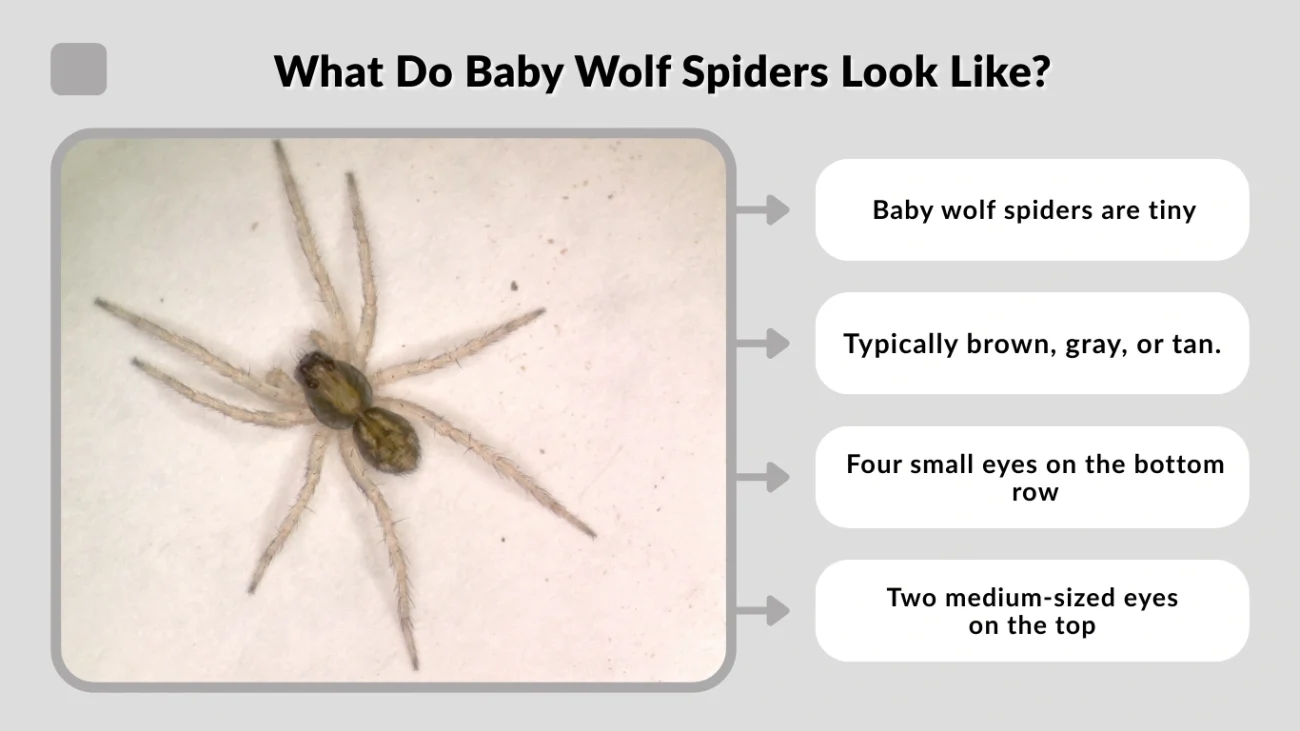
Because they resemble adults, baby wolf spiders can usually be identified by looking for key physical features.
Size and Color
Baby wolf spiders are tiny, typically brown, gray, or tan. Their coloration helps them blend into soil, grass, and leaf litter. Even at a young age, they may have faint striping or markings similar to adult wolf spiders.
Their bodies are slightly hairy, though the hair may be less noticeable due to their small size. As they grow, their markings and coloration become more defined.
Eye Arrangement
One of the most distinctive features of wolf spiders — even as babies — is their eye pattern. They have eight eyes arranged in three rows:
- Four small eyes on the bottom row
- Two large eyes in the middle
- Two medium-sized eyes on the top
This eye arrangement helps wolf spiders see well at night and is a reliable way to distinguish them from other spider species.
Movement and Behavior
Baby wolf spiders move quickly and actively. Unlike web-building spiders that stay in one place, wolf spider spiderlings tend to scatter and roam as they mature. If disturbed, they may rapidly disperse in different directions.
Their speed and hunting behavior are early signs that they belong to the wolf spider family.
Why Do Baby Wolf Spiders Ride on Their Mother’s Back?
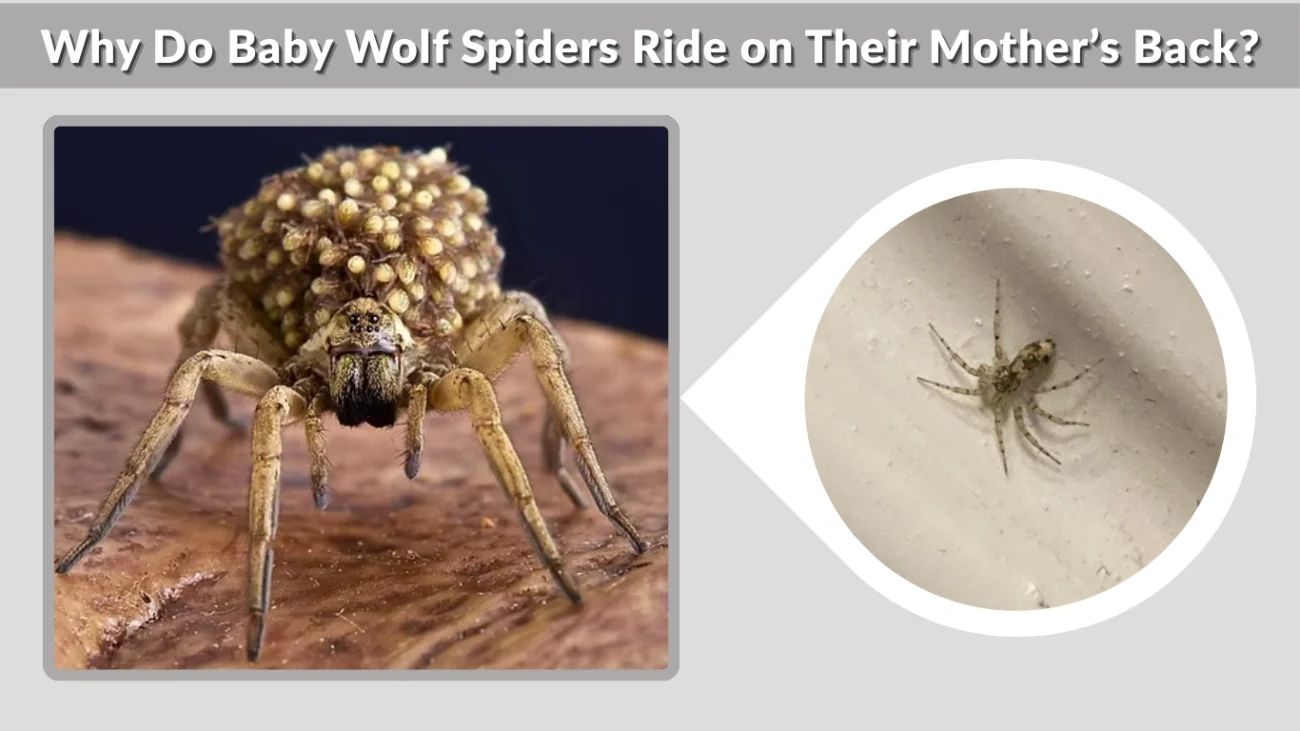
One of the most fascinating characteristics of wolf spiders is their maternal care. After the eggs hatch, the spiderlings climb onto their mother’s back and remain there for protection.
This behavior is unique among many spider species.
The mother first carries her egg sac attached to her spinnerets. Once the spiderlings emerge, they instinctively climb onto her abdomen and cling tightly. She may carry dozens of babies at once, creating a striking visual if seen up close.
The spiderlings typically stay on their mother’s back for several days to a few weeks. During this time, she protects them from predators and environmental threats. Eventually, the babies disperse and begin hunting independently.
Are Baby Wolf Spiders Dangerous?
A common concern is whether baby wolf spiders are harmful. Like adults, they are venomous — but their venom is mild and designed to subdue small insects.
Baby wolf spiders rarely bite humans. In fact, due to their small size, their fangs may not even be strong enough to break human skin easily. If a bite does occur, it usually results in minor redness, slight swelling, or mild irritation.
Serious reactions are extremely rare.
Because they are shy and prefer to escape rather than confront humans, baby wolf spiders pose very little threat.
Where Do Baby Wolf Spiders Live?
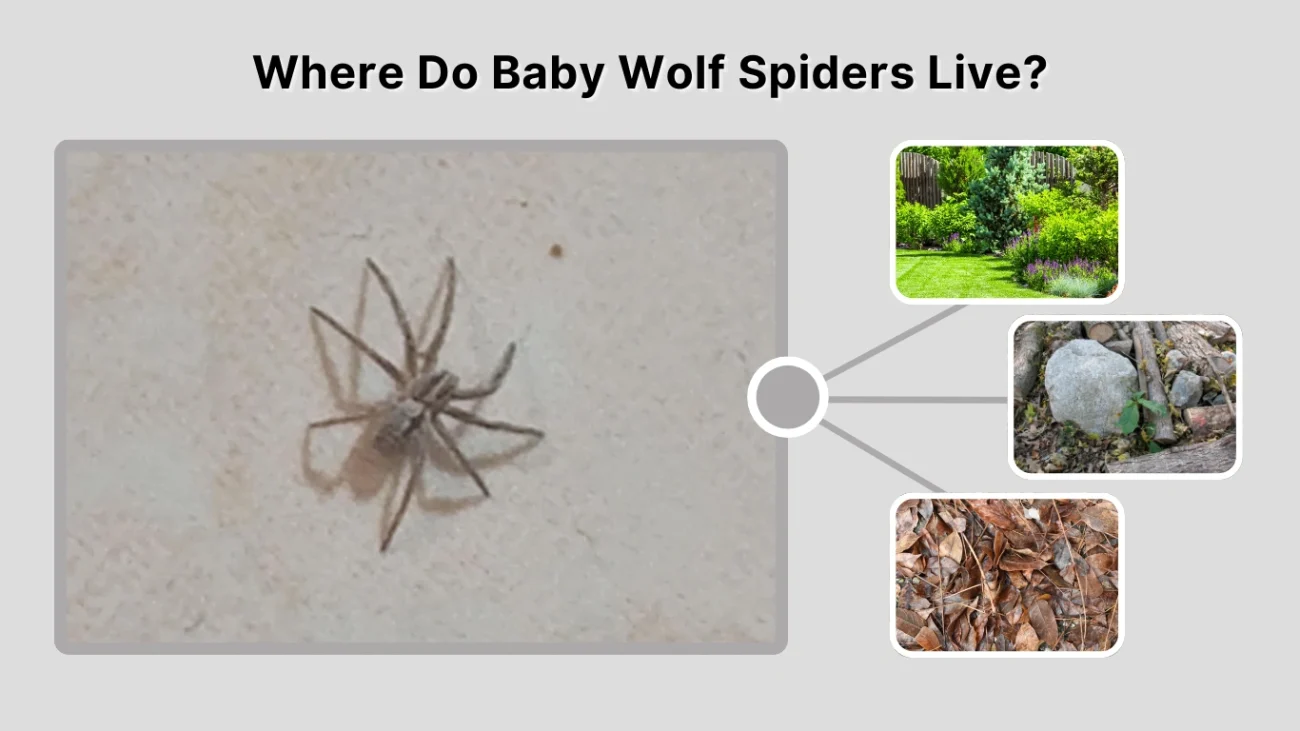
Baby wolf spiders are usually found wherever adult wolf spiders live.
Outdoor Habitats
Outdoors, they are commonly found in:
- Grass and lawns
- Gardens
- Under rocks and logs
- Leaf litter
- Around foundations
Their natural camouflage makes them difficult to spot unless they are clustered together.
Indoor Sightings
Although wolf spiders prefer outdoor environments, baby wolf spiders may occasionally be seen indoors. This often happens when:
- The mother spider enters the home while carrying her egg sac
- Spiderlings hatch near doorways or foundation cracks
- Insects inside the home attract hunting spiders
You’re most likely to find them in basements, garages, crawl spaces, or ground-level rooms. Because wolf spiders do not build webs to capture prey, they are usually spotted moving along floors rather than hanging in corners.
If you suddenly see many tiny spiders in one area, it may be because a mother recently released her spiderlings nearby.
What Do Baby Wolf Spiders Eat?
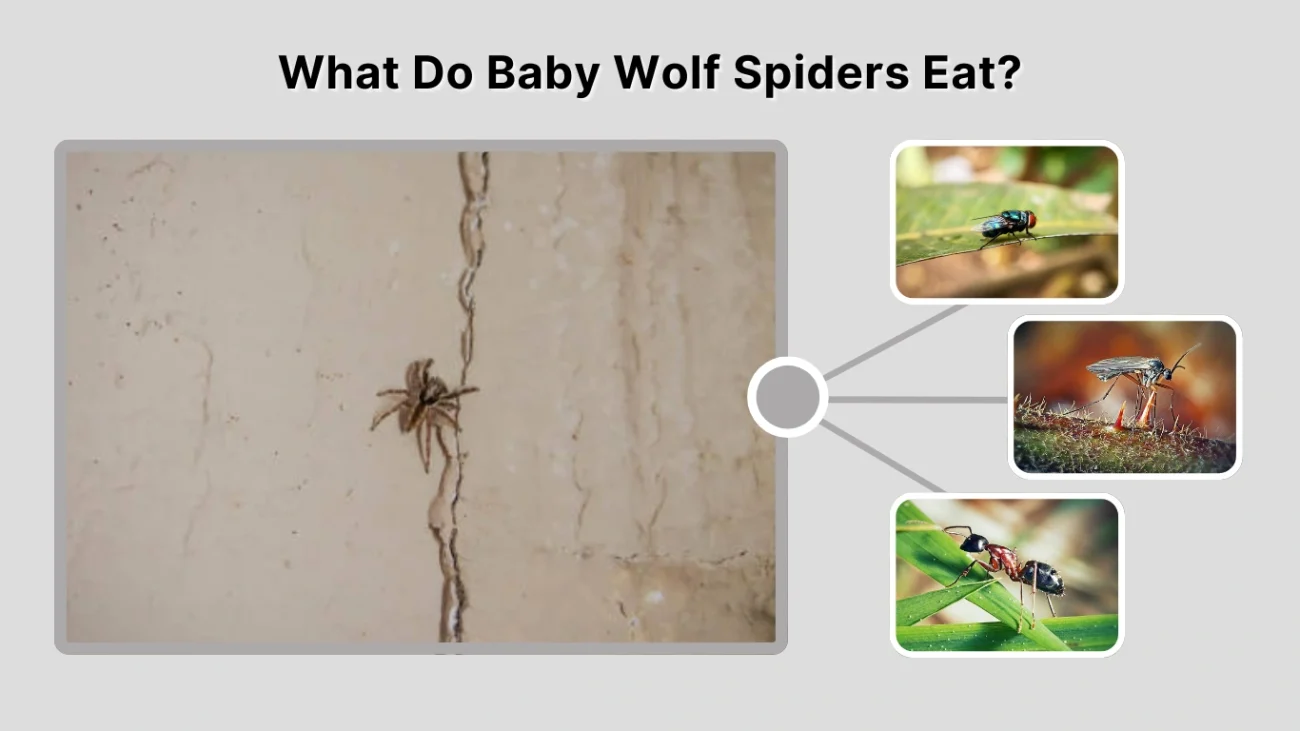
Baby wolf spiders begin hunting shortly after leaving their mother’s back. Like adults, they do not rely on webs. Instead, they actively chase and capture prey.
Their diet consists of:
- Tiny insects
- Small flies
- Gnats
- Ants
- Other small arthropods
Because they help reduce insect populations, wolf spiders are often considered beneficial in gardens and outdoor spaces.
As they grow, their prey size increases. Their hunting skills develop quickly, allowing them to survive independently within a short period.
What to Do If You See Baby Wolf Spiders in Your Home
Finding baby wolf spiders indoors can be unsettling, especially if you notice a cluster of them at once. However, they are generally not a sign of a serious infestation.
Safe Removal Tips
If you want to remove them safely:
- Use a vacuum to collect spiderlings
- Dispose of the vacuum bag promptly
- Seal cracks and gaps around doors and windows
- Reduce clutter where spiders may hide
- Lower indoor insect populations
Because wolf spiders enter homes searching for food, reducing insects is one of the most effective long-term prevention strategies.
When to Call Pest Control
Professional pest control may be helpful if:
- You repeatedly see large numbers of spiders
- There are frequent adult wolf spider sightings
- You suspect entry points are difficult to seal
In most cases, however, baby wolf spiders disperse quickly and do not establish long-term indoor colonies.
Life Cycle of a Wolf Spider
Understanding the wolf spider life cycle can help explain why baby wolf spiders sometimes appear suddenly.
- Egg Sac Stage: The female produces an egg sac and attaches it to her spinnerets, carrying it wherever she goes.
- Hatching: After several weeks, the spiderlings hatch inside the sac.
- Maternal Care: The babies climb onto the mother’s back for protection.
- Dispersal: After a short period, the spiderlings leave the mother and begin hunting independently.
- Growth: Through multiple molts, they grow into mature adults.
Wolf spiders typically live about one year, though some species may live longer.
Because many spiderlings hatch at once, sightings can seem dramatic — but most will not survive to adulthood due to natural predators and environmental factors.
FAQs
How many babies can a wolf spider have?
A female wolf spider can produce dozens to over 100 spiderlings in a single egg sac. The exact number depends on the species. After hatching, the babies ride on the mother’s back before dispersing.
Do baby wolf spiders bite?
Baby wolf spiders can bite, but it is very rare. Due to their small size, their bites are typically mild and may not even break the skin. If symptoms occur, they are usually limited to minor redness or irritation.
How long do baby wolf spiders stay with their mother?
Spiderlings usually remain on their mother’s back for several days to a few weeks. Once they are strong enough to survive independently, they disperse and begin hunting on their own.
Why do I see hundreds of tiny spiders at once?
This typically happens shortly after a wolf spider egg sac hatches. The spiderlings cluster on their mother’s back before dispersing, which can create the appearance of a sudden spider “explosion.”
Are baby wolf spiders poisonous?
Baby wolf spiders are not poisonous. They are venomous, like adult wolf spiders, but their venom is mild and not considered dangerous to humans.
Conclusion
While the sight of a baby wolf spider cluster can be surprising, these tiny spiders are generally harmless and even beneficial in controlling insects. Their unique behavior — especially riding on their mother’s back — makes them one of the more fascinating spider species. In most cases, simple removal and basic home maintenance are enough to manage indoor sightings. With the right information, there’s no need for panic when you encounter these miniature hunters.