When comparing wolf spider vs brown recluse, many people are trying to answer one important question: which one is more dangerous? Both spiders are brown and commonly found in parts of the United States, which leads to frequent misidentification. However, their appearance, behavior, and bite severity are very different. Understanding these differences can help you stay calm, identify the spider correctly, and know when medical attention may be necessary. In this guide, we’ll break down how to tell them apart and what really happens if you’re bitten.
Quick Comparison: Wolf Spider vs Brown Recluse
Before diving into the details, here’s a simple overview of how these two spiders differ.
At-a-Glance Differences
- Size: Wolf spiders are generally larger and bulkier. Brown recluses are smaller and more slender.
- Body texture: Wolf spiders are hairy; brown recluses have smoother bodies.
- Eye count: Wolf spiders have eight eyes; brown recluses have six.
- Markings: Brown recluses have a violin-shaped marking; wolf spiders do not.
- Venom strength: Brown recluse venom is medically significant; wolf spider venom is mild.
- Bite severity: Brown recluse bites can cause tissue damage; wolf spider bites usually remain minor.
Although they may look somewhat similar at a glance, these features make identification easier when examined closely.
Appearance Differences
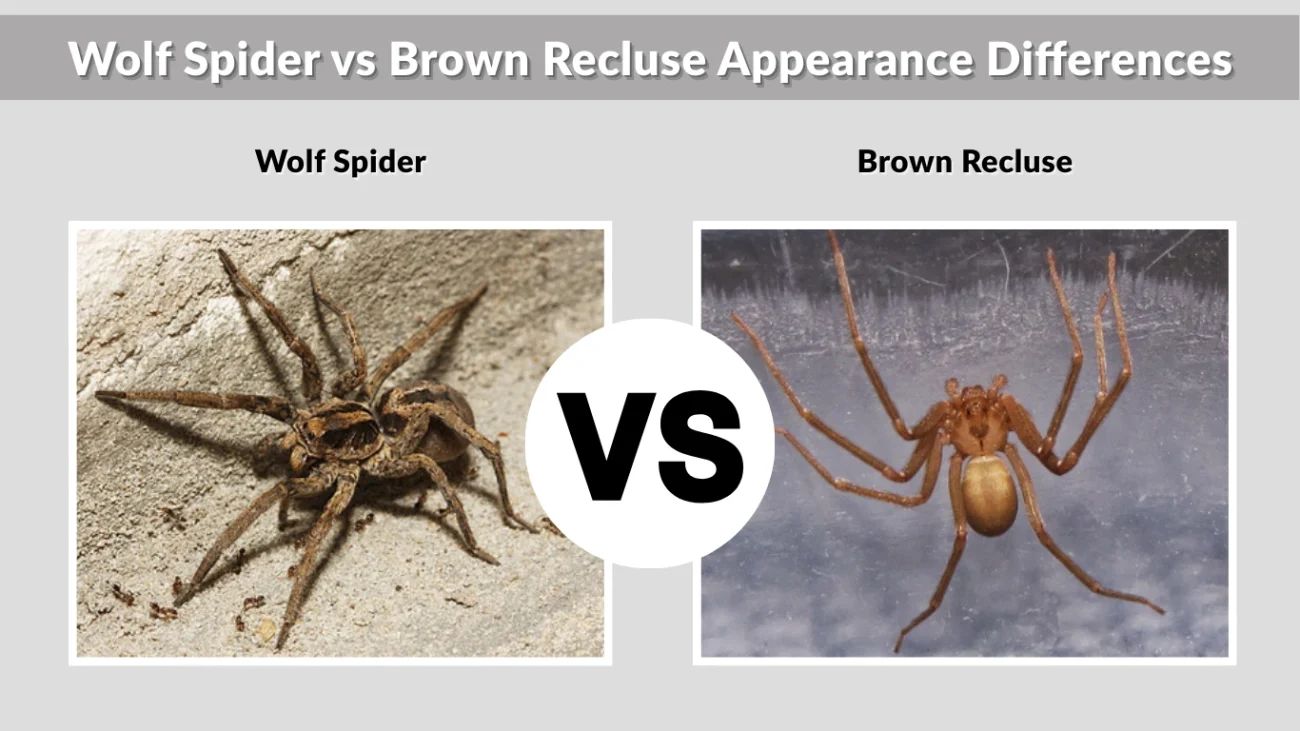
Correct identification starts with physical characteristics. While both spiders are typically brown, their overall structure and markings set them apart.
Wolf Spider Appearance
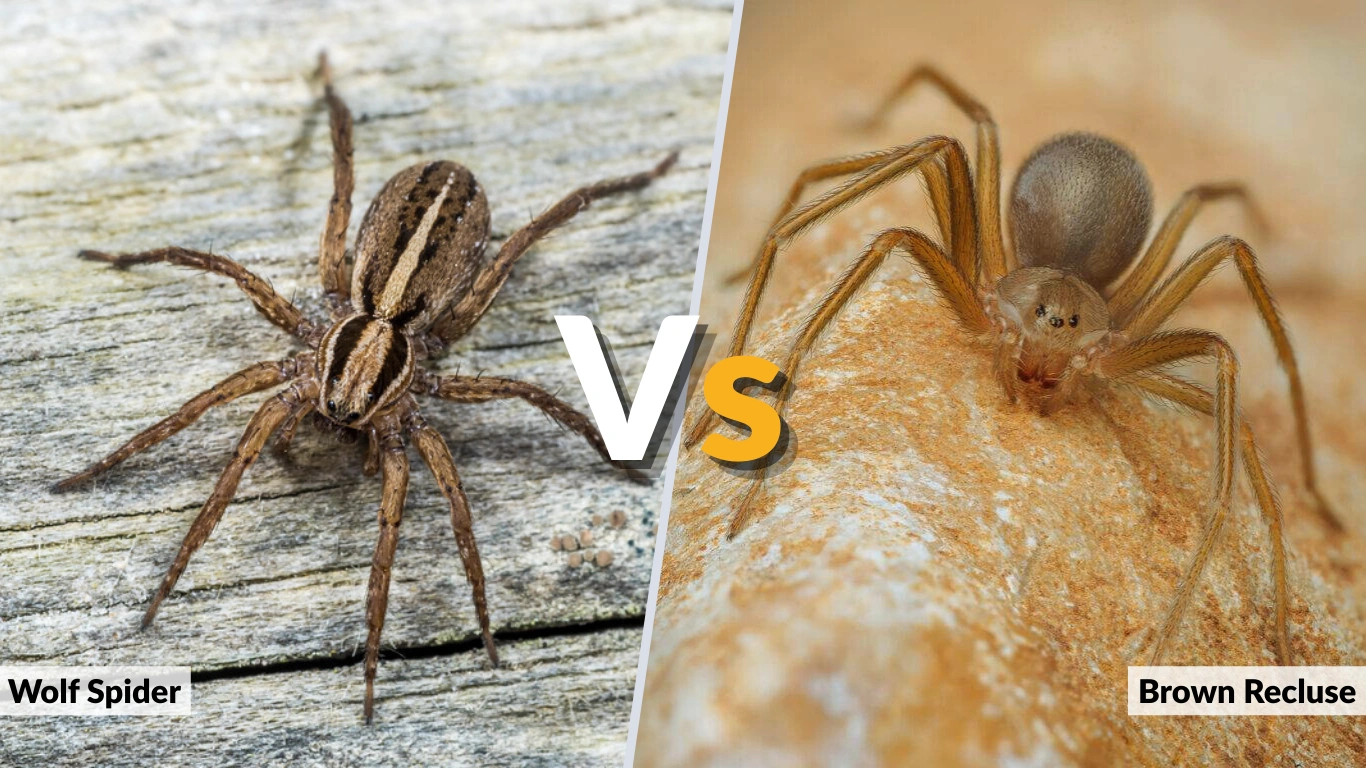
Wolf spiders are large, robust spiders with thick, hairy bodies. Their coloring ranges from gray to brown, often with darker stripes or patterns running along the back. These patterns help them camouflage in soil, grass, and leaf litter.
They have strong legs built for running and hunting rather than spinning webs. Wolf spiders can grow up to two inches long including their legs, making them appear intimidating.
One of their most distinctive features is their eye arrangement: they have eight eyes positioned in three rows. Two large eyes in the middle often reflect light at night.
Brown Recluse Appearance
Brown recluse spiders are smaller and more slender. Their bodies are smooth and uniformly light to medium brown. Unlike wolf spiders, they lack bold striping or heavy hair.
The most recognizable feature of a brown recluse is the dark, violin-shaped marking on the top of its body, with the “neck” of the violin pointing toward the abdomen. However, this marking can sometimes be faint, leading to confusion.
Brown recluses are typically about the size of a quarter including their legs — noticeably smaller than most wolf spiders.
Eye Arrangement Comparison (A Key Identifier)
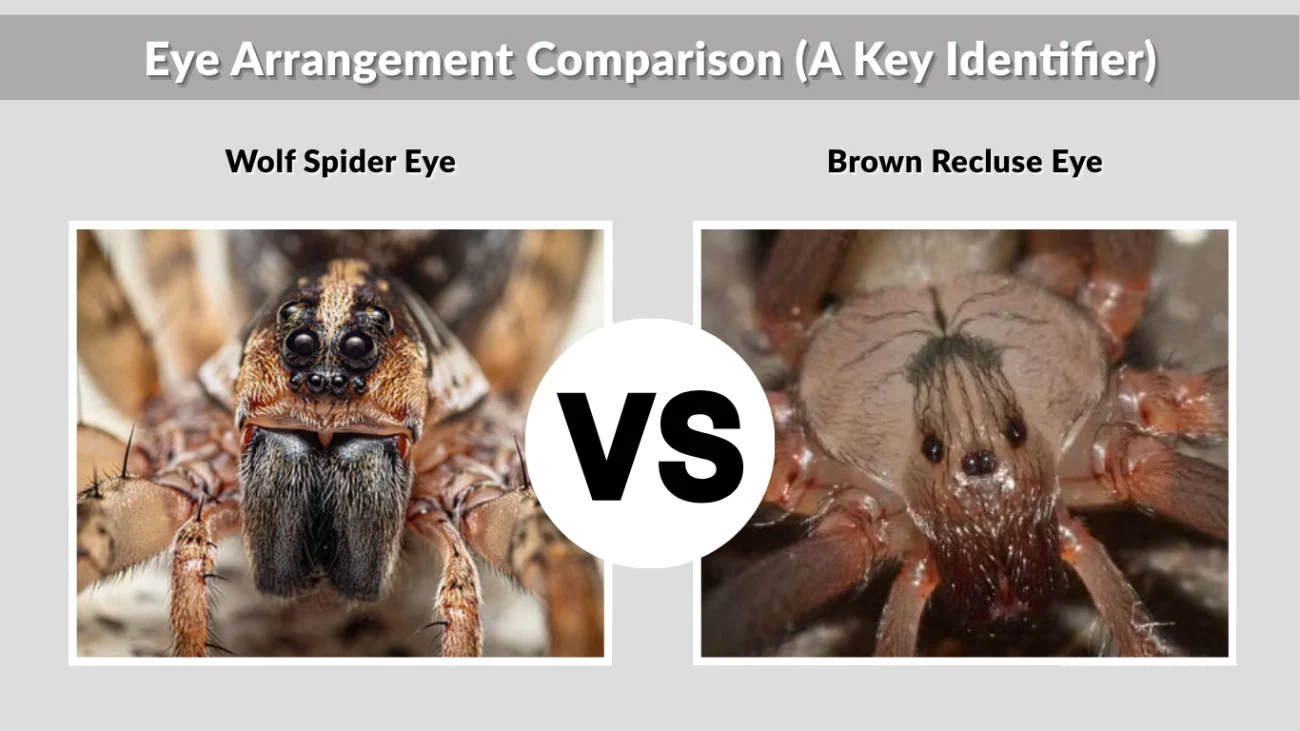
One of the most reliable ways to distinguish a wolf spider from a brown recluse is by examining the eyes.
- Wolf spiders have eight eyes arranged in three rows: four small eyes on the bottom, two large eyes in the middle, and two medium-sized eyes on top.
- Brown recluse spiders have only six eyes, arranged in three pairs.
This difference is significant because most spiders have eight eyes. The brown recluse is unusual in having only six, making this a strong identification clue.
While it may be difficult to safely examine a spider up close, this characteristic is often used by experts to confirm species.
Bite Differences
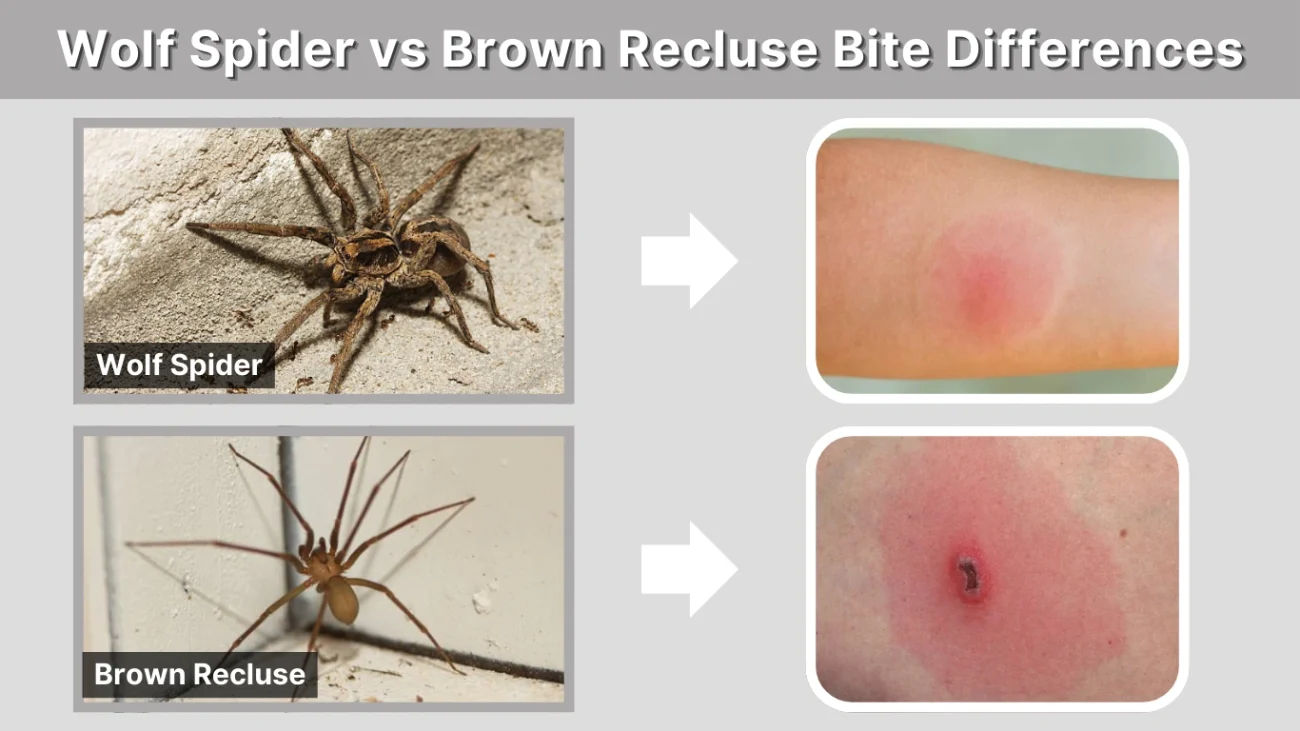
Another major point in the wolf spider vs brown recluse comparison is the severity of their bites.
Wolf Spider Bite Symptoms
A wolf spider bite is usually mild. If bitten, you may experience:
- Immediate sharp or stinging pain
- Redness around the bite site
- Mild swelling
- Itching
The pain is often compared to a bee sting. Symptoms generally improve within a few hours to a few days. Serious reactions are rare, and tissue damage does not typically occur.
Most wolf spider bites heal completely within about a week.
Brown Recluse Bite Symptoms
Brown recluse bites can be more serious. Interestingly, they are often painless at first. Within several hours, pain may begin to increase.
Possible symptoms include:
- Increasing redness and tenderness
- Blister formation
- A dark or bluish center
- Skin breakdown (necrosis) in some cases
In more severe cases, the wound may develop into an open ulcer that takes weeks or even months to heal. Some people may also experience fever, chills, or nausea.
Not every brown recluse bite causes severe damage, but the risk is significantly higher compared to a wolf spider bite.
Which Spider Is More Dangerous?
When comparing wolf spider vs brown recluse in terms of danger, the brown recluse is generally considered more medically significant.
Wolf spider venom is mild and primarily affects insects. For humans, bites usually result in temporary pain, redness, and swelling that resolve within days. Severe complications are extremely rare.
Brown recluse venom, however, contains enzymes that can damage skin tissue. While not every bite leads to necrosis, the possibility makes brown recluse bites more concerning. In rare cases, systemic symptoms such as fever, chills, or fatigue may develop.
Overall, if you’re choosing between the two, the brown recluse presents the greater medical risk.
Habitat and Geographic Differences

Another important difference in the wolf spider vs brown recluse comparison is where they live.
Where Wolf Spiders Live
Wolf spiders are found throughout much of the world. In the United States, they are common in nearly every state.
They prefer:
- Gardens and grassy areas
- Under rocks and logs
- Basements and garages
- Ground-level areas inside homes
Because they actively hunt prey, they roam rather than hide in webs.
Where Brown Recluses Live
Brown recluse spiders have a more limited geographic range. They are primarily found in the central and southern United States.
They prefer dark, undisturbed spaces such as:
- Closets
- Attics
- Storage boxes
- Under furniture
Unlike wolf spiders, brown recluses are true to their name — they are reclusive and avoid open areas.
Many spider bites blamed on brown recluses occur outside their natural range, leading to frequent misdiagnosis.
Behavior Differences
Behavior also helps distinguish these two species.
Wolf spiders are active hunters. They move quickly and may appear to “chase” people, but they are usually trying to escape. They rely on speed rather than webs to catch prey.
Brown recluse spiders are shy and prefer hiding. They are less likely to be seen out in the open. Most bites occur when the spider is accidentally pressed against the skin, such as in clothing or bedding.
Neither spider is aggressive toward humans. Bites typically happen only in defensive situations.
How to Tell Which Spider Bit You
Identifying the spider responsible for a bite can be challenging — especially if you didn’t see it happen.
Here are some general clues:
- Immediate pain suggests a wolf spider bite.
- Delayed pain that worsens over time may suggest a brown recluse bite.
- Mild redness and quick healing point toward a wolf spider.
- Blistering or skin breakdown may indicate a brown recluse.
However, many skin infections and other insect bites are mistakenly blamed on spiders. Without seeing and identifying the spider, it’s often impossible to know for certain.
If symptoms worsen, spread, or show signs of tissue damage, medical evaluation is important regardless of the suspected spider.
What to Do If You’re Bitten
Whether you suspect a wolf spider or brown recluse bite, basic first aid steps are similar.
First Aid for Any Spider Bite
- Wash the area with soap and water
- Apply a cold compress to reduce swelling
- Elevate the affected area if possible
- Take over-the-counter pain relief if needed
Avoid cutting the wound or attempting to remove venom — these methods are ineffective and can cause further injury.
When to Seek Medical Help
You should seek medical care if you notice:
- Increasing pain after several hours
- A darkening or blistered center
- Spreading redness
- Fever or chills
- Difficulty breathing
Early medical evaluation is especially important if a brown recluse bite is suspected.
FAQs
How can I tell a wolf spider from a brown recluse?
Look at size, hair, and eye count. Wolf spiders are larger, hairy, and have eight eyes. Brown recluses are smaller, smoother, and have six eyes arranged in pairs. The violin-shaped marking on a brown recluse is another key feature.
Is a wolf spider bite as dangerous as a brown recluse bite?
No. Wolf spider bites are usually mild and heal quickly. Brown recluse bites have the potential to cause tissue damage and may require medical attention.
Do wolf spiders have a violin mark?
No, wolf spiders do not have a violin-shaped marking. That distinctive mark is specific to brown recluse spiders.
Are brown recluse spiders aggressive?
Brown recluses are not aggressive. They bite mainly when pressed against the skin or disturbed in their hiding spots.
Which spider is more common in homes?
Wolf spiders are more commonly seen roaming indoors because they hunt actively. Brown recluses may live indoors as well, but they tend to stay hidden in undisturbed areas.
Conclusion
In the wolf spider vs brown recluse comparison, the differences are clear. Wolf spiders are larger, hairier, and generally harmless to humans. Brown recluse spiders are smaller, more reclusive, and potentially more dangerous due to their venom’s ability to damage tissue. Correct identification is key to understanding your risk and responding appropriately. If you’re ever unsure about a spider bite, seeking medical advice is the safest choice.