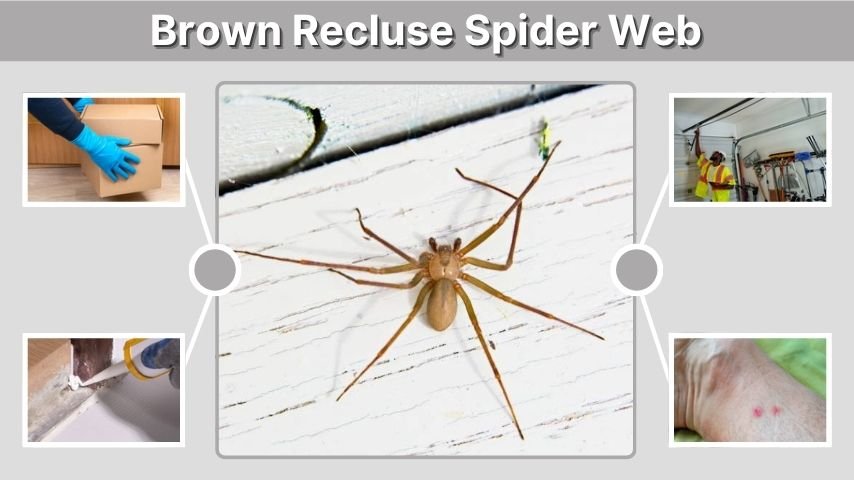
A brown recluse spider web does not look like the neat round web many people imagine. These spiders make messy, irregular silk in dark, hidden places rather than large open webs for catching flying insects. Their webs are often found in closets, basements, storage boxes, attics, garages, and wall gaps. Knowing what a brown recluse web looks like can help you identify possible hiding areas safely.
Do Brown Recluse Spiders Make Webs?
Yes, brown recluse spiders do make webs, but they do not use them the same way orb-weaving spiders do. Their webs are usually small, loose, messy, and hidden. Instead of building a beautiful circular web in the open, they create irregular silk retreats in quiet corners and protected spaces.
Brown recluses are hunting spiders. They often leave their hiding place at night to search for prey. Their web works more like a shelter, resting area, egg-sac site, or retreat than a classic prey-catching trap. This is why many homeowners never notice the web even when the spider is present.
Why Their Webs Are Hard to See
Brown recluse webs are easy to miss because they are usually placed where people do not look often. You may find them behind stored boxes, under shelves, inside wall voids, behind furniture, in closets, or around cluttered basement corners. The silk may collect dust, making it look like a dirty cobweb rather than a fresh spider web.
These spiders also prefer low-traffic areas. If a web is in the middle of a bright window or open ceiling corner, it may belong to another spider species. Brown recluse webs are more likely to be tucked away in dry, dark, and undisturbed locations.
What Does a Brown Recluse Spider Web Look Like?
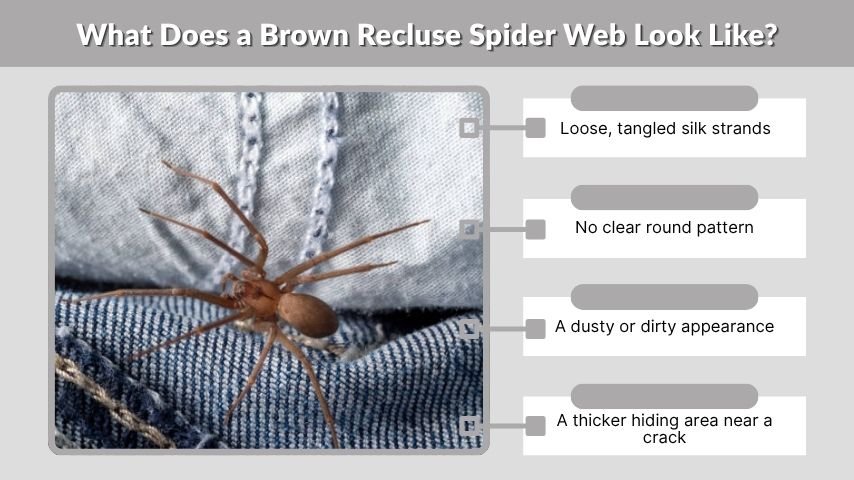
A brown recluse spider web usually looks messy, loose, and flat or irregular. It does not have the organized spiral pattern of an orb-weaver web. It may look like a thin sheet of silk, scattered threads, or a small tangled patch near a crack or hiding spot.
| Web Feature | Brown Recluse Spider Web |
|---|---|
| Shape | Irregular, messy, patternless |
| Location | Dark, dry, hidden areas |
| Main purpose | Retreat, shelter, egg protection |
| Visibility | Often dusty and hard to notice |
| Web type | Not a round orb web |
| Common mistake | Confused with cobwebs or funnel webs |
Common Web Characteristics
A brown recluse web may have a thicker retreat area where the spider hides. This part can sometimes look slightly tube-like or denser than the surrounding silk. The web itself is often off-white, grayish, or dusty because it collects dirt over time.
You may notice:
- Loose, tangled silk strands
- No clear round pattern
- A dusty or dirty appearance
- A thicker hiding area near a crack
- Webs close to the floor or inside clutter
- Webs in dry, quiet, poorly lit places
The spider may not always be sitting in the web. Since brown recluses hunt at night, the web may be empty when you find it.
Brown Recluse Web in the House
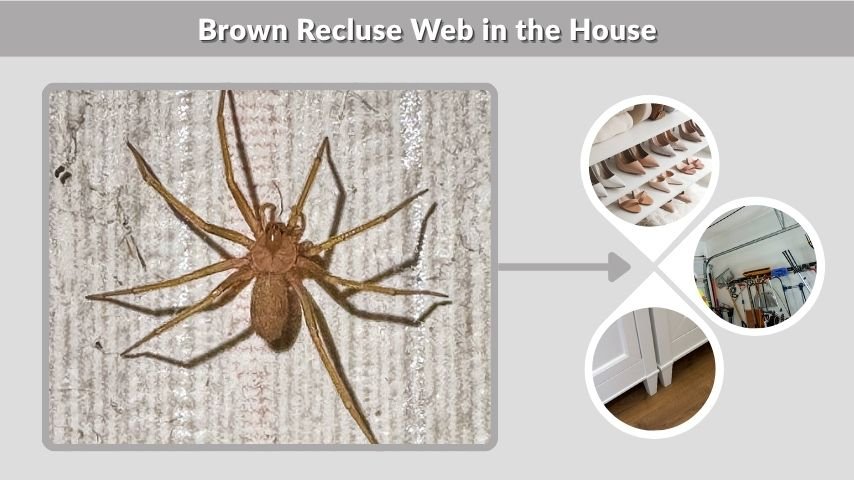
Inside homes, brown recluse webs are most often associated with storage and clutter. They like places where they can hide without being disturbed. A clean open room is less attractive than a closet full of boxes, an attic with stored clothing, or a garage corner with cardboard and tools.
These spiders are not trying to interact with people. Most contact happens by accident when someone puts on clothing, moves stored items, reaches into a dark box, or sleeps near a hidden spider.
Indoor Places to Check Carefully
Be careful when checking suspected spider areas. Do not put your bare hand into dark spaces. Use gloves, a flashlight, and a tool to move items.
Common indoor hiding spots include:
- Closets with stored clothes or shoes
- Cardboard boxes in basements or attics
- Garages and crawl spaces
- Behind furniture and baseboards
- Under beds or storage shelves
- Inside rarely used bags, towels, or blankets
- Wall cracks, floor gaps, and utility areas
Finding one messy web does not always mean you have brown recluses. Many spiders make messy webs. Identification should include the spider, location, web style, and regional range.
Is a Brown Recluse Web a Funnel Web?
A brown recluse web is not a true funnel web. This is an important point because many people search for “brown recluse spider web funnel” or “brown recluse funnel web spider.” Brown recluse webs can have a thicker retreat area, but they are not the same as funnel-weaver webs.
Funnel-web spiders usually build a sheet-like web with a clear funnel-shaped tunnel where the spider waits. Brown recluse webs are more irregular and hidden. They do not build the neat funnel-style web common to grass spiders or hobo spiders.
Funnel Web Spider vs Brown Recluse Web
A funnel web is usually more structured. It may spread like a flat sheet across grass, corners, window wells, or outdoor surfaces, then narrow into a funnel retreat. Brown recluse silk is more scattered, messy, and hidden in dry protected spots.
If you see a clear funnel-shaped web in grass, near a window well, or in an outdoor corner, it is probably not a brown recluse web. It may belong to a grass spider, hobo spider, or another funnel-weaver.
Brown Recluse Web Pictures and Identification
Many people search for brown recluse spider web pictures, images, photos, and web identification. Pictures can help, but they can also be misleading. A web alone is rarely enough to confirm a brown recluse. Many house spiders create messy webs that look similar.
The best identification comes from finding the spider and checking its body features. A true brown recluse has a plain brown body, long slender legs, a violin-like mark on the upper body, and six eyes arranged in three pairs. Most spiders have eight eyes, so the eye pattern is a strong clue, but it is difficult to see without magnification.
Why Web Photos Are Not Enough
A brown recluse web may look like an ordinary dusty cobweb in a photo. Lighting, dust, age, and location can all change the appearance. Also, old spider webs may remain after the spider is gone, so a web does not always prove an active infestation.
For better identification, look at several clues together:
- The spider’s body shape and markings
- The six-eye pattern
- The web location
- The messy, hidden web style
- The known range of brown recluse spiders
- Repeated sightings or sticky-trap captures
If you are unsure, take a clear photo of the spider and contact a local extension office or pest professional.
Brown Recluse Web vs Nursery Web Spider
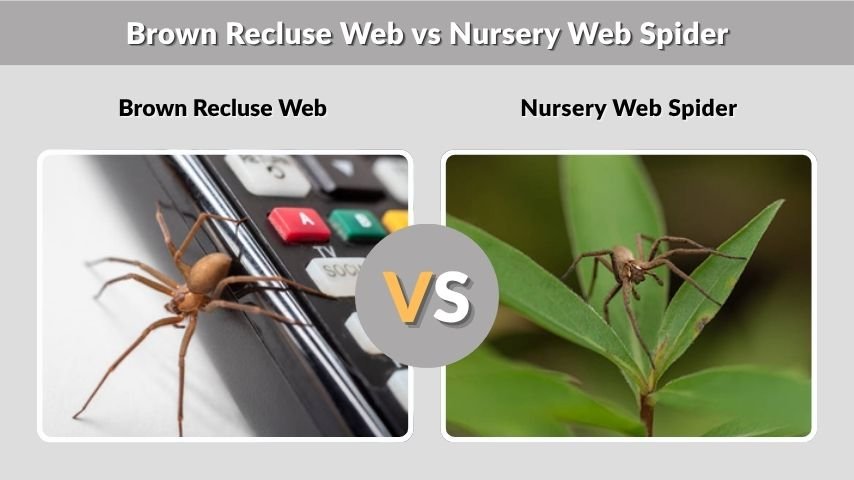
Nursery web spiders and brown recluses are sometimes confused, but their web behavior is different. Nursery web spiders are known for making protective silk shelters for their young. They often guard egg sacs or spiderlings, and their body shape may look larger and more leggy than a brown recluse.
A brown recluse web is usually a hidden retreat, not a visible nursery tent in plants or open areas. Brown recluses may use silk around egg sacs, but their regular webs are still messy and tucked away.
Main Difference
A nursery web spider is usually seen around vegetation, structures, or open shelter areas, while a brown recluse prefers hidden indoor or outdoor cracks. Nursery web spiders also lack the classic recluse eye pattern and violin-like mark.
If the spider is large, long-legged, and sitting near a visible silk nursery, it is less likely to be a brown recluse.
Brown Recluse Web vs Wolf Spider Web
Wolf spiders are active hunters and usually do not build prey-catching webs. Because of this, people may confuse wolf spider hiding spots with brown recluse areas. However, wolf spiders are usually larger, hairier, and more robust than brown recluses.
A wolf spider may be seen running across floors, garages, or outdoor ground areas. Brown recluses are more secretive and often stay hidden during the day.
Easy Comparison
A brown recluse may leave messy silk in hidden dry spaces. A wolf spider usually hunts without a web and has a stronger, hairier body. If the spider looks thick, hairy, and patterned, it is probably not a brown recluse.
Wolf spiders can bite if trapped or handled, but they are not the same as brown recluse spiders and do not have the same medically important reputation.
Are Brown Recluse Webs Dangerous?
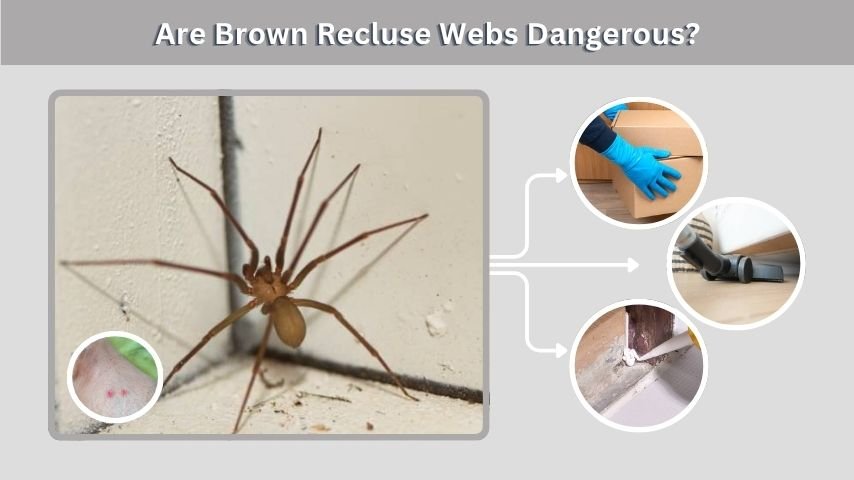
The web itself is not dangerous. The concern is the spider hiding near the web. Brown recluse spiders are not aggressive, but they may bite if trapped against skin. This can happen when someone puts on clothing with a spider inside, rolls onto one in bed, or reaches into a dark storage area.
Brown recluse bites can sometimes cause serious skin reactions, but many suspected bites are never confirmed. Skin infections, insect bites, and other conditions are often mistaken for spider bites.
Safe Handling Tips
If you find a web that may belong to a brown recluse, do not touch it with bare hands. Use gloves, a vacuum, sticky traps, and careful cleaning methods.
Helpful steps include:
- Wear gloves when moving stored boxes
- Shake out shoes, clothes, towels, and bedding
- Vacuum hidden corners and dispose of contents safely
- Seal cracks and gaps around walls and floors
- Reduce cardboard storage and clutter
- Use plastic bins with tight lids
- Place sticky traps along walls and behind furniture
- Call pest control if sightings continue
How to Prevent Brown Recluse Webs Indoors
Prevention focuses on removing hiding places and reducing insect prey. Brown recluses like quiet, cluttered spaces where they can remain undisturbed. A home with many cardboard boxes, piles of clothing, and dark storage corners gives them more places to hide.
Regular cleaning makes webs easier to spot and removes old silk, egg sacs, and insects. It also lowers the chance of accidental contact.
Practical Prevention Steps
Start with storage areas. Replace cardboard boxes with sealed plastic containers. Keep clothing off the floor. Move beds away from walls if brown recluses are common in your area. Avoid bed skirts touching the floor because they can create easy climbing paths.
Check rarely used items before wearing or moving them. Shoes, gloves, jackets, blankets, and towels should be shaken out if they were stored in a garage, basement, or closet.
FAQs
Do brown recluse spiders make webs?
Yes, brown recluse spiders make webs, but their webs are messy, irregular, and hidden. They do not build large round webs in open areas. Their silk is mostly used for shelter, retreat areas, egg sacs, and hidden resting spots.
What does a brown recluse spider web look like?
A brown recluse web usually looks loose, dusty, tangled, and patternless. It may appear as a small messy patch of silk in a dark corner, crack, box, closet, basement, or attic. It does not look like a neat spiral orb web.
Is a brown recluse web a funnel web?
No, a brown recluse web is not a true funnel web. It can have a thicker retreat area, but it does not form the clear sheet-and-funnel structure made by grass spiders, hobo spiders, or other funnel-weavers.
Can you identify a brown recluse by its web only?
No, web appearance alone is not enough for a confident identification. Many spiders make messy webs. You should also consider the spider’s six-eye pattern, plain brown body, violin-like marking, hiding location, and whether brown recluses live in your region.
Where are brown recluse webs usually found?
Brown recluse webs are usually found in dry, dark, quiet spaces. Common places include closets, attics, basements, garages, crawl spaces, storage boxes, behind furniture, under shelves, and wall cracks. They prefer areas with little disturbance.