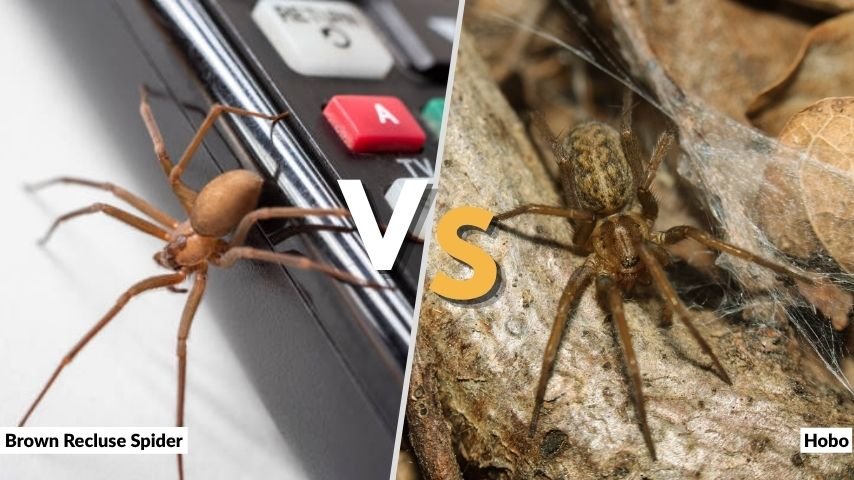
The brown recluse spider and hobo spider are often confused because both are brown, fast-moving, and commonly linked with frightening bite stories. However, they are not the same spider. Their body markings, eye patterns, web habits, range, and bite risks are different. Learning these differences can help you identify them more confidently and avoid unnecessary panic when you see a brown spider indoors.
Brown Recluse Spider vs Hobo: Quick Overview
At first glance, both spiders may look plain brown. That is why many people misidentify harmless house spiders as either a brown recluse or a hobo spider. The safest way to compare them is not by color alone, but by markings, body shape, eyes, habitat, web style, and location.
| Feature | Brown Recluse Spider | Hobo Spider |
|---|---|---|
| Scientific name | Loxosceles reclusa | Eratigena agrestis |
| Main marking | Violin-shaped mark on upper body | Chevron-like patterns on abdomen |
| Eye pattern | 6 eyes in 3 pairs | 8 eyes |
| Web type | Irregular hiding web | Funnel-shaped web |
| Main range | South-central and Midwest U.S. | Pacific Northwest and western areas |
| Bite concern | Can be medically serious | Usually not considered highly dangerous |
Identification Differences
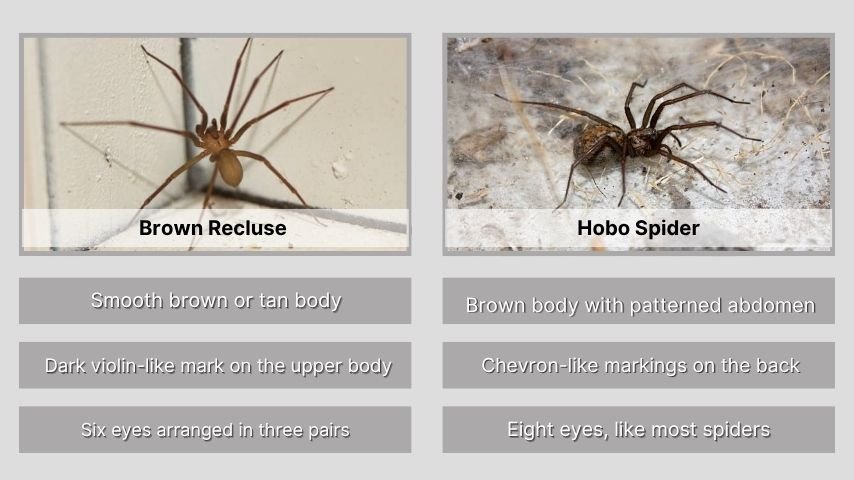
Correct identification is important because many small brown spiders look similar. A brown recluse has a smoother, more uniform body, while a hobo spider usually has more visible patterns on its abdomen. Still, size and color alone are not enough for a confident ID.
Brown Recluse Identification
A brown recluse is usually light tan to dark brown. Its most famous feature is the violin-shaped marking on the cephalothorax, which is the front body section where the legs attach. The “neck” of the violin points toward the abdomen. However, this marking can be faint, and many other spiders have marks that people mistake for a violin.
Key signs include:
- Smooth brown or tan body
- Dark violin-like mark on the upper body
- Six eyes arranged in three pairs
- Long, thin legs without strong bands
- Plain abdomen without bold patterns
- Reclusive behavior in dark, quiet spaces
Hobo Spider Identification
The hobo spider is also brown, but it usually has more patterning than a brown recluse. It may show chevron or herringbone-like markings on the abdomen. Its legs are usually brown and may appear slightly hairy, but not as thick or strongly patterned as some wolf spiders.
Key signs include:
- Brown body with patterned abdomen
- Chevron-like markings on the back
- Eight eyes, like most spiders
- Funnel-shaped web near ground level
- Fast movement when disturbed
- Often found in basements, garages, window wells, and outdoor hiding places
Size and Body Shape Comparison
Both spiders are medium-sized compared with many common house spiders. Because people often see them while they are moving quickly, size can be difficult to judge. A spider may also look larger when its legs are spread out.
Brown Recluse Size
A brown recluse is usually about 6–20 mm in body length, with long legs that make it appear larger. Its body looks fairly smooth and not bulky. The legs are thin and evenly colored, without obvious stripes or spines. This clean, plain look helps separate it from many patterned house spiders.
The brown recluse does not look large and hairy like a wolf spider. It also does not have the bold abdominal pattern of a hobo spider. If the spider has a strongly patterned abdomen, striped legs, or a large hairy body, it is probably not a true brown recluse.
Hobo Spider Size
The hobo spider is generally similar in size or slightly larger in appearance because of its leg span and body shape. Its abdomen is more visibly patterned, and the body may look more robust than a brown recluse. The hobo spider is part of the funnel-weaver group, so its body shape is built for quick movement on sheet-like webs.
A hobo spider may be mistaken for a wolf spider, grass spider, or giant house spider. The funnel web is often a better clue than body color alone.
Webs and Habitat
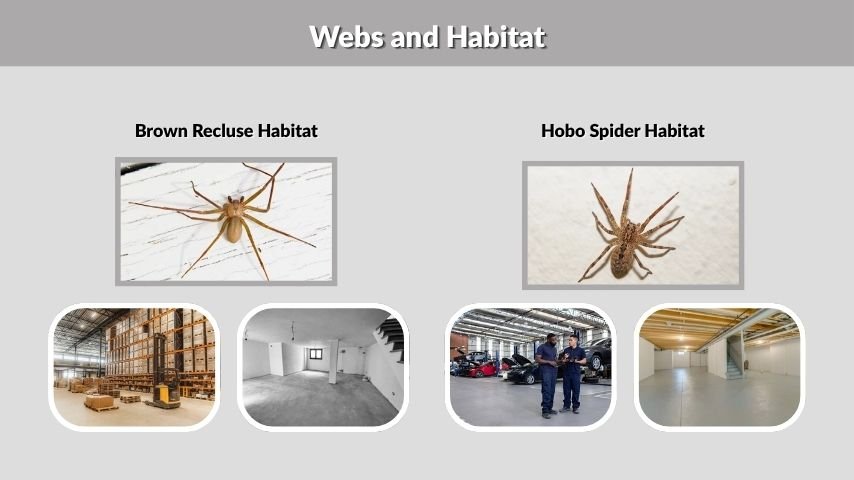
Web style is one of the easiest practical clues. Brown recluse spiders do not build neat funnel webs for catching prey. Hobo spiders, on the other hand, are known for funnel-shaped retreats connected to sheet-like webs.
Brown Recluse Habitat
Brown recluse spiders prefer dry, dark, and undisturbed areas. Indoors, they may hide in closets, storage boxes, basements, attics, behind furniture, under beds, or inside shoes and clothing left on the floor. Outdoors, they may live under rocks, logs, bark, or debris.
They are called “recluse” because they usually avoid open spaces and human contact. Bites often happen when the spider is accidentally pressed against skin, such as inside clothing, bedding, towels, or shoes.
Hobo Spider Habitat
Hobo spiders are often found around ground-level areas. They may build webs in window wells, basements, garages, crawl spaces, woodpiles, rock walls, and outdoor corners. Their webs usually look like a flat sheet that narrows into a funnel retreat where the spider waits.
They are not aggressive hunters that chase people. When disturbed, they usually run away. Because they are fast, people sometimes assume they are dangerous, but speed alone does not mean a spider is medically important.
Bite Differences and Symptoms
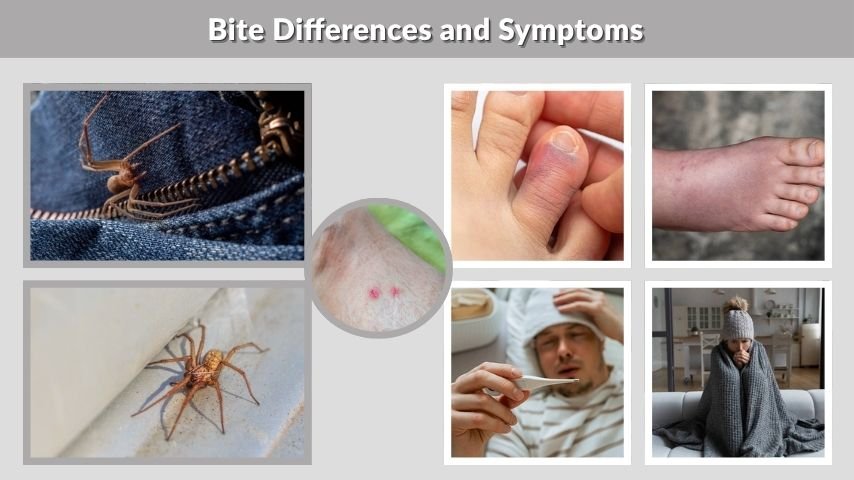
The search terms show strong interest in “hobo spider bite vs brown recluse bite.” This topic should be handled carefully because many skin infections, insect bites, and allergic reactions are misidentified as spider bites. A bite cannot usually be confirmed unless the spider is seen biting and is collected for identification.
Brown Recluse Bite
A brown recluse bite can be medically important. Some bites remain mild, while others may cause a painful lesion, blistering, or tissue damage. Symptoms may develop slowly over several hours. In more serious cases, the wound can become dark, ulcerated, or slow to heal.
Possible signs include:
- Mild stinging or little pain at first
- Redness, swelling, or tenderness
- Blistering at the bite site
- Dark or discolored center
- Open sore in serious cases
- Fever, chills, nausea, or body aches in rare cases
Anyone who suspects a brown recluse bite should seek medical advice, especially if the wound worsens, spreads, becomes infected, or causes body-wide symptoms.
Hobo Spider Bite
Hobo spider bites were once blamed for serious skin wounds, but modern information treats that claim more cautiously. Today, hobo spiders are generally not considered as dangerous as brown recluses. A suspected hobo spider bite may cause mild redness, swelling, itching, or irritation, similar to many other minor spider or insect bites.
Because skin wounds are often misdiagnosed, it is better not to assume a serious wound came from a hobo spider without proper identification. Infection, allergic reaction, tick bites, and other medical conditions can sometimes look worse than a typical spider bite.
Range and Location Clues
Location is one of the most useful ways to separate these spiders. If you live far outside the known range of the brown recluse, a random brown spider is less likely to be a true recluse. However, spiders can occasionally travel in boxes, furniture, or shipments, so range is helpful but not perfect.
Brown Recluse Range
Brown recluse spiders are mainly established in the south-central and Midwestern United States. They are more common in states such as Missouri, Arkansas, Oklahoma, Kansas, Tennessee, Kentucky, Texas, and nearby regions. Reports outside this range are often misidentifications.
If someone finds a “brown recluse” in a state where they are not established, the spider may actually be a cellar spider, wolf spider, grass spider, hobo spider, or another harmless brown spider.
Hobo Spider Range
Hobo spiders are more associated with the Pacific Northwest and parts of the western United States. They are often found in cooler, ground-level habitats around buildings. Their range does not strongly overlap with the main brown recluse range, which helps reduce confusion in many areas.
If a brown spider is found in the Pacific Northwest, a hobo spider or giant house spider may be more likely than a brown recluse. If it is found in the south-central U.S., a brown recluse may be more possible.
Hobo Spider vs Brown Recluse vs Wolf Spider
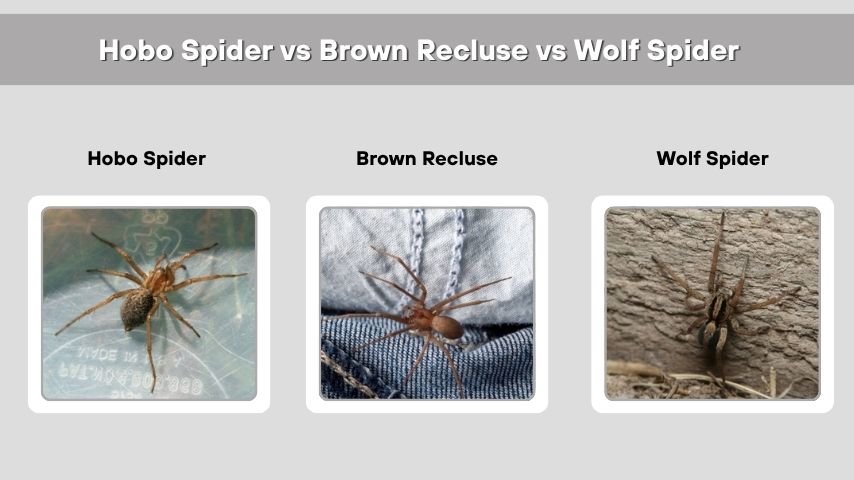
Some keyword searches include wolf spiders because people often confuse all three. Wolf spiders are usually larger, hairier, and more robust than both hobo spiders and brown recluses. They do not have the classic violin mark of a recluse, and they do not build funnel webs like hobo spiders.
Simple Comparison
A brown recluse is usually plain brown with six eyes and a violin-like mark. A hobo spider has a patterned abdomen and funnel web. A wolf spider is usually larger, hairier, and more active as a ground hunter.
Wolf spiders may look scary, but they are not the same as brown recluses. They can bite if handled or trapped, but their bites are usually not considered medically serious for most healthy people.
How to Prevent Both Spiders Indoors
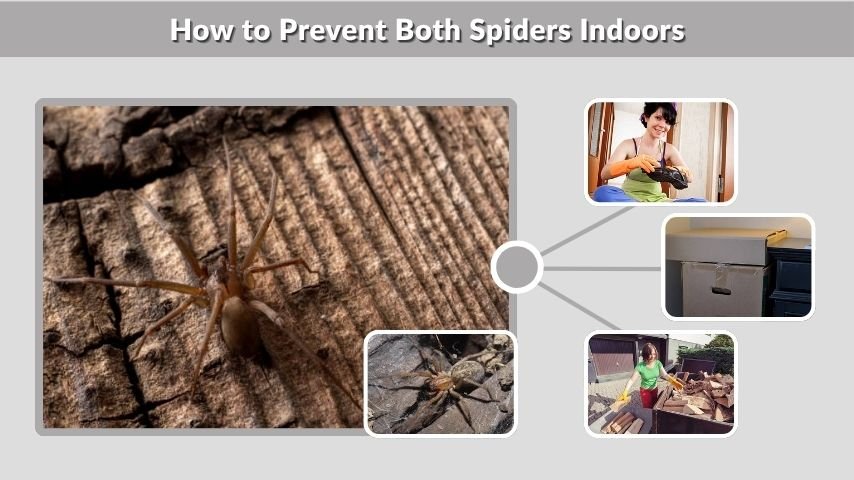
Prevention is similar for both spiders because they like quiet hiding places. The goal is to reduce clutter, block entry points, and avoid accidental contact.
Practical Prevention Tips
Use these simple steps around the home:
- Shake out shoes, gloves, towels, and clothing before use
- Store clothes and bedding off the floor
- Keep storage boxes sealed
- Reduce clutter in basements, closets, garages, and attics
- Seal cracks around doors, windows, and foundations
- Move firewood, debris, and cardboard away from the house
- Use sticky traps in low-traffic corners to monitor spider activity
- Wear gloves when moving boxes, wood, or stored items
What to Do After a Suspected Bite
If you think a spider has bitten you, clean the area with soap and water, apply a cool compress, and avoid scratching. Do not cut the wound or try home “venom removal” methods. If possible, safely collect the spider in a container for expert identification.
When to Seek Medical Help
Get medical care if the bite area becomes increasingly painful, spreads, forms a blister, turns dark, develops pus, or causes fever, nausea, chills, or weakness. You should also seek help quickly if the person bitten is a child, older adult, pregnant person, or someone with a weakened immune system.
A worsening wound should not automatically be blamed on a spider. Proper medical diagnosis matters because bacterial infections and other skin conditions may need different treatment.
FAQs
Is a hobo spider more dangerous than a brown recluse?
No. A brown recluse is generally considered more medically important than a hobo spider. Brown recluse venom can sometimes cause tissue damage, while hobo spider bites are usually treated as less serious. Still, any worsening bite-like wound should be checked by a medical professional.
How can I tell a brown recluse from a hobo spider?
Look at the eye pattern, markings, web, and location. Brown recluses have six eyes, a plain body, and sometimes a violin-shaped mark. Hobo spiders have eight eyes, patterned abdomens, and funnel-shaped webs. Location also matters because their common ranges are different.
Do hobo spiders have a violin mark?
No, hobo spiders do not have the true violin-shaped marking associated with brown recluse spiders. They usually have patterned abdomens with chevron-like markings. However, markings can be confusing, so identification should not rely on one feature only.
Can a hobo spider bite look like a brown recluse bite?
Many bite-like skin wounds can look similar at first. A hobo spider bite may cause redness, swelling, or irritation, but serious necrotic wounds are more strongly associated with brown recluse bites. Infections and other conditions can also mimic spider bites.
Should I kill every brown spider I see?
No. Most brown spiders are harmless and help control insects. Instead of killing every spider, focus on identification, reducing clutter, sealing entry points, and using caution with stored items. If you suspect brown recluses indoors, professional identification or pest control advice may help.