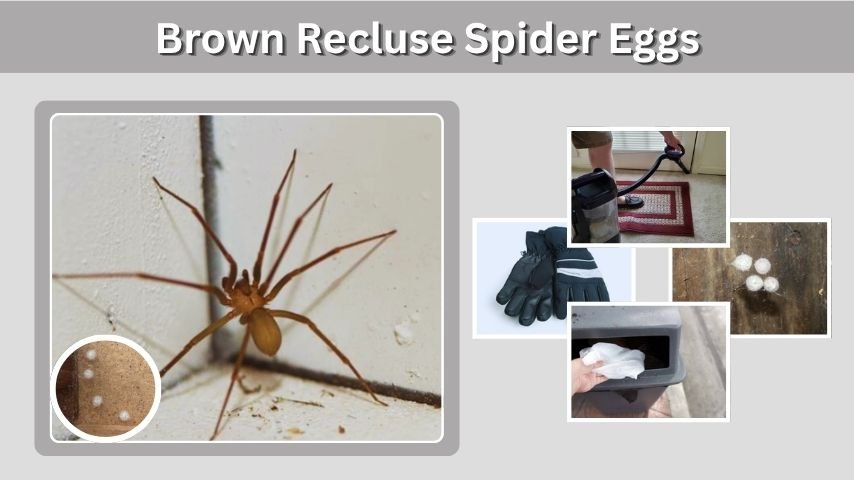
Brown recluse spider eggs are usually hidden inside small silken egg sacs, not left exposed in open spaces. These sacs can be difficult to identify because many house spiders make pale, round egg cases. However, knowing the size, color, texture, location, and timing can help you understand whether you may be dealing with brown recluse spider eggs or another harmless spider species.
What Do Brown Recluse Spider Eggs Look Like?
Brown recluse spider eggs are rarely seen by themselves. The female spider places them inside a protective silk sac, which is the part most homeowners notice. The actual eggs are tiny, pale, and clustered together inside the sac. Because the sac covers them, identification depends more on the egg sac’s appearance and where it is found.
A brown recluse egg sac is usually off-white, cream, or light tan. It may look round, slightly flattened, or loosely circular. The surface can appear soft, silky, or loosely woven rather than shiny and hard. Many sacs are small, often around the size of a pea or a small marble.
Main Identification Signs
- Color is usually white, off-white, cream, or pale tan.
- Shape is mostly round or slightly flattened.
- Texture may look soft, loose, cottony, or silky.
- Size is usually small, often about 1/4 inch across.
- The sac is often placed in dark, dry, hidden areas.
- It may be attached to cardboard, furniture, wall gaps, storage boxes, or clutter.
- A female brown recluse may be nearby, especially in quiet nesting areas.
Egg sac identification is not always simple. Many spider egg sacs look similar, so the sac alone should not be used as final proof. If you live outside the brown recluse’s known range, it is even more important to avoid guessing.
Brown Recluse Spider Egg Sac Identification
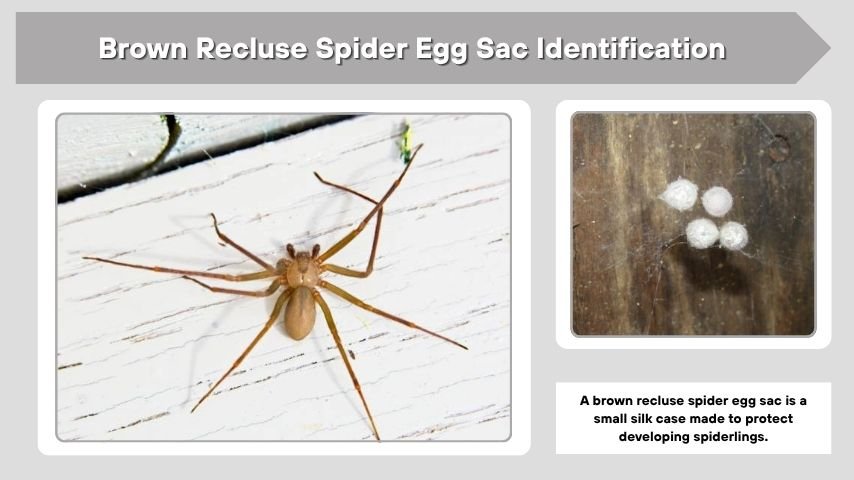
A brown recluse spider egg sac is a small silk case made to protect developing spiderlings. It is usually placed where the female spider feels safe. These spiders prefer areas that are undisturbed, dry, and dark. That is why egg sacs are often found in basements, closets, attics, garages, sheds, crawl spaces, and storage rooms.
Common Places to Find Egg Sacs
Brown recluse spiders do not usually place egg sacs in bright, open spaces. They choose quiet hiding spots where people rarely disturb them. Cardboard boxes, old shoes, folded clothes, stored blankets, and furniture backs can all become shelter areas.
You may also find egg sacs behind baseboards, under shelves, inside wall voids, or near irregular webbing. Brown recluse webs are not neat orb webs. They are messy, loose, and often built as retreats rather than traps for flying insects.
If you see several egg sacs in the same room, it may suggest a larger spider problem. One sac can produce many young spiders, so repeated sightings should be taken seriously.
Brown Recluse Eggs vs Other Spider Egg Sacs
Many homeowners mistake common house spider egg sacs for brown recluse egg sacs. This is understandable because spider egg sacs are often pale, round, and hidden. The difference usually comes from location, texture, nearby spiders, and the region where you live.
| Feature | Brown Recluse Egg Sac | Common House Spider Egg Sac |
|---|---|---|
| Color | Off-white, cream, or pale tan | White, tan, gray, or brownish |
| Shape | Round or slightly flattened | Round, oval, or pear-shaped |
| Texture | Silky, loose, or cottony | Smooth, papery, fluffy, or firm |
| Location | Dark, dry, hidden spaces | Corners, webs, sheds, windows, clutter |
| Risk Level | Higher concern if confirmed | Usually lower concern |
Why Correct Identification Matters
Correct identification matters because brown recluse spiders have medically significant venom. They are not aggressive and usually bite only when pressed against the skin, but their presence in bedrooms, closets, or stored clothing can increase the chance of accidental contact.
However, misidentification is common. Brown recluse spiders are often blamed in areas where they are rare or not established. A true brown recluse has a plain brown body, a violin-shaped marking on the cephalothorax, six eyes arranged in pairs, and no bold stripes or spines on the legs.
How Many Eggs Does a Brown Recluse Spider Lay?
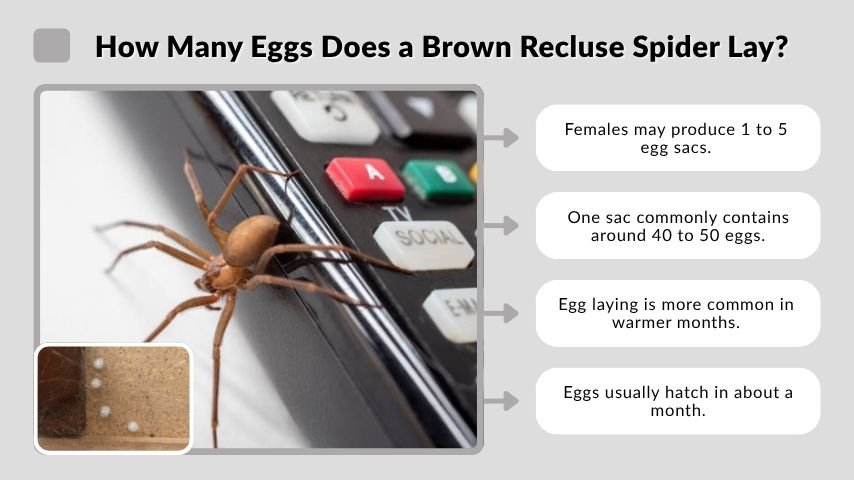
A female brown recluse can produce several egg sacs during her life. Each sac may contain dozens of eggs. The exact number can vary based on food, temperature, age, and environment. In many cases, one egg sac contains around 40 to 50 eggs, though some sources report a wider range.
Egg Laying Facts
- Females may produce 1 to 5 egg sacs.
- One sac commonly contains around 40 to 50 eggs.
- Egg laying is more common in warmer months.
- Eggs usually hatch in about a month.
- Young spiderlings may remain near the sac before dispersing.
- Development from spiderling to adult may take many months.
This is why finding one egg sac should not be ignored. Even if only some eggs survive, the population can grow if the room has shelter, insects for food, and plenty of hiding places.
When Do Brown Recluse Spider Eggs Hatch?
Brown recluse spider eggs usually hatch after several weeks. Warm indoor conditions may support faster development, while cooler or less stable conditions can slow the process. After hatching, the spiderlings are very small and pale. They may stay near the original webbing for a short time before moving into nearby cracks, boxes, fabrics, or furniture.
Egg Hatching and Spiderling Growth
Newly hatched brown recluse spiderlings are not large enough to be easily noticed. They gradually molt as they grow. During each molt, they shed their outer skin and become larger. Their growth speed depends on food availability and temperature.
Spiderlings can survive in quiet indoor spaces if small insects are available. They may spread slowly through rooms, storage areas, wall gaps, and cluttered corners. Because brown recluse spiders are secretive, people may not realize they are present until they see a spider, find a sac, or notice repeated activity in traps.
Are Brown Recluse Spider Eggs Dangerous?
The eggs themselves do not bite, sting, or move toward people. The concern is what they represent: a reproductive female spider and the possibility of many spiderlings. If the sac is confirmed as brown recluse, it means the spider has found a suitable hiding place in your home or storage area.
Risk Around Egg Sacs
The biggest risk comes from accidental contact. A female spider may stay near a sac or retreat nearby. If someone reaches into a box, puts on stored clothing, or moves furniture without checking, the spider may be pressed against the skin and bite defensively.
Brown recluse spiders usually avoid people. They are called “recluse” because they prefer hidden places. Still, egg sacs in bedrooms, closets, laundry areas, or children’s rooms need careful attention.
How to Remove Brown Recluse Spider Eggs Safely
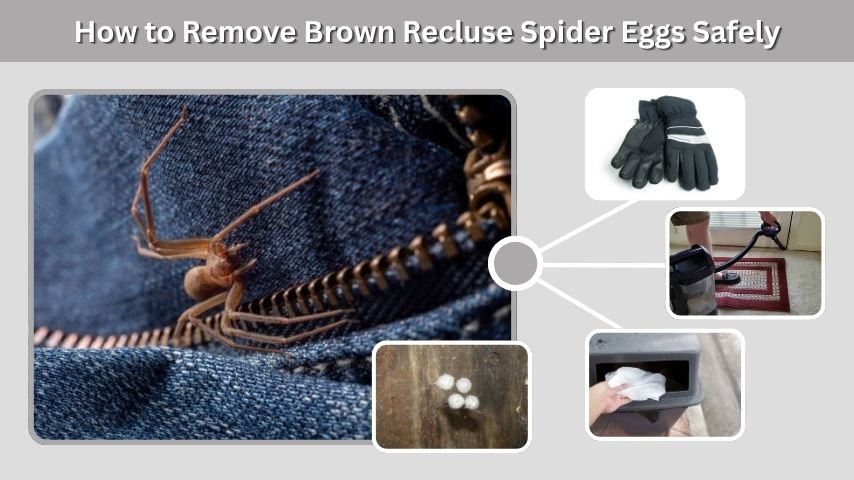
If you think you have found a brown recluse egg sac, do not crush it with your bare hand. Avoid touching it directly. Wear gloves, use tools, and reduce the chance of the sac opening or spiderlings spreading.
Safe Removal Steps
- Wear thick gloves, long sleeves, and closed shoes.
- Use a vacuum with a hose attachment to remove the sac and nearby webbing.
- Empty the vacuum contents into a sealed plastic bag immediately.
- Place the sealed bag in an outdoor trash bin.
- Check nearby boxes, fabrics, shoes, and furniture for more sacs.
- Use sticky traps along walls and hidden corners to monitor activity.
- Contact pest control if you find multiple sacs or live brown recluse spiders.
Vacuuming is often safer than crushing because it reduces direct contact. After removal, clean the area and reduce clutter. Do not spray random chemicals around sleeping areas without reading the label carefully.
How to Prevent Brown Recluse Egg Sacs Indoors
Prevention focuses on removing shelter, reducing prey insects, and sealing hiding places. Brown recluse spiders like clutter because it gives them many undisturbed retreats. Storage boxes, piles of clothing, cardboard, old books, and rarely moved items can all provide protection.
Prevention Tips
Store items in sealed plastic containers instead of cardboard boxes. Shake out shoes, gloves, blankets, and clothing that have been stored for a long time. Move beds away from walls and avoid letting bedding touch the floor. Seal cracks around baseboards, doors, windows, and utility openings.
Sticky traps can help reveal whether spiders are active in a room. Place them along walls, behind furniture, near closets, and in storage spaces. Traps do not solve a heavy infestation alone, but they help show where spiders are moving.
Reducing other insects also helps because spiders follow food sources. Keep rooms clean, fix moisture problems, and remove dead insects from window sills, basements, and garages.
Brown Recluse Spider With Egg Sac: What It Means
Seeing a brown recluse spider with an egg sac is more serious than seeing one wandering spider. It suggests that the spider is mature and reproducing in that space. A single spider may have entered by accident, but an egg sac means the area has been suitable long enough for nesting.
When to Call a Professional
You should consider professional help if you find several egg sacs, keep seeing brown recluse spiders, or live in a known brown recluse region. Professional pest control can inspect hidden areas, confirm identification, and create a treatment plan. This is especially important in homes with children, elderly family members, pets, or anyone who may accidentally disturb storage areas.
You should also get expert confirmation if you are unsure. Many spiders are harmless and beneficial, so correct identification prevents unnecessary fear and poor treatment choices.
FAQs
What does a brown recluse spider egg sac look like?
A brown recluse spider egg sac is usually small, round, and off-white to cream-colored. It often looks silky, soft, or loosely woven. The sac may be attached to hidden surfaces such as cardboard, furniture, wall gaps, or storage items in dark, dry, undisturbed areas.
How many eggs does a brown recluse spider lay?
A female brown recluse can lay dozens of eggs in one sac. Many sacs contain around 40 to 50 eggs, though numbers can vary. A female may create more than one egg sac during her lifetime, especially when conditions are warm and food is available.
How long do brown recluse spider eggs take to hatch?
Brown recluse spider eggs usually hatch in about a month, but timing can change with temperature and indoor conditions. After hatching, the spiderlings may stay near the sac briefly before spreading into nearby hiding places such as cracks, boxes, clothes, or furniture.
Should I remove a brown recluse egg sac myself?
You can remove a suspected egg sac carefully if it is easy to reach, but do not touch it with bare hands. Wear gloves and use a vacuum or tool. If you find multiple sacs or live brown recluse spiders, professional inspection is the safer choice.
Can brown recluse spiders lay eggs in clothing?
They do not prefer clothing specifically, but they may hide or place egg sacs in undisturbed fabrics, stored blankets, shoes, closets, or laundry piles. Shake out stored clothing and avoid leaving clothes on the floor in areas where brown recluse spiders are common.