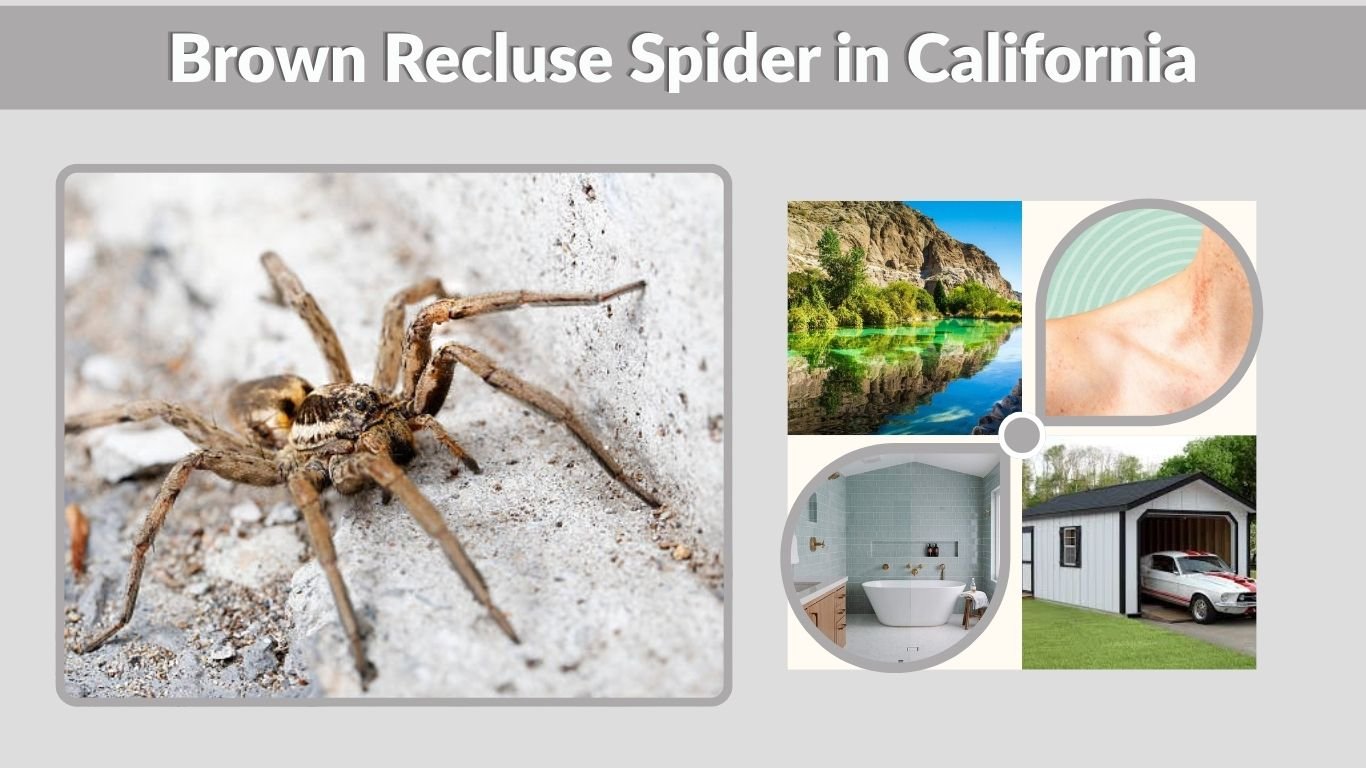
Many California residents worry when they see a small brown spider indoors and wonder if it is a brown recluse. The truth is more specific: the true brown recluse spider is not established in California. However, California does have other recluse spiders, especially in southern desert regions. This guide explains where recluses occur, what people often misidentify, and what to do after a suspected bite.
Are Brown Recluse Spiders in California?
The true brown recluse spider, Loxosceles reclusa, is not considered a normal California spider. UC IPM states that the brown recluse does not live in California, although a few individuals may occasionally arrive by accident in shipped goods, furniture, firewood, or vehicles. These rare arrivals do not mean the species has breeding populations in the state.
This matters because many “brown recluse” reports in California are actually misidentified spiders or skin conditions. A brown spider in a California home is much more likely to be a harmless house spider, a false widow, a wolf spider, a sac spider, or, in desert regions, a different recluse species.
Quick California Status
| Question | Answer |
|---|---|
| Does the true brown recluse live in California? | No established population |
| Can one be brought into California accidentally? | Yes, but rarely |
| Are there other recluse spiders in California? | Yes, mainly in southern areas |
| Most common California recluse | Desert recluse |
| Highest concern area | Desert and sparsely populated southern regions |
| Common mistake | Calling every brown spider a brown recluse |
Why California Brown Recluse Reports Are So Common
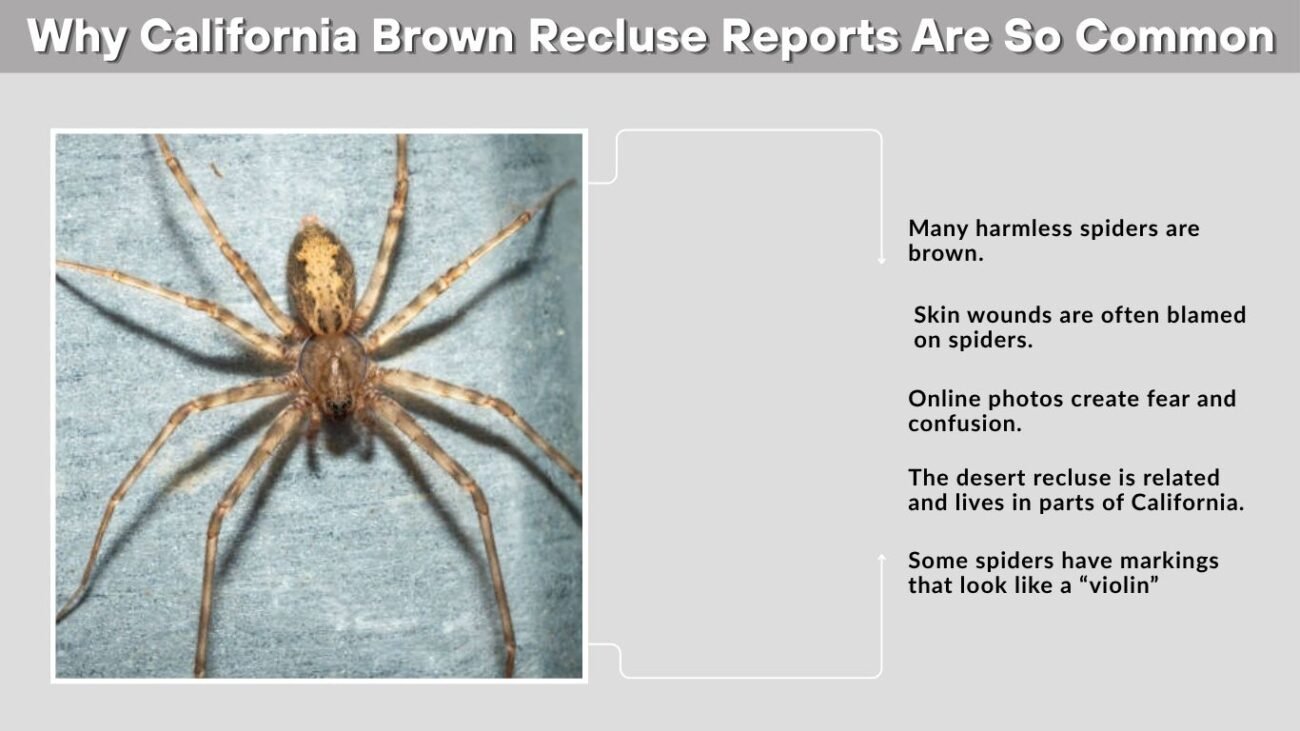
Many people search for “California brown recluse spider” because the name is widely known and frightening. Online images, bite stories, and social media posts often make people believe the spider is common everywhere. In reality, brown recluse distribution is limited, and California is outside its established range.
UC Riverside spider research has long addressed this myth. Many spiders submitted as “brown recluses” from California turn out to be different species. This is why identification should not rely on fear, color, or a single mark. A plain brown spider is not automatically a recluse.
Main Reasons for Confusion
People often report brown recluses in California because:
- Many harmless spiders are brown
- Skin wounds are often blamed on spiders
- Online photos create fear and confusion
- The desert recluse is related and lives in parts of California
- Some spiders have markings that look like a “violin”
- Occasional transported spiders create rare but misleading cases
Brown Recluse vs Desert Recluse in California
The desert recluse, Loxosceles deserta, is the recluse spider Californians are more likely to hear about. It is related to the brown recluse but is not the same species. UC IPM identifies the desert recluse as the most common Californian recluse spider and says it occurs mostly in the Sonoran and Mojave deserts, foothills of the lower San Joaquin Valley, and adjacent areas.
The desert recluse can cause medical concern, but human contact is uncommon because much of its natural habitat is sparsely populated. It is not usually the spider people are seeing inside homes in San Francisco, Sacramento, Santa Cruz, or most Northern California neighborhoods.
Key Differences
The brown recluse is mostly associated with the south-central and Midwestern United States. The desert recluse is a California-area recluse found mainly in desert habitats. Both belong to the same genus, Loxosceles, and both may have similar body features, including six eyes arranged in pairs and a plain brownish body.
However, the name “brown recluse” should not be used for every recluse spider. If the spider is from a California desert area, “desert recluse” may be more accurate than “brown recluse.”
Brown Recluse Spider in Northern California
Northern California brown recluse searches are very common, but true brown recluse spiders are not established there. If someone in Northern California finds a brown spider in a garage, bedroom, or garden, it is more likely to be a different species.
Common look-alikes in Northern California may include wolf spiders, false widow spiders, ground spiders, sac spiders, cellar spiders, or common house spiders. Some of these may bite if trapped, but they are not the same as brown recluses.
Northern California Identification Tip
Location is one of the strongest clues. If you are in Northern California and see a brown spider, do not assume it is a brown recluse. Check the body pattern, eye arrangement, web, size, and behavior. When in doubt, take a clear photo and contact a local extension office or pest professional.
A true brown recluse identification usually requires close examination. The famous violin-shaped mark is not enough because other spiders may have similar shadows or markings.
Brown Recluse Spider in Southern California
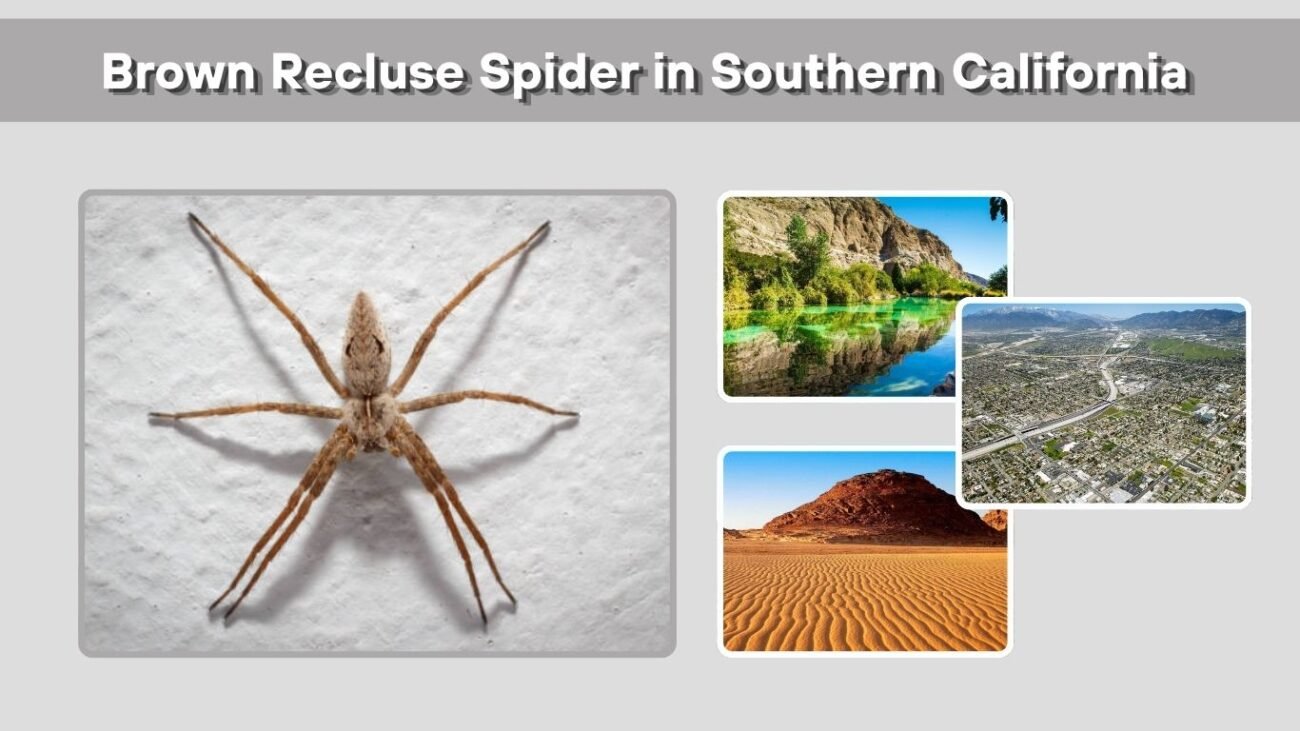
Southern California is more complicated because other recluse spiders can occur in the region. The true brown recluse still is not considered established in California, but desert recluse spiders occur in parts of Southern California, especially desert areas.
People in Los Angeles, San Diego, Riverside, San Bernardino, Palm Springs, and desert communities may hear more about recluses than people in Northern California. Still, most brown spiders found inside homes are not automatically recluses.
Southern California Risk
The risk depends heavily on habitat. A home in a dense urban area is not the same as a structure near desert habitat, undeveloped land, or storage areas. Desert recluse spiders are more associated with arid, less disturbed environments than with ordinary city homes.
If you live near desert areas and find a suspected recluse, identification matters. Do not handle it with bare hands. Use a jar, clear container, or sticky trap if safe, then ask for expert identification.
What Does a Brown Recluse Look Like in California?
Since the true brown recluse is not established in California, many people asking this question are usually trying to identify a look-alike. A true brown recluse is light tan to brown, has long slender legs, a plain abdomen, and six eyes arranged in three pairs.
The violin-shaped mark on the upper body is often mentioned, but it can be misleading. Some spiders have dark marks, shadows, or body patterns that people mistake for a violin. The six-eye pattern is more useful, but it is hard to see without magnification.
Identification Features
Look for these features when comparing a suspected recluse:
- Plain tan to brown body
- Long, slender, mostly unbanded legs
- Six eyes arranged in three pairs
- Violin-like mark on the cephalothorax
- No bold abdominal pattern
- Secretive behavior in dry, dark places
If the spider has a large hairy body, striped legs, a patterned abdomen, or a very obvious web, it may be another common California spider.
Brown Recluse Spider Bite in California
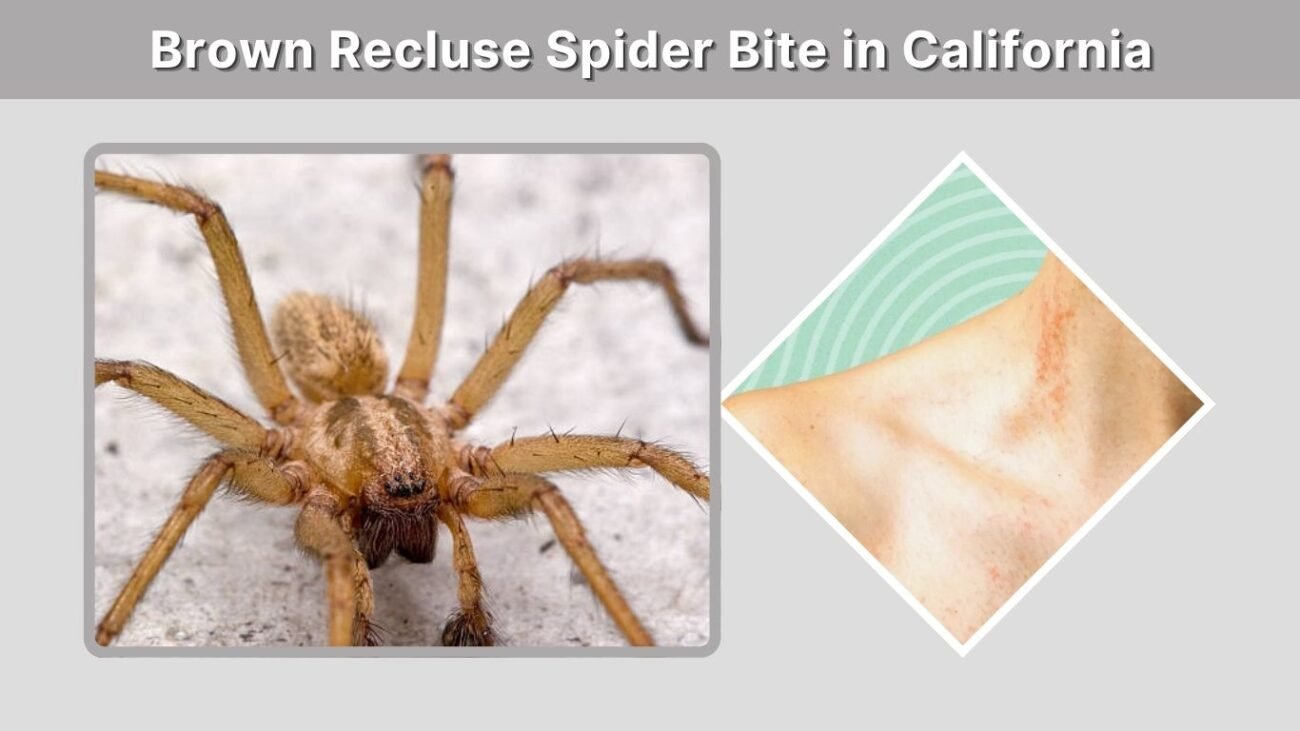
Many “brown recluse bites” in California are not confirmed spider bites. Medical sources and spider experts have repeatedly warned that wounds can be misdiagnosed. Skin infections, allergic reactions, insect bites, tick bites, burns, and other conditions can resemble spider bite symptoms.
This does not mean bites never happen. A transported brown recluse or a native recluse species could bite if trapped against the skin. But in most California cases, especially outside desert areas, it is risky to assume a wound came from a brown recluse without seeing and identifying the spider.
When to Get Medical Care
Seek medical attention if a suspected bite becomes worse, spreads, turns dark, forms an ulcer, becomes very painful, or causes fever, chills, nausea, or weakness. Also get help if the person bitten is a child, older adult, pregnant person, or someone with a weakened immune system.
Do not cut the wound, squeeze it, or try to remove venom at home. Clean the area with soap and water, use a cool compress, and contact a medical professional if symptoms are concerning.
Brown Recluse California Pictures and Map Searches
Searches for brown recluse spider California pictures and maps often lead to confusion because online image results may show spiders from other states. A photo labeled “California brown recluse” may actually show a desert recluse, a harmless brown spider, or even a misidentified spider from another region.
Range maps are more helpful than random pictures. A true brown recluse range map usually centers on the south-central United States, not California. UC IPM notes that California has native recluse species in southern areas, but the true brown recluse is not part of the state’s established spider fauna.
How to Use Photos Carefully
When checking pictures, compare more than color. Look at body shape, abdomen markings, leg banding, eye arrangement, and location. If the photo does not show the eyes clearly, it may not be enough for reliable identification.
For blog content, it is better to explain that pictures can help with comparison but cannot replace expert identification.
Common Brown Recluse Look-Alikes in California
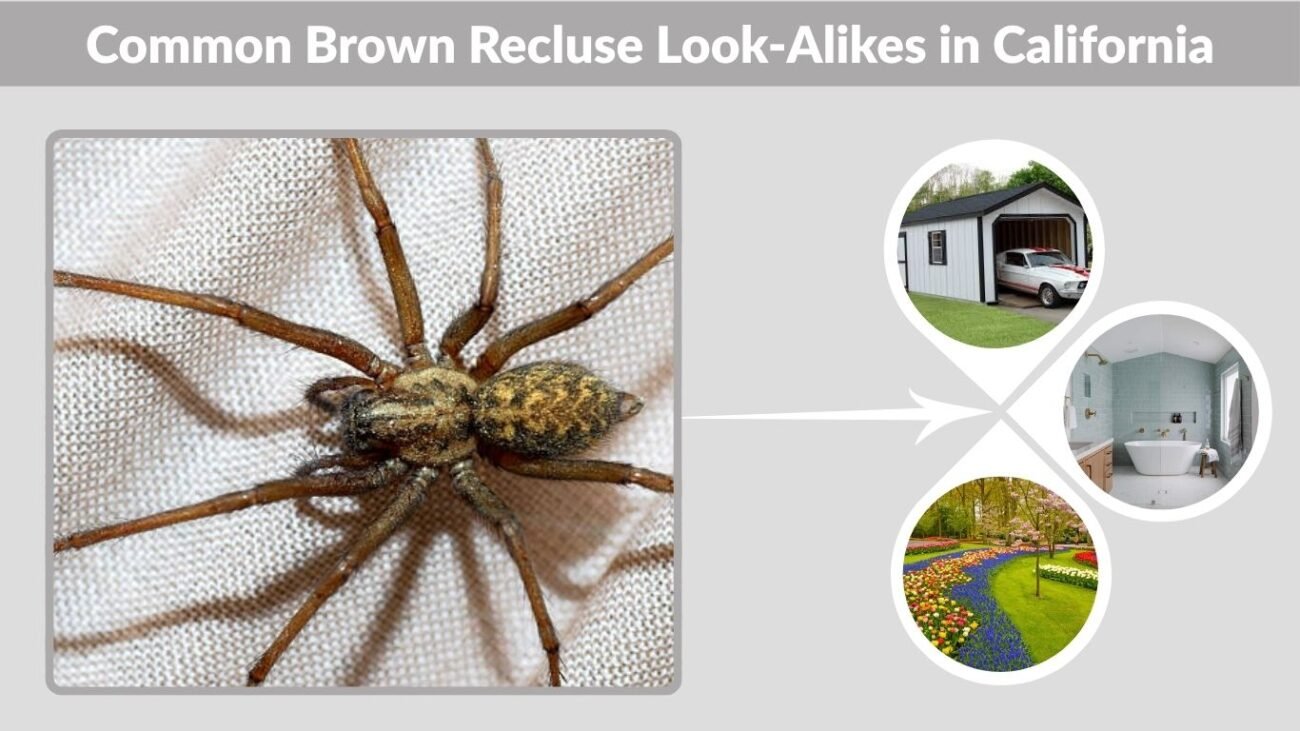
California has many brown spiders that may worry homeowners. Most are not dangerous. Some may enter homes, garages, bathrooms, gardens, or basements while hunting insects or seeking shelter.
Wolf spiders are often mistaken for brown recluses because they are brown and fast. False widows may be mistaken because they are medically significant compared with many harmless spiders. Sac spiders, house spiders, and ground spiders may also be blamed for bites.
Look-Alike Checklist
Common California spiders mistaken for brown recluses include:
- Wolf spiders
- False widow spiders
- Yellow sac spiders
- Common house spiders
- Ground spiders
- Cellar spiders
- Funnel-weaver or grass spiders
- Desert recluse in desert regions
A spider that looks large, hairy, striped, or strongly patterned is probably not a brown recluse.
How to Reduce Recluse and Brown Spider Problems
Even if brown recluses are not established in California, spider prevention is still useful. The same steps that reduce spiders also lower the chance of bites from other species.
Focus on clutter control, sealing entry points, reducing insect prey, and checking stored items before use. Spiders like quiet areas where insects are available and humans rarely disturb them.
Prevention Tips for California Homes
Use these steps around the house:
- Shake out shoes, gloves, towels, and stored clothing
- Keep beds away from walls in spider-prone areas
- Store items in sealed plastic bins instead of cardboard
- Vacuum behind furniture, baseboards, and storage areas
- Seal cracks around doors, windows, and foundations
- Reduce outdoor clutter, woodpiles, and debris near walls
- Use sticky traps in garages, closets, and basements
- Wear gloves when moving boxes, firewood, or garden materials
If you repeatedly find suspicious spiders, collect a sample safely and ask for expert identification before starting major pest treatment.
FAQs
Does the brown recluse spider live in California?
No, the true brown recluse spider is not established in California. UC IPM says the brown recluse does not live in California, although rare individuals may be accidentally transported into the state through goods, furniture, firewood, or vehicles.
Are there brown recluse spiders in Northern California?
True brown recluse spiders are not established in Northern California. Most suspected sightings are look-alike spiders such as wolf spiders, house spiders, cellar spiders, sac spiders, or false widows. Location is a strong clue when identifying suspected recluses.
Are there brown recluse spiders in Southern California?
The true brown recluse is not established in Southern California, but other recluse spiders occur in southern parts of the state. The desert recluse is the most common California recluse and is mostly associated with desert habitats.
What spider in California looks like a brown recluse?
Several California spiders can look like a brown recluse, including wolf spiders, sac spiders, house spiders, ground spiders, and desert recluses. Many are brown and fast-moving, but most do not have the true recluse eye pattern or body features.
Should I worry about a brown recluse bite in California?
A confirmed brown recluse bite in California is unlikely in most areas, but any worsening skin wound should be taken seriously. Seek medical care if the area spreads, turns dark, becomes very painful, forms an ulcer, or causes fever or body-wide symptoms.