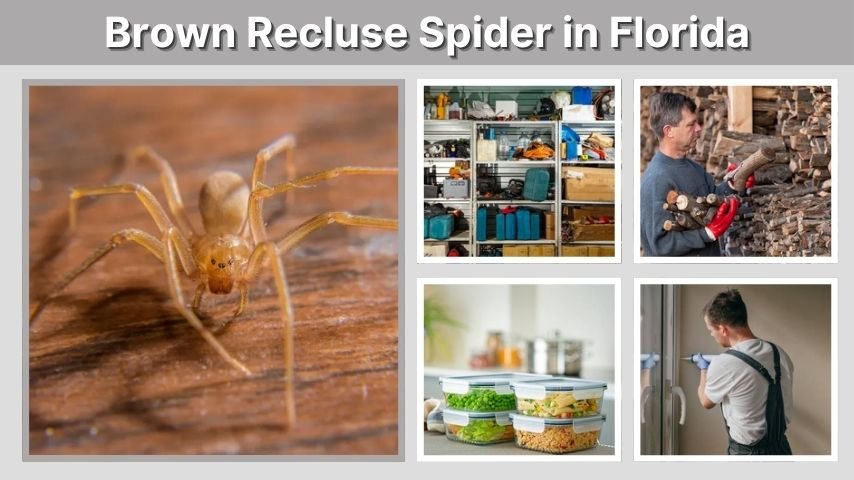
Brown recluse spiders are often blamed for mystery bites and brown spiders found indoors, but they are not common throughout Florida. Most brown spiders seen in Florida homes are harmless look-alikes, such as wolf spiders, house spiders, huntsman spiders, or sac spiders. Still, recluse spiders can occasionally be found in limited areas, so learning the real identification features is important for safety.
Are Brown Recluse Spiders Found in Florida?
Brown recluse spiders can occur in Florida, but they are not widespread across the state. Florida is not the main natural range of the true brown recluse, Loxosceles reclusa. Confirmed records are limited, and many suspected sightings turn out to be other brown spiders.
The true brown recluse is more common in the south-central and Midwestern United States. In Florida, some recluse records may involve related species, such as the Mediterranean recluse, rather than the true brown recluse. This is why correct identification is important before assuming a spider is dangerous.
| Feature | Brown Recluse in Florida |
|---|---|
| Common statewide? | No |
| Main concern | Rare but possible in limited areas |
| Often confused with | Wolf spiders, huntsman spiders, house spiders |
| Key body clue | Six eyes in three pairs |
| Bite risk | Can be serious, but many wounds are misidentified |
| Best response | Identify carefully and avoid handling |
Brown Recluse Range in Florida
Florida has a warm climate and many spider species, but that does not mean brown recluses are common everywhere. Their confirmed presence is scattered and limited. In many parts of the state, a brown spider in the house is much more likely to be a non-recluse species.
North Florida may have more believable reports because it is closer to states where recluse spiders are better established. South Florida, including Miami, Fort Lauderdale, Naples, and the Florida Keys, is not considered a typical stronghold for true brown recluse spiders.
North Florida
North Florida has more potential for occasional recluse records than southern parts of the state. Homes, storage buildings, garages, and warehouses may provide hiding places if a recluse is introduced or locally present.
Even in North Florida, most brown spiders are not brown recluses. Wolf spiders, southern house spiders, and other native species are far more commonly encountered by homeowners.
South Florida
South Florida has many brown spider look-alikes, but true brown recluses are not considered common there. A brown spider found in a bathroom, garage, patio, or garden is more likely to be another Florida spider.
Because South Florida has many large and fast-moving spiders, misidentification is common. Huntsman spiders and wolf spiders often alarm homeowners because of their size, speed, and brown color.
Brown Recluse Identification in Florida
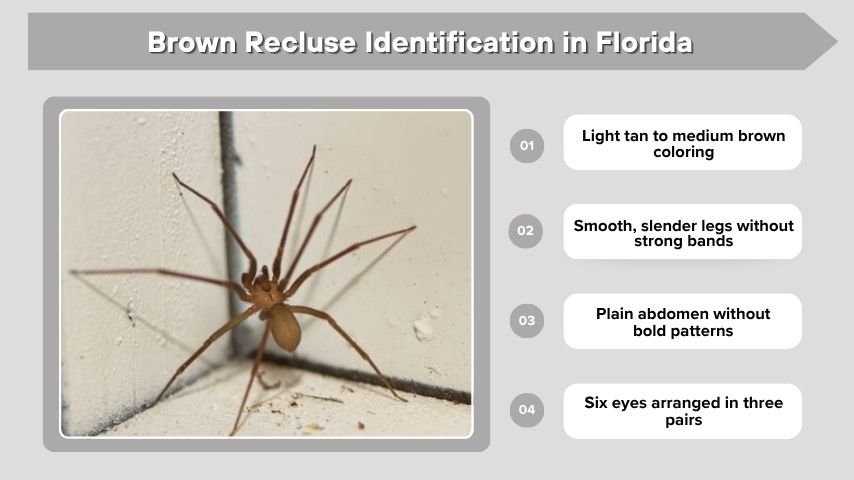
A brown recluse has a plain, tan-to-brown body and long, slender legs. It is not usually large, hairy, or boldly patterned. The most famous feature is the violin-shaped mark on the cephalothorax, which is the front body section where the legs attach.
However, the violin mark alone is not enough for reliable identification. Some other spiders have dark marks that may look similar. The eye pattern is more useful: brown recluses have six eyes arranged in three pairs, while most spiders have eight eyes.
Main Identification Features
A true brown recluse usually has:
- Light tan to medium brown coloring
- Smooth, slender legs without strong bands
- Plain abdomen without bold patterns
- Six eyes arranged in three pairs
- Dark violin-like mark on the upper body
- Secretive behavior in dark, quiet hiding places
- Small to medium body size
If the spider is large, hairy, striped, or has a patterned abdomen, it is probably not a brown recluse.
Brown Recluse Size and Appearance
Adult brown recluse spiders are usually small to medium-sized. Their body is often less than an inch long, but the legs make them appear larger. They have a simple, smooth look compared with many Florida spiders.
A brown recluse does not look thick and hairy like a wolf spider. It also does not have the flat, wide body shape of a huntsman spider. The abdomen is usually plain, not decorated with strong markings.
Baby Brown Recluse Spiders
Young brown recluse spiders look similar to adults but are smaller and often lighter in color. They still have the general recluse body shape, but tiny spiders are difficult to identify without magnification.
A small brown spider in Florida should not automatically be called a baby brown recluse. Many young house spiders, wolf spiders, and sac spiders can look plain when they are small.
Brown Recluse Habitat in Florida Homes
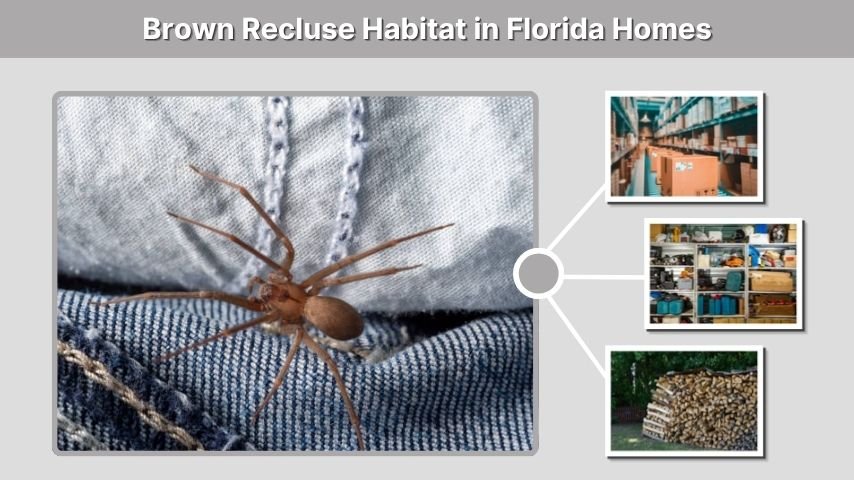
If recluse spiders are present, they prefer dry, dark, and undisturbed places. Indoors, they may hide in closets, attics, garages, basements, storage boxes, crawl spaces, and behind furniture. They are nocturnal and usually avoid people.
Bites usually happen by accident when a spider is pressed against skin. This can occur when someone puts on clothing, shoes, or gloves where a spider is hiding.
Common Indoor Hiding Spots
Check carefully in places such as:
- Cardboard storage boxes
- Shoes and boots
- Stored clothes
- Closets and attic corners
- Garage shelves
- Behind furniture
- Under beds
- Utility rooms
- Firewood or stored materials
Wear gloves when moving stored items, especially in garages, sheds, and dark storage areas.
Brown Recluse Bite in Florida
A brown recluse bite can be medically important, but many suspected spider bites are never confirmed. Skin infections, mosquito bites, tick bites, fire ant stings, allergic reactions, and other wounds may look similar.
A confirmed spider bite usually requires seeing the spider bite and identifying it afterward. Without the spider, it is difficult to know the exact cause of a wound.
Possible Bite Symptoms
A brown recluse bite may cause:
- Mild pain or stinging at first
- Redness around the bite area
- Swelling or tenderness
- A blister at the center
- Dark or purple discoloration
- An open sore in serious cases
- Fever, chills, nausea, or body aches in rare cases
Some bites remain mild, but others can worsen over time. Serious symptoms need medical attention.
What to Do After a Suspected Bite
If you think a brown recluse or another spider has bitten you, wash the area with soap and water. Apply a cool compress to reduce swelling and keep the area clean. Do not cut the wound, squeeze it, or try to remove venom at home.
If the spider is still nearby, capture it safely in a sealed container or take a clear photo from a safe distance. Identification can help doctors and pest professionals understand the situation better.
When to Get Medical Help
Seek medical care if the wound becomes worse, spreads, turns dark, forms a blister, develops pus, or becomes very painful. Also get help if the person has fever, chills, nausea, weakness, or body-wide symptoms.
Children, older adults, pregnant people, and people with weak immune systems should be extra careful after any suspicious bite.
Wolf Spider vs Brown Recluse in Florida
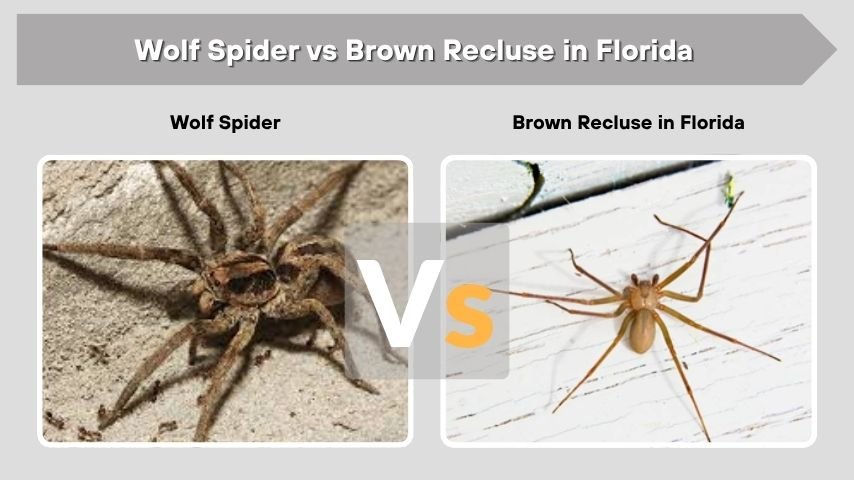
Wolf spiders are among the most common brown recluse look-alikes in Florida. They are usually larger, hairier, and more patterned than brown recluses. They may run across floors, patios, garages, and lawns while hunting prey.
Brown recluses are smoother, slimmer, and more secretive. They prefer hiding in dark places and are less likely to run openly across a room during the day.
Easy Difference
A wolf spider often has a robust body, hairy legs, and visible markings. A brown recluse has a plainer body, slender legs, and six eyes arranged in pairs. Wolf spiders may bite if trapped or handled, but they are not the same as brown recluses.
Other Brown Spider Look-Alikes in Florida
Florida has many brown spiders, and most are not dangerous. Some live indoors, while others wander inside from gardens, patios, or garages. Color alone is not enough to identify them.
Huntsman spiders, southern house spiders, cellar spiders, sac spiders, and nursery web spiders may all be confused with recluses. Some are large and fast, which makes them seem alarming, but that does not mean they are brown recluses.
Common Look-Alikes
Florida spiders often mistaken for brown recluses include:
- Wolf spiders
- Huntsman spiders
- Southern house spiders
- Yellow sac spiders
- Cellar spiders
- Funnel-weaver spiders
- Nursery web spiders
- False widow spiders
A spider with a very hairy body, strong leg bands, or a bold abdomen pattern is usually not a brown recluse.
How to Prevent Brown Recluse and Other Spiders
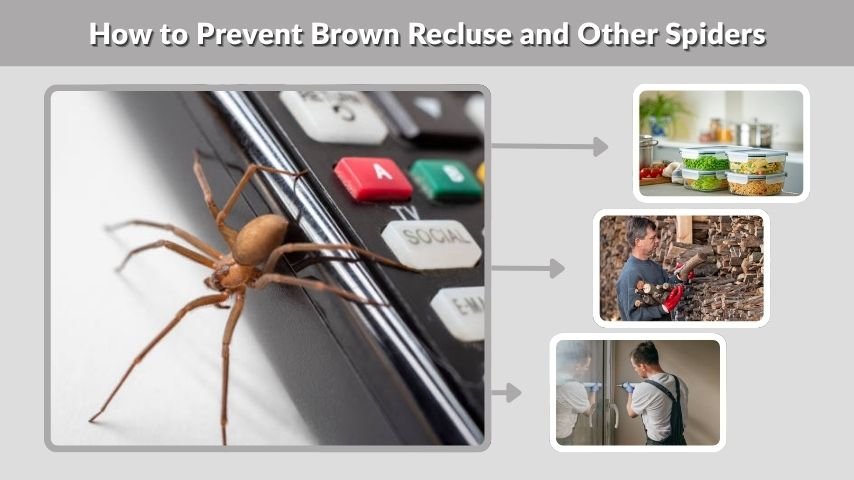
Spider prevention is mainly about reducing hiding places and insect prey. Even if brown recluses are uncommon in your area, these steps can reduce indoor spider activity and accidental bites.
Keep storage spaces clean and organized. Replace cardboard boxes with sealed plastic bins when possible. Vacuum corners, closets, baseboards, and garage areas regularly. Seal gaps around doors, windows, pipes, and foundation cracks.
Home Safety Tips
Use these simple prevention steps:
- Shake out shoes, gloves, towels, and clothes
- Store seasonal items in sealed containers
- Keep beds away from walls in spider-prone areas
- Remove clutter from closets and garages
- Wear gloves when moving boxes or firewood
- Seal cracks around the home
- Use sticky traps in quiet corners
- Reduce insects that attract spiders
If suspicious spiders appear repeatedly, ask a local extension office or pest control professional for identification before assuming they are brown recluses.
FAQs
Are brown recluse spiders common in Florida?
No, brown recluse spiders are not common throughout Florida. Confirmed records are limited, and many suspected sightings are actually other brown spiders. Florida has many look-alike species, so proper identification is important before assuming a spider is a recluse.
Are brown recluse spiders found in South Florida?
True brown recluse spiders are not considered common in South Florida. A brown spider found in Miami, Fort Lauderdale, Naples, or the Florida Keys is more likely to be a wolf spider, huntsman spider, house spider, or another local species.
What does a brown recluse bite look like in Florida?
A suspected bite may start with redness, swelling, tenderness, or mild pain. In serious cases, a blister, dark center, or open sore may develop. However, many skin wounds are not spider bites, so worsening symptoms should be checked by a doctor.
How can I tell a wolf spider from a brown recluse?
Wolf spiders are usually larger, hairier, and more patterned. Brown recluses are smoother and plainer, with slender legs and six eyes arranged in three pairs. A large hairy brown spider in Florida is more likely to be a wolf spider.
Should I worry about brown spiders in my Florida home?
Most brown spiders in Florida are not brown recluses and are not dangerous. Avoid handling unknown spiders, reduce clutter, shake out stored clothing and shoes, and use sticky traps if needed. Repeated suspicious sightings should be identified by a professional.