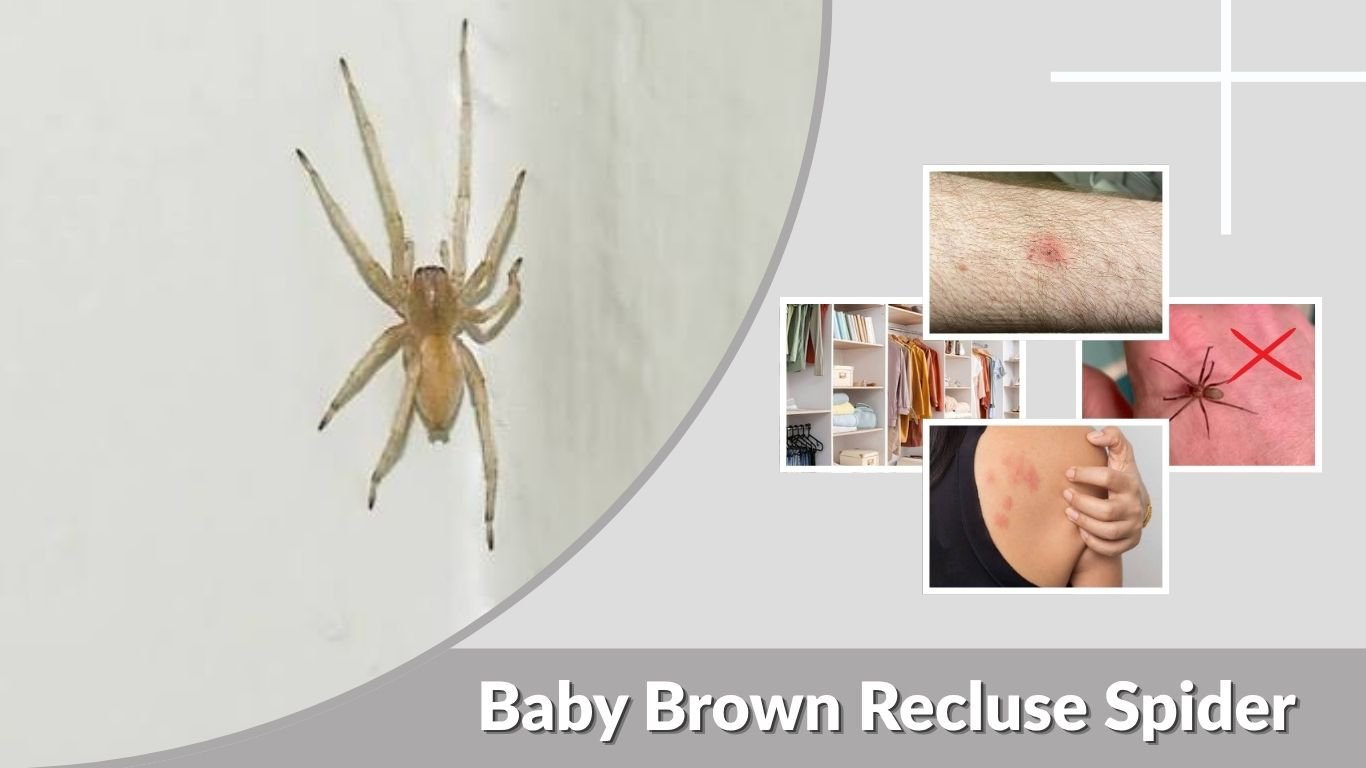
A baby brown recluse spider can be difficult to identify because it is tiny, pale, and easy to confuse with other small brown spiders. Many people worry when they see a small spider indoors, but not every baby brown spider is a recluse. This guide explains what baby brown recluses look like, how big they are, where they live, how their bites may appear, and how to tell them apart from common look-alikes.
What Is a Baby Brown Recluse Spider?
A baby brown recluse spider is the young stage of the brown recluse spider, scientifically known as Loxosceles reclusa. Young spiders are also called spiderlings or juveniles. They hatch from egg sacs and slowly grow into adults through several molts.
Baby brown recluse spiders look similar to adults in body shape, but they are usually smaller and lighter. Their markings may not be as clear as mature spiders, which makes identification harder for homeowners.
Scientific Name and Young Stage
The brown recluse spider belongs to the genus Loxosceles. The young spiders are not a separate species. They are simply immature brown recluses. After hatching, the spiderlings grow by shedding their outer skin several times.
At first, they are very small and pale. As they develop, they become darker and begin to look more like adult brown recluse spiders.
Are Baby Brown Recluses Dangerous?
Baby brown recluse spiders can bite, but they are not aggressive. Like adults, they usually bite only when trapped against skin, pressed in clothing, or disturbed by direct contact. A baby spider is smaller, but it may still have venom.
The risk should be taken seriously, but panic is not helpful. Most suspected bites are not confirmed as brown recluse bites unless the spider is found and identified.
Why They Are Hard to Identify
Baby brown recluses are hard to identify because many tiny spiders are tan, pale brown, or yellowish. Young wolf spiders, cellar spiders, grass spiders, and house spiders may look similar at a glance.
The famous violin mark may also be faint in young spiders. This means colour alone is not enough for a correct identification.
What Does a Baby Brown Recluse Spider Look Like?
A baby brown recluse spider usually has a small, pale tan to light brown body with long, slender legs. Its body is plain compared with many patterned spiders. The legs are usually not strongly striped or banded.
A young brown recluse may have a faint violin-shaped mark on the front body section, but this mark can be difficult to see. The six-eye pattern is more reliable, but it usually requires close magnification.
Baby Brown Recluse Spider Colour
Baby brown recluse spider colour is usually lighter than adult colour. Young spiderlings may appear pale tan, cream, yellowish-brown, or light brown. As they mature, the body may become medium brown or darker brown.
The abdomen is generally plain and does not have bold stripes, spots, or strong patterns. If a small spider has a heavily patterned abdomen, it may be another species.
Body Shape and Legs
Baby brown recluses have a slim body and long, thin legs. Their legs are usually smooth-looking and evenly coloured. They do not have the thick, hairy appearance of many wolf spiders.
The body is not round like a widow spider and not extremely long-legged like a cellar spider. It has a simple, flattened look that helps it hide in cracks and dark spaces.
Baby Brown Recluse Spider Violin Mark
The violin mark is one of the most famous brown recluse features. It appears on the cephalothorax, which is the front body section where the legs attach. The narrow “neck” of the violin points toward the abdomen.
In baby brown recluse spiders, this mark may be faint, incomplete, or hard to see. A missing or unclear mark does not always rule it out, but the violin mark alone should never be the only identification clue.
Baby Brown Recluse Spider Size
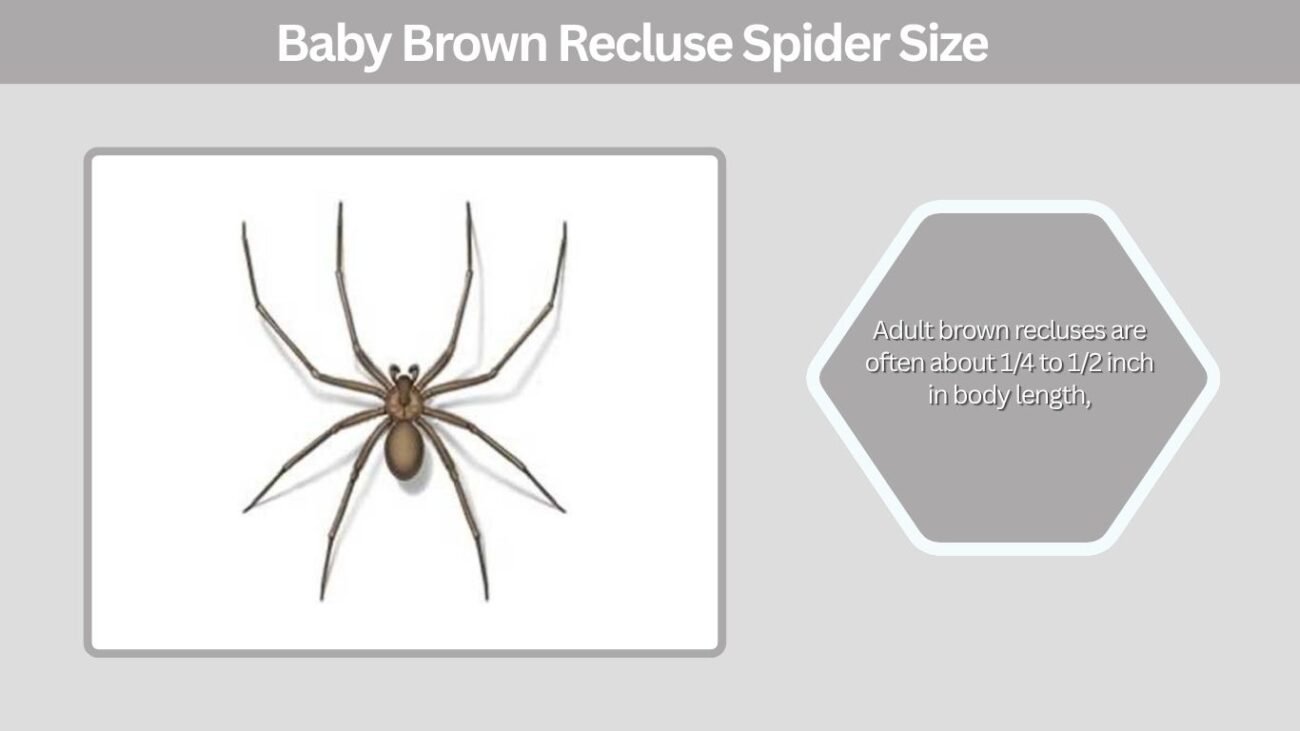
Baby brown recluse spiders are very small after hatching. Their exact size depends on age and growth stage. Freshly hatched spiderlings may be only a few millimetres long. Older juveniles are larger but still smaller than adults.
Adult brown recluses are often about 1/4 to 1/2 inch in body length, so babies are much smaller than that. With legs included, even a small juvenile may look bigger than its body size.
| Stage | Approximate Appearance | Identification Difficulty |
| Newly hatched spiderling | Very tiny, pale, delicate body | Very hard to identify |
| Young juvenile | Light tan, slender legs, plain body | Hard to identify |
| Older juvenile | More adult-like shape, possible faint violin mark | Moderate difficulty |
| Adult brown recluse | Tan to brown, clearer violin mark, six eyes | Easier with close view |
How Big Is a Baby Brown Recluse Spider?
A baby brown recluse spider can be only a few millimetres long when newly hatched. As it grows, it becomes larger with each molt. Even older juveniles are usually smaller than adult recluses.
Because size changes quickly, size alone is not enough to identify one. A small spider could be a baby recluse, but it could also be a young wolf spider, grass spider, or house spider.
Baby vs Adult Brown Recluse Size
Adults are easier to notice because they have a larger body and more developed markings. Baby brown recluses are smaller, paler, and more fragile-looking. Their legs may look long compared with the body.
Adults are more likely to show the classic violin mark clearly, while babies may not. This is why young recluses are often misidentified.
Can Size Confirm the Spider?
No, size cannot confirm a brown recluse. Many spiderlings from different species are small and brown. The best identification comes from several features together: body shape, plain colour, leg pattern, eye arrangement, range, and habitat.
If you are unsure, take a clear photo or contact a local extension office, pest professional, or spider identification group.
Baby Brown Recluse Spider Identification
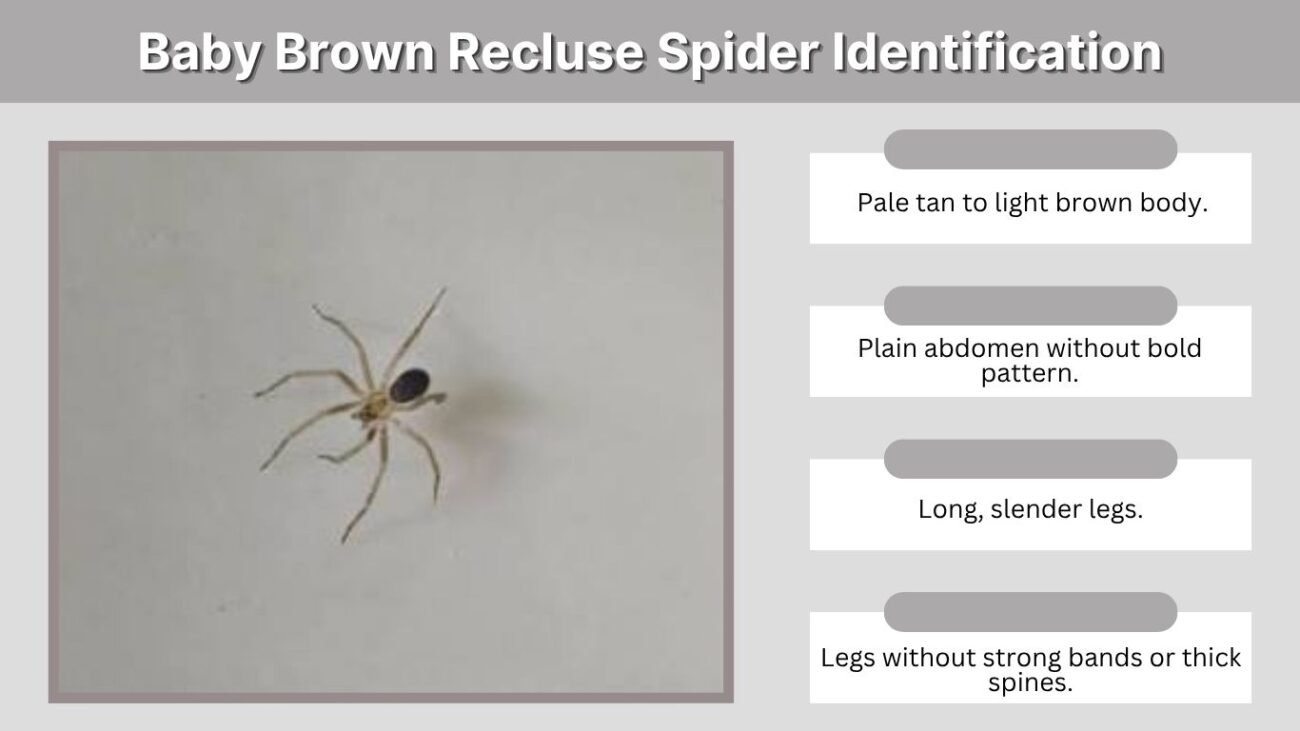
Baby brown recluse spider identification should be careful and calm. Do not try to pick up the spider with your fingers. If possible, observe it from a safe distance or capture it in a small container without touching it.
The most reliable features include the six-eye pattern, plain abdomen, slender unbanded legs, and possible violin marking. However, these details are difficult to see on a tiny spider.
Main Identification Clues
Look for these signs:
- Pale tan to light brown body
- Plain abdomen without bold pattern
- Long, slender legs
- Legs without strong bands or thick spines
- Possible faint violin mark on the front body section
- Six eyes arranged in three pairs
- Hiding in dark, quiet places
- Found in the brown recluse’s natural range
The more clues that match, the more likely it could be a brown recluse. One clue alone is not enough.
Eye Pattern
Brown recluse spiders have six eyes arranged in three pairs. Most spiders have eight eyes, so this is an important feature. However, seeing the eye pattern on a baby spider is very difficult without magnification.
Do not put your face close to the spider to check. A photo with good lighting and zoom may help, but expert review is better.
Baby Brown Recluse Spider Images
Images can help, but they can also confuse. Many online photos labelled “baby brown recluse” may actually show other spiders. Camera angle, lighting, and spider age can change the appearance.
A clear identification image should show the top of the spider, leg colour, abdomen, and front body area. If possible, include something for size comparison.
Baby Brown Recluse Look-Alikes
Many baby spiders look like baby brown recluses. This is especially true indoors, where people may find tiny brown spiders on walls, floors, beds, shoes, or storage boxes. Misidentification is very common.
Learning look-alikes helps you avoid unnecessary fear and choose the right control steps.
Baby Wolf Spider vs Brown Recluse
Baby wolf spiders are often mistaken for brown recluses. Wolf spiders usually look hairier, more robust, and more active. They may have stripes or patterns on the body or legs. Young wolf spiders may also be seen moving quickly across floors.
A brown recluse is usually plainer, less hairy, and more secretive. It prefers quiet, hidden places and does not rely on chasing prey in the same way wolf spiders do.
Baby Grass Spider vs Brown Recluse
Grass spiders are usually faster and may have longer spinnerets at the back of the abdomen. They often build sheet-like webs with funnel-shaped retreats. Their bodies may have stripes or patterns.
A baby brown recluse does not build the same visible funnel web. It is usually more plain-looking and hides in darker, undisturbed spaces.
Baby House Spider or Cellar Spider
Young house spiders and cellar spiders can also be confused with recluses. Cellar spiders have extremely long, delicate legs and a different body shape. Common house spiderlings may be brown, but they often have patterned bodies or rounder abdomens.
If the spider has very long thread-like legs, it is probably not a baby brown recluse.
Baby Brown Recluse Spider Bite
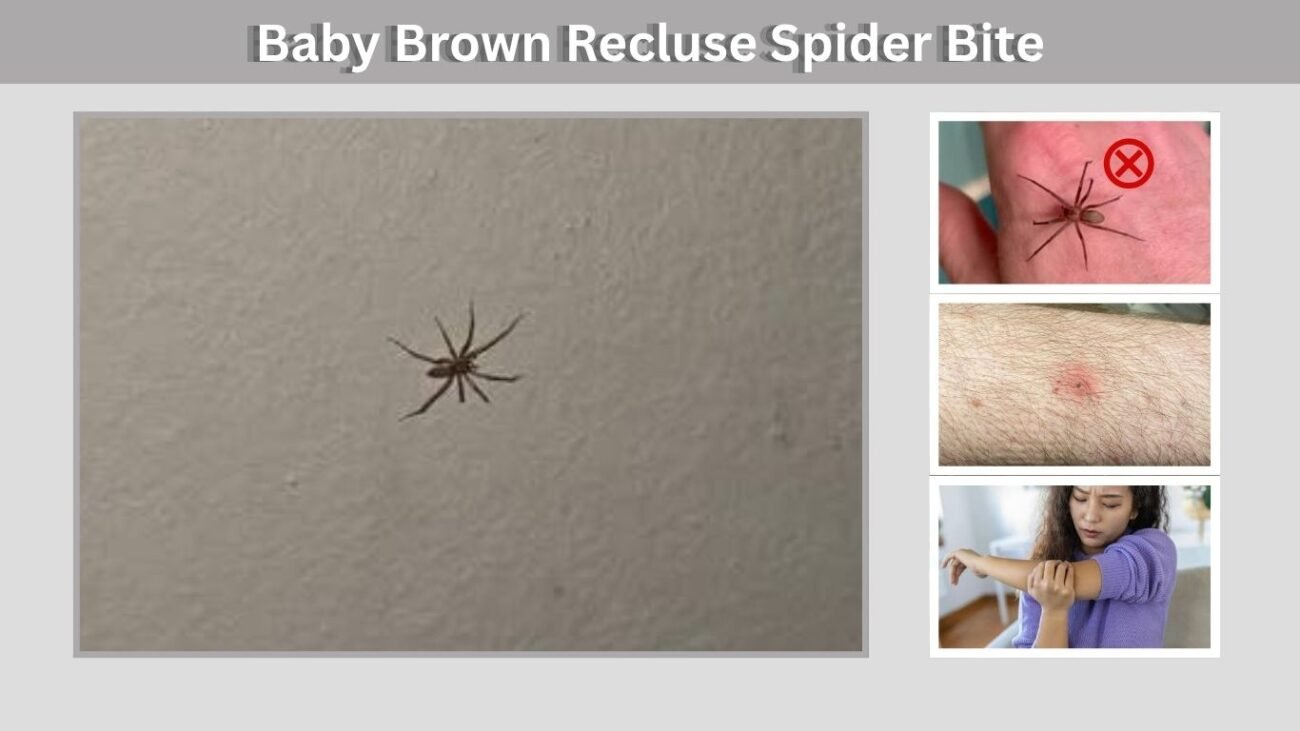
A baby brown recluse spider bite is possible, but confirmed cases are hard to prove. Many people never see the spider that caused a bite. Skin irritation, infections, fleas, bed bugs, mosquitoes, and other insect bites are often blamed on spiders.
If a baby brown recluse does bite, symptoms may be similar to an adult bite, though the amount of venom may vary. Any worsening bite should be taken seriously.
Can a Baby Brown Recluse Spider Bite?
Yes, a baby brown recluse spider can bite if it is large enough and trapped against the skin. It is not likely to chase or attack people. Bites usually happen when the spider is squeezed inside clothing, bedding, shoes, gloves, or towels.
The spider’s small size may make a bite less noticeable at first, but symptoms can develop later.
Baby Brown Recluse Spider Bite Symptoms
Possible symptoms include:
- Mild pain or stinging
- Redness around the bite
- Swelling or tenderness
- Itching or burning
- Small blister
- Bruising or pale centre
- Increasing pain after several hours
- Open sore in more serious cases
- Fever, nausea, or body aches in severe reactions
Not every bite causes serious skin damage. Some remain mild and heal with basic care.
What to Do After a Suspected Bite
Wash the area with soap and water. Apply a cold compress for 10–15 minutes. Keep the area raised if swelling occurs. Do not cut, squeeze, burn, or scratch the bite.
Seek medical advice if pain worsens, redness spreads, pus appears, fever develops, or the wound becomes dark, open, or very painful. Babies, children, older adults, and people with weak immune systems should get medical advice quickly.
Baby Brown Recluse Life Cycle
Baby brown recluse spiders begin life inside egg sacs. After hatching, they become spiderlings and gradually grow into adults. Like other spiders, they molt several times before reaching maturity.
Their life cycle helps explain why several small spiders may appear in one area if an egg sac has hatched nearby.
Eggs and Egg Sacs
Female brown recluse spiders produce silken egg sacs and hide them in quiet, protected areas. These places may include closets, garages, storage boxes, attics, basements, furniture, and wall voids.
The egg sac is usually small, pale, and silk-covered. If several tiny spiderlings appear near the same area, an egg sac may have hatched.
Spiderlings and Growth
After hatching, baby brown recluses stay small and pale. They grow slowly through repeated molts. Each molt allows the spider to become larger and more adult-like.
Young spiderlings may spread out from the egg sac and hide in cracks, boxes, clothing piles, or undisturbed corners.
Where Baby Brown Recluses Live
Baby brown recluse spiders prefer the same general hiding places as adults. They like dark, dry, quiet areas with little disturbance. Indoors, they may hide in storage rooms, closets, cardboard boxes, under furniture, or behind baseboards.
Outdoors, they may use wood piles, sheds, debris, and protected cracks.
Are Baby Brown Recluse Spiders Found in Homes?
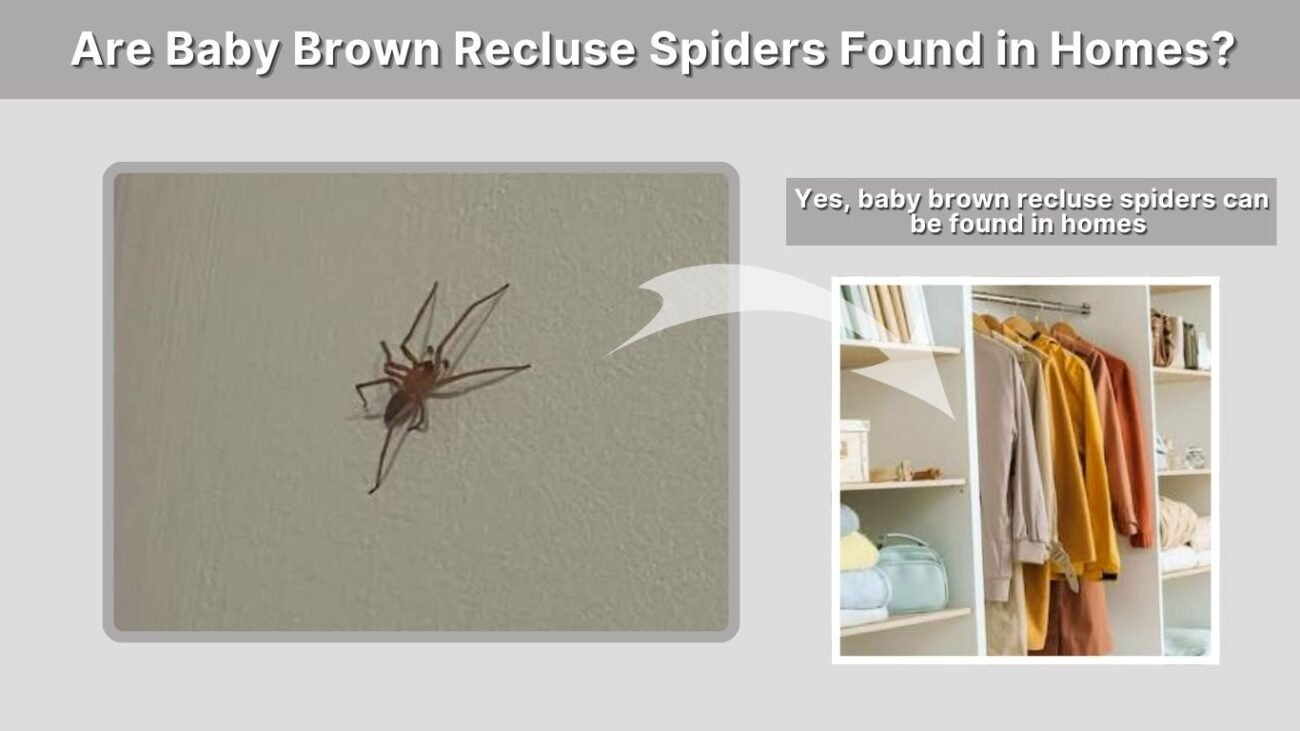
Yes, baby brown recluse spiders can be found in homes within the spider’s natural range. If adults are present indoors, egg sacs and spiderlings may also be present. However, outside the normal range, many “baby brown recluse” sightings are misidentified.
The brown recluse is mainly associated with parts of the central and southern United States. In states outside its range, confirmed indoor populations are less likely.
Baby Brown Recluse Spider in Texas
Texas is within the broader region where brown recluse spiders may occur. In some areas, they can be found in homes, garages, sheds, and storage spaces. Baby spiders may appear if an indoor female lays egg sacs.
Good storage habits and regular cleaning can reduce hiding spots.
Baby Brown Recluse Spider in PA
Pennsylvania is not usually considered a main brown recluse state. Some spiders may be transported in boxes or furniture, but many suspected sightings are look-alikes. In PA, careful identification is important before assuming a small brown spider is a recluse.
A local extension service or pest professional can help confirm the spider.
Baby Brown Recluse in Stored Items
Stored items are common hiding places. Shoes, gloves, blankets, boxes, bags, and unused clothing may provide dark shelter. This is why bites sometimes happen when a person puts on clothing or shoes where a spider is hiding.
Shake out stored items before use, especially in areas where brown recluses are known to live.
How to Prevent Baby Brown Recluse Spiders
Prevention focuses on reducing hiding places, sealing entry points, and checking stored items. These steps help with brown recluses and many other household spiders.
If you find several suspected recluses, identification should come first. Control methods depend on whether the spider is truly a brown recluse or a harmless look-alike.
Home Prevention Tips
Use these steps:
- Store items in sealed plastic bins.
- Reduce cardboard boxes in closets and garages.
- Shake out shoes, gloves, and stored clothes.
- Vacuum corners, baseboards, and under furniture.
- Seal cracks around doors, windows, and walls.
- Wear gloves when moving stored items.
- Keep beds away from walls in infested rooms.
- Remove clutter from storage areas.
- Control insects that spiders eat.
- Use sticky traps in hidden areas for monitoring.
Sticky traps can help show whether spiders are active in an area.
Safe Removal
Do not touch suspected brown recluses with bare hands. Use a jar and card, vacuum, or sticky trap. If you need identification, keep the spider in a sealed container or take a clear photo.
For heavy activity, contact a licensed pest-control professional.
When to Worry
One small brown spider does not always mean an infestation. Worry more if you repeatedly see similar spiders, find egg sacs, catch many on sticky traps, or live in an area where brown recluses are common.
If bites or unexplained wounds occur, consult a medical professional rather than guessing.
FAQs
What does a baby brown recluse spider look like?
A baby brown recluse spider is usually tiny, pale tan to light brown, and plain-looking. It has long slender legs and may have a faint violin mark on the front body section. Young spiderlings are hard to identify because many harmless baby spiders look similar.
How big is a baby brown recluse spider?
A newly hatched baby brown recluse can be only a few millimetres long. Older juveniles grow larger after each molt but remain smaller than adults. Adult brown recluses are usually about 1/4 to 1/2 inch in body length, not counting the legs.
Can a baby brown recluse spider bite?
Yes, a baby brown recluse spider can bite if trapped or pressed against skin. It does not usually attack people. Bites may cause redness, swelling, pain, itching, or a blister. Seek medical help if symptoms worsen, spread, or become very painful.
How can I tell a baby wolf spider from a baby brown recluse?
A baby wolf spider is usually hairier, more active, and may show stripes or patterns. A baby brown recluse is usually plainer, less hairy, and more secretive. Brown recluses also have six eyes in three pairs, while wolf spiders have a different eye arrangement.
Do baby brown recluse spiders have a violin mark?
Some baby brown recluse spiders may show a faint violin mark, but it can be hard to see. The mark becomes clearer as the spider matures. Identification should not rely only on the violin mark; eye pattern, plain body, leg colour, and location also matter.