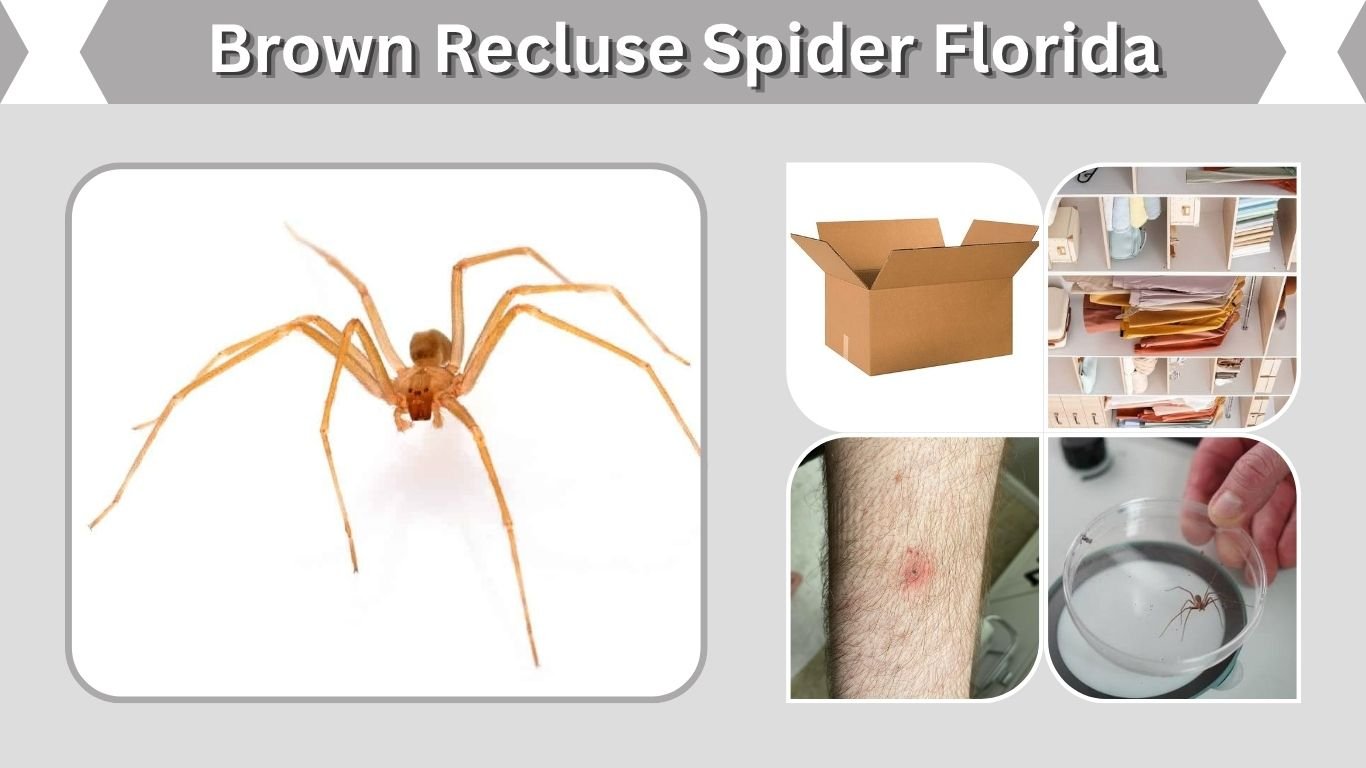
The brown recluse spider in Florida is a common search topic because many people worry when they see a brown spider indoors. However, true brown recluse spiders are rare in most of Florida, and many sightings are misidentified wolf spiders, house spiders, or other brown species. This guide explains identification, size, bite risks, Florida range, look-alikes, and what to do if you suspect a bite.
Are Brown Recluse Spiders Found in Florida?
Brown recluse spiders can occasionally be reported in Florida, but they are not common across the state. Many Florida “brown recluse” sightings are actually other brown spiders. This is important because fear of recluse bites often spreads faster than confirmed spider records.
In Florida, the better approach is careful identification. A brown spider in a house, garage, or garden is not automatically a brown recluse. Several harmless or less dangerous spiders share similar colour, size, and hiding habits.
Florida Records Are Limited
True brown recluse spiders are strongly associated with the central and south-central United States. Florida is outside the main natural range. That means a spider may occasionally arrive through transported boxes, furniture, or materials, but established populations are not common in most areas.
Some recluse relatives may also appear in Florida, which adds confusion. Because of this, professional identification is much more reliable than guessing from colour alone.
Why People Think They Are Common
People often assume any plain brown spider is a brown recluse. Online bite pictures, news stories, and pest-control ads can also make the spider seem more widespread than it really is.
Another reason is bite confusion. Many skin infections, allergic reactions, mosquito bites, flea bites, and wounds are blamed on brown recluse spiders without the spider being seen or identified.
Florida Areas People Search About
People often search for brown recluse spiders in South Florida, Central Florida, North Florida, the Florida Keys, Orlando, Tallahassee, and Southwest Florida. In most of these areas, confirmed brown recluse encounters are uncommon.
If you find a suspicious spider, place it safely in a container or take a clear photo. Do not handle it with bare hands.
Brown Recluse Spider Identification
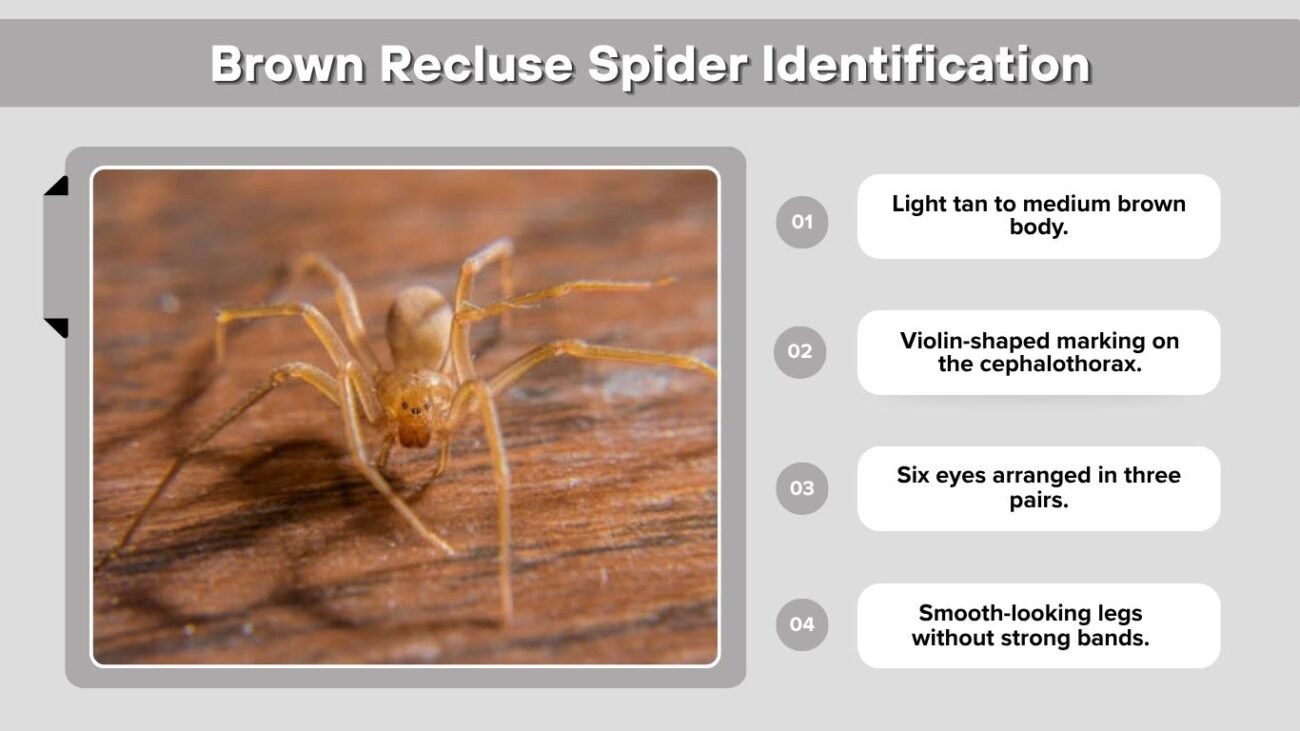
Brown recluse spider identification is not based on colour alone. Many spiders are brown. A true brown recluse has specific features, including six eyes arranged in three pairs, a plain body, long slender legs, and often a violin-shaped mark on the top of the body.
The violin mark can help, but it is not always clear. Some non-recluse spiders also have markings that confuse people.
Key Identification Features
A brown recluse may have:
- Light tan to medium brown body
- Violin-shaped marking on the cephalothorax
- Six eyes arranged in three pairs
- Smooth-looking legs without strong bands
- Plain abdomen without bold patterns
- Long, slender legs
- Body length around 1/4 to 1/2 inch
- Habit of hiding in dark, undisturbed places
The eye pattern is one of the best clues, but it is hard to see without magnification. For safety, do not get close just to check the eyes.
Brown Recluse Spider Size in Florida
Adult brown recluse spiders are usually small to medium-sized. Their body is often around 1/4 to 1/2 inch long, not including the legs. With legs included, they may look larger.
Baby brown recluse spiders are smaller and harder to identify. Young spiders may not show the classic markings clearly, so they are often confused with other small brown spiders.
Brown Recluse Spider Pictures
Pictures can help, but they can also mislead. Lighting, camera angle, spider age, and body condition can change how the spider looks. Many online “brown recluse spider Florida pictures” show wolf spiders, southern house spiders, huntsman spiders, or other common Florida spiders.
A good identification photo should show the top of the body, legs, abdomen, and overall shape. If possible, compare the image with university extension or museum resources.
Brown Recluse Look-Alikes in Florida
Florida has many brown spiders that are mistaken for brown recluses. This is one of the biggest reasons people over-report recluse sightings. Some look-alikes are large and scary, but they are not brown recluses.
Learning the differences can prevent unnecessary fear and help you respond correctly.
Wolf Spider Florida vs Brown Recluse
Wolf spiders are common in Florida and are frequently confused with brown recluses. They are usually more robust, hairy, and active hunters. They do not make the same type of hiding web and often run across floors, garages, patios, and lawns.
Brown recluses are more plain-looking, less hairy, and more secretive. They prefer dark hiding places and do not usually run openly across lawns like wolf spiders.
Southern House Spider
Southern house spiders are another common Florida look-alike. Males can be brown with long legs and may look similar to recluses at first glance. However, their body shape, markings, and eye arrangement are different.
These spiders are often found around homes, cracks, walls, and window areas. They may look alarming but are not the same as brown recluses.
Huntsman and Other Brown Spiders
Huntsman spiders, nursery web spiders, fishing spiders, and orb-weaver relatives may also be called “brown recluse” by mistake. Some are large, fast, and brown, which makes people nervous.
Size alone is not proof. In fact, many large brown spiders in Florida are not brown recluses.
Brown Recluse Spider Bite in Florida
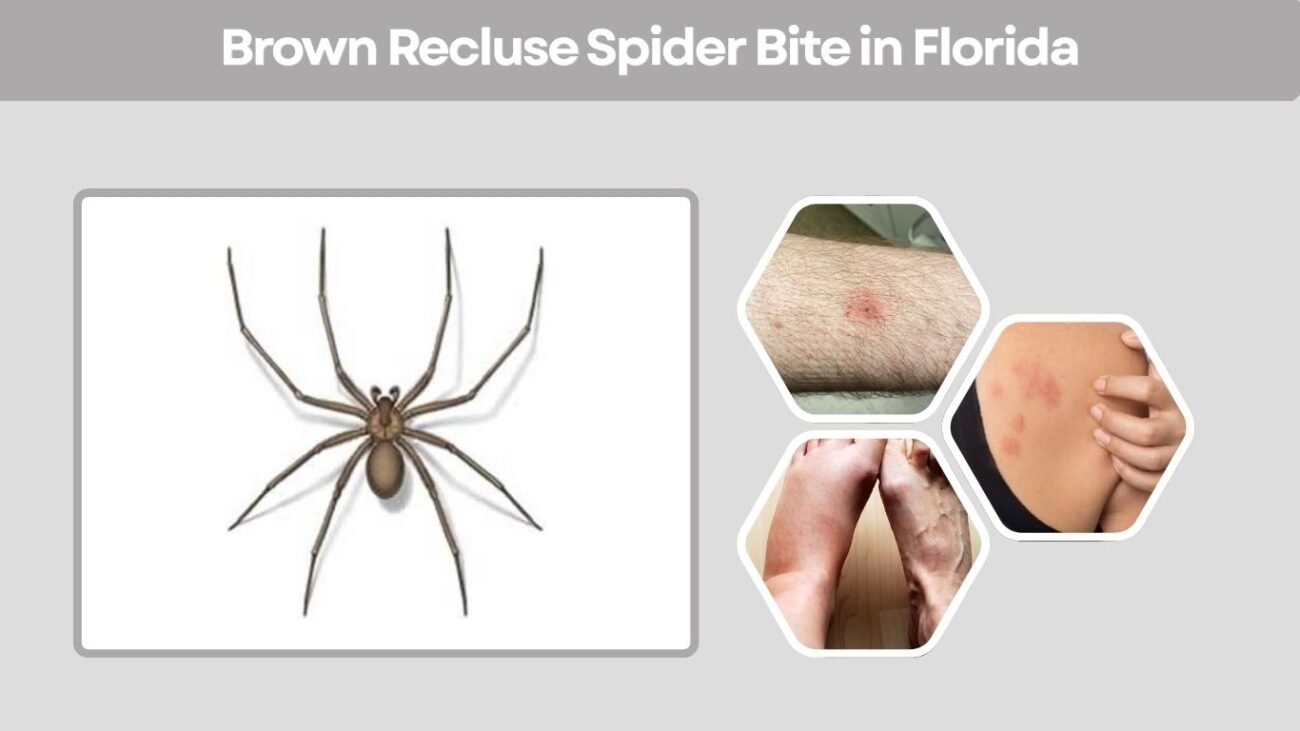
A brown recluse spider bite in Florida is possible but uncommon because confirmed spiders are uncommon. Many suspected bites are never linked to an actual spider. A true bite usually happens when the spider is trapped against the skin in clothing, bedding, shoes, or stored items.
Brown recluse bites can range from mild irritation to serious skin wounds, but severe cases are less common than many people believe.
| Topic | Quick Answer |
| Common in Florida? | No, true brown recluses are rare in most areas |
| Main concern | Misidentification and bite confusion |
| Bite pain | May be mild at first, then worsen |
| Serious risk | Skin tissue damage in some cases |
| Look-alikes | Wolf spiders, southern house spiders, huntsman spiders |
| Best action | Clean the bite and seek help if symptoms worsen |
Brown Recluse Bite Symptoms
Possible bite symptoms include redness, pain, itching, swelling, tenderness, blistering, and a burning feeling. In some cases, the bite area may become pale, bruised, or develop a sore.
More serious symptoms may include fever, chills, nausea, muscle aches, weakness, or a spreading wound. These symptoms need medical attention.
Brown Recluse Bite Stages
In the first few hours, the bite may be painless or feel like a mild sting. Later, burning, itching, redness, and swelling may appear. A blister can develop in some cases.
Over the next few days, serious bites may form a dark centre or open sore. However, many bites stay mild and heal without major tissue damage.
South Florida Bite Concerns
Searches for brown recluse spider bite South Florida are common, but South Florida is not known as a major brown recluse area. If someone in South Florida has a worsening skin wound, it should not automatically be blamed on a brown recluse.
Bacterial infection, allergic reaction, tick bite, mosquito bite, or another medical condition may be more likely. A doctor can help evaluate the wound.
What to Do After a Suspected Bite
If you think a brown recluse or another spider has bitten you, focus on wound care and symptom tracking. You do not need to panic, but you should not ignore a bite that gets worse.
Try to safely capture or photograph the spider if it is available. Do not risk another bite to catch it.
First Aid Steps
Use these steps after a suspected bite:
- Wash the area with soap and water.
- Apply a cold compress for 10–15 minutes.
- Keep the bite area raised if possible.
- Avoid scratching or squeezing the wound.
- Do not cut the bite or try to remove venom.
- Cover broken skin with a clean dressing.
- Track redness, swelling, and pain.
- Seek medical advice if symptoms worsen.
Cold packs can help reduce swelling and pain. Keep the wound clean to reduce infection risk.
When to See a Doctor
See a doctor if pain gets worse, swelling spreads, pus appears, fever develops, or the wound becomes dark, open, or increasingly painful. Also get help if you feel weak, dizzy, nauseous, or very unwell.
Emergency help is needed for severe allergic reaction signs, such as trouble breathing, swelling of the face or throat, fainting, or confusion.
Why Diagnosis Can Be Difficult
Doctors often cannot confirm a brown recluse bite unless the spider was seen, captured, and identified. Many wounds look similar to spider bites. Skin infections, boils, allergic reactions, and other insect bites can mimic recluse bites.
This is why accurate identification matters. Treat the wound seriously, but avoid assuming the cause without evidence.
Brown Recluse Spider Habitat in Florida Homes
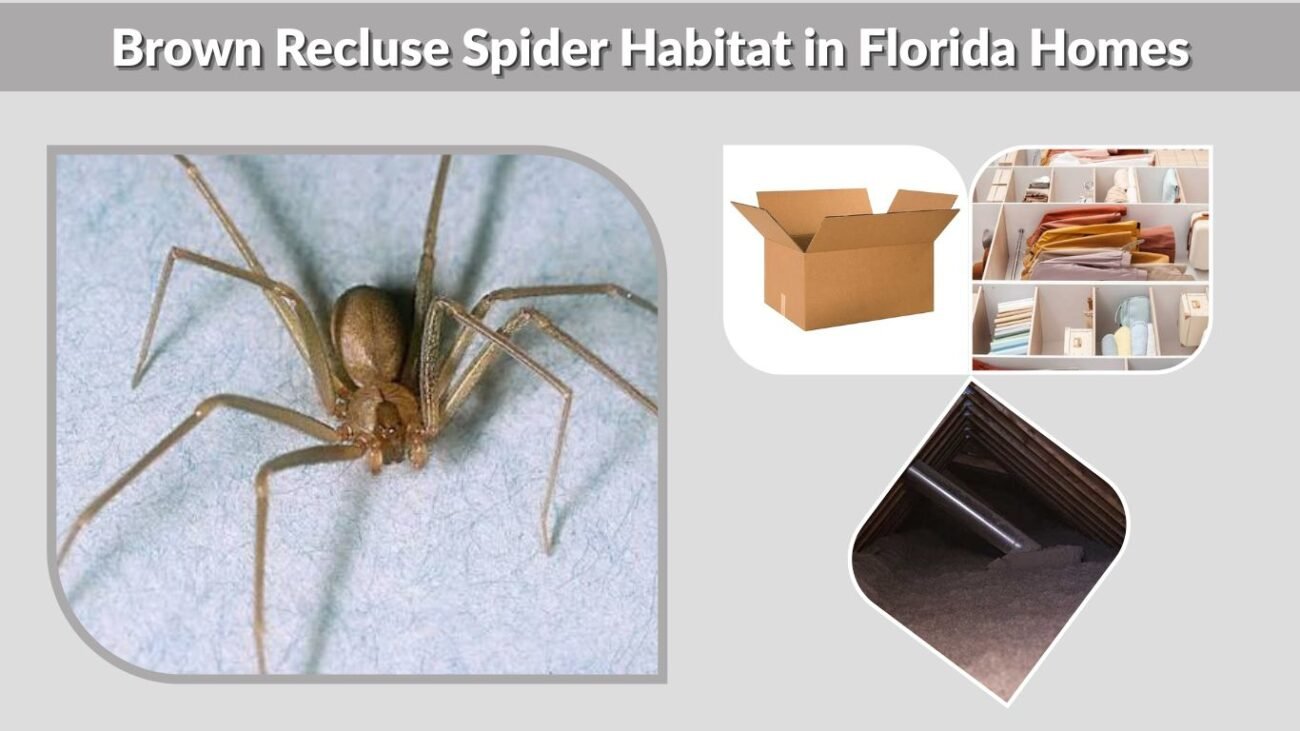
Brown recluse spiders prefer quiet, dry, dark places. In states where they are common, they may hide in closets, attics, basements, boxes, furniture, shoes, and stored clothing. In Florida, similar hiding places may hold other brown spiders, even if they are not recluses.
The same prevention steps work for many household spiders.
Indoor Hiding Places
Possible hiding spots include:
- Cardboard boxes
- Closets and storage rooms
- Garages and sheds
- Attics and crawl spaces
- Shoes and boots
- Stored bedding and clothes
- Behind furniture
- Under clutter
- Wood piles or building materials
Always shake out stored items before using them, especially if they have been sitting in a garage or shed.
Outdoor Areas
Outdoor hiding spots may include wood piles, debris, stacked boards, old furniture, sheds, and quiet corners around buildings. Recluses prefer protected spaces, but Florida’s common brown spiders may use similar areas.
Wear gloves when moving wood, boxes, or stored materials.
Infestation Signs
A true brown recluse infestation in Florida would be unusual, but signs of spider activity may include repeated sightings, shed skins, egg sacs, and webs in undisturbed areas.
If you suspect a serious infestation, collect a specimen for expert identification before starting treatment. This prevents unnecessary control efforts against the wrong spider.
How to Prevent Brown Recluse and Look-Alike Spiders
Spider prevention in Florida should focus on reducing hiding places and insect prey. Even if the spider is not a brown recluse, the same steps can make your home less attractive to spiders.
Prevention is especially useful in garages, sheds, storage rooms, and rarely used spaces.
Home Prevention Tips
Useful prevention steps include:
- Reduce clutter in closets and garages.
- Store items in sealed plastic bins.
- Seal cracks around doors and windows.
- Install door sweeps.
- Vacuum corners, baseboards, and storage areas.
- Shake out shoes, gloves, and clothing.
- Wear gloves when moving boxes or wood.
- Keep beds away from walls if spider activity is high.
- Reduce insects that spiders feed on.
These steps reduce both hiding places and prey.
Safe Spider Removal
If you find a suspicious spider, avoid touching it. Use a jar and stiff paper, a vacuum, or professional help if needed. If you want identification, take a clear photo or preserve the spider in a sealed container.
Do not crush the spider if identification is important, because damaged features are harder to examine.
When to Call Pest Control
Call pest control if you see many spiders, repeatedly find them indoors, or have safety concerns in a home with children, elderly people, or pets. Pest control can also help identify whether the spider is actually a recluse or a harmless look-alike.
Identification should come before heavy treatment.
Brown Recluse Spiders and Florida Safety Myths
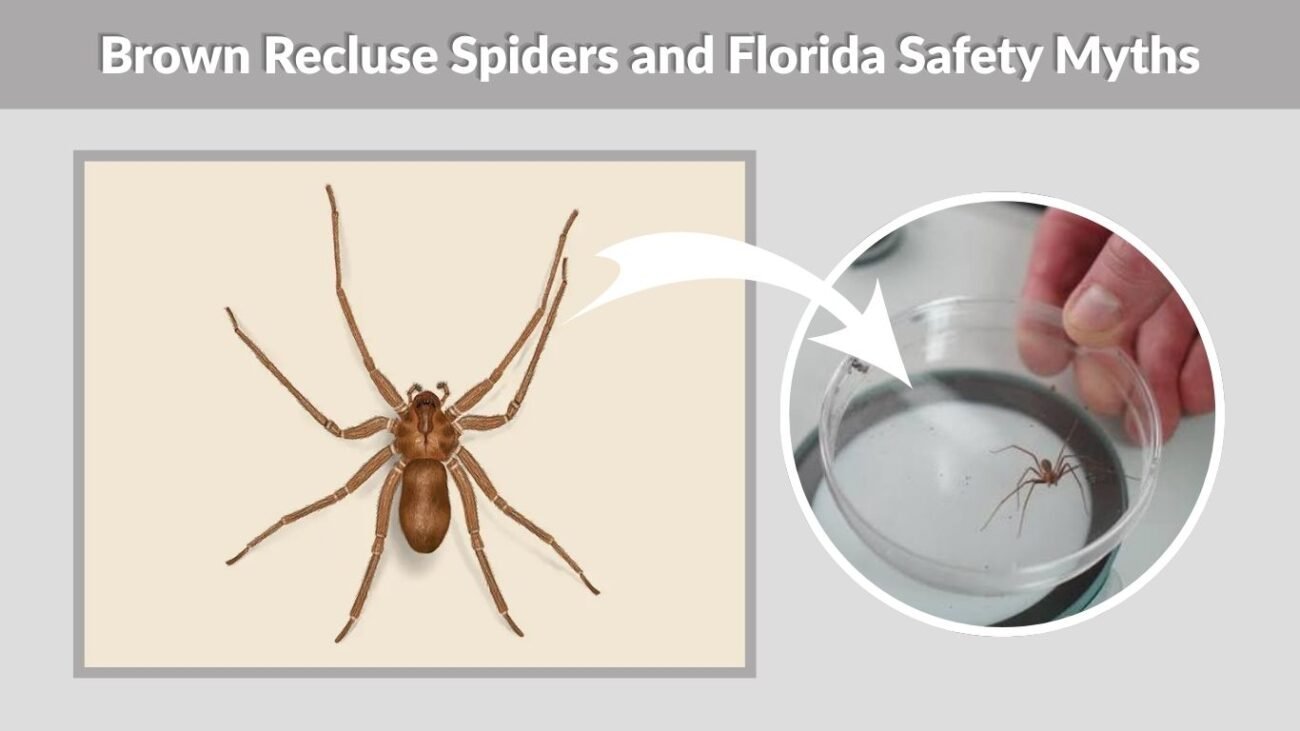
The biggest myth is that brown recluse spiders are common everywhere in Florida. Another myth is that every unexplained wound is a recluse bite. These ideas can cause fear and lead people to overlook more likely causes.
A balanced view is best. Brown recluse spiders can be medically important, but Florida residents should know they are often misidentified.
Myth: Every Brown Spider Is a Brown Recluse
This is false. Florida has many brown spiders, and most are not brown recluses. Wolf spiders, southern house spiders, huntsman spiders, and other species are common sources of confusion.
A true brown recluse has a specific body shape, six-eye pattern, plain abdomen, and violin marking.
Myth: Brown Recluse Bites Always Cause Severe Wounds
This is also false. Some bites may cause serious skin damage, but many remain mild. Severe wounds are possible, not guaranteed.
Any worsening wound should be checked by a doctor, whether or not a spider caused it.
Myth: Brown Recluses Chase People
Brown recluse spiders are named “recluse” for a reason. They are shy and prefer hiding. Bites usually happen when the spider is trapped against skin, not because it attacks people.
Avoiding contact with hidden spiders is the best prevention.
FAQs
Are brown recluse spiders common in Florida?
No, true brown recluse spiders are not common in most of Florida. Many reported sightings are misidentified wolf spiders, southern house spiders, or other brown spiders. Florida is outside the main natural range of the brown recluse, so confirmed encounters are uncommon.
What does a brown recluse spider look like in Florida?
A brown recluse is usually tan to medium brown with a plain abdomen, slender legs, six eyes arranged in three pairs, and often a violin-shaped mark near the front of the body. However, many Florida spiders look similar, so expert identification is best.
Is a Florida wolf spider the same as a brown recluse?
No, a Florida wolf spider is not the same as a brown recluse. Wolf spiders are usually hairier, more robust, and active hunters. Brown recluses are plainer, more secretive, and have six eyes. Wolf spiders are commonly mistaken for brown recluses.
What should I do if I think a brown recluse bit me?
Wash the bite with soap and water, apply a cold compress, avoid scratching, and monitor symptoms. Seek medical help if pain worsens, swelling spreads, fever appears, pus develops, or the wound becomes dark or open. Emergency help is needed for severe allergic symptoms.
Can brown recluse spiders live in Florida houses?
A brown recluse could rarely be brought into a Florida house through boxes, furniture, or transported items, but established indoor populations are uncommon. Many brown spiders found in Florida homes are other species. Store items in sealed bins and shake out shoes or clothing.