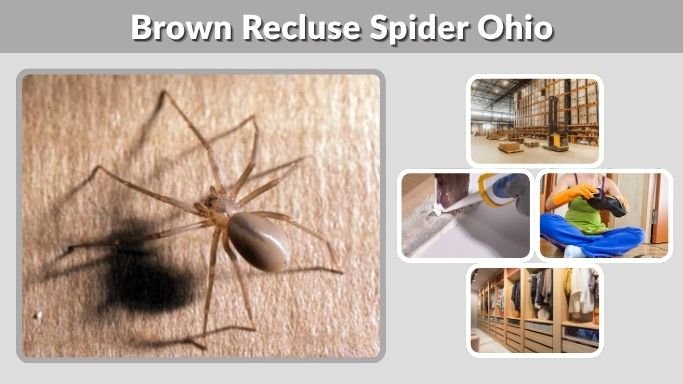
Brown recluse spiders do live in Ohio, but they are not as common as many people think. Most “brown recluse” sightings in Ohio turn out to be wolf spiders, house spiders, or other harmless brown spiders. Still, confirmed recluse spiders can appear in homes, storage areas, and undisturbed spaces. Knowing their range, appearance, bite risk, and look-alikes helps Ohio residents stay careful without unnecessary fear.
Are Brown Recluse Spiders Found in Ohio?
Brown recluse spiders are present in Ohio, but they are considered uncommon. Ohio State University Extension notes that the brown recluse is uncommon in the state, even though many homeowners send in spider specimens they believe are recluses. Most of those suspected spiders are misidentified.
Brown Recluse Status in Ohio
Ohio is near the edge of the brown recluse’s known range. That means the spider may occur in parts of the state, but it is not evenly common everywhere. Southern and southwestern Ohio are more likely to have reports than far northern areas, although transported spiders can occasionally show up in buildings outside their usual range.
In Ohio homes, a true brown recluse is more likely to be found indoors than outdoors. They prefer quiet, dry, dark spaces where they are rarely disturbed. This is why sightings are often linked with basements, closets, attics, storage boxes, and garages.
Why Sightings Are Often Misidentified
Many Ohio spiders are brown, fast-moving, and found indoors. This makes people think they have seen a brown recluse. Wolf spiders, grass spiders, cellar spiders, nursery web spiders, and common house spiders are frequently confused with recluses.
A brown color alone is not enough for identification. The famous violin-shaped mark can also be misleading because some harmless spiders have dark body markings. Experts often look at eye arrangement, body shape, leg texture, and location before confirming the spider.
Ohio Brown Recluse Distribution
Brown recluse distribution in Ohio is patchy. They are not considered common across the whole state. Some may be established in limited areas, while others may arrive through moved furniture, boxes, luggage, or shipments.
| Ohio Area | Brown Recluse Possibility | What It Means |
| Southern Ohio | Higher possibility | More likely than northern regions |
| Southwestern Ohio | Possible | Indoor records may occur |
| Central Ohio | Occasional reports | Many sightings are look-alikes |
| Northeast Ohio | Less likely | True recluses are uncommon |
| Northwest Ohio | Less likely | Check carefully for look-alikes |
| Any Ohio city | Possible indoors | Transported spiders may appear |
How to Identify a Brown Recluse Spider in Ohio
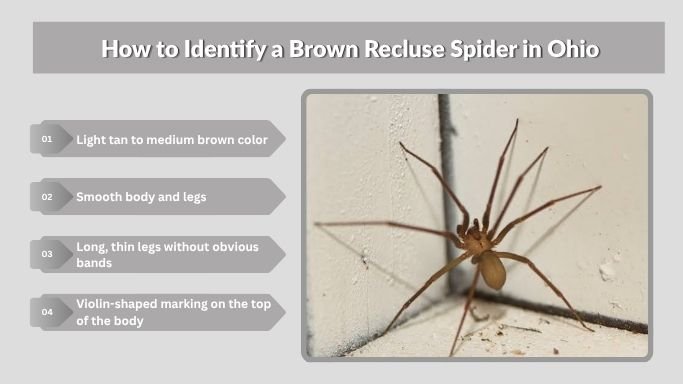
A brown recluse spider has a plain, delicate appearance. It is not usually large, hairy, or bold-looking. Many people expect it to look dramatic, but it often looks like a simple tan or brown spider.
Key Identification Features
A true brown recluse usually has:
- Light tan to medium brown color
- Smooth body and legs
- Long, thin legs without obvious bands
- Violin-shaped marking on the top of the body
- Six eyes arranged in three pairs
- Plain abdomen without bold patterns
- Body size usually smaller than many wolf spiders
- Reclusive behavior in dark, undisturbed areas
The six-eye pattern is one of the strongest clues. Most spiders have eight eyes, while recluse spiders have six. However, this feature is hard to see without close inspection or magnification.
What the Violin Mark Means
The violin-shaped mark is often mentioned in brown recluse identification. It appears on the cephalothorax, the front body section where the legs attach. The “neck” of the violin points backward toward the abdomen.
However, the violin mark should not be the only feature used. Ohio State University Extension explains that the violin-shaped marking can be faint depending on the spider and its recent molt. Some harmless spiders also have dark markings that confuse people.
Brown Recluse Size and Color
Brown recluse spiders are usually small to medium-sized. Their legs make them appear larger, but the body is not huge. The color may range from pale tan to darker brown.
Unlike wolf spiders, brown recluses do not look thick, hairy, or strongly patterned. They usually have a plain body and smooth-looking legs. A large brown spider running across the floor in Ohio is often a wolf spider, not a recluse.
Brown Recluse vs Wolf Spider in Ohio
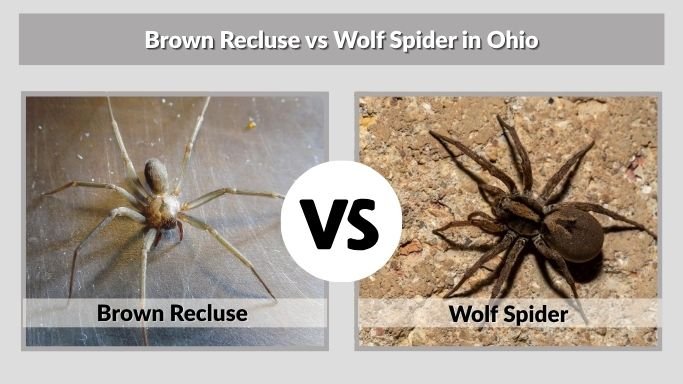
Wolf spiders are one of the most common spiders mistaken for brown recluses in Ohio. They are brown, fast, and often seen indoors, especially when they wander in from outside. But they are very different from brown recluse spiders.
Appearance Differences
Wolf spiders are usually larger, hairier, and more robust. They often have stripes, mottled patterns, or dark markings across the body. Their legs may look thick and hairy.
Brown recluse spiders are more plain. Their legs are smoother and thinner. Their abdomen is usually one solid color. They do not have the bold striping that many wolf spiders show.
Behavior Differences
Wolf spiders are active hunters. They chase prey and may run across floors, walls, garages, or basements. They do not depend on a web to catch insects.
Brown recluses are secretive. They hide in quiet places and come out at night. They are more likely to stay tucked behind storage items, inside boxes, under furniture, or in clothing left on the floor.
Bite Risk Differences
Both spiders can bite if trapped against the skin, but the risk is different. Wolf spider bites are usually painful but not medically serious for most people. Brown recluse bites can sometimes cause more serious skin damage.
Still, brown recluse bites are often overdiagnosed. Many skin infections, allergic reactions, and other insect bites are wrongly blamed on brown recluse spiders. If a wound is spreading, painful, or darkening, a doctor should examine it instead of relying on guesswork.
Where Brown Recluse Spiders Hide in Ohio Homes
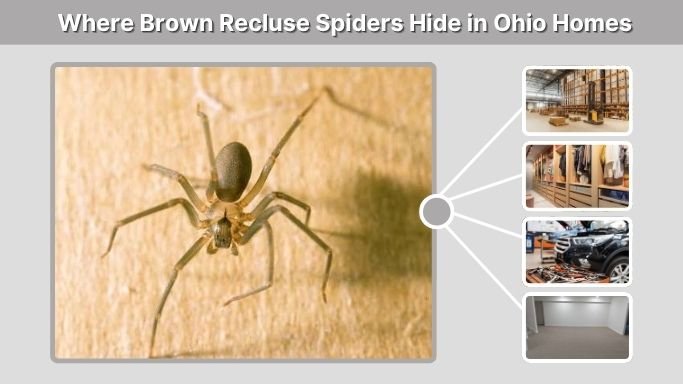
Brown recluse spiders prefer quiet places where they are not disturbed. They do not want contact with people. Most bites happen when the spider is accidentally pressed against skin.
Common Indoor Hiding Places
In Ohio homes, possible hiding places include:
- Basements
- Attics
- Closets
- Storage rooms
- Garages
- Cardboard boxes
- Shoes
- Gloves
- Clothing piles
- Bedding
- Behind furniture
- Under stored items
- Near utility areas
- Wall voids and crawl spaces
Cardboard boxes are especially attractive because they provide dry, dark shelter. Homes with long-term storage clutter may give spiders more hiding spots.
Why They Enter Homes
Brown recluse spiders may enter homes while searching for shelter or prey. They may also be carried in with boxes, furniture, firewood, or stored items. In Ohio, some indoor sightings may be connected to transported belongings rather than a large outdoor population.
Once inside a quiet building, they can survive if food and shelter are available. They eat small insects and other arthropods, so reducing indoor pests can also reduce spider activity.
Seasonal Activity in Ohio
Brown recluse activity may be noticed more during warmer months, but indoor spiders can be found at different times of the year. People may also discover them when cleaning storage areas, moving boxes, or pulling out seasonal clothing.
In colder months, many Ohio homeowners find spiders indoors and assume they are dangerous. Most are harmless house spiders, cellar spiders, or wolf spiders.
Brown Recluse Bite Risk in Ohio
Brown recluse spiders are venomous, but bites are not common. They are shy spiders and usually bite only when trapped in clothing, bedding, shoes, or against the body.
What a Bite May Look Like
A brown recluse bite may start as a small red mark or mild stinging feeling. Some people do not notice the bite at first. Over time, the area may become painful, swollen, blistered, or discolored.
Possible bite signs include:
- Mild redness at first
- Burning or itching
- Swelling around the bite
- Tenderness
- A blister
- Pale or bluish center
- Dark purple or black area in serious cases
- Open sore if tissue damage occurs
- Fever or body aches in more serious reactions
Not every bite becomes severe. Many suspected brown recluse bites are actually other conditions. Mayo Clinic notes that brown recluse bite symptoms may include mild pain at first, then a blister or sore with a darkened center.
When to Get Medical Help
Medical care is important if the bite area worsens or if body symptoms appear. Do not try to cut, squeeze, burn, or drain the bite at home.
Seek medical advice if you notice:
- Increasing pain
- Spreading redness
- A growing blister
- Dark purple, blue, or black skin
- Fever or chills
- Nausea or vomiting
- Red streaks from the bite
- Pus or bad smell
- Bite on the face, hand, or near a joint
- Symptoms in a child, older adult, or immune-compromised person
Emergency care is needed for trouble breathing, fainting, severe weakness, confusion, or signs of a serious allergic reaction.
Common Bite Misdiagnosis
Many “brown recluse bites” in Ohio are never confirmed by finding the spider. Skin infections, boils, allergic reactions, tick bites, bed bug bites, and bacterial infections can look similar.
This matters because the wrong assumption can delay proper treatment. If a skin wound spreads or becomes painful, the safest step is medical evaluation. A doctor can check whether it is a bite, infection, allergic reaction, or another skin condition.
Brown Spiders in Ohio That Are Not Recluses
Ohio has many brown spiders that are harmless or only mildly concerning. Learning the difference helps homeowners avoid panic and unnecessary pesticide use.
Common Look-Alike Spiders
Common Ohio brown recluse look-alikes include:
- Wolf spiders
- Grass spiders
- Nursery web spiders
- Fishing spiders
- Cellar spiders
- Common house spiders
- Yellow sac spiders
- Funnel weavers
- Orb-weaver juveniles
- Jumping spiders
The Ohio Department of Natural Resources provides a common spiders field guide that shows many Ohio spiders and highlights how diverse the state’s spider population is.
Brown Spider Ohio Not Recluse
A “brown spider in Ohio” is usually not a brown recluse. Many brown spiders are beneficial predators that eat flies, mosquitoes, moths, roaches, and other pests.
Instead of killing every spider, try to identify it first. Look for body shape, web type, leg pattern, eye arrangement, and where it was found. If the spider is large, hairy, striped, or carrying an egg sac, it is likely not a brown recluse.
Black or Dark Spiders Mistaken for Recluses
Some searches mention “brown recluse black spider Ohio” or “black wolf spider.” Brown recluses are not black spiders. They are usually tan to brown and fairly plain.
Dark spiders in Ohio are more likely to be wolf spiders, black lace-weavers, dark fishing spiders, or black widows. Black widows are another medically important spider in Ohio, but they look very different, especially adult females with shiny black bodies and a red hourglass marking.
How to Prevent Brown Recluse Spiders in Ohio Homes
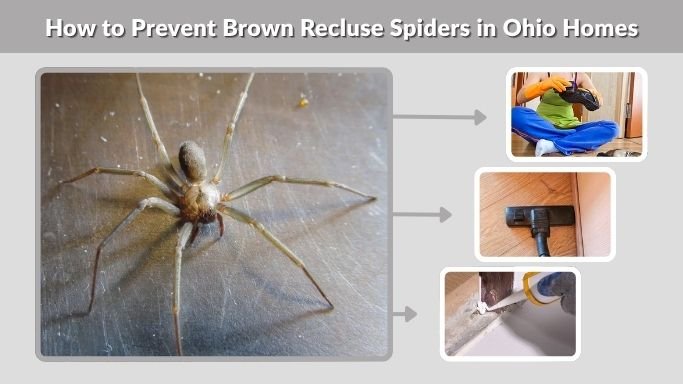
Prevention focuses on reducing hiding places, sealing entry points, and being careful with stored items. Since brown recluses are secretive, clutter control is one of the most useful steps.
Home Prevention Tips
Use these steps to lower the chance of indoor spider problems:
- Remove clutter from basements, closets, and garages.
- Store items in sealed plastic bins instead of cardboard boxes.
- Shake out shoes, gloves, and stored clothing before use.
- Keep beds away from walls if spiders are a concern.
- Avoid leaving clothes on the floor.
- Vacuum corners, baseboards, and storage areas.
- Seal cracks around doors, windows, and foundations.
- Install door sweeps and repair damaged screens.
- Reduce insects that serve as spider prey.
- Wear gloves when moving firewood, boxes, or stored items.
These steps help with brown recluse spiders and many other Ohio house spiders.
Should You Use Pest Control?
If you suspect a brown recluse infestation, identification should come first. A pest control professional or local extension expert may help confirm the spider. Glue traps placed along walls, behind furniture, and in storage areas can help collect specimens.
Professional treatment may be useful when multiple confirmed recluses are found indoors. However, spraying alone is not enough if clutter, insect prey, and hiding places remain.
Safe Cleaning Habits
Be careful when cleaning undisturbed spaces. Wear gloves, long sleeves, and closed shoes. Move boxes slowly and avoid placing your hands into dark gaps without looking first.
If you find a suspected brown recluse, trap it in a container or take a clear photo if safe. Do not handle it with bare hands. A specimen or clear image can help with accurate identification.
FAQs
Does the brown recluse spider live in Ohio?
Yes, brown recluse spiders can be found in Ohio, but they are uncommon and often misidentified. Ohio is near the edge of their range, so they are not common everywhere. Many reports turn out to be wolf spiders, house spiders, or other harmless brown spiders.
Are brown recluse spiders common in Columbus, Cleveland, or Toledo?
They are not considered common statewide, and northern cities such as Cleveland and Toledo are less likely to have established brown recluse populations. However, individual spiders may appear indoors after being transported in boxes, furniture, luggage, or other stored items.
What spider is most often mistaken for a brown recluse in Ohio?
Wolf spiders are among the most common look-alikes. They are brown, fast, and often enter homes. However, wolf spiders are usually larger, hairier, and more patterned than brown recluses. Grass spiders, nursery web spiders, and house spiders are also commonly mistaken for recluses.
What should I do if I find a brown recluse in my Ohio home?
Do not handle it with bare hands. Capture it safely in a container or take a clear photo for identification. Clean cluttered areas, shake out stored clothing, use sealed plastic bins, and place glue traps along walls. If you find several confirmed recluses, contact a professional.
Are brown recluse bites in Ohio dangerous?
They can be serious, but confirmed bites are uncommon. Some bites stay mild, while others may cause blistering, pain, discoloration, or an open sore. Seek medical care if symptoms worsen, redness spreads, the center darkens, or fever, chills, nausea, or severe pain develops.