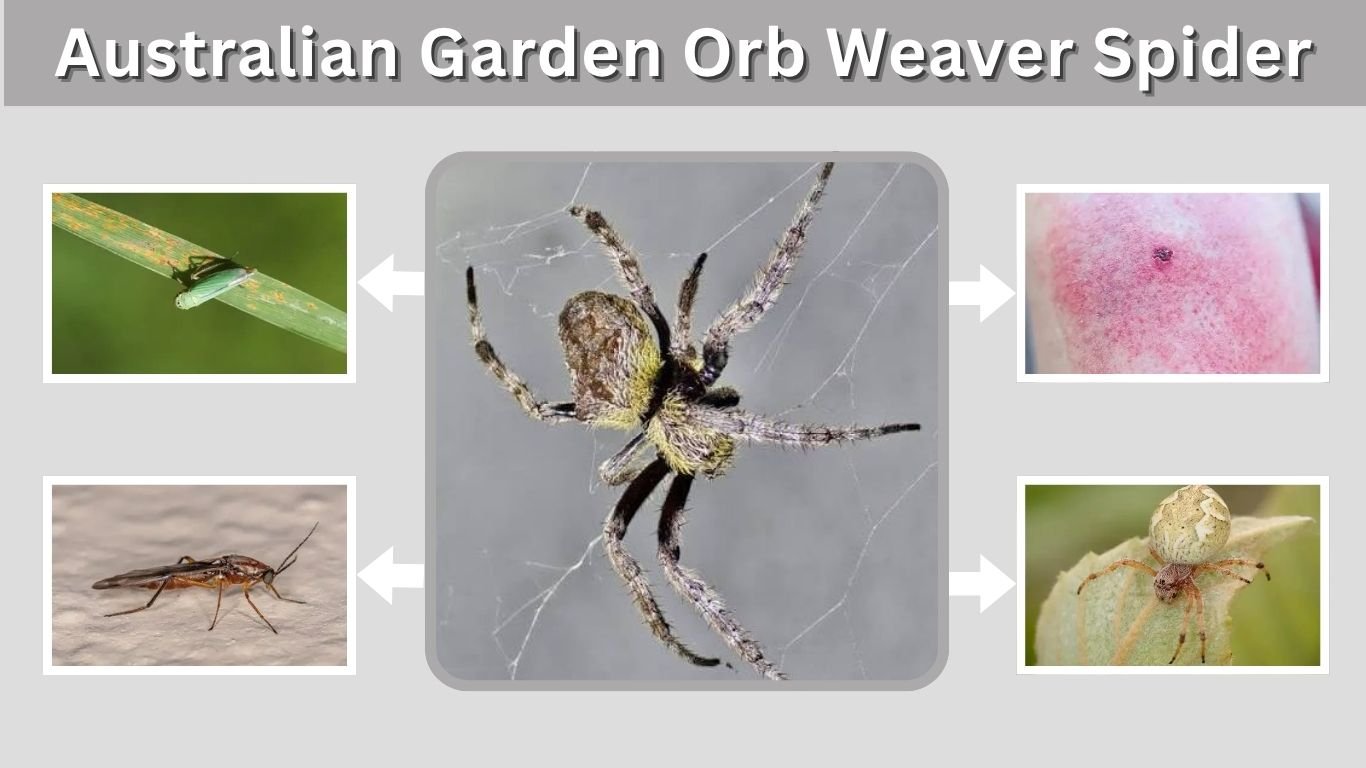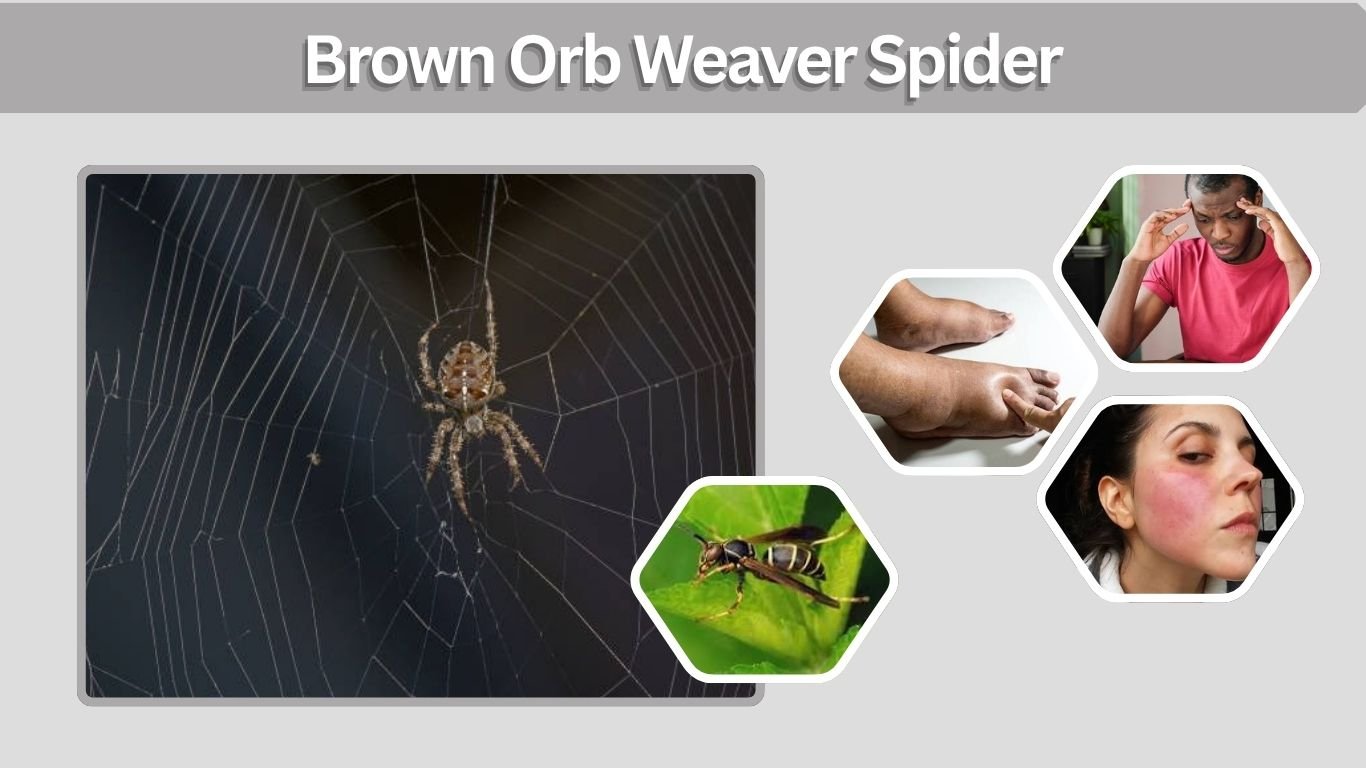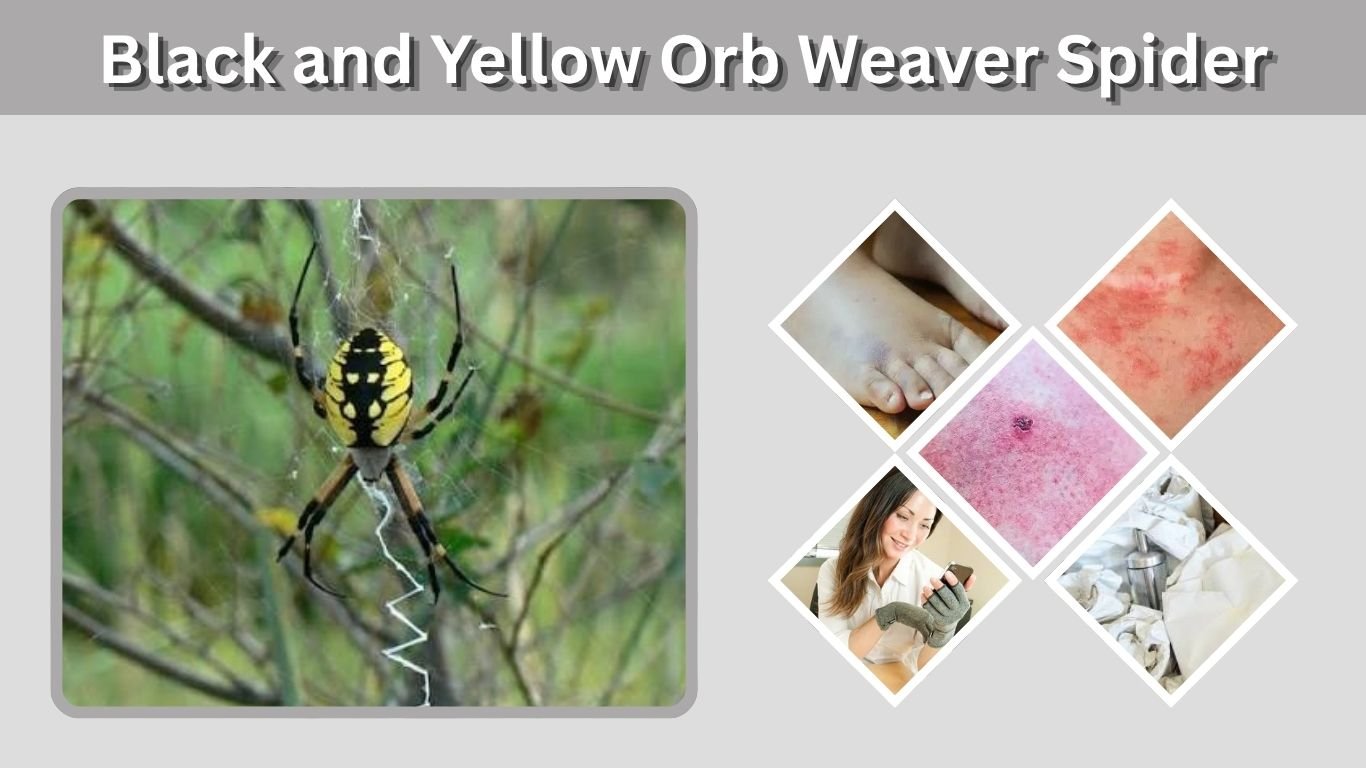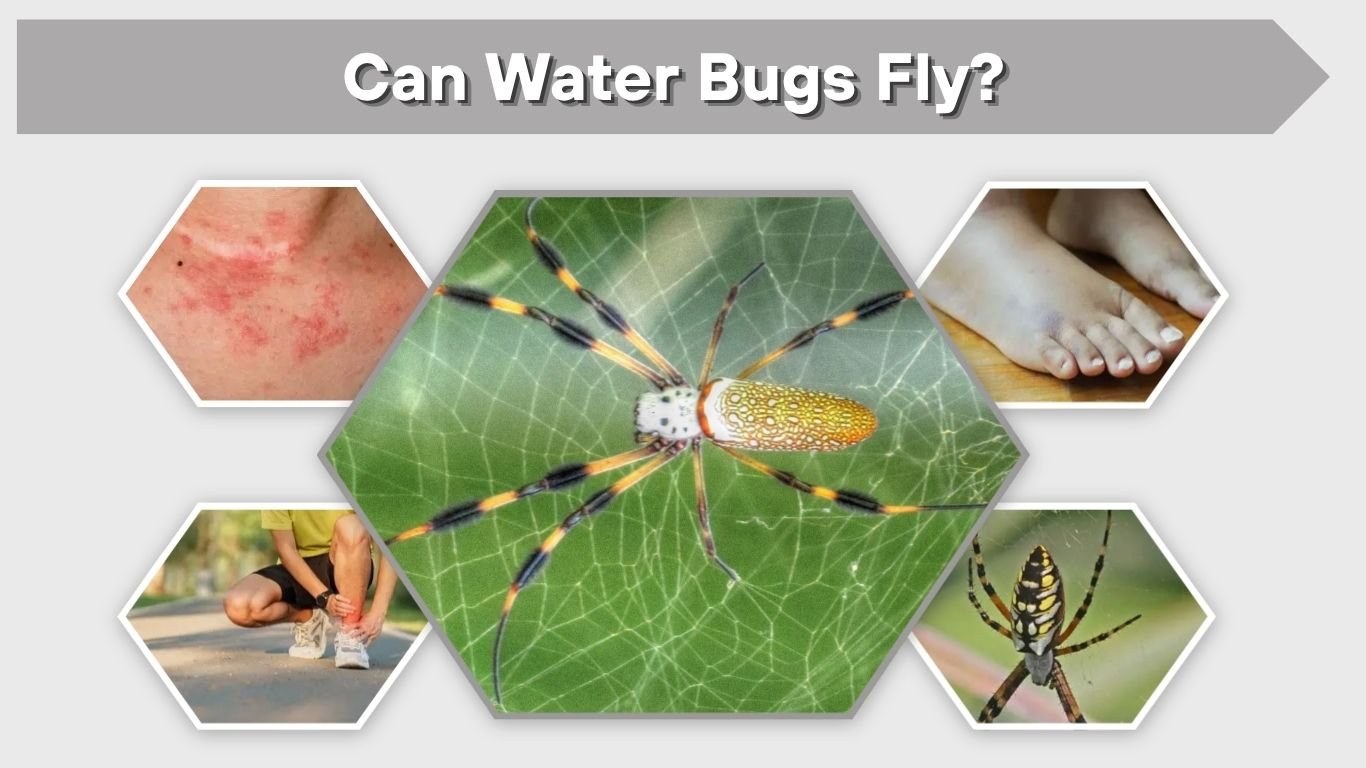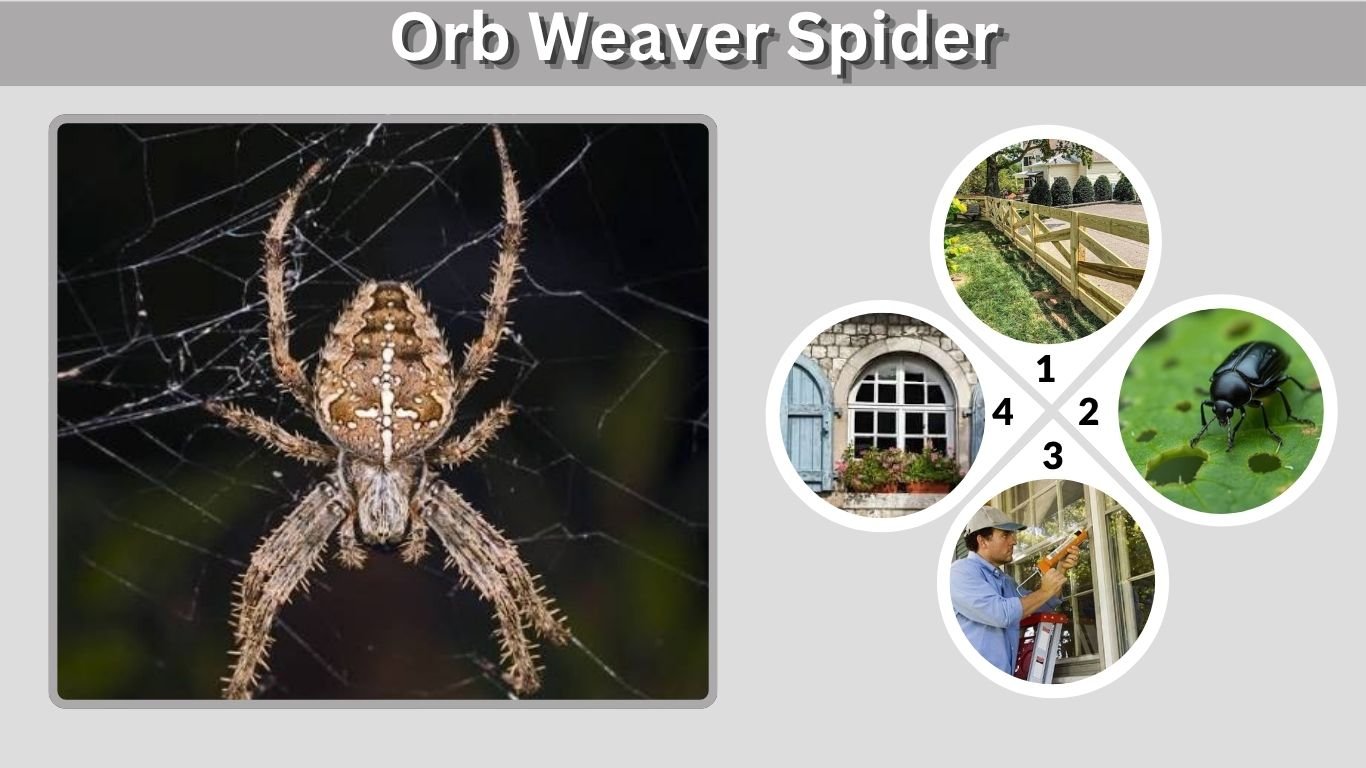
Orb weaver spiders are some of the most recognizable spiders in gardens, forests, fields, and around homes. They are best known for building the classic round, wheel-shaped webs that many people picture when they think of a spider web. The name “orb weaver” does not refer to one single species. It describes a large group of spiders, mostly in the family Araneidae, that build circular prey-catching webs. Most orb weavers are harmless to people, helpful for controlling insects, and fascinating to observe from a safe distance.
What Is an Orb Weaver Spider?
An orb weaver spider is a web-building spider that usually makes a round or spiral web. These spiders may be small, medium, or fairly large, depending on the species. Many have rounded or bulbous abdomens, long legs, and colorful markings. Utah State University Extension describes orb-weaving spiders as small to large spiders that usually have a large, bulbous abdomen and make the classic orb-shaped web.
Orb weavers are not a single type of spider like a black widow or brown recluse. Instead, they include many species, such as garden orb weavers, marbled orb weavers, spiny orb weavers, cross orb weavers, banded garden spiders, and golden orb weavers. Some are plain brown or gray, while others are bright yellow, orange, white, black, or patterned.
Quick Facts About Orb Weaver Spiders
| Feature | Details |
|---|---|
| Common name | Orb weaver spider |
| Spider group | Mostly family Araneidae |
| Size | Small to large, depending on species |
| Web type | Round, wheel-shaped orb web |
| Diet | Flies, moths, mosquitoes, beetles, wasps, and other insects |
| Habitat | Gardens, forests, fields, shrubs, porches, and outdoor lights |
| Danger to humans | Usually low |
| Best known for | Circular web-building |
Orb Weaver Spider Size
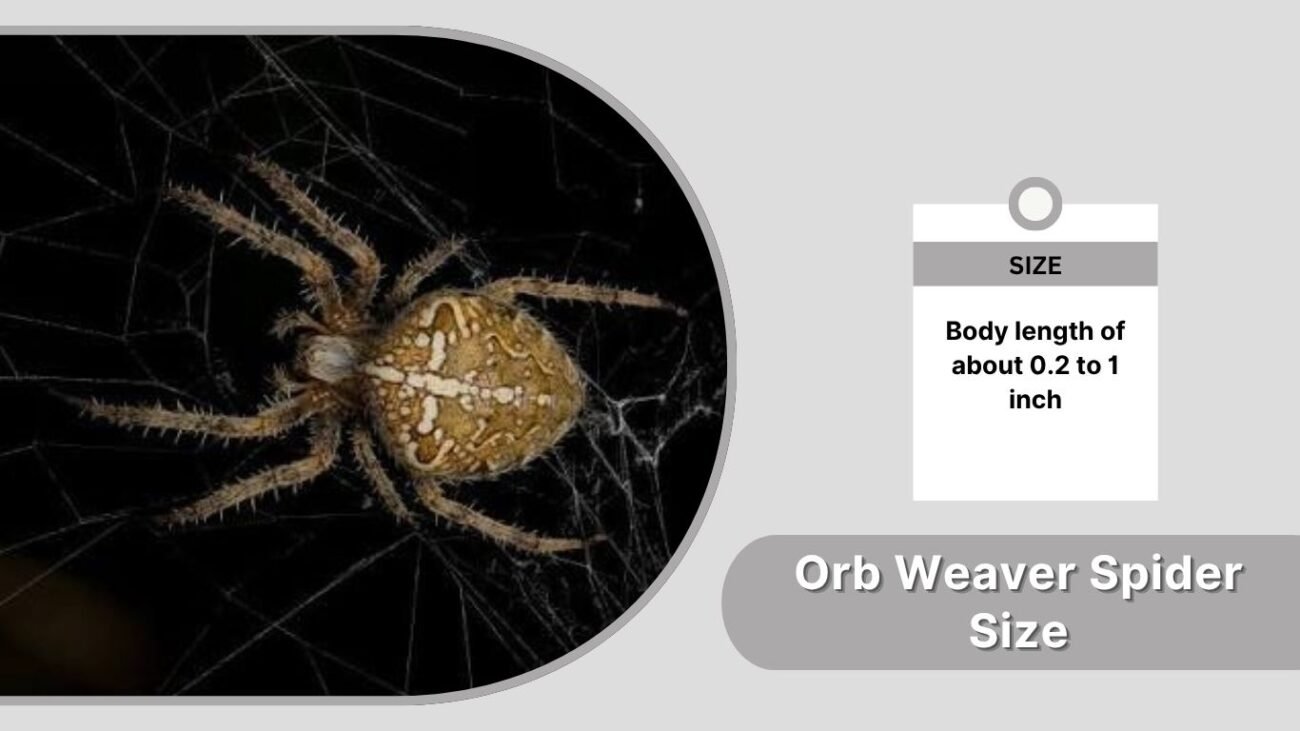
Orb weaver spider size varies a lot because there are many species. Some are tiny and easy to miss, while others are large enough to surprise people when they appear on a porch or between garden plants. In general, females are larger than males. Female orb weavers often have a round, heavy abdomen because they need space for eggs. Males are usually smaller, thinner, and less noticeable.
Many common orb weavers have a body length of about 0.2 to 1 inch. Large species may look much bigger when their legs are included. Golden orb weavers and large garden orb weavers can appear impressive because of their long legs and large webs.
Male vs Female Orb Weaver Size
| Type | Typical Appearance |
|---|---|
| Female orb weaver | Larger body, round abdomen, more visible in web |
| Male orb weaver | Smaller, slimmer, often seen wandering for a mate |
| Juvenile orb weaver | Tiny, pale, and may build small webs |
| Egg-carrying female | Abdomen may look especially swollen |
The female is usually the spider most people notice in a web. Males may stay nearby or move around looking for females. Because males are smaller, they are often mistaken for a different spider species.
Orb Weaver Spider Identification
Orb weavers are often easy to recognize by their webs, but body identification can be harder because many species look different. The most useful clue is the web shape. If the spider is sitting in or near a round, spiral web, it may be an orb weaver.
Most orb weavers have a rounded abdomen, eight long legs, and visible patterns on the body. Some species have stripes, spots, cross-shaped marks, or spines. Spiny orb weavers may have hard, shell-like abdomens with pointed edges. Garden orb weavers may be yellow, black, brown, orange, or silver.
Common ID Signs
- Round or wheel-shaped web
- Spider often sits in the center of the web
- Large, rounded abdomen
- Long legs
- Colorful or patterned body
- Usually found outdoors
- Common near lights where insects gather
- Web often rebuilt or repaired regularly
Orb weavers are commonly confused with other spiders. A spider on the ground without a round web may be harder to identify. Wolf spiders, grass spiders, and funnel weavers may also appear in gardens and around homes, but they do not usually make the same classic circular orb web.
Orb Weaver Spider Habitat
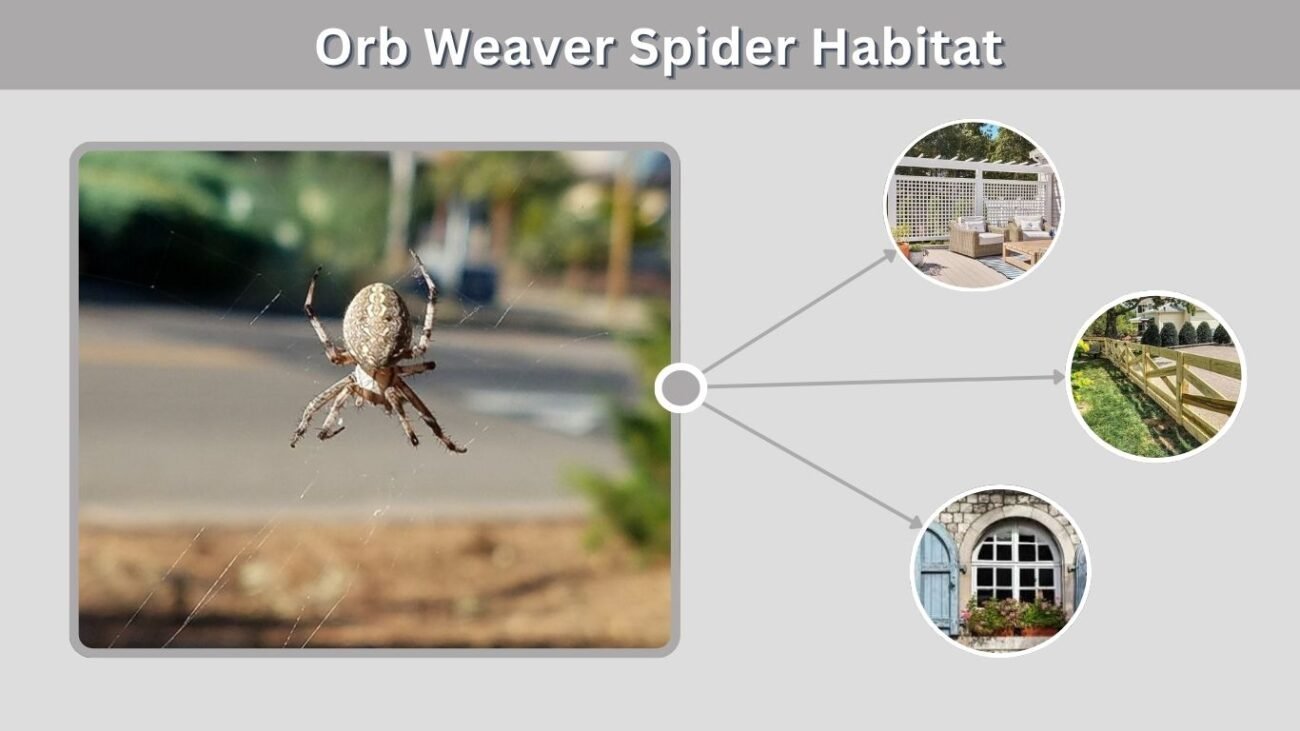
Orb weaver spiders live in many habitats around the world. They are common in gardens, woods, fields, grasslands, orchards, parks, and around houses. They usually choose places where insects fly often and where there are good supports for building webs. RoundGlass Sustain notes that orb-weaving spiders are found worldwide and often prefer less windy places with many insects, such as backyards, gardens, and forests.
Around homes, orb weavers are often found near porch lights, exterior walls, windows, decks, fences, shrubs, sheds, and garden paths. Lights attract insects at night, and insects attract orb weavers. Utah State University Extension also notes that orb weavers are often found around buildings and homes in late summer and early fall, especially near porches, entryways, ornamental plants, and exterior lighting.
Orb Weaver Spider Diet
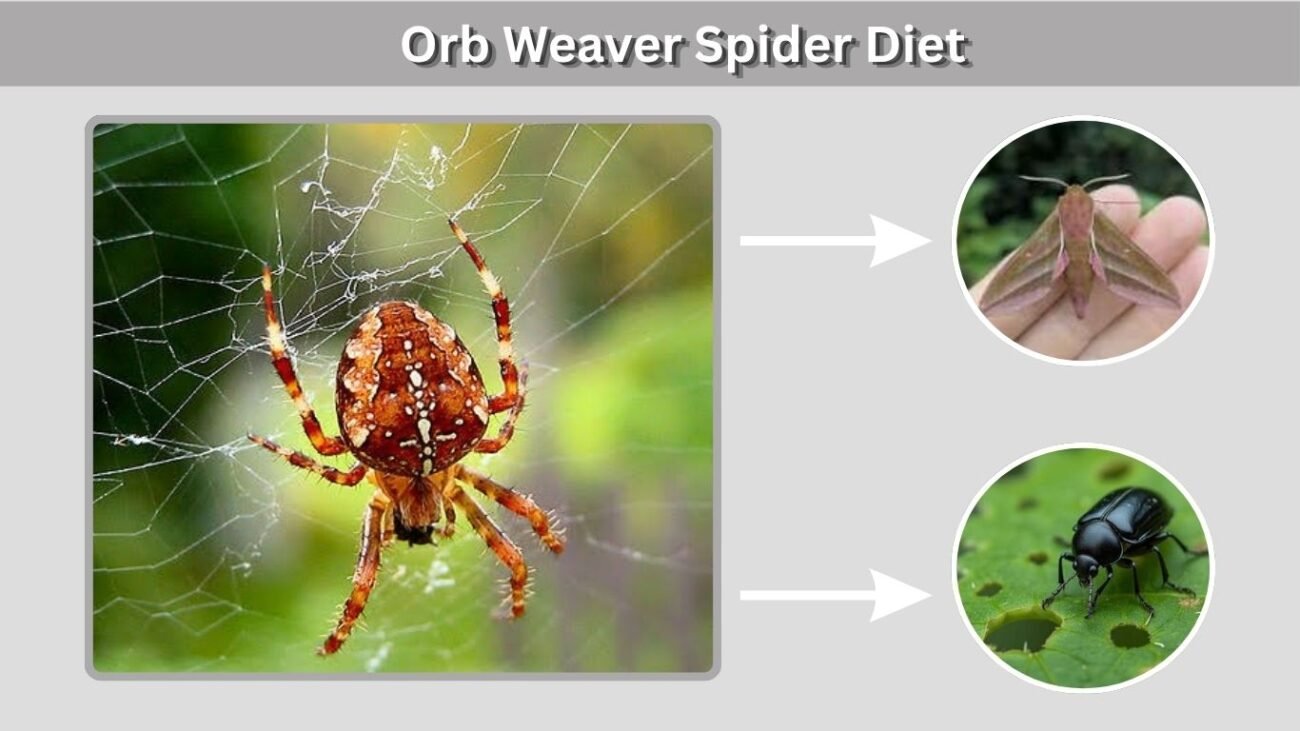
Orb weaver spiders mainly eat insects and other small arthropods. Their diet depends on what gets caught in the web. Common prey includes flies, mosquitoes, moths, beetles, gnats, leafhoppers, small wasps, and flying ants. Utah State University Extension lists their diet as insects and spiders.
Orb weavers are helpful because they reduce insect populations naturally. A single spider may catch many flying insects during its active season. They do not hunt people or pets. They wait in or near the web and respond when prey hits the sticky silk.
When an insect gets stuck, the spider senses the vibration through the web. It may rush toward the prey, bite it, and wrap it in silk. Some prey, especially stinging insects, may be wrapped first before the spider bites. This helps protect the spider from injury.
Orb Weaver Spider Web
The web is the most famous feature of an orb weaver spider. An orb web is usually circular or wheel-shaped, with radial lines spreading from the center and sticky spiral lines used to catch prey. Many orb-weaving spiders build flat webs with sticky spiral capture silk.
The spider often starts by releasing a silk line into the air. When the line catches on another object, the spider strengthens it and begins building the web frame. Then it adds radial lines like spokes on a wheel. After that, it creates a spiral pattern. The sticky outer spiral traps insects, while some inner support lines are not sticky.
Why Orb Weaver Webs Are Special
- They are designed to catch flying insects.
- The sticky spiral holds prey in place.
- The spider senses vibration through the silk.
- Many webs are rebuilt often.
- Some orb weavers eat old silk before making a new web.
- The web may be placed across insect flight paths.
Many orb weavers are active in the evening or at night. Some hide during the day and build a new web at dusk. Others stay in the center of the web during the day, especially if they are well camouflaged.
Orb Weaver Spider Eggs
Female orb weavers lay eggs inside a silk egg sac. The egg sac protects the eggs from weather, drying out, and some predators. Depending on the species, the egg sac may be hidden under leaves, attached to plants, placed near the web, or tucked into a protected corner.
In many temperate areas, adult orb weavers die after the breeding season, but the eggs survive through winter. Utah State University Extension notes that orb weavers die out each year and leave egg sacs behind; the eggs hatch in spring, and the spiderlings disperse.
Young spiderlings are very small when they hatch. They may stay together briefly, then spread out. Some travel by ballooning, which means they release silk into the air and let the wind carry them to new places.
Are Orb Weaver Spiders Poisonous or Dangerous?
Orb weaver spiders have venom because they use it to subdue prey. However, they are not considered dangerous to most people. Their venom is meant for insects, not humans. They are usually shy and prefer to escape rather than bite.
A bite may happen if the spider is handled, squeezed, or trapped against skin. For most people, an orb weaver bite may feel like a mild bee sting or small insect bite. Symptoms may include slight redness, swelling, itching, or local pain.
People with allergies, sensitive skin, or unusual reactions should be more careful. If a bite causes severe pain, spreading swelling, trouble breathing, fever, dizziness, or signs of infection, medical care is needed.
Orb Weaver Spider in House or Garden
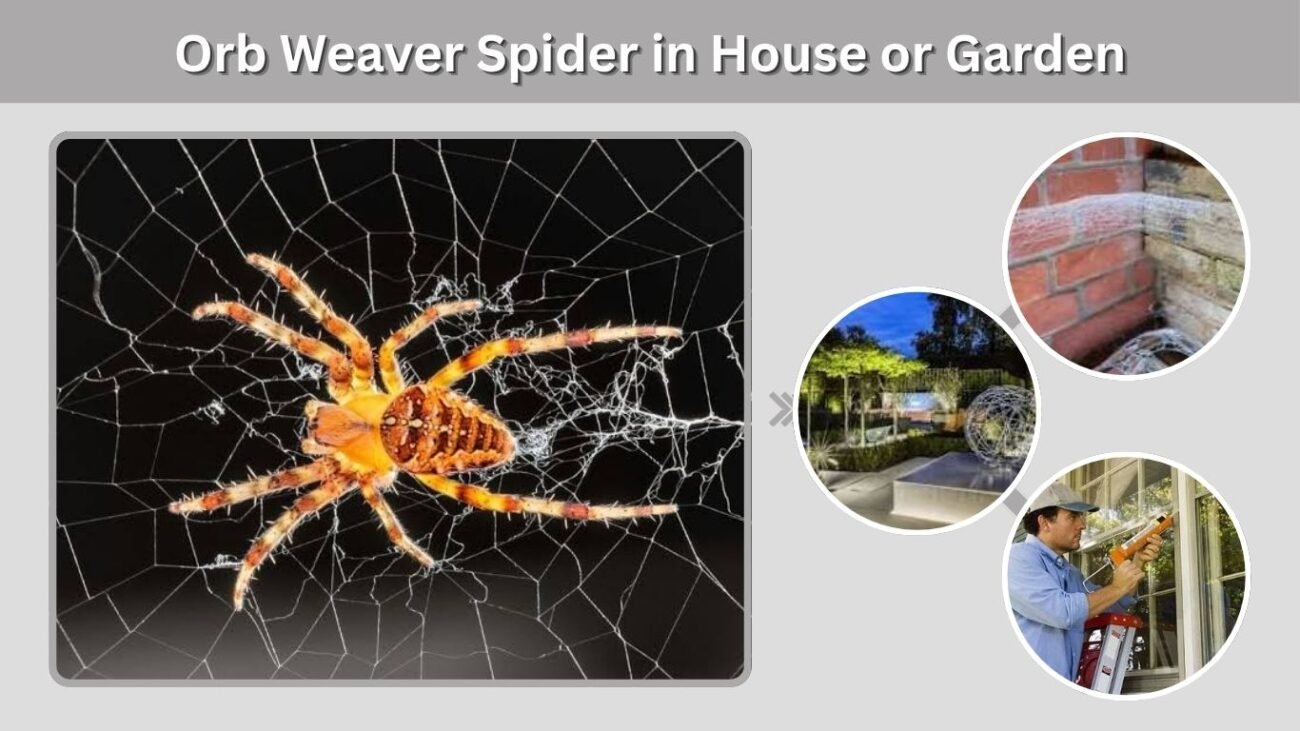
Finding an orb weaver around your home is usually not bad. In fact, it often means the spider is catching insects near lights, doors, plants, or windows. If the web is outside and not blocking a walkway, you can leave it alone. Orb weavers are beneficial garden predators.
If the spider builds a web across a doorway, walkway, or window, gently move it with a broom or long stick. You can also relocate the spider using a cup and paper. Avoid touching it with bare hands.
What to Do If You Find One
- Leave it alone if it is outside and not causing trouble.
- Remove webs from doorways and walkways.
- Turn off unnecessary outdoor lights at night.
- Seal gaps around windows and doors.
- Relocate the spider if needed.
- Avoid using pesticides unless there is a serious pest problem.
Most orb weavers do not want to live inside homes. If one appears indoors, it may have wandered in accidentally. Carefully catch and release it outside.
Orb Weaver Spider Life Cycle
The orb weaver life cycle usually includes egg, spiderling, juvenile, and adult stages. After hatching, spiderlings grow by molting. Each molt allows the spider to become larger. As the spider matures, it begins building larger webs and catching bigger prey.
Mating often occurs when the male finds a female’s web. Because the male is smaller, he must approach carefully. After mating, the female lays eggs in a silk sac. In many species, the adult female dies after laying eggs, while the next generation continues from the egg sac.
How to Attract or Avoid Orb Weavers
Some gardeners like having orb weavers because they help control pests. To attract them, keep a garden with flowering plants, shrubs, and natural hiding places. Avoid unnecessary pesticide use because pesticides can kill spiders and their insect prey.
If you want fewer orb weavers around doors and porches, reduce insect activity. Outdoor lights attract flying insects, which attract spiders. Switching lights off when not needed or using less attractive lighting can help.
Prevention Tips Around the Home
- Keep porch lights off when not needed.
- Remove webs from busy walkways.
- Trim shrubs away from doors.
- Seal gaps around windows.
- Keep outdoor clutter low.
- Clean around exterior walls and entryways.
- Store firewood away from the house.
FAQs
Are orb weaver spiders good to have around?
Yes, orb weaver spiders are usually beneficial. They catch flies, mosquitoes, moths, beetles, and other insects. In gardens, they act like natural pest control.
Do orb weaver spiders bite humans?
Orb weavers can bite, but bites are uncommon. They usually bite only if handled, squeezed, or trapped against skin. Most bites are mild for healthy adults.
Why do orb weavers build webs at night?
Many orb weavers are active in the evening or at night because many flying insects are active then. Some species build or repair webs at dusk and rest during the day.
How long do orb weaver spiders live?
Many common orb weavers live for one season. They hatch, grow, mate, lay eggs, and die, while the eggs survive for the next generation. Some species in warmer climates may have different timing.
Should I remove an orb weaver spider web?
Remove the web if it blocks a doorway, window, path, or area where people walk. If the web is in a garden or quiet corner, it is usually better to leave it because the spider helps catch insects.