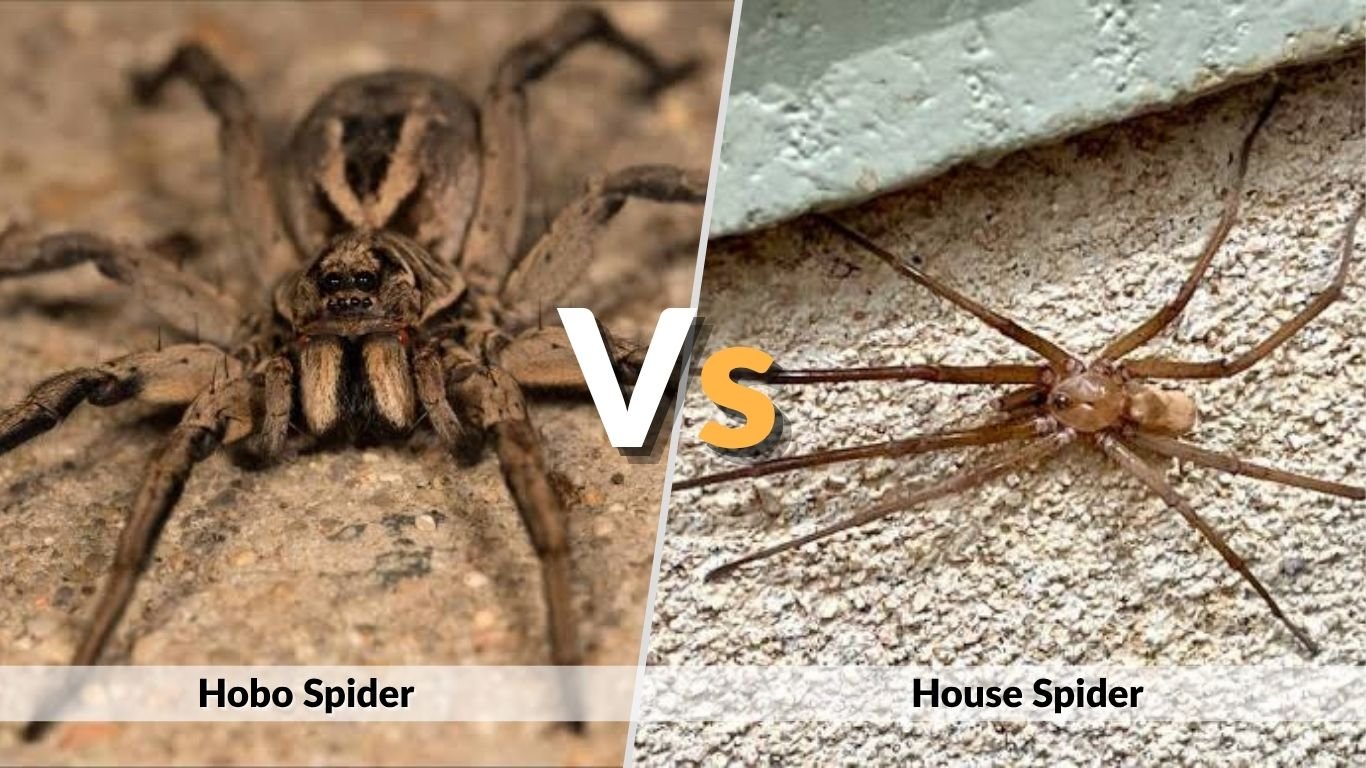
Hobo spiders and house spiders are often confused because many indoor spiders are brown, fast-moving, and found in basements, garages, or corners. The confusion becomes even stronger with the giant house spider, which looks very similar to the hobo spider. This guide explains how hobo spiders compare with common house spiders, giant house spiders, domestic house spiders, and other brown indoor spiders using size, color, web type, habitat, behavior, and bite risk.
Hobo Spider vs House Spider: Quick Comparison
A hobo spider is one specific species, currently called Eratigena agrestis. “House spider” is a broad common name that may refer to several indoor spiders, including the common house spider, domestic house spider, barn funnel weaver, or giant house spider. The hobo spider was formerly known as Tegenaria agrestis, and many older resources still use that name.
| Feature | Hobo Spider | House Spider |
| Meaning | One specific spider species | General name for many indoor spiders |
| Scientific name | Eratigena agrestis | Varies by species |
| Color | Brown to gray-brown | Brown, tan, yellowish, gray, or dark |
| Web type | Funnel or sheet-like web | Cobweb, funnel web, sheet web, or messy web |
| Common location | Basements, garages, foundations, ground-level areas | Corners, ceilings, windows, basements, garages |
| Bite concern | Not considered medically important by current extension sources | Most are harmless to people |
The Biggest Difference
The biggest difference is that “hobo spider” names a specific funnel-weaving spider, while “house spider” is not a single species. So when someone says “house spider,” they may mean a harmless cobweb spider, a giant house spider, a domestic house spider, or another indoor spider.
Why People Confuse Them
People confuse them because both may appear indoors and both can be brown. Hobo spiders are also difficult to identify by appearance alone. Utah State University Extension notes that many spiders resemble hobo spiders and nonexperts are unlikely to identify them correctly.
What Is a Hobo Spider?
The hobo spider is a funnel-weaving spider in the family Agelenidae. It builds sheet-like funnel webs and waits for insects to move across the web surface. It is not the same as the medically serious Australian funnel-web spider.
UC IPM describes the hobo spider as Eratigena agrestis, formerly Tegenaria agrestis, and says it is a European immigrant species established in parts of western North America.
Hobo Spider Identification
Common hobo spider features include:
- Brown to gray-brown body
- Long, fairly plain legs
- Mottled abdomen with faint chevron-like markings
- Funnel or sheet-like web near the floor
- Fast movement when disturbed
- Often seen in late summer or fall
However, these clues are not enough for a guaranteed ID. Hobo spiders can look almost identical to giant house spiders and other funnel-weavers.
Hobo Spider Size
Adult hobo spiders are medium-sized. Utah State University Extension lists mature females at about 9.5–16.5 mm in body length and males at about 7–13.5 mm. The leg span can make them look larger than their actual body size.
What Is a House Spider?
A house spider is any spider commonly found in or around homes. In the United States, the phrase “common house spider” often refers to Parasteatoda tepidariorum, a cobweb spider. Penn State Extension describes this species as widely distributed throughout much of the world and extremely common in barns and houses.
Common House Spider Identification
The common house spider is usually smaller and rounder than a hobo spider. It often makes messy cobwebs in corners, windows, garages, and sheds.
Common features include:
- Small to medium body
- Rounded abdomen
- Tan, brown, yellowish, or grayish color
- Messy cobweb instead of a flat funnel web
- Often found higher in corners or near windows
- Usually stays close to its web
Is Every Brown Indoor Spider a House Spider?
No. Many brown spiders enter homes, including wolf spiders, cellar spiders, domestic house spiders, barn funnel weavers, hobo spiders, and giant house spiders. A brown spider in the house should not automatically be called a hobo spider.
Hobo Spider vs Giant House Spider
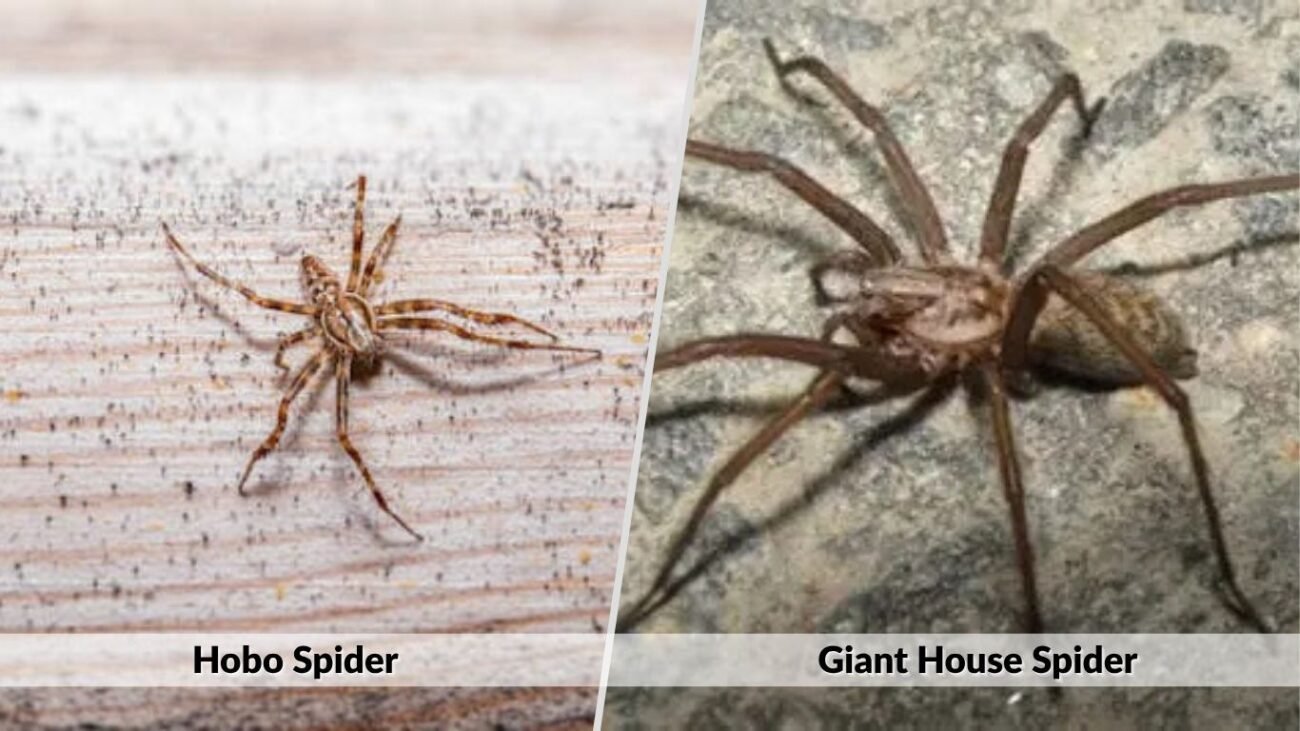
The giant house spider is one of the most important hobo spider look-alikes. It belongs to the same broader group of funnel-weaving spiders, and it can be found in similar areas. BugGuide notes that Eratigena duellica, a giant house spider species, is more common in coastal locations, while hobo spiders dominate more interior locations.
| Feature | Hobo Spider | Giant House Spider |
| Scientific name | Eratigena agrestis | Often Eratigena duellica or related giant house spider species |
| Size | Medium | Usually larger-looking |
| Legs | Long, plain brown legs | Very long legs, often giving a larger appearance |
| Web | Funnel or sheet web | Funnel or sheet web |
| Indoor sightings | Basements, garages, ground-level rooms | Homes, garages, sheds, dark corners |
| Danger level | Not considered medically important | Not considered dangerous to humans |
Size Difference
The giant house spider usually looks larger because of its very long legs. A hobo spider can still look big indoors, but a giant house spider often appears more stretched out and leggy.
Color and Markings
Both are brown and patterned, so color is not a reliable way to separate them. Giant house spiders may have long legs and a patterned abdomen, while hobo spiders may have muted chevron-like abdominal markings. Still, the difference is difficult without close examination.
Web and Habitat Difference
Both spiders make funnel-like webs in hidden areas. This is why web shape alone may not separate them. If the spider is in a basement, garage, or wall-floor junction, either spider is possible depending on region.
Hobo Spider vs Common House Spider
The common house spider is usually easier to separate from a hobo spider than the giant house spider is. The main difference is web type and body shape. Common house spiders are cobweb spiders, while hobo spiders are funnel-weavers.
| Feature | Hobo Spider | Common House Spider |
| Common scientific name | Eratigena agrestis | Parasteatoda tepidariorum |
| Family | Agelenidae | Theridiidae |
| Body shape | Longer, flatter-looking | Rounder abdomen |
| Web | Sheet-like funnel web | Messy cobweb |
| Movement | Fast runner | Usually stays in web |
| Common area | Floors, basements, garages | Corners, windows, ceilings, sheds |
Web Type
A hobo spider web is usually more sheet-like, with a retreat area where the spider hides. A common house spider web is messier and more irregular. This is one of the easiest clues for homeowners.
Body Shape
Hobo spiders have a longer, more ground-running appearance. Common house spiders often look rounder because of their bulb-shaped abdomen. If the spider is hanging in a messy corner web, it is more likely a common house spider than a hobo spider.
Hobo Spider vs Domestic House Spider
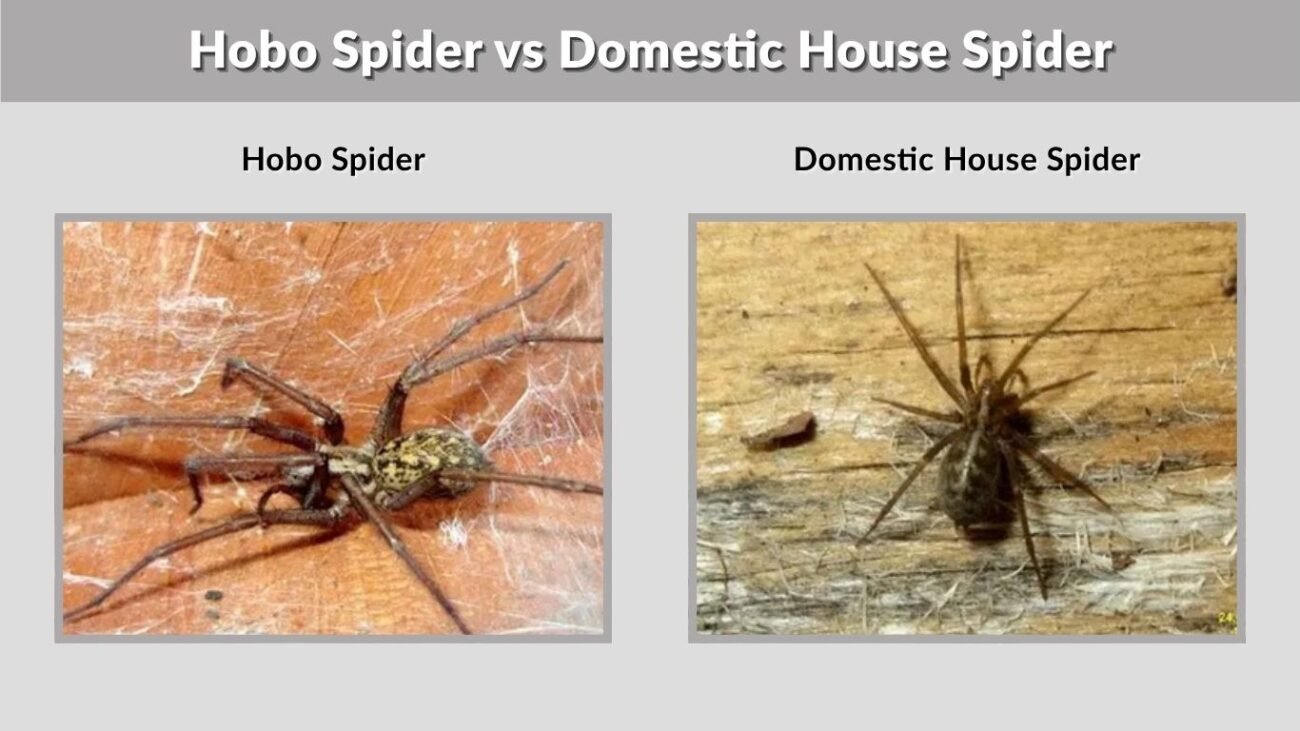
The domestic house spider, also called Tegenaria domestica in some regions, is another funnel-weaving spider that may be found in homes and outbuildings. NatureSpot describes the domestic house spider as fairly large, hairy, long-legged, and variable in color from pale to dark brown. It also notes that mature specimens may require genital examination for confirmation.
Why This Comparison Is Confusing
The domestic house spider and hobo spider are both brown funnel-weavers. Both may build webs in homes, garages, or outbuildings. Both can have long legs and similar markings. For most homeowners, it is better to identify them as “funnel-weaving house spiders” unless an expert confirms the species.
Simple Field Clues
You may suspect a domestic house spider if the spider is in a classic indoor corner funnel web and has more obvious banding or patterning on the legs. You may suspect a hobo spider if you are in a known hobo spider region and the spider is found near ground level in late summer or fall. These clues are not proof.
Habitat and Range Differences
Habitat can help narrow the identification. Hobo spiders are mostly associated with parts of the Pacific Northwest and western North America. UC IPM lists their range from British Columbia east to Montana, Wyoming, and Colorado, and south through Oregon and northern Utah.
House spiders, by contrast, can be found much more widely. The common house spider is widespread and commonly lives around human structures.
Where Hobo Spiders Are Found
Hobo spiders may live in:
- Basements
- Garages
- Crawl spaces
- Window wells
- Foundation cracks
- Wood piles
- Flower beds
- Ground-level corners
Where House Spiders Are Found
House spiders may live in:
- Ceiling corners
- Window frames
- Behind furniture
- Garages and sheds
- Basements
- Porches
- Barns and storage rooms
Bite Risk: Which One Is More Dangerous?
Most house spiders are not dangerous to people. Hobo spiders also have a worse reputation than current evidence supports. Montana State University Extension states that there is no conclusive evidence that hobo spider venom causes necrosis in humans, and Utah State University Extension says there is no significant scientific evidence that hobo spiders have a necrotic bite.
Are Hobo Spiders Aggressive?
No. The old name “aggressive house spider” is misleading. Hobo spiders may run quickly, but fast movement is not aggression. Like most spiders, they usually bite only if trapped, pressed against skin, or threatened.
Can House Spiders Bite?
Some house spiders can bite, but bites are uncommon. Most indoor spiders avoid people and prefer to stay hidden or remain near their webs. If a bite-like wound becomes painful, swollen, infected, or slow to heal, it is better to seek medical advice instead of assuming a spider caused it.
How to Tell Them Apart at Home
You may not be able to identify the exact species without expert help, but you can use practical clues to narrow it down.
Check the Web
If the web is flat, sheet-like, and has a funnel retreat near the floor, the spider may be a hobo spider, giant house spider, domestic house spider, or another funnel-weaver. If the web is messy and tangled in a corner, it is more likely a common house spider.
Check the Location
A fast brown spider running across a basement floor may be a hobo spider or giant house spider. A small spider hanging in a corner cobweb is usually not a hobo spider.
Check the Region
If you live outside the known hobo spider range, a brown indoor spider is less likely to be a hobo spider. Region matters more than color alone.
How to Keep Hobo Spiders and House Spiders Out
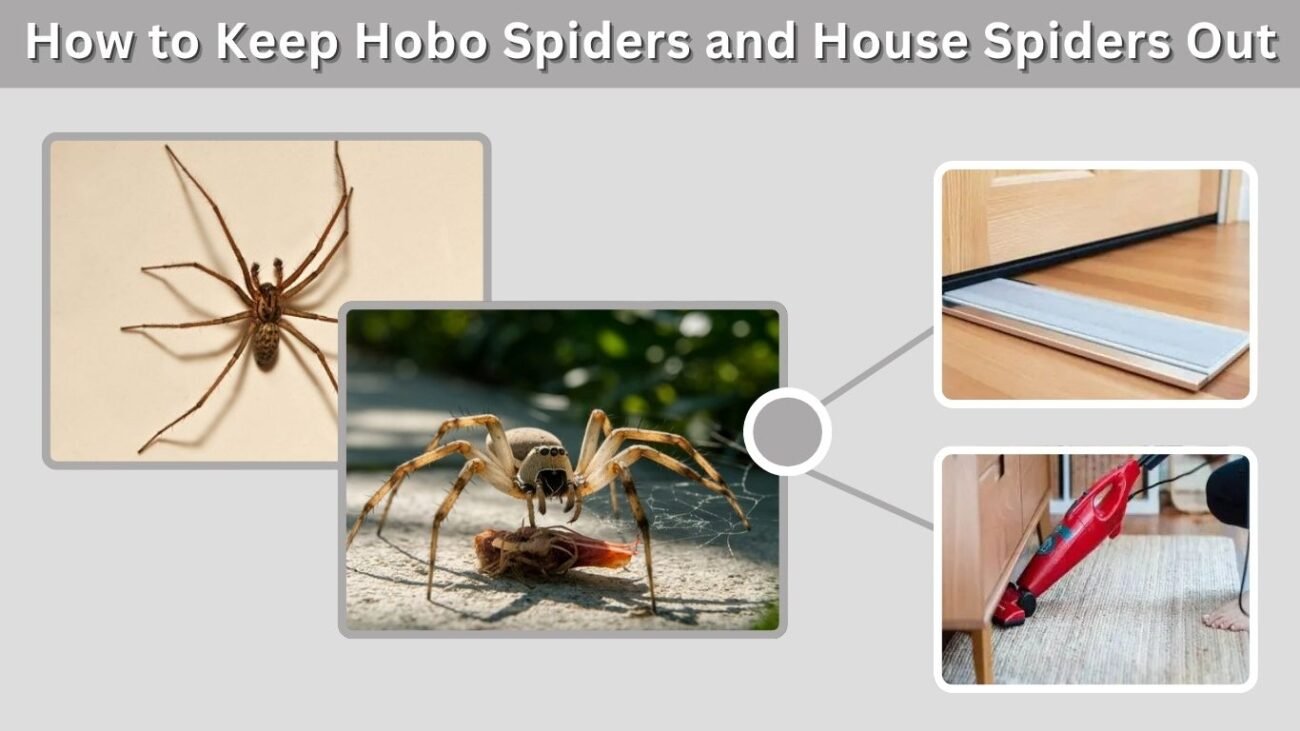
The same prevention steps work for both hobo spiders and house spiders. Focus on sealing entry points, reducing hiding places, and removing webs.
Use these prevention tips:
- Seal cracks around doors, windows, and foundations
- Install door sweeps
- Repair damaged window screens
- Vacuum webs, egg sacs, and corners
- Reduce clutter in basements and garages
- Move firewood and debris away from the house
- Keep storage boxes off the floor
- Use sticky traps in basements or garages for monitoring
FAQs
Is a hobo spider the same as a house spider?
No. A hobo spider is one specific species, while “house spider” is a broad name for many spiders that live indoors or around buildings.
How can I tell a hobo spider from a giant house spider?
It is very difficult by sight alone. Giant house spiders often look larger and leggier, but both are brown funnel-weavers with similar webs. Expert identification may be needed.
Is the aggressive house spider the same as the hobo spider?
Yes. “Aggressive house spider” is an older misleading name that has been used for the hobo spider. The spider is not considered aggressive toward people.
Are hobo spiders more dangerous than house spiders?
Current extension sources do not consider hobo spiders medically important, and most house spiders are also harmless. Hobo spiders can bite defensively, but serious wounds are not supported by strong evidence.
What is the easiest clue for hobo spiders vs common house spiders?
The easiest clue is the web. Hobo spiders make sheet-like funnel webs, while common house spiders usually make messy cobwebs in corners, windows, or sheltered indoor areas.