Ravens are some of the most intelligent and fascinating birds in the world. Known for their deep black feathers, strong beaks, and clever behavior, they can be found in many different habitats across the globe.
In this guide, you’ll discover 9 types of raven birds, each with its own unique features. For each type, we also include a simple identification section to help you recognize them easily. Whether you’re a birdwatcher or just curious about these amazing creatures, this guide will give you a clear and easy-to-read overview.
Let’s get started!
1. Common Raven

The Common Raven (Corvus corax) is one of the largest raven species. It is known for its intelligence and adaptability. You can find them across forests, mountains, deserts, and coastlines.
These birds are highly social. They often move in pairs or small groups. Common Ravens eat a wide variety of food. Their diet includes fruits, small animals, carrion, and even garbage in cities.
They are playful and smart. You might see them doing flips and rolls while flying. Common Ravens form strong bonds and can live for more than 10 years in the wild.
Identification
- Size: 24 to 27 inches long.
- Wingspan: Up to 4 feet.
- Color: All-black body with a slight blue or purple sheen in sunlight.
- Beak: Large, thick, and slightly curved.
- Neck: Thick with shaggy throat feathers.
- Tail: Wedge-shaped when spread during flight.
- Flight: Strong and steady, often with acrobatic moves.
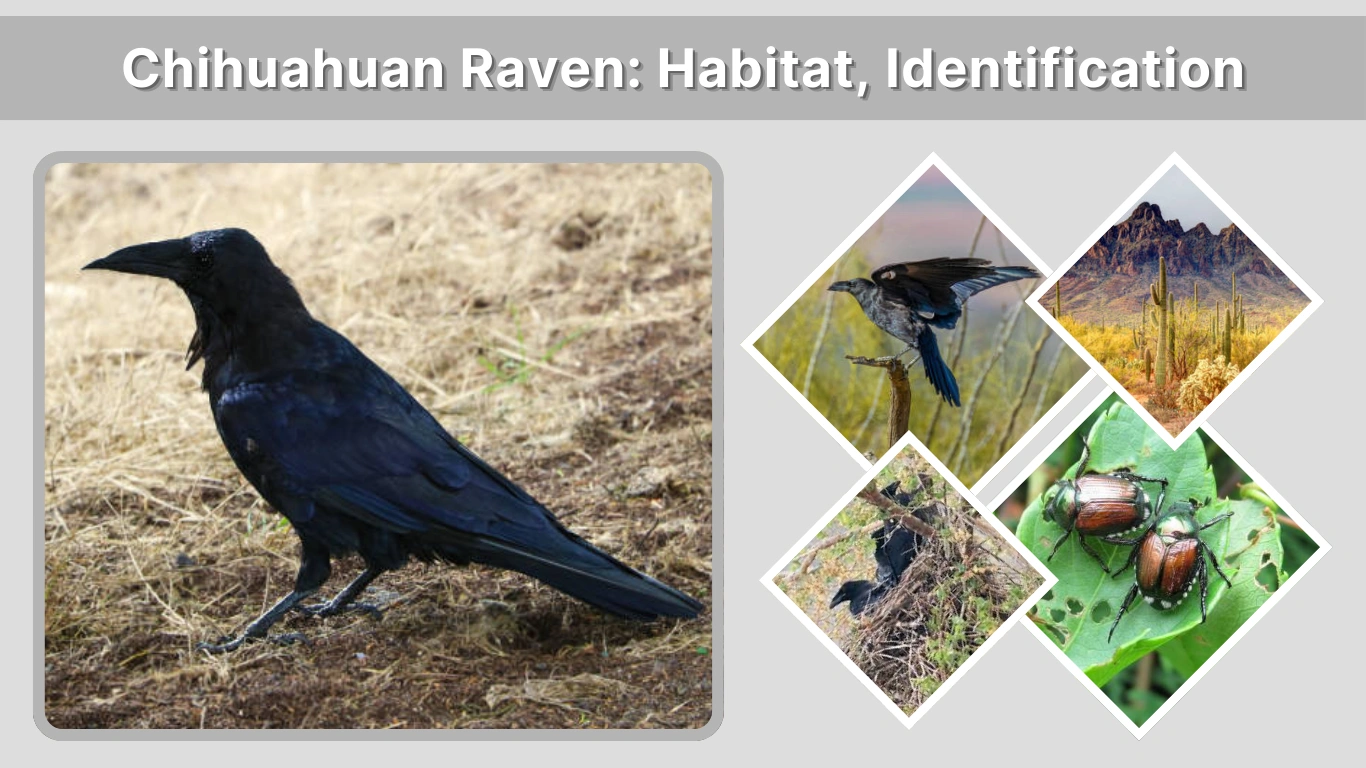
2. Chihuahuan Raven

The Chihuahuan Raven (Corvus cryptoleucus) is a medium-sized raven found mainly in the southwestern United States and northern Mexico. It prefers dry, open areas like deserts and grasslands.
These ravens are very social. They often form large flocks, especially outside the breeding season. Their calls are higher-pitched compared to the Common Raven. They mostly feed on insects, grains, and small animals.
The Chihuahuan Raven is often confused with the American Crow but is slightly larger and has some key differences.
Identification
- Size: About 18 to 20 inches long.
- Wingspan: Around 40 inches.
- Color: Entirely black with a slight greenish or purple gloss.
- Beak: Thick and slightly curved.
- Neck: Noticeable white feather bases (only visible when feathers are ruffled).
- Tail: Slightly rounded when spread.
- Habitat: Dry deserts, grasslands, and open country.
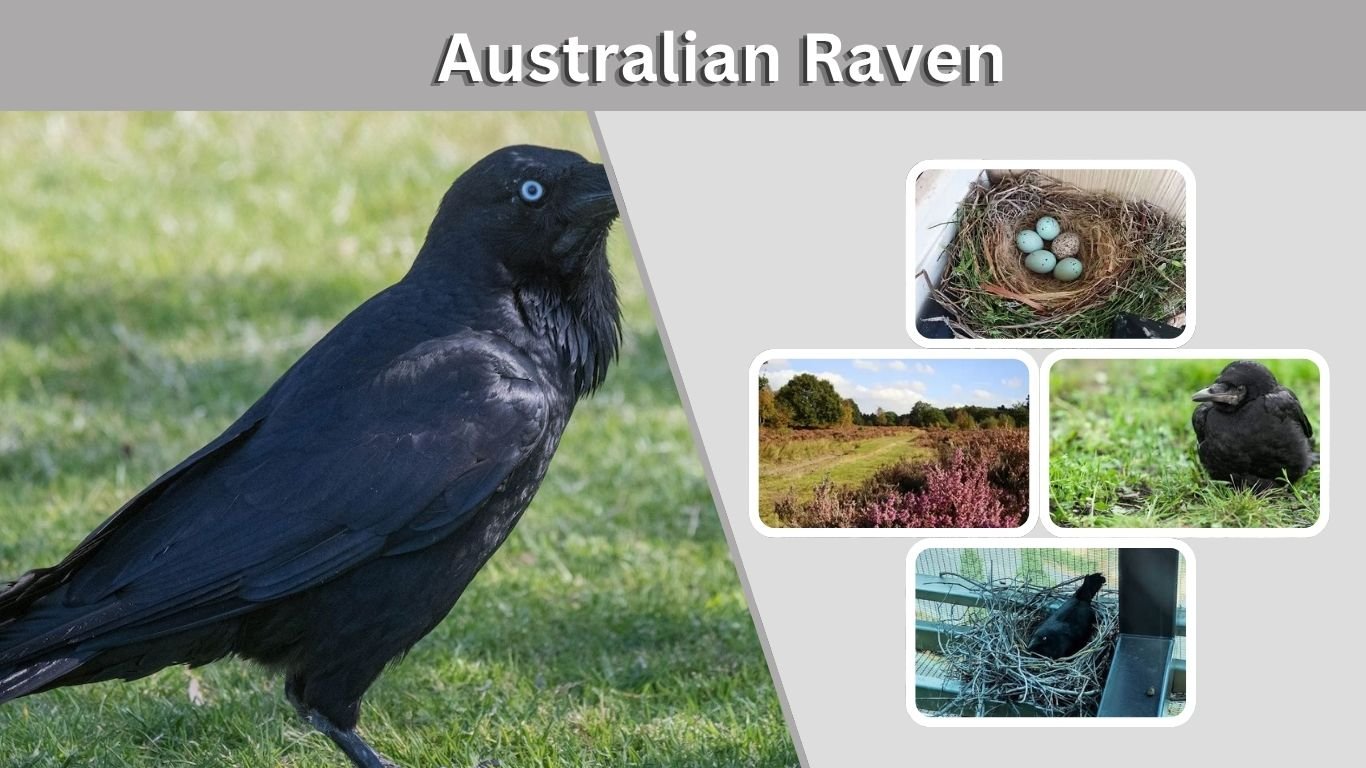
3. Australian Raven

The Australian Raven (Corvus coronoides) is native to much of Australia. It thrives in a variety of habitats, from forests and farmlands to urban areas.
This raven is known for its loud, wailing call that sounds like a crying baby. They are very intelligent and can adapt easily to human environments. Australian Ravens feed on insects, fruits, small animals, and food scraps.
They often travel alone or in small groups and are very protective during breeding season.
Identification
- Size: About 19 to 22 inches long.
- Wingspan: Around 39 inches.
- Color: All black with glossy feathers.
- Beak: Strong and slightly curved, pale at the base in adults.
- Neck: Thick with shaggy throat feathers.
- Eyes: Bright white (a key feature).
- Call: Loud, drawn-out wailing sound.
4. Little Raven

The Little Raven (Corvus mellori) is another native bird of Australia. It is smaller than the Australian Raven and often found in open woodlands, farmlands, and coastal areas.
They are very social birds. Little Ravens often gather in large flocks, especially outside of breeding season. They feed on insects, seeds, fruits, and carrion.
Their call is a series of short, harsh “caw” sounds, softer than the Australian Raven’s cry.
Identification
- Size: About 18 to 20 inches long.
- Wingspan: Around 36 to 40 inches.
- Color: All-black plumage with a faint blue sheen.
- Beak: Shorter and more slender compared to other ravens.
- Neck: Slightly shaggy feathers.
- Eyes: Pale white in adults.
- Call: Short and rough “caw” notes.
5. Forest Raven

The Forest Raven (Corvus tasmanicus) is found in Tasmania and parts of southern Australia. It prefers dense forests, coastal cliffs, and mountain areas.
Forest Ravens are often seen alone or in pairs. They have a deep, croaking call and feed on insects, small animals, fruits, and carrion. They are strong fliers and can glide smoothly over forests.
They are similar to the Australian Raven but slightly stockier and darker.
Identification
- Size: About 20 to 22 inches long.
- Wingspan: Up to 39 inches.
- Color: Deep black with a bluish gloss.
- Beak: Large and strong, fully black.
- Neck: Thick with shaggy throat feathers.
- Tail: Rounded when spread.
- Call: Deep, harsh croaks.
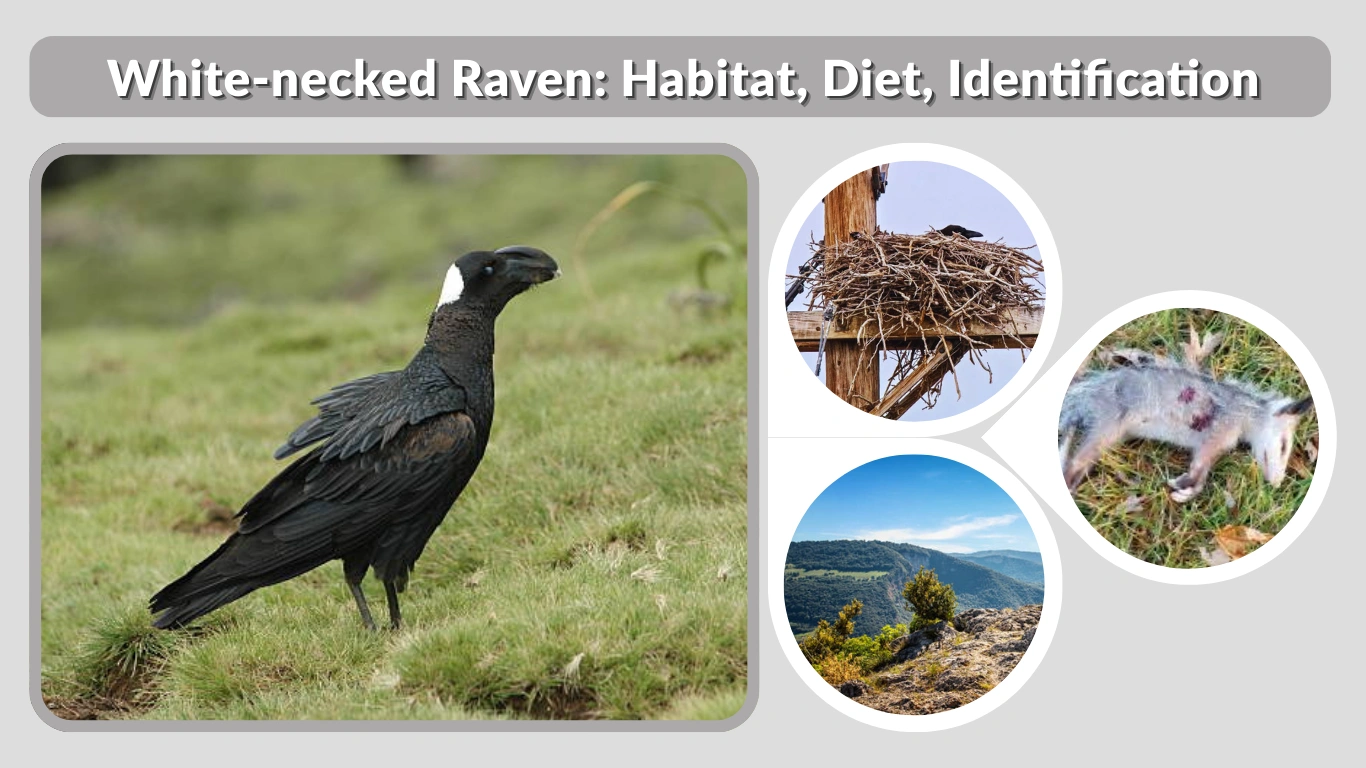
6. White-necked Raven

The White-necked Raven (Corvus albicollis) is native to eastern and southern Africa. It lives in mountains, cliffs, and rocky regions.
These ravens are very smart and known for dropping hard-shelled prey from heights to crack them open. They are slightly smaller than the Common Raven but still very powerful.
They are easily recognized by the white patch on their neck.
Identification
- Size: About 18 to 20 inches long.
- Wingspan: Around 40 inches.
- Color: Black with a noticeable white patch on the back of the neck.
- Beak: Thick, short, and strongly curved.
- Neck: White-feathered patch behind the head.
- Tail: Slightly rounded.
- Call: Hoarse and guttural sounds.
7. Brown-necked Raven

The Brown-necked Raven (Corvus ruficollis) is found across North Africa, the Middle East, and parts of Central Asia. It prefers desert and arid regions.
They are lighter and smaller than the Common Raven. Their calls are rough and croaky, and they often scavenge around human settlements.
The brown feathers on the neck are a key feature, especially noticeable in good light.
Identification
- Size: About 19 to 21 inches long.
- Wingspan: Around 41 inches.
- Color: Mostly black with brownish feathers on the neck.
- Beak: Stout and slightly curved.
- Neck: Brown-tinged, especially around the throat and back.
- Tail: Wedge-shaped like the Common Raven.
- Habitat: Deserts, dry plains, and rocky areas.
8. Fan-tailed Raven

The Fan-tailed Raven (Corvus rhipidurus) is a smaller raven found across North Africa and the Middle East. It prefers deserts, dry hills, and rocky cliffs.
These ravens are very agile fliers. They often soar like hawks and are well adapted to the hot, dry environment. Their call is a sharp and harsh croak.
Fan-tailed Ravens often feed on insects, small animals, and scraps near human settlements.
Identification
- Size: About 18 to 20 inches long.
- Wingspan: Around 38 to 40 inches.
- Color: Glossy black with a slight bluish shine.
- Beak: Short and slightly curved.
- Neck: Smooth without heavy shaggy feathers.
- Tail: Short and fan-shaped (not wedge-shaped like many other ravens).
- Flight: Soaring and gliding often seen.
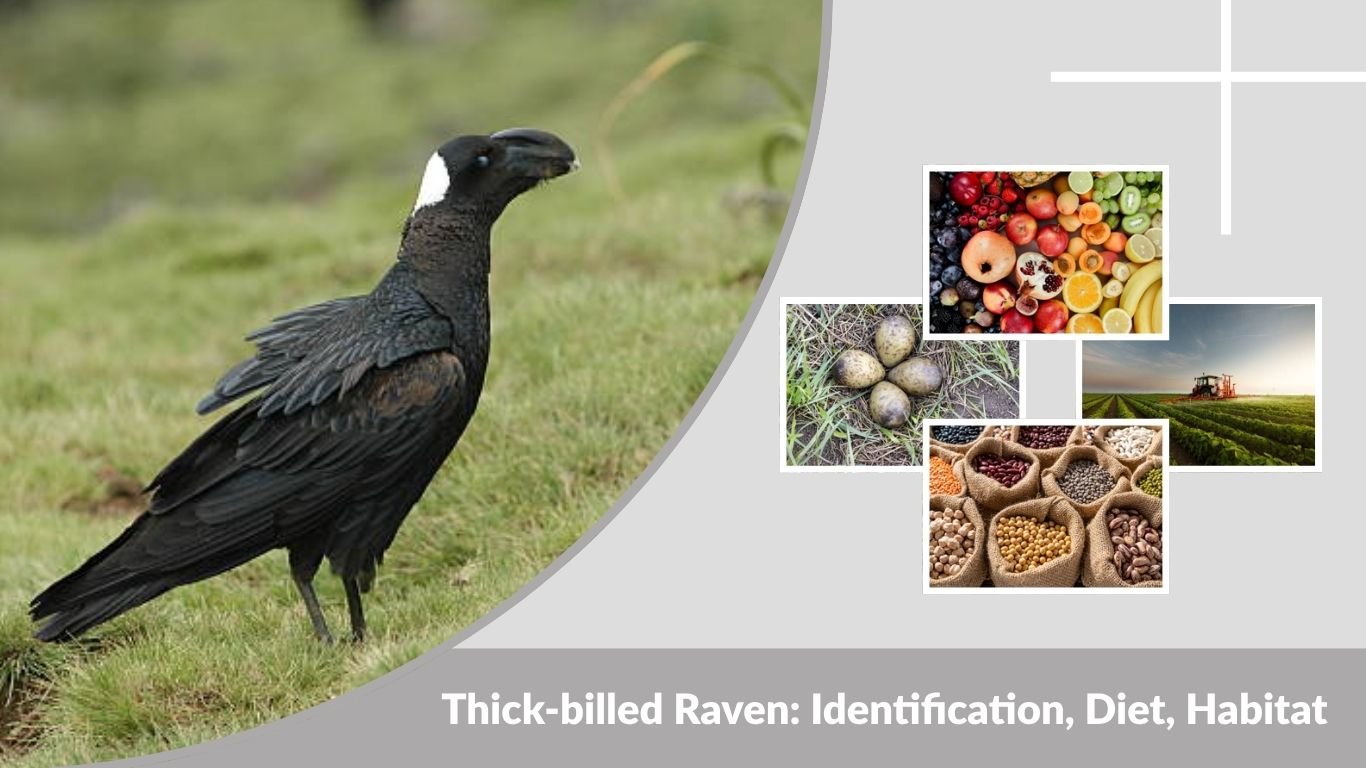
9. Thick-billed Raven

The Thick-billed Raven (Corvus crassirostris) is the largest raven species. It is native to the highlands of Ethiopia and Eritrea.
This raven is very distinctive because of its massive, thick beak. Despite its size, it is quite agile in flight. Thick-billed Ravens often feed on fruits, insects, carrion, and small animals.
They are social birds and often gather in groups.
Identification
- Size: About 24 to 28 inches long.
- Wingspan: Up to 50 inches.
- Color: Black with a slight purple gloss and white patches on the neck and base of the beak.
- Beak: Very large, thick, and sharply curved.
- Neck: Sturdy and thick.
- Tail: Wedge-shaped.
- Call: Deep, croaky sounds.
Key Differences Between Them
Here’s a simple table showing the differences between the 9 types of ravens you covered. I’ll focus on key features like size, beak, neck feathers, tail shape, and special features to keep it clean and readable:
| Raven Type | Size (Length) | Beak | Neck Feathers | Tail Shape | Special Features |
| Common Raven | 24–27 inches | Thick, slightly curved | Shaggy | Wedge-shaped | Glossy black with purple/blue sheen |
| Chihuahuan Raven | 18–20 inches | Thick, slightly curved | White feather bases (hidden) | Slightly rounded | Higher-pitched call, desert areas |
| Australian Raven | 19–22 inches | Strong, pale at base (adult) | Shaggy | Rounded | Bright white eyes, loud wailing call |
| Little Raven | 18–20 inches | Shorter, slender | Slightly shaggy | Rounded | Softer “caw” calls |
| Forest Raven | 20–22 inches | Large, strong | Shaggy | Rounded | Deep croaking calls, very dark color |
| White-necked Raven | 18–20 inches | Thick, strongly curved | White patch at back | Slightly rounded | White patch, hoarse calls |
| Brown-necked Raven | 19–21 inches | Stout, slightly curved | Brown-tinged neck | Wedge-shaped | Lives in deserts, rough calls |
| Fan-tailed Raven | 18–20 inches | Short, curved | Smooth | Fan-shaped | Agile fliers, desert areas |
| Thick-billed Raven | 24–28 inches | Very large, thick, sharply curved | Sturdy | Wedge-shaped | Largest raven, white patches |