The female red-winged blackbird is often overlooked due to its subtle appearance, yet it plays a vital role in wetland ecosystems. Unlike the striking male, the female blends into her surroundings, making identification tricky. This guide will help you recognize, compare, and understand this fascinating bird with confidence.
What Does a Female Red-Winged Blackbird Look Like?
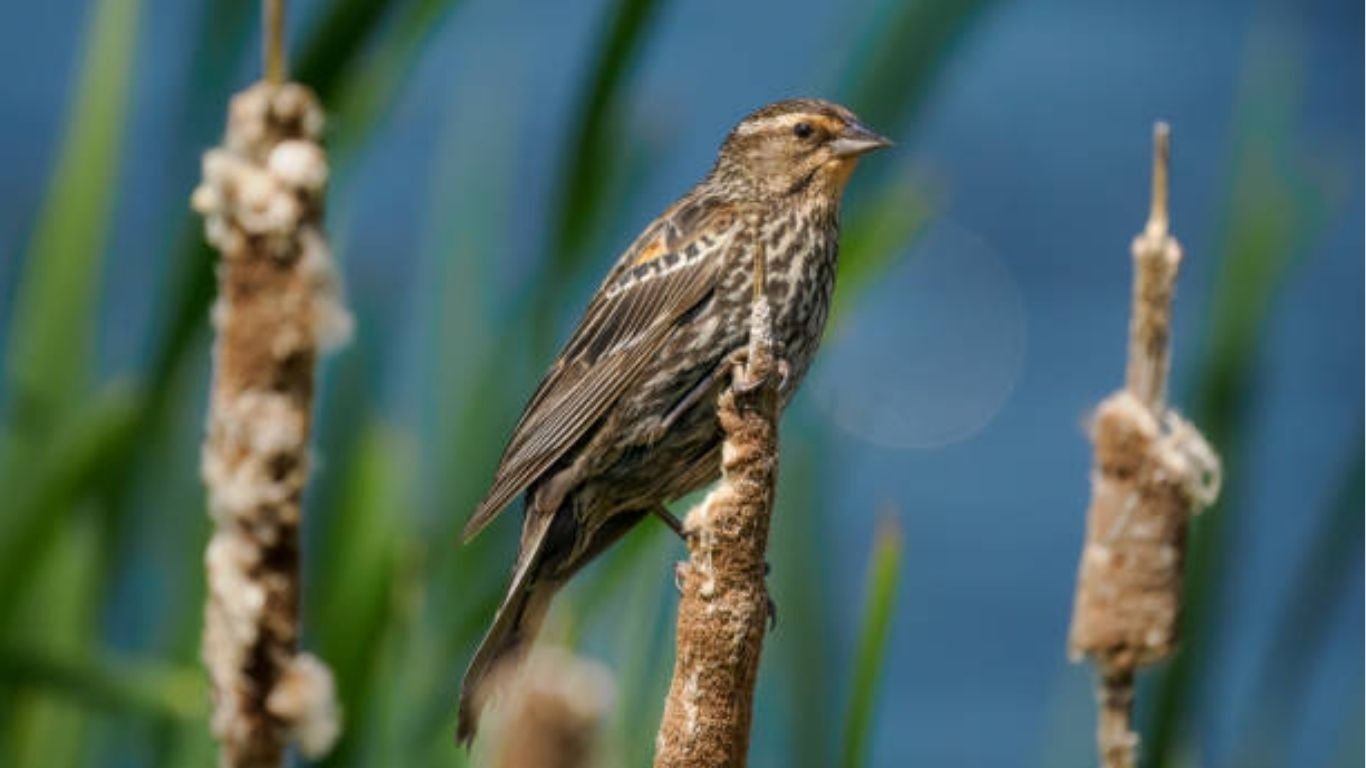
The female red-winged blackbird looks very different from the male, often causing confusion among bird watchers. Instead of bold black feathers and red patches, females have streaky brown plumage that blends into marshy environments, making identification more challenging but still possible with key features.
Key Physical Features
The female red-winged blackbird has a heavily streaked brown body that helps it stay hidden among grasses and reeds. Its plumage includes a mix of dark brown, buff, and tan shades. One of the most noticeable traits is the pale eyebrow stripe above the eye, which gives the bird a slightly expressive look.
Another important feature is its pointed bill, which is longer and sharper than that of most sparrows. This helps the bird forage efficiently for insects and seeds. The overall body pattern is designed for camouflage, especially in wetland habitats.
Size and Shape
In terms of size, the female red-winged blackbird is a medium-sized songbird. It is slightly larger than most sparrows but smaller than many blackbird species. Its body shape is slim with a relatively long tail, giving it a streamlined appearance.
When perched, the bird appears upright and alert. In flight, its wings are broad, and the tail helps with smooth, controlled movement. These subtle shape differences can help distinguish it from smaller birds that share similar colors.
Color Pattern Details
The coloration of the female is one of its defining traits. Unlike the male, it does not have any red or yellow patches. Instead, its body is covered in dark streaks running across the chest and back.
The underside often shows a mix of buff and cream tones with darker lines, creating a layered effect. This pattern allows the bird to blend seamlessly into its surroundings, especially in tall grasses and marsh vegetation.
Male vs Female Red-Winged Blackbird
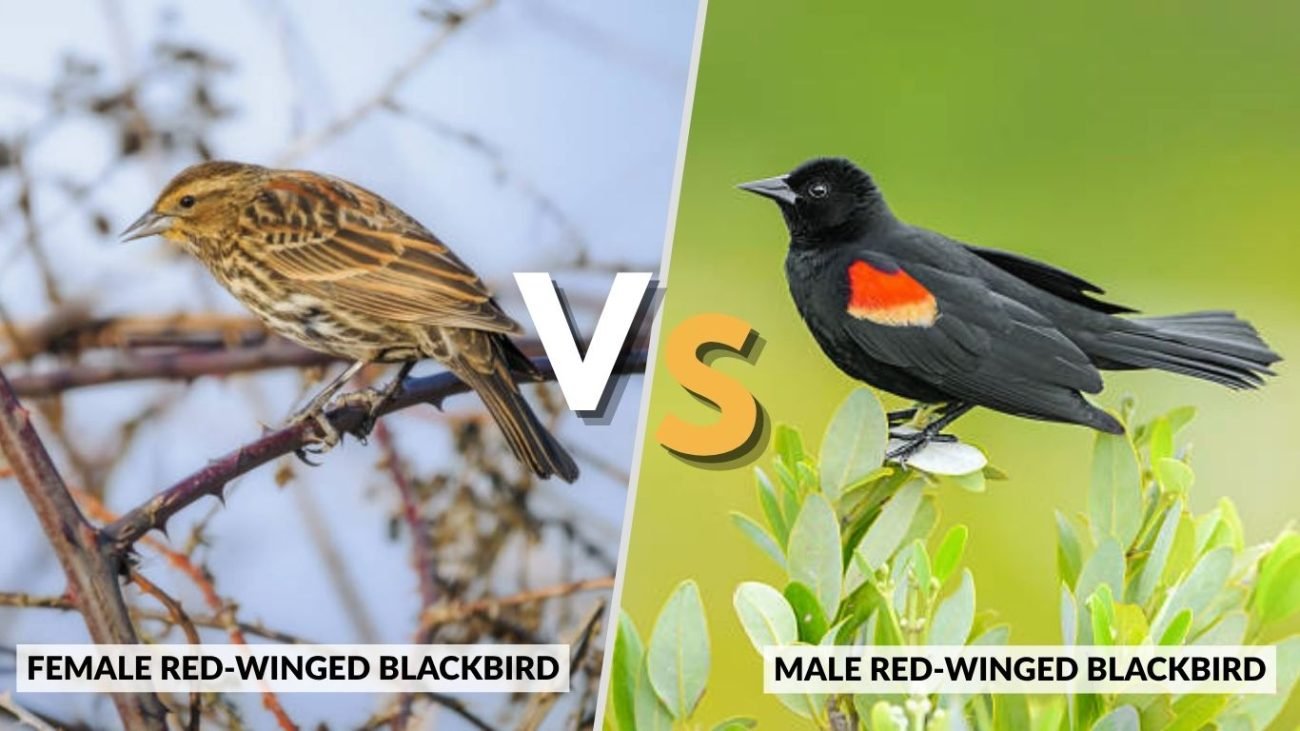
Male and female red-winged blackbirds show extreme sexual dimorphism. While males are glossy black with bright red and yellow shoulder patches, females rely on camouflage for protection. Understanding these differences is essential for quick and accurate identification in the wild.
Male vs Female Comparison
| Feature | Male | Female |
| Color | Black with red/yellow patches | Brown, streaked |
| Visibility | Highly visible | Camouflaged |
| Size | Slightly larger | Slightly smaller |
| Behavior | Territorial and aggressive | Nest-focused and cautious |
| Song | Loud and distinctive | Softer and less frequent |
The contrast between male and female red-winged blackbirds is one of the most dramatic among North American birds. Males use their bright colors to defend territory and attract mates, often perching in open areas where they are easy to spot.
Females, on the other hand, stay hidden most of the time. Their dull coloration helps protect them from predators, especially during nesting season. While males are often seen and heard, females require more patience and attention to locate.
Behavior also differs significantly. Males are known for their aggressive defense of territory, sometimes even chasing larger animals. Females are more focused on building nests, laying eggs, and caring for their young.
Behavior and Habitat of Female Red-Winged Blackbirds
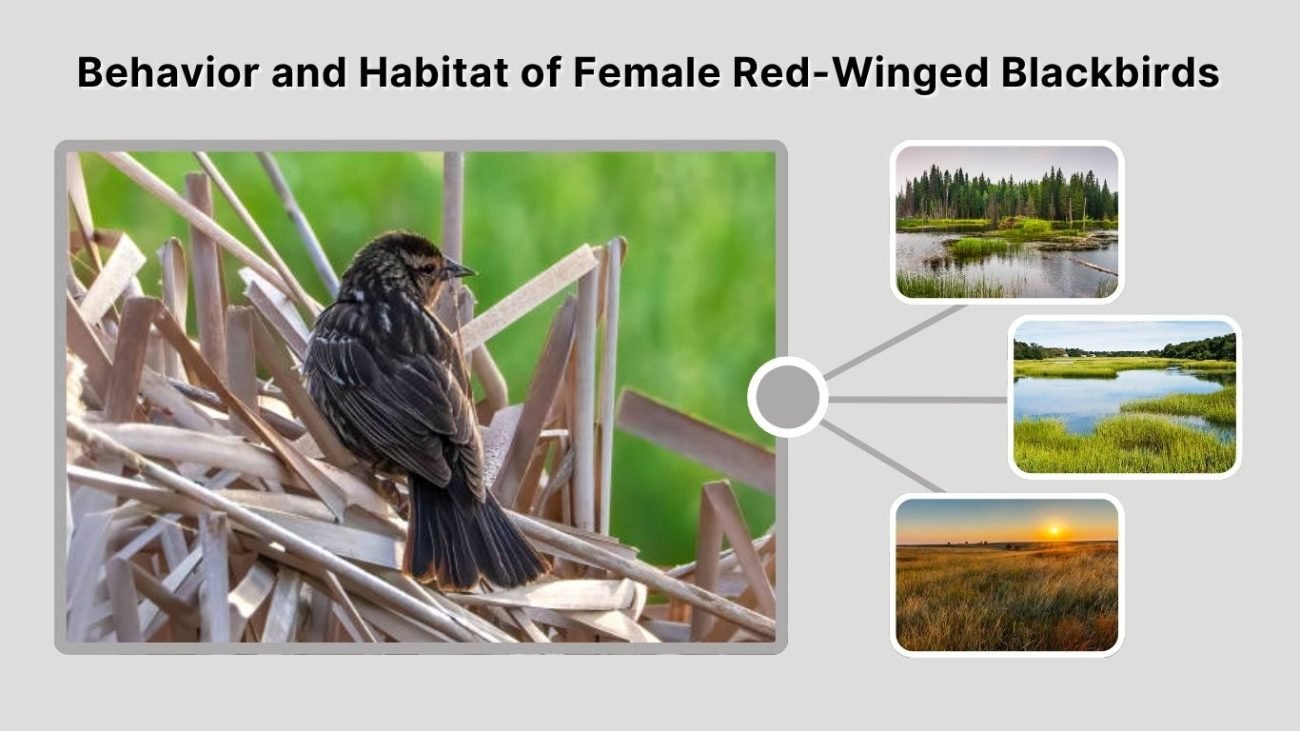
Female red-winged blackbirds play a crucial role in nesting and survival. They prefer wetlands, marshes, and grassy areas where their camouflage helps protect them from predators while raising their young.
Nesting Behavior
Female red-winged blackbirds are responsible for building the nest. They typically choose locations close to water, such as marshes, ponds, or wetlands. The nest is usually attached to reeds, cattails, or low shrubs.
The construction involves weaving together grasses, plant fibers, and other natural materials. The nest is often hidden among dense vegetation, making it difficult for predators to find. This careful placement increases the chances of survival for the eggs and chicks.
Once the nest is complete, the female lays eggs and takes on the primary responsibility of incubation. She remains alert and cautious, leaving the nest only when necessary.
Feeding Habits
The diet of female red-winged blackbirds varies depending on the season. During non-breeding periods, they mainly consume seeds and grains. These can include wild grasses and agricultural crops.
During the breeding season, their diet shifts to include more insects. This provides essential protein for both the female and her growing chicks. Common prey includes beetles, caterpillars, and other small insects.
Females usually forage on the ground or among low vegetation. Their sharp beak helps them pick up small food items efficiently. Unlike males, they tend to feed in more sheltered areas to avoid detection.
Common Identification Mistakes
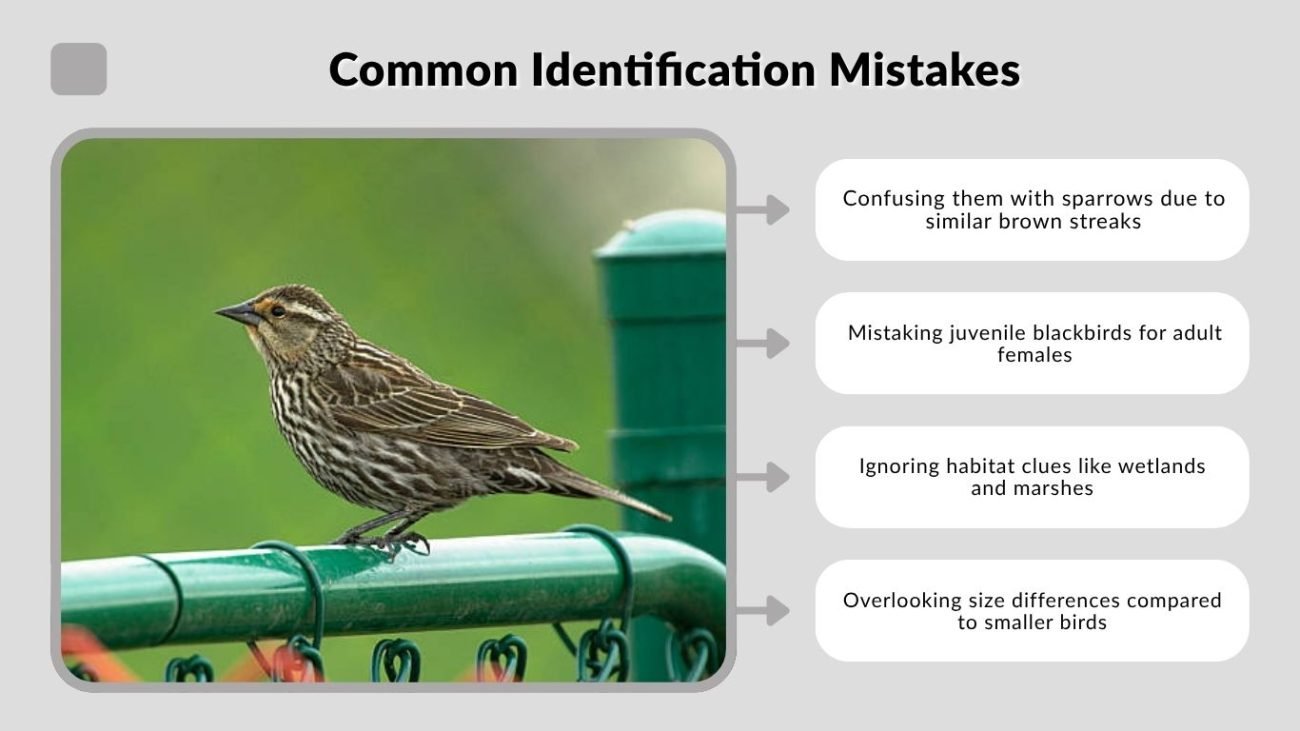
Many beginners misidentify female red-winged blackbirds due to their sparrow-like appearance. Recognizing these common mistakes can significantly improve your birdwatching accuracy and confidence.
- Confusing them with sparrows due to similar brown streaks
- Mistaking juvenile blackbirds for adult females
- Ignoring habitat clues like wetlands and marshes
- Overlooking size differences compared to smaller birds
- Misjudging the shape of the beak and tail
One of the biggest mistakes is relying only on color. Since many birds share brown tones, it’s important to consider multiple factors such as size, habitat, and behavior. Paying attention to these details can make identification much easier.
Female Red-Winged Blackbird vs Similar Birds
Several bird species resemble the female red-winged blackbird. Comparing them side-by-side helps distinguish subtle differences in markings, size, and habitat preferences.
| Bird | Key Difference | Habitat |
| Sparrow | Smaller size, shorter bill | Urban areas and fields |
| Meadowlark | Bright yellow underside | Open grasslands |
| Grackle (juvenile/female) | Larger body, darker tones | Open and semi-urban areas |
Sparrows are the most commonly confused species because of their similar streaked appearance. However, sparrows are usually smaller and have shorter, thicker beaks.
Meadowlarks can also cause confusion at a distance, but their bright yellow chest quickly sets them apart. Grackles, especially juveniles, may look somewhat similar but are generally larger and darker overall.
Understanding these differences can save time and reduce confusion when identifying birds in the field.
Images and Visual Identification Tips
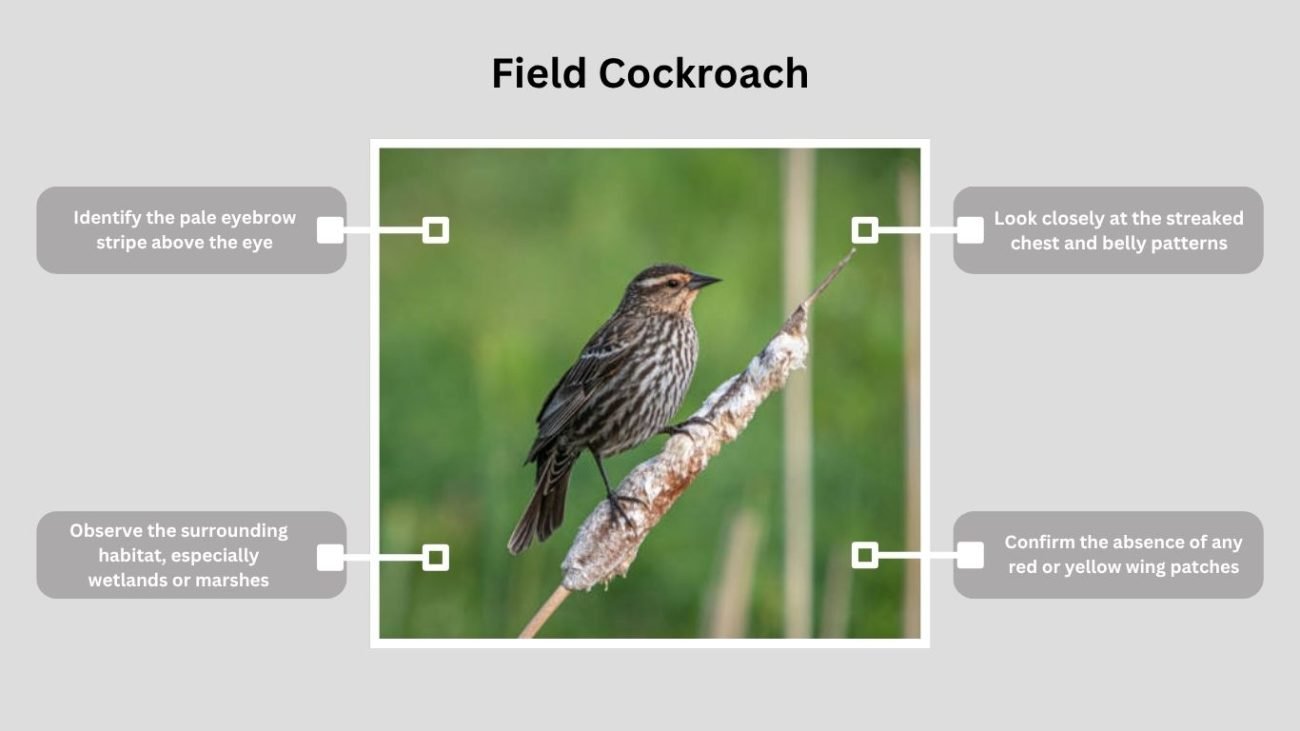
Visual searches are common when identifying the female red-winged blackbird. Because this bird is often confused with others, knowing what to focus on in photos or real-life sightings can make identification much easier and more accurate.
- Look closely at the streaked chest and belly patterns
- Confirm the absence of any red or yellow wing patches
- Identify the pale eyebrow stripe above the eye
- Observe the surrounding habitat, especially wetlands or marshes
- Compare its size with nearby birds for better context
When viewing images online, it’s helpful to check multiple photos rather than relying on just one. Lighting and angles can sometimes distort colors, making the bird appear lighter or darker than it actually is.
In the field, binoculars can greatly improve your ability to spot these subtle features. Focus on the head and chest patterns first, as these are the most reliable indicators. The combination of streaking and habitat is usually enough to confirm identification.
Another useful tip is to observe the bird’s movement. Female red-winged blackbirds often stay low in vegetation and move cautiously. This behavior, combined with their coloring, helps distinguish them from more active or open-perching birds.
Sounds and Calls of Female Red-Winged Blackbirds
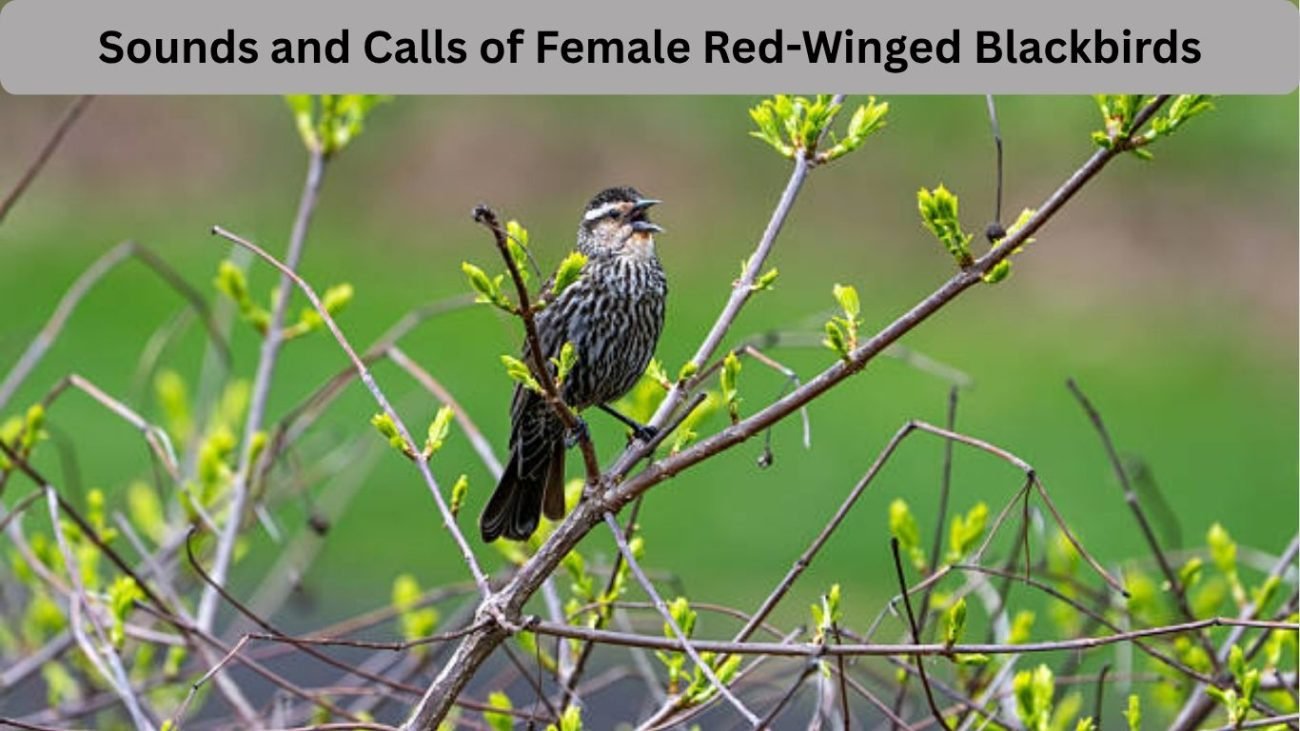
While males are widely recognized for their loud and iconic song, females also produce a range of sounds that are important for communication. These calls are generally softer and less noticeable but still play a key role in their daily behavior.
Common Calls
Female red-winged blackbirds produce short chirps and soft chatter sounds. These vocalizations are often brief and can be easy to miss, especially in noisy environments like wetlands filled with other bird species.
Their calls are not as musical or prolonged as the male’s song. Instead, they serve practical purposes such as signaling danger or maintaining contact with nearby birds.
When They Vocalize
Females are most vocal during the nesting season. They use calls to communicate with their chicks and to alert others of potential threats. These sounds are usually quick and subtle, helping them avoid drawing attention to their nest.
They may also vocalize when interacting with males or other females, particularly in areas where multiple nests are located. Although less frequent than male songs, these calls are still an important part of their behavior.
For bird watchers, recognizing these quieter sounds can enhance the overall observation experience. Paying attention to subtle audio cues can help locate females that might otherwise remain hidden.
FAQs
Do female red-winged blackbirds have red wings?
No, female red-winged blackbirds do not have red shoulder patches like males. Their brown, streaked plumage provides camouflage, especially in marshy habitats. This natural coloring helps them stay hidden from predators while nesting and raising their young in dense vegetation.
Why do female red-winged blackbirds look like sparrows?
Female red-winged blackbirds resemble sparrows because of their brown, streaked feathers. This similarity is an evolutionary advantage that helps them blend into grassy and wetland environments. Unlike males, their appearance is designed for protection rather than display, reducing the risk of predation.
How can I tell a juvenile from a female?
Juvenile red-winged blackbirds can look similar to females but usually have less defined streaking and softer coloration. Observing behavior, time of year, and subtle differences in markings can help distinguish them. Juveniles are often seen during late summer, while adult females show clearer patterns.