The bite of a brown recluse spider can be alarmingly deceptive. At first, it may look like nothing more than a small red bump—easily mistaken for a mosquito or pimple. But over the course of a few hours or days, the appearance can shift drastically, sometimes developing into a deep, necrotic wound.
In this guide, we’ll focus solely on the visual identification and physical characteristics of a brown recluse bite—helping you recognize it based on how it looks, day by day. No treatment advice, just clear descriptions to help you understand what you’re seeing.
Overview of Brown Recluse Bites

The brown recluse spider (Loxosceles reclusa) is known for its venomous bite, which can lead to distinct and sometimes severe skin damage. While not every bite becomes serious, the appearance often changes over time and can serve as a key identifier. Recognizing the visual stages of a bite can help differentiate it from other common skin conditions or insect bites.
Unlike other spider bites, a brown recluse bite often starts mildly and then worsens, sometimes with alarming speed. The most notable features are the formation of a central blister, skin discoloration, and eventual tissue damage. This section outlines what to expect in terms of appearance from the initial bite to the later stages—without diving into treatment or outcomes.
Day-by-Day Progression of a Brown Recluse Bite

A brown recluse bite is notorious for its subtle start and potentially dramatic transformation over time. In most cases, the bite begins with minimal symptoms and slowly becomes more severe—making close visual observation essential for identification. Here’s how the appearance tends to evolve through each key stage:
Initial Appearance (First Few Hours)
In the first few hours after the bite, the affected area may appear as a small, flat red spot, sometimes barely noticeable. It’s often mistaken for a mosquito bite or a mild skin irritation. There may be a slight burning or stinging sensation, but many individuals report little to no pain during this early stage. The skin may feel warm to the touch, but no major discoloration or blistering is typically visible yet.
First 24–48 Hours
Within the first day or two, the red area begins to expand. Swelling and tenderness increase, and the site may feel firmer than surrounding skin. A pale center often forms, creating a bullseye-like pattern—a light center with a darker red outer ring. This is one of the more recognizable signs of a brown recluse bite. In some cases, a small blister may develop in the center, filled with clear or slightly yellow fluid.
Days 3 to 5
As the venom continues to affect the surrounding tissue, the bite area may start showing signs of necrosis. The blister usually ruptures during this period, leaving behind an open sore or ulcer. The surrounding skin can darken to shades of purple, blue, or even black, especially near the core of the wound. The lesion takes on a sunken or crater-like appearance, and pain or itching may intensify.
Day 6 to 10 and Beyond
By this stage, the wound may be significantly more severe. A dry, dark scab or crust may form over the necrotic tissue. The edges of the wound might appear raised or hardened, while the center becomes sunken and visibly damaged. In serious cases, the necrotic area continues to expand. Even as the wound begins to heal, it may leave behind a noticeable scar and uneven skin texture.
This timeline helps reveal how a seemingly harmless bite can slowly develop into a distinct and often alarming lesion—one that’s hard to ignore as the days go on.
Color and Texture Clues
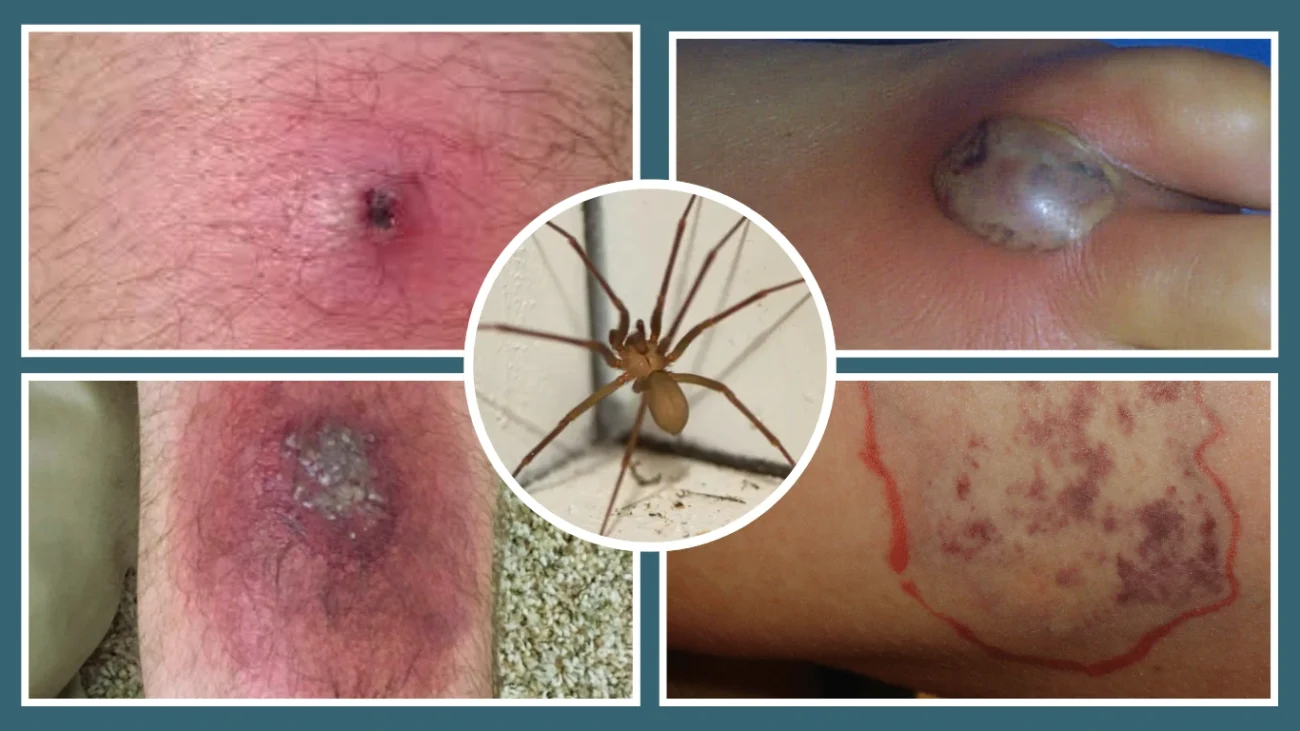
Common Skin Discolorations
A brown recluse bite often features unique changes in skin coloration. Early on, the area may appear pink or bright red, but as the venom progresses, the colors shift. The center can turn white, gray, or bluish, surrounded by a ring of deep red or purple. In severe cases, the necrotic tissue may appear black. These variations in skin tone, especially when forming a bullseye or mottled pattern, are key identifiers.
You may observe:
- Pale or whitish center
- Reddish outer ring
- Purple, bluish, or dark blotches
- Black, crusty center in late stages
Skin Surface Details
As the bite evolves, the surface texture of the wound becomes more pronounced. Initially smooth, it may become rough, leathery, or cracked as the tissue breaks down. The skin can wrinkle or form a sunken pit, particularly after the blister bursts and dead tissue sets in.
Visual signs often include:
- Wrinkled or crinkled center
- Crater-like or pitted depression
- Hardened outer edges
- Dry, crusty scabbing over necrotic tissue
These texture changes make brown recluse bites visibly different from other bug bites or skin infections.
Size and Shape Variations
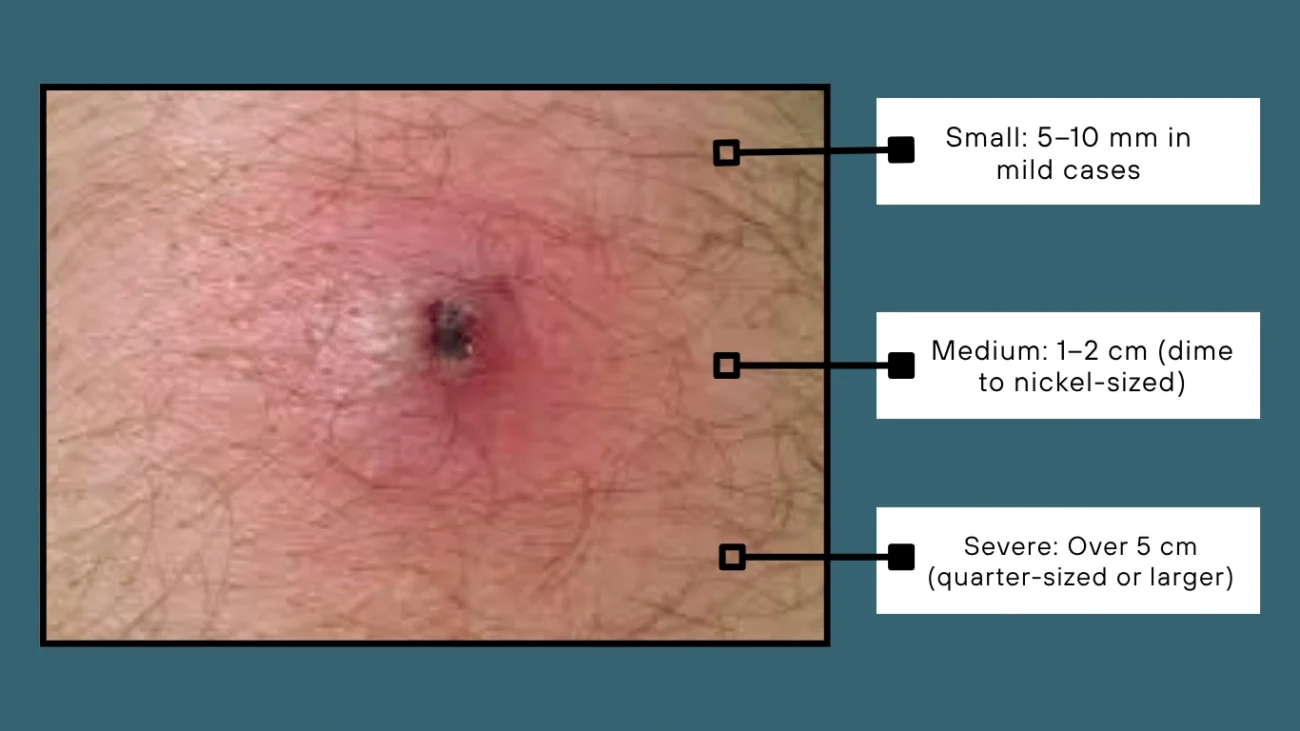
Range of Lesion Sizes
The size of a brown recluse bite can vary based on how much venom was injected and how the person’s body reacts. Most bites start small, about the size of a pencil eraser, but can grow to cover a much larger area—up to the size of a quarter or more. In extreme cases, the wound can become larger than two inches across.
Typical size ranges:
- Small: 5–10 mm in mild cases
- Medium: 1–2 cm (dime to nickel-sized)
- Severe: Over 5 cm (quarter-sized or larger)
Typical Bite Patterns
The shape of a brown recluse bite is generally circular or oval, and it’s usually just a single lesion rather than a cluster. The most telling sign is the uniform ring or “bullseye” effect, paired with a sunken and discolored center. It’s rarely symmetrical, and the edges may become irregular if the necrosis spreads unevenly.
Common pattern traits:
- Round or oval shape
- Clear central depression
- Irregular margins in advanced stages
These visual markers help distinguish a brown recluse bite from other wounds or bites that may appear in multiples or have pus-filled centers.
Visual Signs That Mimic Other Conditions
Often Confused With
Because of its subtle beginnings and changing appearance, a brown recluse bite is frequently mistaken for other skin problems. Many people initially confuse it with bacterial infections, especially MRSA (Methicillin-resistant Staphylococcus aureus), or other spider bites that look similar but are less dangerous.
Common conditions it’s confused with include:
- MRSA or other staph infections
- Boils or abscesses
- Tick or flea bites
- Skin ulcers from poor circulation
- Cellulitis
These conditions can present with redness, swelling, or even open sores, making it challenging to pinpoint the true cause without further observation.
Key Visual Differences
While there is overlap in symptoms, brown recluse bites have some distinguishing visual traits. The speed at which the skin changes—especially the shift from red to necrotic tissue—is unusual. The central sinking, pale color, and dry, dead appearance are more specific to brown recluse venom.
What sets it apart visually:
- Rapid development of a sunken wound
- Gray or blue discoloration in the center
- Absence of pus in most cases
- Dry crust forming over dead tissue
- Clear bullseye or mottled patterns
Recognizing these differences helps narrow down the true cause, especially when the wound does not respond to antibiotics like a typical infection would.
When to Suspect It’s a Brown Recluse Bite
Location of the Bite
Brown recluse spiders prefer warm, dark, undisturbed areas—both in nature and indoors. As a result, bites often occur on parts of the body that come into contact with hidden spaces, such as inside clothing, shoes, or bed linens. The arms, thighs, abdomen, and lower legs are the most commonly affected areas.
Bite locations frequently include:
- Inner arms or thighs
- Torso, especially sides or lower back
- Behind knees or under armpits
- Ankles or tops of feet
Appearance-Specific Red Flags
Certain visual clues should raise suspicion of a brown recluse bite, especially when the wound evolves quickly and painfully. The hallmark signs include a lesion with a pale center and red border, a dry, crusty ulcer, and skin that turns dark over time. If you notice a wound progressing in this way—especially without any clear cause—it’s worth considering a recluse bite.
Look out for:
- Lesion with a bullseye or target-like appearance
- Central blister that turns into an ulcer
- Black or leathery-looking tissue in the center
- Wound enlarging after several days, not improving
If these features appear and you live in or recently visited a recluse-prone area, it strengthens the case for a spider-related cause.