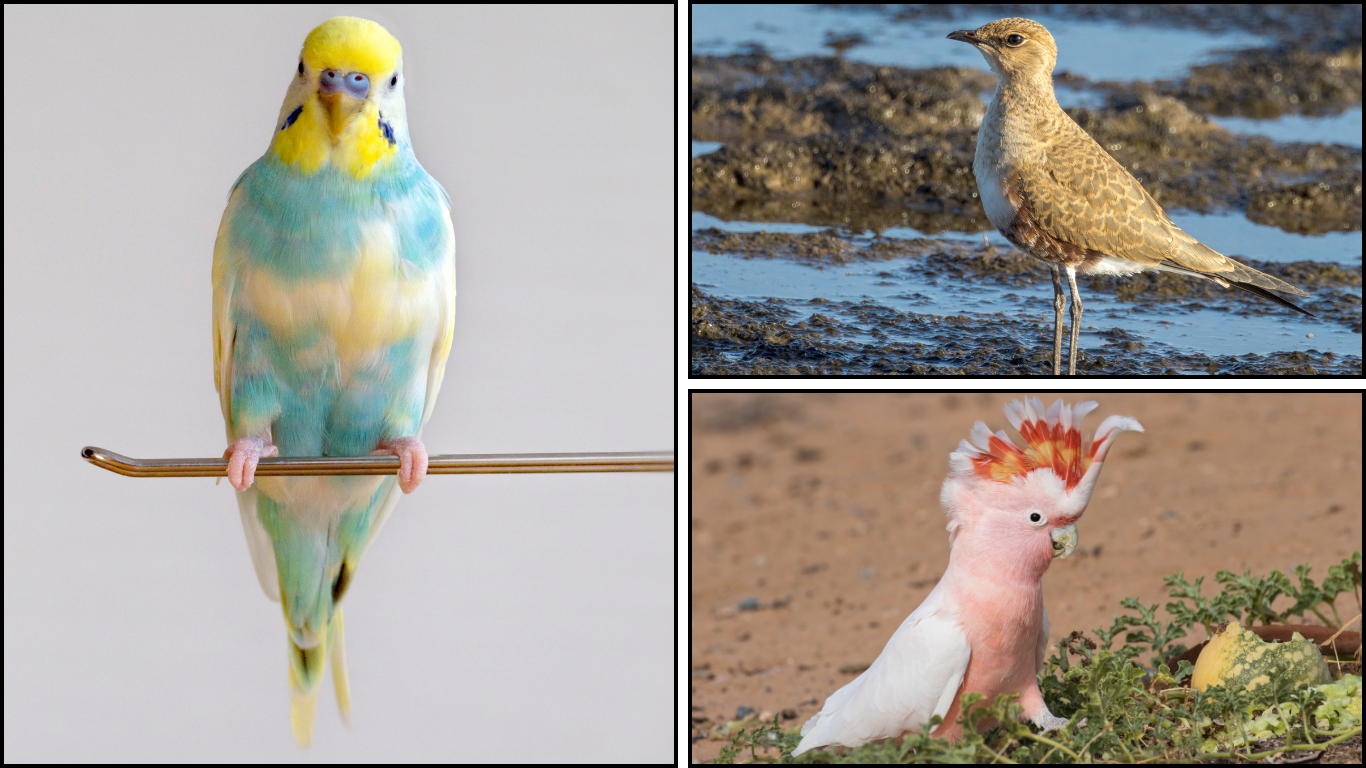
Australia is home to an extraordinary range of native birds, each uniquely adapted to the country’s diverse landscapes. From colorful parrots and powerful eagles to desert-dwelling budgerigars and wetland-loving grebes, these birds play vital roles in their ecosystems. In this guide, we explore 40 remarkable Australian birds, covering their identification, behaviors, habitats, and ecological importance across forests, coasts, deserts, and beyond.
1. Australian Magpie
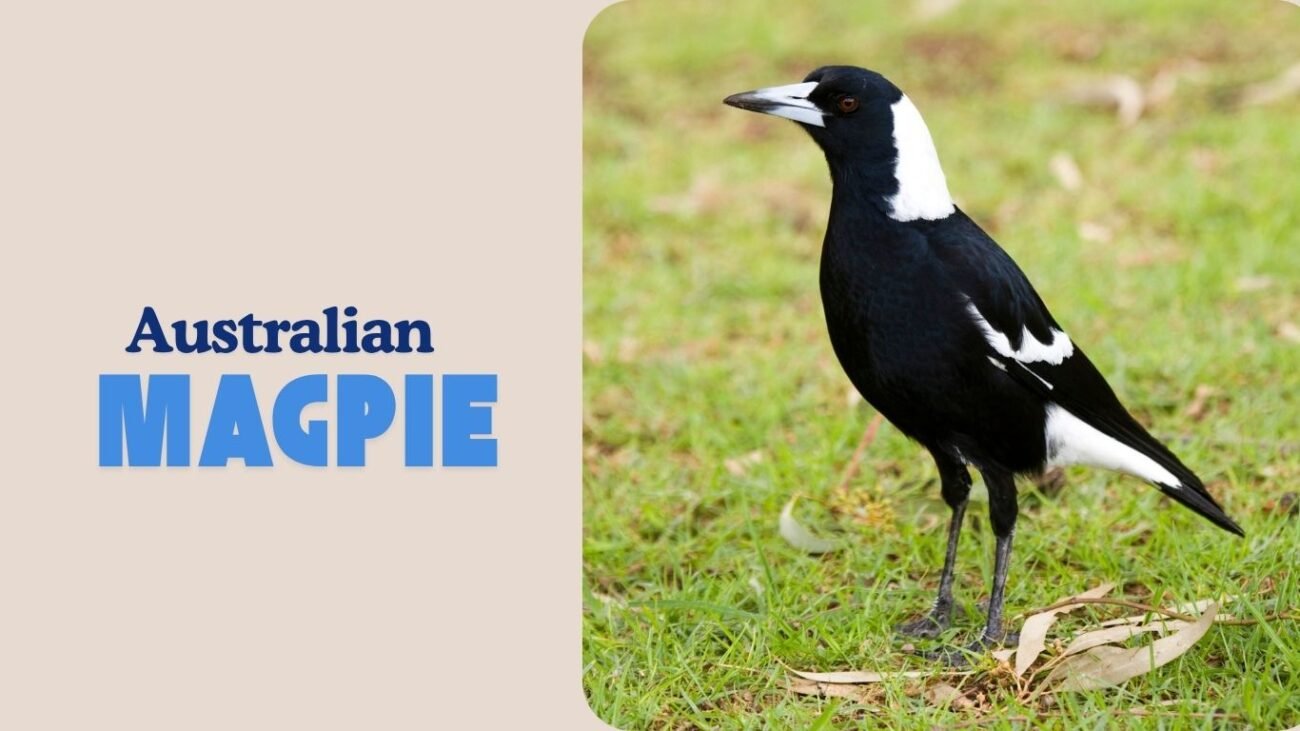
The Australian magpie is one of the most familiar and intelligent native birds commonly found throughout Australia. Known for its melodious calls and territorial swooping behavior during nesting season, this species plays a significant role in Australia’s birdlife culture. It is often seen in urban parks, open woodlands, and suburban lawns, making it a truly iconic Australian bird.
Habitat and Behavior
The Australian magpie thrives in open habitats such as grasslands, farmlands, and suburban gardens. These birds are diurnal and spend much of the day foraging on the ground. Their powerful beaks help them dig for insects and larvae.
Magpies are social birds, forming groups and maintaining complex social hierarchies. They are known for their loud, flute-like songs, which are used for communication and territory defense.
Nesting and Breeding
Magpies usually build bowl-shaped nests high in trees using twigs, grass, and sometimes even human-made materials. Breeding typically occurs between August and October, and during this time, males may become aggressive in protecting their nests — a behavior commonly referred to as “swooping.”
Identification
- Medium-sized bird, about 37–43 cm in length
- Glossy black and white plumage
- Strong, wedge-shaped beak
- Red eyes in adults
- Distinct warbling call, often heard at dawn
Diet
Their omnivorous diet includes insects, spiders, small reptiles, seeds, and occasionally food scraps in urban areas. Being a ground feeder, it contributes to insect population control, which is vital in many Australian ecosystems.
Cultural Significance
As an iconic part of Australian birdlife, the magpie holds a special place in folklore, children’s songs, and even Australian sports teams. Its presence is a reminder of the country’s rich and diverse avian wildlife.
2. Parrots
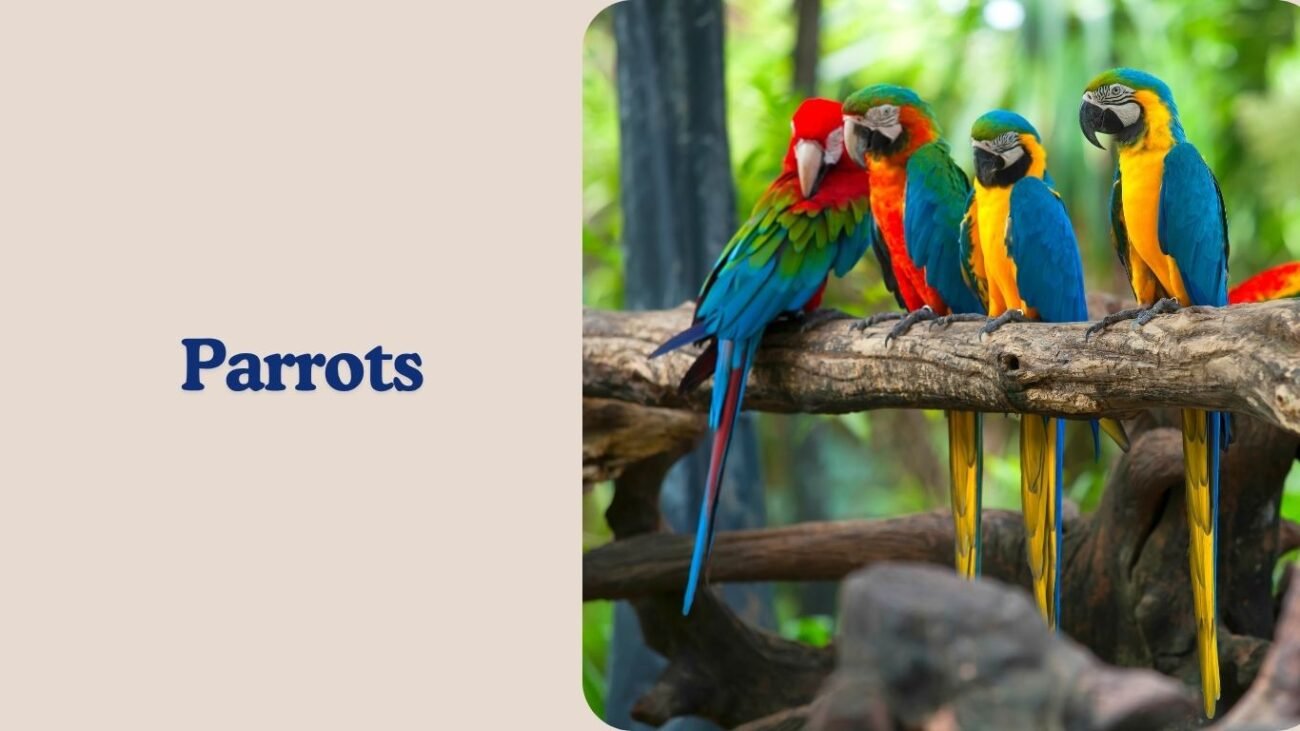
Parrots are among the most colorful and recognizable of Australia’s native birds, known for their vibrant plumage and vocal personalities. Australia is home to a wide variety of parrot species, many of which are found nowhere else in the world. These birds are a vital part of the Australian ecosystem, helping with seed dispersal and pollination.
Habitat and Behavior
Australian parrots inhabit diverse environments — from rainforests and woodlands to arid deserts and coastal regions. They are highly social and intelligent, often forming flocks and displaying complex communication.
Nesting and Breeding
Most species nest in tree hollows, a trait that makes mature trees crucial to their survival. Breeding seasons vary depending on species and climate, but many lay 2–6 eggs per clutch.
Identification
- Strong, curved beaks adapted for seed-cracking
- Zygodactyl feet (two toes facing forward, two backward)
- Brightly colored feathers, often red, green, yellow, or blue
- Varying sizes, from small budgerigars to large cockatoos
- Loud, distinctive calls and mimicry in some species
Diet
They primarily feed on seeds, nuts, fruit, nectar, and blossoms. Some species, like lorikeets, specialize in nectar feeding.
Role in the Ecosystem
As native Australian birds, parrots play a crucial role in maintaining biodiversity through seed dispersal and flower pollination, especially in eucalyptus and acacia forests.
3. Laughing Kookaburra
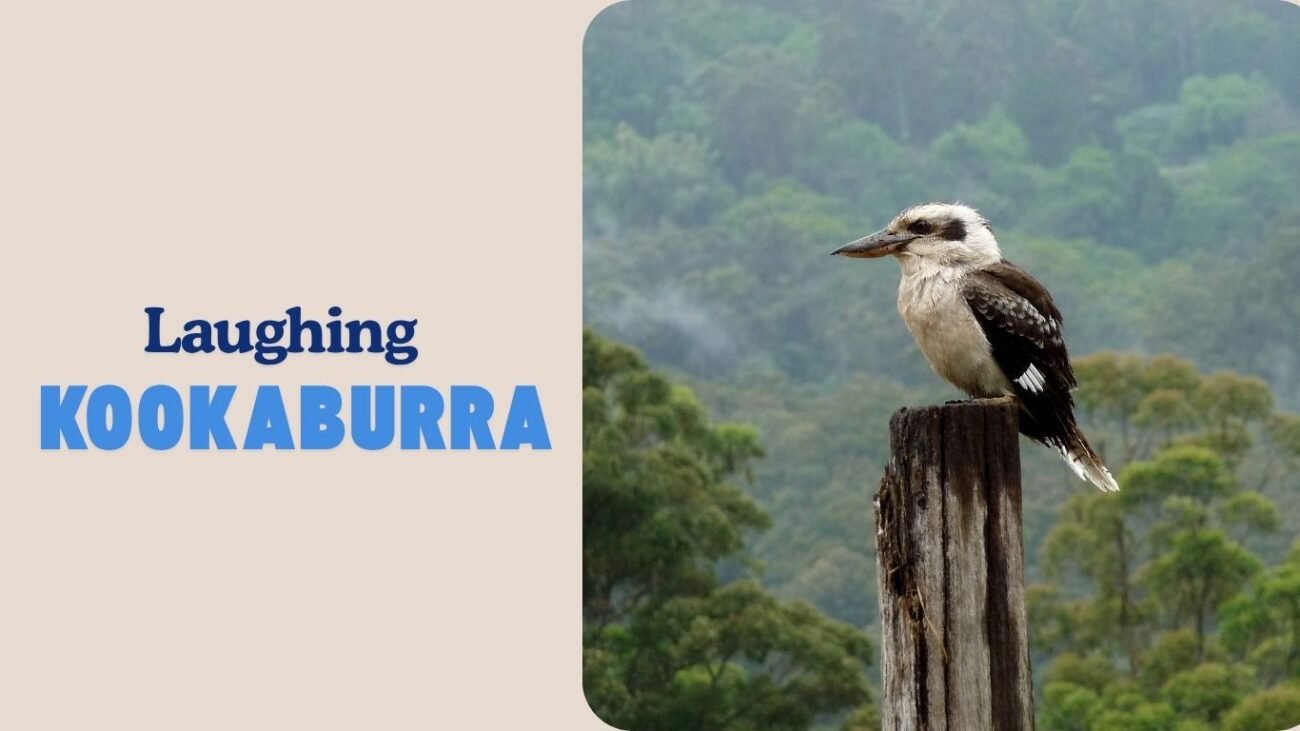
The laughing kookaburra is a well-loved native bird, famous for its loud, echoing call that sounds like human laughter. Found throughout eastern and southern Australia, this kingfisher species is both iconic and beneficial to the ecosystem.
Habitat and Behavior
It prefers open forests, woodlands, and suburban areas with access to water. Unlike other kingfishers, the kookaburra hunts primarily on land, feeding on insects, lizards, and small mammals. It is highly territorial and lives in family groups.
Nesting and Breeding
Laughing kookaburras nest in tree hollows or termite mounds. The breeding season typically occurs from September to January. Offspring from previous seasons often help parents raise the new chicks — a rare cooperative behavior among birds.
Identification
- Stocky body, about 40–45 cm long
- White head with dark eye stripe
- Brown wings and back with blue markings
- Large bill and strong neck
- Famous for its loud, laughing call
Diet
As carnivorous Australian birds, kookaburras eat insects, earthworms, small snakes, and even rodents. They often watch from perches and swoop down to catch prey with precision.
Importance to Australian Culture
Its unique call is often used in films to represent the Australian bush. The laughing kookaburra symbolizes the natural charm and humor often associated with the Australian wilderness.
4. Sulphur-crested Cockatoo
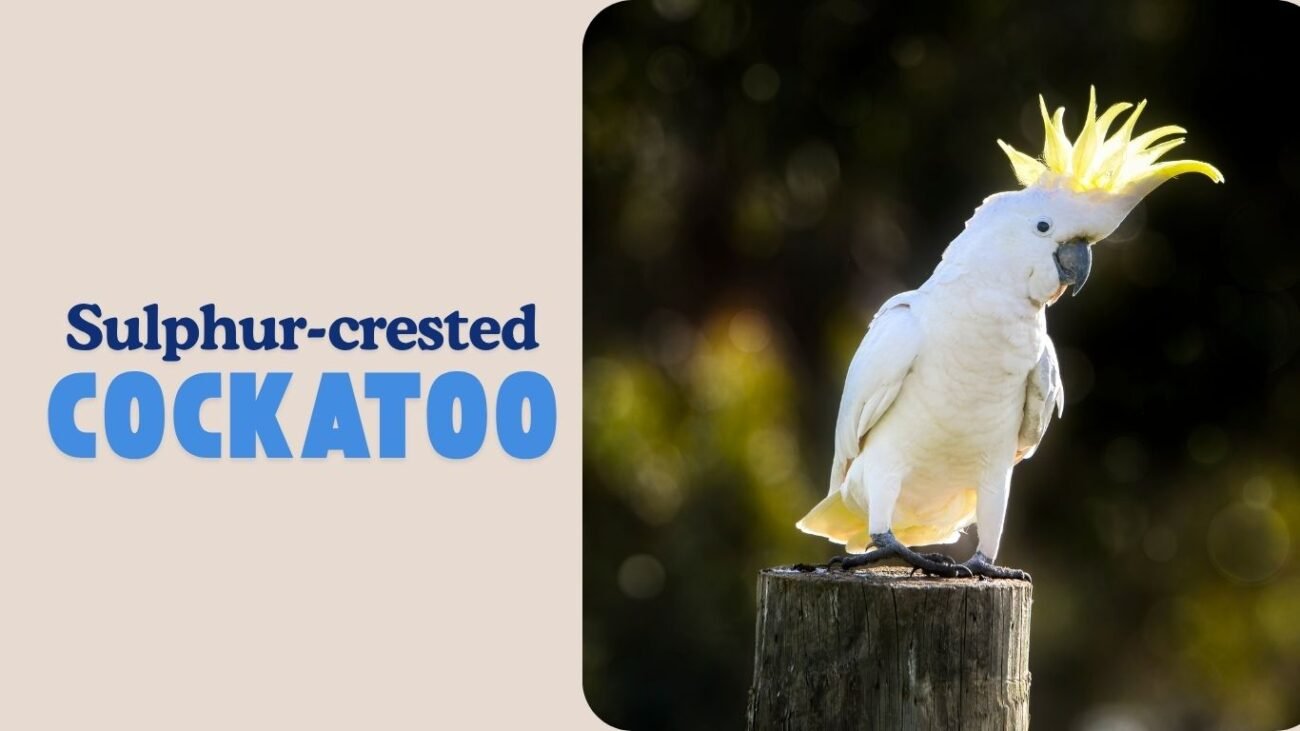
The sulphur-crested cockatoo is one of Australia’s most recognizable native birds, known for its brilliant white feathers and bright yellow crest. These intelligent and social parrots are found across northern and eastern Australia, often in large, noisy flocks.
Habitat and Behavior
These cockatoos thrive in woodlands, rainforests, and urban parks. Highly adaptable, they are often seen perching on rooftops or powerlines in cities. They are playful and can mimic human speech, making them popular pets — though they are wild by nature.
Nesting and Breeding
They nest in tree hollows, usually high up and near water. The breeding season runs from August to January, during which time pairs may become territorial.
Identification
- Large white parrot, around 45–50 cm long
- Distinctive yellow crest that can be raised
- Dark grey-black beak and feet
- Loud screeching call
- Long-lived — often over 50 years in the wild
Diet
They feed on seeds, nuts, berries, roots, and occasionally insects. In urban areas, they may forage for food scraps and raid crops, sometimes causing conflict with farmers.
Role in Nature
These highly social Australian birds help spread seeds across forests and bushlands. Their behavior also provides insight into the complex social lives of parrots.
5. Galah
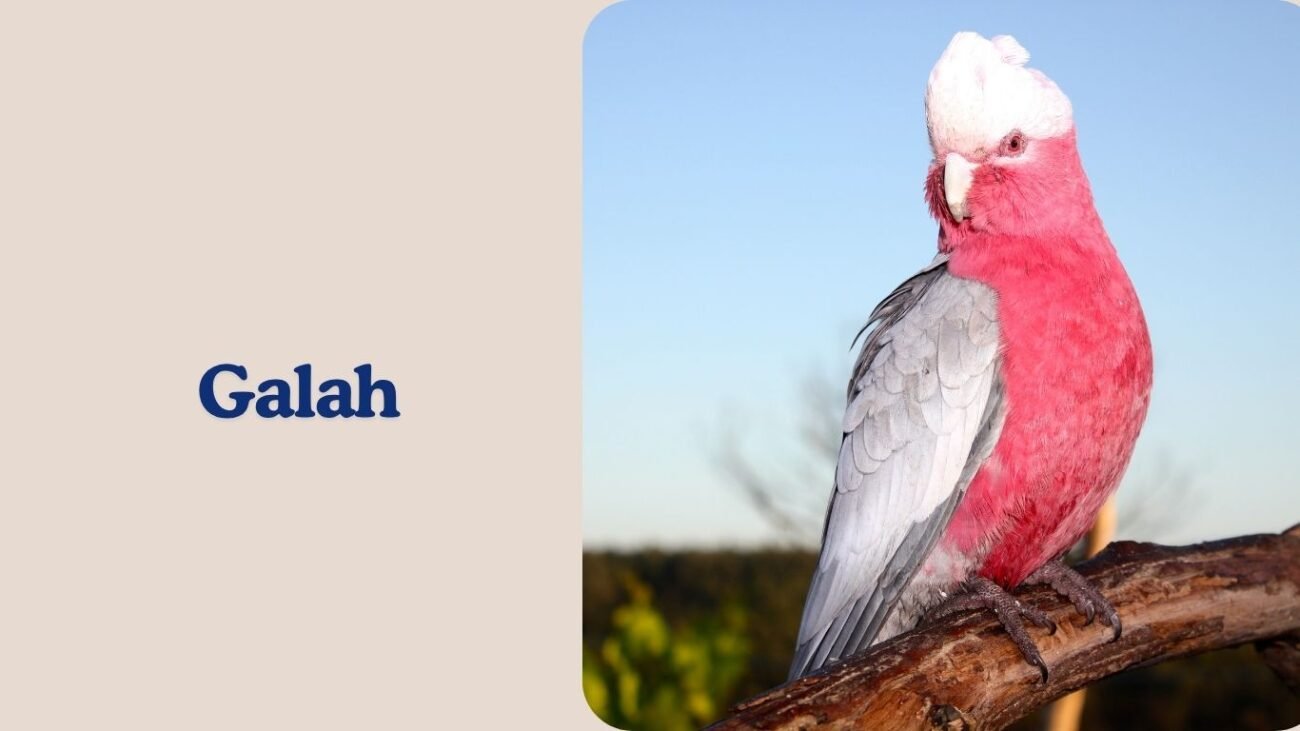
The galah, also known as the rose-breasted cockatoo, is a widespread and beloved Australian bird. Its striking pink and grey feathers and playful demeanor make it a standout in the wild and in aviculture.
Habitat and Behavior
Galahs inhabit open country, woodlands, grasslands, and even cities. They are often seen in flocks, feeding on the ground and flying in acrobatic displays. These parrots form strong pair bonds and are known for their noisy, chattering calls.
Nesting and Breeding
They nest in tree hollows lined with eucalyptus leaves. The breeding season can vary by region, but most often occurs after rainfall, when food is plentiful.
Identification
- Medium-sized parrot, about 35 cm long
- Pink chest and face with light grey back and wings
- Short, pale crest
- White eye-ring in males, red in females
- Agile fliers with swift, darting flight patterns
Diet
Primarily seed-eaters, galahs consume grass seeds, grains, fruits, and occasionally insects. They often forage in agricultural areas, leading to occasional pest status.
Cultural Connection
As native birds of Australia, galahs are featured in Indigenous stories and are colloquially referenced in Australian slang — calling someone a “galah” means they’re being silly or foolish.
6. Australian King Parrot
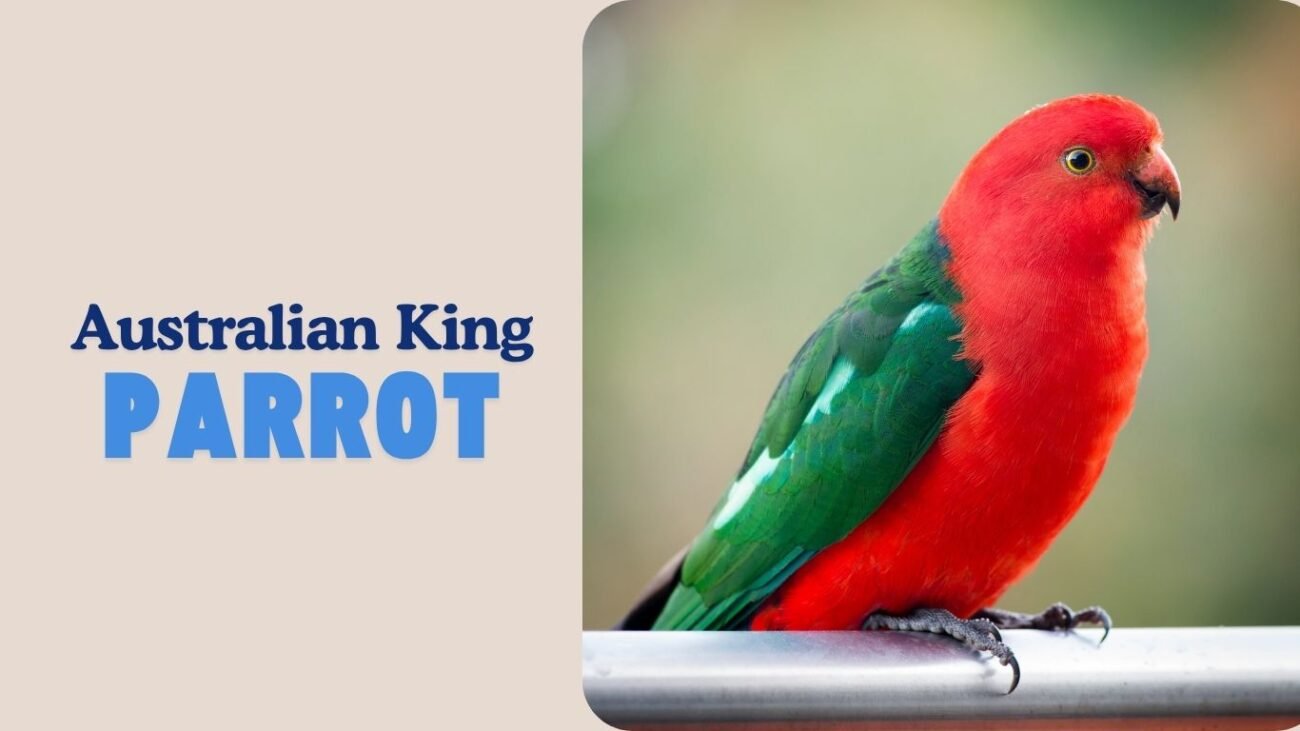
The Australian king parrot is a vividly colored native bird found in the eastern parts of Australia, particularly in rainforests and coastal woodlands. With its bold red and green plumage, it stands out in the wild and is a favorite among birdwatchers.
Habitat and Behavior
This species prefers dense forests and well-vegetated urban gardens. It is usually seen in pairs or small groups and is relatively quiet compared to other parrots. Though shy in the wild, it often becomes tame around humans when food is offered.
Nesting and Breeding
Australian king parrots nest in tree hollows, usually high above the ground for safety. The breeding season runs from spring to summer, during which the female incubates the eggs while the male provides food.
Identification
- Males: bright red head and chest with green back and wings
- Females: green head and chest, red belly
- Long tail with blue highlights
- Medium to large size, around 42–45 cm
- Quiet, whistling calls
Diet
Their diet includes seeds, berries, nuts, and fruits. They forage both in trees and on the ground and often visit backyard feeders in rural and suburban areas.
Significance in Australian Wildlife
This species reflects the richness of eastern Australia’s bird diversity. As a native Australian bird, its presence supports forest regeneration through seed dispersal.
7. Honeyeaters
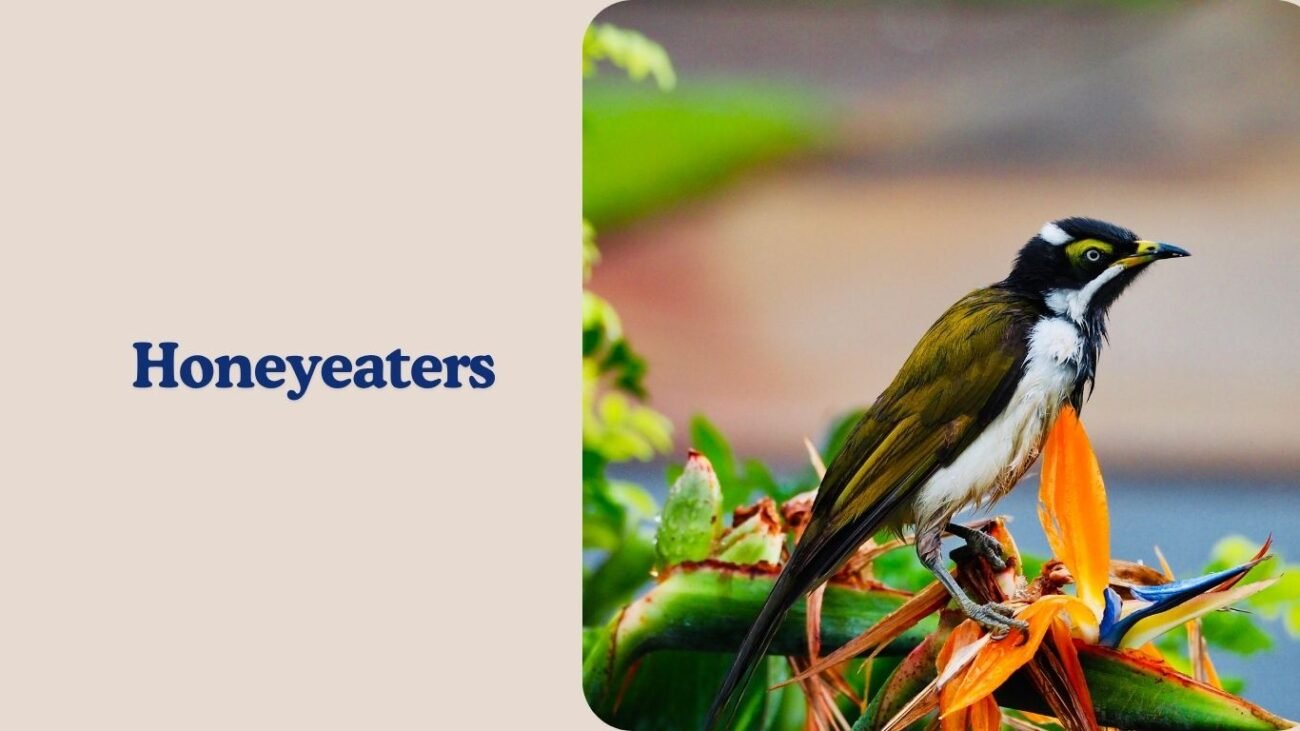
Honeyeaters represent a large and diverse group of Australian birds known for their specialized nectar-feeding behavior. They are commonly found in forests, woodlands, and gardens across the continent, and many species are endemic to Australia.
Habitat and Behavior
These birds are highly active and constantly flit from flower to flower. Their long, brush-tipped tongues allow them to extract nectar efficiently. Some species are solitary, while others move in flocks or family groups.
Nesting and Breeding
Nests are usually small, cup-shaped, and suspended from branches. Most honeyeaters breed during spring or after rainfall, when flowering plants are abundant.
Identification
- Small to medium-sized birds
- Curved bills and brush-like tongues
- Varied plumage, often with yellow, brown, olive, or black patterns
- Rapid, darting flight
- Energetic behavior and frequent vocalizations
Diet
Primarily nectarivorous, they also consume insects, spiders, and fruits, especially when nectar is scarce. Their feeding plays a key role in pollinating native Australian plants.
Ecological Importance
These native birds are essential pollinators in the Australian ecosystem. Their relationship with eucalyptus, banksia, and grevillea plants makes them vital for forest health and biodiversity.
8. Cockatoos
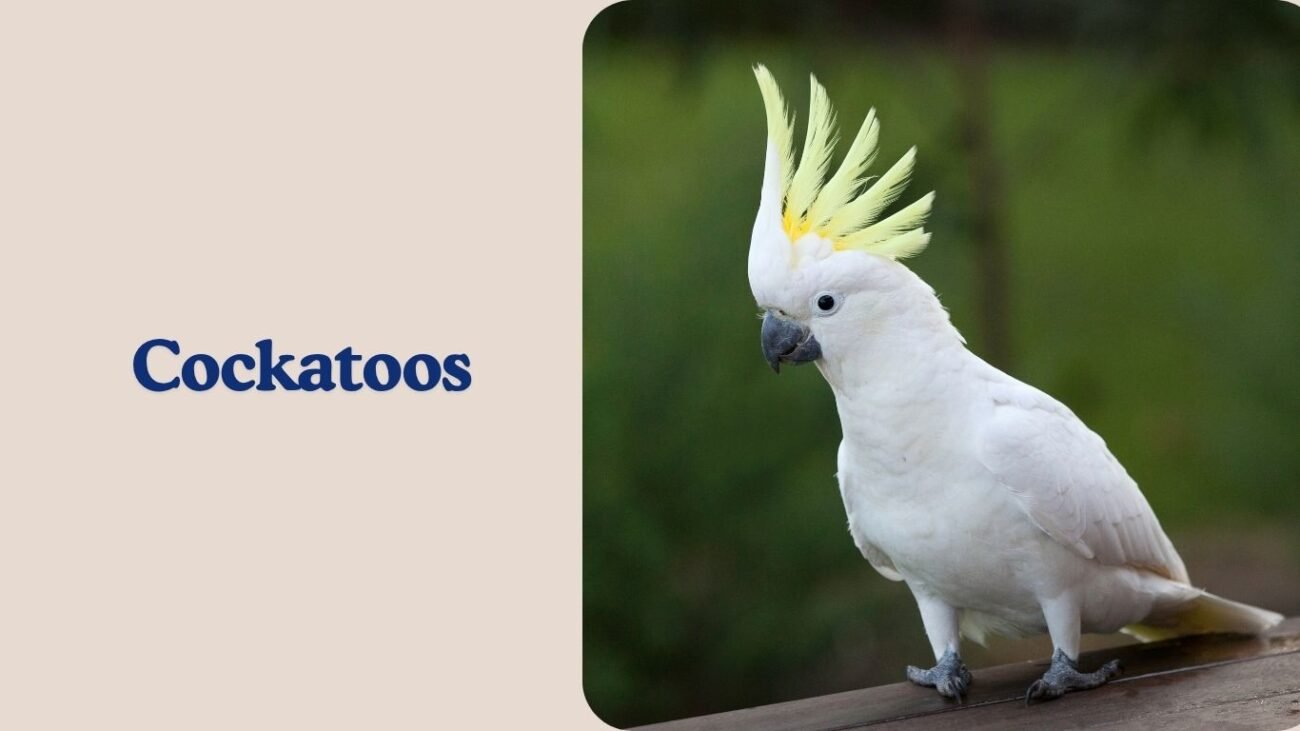
Cockatoos are one of the most iconic and recognizable groups of Australian birds, known for their loud calls, expressive crests, and social nature. These birds belong to the parrot family but are set apart by their curved bills and impressive head crests.
Habitat and Behavior
Cockatoos inhabit a wide range of environments including forests, woodlands, scrublands, and even urban areas. They are intelligent and social, often forming large flocks that roost and forage together. Their strong beaks are used for cracking nuts and tearing bark in search of insects.
Nesting and Breeding
They typically nest in large tree hollows, which makes them dependent on old-growth trees. During the breeding season, pairs bond strongly and work together to raise their young.
Identification
- Medium to large-sized birds
- Distinctive head crests that rise when alarmed or excited
- Mostly white, grey, black, or pink plumage depending on species
- Powerful beaks suited for cracking hard seeds
- Loud and harsh screeching calls
Diet
Cockatoos feed on seeds, nuts, roots, fruits, and insects. In agricultural regions, they may damage crops, which sometimes brings them into conflict with farmers.
Importance in the Australian Landscape
As native birds, cockatoos are important seed dispersers and tree pollinators. Their lively presence adds color and sound to Australia’s natural and urban landscapes.
9. Emu
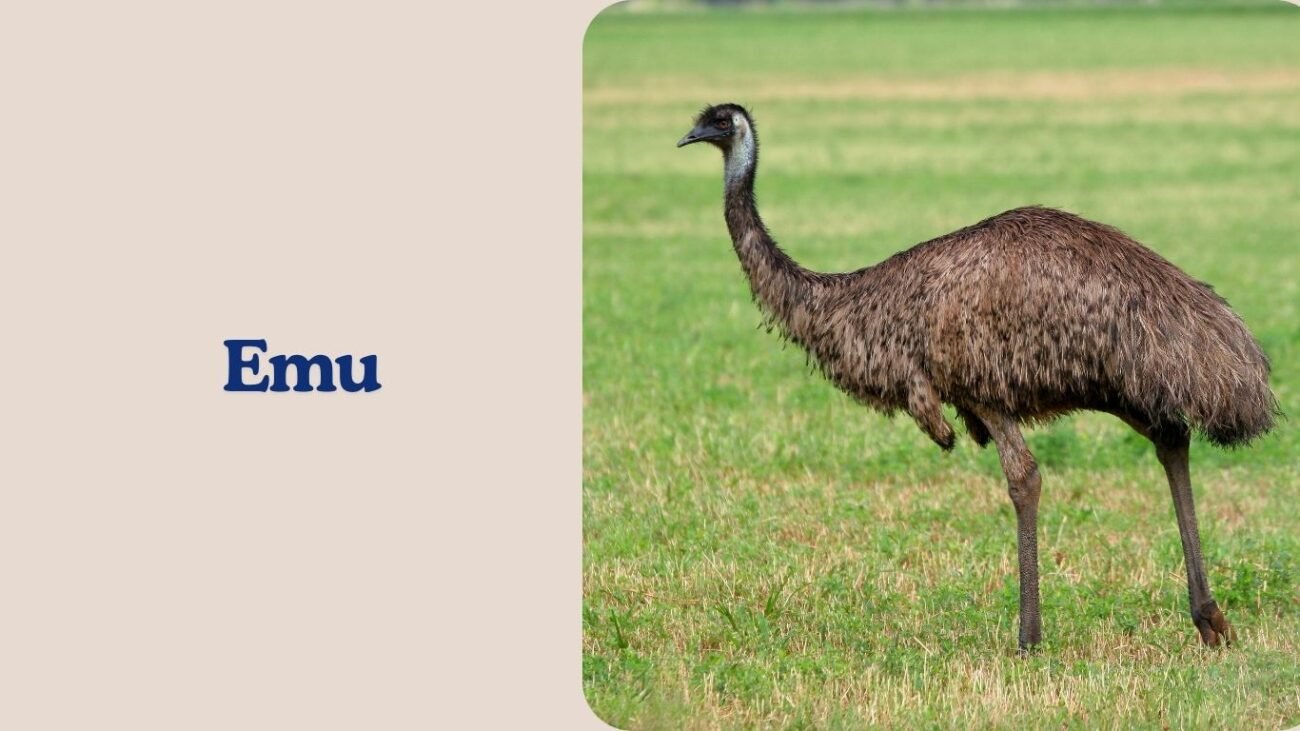
The emu is Australia’s largest native bird and the second-largest bird in the world after the ostrich. This flightless bird is a national symbol of Australia and is featured on the country’s coat of arms.
Habitat and Behavior
Emus are widespread across mainland Australia and prefer open plains, woodlands, and savannahs. These birds are strong runners, capable of reaching speeds up to 50 km/h. They are nomadic, traveling long distances in search of food and water.
Nesting and Breeding
Unusually, the male emu is responsible for incubating the eggs and raising the chicks. The nest is a shallow ground depression lined with grass. Breeding season generally occurs during winter.
Identification
- Very large bird, up to 1.9 meters tall
- Long neck and legs
- Brown to grey-brown feathers with a shaggy appearance
- Small wings but strong legs adapted for running
- Deep, booming or drumming vocalizations
Diet
Emus are omnivores, eating a variety of plants, seeds, fruits, and insects. Their diet shifts depending on seasonal availability.
Role in Australia’s Ecology and Culture
As native birds, emus contribute to seed dispersal across vast regions. They have been part of Indigenous Australian culture for thousands of years and continue to be an emblem of endurance in the Australian environment.
10. Australasian Gannet
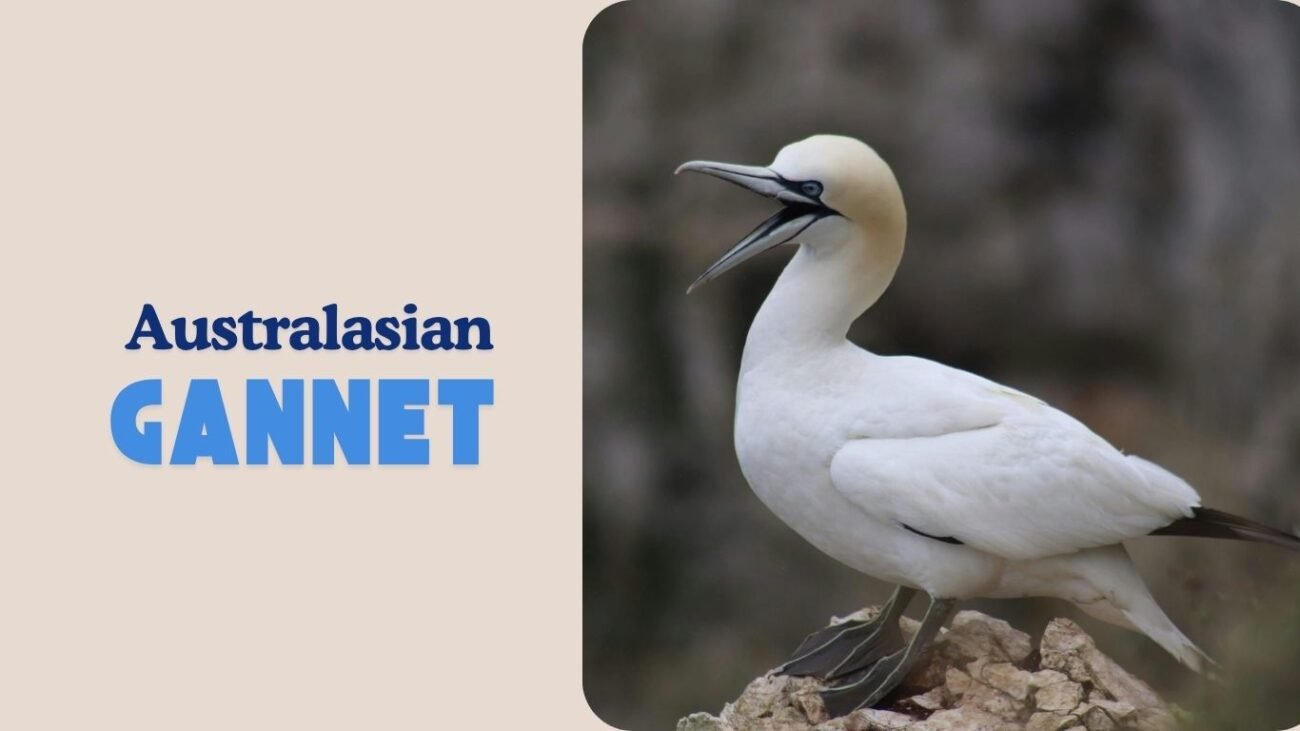
The Australasian gannet is a large, striking seabird commonly found along the southern and eastern coasts of Australia. Known for its spectacular diving ability, this marine bird is an essential part of Australia’s coastal birdlife.
Habitat and Behavior
Australasian gannets are coastal and pelagic birds, often seen gliding over the ocean in search of fish. They nest in dense colonies on rocky islands and headlands. These birds are expert divers, plunging into the sea from heights of up to 30 meters to catch their prey.
Nesting and Breeding
Breeding colonies are formed on offshore islands. Nests are made from seaweed and grass, and pairs often return to the same nest year after year. Both parents share incubation and chick-rearing duties.
Identification
- Large seabird, about 85–95 cm in length
- White body with black wingtips
- Yellowish head with a long pointed beak
- Blue-ringed eyes and aerodynamic body shape
- Long, narrow wings adapted for gliding
Diet
They feed mainly on fish and squid, caught by plunge-diving into the ocean. Their eyesight is adapted to spot prey from great heights.
Ecological Importance
As native coastal birds of Australia, Australasian gannets help maintain the marine food web by controlling fish populations and contributing to nutrient cycling on nesting islands.
11. Australasian Grebe
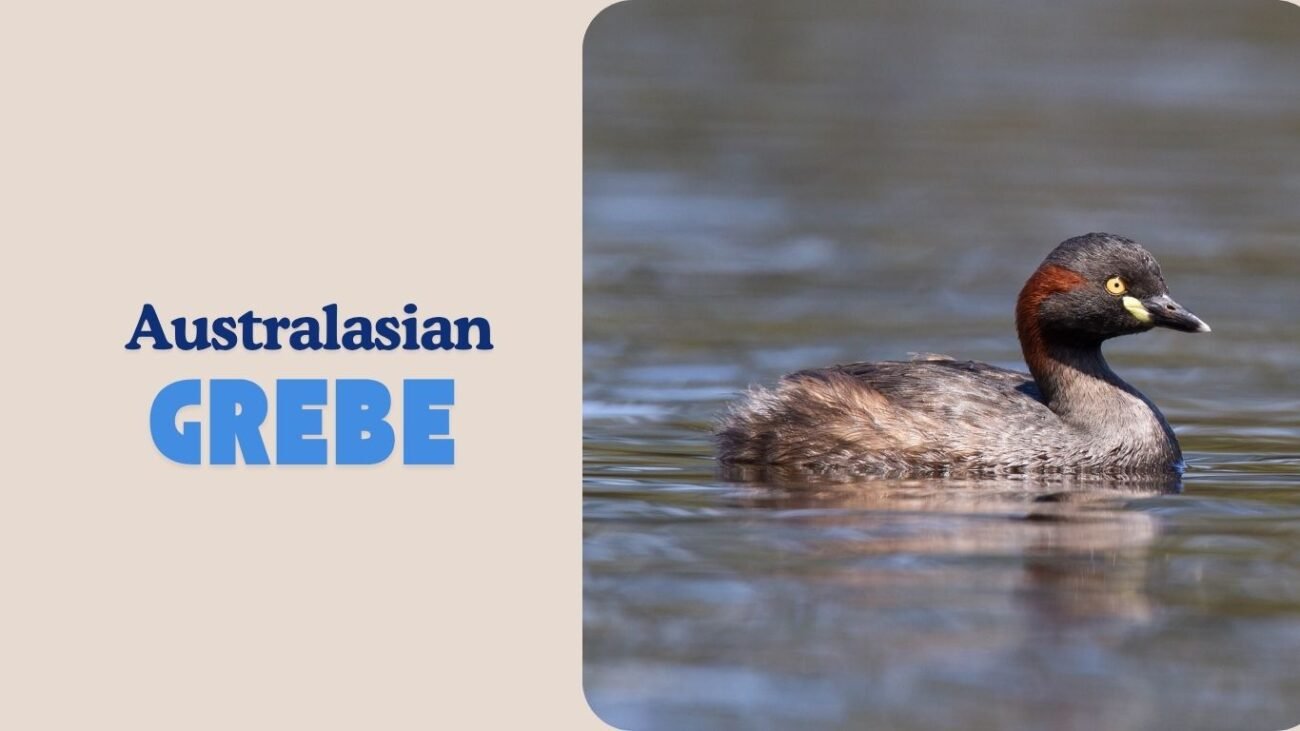
The Australasian grebe is a small freshwater diving bird commonly seen across ponds, lakes, and wetlands in Australia. Though not as well-known as larger waterbirds, it plays a quiet but important role in Australian aquatic ecosystems.
Habitat and Behavior
This grebe prefers calm, vegetated waters where it can dive for food and nest among reeds. It is a shy bird, often diving below the surface when disturbed. Though capable of short-distance flight, it usually escapes danger by swimming.
Nesting and Breeding
Australasian grebes build floating nests anchored to aquatic vegetation. They often cover their eggs with plant material to hide them from predators. Breeding can occur year-round depending on water conditions.
Identification
- Small bird, around 25–27 cm in length
- Dark brown body with a glossy black head during breeding season
- Bright yellow eyes
- Short neck and sharp, pointed bill
- White underparts visible in flight or when preening
Diet
Their diet consists of aquatic insects, small fish, and crustaceans. They hunt by diving underwater and catching prey with quick, agile movements.
Role in the Wetlands
As a native bird of Australia’s wetlands, the Australasian grebe contributes to the health of freshwater habitats by keeping aquatic insect populations in balance and supporting local biodiversity.
12. Red-tailed Black Cockatoo
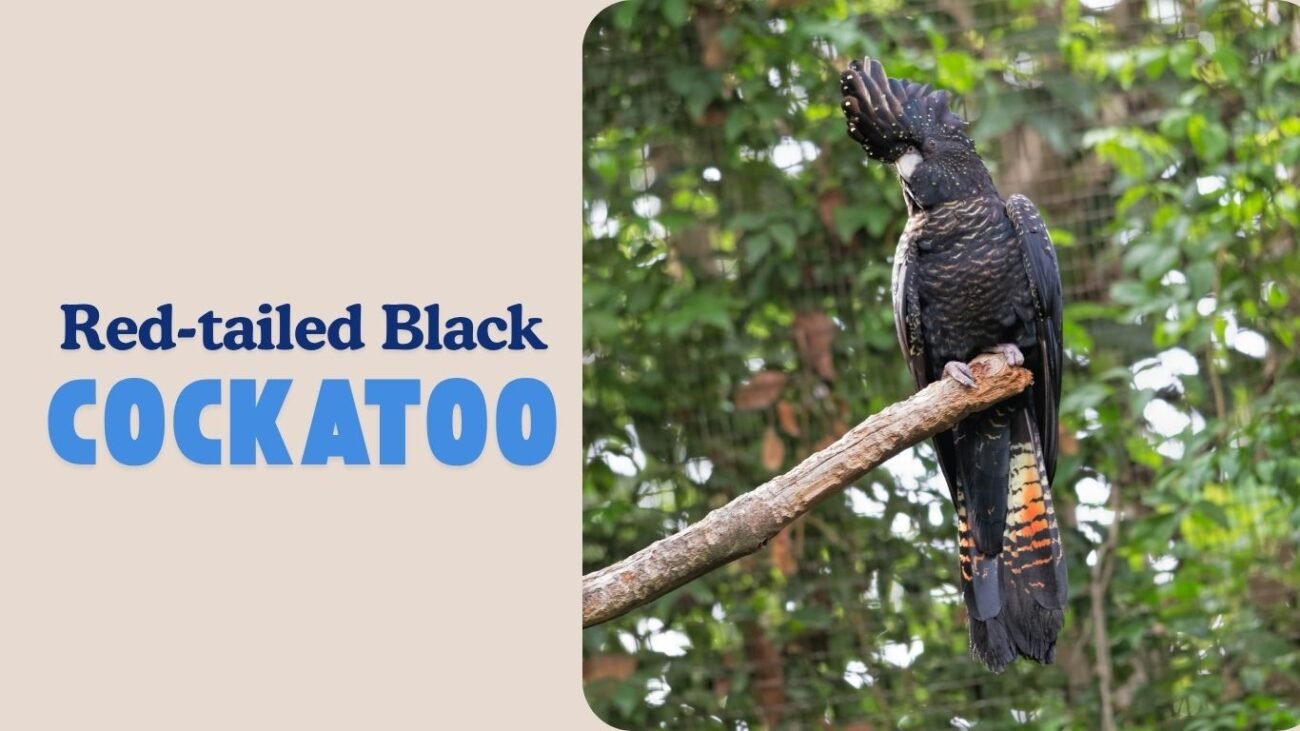
The red-tailed black cockatoo is a striking and charismatic native parrot species found across northern and central Australia. It is easily recognized by its dark plumage and vivid red tail feathers, especially in males.
Habitat and Behavior
These birds inhabit eucalyptus woodlands, savannas, and riverine forests. They are usually seen in small flocks and are known for their loud, metallic calls. Though shy in the wild, they are a treasured sight due to their size and unique appearance.
Nesting and Breeding
They nest in deep tree hollows, often in tall eucalyptus trees. Breeding typically aligns with the rainy season or times of abundant food. Pairs form strong bonds and often return to the same nesting site each year.
Identification
- Large black cockatoo, 55–65 cm long
- Males have bright red panels on tail feathers
- Females are mottled with yellow spots and have orange-yellow tail bars
- Prominent curved beak
- Powerful flight with slow, deep wingbeats
Diet
These Australian parrots feed on seeds from native trees like she-oaks, eucalyptus, and banksias. They may also consume nuts, fruits, and occasionally insect larvae.
Cultural and Environmental Role
As a distinctly Australian bird, the red-tailed black cockatoo is significant in many Indigenous cultures and plays an important role in forest ecology through seed dispersal.
13. Passerine
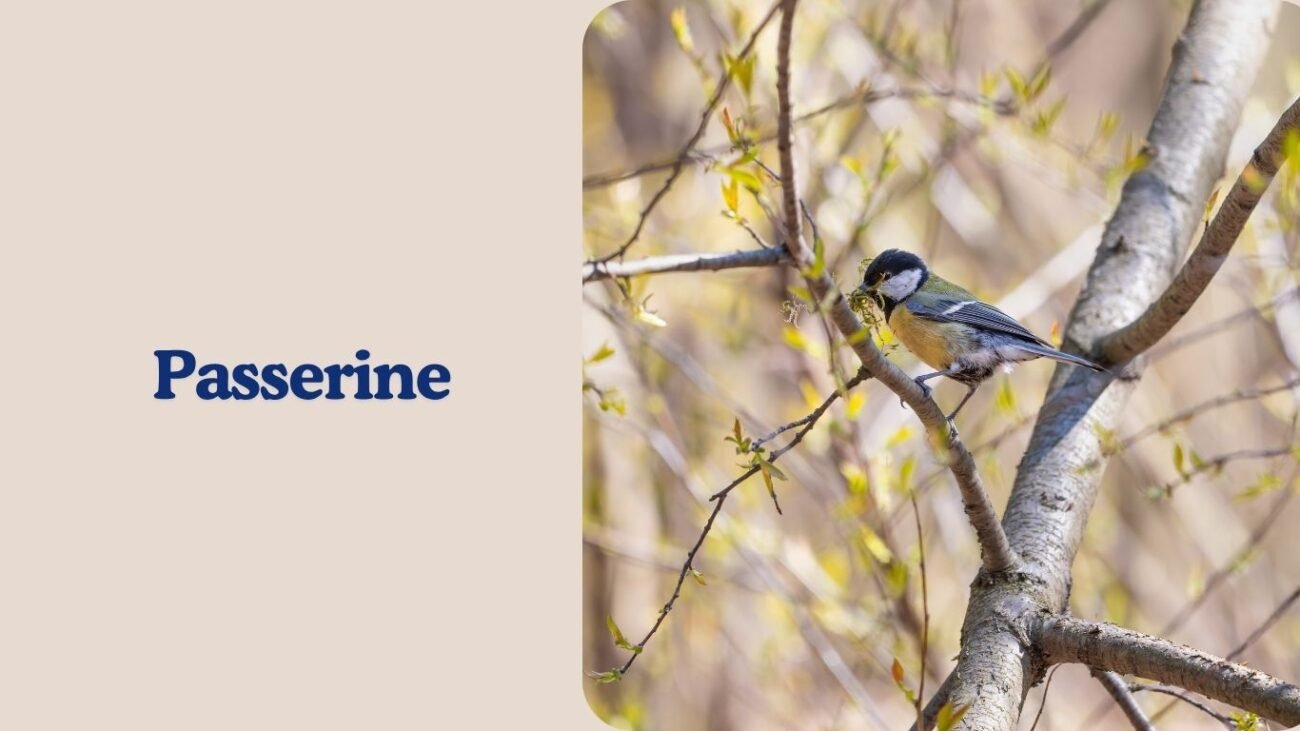
Passerines, also known as perching birds or songbirds, represent the largest order of birds in the world — and in Australia, they make up a substantial part of the native bird population. This diverse group includes wrens, robins, finches, and more.
Habitat and Behavior
Australian passerines occupy a wide range of habitats — from dense rainforests and open woodlands to deserts and urban environments. They are primarily diurnal, active during the day, and many exhibit elaborate songs and mating calls.
Nesting and Breeding
Passerines build a variety of nest types, from simple cup nests in shrubs to domed structures on the ground. Breeding seasons differ among species but are often aligned with rainfall and food availability.
Identification
- Small to medium-sized birds
- Feet adapted for perching (three toes forward, one backward)
- Diverse plumage, from plain browns to vibrant reds and blues
- Often have complex vocalizations and song patterns
- Light, agile body structures for quick movement
Diet
Their diets vary widely depending on species — some eat seeds and fruits, while others are insectivorous. Many feed chicks a high-protein diet of insects during breeding season.
Importance in the Ecosystem
As native birds of Australia, passerines play essential roles in controlling insect populations, pollinating plants, and spreading seeds. Their diversity reflects the ecological richness of Australian landscapes.
14. Crimson Rosella
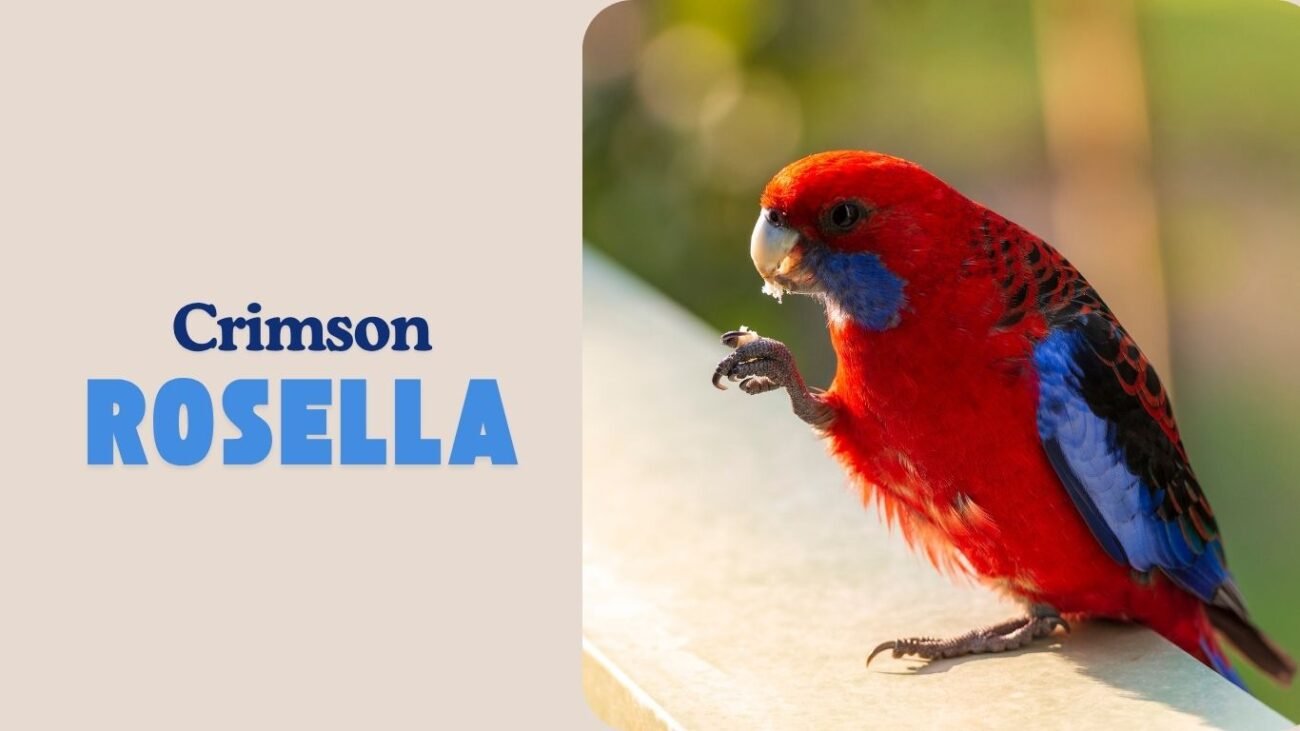
The crimson rosella is one of Australia’s most colorful and beloved native birds, found mainly in the eastern and southeastern regions. Its bright red and blue plumage makes it a standout in forests and gardens alike.
Habitat and Behavior
Crimson rosellas inhabit rainforests, woodlands, alpine forests, and even suburban areas. They are often seen in pairs or small flocks, moving gracefully through tree canopies or foraging on the ground. These birds are generally shy in the wild but can become quite tame in populated areas.
Nesting and Breeding
They nest in tree hollows, sometimes up to 30 meters high. The breeding season typically occurs from September to January. Both parents share the responsibility of feeding the chicks after hatching.
Identification
- Medium-sized parrot, about 35–36 cm long
- Brilliant red body with blue cheeks and black-scalloped blue wings
- Young birds are often greenish before molting into adult colors
- Long, graduated tail
- Soft, whistling and chattering calls
Diet
Their diet includes seeds, berries, nectar, flowers, and insects. They frequently visit garden feeders where native plants are available.
Connection to Australian Forests
As a native bird of Australia, the crimson rosella plays a role in pollination and seed dispersal in forested ecosystems. Its presence is a symbol of healthy, biodiverse woodland habitats.
15. Black Swan
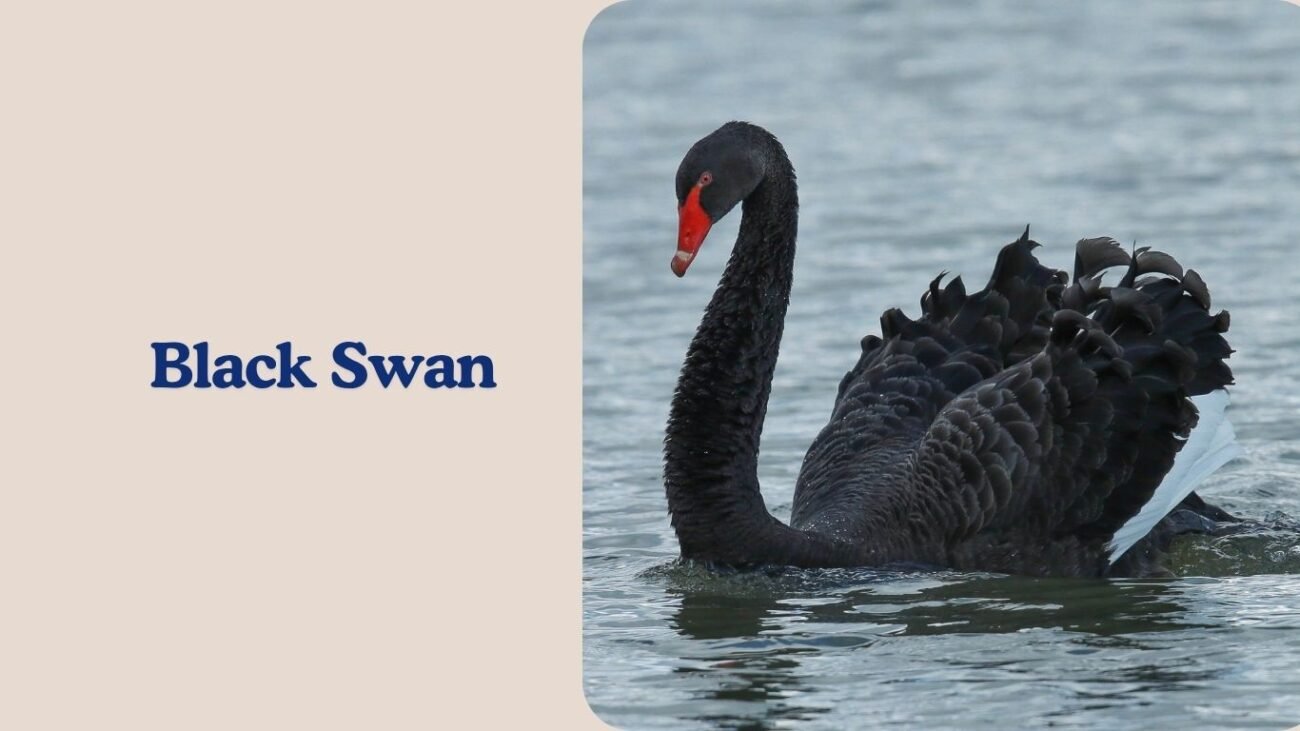
The black swan is a graceful and distinctive waterbird native to Australia, easily identified by its dark plumage and bright red bill. Once thought mythical in the West, it stands today as a proud symbol of Australia’s unique wildlife.
Habitat and Behavior
Black swans inhabit freshwater lakes, rivers, swamps, and coastal wetlands. They are strong swimmers and fliers and are often seen gliding silently across water bodies. These birds are generally social and may form large flocks outside the breeding season.
Nesting and Breeding
They construct large nests from reeds and aquatic vegetation near water edges. Breeding can occur year-round but is most common during wetter months. Both parents share in egg incubation and chick rearing.
Identification
- Large waterbird, up to 1.4 meters long
- Black plumage with white flight feathers (visible in flight)
- Long neck held in an S-shape
- Bright red beak with white tip
- Loud, bugling or trumpeting calls
Diet
They feed primarily on aquatic plants, algae, and occasionally insects. Their long necks allow them to reach submerged vegetation with ease.
Symbolic Significance
As a native Australian bird, the black swan is deeply ingrained in cultural symbolism, from Aboriginal lore to modern emblems. It serves as a powerful reminder of Australia’s biological uniqueness and ecological richness.
16. Wedge-tailed Eagle
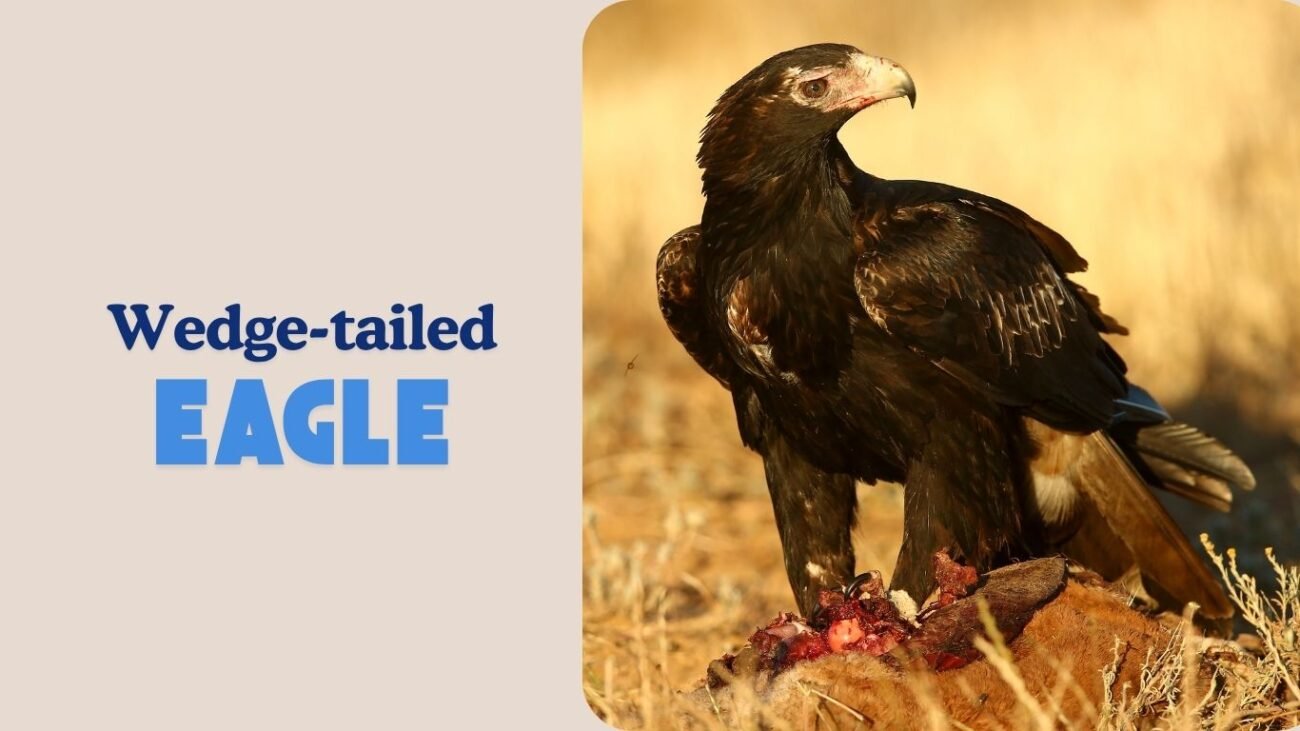
The wedge-tailed eagle is Australia’s largest bird of prey and one of the most commanding figures in the country’s skies. With its expansive wingspan and distinctive wedge-shaped tail, it is a powerful native bird that plays a crucial role in Australia’s ecosystem.
Habitat and Behavior
Wedge-tailed eagles inhabit a wide range of habitats, from arid deserts to mountain forests and open plains. They are often seen soaring high on thermals, searching for prey or carrion. These eagles are solitary or found in mated pairs, fiercely defending large territories.
Nesting and Breeding
They build massive nests in tall trees or cliff edges using sticks and branches. Some nests are reused and added to for many years, becoming enormous. Breeding typically occurs during winter and spring.
Identification
- Very large raptor, wingspan up to 2.7 meters
- Dark brown to blackish plumage with paler brown feathering on the nape
- Wedge-shaped tail, unique among Australian raptors
- Hooked beak and strong talons
- Soaring flight pattern with long, fingered wings
Diet
They hunt rabbits, wallabies, reptiles, birds, and also scavenge roadkill and livestock carcasses. Their diet reflects the openness and dryness of the Australian environment.
Role in the Ecosystem
As a native apex predator of Australia, the wedge-tailed eagle helps regulate populations of smaller animals and scavenges remains, keeping the landscape cleaner and more balanced.
17. Australian Pelican
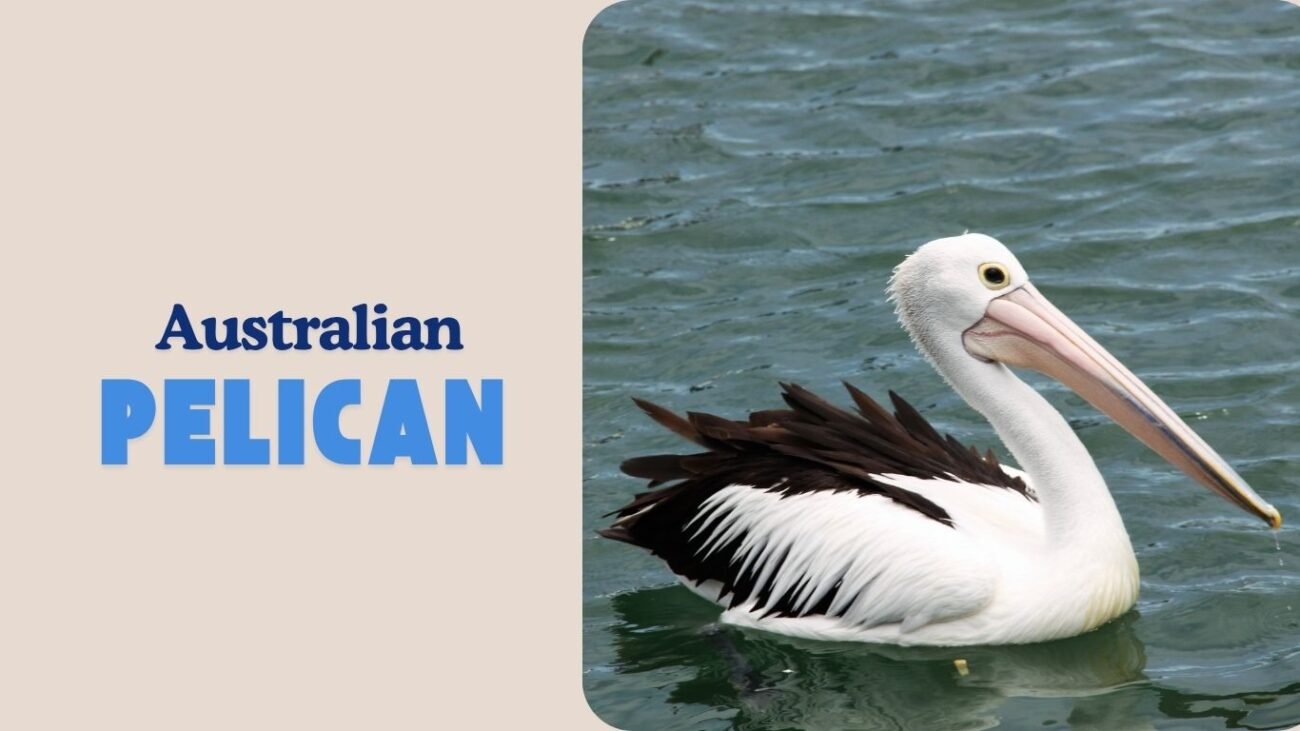
The Australian pelican is a distinctive waterbird known for having one of the largest bills of any bird in the world. Its graceful flight and social nature make it a prominent feature of Australia’s waterways and coastlines.
Habitat and Behavior
This pelican species is found throughout Australia in freshwater lakes, rivers, coastal lagoons, and even arid inland regions after rains. They are highly mobile and often travel in flocks to find abundant food sources.
Nesting and Breeding
They nest in large colonies on islands or remote shores, using ground scrapes lined with vegetation. Breeding may occur at any time of year, depending on food availability and water conditions.
Identification
- Large bird, up to 1.8 meters in length
- White body with black wings and tail
- Long pale pink bill with an elastic throat pouch
- Yellow around the eyes and on the legs
- Graceful glider with strong, steady wingbeats
Diet
Australian pelicans primarily eat fish, but also consume crustaceans, frogs, and small birds. They scoop prey using their bill and pouch, then tilt their heads back to swallow.
Ecological Role
As a widespread native waterbird, the Australian pelican helps maintain aquatic ecosystem balance. Their nomadic nature also reflects the unpredictable water cycles of Australia’s environment.
18. Magpie-lark
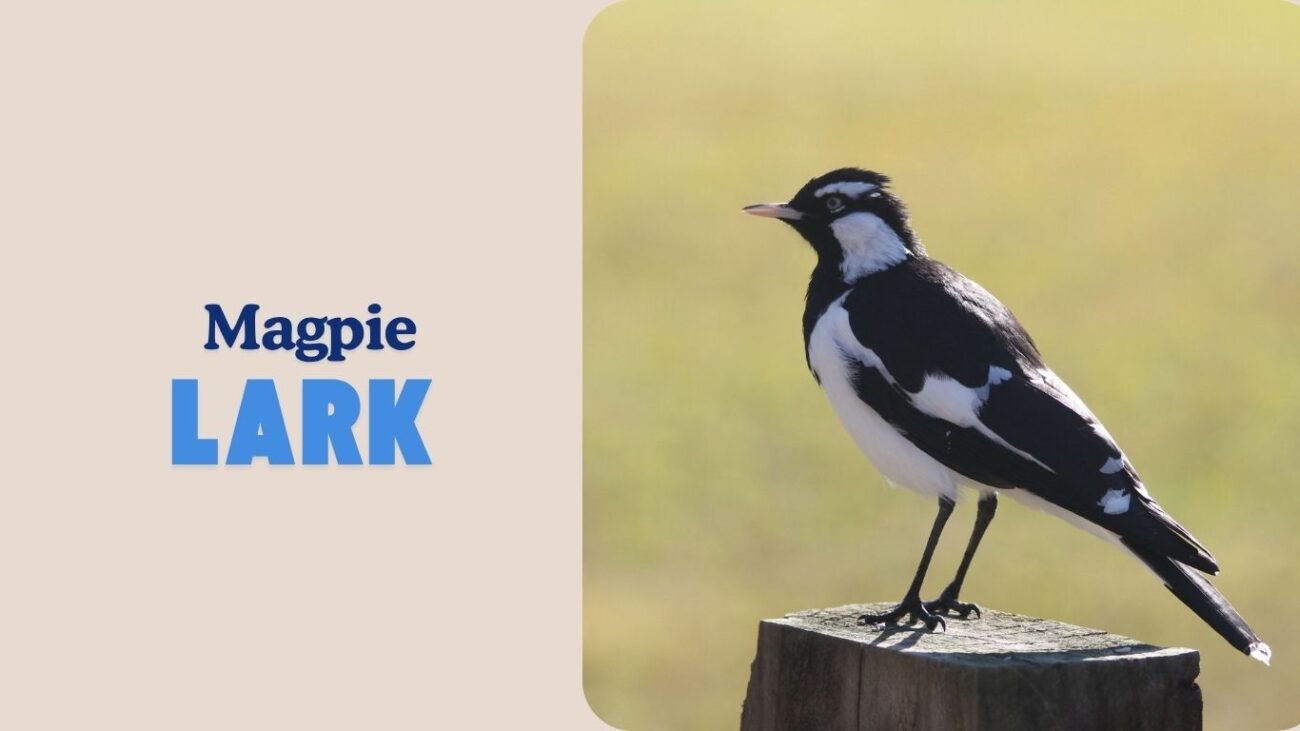
The magpie-lark, also known as the “peewee” or “mudlark,” is a familiar and adaptable native Australian bird found across nearly every region of the country. Despite its black-and-white coloring, it is not related to the Australian magpie.
Habitat and Behavior
This bird thrives in a variety of environments including open woodlands, grasslands, wetlands, and urban parks. Magpie-larks are often seen walking on the ground or perched on fences, and their sharp “peewee” call is a common sound in Australian towns.
Nesting and Breeding
They build distinctive bowl-shaped nests from mud and grass, typically placed on horizontal tree branches or even man-made structures. Both male and female share nest building, incubation, and chick care.
Identification
- Medium-sized bird, about 26–30 cm long
- Black and white plumage: males have black throats, females have white
- Long legs and upright posture
- Straight, sharp bill
- Loud, high-pitched duetting calls
Diet
Magpie-larks feed on insects, worms, and small invertebrates found on the ground. They are often seen foraging in short grass or near wetlands.
Role in Urban and Rural Landscapes
As one of Australia’s most widespread native birds, the magpie-lark is an important insect controller and a well-recognized feature of both natural and built environments.
19. Australasian Bittern
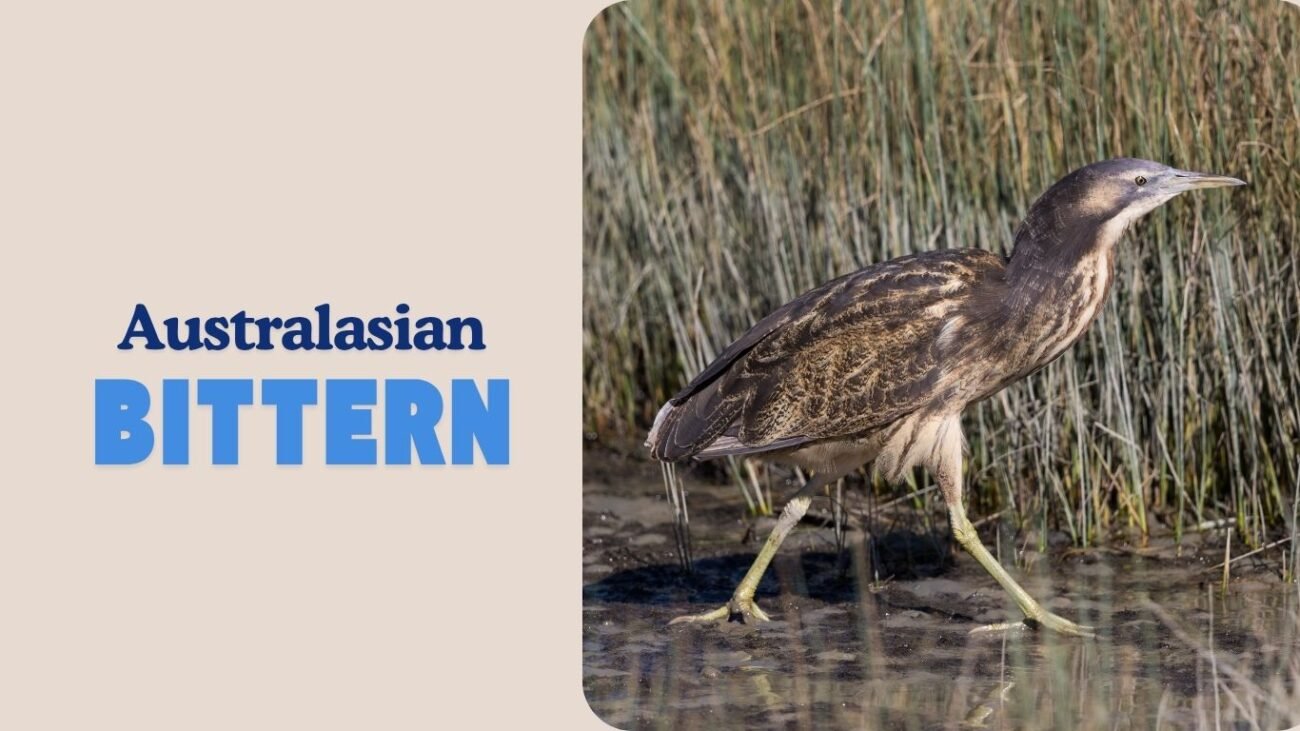
The Australasian bittern is a secretive and rarely seen wetland bird that blends perfectly with its reed-filled habitat. Though elusive, it holds high conservation value as a native Australian species under threat due to habitat loss.
Habitat and Behavior
Found in wetlands with dense reed beds, this bittern relies on camouflage to avoid predators. It is solitary and mostly active at dusk and dawn. Its booming call during the breeding season is often the only clue to its presence.
Nesting and Breeding
They build hidden nests low among reeds or rushes, often over shallow water. Females incubate the eggs and raise the chicks alone, typically during spring and summer when wetlands are full.
Identification
- Large, stocky bird, about 66–76 cm in length
- Brown, streaked plumage that mimics reeds
- Thick neck and dagger-like bill
- When alarmed, it freezes with its bill pointed upward to blend in
- Low, booming call, often heard but rarely seen
Diet
They feed on fish, frogs, aquatic insects, and small reptiles. Their hunting method involves slow stalking and quick strikes.
Conservation Significance
As a native bird of Australia’s wetlands, the Australasian bittern is an indicator species for ecosystem health. Its declining numbers make it a focus of conservation efforts in several states.
20. Australasian Shoveler
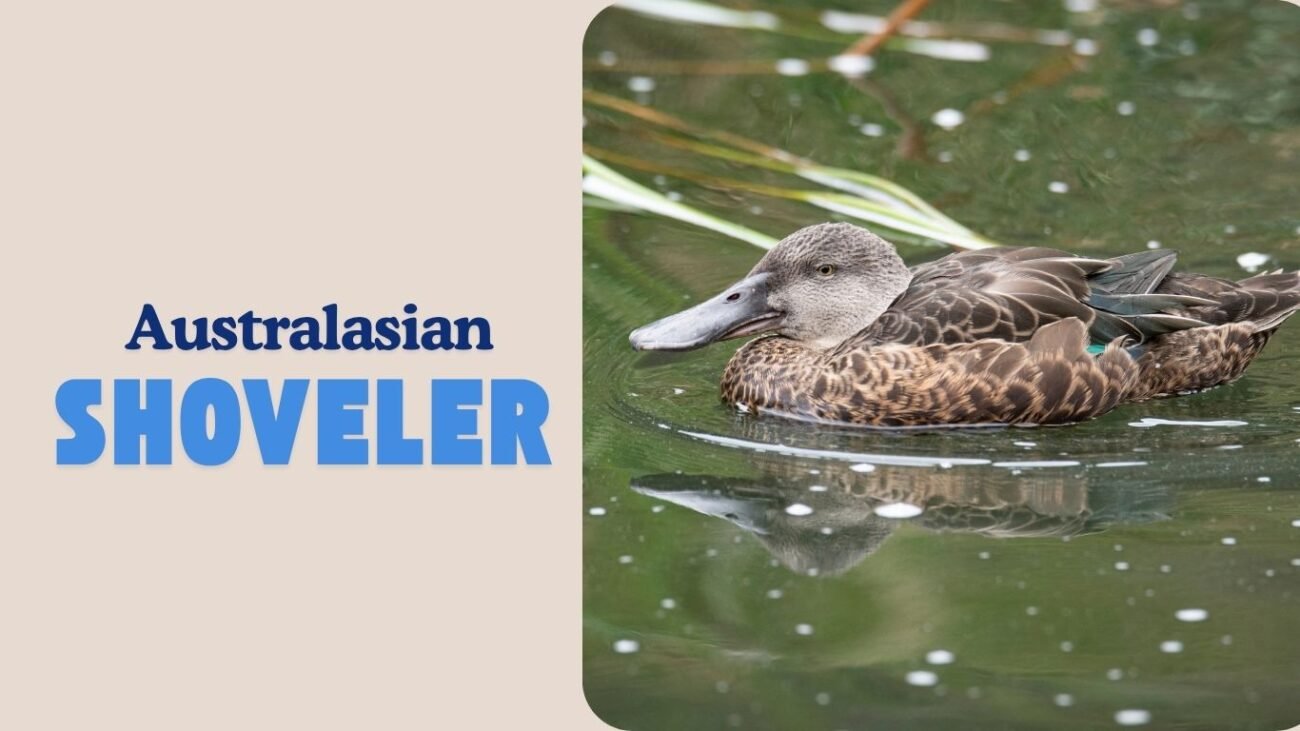
The Australasian shoveler is a striking species of dabbling duck known for its distinctive shovel-shaped bill. Found in the southern parts of Australia and New Zealand, this native bird is a specialist filter-feeder of shallow wetlands.
Habitat and Behavior
These ducks prefer shallow freshwater swamps, lakes, and lagoons with dense vegetation. They are often seen in pairs or small groups, skimming the water’s surface with their broad bills to filter out food.
Nesting and Breeding
Nesting usually occurs in dense reeds or grass near water. The female lays and incubates the eggs while the male guards nearby. Breeding often coincides with seasonal rains to ensure food abundance.
Identification
- Medium-sized duck, about 46–53 cm long
- Males: blue-grey head, chestnut flanks, and white crescent in front of eyes
- Females: mottled brown with duller markings
- Large, spoon-like black bill
- Pale blue upper wing visible in flight
Diet
Their bill allows them to strain aquatic invertebrates, seeds, and plant matter from the water. They often feed by “dabbling” with their head submerged.
Role in Wetland Ecosystems
As an Australian native waterbird, the Australasian shoveler contributes to the balance of wetland food chains, and its presence often signals healthy aquatic habitats.
21. Splendid Fairywren
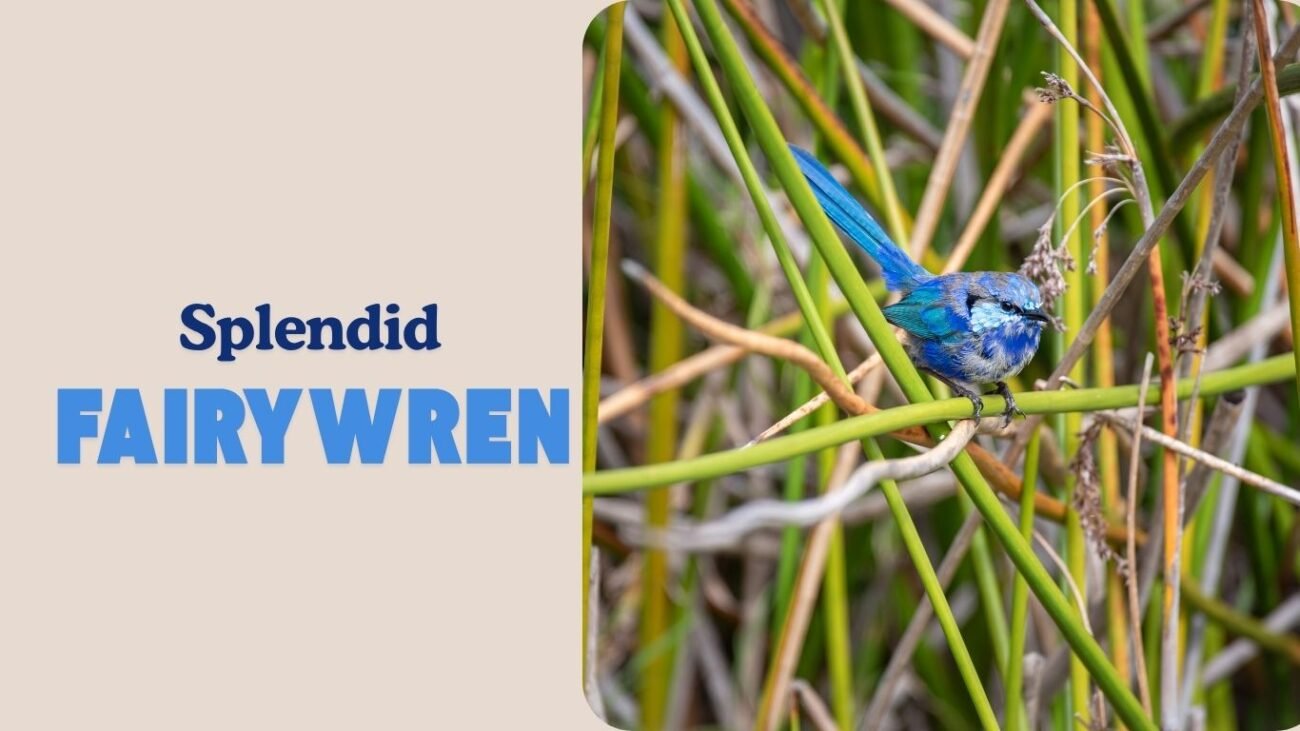
The splendid fairywren is a jewel-toned, small native bird that inhabits arid and semi-arid regions of Australia. Males in breeding plumage are among the most brilliantly colored of all Australian birds.
Habitat and Behavior
These wrens prefer scrublands, open forests, and mulga-dominated regions. They live in small family groups and are active foragers, hopping among shrubs and grass for insects. Despite their bright appearance, they are quick and secretive.
Nesting and Breeding
Fairywrens build dome-shaped nests close to the ground, hidden among dense shrubs. Females do most of the nesting work, while other group members help feed the chicks — a cooperative breeding system.
Identification
- Very small, about 14 cm long including the tail
- Breeding males: vibrant blue and black plumage
- Non-breeding males and females: brownish-grey with blue tinges
- Long, upright tail
- Quick, darting movements
Diet
They eat small insects, spiders, and other invertebrates. Foraging takes place low in vegetation or on the ground.
A Symbol of Arid Beauty
This fairywren is one of the most visually iconic Australian birds, showcasing how even the dry inland regions are rich with color and life.
22. Australian Bustard
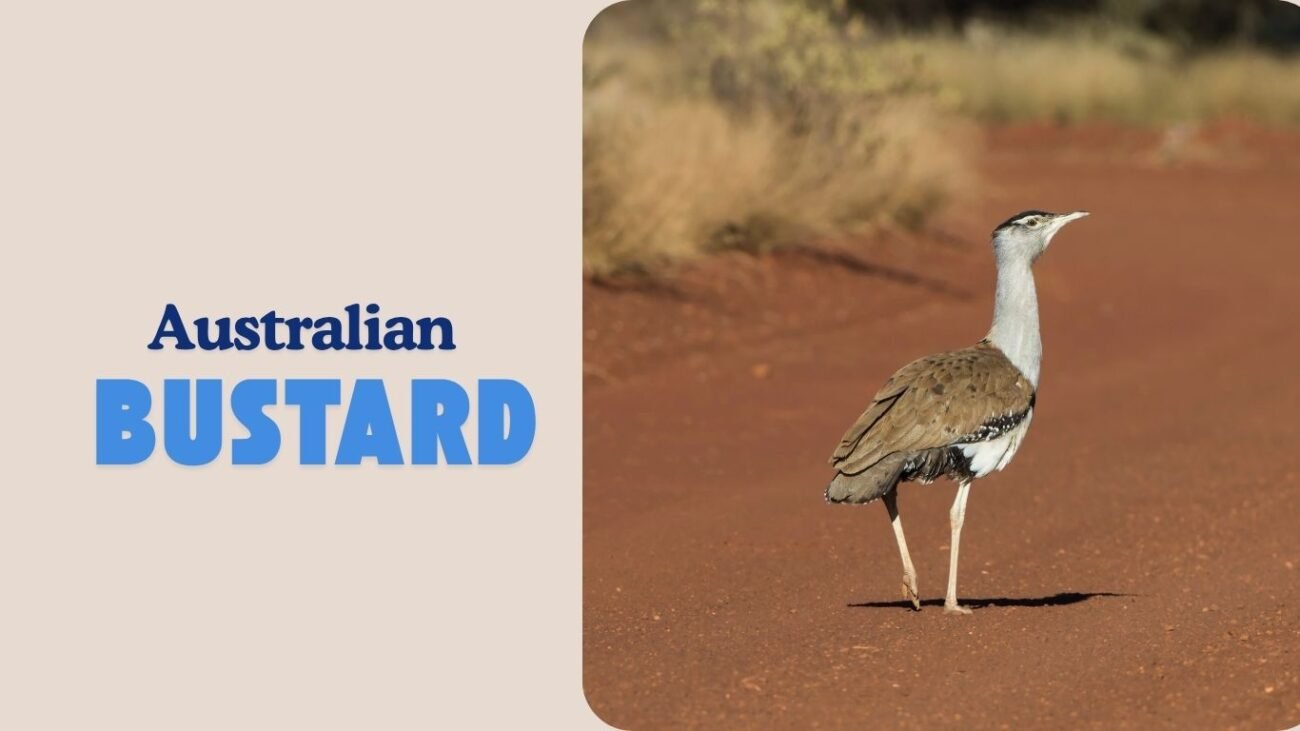
The Australian bustard is a large, ground-dwelling native bird known for its upright posture and slow, stately movements. Found mostly in northern and inland regions, it is one of the heaviest flying birds in Australia.
Habitat and Behavior
Australian bustards prefer open grasslands, savannas, and arid plains. They are usually solitary or in small groups and rely on camouflage to avoid predators. Despite their size, they are capable fliers and may cover large distances when disturbed.
Nesting and Breeding
They nest directly on the ground in shallow scrapes, typically without any lining. The female incubates the eggs and cares for the chicks alone. Breeding may coincide with wet seasons when food is more abundant.
Identification
- Very large bird, up to 1.2 meters tall
- Mottled brown and white plumage with black crown
- Long legs and neck
- Males have an inflatable throat sac used during courtship displays
- Slow and upright walking posture
Diet
These omnivorous Australian birds eat seeds, berries, insects, and small vertebrates. Their varied diet makes them well-suited to harsh inland environments.
Ecological and Cultural Value
As a native species, the bustard plays a role in balancing insect and small animal populations. It also holds significance in Indigenous Australian culture and traditional stories.
23. Australian Raven
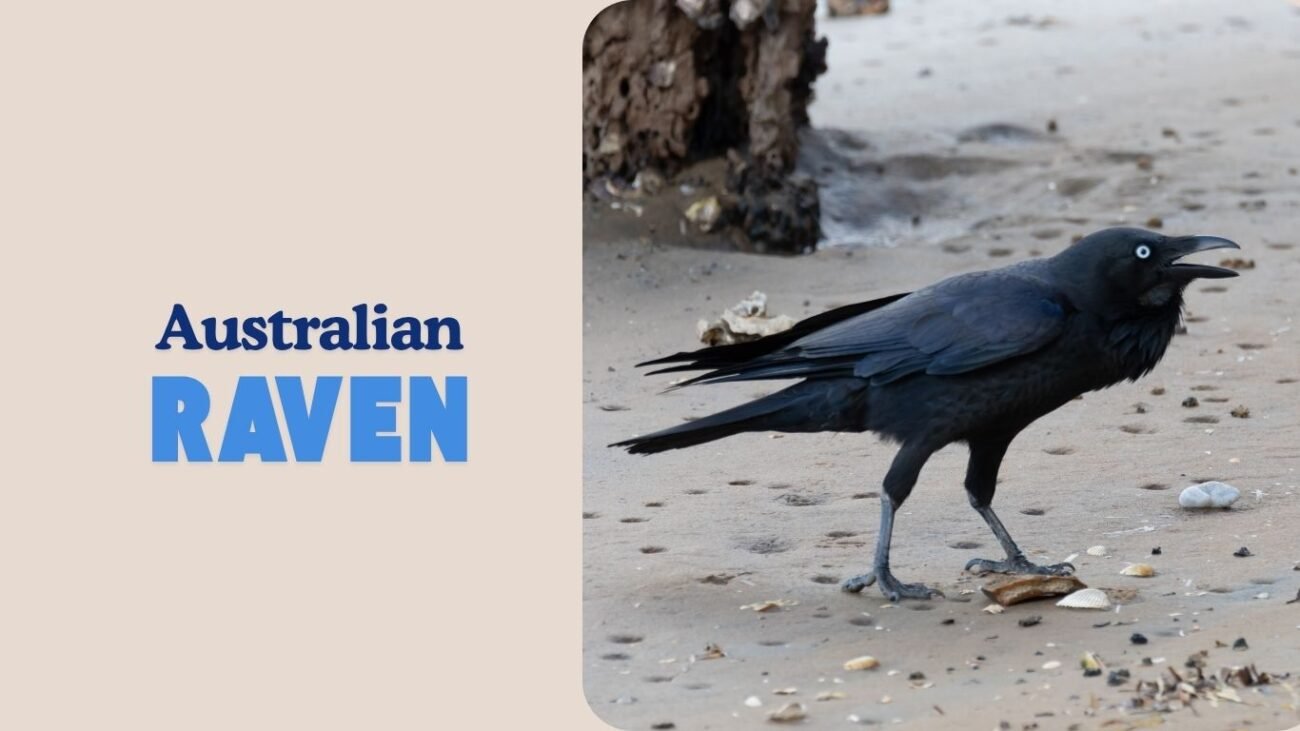
The Australian raven is a highly intelligent and adaptable native bird commonly found across eastern and southern Australia. It is often mistaken for crows but can be distinguished by its unique call and throat hackles.
Habitat and Behavior
These ravens inhabit forests, farmland, urban areas, and open plains. They are opportunistic feeders and have learned to thrive around human settlements. Their complex social behavior and problem-solving skills highlight their intelligence.
Nesting and Breeding
They build large stick nests high in trees, often reused and repaired year after year. Pairs are monogamous and stay together for life, raising chicks cooperatively.
Identification
- Large black bird, around 50 cm long
- Glossy black feathers with a green-blue sheen
- White, bluish-white eyes in adults
- Long, shaggy throat hackles
- Deep, drawn-out “ah-ah-aaaah” call
Diet
They eat carrion, insects, grains, fruit, and food scraps. Their diet reflects their scavenging nature and ability to exploit urban environments.
Significance in the Ecosystem
As native scavengers of Australia, Australian ravens help clean the environment by consuming dead animals and waste, contributing to ecological balance in both natural and urban ecosystems.
24. Songbirds
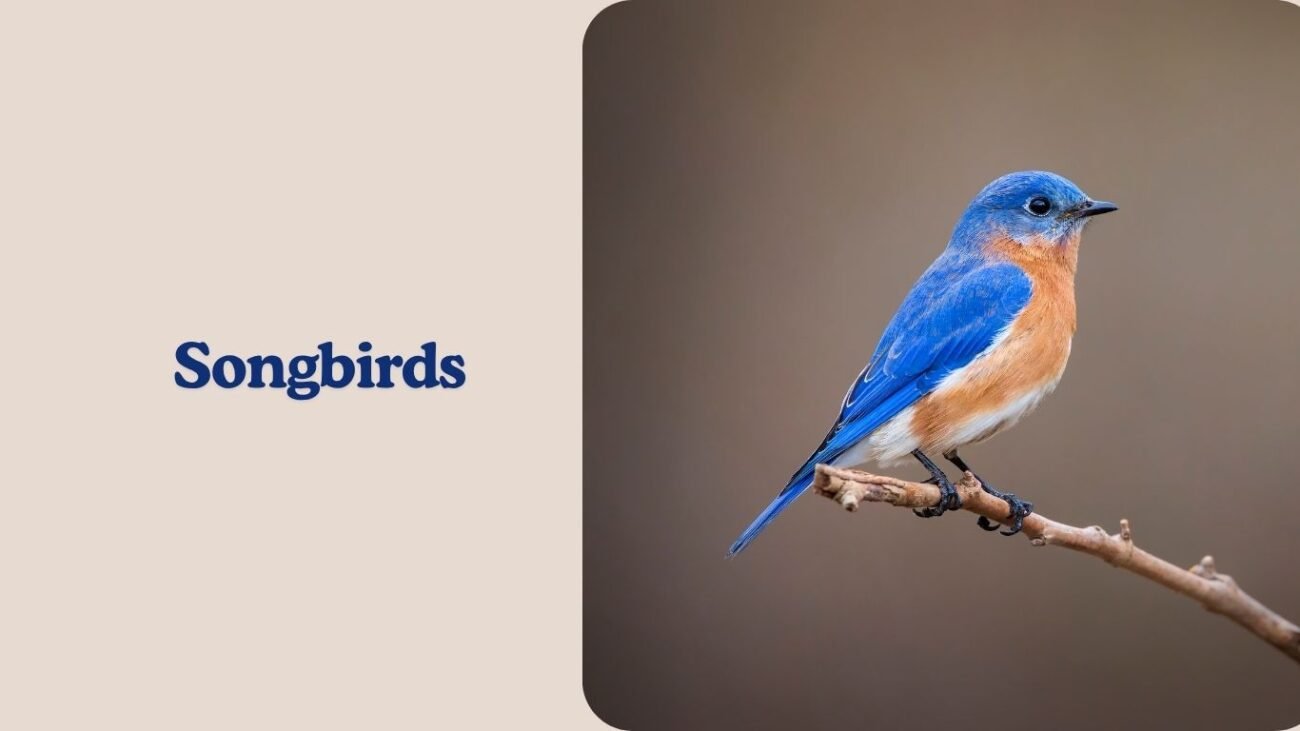
Songbirds, also referred to as oscine passerines, make up a large portion of Australia’s native bird population. Known for their melodic vocalizations, these birds are found in nearly every type of habitat across the continent.
Habitat and Behavior
Australian songbirds inhabit rainforests, deserts, coastlines, grasslands, and urban gardens. They are active, vocal, and often territorial during breeding seasons. Their songs are used for mate attraction, communication, and territory defense.
Nesting and Breeding
Nesting styles vary widely among songbirds — from cup nests in trees to woven nests in shrubs. Many species have defined breeding seasons aligned with rainfall or springtime, while others may breed opportunistically.
Identification
- Small to medium-sized birds
- Feet adapted for perching
- Highly developed voice box (syrinx) for complex singing
- Wide range of colors and patterns
- Agile flyers, often quick and acrobatic
Diet
Their diets include insects, nectar, fruits, seeds, and small invertebrates. Some species are exclusively insectivorous, while others are omnivorous.
Contribution to Australian Biodiversity
As an integral group of native birds in Australia, songbirds enhance the soundscape of wild habitats and play vital roles in pollination, insect control, and seed dispersal.
25. Great Crested Grebe
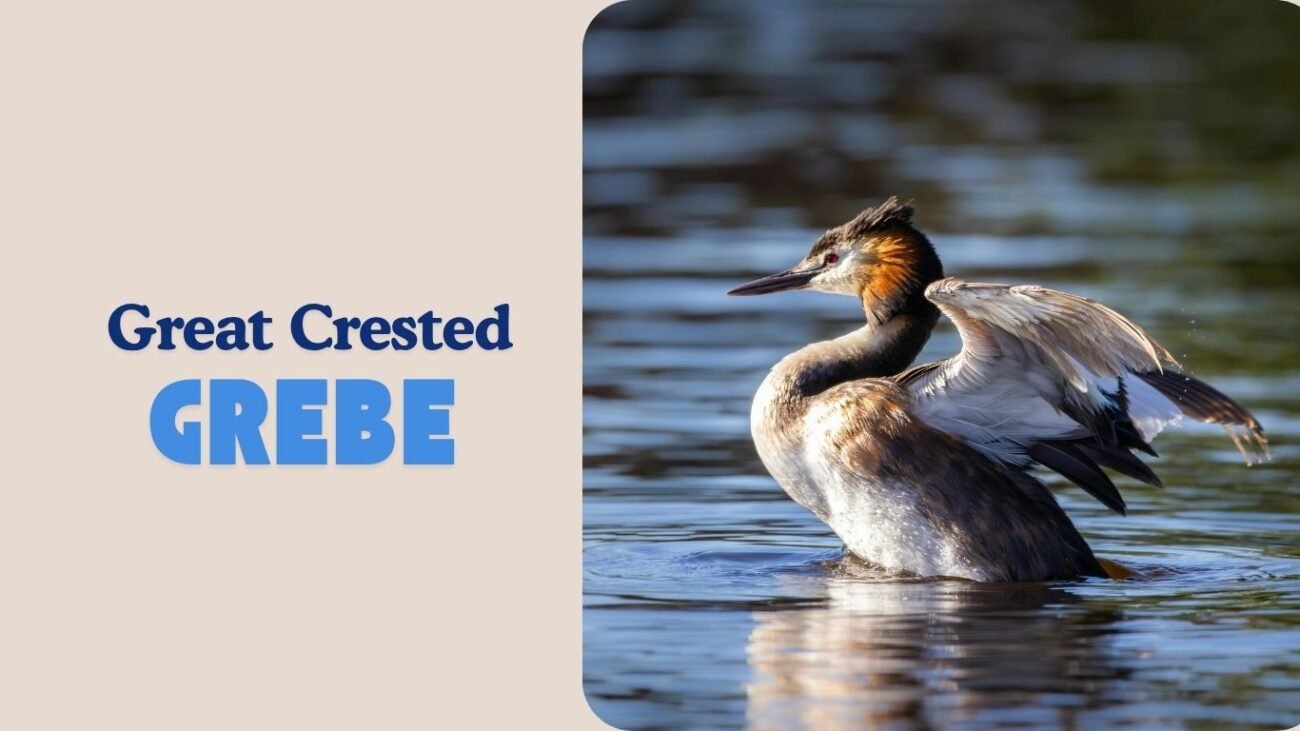
The great crested grebe is an elegant and slender waterbird found in southeastern parts of Australia. It is best known for its elaborate courtship dance and striking head plumes, making it one of the most graceful aquatic birds in the region.
Habitat and Behavior
This grebe prefers freshwater lakes, deep ponds, and slow-moving rivers with plenty of aquatic vegetation. It is an excellent swimmer and diver, spending most of its life on water. Grebes are mostly solitary or seen in pairs, especially during breeding season.
Nesting and Breeding
They build floating nests anchored to reeds or submerged vegetation. Their mating rituals involve synchronized head-shaking and display dances. Both parents care for the chicks, often carrying them on their backs while swimming.
Identification
- Medium to large waterbird, about 46–51 cm long
- Slender neck and pointed bill
- Chestnut and black head crests during breeding season
- White underparts and dark back
- Red eyes and sharp, streamlined profile
Diet
They feed primarily on fish, but also eat aquatic insects, crustaceans, and small amphibians. Their hunting technique involves deep dives and underwater chases.
Indicator of Healthy Wetlands
As a native Australian waterbird, the great crested grebe’s presence reflects the health of freshwater ecosystems, particularly where water quality and vegetation remain intact.
26. Adélie Penguin
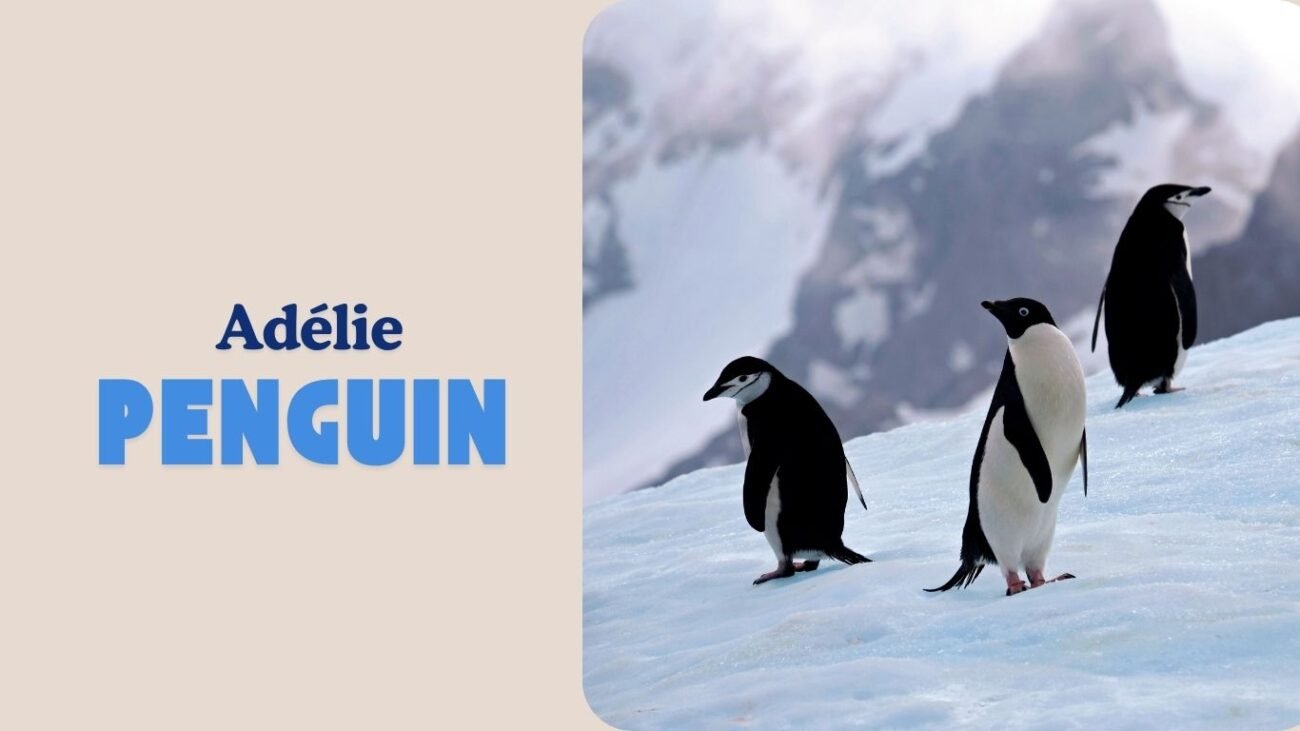
Though not a mainland resident, the Adélie penguin is included in the list of Australian birds due to its presence in the Australian Antarctic Territory. These native birds of Antarctica are often associated with Australia’s sub-Antarctic conservation programs.
Habitat and Behavior
Adélie penguins live along the entire Antarctic coast and nearby islands. They are highly adapted to the harsh polar environment, forming massive breeding colonies on rocky, ice-free shores. In water, they are swift and agile hunters.
Nesting and Breeding
They build simple nests from stones and breed during the Antarctic summer. After laying two eggs, both parents take turns incubating and feeding the chicks, which fledge after about two months.
Identification
- Medium-sized penguin, about 70 cm tall
- Black back and head, white chest and belly
- White eye ring is a distinctive feature
- Flipper-like wings used for swimming
- Stiff, upright posture on land
Diet
Their diet consists mostly of krill, fish, and squid. They dive deep under the ice or in open water to forage, often in coordinated group hunts.
Connection to Australian Research
While not endemic to mainland Australia, the Adélie penguin is protected under Australian Antarctic programs, making it a significant bird in the broader scope of Australia’s native and protected wildlife efforts.
27. Noisy Miner
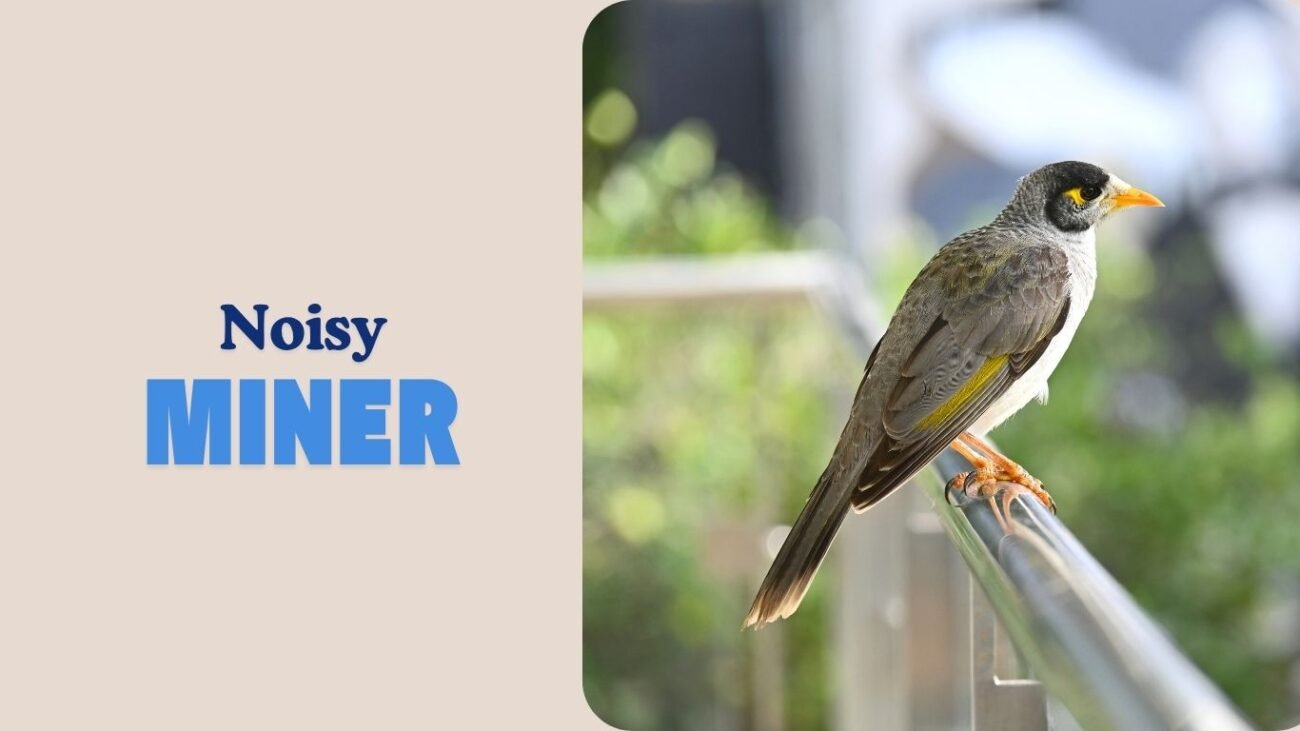
The noisy miner is a bold, highly vocal native Australian bird that dominates many urban parks and woodlands. It belongs to the honeyeater family and is known for its aggressive behavior toward other bird species.
Habitat and Behavior
These birds are common in open forests, eucalypt woodlands, and suburban gardens. Noisy miners form large, cooperative colonies and are extremely territorial, often chasing away other birds and even small mammals.
Nesting and Breeding
They build neat, cup-shaped nests high in trees, lined with soft materials. Breeding can occur multiple times per year, and colony members assist in raising young — a behavior known as cooperative breeding.
Identification
- Medium-sized bird, about 24–28 cm long
- Grey body with black crown and yellow patch behind the eyes
- Yellow-orange beak and legs
- Constant chattering and alarm calls
- Fast and direct flight
Diet
Primarily nectar feeders, they also consume fruits, insects, and occasionally small reptiles. Their aggressive defense of food sources often displaces other species.
Ecological Impact
As native birds of Australia, noisy miners are part of the natural ecosystem, but their dominance in disturbed habitats can reduce local bird diversity — a growing concern in urban ecology studies.
28. Southern Cassowary
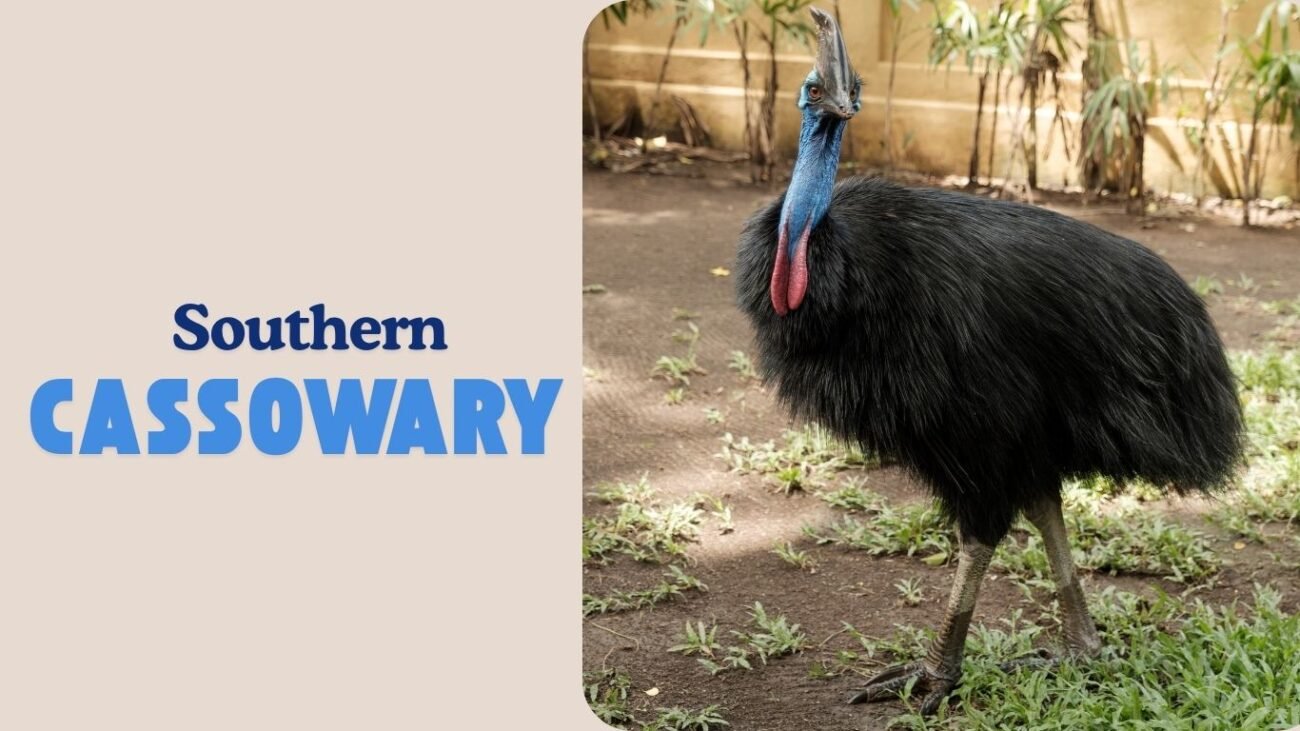
The southern cassowary is one of Australia’s most ancient and striking native birds, found primarily in the tropical rainforests of northern Queensland. It is the heaviest bird in Australia and one of only a few birds capable of seriously injuring predators with powerful kicks.
Habitat and Behavior
Cassowaries live in dense tropical rainforests but can also be found in mangroves and nearby woodlands. They are solitary, secretive, and prefer to stay hidden among thick undergrowth. Despite their size, they are agile runners and strong swimmers.
Nesting and Breeding
Males build the nest on the forest floor and also take full responsibility for incubating the eggs and raising the chicks. Breeding typically occurs during the wet season.
Identification
- Large flightless bird, up to 2 meters tall
- Jet black feathers with a bright blue neck and red wattles
- Helmet-like casque on the head
- Three strong toes, with a dagger-like claw on the inner toe
- Deep, booming call used for long-distance communication
Diet
Cassowaries are frugivores, feeding mainly on fallen fruits, fungi, and occasional small animals. Their digestive system allows them to disperse seeds over large distances, aiding rainforest regeneration.
Conservation Importance
As an endangered native bird of Australia, the southern cassowary plays a critical ecological role and is the only disperser of many large-seeded rainforest plants.
29. Willie Wagtail
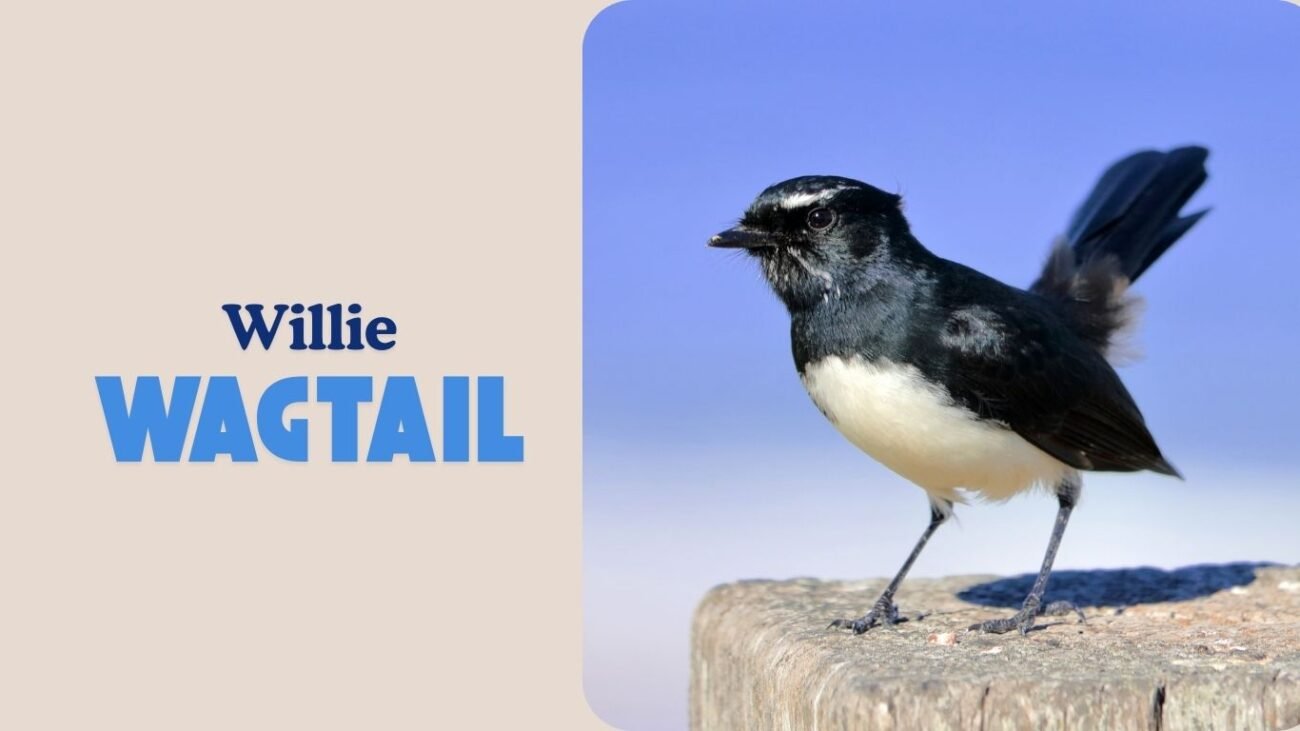
The willie wagtail is a small, agile native Australian bird known for its cheerful behavior and ever-wagging tail. It is one of the most widely distributed birds in Australia, thriving in both rural and urban settings.
Habitat and Behavior
Willie wagtails live in open woodlands, farmlands, and urban gardens. They are extremely territorial and are often seen chasing much larger birds away from their nests or territory. Their continuous tail-wagging and energetic movements make them easy to recognize.
Nesting and Breeding
They build small cup nests made of grass, bark, and spider webs, typically placed on horizontal tree branches. Both male and female take turns feeding the chicks.
Identification
- Small bird, around 19–21 cm long
- Black upper body with white belly and eyebrow stripe
- Long, black tail constantly wagged side to side
- Sharp, chattering and scolding calls
- Bold and fearless around humans
Diet
Willie wagtails are insectivores, catching flies, moths, beetles, and other insects mid-air or on the ground.
Common Yet Unique
As one of the most approachable native birds in Australia, the willie wagtail plays an important role in insect control and is often welcomed in gardens and farms.
30. Barn Owl
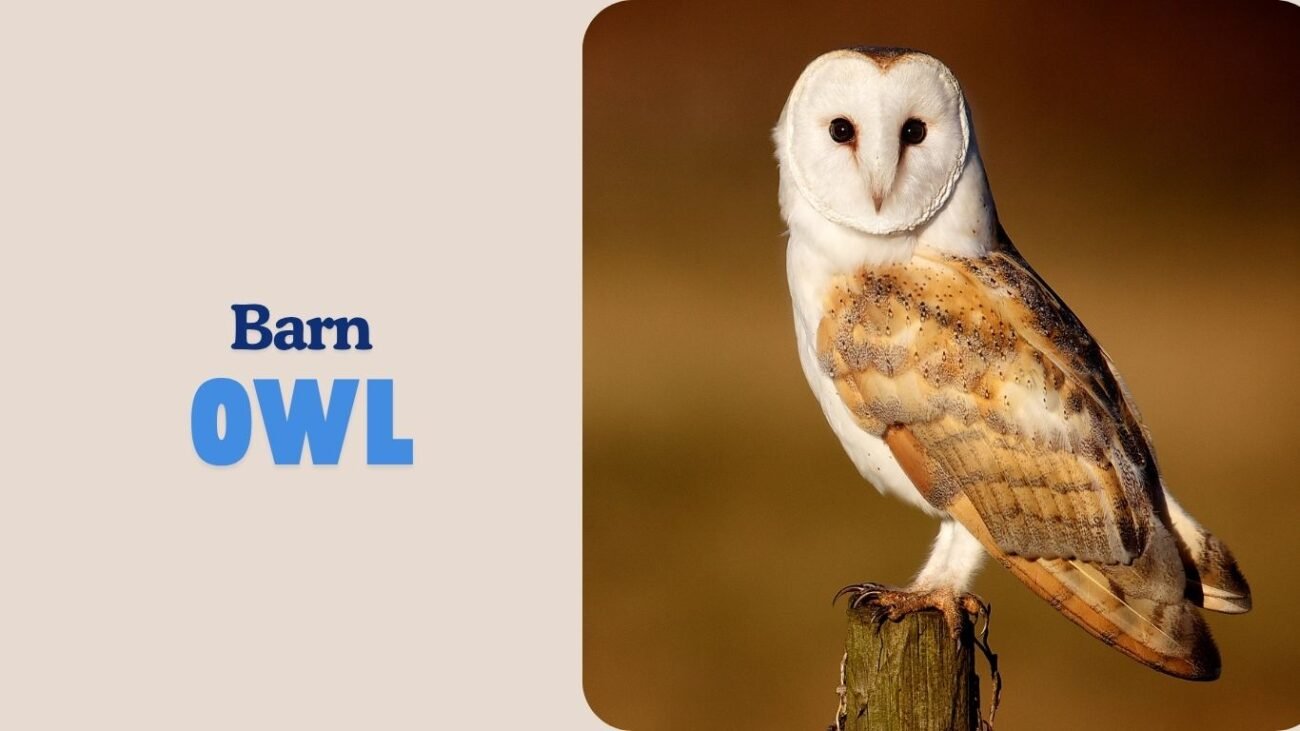
The barn owl is a widespread species found across Australia and is recognized for its ghostly appearance and silent flight. Though globally distributed, it remains an essential part of Australia’s native nocturnal birdlife.
Habitat and Behavior
Barn owls inhabit open grasslands, farmland, forest edges, and even urban areas. They are strictly nocturnal and rely on exceptional hearing and night vision to locate prey in darkness.
Nesting and Breeding
They nest in tree hollows, abandoned buildings, or nest boxes. Breeding occurs when food is abundant, and both parents care for the young.
Identification
- Medium-sized owl, about 33–39 cm long
- Heart-shaped white facial disk with dark eyes
- Pale underparts and golden-grey upperparts
- Long wings and legs
- Completely silent in flight due to specialized feathers
Diet
They mainly hunt small mammals like mice, rats, and bandicoots. Their ability to control rodent populations makes them vital in natural and agricultural settings.
Contribution to the Ecosystem
As native birds of Australia, barn owls serve as natural pest controllers and play a key role in balancing small mammal populations.
31. New Holland Honeyeater
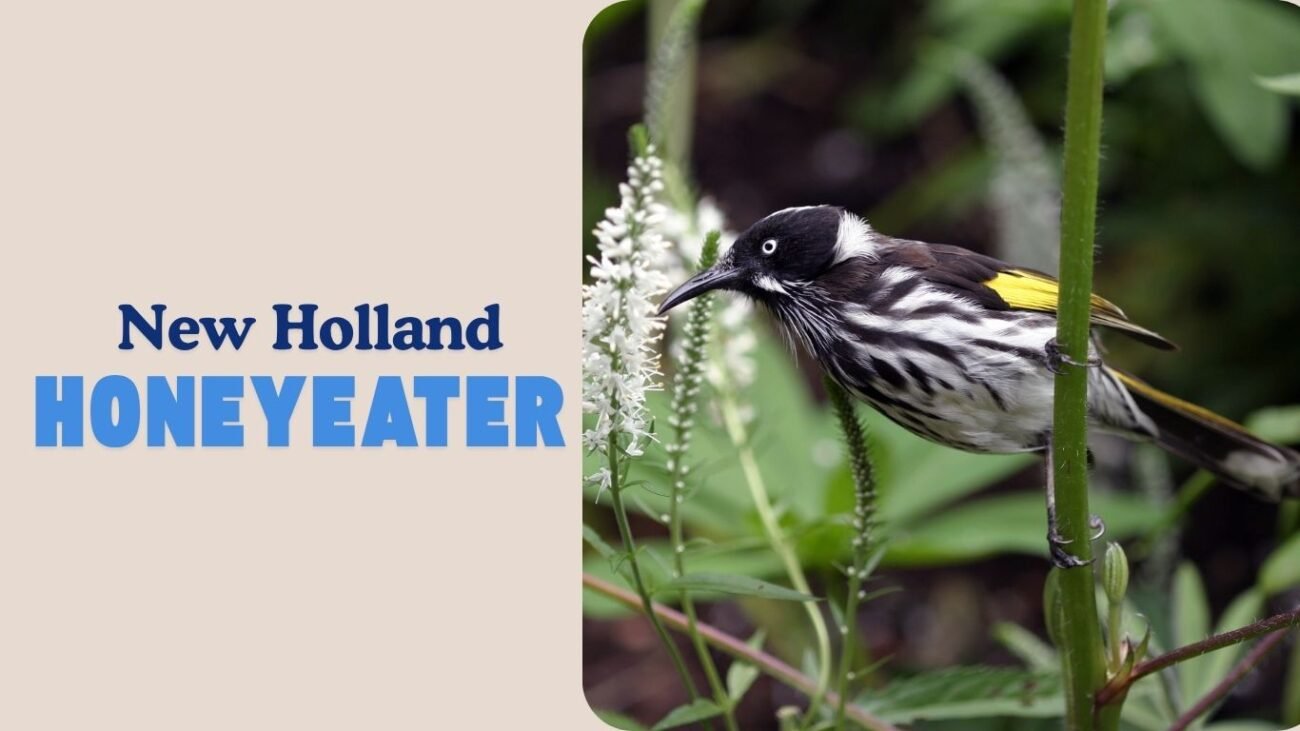
The New Holland honeyeater is a highly active and noisy species, often seen darting among flowering shrubs. It’s one of the most common and widespread honeyeaters in southern Australia, making it a valuable native pollinator.
Habitat and Behavior
These birds prefer coastal heathlands, woodlands, gardens, and forests. They are territorial and quick-moving, often engaging in aerial chases and frequent vocal exchanges.
Nesting and Breeding
They build small cup nests in dense shrubs using twigs, grasses, and spider silk. Breeding may occur multiple times per year in regions with continuous flower availability.
Identification
- Small bird, around 17–18 cm long
- Black head with white eye patch
- Streaked white chest and yellow wing panels
- Thin, curved bill
- High-pitched, rapid chattering calls
Diet
They primarily feed on nectar but also consume insects and spiders, especially during chick-rearing.
Importance in Plant Pollination
As energetic native birds of Australia, New Holland honeyeaters play a vital role in pollinating many native flowering plants, especially banksias, grevilleas, and eucalypts.
32. Cassowaries
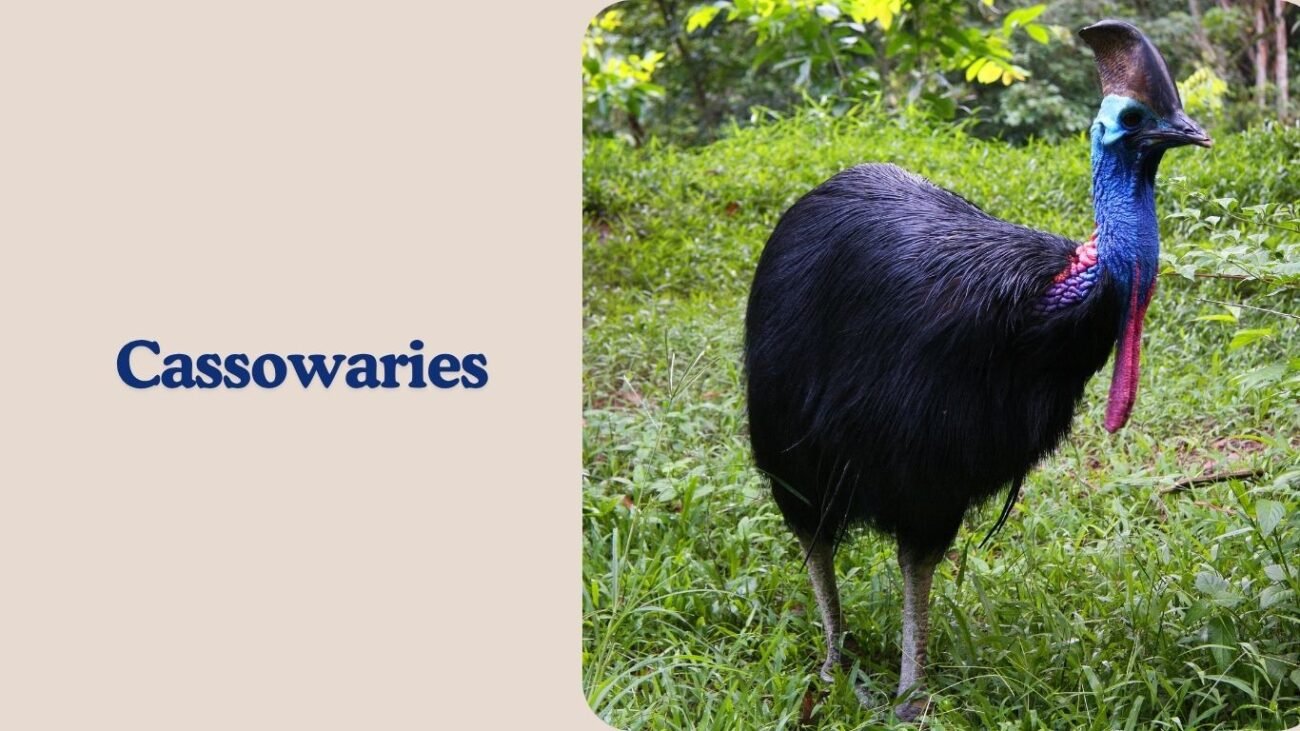
Cassowaries are a group of large, flightless birds, with the southern cassowary being the primary species found in Australia. These prehistoric-looking native birds are confined to the tropical rainforests of northeastern Queensland and are considered one of the most important seed dispersers in the region.
Habitat and Behavior
Cassowaries thrive in dense, humid rainforests where they are rarely seen due to their shy and solitary nature. Despite their reclusive behavior, they are capable of defending themselves with powerful legs and claws if threatened.
Nesting and Breeding
Only the male tends to the nest and raises the chicks. The female lays the eggs and then departs, leaving the male to incubate and protect the young until they are independent.
Identification
- Large, flightless bird standing up to 2 meters tall
- Glossy black body with blue and purple neck skin
- Helmet-like casque on the head
- Strong legs with three toes, including a long inner claw
- Deep, booming calls used for long-range communication
Diet
Cassowaries are frugivores, feeding mostly on fallen tropical fruits, though they may also consume fungi, insects, and small vertebrates.
Ecological Significance
As a key native bird in Australia’s rainforest ecosystems, cassowaries disperse seeds of many tree species that no other animals can handle, helping regenerate rainforest diversity.
33. Pink Cockatoo
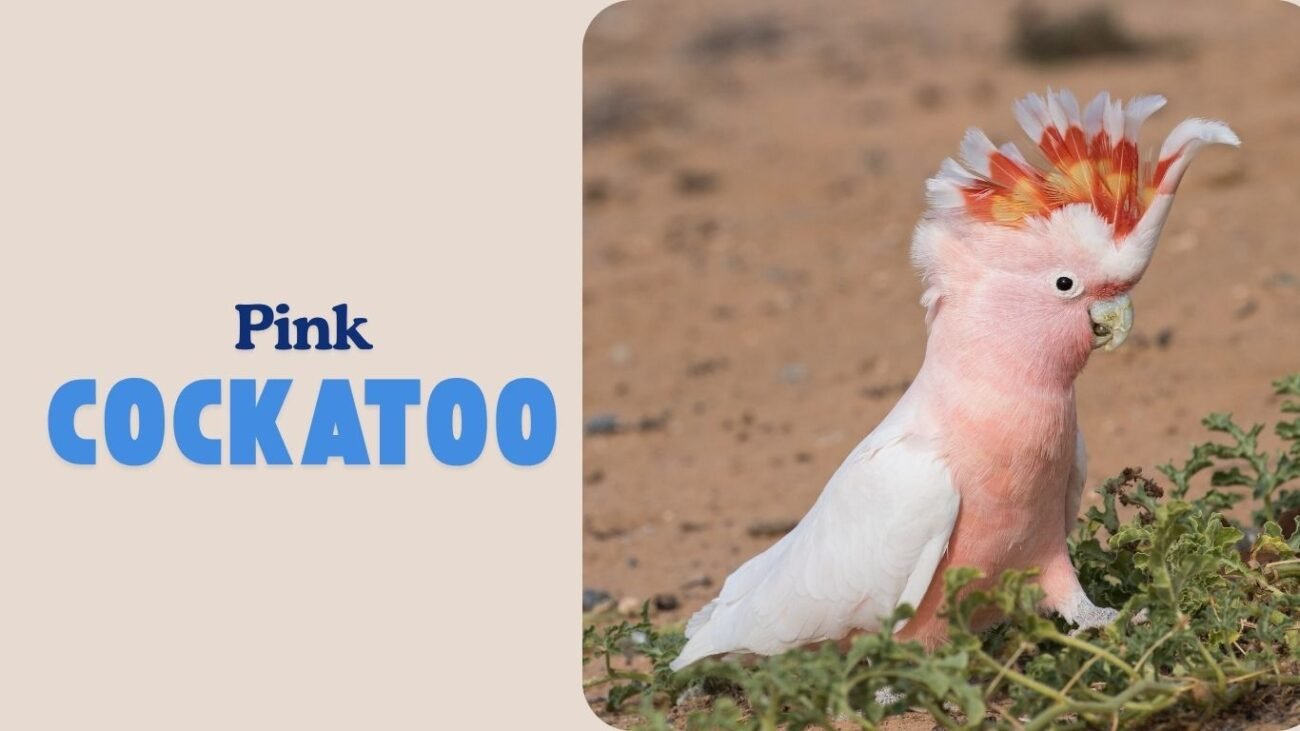
The pink cockatoo, also known as Major Mitchell’s cockatoo, is one of Australia’s most visually stunning native birds, famous for its soft pink body and flamboyant crest. Unlike its louder cousins, it tends to be quieter and more elusive.
Habitat and Behavior
Pink cockatoos are found in arid and semi-arid regions, especially in inland woodlands, where they prefer areas with access to water and large hollow-bearing trees. They are usually seen in pairs or small flocks and are less aggressive than other cockatoos.
Nesting and Breeding
They nest in tree hollows, typically near rivers or waterholes. Both parents participate in incubating eggs and feeding the chicks. Breeding usually occurs during spring and summer.
Identification
- Medium-sized bird, about 35–40 cm long
- Pale pink body with deep salmon-pink face and underwings
- Bright red, yellow, and white fan-shaped crest
- Greyish-white beak and legs
- Soft, whistling call
Diet
Their diet includes seeds, nuts, fruits, and roots. They often forage on the ground or in trees for native vegetation and fallen seeds.
Symbol of Inland Beauty
As a striking native bird of Australia’s interior regions, the pink cockatoo symbolizes the delicate and colorful biodiversity of the outback.
34. Pied Butcherbird
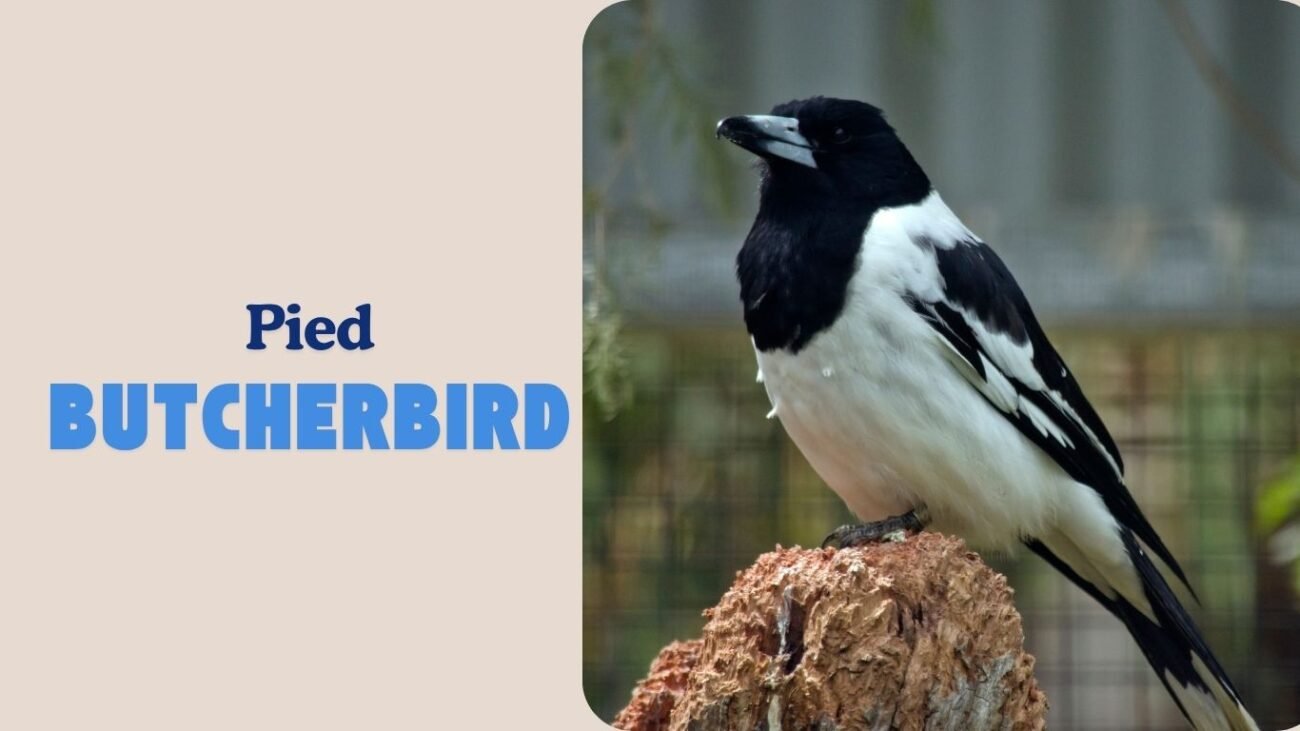
The pied butcherbird is an intelligent and melodic native bird found throughout much of mainland Australia. It gets its name from its black-and-white plumage and carnivorous diet — and is widely admired for its flute-like song.
Habitat and Behavior
They live in open forests, scrublands, and suburban areas. Pied butcherbirds are territorial and often perch conspicuously while singing complex tunes. They may even mimic other birds and sounds.
Nesting and Breeding
Nests are made of twigs and lined with grasses, usually placed in trees. Breeding occurs in spring, and young birds often remain with their parents to help rear the next generation.
Identification
- Medium-sized bird, 30–35 cm long
- Sharp contrast of black head, neck, and breast with white belly and back
- Hooked beak used for capturing and impaling prey
- Beautiful, flute-like singing
- Often mistaken for magpies due to similar size and markings
Diet
They are insectivores and carnivores, feeding on insects, small reptiles, birds, and rodents. They may cache food by impaling it on branches or fences.
Voice of the Bush
As one of Australia’s most talented songbirds, the pied butcherbird adds musical richness to native soundscapes, highlighting the artistic beauty of Australian birdlife.
35. Red Wattlebird
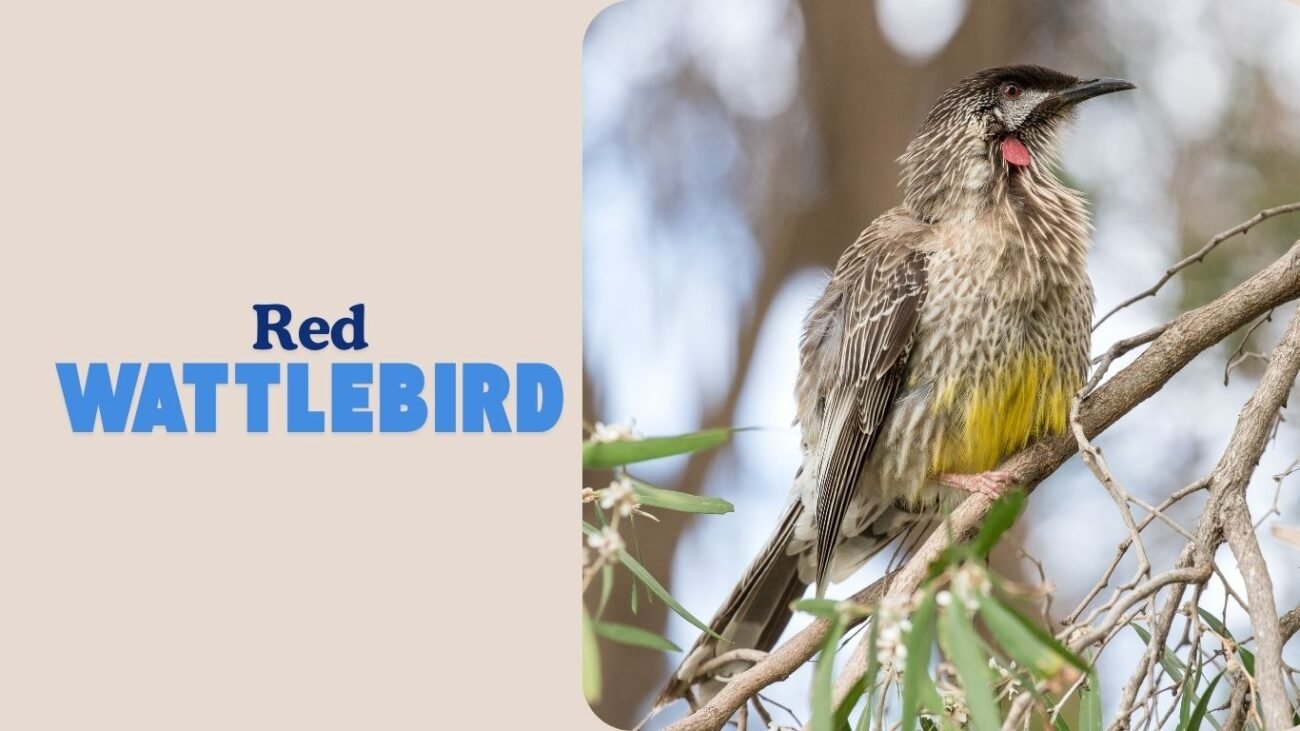
The red wattlebird is one of the largest members of the honeyeater family and a prominent native bird in southern and eastern Australia. Its name comes from the red, fleshy wattles hanging from its cheeks.
Habitat and Behavior
This species thrives in open woodlands, coastal scrublands, and urban gardens where flowering native plants are abundant. It is bold, noisy, and very territorial, often chasing other birds away from food sources.
Nesting and Breeding
They build untidy cup nests of twigs and bark in trees and shrubs. Breeding occurs from July to December, and both parents feed the young.
Identification
- Large honeyeater, around 33–37 cm long
- Grey-brown body with white streaks and yellow belly patch
- Bright red wattle below the eye
- Long tail and slightly curved bill
- Harsh, croaky vocalizations
Diet
Primarily nectarivorous, they also eat insects, berries, and occasionally sap. They play a key role in pollinating flowering plants like eucalypts and banksias.
Urban Adaptation
As native birds of Australia, red wattlebirds are common sights in suburban gardens and parks, where they continue to serve as important pollinators even in human-dominated environments.
36. Frogmouth
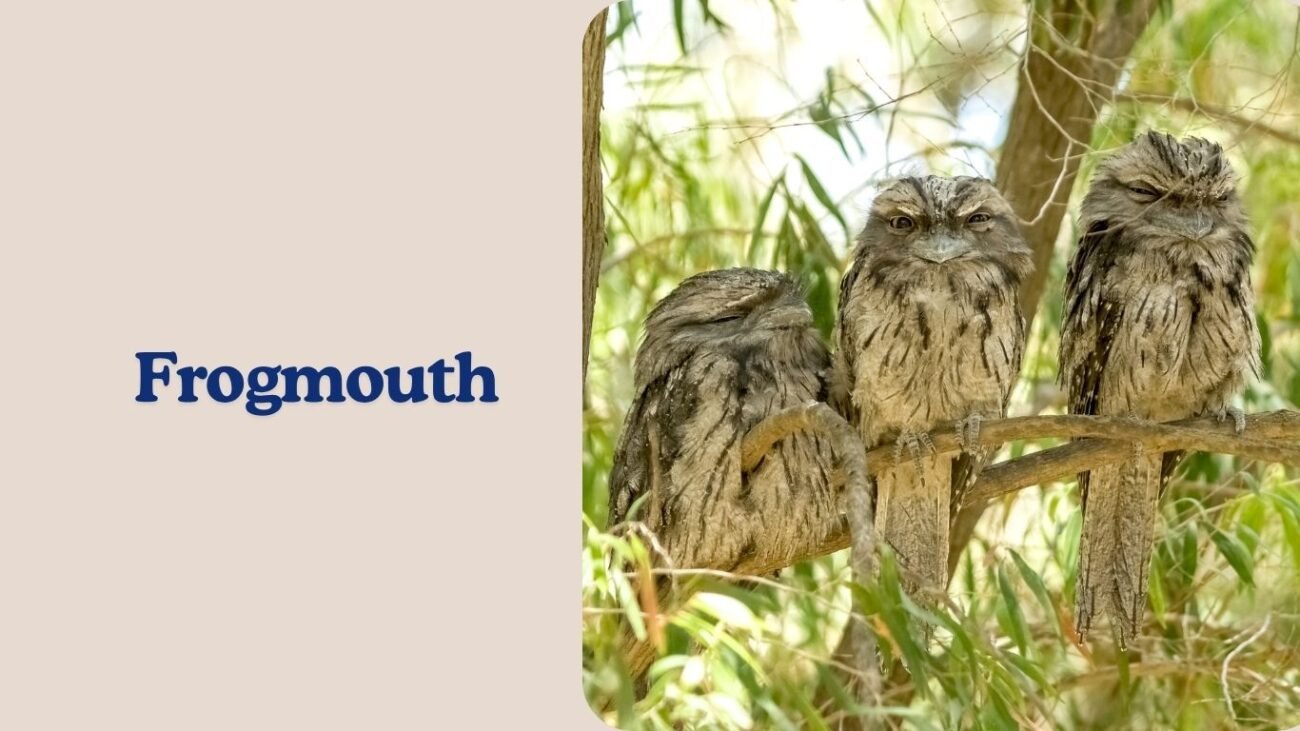
Frogmouths are nocturnal, camouflaged native Australian birds that resemble owls but belong to a different family. Their wide, frog-like mouths and cryptic plumage allow them to blend seamlessly with tree bark, making them nearly invisible during the day.
Habitat and Behavior
Found in forests, woodlands, and suburban gardens, frogmouths are solitary and roost motionless during daylight. At night, they hunt from low perches, swooping down silently to catch prey. Their still posture mimics dead branches, a vital defense against predators.
Nesting and Breeding
They build simple platform nests on horizontal branches, using sticks and natural debris. Both parents share incubation and care of the chicks. Breeding generally takes place in spring and early summer.
Identification
- Medium-sized bird, about 35–50 cm depending on species
- Mottled grey, brown, or rufous plumage
- Wide, flat, hooked beak
- Large yellow eyes adapted for night vision
- Silent flight and cryptic resting posture
Diet
They eat insects, moths, spiders, frogs, and small mammals. Frogmouths swallow prey whole using their wide gape.
Nature’s Disguise Experts
As cryptic native birds of Australia, frogmouths are masters of camouflage and a fascinating part of the country’s nocturnal birdlife.
37. Yellow-tailed Black Cockatoo
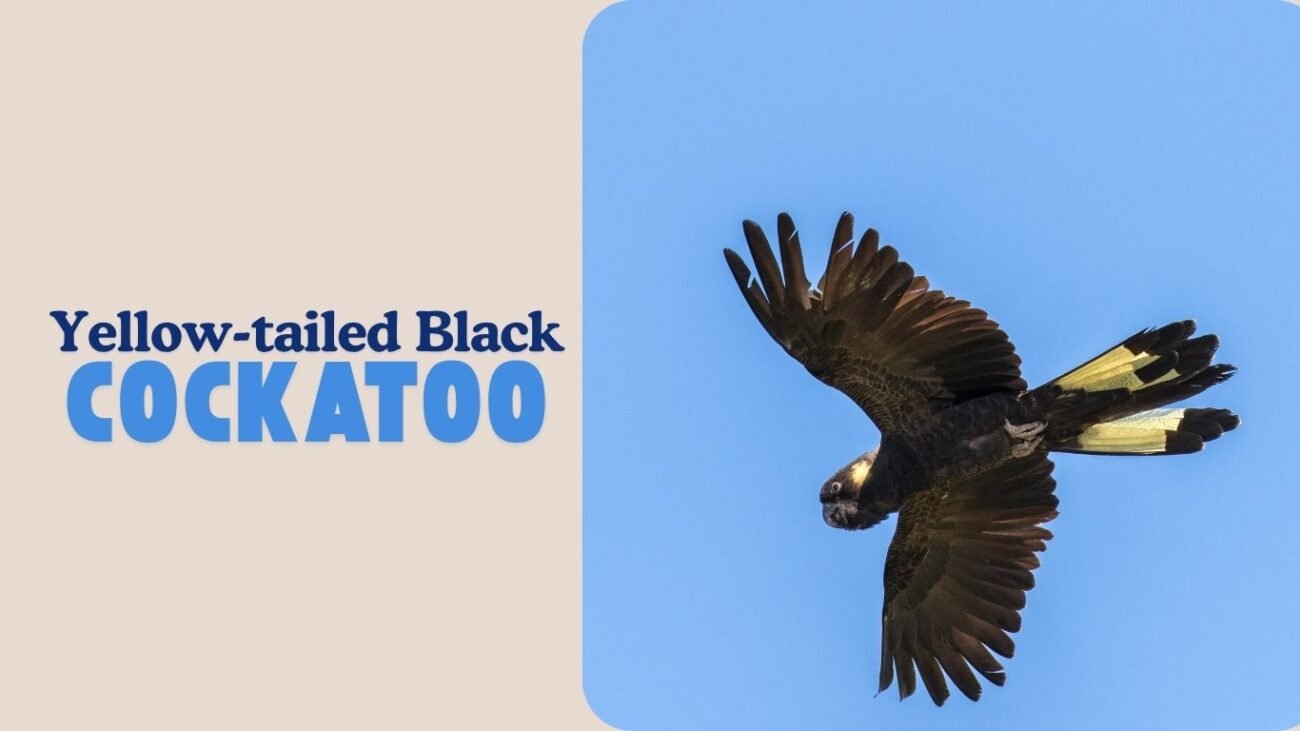
The yellow-tailed black cockatoo is a large, majestic parrot found in the forests and woodlands of southeastern Australia. Known for its mournful cries and sweeping flight, this species is a striking part of Australia’s native bird community.
Habitat and Behavior
These cockatoos live in eucalyptus forests and coastal woodlands and often travel in loose, noisy flocks. They are slow-flying but powerful, and their calls can echo for kilometers.
Nesting and Breeding
They nest in large hollows of old trees, usually high off the ground. Breeding occurs from winter to spring, and nests are lined with wood dust. They have low reproductive rates, making habitat conservation essential.
Identification
- Large cockatoo, 55–65 cm long
- Entirely black plumage with yellow cheek patches (females)
- Bright yellow tail panels visible in flight
- Long tail and strong, curved beak
- Wailing, screeching calls
Diet
They feed on seeds from native trees, especially banksias, hakeas, and eucalyptus, as well as insect larvae. Their strong beak allows them to strip bark and wood in search of food.
Forest Sentinels
As native birds, yellow-tailed black cockatoos are indicators of healthy, mature forests and are deeply valued in Australian conservation efforts.
38. Budgerigar
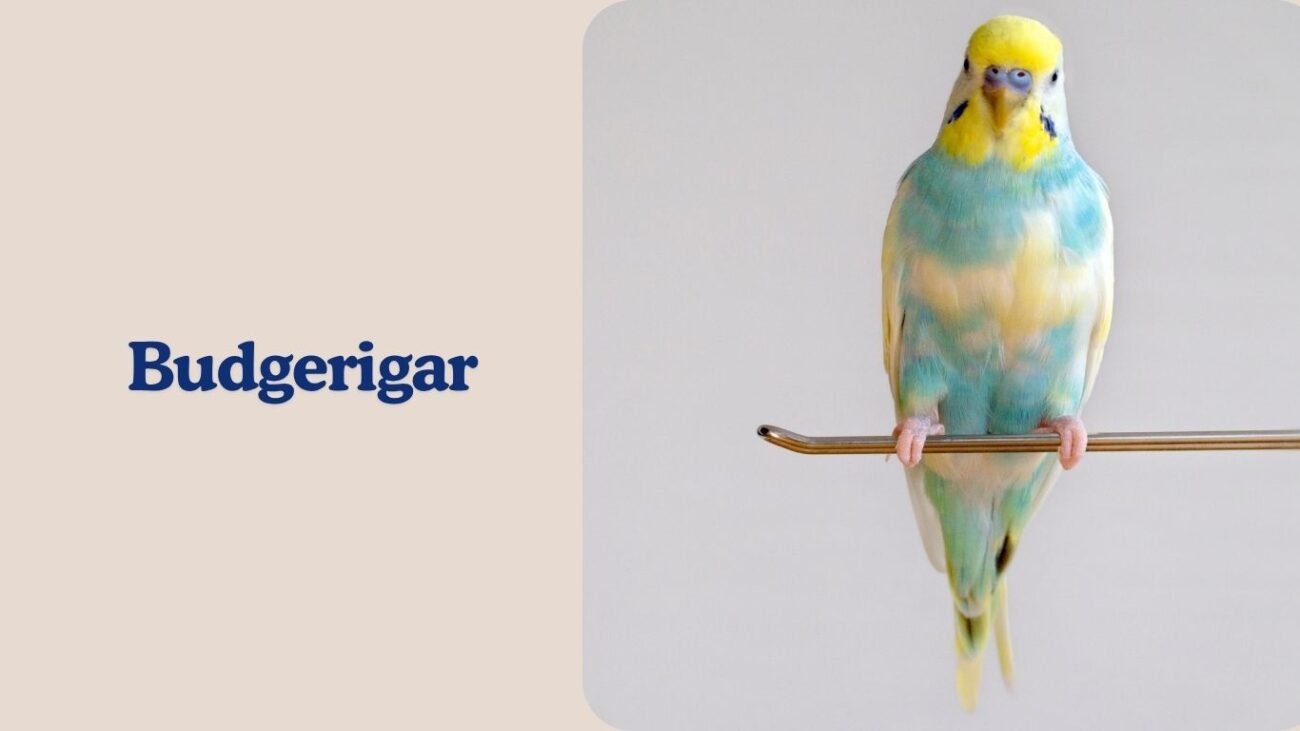
The budgerigar, or “budgie,” is one of the most recognized Australian birds worldwide. While often seen as pets globally, wild budgerigars roam Australia’s inland deserts in vast, nomadic flocks.
Habitat and Behavior
Budgies live in arid and semi-arid inland regions, relying on water sources and seeding grasses. They are highly social and constantly on the move, searching for food and water. Their flight is fast and darting.
Nesting and Breeding
They nest in tree hollows or cavities in cliffs, usually after significant rainfall. Budgies can breed opportunistically several times a year, depending on conditions.
Identification
- Small parrot, around 18 cm long
- Bright green body with yellow face and black barring
- Long, tapered tail
- Blue cheek patches and black throat spots
- Constant, cheerful chirping
Diet
Budgerigars primarily feed on grass seeds, especially spinifex and native millet. They forage in flocks, often covering large distances daily.
Nomads of the Outback
As truly wild native birds of Australia, budgerigars are marvels of survival in harsh desert climates, showcasing nature’s adaptability.
39. Crested Pigeon
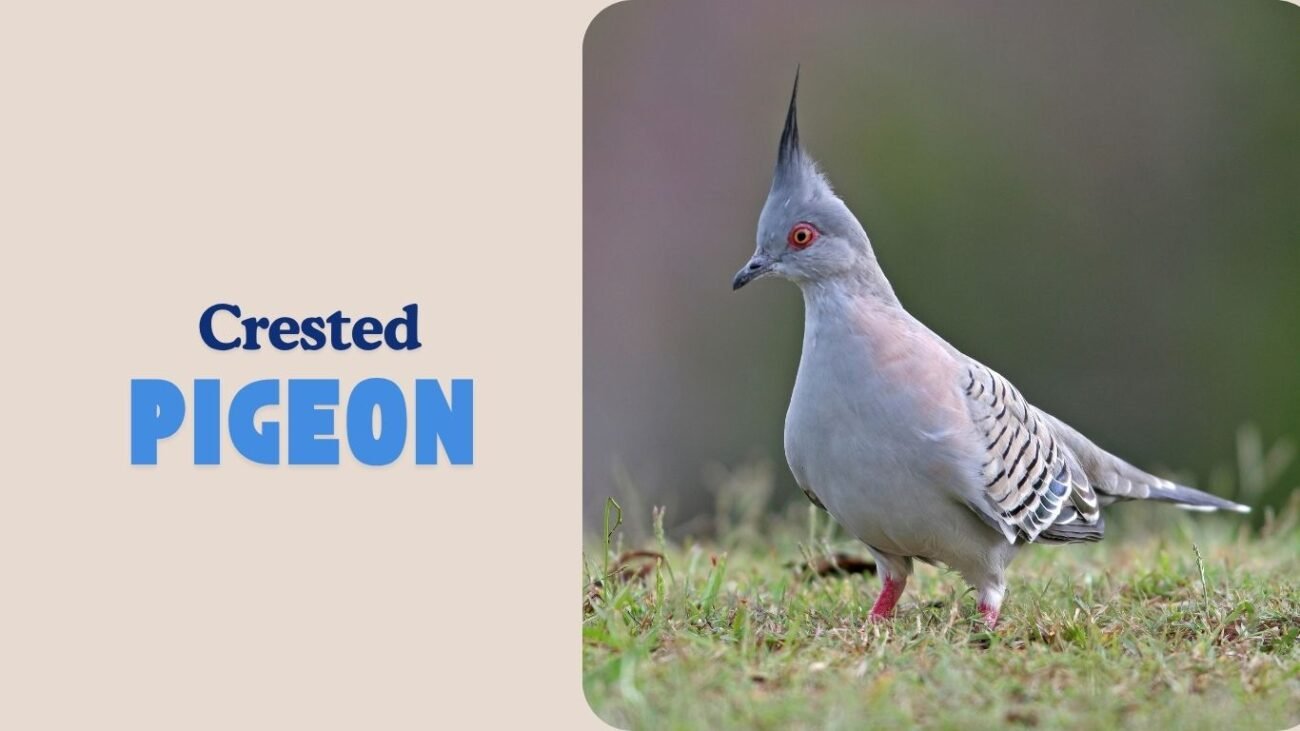
The crested pigeon is a familiar native bird seen across most parts of mainland Australia, recognized by its upright, wispy crest and whistling wingbeats.
Habitat and Behavior
These pigeons are highly adaptable and are found in grasslands, scrublands, agricultural areas, and cities. They are ground feeders and are often seen in small groups near water or feeding under trees.
Nesting and Breeding
They build flimsy platform nests of sticks in shrubs or trees. Breeding can occur at any time of year, especially after rain, and both parents share all nesting duties.
Identification
- Medium-sized pigeon, 30–35 cm long
- Greyish body with black-barred wings
- Pink legs and a prominent black-tipped crest
- Iridescent wing patches visible in sunlight
- Wings make a distinctive high-pitched whistling sound when flying
Diet
They feed on seeds from grasses and weeds, and occasionally small insects. Crested pigeons often forage on open ground near cover.
Quiet Survivors
As one of the more resilient native birds of Australia, crested pigeons have flourished in both natural and urban environments.
40. Australian Pratincole
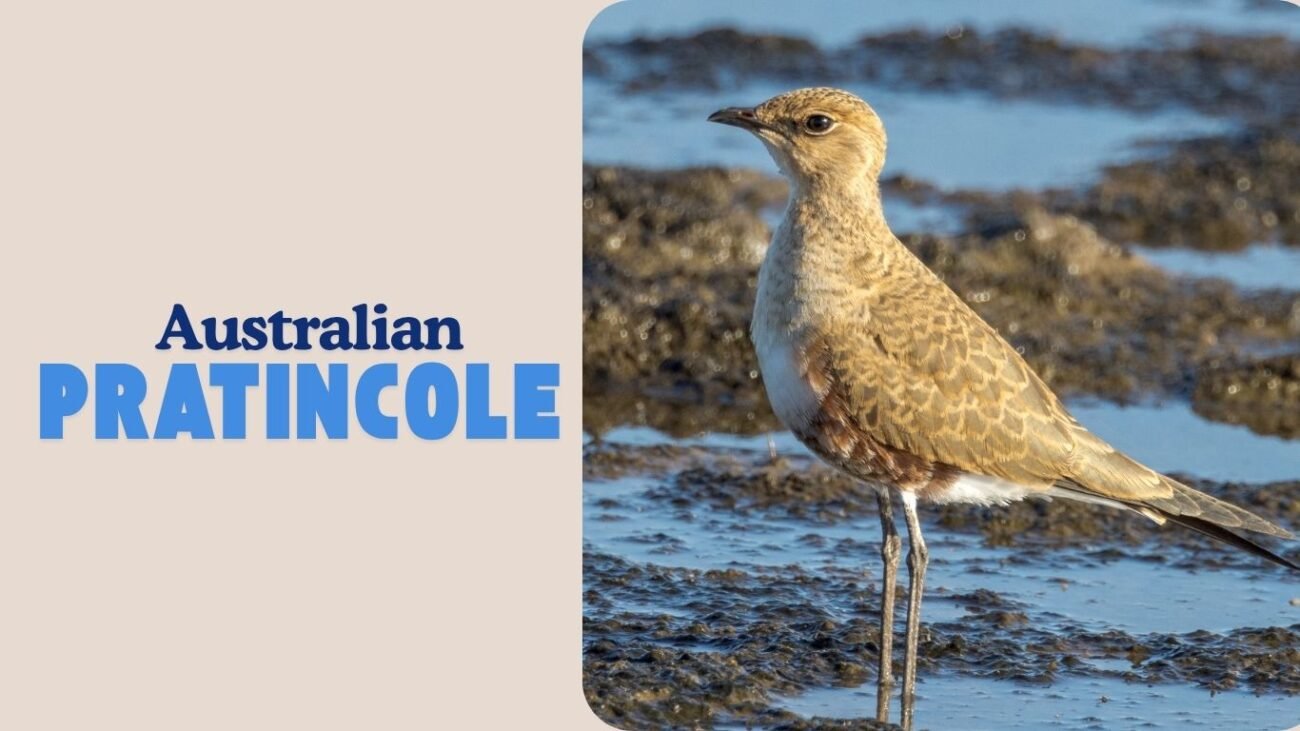
The Australian pratincole is a slender, elegant native bird found in inland Australia, especially in arid grasslands and dry floodplains. Its mix of wader-like legs and aerial agility gives it a unique ecological niche.
Habitat and Behavior
These birds prefer open plains, claypans, and grasslands with minimal vegetation. They are migratory in some regions, appearing after rains. Agile in the air and graceful on the ground, they often perch on low rocks or termite mounds.
Nesting and Breeding
They nest directly on bare ground, laying well-camouflaged eggs in shallow scrapes. Breeding is timed with the summer rains when insect prey is abundant.
Identification
- Medium-sized bird, 20–25 cm long
- Sandy-brown plumage with black and white facial markings
- Long wings and legs
- Graceful, swallow-like flight
- Soft, trilling calls during display flights
Diet
They feed mainly on insects, catching them on the wing or from the ground. Their agile flight helps them hunt flying insects with precision.
Inland Specialists
As native birds of Australia’s arid interior, Australian pratincoles reflect the adaptability and resilience of life in harsh, dry landscapes.