From carefully crafted nests to sky-blue eggs and helpless hatchlings, the American Robin’s nesting cycle is both fascinating and heartwarming. Found across North America, these songbirds are known not just for their cheerful calls, but also for their dedicated parenting. In this guide, we’ll take a closer look at how robins build their nests, what their eggs are like, and how their babies grow—from the moment they hatch until they’re ready to fly.
Robin Nesting Behavior

Where Do American Robins Build Nests?
American Robins are highly adaptable birds when it comes to choosing nesting sites. They often build nests in deciduous trees like maple, birch, and pine, typically choosing a horizontal branch 5 to 15 feet above the ground. However, in urban and suburban areas, they’ve learned to take advantage of man-made structures. It’s common to find nests tucked away in gutters, porch lights, lamp posts, and even windowsills. Robins prefer places that are sheltered from rain and protected from predators, yet still offer easy access to food sources like worms and insects.
In more natural habitats, robins may also nest on rock ledges, shrubs, or fences. Once they pick a spot, they often return to the same area year after year, though they rarely reuse old nests.
When Do They Start Nesting?
Robin nesting season typically begins in early spring, often as soon as late March or early April, depending on the region. In warmer climates, they may start earlier, while in northern areas, they might wait until snow has melted.
Robins are known for raising two to three broods per year. After the first brood leaves the nest (usually by mid to late spring), the female will begin building a second nest—sometimes even while the male is still feeding the fledglings. This overlapping behavior allows them to maximize the short breeding season.
What Materials Are Used in Robin Nests?
Robin nests are well-crafted and sturdy. The female robin is the architect, building the entire structure on her own while the male may stay nearby to protect her or scout for food. The nest has a three-layer structure:
- Outer layer: Coarse materials like twigs, grass, and dead leaves
- Middle layer: Soft mud, which the robin collects in her beak and molds into a bowl shape
- Inner lining: Fine grass, feathers, and rootlets for comfort and insulation
The mud serves as natural cement, giving the nest its well-known “bowl” shape and durability. In fact, a finished robin’s nest can hold together long after the breeding season is over.
How Long Does Nest Construction Take?
Building a nest usually takes between 2 to 6 days, depending on weather conditions and the availability of materials. Here’s a rough breakdown of the process:
- Day 1–2: The robin gathers twigs and dry grass to form the base
- Day 3–4: Mud is added and molded to create the bowl
- Day 5–6: The nest is lined with soft materials like feathers or fine grass
In some cases, construction may pause due to rain or disturbance, but robins are persistent and typically finish quickly once they’ve chosen a location. After completion, the female robin may begin laying eggs the very next day.
Robin Eggs: Color, Shape, and Hatching
What Do Robin Eggs Look Like?
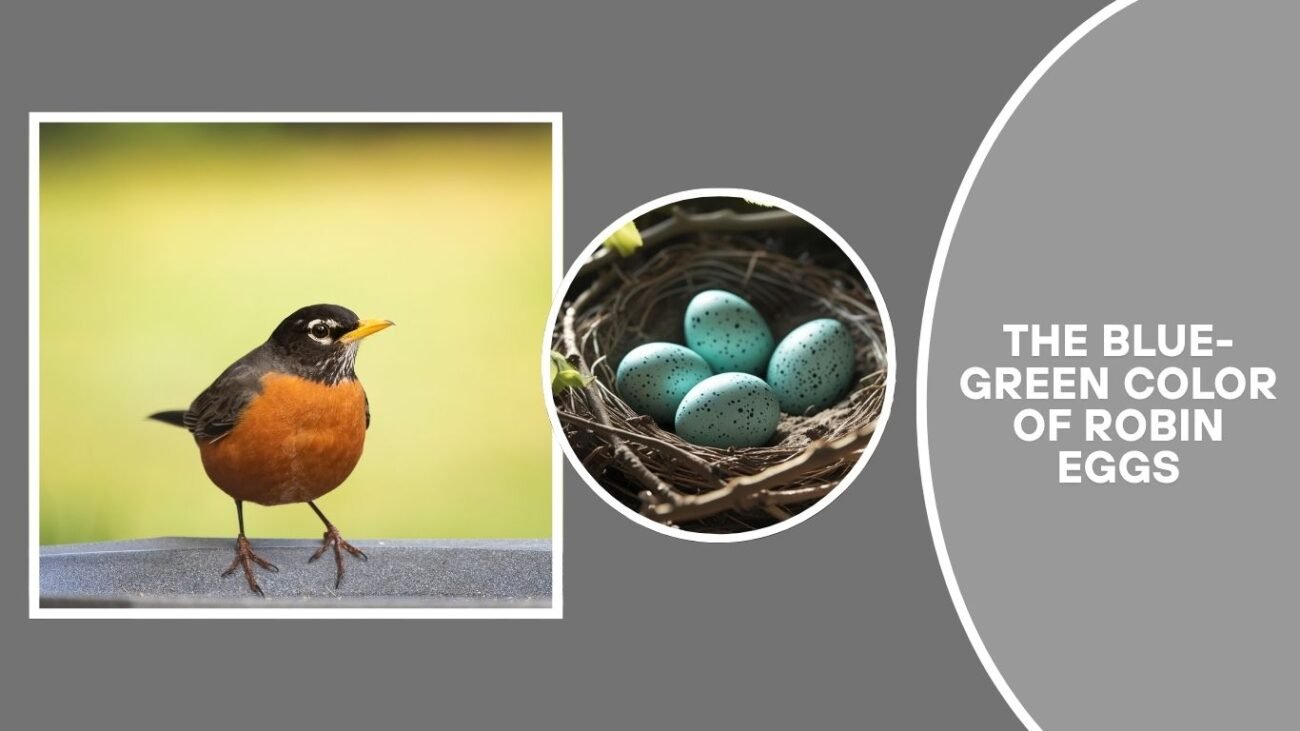
Robin eggs are instantly recognizable for their beautiful sky-blue color, often described as “robin’s egg blue.” This unique hue is due to the pigment biliverdin, which is deposited on the eggshell as it forms inside the female’s body. The color intensity can vary slightly depending on the health of the female robin.
Each egg is:
- About 2.8 to 3.0 cm (1.1 to 1.2 inches) long
- Oval-shaped with a smooth surface
- Typically laid without speckles or markings
The vibrant blue coloration is not just decorative—it may also play a role in protecting the embryo from harmful sunlight and signaling the health of the mother to her mate.
Where and When Do They Lay Eggs?
Robins begin laying eggs within a day or two after nest completion. The female lays one egg per day, usually in the early morning hours. A complete clutch generally contains 3 to 5 eggs, with four being most common.
Key timing notes:
- Egg-laying span: 3–5 days (one egg laid each day)
- Timing: Usually begins in early to mid-spring (March–May depending on location)
- Eggs are laid only after the nest is fully built and secure
Once the final egg is laid, the incubation process begins—though in some cases, the female may start incubating after the second egg to ensure synchronous hatching.
How Long Does It Take for Eggs to Hatch?
The incubation period for robin eggs lasts approximately 12 to 14 days. During this time:
- The female handles all incubation duties, sitting on the eggs almost constantly except for short breaks to feed.
- The male robin provides food and stands guard nearby but does not sit on the eggs.
- The female maintains the eggs at a consistent temperature by fluffing her feathers and adjusting her position.
Interesting fact: The robin will rotate the eggs several times a day using her beak to ensure even heat distribution, which is critical for healthy embryo development.
Once the eggs reach full term, all chicks usually hatch within a 24-hour period, creating a synchronized brood ready to be fed and nurtured.
Baby Robins: From Hatch to Fledgling
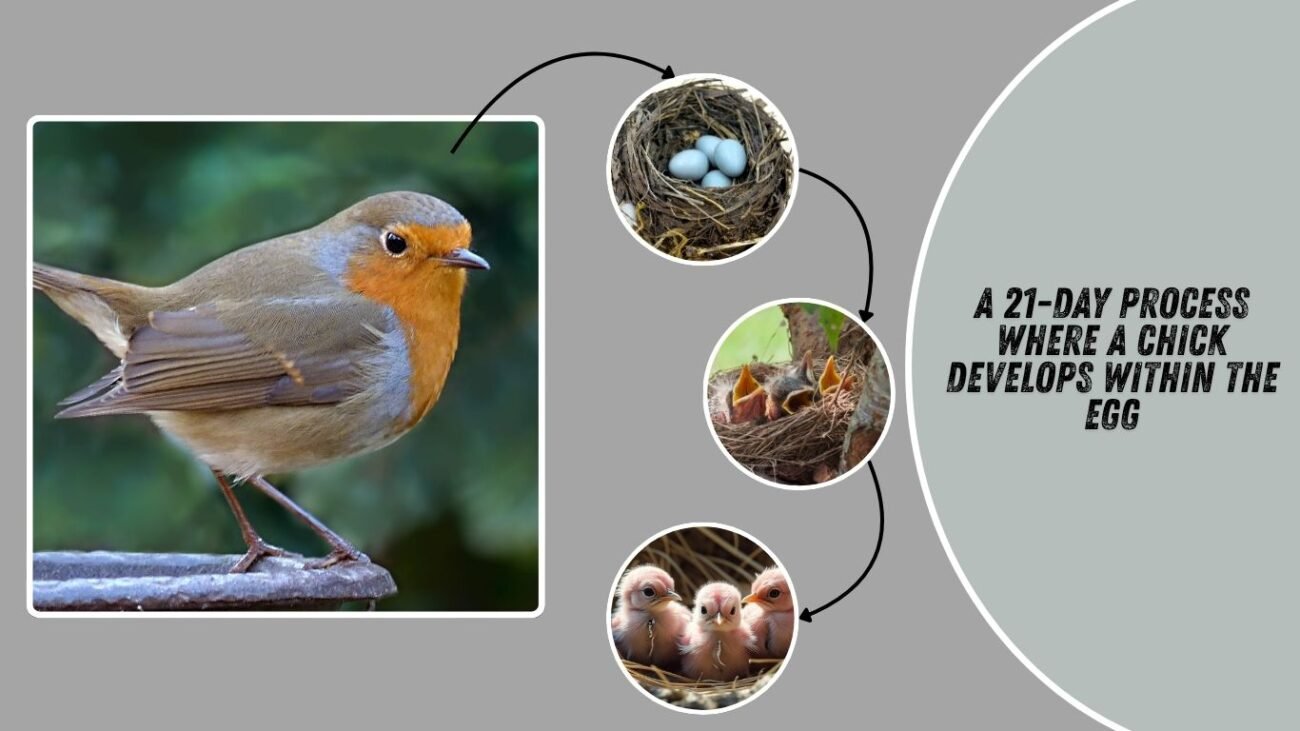
What Do Baby Robins Look Like When They Hatch?
Newly hatched baby robins, also called nestlings, are born in an extremely fragile state. At birth, they are:
- Blind and featherless, with closed eyes and translucent pink skin
- Roughly 2 inches (5 cm) long, weighing just 5–6 grams
- Weak and entirely dependent on their parents for warmth and food
- Equipped with a bright yellow gape (mouth lining), which stimulates feeding behavior from the parents
Despite their vulnerability, these nestlings develop rapidly in just a couple of weeks. Even in the first 24 hours, you may notice increased responsiveness and stretching as their body adjusts to the outside world.
How Are They Fed and Cared For?
Once hatched, the feeding frenzy begins. Both male and female robins share the responsibility of feeding their young. They provide:
- Earthworms, insects, and soft berries
- Feedings every 15–20 minutes during daylight hours
- Pre-digested food for the first couple of days (regurgitated by parents)
Key care behaviors include:
- Brooding: The mother keeps the chicks warm, especially at night and on cold days.
- Hygiene: Parents remove fecal sacs (waste contained in a mucus membrane) to keep the nest clean.
- Defense: Both parents become aggressive toward predators and may dive at intruders near the nest.
Baby robins grow extremely fast. By Day 5, pinfeathers begin to appear. By Day 7, their eyes open, and by Day 9–10, they start standing in the nest and preening.
How Long Do Baby Robins Stay in the Nest?
Baby robins typically stay in the nest for 13 to 15 days after hatching. During this time, they undergo rapid growth and development:
- Day 1–5: Eyes are closed, and they rely completely on parents for warmth and food
- Day 6–9: Eyes open, feathers begin to emerge, and movements become more active
- Day 10–12: Wing stretching, alertness, and preening behaviors increase
- Day 13–15: Feathers fully emerge, and they start fluttering their wings in preparation for flight
Parents continue to feed them intensively during this period, sometimes bringing over 100 meals a day to the nest. The nest becomes crowded and noisy as the young robins grow larger and more demanding.
By the time they’re ready to leave, baby robins are nearly the size of adults, but still lack the confidence and skill to fly properly.
When and How Do They Leave the Nest?
The process of leaving the nest is called fledging, and it usually happens on Day 13 to 15 after hatching. Here’s how it unfolds:
- Young robins begin fluttering their wings while still in the nest, building strength
- One by one, they hop or flutter out of the nest onto nearby branches or the ground
- First flights are awkward and short, often just a few feet at a time
- Parents continue feeding them for up to 2 weeks after fledging
During this time, fledglings learn to find food, strengthen their flight muscles, and develop awareness of predators and surroundings. They may appear vulnerable on the ground, but this is a normal and essential part of their development.
Many people mistakenly believe fledglings are abandoned when they see them hopping on lawns. In reality, the parents are usually nearby, watching and feeding them from a distance.
FAQs
How many broods does a robin have each year?
American Robins usually have 2 to 3 broods per breeding season, especially in warmer climates. The female builds a new nest for each brood, and nesting can continue from early spring into late summer.
Do both robin parents take care of the chicks?
Yes, both parents are involved. The female incubates the eggs and broods the chicks, while the male provides food and protection. Once the chicks hatch, both parents feed them constantly until they fledge.
What happens to unhatched robin eggs?
Unhatched eggs are usually left in the nest after the other chicks hatch. Parents may abandon them or push them to the side. In some cases, if a whole clutch fails, the pair might start over in a new nest.
Do robins abandon their nest if humans touch it?
Despite popular belief, robins usually do not abandon a nest because of human scent. However, too much disturbance—like repeated visits or loud noise—can stress the parents and may lead them to leave the nest prematurely.
How can I safely observe robin nests in my yard?
Observe from a distance using binoculars. Avoid touching the nest or approaching too often. If the nest is in a visible area, limit noise and activity nearby to avoid stressing the birds. Never try to feed the babies yourself—parent robins are best equipped to do that.