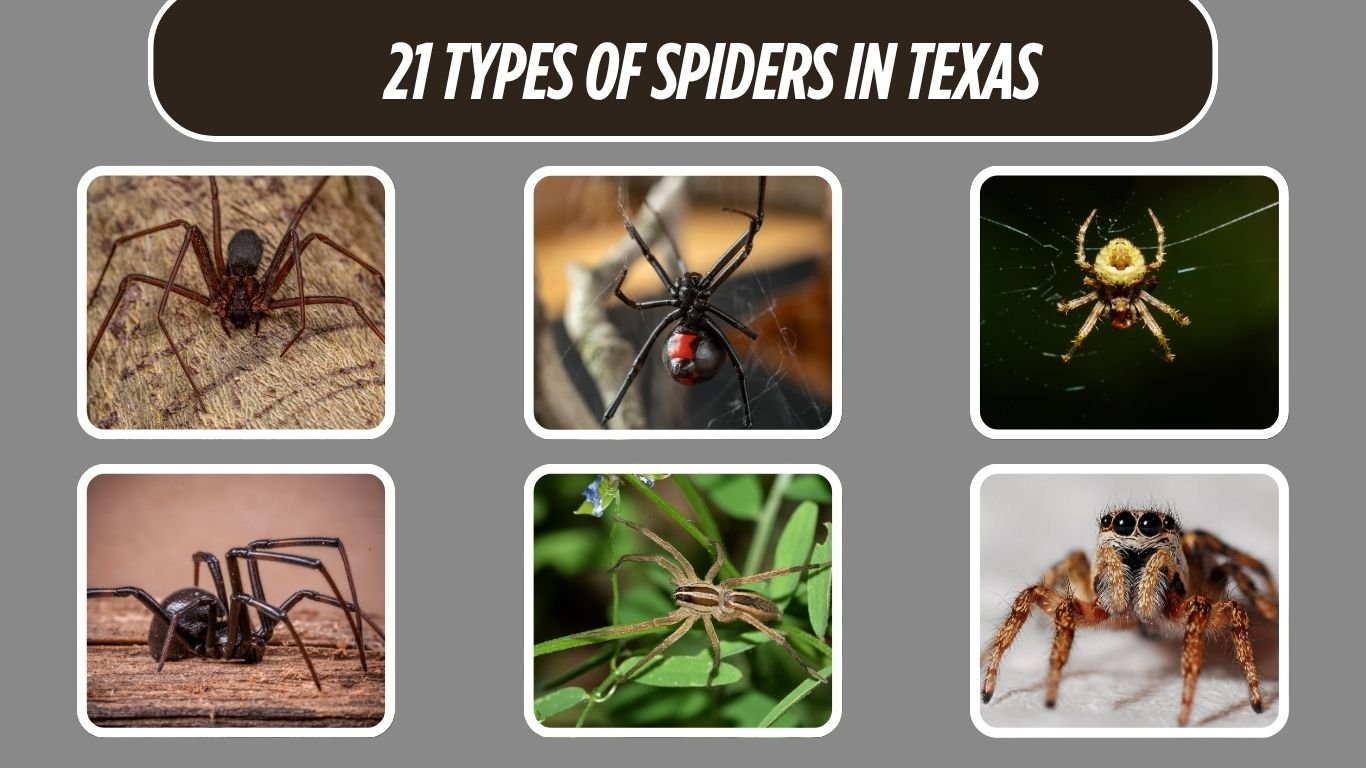
Texas is home to a wide variety of spiders, ranging from harmless house spiders to venomous species like the brown recluse and black widow. Whether you’re spotting a large wolf spider in your yard or a colorful orb weaver in your garden, knowing how to identify Texas spiders can help you stay safe and informed. This guide covers 21 common, dangerous, and unique spiders found across the Lone Star State.
1. Texas Brown Recluse Spider
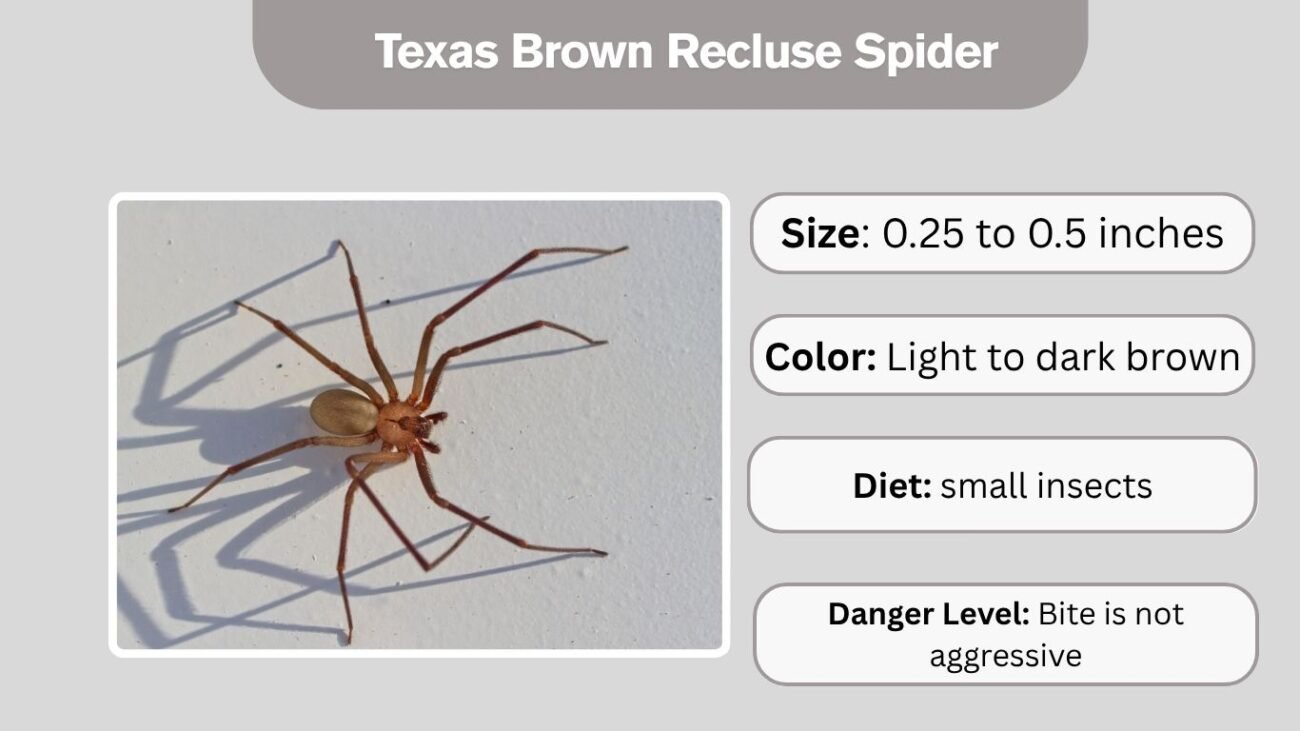
The Texas Brown Recluse Spider is one of the most medically significant spiders in the southern United States. Known for its venomous bite and secretive nature, it prefers dark, undisturbed areas in homes, sheds, and woodpiles.
Appearance and Color
This spider is light to dark brown and has a distinct violin-shaped marking on its back, with the neck of the violin pointing toward the abdomen. Its legs are long and smooth, and it lacks spines or banding.
Behavior and Habitat
Brown recluses are shy, nocturnal spiders that avoid human interaction. They are commonly found in cardboard boxes, closets, attics, basements, and under furniture. Outdoors, they hide under rocks, logs, and woodpiles.
Venom and Bites
Although bites are rare, they can be serious. The venom contains necrotizing enzymes that may cause tissue damage, ulcers, and delayed healing. Not all bites result in severe symptoms, but medical attention is advised.
Identification
- Scientific Name: Loxosceles reclusa
- Size: 6–20 mm (body length)
- Color: Light brown to dark brown
- Key Feature: Violin-shaped marking on the cephalothorax
- Legs: Long, uniform, no spines
- Eyes: Six eyes arranged in pairs (unlike most spiders with 8 eyes)
- Habitat: Indoors (dark storage spaces), outdoors (woodpiles, sheds)
- Venomous: Yes – potentially dangerous, though not usually fatal
- Range: Central Texas, extending through southern and central U.S.
2. Texas Black Widow Spider
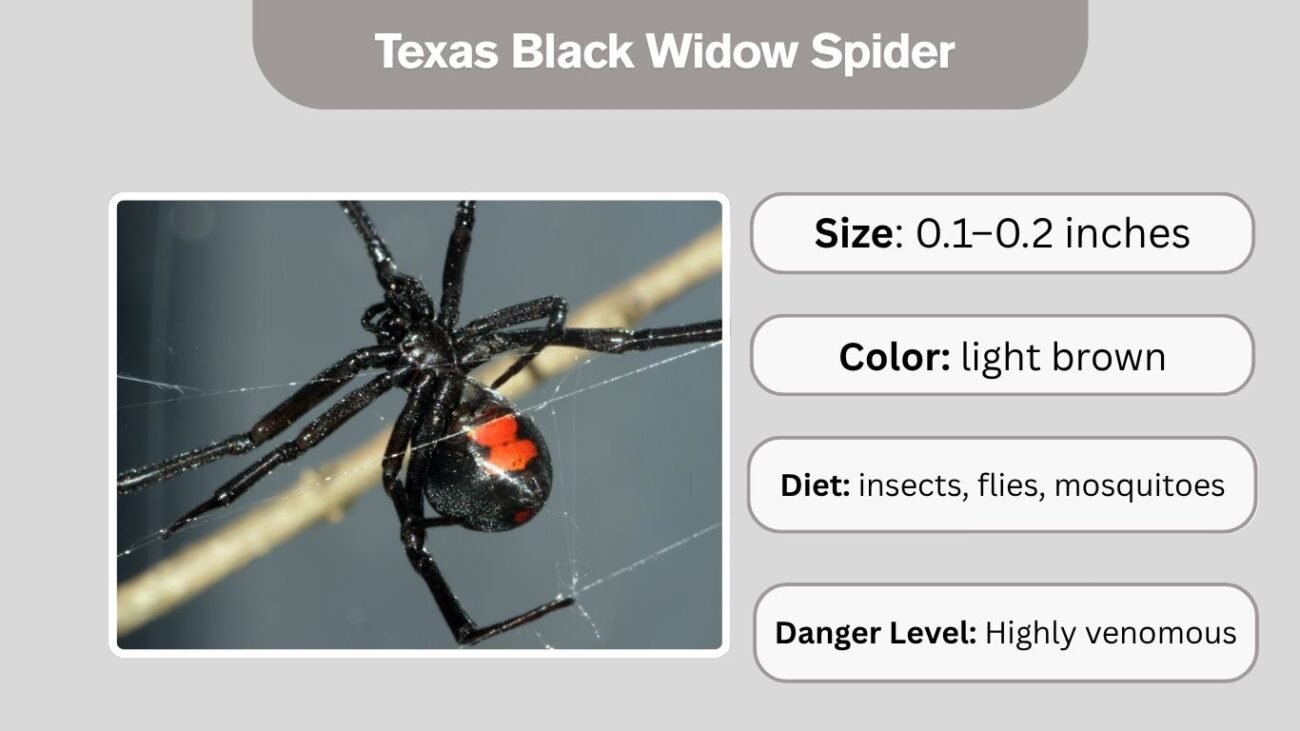
The Texas Black Widow is one of the most venomous spiders in North America and is recognized by its shiny black body and iconic red hourglass marking. It prefers quiet, sheltered environments and is often found in garages, woodpiles, and under outdoor furniture.
Appearance and Color
Females have a glossy black body with a distinct red hourglass on the underside of the abdomen. Males are smaller, lighter, and less dangerous, often with red or white markings.
Behavior and Habitat
Black widows are solitary and build messy, irregular webs near ground level. They avoid confrontation but will bite if disturbed, especially when guarding egg sacs.
Venom and Bites
Their venom contains neurotoxins that can cause severe muscle pain, cramping, nausea, and sweating. While rarely fatal, bites may require emergency medical care, particularly for children or elderly individuals.
Identification
- Scientific Name: Latrodectus mactans
- Size: 13–38 mm (female body length)
- Color: Glossy black with red hourglass underside
- Key Feature: Red hourglass shape
- Web Type: Irregular, messy cobwebs
- Venomous: Yes – medically significant
- Habitat: Sheds, garages, outdoor clutter, woodpiles
- Range: Statewide across Texas
3. Texas Brown Widow Spider
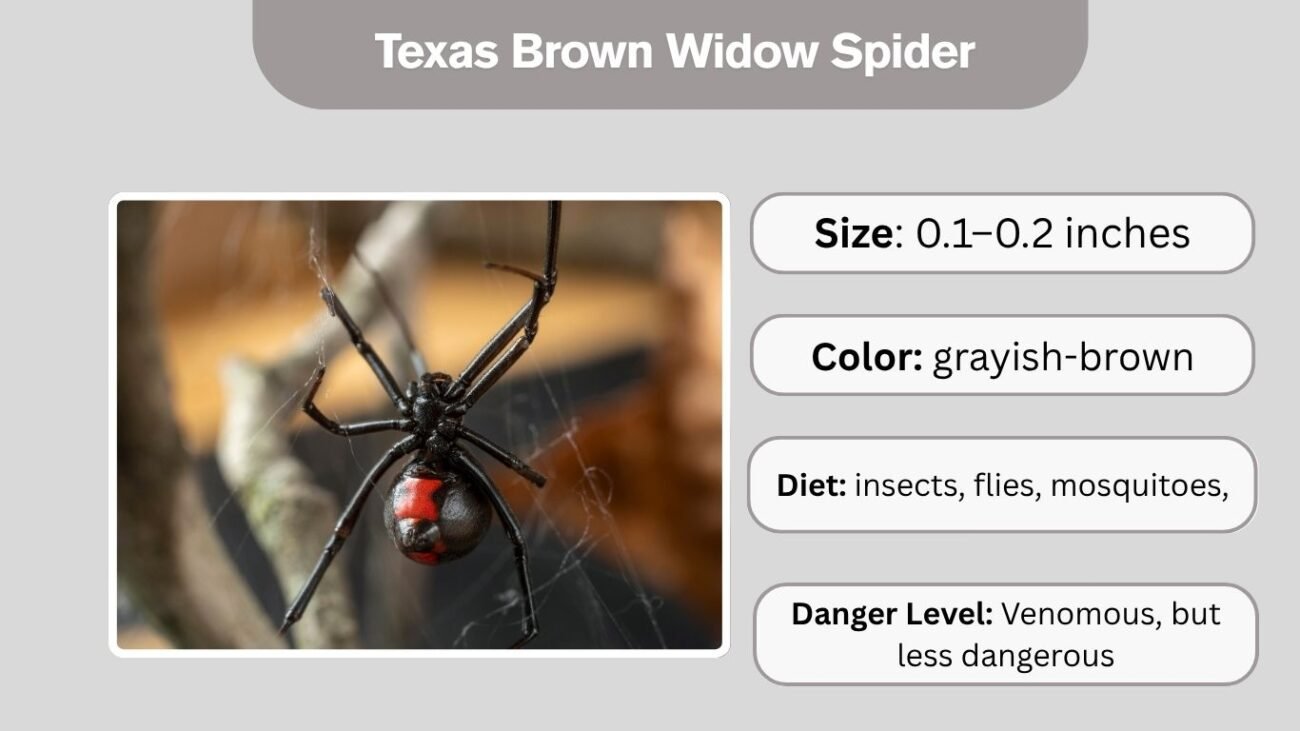
The Texas Brown Widow is a close relative of the black widow but is generally less aggressive. Though still venomous, its bite is typically less severe. These spiders thrive in urban and suburban areas, often around homes and fences.
Appearance and Color
Brown widows have a tan to gray body with orange or yellow hourglass markings. Their legs are banded with dark and light stripes, and the abdomen may show geometric patterns.
Behavior and Habitat
They spin tangled webs in protected outdoor locations such as mailboxes, under patio furniture, fence corners, and inside garages. They are more likely than black widows to live near humans but are less likely to bite.
Venom and Bites
Their venom is also neurotoxic, but envenomation symptoms are typically mild to moderate. Pain, redness, and cramping can occur, but serious medical cases are rare.
Identification
- Scientific Name: Latrodectus geometricus
- Size: 7–14 mm (body length)
- Color: Light brown or tan with orange hourglass
- Key Feature: Orange/yellow hourglass and banded legs
- Web Type: Messy cobwebs in sheltered spots
- Venomous: Yes – but generally less harmful than black widow
- Habitat: Eaves, mailboxes, plant pots, garages
- Range: Widely found across Texas, especially in warm urban areas
4. Texas Wolf Spider

The Texas Wolf Spider is one of the largest and most recognizable spiders in the state. Despite their intimidating size and appearance, they are not dangerous to humans and rarely bite unless provoked.
Appearance and Color
These spiders are brown to gray with dark, mottled patterns on their body. They have long, powerful legs and large eyes that reflect light at night. Males are typically smaller and more slender than females.
Behavior and Habitat
Wolf spiders do not spin webs. Instead, they are active hunters, chasing prey across the ground. You’ll often find them in yards, basements, woodpiles, and gardens. They are fast-moving and often seen darting across floors or soil.
Venom and Bites
Their bite is not medically significant but can cause mild pain, swelling, and itching. Most bites occur accidentally, such as when one is trapped in clothing or handled.
Identification
- Scientific Name: Hogna carolinensis (most common species in Texas)
- Size: Up to 1.5 inches (body), leg span up to 4 inches
- Color: Brown or gray with darker markings
- Key Feature: Large eyes that reflect light, hairy legs
- Venomous: Mildly – not dangerous to humans
- Habitat: Yards, under rocks, in garages and basements
- Range: Throughout Texas
5. Bold Jumping Spider (Texas Jumping Spider)
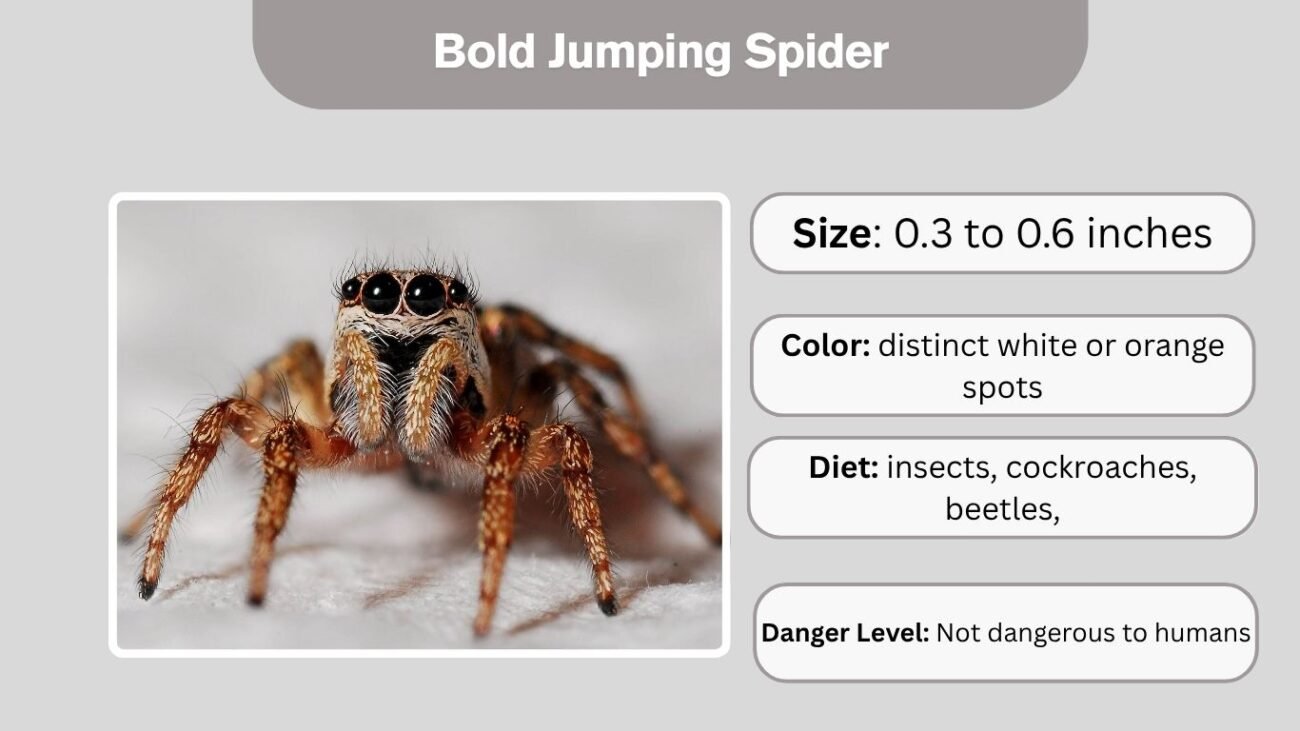
The Bold Jumping Spider is one of the most frequently seen spiders in Texas backyards. Known for its iridescent green chelicerae (fangs) and bold behavior, this spider is fast, curious, and harmless to humans.
Appearance and Color
It has a compact black body with white or orange spots on the abdomen and bright green mouthparts. Its short, stocky legs help it jump many times its body length to pounce on prey.
Behavior and Habitat
These spiders are daytime hunters and use keen eyesight to stalk insects. They’re often seen on walls, fences, window sills, and garden plants. Instead of webs, they spin silk draglines for safety while leaping.
Venom and Bites
They can bite if threatened, but their venom is harmless to humans. Most bites cause only minor irritation or redness.
Identification
- Scientific Name: Phidippus audax
- Size: 8–19 mm (0.3–0.75 inch)
- Color: Black with white/orange spots and green fangs
- Key Feature: Iridescent green chelicerae
- Venomous: Yes, but not dangerous to humans
- Habitat: Gardens, fences, sheds, window ledges
- Range: Found throughout Texas
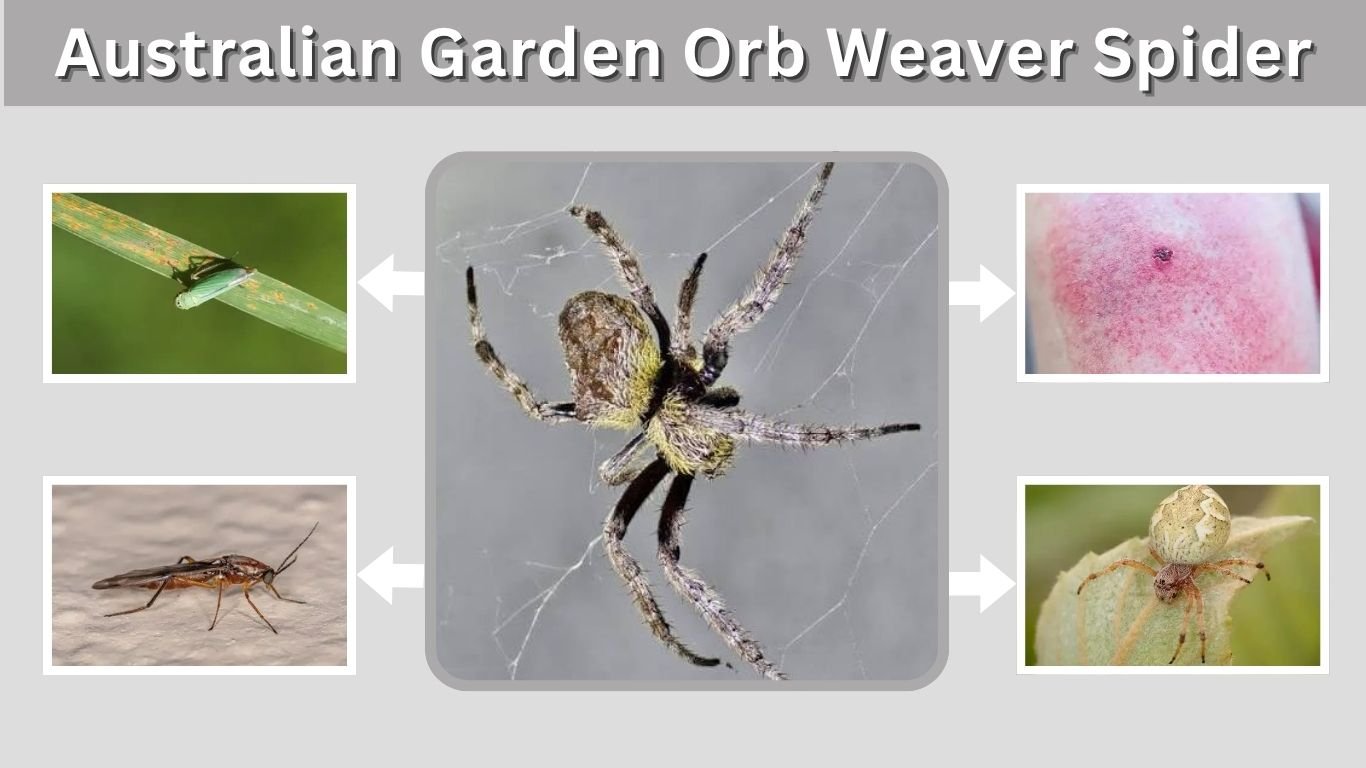
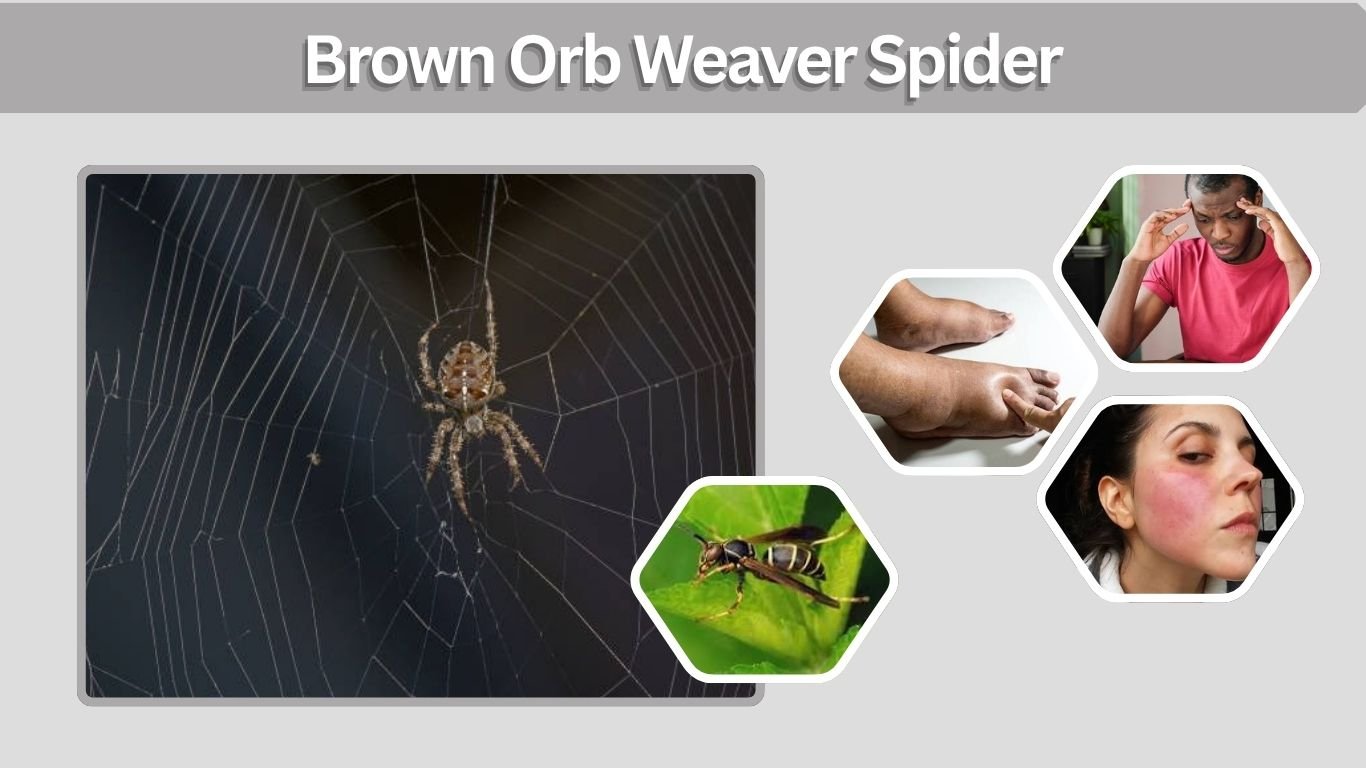
6. Texas Orb Weaver Spider (Yellow Garden Spider)
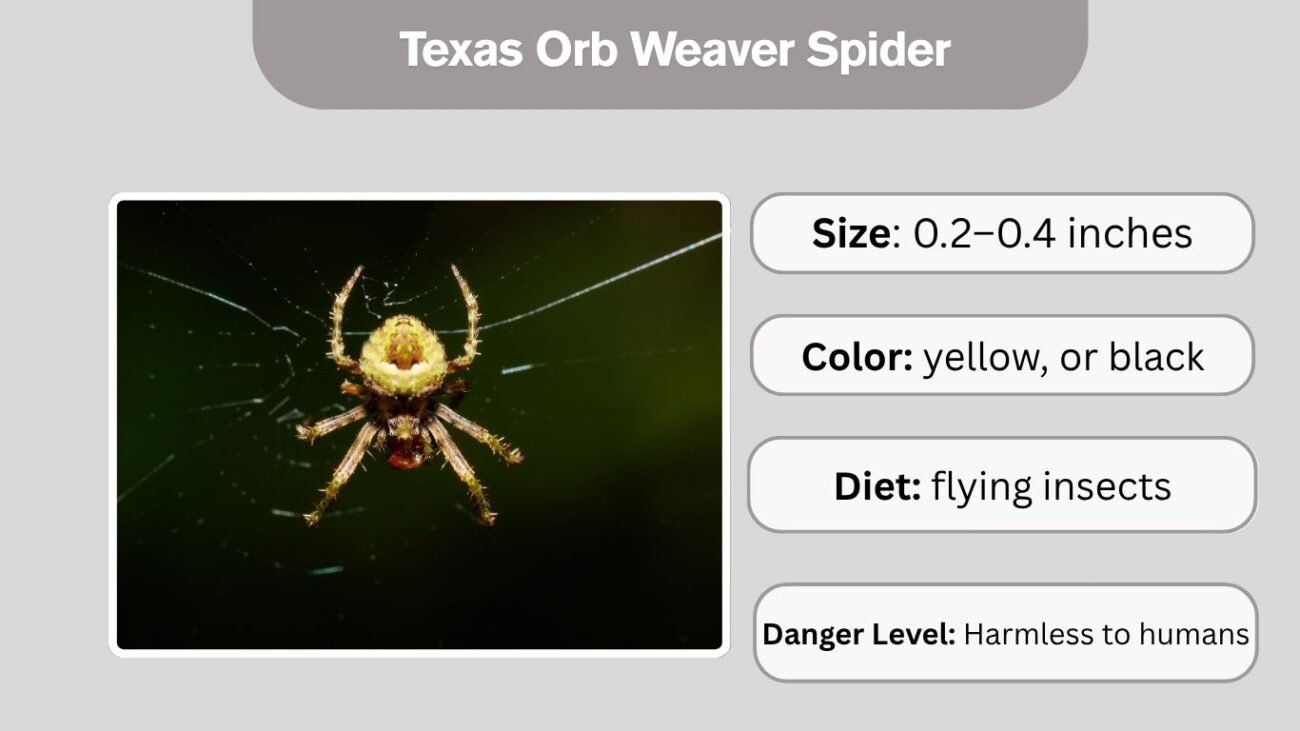
The Texas Orb Weaver, commonly known as the Yellow Garden Spider, is a large and striking species famous for its intricate spiral-shaped webs. Despite its size and vivid coloring, it’s completely harmless to humans.
Appearance and Color
Females are bright yellow and black with a large, oval-shaped abdomen and long legs. Males are smaller and duller. The underside of the abdomen is usually dark with orange or yellow markings.
Behavior and Habitat
Orb weavers are non-aggressive and build their webs in gardens, between shrubs, near lights, or in tall grass. They rebuild their large circular webs daily and are most active at dawn and dusk.
Venom and Bites
They possess venom to subdue prey, but their bite is not medically significant. Bites are rare and may cause slight redness or itching.
Identification
- Scientific Name: Argiope aurantia
- Size: Females up to 1.1 inch; males much smaller
- Color: Bright yellow and black with white cephalothorax
- Key Feature: Web with zigzag pattern (stabilimentum) in center
- Venomous: Yes – to insects only
- Habitat: Gardens, fields, shrubs, tall plants
- Range: Widespread across Texas
7. Texas Funnel Web Spider (Grass Spider)
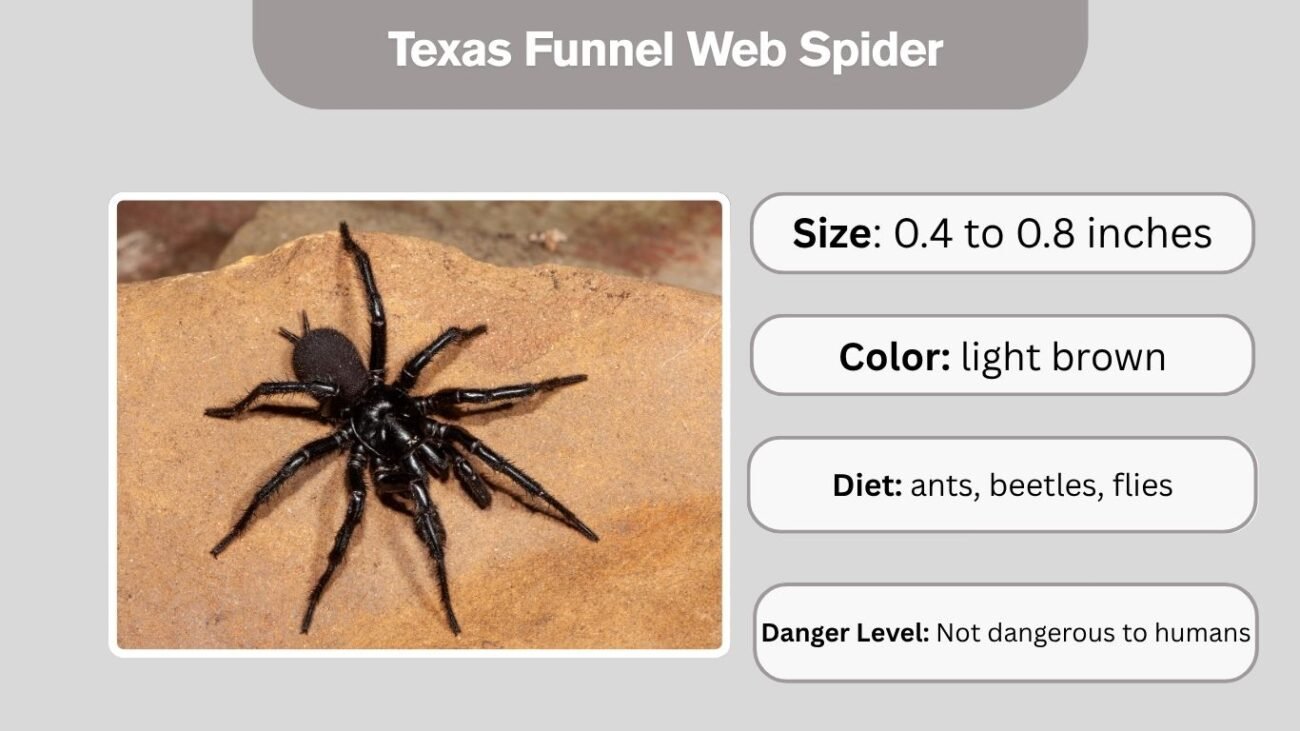
The Texas Funnel Web Spider, often referred to as a Grass Spider, is known for its funnel-shaped webs built in the grass or corners of buildings. It is not related to the dangerous Australian funnel-web spiders.
Appearance and Color
These spiders are light brown to tan with two dark longitudinal stripes running down the length of the body. They are fast runners with long, spiny legs.
Behavior and Habitat
They weave horizontal sheet-like webs with a funnel retreat where they hide during the day. Commonly found in lawns, shrubs, window wells, and along fences, they dart out to catch prey when it lands on the web.
Venom and Bites
Their bite is harmless to humans, though they can bite if trapped or threatened. Bites are rare and usually result in minor irritation.
Identification
- Scientific Name: Agelenopsis spp.
- Size: 9–18 mm
- Color: Brown or tan with two dark body stripes
- Key Feature: Funnel-shaped web with spider hidden inside
- Venomous: Yes – but not dangerous to humans
- Habitat: Lawns, bushes, near steps or walls
- Range: Common throughout Texas
8. Texas Tarantula (Texas Brown Tarantula)
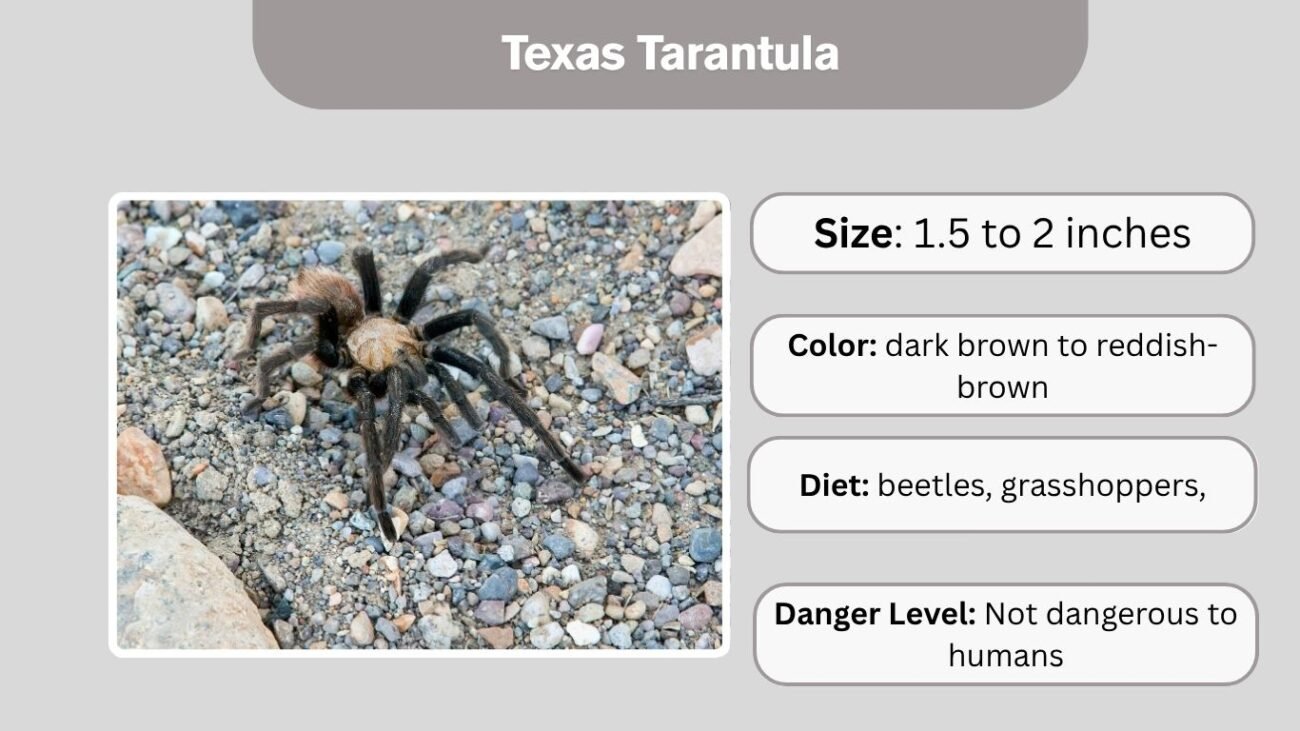
The Texas Tarantula is the largest spider native to Texas and is easily recognized by its thick, hairy body and legs. Despite its fearsome appearance, it is non-aggressive and generally harmless to humans.
Appearance and Color
This tarantula has a dark brown to black body with reddish or tan hairs covering the legs and abdomen. Males are typically slimmer and more active, especially during mating season.
Behavior and Habitat
They are burrowing spiders found in grasslands, deserts, and open fields. During late summer and fall, males may wander in search of mates and are often seen crossing roads or driveways.
Venom and Bites
Bites are rare and usually occur only when the spider is provoked. The venom is mild and comparable to a bee sting. They may also flick urticating hairs from their abdomen, which can irritate skin or eyes.
Identification
- Scientific Name: Aphonopelma hentzi
- Size: Up to 2 inches (body), leg span up to 5 inches
- Color: Brown or reddish-brown
- Key Feature: Large, hairy body and legs
- Venomous: Yes – but not harmful to humans
- Habitat: Prairies, open woods, rocky outcrops
- Range: Central and western Texas
9. Spinybacked Orb Weaver
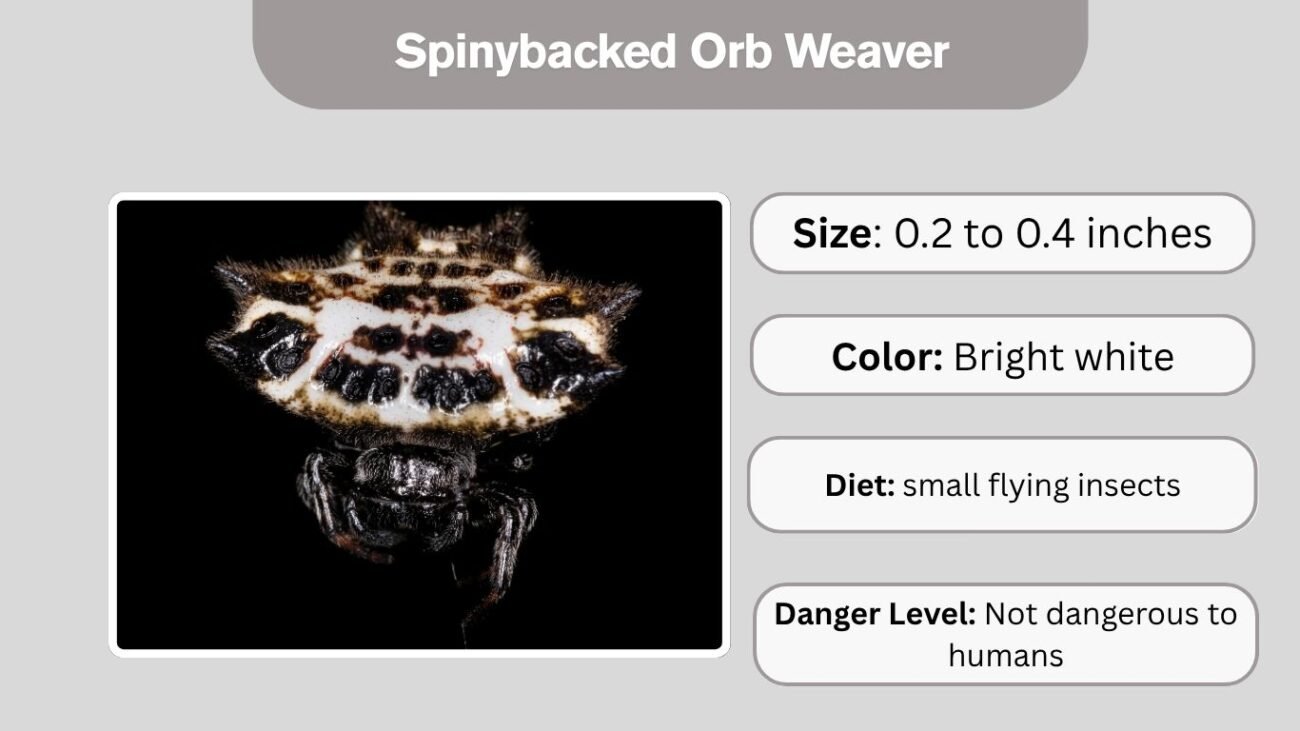
The Spinybacked Orb Weaver is one of the most visually unique spiders in Texas. With a crab-like, spiky body and bright colors, it looks more like a beetle than a spider. It’s completely harmless and beneficial to gardens.
Appearance and Color
This spider has a flat, round body with six prominent spines on its sides. Coloration varies but often includes white, yellow, or red bodies with black markings and black spikes.
Behavior and Habitat
They weave circular webs between trees, bushes, or on fences. Despite their odd appearance, they are non-aggressive and often go unnoticed until their web is spotted.
Venom and Bites
They are not dangerous to humans. Bites are extremely rare and result in little or no reaction.
Identification
- Scientific Name: Gasteracantha cancriformis
- Size: 5–10 mm (small)
- Color: Bright white, yellow, or red with black spines
- Key Feature: Spiky, crab-like shape
- Venomous: No – not harmful
- Habitat: Trees, shrubs, garden plants
- Range: East, central, and southern Texas
10. Trapdoor Spider (Texas Species)
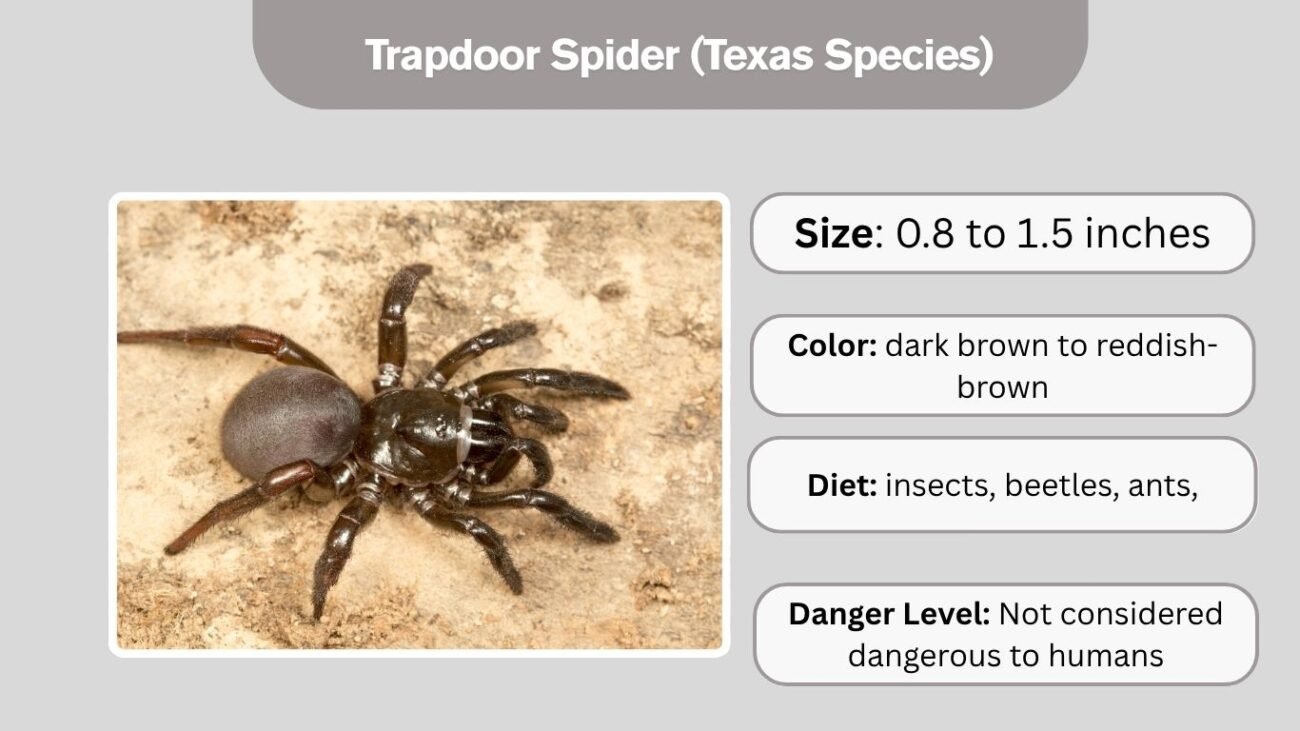
Trapdoor spiders in Texas are secretive, burrowing arachnids that live underground in silk-lined tunnels with a camouflaged “trapdoor” lid. These spiders are often mistaken for tarantulas due to their similar appearance but are much more reclusive.
Appearance and Color
They are stocky, dark brown to black spiders with shiny, hairless bodies and short, thick legs. Their fangs point downward, adapted for grabbing prey as it passes by their burrow entrance.
Behavior and Habitat
Trapdoor spiders rarely leave their burrows. They wait just inside their hinged silk-and-soil trapdoor and ambush passing insects. They are found in woodlands, gardens, or slopes with soft soil suitable for digging.
Venom and Bites
Though they can bite when threatened, their venom is not dangerous to humans. Bites may cause mild swelling or irritation.
Identification
- Scientific Name: Bothriocyrtum californicum (Texas species)
- Size: 0.75 to 1.25 inches (body length)
- Color: Dark brown or black
- Key Feature: Hidden in burrows with silk “trapdoor”
- Venomous: Yes – but harmless to humans
- Habitat: Soft soil, wooded or sloped areas
- Range: Central and southern Texas
11. Giant Crab Spider (Texas Huntsman Spider)
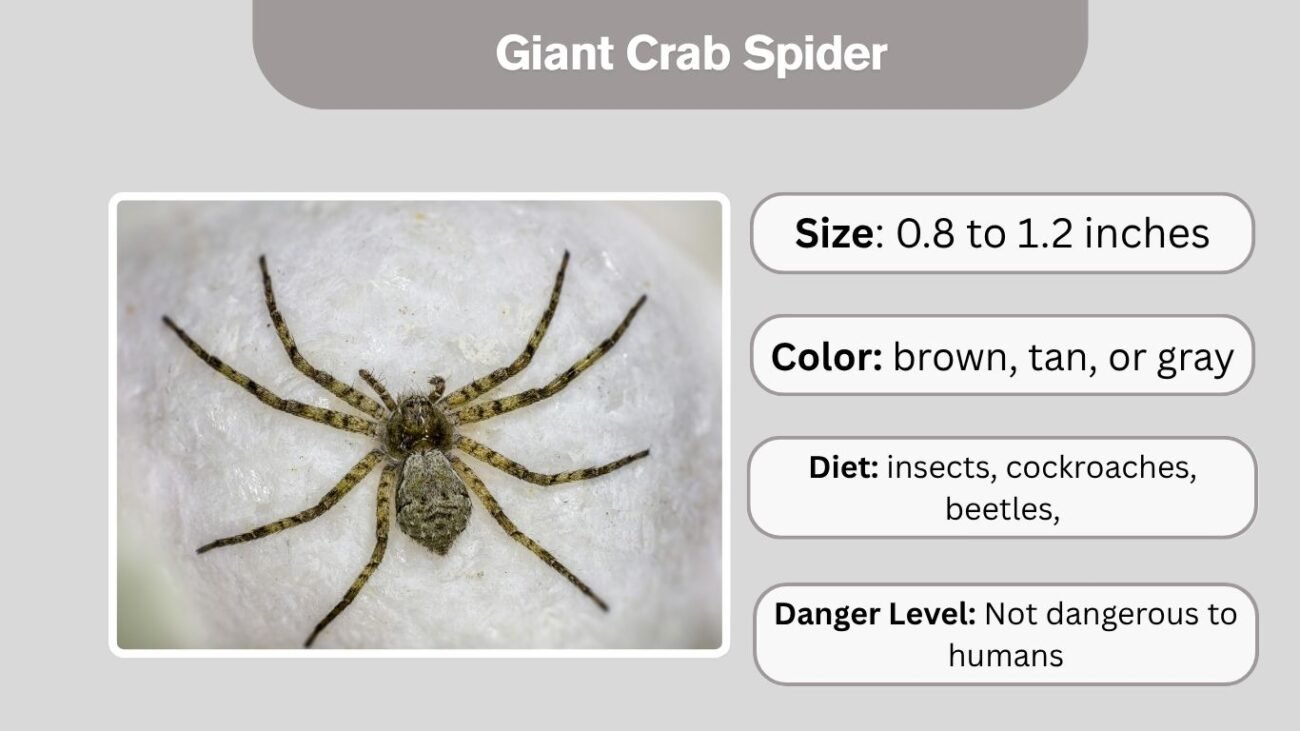
Often called the Texas Huntsman, this spider is large, fast, and flat-bodied, often startling people when it appears indoors. Despite its size and speed, it is not dangerous and helps control pests.
Appearance and Color
It has a flattened brown to grayish body, long legs that extend sideways (giving it a crab-like stance), and minimal patterning. The legs are often banded or lightly hairy.
Behavior and Habitat
These spiders are active at night and do not use webs to catch prey. They roam walls, ceilings, or woodpiles in search of insects. During the day, they hide in crevices, bark, or under objects.
Venom and Bites
While they may bite if provoked, their venom is not medically significant. Bites may cause slight pain or itching.
Identification
- Scientific Name: Olios giganteus
- Size: Body up to 1.5 inches; leg span up to 4–5 inches
- Color: Light brown to gray with minimal markings
- Key Feature: Long sideways legs; crab-like posture
- Venomous: Yes – but not harmful to humans
- Habitat: Under rocks, tree bark, indoors, sheds
- Range: Southern and central Texas
12. Green Lynx Spider
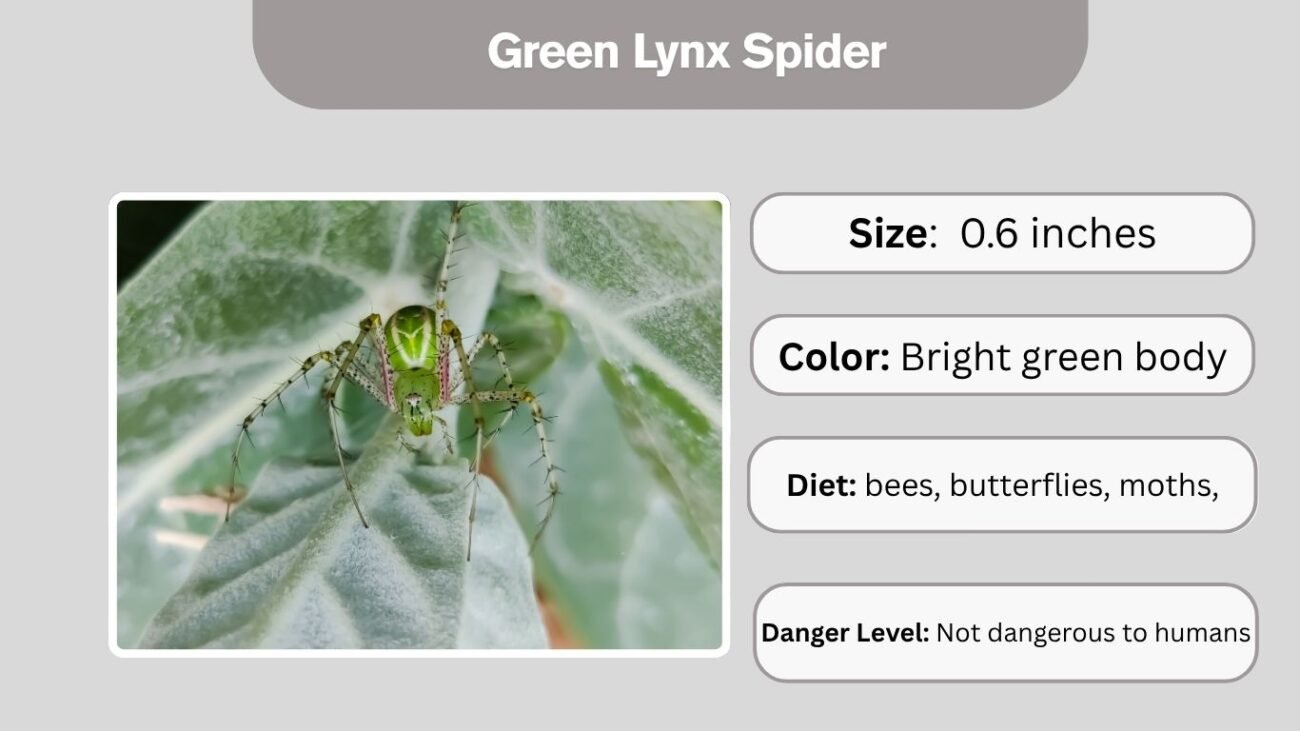
The Green Lynx Spider is a bright green, long-legged spider commonly found in gardens and shrubs throughout Texas. It’s known for its excellent camouflage and fast, pouncing hunting style.
Appearance and Color
This spider has a vivid green body with a long, tapered abdomen and transparent-looking legs covered in black spines. The body often shows red spots or lines, especially on younger individuals or females guarding egg sacs.
Behavior and Habitat
Green Lynx Spiders are active hunters that do not spin webs to trap prey. Instead, they ambush insects in flowering plants, shrubs, and crops, making them helpful for pest control.
Venom and Bites
They rarely bite humans, and their venom is not dangerous. A bite may result in mild burning or redness, but no lasting effects.
Identification
- Scientific Name: Peucetia viridans
- Size: Females up to 22 mm; males smaller
- Color: Bright green with red spots and long spiny legs
- Key Feature: Leaf-like color, great camouflage
- Venomous: Mildly – not dangerous to humans
- Habitat: Gardens, shrubs, flowering plants
- Range: Throughout Texas, especially in southern and central areas
13. Banana Spider (Golden Silk Orb-Weaver)
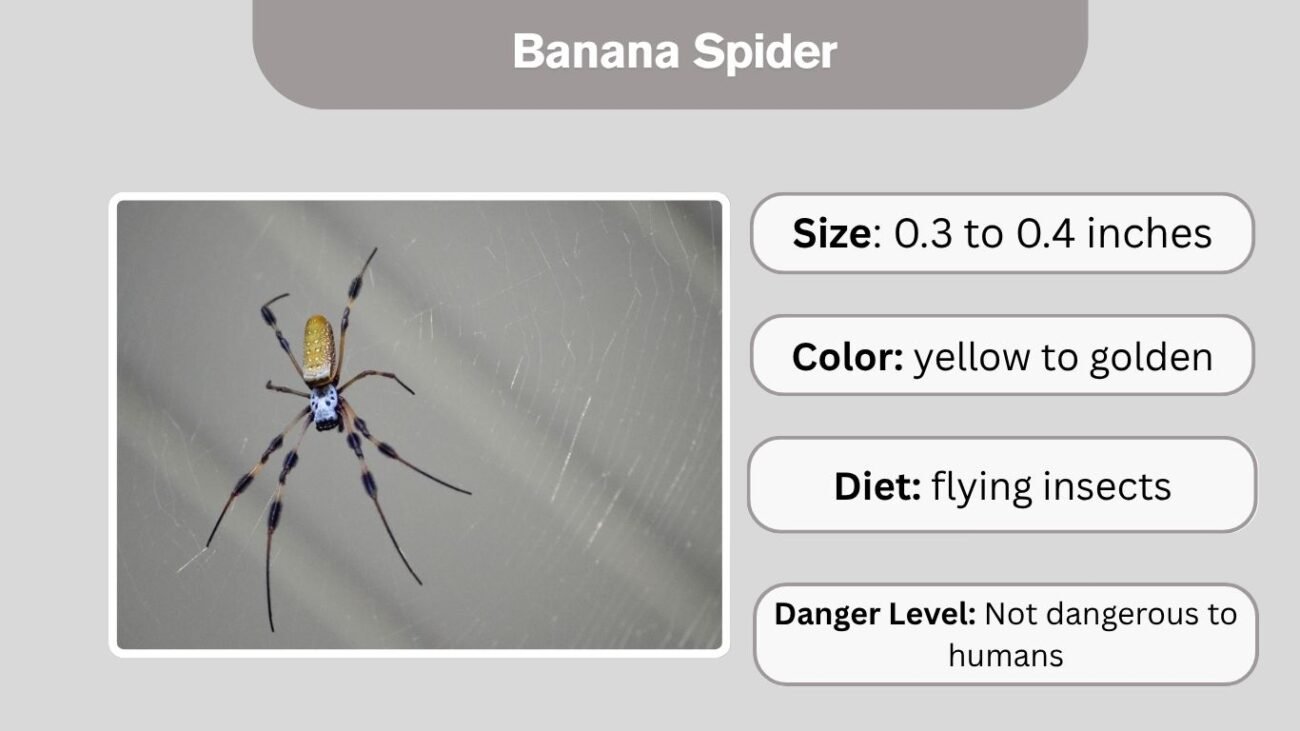
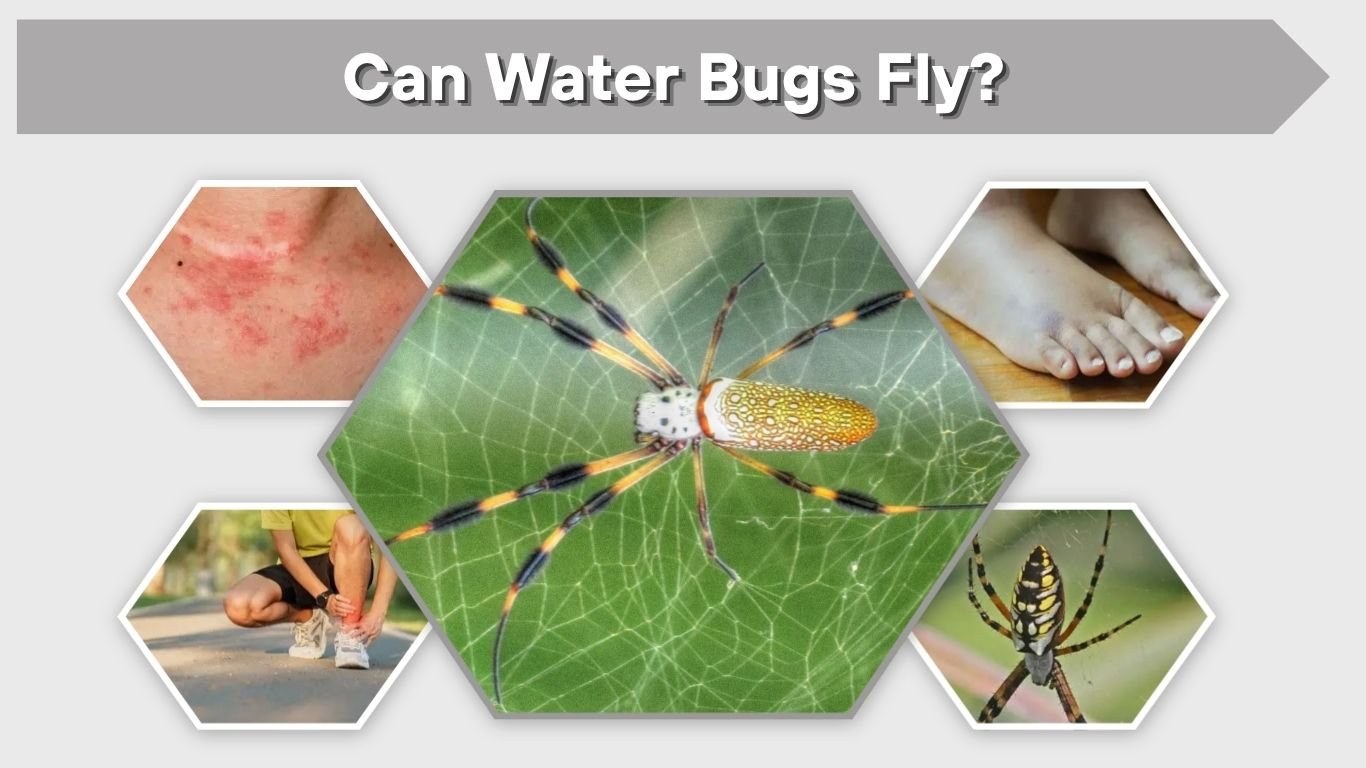
The Banana Spider, also called the Golden Silk Orb-Weaver, is a large and brightly colored spider known for spinning golden-hued webs in warm, humid regions of Texas.
Appearance and Color
Females are large with yellow-orange and black banded legs, a long yellow to orange abdomen, and a small cephalothorax. Males are tiny and drab in comparison.
Behavior and Habitat
They spin large, golden-colored orb webs in forests, gardens, and along trails, often suspended between trees or man-made structures. Despite their size, they are calm and non-aggressive.
Venom and Bites
Banana spiders are not dangerous to humans. Their bite may cause mild discomfort similar to a bee sting but has no serious medical effects.
Identification
- Scientific Name: Trichonephila clavipes
- Size: Females up to 2 inches; leg span over 4–5 inches
- Color: Yellow-orange body with black and yellow legs
- Key Feature: Bright color and golden web
- Venomous: Yes – but not harmful to humans
- Habitat: Woodlands, gardens, trails, humid areas
- Range: Eastern and coastal Texas
14. Dotted Wolf Spider (Rabid Wolf Spider)
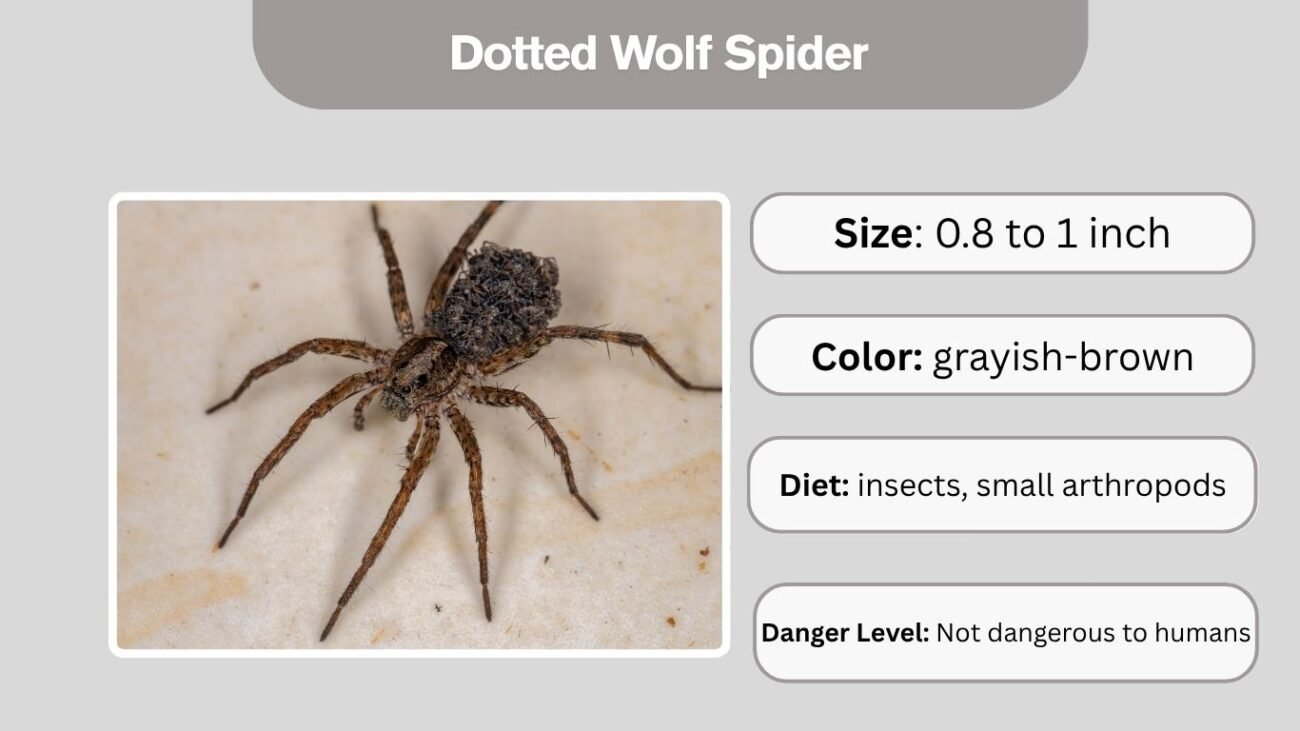
The Dotted Wolf Spider, also known as the Rabid Wolf Spider, is a fast-moving ground hunter commonly found across Texas. Despite the name “rabid,” this spider is not dangerous to humans.
Appearance and Color
It has a light brown to tan body with two dark parallel stripes running down the cephalothorax and spotted or banded legs. It’s smaller than the Texas wolf spider but shares a similar hunting style.
Behavior and Habitat
Rabid wolf spiders are active hunters that do not spin webs. They are often seen running quickly through grass, gardens, and leaf litter, especially at night when their eyes reflect light.
Venom and Bites
Bites are uncommon and not medically significant. Mild irritation, redness, or swelling may occur if bitten.
Identification
- Scientific Name: Rabidosa rabida
- Size: 10–25 mm (body)
- Color: Light brown with dark stripes and leg spots
- Key Feature: Fast runner, eye shine at night
- Venomous: Mild – not harmful to humans
- Habitat: Lawns, gardens, under rocks and logs
- Range: Widespread across Texas
15. Common House Spider (American House Spider)
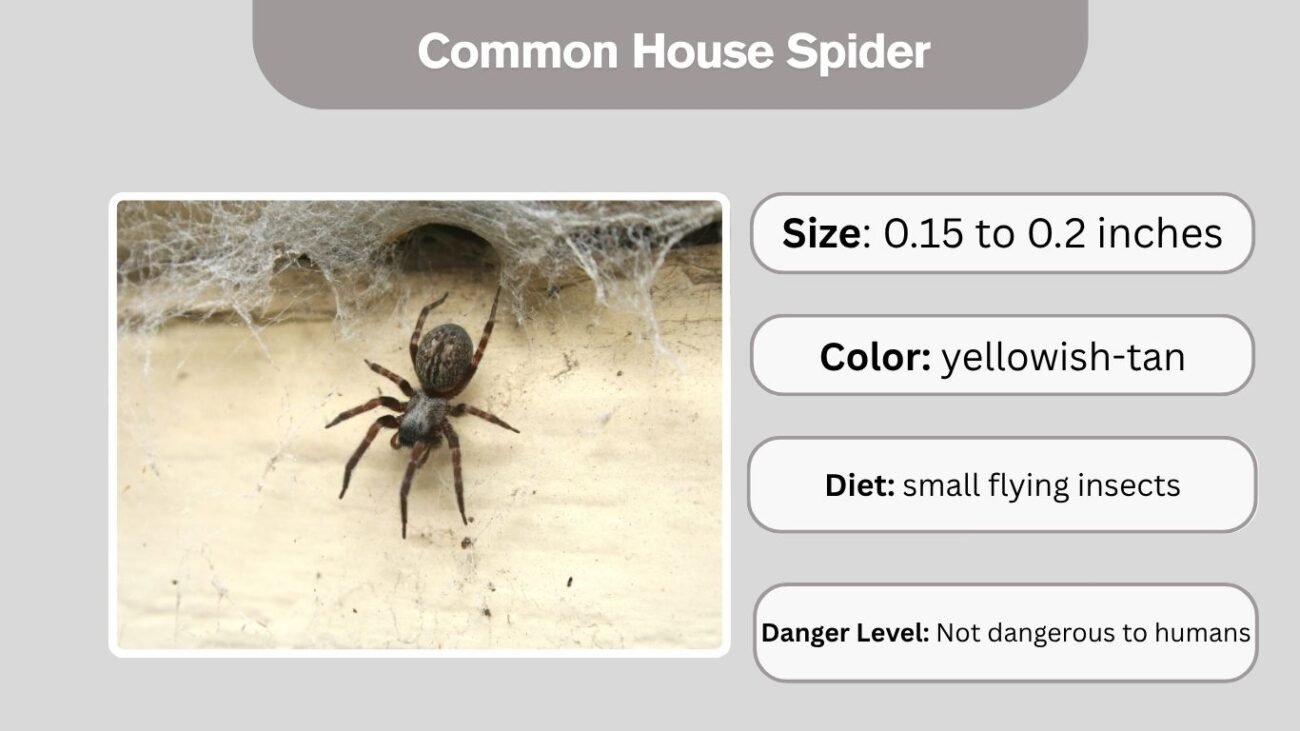
The Common House Spider is a small, shy cobweb weaver often seen in corners, closets, and garages. Though frequently encountered indoors, it is not aggressive or harmful.
Appearance and Color
It has a small round body with grayish or brownish coloration, often mottled or speckled. The legs are thin and long, and the body may appear semi-translucent.
Behavior and Habitat
These spiders create irregular webs in undisturbed areas like ceilings, closets, basements, and windows. They may stay hidden during the day and come out at night to catch flies, moths, or ants.
Venom and Bites
They are non-aggressive, and bites are extremely rare. If bitten, symptoms are minimal and may resemble a mosquito bite.
Identification
- Scientific Name: Parasteatoda tepidariorum
- Size: 4–9 mm (body)
- Color: Brownish-gray with mottled patterns
- Key Feature: Small, round body with messy web
- Venomous: No – harmless to humans
- Habitat: Inside homes, sheds, and garages
- Range: Found throughout Texas and the U.S.
16. Brown Widow Spider
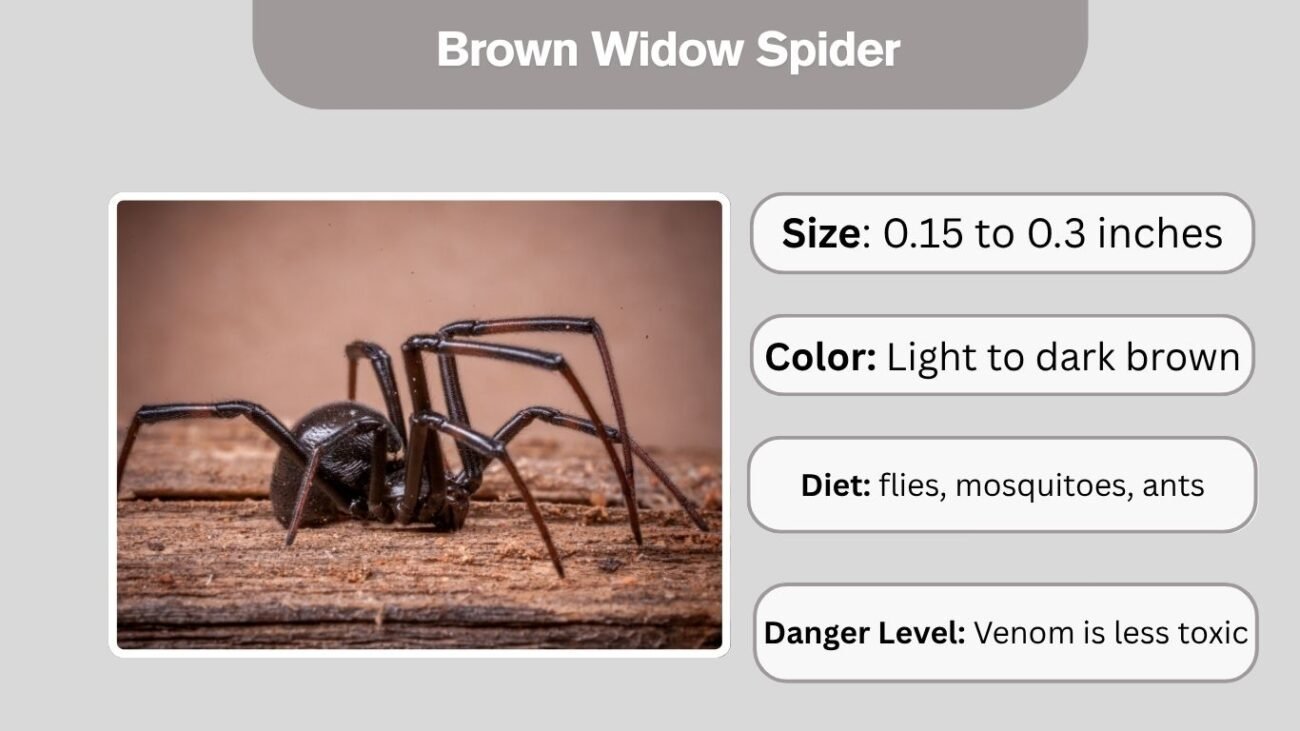
The Brown Widow is a close cousin of the black widow and is increasingly common in urban areas of Texas. While it shares the iconic hourglass shape, its venom is generally less potent.
Appearance and Color
It has a light brown to gray body with an orange or yellow hourglass marking on the underside. Its legs are banded with dark and light segments, and the abdomen may have geometric markings.
Behavior and Habitat
Brown widows prefer man-made structures such as mailboxes, patio furniture, and fence corners. They spin messy webs and often guard their spiky, white egg sacs.
Venom and Bites
Their bite is milder than the black widow’s, often causing local pain or redness. Serious medical reactions are rare.
Identification
- Scientific Name: Latrodectus geometricus
- Size: 7–14 mm
- Color: Light brown/tan with orange hourglass
- Key Feature: Spiky egg sacs, banded legs
- Venomous: Yes – but less dangerous than black widow
- Habitat: Urban corners, outdoor furniture, eaves
- Range: Southern and central Texas
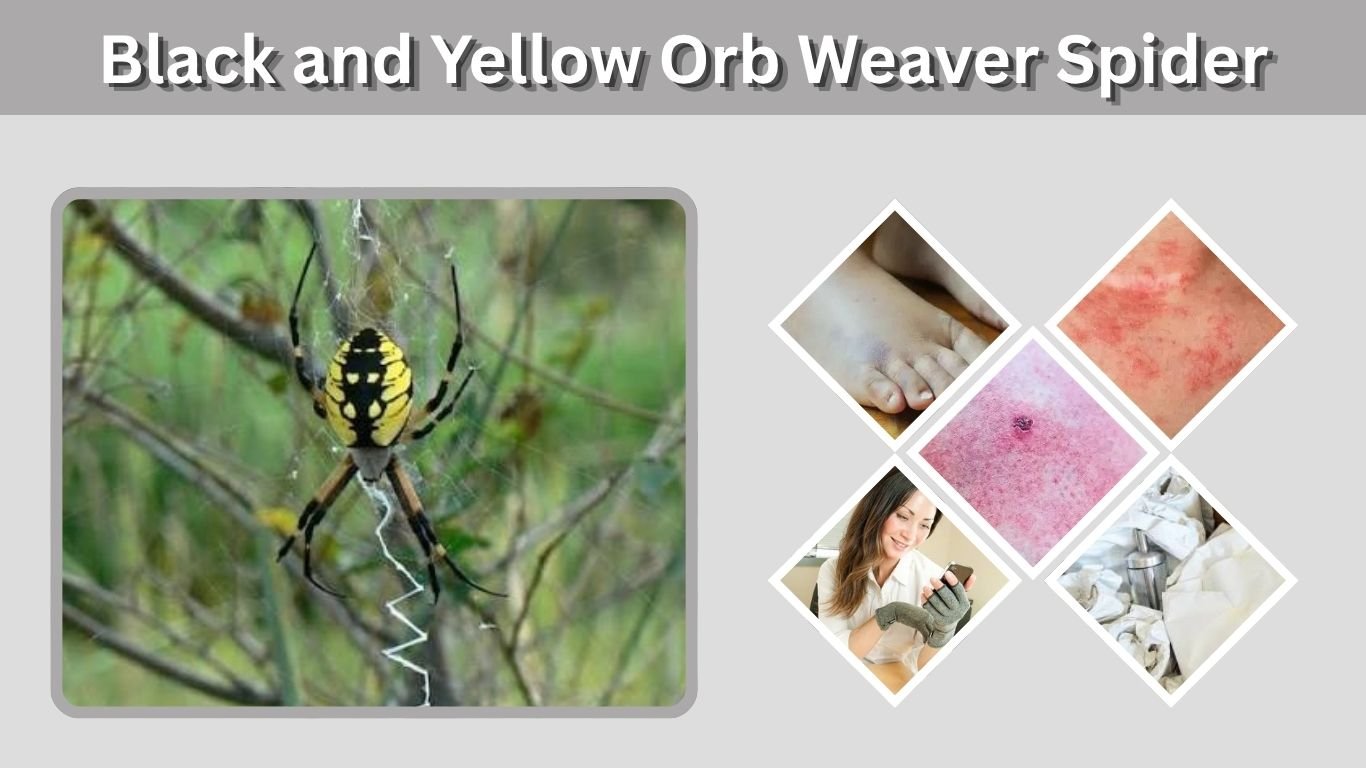
17. Black and Yellow Garden Spider
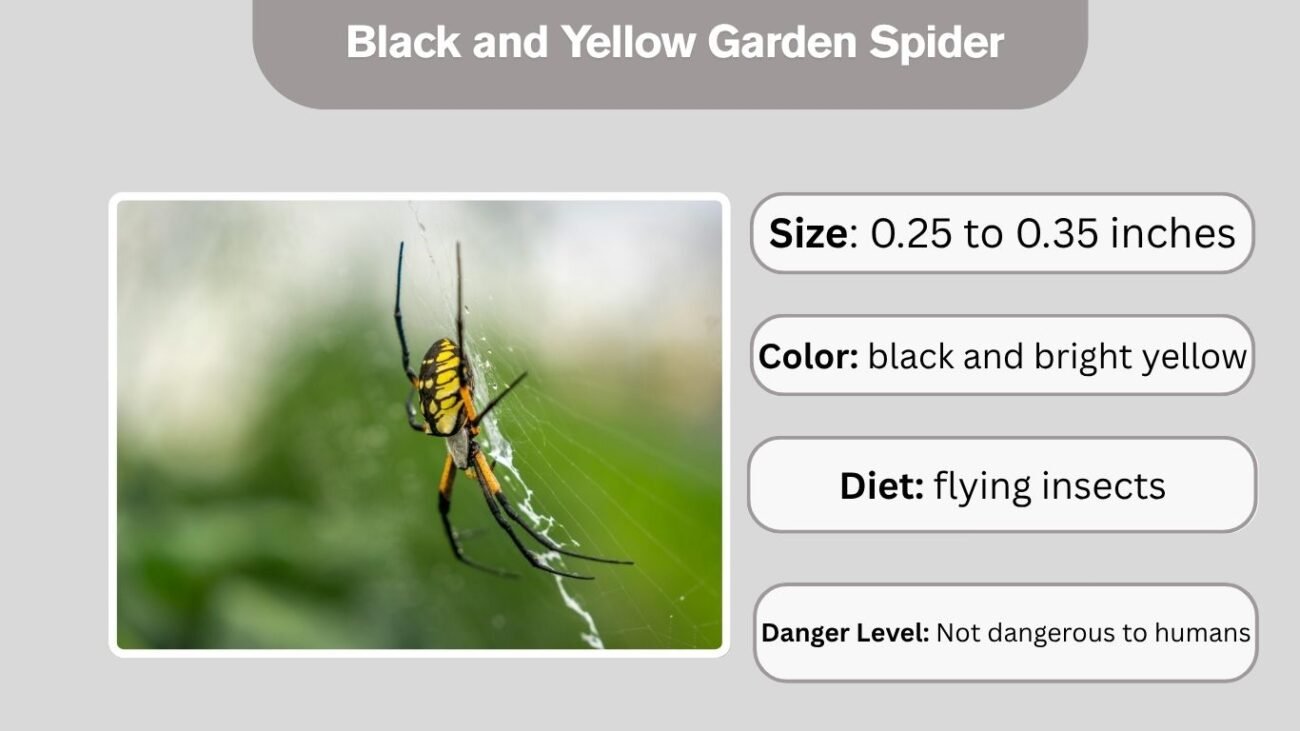
This large, eye-catching spider is a type of orb weaver found in gardens and grassy fields across Texas. It’s harmless and often admired for its dramatic appearance and zigzag web.
Appearance and Color
It has a striking yellow and black pattern on its abdomen, a white cephalothorax, and long banded legs.
Behavior and Habitat
They build large circular webs with a zigzag stabilimentum, often in tall grass, shrubs, or between poles and plants. They’re most active during warm months.
Venom and Bites
These spiders are not aggressive. Bites are rare and cause only mild swelling or itching.
Identification
- Scientific Name: Argiope aurantia
- Size: Up to 1.1 inch (females)
- Color: Bright yellow, black, and white
- Key Feature: Zigzag pattern in web
- Venomous: Mild – harmless to humans
- Habitat: Fields, gardens, near fences
- Range: Widespread across Texas
18. Texas Grass Spider
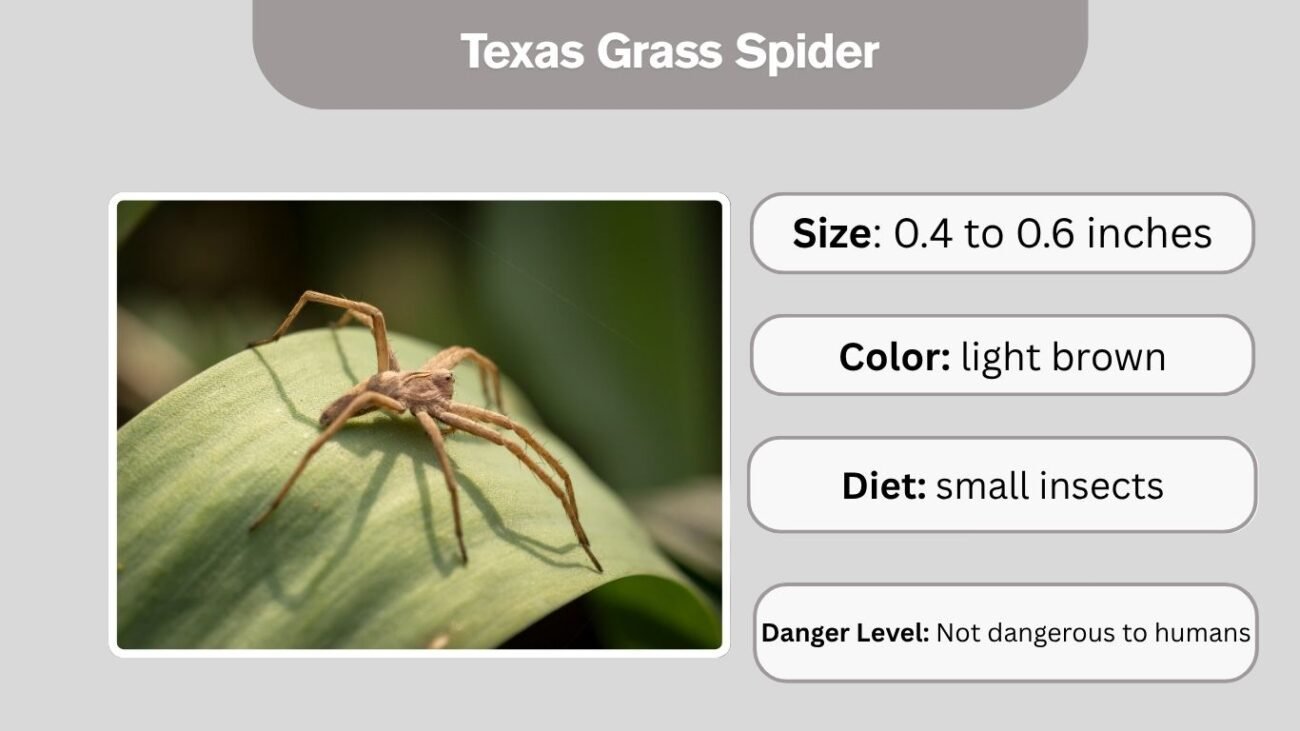
Grass Spiders are part of the funnel-weaving family and are often found in lawns, hedges, and low vegetation. They’re fast movers and often mistaken for dangerous species, but they are harmless.
Appearance and Color
They are brown or grayish with two dark stripes running down the body and slightly banded legs.
Behavior and Habitat
These spiders weave funnel-shaped webs on grass and shrubs. The spider hides inside the funnel and rushes out to catch insects when disturbed.
Venom and Bites
Grass spider bites are not medically significant. Reactions are typically mild or nonexistent.
Identification
- Scientific Name: Agelenopsis spp.
- Size: 10–18 mm
- Color: Brown with body stripes
- Key Feature: Funnel web structure
- Venomous: No – harmless
- Habitat: Grass, bushes, stone edges
- Range: Statewide in Texas
19. Crab Spider
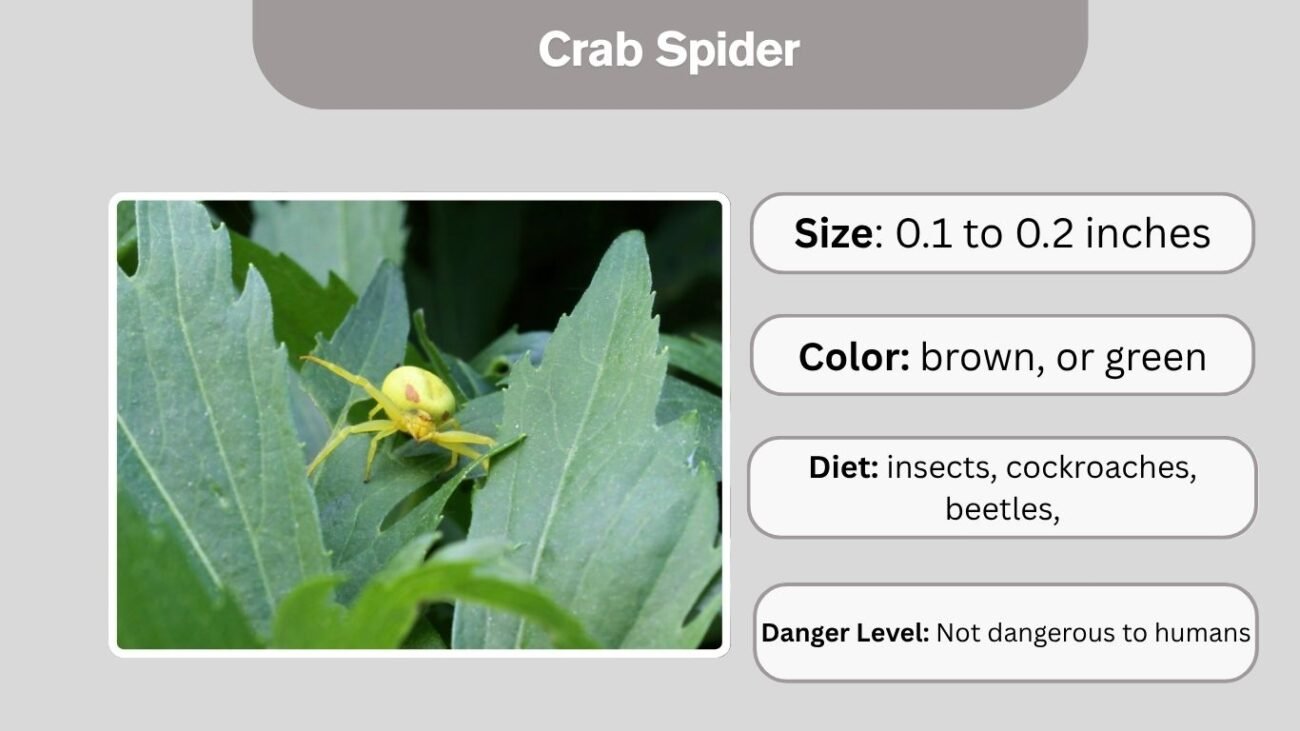
Crab spiders get their name from their crab-like shape and sideways walking style. They’re ambush predators often found on flowers, waiting to grab unsuspecting prey.
Appearance and Color
Crab spiders are usually white, yellow, or pink, and some can change color to match the flower they sit on. They have wide, flat bodies and long front legs.
Behavior and Habitat
They don’t spin webs. Instead, they sit motionless on flowers or leaves and strike quickly when prey approaches.
Venom and Bites
Harmless to humans. Their venom affects only insects.
Identification
- Scientific Name: Misumena vatia (common species)
- Size: 4–10 mm
- Color: White, yellow, pink (camouflaged)
- Key Feature: Flat body, long front legs
- Venomous: No – harmless
- Habitat: Flowers, gardens, shrubs
- Range: Throughout Texas
20. Bold Jumping Spider (Black and White Jumping Spider)
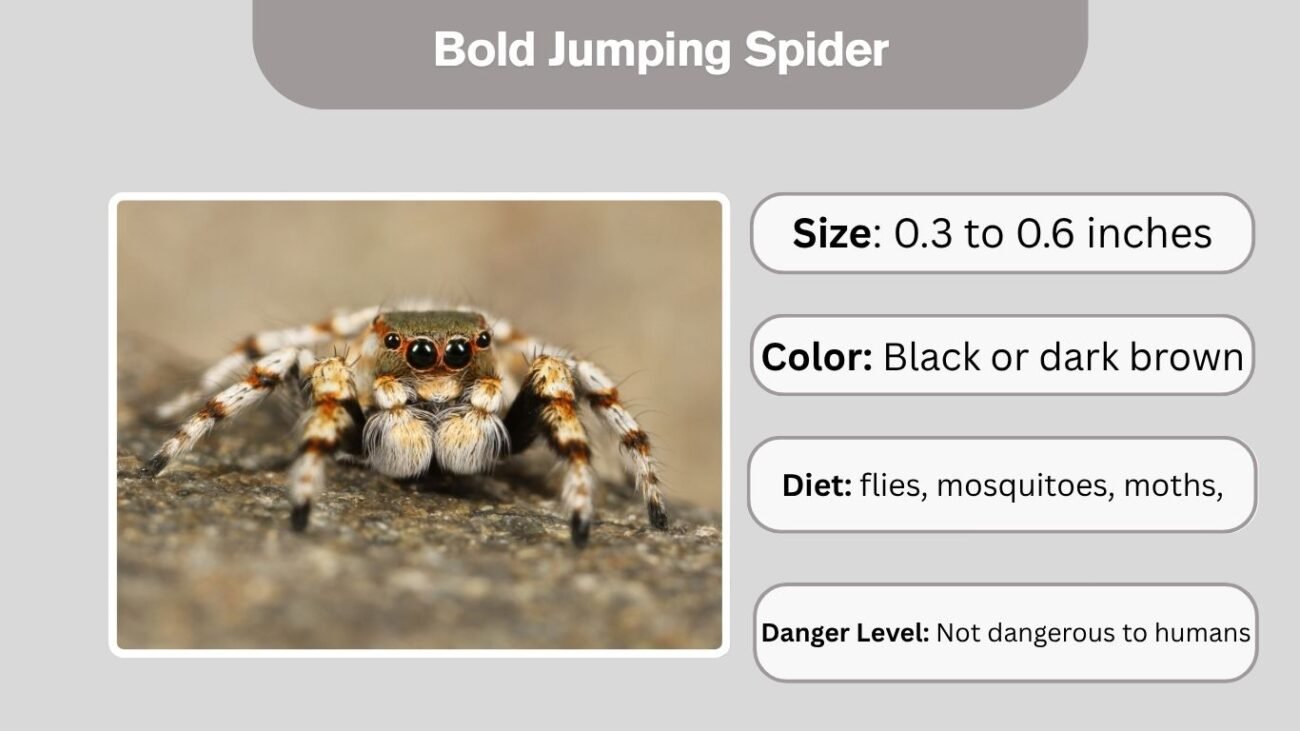
This visually striking jumper is commonly found on walls, plants, and fences. It’s small but confident, often turning to look at you with its large front eyes.
Appearance and Color
Black body with white spots or stripes, and metallic green chelicerae (fangs). It has a compact build and short, powerful legs.
Behavior and Habitat
This spider is very active during the day and doesn’t use a web to catch prey. Instead, it stalks and pounces like a cat.
Venom and Bites
It can bite if provoked, but it’s not harmful to humans.
Identification
- Scientific Name: Phidippus audax
- Size: 8–19 mm
- Color: Black with white spots and green fangs
- Key Feature: Bold color contrast, green mouthparts
- Venomous: Mild – not dangerous
- Habitat: Gardens, fences, walls
- Range: Across Texas
21. Spitting Spider
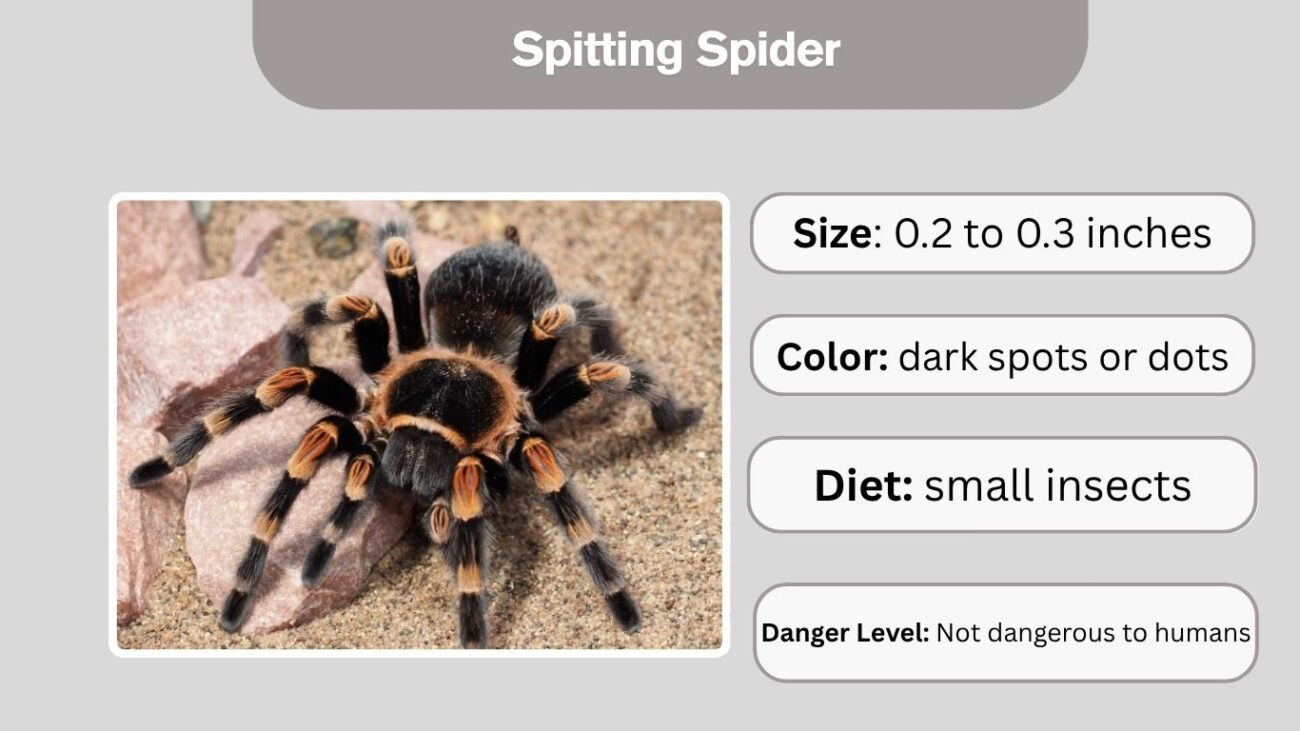
The Spitting Spider is small and slow-moving, but it has a unique defense strategy: it spits a glue-like substance to trap its prey. It’s more common indoors in quiet, dark places.
Appearance and Color
Light brown or tan body with a humped, dome-shaped cephalothorax and a pattern of dark spots. It has six eyes arranged in a semicircle.
Behavior and Habitat
They hunt small insects indoors, especially in corners, behind furniture, and basements. They don’t build catching webs.
Venom and Bites
They rarely bite, and if they do, it’s not dangerous to humans.
Identification
- Scientific Name: Scytodes thoracica
- Size: 3–6 mm
- Color: Light brown with dark spots
- Key Feature: Spits glue to trap prey
- Venomous: No – harmless
- Habitat: Indoors, basements, under objects
Range: Across Texas