The UK is home to a surprising variety of large spiders, some of which can grow to impressive sizes and startle anyone who finds one in their home or garden. While none are dangerous to humans, many of these spiders play important roles in local ecosystems by controlling insect populations.
From the massive Cardinal Spider to the semi-aquatic Raft Spider, this list highlights the 12 biggest spiders found in the UK — including their names, sizes, and where you might encounter them.
1. Cardinal Spider

The Cardinal Spider (Tegenaria parietina) is the largest spider in the UK, with a leg span of up to 12–14 cm and a body length of around 10–18 mm. Known for its fast movements and long legs, it’s often seen scurrying across walls or floors, especially in older buildings. Despite its intimidating size, it is harmless to humans.
Size and Appearance
- Leg span can reach up to 12–14 cm
- Brown body with long, hairy legs
- Body length around 10–18 mm
- Males are usually smaller than females
Where They’re Found in the UK
Commonly found in southern England, particularly in large, old buildings. They like dark, undisturbed areas such as basements, cupboards, and behind furniture.
Are Cardinal Spiders Dangerous?
Not at all. Although capable of biting if cornered, their venom poses no serious risk. Any bite usually results in minor irritation or redness.
Fun Fact
Cardinal Spiders are named after Cardinal Thomas Wolsey, who reportedly encountered them at Hampton Court and feared their large size.
2. Giant House Spider

The Giant House Spider (Eratigena atrica) is one of the most frequently encountered large spiders in UK homes, with a leg span of up to 12 cm and a body length of around 10–18 mm. It’s especially active during late summer and early autumn when males wander in search of mates.
Size and Appearance
- Leg span up to 12 cm
- Dark brown body with lighter markings
- Body length around 10–18 mm
- Thick, hairy legs and fast-moving
Where They’re Found in the UK
Widespread across the UK, especially in homes, lofts, sheds, and garages. Often spotted darting across floors or trapped in sinks and bathtubs.
Are Giant House Spiders Dangerous?
No, they are harmless. Though they can bite if provoked, their venom is weak and poses no threat to humans.
Fun Fact
Despite their name and size, these spiders help control household pests by feeding on insects like flies and moths.
3. Tube Web Spider
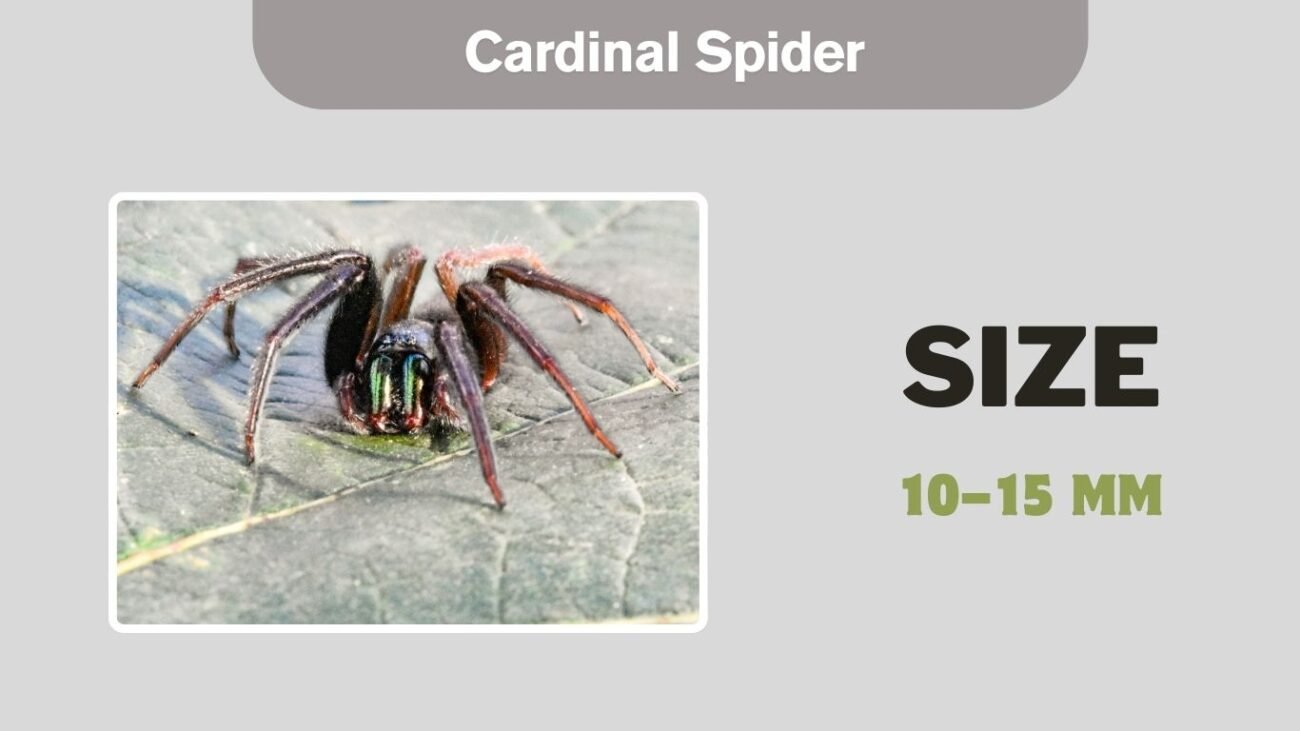
The Tube Web Spider (Segestria florentina) is a striking, large spider found in parts of the UK. It has a leg span of up to 7–9 cm and a body length of around 15–22 mm. Its vivid green fangs and defensive behavior make it stand out among UK species.
Size and Appearance
- Leg span up to 7–9 cm
- Shiny black or dark brown body
- Body length around 15–22 mm
- Green metallic fangs (chelicerae)
Where They’re Found in the UK
Mostly found in southern England and urban areas. Common in cracks of walls, brickwork, and stone structures where it builds funnel-like tube webs.
Are Tube Web Spiders Dangerous?
Mildly. Their bite can be painful—similar to a bee sting—but is not dangerous unless allergic reactions occur.
Fun Fact
They position themselves deep in their silk-lined tube and rush out at lightning speed when prey or vibrations are detected near the entrance.
4. Walnut Orb-Weaver Spider
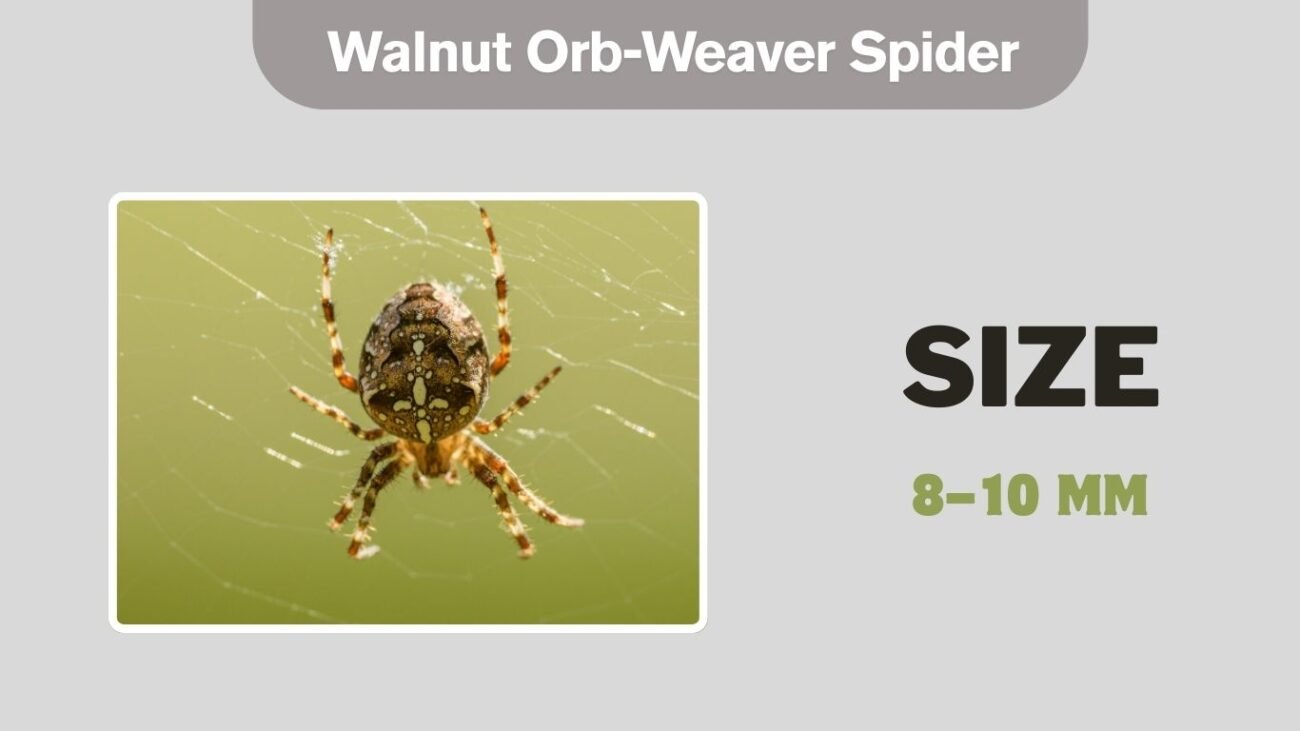
The Walnut Orb-Weaver (Nuctenea umbratica) is a flat-bodied spider known for its wide build and camouflaged coloring. It has a leg span of around 6–9 cm and a body length of about 9–15 mm. Its flattened shape helps it hide in tight crevices during the day.
Size and Appearance
- Leg span around 6–9 cm
- Broad, flattened abdomen with walnut-like texture
- Body length around 9–15 mm
- Color ranges from dark brown to grey-brown
Where They’re Found in the UK
Common across the UK, especially in gardens, fences, under bark, and on sheds. They hide during the day and come out at night to hunt and build orb webs.
Are Walnut Orb-Weavers Dangerous?
No. While they can bite if disturbed, their venom is mild and not harmful to humans. Bites may cause minor irritation.
Fun Fact
Their abdomen resembles the surface of a walnut, providing excellent natural camouflage on tree bark and wooden surfaces.
5. Lace Web Spider

The Lace Web Spider (Amaurobius ferox and Amaurobius similis) is a stocky spider with a leg span of around 6–7 cm and a body length of 8–12 mm. It’s known for spinning lace-like webs near walls, fences, and corners of buildings.
Size and Appearance
- Leg span around 6–7 cm
- Brown or reddish body with distinctive markings
- Body length about 8–12 mm
- Dense, woolly hair covering the legs
Where They’re Found in the UK
Widespread in gardens, garages, and the outer walls of houses. Often spotted after rain, when their webs become more visible.
Are Lace Web Spiders Dangerous?
They can bite, but their venom is not dangerous to humans. Some may experience local pain or swelling, but symptoms usually subside quickly.
Fun Fact
They’re often mistaken for the False Widow due to similar size and color, but Lace Web Spiders are less aggressive and more reclusive.
6. Wasp Spider
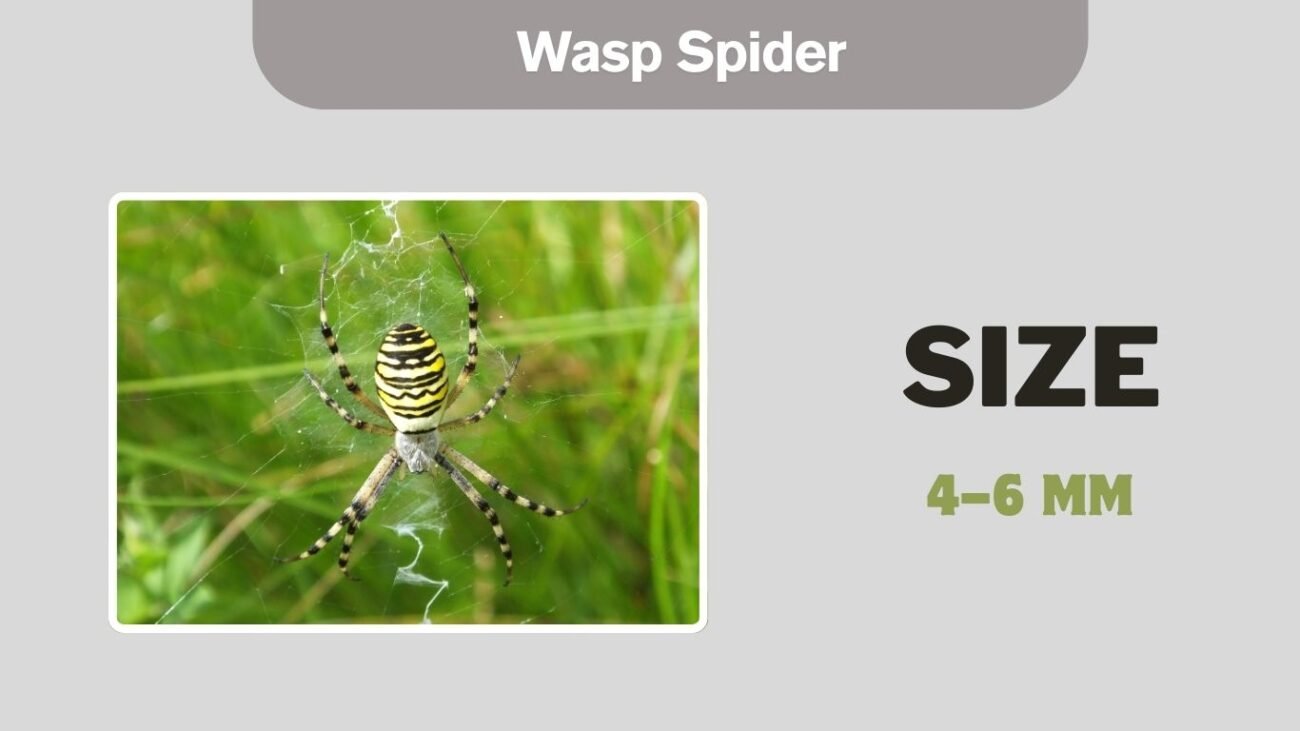
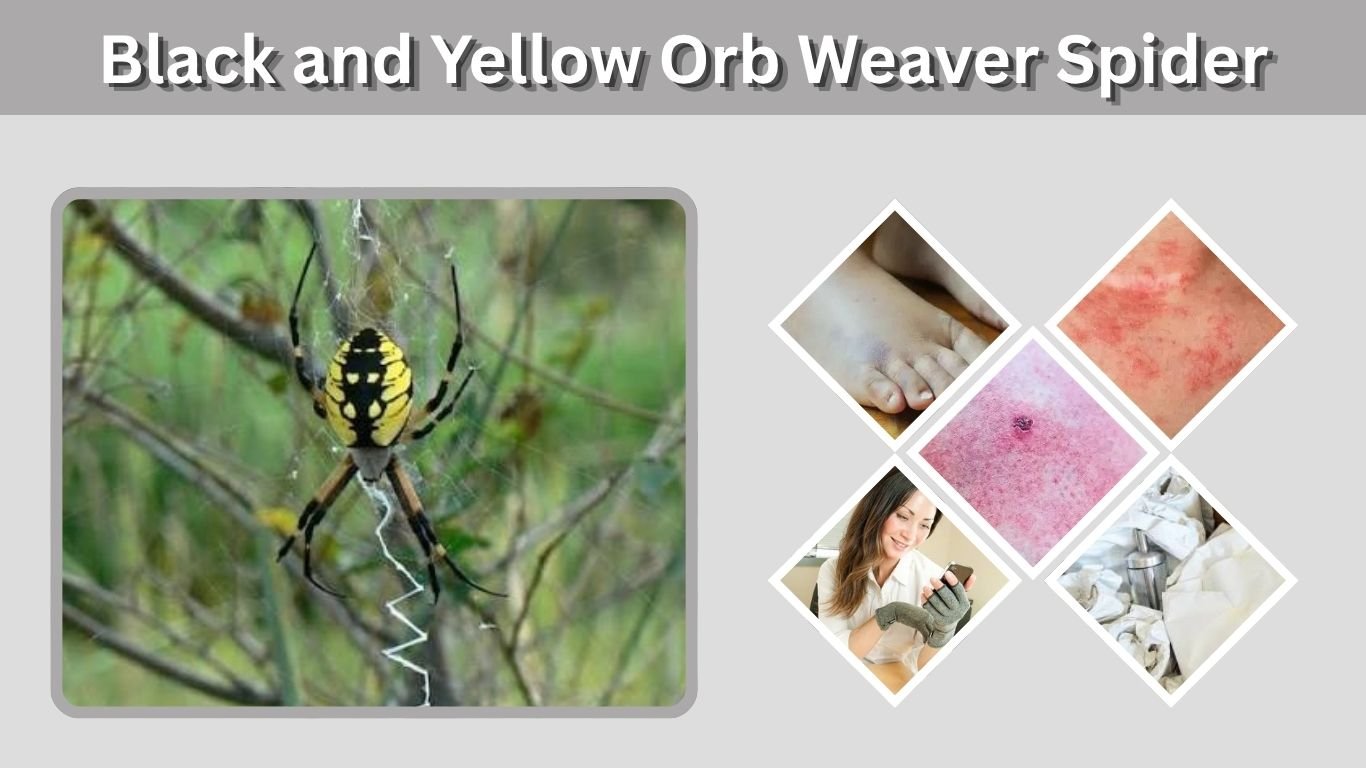
The Wasp Spider (Argiope bruennichi) is one of the most eye-catching large spiders in the UK, with a leg span of around 5–7 cm and a body length of 10–18 mm. Its vivid yellow and black stripes mimic those of a wasp, serving as a defense mechanism against predators.
Size and Appearance
- Leg span around 5–7 cm
- Bright yellow and black striped abdomen
- Body length about 10–18 mm
- Long, spiny legs with banded patterns
Where They’re Found in the UK
Increasingly found in southern England, particularly in grasslands, meadows, and heathlands. Most visible from late summer to early autumn.
Are Wasp Spiders Dangerous?
No. Though they possess venom to subdue prey, their bite is not harmful to humans and usually causes little more than mild discomfort if bitten.
Fun Fact
The female builds a large orb web with a distinctive zigzag pattern (called a stabilimentum) running through the center.
7. Four-Spotted Orb-Weaver
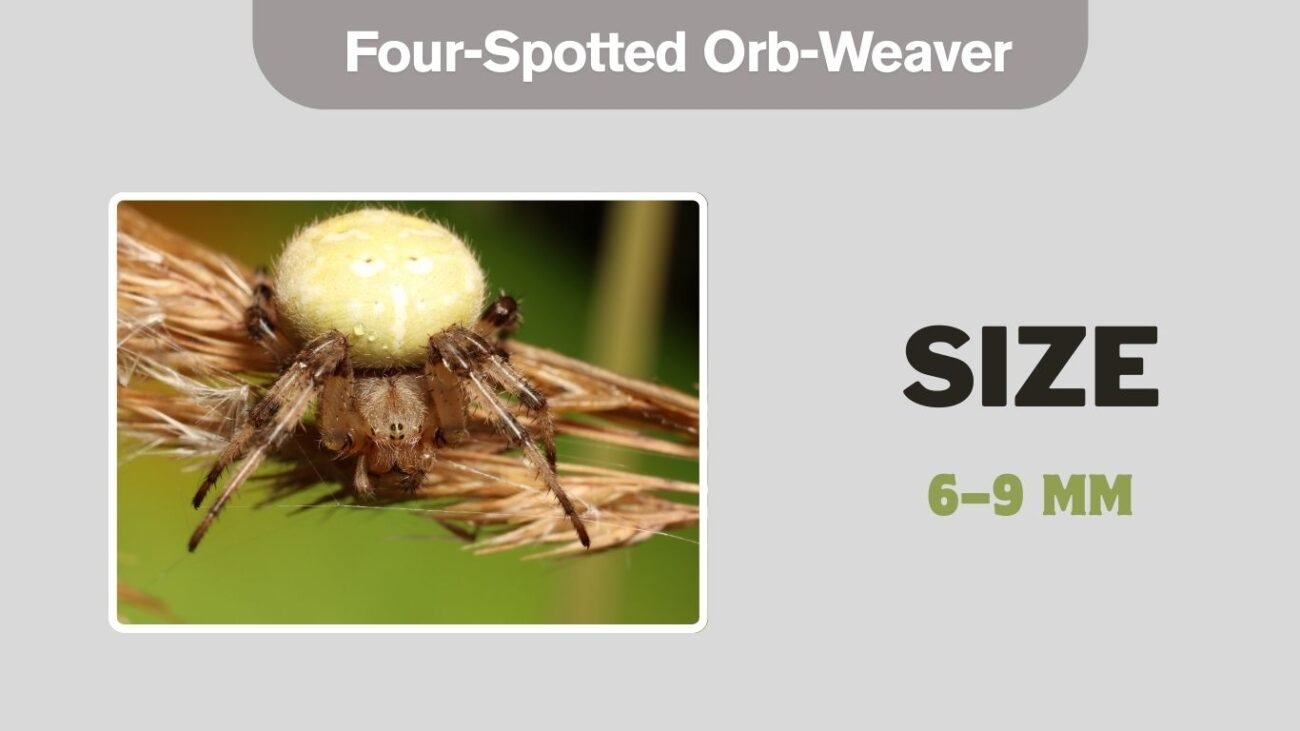
The Four-Spotted Orb-Weaver (Araneus quadratus) is a large, round-bodied spider found in the UK, with a leg span of up to 5–6 cm and a body length of around 10–17 mm. It’s named for the four pale spots on its rounded abdomen.
Size and Appearance
- Leg span up to 5–6 cm
- Round, bulbous abdomen with four white spots
- Body length around 10–17 mm
- Color can vary: green, brown, orange, or beige
Where They’re Found in the UK
Common in grasslands, gardens, and low shrubs throughout the UK. Often builds orb webs between tall plants or fence posts.
Are Four-Spotted Orb-Weavers Dangerous?
No. They’re harmless to humans. Bites are rare and result in little more than mild irritation.
Fun Fact
Females are much larger than males and often stay motionless in the center of their web, waiting for prey.
8. Missing Sector Orb-Weaver
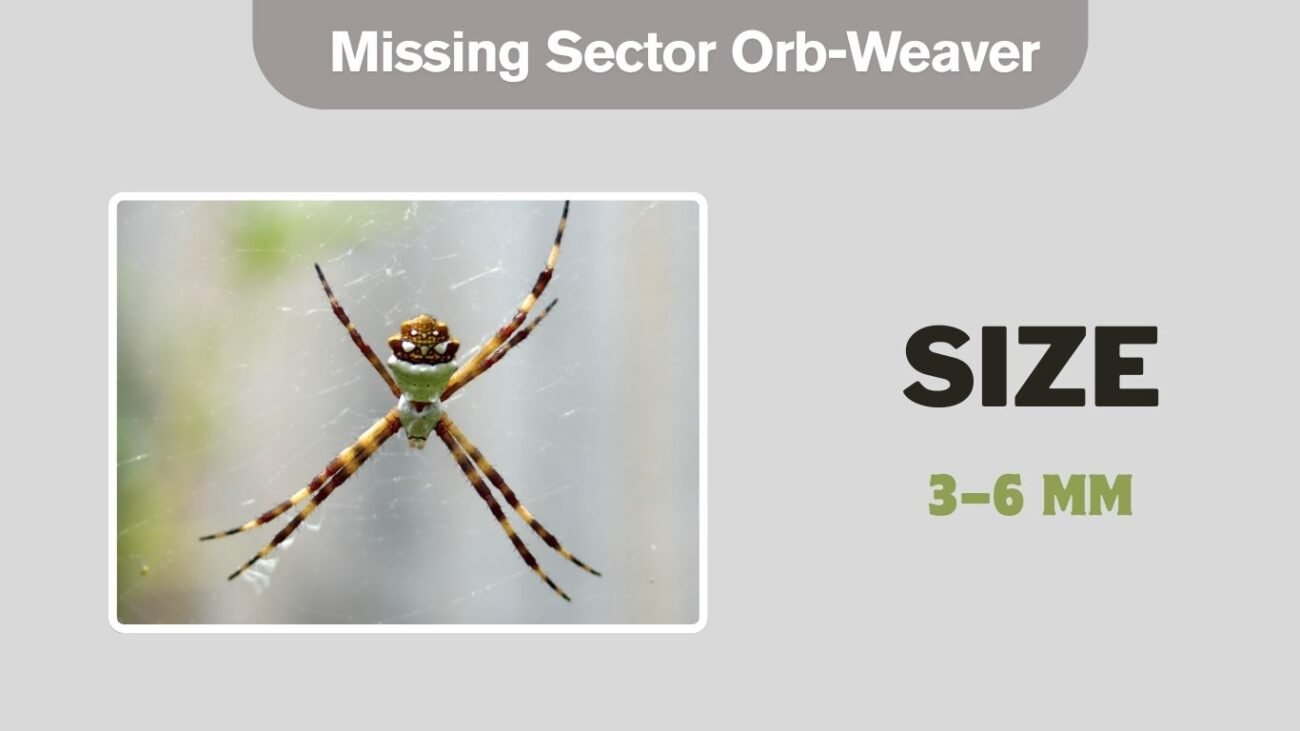
The Missing Sector Orb-Weaver (Zygiella x-notata) is a familiar sight on UK windows and buildings, with a leg span of around 4–6 cm and a body length of about 6–11 mm. It’s named after the missing segment in its web.
Size and Appearance
- Leg span around 4–6 cm
- Silver-grey or pale brown abdomen with leaf-like pattern
- Body length around 6–11 mm
- Legs often appear slightly translucent
Where They’re Found in the UK
Widespread and commonly seen on window frames, garden walls, and fences. They are active throughout the year, especially in sheltered spots.
Are Missing Sector Orb-Weavers Dangerous?
No. They are completely harmless and very unlikely to bite. Even if they do, the venom is weak and has no effect on humans.
Fun Fact
They get their name from the small “missing” triangular section often seen in the upper corner of their orb web.
9. Cave Spider (Meta menardi)
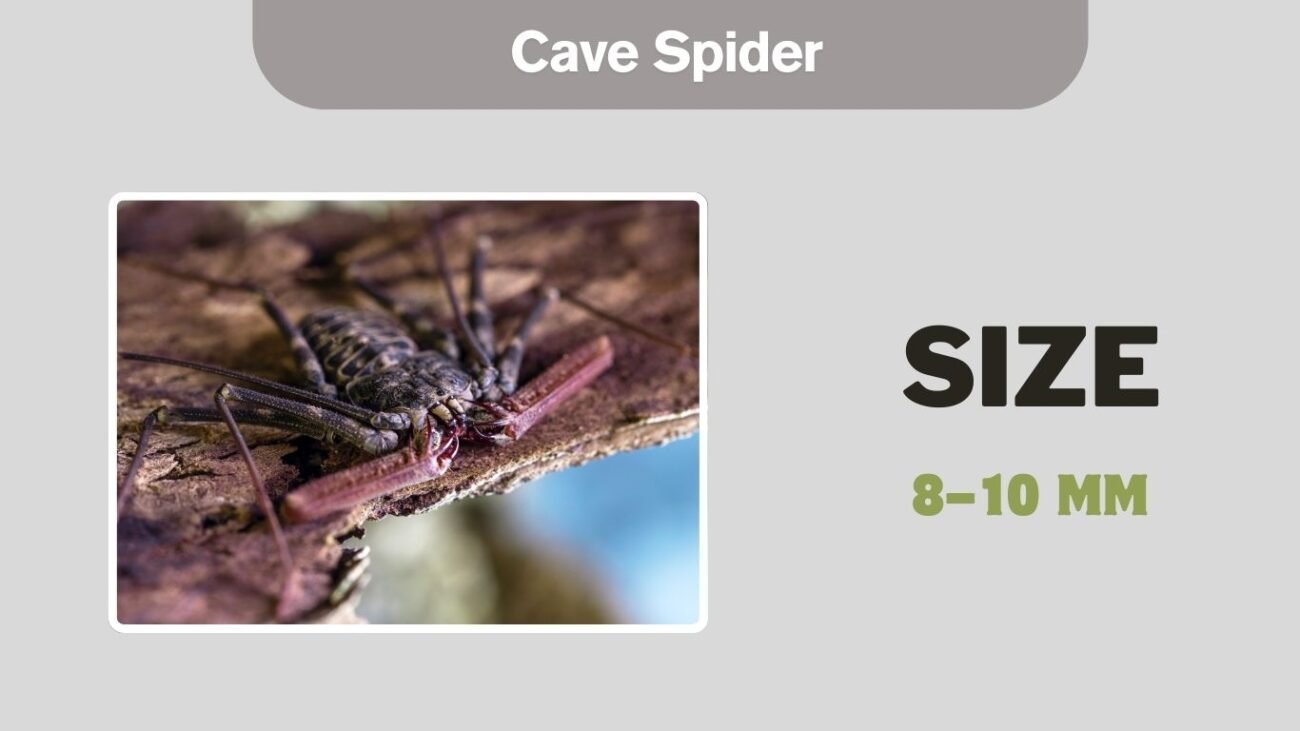
The Cave Spider (Meta menardi) is one of the UK’s larger spiders, with a leg span of around 5–7 cm and a body length of about 10–15 mm. It prefers dark, damp environments and is rarely seen due to its reclusive lifestyle.
Size and Appearance
- Leg span around 5–7 cm
- Dark, glossy body with pale markings
- Body length around 10–15 mm
- Long, slender legs and pear-shaped abdomen
Where They’re Found in the UK
Common in caves, tunnels, underpasses, basements, and disused buildings. Often spotted near human structures like cellars and old mines.
Are Cave Spiders Dangerous?
No. Though they can look intimidating due to their size, they are not aggressive and their bite is not harmful to humans.
Fun Fact
Despite their eerie name, Cave Spiders are important for cave ecosystems and feed on insects like moths and woodlice.
10. Garden Orb-Weaver (Araneus diadematus)
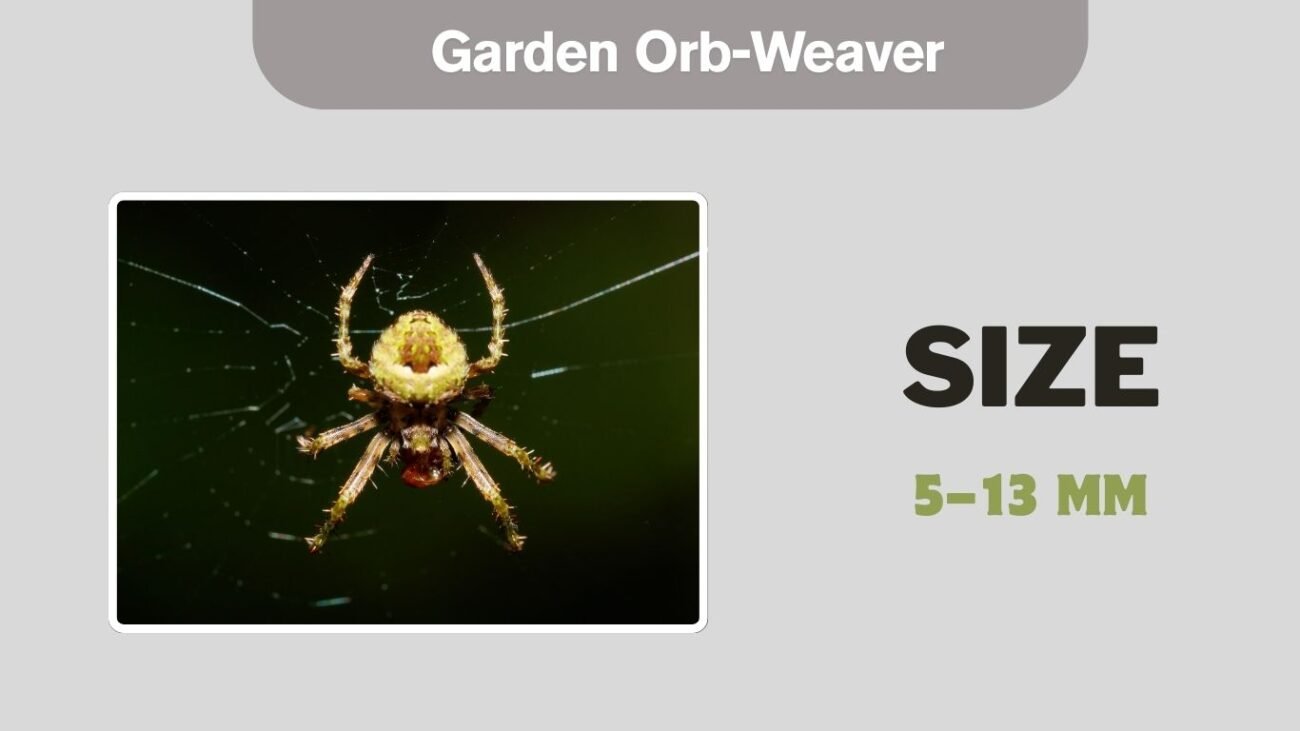
The Garden Orb-Weaver (Araneus diadematus), also known as the Cross Orb-Weaver, is a common large spider in UK gardens, with a leg span of around 4–6 cm and a body length of 6–20 mm. It’s easily recognized by the white cross-shaped markings on its back.
Size and Appearance
- Leg span around 4–6 cm
- Bulbous abdomen with white cross-shaped markings
- Body length between 6–20 mm (females much larger)
- Colors vary: brown, orange, or grey
Where They’re Found in the UK
Widespread throughout gardens, hedgerows, and woodlands across the UK. Often builds large orb webs in bushes, fences, or between plants.
Are Garden Orb-Weavers Dangerous?
Not at all. They are non-aggressive and rarely bite. Their venom is harmless to humans and their bite is very mild if it occurs.
Fun Fact
They are one of the UK’s most loved garden spiders and play an important role in controlling pest insects like flies and aphids.
11. Zebra Jumping Spider (Salticus scenicus)
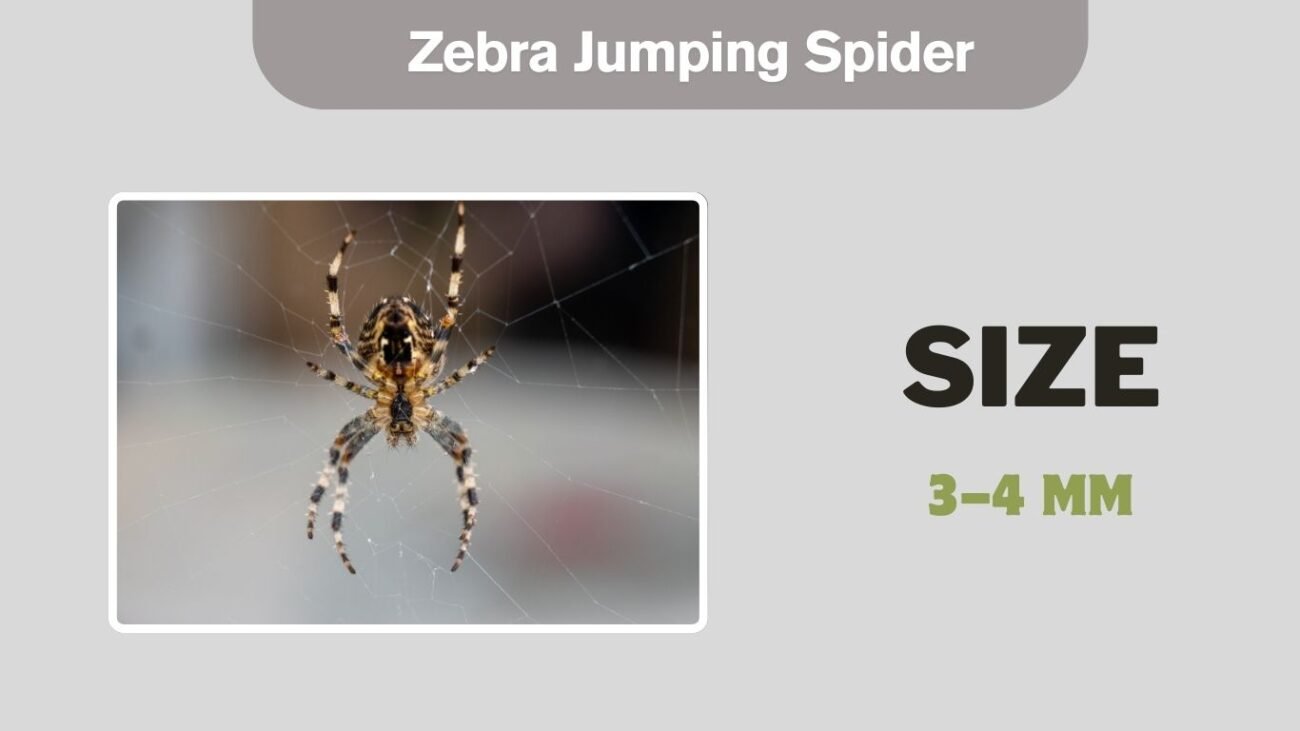
The Zebra Jumping Spider (Salticus scenicus) is a small but agile spider with a leg span of around 2–3 cm and a body length of about 5–9 mm. Despite its modest size, it’s often included in lists of notable UK spiders due to its bold behavior, excellent vision, and characteristic striped pattern.
Size and Appearance
- Leg span around 2–3 cm
- Black-and-white zebra-like stripes across the body
- Body length around 5–9 mm
- Large front eyes for depth perception and hunting
Where They’re Found in the UK
Widespread across the UK. Commonly found on sunny walls, windowsills, garden furniture, and even indoors.
Are Zebra Jumping Spiders Dangerous?
No. They are harmless to humans. They do not spin webs to catch prey and are more curious than aggressive.
Fun Fact
Zebra Jumping Spiders can leap many times their body length and often turn their heads to watch humans, appearing to “track” movement.
12. Raft Spider (Dolomedes fimbriatus)
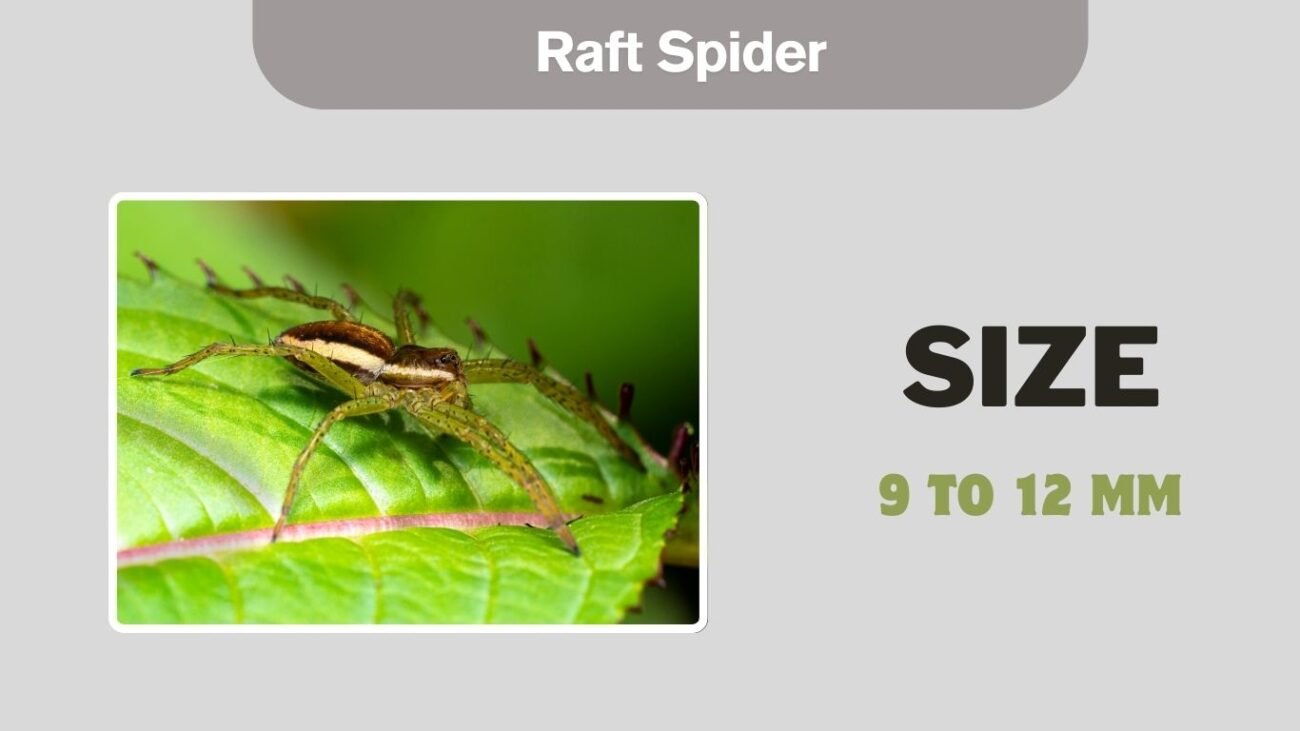
The Raft Spider (Dolomedes fimbriatus) is one of the UK’s largest semi-aquatic spiders, with a leg span of up to 7–9 cm and a body length of 8–23 mm. It is sometimes referred to as the “fishing spider” because it can run across water surfaces and catch small aquatic prey.
Size and Appearance
- Leg span up to 7–9 cm
- Brown body with pale stripes along the sides
- Body length ranges from 8–23 mm
- Long legs adapted for water movement
Where They’re Found in the UK
Typically found in wetlands, bogs, and near ponds in parts of southern England and Wales. Prefers still or slow-moving freshwater habitats.
Are Raft Spiders Dangerous?
Not to humans. Although large and capable of biting, they are non-aggressive, and their venom is mild and poses no health risk.
Fun Fact
Raft Spiders can dive underwater for several minutes to escape predators or catch prey, using air bubbles trapped in the hairs on their body.