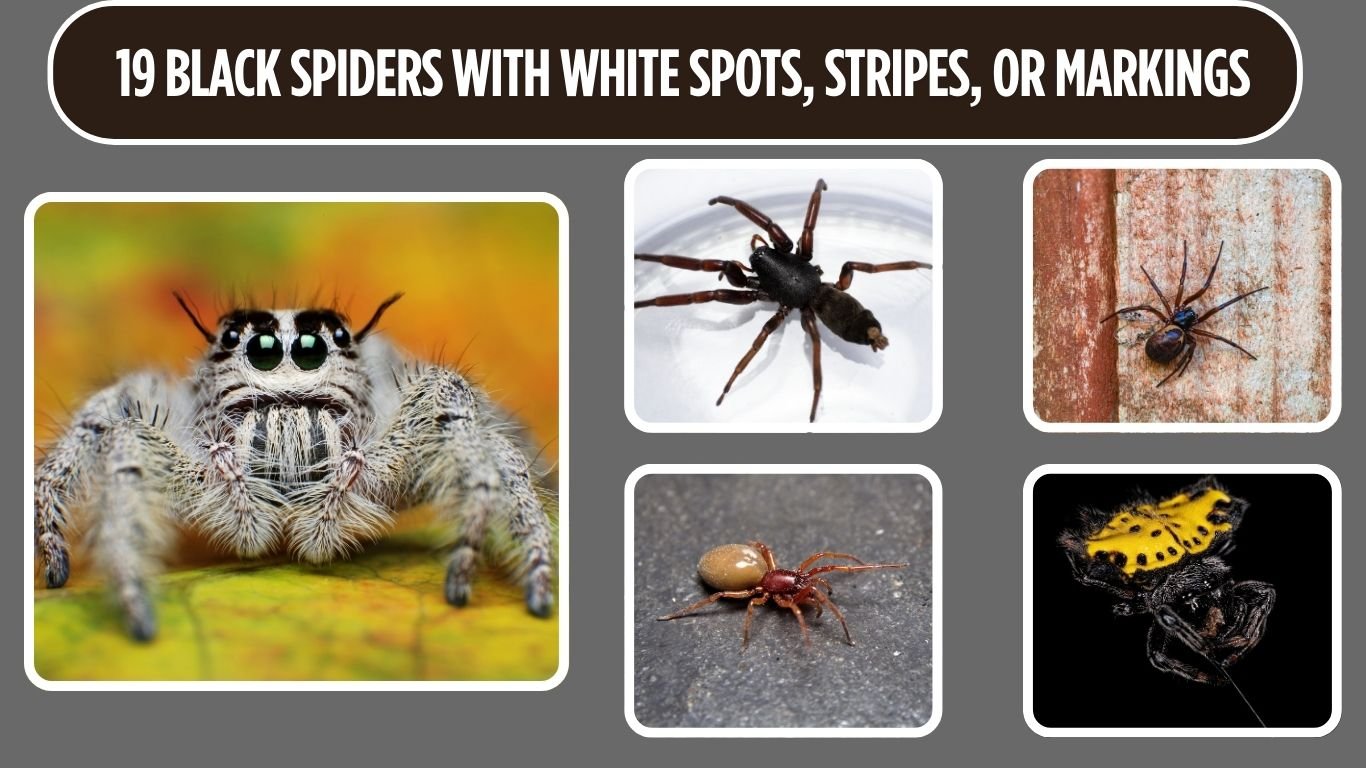
Have you seen a black spider with white spots, stripes, or markings and wondered what it is? Many spiders have these bold color patterns, making them stand out in homes or gardens. In this guide, we’ll introduce 19 black spiders with white features. Each entry includes identification tips, habitat, and whether it’s poisonous—helping you recognize what you’ve seen and know if it’s something to worry about or just observe.
1. Bold Jumping Spider (Phidippus audax)
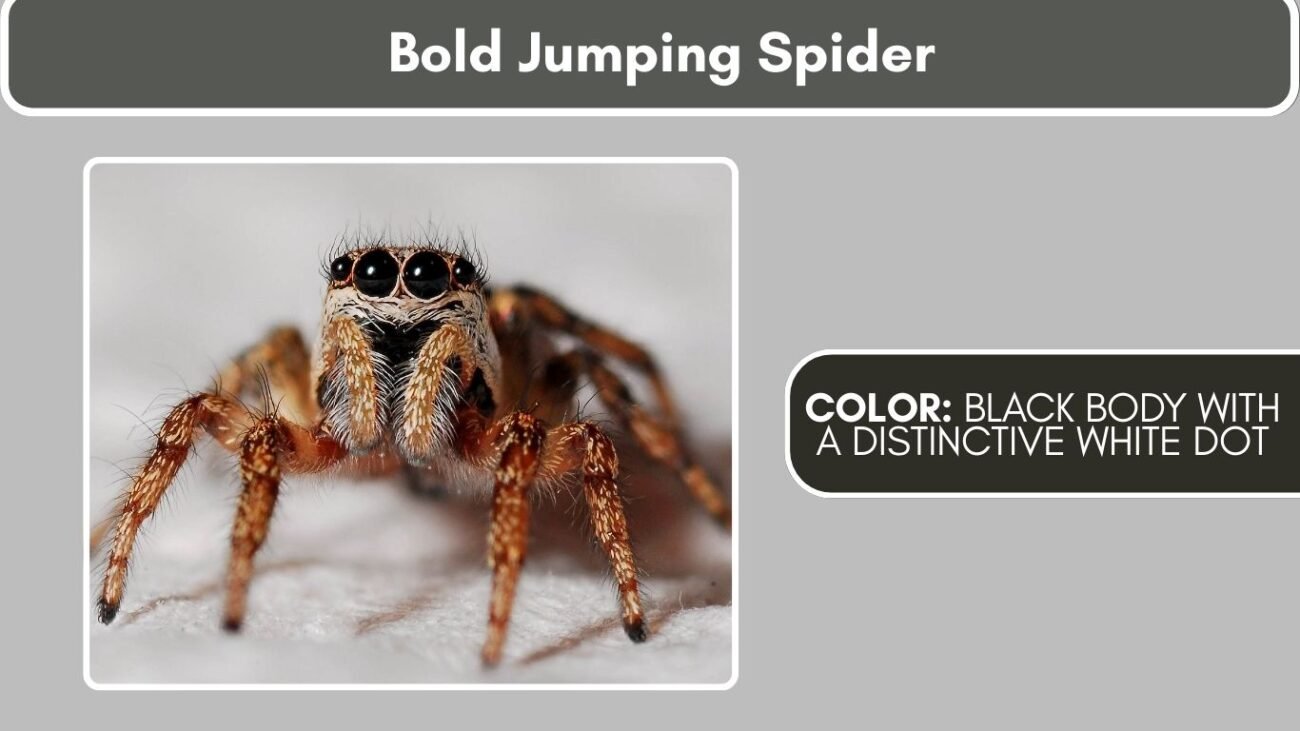
The Bold Jumping Spider, also known as the daring jumping spider, is a small but striking species commonly found throughout North America. Its compact black body, paired with vivid white markings, gives it a bold appearance that lives up to its name. Known for its excellent vision and impressive jumping ability, this spider is non-aggressive and often spotted in gardens, homes, and woodlands.
Identification
- Black body with a distinctive white dot or three white dots on the back (abdomen)
- Iridescent green or blue chelicerae (fangs)
- Short, stocky legs sometimes showing white stripes
- Fuzzy appearance, especially on the legs and head
- Body length typically ranges from 8 to 15 mm
Is It Poisonous?
The Bold Jumping Spider is not dangerous to humans. It is venomous to its prey (insects), but its venom is harmless to people, causing only mild irritation if it bites — which is rare and only in self-defense.
Where It’s Found
This species is widespread across North America, from southern Canada to Central America. It commonly lives in:
- Gardens and shrubbery
- House walls and windows
- Barns, sheds, and under rocks or logs
Behavior and Diet
Bold Jumping Spiders are active hunters, relying on their keen eyesight to stalk and pounce on small insects. They don’t build webs to catch prey but use silk to anchor themselves while jumping or to create shelter. Their movements are fast, and they often wave their front legs when curious or threatened.
2. Zebra Jumping Spider (Salticus scenicus)

The Zebra Jumping Spider is a tiny, agile spider recognized by its black-and-white striped body, resembling a zebra pattern. Despite its small size, it’s an impressive hunter with excellent eyesight and quick reflexes. This spider is commonly seen on walls, fences, and garden plants during warm months.
Identification
- Small, compact black body with distinct white horizontal stripes
- Legs also show banded black and white patterns
- Size ranges from 4 to 8 mm
- Covered in short hairs, giving it a fuzzy appearance
- Large front eyes typical of jumping spiders
Is It Poisonous?
Zebra Jumping Spiders are not harmful to humans. Their venom is used to subdue tiny insects and poses no risk to people. Bites are extremely rare and mild.
Where It’s Found
- Widespread across Europe, North America, and parts of Asia
- Frequently seen on sunny house walls, wooden fences, and garden plants
Behavior and Diet
These spiders are active hunters that stalk and leap onto their prey. They’re also curious and may observe human movement. Their prey includes flies, ants, and other small insects. They create small silken retreats for resting rather than spinning webs for catching food.
3. White-Backed Garden Spider (Argiope trifasciata)
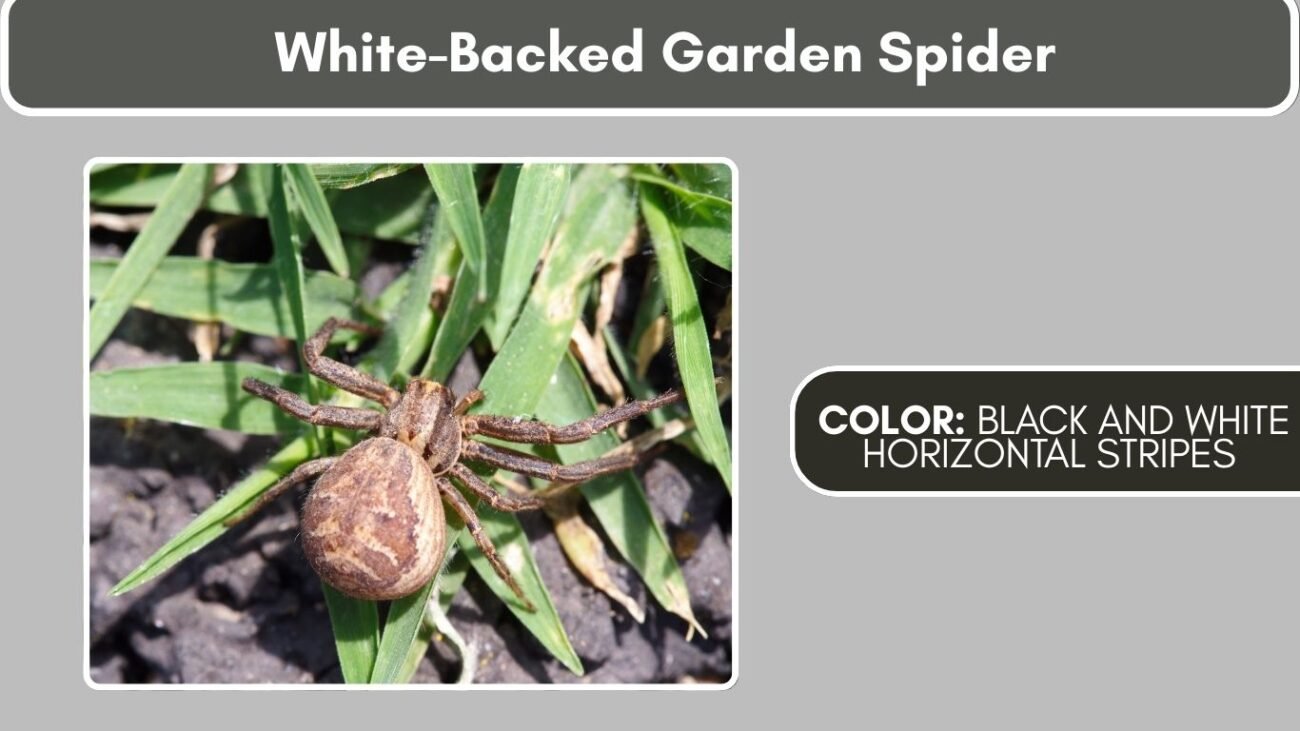
The White-Backed Garden Spider, also called the banded garden spider, is a large, striking orb-weaver with bold black and white markings on its back. It’s best known for the large circular webs it spins among tall grasses and gardens, often featuring a zigzag silk band at the center.
Identification
- Large body with black and white horizontal stripes on the abdomen
- Long legs with alternating black and white banding
- Females can reach up to 25 mm, while males are smaller
- Broad, flattened body with a silvery or white cephalothorax
Is It Poisonous?
This species is not considered dangerous to humans. Like most orb-weavers, it has venom for catching prey but is docile and bites only when provoked.
Where It’s Found
- Common in North and Central America
- Lives in gardens, tall grasslands, meadows, and around human structures
Behavior and Diet
White-Backed Garden Spiders construct large orb webs to trap flying insects like moths and flies. They stay motionless in the center of the web and respond quickly to vibrations. These spiders are most active during late summer and early fall and are helpful in keeping pest populations down.
4. Eastern Parson Spider (Herpyllus ecclesiasticus)
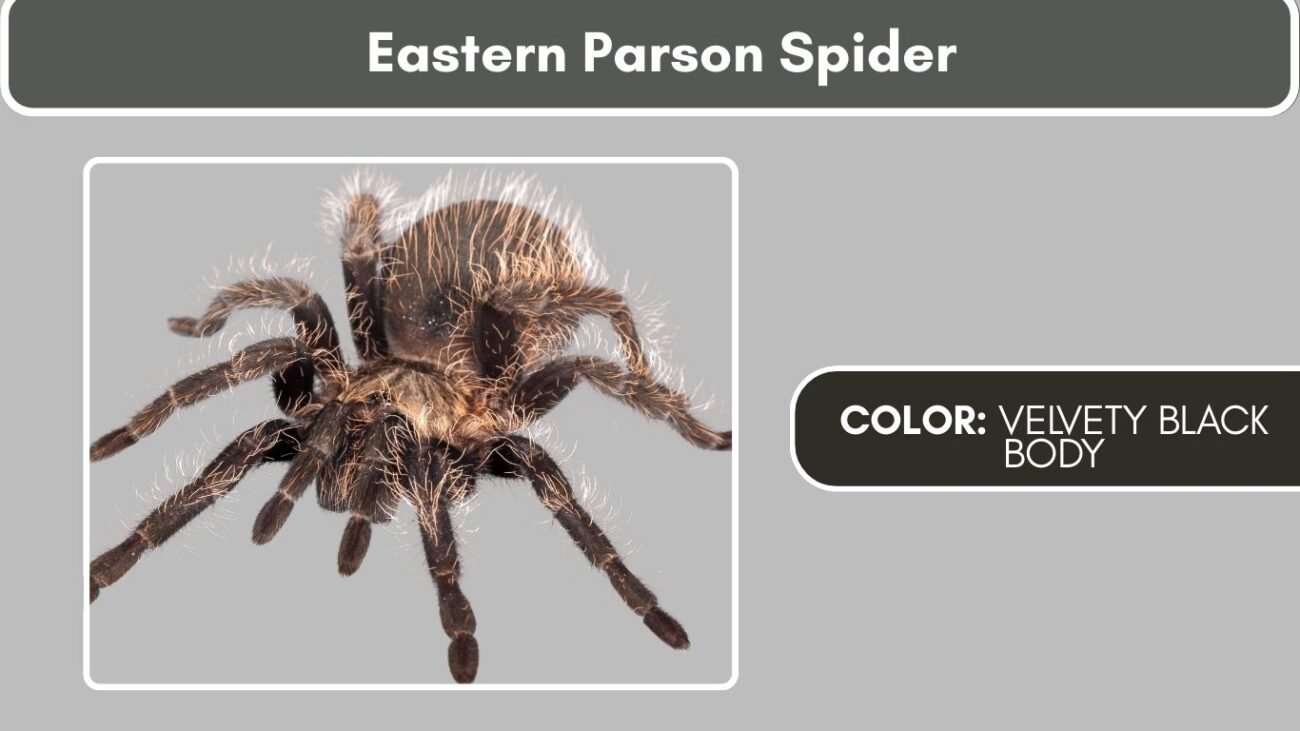
The Eastern Parson Spider is a fast-moving ground spider with a unique white marking on its black body that resembles a cravat—a necktie once worn by clergy—hence the name. Though often spotted indoors, it prefers dark, secluded places and is mostly active at night.
Identification
- Velvety black body with a white or grayish stripe running down the back
- Small to medium size, typically 10–15 mm long
- Fuzzy legs and cephalothorax
- Abdomen sometimes has a small white dot or patch at the rear
Is It Poisonous?
While not considered dangerous, the Eastern Parson Spider can bite if handled. Its venom may cause mild localized pain or allergic reactions in some people but is not medically significant.
Where It’s Found
- Common across eastern and central United States
- Found in homes, under rocks, bark, woodpiles, and basements
Behavior and Diet
It’s a nocturnal hunter, often emerging at night to search for insects. It doesn’t use a web to catch prey but spins silk retreats for daytime hiding. These spiders move quickly and are easily startled when exposed.
5. Pantropical Jumping Spider (Plexippus paykulli)
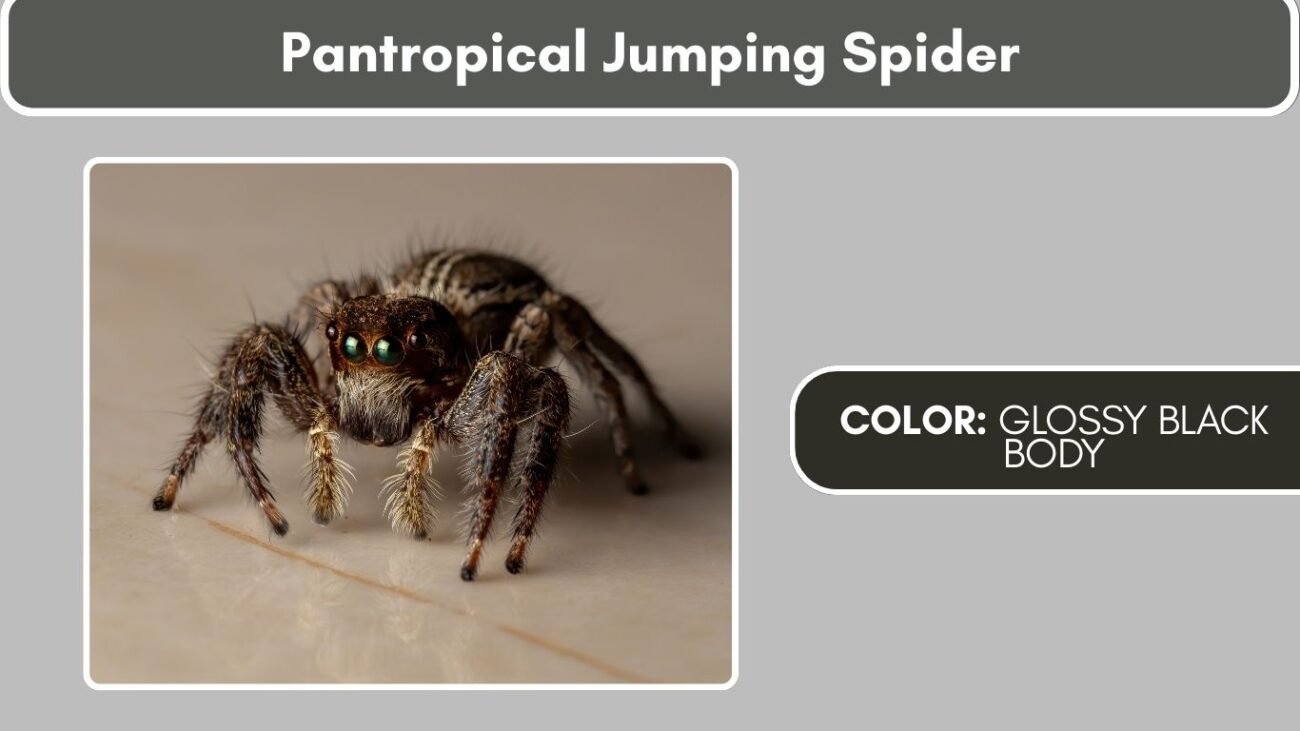
The Pantropical Jumping Spider is a bold, active jumper with contrasting black-and-white stripes, commonly seen in urban environments. It’s a visually striking spider that thrives around human dwellings, especially in warm climates.
Identification
- Glossy black body with two or more white stripes running lengthwise on the back
- White markings on legs and around the face
- Males are darker with sharper white patterns, while females are browner with muted markings
- Size ranges from 9 to 12 mm
Is It Poisonous?
This jumping spider is harmless to humans. Like others in its family, it uses venom to immobilize small prey, but it rarely bites and does not pose any health threat.
Where It’s Found
- Native to tropical Asia but now widespread globally, especially in warm urban areas
- Frequently found on walls, fences, light poles, and windows
Behavior and Diet
Pantropical Jumping Spiders are visual hunters, using sharp eyesight to track and leap on insects. They are curious, agile, and often observed pacing or watching nearby movement. They play a helpful role in controlling pests like flies and ants.
6. White-Tailed Spider (Lampona cylindrata)

The White-Tailed Spider is a sleek black or dark gray spider, easily recognized by the small white spot at the tip of its abdomen. This spider is often found indoors and is known for hunting other spiders rather than spinning webs.
Identification
- Dark black to gray body with a distinct white spot at the end of the abdomen
- Elongated body shape, about 12–18 mm in length
- Reddish-brown legs sometimes banded faintly
- Sometimes has smaller white dots or markings near the rear
Is It Poisonous?
This spider has a reputation for causing necrotic bites, but modern research shows that serious effects are extremely rare. Bites may cause mild irritation, itching, or swelling.
Where It’s Found
- Common across Australia and New Zealand
- Found in homes, under bedding, clothing, and dark corners
Behavior and Diet
White-Tailed Spiders are active hunters that primarily prey on other spiders like daddy longlegs and house spiders. They don’t spin webs for catching food but use silk for shelter. They are nocturnal and often enter homes in search of prey.
7. False Widow Spider (Steatoda grossa)

Often mistaken for the more dangerous black widow, the False Widow Spider has a shiny black or dark brown body with white or cream markings. It prefers dark indoor spaces and rarely bites, but its presence near humans has made it well known.
Identification
- Glossy black or deep brown body with pale white or beige patterns on the abdomen
- Rounded abdomen, sometimes with a single white spot or light patches
- Legs are long and thin, often appearing reddish or brown
- Adult size ranges from 6–12 mm
Is It Poisonous?
False Widow bites are mildly venomous and can cause localized pain, redness, or swelling. In rare cases, symptoms may include nausea or headache, but it is not life-threatening.
Where It’s Found
- Native to Europe, now widespread in North America, Australia, and the UK
- Commonly found in sheds, garages, basements, and other dark sheltered areas
Behavior and Diet
This spider builds messy cobwebs in hidden corners and waits for small insects to get trapped. It tends to be shy and avoids confrontation, biting only if provoked. It plays a role in reducing pest populations indoors.
8. Woodlouse Spider (Dysdera crocata)

The Woodlouse Spider is a dark reddish-brown to black spider with a smooth body and powerful fangs. It’s often identified by the pale white or cream spot on its rear or underside and its unique preference for hunting woodlice (pill bugs).
Identification
- Glossy dark brown or black abdomen with a light patch or spot at the end
- Front half (cephalothorax) is reddish-orange
- Large, forward-pointing fangs
- Body length is around 11–15 mm
- Legs are reddish and extend outward in a crab-like stance
Is It Poisonous?
Though it has large fangs and can bite, the Woodlouse Spider is not dangerous to humans. Bites may cause minor pain or swelling, similar to a bee sting.
Where It’s Found
- Widespread in Europe, North America, and Australia
- Found under logs, rocks, flower pots, and in basements or garages
Behavior and Diet
It’s a specialist predator of woodlice, using its strong jaws to pierce their tough shells. The spider does not spin webs for prey but hunts actively at night, often staying hidden during the day.
9. Spinybacked Orbweaver (Gasteracantha cancriformis)
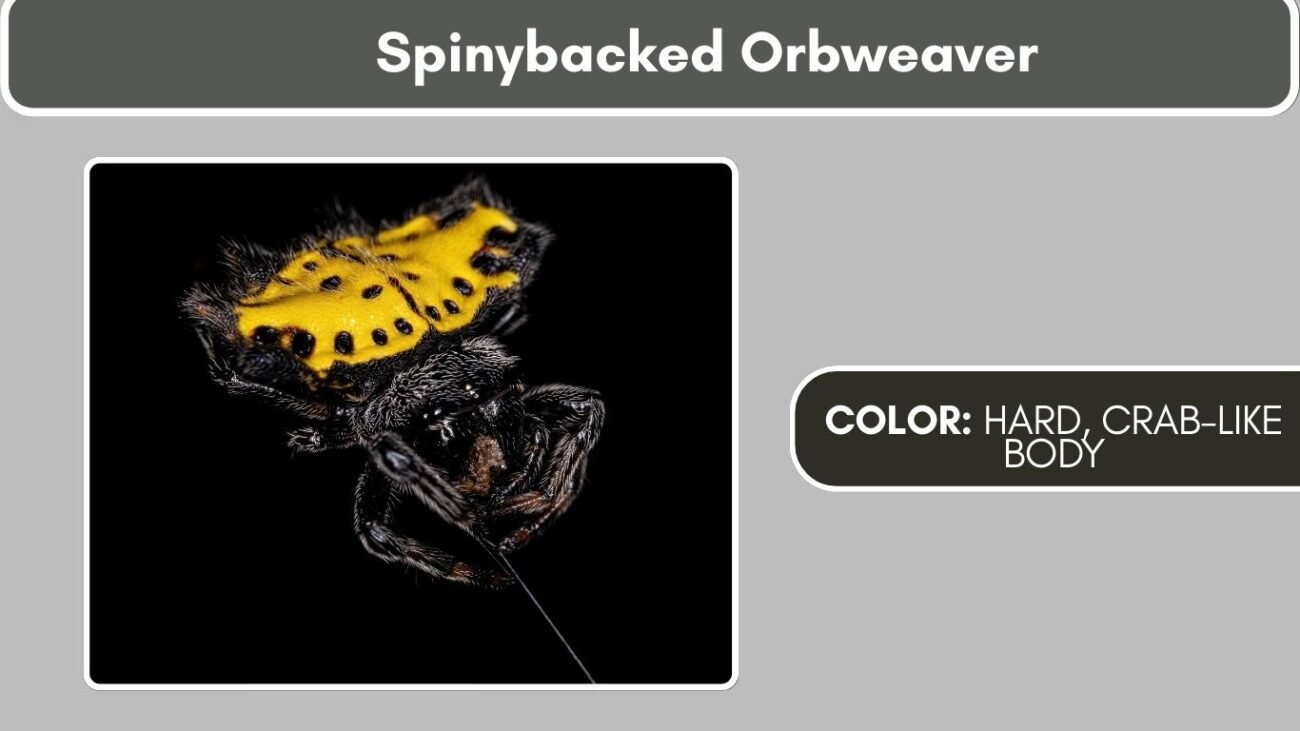
The Spinybacked Orbweaver is one of the most visually unique spiders, known for its bright, colorful body and distinct white or cream base color marked with black or red spots. Some individuals appear almost entirely black with white or light-colored dots.
Identification
- Hard, crab-like body, often white with black spots or black with white/red accents
- Six sharp spines on the sides and rear
- Body width is usually 5–9 mm, wider than it is long
- Often has a flat white back with clearly visible dots
Is It Poisonous?
This spider is completely harmless to humans. It has venom for catching insects, but it will not bite people and poses no threat.
Where It’s Found
- Common in Southeastern United States, Central America, and the Caribbean
- Found in gardens, shrubs, and wooded areas, especially where there’s space for large orb webs
Behavior and Diet
The Spinybacked Orbweaver constructs wide, flat webs in open spaces to catch flying insects. It often hangs in the center of its web and may rebuild it daily. Despite its flashy appearance, it is a shy and beneficial garden resident.
10. Western Black Widow Spider (Latrodectus hesperus)
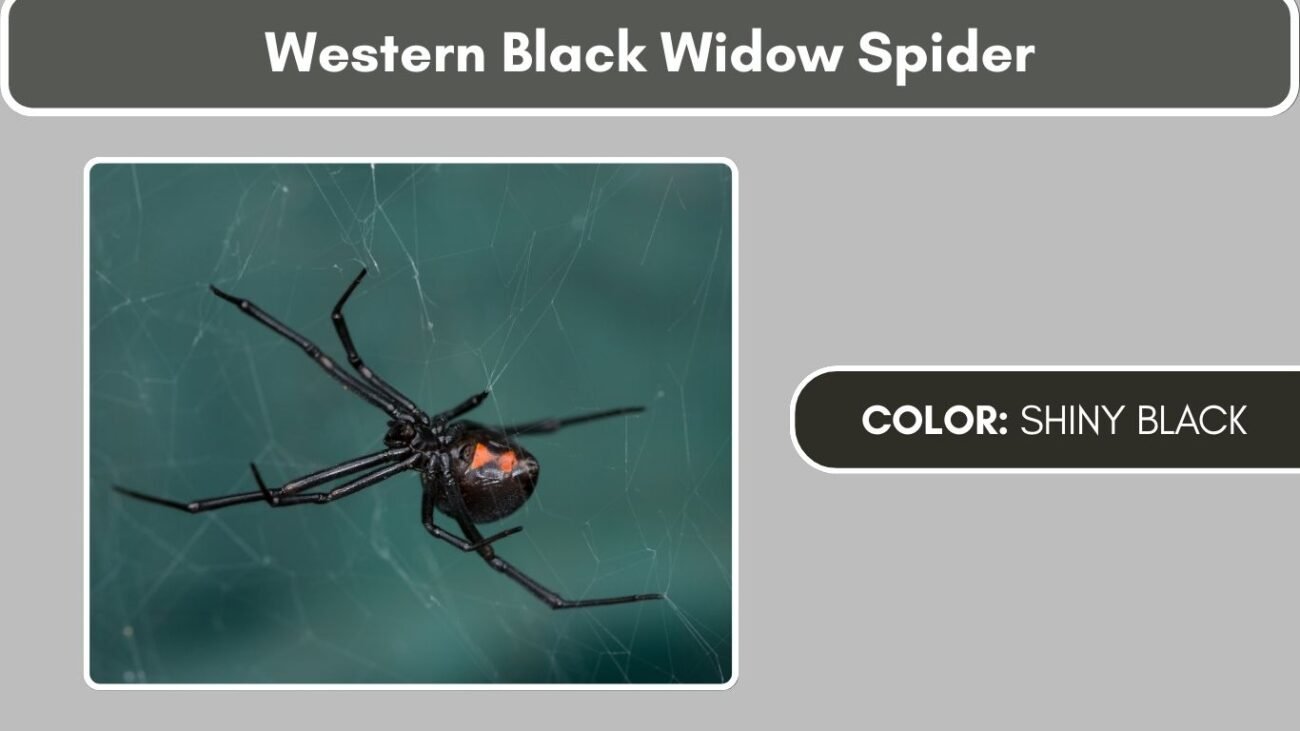
The Western Black Widow is one of the most recognized venomous spiders in North America. While it’s known for its glossy black body and red hourglass marking, some individuals display faint white or grayish spots or lines on the back during juvenile stages or due to regional variations.
Identification
- Shiny black, rounded abdomen
- Females may have faint white or gray markings or dots on the back, especially when young
- Distinct red hourglass marking on the underside of the abdomen
- Females measure about 13 mm, males are smaller and more lightly colored
Is It Poisonous?
Yes, the Western Black Widow is highly venomous, but bites are rare and rarely fatal. Symptoms may include pain, muscle cramps, and nausea. However, fatalities are extremely rare, and antivenom is available in severe cases.
Where It’s Found
- Common in the western United States, especially in California, Arizona, Texas, and surrounding states
- Often found in woodpiles, sheds, garages, crawlspaces, and dark corners
Behavior and Diet
Black Widows build messy cobwebs in undisturbed places. They are not aggressive and only bite in self-defense. They feed on small insects and other arthropods caught in their webs.
11. White-Spotted Jumping Spider (unknown salticid species)

Several species of jumping spiders exhibit a black body with small white spots or dots, often leading to confusion among hobbyists and spider enthusiasts. While “White-Spotted Jumping Spider” isn’t a single scientific name, this refers to a group of similar-looking salticid species.
Identification
- Small, black and fuzzy body
- Typically has one or more distinct white dots on the back (abdomen)
- May have white bands or stripes on the legs
- Compact body, often less than 10 mm in size
Is It Poisonous?
These jumping spiders are not dangerous. Their venom is used to subdue small insects and is harmless to humans. Bites are very rare and non-serious.
Where It’s Found
- Found worldwide, including North America, Europe, and Asia
- Common in gardens, fences, windowsills, and walls
Behavior and Diet
These spiders are active daytime hunters, relying on keen eyesight and excellent jumping ability. They feed on flies, gnats, and other small pests. They don’t spin webs to catch prey but may create silken retreats for resting or laying eggs.
12. White-Marked Spider (Neoscona domiciliorum)
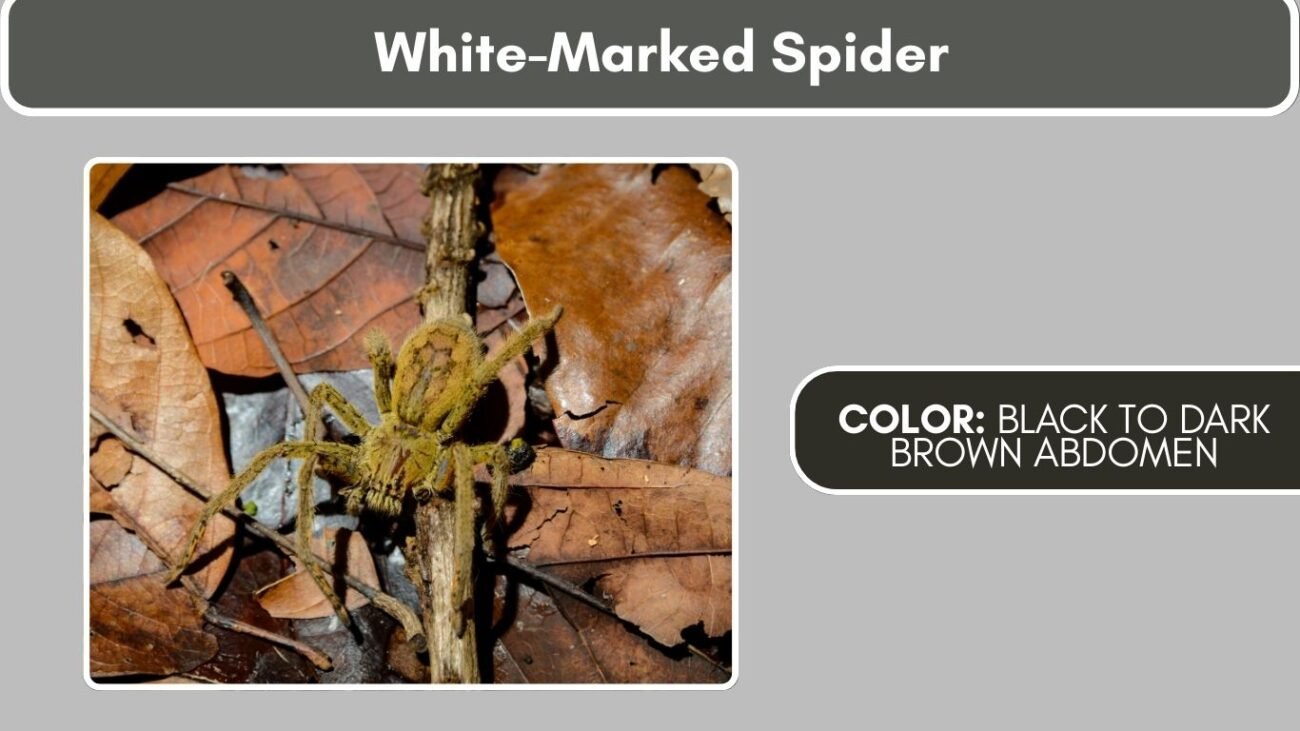
The White-Marked Spider is a species of orb-weaver with a dark to blackish abdomen, often featuring distinct white or pale markings on its back. It’s active mostly at night and is often found around human dwellings and gardens.
Identification
- Black to dark brown abdomen with white zig-zag or leaf-like markings on the back
- Fuzzy legs, sometimes with faint white banding
- Body length ranges from 7 to 18 mm
- Builds circular orb webs similar to garden spiders
Is It Poisonous?
This spider is harmless to humans. It has venom to immobilize small insect prey but does not bite unless threatened. Even then, bites are extremely rare and mild.
Where It’s Found
- Native to the eastern United States
- Found on trees, fences, walls, under porch lights, and in gardens
Behavior and Diet
White-Marked Spiders spin large, symmetrical webs at night to catch flying insects. During the day, they often hide in nearby crevices or foliage. They are beneficial for controlling pest insect populations.
13. Common House Spider (Parasteatoda tepidariorum)

The Common House Spider is often mistaken for other species due to its variable coloring, but some individuals appear dark brown to black with white or pale dots on the abdomen. These spiders are shy and frequently seen in corners of ceilings or windows.
Identification
- Brownish-black or dark body with white spots or blotches on the abdomen
- Small to medium size, around 5 to 8 mm in length
- Long, thin legs with a semi-translucent appearance
- Often found hanging upside down in irregular webs
Is It Poisonous?
This spider is not dangerous. It poses no medical threat to humans. Its bite is extremely rare and causes little more than minor irritation if it occurs.
Where It’s Found
- Found worldwide, especially in indoor environments
- Common in corners of rooms, basements, garages, and attics
Behavior and Diet
The Common House Spider builds tangled cobwebs in corners and waits for insects to get trapped. It feeds on flies, mosquitoes, and ants, making it a helpful guest indoors. It is generally calm and avoids human contact.
14. Gray Wall Jumping Spider (Menemerus bivittatus)
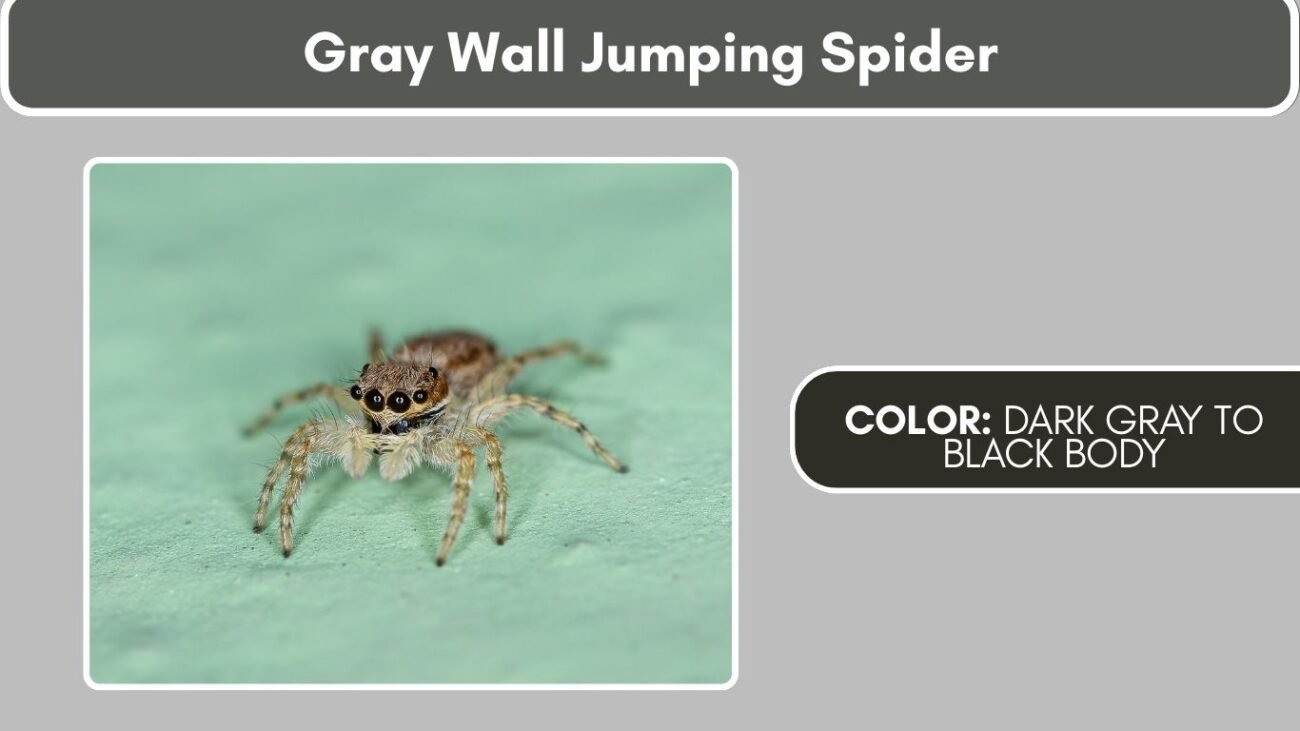
The Gray Wall Jumping Spider is a small, agile hunter commonly seen on sunlit walls, fences, and tree trunks. Though gray in name, it often appears dark black with bold white or silvery stripes, especially along the sides of its body and head.
Identification
- Dark gray to black body with two prominent white stripes running down the sides
- Flattened body with a fuzzy appearance
- Legs are banded or striped, sometimes with white tips
- Body size ranges from 8 to 10 mm
Is It Poisonous?
This jumping spider is harmless to humans. Its venom is used only for subduing small prey and has no medical significance to people.
Where It’s Found
- Native to Africa, now common in tropical and subtropical regions worldwide
- Often found on walls, tree trunks, garden posts, and building exteriors
Behavior and Diet
Gray Wall Jumping Spiders are daytime hunters that rely on vision and quick reflexes. They stalk prey and leap to capture insects like flies, mosquitoes, and small beetles. They’re also known to observe nearby movement, including humans, out of curiosity.
15. Arabesque Orbweaver (Neoscona arabesca)

The Arabesque Orbweaver is a beautifully patterned spider with a dark body and white, tan, or grayish markings on the abdomen. These markings often form intricate or wavy patterns, giving the spider its “arabesque” name.
Identification
- Dark brown to black abdomen with fine white or light gray arabesque markings
- Legs may have white bands and spiny textures
- Females reach up to 8–12 mm, while males are smaller
- Rounded abdomen, often broader in females
Is It Poisonous?
This species is not considered dangerous. Like other orb-weavers, its venom affects only insects. Bites are extremely rare and cause little more than slight discomfort.
Where It’s Found
- Common in North America, especially in gardens, forests, and shrubs
- Builds orb-shaped webs near buildings, bushes, and trees
Behavior and Diet
Arabesque Orbweavers construct large, circular webs and remain in or near the center during the night. They prey on flying insects such as moths and flies. During the day, they retreat to a hidden spot near the web, often within curled leaves.
16. Variegated Spider (Sergiolus montanus)
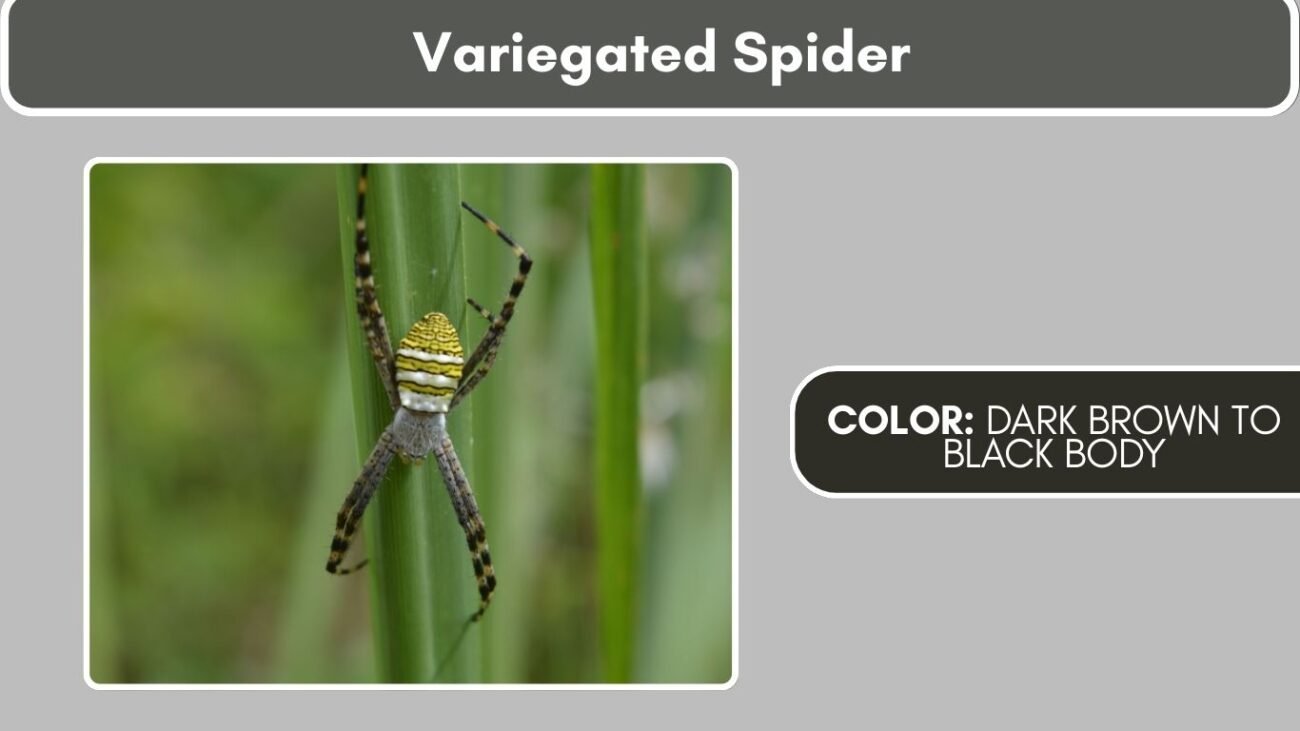
The Variegated Spider is a ground-dwelling hunter with a dark body and distinct white or light-colored stripes and markings across the back. Though small, it’s easily noticeable due to its bold patterns and active movement.
Identification
- Dark brown to black body with white longitudinal stripes on the abdomen
- May have white lines or dots near the cephalothorax
- Compact size, typically 6–9 mm in length
- Slightly fuzzy with short, stout legs
Is It Poisonous?
This spider is not medically significant. It possesses venom to subdue insect prey, but bites are rare and not dangerous to humans.
Where It’s Found
- Found across North America, particularly in wooded areas and grassy yards
- Often seen under leaf litter, logs, stones, or wandering on the ground
Behavior and Diet
The Variegated Spider is a nocturnal predator that actively hunts small insects. It does not build a web to catch prey but may spin a silken retreat to rest during the day. It’s fast-moving and quickly retreats when disturbed.
17. Tuft-Legged Orb Weaver (Mangora gibberosa)
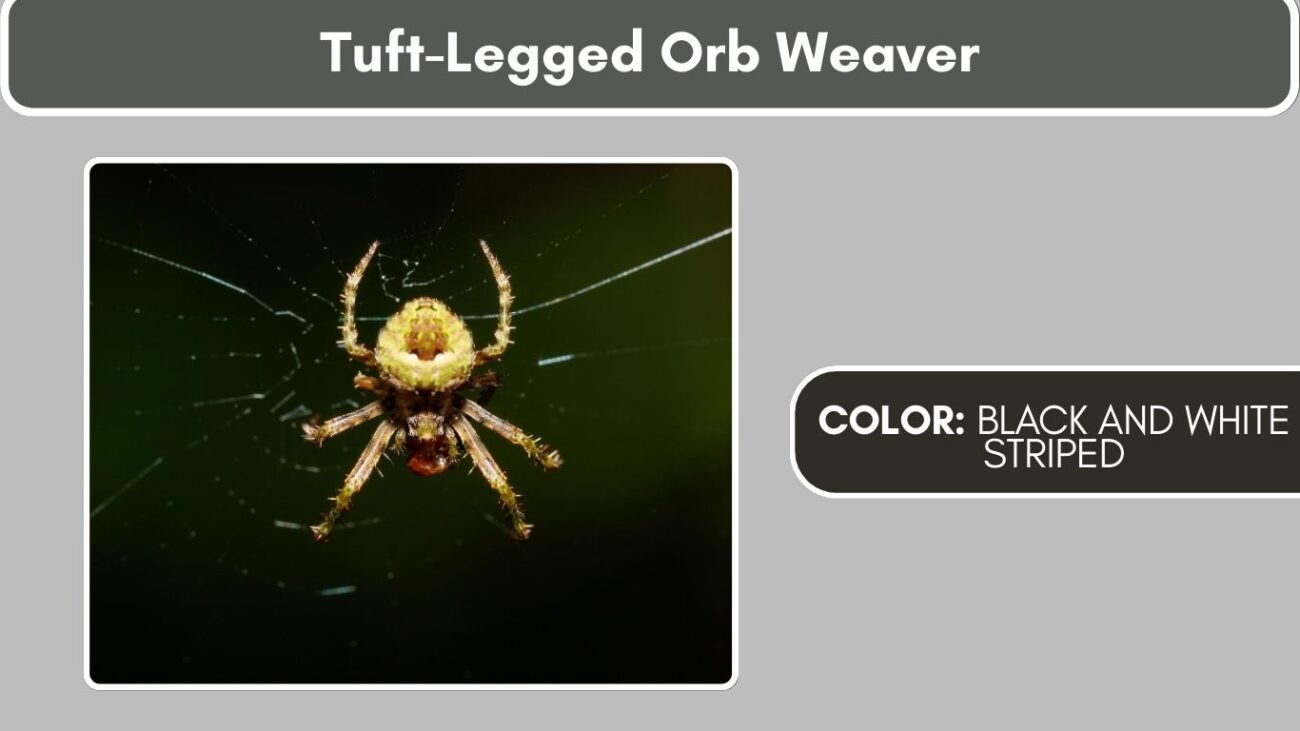
The Tuft-Legged Orb Weaver is a small, delicate spider known for its contrasting black and white markings and tufted leg joints. It often goes unnoticed due to its size but builds impressive webs in low vegetation.
Identification
- Black and white striped or dotted abdomen, sometimes with a greenish tint
- Legs may have dark tufts or bands and are relatively long for its body
- Abdomen is round or oval, with a white pattern that can look like dots or dashes
- Small in size, around 4–6 mm
Is It Poisonous?
This species is harmless to humans. Its venom affects only small insects and poses no threat to people. It’s not aggressive and rarely bites.
Where It’s Found
- Found across eastern and southern U.S., especially in fields, gardens, and tall grass
- Often builds orb-shaped webs low to the ground or in shrubbery
Behavior and Diet
Like other orb-weavers, it builds a symmetrical web and waits for flying insects. It hides during the day and becomes active at dusk. Its diet includes gnats, mosquitoes, and other small pests, making it a valuable part of garden ecosystems.
18. Daring Jumping Spider (Phidippus regius)
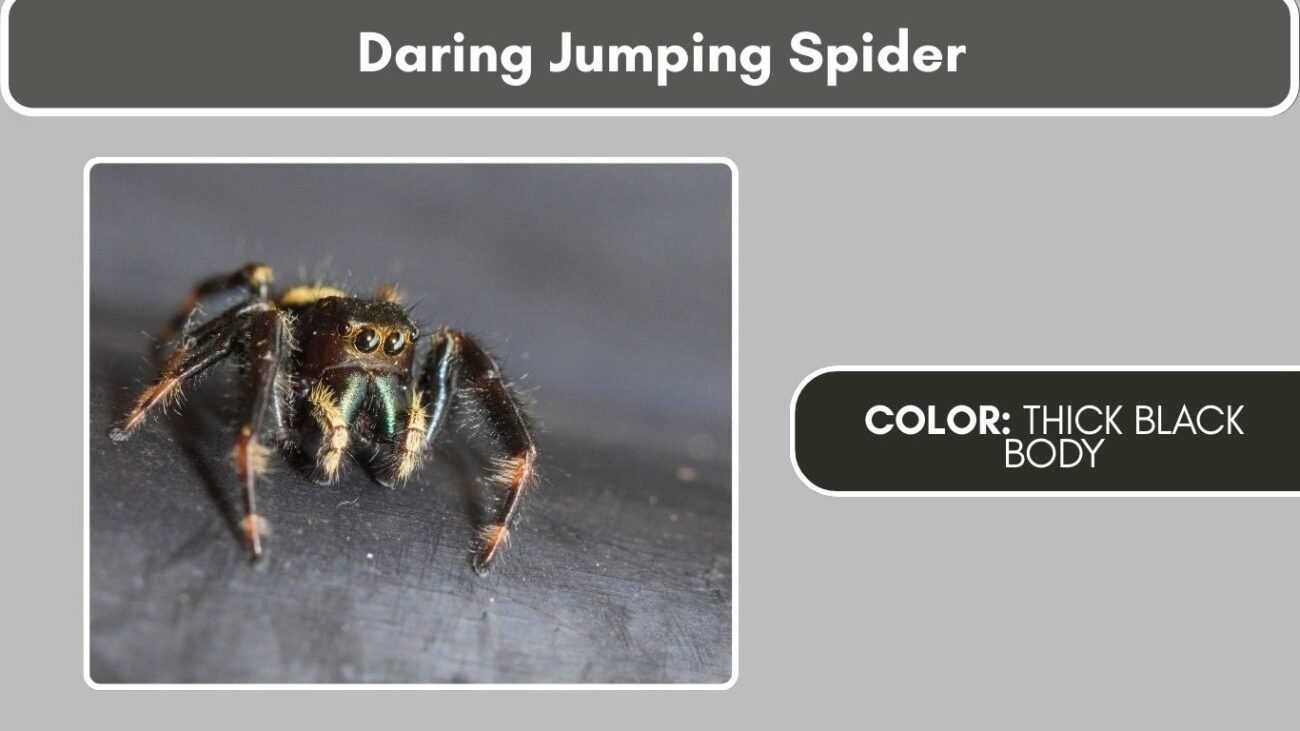
The Daring Jumping Spider, often confused with the Bold Jumping Spider, has a fuzzy black body adorned with distinct white spots or stripes, and its chelicerae (fangs) shine with an iridescent green or blue hue. It’s active, curious, and popular among spider hobbyists.
Identification
- Thick black body with one to three bright white dots on the abdomen
- May have white stripes on the legs or sides of the cephalothorax
- Males tend to be darker and more vividly marked than females
- Body size ranges from 10–15 mm
Is It Poisonous?
This spider is not dangerous to humans. Its bite is rare and usually only causes minor, temporary irritation. It’s a safe species to observe, even up close.
Where It’s Found
- Found throughout the southeastern U.S., especially in Florida and Gulf Coast states
- Lives in trees, gardens, fences, and sometimes indoors near windows
Behavior and Diet
The Daring Jumping Spider is a daytime hunter, using keen vision to leap onto insects like moths, flies, and crickets. It doesn’t build a web to hunt but uses silk as a safety tether while jumping. It’s highly aware of its surroundings and often turns to watch movement.
19. Orchard Orbweaver (Leucauge venusta)
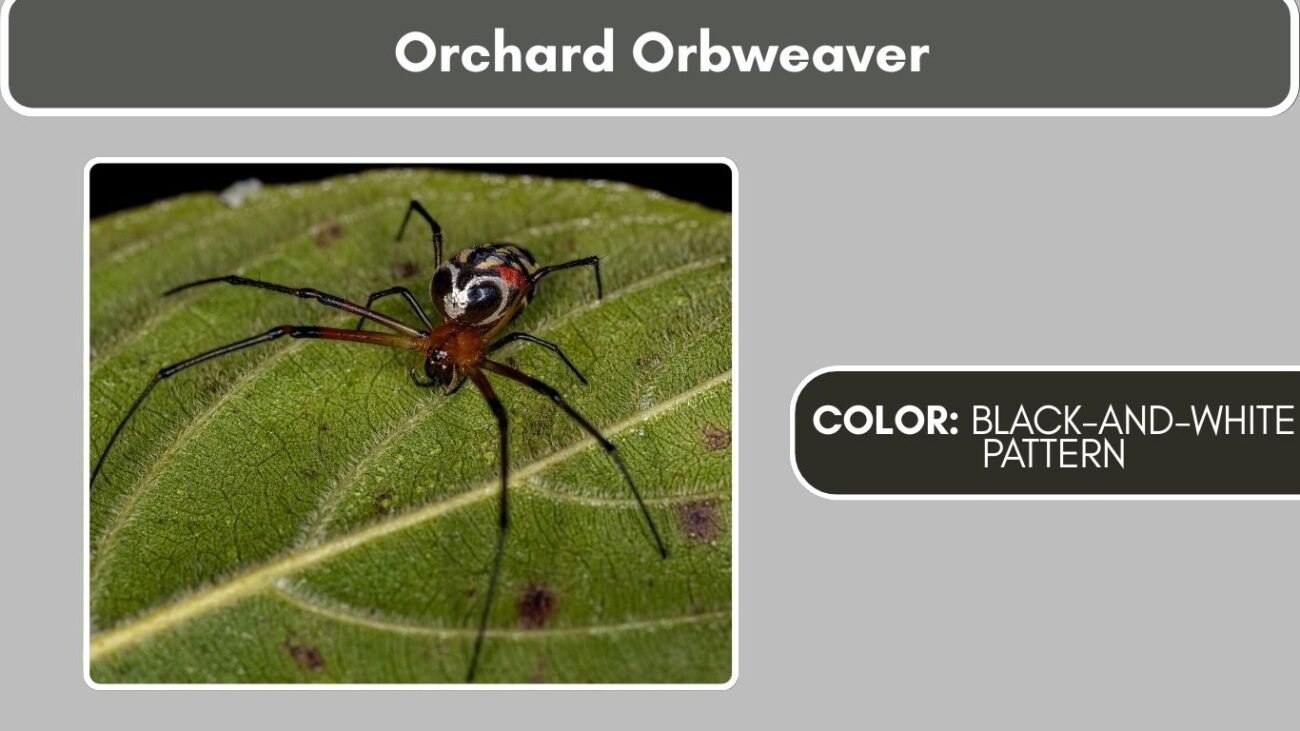
The Orchard Orbweaver is a delicate spider with a metallic sheen and occasional white, black, and green markings across the back. Though small, it builds large and beautiful orb webs in shrubs and tree canopies.
Identification
- Black-and-white pattern on the upper abdomen, often mixed with green, silver, or yellow
- Long, slender legs with black and white bands
- Elongated abdomen with a white or silver dorsal patch
- Small size, typically 4–7 mm
Is It Poisonous?
It is not venomous to humans. The Orchard Orbweaver’s venom affects only insects and poses no threat to people. It’s very docile and will drop from its web to avoid confrontation.
Where It’s Found
- Common in eastern North America, especially in orchards, gardens, and forest edges
- Prefers to build webs in low shrubs, under tree branches, or in tall grass
Behavior and Diet
The Orchard Orbweaver is a web-builder, creating classic orb-shaped webs to capture flying insects. It often sits beneath the center of the web, facing downward. It plays an important role in controlling mosquito and gnat populations in green areas.