

Damselflies are delicate, colorful insects closely related to dragonflies, known for their slender bodies, jewel-like colors, and graceful flight. Found near freshwater habitats worldwide, they play an important role in controlling insect populations and indicating healthy ecosystems. This guide explores 17 remarkable types of damselflies, detailing their unique appearances, habitats, and behaviors to help nature enthusiasts, photographers, and researchers identify and appreciate these fascinating insects.
1. Ebony Jewelwing (Calopteryx maculata)

The Ebony Jewelwing is one of the most striking damselflies in North America, easily recognized by its shimmering metallic green body and solid black wings. Found near shaded, slow-moving streams, this species is a favorite among nature photographers and dragonfly enthusiasts. Its graceful flight and tendency to perch on leaves make it a captivating sight in summer months.
Identification
- Scientific Name: Calopteryx maculata
- Body Size: 4.5–5 cm
- Color: Metallic green to blue-green body with entirely black wings
- Wings: Broad and rounded, solid dark coloration without transparent areas
- Eyes: Large, dark brown to black
- Sexual Dimorphism: Females have lighter wing tips compared to males
Habitat and Distribution
Common along slow-moving forest streams and shaded rivers in eastern North America.
Behavior and Diet
Feeds primarily on small flying insects such as mosquitoes, midges, and gnats, capturing them in mid-air with expert precision.
2. Banded Demoiselle (Calopteryx splendens)

The Banded Demoiselle is a beautiful damselfly known for the dark, band-like markings on the male’s wings and its shimmering metallic body. It is often seen fluttering gracefully over slow-flowing rivers and streams, especially in sunny, open areas. This species is widespread across Europe and is a popular subject for macro photography.
Identification
- Scientific Name: Calopteryx splendens
- Body Size: 4.5–5 cm
- Color: Males have a metallic blue-green body, females are metallic green with more transparent wings
- Wings: Males feature a distinct dark band across each wing; females have uniformly tinted, translucent wings
- Eyes: Large, reddish-brown to dark
- Sexual Dimorphism: Males are more vividly colored with bold wing bands
Habitat and Distribution
Prefers slow-flowing rivers, canals, and streams with abundant riverside vegetation across much of Europe and parts of Asia.
Behavior and Diet
Males display territorial behavior, performing fluttering flights to attract females. Both sexes feed on small flying insects, aiding in controlling mosquito populations.
3. Beautiful Demoiselle (Calopteryx virgo)
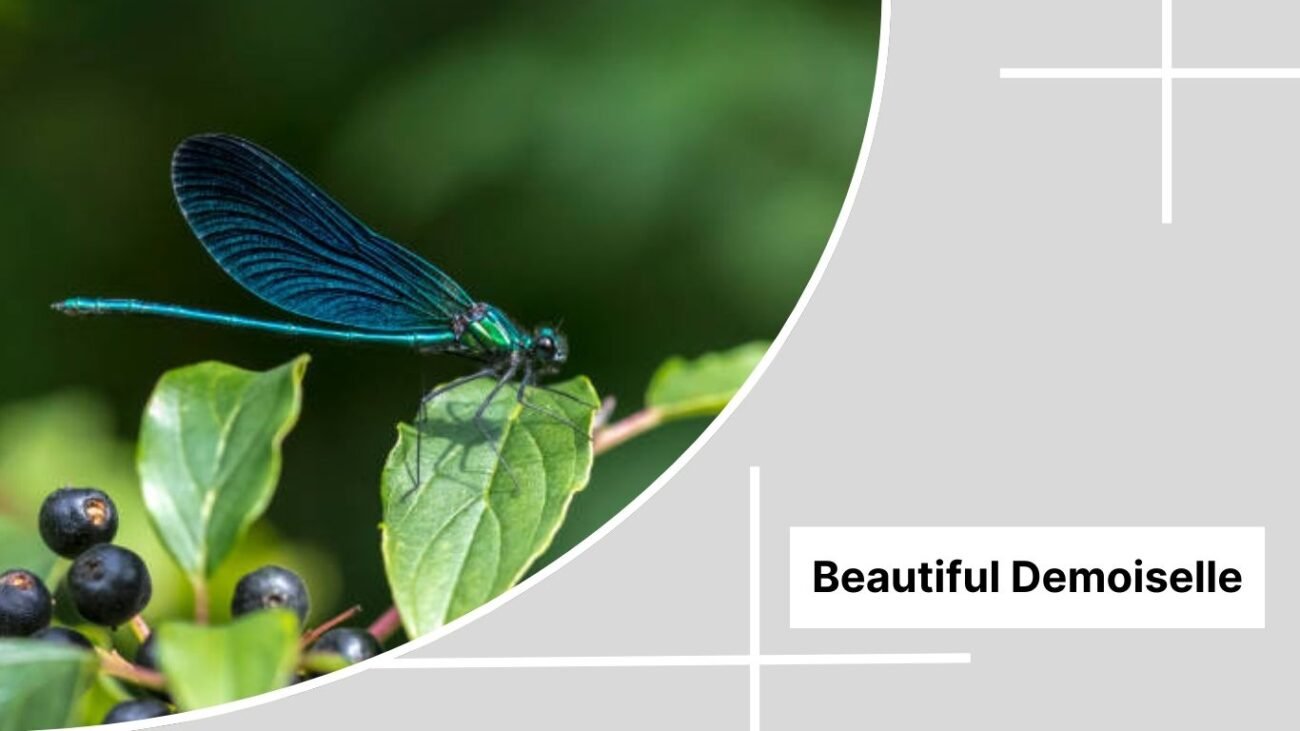
The Beautiful Demoiselle is a vibrant and elegant damselfly recognized for its rich metallic coloration and fully tinted wings. Often found near fast-flowing streams and rivers in hilly or wooded areas, it is one of Europe’s most eye-catching damselflies. Males in particular are dazzling in sunlight, creating a jewel-like flash as they patrol their territories.
Identification
- Scientific Name: Calopteryx virgo
- Body Size: 5–5.5 cm
- Color: Males have a deep metallic blue body; females are metallic green or bronze
- Wings: Males have uniformly dark blue wings; females have green-tinted translucent wings
- Eyes: Large, reddish-brown
- Sexual Dimorphism: Males show darker, fuller wing color than females
Habitat and Distribution
Found across Europe and parts of western Asia, favoring fast-flowing, clean rivers and streams with well-vegetated banks.
Behavior and Diet
Males are territorial and perform aerial displays to court females. Both sexes feed on small flying insects such as midges and mosquitoes, contributing to natural pest control.
4. Azure Damselfly (Coenagrion puella)

The Azure Damselfly is one of the most common and easily recognized damselflies in Europe, known for its bright blue coloration and distinct black markings. It thrives in a wide range of still and slow-moving freshwater habitats, making it a familiar sight during late spring and summer. Its vibrant color and graceful flight make it a favorite among nature enthusiasts.
Identification
- Scientific Name: Coenagrion puella
- Body Size: 3–3.5 cm
- Color: Bright sky-blue with distinctive black markings along the abdomen
- Wings: Clear, narrow, and held closed over the body when at rest
- Eyes: Large, blue with black caps on top
- Sexual Dimorphism: Females are often greenish-blue or duller with different abdominal patterns
Habitat and Distribution
Widely distributed across Europe and parts of Asia, inhabiting ponds, lakes, canals, and slow-moving streams.
Behavior and Diet
Feeds on small flying insects, including mosquitoes and midges. Males often patrol territories near water to find mates, and pairs can be seen in tandem during egg-laying.
5. Common Blue Damselfly (Enallagma cyathigerum)

The Common Blue Damselfly is one of the most widespread damselfly species across Europe, Asia, and parts of North America. Known for its vivid blue body and adaptability, it inhabits a wide range of freshwater environments. During summer, large numbers can be seen darting over ponds, lakes, and slow-moving rivers, often forming mating pairs in flight.
Identification
- Scientific Name: Enallagma cyathigerum
- Body Size: 3–3.5 cm
- Color: Bright blue with distinct black markings along the abdomen
- Wings: Transparent, narrow, and held closed over the back when at rest
- Eyes: Large, blue with a black upper portion
- Sexual Dimorphism: Females may appear duller, often in blue or brownish color forms
Habitat and Distribution
Extremely adaptable, found in ponds, lakes, canals, and slow-flowing rivers across Europe, Asia, and parts of North America.
Behavior and Diet
Feeds on small flying insects such as midges, gnats, and mosquitoes. Males are territorial during the breeding season, while mating pairs are often seen in a distinctive heart-shaped wheel position.
6. Red-eyed Damselfly (Erythromma najas)

The Red-eyed Damselfly is a striking species, easily recognized by its vivid red eyes and dark, metallic-green to black body with blue markings. It prefers still or slow-moving water bodies rich in aquatic vegetation, where it often rests on floating plants like water lilies. Its vibrant eyes make it one of the most visually distinctive damselflies in Europe.
Identification
- Scientific Name: Erythromma najas
- Body Size: 3.5–4 cm
- Color: Dark metallic green to black body with blue segments near the tail
- Wings: Transparent, narrow, and held together over the body when resting
- Eyes: Bright red in males, reddish-brown in females
- Sexual Dimorphism: Females are generally duller with less intense eye coloration
Habitat and Distribution
Found across much of Europe and parts of Asia, favoring lakes, ponds, and slow-flowing rivers with abundant floating vegetation.
Behavior and Diet
Often perches on lily pads or other floating leaves, darting out to catch small flying insects. Males patrol territories close to vegetation, while females lay eggs on submerged or floating plants.
7. Small Red-eyed Damselfly (Erythromma viridulum)

The Small Red-eyed Damselfly is a close relative of the Red-eyed Damselfly but is smaller and more slender, with subtle differences in markings. It has become more widespread in recent years, expanding its range across Europe. Its preference for floating vegetation in still waters makes it a common sight during warm summer days.
Identification
- Scientific Name: Erythromma viridulum
- Body Size: 2.9–3.4 cm
- Color: Dark metallic green to black body with blue segments near the abdomen’s end
- Wings: Transparent, narrow, held together over the body at rest
- Eyes: Bright red in males, reddish-brown in females
- Sexual Dimorphism: Females are duller and may have greenish tones on the thorax
Habitat and Distribution
Prefers warm, still or slow-moving waters such as ponds, lakes, and canals, especially with abundant floating plants. Widespread across southern and central Europe, with a northward expansion in recent decades.
Behavior and Diet
Feeds on small flying insects like gnats and midges. Males perch on floating vegetation to guard territories, and females lay eggs on submerged plants just beneath the water surface.
8. Large Red Damselfly (Pyrrhosoma nymphula)
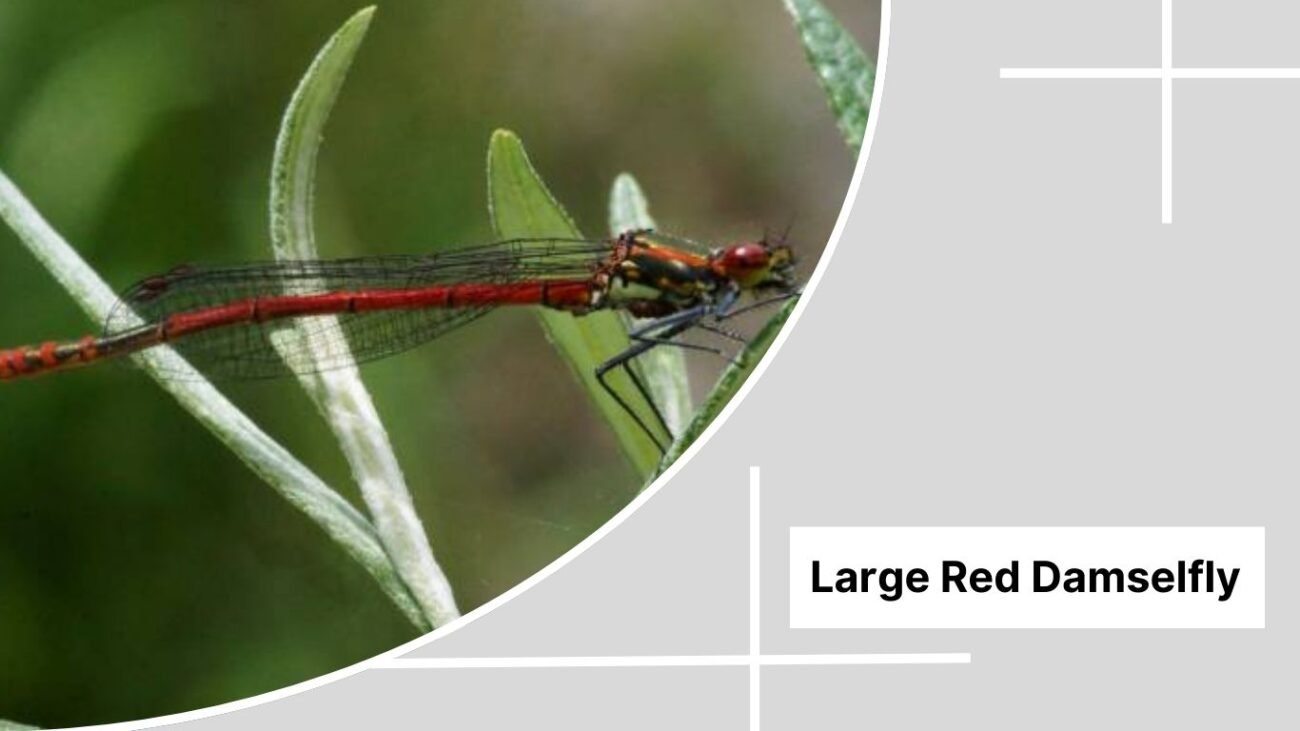
The Large Red Damselfly is one of the earliest damselflies to appear in spring, often seen as early as April in some regions. Its deep red body and contrasting black markings make it easy to recognize. Unlike many other damselflies, it tolerates cooler weather and can be spotted on a wide variety of freshwater habitats.
Identification
- Scientific Name: Pyrrhosoma nymphula
- Body Size: 3.5–3.8 cm
- Color: Predominantly deep red with black markings on the thorax and segments of the abdomen
- Wings: Transparent, narrow, held closed over the body at rest
- Eyes: Dark reddish-brown
- Sexual Dimorphism: Females often have more black along the abdomen and can appear darker overall
Habitat and Distribution
Common across Europe and parts of western Asia, found in ponds, lakes, canals, and slow-moving rivers.
Behavior and Diet
Feeds on small flying insects, including mosquitoes, gnats, and midges. Often seen basking in sunlight near water’s edge, and pairs are commonly observed in tandem during egg-laying on aquatic plants.
9. Blue-tailed Damselfly (Ischnura elegans)

The Blue-tailed Damselfly is a slender and adaptable species, known for the distinctive bright blue segment near the tip of its abdomen. It is one of the most widespread damselflies in Europe and parts of Asia, thriving in both natural and artificial water bodies. Its tolerance for a range of habitats makes it a frequent sight throughout the warmer months.
Identification
- Scientific Name: Ischnura elegans
- Body Size: 3–3.5 cm
- Color: Predominantly black with a bright blue patch on segment eight of the abdomen
- Wings: Transparent, narrow, and held together over the body at rest
- Eyes: Dark with blue-green tones
- Sexual Dimorphism: Females occur in multiple color forms, including blue, green, and brown variants
Habitat and Distribution
Found across Europe, North Africa, and parts of Asia, inhabiting ponds, lakes, canals, and slow-moving rivers. It can also be found in urban and agricultural areas.
Behavior and Diet
Feeds on tiny flying insects such as midges and mosquitoes. Males are territorial and often hover near vegetation to guard potential mates, while females lay eggs on submerged or floating plants.
10. Eastern Forktail (Ischnura verticalis)
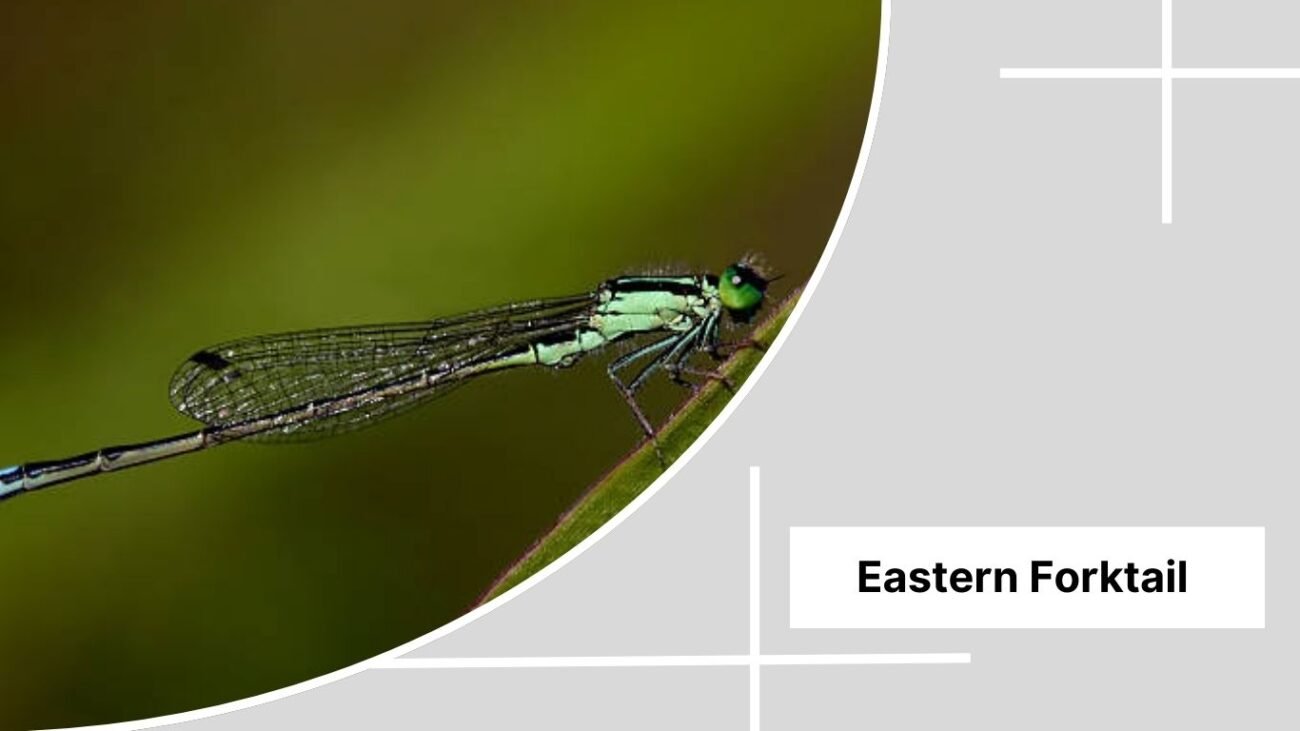
The Eastern Forktail is a small but colorful damselfly commonly found in North America. Males are easily recognized by their bright green thorax, black abdomen with a blue tip, and slender build. This adaptable species thrives in a wide variety of freshwater habitats, from ponds and lakes to marshes and slow-moving streams.
Identification
- Scientific Name: Ischnura verticalis
- Body Size: 2.5–3.2 cm
- Color: Males have a vivid green thorax, black abdomen with a bright blue segment near the tip; females vary from orange to bluish-green depending on age
- Wings: Transparent, narrow, and held together over the body at rest
- Eyes: Dark with greenish highlights
- Sexual Dimorphism: Females change color as they mature, often starting orange and becoming bluish or green
Habitat and Distribution
Widespread throughout eastern and central North America, inhabiting ponds, lakes, slow streams, and marshes.
Behavior and Diet
Feeds on tiny flying insects such as mosquitoes, gnats, and small flies. Males often perch low on vegetation near the water’s edge, ready to dart out to capture prey or court females.
11. Fragile Forktail (Ischnura posita)

The Fragile Forktail is a delicate and slender damselfly, aptly named for its thin build and subtle coloration. Males are characterized by their green thorax stripes and mostly black abdomen with pale blue at the tip. Despite its fragile appearance, this species is widespread and adaptable, thriving in a range of still and slow-moving freshwater habitats.
Identification
- Scientific Name: Ischnura posita
- Body Size: 2.5–3 cm
- Color: Males have a black thorax with green shoulder stripes and a mostly black abdomen ending in a blue tip; females vary from yellowish to bluish-green
- Wings: Transparent, narrow, held together over the body at rest
- Eyes: Dark with greenish tones
- Sexual Dimorphism: Females display color changes with age, often maturing from yellow to blue-green
Habitat and Distribution
Found across eastern North America, inhabiting ponds, marshes, lakes, and the quiet margins of streams and rivers.
Behavior and Diet
Feeds on small flying insects such as mosquitoes and gnats. Often perches low on aquatic vegetation, ready to dart out in quick bursts to capture prey or interact with mates.
12. River Jewelwing (Calopteryx aequabilis)

The River Jewelwing is a striking damselfly native to North America, admired for its metallic green body and clear wings with dark tips. It is often seen flitting gracefully along forested rivers and streams, where sunlight enhances its iridescent sheen. This species is both a skilled flyer and a vital part of the aquatic ecosystem.
Identification
- Scientific Name: Calopteryx aequabilis
- Body Size: 5–5.5 cm
- Color: Metallic green to blue-green body; females often appear more bronze
- Wings: Transparent with a dark brown to black tip, broad and rounded
- Eyes: Dark reddish-brown to black
- Sexual Dimorphism: Females have lighter, more translucent wing tips compared to males
Habitat and Distribution
Found along clean, moderate to fast-flowing rivers and streams across Canada and the northern United States.
Behavior and Diet
Feeds on small flying insects like midges, mosquitoes, and mayflies. Males are territorial, patrolling stretches of riverbank to attract mates, while females typically stay closer to shaded vegetation before egg-laying.
13. Smoky Rubyspot (Hetaerina titia)

The Smoky Rubyspot is a dazzling damselfly found mainly in the southern United States, Central America, and parts of northern South America. It is well known for the ruby-red spot at the base of its wings and the smoky dark shading that gives it its name. These damselflies are often seen in groups along sunlit riverbanks, adding brilliant flashes of color to the water’s edge.
Identification
- Scientific Name: Hetaerina titia
- Body Size: 4.5–5 cm
- Color: Metallic bronze-green body with ruby-red wing bases
- Wings: Transparent with a distinct smoky brown shading over most of the wing area
- Eyes: Dark reddish-brown
- Sexual Dimorphism: Males show brighter ruby-red wing bases, while females are duller with less intense coloration
Habitat and Distribution
Prefers slow-moving rivers and streams with abundant sunlight, ranging from the southern U.S. through Central America into northern South America.
Behavior and Diet
Feeds on small flying insects such as midges, mosquitoes, and gnats. Males establish territories along sunny riverbanks, performing aerial displays to ward off rivals and attract females.
14. American Rubyspot (Hetaerina americana)

The American Rubyspot is a vibrant damselfly named for the brilliant ruby-red patches at the base of its wings, which stand out against its metallic green body. Often seen perching on rocks or vegetation along rivers and streams, this species is a striking sight in summer months. Its bold coloration and territorial displays make it one of the most photographed damselflies in North America.
Identification
- Scientific Name: Hetaerina americana
- Body Size: 4.5–5 cm
- Color: Metallic green to bronze body with vivid ruby-red wing bases
- Wings: Transparent beyond the red patch, long and narrow
- Eyes: Dark reddish-brown
- Sexual Dimorphism: Males have larger and more vivid red wing patches than females, whose markings are smaller and duller
Habitat and Distribution
Found along rivers and streams with moderate to slow flow, ranging from Canada through the United States and into Central America.
Behavior and Diet
Feeds on small flying insects, including mosquitoes and mayflies. Males are territorial, often perching prominently on rocks or branches over the water to display their red wing spots and deter rivals.
15. Powdered Dancer (Argia moesta)

The Powdered Dancer is a distinctive North American damselfly, named for the pale, powdery blue coating that develops on mature males. This pruinescence gives them a soft, dusted appearance, making them easy to identify. They are commonly found near slow-moving rivers and streams, where they perch low on rocks and vegetation close to the water’s edge.
Identification
- Scientific Name: Argia moesta
- Body Size: 3.5–4 cm
- Color: Mature males are pale powdery blue with black markings; females are brown or tan with dark patterns
- Wings: Transparent, narrow, held closed over the body at rest
- Eyes: Dark, often with blue or brown tones
- Sexual Dimorphism: Males develop a powdery blue pruinescence as they age, while females retain earthy tones
Habitat and Distribution
Found throughout much of North America, especially along rivers, streams, and large creeks with gentle currents.
Behavior and Diet
Feeds on small flying insects such as midges, mosquitoes, and gnats. Males perch low near the water to guard territories, often chasing away rivals in short bursts of flight.
16. Violet Dancer (Argia fumipennis violacea)

The Violet Dancer is a stunning damselfly recognized for its rich violet-purple coloration, making it one of the most colorful members of the dancer group. It is commonly found near ponds, lakes, and slow-moving streams in eastern North America. Its graceful flight and tendency to perch on vegetation make it a favorite among dragonfly and damselfly watchers.
Identification
- Scientific Name: Argia fumipennis violacea
- Body Size: 3.5–4 cm
- Color: Males are a vivid violet-purple with black markings; females are typically brown or tan with subtle patterns
- Wings: Transparent, narrow, and held closed over the body at rest
- Eyes: Dark with purple or brown hues
- Sexual Dimorphism: Males retain their bright violet color, while females have more muted earth tones
Habitat and Distribution
Found in eastern North America, inhabiting calm or slow-moving waters such as ponds, lakes, and the edges of streams.
Behavior and Diet
Feeds on small flying insects like gnats, mosquitoes, and midges. Males often perch conspicuously on plants or sticks overhanging water, defending territories and performing short flights to deter rivals.
17. Ebony Jewelwing (Calopteryx maculata)

The Ebony Jewelwing is one of the most striking damselflies in North America, easily recognized by its metallic green body and completely black, opaque wings. Its elegant, slow flight and preference for shaded forest streams make it a captivating sight in summer. Both beautiful and ecologically important, it plays a role in controlling insect populations near freshwater habitats.
Identification
- Scientific Name: Calopteryx maculata
- Body Size: 5–5.5 cm
- Color: Males have a metallic emerald-green body; females are more bronze-green
- Wings: Males have solid black, opaque wings; females have brownish wings with a small white spot near the tip
- Eyes: Dark reddish-brown to black
- Sexual Dimorphism: Females have lighter wings with a distinct pale stigma near the tip
Habitat and Distribution
Found along shaded, slow-moving forest streams and rivers across eastern North America.
Behavior and Diet
Feeds on small flying insects, including gnats, mosquitoes, and midges. Males perform fluttering displays over the water to attract females, while females often remain in shaded areas before egg-laying.


