Leafhoppers are small, agile insects belonging to the Cicadellidae family, known for their plant-sap feeding habits and remarkable jumping abilities. While some species are harmless, others are significant agricultural pests, transmitting plant diseases and damaging crops. This guide explores 17 distinct types of leafhoppers, detailing their appearance, habitat, and behavior to help with identification and understanding of their impact on plants and ecosystems.
1. Glassy-winged Sharpshooter (Homalodisca vitripennis)

The Glassy-winged Sharpshooter is a large and robust leafhopper species known for its semi-transparent wings and ability to transmit plant diseases such as Pierce’s disease in grapes. Native to the southeastern United States, it has become a significant agricultural pest in several regions due to its efficient feeding and long-distance flying abilities.
Identification
- Scientific Name: Homalodisca vitripennis
- Body Size: 12–14 mm
- Color: Brownish body with speckled markings; wings are translucent with reddish veins
- Wings: Large, glassy, and slightly tinted, extending beyond the abdomen
- Eyes: Yellowish-orange to reddish-brown
- Notable Feature: Powerful hind legs for jumping and sustained flight
Habitat and Distribution
Found in the southeastern United States but has spread to California, French Polynesia, and other regions. Prefers orchards, vineyards, and areas with abundant vegetation.
Behavior and Diet
Feeds on xylem sap from a wide variety of plants. Known for transmitting the bacterium Xylella fastidiosa, which causes serious plant diseases.
2. Potato Leafhopper (Empoasca fabae)

The Potato Leafhopper is a small but highly destructive pest affecting many crops, including potatoes, beans, alfalfa, and apples. Despite its tiny size, it causes significant economic losses each year through feeding damage and the transmission of plant diseases. Its wedge-shaped body and rapid, sideways movements make it difficult to spot and capture.
Identification
- Scientific Name: Empoasca fabae
- Body Size: 3–4 mm
- Color: Light green with pale yellow or white markings
- Wings: Transparent, extending beyond the abdomen when at rest
- Eyes: Yellowish-green
- Notable Feature: Wedge-shaped body and swift, erratic movements when disturbed
Habitat and Distribution
Widely distributed across North America, migrating long distances from southern overwintering areas to northern crop fields during warmer months.
Behavior and Diet
Feeds on the sap of plant leaves, injecting toxins that cause “hopperburn,” a yellowing and curling of foliage that can severely reduce crop yields.
3. Six-spotted Leafhopper (Macrosteles quadrilineatus)

The Six-spotted Leafhopper is a common agricultural pest known for spreading aster yellows, a plant disease that affects many vegetables, ornamentals, and field crops. Its name comes from the six small black spots visible on its pale yellow-green head. This fast-moving insect is capable of long migrations, making it a challenging pest to control.
Identification
- Scientific Name: Macrosteles quadrilineatus
- Body Size: 3–4 mm
- Color: Pale yellow-green body with darker markings
- Wings: Transparent, extending slightly beyond the abdomen
- Eyes: Reddish or brownish
- Notable Feature: Six distinct black spots arranged in a row on the head
Habitat and Distribution
Found throughout North America, especially in agricultural areas, grasslands, and gardens where host plants are abundant.
Behavior and Diet
Feeds on plant sap, transmitting the phytoplasma that causes aster yellows, leading to stunted growth, leaf discoloration, and reduced yields in crops like lettuce, carrots, and celery.
4. Green Leafhopper (Cicadella viridis)

The Green Leafhopper is a brightly colored species easily recognized by its vivid green body and large size compared to many other leafhoppers. It is widespread in Europe and parts of Asia, commonly found in meadows, wetlands, and along riverbanks. While not as notorious a pest as some relatives, it can still transmit plant pathogens and cause feeding damage to grasses and crops.
Identification
- Scientific Name: Cicadella viridis
- Body Size: 8–10 mm
- Color: Bright green with a bluish or yellowish tint; males may appear slightly duller
- Wings: Transparent to slightly green-tinted, covering the entire abdomen
- Eyes: Brown to reddish-brown
- Notable Feature: Larger and more robust than most leafhoppers, with a uniform green coloration
Habitat and Distribution
Widespread across Europe, northern Asia, and introduced regions. Prefers moist habitats such as marshes, damp meadows, and lakesides.
Behavior and Diet
Feeds on the sap of grasses, sedges, and other herbaceous plants. Although not a major crop pest, it can transmit phytoplasmas and viruses to susceptible plants.
5. Blue-green Sharpshooter (Graphocephala atropunctata)

The Blue-green Sharpshooter is a strikingly colorful leafhopper native to California and parts of the western United States. Its vibrant blue-green body and yellow markings make it easy to identify. While beautiful, it is a serious agricultural pest due to its role in spreading Xylella fastidiosa, the bacterium responsible for Pierce’s disease in grapes and other plant infections.
Identification
- Scientific Name: Graphocephala atropunctata
- Body Size: 6–8 mm
- Color: Bright blue-green with yellow stripes on the head and pronotum
- Wings: Transparent with blue-green and yellow coloration extending across them
- Eyes: Dark brown to black
- Notable Feature: Vivid coloration and association with Pierce’s disease transmission
Habitat and Distribution
Found primarily in California, inhabiting riparian zones, gardens, vineyards, and orchards where host plants are abundant.
Behavior and Diet
Feeds on xylem sap from a wide variety of plants, including grapevines, citrus, and ornamental species. Known for efficient disease transmission, making it a key target for vineyard pest management.
6. Red-banded Leafhopper (Graphocephala coccinea)

The Red-banded Leafhopper, also known as the Candy-striped Leafhopper, is one of the most visually striking leafhoppers in North America. Its vivid red, blue, and yellow stripes make it unmistakable in gardens, fields, and meadows. While admired for its beauty, it can transmit plant pathogens and cause minor damage to ornamental plants and crops.
Identification
- Scientific Name: Graphocephala coccinea
- Body Size: 6–8 mm
- Color: Bright red and blue bands across the wings and yellow on the head and thorax
- Wings: Colorful, with distinct alternating red and blue stripes
- Eyes: Brown to dark reddish-brown
- Notable Feature: Bold candy-striped coloration
Habitat and Distribution
Common across much of North America, found in gardens, open fields, and along roadsides where flowering plants are plentiful.
Behavior and Diet
Feeds on plant sap from a variety of herbaceous plants, especially composites and shrubs. While not typically a major agricultural pest, it can vector certain plant diseases and reduce plant vigor in high numbers.
7. Candy-striped Leafhopper (Graphocephala versuta)

The Candy-striped Leafhopper is a close relative of the red-banded species, sharing the same vibrant palette of red, blue, and yellow but with slightly different patterning. Known for its quick movements and small size, it is a common sight in gardens and meadows during warm months. Its dazzling coloration helps make it one of the most recognizable leafhoppers in North America.
Identification
- Scientific Name: Graphocephala versuta
- Body Size: 6–8 mm
- Color: Bright red and turquoise-blue bands on the wings with yellow-green on the head and thorax
- Wings: Alternating red and blue bands, narrower than those of G. coccinea
- Eyes: Brown to reddish-brown
- Notable Feature: Striking color pattern with a more elongated body shape than some related species
Habitat and Distribution
Widely distributed in the eastern and central United States, thriving in gardens, parks, meadows, and areas with abundant wildflowers.
Behavior and Diet
Feeds on plant sap from various herbaceous plants and shrubs. While generally not a severe pest, it can transmit certain plant pathogens and cause minor cosmetic damage to ornamental plants.
8. Rice Green Leafhopper (Nephotettix cincticeps)

The Rice Green Leafhopper is a major pest in rice-growing regions across Asia, known for transmitting serious viral diseases such as rice tungro virus. Its bright green body allows it to blend in perfectly with rice plants, making early detection challenging. Due to its rapid reproduction and mobility, it poses a significant threat to crop yields.
Identification
- Scientific Name: Nephotettix cincticeps
- Body Size: 4–5 mm
- Color: Bright green with a distinctive black spot near the wing base
- Wings: Transparent with a slight green tint, folded flat over the body when at rest
- Eyes: Reddish-brown
- Notable Feature: Distinct black markings on the wings and pronotum
Habitat and Distribution
Widespread in rice-growing regions of Asia, including China, Japan, the Philippines, and Southeast Asia. Often found in irrigated paddy fields.
Behavior and Diet
Feeds on the sap of rice plants, weakening them and acting as a vector for viral diseases. Outbreaks can cause severe crop losses if not managed promptly with integrated pest control measures.
9. Maize Leafhopper (Cicadulina mbila)

The Maize Leafhopper is a significant pest in sub-Saharan Africa, notorious for transmitting maize streak virus (MSV), which can devastate maize crops. Small but highly mobile, it thrives in warm climates and can rapidly spread plant diseases across large farming areas, making it a major concern for food security in affected regions.
Identification
- Scientific Name: Cicadulina mbila
- Body Size: 3–4 mm
- Color: Pale yellow to light brown with darker markings on the head and thorax
- Wings: Transparent with fine venation, extending just beyond the abdomen
- Eyes: Dark brown to black
- Notable Feature: Compact, wedge-shaped body adapted for rapid hopping and flight
Habitat and Distribution
Common across sub-Saharan Africa, particularly in maize-growing regions. Also found in grassy fields and along field margins.
Behavior and Diet
Feeds on the phloem sap of maize and wild grasses, acting as an efficient vector of maize streak virus. Early infestations can cause stunted growth, yellow streaking, and significant yield loss.
10. Corn Leafhopper (Dalbulus maidis)

The Corn Leafhopper is a small but highly destructive pest native to the Americas, particularly Central and South America. It is the primary vector of several maize diseases, including maize bushy stunt phytoplasma and corn stunt spiroplasma. Its ability to transmit multiple pathogens makes it a serious threat to corn production.
Identification
- Scientific Name: Dalbulus maidis
- Body Size: 3–4 mm
- Color: Pale yellow to light green with transparent wings
- Wings: Clear with fine venation, resting roof-like over the body
- Eyes: Dark brown to black
- Notable Feature: Slender body and strong association with maize plants
Habitat and Distribution
Found primarily in Central and South America but has expanded into parts of North America where corn is grown. Common in maize fields and surrounding grassy areas.
Behavior and Diet
Feeds exclusively on maize and closely related grasses. Transmits multiple plant pathogens, causing symptoms such as stunted growth, leaf yellowing, and reduced grain production, especially in warmer climates where populations can thrive year-round.
11. Variegated Leafhopper (Erythroneura variabilis)

The Variegated Leafhopper is a small, colorful species commonly found on grapevines and various ornamental plants. Known for its distinctive mottled patterns, it is a frequent pest in vineyards, where heavy infestations can lead to leaf stippling, reduced photosynthesis, and overall plant stress.
Identification
- Scientific Name: Erythroneura variabilis
- Body Size: 3–4 mm
- Color: Creamy white background with red and blue variegated markings across the wings
- Wings: Colorfully patterned, held roof-like over the body when at rest
- Eyes: Reddish-brown
- Notable Feature: Intricate color patterns that vary slightly among individuals
Habitat and Distribution
Common throughout North America, especially in vineyards, gardens, and areas with abundant host plants like grapes, fruit trees, and ornamentals.
Behavior and Diet
Feeds on the undersides of leaves, sucking plant sap and causing stippling damage. While it does not usually transmit diseases, heavy infestations can weaken plants and reduce crop yields in vineyards.
12. Two-spotted Leafhopper (Sophonia rufofascia)

The Two-spotted Leafhopper is an invasive pest species originally from Asia, now established in Hawaii and parts of the Pacific. It poses a serious threat to agriculture and native plants due to its broad feeding range and ability to transmit plant pathogens. Its name comes from the pair of distinct dark spots on its wings.
Identification
- Scientific Name: Sophonia rufofascia
- Body Size: 4–5 mm
- Color: Yellow-green to brown with reddish markings and two noticeable dark spots on the forewings
- Wings: Transparent with visible spots and reddish fascia patterns
- Eyes: Dark brown to black
- Notable Feature: Two distinct black spots located near the wing base
Habitat and Distribution
Native to Asia but introduced to Hawaii and other Pacific islands, where it thrives in tropical and subtropical environments. Found in gardens, forests, and agricultural fields.
Behavior and Diet
Feeds on a wide variety of plants, including fruit trees, vegetables, and ornamentals. Known to cause leaf curling, yellowing, and stunted growth, and can transmit pathogens that exacerbate plant decline.
13. Blue Leafhopper (Oncometopia alpha)
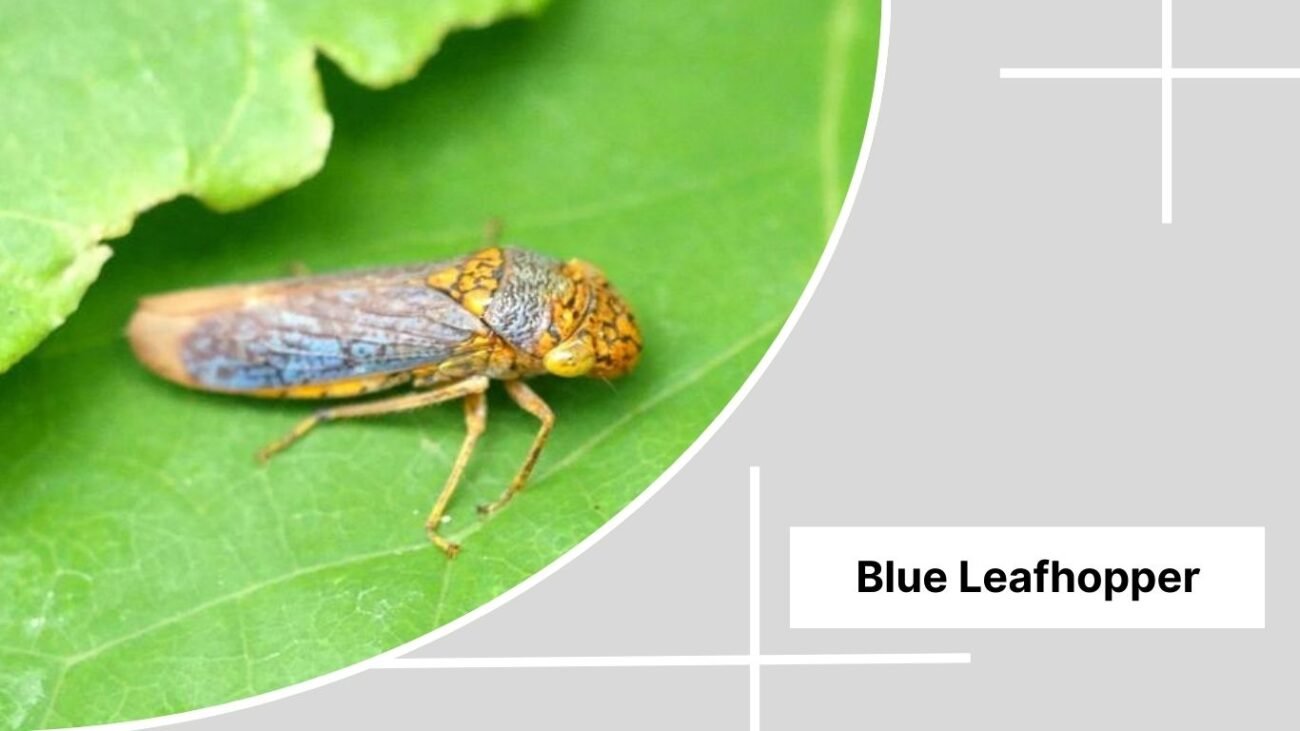
The Blue Leafhopper is a visually striking species with a metallic blue body and wings, making it one of the more attractive members of the Cicadellidae family. While beautiful, it is a capable vector of plant pathogens, including Xylella fastidiosa, which causes diseases in crops such as citrus, coffee, and grapes.
Identification
- Scientific Name: Oncometopia alpha
- Body Size: 7–9 mm
- Color: Shiny metallic blue with darker wing venation
- Wings: Transparent with a bluish sheen, extending fully over the abdomen
- Eyes: Dark brown to black
- Notable Feature: Vivid blue coloration and relatively large size compared to many leafhoppers
Habitat and Distribution
Found in Central and South America, particularly in tropical and subtropical regions. Often seen on a variety of host plants in gardens, farms, and forest edges.
Behavior and Diet
Feeds on xylem sap from numerous plant species. Plays a significant role in spreading Xylella fastidiosa, leading to crop damage and plant decline in affected agricultural areas.
14. Grape Leafhopper (Erythroneura elegantula)

The Grape Leafhopper is a small but economically important pest in vineyards, particularly in North America. Despite its tiny size, heavy infestations can severely reduce photosynthesis in grapevines, weakening plants and lowering grape quality and yield. It is easily recognized by its pale yellow body with reddish markings.
Identification
- Scientific Name: Erythroneura elegantula
- Body Size: 3 mm
- Color: Pale yellow to cream with red and orange markings across the wings
- Wings: Semi-transparent, patterned with reddish streaks, held roof-like over the body
- Eyes: Reddish-brown
- Notable Feature: Distinctive red wing patterns and strong association with grapevines
Habitat and Distribution
Widespread in vineyards across North America, particularly in California and other major wine-producing regions.
Behavior and Diet
Feeds on the undersides of grapevine leaves, sucking sap and causing stippling damage. High populations can lead to leaf drop, reduced vine vigor, and smaller harvests, making pest monitoring and control essential in vineyard management.
15. Beet Leafhopper (Circulifer tenellus)
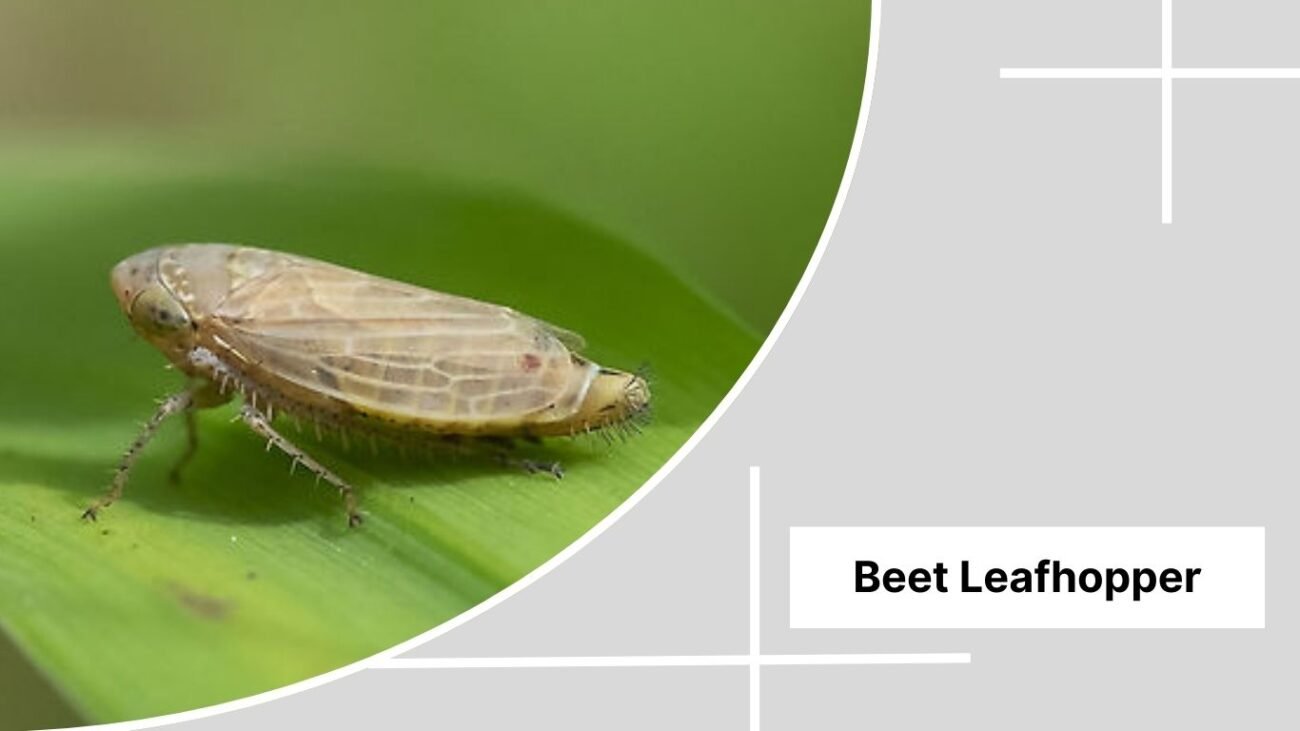
The Beet Leafhopper is a small but highly impactful agricultural pest known for transmitting the beet curly top virus, which affects a wide range of crops including beets, tomatoes, peppers, and beans. Its inconspicuous appearance and wide host range make it a persistent threat in many farming regions.
Identification
- Scientific Name: Circulifer tenellus
- Body Size: 3–3.5 mm
- Color: Pale green to yellowish with faint darker markings on the wings
- Wings: Transparent with subtle venation, folded flat over the body at rest
- Eyes: Reddish-brown
- Notable Feature: Small size, wedge-shaped body, and rapid, hopping movements
Habitat and Distribution
Found throughout western North America, especially in arid and semi-arid agricultural zones. Often inhabits weedy areas and field edges before moving into crops.
Behavior and Diet
Feeds on the sap of various plants, transmitting beet curly top virus and other pathogens. Infestations can cause stunted growth, leaf curling, and reduced yields in multiple vegetable and field crops.
16. Potato Leafhopper (Empoasca fabae)

The Potato Leafhopper is a highly mobile and destructive pest that affects more than 200 plant species, including potatoes, alfalfa, beans, and apples. Despite its name, it is not limited to potatoes and can cause economic losses in a wide variety of crops through feeding damage and disease transmission.
Identification
- Scientific Name: Empoasca fabae
- Body Size: 3–4 mm
- Color: Bright green with semi-transparent wings
- Wings: Clear to slightly green-tinted, held tent-like over the body
- Eyes: Pale yellow-green
- Notable Feature: Extremely quick movements and strong flight capability, making it hard to catch
Habitat and Distribution
Native to North America but migrates seasonally, moving from southern overwintering areas to northern agricultural fields each spring and summer.
Behavior and Diet
Feeds on plant sap from leaves and stems, causing “hopperburn,” a condition where leaves curl, yellow, and die prematurely. Damage can significantly reduce crop yields, particularly in potatoes and alfalfa.
17. Glassy-winged Sharpshooter (Homalodisca vitripennis)

The Glassy-winged Sharpshooter is a large and powerful leafhopper species infamous for spreading Xylella fastidiosa, a bacterial pathogen responsible for diseases in grapes, citrus, almonds, and many other plants. Its strong flying ability and wide host range make it a serious pest in agriculture.
Identification
- Scientific Name: Homalodisca vitripennis
- Body Size: 12–14 mm (larger than most leafhoppers)
- Color: Dark brown to black body with yellowish speckles
- Wings: Transparent with a glassy appearance and brown veins
- Eyes: Yellow-orange
- Notable Feature: Large size, glass-like wings, and powerful jump/fly capability
Habitat and Distribution
Native to the southeastern United States but has spread to California and parts of Mexico. Often found in orchards, vineyards, and ornamental landscapes.
Behavior and Diet
Feeds on xylem sap from a broad range of plant species. Efficiently transmits Xylella fastidiosa, leading to Pierce’s disease in grapes and other crop losses, making it a high-priority pest for monitoring and control programs.