Grouse are hardy, ground-dwelling birds that thrive in forests, grasslands, tundra, and mountainous regions across North America, Europe, and Asia. Known for their camouflaged plumage, unique courtship displays, and ability to survive in harsh climates, grouse play an important role in their ecosystems. This guide introduces 15 different types of grouse birds, from the well-known Ruffed Grouse of North America to the elusive Hazel Grouse of Eurasia, highlighting their diversity and adaptations.
1. Ruffed Grouse

The Ruffed Grouse (Bonasa umbellus) is one of the most widespread and well-known grouse species in North America. It gets its name from the distinctive ruff of feathers around its neck, which males display during courtship.
Identification
- Scientific name: Bonasa umbellus
- Plumage: Brown, gray, or reddish mottled feathers that blend perfectly with forest floors; dark tail band; feathered legs
- Size: 40–50 cm (16–20 in) in length, with a wingspan of 50–64 cm (20–25 in)
Habitat and Range
Ruffed Grouse inhabit mixed deciduous and coniferous forests across Canada and the northern United States. They prefer young forests with dense cover and plenty of undergrowth.
Behavior and Diet
They are ground-dwelling birds that forage for buds, leaves, berries, seeds, and insects. Males are famous for their “drumming” display, where they beat their wings rapidly on a log to create a deep, echoing sound that attracts females and marks territory.
2. Spruce Grouse

The Spruce Grouse (Canachites canadensis) is often called the “fool hen” because of its unusually tame behavior around humans. It is well adapted to life in boreal forests.
Identification
- Scientific name: Canachites canadensis
- Plumage: Males are dark with black breasts, white spots, and red eye combs; females are mottled brown and gray for camouflage
- Size: 38–43 cm (15–17 in) in length
Habitat and Range
They inhabit dense coniferous forests of Canada and the northern United States, especially areas dominated by spruce and pine.
Behavior and Diet
Spruce Grouse feed heavily on conifer needles, especially in winter, along with berries, seeds, and insects in warmer months. Their tame nature makes them relatively easy to approach in the wild.
3. Willow Ptarmigan
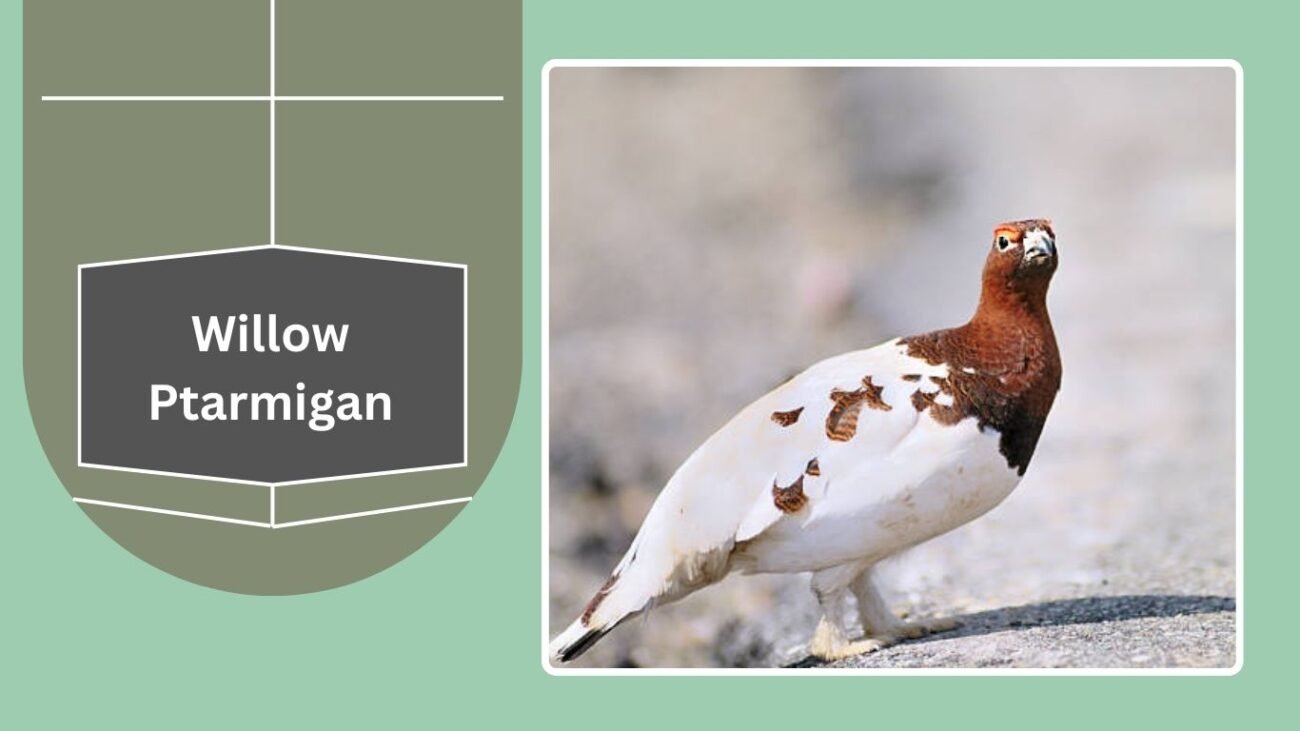
The Willow Ptarmigan (Lagopus lagopus) is a hardy grouse species well adapted to Arctic and subarctic regions. It is known for its seasonal plumage changes.
Identification
- Scientific name: Lagopus lagopus
- Plumage: Brown mottled in summer; entirely white in winter except for black tail; feathered legs and feet for insulation
- Size: 35–44 cm (14–17 in) in length
Habitat and Range
They are widely distributed across Alaska, Canada, Scandinavia, and Siberia, favoring tundra and shrubby willow areas.
Behavior and Diet
Willow Ptarmigans feed on buds, twigs, willow leaves, berries, and insects. They form large winter flocks and are well camouflaged against snowy landscapes in their white plumage.
4. Rock Ptarmigan

The Rock Ptarmigan (Lagopus muta) is a tough, cold-adapted grouse that thrives in Arctic and alpine environments. It is well known for its seasonal plumage shifts, which provide excellent camouflage.
Identification
- Scientific name: Lagopus muta
- Plumage: Mottled brown and gray in summer; pure white in winter except for a black tail; feathered legs and feet
- Size: 34–36 cm (13–14 in) in length
Habitat and Range
This species is found across the Arctic tundra of North America, Europe, and Asia, and also in high mountain ranges such as the Alps and Rockies.
Behavior and Diet
Rock Ptarmigans feed on buds, twigs, lichens, and berries. They are highly resilient, surviving extreme cold and deep snow by burrowing into snowbanks for warmth.
5. White-tailed Ptarmigan

The White-tailed Ptarmigan (Lagopus leucura) is the smallest North American grouse, perfectly adapted to high alpine environments. Unlike other ptarmigans, it remains white-tailed year-round.
Identification
- Scientific name: Lagopus leucura
- Plumage: Brown and mottled in summer, completely white in winter; distinctive all-white tail
- Size: 30–34 cm (12–13 in) in length
Habitat and Range
They inhabit alpine tundra and high mountain slopes across western North America, including the Rockies, Cascades, and Sierra Nevada.
Behavior and Diet
White-tailed Ptarmigans feed on alpine plants, buds, twigs, and insects. They often remain buried in snow to avoid predators and conserve heat during harsh winters.
6. Dusky Grouse

The Dusky Grouse (Dendragapus obscurus) is one of the largest North American grouse, inhabiting mountainous forests of the western United States and Canada.
Identification
- Scientific name: Dendragapus obscurus
- Plumage: Males are dark gray with lighter underparts, red eye combs, and a purplish throat air sac used in displays; females are mottled brown with cryptic markings
- Size: 47–55 cm (18–22 in) in length
Habitat and Range
Dusky Grouse live in coniferous forests of the Rocky Mountains and adjacent ranges, often moving to higher elevations in summer.
Behavior and Diet
They feed on conifer needles in winter, while their summer diet includes berries, seeds, and insects. Males perform booming courtship calls from trees during breeding season.
7. Sooty Grouse

The Sooty Grouse (Dendragapus fuliginosus) is closely related to the Dusky Grouse but inhabits the Pacific coastal forests of North America.
Identification
- Scientific name: Dendragapus fuliginosus
- Plumage: Males are dark slate-gray with yellow throat sacs and orange eye combs; females are brown mottled for camouflage
- Size: 45–50 cm (17–20 in) in length
Habitat and Range
They are found in coniferous and mixed forests along the Pacific Coast from Alaska through California.
Behavior and Diet
Sooty Grouse feed on conifer needles, berries, seeds, and insects. Males perform loud “hooting” calls during the breeding season, which can be heard from long distances in the forest.
8. Greater Sage-Grouse
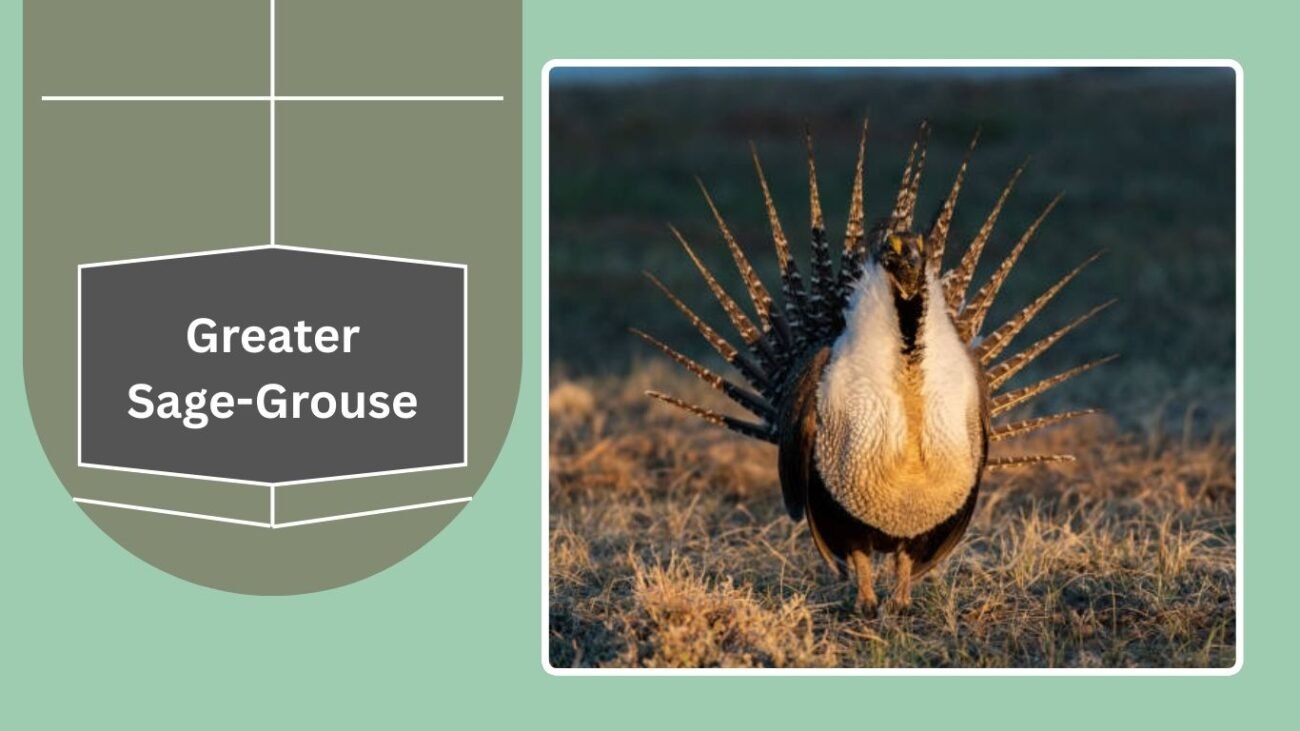
The Greater Sage-Grouse (Centrocercus urophasianus) is the largest grouse in North America, known for its spectacular mating displays on open sagebrush plains.
Identification
- Scientific name: Centrocercus urophasianus
- Plumage: Gray-brown body with mottled patterns, males have white ruffs around the neck and large yellow-green air sacs on the chest displayed during courtship
- Size: 60–75 cm (24–30 in) in length, wingspan up to 1.2 m (3.9 ft)
Habitat and Range
They are native to sagebrush steppe habitats across the western United States and parts of southern Canada.
Behavior and Diet
Their diet is dominated by sagebrush leaves, especially in winter. In spring, males gather on leks (display grounds), puffing out their air sacs and fanning their tails in elaborate dances to attract females.
9. Gunnison Sage-Grouse

The Gunnison Sage-Grouse (Centrocercus minimus) is a smaller, closely related species to the Greater Sage-Grouse, found only in a limited area of southwestern Colorado and southeastern Utah.
Identification
- Scientific name: Centrocercus minimus
- Plumage: Similar to Greater Sage-Grouse but smaller in size, males have long spiky filoplumes behind the head and yellow-green chest air sacs
- Size: 50–60 cm (19–24 in) in length
Habitat and Range
They inhabit sagebrush ecosystems, restricted to a much smaller range compared to the Greater Sage-Grouse.
Behavior and Diet
Their diet consists mainly of sagebrush, with insects and forbs added in summer. Like their larger relatives, they display on leks, with males performing unique dances to attract mates.
10. Sharp-tailed Grouse

The Sharp-tailed Grouse (Tympanuchus phasianellus) is known for its pointed tail feathers and lively courtship dances performed on leks.
Identification
- Scientific name: Tympanuchus phasianellus
- Plumage: Mottled brown, white, and buff with distinctive pointed tail; males have purple neck sacs and yellow eye combs displayed during dancing
- Size: 43–48 cm (17–19 in) in length
Habitat and Range
They are found in grasslands, prairies, and shrubby habitats across Canada, Alaska, and the northern United States.
Behavior and Diet
Sharp-tailed Grouse feed on seeds, berries, buds, and insects. During breeding, males perform “dancing” displays, stamping their feet and spreading wings while inflating their purple throat sacs.
11. Greater Prairie-Chicken

The Greater Prairie-Chicken (Tympanuchus cupido) is a grassland grouse famous for its booming calls and lekking displays.
Identification
- Scientific name: Tympanuchus cupido
- Plumage: Brown barred feathers with pale underparts; males display bright orange air sacs on the sides of the neck and erect tufts of feathers
- Size: 40–45 cm (16–18 in) in length
Habitat and Range
They inhabit tallgrass prairies in the central United States, with populations declining due to habitat loss.
Behavior and Diet
Their diet includes seeds, grasses, buds, and insects. On leks, males stamp their feet, raise feather tufts, and inflate orange sacs to produce low booming sounds that attract females.
12. Lesser Prairie-Chicken

The Lesser Prairie-Chicken (Tympanuchus pallidicinctus) is a close relative of the Greater Prairie-Chicken but smaller and paler, adapted to sandy prairies and shrublands.
Identification
- Scientific name: Tympanuchus pallidicinctus
- Plumage: Pale brown with faint barring; males show reddish-orange neck air sacs and feather tufts during displays
- Size: 38–41 cm (15–16 in) in length
Habitat and Range
They inhabit grasslands and sandy prairies with scattered shrubs, mainly in western Kansas, Oklahoma, Texas, and eastern New Mexico.
Behavior and Diet
Their diet consists of seeds, grasses, buds, and insects. On leks, males perform booming dances similar to Greater Prairie-Chickens but with reddish sacs and softer calls.
13. Black Grouse

The Black Grouse (Lyrurus tetrix) is a striking Eurasian grouse, easily recognized by the males’ glossy black plumage and distinctive lyre-shaped tail.
Identification
- Scientific name: Lyrurus tetrix
- Plumage: Males are glossy black with a white wing bar and red eye combs; females are mottled brown and cryptically patterned
- Size: 45–55 cm (18–22 in) in length
Habitat and Range
They inhabit moorlands, bogs, and forest edges across northern and central Europe and parts of Asia.
Behavior and Diet
Black Grouse feed on shoots, buds, berries, and insects. Males gather on leks where they perform “lekking battles,” fanning their tails and making bubbling calls to attract females.
14. Caucasian Grouse

The Caucasian Grouse (Lyrurus mlokosiewiczi) is a close relative of the Black Grouse, found only in the Caucasus Mountains. It is slightly larger and darker in appearance.
Identification
- Scientific name: Lyrurus mlokosiewiczi
- Plumage: Males are almost entirely black with a bluish sheen and small red eye combs; females are mottled brown with streaks for camouflage
- Size: 50–55 cm (19–22 in) in length
Habitat and Range
They inhabit alpine meadows, forest edges, and subalpine shrublands of the Caucasus region.
Behavior and Diet
Caucasian Grouse feed on buds, shoots, berries, and insects. Males display in leks similar to Black Grouse but with less dramatic lyre-shaped tails.
15. Hazel Grouse

The Hazel Grouse (Tetrastes bonasia) is a small, shy grouse widely distributed across Eurasia, known for its secretive habits in dense forests.
Identification
- Scientific name: Tetrastes bonasia
- Plumage: Mottled gray-brown with a white throat patch bordered in black on males; females have duller patterns for camouflage
- Size: 35–40 cm (14–16 in) in length
Habitat and Range
They inhabit coniferous and mixed forests across northern and central Europe, extending into Siberia and East Asia.
Behavior and Diet
Hazel Grouse feed on buds, catkins, seeds, and berries. They are solitary and very elusive, usually hiding in thick cover and rarely appearing in the open.