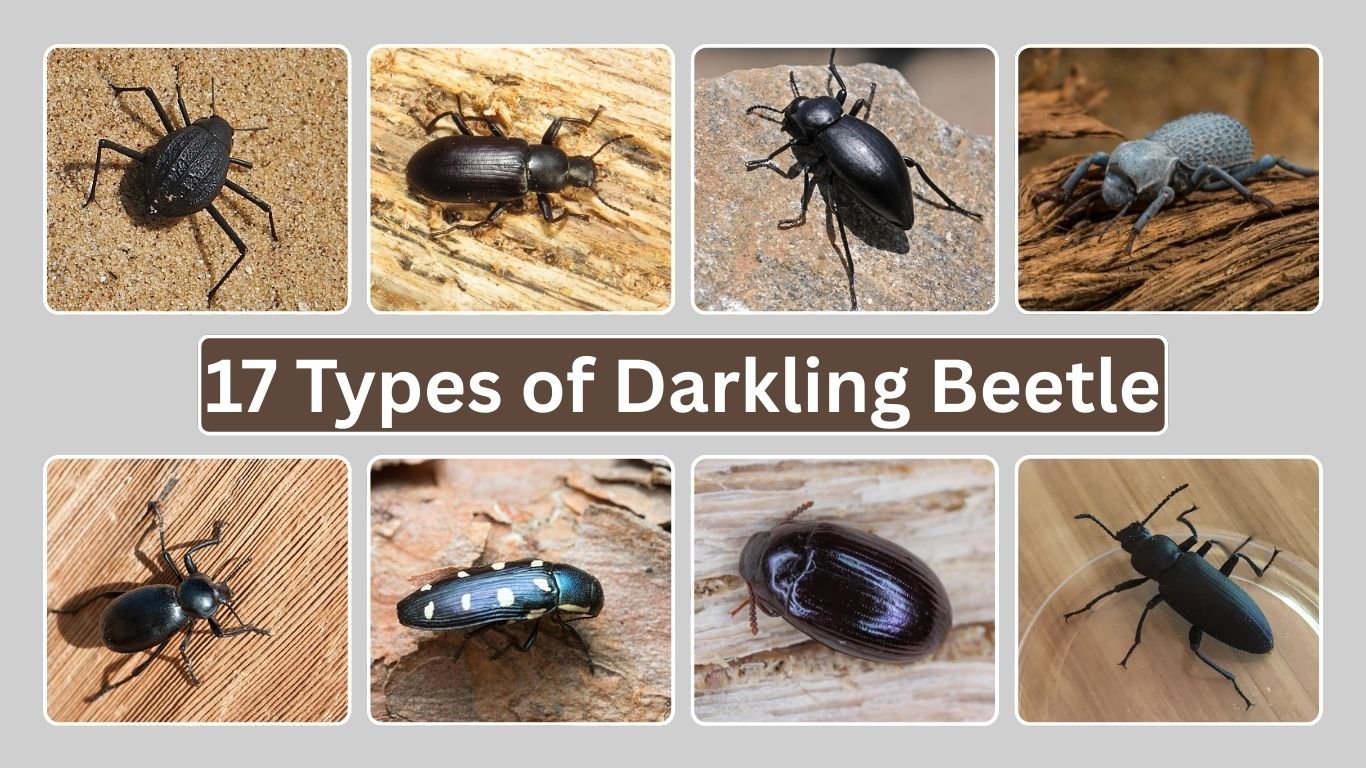
Darkling beetles are a diverse family of insects (Tenebrionidae) found worldwide, with thousands of species thriving in deserts, forests, and human environments. Known for their hardy nature and varied adaptations, they play vital roles as scavengers, recyclers, and even pests. This guide introduces 17 notable types of darkling beetles, highlighting their unique identification features, habitats, behaviors, and diets for easy understanding.
1. Mealworm Beetle
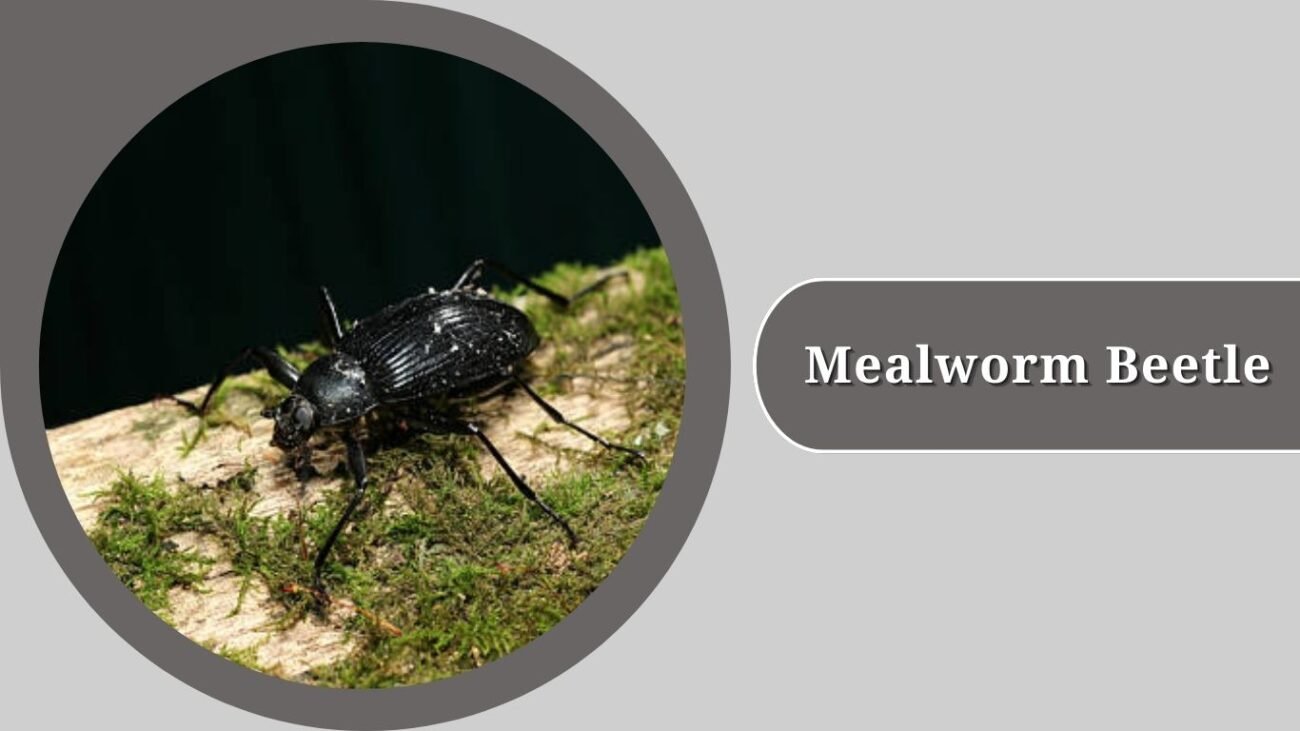
The Mealworm Beetle (Tenebrio molitor) is one of the most well-known species of darkling beetle. Its larvae, called mealworms, are commonly used as feed for reptiles, birds, and fish, and are also raised commercially for use in research and as sustainable human food. This beetle is widespread and often found near stored grains or decaying organic matter.
Identification
- Adult size ranges from 12–18 mm in length
- Elongated, hard, dark brown to black body
- Pronotum (segment behind the head) is smooth and shiny
- Larvae (mealworms) are yellowish-brown, cylindrical, and worm-like
- Antennae are segmented and gradually thickened toward the tips
Habitat
Mealworm Beetles thrive in stored grain facilities, barns, feed storage areas, and other places where decaying organic matter is available. They are found worldwide, often in human-associated environments, making them cosmopolitan in distribution.
Behavior
These beetles are nocturnal and prefer dark, humid conditions. Adults are relatively slow-moving and can fly but usually remain hidden. The larvae burrow into food sources like grain or flour, where they spend most of their development. Mealworm Beetles also display a tendency to scavenge and consume decaying organic matter.
Diet
Both larvae and adults feed on grains, bran, flour, cereal products, and decaying plant material. They may also consume dead insects when available. Larvae are highly resilient and capable of digesting various types of organic matter, making them versatile feeders.
2. Superworm Beetle

The Superworm Beetle (Zophobas morio) is a large darkling beetle commonly raised for its larvae, known as superworms. These larvae are widely used as feed for reptiles, amphibians, fish, and birds due to their size, high protein content, and active behavior. Unlike mealworms, superworms do not pupate easily when kept in groups, making them convenient for breeding and storage.
Identification
- Adult beetles are 15–20 mm long
- Shiny, dark brown to black exoskeleton
- Elongated oval body with noticeable ridges on the wing covers
- Larvae (superworms) are large, yellowish-brown, and segmented with dark tips at both ends
- Antennae are relatively short and slightly clubbed
Habitat
Superworm Beetles are native to Central and South America but are now found worldwide due to captive breeding. They thrive in warm, humid environments and are most commonly seen in controlled breeding setups, pet stores, or areas where decaying vegetation and grains are present.
Behavior
These beetles are nocturnal and prefer to stay hidden during the day. Adults are relatively slow movers, while larvae are active and burrow into bedding material. Unlike mealworms, superworms exhibit a stronger bite and defensive wriggling, which helps them deter predators.
Diet
Both adults and larvae feed on decaying vegetation, grains, fruits, vegetables, and organic matter. In captivity, they are often fed oats, bran, carrots, and leafy greens. Their versatile diet makes them easy to rear in large numbers.
3. Desert Stink Beetle
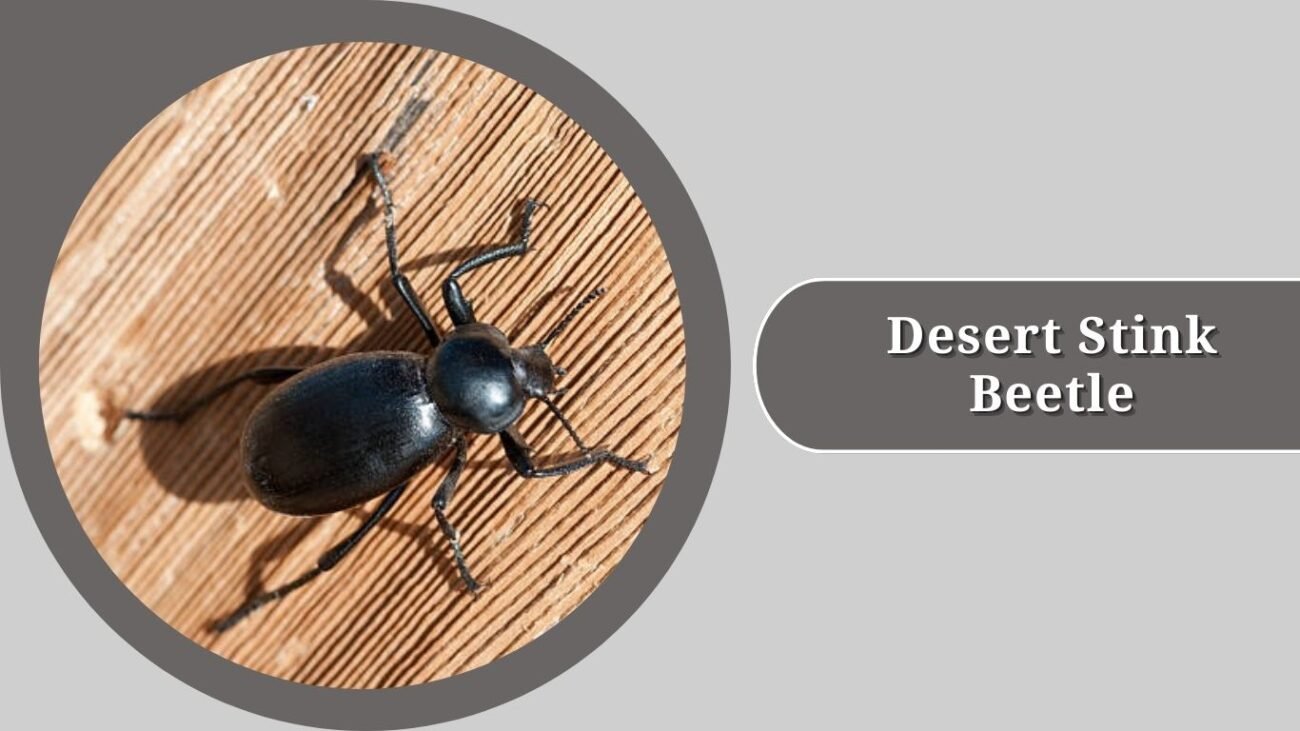
The Desert Stink Beetle (Eleodes spp.) is a well-known group of darkling beetles adapted to arid environments. They are most famous for their defensive posture, where they stand on their head and raise their abdomen to spray a foul-smelling chemical when threatened. This behavior has earned them the nickname “stink beetle” or “head-stander beetle.”
Identification
- Adults typically range from 10–30 mm in length
- Matte black exoskeleton with an elongated oval body
- Long legs adapted for moving quickly across sandy terrain
- Antennae are slender and slightly curved
- Known for their head-standing defensive posture
Habitat
Desert Stink Beetles inhabit arid and semi-arid regions of North America, especially the southwestern United States and northern Mexico. They are often found in deserts, grasslands, and dry scrublands, sheltering under rocks, logs, or burrows during the heat of the day.
Behavior
These beetles are primarily nocturnal, emerging at night to forage. When disturbed, they raise their rear end and release a pungent chemical spray to deter predators. Their slow movement and head-standing defense make them easily recognizable in their natural habitat.
Diet
Desert Stink Beetles are omnivores, feeding on decaying plant material, fungi, seeds, and sometimes small insects. They play an important role in desert ecosystems by recycling organic matter.
4. Blue Death-Feigning Beetle

The Blue Death-Feigning Beetle (Asbolus verrucosus) is a unique darkling beetle admired for its striking blue-gray coloration and unusual defense behavior. It is commonly kept as a pet insect due to its hardy nature, long lifespan, and fascinating habits.
Identification
- Adults measure around 18–21 mm in length
- Distinct powdery blue-gray coating caused by a waxy layer that reduces water loss
- Oval, robust body with bumpy texture on the exoskeleton
- Short, clubbed antennae
- Known for “playing dead” when threatened
Habitat
This species is native to the deserts of the southwestern United States, particularly Arizona and surrounding regions. They thrive in hot, dry environments and survive by conserving moisture through their waxy coating and behavior.
Behavior
When disturbed, Blue Death-Feigning Beetles will roll onto their back or remain completely motionless for extended periods, mimicking death to discourage predators. They are diurnal and can be seen foraging during the day, unlike many other darkling beetles that are nocturnal.
Diet
Their diet consists mainly of decaying plant matter, dry leaves, fruits, and occasionally dead insects. In captivity, they are often fed vegetables, grains, and dried plant material. They are highly resilient and able to survive long periods with minimal food and water.
5. Flour Beetle
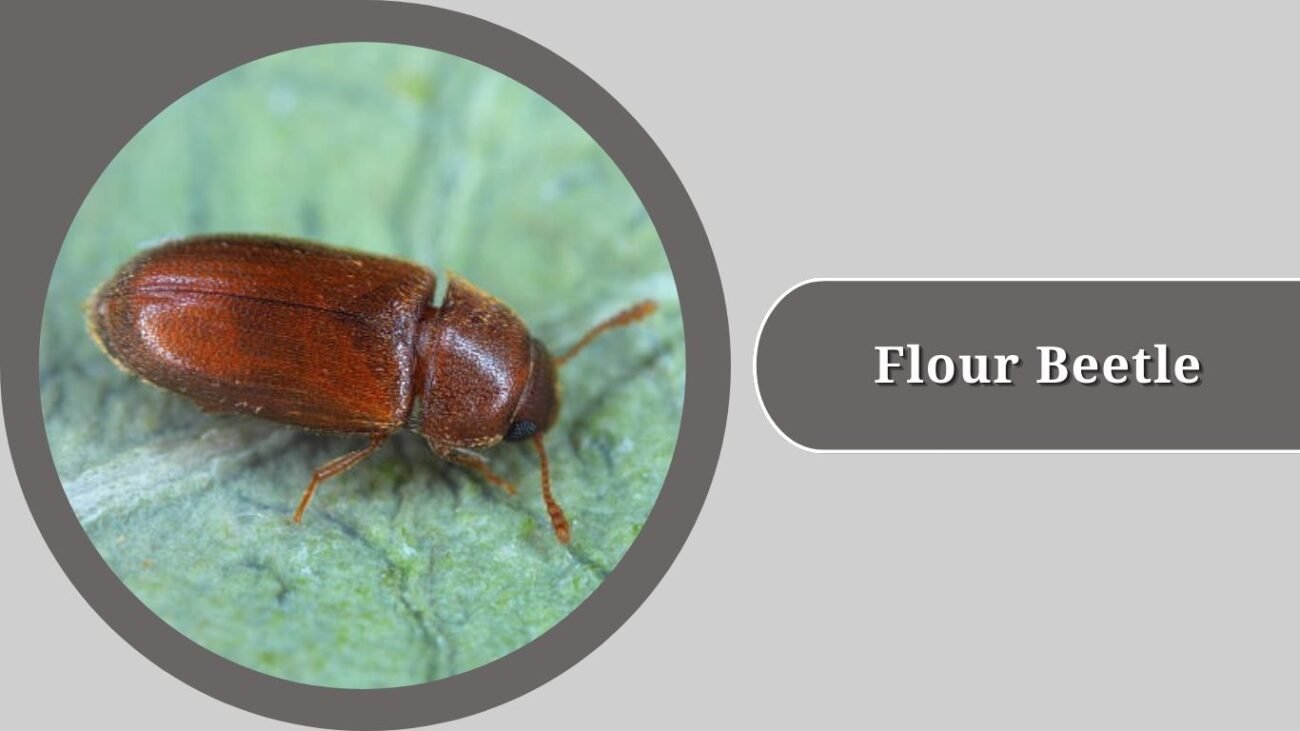
The Flour Beetle (Tribolium castaneum) is one of the most common pest species within the darkling beetle family. It is notorious for infesting stored grains and flour, making it a frequent concern in kitchens, warehouses, and food processing facilities.
Identification
- Adults are small, about 3–4 mm in length
- Reddish-brown, shiny, elongated body
- Antennae gradually thicken into a clubbed shape
- Wing covers (elytra) have fine longitudinal lines
- Larvae are pale yellowish and worm-like, resembling small mealworms
Habitat
Flour Beetles are cosmopolitan and occur worldwide, particularly in warm, humid environments. They thrive in human-associated habitats such as pantries, flour mills, grain storage facilities, and food warehouses.
Behavior
These beetles are strong fliers and can spread quickly between stored food sources. They are active both day and night and can infest products rapidly, contaminating them with waste and shed body parts. Unlike some darkling beetles, they do not feign death or spray chemicals when threatened.
Diet
Flour Beetles feed on milled grain products, including flour, cereals, pasta, rice, spices, and dry pet food. They are scavengers and prefer finely ground or broken grains over whole kernels, making processed food particularly vulnerable to infestation.
6. Confused Flour Beetle
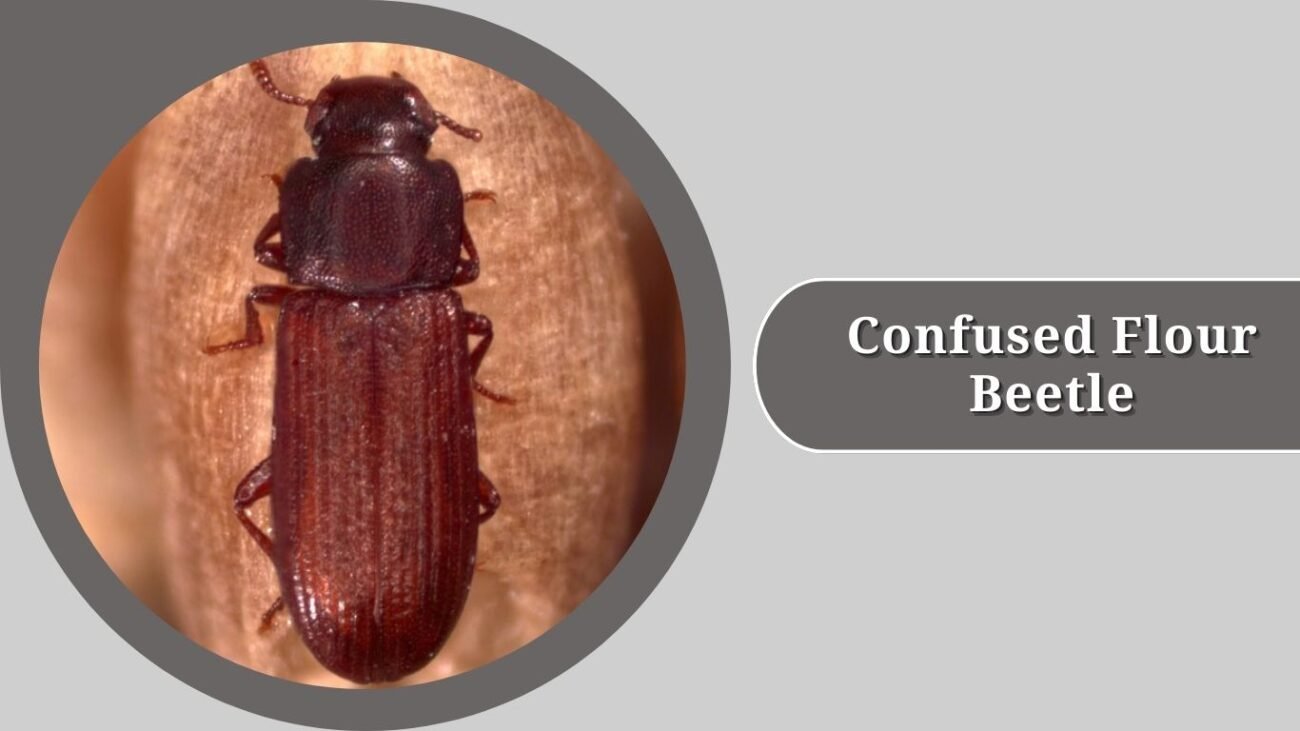
The Confused Flour Beetle (Tribolium confusum) is another widespread darkling beetle and a close relative of the red flour beetle. It is a major pest of stored products and is often difficult to distinguish from its near-identical counterpart. Its name “confused” comes from early entomologists who struggled to differentiate the two species.
Identification
- Adults are 3–4 mm long
- Reddish-brown, flattened, and elongated body
- Antennae gradually enlarge but end in a four-segmented club (unlike T. castaneum)
- Elytra (wing covers) have fine, straight grooves running lengthwise
- Larvae are slender, yellowish-white, and worm-like
Habitat
Confused Flour Beetles are found worldwide, especially in temperate regions. They prefer stored grain products and are commonly found in flour mills, warehouses, grocery stores, and household pantries.
Behavior
They are poor fliers compared to the red flour beetle, which helps in distinguishing them. These beetles are highly resilient, capable of living for years under favorable conditions. They are active and persistent pests, continuously infesting food supplies once established.
Diet
Their diet consists of flour, cereals, rice, dry pet food, spices, nuts, and other processed grain products. They prefer broken or milled grains over whole kernels, contaminating food products with shed skin and fecal matter.
7. False Mealworm Beetle

The False Mealworm Beetle (Alobates pensylvanicus) is a common North American darkling beetle often mistaken for the true mealworm beetle (Tenebrio molitor). Despite the resemblance, it does not produce commercially useful larvae like mealworms, and its role in nature is more ecological than agricultural.
Identification
- Adults measure 12–18 mm in length
- Shiny black, elongated, and somewhat flattened body
- Elytra (wing covers) have fine, shallow grooves
- Antennae are slender and slightly thickened toward the tips
- Larvae are darker and flatter than true mealworms, with less cylindrical bodies
Habitat
False Mealworm Beetles inhabit forests, woodlands, and sometimes human dwellings. They are often found under logs, leaf litter, bark, and in decaying organic matter. Unlike flour beetles, they are not a major pest of stored grain.
Behavior
These beetles are primarily nocturnal, hiding during the day and becoming active at night. They are scavengers that play an important role in breaking down decaying material. When threatened, they may remain motionless or retreat into crevices.
Diet
False Mealworm Beetles feed on rotting wood, decaying vegetation, fungi, and occasionally dead insects. Their larvae are also detritivores, contributing to nutrient recycling in forest ecosystems.
8. Woolly Darkling Beetle
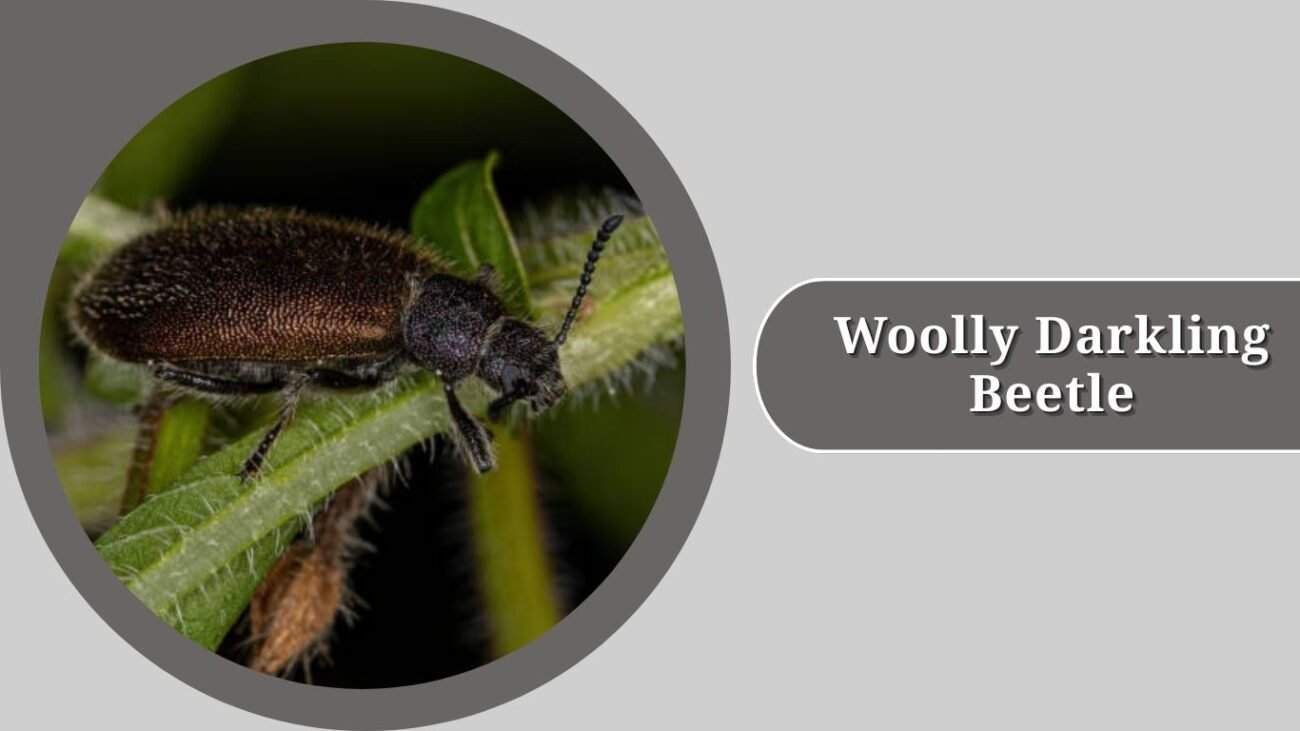
The Woolly Darkling Beetle (Lagria villosa) is a distinctive species of darkling beetle recognized for its fuzzy, wool-like appearance. Unlike many darkling beetles that are shiny or smooth, this one has a hairy body, which helps with camouflage and protection.
Identification
- Adults measure 6–9 mm in length
- Body covered with dense, golden-brown or yellowish hairs, giving a “woolly” look
- Elytra are oval and slightly rounded, not elongated
- Antennae are long and bead-like
- Larvae are elongated, pale, and less commonly observed than adults
Habitat
Woolly Darkling Beetles are commonly found in tropical and subtropical regions, including Africa and South America. They inhabit forests, gardens, and agricultural fields, usually hiding under leaves, logs, or soil during the day.
Behavior
These beetles are relatively slow-moving and rely on their hairy covering for defense, blending into their surroundings. They are most active at night and can sometimes be seen feeding on plants in groups. Unlike stink beetles, they do not use chemical sprays as a defense.
Diet
Adults and larvae feed mainly on decaying plant material, leaves, and occasionally living plant tissues. In some agricultural regions, they may feed on crops, though they are not considered major pests.
9. Black Stink Beetle
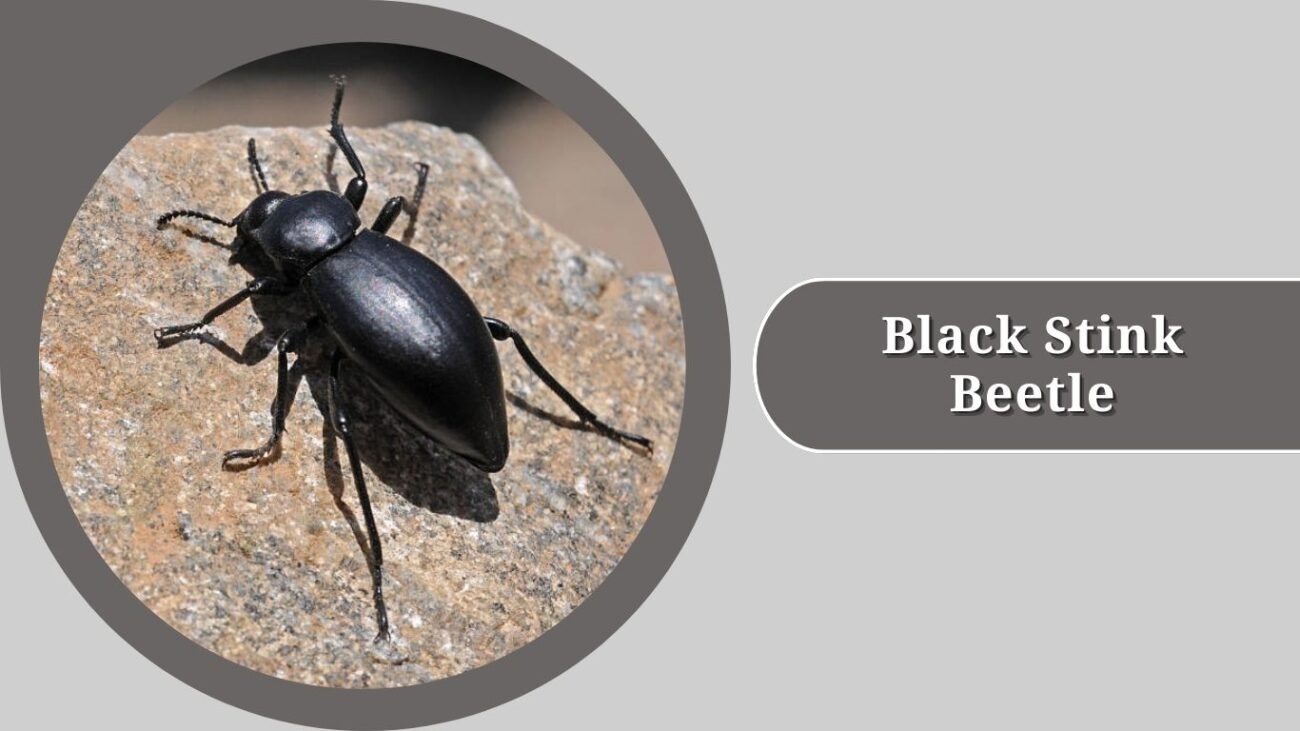
The Black Stink Beetle (Eleodes obscurus) is a well-known darkling beetle in North America, particularly recognized for its chemical defense mechanism. Like other members of the Eleodes genus, it raises its abdomen and releases a foul-smelling secretion when threatened, which deters predators.
Identification
- Adults range from 15–25 mm in length
- Solid black, matte exoskeleton with an elongated oval body
- Long legs adapted for walking across sandy and rocky terrain
- Antennae are slender and slightly curved
- Distinctive defensive “head-standing” posture when disturbed
Habitat
Black Stink Beetles are native to arid and semi-arid regions of North America, especially in the western United States. They are often found in deserts, scrublands, prairies, and grasslands, where they shelter under rocks, logs, or in burrows during the day.
Behavior
These beetles are nocturnal and come out at night to forage. When approached by predators or disturbed, they perform their characteristic defensive stance, often releasing a pungent odor. This makes them unappealing to most predators, including birds and small mammals.
Diet
Black Stink Beetles are omnivorous scavengers, feeding on decaying vegetation, seeds, fungi, and occasionally dead insects. Their foraging helps recycle nutrients in arid ecosystems, playing an important ecological role.
10. Red-Legged Darkling Beetle
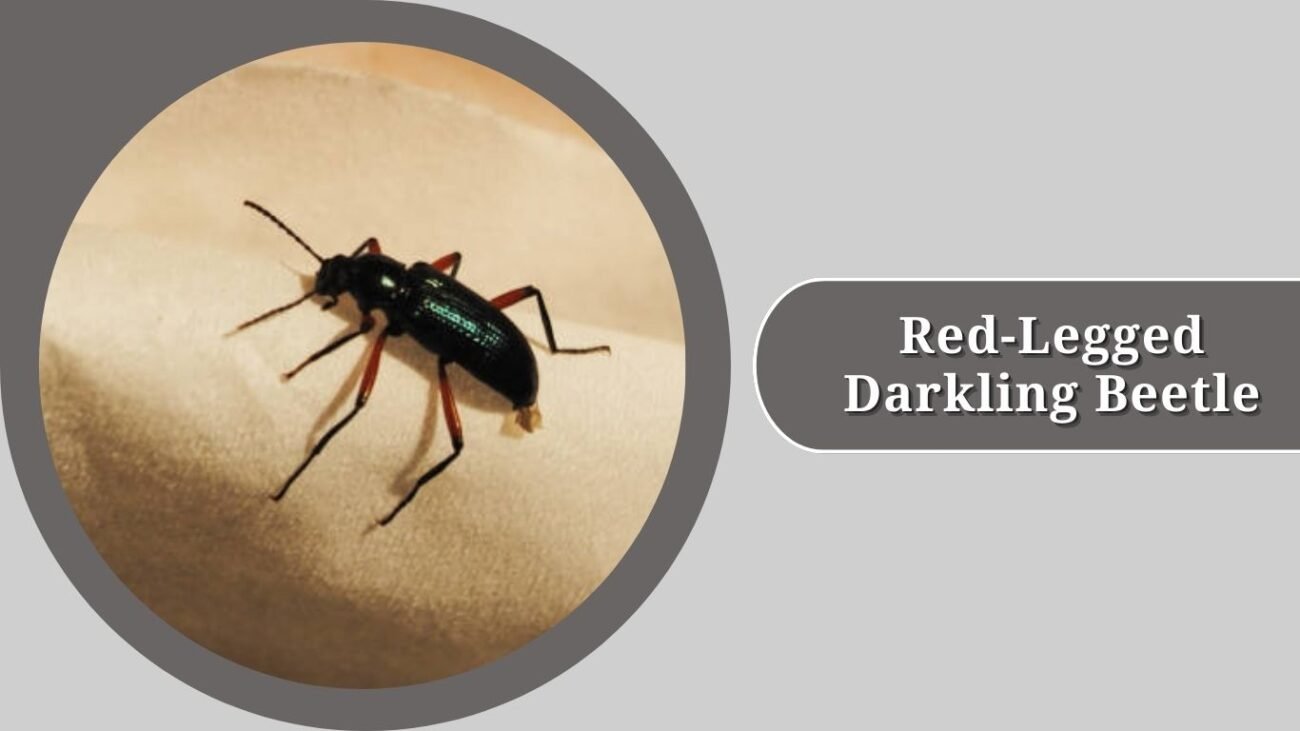
The Red-Legged Darkling Beetle (Alphitobius diaperinus) is a small but significant species of darkling beetle, often associated with poultry farms and stored grain facilities. It is considered both a pest and a potential vector of disease due to its close association with livestock environments.
Identification
- Adults are small, measuring 5–7 mm in length
- Shiny black to dark brown body, oval and slightly flattened
- Legs are reddish-brown, giving the species its common name
- Antennae are short and gradually clubbed at the ends
- Larvae resemble tiny mealworms, yellowish-brown in color
Habitat
This beetle is found worldwide, particularly in poultry houses, feed storage areas, and grain facilities. It thrives in warm, humid environments and is often abundant where large amounts of organic waste and feed are present.
Behavior
Red-Legged Darkling Beetles are active crawlers that move quickly through litter and bedding. In poultry environments, they burrow into insulation, walls, and feed, causing structural and sanitary problems. They are also known to carry bacteria, fungi, and viruses, potentially transmitting them to livestock.
Diet
Both adults and larvae are scavengers, feeding on spilled feed, grain dust, decaying plant material, and poultry droppings. In poultry farms, they may also feed on dead birds or injured chicks, making them a concern for animal welfare and biosecurity.
11. Lesser Mealworm Beetle
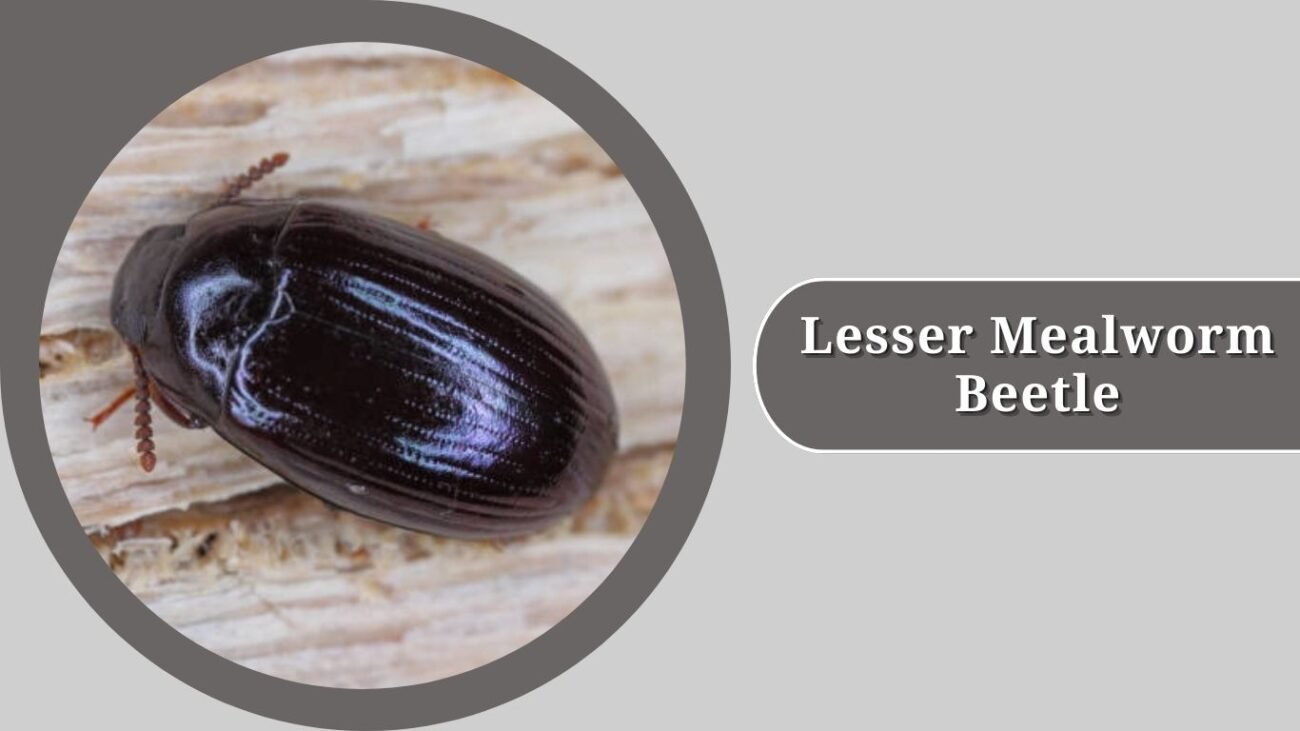
The Lesser Mealworm Beetle (Alphitobius diaperinus) is a darkling beetle closely related to the red-legged darkling beetle, and in fact, the two names are often used interchangeably. It is a significant pest in poultry operations, where it can cause both structural damage and health concerns for birds.
Identification
- Adults measure 5–7 mm in length
- Shiny black to dark brown, oval body
- Legs and antennae are reddish-brown
- Larvae resemble small mealworms but are shorter and darker than true mealworm larvae (Tenebrio molitor)
- Pupae are pale and typically found in litter or feed material
Habitat
This beetle is cosmopolitan, found in poultry houses, barns, feed storage facilities, and other areas rich in organic matter. It thrives in warm, moist conditions and reproduces rapidly in confined livestock environments.
Behavior
Lesser Mealworm Beetles are nocturnal and hide in litter or crevices during the day. They are excellent burrowers, often tunneling into insulation, wood, or styrofoam within poultry houses. Their presence can compromise building materials, and they are known carriers of pathogens harmful to birds.
Diet
Both adults and larvae are scavengers. They consume spilled grain, poultry feed, droppings, and decaying organic matter. In severe infestations, they may feed on injured or weakened birds, compounding their threat in poultry farming.
12. Ironclad Beetle

The Ironclad Beetle (Zopherus nodulosus haldemani) is a remarkable species of darkling beetle known for its extremely tough exoskeleton. Its armor is so durable that it can withstand forces that would normally crush or kill other beetles, making it a subject of scientific research in materials engineering.
Identification
- Adults measure 15–25 mm in length
- Body is elongated, flattened, and heavily ridged
- Exoskeleton is mottled gray, black, or whitish, resembling lichen or bark for camouflage
- Wing covers (elytra) are fused, making the beetle flightless
- Antennae are short and segmented
Habitat
Ironclad Beetles are found in the southwestern United States and northern Mexico, especially in desert and woodland regions. They often hide under tree bark, logs, or rocks, where their cryptic coloration provides excellent camouflage.
Behavior
These beetles are slow-moving and rely on their armor and camouflage for protection. When disturbed, they remain completely motionless, blending in with their surroundings. Their fused elytra provide not only strength but also protection against desiccation in dry habitats.
Diet
Ironclad Beetles are primarily detritivores, feeding on fungi, lichens, and decaying plant matter. Their feeding helps recycle nutrients in desert and woodland ecosystems.
13. Diabolical Ironclad Beetle
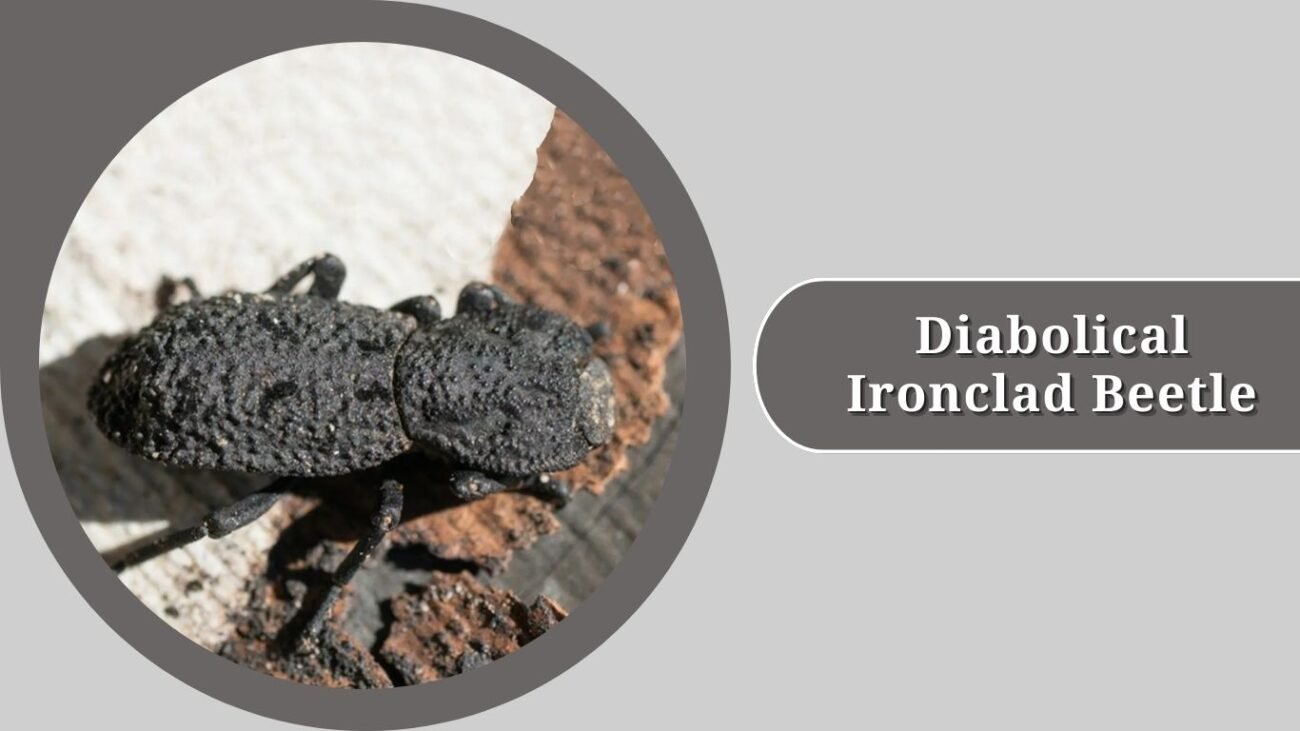
The Diabolical Ironclad Beetle (Phloeodes diabolicus) is famous for being one of the toughest beetles in the world. Its exoskeleton is so strong that it can survive forces equivalent to being run over by a car. This durability has made it a subject of intense study in biomechanics and engineering.
Identification
- Adults are about 15–22 mm long
- Flattened, oval body with fused elytra (wing covers)
- Exoskeleton is dark gray to black, rough, and textured like tree bark
- Completely flightless due to fused wing cases
- Antennae are short, bead-like, and adapted for crawling in crevices
Habitat
Diabolical Ironclad Beetles inhabit dry, forested areas in the southwestern United States and northern Mexico. They are typically found beneath tree bark, logs, and rocks, where their bark-like appearance provides excellent camouflage.
Behavior
These beetles rely on armor and mimicry rather than speed or chemical defenses. When threatened, they become completely motionless, blending seamlessly with their environment. Their exoskeleton is built from interlocking layers of chitin, providing unmatched durability.
Diet
Diabolical Ironclad Beetles feed mainly on fungi, lichen, and decomposing organic matter. Their detritivorous lifestyle makes them important recyclers in their ecosystems.
14. Tok-Tok Beetle

The Tok-Tok Beetle (Psammodes spp.) is a darkling beetle native to southern Africa, named for the distinctive tapping or “tok-tok” sound it makes by striking its abdomen against the ground. This behavior is primarily used for communication, especially during mating.
Identification
- Adults measure between 15–25 mm, depending on the species
- Oval, robust, black or dark brown body
- Hard, ridged exoskeleton adapted to arid environments
- Elytra (wing covers) are fused, making them flightless
- Antennae are short and slightly thickened at the ends
Habitat
Tok-Tok Beetles are found in arid and semi-arid regions of southern Africa, including deserts, scrublands, and dry savannas. They are often active on the ground, particularly in sandy or stony areas.
Behavior
Their name comes from the rhythmic tapping sound produced by males to attract females. The tapping is achieved by lifting and dropping the abdomen against the substrate. They are also nocturnal, hiding in burrows or under rocks during the heat of the day and emerging at night to forage.
Diet
Tok-Tok Beetles are scavengers and omnivores, feeding on seeds, decaying plant material, and sometimes small insects. Their role as nutrient recyclers is crucial in the dry ecosystems they inhabit.
15. Namib Desert Beetle
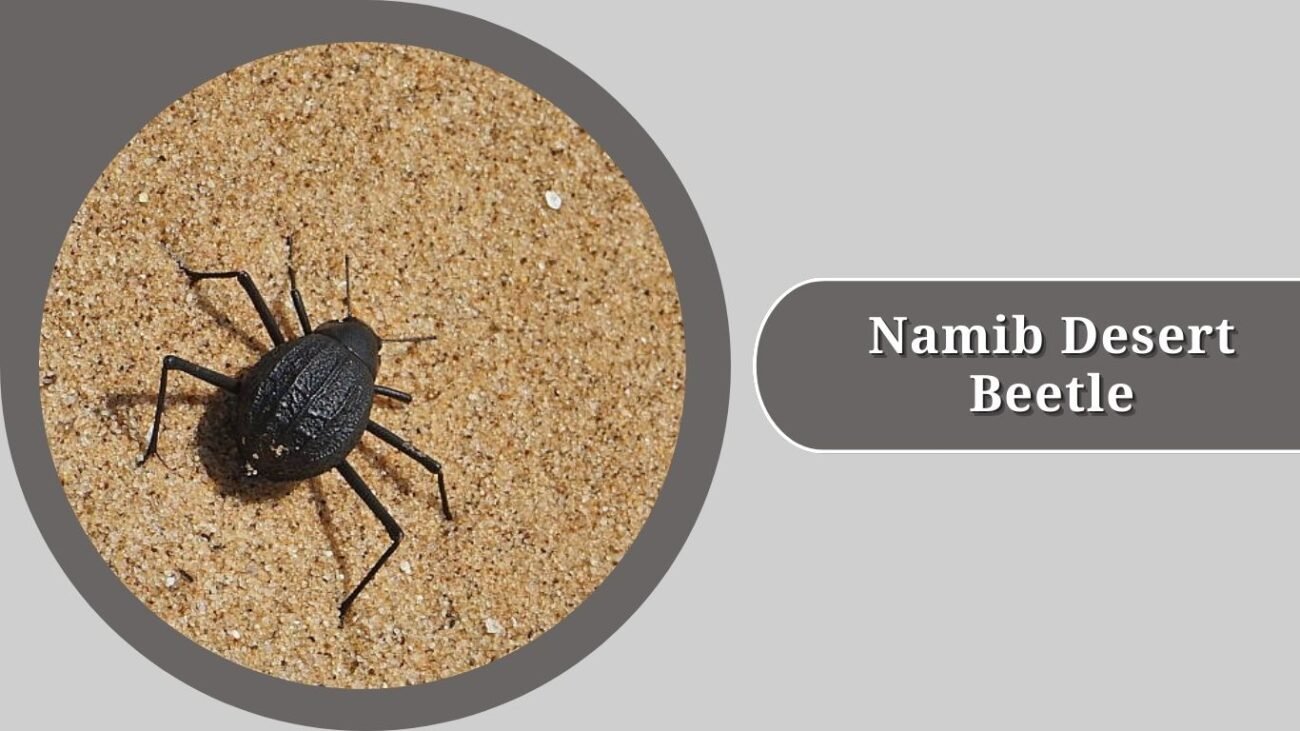
The Namib Desert Beetle (Onymacris unguicularis) is a remarkable darkling beetle famous for its ability to collect water from fog in one of the driest deserts on Earth. Its unique adaptations allow it to survive in extreme arid conditions where very few animals can thrive.
Identification
- Adults measure about 14–20 mm in length
- Body is black with smooth, shiny elytra (wing covers)
- Long, spindly legs adapted for moving quickly over hot desert sand
- Elytra are fused, making the beetle flightless
- Known for its characteristic “fog-basking” stance on sand dunes
Habitat
This species is native to the Namib Desert in southwestern Africa, one of the oldest and driest deserts in the world. It is found primarily on sand dunes, where fog from the Atlantic Ocean provides essential moisture.
Behavior
The Namib Desert Beetle exhibits a unique fog-harvesting behavior: it climbs to the crest of a dune, raises its body, and angles its back to collect water droplets from fog. The droplets condense on its elytra and roll down to its mouth. This adaptation allows it to survive with minimal liquid water.
Diet
Namib Desert Beetles are omnivorous scavengers. They feed on windblown organic debris, seeds, and decaying plant material carried into the desert by winds. Occasionally, they consume small insects.
16. Darkling Ground Beetle

The Darkling Ground Beetle (Blaps mortisaga) is a large and long-lived species of darkling beetle, often found in Europe. It is sometimes kept in captivity due to its hardiness and unusual longevity compared to most beetles.
Identification
- Adults range from 20–30 mm in length
- Shiny black, elongated body with parallel-sided wing covers
- Elytra (wing covers) are fused, making the beetle flightless
- Antennae are long, segmented, and bead-like
- Larvae are elongated, pale to yellowish-brown, resembling mealworms but larger
Habitat
Darkling Ground Beetles are common in Europe, especially in moist and shaded habitats such as under logs, stones, and leaf litter. They also occur in barns, stables, and cellars, where they find shelter and food.
Behavior
This beetle is nocturnal, emerging at night to forage while hiding during the day. It has a long lifespan for a beetle, often living up to 4–5 years in favorable conditions. Instead of chemical defenses, it relies on its tough exoskeleton and secretive habits to avoid predators.
Diet
The species is primarily a scavenger, feeding on decaying plant matter, fungi, and detritus. In captivity, it can be sustained on vegetables, grains, and organic waste. Its feeding activity contributes to nutrient recycling in its ecosystem.
17. White-Spotted Darkling Beetle
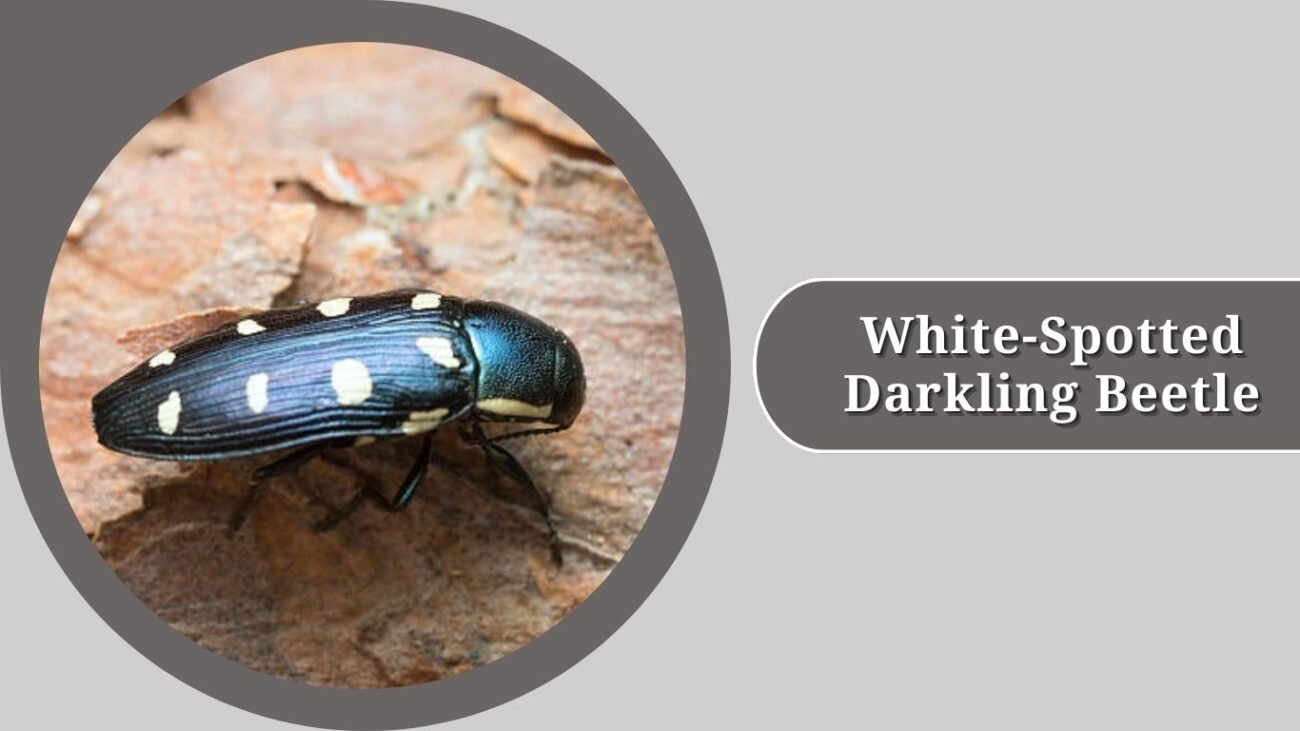
The White-Spotted Darkling Beetle (Tenebrio opacus) is a lesser-known species of darkling beetle, recognized for the pale or whitish markings that contrast against its otherwise dark body. These markings make it stand out among many uniformly black or brown darkling beetles.
Identification
- Adults measure 10–15 mm in length
- Dark brown to black, elongated oval body
- Distinct pale or whitish spots on the wing covers (elytra)
- Antennae are moderately long and bead-like
- Larvae are worm-like, resembling small mealworms
Habitat
This species inhabits forests, grasslands, and agricultural areas where decaying organic material is abundant. It is often found under logs, stones, and leaf litter, as well as in areas with stored grain or plant debris.
Behavior
White-Spotted Darkling Beetles are nocturnal and prefer to remain hidden during the day. They are slow-moving and rely on camouflage rather than chemical defense. Adults are long-lived compared to many beetle species and may persist for several months.
Diet
Both adults and larvae are detritivores, feeding on decaying plant matter, fungi, and occasionally stored grain products. Their scavenging behavior contributes to the breakdown and recycling of organic material in their ecosystems.