Dung beetles are fascinating insects that play a vital role in maintaining healthy ecosystems. By feeding on and recycling animal waste, they improve soil fertility, reduce parasites, and support plant growth. Found across the globe, each species shows unique adaptations in lifestyle, behavior, and feeding strategies. This guide explores 13 distinct types of dung beetles, detailing their identification, habitats, diets, behaviors, and life cycles.
1. Rainbow Scarab
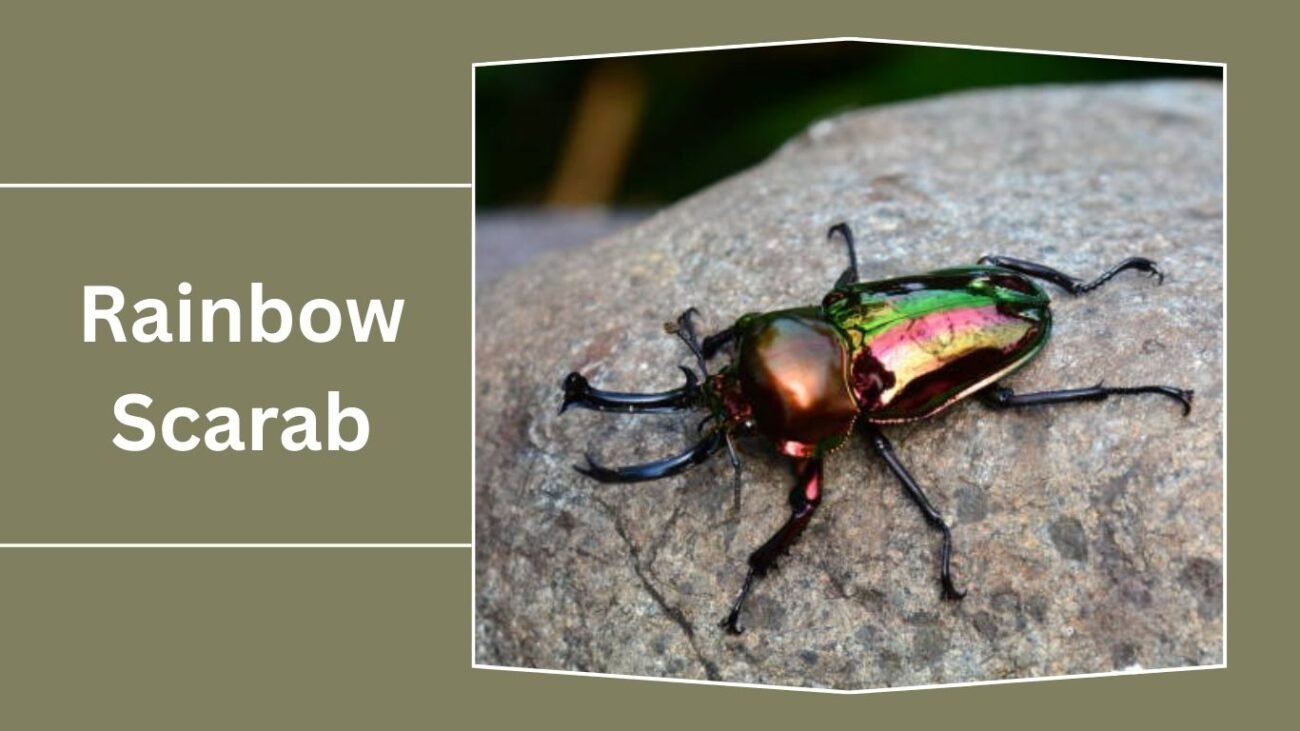
The Rainbow Scarab (Phanaeus vindex) is a strikingly colorful dung beetle native to North America. Known for its metallic green, gold, and copper hues, it plays a vital role in recycling nutrients by burying animal droppings. Its activity benefits soil health and reduces parasites in grazing lands.
Identification
- Medium-sized beetle, typically 12–22 mm long
- Shiny, metallic coloration (green, blue, gold, or copper)
- Males often have a prominent horn on the head
- Females lack a horn or have a much smaller one
- Strong forelegs adapted for digging
Habitat
Rainbow Scarabs are commonly found in grasslands, pastures, farmlands, and open woodlands. They thrive in areas where livestock or wild mammals provide a steady supply of dung.
Behavior
These beetles are tunnelers. They dig burrows beneath dung piles, burying portions of the waste underground. This behavior helps with soil aeration and fertility. Males and females often work together, especially during nest preparation.
Diet
Rainbow Scarabs feed primarily on herbivore dung, particularly from cattle, horses, and deer. They roll or transport dung into their burrows, which serves as both food for adults and nourishment for their larvae.
Lifecycle
The life cycle begins when a female lays eggs inside dung buried in an underground chamber. The larvae feed on the dung until pupation. After metamorphosis, new adults emerge from the soil. Most species, including Rainbow Scarabs, complete their lifecycle within a year.
2. Sacred Scarab
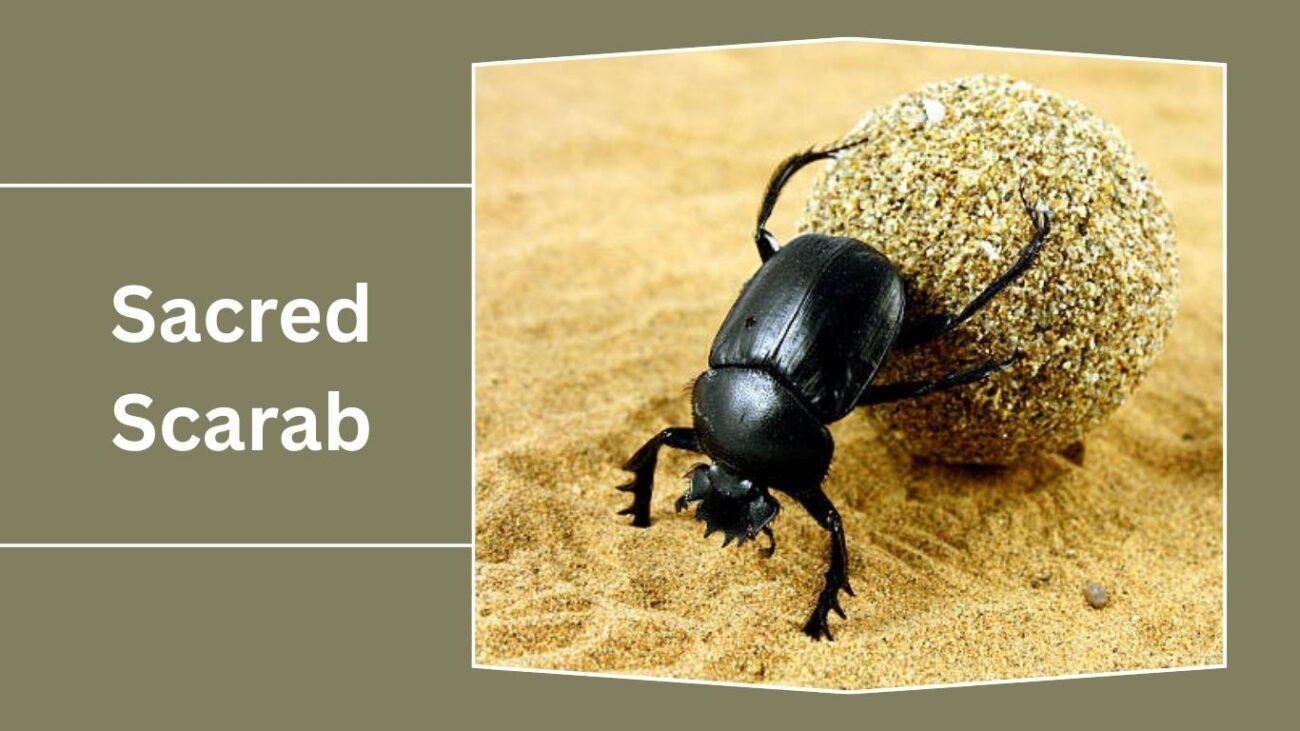
The Sacred Scarab (Scarabaeus sacer) is one of the most iconic dung beetles, revered by the ancient Egyptians as a symbol of rebirth and the sun. This species is famous for rolling dung balls across the ground, often much larger than its own body size.
Identification
- Medium to large beetle, usually 25–37 mm long
- Matte black or dark brown body
- Strong, spiny forelegs specialized for shaping and rolling dung balls
- Smooth, rounded back with little to no metallic shine
- Males and females look very similar in appearance
Habitat
Sacred Scarabs are native to the Mediterranean region, including North Africa and parts of southern Europe. They inhabit deserts, grasslands, and farmlands, thriving in open areas where animal dung is readily available.
Behavior
This species is a true “roller.” Sacred Scarabs shape balls of dung and roll them away from the source to bury underground. These balls serve as both a food supply and a brood chamber for eggs. Their ball-rolling behavior is highly cooperative and sometimes competitive, as individuals may attempt to steal each other’s dung balls.
Diet
Their diet consists almost entirely of herbivore dung, particularly from cattle, horses, and camels. They form and bury dung balls to consume gradually, ensuring a steady supply of nutrition.
Lifecycle
The female lays a single egg inside a buried dung ball. Once the egg hatches, the larva feeds on the dung until it pupates. After metamorphosis, an adult Sacred Scarab emerges from the soil. The full lifecycle typically spans a few months, depending on climate and food availability.
3. Minotaur Beetle
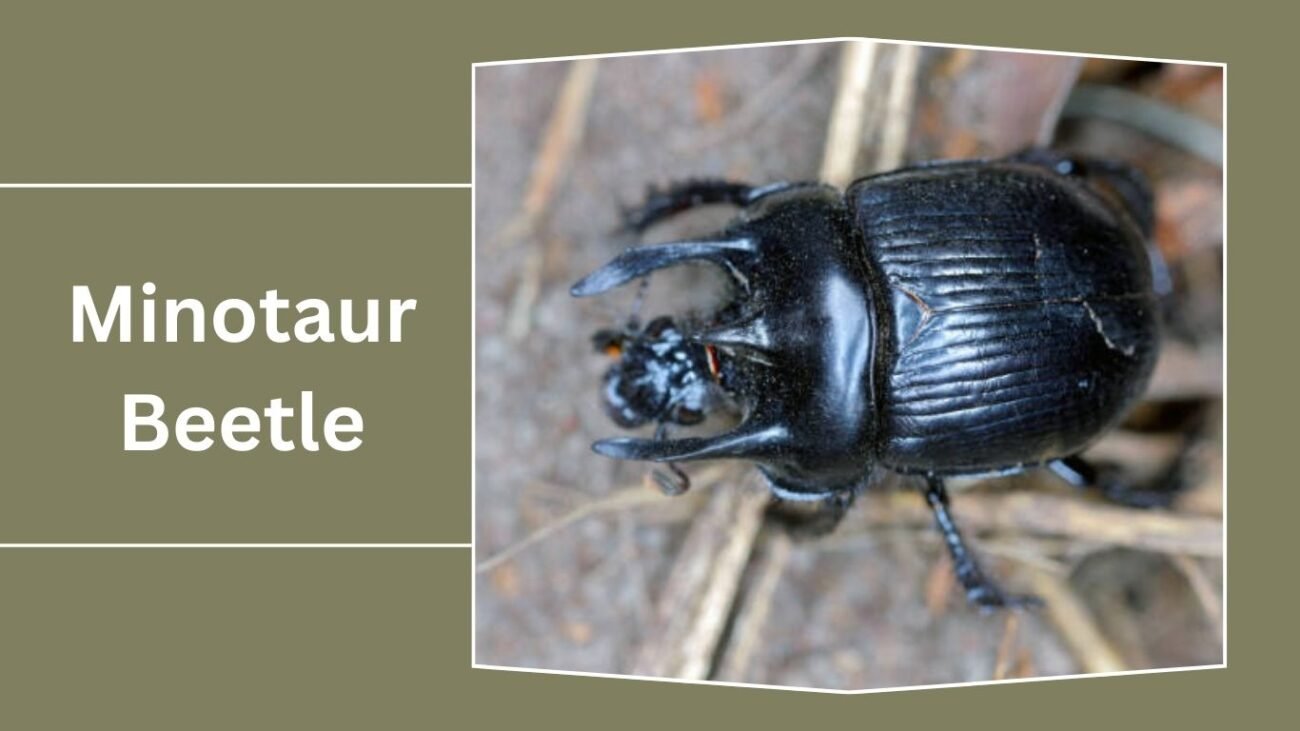
The Minotaur Beetle (Typhaeus typhoeus) is a powerful tunneling dung beetle found mainly in Europe. It is known for its impressive strength and its ability to dig deep burrows, which it uses to store dung as food and for breeding.
Identification
- Large beetle, about 20–25 mm long
- Shiny black body with a robust, rounded shape
- Males have three prominent forward-pointing horns on the thorax
- Females have much smaller or reduced horns
- Strong, spurred legs designed for digging
Habitat
Minotaur Beetles prefer sandy soils in heathlands, grasslands, and open woodland areas. They are especially common in regions with rabbit populations, as rabbit droppings are one of their preferred dung sources.
Behavior
Unlike rollers, Minotaur Beetles are tunnelers. They dig long vertical burrows that may extend up to 1 meter deep. Dung is carried underground and stored in side chambers, where it serves as food and a breeding resource. They are solitary and highly adapted to underground activity.
Diet
Their diet consists mainly of small, dry droppings from rabbits, deer, and sheep. Instead of forming balls, they transport the pellets directly into their burrows. This behavior helps enrich and aerate the soil.
Lifecycle
The female lays eggs in chambers stocked with dung. The larvae hatch and consume the stored droppings as they develop. After pupation, new adults emerge from the soil, ready to continue the cycle. The lifecycle usually takes about a year, depending on climate and dung availability.
4. Horned Dung Beetle

The Horned Dung Beetle (Copris lunaris) is a strong tunneling species found across Europe and parts of Asia. It is easily recognized by the large horn on the male’s head, which it uses in combat and for digging. This beetle plays an important role in nutrient recycling and soil health.
Identification
- Medium-sized beetle, about 12–20 mm long
- Shiny black or dark brown body
- Males have a prominent forward-curving horn on the head
- Females have either a smaller horn or none at all
- Compact, rounded body with powerful digging legs
Habitat
Horned Dung Beetles prefer open landscapes such as meadows, pastures, and farmland. They thrive in areas with grazing livestock, particularly cattle and horses, which provide a steady supply of fresh dung.
Behavior
This species is a tunneler. Males and females often work together to dig burrows beneath dung piles. They transport portions of dung underground, forming brood chambers for their young. Males may also use their horns to fight rivals during mating competition.
Diet
Horned Dung Beetles feed almost exclusively on the dung of large herbivores like cattle, horses, and deer. Both adults and larvae consume the buried dung, which is stored in underground chambers.
Lifecycle
The female lays eggs in dung provisions underground. Each larva develops inside its own chamber, feeding on the dung until pupation. After several weeks to months, the adult beetle emerges. In temperate climates, they typically have one generation per year.
5. Tumblebug

The Tumblebug (Canthon spp.) is a well-known dung beetle, often recognized for its behavior of rolling dung balls across the ground. These beetles are native to the Americas and play a crucial role in nutrient recycling and soil improvement.
Identification
- Small to medium-sized beetle, usually 10–20 mm long
- Shiny body, often black, metallic green, or bronze
- Rounded shape with smooth wing covers
- Strong forelegs for digging and shaping dung balls
- Males and females look similar in appearance
Habitat
Tumblebugs are found throughout North and South America, particularly in grasslands, pastures, and farmlands. They prefer open areas with abundant herbivore dung, especially from cattle and horses.
Behavior
True to their name, Tumblebugs roll balls of dung away from the source to bury them underground. These dung balls are used for both food storage and reproduction. Mated pairs often cooperate, with one beetle rolling while the other helps guide the ball.
Diet
Their diet consists primarily of herbivore dung. The beetles feed on the nutrient-rich material inside the dung balls, while larvae consume the dung stored in brood balls underground.
Lifecycle
The female lays an egg inside a buried dung ball. The larva develops by consuming the dung within the chamber, then pupates. After several weeks to months, a new adult emerges from the soil, ready to repeat the cycle. In warmer climates, multiple generations can occur each year.
6. Elephant Dung Beetle
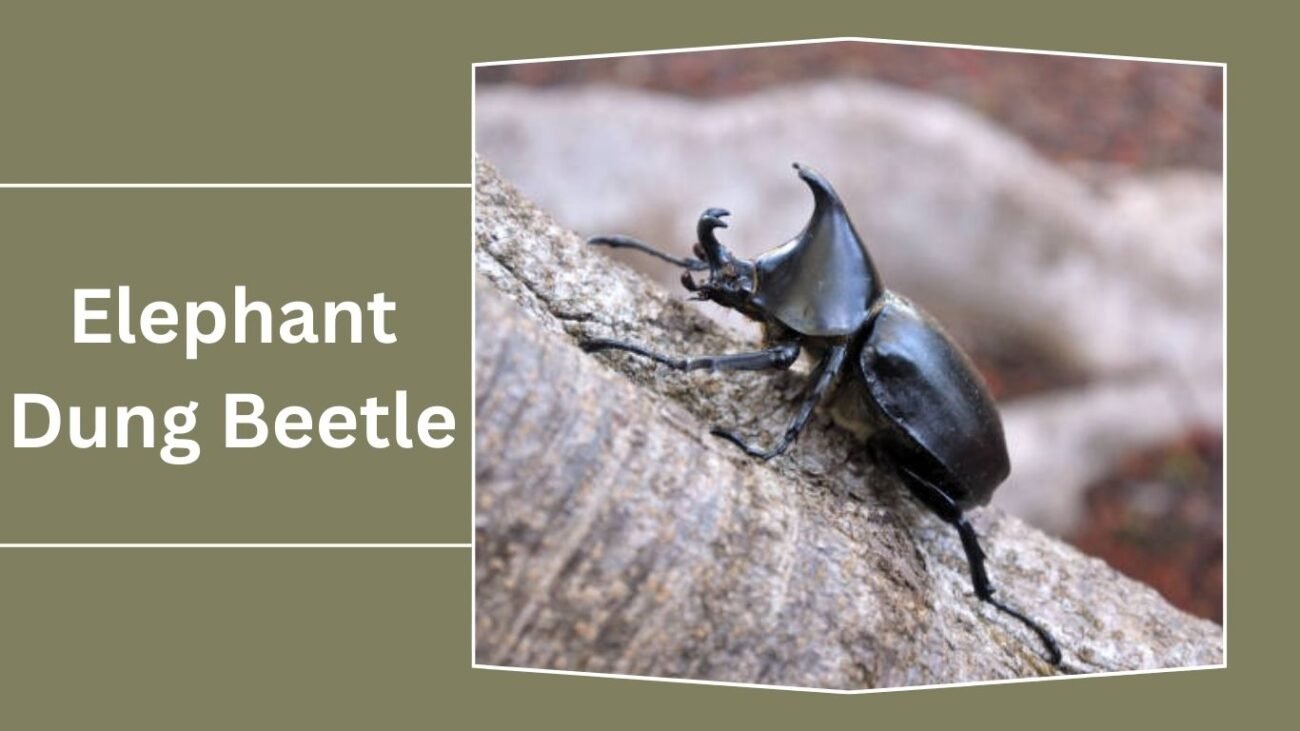
The Elephant Dung Beetle (Heliocopris spp.) is one of the largest dung beetles in the world, specially adapted to feed on and process the massive droppings of elephants and other large herbivores. These beetles are native to Africa and play a key role in maintaining savanna ecosystems.
Identification
- Very large beetle, ranging from 25–60 mm in length
- Heavy, robust body, usually dark brown or black
- Rounded shape with smooth or slightly ridged wing covers
- Strong forelegs designed for digging and shaping dung
- Males may have small horns or ridges on the head
Habitat
Elephant Dung Beetles are commonly found in African savannas, grasslands, and forests where elephants, buffalo, and rhinos roam. They thrive in warm climates with abundant large herbivore populations.
Behavior
These beetles are tunnelers and ball-rollers. They shape large balls of elephant dung and bury them underground. Their activity helps recycle massive quantities of waste, improving soil fertility and seed dispersal. Males and females often work together to move and bury dung balls.
Diet
They feed primarily on elephant dung but will also utilize droppings from other large herbivores such as buffalo, rhinos, and hippos. Both adults and larvae depend on the stored dung for nourishment.
Lifecycle
The female lays a single egg in a specially prepared dung ball buried underground. The larva consumes the dung until it pupates. After metamorphosis, the adult beetle emerges from the soil. Due to their size and food supply, development may take several months to complete.
7. Heliocopris Beetle

The Heliocopris Beetle (Heliocopris hamadryas and related species) is among the largest dung beetles in the world. Belonging to the same genus as the Elephant Dung Beetle, it is renowned for its massive size and ability to process large amounts of animal waste, playing an essential role in nutrient recycling.
Identification
- Very large beetle, often 40–60 mm long
- Heavy, domed body, usually black or very dark brown
- Smooth, shiny wing covers
- Strong forelegs adapted for digging and dung manipulation
- Some males have small horns or ridges used in competition
Habitat
Heliocopris Beetles are primarily found in sub-Saharan Africa, particularly in savannas, grasslands, and open forests. They thrive in regions where elephants, buffalo, and cattle provide abundant dung resources.
Behavior
These beetles are mostly tunnelers but may also roll dung. They are capable of moving large quantities of waste underground, creating brood chambers stocked with dung. Their activity not only cleans the surface environment but also enriches the soil.
Diet
They feed on the dung of large herbivores, especially elephants, buffalo, and cattle. Adults consume soft portions of the dung, while larvae rely entirely on the provisions stored in brood chambers.
Lifecycle
Females prepare large brood balls of dung underground, each containing a single egg. The larva hatches and feeds on the dung as it grows, eventually pupating inside the chamber. Adult beetles emerge after several months, with the full lifecycle often taking close to a year.
8. Onthophagus Taurus
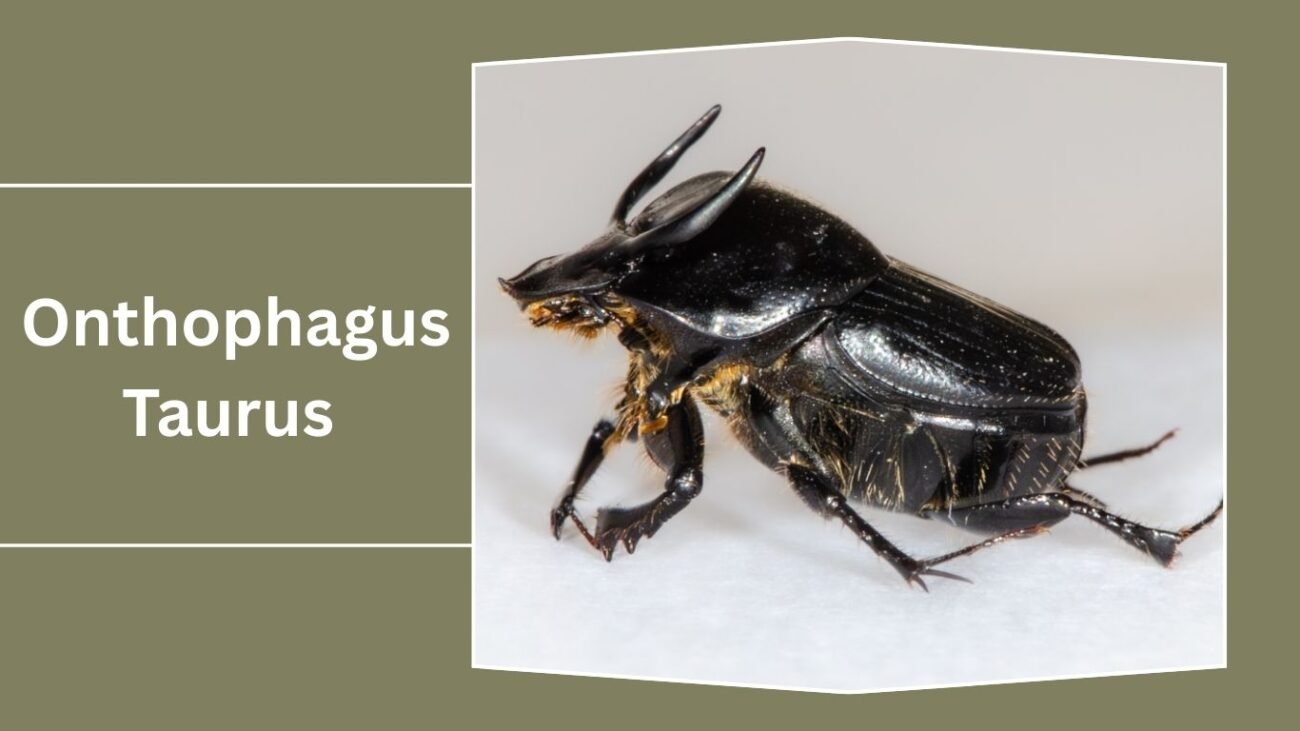
The Onthophagus Taurus, also called the taurus dung beetle, is a small but remarkably strong species. Despite its size, it has been recorded as one of the strongest animals on earth relative to body weight, capable of moving over 1,000 times its own mass.
Identification
- Small beetle, typically 6–12 mm long
- Dark brown to black body, often with a slight metallic sheen
- Males have prominent curved horns on the head
- Females lack horns or have only very small ones
- Compact, rounded body with strong legs for digging
Habitat
This species is found in southern Europe, North Africa, and has been introduced to other regions, including North America and Australia, for pasture management. It thrives in open fields, grasslands, and farmlands where grazing animals provide dung.
Behavior
Onthophagus Taurus is primarily a tunneler. Males and females dig burrows beneath dung and bury portions underground. Horned males often fight for access to females, while smaller “sneaker” males use alternative strategies to mate.
Diet
They feed on the dung of herbivores, particularly cattle, sheep, and horses. Adults consume liquid portions of dung, while larvae rely on buried provisions stored in brood chambers.
Lifecycle
The female lays eggs in dung buried underground. Each larva develops inside its own dung supply, feeding until pupation. After metamorphosis, adults emerge from the soil. Depending on the climate, several generations may occur per year.
9. Onthophagus Gazella
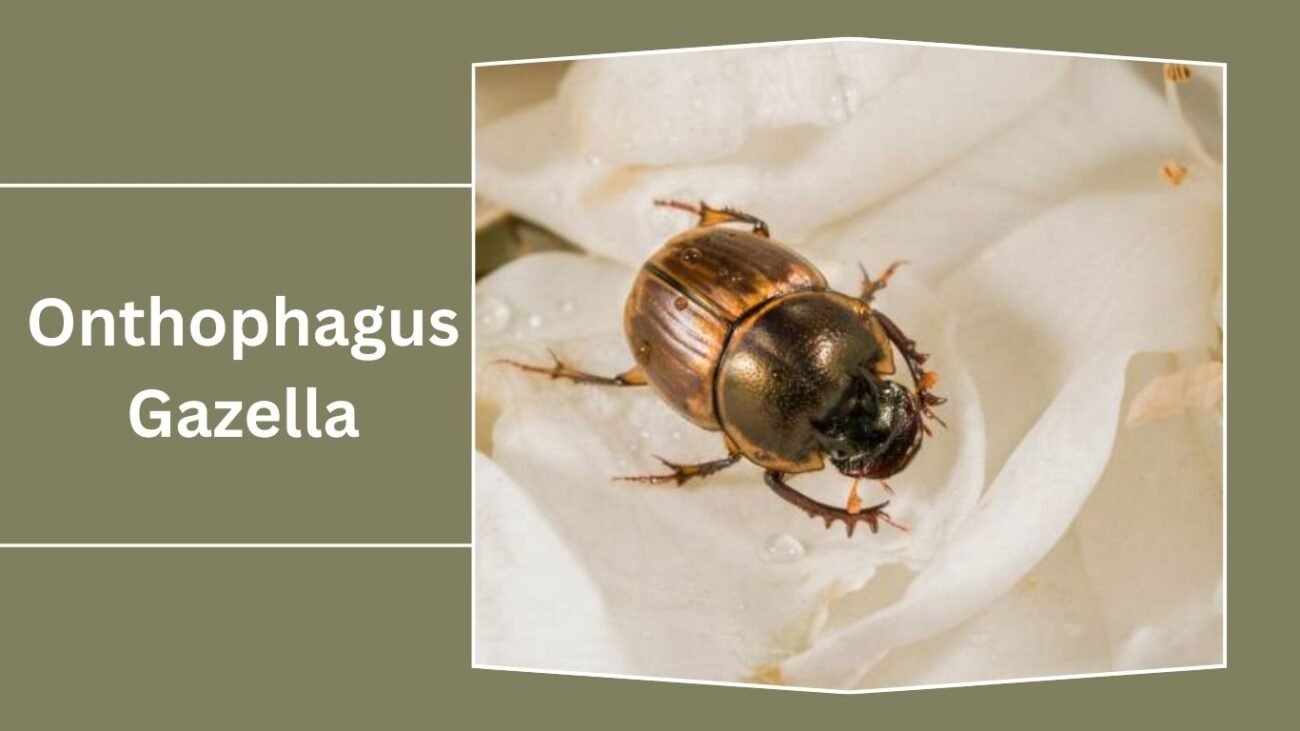
The Onthophagus Gazella, also known as the gazelle dung beetle, is a small but highly efficient tunneler. Originally native to Africa, it has been widely introduced to other regions to improve pasture quality by reducing surface dung and recycling nutrients.
Identification
- Small beetle, about 8–12 mm long
- Shiny dark brown or black body, sometimes with reddish tones
- Compact and rounded in shape
- Strong forelegs adapted for digging
- Males may have short horns, while females typically do not
Habitat
Onthophagus Gazella is found in Africa, Asia, and has been introduced to Australia, North America, and South America for livestock dung management. It prefers open pastures, savannas, and farmland with abundant herbivore dung.
Behavior
This species is a tunneler. Adults dig burrows directly beneath dung pats and bury portions underground. This behavior reduces fly populations, improves soil aeration, and enhances nutrient cycling. They are also highly active and can process dung quickly after it is deposited.
Diet
The beetles feed primarily on the dung of cattle, horses, and other grazing animals. Adults consume liquid portions, while larvae develop in underground chambers stocked with dung provisions.
Lifecycle
Females lay eggs in dung buried in underground tunnels. Each egg is provisioned with enough dung for the larva to feed and grow. After pupation, adults emerge from the soil. In warm climates, multiple generations may occur each year, allowing rapid population growth.
10. Aphodius Beetle
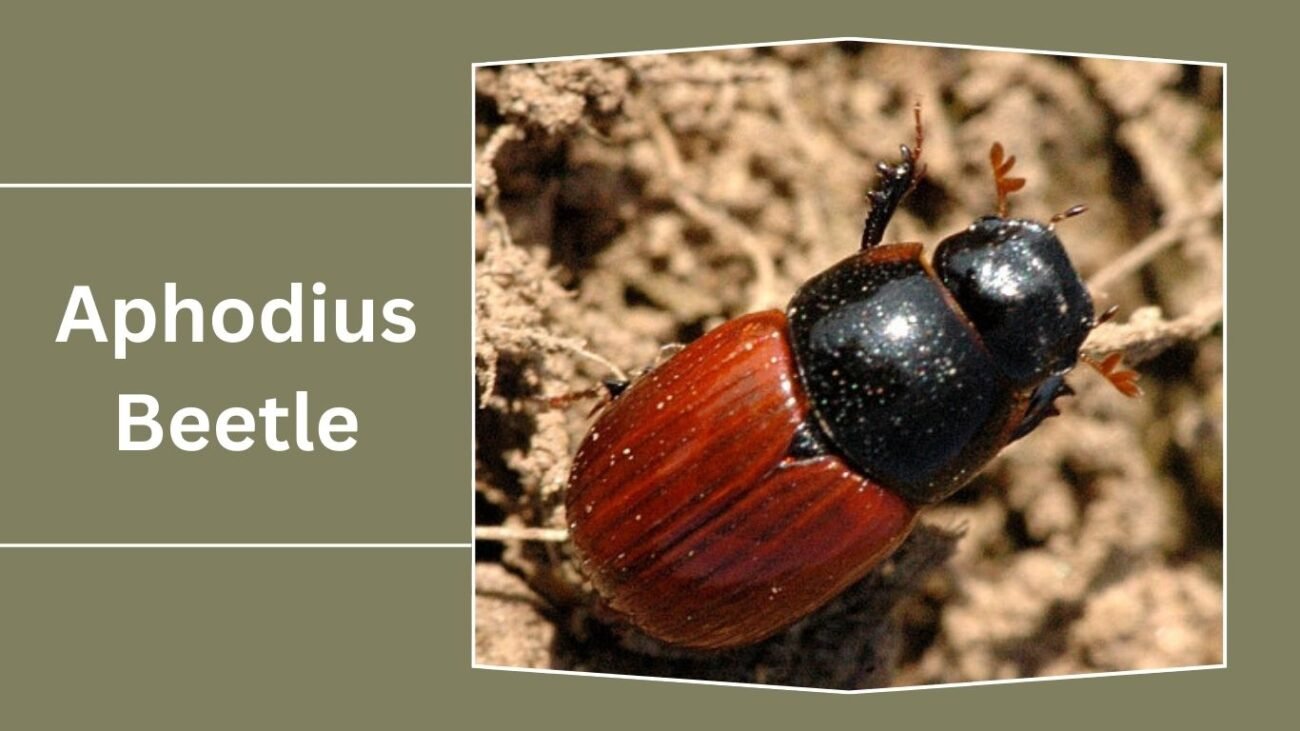
The Aphodius Beetle (Aphodius spp.) represents a large group of small dung beetles widely distributed across the world. Unlike many ball-rolling or tunneling species, most Aphodius beetles live directly inside dung, playing an essential role in breaking it down quickly.
Identification
- Small beetles, usually 4–10 mm long
- Cylindrical, elongated body shape
- Colors range from dull brown to shiny black, sometimes with yellow or reddish markings
- Smooth wing covers with fine ridges
- Males and females appear very similar
Habitat
Aphodius Beetles inhabit temperate regions of Europe, Asia, and North America. They thrive in meadows, pastures, and farmland, often in cooler climates compared to other dung beetles. They are commonly found in cattle, horse, and sheep dung.
Behavior
These beetles are dwellers rather than rollers or tunnelers. Adults live and feed directly inside fresh dung pats. While less dramatic than ball-rolling species, their activity is crucial in quickly breaking down and drying surface dung, which reduces pest breeding sites.
Diet
They feed on herbivore dung, mainly from cattle, horses, and sheep. Adults consume liquid material, while larvae feed on the solid matter inside the dung pat itself.
Lifecycle
The female lays eggs directly within fresh dung. Larvae grow and develop inside the pat, feeding until they pupate. Once development is complete, new adults emerge. The lifecycle is short, and multiple generations can occur within a single season.
11. Copris Beetle
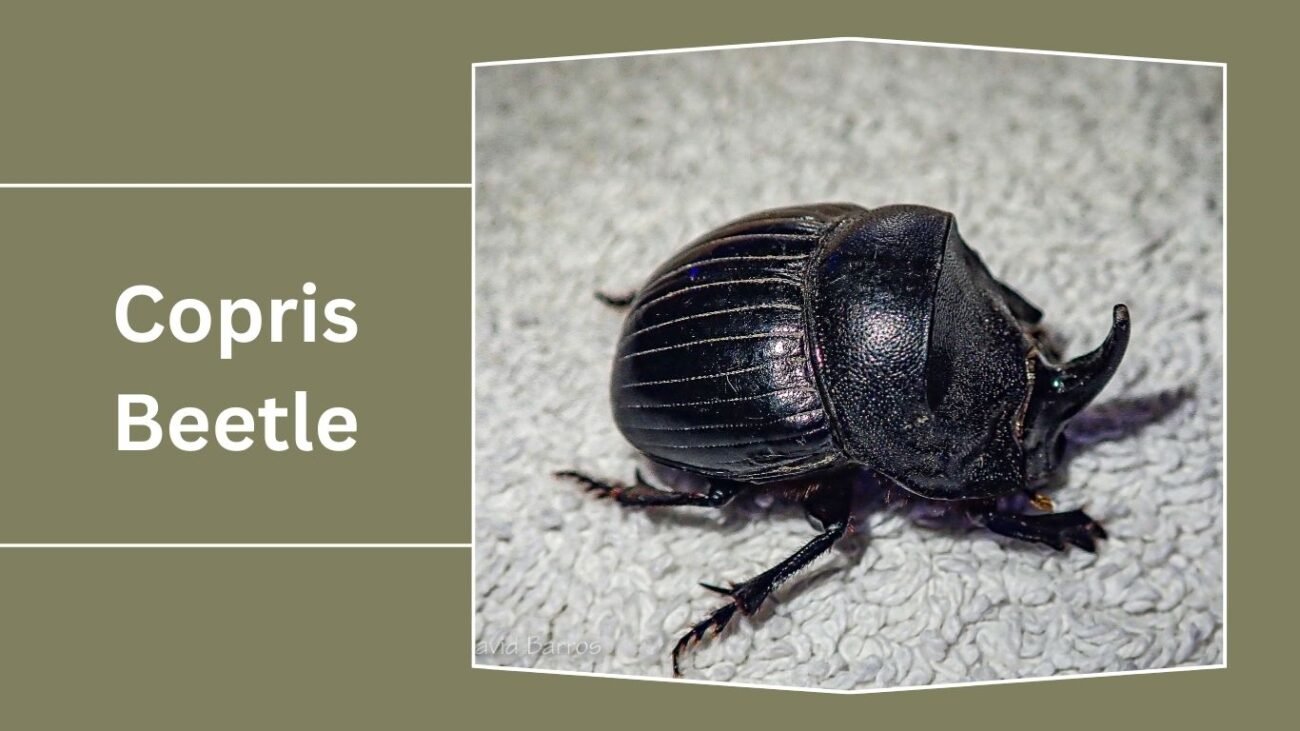
The Copris Beetle (Copris spp.) is a well-known tunneling dung beetle genus found in many parts of the world. These beetles are highly efficient at burying dung and are often seen working in pairs to provide food and nesting sites underground.
Identification
- Medium-sized beetles, usually 10–20 mm long
- Shiny black or dark brown body, robust and rounded
- Males often have a horn or ridge on the head
- Females have smaller or no horns
- Strong forelegs designed for digging
Habitat
Copris Beetles are found in grasslands, farmlands, and open woodlands across Europe, Asia, Africa, and the Americas. They thrive in areas where livestock or wild grazing animals provide a steady supply of dung.
Behavior
These beetles are tunnelers. A male and female often cooperate to dig burrows beneath dung pats, burying dung portions underground. They create brood chambers for their young, and males may remain to help guard the burrow.
Diet
Their diet consists mainly of dung from herbivores such as cattle, horses, and deer. Adults feed on softer portions, while larvae rely entirely on the buried dung provisions.
Lifecycle
The female lays eggs in dung-filled chambers underground. Each larva consumes the stored dung until pupation. Adults emerge after development is complete, and in warmer regions, multiple generations can occur annually.
12. Kheper Beetle
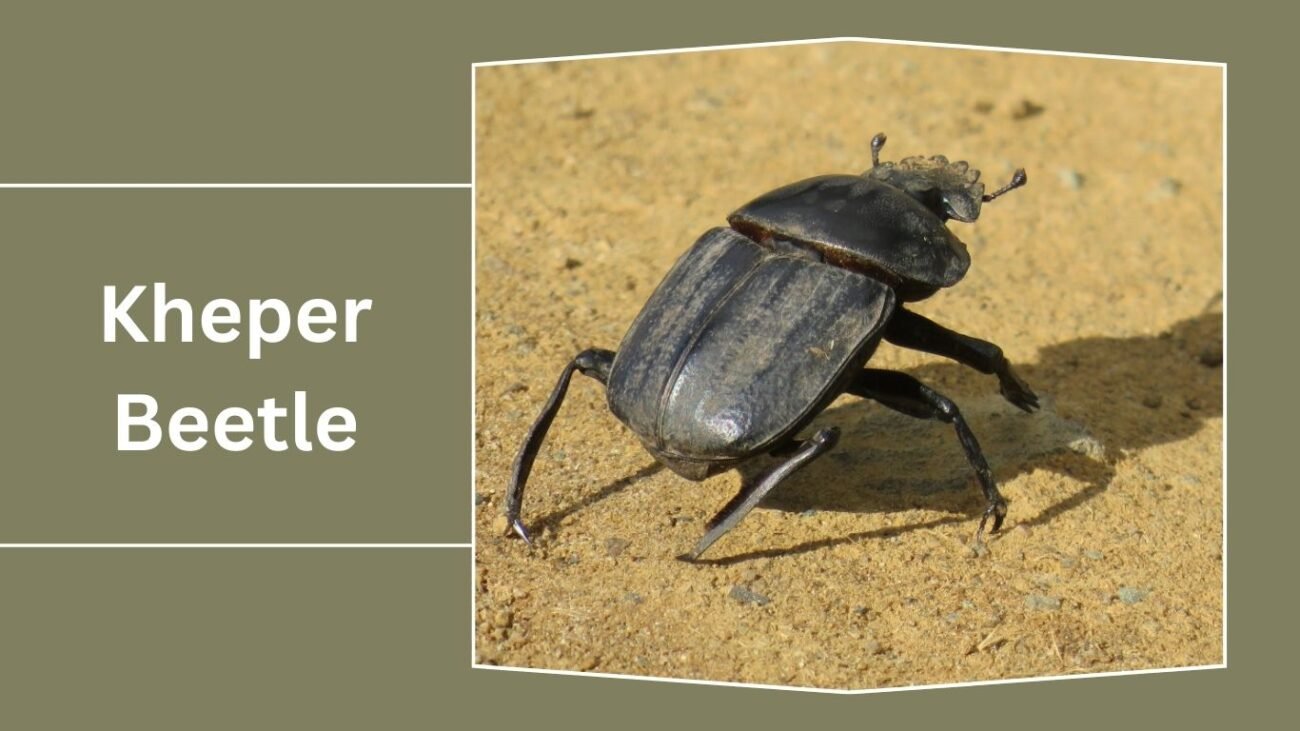
The Kheper Beetle (Kheper nigroaeneus and related species) is a large dung beetle native to southern Africa. It is closely related to the Sacred Scarab and is known for its ball-rolling behavior, often working in pairs to move and bury dung balls for feeding and reproduction.
Identification
- Large beetle, typically 20–40 mm long
- Glossy black or dark metallic green body
- Strong, rounded shape with smooth wing covers
- Males and females look very similar
- Equipped with powerful legs for rolling and digging
Habitat
Kheper Beetles are found mainly in southern Africa, including savannas, grasslands, and semi-arid regions. They thrive in areas populated by grazing animals such as cattle, antelope, and elephants.
Behavior
This species is a classic “roller.” Adults form large dung balls, roll them away from the source, and bury them underground. These balls serve as both a food reserve and a breeding chamber. Pairs often cooperate, with one beetle rolling and the other guiding or helping.
Diet
They feed on herbivore dung, especially from large mammals like cattle, antelope, and elephants. Adults consume liquid portions, while larvae feed entirely on the dung stored in brood balls.
Lifecycle
Females lay eggs inside specially prepared dung balls buried underground. The larvae feed on the dung until pupation, then emerge as adults. In warm climates, multiple generations may occur each year, ensuring their populations remain strong.
13. Bubas Bubalus

The Bubas Bubalus is a strong tunneling dung beetle species originally from southern Europe and North Africa. It has also been introduced to other regions, including Australia, to improve pasture management by burying livestock dung and enhancing soil quality.
Identification
- Medium to large beetle, about 12–20 mm long
- Matte black or dark brown, sometimes with a slight metallic sheen
- Robust, oval-shaped body
- Males may have small head ridges, while females usually lack them
- Equipped with strong forelegs specialized for digging
Habitat
Bubas Bubalus thrives in Mediterranean climates but has adapted well to introduced areas such as Australia. It is commonly found in grasslands, farmland, and pastures where cattle, sheep, and horses provide abundant dung.
Behavior
This beetle is a tunneler. Adults dig deep burrows beneath dung pats, transporting portions underground. Their activity reduces surface dung, helps recycle nutrients, and prevents the breeding of flies and parasites.
Diet
They feed on herbivore dung, particularly from cattle and sheep. Adults consume liquid nutrients from dung, while larvae feed on provisions stored underground.
Lifecycle
Females lay eggs in dung provisions placed in underground chambers. The larvae feed and grow within these chambers until pupation. Adults emerge from the soil after completing development, and in favorable climates, multiple generations may occur annually.