Rove beetles (family Staphylinidae) are one of the largest beetle families, with thousands of species worldwide. Known for their short wing cases and exposed abdominal segments, they are active predators and scavengers that play vital ecological roles. This guide highlights 13 distinct types of rove beetles, covering their identification, habitats, behaviors, diets, and lifecycles—offering a closer look at these fascinating insects and their importance in natural ecosystems.
1. Devil’s Coach Horse (Ocypus olens)
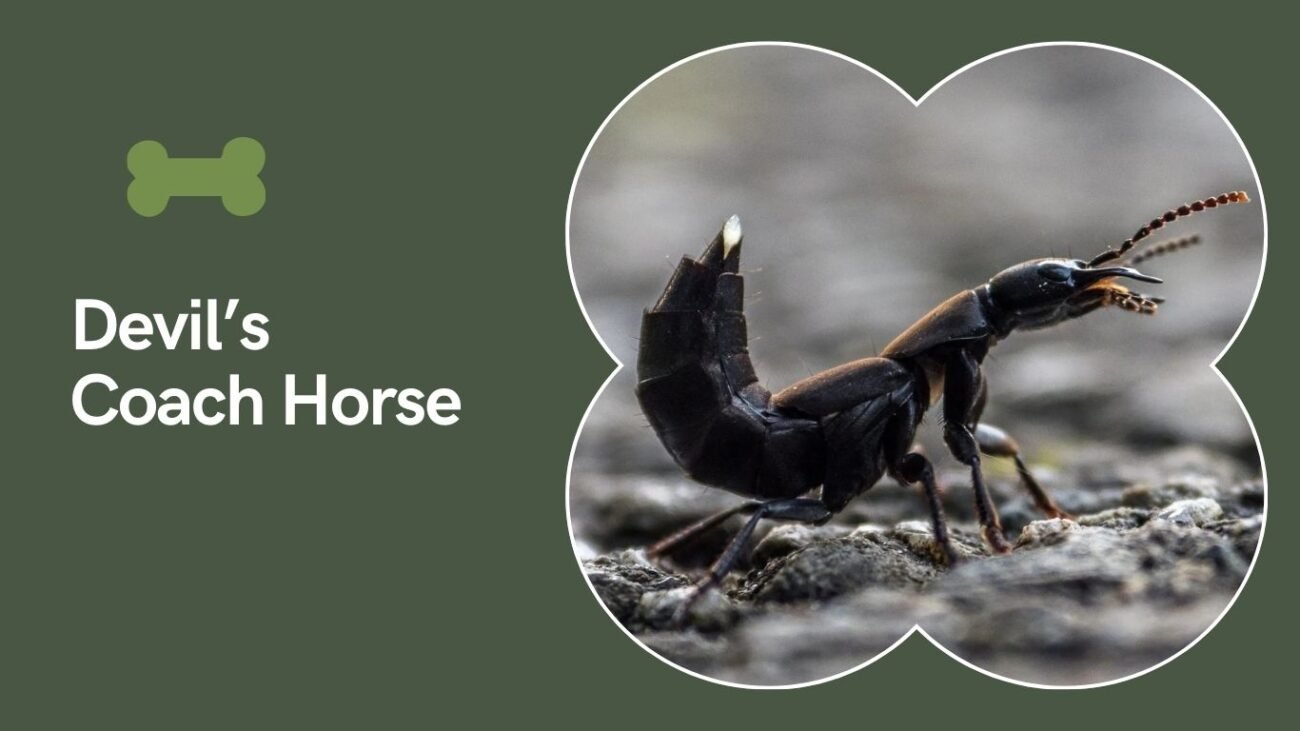
The Devil’s Coach Horse is one of the most well-known rove beetles, easily recognized for its threatening display and dark, sinister appearance. Despite its fearsome look, it plays a beneficial role in gardens by feeding on pests.
Identification
- Large rove beetle, up to 28 mm long
- Shiny black body with shortened wing cases
- Long, flexible abdomen often raised like a scorpion’s tail when threatened
- Strong mandibles for predation
- Nocturnal and fast-moving
Habitat
This beetle thrives in damp environments such as woodlands, hedgerows, compost heaps, and gardens. It prefers areas with plenty of organic matter where prey is abundant.
Behavior
When disturbed, it raises its abdomen like a scorpion and may emit a foul-smelling secretion as a defense mechanism. Despite its intimidating posture, it cannot sting.
Diet
The Devil’s Coach Horse is a voracious predator, feeding on slugs, worms, insects, and larvae. It is an important natural pest controller.
Lifecycle
Adults are active from spring through autumn, with females laying eggs in soil or leaf litter. The larvae resemble the adults in shape and are also predatory. Development takes several weeks before pupation, leading to a new generation of adults.
2. Common Rove Beetle (Staphylinus erythropterus)

The Common Rove Beetle is a widespread species in Europe and is easily recognized by its reddish wing covers. Like most rove beetles, it is an active predator that contributes to controlling insect populations.
Identification
- Medium-sized beetle, about 15–20 mm long
- Shiny black head and abdomen
- Distinctive reddish-brown wing cases (elytra)
- Long, flexible body with visible abdominal segments
- Prominent mandibles for capturing prey
Habitat
This beetle is typically found in meadows, grasslands, and woodland edges. It prefers moist soil and areas rich in decaying vegetation where prey is plentiful.
Behavior
The Common Rove Beetle is highly active, often hunting at night. It uses its speed and strong jaws to catch smaller invertebrates. When threatened, it raises its abdomen as a warning.
Diet
It primarily feeds on small insects, larvae, and other soft-bodied invertebrates. This makes it a beneficial insect in natural pest control.
Lifecycle
Adults are most visible during the warmer months. Females lay eggs in soil or leaf litter, and the predatory larvae go through several stages before pupating and emerging as adults.
3. Paederus Beetle (Paederus littoralis)

The Paederus Beetle is small but notorious for its toxic defense. Unlike most rove beetles, it does not rely solely on predation for protection; instead, it produces a chemical that can cause painful skin irritation in humans.
Identification
- Small beetle, usually 7–10 mm long
- Slender body with black head and abdomen
- Bright orange-red thorax and elytra (wing cases)
- Shortened wing covers exposing abdominal segments
- Easily distinguished by its vivid coloration
Habitat
These beetles are commonly found in wetlands, riverbanks, agricultural fields, and grasslands. They thrive in moist environments with abundant vegetation.
Behavior
Paederus beetles are nocturnal and are attracted to artificial lights at night. When disturbed, they release a toxin called pederin, which can cause severe skin burns and blisters (a condition known as Paederus dermatitis).
Diet
They are predatory insects, feeding on smaller invertebrates such as aphids, mites, and larvae. This makes them ecologically beneficial, though dangerous to handle.
Lifecycle
Females lay eggs in soil or leaf litter. The larvae, like adults, are predatory and go through several stages before pupating. Development time depends on environmental conditions, particularly humidity and temperature.
4. Thin-legged Rove Beetle (Philonthus cognatus)
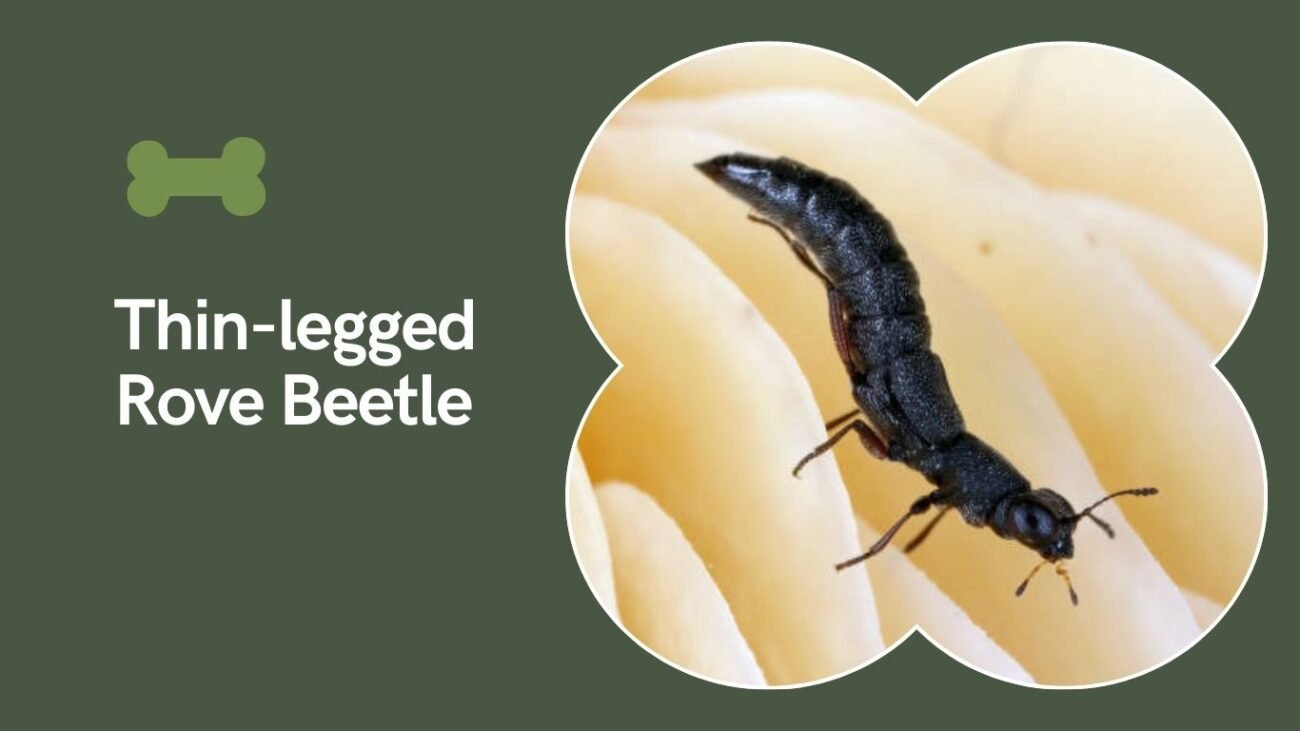
The Thin-legged Rove Beetle is a common predatory species often found in grasslands and open habitats. Its slender body and quick movements make it an effective hunter of small invertebrates.
Identification
- Medium-sized beetle, around 8–11 mm long
- Elongated, slender body with shiny black coloration
- Elytra (wing cases) short and dark, exposing abdominal segments
- Long, thin legs adapted for fast movement
- Strong jaws for catching prey
Habitat
This beetle prefers open grassy areas, farmland, and meadows. It is frequently found in soil, under stones, or near dung, where it hunts for prey.
Behavior
Thin-legged Rove Beetles are highly mobile and agile hunters. They actively pursue their prey rather than waiting to ambush. When disturbed, they raise their abdomen in the typical defensive posture of rove beetles.
Diet
They mainly feed on fly larvae, small insects, and other soft-bodied invertebrates, making them important in controlling pest populations in agricultural areas.
Lifecycle
Eggs are laid in moist soil or organic debris. The larvae are predatory like the adults and undergo several molts before pupating. The full life cycle completes within weeks to months, depending on environmental conditions.
5. Large Rove Beetle (Staphylinus caesareus)
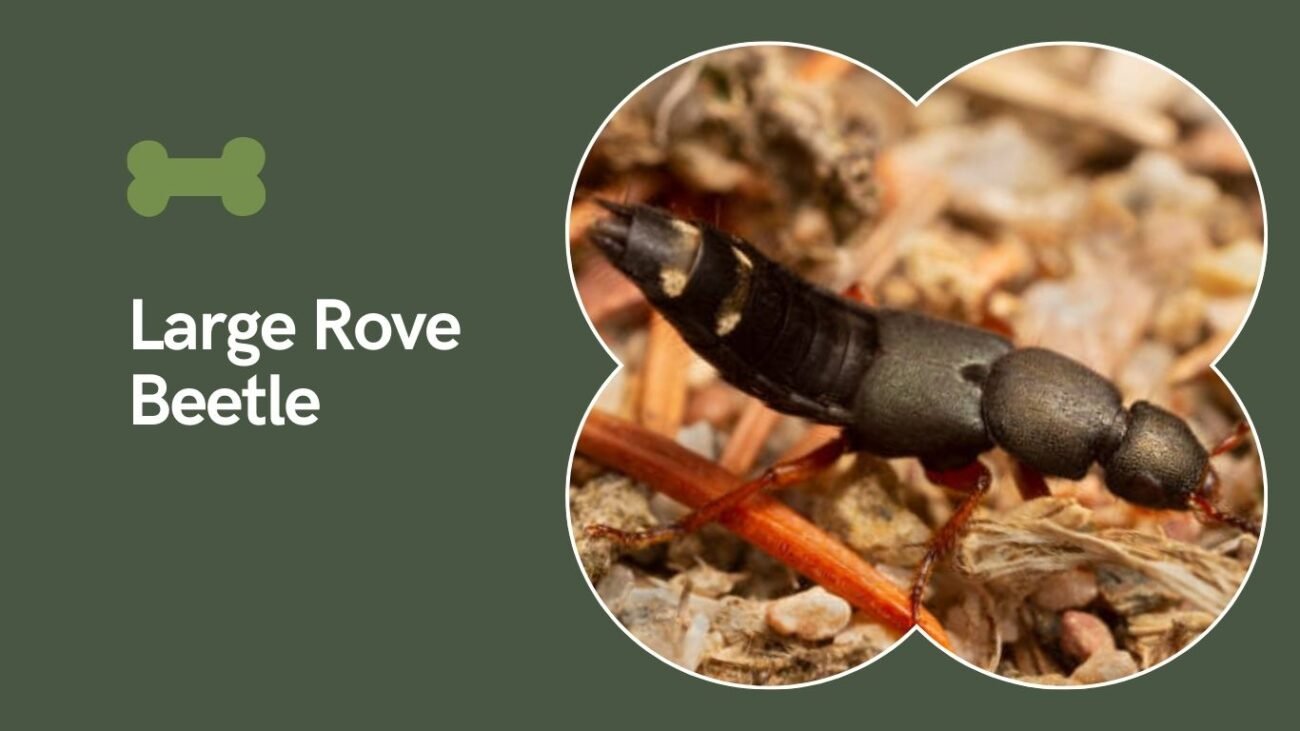
The Large Rove Beetle is a striking member of the rove beetle family, noted for its size and distinctive coloration. It is an aggressive predator, often seen patrolling woodland floors in search of prey.
Identification
- Large beetle, reaching 20–25 mm in length
- Shiny black head and abdomen
- Metallic blue-green wing cases (elytra)
- Strong mandibles and robust body
- Abdomen flexible and frequently raised when alarmed
Habitat
This species favors woodland areas, hedgerows, and leaf litter. It is also found under logs, stones, and in damp soil where invertebrates are abundant.
Behavior
The Large Rove Beetle is an active hunter. It often searches through leaf litter and soil, using its strong jaws to overpower prey. When threatened, it raises its abdomen in a scorpion-like manner as a defensive display.
Diet
It feeds on insects, larvae, earthworms, and other soft-bodied invertebrates. Its predatory nature makes it an important part of the ecosystem’s balance.
Lifecycle
Females deposit eggs in soil or decaying organic matter. The larvae are predatory from the start and resemble adults in body shape. After several molts, they pupate in the soil, emerging later as fully formed adults.
6. Banded Rove Beetle (Platydracus stercorarius)
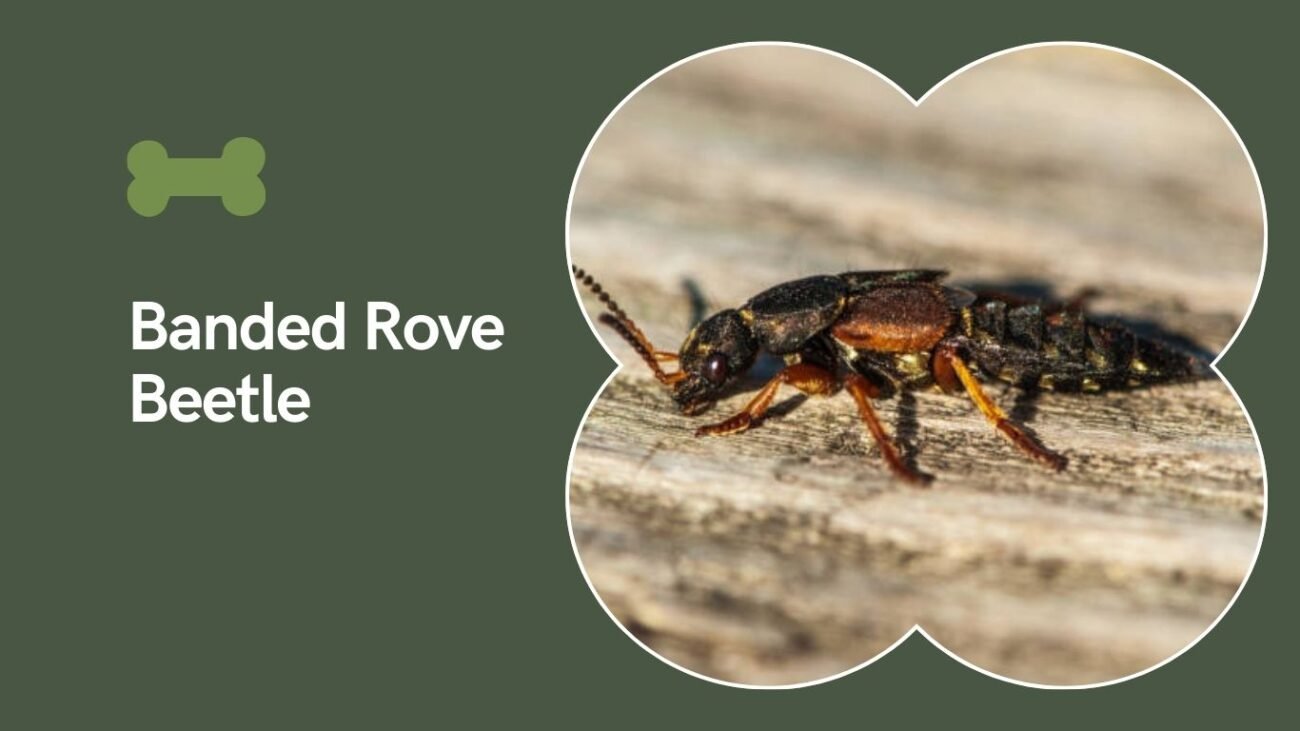
The Banded Rove Beetle is an eye-catching species recognized by its bold banded coloration. It is a powerful predator commonly seen in open habitats where it hunts for various invertebrates.
Identification
- Large beetle, usually 20–25 mm long
- Shiny black head and abdomen
- Distinct yellow-orange bands across the wing cases (elytra)
- Robust body with strong mandibles
- Abdomen flexible and often raised when threatened
Habitat
This beetle inhabits open grasslands, pastures, and woodland edges. It is often found under stones, in soil, and among decaying organic matter where prey is abundant.
Behavior
The Banded Rove Beetle is an active hunter, roaming the ground in search of prey. It displays the typical rove beetle defensive posture by arching its abdomen upward. It is fast-moving and highly aggressive when pursuing food.
Diet
Its diet consists mainly of insects, fly larvae, and other soft-bodied invertebrates. It plays a beneficial role in controlling pest populations.
Lifecycle
Females lay eggs in damp soil or decaying vegetation. The predatory larvae resemble adults in body shape and also hunt actively. After several molts, they pupate in soil and later emerge as fully developed adults.
7. False Bombardier Beetle (Galerita bicolor)
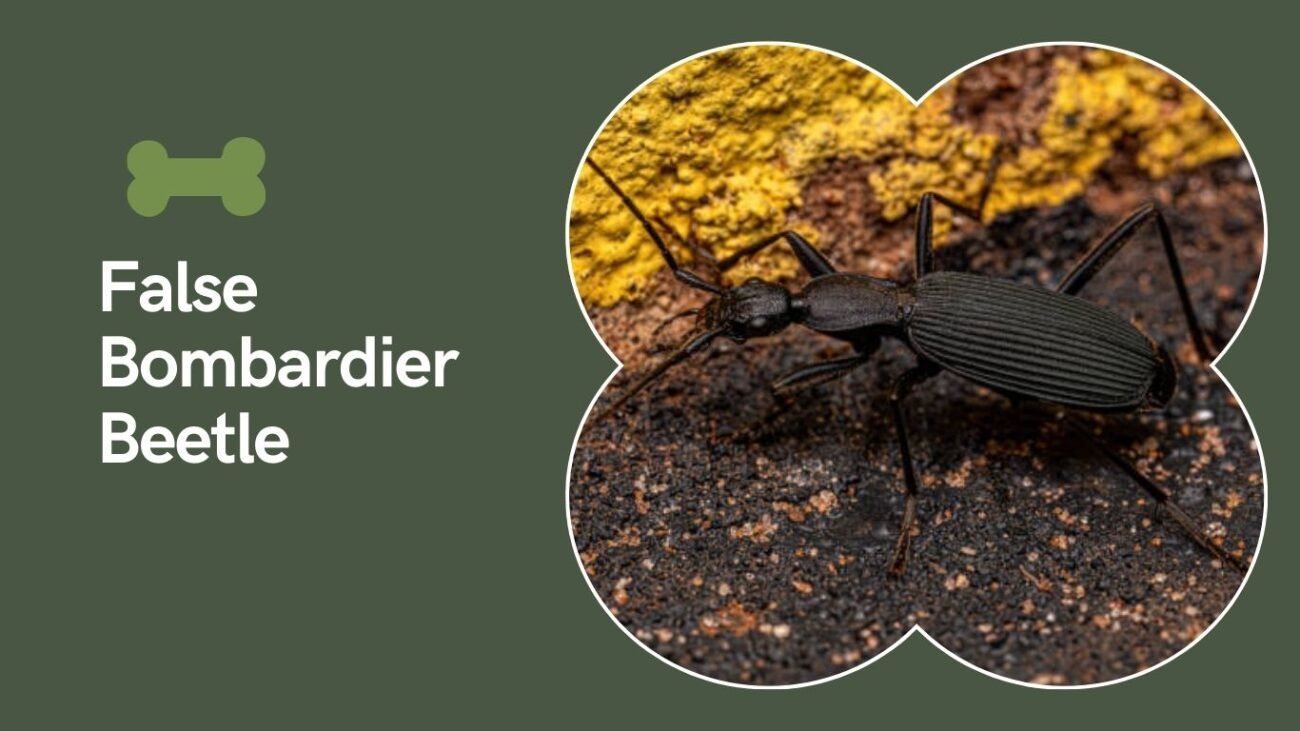
The False Bombardier Beetle is a rove beetle look-alike often mistaken for the true bombardier beetle due to its defensive behavior. Although it does not eject boiling chemicals, it can still release irritating secretions when threatened.
Identification
- Medium-sized beetle, around 12–15 mm long
- Distinctive coloration: reddish-orange thorax and black head/abdomen
- Elytra (wing cases) short, exposing abdominal segments
- Long legs and antennae suited for fast movement
- Often confused with true bombardier beetles due to appearance
Habitat
This species inhabits woodlands, fields, and damp areas with abundant vegetation. It is frequently found under logs, leaf litter, or stones, where prey and shelter are available.
Behavior
The False Bombardier Beetle is nocturnal and actively hunts at night. When disturbed, it secretes a pungent fluid as a deterrent to predators. Its quick movements and warning coloration also contribute to its defense.
Diet
It preys on small insects, larvae, and other invertebrates. As an opportunistic predator, it helps in maintaining ecological balance by controlling pest populations.
Lifecycle
Eggs are deposited in moist soil or decaying matter. The larvae, similar in predatory habits to adults, go through several molts before pupating underground. Adults emerge after completing development, continuing the cycle.
8. Shore Rove Beetle (Cafius xantholoma)
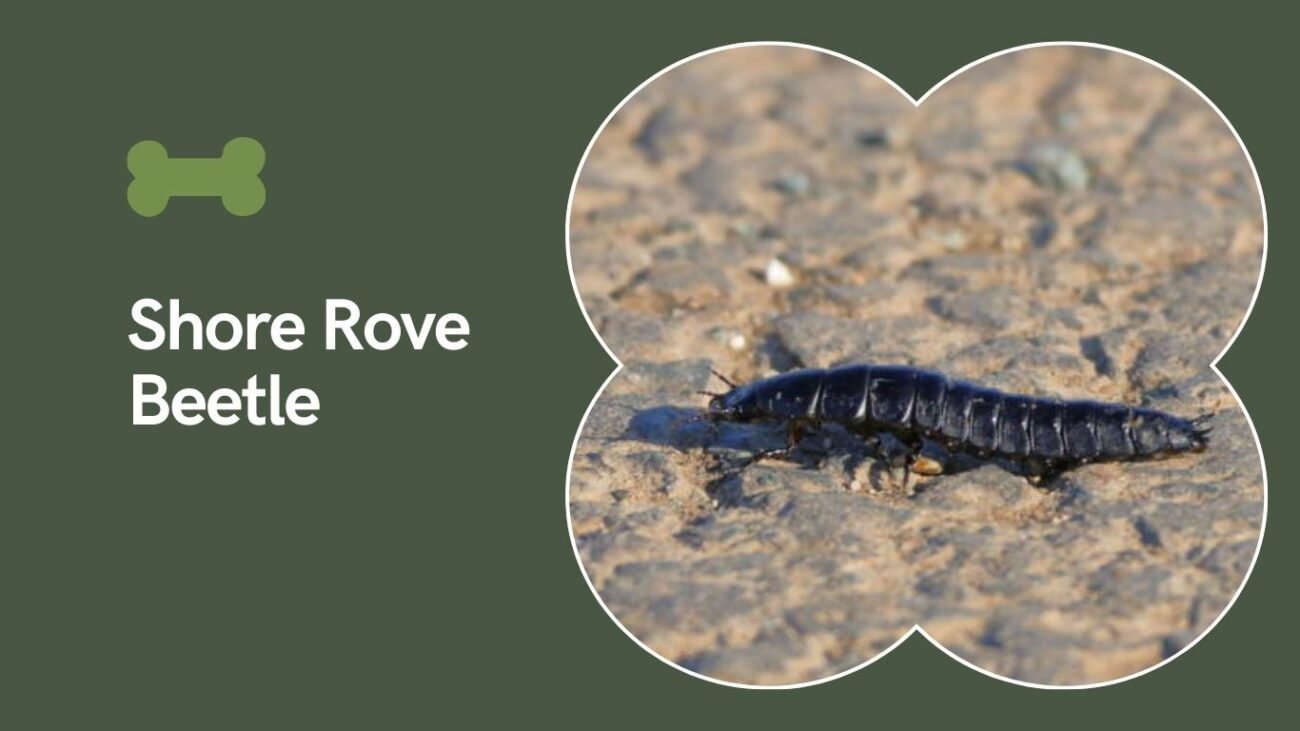
The Shore Rove Beetle is a coastal species adapted to life along seashores. It is well-known for its association with tidal zones, where it plays an important role in breaking down organic material.
Identification
- Medium-sized beetle, about 7–10 mm long
- Shiny black or dark brown body
- Elytra short, exposing several abdominal segments
- Long antennae and legs adapted for quick movement
- Compact, streamlined body suited for sandy and rocky habitats
Habitat
This beetle is found along coastlines, particularly in tidal zones, under seaweed, driftwood, and stones. It thrives in habitats where decaying organic material accumulates after high tide.
Behavior
The Shore Rove Beetle is active during low tide, scavenging and hunting among seaweed and sand. It is fast-moving and highly adaptable to fluctuating coastal conditions. When disturbed, it raises its abdomen like other rove beetles.
Diet
It is both predatory and scavenging, feeding on small invertebrates, fly larvae, and decaying organic matter such as rotting seaweed. This dual feeding behavior makes it an important decomposer.
Lifecycle
Females lay eggs in moist sand or debris along the shoreline. The larvae develop in similar habitats, preying on small organisms until pupation occurs. Adults emerge and continue the cycle, often completing several generations a year in warm climates.
9. Woodland Rove Beetle (Philonthus decorus)
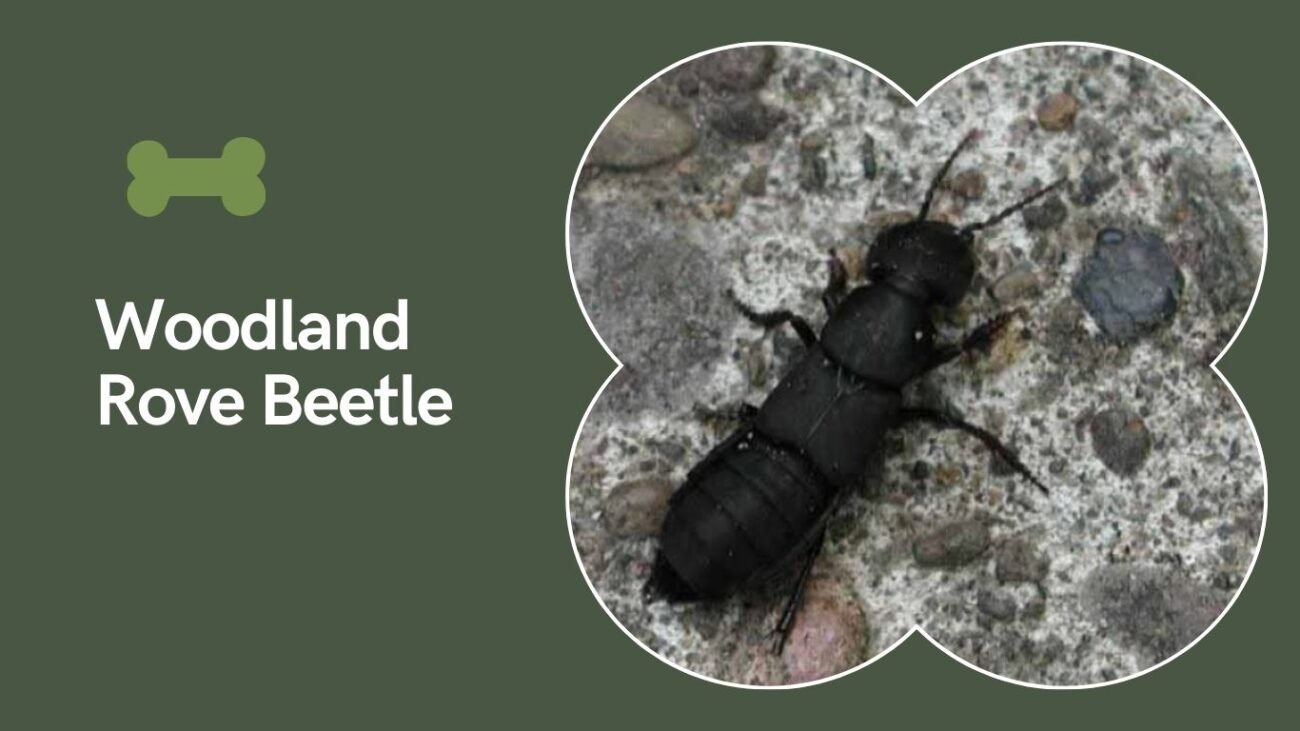
The Woodland Rove Beetle is a common forest-dwelling species, well adapted to life among leaf litter and decaying wood. It plays a valuable ecological role by preying on small invertebrates.
Identification
- Medium-sized beetle, 10–14 mm long
- Shiny black body with a slightly metallic sheen
- Short wing cases exposing abdominal segments
- Slender build with long legs for quick movement
- Strong mandibles used for capturing prey
Habitat
As its name suggests, this beetle is primarily found in woodlands, forests, and shaded hedgerows. It thrives under logs, leaf litter, and rotting vegetation where prey is abundant.
Behavior
The Woodland Rove Beetle is a fast-moving, active predator. It is often seen patrolling the forest floor in search of food. When threatened, it raises its abdomen as a warning gesture.
Diet
It feeds mainly on insects, larvae, and other small invertebrates, making it an important predator in woodland ecosystems. By reducing pest numbers, it contributes to maintaining ecological balance.
Lifecycle
Eggs are laid in moist soil or decaying vegetation. The larvae resemble adults in appearance and are equally predatory. After undergoing several molts, they pupate in soil and later emerge as fully grown adults.
10. Aleochara Beetle (Aleochara bilineata)
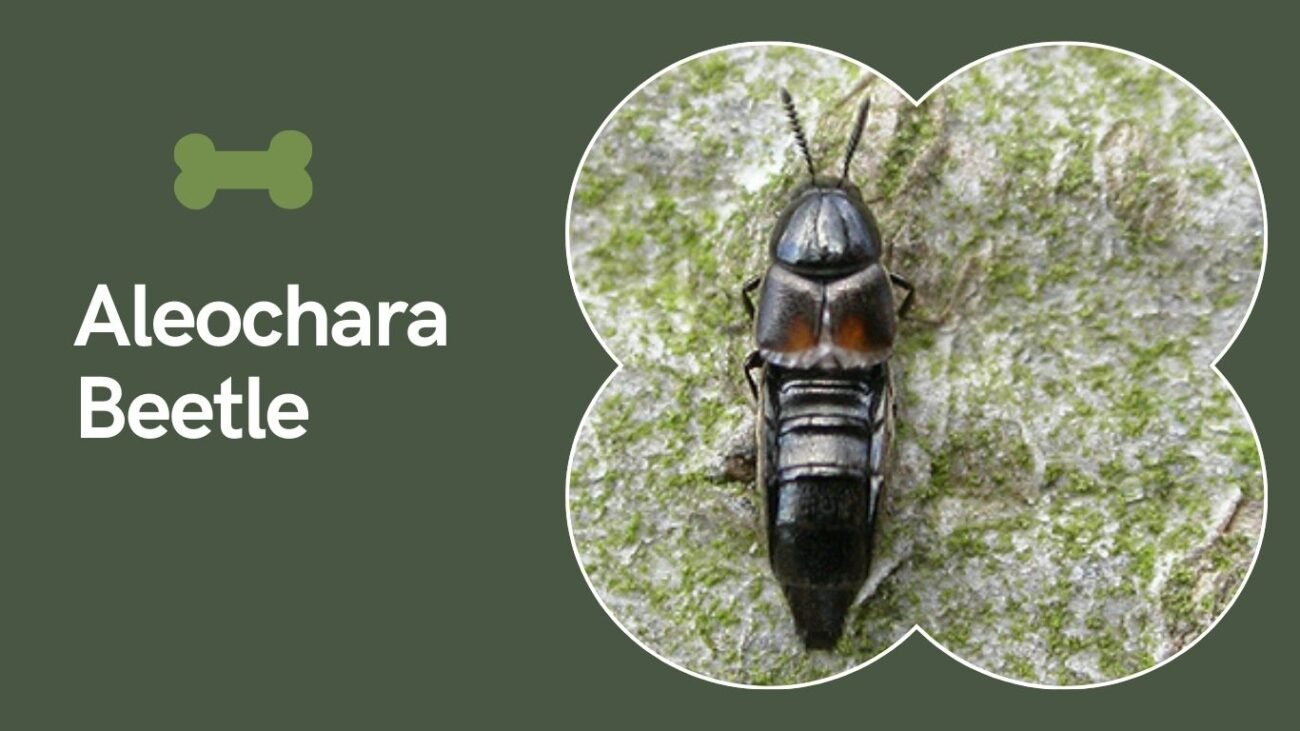
The Aleochara Beetle is a small but significant rove beetle, especially known for its role in biological control. Its larvae are parasitoids of fly pupae, making it highly beneficial in reducing pest fly populations.
Identification
- Small beetle, about 4–7 mm long
- Dark brown to black body with slight metallic reflection
- Shortened wing cases exposing abdominal segments
- Slender body with long legs and antennae
- Difficult to spot due to its small size and fast movement
Habitat
This species is commonly found in agricultural areas, compost heaps, manure piles, and decaying organic matter. It thrives in places where flies are abundant.
Behavior
The Aleochara Beetle is both a predator and parasitoid. Adults actively hunt small insects and larvae, while females lay eggs near fly pupae. Its behavior makes it an important natural regulator of fly populations.
Diet
- Adults: Feed on small insects, larvae, and decaying organic matter.
- Larvae: Parasitize fly pupae, developing inside and eventually killing them.
Lifecycle
Eggs are laid close to fly pupae. Upon hatching, larvae enter the pupae and feed internally until development is complete. They then pupate in the soil and emerge as adults. This unique parasitoid lifestyle distinguishes Aleochara from many other rove beetles.
11. Hairy Rove Beetle (Creophilus maxillosus)
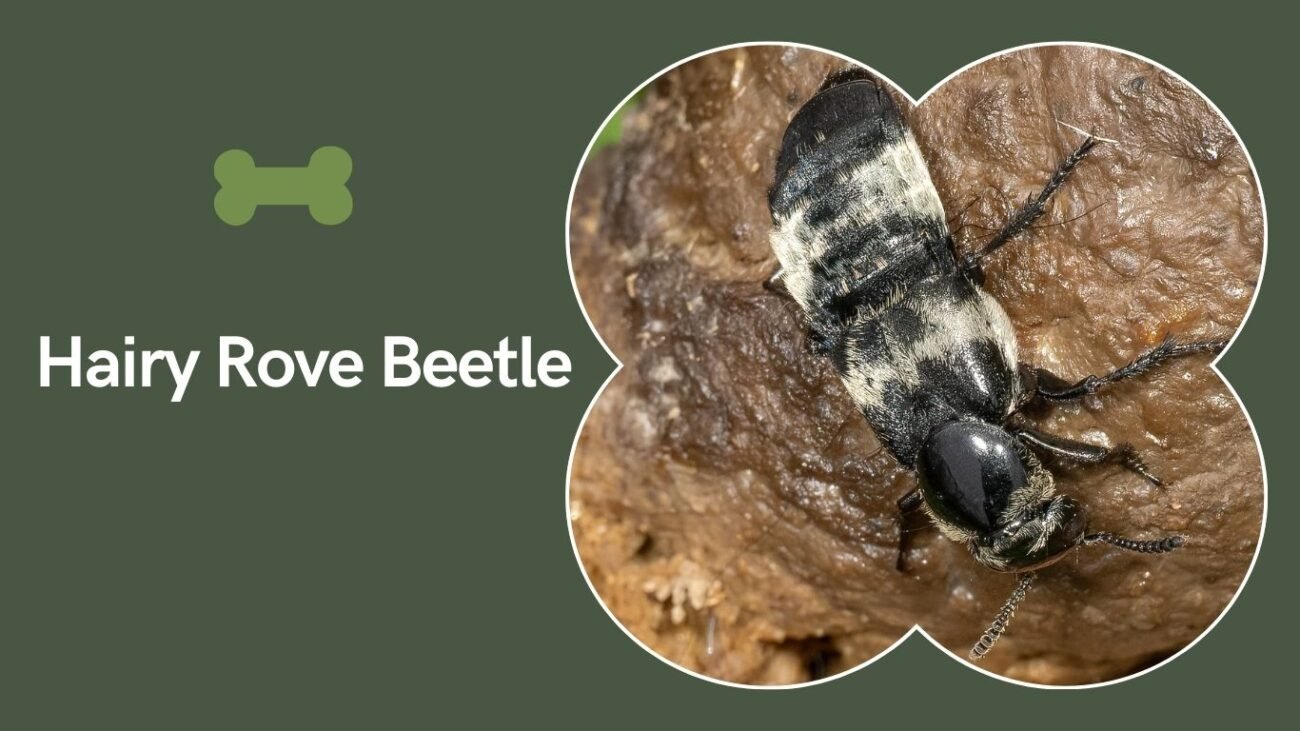
The Hairy Rove Beetle is one of the largest and most distinctive rove beetles. Its hairy body and scavenging habits make it an important species in the decomposition of animal remains.
Identification
- Large beetle, reaching 12–20 mm in length
- Black body covered with dense grayish hairs, giving a mottled appearance
- Short wing cases leaving much of the abdomen exposed
- Strong mandibles suited for tearing flesh and capturing prey
- Easily recognized by its hairy, bristly look
Habitat
This beetle is usually found near carrion, compost heaps, and other decaying organic material. It is also present in meadows, grasslands, and woodland edges where it can locate animal remains.
Behavior
The Hairy Rove Beetle is both a scavenger and predator. It arrives quickly at carcasses, where it competes with other scavengers. When disturbed, it raises its abdomen and may emit defensive chemicals.
Diet
It primarily feeds on maggots, fly larvae, and other insects associated with carrion. By doing so, it plays a vital role in decomposition and helps control blowfly populations.
Lifecycle
Females lay eggs near carrion. The larvae, like adults, are predatory and feed on maggots and other insects. After several molts, they pupate in the soil, and new adults emerge to continue the cycle.
12. Rugilus Beetle (Rugilus rufipes)

The Rugilus Beetle is a slender and agile rove beetle, recognized for its reddish legs and quick movements. Though small, it is an active predator that contributes to the control of soil-dwelling invertebrates.
Identification
- Small beetle, typically 5–8 mm long
- Narrow, elongated black body
- Distinct reddish-brown legs and antennae
- Shortened elytra exposing abdominal segments
- Very slender build compared to many other rove beetles
Habitat
This species prefers damp habitats such as woodland floors, grasslands, and hedgerows. It is often found under stones, leaf litter, and rotting vegetation.
Behavior
Rugilus beetles are quick and restless, constantly moving in search of prey. They display the characteristic rove beetle defensive posture by raising the abdomen when disturbed.
Diet
They prey on small insects, mites, and larvae found in soil and leaf litter. Their presence helps maintain ecological balance in natural habitats.
Lifecycle
Eggs are deposited in moist soil or decaying matter. The larvae, similar in body shape to the adults, are also predatory. After several molts, they pupate in the soil and emerge as new adults.
13. Lathrobium Beetle (Lathrobium elongatum)
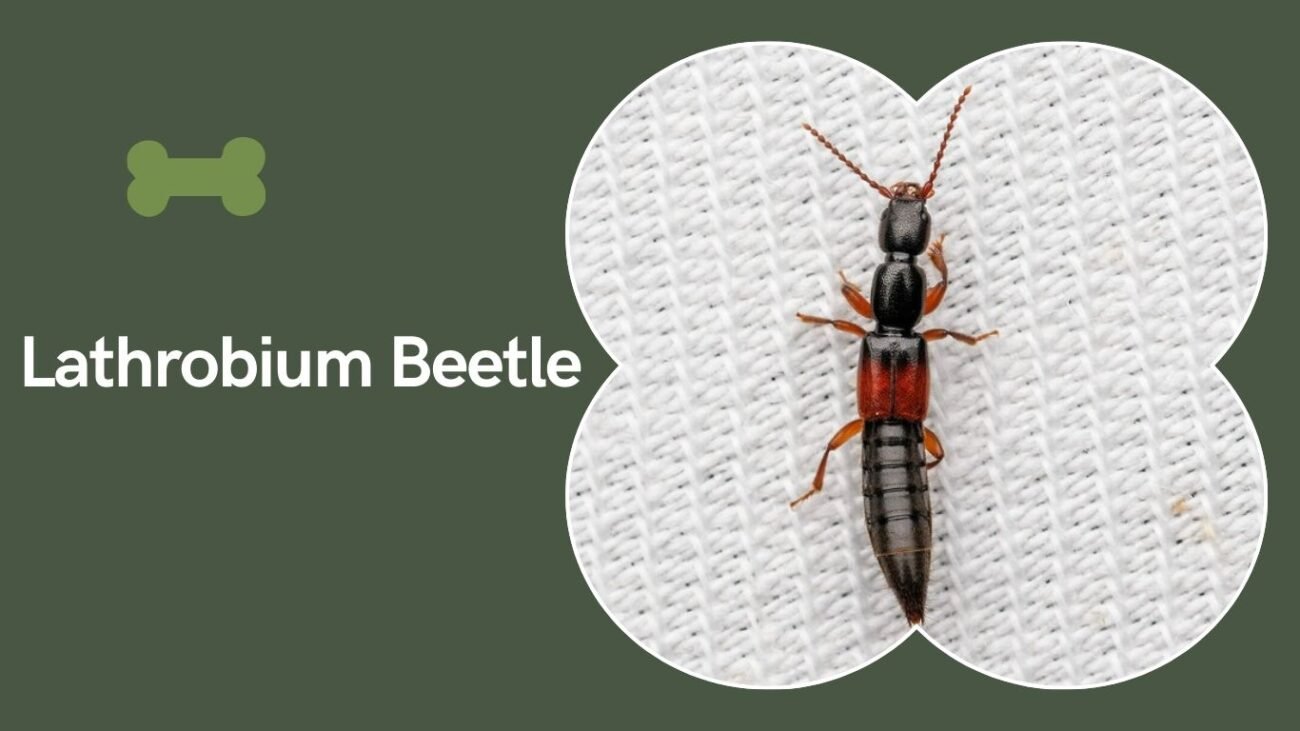
The Lathrobium Beetle is a long-bodied rove beetle with an elongated form, adapted for life in soil and leaf litter. Though not as well-known as some relatives, it is a widespread and ecologically important predator.
Identification
- Medium-sized beetle, about 8–12 mm long
- Very elongated, slender black or dark brown body
- Short wing cases, leaving most abdominal segments exposed
- Long legs and antennae suited for active hunting
- Characteristically narrow appearance compared to other rove beetles
Habitat
This beetle inhabits woodland floors, hedgerows, meadows, and grasslands. It is commonly found under logs, stones, and within moist leaf litter.
Behavior
Lathrobium beetles are agile hunters, moving quickly through soil and vegetation to catch prey. When threatened, they arch their abdomen in the typical rove beetle display.
Diet
They feed on small insects, mites, fly larvae, and other soft-bodied invertebrates, helping to control pest populations naturally.
Lifecycle
Eggs are laid in soil or decaying organic matter. The larvae, like adults, are predatory. After several molts, they pupate in the soil and emerge as adults to continue the cycle.