Whiteflies are small, sap-sucking insects that belong to the family Aleyrodidae. Despite their delicate appearance, they are highly destructive agricultural pests, affecting a wide range of crops and ornamental plants. By feeding on phloem sap and excreting honeydew that fosters sooty mold, they weaken plants, reduce yields, and lower market quality. Their rapid reproduction and virus transmission make them particularly challenging for farmers worldwide.
1. Silverleaf Whitefly (Bemisia tabaci)

The Silverleaf whitefly is one of the most destructive agricultural pests worldwide. Known for infesting a wide range of crops, it not only weakens plants by feeding on sap but also transmits numerous plant viruses. Its ability to reproduce rapidly and adapt to different environments makes it a serious challenge for farmers.
Identification
- Tiny insect, about 1–2 mm long
- Body pale yellow with white, powdery wings
- Wings held roof-like over the body when at rest
- Nymphs appear flat, scale-like, and translucent
- Eggs are oval, laid on the underside of leaves
Habitat
Silverleaf whiteflies thrive in warm, humid climates. They are common in greenhouses, gardens, and open fields, especially where crops like tomatoes, cucumbers, cotton, beans, and ornamentals are cultivated.
Behaviors
These insects typically gather on the undersides of leaves in dense colonies. They excrete honeydew, which promotes sooty mold growth and reduces photosynthesis in plants. Silverleaf whiteflies are highly mobile and can rapidly infest entire fields, making them difficult to control.
Diet
Their diet consists mainly of plant sap, which they suck directly from the phloem of host plants. By feeding in large numbers, they weaken crops, reduce yields, and spread plant viruses that cause severe agricultural damage.
2. Greenhouse Whitefly (Trialeurodes vaporariorum)

The Greenhouse whitefly is a common pest found in protected cropping systems around the world. It is notorious for damaging vegetables, ornamentals, and greenhouse-grown plants. Its rapid reproduction and ability to spread plant diseases make it a persistent problem in agriculture and horticulture.
Identification
- Small insect, about 1.5 mm long
- Pale yellow body with powdery white wings
- Wings are held flat and slightly overlapped when at rest
- Eggs are yellowish, turning brown before hatching
- Nymphs appear scale-like and are sedentary on leaf undersides
Habitat
This species thrives in greenhouses, nurseries, and warm outdoor environments. It prefers crops like tomatoes, cucumbers, peppers, beans, and ornamental flowers. Controlled environments with high humidity favor their population growth.
Behaviors
Greenhouse whiteflies typically form colonies on the underside of leaves. They excrete honeydew, which leads to sooty mold growth and reduced plant vigor. They are efficient vectors of several plant viruses and can quickly infest entire greenhouse systems if left unmanaged.
Diet
Their primary diet is plant sap, which they suck from the phloem of host plants. Feeding causes yellowing, stunted growth, and reduced crop yields. They also indirectly harm plants by promoting fungal growth on honeydew deposits.
3. Bandedwing Whitefly (Trialeurodes abutiloneus)

The Bandedwing whitefly is less widespread than other whitefly pests but is still important in agriculture due to its role in transmitting plant viruses. It is named for the distinctive grayish bands that appear on its wings. This species is a concern for crops like beans, tomatoes, and ornamental plants.
Identification
- Adult size around 1.5–2 mm
- White wings with noticeable grayish cross-bands
- Yellowish body, often hidden under the wings
- Eggs laid on undersides of leaves in small groups
- Nymphs are oval, flattened, and pale in color
Habitat
This whitefly species is mainly found in warm temperate and subtropical regions. It inhabits fields, gardens, and occasionally greenhouses, particularly where legumes and vegetable crops are grown.
Behaviors
Bandedwing whiteflies live on the underside of leaves in colonies. They are efficient vectors of several plant viruses, including those affecting beans and tomatoes. Like other whiteflies, they produce honeydew, leading to sooty mold growth that interferes with photosynthesis.
Diet
They feed on phloem sap from host plants, weakening crops and reducing yields. Their feeding, combined with virus transmission, makes them particularly destructive in agricultural systems.
4. Citrus Whitefly (Dialeurodes citri)

The Citrus whitefly is a notorious pest of citrus trees and other ornamental plants. It causes direct damage by feeding on plant sap and indirect damage through honeydew secretion that promotes sooty mold. Heavy infestations can weaken trees and reduce fruit quality.
Identification
- Adults are about 1.5–2 mm long
- Pale yellow body with powdery white wings
- Wings held tent-like over the body when resting
- Eggs are yellowish, turning dark before hatching
- Nymphs are oval, flat, and translucent to light yellow
Habitat
As its name suggests, this species is most commonly associated with citrus orchards. It thrives in subtropical and tropical regions and is also found on garden ornamentals and shade trees.
Behaviors
Citrus whiteflies form dense colonies on the undersides of leaves. They are less mobile than some other whiteflies but can still spread between trees rapidly. Their honeydew promotes heavy sooty mold growth, often blackening entire leaves and fruits, which reduces the plant’s ability to photosynthesize.
Diet
They feed primarily on citrus plants by extracting phloem sap from leaves. Their feeding causes leaf yellowing, premature leaf drop, and reduced vigor in citrus trees. The resulting honeydew and sooty mold further decrease fruit marketability.
5. Woolly Whitefly (Aleurothrixus floccosus)

The Woolly whitefly is a pest of citrus and other fruit trees, recognized for the distinctive waxy, wool-like filaments covering its colonies. This pest not only weakens host plants through feeding but also creates unsightly sooty mold that affects fruit quality.
Identification
- Adults about 1.5–2 mm long
- Pale yellow body with white wings dusted in powdery wax
- Eggs laid in circular or spiral patterns on leaf undersides
- Nymphs and pupae covered with waxy, cottony filaments
- Colonies appear woolly or fuzzy due to wax secretion
Habitat
The Woolly whitefly is mainly found in citrus orchards but also infests guava, avocado, mango, and ornamental plants. It thrives in subtropical and tropical regions, particularly in warm, humid environments.
Behaviors
This species lives in colonies beneath leaves, producing copious wax that gives them their “woolly” appearance. They secrete honeydew that fosters sooty mold, which can cover leaves and fruits. Heavy infestations cause reduced photosynthesis, stunted growth, and decline in fruit production.
Diet
Woolly whiteflies feed on plant sap, weakening host trees and causing leaf yellowing and premature leaf drop. Their feeding stress, combined with honeydew and mold buildup, significantly reduces fruit yield and quality in citrus orchards.
6. Ash Whitefly (Siphoninus phillyreae)

The Ash whitefly is a serious pest that primarily targets ash, pomegranate, citrus, and ornamental plants. It is known for causing heavy infestations that lead to significant damage through sap loss and mold development. Native to Europe and the Middle East, it has also spread to other regions, including North America.
Identification
- Adults are about 1.5–2 mm long
- White, powdery wings with a slightly translucent look
- Pale yellowish body, often hidden beneath the wings
- Eggs are elliptical and laid on the underside of leaves
- Nymphs appear flat, oval, and covered with a thin waxy coating
Habitat
This species is commonly found in temperate and subtropical regions, especially in orchards, urban landscapes, and ornamental plantings. Host plants include ash trees, citrus, pomegranate, and a wide variety of shrubs and ornamental species.
Behaviors
Ash whiteflies typically congregate on the undersides of leaves in large colonies. They produce honeydew, which encourages sooty mold growth that can blacken foliage and fruit. Their populations can increase rapidly, and heavy infestations may cause premature leaf drop and general decline of host plants.
Diet
They feed exclusively on plant sap, extracting nutrients from the phloem of host plants. Continuous feeding weakens trees, reduces photosynthesis, and can indirectly impact fruit yield and quality due to the buildup of mold.
7. Spiraling Whitefly (Aleurodicus dispersus)

The Spiraling whitefly is a highly invasive pest that affects a wide range of plants, from fruit trees to ornamentals. It gets its name from the unique spiral pattern in which females lay their eggs. This species is considered a serious threat due to its rapid spread and the extensive damage it causes to crops.
Identification
- Adults are larger than most whiteflies, about 2–3 mm long
- Pale yellow body with broad, white, powdery wings
- Eggs laid in distinctive spiral patterns on the underside of leaves
- Nymphs are oval, flat, and produce waxy secretions
- Colonies often accompanied by waxy flocculent material
Habitat
Spiraling whiteflies thrive in tropical and subtropical regions. They infest a wide range of host plants, including guava, mango, banana, papaya, avocado, coconut, and many ornamentals. They are especially problematic in humid, coastal, and greenhouse environments.
Behaviors
They form dense colonies beneath leaves, producing large amounts of honeydew, which fosters heavy sooty mold development. Infestations can cause leaf yellowing, premature leaf fall, reduced photosynthesis, and weakened plant growth. Their high reproductive rate makes outbreaks difficult to control once established.
Diet
Spiraling whiteflies feed on the phloem sap of host plants. This constant feeding reduces plant vigor and yield, while their honeydew promotes mold growth that further damages leaves and fruits, lowering their market value.
8. Giant Whitefly (Aleurodicus dugesii)
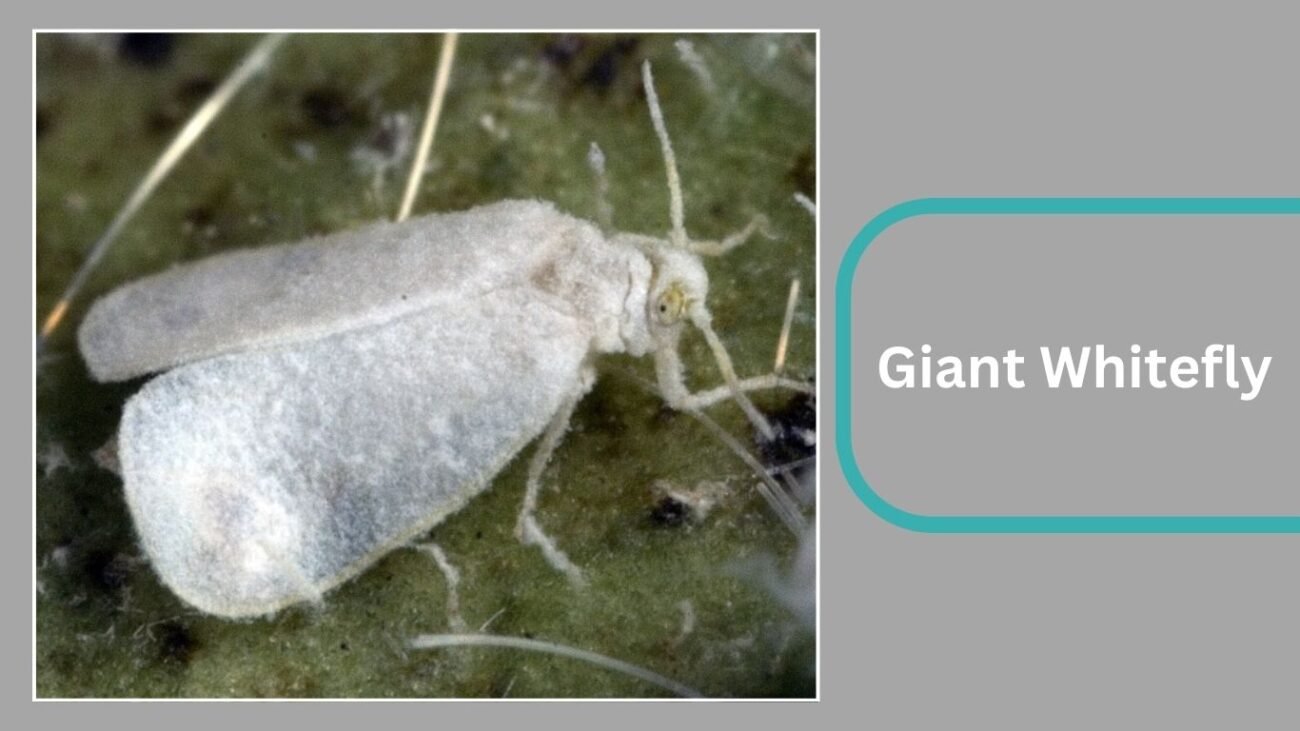
The Giant whitefly is named for its unusually large size compared to most other whiteflies. It is a serious pest of ornamental and fruit plants, particularly in warm climates. Its colonies are easily recognized due to the long waxy filaments produced by nymphs and adults.
Identification
- Adults are larger than typical whiteflies, around 3–4 mm long
- White wings with powdery coating, often broader than body length
- Eggs are laid in circular patterns on leaf undersides
- Nymphs and pupae produce long, waxy filaments (up to several times their body length)
- Colonies appear fuzzy and cotton-like due to wax secretions
Habitat
This species thrives in tropical and subtropical regions, particularly in warm, humid environments. It infests a wide range of host plants, including hibiscus, avocado, citrus, guava, and several ornamental shrubs and trees.
Behaviors
Giant whiteflies are sedentary, forming dense colonies on the underside of leaves. The characteristic wax filaments they produce can cover entire leaves, reducing photosynthesis. Like other whiteflies, they excrete honeydew that fosters the growth of sooty mold.
Diet
They feed on plant phloem sap, weakening host plants over time. Heavy infestations can lead to leaf yellowing, premature drop, reduced fruit yields, and aesthetic damage to ornamentals.
9. Bondar’s Nesting Whitefly (Paraleyrodes bondari)
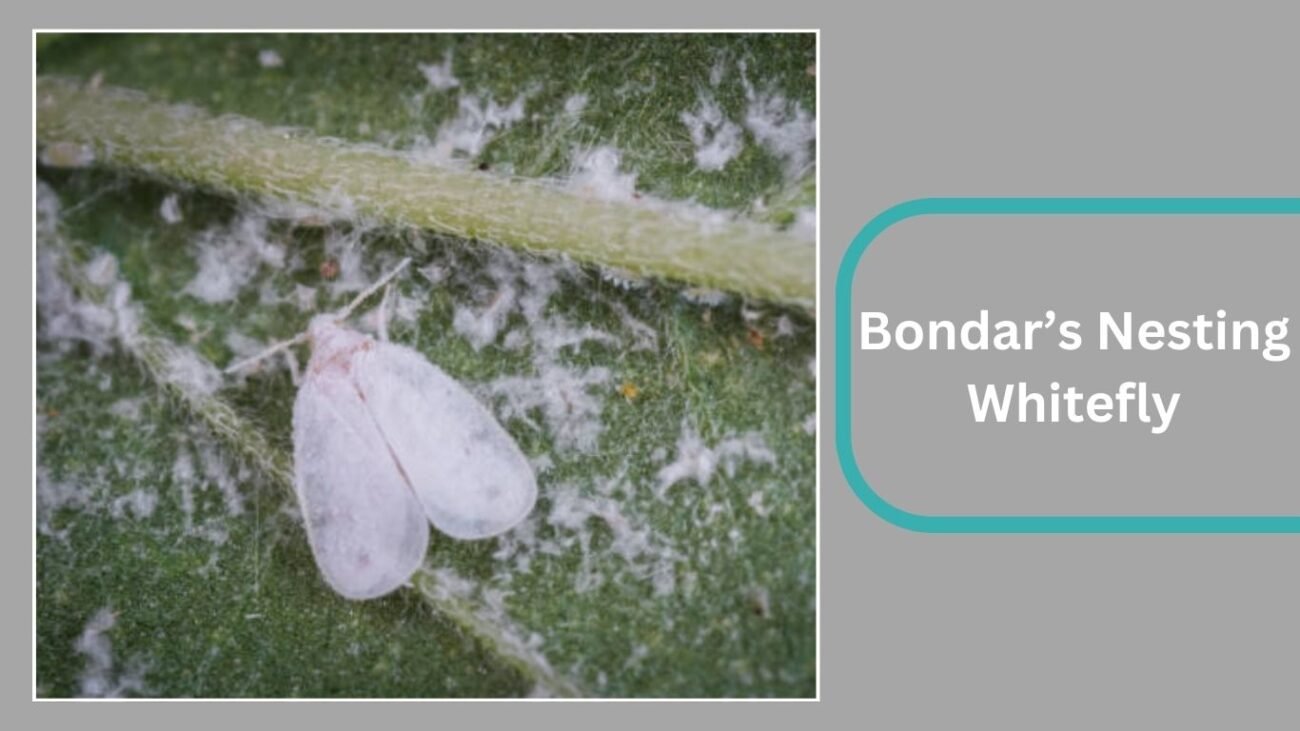
Bondar’s Nesting whitefly is a distinctive species recognized by the characteristic circular, waxy nests created by its colonies. It infests a wide variety of host plants, particularly fruit trees and ornamentals, and can cause significant stress through feeding and mold development.
Identification
- Adults are small, about 1.5–2 mm long
- White, powdery wings with a slightly translucent appearance
- Eggs are laid in clusters within waxy circular nests on the underside of leaves
- Nymphs are flat, oval, and covered with fine wax secretions
- Colonies appear as circular, whitish patches resembling tiny nests
Habitat
This species occurs in tropical and subtropical regions, often in orchards, gardens, and shaded areas. Host plants include mango, citrus, guava, avocado, and several ornamentals, making it an important pest in fruit production.
Behaviors
Bondar’s Nesting whiteflies form colonies inside waxy, circular nests that protect the eggs and nymphs. They produce honeydew, which leads to sooty mold growth, reducing photosynthesis. Their unique nesting pattern makes infestations easy to identify on leaves.
Diet
They feed by sucking phloem sap from the undersides of leaves. Persistent feeding weakens plants, causes yellowing, premature leaf drop, and lowers overall plant vigor, particularly in fruit-bearing trees.
10. Rugose Spiraling Whitefly (Aleurodicus rugioperculatus)

The Rugose Spiraling whitefly is a highly invasive species that has recently emerged as a major pest in tropical and subtropical regions. It is closely related to the Spiraling whitefly but is even more damaging due to its heavy wax production, rapid reproduction, and broad host range.
Identification
- Adults are relatively large, about 2–3 mm long
- White, powdery wings with a slightly opaque appearance
- Eggs laid in irregular spirals on leaf undersides
- Nymphs are oval, flat, and covered in thick, waxy secretions
- Colonies often produce excessive wax and flocculent material, coating leaves
Habitat
Rugose Spiraling whiteflies thrive in warm, humid environments. They infest over 100 host plants, including coconut, banana, mango, guava, citrus, avocado, and many ornamental trees and shrubs.
Behaviors
They form large colonies on the underside of leaves, producing copious amounts of wax and honeydew. This leads to heavy sooty mold growth, which reduces photosynthesis and damages fruit quality. Infestations spread quickly, making them difficult to manage in orchards and urban landscapes.
Diet
Their diet consists of plant phloem sap, which they extract continuously from leaves. Feeding weakens plants, reduces yields, and indirectly harms crops through honeydew and mold accumulation that suffocates leaves and fruits.
11. Cabbage Whitefly (Aleyrodes proletella)

The Cabbage whitefly is a specialist pest that primarily targets brassica crops such as cabbage, kale, Brussels sprouts, and broccoli. It is a significant agricultural problem in temperate regions, particularly during cooler months when populations can rapidly build up on leafy vegetables.
Identification
- Adults about 1.5 mm long
- White, powdery wings with a slightly rounded shape
- Pale yellow body, often hidden beneath the wings
- Eggs are yellow-green, laid in semicircular patterns on leaf undersides
- Nymphs are flat, scale-like, and greenish-white in appearance
Habitat
This species is mostly associated with brassica plants in temperate climates. It is common in fields, gardens, and greenhouses where cabbage-family crops are grown, particularly in Europe, Asia, and North America.
Behaviors
Cabbage whiteflies form dense colonies on the undersides of brassica leaves. They produce honeydew, leading to the development of sooty mold, which reduces photosynthesis. Heavy infestations cause wilting, yellowing, and reduced crop quality, especially in leafy vegetables.
Diet
They feed exclusively on plant sap, withdrawing nutrients from the phloem of brassica leaves. Continuous feeding weakens crops, reduces yields, and makes leafy vegetables less marketable due to mold contamination.
12. Mulberry Whitefly (Pealius mori)

The Mulberry whitefly is a specialized pest that primarily targets mulberry trees. It is less widespread compared to other whitefly species but can cause considerable damage in regions where mulberry is cultivated for fruit, shade, or silk production.
Identification
- Adults are small, around 1.5–2 mm long
- White, powdery wings with a slightly translucent appearance
- Body pale yellow, often hidden beneath the wings
- Eggs are elliptical, laid in small groups on leaf undersides
- Nymphs are flat, oval, and greenish to yellowish in color
Habitat
This species is mainly associated with mulberry trees in subtropical and temperate regions. It is commonly found in areas where mulberry is grown for sericulture (silkworm farming), fruit, or as an ornamental tree.
Behaviors
Mulberry whiteflies colonize the undersides of leaves, where they reproduce and feed. They secrete honeydew, encouraging sooty mold development that reduces leaf photosynthesis. Severe infestations cause premature leaf drop and decline in plant vigor, which can affect silkworm rearing.
Diet
Their diet consists of phloem sap extracted from mulberry leaves. Heavy feeding weakens trees, reduces leaf quality, and lowers productivity in silk and fruit industries dependent on mulberry.
13. Palm Whitefly (Aleurotrachelus atratus)
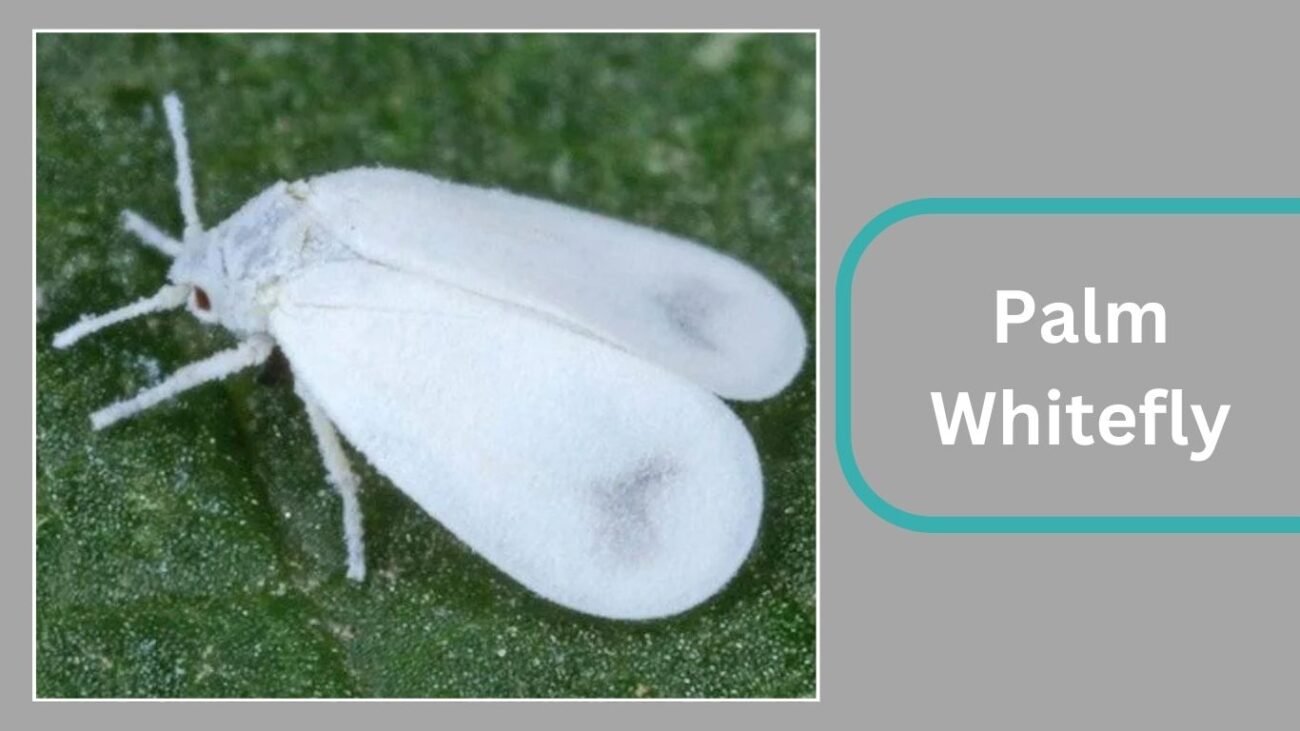
The Palm whitefly is a significant pest of palms and related ornamental plants. It is most damaging in tropical and subtropical areas where palms are widely grown for landscaping, food, and fiber. Infestations can weaken trees, reduce their ornamental value, and interfere with fruit production.
Identification
- Adults about 1.5–2 mm long
- White wings with a powdery, opaque coating
- Body pale yellow and usually hidden under the wings
- Eggs laid in clusters on the underside of palm fronds
- Nymphs are flat, oval, and covered with fine waxy secretions
Habitat
This species primarily infests palm trees, including coconut, date, and ornamental palms. It is found in tropical and subtropical regions around the world, particularly in landscapes and plantations where palms are abundant.
Behaviors
Palm whiteflies gather in colonies on the undersides of fronds, producing honeydew that fosters sooty mold development. Heavy infestations can cover large areas of foliage, blackening fronds and reducing photosynthesis. Severe attacks may weaken palms and cause premature frond drop.
Diet
They feed on phloem sap, withdrawing nutrients from palm fronds. Continuous feeding stresses host plants, reduces vigor, and lowers fruit quality and yield in palms like coconuts and dates.
14. Rice Whitefly (Aleurocybotus indicus)

The Rice whitefly is a pest primarily associated with rice cultivation, though it may also attack other grasses and related crops. It is considered an emerging pest in some rice-growing regions, where heavy infestations can reduce yields by weakening plants and transmitting diseases.
Identification
- Adults are very small, about 1–1.5 mm long
- White, powdery wings with a delicate, translucent appearance
- Body pale yellow, slender, and hidden beneath the wings
- Eggs laid in small groups on the underside of rice leaves
- Nymphs are flat, oval, and greenish to yellowish in color
Habitat
This species is found mainly in rice fields in tropical and subtropical regions. It thrives in humid environments with dense vegetation, particularly in standing water conditions typical of paddy fields.
Behaviors
Rice whiteflies form colonies on the undersides of rice leaves. They excrete honeydew, which encourages sooty mold growth and interferes with photosynthesis. Their rapid reproduction allows populations to build up quickly, especially in monoculture rice systems.
Diet
They feed on phloem sap of rice plants, reducing plant vigor and photosynthetic efficiency. Continuous feeding leads to leaf yellowing, stunted growth, and yield reduction. In severe infestations, plants may dry prematurely, affecting grain quality and harvest.
15. Mango Whitefly (Aleurodicus cocois)

The Mango whitefly is a destructive pest of mango and other tropical fruit trees. It weakens plants through direct feeding and by promoting the growth of sooty mold. Infestations can reduce fruit yield and quality, making it a significant concern in mango cultivation areas.
Identification
- Adults about 2–3 mm long, larger than many whitefly species
- White, powdery wings with a broad, opaque appearance
- Pale yellow body concealed beneath the wings
- Eggs laid in irregular clusters on leaf undersides
- Nymphs oval, flat, and covered with waxy secretions
Habitat
This species is primarily found in tropical and subtropical regions where mango trees are cultivated. It also infests coconut, avocado, guava, and various ornamental trees and shrubs.
Behaviors
Mango whiteflies form dense colonies on the underside of leaves. They excrete large amounts of honeydew, fostering sooty mold that blackens leaves and fruits. Heavy infestations reduce photosynthesis, cause premature leaf drop, and lower fruit marketability.
Diet
Their diet consists of phloem sap extracted from mango and other host plants. Continuous feeding weakens trees, reduces fruit yield, and negatively impacts the quality of both fresh and processed mango products.