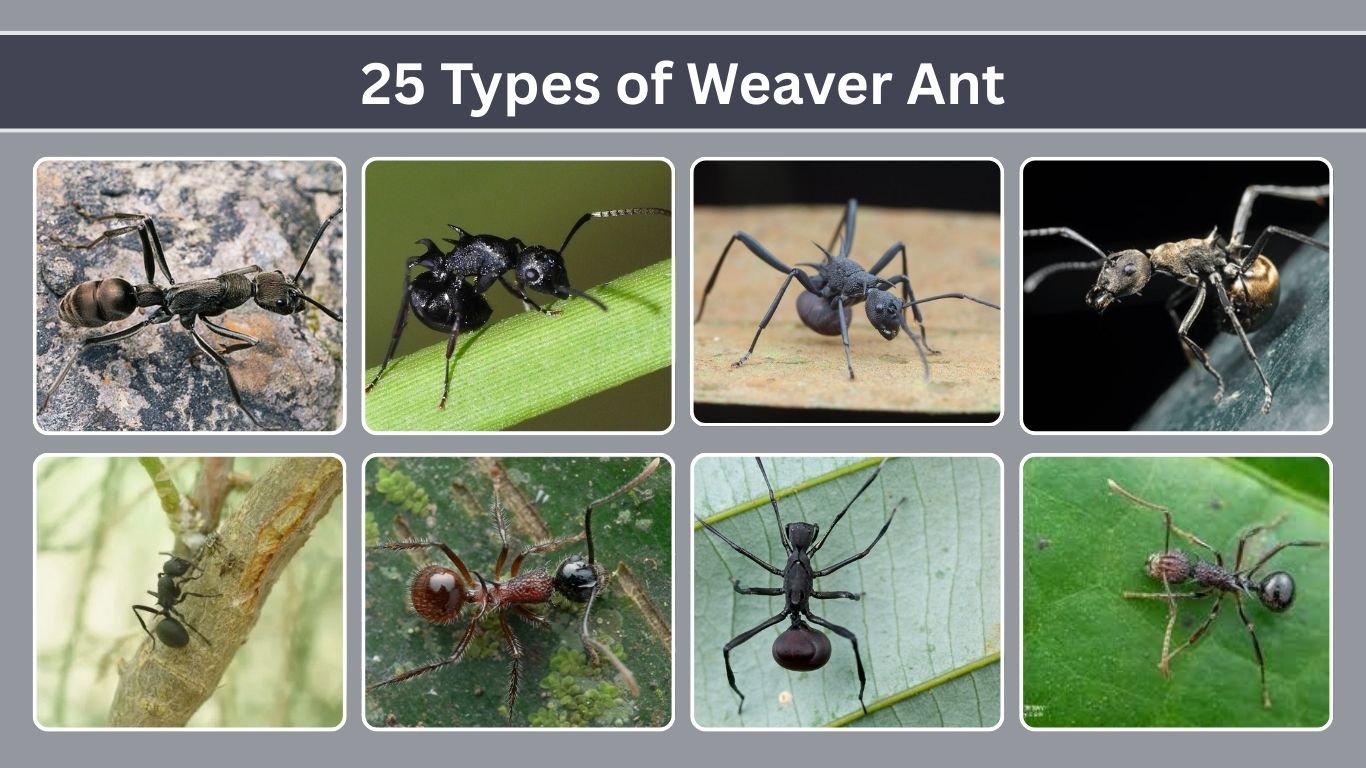
Weaver ants are fascinating social insects known for their unique ability to weave leaves into nests using larval silk. Found mainly in tropical and subtropical regions, these ants display extraordinary cooperation, complex colony structures, and strong territorial behaviors. This compilation highlights 25 types of weaver ants, focusing on their identification, habitats, behaviors, diets, and lifecycles, offering insight into their ecological importance and survival strategies.
1. Oecophylla smaragdina
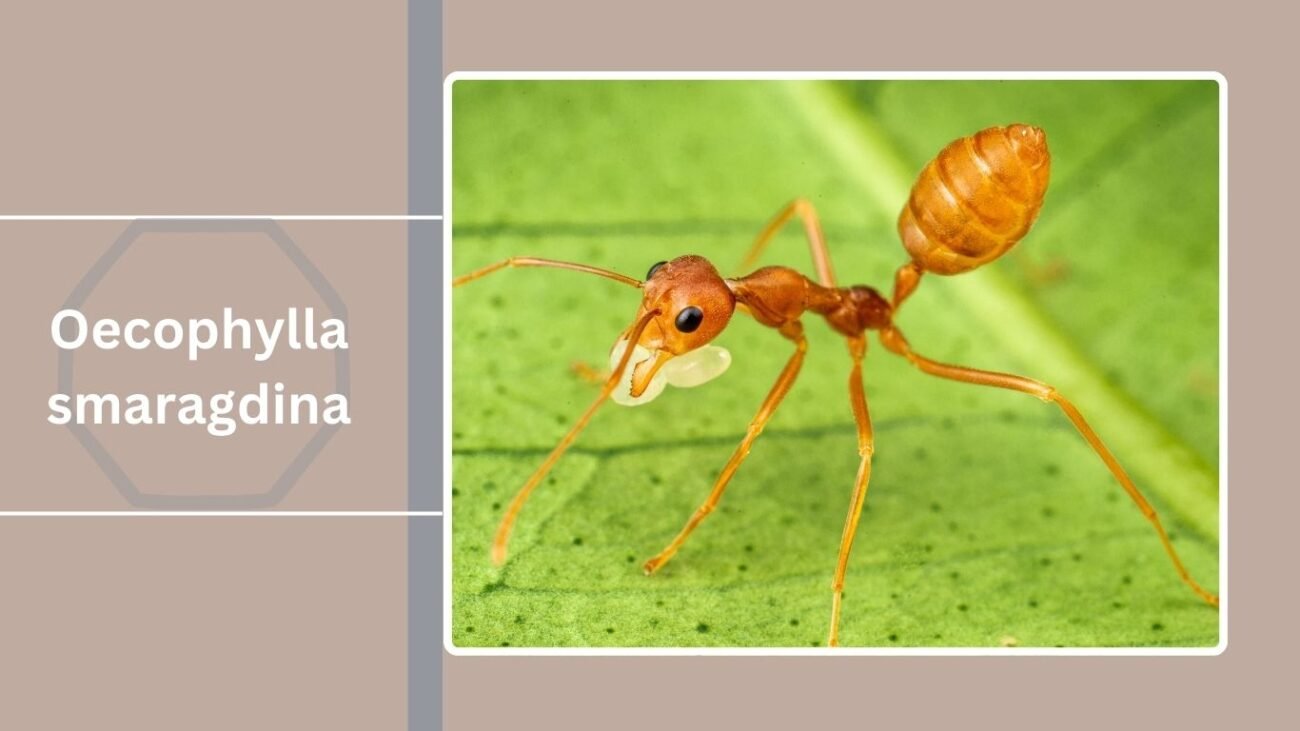
The Asian weaver ant (Oecophylla smaragdina) is one of the most well-known species of weaver ants. It is famous for its nest-building behavior using leaves bound with silk produced by their larvae. These ants are widely distributed across tropical Asia and northern Australia and play a significant role in ecological balance as predators and biocontrol agents.
Identification
- Distinct reddish-brown to orange body color
- Workers vary in size, with major and minor castes
- Strong mandibles used for defense and prey capture
- Long legs adapted for moving among tree canopies
- Large compound eyes providing excellent vision
Habitat
O. smaragdina inhabits tropical and subtropical regions, primarily in trees and shrubs. They are arboreal and rarely nest on the ground. Their colonies construct elaborate leaf nests in the canopy by binding leaves together with larval silk.
Behavior
These ants are highly social and cooperative. Workers display aggressive territorial defense and can form living chains to pull leaves together during nest building. They communicate using pheromones and coordinated movement, ensuring colony survival and expansion.
Diet
The species is omnivorous but primarily predatory. They feed on small insects and other arthropods, helping control pest populations. They also consume honeydew from sap-sucking insects like aphids and scale insects, forming mutualistic associations.
Lifecycle
The lifecycle begins with the queen laying eggs that develop into larvae, pupae, and eventually adult ants. Colonies are large, often containing hundreds of thousands of individuals, and may spread across multiple interconnected nests. Queens are long-lived, while workers and soldiers have shorter lifespans but continuously replenish the colony.
2. Oecophylla longinoda
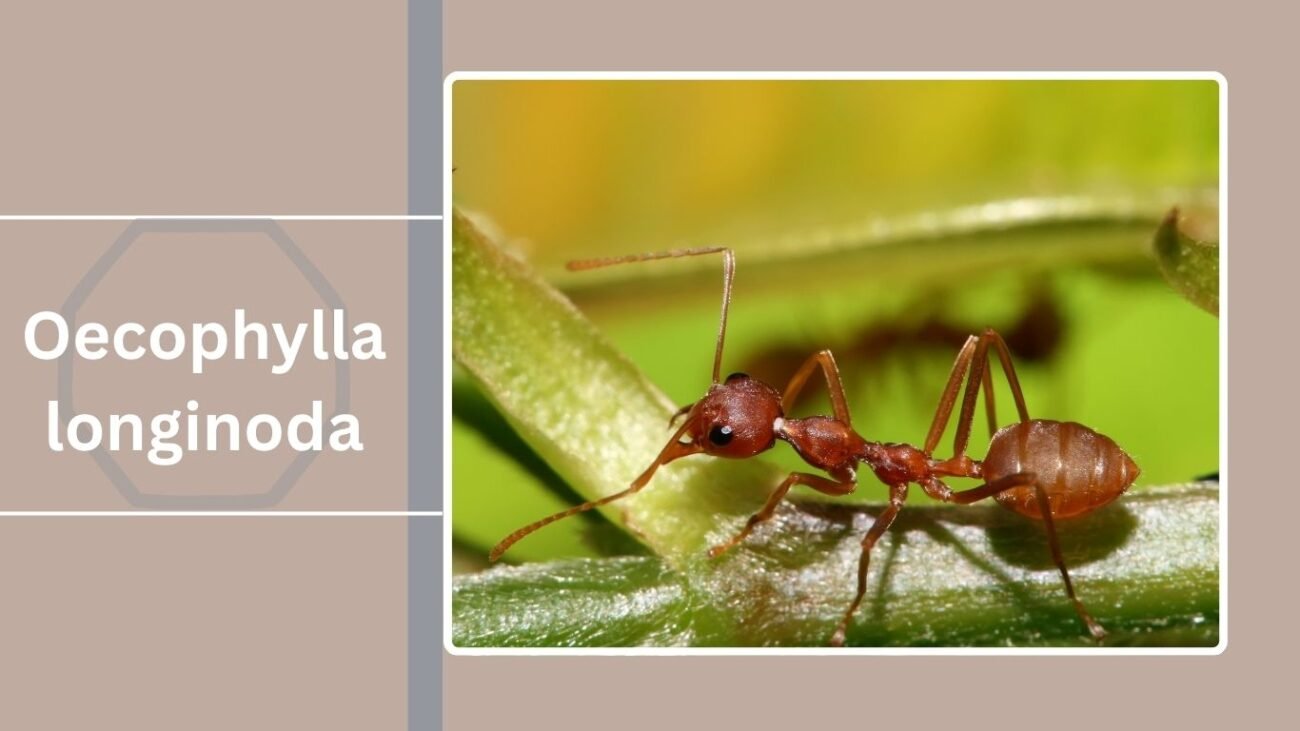
The African weaver ant (Oecophylla longinoda) is a close relative of the Asian species but native to the tropical regions of Africa. Like its Asian counterpart, it is renowned for weaving leaves into nests using silk secreted by its larvae. This species has been traditionally used in biological pest control due to its aggressive predatory behavior against harmful insects.
Identification
- Bright orange to reddish-brown coloration
- Workers show polymorphism: major workers (larger) and minor workers (smaller)
- Elongated body and long legs for canopy movement
- Strong, serrated mandibles for hunting and defense
- Well-developed compound eyes for enhanced vision
Habitat
This species is commonly found in West, Central, and East Africa. Colonies thrive in tropical forests, fruit orchards, and agricultural lands. They build their nests in the tree canopy, weaving leaves into large, protective structures.
Behavior
O. longinoda ants are highly territorial and aggressive toward intruders. They display strong cooperative behavior, working together to capture prey, defend their colony, and build nests. They also exhibit a form of biological control by reducing populations of agricultural pests.
Diet
Their diet is mainly carnivorous, consisting of insects, small arthropods, and other protein-rich food sources. Additionally, they feed on honeydew excreted by aphids and other sap-feeding insects, forming mutualistic relationships.
Lifecycle
The lifecycle mirrors that of other weaver ants: eggs laid by the queen hatch into larvae, which eventually pupate and emerge as adults. Colonies may contain hundreds of thousands of individuals with multiple interconnected nests across large trees. Queens can live several years, while workers are replaced more frequently to maintain colony strength.
3. Polyrhachis dives
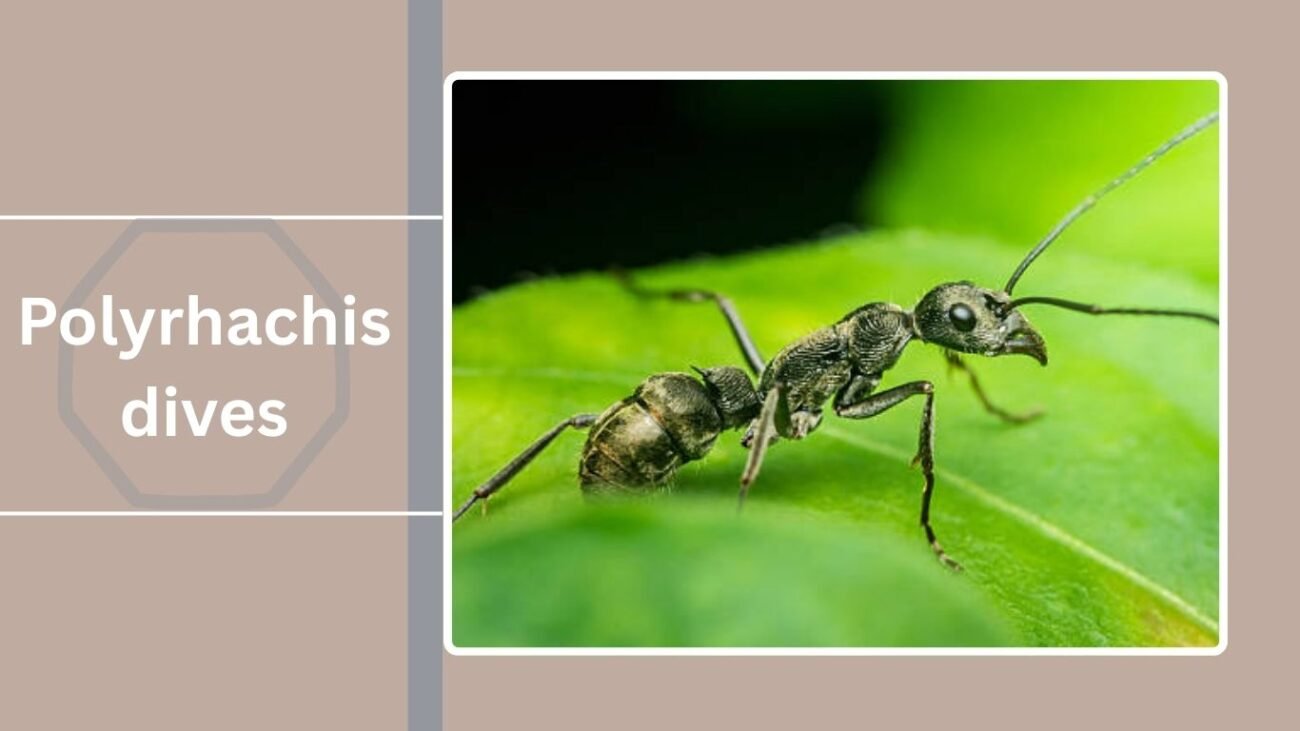
Polyrhachis dives is a species of weaver ant found across parts of Asia, including India, China, and Southeast Asia. Unlike Oecophylla ants, this species belongs to the genus Polyrhachis, but it also exhibits leaf-weaving behavior. It is known for its ability to form large colonies and construct multiple nests across tree canopies.
Identification
- Body color ranges from black to dark brown with a metallic sheen
- Workers have a distinct spiny appearance on the thorax
- Long legs suitable for arboreal life
- Strong mandibles used for defense and nest construction
- Medium-sized ants compared to Oecophylla species
Habitat
P. dives primarily inhabit tropical and subtropical regions of Asia. They live in forested areas, orchards, and plantations. Their nests are built in the canopy by weaving leaves together with larval silk, often forming clusters of nests in a single tree.
Behavior
These ants are social and highly coordinated in nest-building and defense. Colonies are polydomous (having multiple nests) and can spread widely. They are aggressive when threatened and work collectively to protect their territory.
Diet
P. dives is omnivorous. They hunt small insects for protein and also feed on honeydew produced by sap-feeding insects. Their diet helps regulate pest populations while maintaining mutualistic relationships with honeydew-producing species.
Lifecycle
The queen lays eggs that develop into larvae, pupae, and adult workers or reproductives. Colonies are typically large and long-lasting, with new nests continuously being added. Worker ants show division of labor, ensuring efficient food gathering, defense, and brood care.
4. Polyrhachis bihamata

Polyrhachis bihamata is a species of weaver ant from the genus Polyrhachis. It is notable for its distinctive spines and strong exoskeleton, which give it a more armored appearance than many other ants. This species is distributed across parts of Asia and is well-adapted to life in forest canopies, where it constructs protective leaf nests.
Identification
- Dark brown to black body coloration with a metallic luster
- Two long, backward-curving spines on the thorax (its most distinctive feature)
- Strong and robust body compared to other Polyrhachis species
- Medium-sized workers with pronounced mandibles
- Long legs allowing ease of movement in trees
Habitat
This species is primarily arboreal, found in tropical and subtropical forests. Nests are built in trees and shrubs using larval silk to bind leaves together. Colonies often occupy multiple nests distributed across a canopy.
Behavior
P. bihamata is social and cooperative, displaying aggressive defensive strategies against intruders. They are skilled nest builders, weaving leaves tightly into secure shelters. Colonies are territorial and defend their nesting sites vigorously against rival ants or predators.
Diet
Their diet consists mainly of insects and other arthropods, which they hunt actively. They also rely on sugary substances such as nectar and honeydew from aphids or scale insects. These dual food sources provide both protein and energy for the colony.
Lifecycle
The lifecycle follows the typical ant pattern: eggs → larvae → pupae → adults. Colonies are large, with a structured hierarchy of queen, workers, and reproductives. Nests are expanded over time, and colonies can persist for years, maintained through continuous brood production and cooperative labor.
5. Polyrhachis illaudata
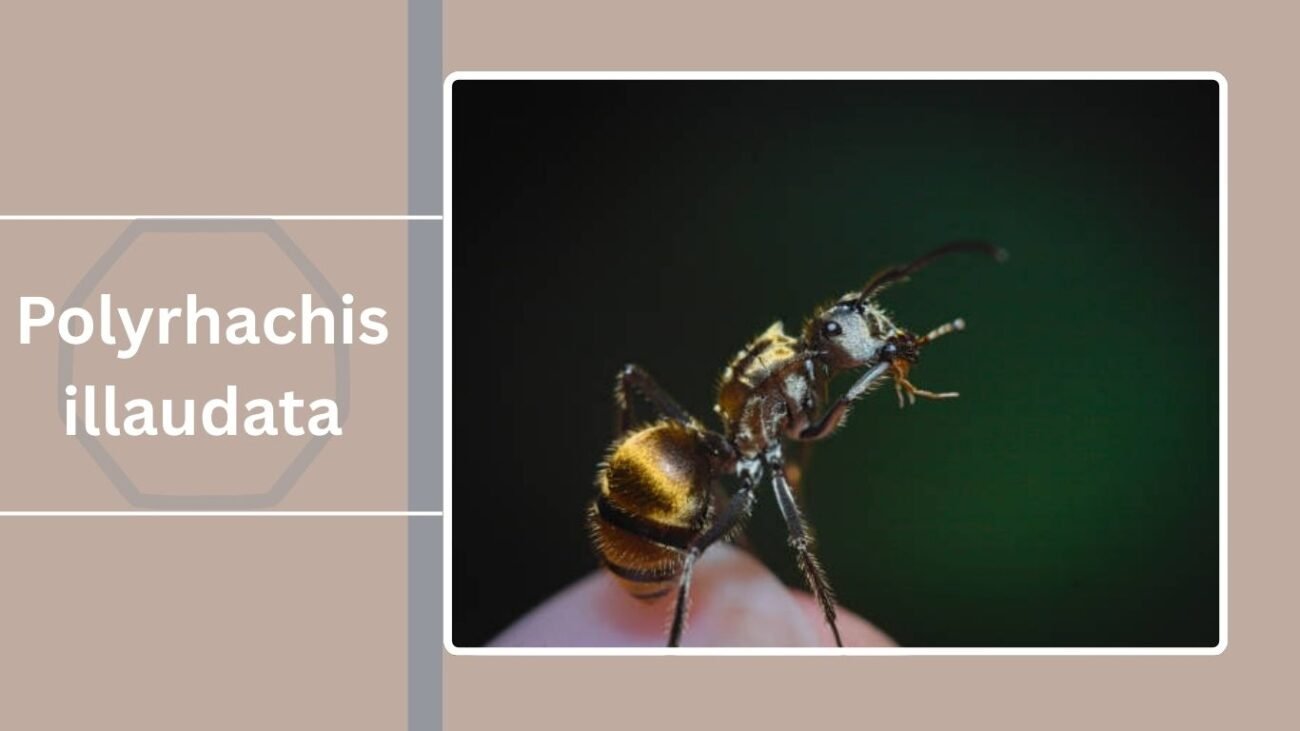
Polyrhachis illaudata is a spiny weaver ant species within the genus Polyrhachis, widely recognized for its distinctive appearance and arboreal nesting habits. It thrives in tropical and subtropical regions of Asia and is known for building leaf nests in trees, similar to other weaver ants.
Identification
- Shiny black body with a metallic sheen
- Distinctive thoracic spines, sharp and prominent
- Medium-sized workers with slender bodies
- Long legs adapted for canopy movement
- Strong mandibles used for defense and food processing
Habitat
This species inhabits forested areas, orchards, and plantations across Asia. Colonies build multiple nests in the canopy by weaving leaves together with larval silk. They are predominantly arboreal and avoid ground nesting.
Behavior
P. illaudata is highly social and cooperative. Colonies are territorial, with aggressive workers defending their nests against intruders. They exhibit strong teamwork in nest building, hunting, and colony defense.
Diet
The diet consists of protein from captured insects and energy sources like nectar and honeydew from sap-sucking insects. Their predatory habits help regulate insect populations, while their mutualistic interactions with honeydew producers benefit both species.
Lifecycle
The colony begins with a queen laying eggs that develop into larvae, pupae, and adults. Workers care for the brood and maintain nests. Colonies can be polydomous (multiple nests within a tree or across nearby trees) and persist for many years with a stable population structure.
6. Polyrhachis proxima
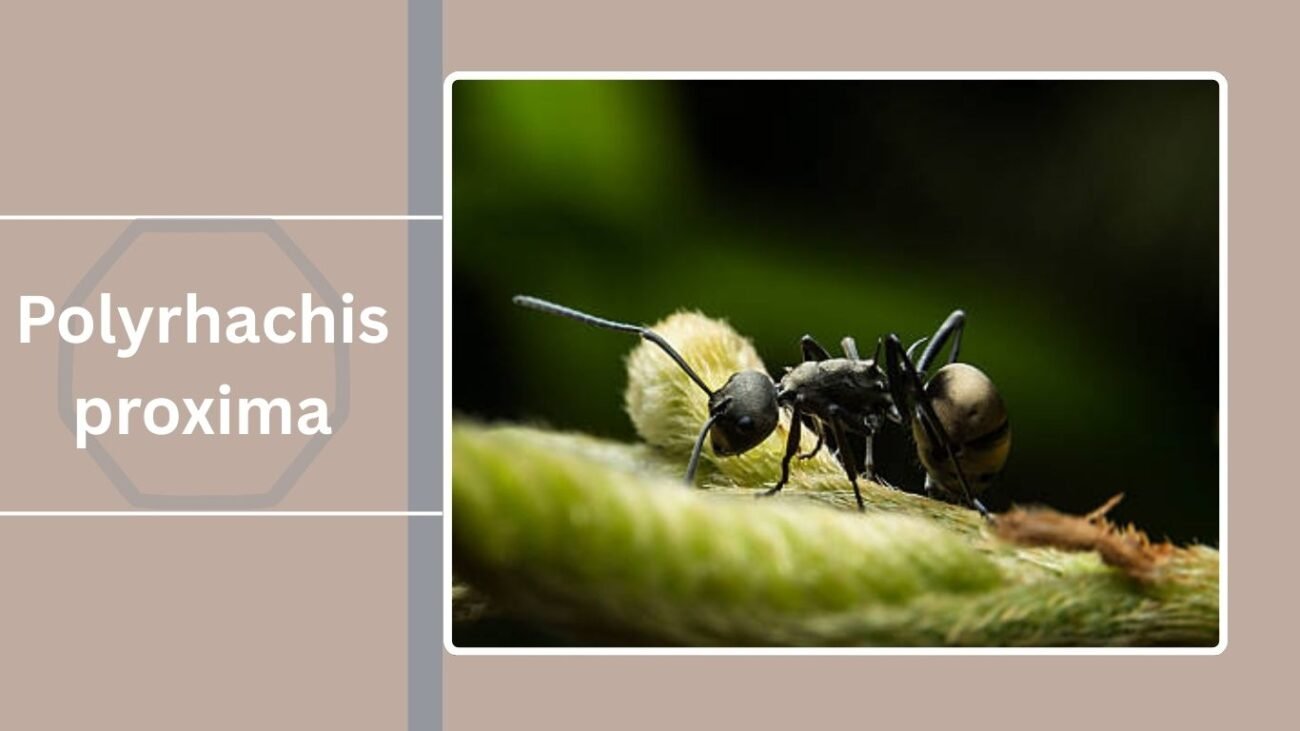
Polyrhachis proxima is another member of the spiny ant group within the genus Polyrhachis. It is known for its defensive thoracic spines and arboreal lifestyle. Like many of its relatives, it demonstrates cooperative nest-building behavior, weaving leaves into protective shelters in the forest canopy.
Identification
- Black to dark brown body with a smooth, glossy surface
- Noticeable thoracic spines, shorter than some related species
- Medium-sized workers with slender bodies
- Long legs designed for efficient movement among branches
- Strong jaws for capturing prey and nest construction tasks
Habitat
This species inhabits tropical forests, secondary woodlands, and plantations. They build nests high in the canopy, weaving leaves with larval silk. Colonies may establish multiple nests across interconnected branches for expansion and protection.
Behavior
P. proxima is highly territorial and defensive, often responding aggressively to disturbances. Workers cooperate extensively during nest construction, foraging, and colony defense. They exhibit strong social organization and coordination in all tasks.
Diet
The species primarily feeds on insects and other arthropods, providing protein for colony growth. Additionally, they consume nectar and honeydew from hemipterans, which supply carbohydrate-rich energy for workers.
Lifecycle
Colonies begin with the queen laying eggs, which pass through the larval and pupal stages before becoming adult workers or reproductives. With polydomous nesting habits, colonies can spread widely across a tree canopy and sustain large populations over time.
7. Polyrhachis armata
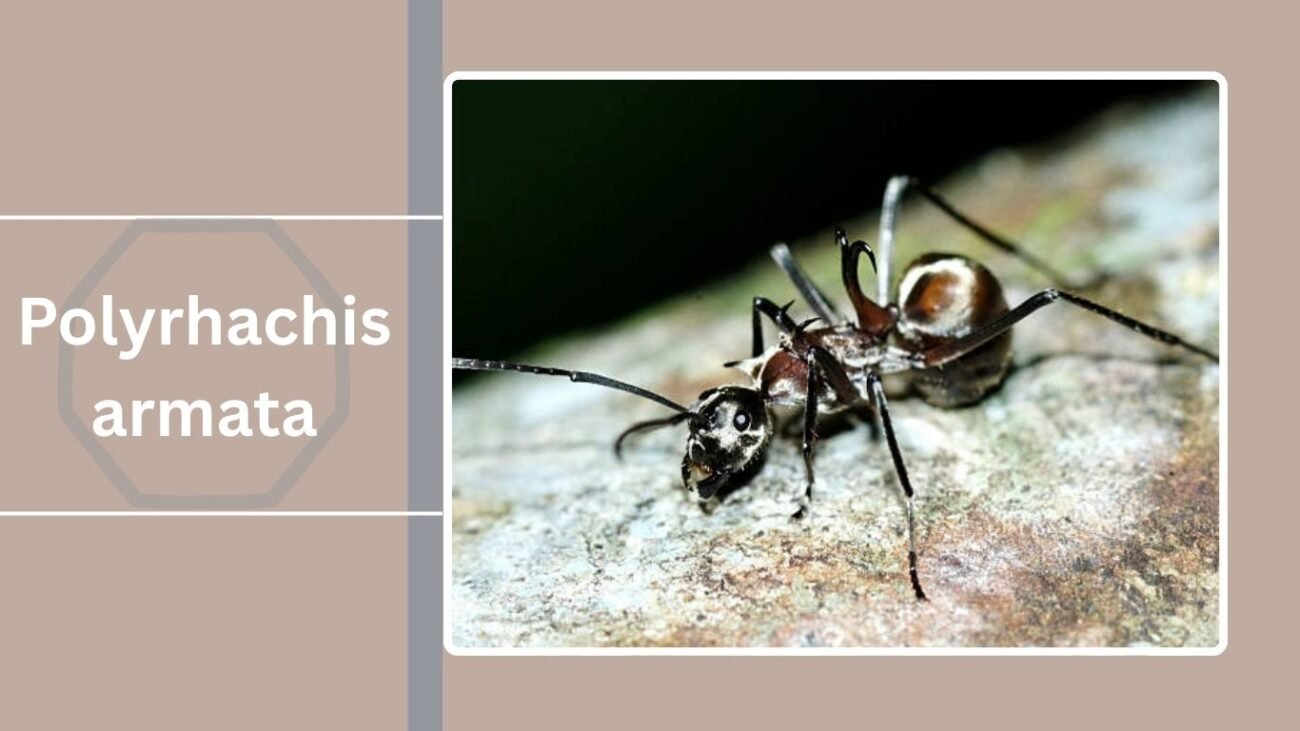
Polyrhachis armata is a striking spiny ant species belonging to the genus Polyrhachis. It is easily recognized by its sharp thoracic spines, which serve as a key defensive adaptation. Known for its arboreal lifestyle, this species thrives in tropical and subtropical regions, where it builds intricate leaf nests.
Identification
- Dark black to deep brown body, sometimes with a faint metallic sheen
- Prominent thoracic spines arranged in pairs, giving a strong armored look
- Medium to large-sized workers with robust bodies
- Long legs adapted for tree-dwelling movement
- Strong mandibles used for cutting, carrying, and defense
Habitat
P. armata primarily inhabits forest canopies in tropical and subtropical Asia. Colonies establish themselves in trees and shrubs, constructing leaf nests bound with larval silk. They prefer elevated, leafy habitats and rarely forage on the ground.
Behavior
This species is highly territorial and exhibits aggressive defense against intruders. Workers cooperate in nest building, foraging, and colony protection. They are skilled at pulling leaves together, often forming chains of ants to construct secure nests.
Diet
Their diet includes a mixture of prey and plant-based foods. They actively hunt insects and other small arthropods for protein while also consuming nectar and honeydew from sap-feeding insects as a source of carbohydrates.
Lifecycle
The queen initiates the colony by laying eggs that develop into larvae, pupae, and adults. Colonies are typically polydomous, consisting of multiple nests across the canopy. Populations are stable and long-lived, maintained by the continuous production of workers and brood care by the colony.
8. Polyrhachis sexspinosa
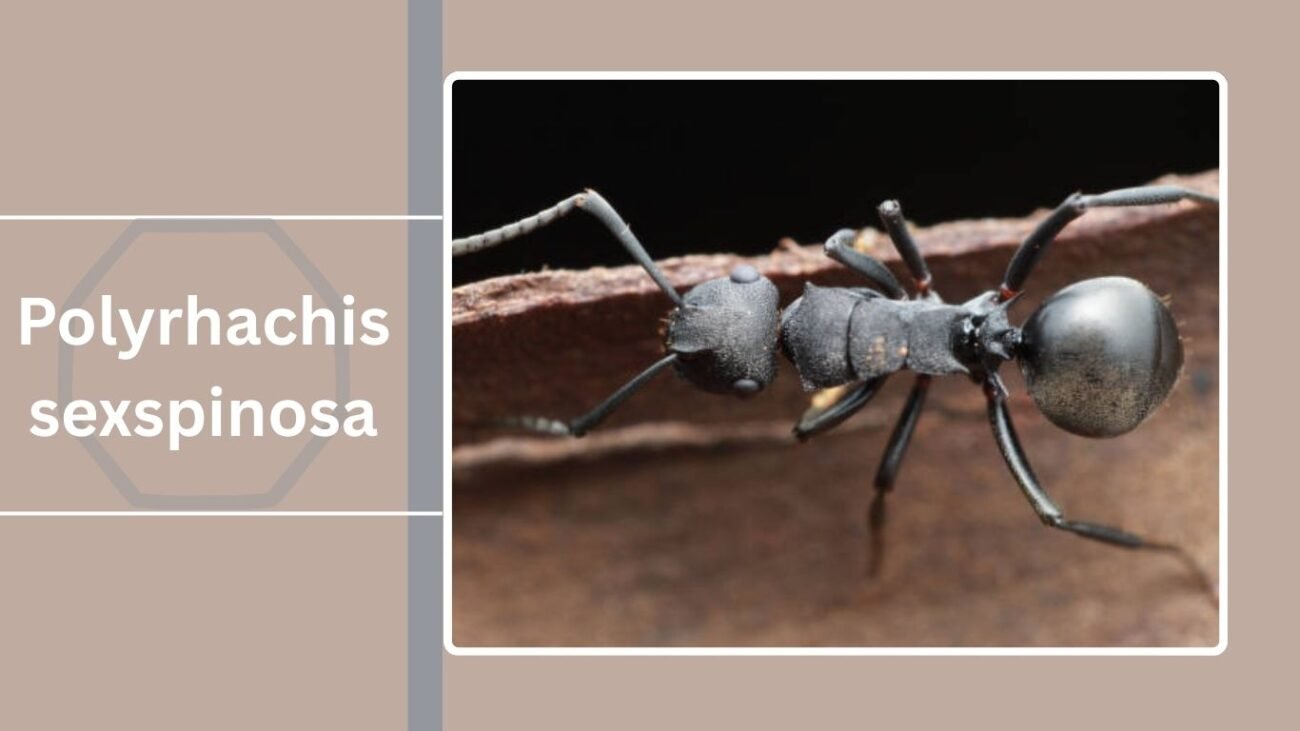
Polyrhachis sexspinosa is a remarkable spiny ant species from the genus Polyrhachis, easily distinguished by the six prominent spines on its thorax. This striking appearance makes it one of the most recognizable members of its group. It is arboreal and displays the typical weaver ant behavior of nest construction using larval silk.
Identification
- Black or dark brown body with a shiny surface
- Six long, sharp thoracic spines (its most distinguishing feature)
- Medium-sized workers with elongated bodies
- Long legs enabling swift movement in the canopy
- Powerful mandibles suited for defense and hunting
Habitat
This species inhabits tropical and subtropical forests across Asia. It prefers living in trees, where it constructs nests by binding leaves with larval silk. Colonies are often polydomous, spreading across several nests within the same tree canopy.
Behavior
P. sexspinosa is highly territorial and defensive. Workers cooperate extensively in nest construction, often forming chains to pull leaves together. They show aggression toward intruders and protect both their nests and food sources.
Diet
Their diet mainly consists of insects and other arthropods, which provide protein for colony growth. Additionally, they feed on nectar and honeydew, which supply carbohydrates and sustain worker activity.
Lifecycle
Colonies develop through the standard ant life stages: eggs → larvae → pupae → adults. The queen is responsible for egg-laying, while workers maintain the colony, forage, and defend the nests. Colonies are large and long-lasting, with multiple nests supporting stable populations.
9. Polyrhachis lacteipennis
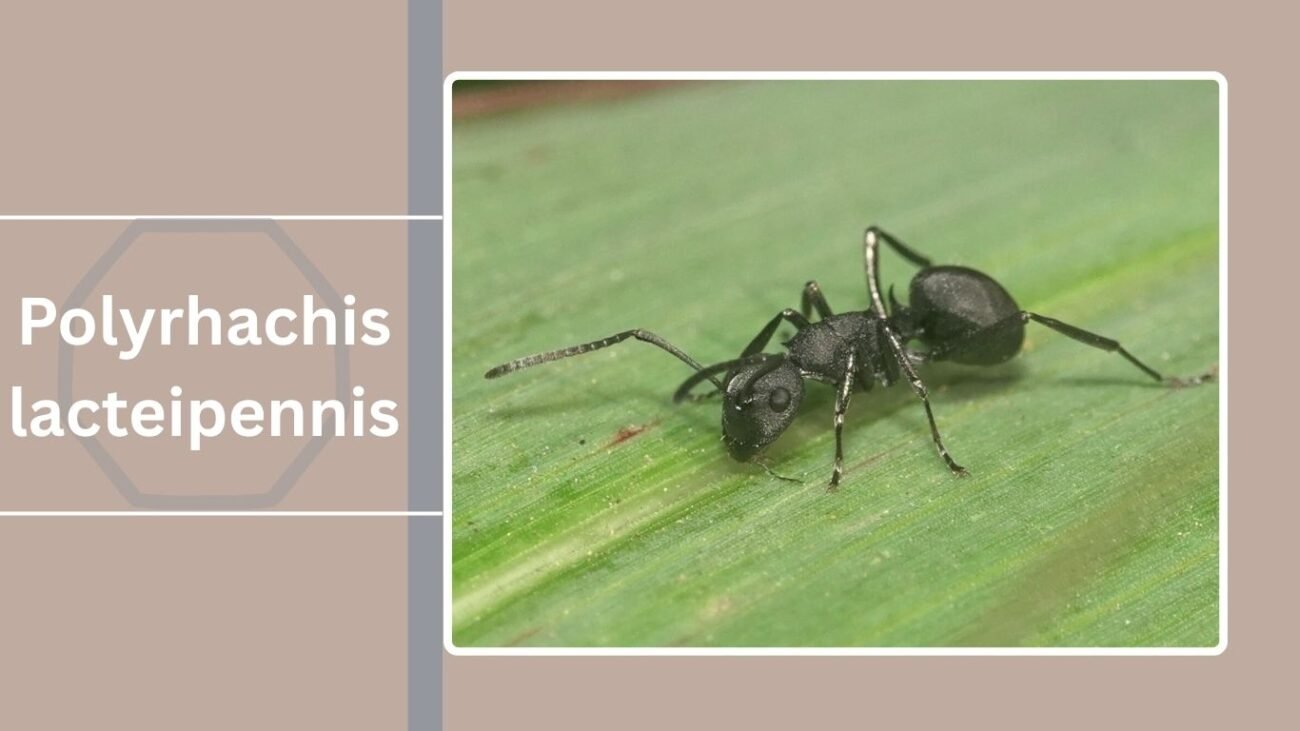
Polyrhachis lacteipennis is a lesser-known but distinctive species within the genus Polyrhachis. Like many of its relatives, it is an arboreal ant that constructs nests from leaves bound together with silk produced by its larvae. Its unique body form and spines make it relatively easy to identify in the wild.
Identification
- Dark brown to black body, sometimes with a slight metallic reflection
- Distinct thoracic spines, though shorter and less curved than in some relatives
- Medium-sized workers with a slender body build
- Long legs adapted for canopy life
- Strong mandibles used for hunting and nest-building tasks
Habitat
This species is typically found in tropical and subtropical forested areas, particularly in Southeast Asia. Nests are constructed high in trees or shrubs, using leaves and silk to create multiple interconnected shelters.
Behavior
P. lacteipennis is highly social, exhibiting cooperative nest-building and foraging behavior. Colonies are defensive and will aggressively protect their territory against invaders. Workers coordinate effectively in pulling leaves together, demonstrating strong teamwork.
Diet
Their primary diet includes small insects and arthropods, providing essential proteins. They also feed on nectar and honeydew secreted by sap-feeding insects, ensuring a balanced intake of carbohydrates for energy.
Lifecycle
Colonies begin with a queen establishing a nest and laying eggs. These develop into larvae, pupae, and then adults. Over time, colonies expand, becoming polydomous with multiple nests across tree canopies. With their cooperative structure, these colonies can thrive for years.
10. Polyrhachis lucidula
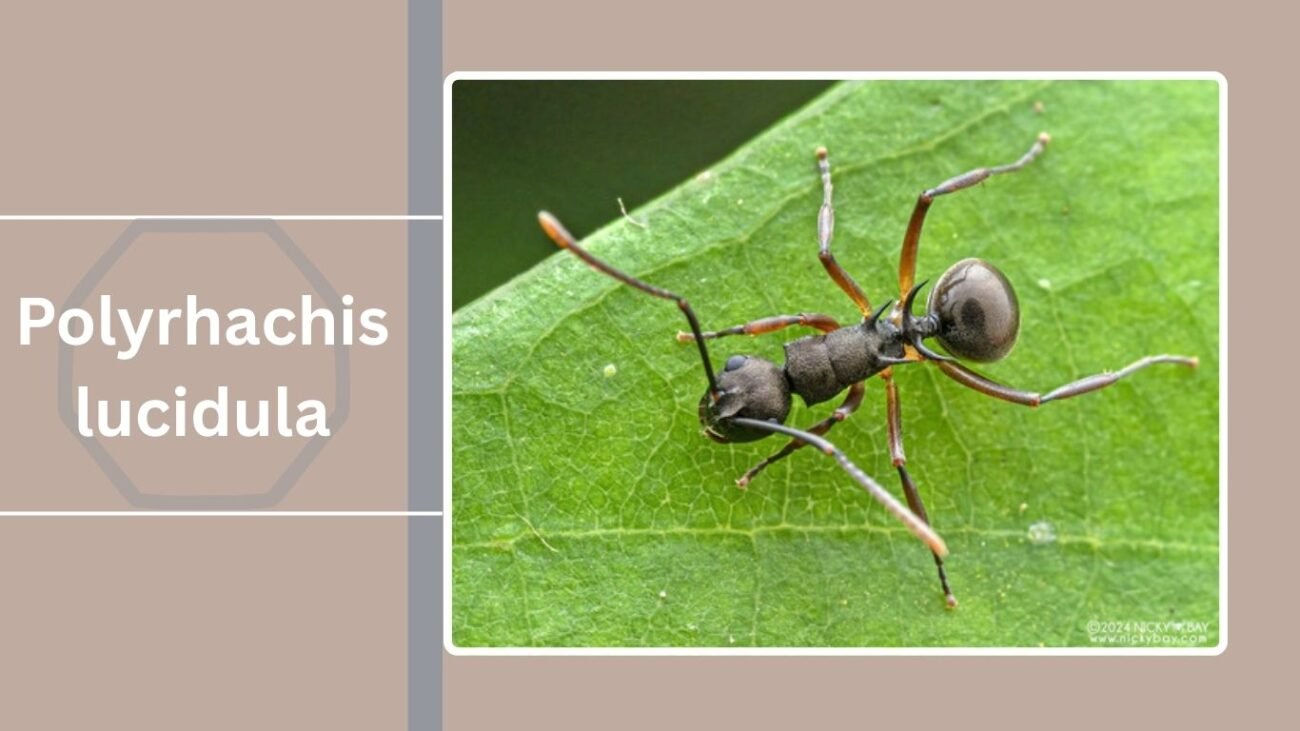
Polyrhachis lucidula is a spiny ant species belonging to the genus Polyrhachis. Known for its glossy body and prominent spines, it is an arboreal species that constructs nests in trees using larval silk, similar to other weaver ants. Its adaptability allows it to thrive in different tropical habitats.
Identification
- Shiny black to dark brown body with a smooth surface
- Noticeable thoracic spines projecting outward
- Medium-sized workers with elongated, slender bodies
- Long legs adapted for canopy navigation
- Strong mandibles effective for prey capture and nest work
Habitat
This species is found in tropical and subtropical Asia, especially in forested areas and plantations. They build leaf nests in the canopy, often establishing several nests within one tree or across connected branches.
Behavior
P. lucidula exhibits strong social cooperation and defensive behavior. Workers aggressively defend their nests and food sources. They are also efficient nest-builders, using larval silk to bind leaves into secure shelters.
Diet
Their diet is omnivorous, consisting of live insect prey (protein) as well as nectar and honeydew (carbohydrates). This dietary flexibility helps sustain large and active colonies.
Lifecycle
The lifecycle begins with a queen laying eggs that progress into larvae, pupae, and adults. Colonies are polydomous and may grow to significant sizes, with coordinated worker activity ensuring food collection, brood care, and defense.
11. Polyrhachis tibialis
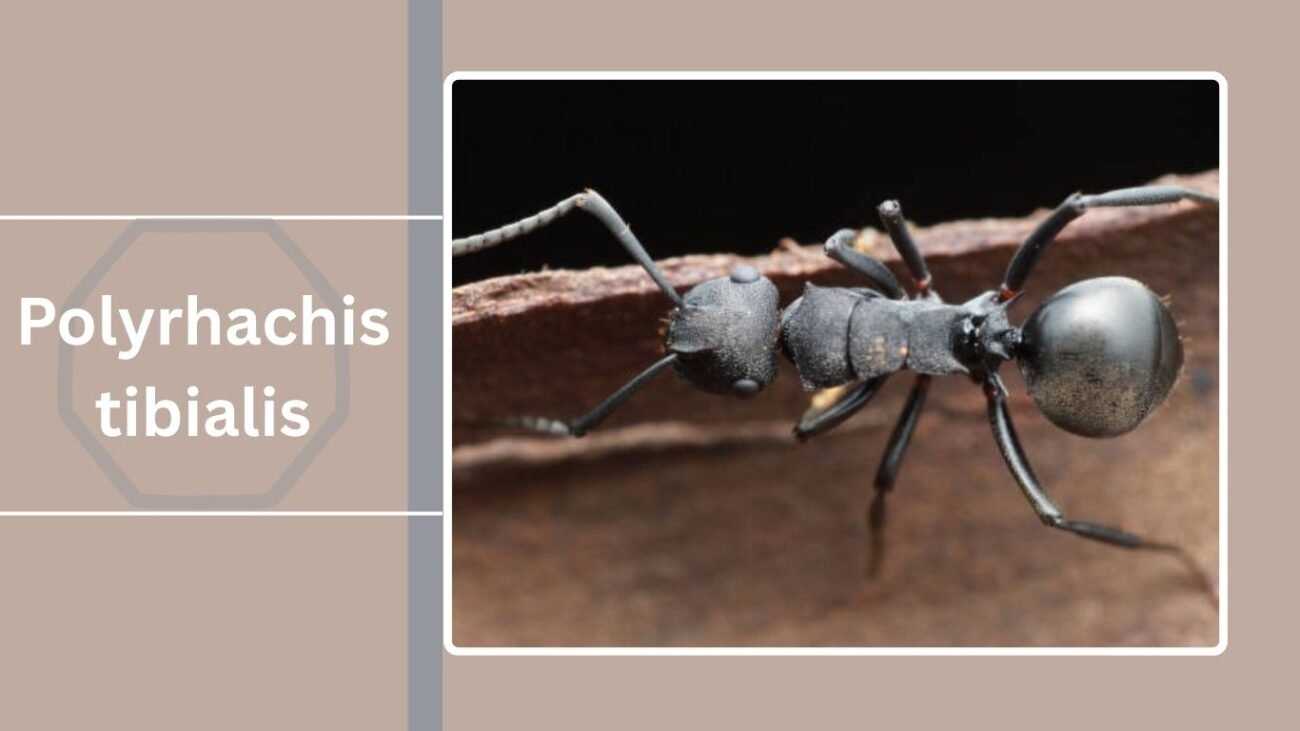
Polyrhachis tibialis is a distinctive arboreal ant belonging to the genus Polyrhachis. It is recognized for its characteristic body structure and defensive spines, which make it stand out among spiny ants. Like other weaver ants, it uses larval silk to weave leaves into protective nests in the canopy.
Identification
- Dark brown to black body with a robust build
- Noticeable thoracic spines, shorter than in some related species
- Workers are medium-sized with elongated bodies
- Long legs adapted for tree-dwelling movement
- Strong mandibles used for defense and prey handling
Habitat
This species inhabits tropical forests, secondary growth areas, and plantations in parts of Asia. Colonies are arboreal and build their nests in tree canopies, binding leaves together into large clusters.
Behavior
P. tibialis is territorial and aggressive toward intruders. Workers cooperate extensively in tasks such as nest construction, defense, and foraging. They also exhibit the typical leaf-pulling behavior during nest building, often forming chains to close gaps.
Diet
Their diet is omnivorous, focusing on insect prey for protein and honeydew or nectar for carbohydrates. This dual diet supports colony growth and worker activity.
Lifecycle
Colonies are founded by a queen who lays eggs that develop into larvae, pupae, and adult ants. Workers expand the nest network over time, creating multiple interconnected nests. Colonies are long-lived and well-structured, with division of labor ensuring survival and stability.
12. Polyrhachis militaris
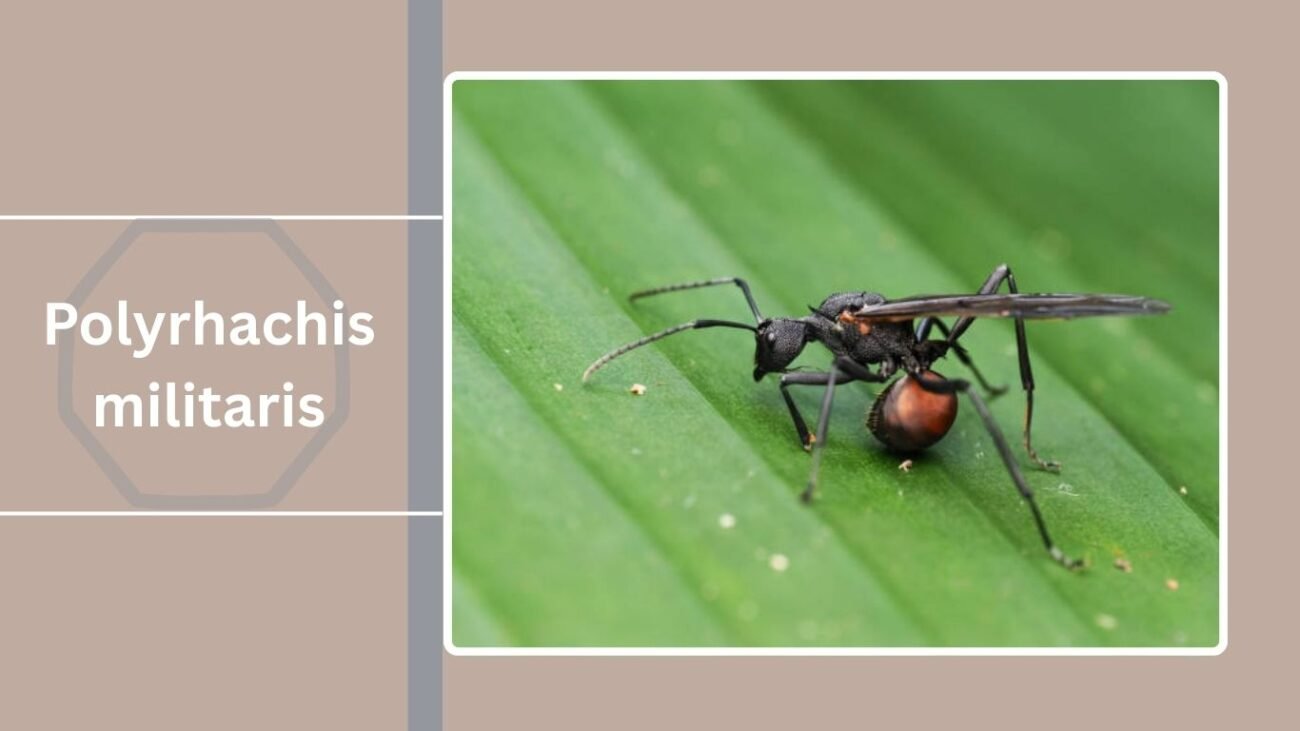
Polyrhachis militaris is a striking member of the genus Polyrhachis, recognized for its strong, spiny appearance and highly organized social behavior. As an arboreal species, it constructs nests in the canopy using leaves bound with larval silk, showing the typical weaver ant lifestyle.
Identification
- Dark black body, often with a glossy sheen
- Prominent thoracic spines, arranged in pairs, giving a strong defensive look
- Medium to large-sized workers with robust, muscular builds
- Long legs suited for canopy navigation
- Strong mandibles adapted for cutting, carrying, and colony defense
Habitat
This species is commonly found in tropical and subtropical forests across Asia. Colonies are arboreal, constructing multiple nests in trees and shrubs. They favor dense canopies that provide shelter and abundant food sources.
Behavior
P. militaris is aggressive and highly territorial. Workers cooperate in all colony activities, from nest building to foraging and defense. Their name “militaris” reflects their soldier-like organization and strong colony defense.
Diet
The ants are omnivorous, feeding on live insect prey for protein and on nectar or honeydew for carbohydrates. This combination sustains their large, active colonies and supports brood rearing.
Lifecycle
Colonies begin with a queen laying eggs, which develop into larvae, pupae, and adult ants. Over time, the colony expands into multiple interconnected nests. Colonies are large and long-lasting, with strong division of labor and effective cooperation among castes.
13. Polyrhachis laevissima
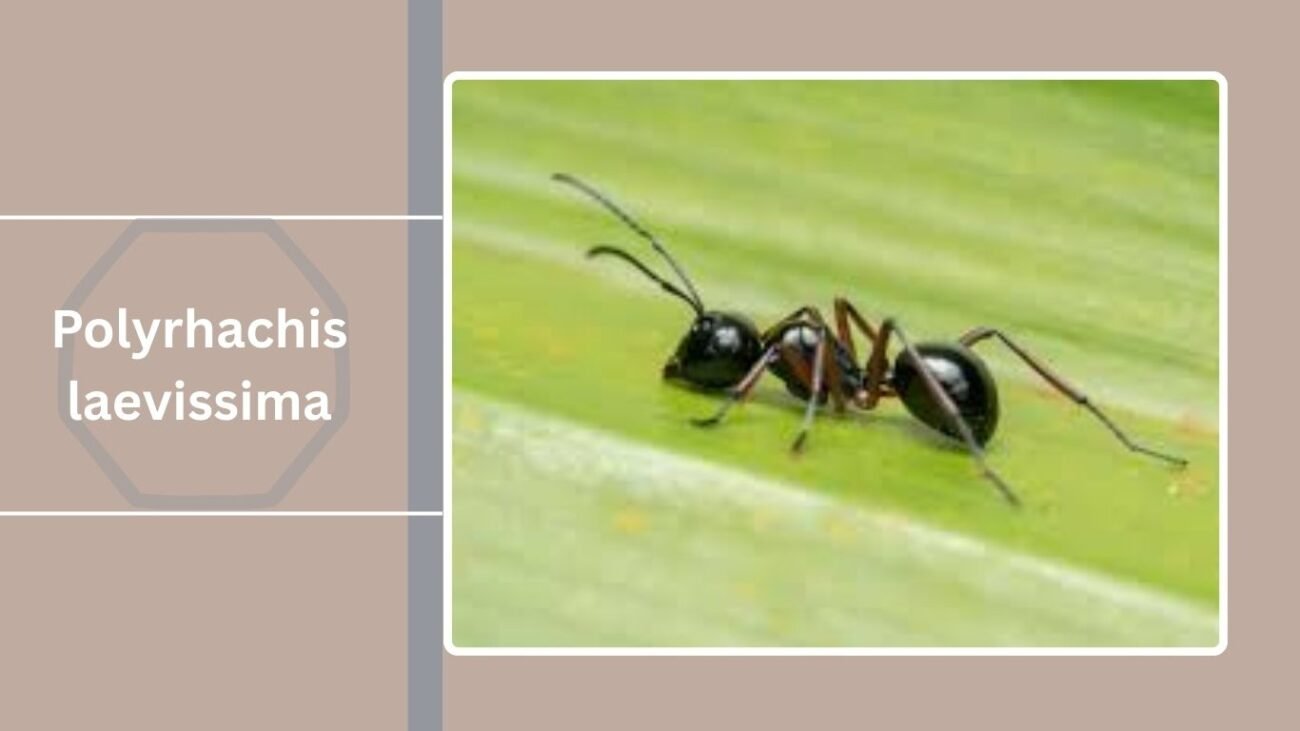
Polyrhachis laevissima is a distinctive arboreal ant species from the genus Polyrhachis. Known for its sleek body and characteristic spines, it is an effective nest-builder, weaving leaves together with larval silk. Its adaptability allows it to survive in varied tropical habitats across Asia.
Identification
- Smooth, shiny black body with a polished appearance
- Thoracic spines are present but shorter and less curved compared to other relatives
- Medium-sized workers with slender bodies
- Long legs designed for canopy movement
- Strong mandibles for nest-building and prey capture
Habitat
This species primarily inhabits tropical and subtropical forests, as well as plantations. They are arboreal, constructing multiple nests in the canopy using leaves and larval silk. Colonies often occupy interconnected nests across large trees.
Behavior
P. laevissima is highly social and cooperative. Workers show strong nest-building coordination, often forming chains to manipulate leaves. They are territorial and defend their nests aggressively against rival ants and predators.
Diet
Their diet includes protein from insects and small arthropods, supplemented with carbohydrates from nectar and honeydew. This balanced feeding habit supports both colony expansion and high worker activity levels.
Lifecycle
The lifecycle begins with a queen establishing the colony and laying eggs. These develop through larval and pupal stages before becoming adult workers or reproductives. Colonies are long-lasting, polydomous, and maintain stable populations through continuous reproduction.
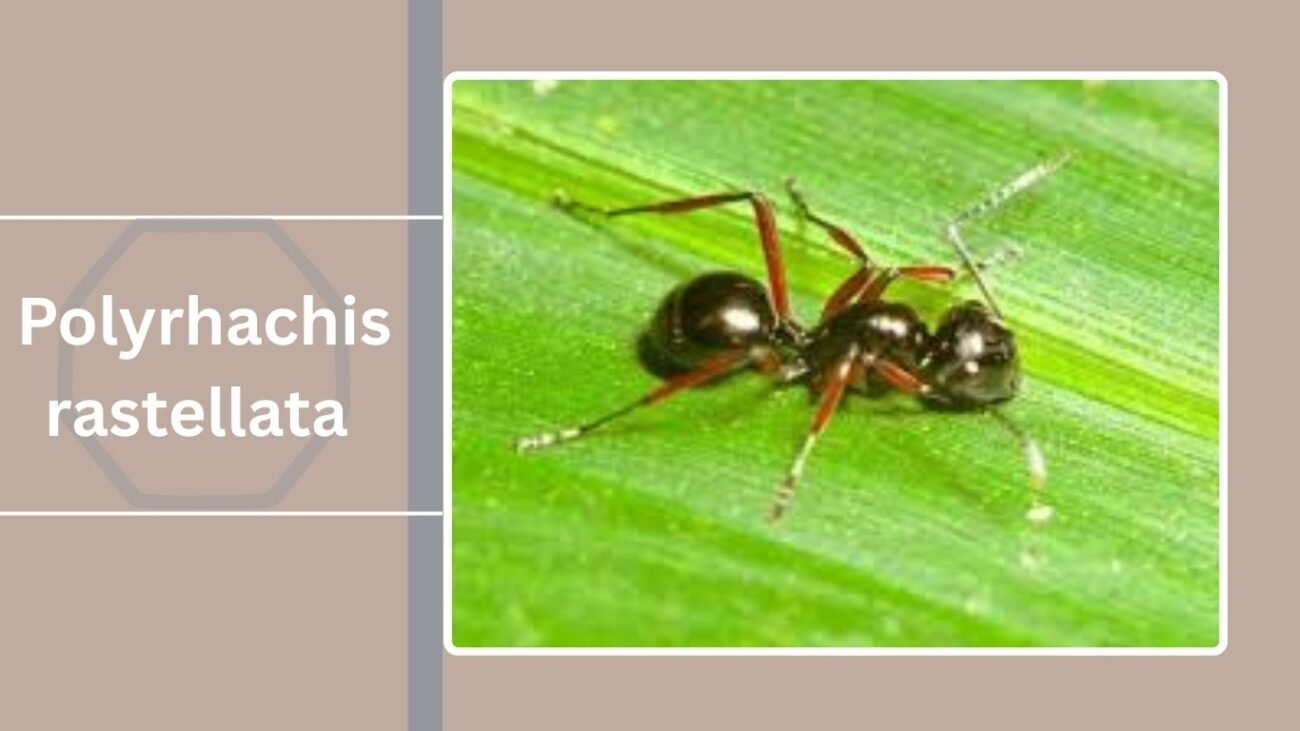
14. Polyrhachis rastellata
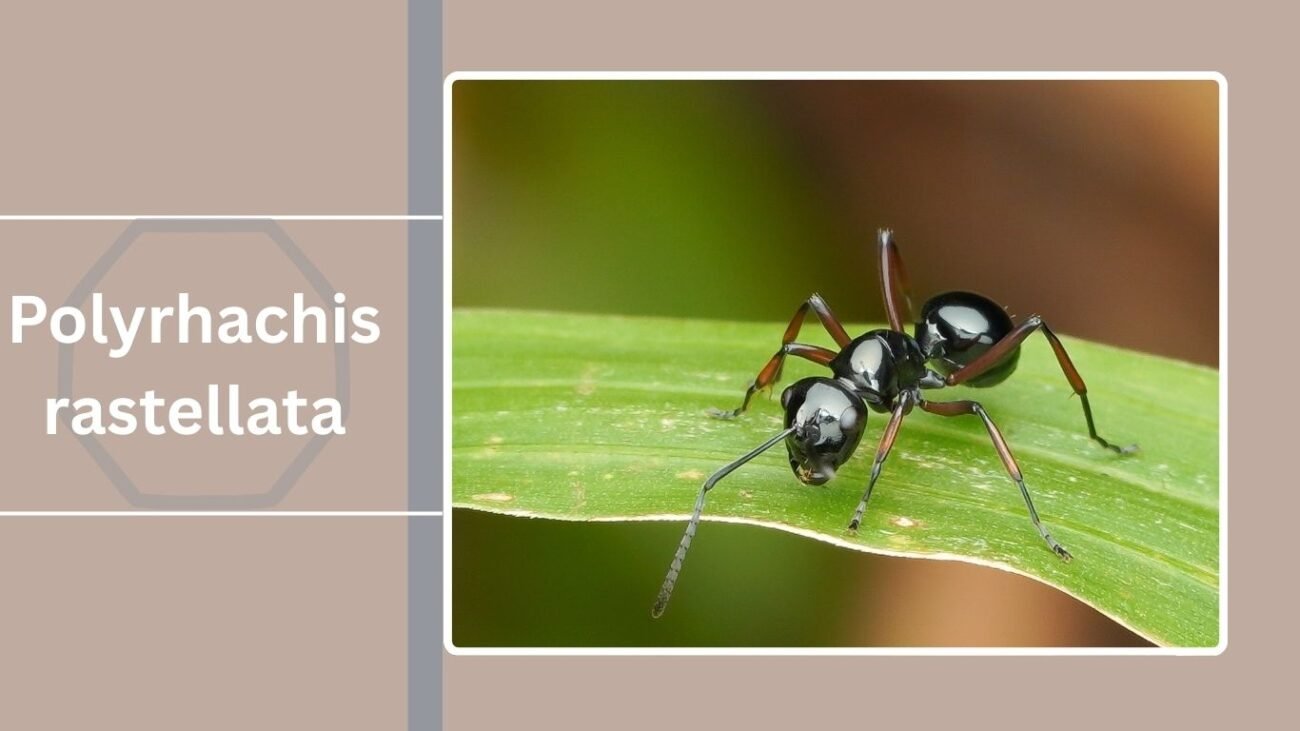
Polyrhachis rastellata is a spiny ant species within the genus Polyrhachis, recognized for its distinctive thoracic spines and arboreal nesting behavior. It is distributed across tropical Asia and is known for constructing protective leaf nests using larval silk, a hallmark trait of many weaver ants.
Identification
- Dark brown to black body with a slightly glossy surface
- Prominent thoracic spines projecting outward, providing strong defense
- Medium-sized workers with elongated bodies
- Long legs adapted for life in the canopy
- Strong mandibles used for prey capture and nest construction
Habitat
This species inhabits tropical and subtropical forests, as well as orchards and plantations. Colonies build multiple leaf nests high in tree canopies, binding them securely with larval silk. They rarely nest on the ground.
Behavior
P. rastellata is social and cooperative, showing strong nest-building coordination among workers. Colonies are aggressive and highly territorial, defending their nests against intruders with collective force. Workers also form chains to pull leaves together during nest construction.
Diet
Their diet is omnivorous, consisting of insects and other arthropods for protein, as well as nectar and honeydew for carbohydrates. These food sources sustain both brood development and worker energy needs.
Lifecycle
The lifecycle includes eggs laid by the queen, which develop into larvae, pupae, and adults. Colonies are typically polydomous, expanding into several nests over time. With efficient cooperation and division of labor, colonies persist for many years.
15. Polyrhachis dives var. indica
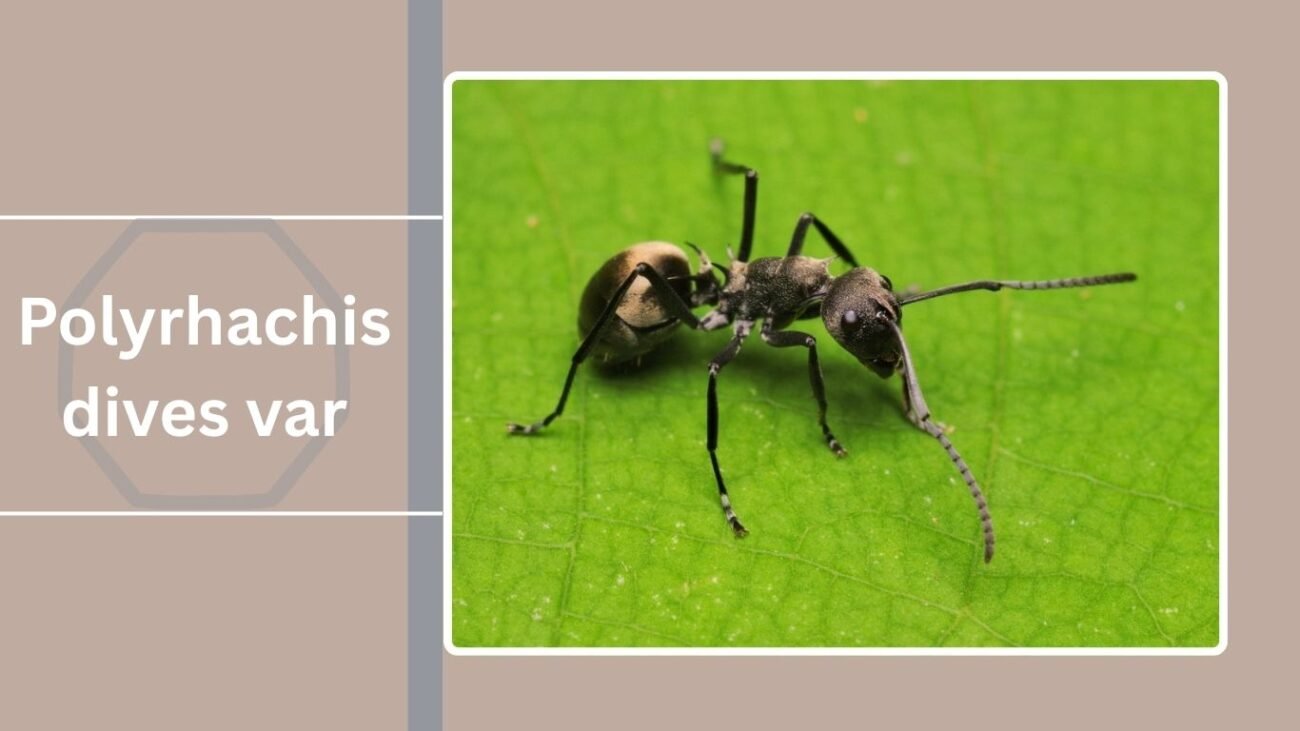
Polyrhachis dives var. indica is a regional variant of the widely distributed Polyrhachis dives. It shares the same arboreal lifestyle and nest-building habits but has slight morphological differences adapted to its environment in the Indian subcontinent.
Identification
- Dark brown to black body with a metallic sheen
- Characteristic thoracic spines, moderately long and sharp
- Workers are medium-sized with slender bodies
- Long legs adapted for tree-canopy movement
- Strong mandibles for nest work and prey capture
Habitat
This variant is primarily found in tropical and subtropical forests of India and surrounding regions. Colonies build nests in tree canopies by weaving leaves with larval silk. They prefer humid environments where foliage is abundant.
Behavior
Like the main species, this variant is social and cooperative. Workers participate in leaf-weaving, foraging, and colony defense. They are territorial and will aggressively defend their nests against intruding ants or predators.
Diet
The diet includes insect prey, which provides protein for brood development, as well as nectar and honeydew for carbohydrates. Their dual feeding habit allows them to thrive in diverse habitats.
Lifecycle
Colonies are initiated by a queen and develop through the usual stages: eggs → larvae → pupae → adults. Over time, colonies expand into multiple interconnected nests and may persist for several years with stable worker populations.
16. Polyrhachis dives var. tibetana
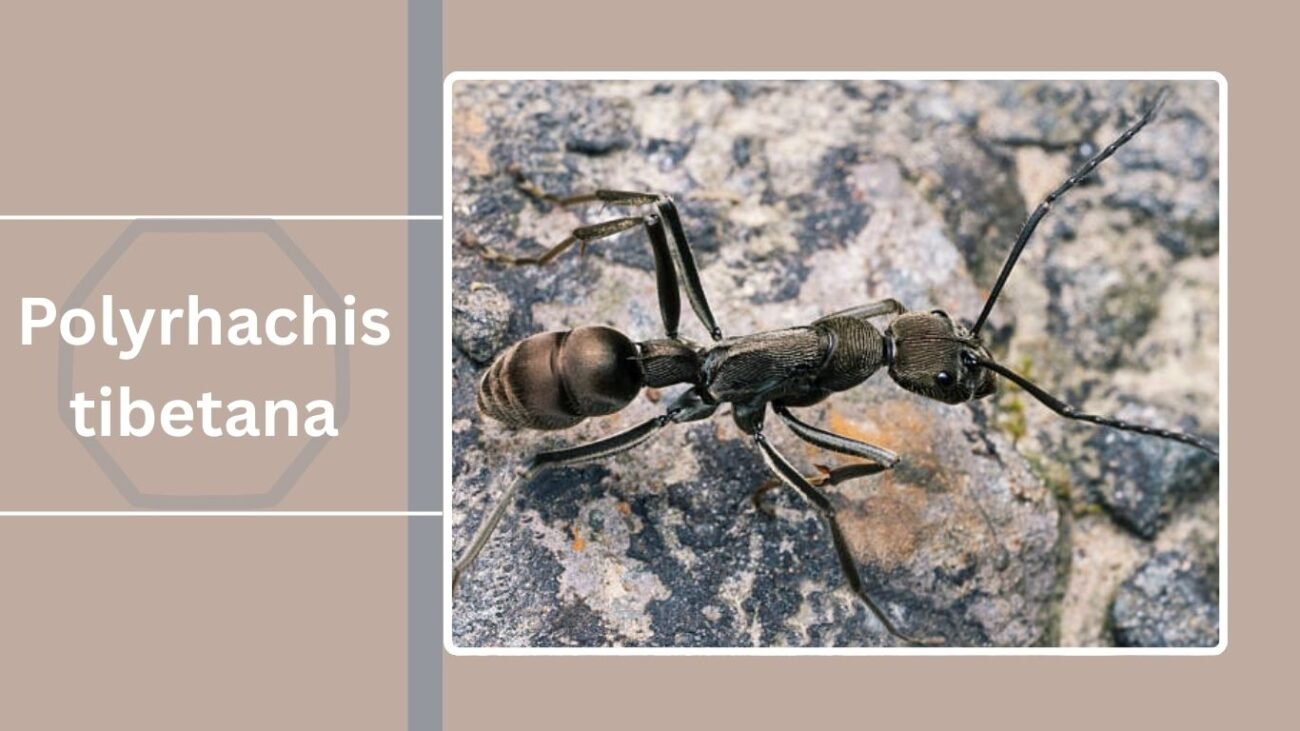
Polyrhachis dives var. tibetana is another regional form of Polyrhachis dives, found in higher-altitude areas such as Tibet and nearby regions. It displays adaptations to cooler environments compared to the typical tropical distribution of most weaver ants.
Identification
- Dark brown to black body, sometimes with a slight metallic reflection
- Noticeable thoracic spines, though less pronounced than in some relatives
- Medium-sized workers with slender, elongated bodies
- Long legs adapted for arboreal life
- Strong mandibles for hunting and nest construction
Habitat
This variant thrives in montane forests and subtropical highlands, especially in Tibet and adjacent regions. Colonies are arboreal, building nests high in trees by weaving leaves together with larval silk.
Behavior
P. dives var. tibetana is cooperative and defensive. Colonies maintain multiple nests in a tree canopy and show strong territorial behavior. Workers coordinate effectively in leaf-weaving and defense, much like other members of the genus.
Diet
Their diet consists of insects and other small arthropods for protein, supplemented by nectar and honeydew for carbohydrates. These dietary resources sustain large, active colonies across variable environments.
Lifecycle
The queen establishes the colony by laying eggs, which progress through larval and pupal stages to become adult workers and reproductives. Colonies are polydomous and expand steadily, persisting for many years under stable conditions.
17. Polyrhachis spinifera
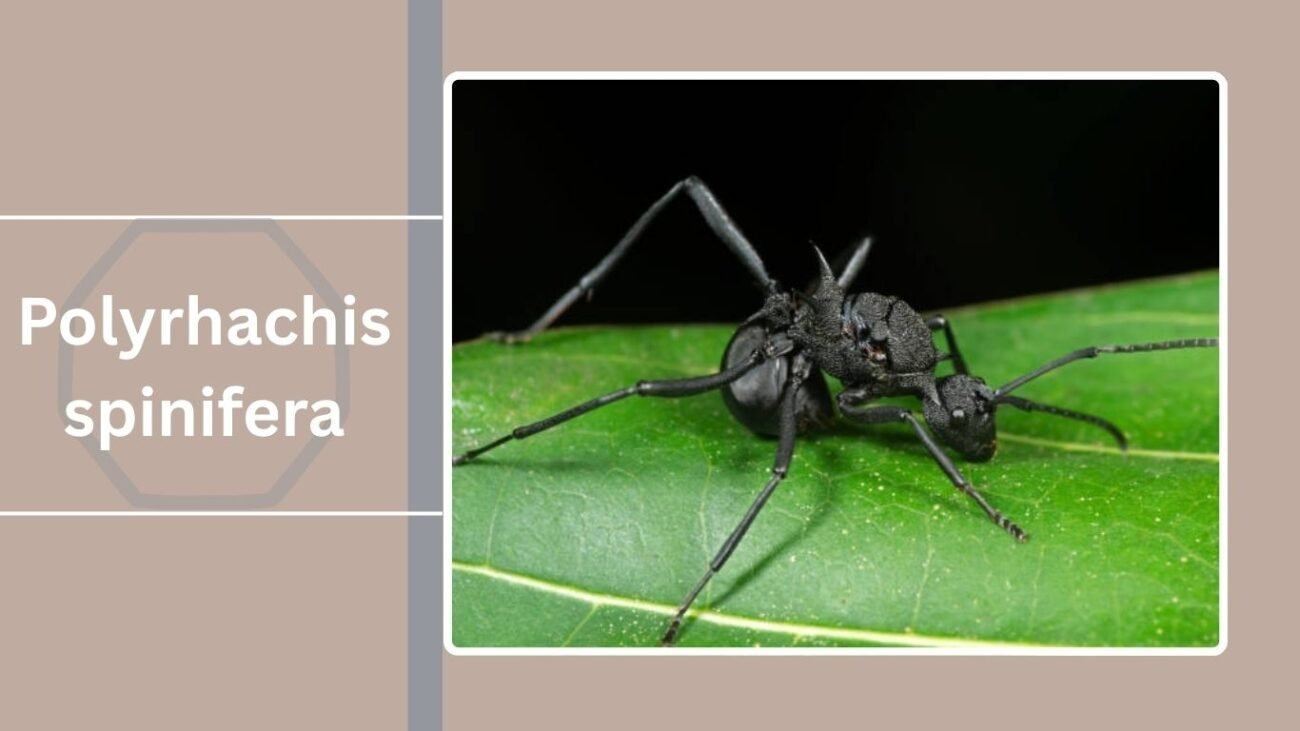
Polyrhachis spinifera is a notable member of the genus Polyrhachis, named for its prominent spines that provide both defense and a distinctive appearance. Like other weaver ants in this group, it lives an arboreal lifestyle and constructs nests by weaving leaves with larval silk.
Identification
- Dark brown to black body with a slight sheen
- Prominent, sharp thoracic spines that give it a heavily armored look
- Medium-sized workers with elongated bodies
- Long legs adapted for canopy movement
- Strong mandibles for cutting, carrying, and prey capture
Habitat
This species inhabits tropical and subtropical forests across parts of Asia. It prefers tree canopies, where it constructs multiple nests by binding leaves together. Colonies may expand widely across interconnected branches.
Behavior
P. spinifera is social and territorial, with workers cooperating to build and defend their nests. They are aggressive toward intruders and demonstrate strong teamwork in pulling leaves together for nest construction.
Diet
Their diet consists mainly of protein from insects and small arthropods, balanced with carbohydrate-rich nectar and honeydew from hemipterans. This combination sustains their energy demands and colony growth.
Lifecycle
The lifecycle follows the standard ant stages: eggs, larvae, pupae, and adults. Colonies are polydomous, long-lived, and sustained by the queen’s continuous egg-laying. Workers perform specialized tasks to maintain colony survival and stability.
18. Polyrhachis hector
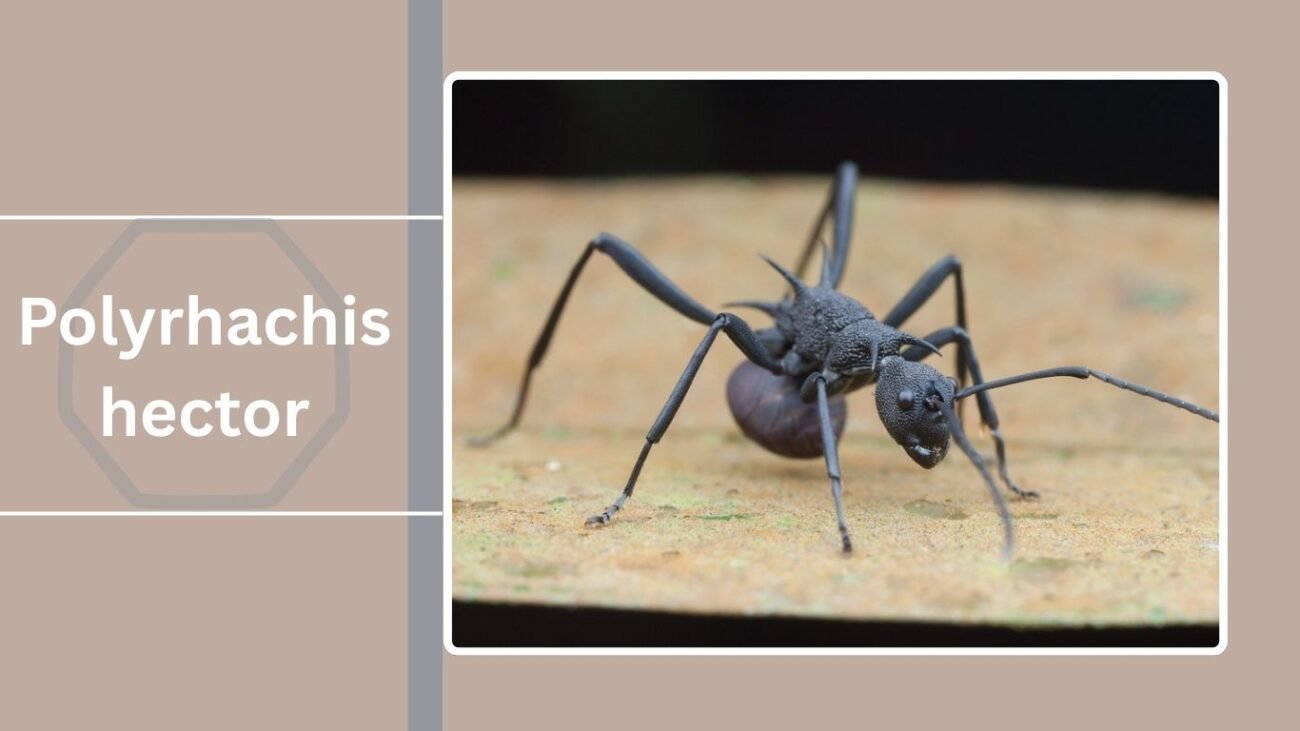
Polyrhachis hector is a striking arboreal ant species in the genus Polyrhachis, recognized for its defensive spines and organized colony structure. Like other weaver ants, it relies on larval silk to bind leaves into protective nests high in the canopy.
Identification
- Dark black or brown body with a smooth, polished texture
- Prominent thoracic spines projecting outward, aiding in defense
- Medium-sized workers with slender yet sturdy builds
- Long legs adapted for canopy navigation
- Strong mandibles useful in nest construction and prey handling
Habitat
This species is distributed in tropical and subtropical forests of Asia. Colonies are arboreal and build multiple nests in trees, preferring dense foliage where leaf-weaving is most effective.
Behavior
Hector is territorial and aggressive, defending its colonies vigorously. Workers exhibit strong cooperation in nest construction, foraging, and colony defense. Their social organization ensures efficiency and survival.
Diet
Their diet is omnivorous: insects and small arthropods provide protein, while nectar and honeydew supply energy. This feeding flexibility allows them to thrive in various ecosystems.
Lifecycle
The colony begins with a queen laying eggs that develop into larvae, pupae, and then adults. Colonies are polydomous, with multiple interconnected nests supporting a large worker population. With cooperative brood care and division of labor, colonies remain stable for many years.
19. Polyrhachis rufipes
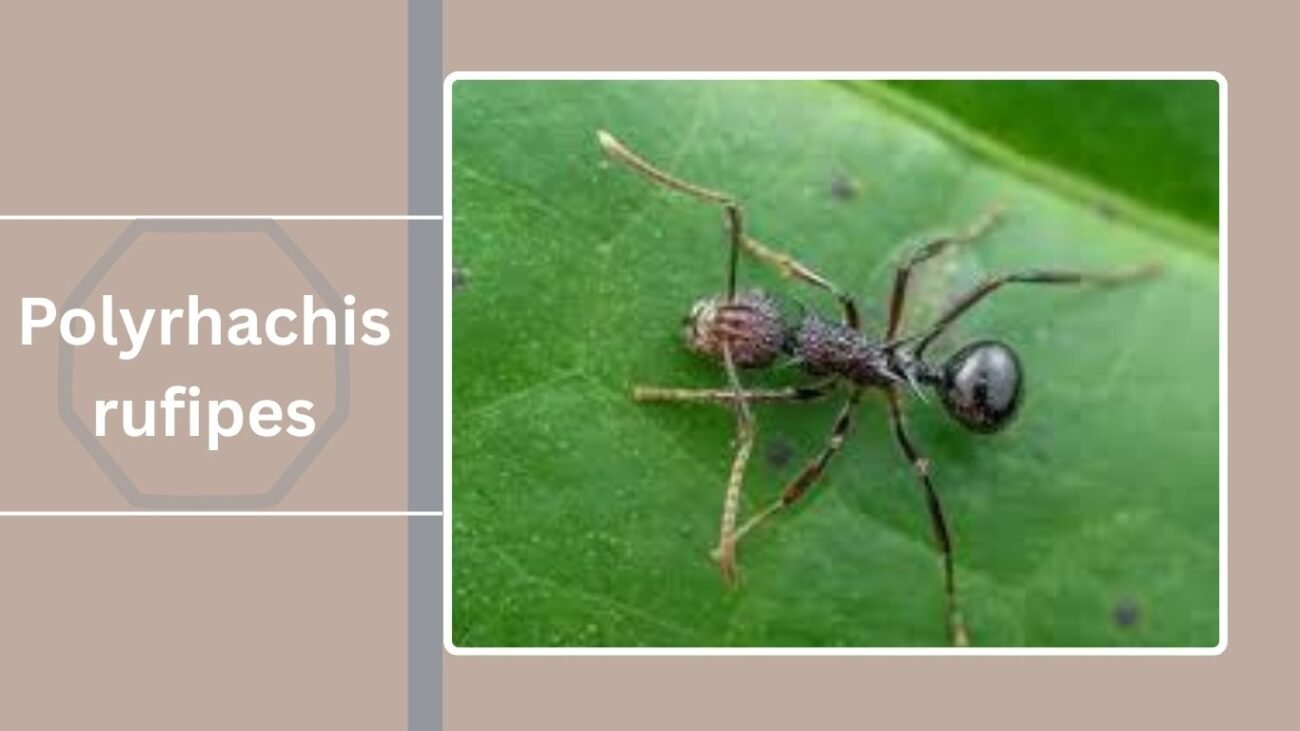
Polyrhachis rufipes is an arboreal ant species from the genus Polyrhachis, notable for its reddish legs, which distinguish it from many of its darker relatives. Like other weaver ants, it constructs protective leaf nests bound with larval silk and thrives in forest canopies.
Identification
- Dark brown to black body with a smooth surface
- Characteristic reddish legs (“rufipes” means red-footed)
- Thoracic spines present, though less pronounced than in some relatives
- Medium-sized workers with slender, elongated bodies
- Strong mandibles for prey capture and nest construction
Habitat
This species inhabits tropical and subtropical forests across Asia. Colonies build multiple nests in the tree canopy, weaving leaves together for protection. They prefer dense vegetation that offers abundant food and nesting opportunities.
Behavior
P. rufipes is cooperative and territorial. Workers collaborate in nest construction, foraging, and defending their colonies against intruders. They display aggression toward rival ants and predators.
Diet
Their diet includes insects and other arthropods for protein, along with nectar and honeydew for carbohydrates. This varied diet supports both brood development and the high energy demands of worker activity.
Lifecycle
The lifecycle follows the typical ant pattern: eggs → larvae → pupae → adults. Colonies are polydomous, consisting of multiple interconnected nests. With organized brood care and worker cooperation, colonies persist for many years and maintain large populations.
20. Polyrhachis annamita
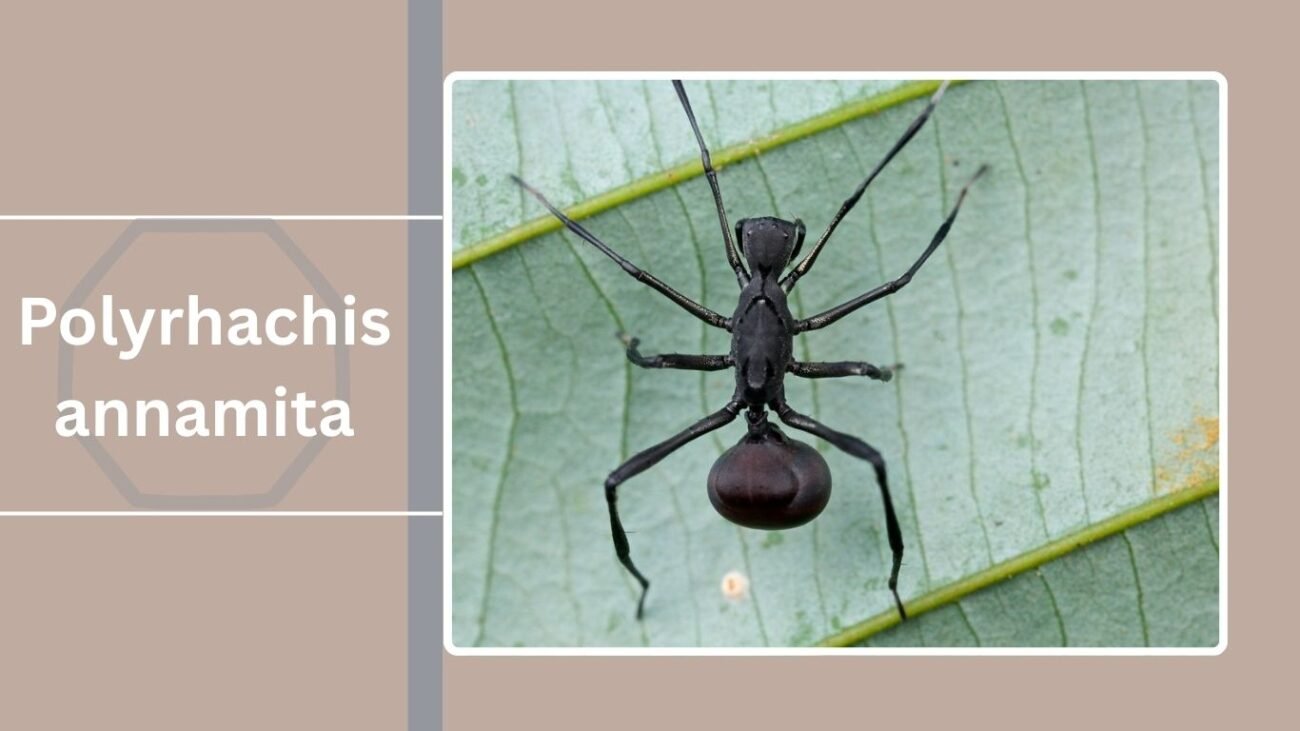
Polyrhachis annamita is a lesser-known arboreal ant from the genus Polyrhachis. It is distributed mainly in Southeast Asia and is recognized for its spiny thorax and nest-building habits in forest canopies. Like other weaver ants, it uses larval silk to weave leaves together into nests.
Identification
- Dark brown to black body with a slightly glossy texture
- Thoracic spines present, giving it a defensive and distinctive look
- Medium-sized workers with slender forms
- Long legs well-adapted for tree-dwelling lifestyles
- Strong mandibles for defense, prey capture, and nest work
Habitat
This species inhabits tropical forests and plantations across Southeast Asia, particularly in Vietnam and neighboring regions. Colonies are arboreal, preferring tall trees with dense foliage for nest construction.
Behavior
P. annamita is highly social, cooperative, and territorial. Workers are aggressive in defending their nests and foraging areas. They coordinate in nest-building, often forming chains of ants to pull leaves together tightly.
Diet
Their diet is omnivorous: they hunt insects and other small arthropods for protein while also consuming nectar and honeydew from sap-feeding insects for carbohydrates. This dietary balance supports brood rearing and active colony life.
Lifecycle
The colony begins with a queen laying eggs that progress into larvae, pupae, and adults. Colonies are usually polydomous, maintaining several leaf nests within the canopy. With cooperative labor and stable brood production, colonies can persist for years.
21. Polyrhachis gracilior
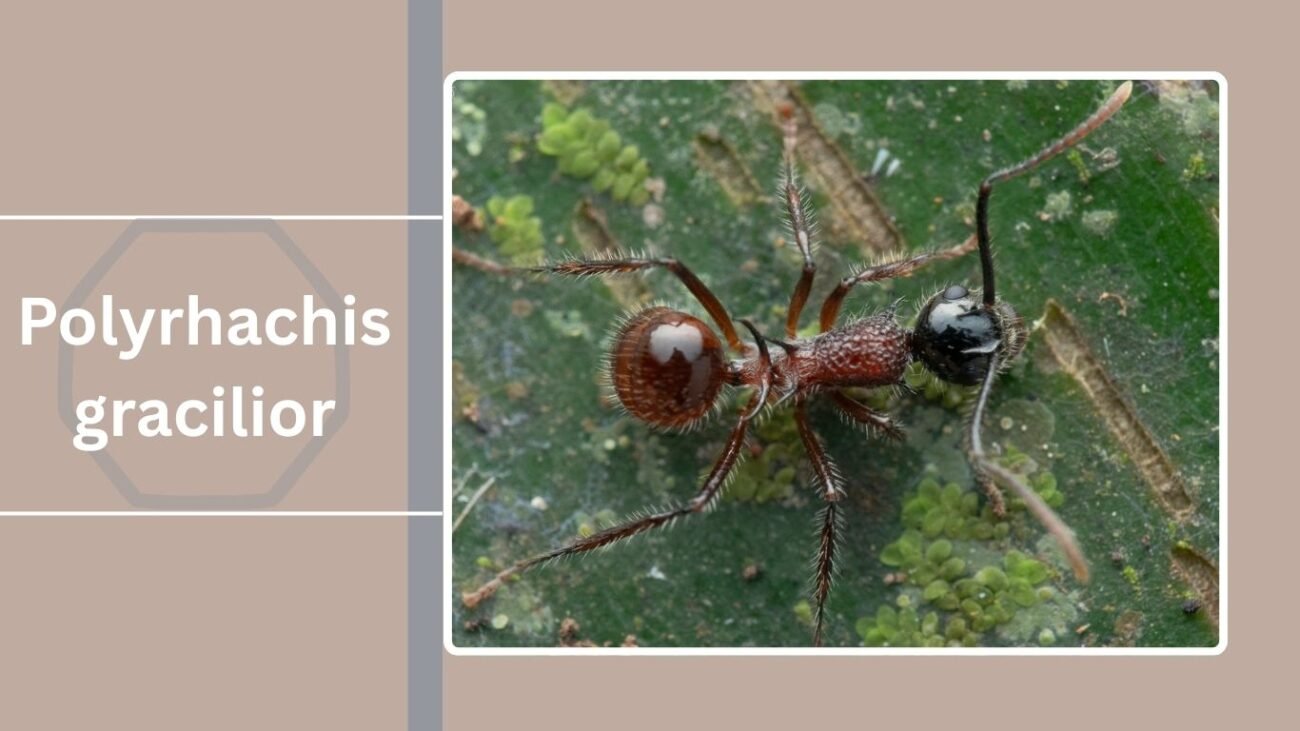
Polyrhachis gracilior is a spiny ant species of the genus Polyrhachis, recognized for its slender body and arboreal lifestyle. Like its relatives, it weaves leaves into nests with larval silk and thrives in tropical forests.
Identification
- Slender, elongated body, usually dark brown to black
- Noticeable thoracic spines, moderately sharp
- Workers are medium-sized with fine, delicate body structures
- Long legs ideal for movement in tree canopies
- Strong mandibles for nest construction and prey handling
Habitat
This species is found in tropical and subtropical Asian forests, often in dense foliage. Colonies are arboreal, constructing leaf nests bound with silk. They typically occupy multiple nests across interconnected branches.
Behavior
P. gracilior is cooperative and highly organized. Workers collaborate in nest weaving, brood care, foraging, and defense. They are territorial and display aggression toward intruders, ensuring the protection of their colonies.
Diet
Their diet includes insects and other arthropods for protein, along with nectar and honeydew for carbohydrates. This omnivorous feeding habit supports both colony growth and worker energy demands.
Lifecycle
The life cycle proceeds from eggs laid by the queen, through larval and pupal stages, to adult workers and reproductives. Colonies are polydomous, stable, and long-lived, with efficient division of labor among workers ensuring survival.
22. Polyrhachis moesta
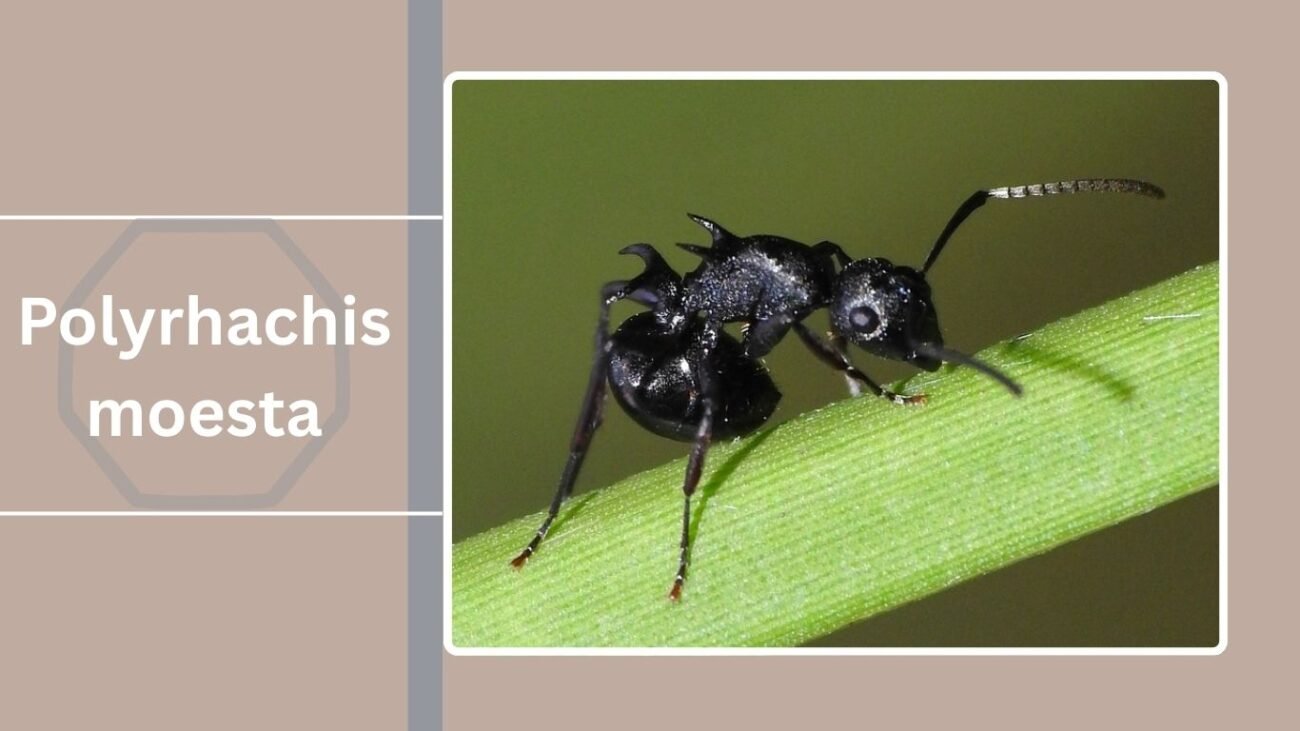
Polyrhachis moesta is a distinctive species in the genus Polyrhachis, recognized for its spiny thorax and arboreal nesting behavior. Like many of its relatives, it is skilled at weaving leaves together with larval silk to create secure nests high in the canopy.
Identification
- Dark brown to black body with a matte or slightly glossy finish
- Pronounced thoracic spines, giving a strong defensive appearance
- Medium-sized workers with robust bodies
- Long legs designed for climbing and canopy movement
- Strong mandibles for nest construction and prey capture
Habitat
This species is distributed in tropical and subtropical forests of Asia. It prefers arboreal habitats, constructing multiple nests in dense foliage, often across interconnected branches. Colonies rarely build nests near the ground.
Behavior
P. moesta is highly social and territorial. Workers cooperate in all aspects of colony life, including nest-building, brood care, foraging, and defense. They are aggressive toward invaders and can mobilize quickly when threatened.
Diet
The species feeds on small insects and arthropods for protein while also relying on nectar and honeydew for carbohydrates. This omnivorous diet supports both brood development and the energetic demands of active workers.
Lifecycle
The queen establishes the colony by laying eggs that pass through larval and pupal stages before becoming adults. Colonies are polydomous and long-lasting, supported by cooperative labor and continuous brood production.
23. Polyrhachis bicoloripes
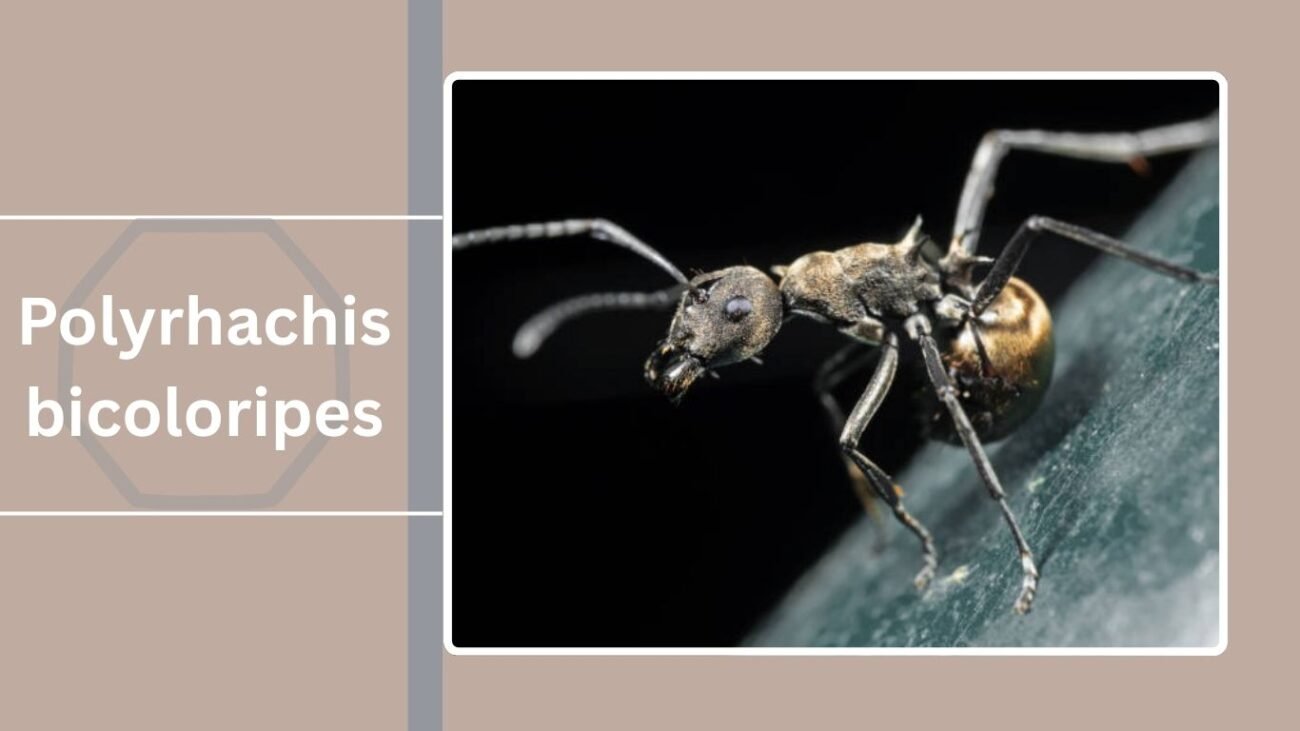
Polyrhachis bicoloripes is an arboreal ant species belonging to the genus Polyrhachis. It is distinguished by its unique leg coloration, which gives it the name “bicoloripes” (meaning two-colored legs). Like other members of the genus, it constructs leaf nests bound with larval silk.
Identification
- Body generally black or dark brown with a smooth texture
- Legs show a distinct bicolored pattern (often reddish or lighter in part)
- Thoracic spines are present, though less prominent than in some relatives
- Medium-sized workers with slender, elongated bodies
- Strong mandibles for nest-building and prey handling
Habitat
This species inhabits tropical forests and plantations across parts of Asia. Colonies are arboreal and construct nests in the canopy, often spreading into multiple interconnected nests.
Behavior
P. bicoloripes is cooperative and defensive. Workers coordinate in nest construction, brood care, and foraging. Colonies are territorial and respond aggressively to threats, ensuring the protection of their nests.
Diet
Their diet consists of insects and other arthropods for protein, along with nectar and honeydew for carbohydrates. This combination supports the colony’s brood development and energy needs.
Lifecycle
The lifecycle includes eggs laid by the queen, which develop into larvae, pupae, and then adult ants. Colonies are typically polydomous and may persist for many years, expanding across large sections of the canopy.
24. Polyrhachis simplex
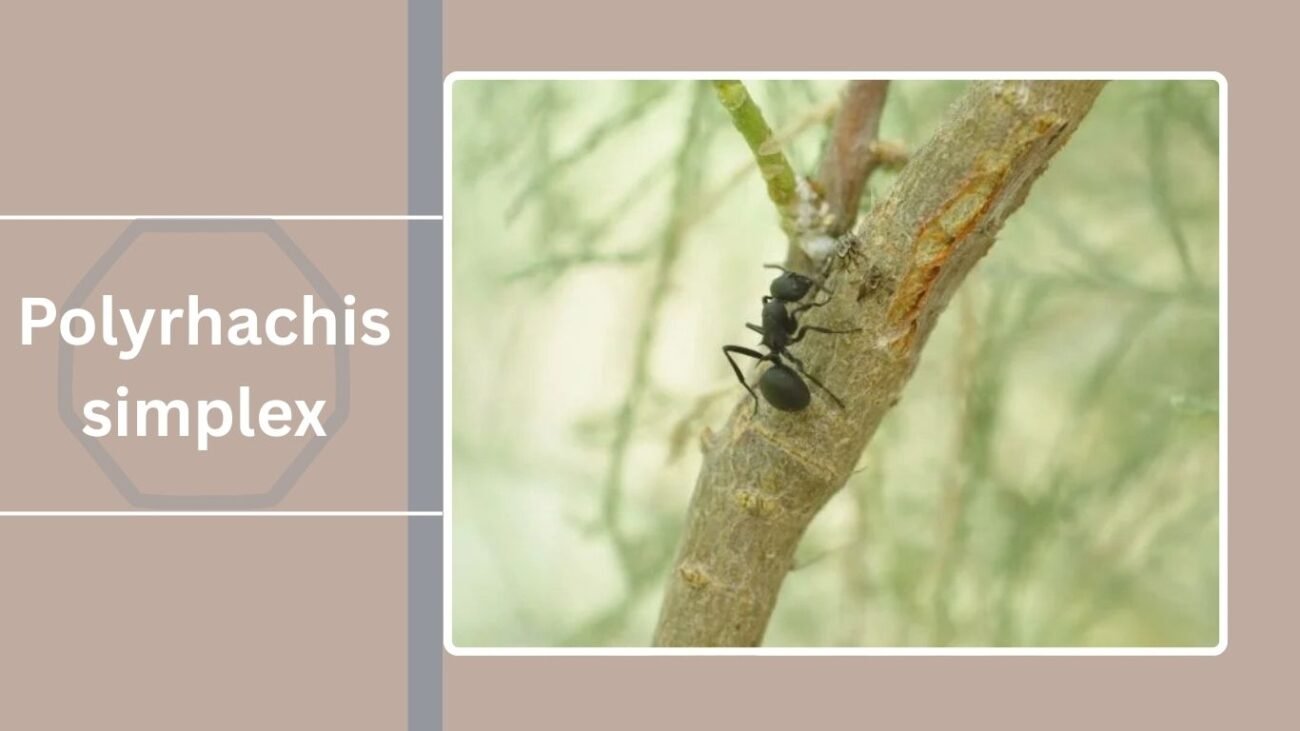
Polyrhachis simplex is a relatively lesser-known species of the genus Polyrhachis. Like its close relatives, it is arboreal and constructs leaf nests using larval silk. This species is recognized for its simpler body form compared to other spiny ants, hence the name “simplex.”
Identification
- Dark brown to black body with a smooth, less ornate structure
- Thoracic spines present but smaller and less pronounced than in many relatives
- Medium-sized workers with slender, elongated bodies
- Long legs adapted for climbing and canopy movement
- Functional mandibles used for nest construction and prey handling
Habitat
This species inhabits tropical and subtropical forests in Asia. It prefers dense canopies for nest construction, where colonies weave leaves into secure shelters using larval silk.
Behavior
P. simplex is social and cooperative, showing strong teamwork in nest building, foraging, and defense. Colonies are territorial and protective of their nesting areas, though they tend to be less aggressive compared to heavily spined species.
Diet
Their diet includes insects and small arthropods for protein, while nectar and honeydew provide carbohydrates. This balanced diet supports the colony’s growth and energy requirements.
Lifecycle
The queen establishes the colony by laying eggs that pass through larval and pupal stages before becoming adults. Colonies are polydomous, spreading across multiple nests within the canopy, and may remain stable for several years under favorable conditions.
25. Polyrhachis rastellata var. major
Polyrhachis rastellata var. major is a recognized variety of Polyrhachis rastellata. It shares many of the same traits as the main species but is distinguished by certain morphological differences, particularly in size and spine structure. Like its relatives, it is an arboreal weaver ant that constructs leaf nests using larval silk.
Identification
- Dark brown to black body, sometimes with a glossy finish
- Prominent thoracic spines, generally larger and more robust than the typical form
- Workers are relatively larger, hence the designation “major”
- Long legs adapted for canopy movement
- Strong mandibles suited for hunting and nest construction
Habitat
This variety is found in tropical and subtropical forests across Asia, particularly in regions where P. rastellata is widespread. Colonies build leaf nests in trees, often spreading across multiple branches to form polydomous networks.
Behavior
P. rastellata var. major is social, territorial, and highly defensive. Workers collaborate in nest weaving, brood care, and foraging. They show strong aggression toward intruders and rely on cooperative strategies for colony survival.
Diet
Their diet is omnivorous, consisting of insects and small arthropods for protein, as well as nectar and honeydew for carbohydrates. This supports both brood development and the energy demands of active workers.
Lifecycle
The queen lays eggs that develop into larvae, pupae, and adults. Colonies are polydomous and can persist for years, supported by stable brood production and cooperative division of labor among workers.