

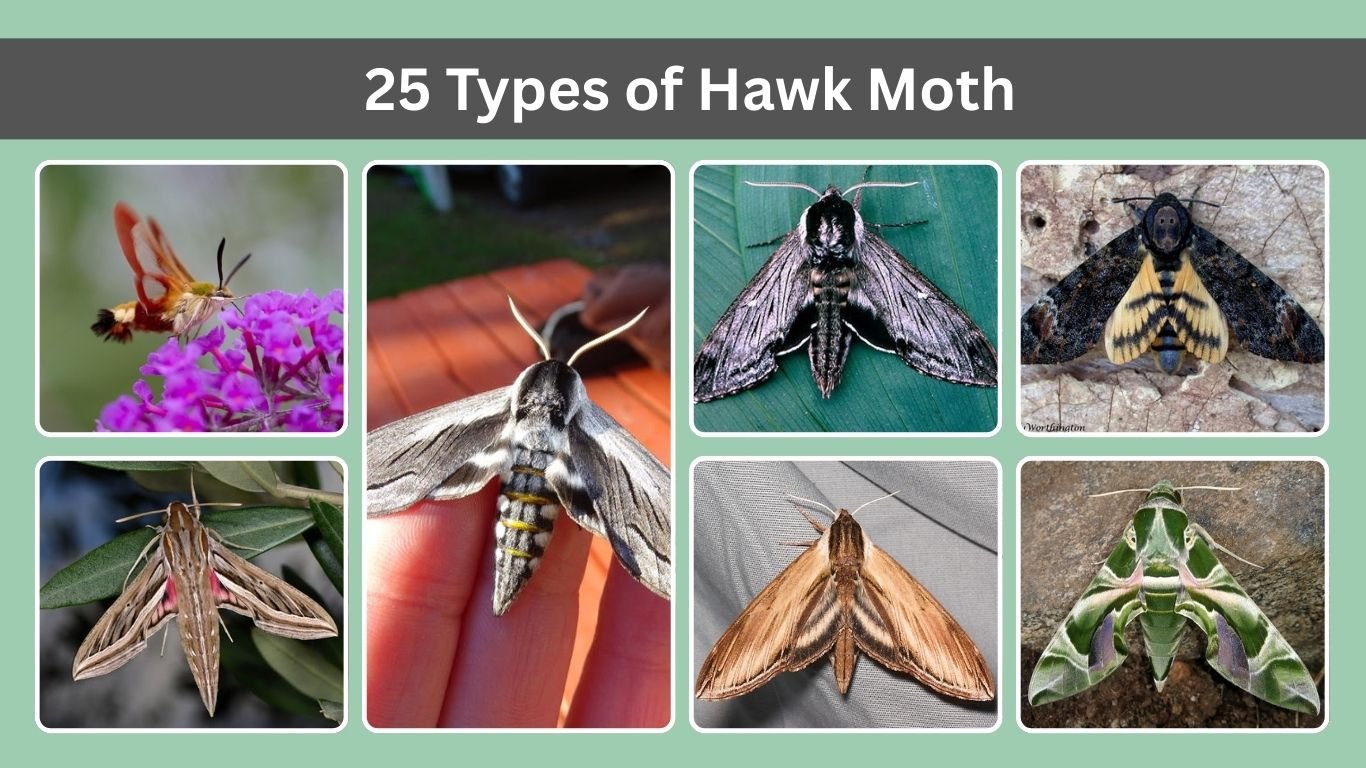
Hawk moths, belonging to the family Sphingidae, are among the most fascinating insects in the world. Known for their rapid, powerful flight and ability to hover like hummingbirds, these moths play vital roles as pollinators in many ecosystems. With striking wing patterns, diverse habitats, and unique life cycles, hawk moths are found across continents. This guide explores 25 notable species, highlighting their identification, habitats, behaviors, and lifecycles.
1. Hyles lineata (White-lined Sphinx)
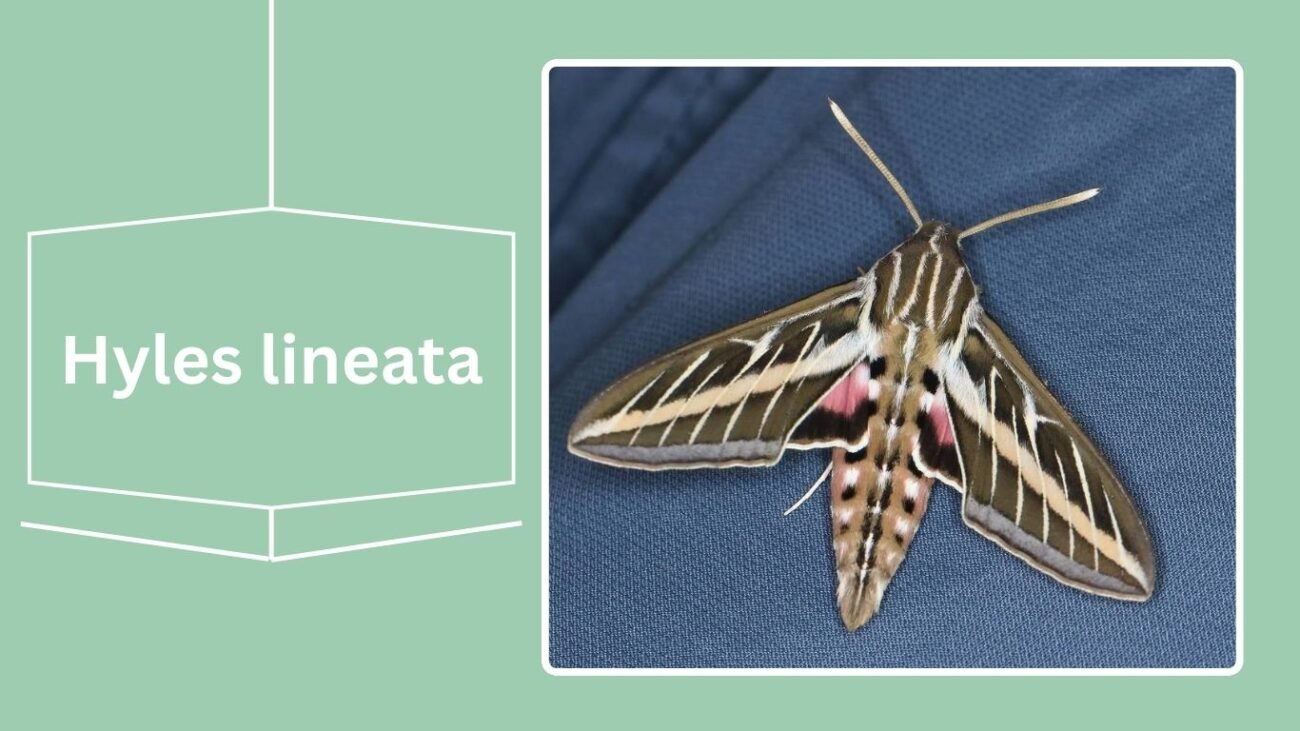
The White-lined Sphinx (Hyles lineata) is one of the most widespread and recognizable hawk moths. Known for its large size and fast flight, it is often mistaken for a hummingbird while hovering over flowers at dusk.
Identification
- Wingspan ranges between 6–9 cm
- Forewings are dark brown with a bold white line running diagonally across
- Hindwings are pink with a black border
- Body is stout with white stripes running lengthwise
- Long proboscis adapted for feeding on nectar
Habitat
This species is found throughout North America, from Canada to Central America, and in parts of South America. It inhabits deserts, meadows, gardens, and open woodlands. It is especially common in areas with abundant flowering plants.
Behavior
The White-lined Sphinx is crepuscular and nocturnal, most active during dusk and night. It hovers like a hummingbird while feeding and is a strong, fast flyer. During peak seasons, massive migrations can occur, with swarms moving across regions in search of food sources.
Lifecycle
The lifecycle includes four stages: egg, larva (caterpillar), pupa, and adult moth. Females lay eggs on host plants such as evening primrose, four o’clock, and purslane. Caterpillars are large and variable in color (green, black, or striped), feeding voraciously before pupating in the soil. Adults emerge and live for a few weeks, repeating the cycle with multiple generations per year in warmer climates.
2. Manduca sexta (Carolina Sphinx)
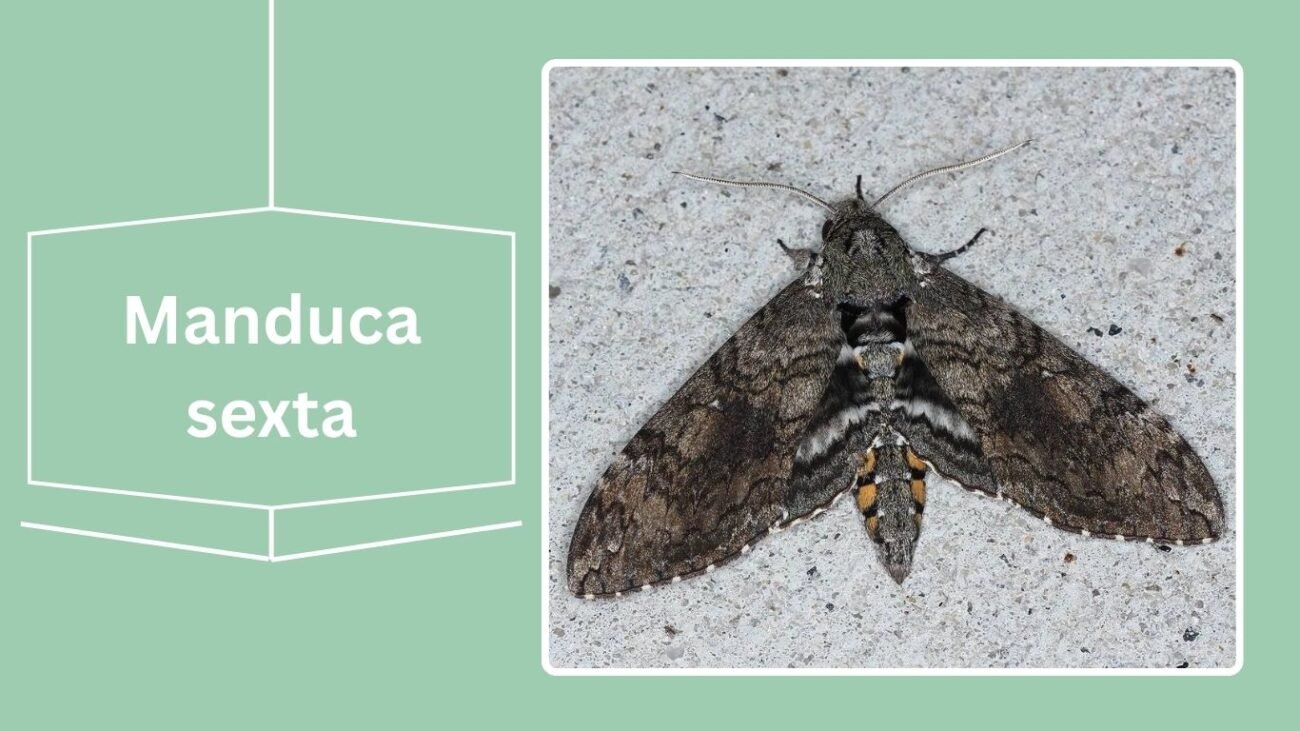
The Carolina Sphinx (Manduca sexta), also known as the tobacco hornworm in its larval stage, is one of the most studied hawk moths due to its importance in agriculture and scientific research. It is a major pest of tobacco and tomato crops but also a valuable model organism in biology.
Identification
- Wingspan ranges from 9–12 cm
- Forewings are mottled gray and brown, providing excellent camouflage
- Hindwings are banded with alternating black and white stripes
- Robust, heavy-bodied moth with a long, narrow proboscis
- Larvae (tobacco hornworms) are bright green with diagonal white stripes and a red horn at the rear
Habitat
This species is native to the Americas and thrives in gardens, fields, and agricultural lands where host plants like tobacco, tomato, potato, and other members of the nightshade family grow.
Behavior
Adults are nocturnal, strong fliers, and feed on nectar from deep-throated flowers such as petunia, moonflower, and jimsonweed. Caterpillars are voracious feeders, often defoliating entire plants, making them a significant agricultural pest.
Lifecycle
The lifecycle includes egg, larva, pupa, and adult stages. Eggs are laid on the undersides of host plant leaves. Caterpillars go through five growth stages before burrowing into the soil to pupate. Adults emerge after several weeks, and in warm climates, multiple generations occur each year.
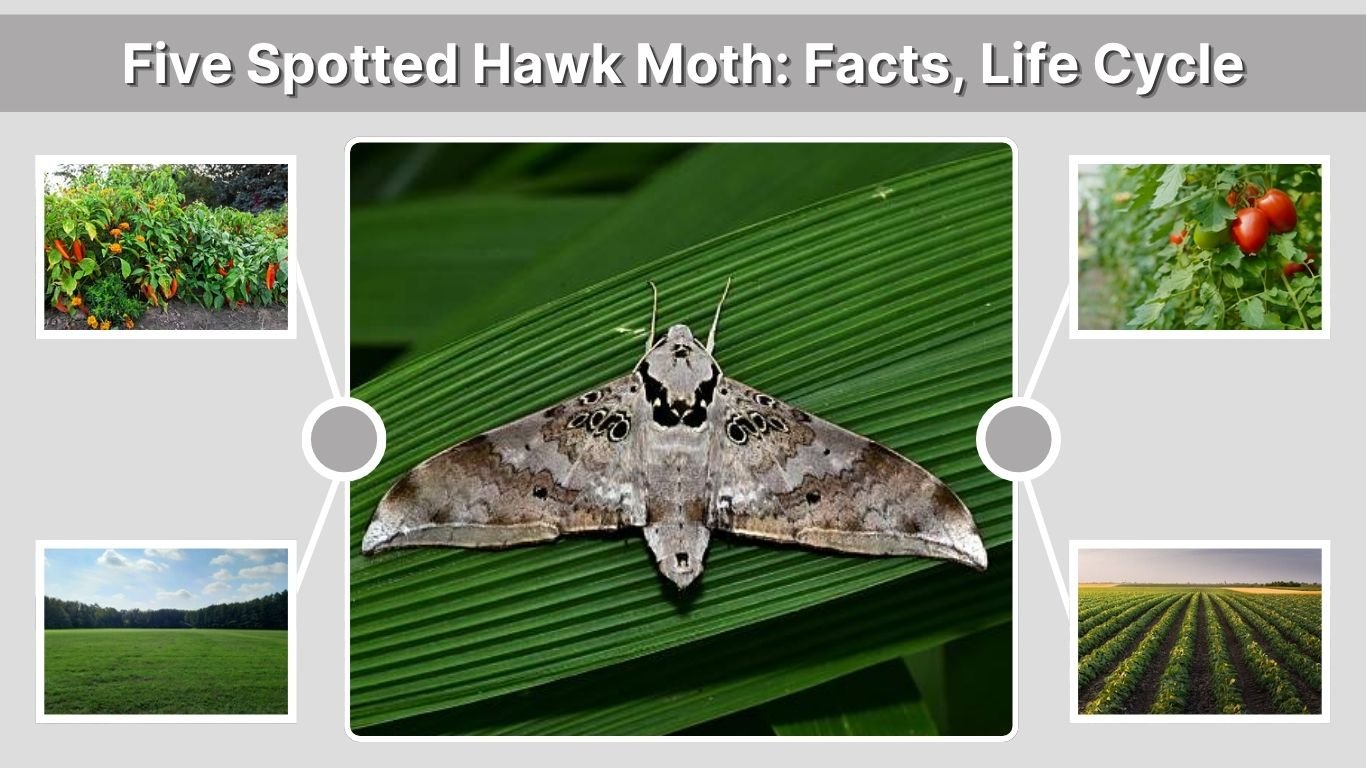
3. Manduca quinquemaculata (Five-spotted Hawk Moth)
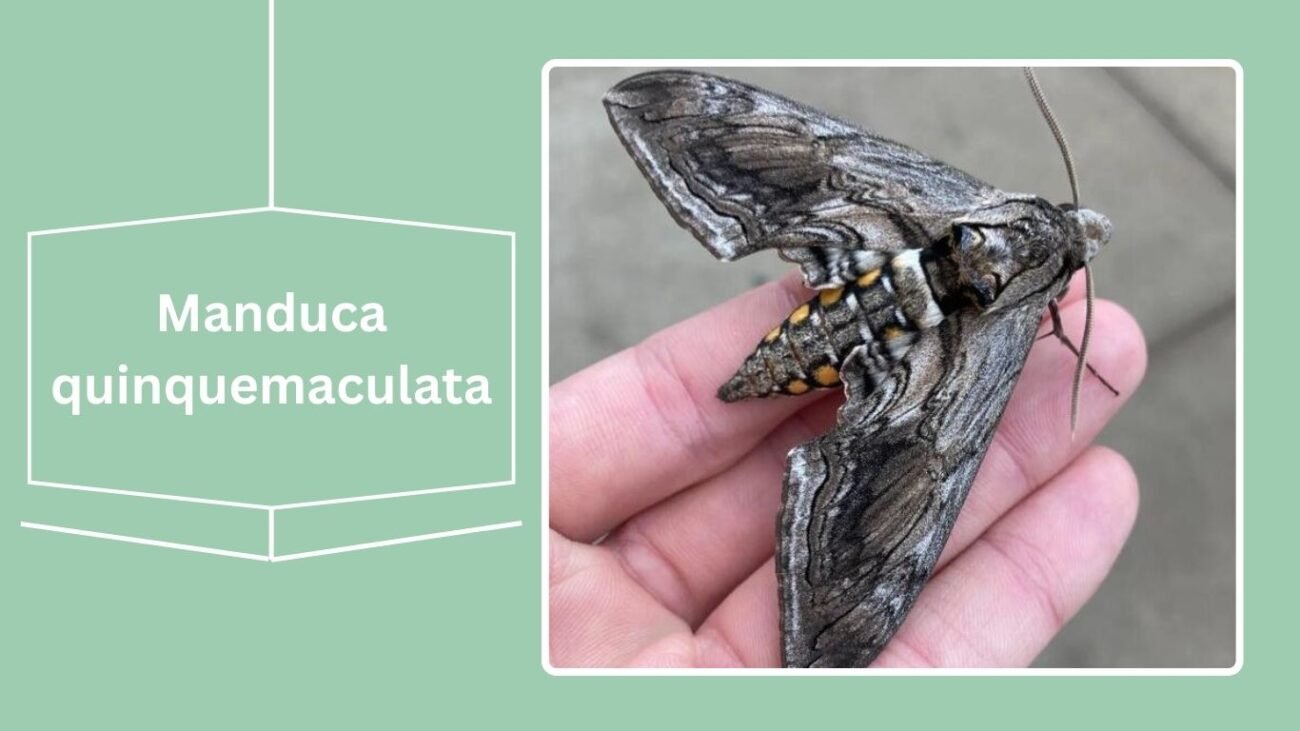
The Five-spotted Hawk Moth (Manduca quinquemaculata) is closely related to the Carolina Sphinx but is best known as the adult form of the tomato hornworm. It is one of the most common hawk moths in gardens and agricultural areas, particularly where tomato plants are grown.
Identification
- Wingspan ranges from 9–13 cm
- Forewings are mottled gray and brown, blending well with bark and leaves
- Hindwings are banded with black and white, similar to Manduca sexta
- Abdomen typically marked with five pairs of yellow spots (its namesake feature)
- Caterpillars (tomato hornworms) are bright green with V-shaped white markings and a straight black horn at the rear
Habitat
This species is found widely across North America, especially in areas where solanaceous plants (nightshade family) grow. It thrives in gardens, crop fields, and disturbed habitats with host plants such as tomato, potato, and eggplant.
Behavior
Adults are strong, fast fliers and are primarily active at dusk and night. They feed on nectar from deep, tubular flowers like moonflower, honeysuckle, and petunias. Larvae (tomato hornworms) are considered destructive pests in agriculture, capable of defoliating tomato plants rapidly.
Lifecycle
The lifecycle begins with eggs laid on the underside of host plant leaves. Larvae pass through several growth stages, consuming large amounts of foliage. Once mature, they pupate in the soil. Adults emerge after a few weeks, continuing the cycle. In warmer climates, multiple generations occur annually.
4. Manduca rustica (Rustic Sphinx)
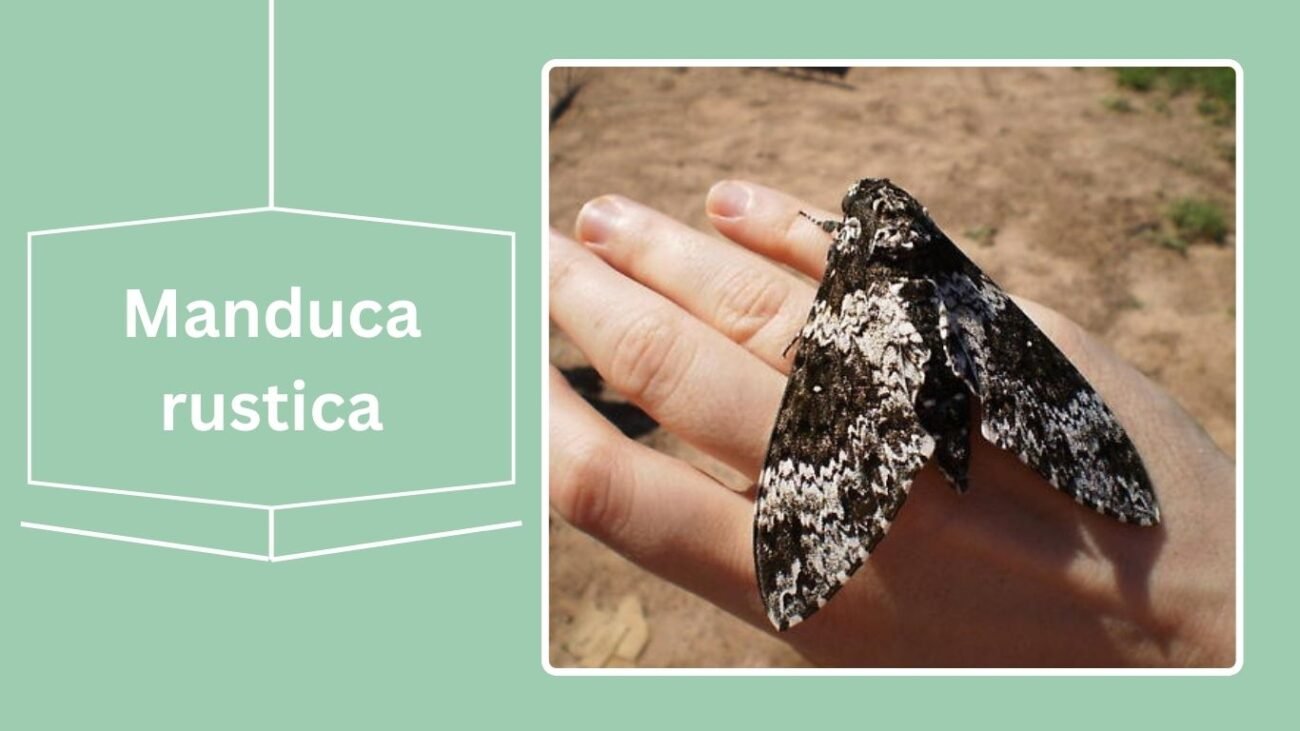
The Rustic Sphinx (Manduca rustica) is a large and striking hawk moth, notable for its intricate wing patterns and strong, fast flight. It is commonly found in warmer regions and is recognized as an important nocturnal pollinator.
Identification
- Wingspan ranges from 10–12 cm
- Forewings are mottled brown, tan, and gray with wavy lines and spots
- Hindwings are dark with lighter banding
- Thorax and abdomen marked with bold yellow patches and stripes
- Caterpillars vary in color (green, brown, or reddish) and have diagonal stripes along the sides with a curved horn at the rear
Habitat
This species is widespread across the southern United States, Central America, and parts of South America. It thrives in gardens, woodlands, and agricultural areas where host plants such as jasmine, crossvine, and various members of the nightshade family grow.
Behavior
Adults are nocturnal and strong fliers, often visiting fragrant flowers like petunia, honeysuckle, and moonflower. They hover while feeding, similar to hummingbirds. Caterpillars feed heavily on host plant leaves but are less agriculturally destructive compared to Manduca sexta and M. quinquemaculata.
Lifecycle
Eggs are laid singly on the leaves of host plants. Caterpillars progress through several growth stages before pupating in the soil. Adults emerge after several weeks, with multiple generations possible per year in warmer climates.
5. Agrius convolvuli (Convolvulus Hawk Moth)
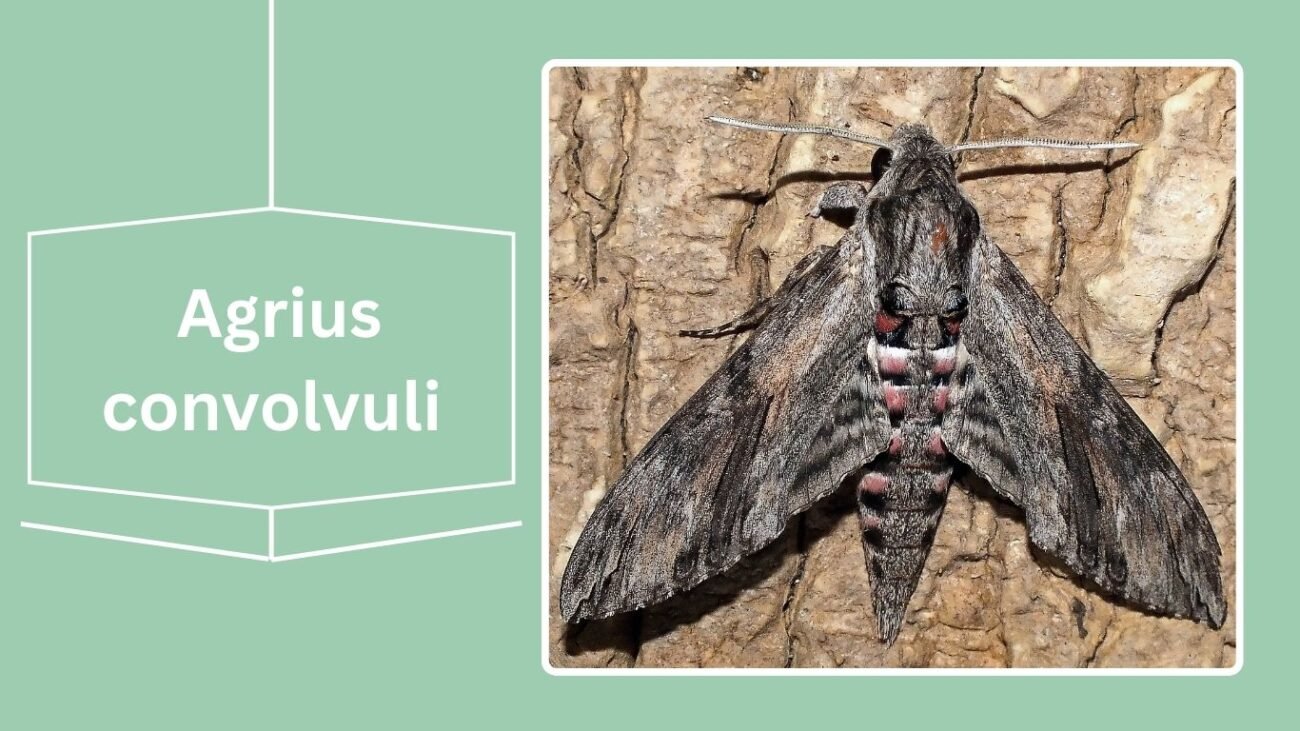
The Convolvulus Hawk Moth (Agrius convolvuli) is a large, powerful migratory species known for its long proboscis, which allows it to feed on flowers with deep corolla tubes. It is one of the most widely distributed hawk moths in the world.
Identification
- Wingspan ranges from 8–12 cm
- Forewings are grayish-brown with streaks and mottled patterns for camouflage
- Hindwings are pale with black bands and a pinkish tint near the base
- Body is robust with distinctive pink and black stripes on the abdomen
- Extremely long proboscis, sometimes exceeding the length of its body
Habitat
This species has a vast distribution, found in Europe, Africa, Asia, and Australia. It inhabits open fields, gardens, coastal areas, and agricultural landscapes, especially where morning glory (Convolvulus spp.) and related plants grow.
Behavior
The Convolvulus Hawk Moth is a strong nocturnal flier, capable of long-distance migrations. It hovers while feeding, similar to hummingbirds, and is particularly drawn to flowers with long tubular structures, such as petunias and morning glories. Adults are often seen at dusk and into the night.
Lifecycle
Females lay eggs on host plants like morning glory and sweet potato. Caterpillars are large, with variable coloration (green, brown, or black), and feature diagonal stripes along the sides and a curved horn on the posterior. Pupation occurs in the soil, and adults emerge after several weeks. In warmer regions, multiple generations may occur annually.
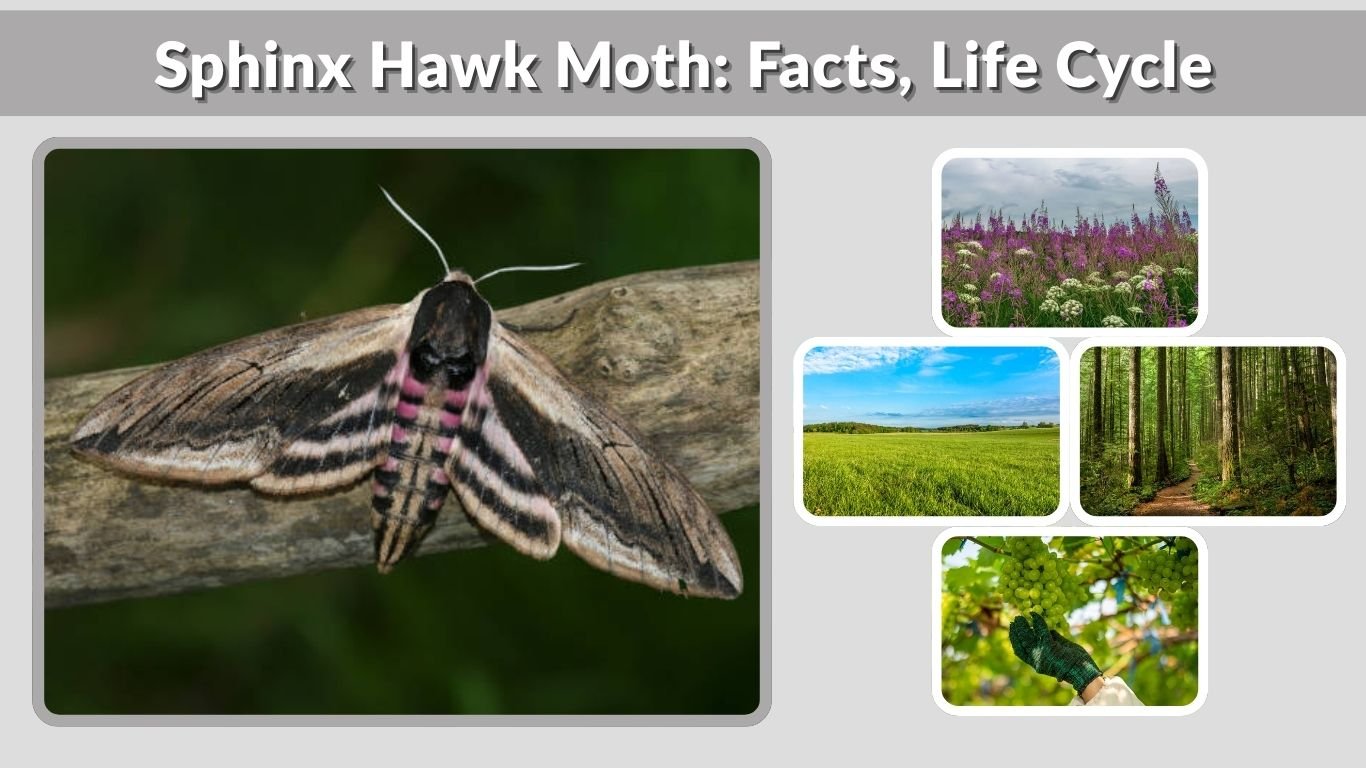
6. Sphinx ligustri (Privet Hawk Moth)
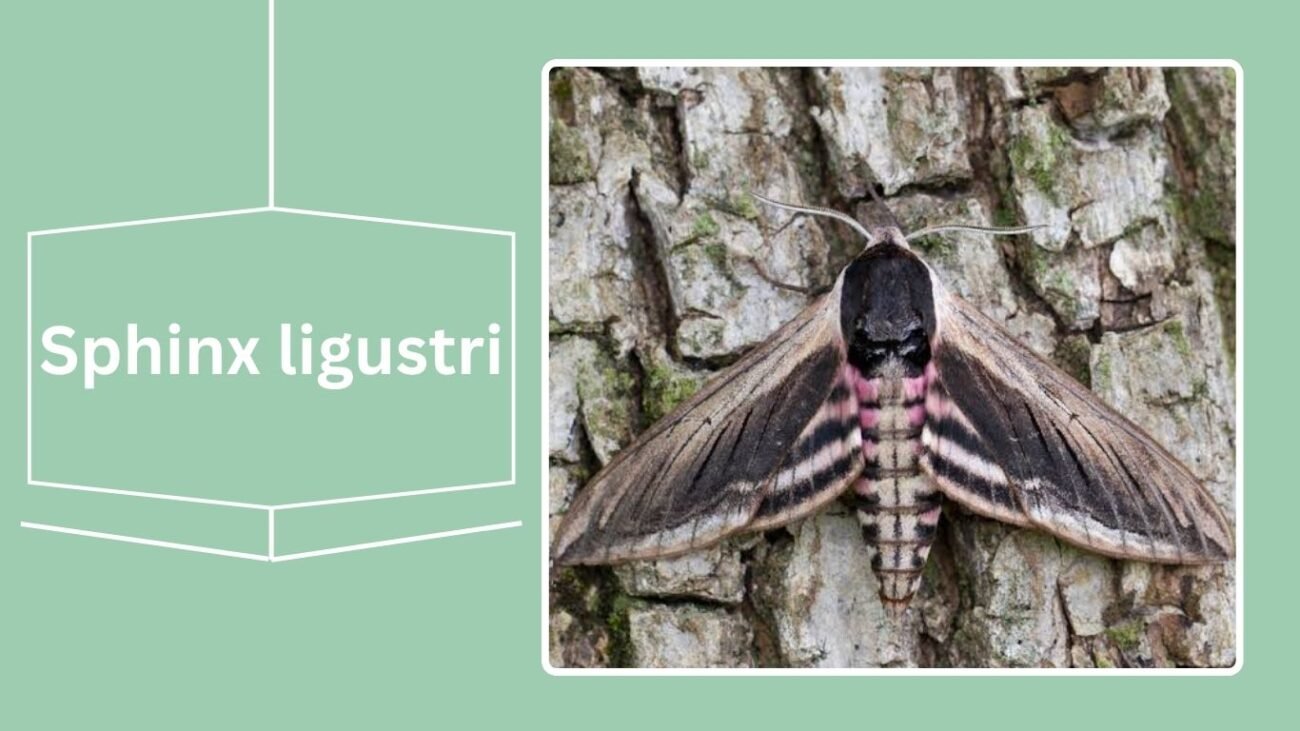
The Privet Hawk Moth (Sphinx ligustri) is one of the largest and most striking hawk moths found in Europe. Its bold wing patterns and vivid colors make it easily recognizable, while its larvae are equally impressive in size and appearance.
Identification
- Wingspan ranges from 9–12 cm
- Forewings are grayish-brown with darker streaks and wavy lines
- Hindwings are bright pink with black bands
- Abdomen features alternating pink and black stripes
- Caterpillars are large, bright green with diagonal purple and white stripes and a curved horn at the rear
Habitat
This species is common throughout Europe and parts of Asia. It inhabits woodlands, gardens, hedgerows, and suburban areas where privet, lilac, ash, and other suitable host plants grow.
Behavior
Adults are nocturnal and powerful fliers, often visiting flowers such as honeysuckle, petunia, and jasmine for nectar. They are attracted to light at night. Caterpillars feed heavily on the leaves of host plants, but they rarely cause significant damage due to their limited numbers.
Lifecycle
Females lay eggs on the leaves of privet, lilac, and related plants. The caterpillars feed for several weeks before pupating underground. The pupa overwinters in the soil, and adults emerge in late spring to early summer. There is typically one generation per year in cooler climates, but warmer areas may see two.
7. Sphinx drupiferarum (Wild Cherry Sphinx)
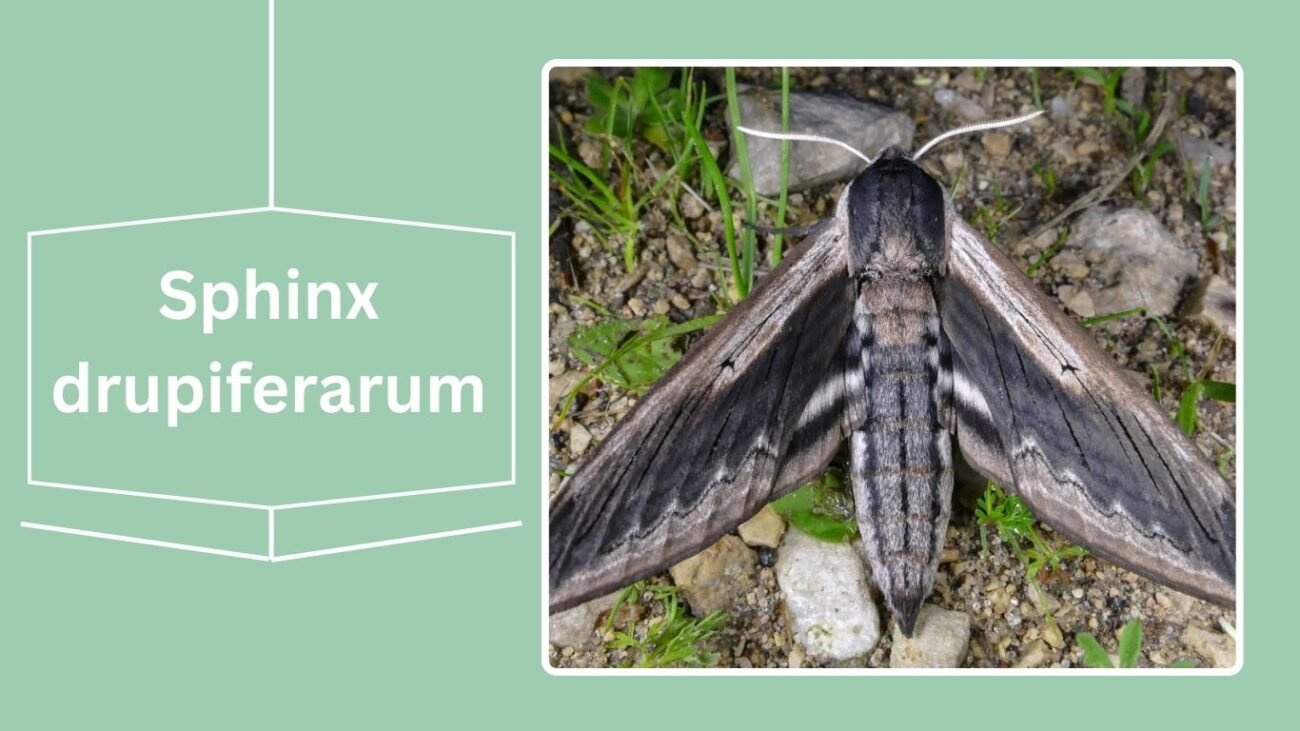
The Wild Cherry Sphinx (Sphinx drupiferarum) is a medium-to-large hawk moth native to North America. It is often associated with orchards and woodlands where wild cherry and related trees grow, making it a familiar species in rural and suburban areas.
Identification
- Wingspan ranges from 7–10 cm
- Forewings are mottled gray and brown with streaks for camouflage
- Hindwings are lighter with faint black bands
- Body is stout and covered with gray-brown scales
- Caterpillars are green with diagonal white lines, small speckles, and a straight horn at the rear
Habitat
This species is found across much of the United States and southern Canada. It thrives in orchards, woodlands, gardens, and areas where host plants like wild cherry, apple, plum, and chokecherry are abundant.
Behavior
Adults are nocturnal and active during summer nights. They feed on nectar from flowers such as phlox and honeysuckle. Caterpillars feed on a variety of fruit trees and shrubs, sometimes becoming minor orchard pests, though their impact is usually not severe.
Lifecycle
Females lay eggs on the leaves of cherry, apple, and other host trees. Caterpillars grow through several stages before pupating in the soil. The pupal stage overwinters, and adults emerge in spring or early summer. Typically, one generation per year is produced in northern regions, while warmer areas may support two.
8. Sphinx kalmiae (Laurel Sphinx)
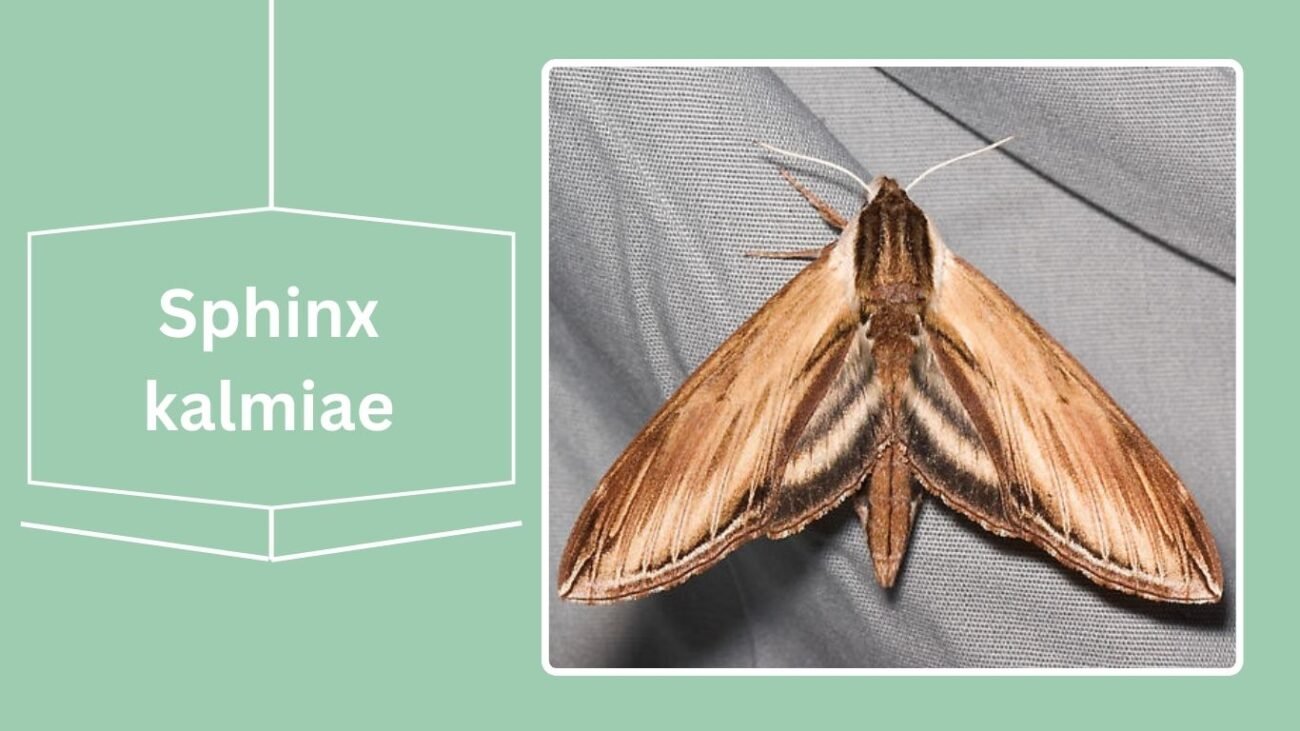
The Laurel Sphinx (Sphinx kalmiae) is a medium-sized hawk moth native to North America. It is best known for its strong, rapid flight and association with laurel and related plants.
Identification
- Wingspan ranges from 7–9 cm
- Forewings are grayish-brown with darker streaks and wavy lines
- Hindwings are light brown to orange with dark brown bands
- Abdomen is gray with faint darker striping
- Caterpillars are green with diagonal white stripes, tiny speckles, and a slightly curved horn at the tail end
Habitat
This species is found across the eastern and central United States as well as southern Canada. It thrives in forests, woodlands, gardens, and suburban areas, particularly where host plants like laurel, ash, privet, and lilac are present.
Behavior
Adults are nocturnal and are frequently seen hovering at flowers such as honeysuckle, phlox, and petunia. They are strong fliers and are also drawn to artificial lights at night. Caterpillars feed actively on the foliage of host plants, though they rarely cause significant damage.
Lifecycle
Eggs are laid singly on the leaves of host plants. Caterpillars develop over several weeks before burrowing into the soil to pupate. The pupal stage overwinters in cooler climates. In northern regions, there is typically one generation per year, while southern populations may produce two.
9. Sphinx gordius (Apple Sphinx)
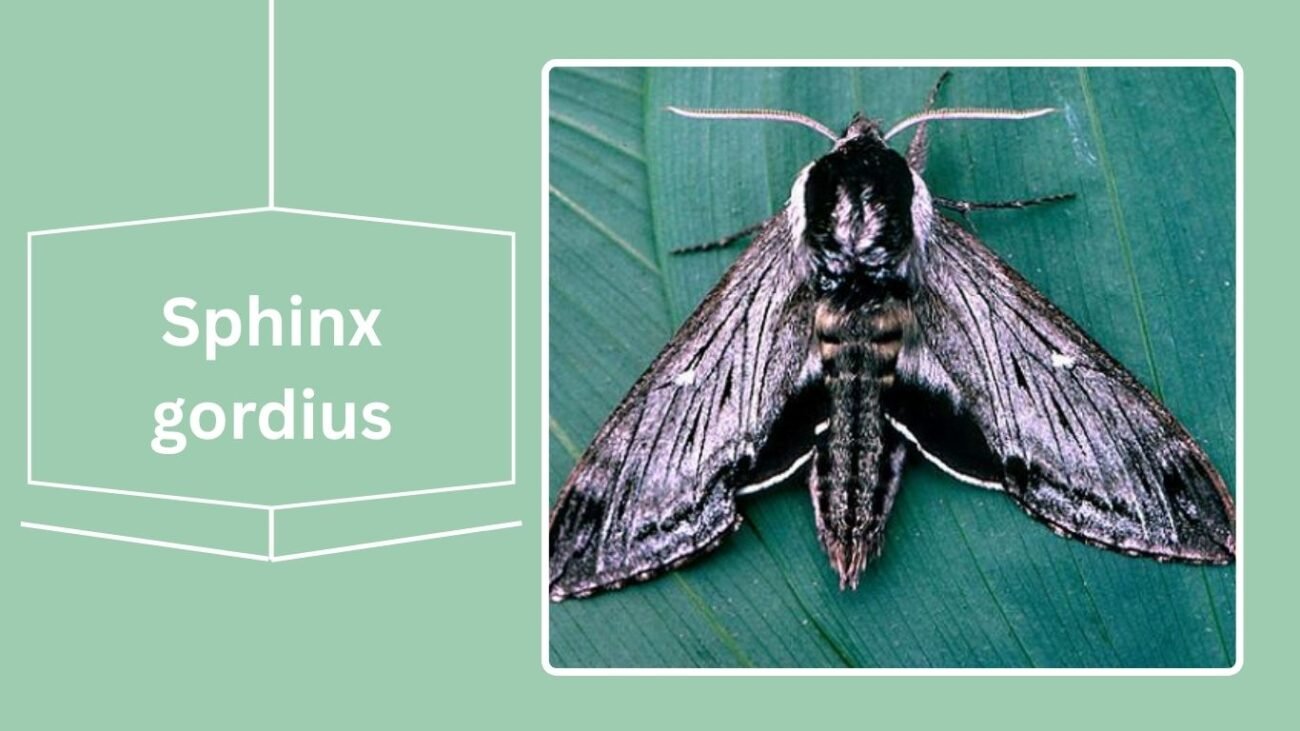
The Apple Sphinx (Sphinx gordius) is a medium-sized hawk moth found mainly in North America. It is closely associated with orchards and woodlands, particularly where apple and cherry trees are abundant.
Identification
- Wingspan ranges from 6–9 cm
- Forewings are mottled gray-brown with darker streaks and subtle wavy lines
- Hindwings are brownish-gray with darker banding
- Body is sturdy, gray-brown with faint striping along the abdomen
- Caterpillars are green with diagonal pale stripes and a straight horn at the tail end
Habitat
This species is common in the northeastern United States and southern Canada. It thrives in orchards, gardens, and wooded areas, especially near apple, cherry, and other rosaceous trees.
Behavior
Adults are nocturnal and visit flowers such as honeysuckle, phlox, and petunia for nectar. They are strong, fast fliers and are frequently attracted to lights at night. Caterpillars feed on fruit tree foliage but usually do not reach pest-level densities.
Lifecycle
Eggs are deposited on the leaves of apple, cherry, and related plants. Caterpillars grow through multiple stages before burrowing into the soil to pupate. The pupae overwinter underground, and adults emerge in late spring or early summer. Typically, one generation occurs per year in cooler climates, with the possibility of two in warmer regions.
10. Sphinx chersis (Great Ash Sphinx)
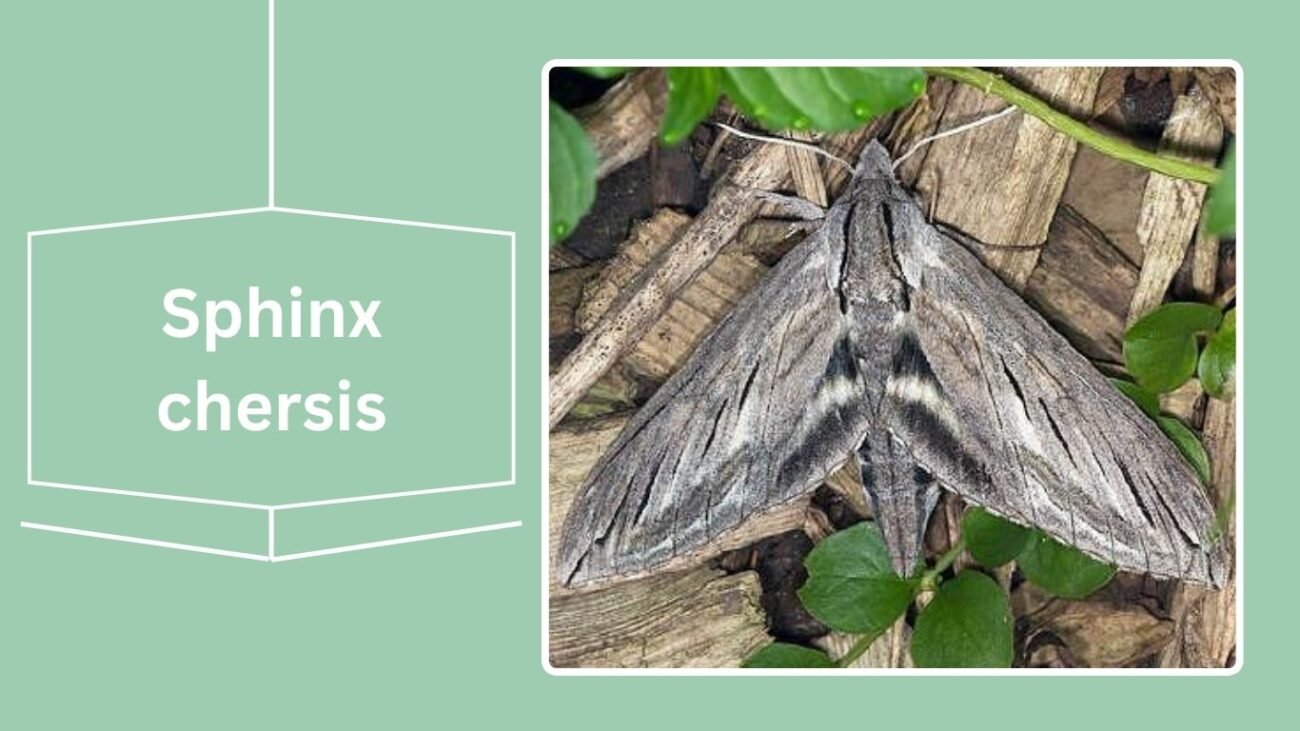
The Great Ash Sphinx (Sphinx chersis) is one of the largest hawk moths in North America. Its impressive wingspan and rapid, strong flight make it a striking species, often noticed in suburban gardens and woodlands.
Identification
- Wingspan ranges from 9–13 cm
- Forewings are smooth gray with subtle darker streaks and faint wavy lines
- Hindwings are light gray with darker banding near the edges
- Abdomen is thick, gray, and patterned with faint lines
- Caterpillars are green with diagonal pale stripes, small white speckles, and a slightly curved horn at the rear
Habitat
This species is distributed widely across the United States and southern Canada. It inhabits woodlands, gardens, and rural areas where ash, lilac, privet, and fringe tree grow.
Behavior
Adults are nocturnal and often visit fragrant flowers such as honeysuckle, petunia, and phlox. They are strong fliers and hover while feeding, similar to hummingbirds. Caterpillars feed on ash and related plants but are not usually considered agricultural pests.
Lifecycle
Eggs are laid on the leaves of host plants. Caterpillars grow over several weeks, feeding extensively before pupating underground. The pupa overwinters in colder climates, with adults emerging in spring or early summer. One generation per year is typical in northern regions, while warmer areas may support two.
11. Sphinx vashti (Vashti Sphinx)
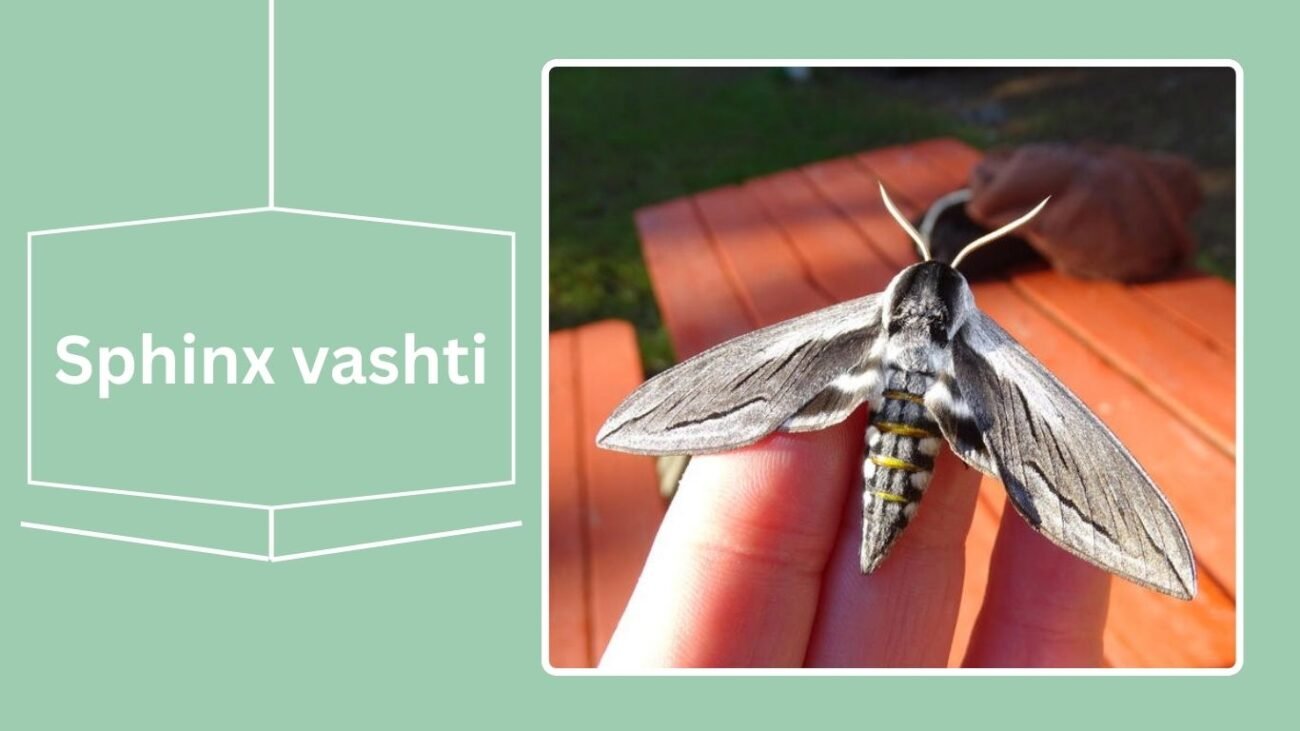
The Vashti Sphinx (Sphinx vashti) is a distinctive hawk moth of North America, notable for its bold wing patterns and preference for snowberry plants. Though less commonly seen than some other sphinx moths, it plays an important ecological role as both pollinator and prey species.
Identification
- Wingspan ranges from 7–9 cm
- Forewings are dark gray to black with wavy white lines and spots
- Hindwings are striking black with white bands
- Body is robust, dark-colored with faint pale markings
- Caterpillars are typically green with pale side stripes and a curved tail horn
Habitat
This species is found mainly in the western United States and parts of southern Canada. It prefers open woodlands, scrublands, and foothill regions where snowberry (Symphoricarpos) and honeysuckle grow.
Behavior
Adults are nocturnal, strong fliers, and are attracted to tubular flowers such as honeysuckle and phlox. They are often observed hovering while feeding, similar to hummingbirds. Caterpillars feed primarily on snowberry and honeysuckle leaves, usually without causing significant damage.
Lifecycle
Eggs are laid singly on host plant leaves. Caterpillars develop through multiple instars before pupating in the soil. The pupal stage typically overwinters, with adults emerging in spring or early summer. Usually, there is one generation per year.
12. Sphinx poecila (Poecila Sphinx)
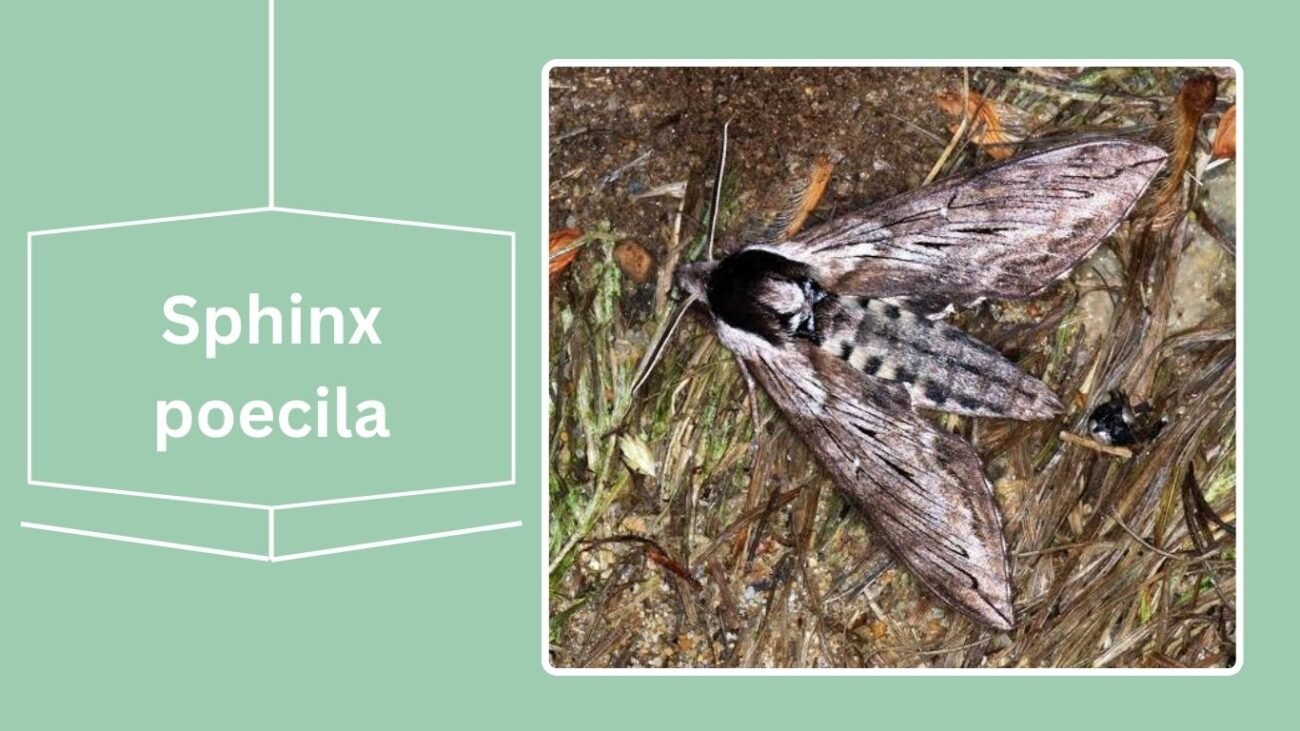
The Poecila Sphinx (Sphinx poecila) is a medium-sized hawk moth native to North America. Though not as widespread as some of its relatives, it is recognized for its attractive wing patterns and close association with certain forest plants.
Identification
- Wingspan ranges from 7–10 cm
- Forewings are grayish-brown with wavy black and white lines, giving a mottled appearance
- Hindwings are reddish with broad black bands
- Body is stout, gray with darker striping
- Caterpillars are green with pale diagonal stripes and a small, curved horn at the rear
Habitat
This species is found primarily in the northeastern United States and parts of Canada. It prefers woodlands, forest edges, and shrubby areas, particularly where host plants such as blueberries, snowberries, and viburnums are present.
Behavior
Adults are nocturnal and active at dusk and during the night. They are strong fliers, often visiting tubular flowers like honeysuckle and phlox for nectar. Caterpillars feed on the foliage of shrubs but typically do not occur in numbers large enough to be harmful.
Lifecycle
Eggs are deposited on host plant leaves. Caterpillars feed through several stages before burrowing into soil to pupate. Pupae overwinter in cooler climates, with adults emerging in late spring or early summer. Generally, one generation occurs per year in northern areas, while southern regions may support two.
13. Hemaris thysbe (Hummingbird Clearwing)
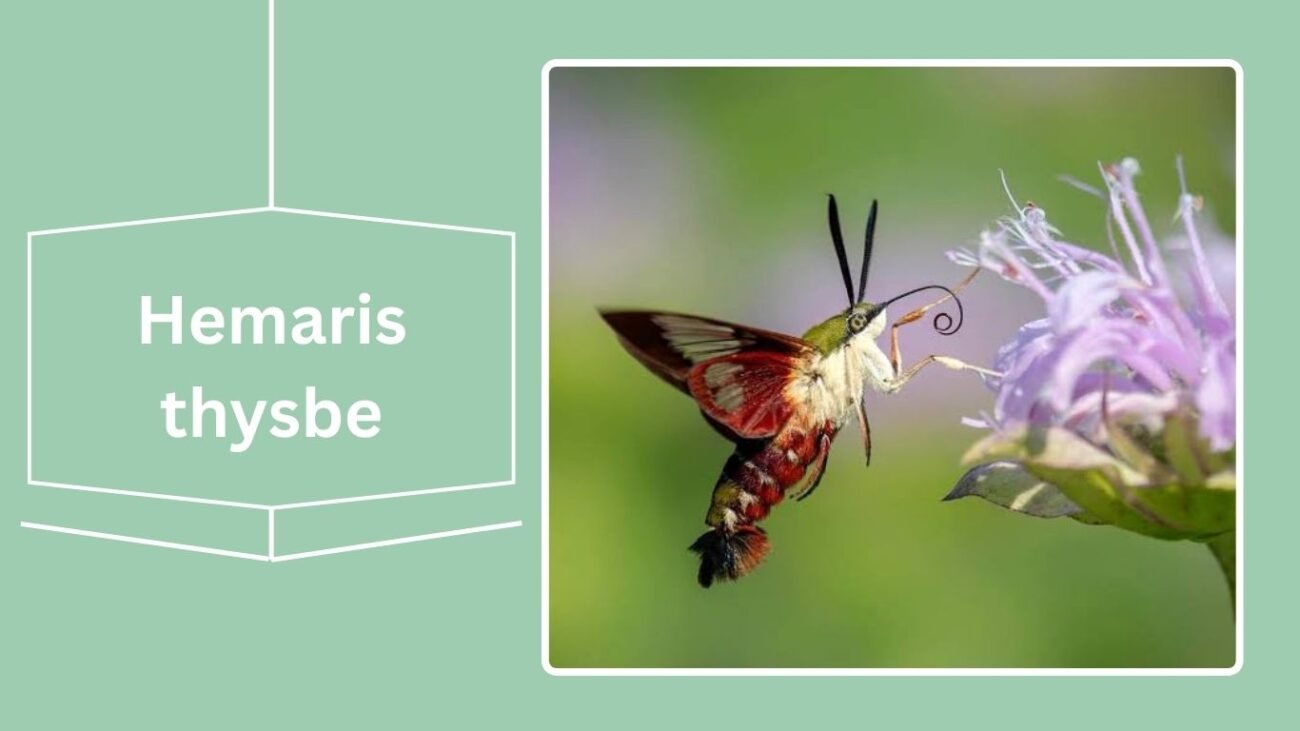
The Hummingbird Clearwing (Hemaris thysbe) is one of the most well-known hawk moths due to its remarkable resemblance to a hummingbird in both appearance and flight behavior. It is commonly seen hovering at flowers during the day.
Identification
- Wingspan ranges from 4–5 cm
- Forewings and hindwings are mostly transparent, edged with reddish-brown scales
- Body is furry, resembling a bumblebee or small hummingbird, usually greenish to reddish-brown
- Antennae are thick and slightly hooked at the tips
- Caterpillars are green with pale stripes and a curved horn at the rear
Habitat
This species is widespread across North America, from Canada to the United States. It thrives in gardens, meadows, forest edges, and suburban areas, particularly where nectar-rich flowers are abundant.
Behavior
Unlike most hawk moths, the Hummingbird Clearwing is diurnal (active during the day). It hovers like a hummingbird while feeding on nectar from flowers such as honeysuckle, beebalm, and phlox. Its rapid wingbeats and hovering often cause people to mistake it for an actual hummingbird.
Lifecycle
Eggs are laid on the leaves of honeysuckle, snowberry, and viburnum plants. Caterpillars feed and grow through several instars before pupating in a silken cocoon on the ground among leaf litter. Pupae overwinter, and adults emerge in spring or early summer. Typically, there are two generations per year in warmer areas, while cooler regions may have only one.
14. Hemaris diffinis (Snowberry Clearwing)
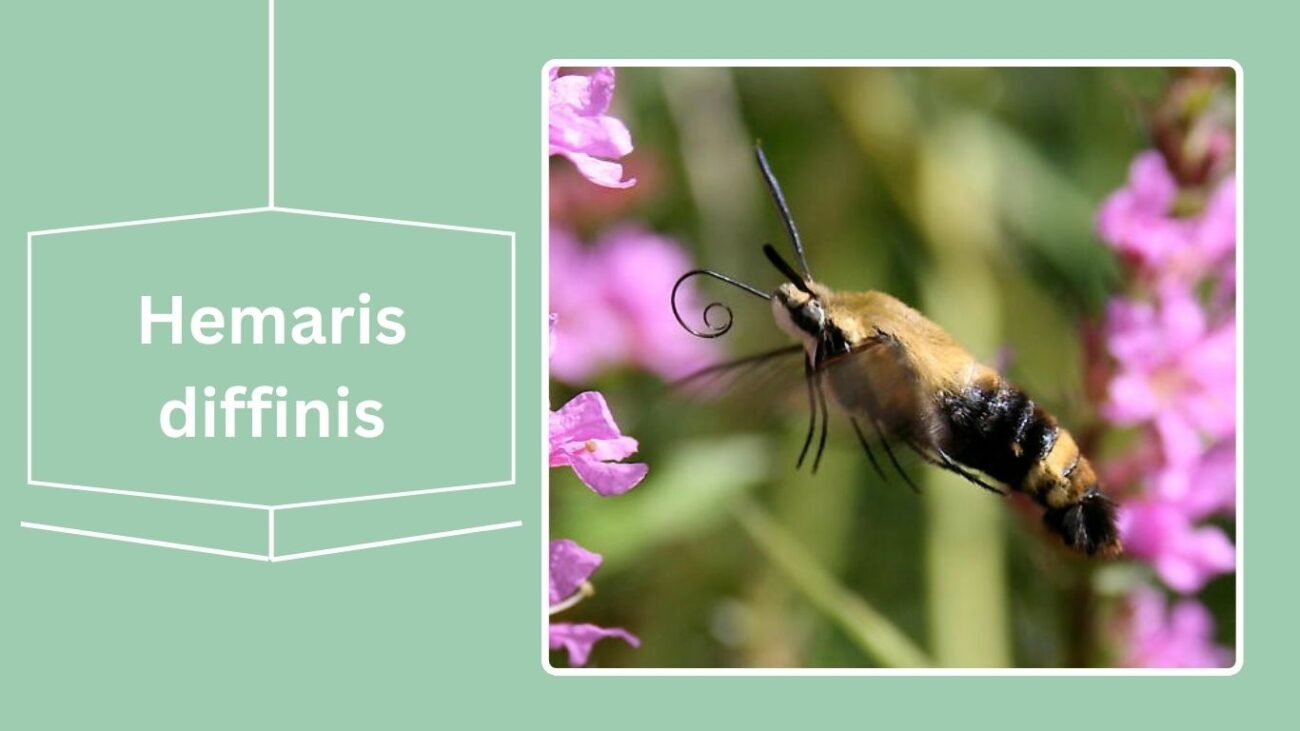
The Snowberry Clearwing (Hemaris diffinis) is a day-flying hawk moth that strongly resembles a bumblebee. Its buzzing flight and fuzzy body make it easy to confuse with bees, but it is harmless and an important pollinator.
Identification
- Wingspan ranges from 3.5–5 cm
- Wings are transparent with dark brown to black borders
- Body is furry, usually black with yellow bands, giving it a bee-like appearance
- Antennae are thick, dark, and slightly hooked at the ends
- Caterpillars are green with pale side stripes and a short, curved tail horn
Habitat
This species is found throughout much of North America, especially in the eastern and central regions. It inhabits gardens, open fields, woodland edges, and suburban areas where nectar-rich flowers and host plants are available.
Behavior
The Snowberry Clearwing is diurnal, active during daylight hours. It hovers at flowers while feeding, much like a hummingbird, but its bee-like body often causes people to mistake it for a bumblebee. It favors nectar sources such as honeysuckle, bee balm, thistle, and verbena.
Lifecycle
Females lay eggs on snowberry, honeysuckle, and dogbane plants. Caterpillars feed on leaves and develop through several stages before pupating in loose cocoons hidden in leaf litter. Pupae overwinter, with adults emerging in spring. Depending on the climate, one to two generations may occur each year.
15. Hemaris gracilis (Slender Clearwing)
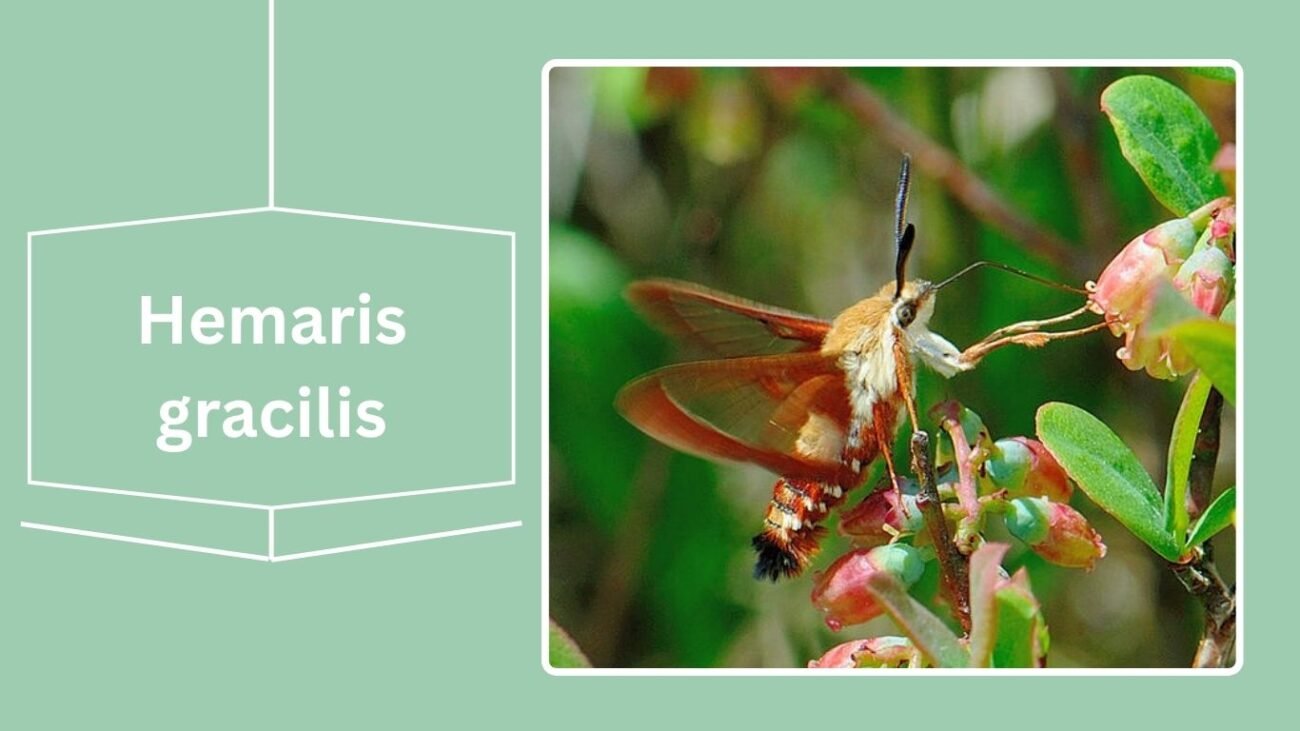
The Slender Clearwing (Hemaris gracilis) is the rarest of the North American clearwing hawk moths. It is more localized in distribution and is often identified by its slender body and reddish tones.
Identification
- Wingspan ranges from 3.5–5 cm
- Wings are transparent with reddish-brown borders
- Body is slimmer than other Hemaris species, usually reddish-brown with fewer yellow markings
- Antennae are long, thin, and slightly hooked at the tips
- Caterpillars are green with pale diagonal stripes and a short, curved horn on the rear
Habitat
This species is found mainly in the northeastern United States and parts of southeastern Canada. It favors habitats such as pine barrens, open woodlands, and areas where blueberry (Vaccinium) and huckleberry plants grow.
Behavior
The Slender Clearwing is diurnal, active during the day, and feeds on nectar from flowers such as milkweed, viburnum, and blueberry blossoms. Its slim body and reddish hue make it more distinct from the bee-like Hemaris diffinis and the hummingbird-like Hemaris thysbe.
Lifecycle
Eggs are laid on blueberry and huckleberry plants. Caterpillars feed on foliage before pupating in leaf litter or soil, where they remain until adulthood. Adults emerge in spring or early summer. Generally, there is one generation per year in cooler climates, though warmer areas may occasionally support two.
16. Deilephila elpenor (Elephant Hawk Moth)
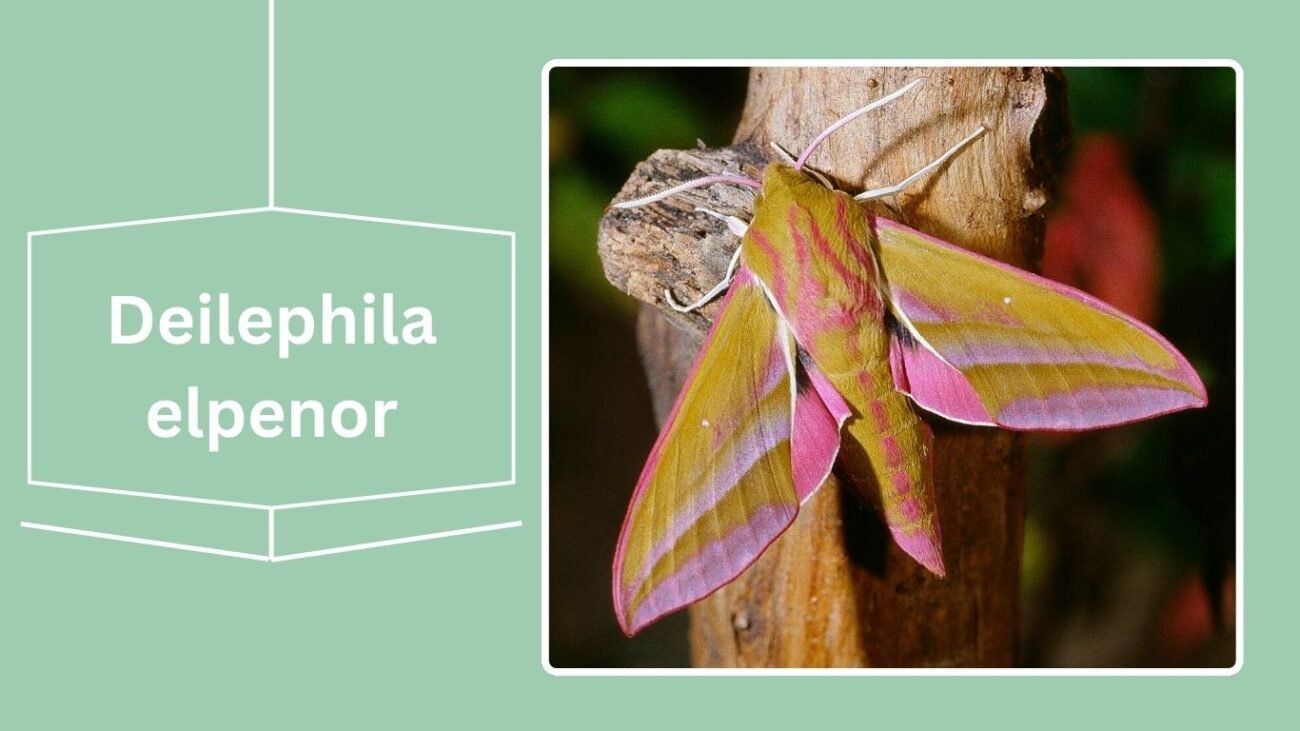
The Elephant Hawk Moth (Deilephila elpenor) is one of the most colorful and striking hawk moths, easily recognized by its vivid pink and olive-green coloration. Its caterpillar, with an elephant-like trunk, gives the species its common name.
Identification
- Wingspan ranges from 6–8 cm
- Forewings are olive-green with pink streaks along the edges
- Hindwings are bright pink with dark brown borders
- Body is pink and olive-green, blending beautifully with its wings
- Caterpillars are large, gray or brown, with an elongated “trunk” and large eye-like spots near the head
Habitat
This species is found across Europe and parts of Asia, extending into temperate regions. It inhabits gardens, meadows, woodland edges, and wetlands, often in areas with abundant nectar-rich flowers and host plants like willowherb and bedstraw.
Behavior
Adults are nocturnal and are especially active at dusk, hovering over flowers such as honeysuckle, valerian, and petunias. They are powerful yet graceful fliers, often mistaken for exotic butterflies due to their vibrant colors. Caterpillars are strong feeders, sometimes reaching impressive sizes before pupation.
Lifecycle
Eggs are laid singly on host plants like willowherb and bedstraw. Caterpillars pass through several instars, growing rapidly before pupating in leaf litter or shallow soil. The pupae overwinter, with adults emerging in late spring to summer. Typically, there is one generation per year.
17. Deilephila porcellus (Small Elephant Hawk Moth)
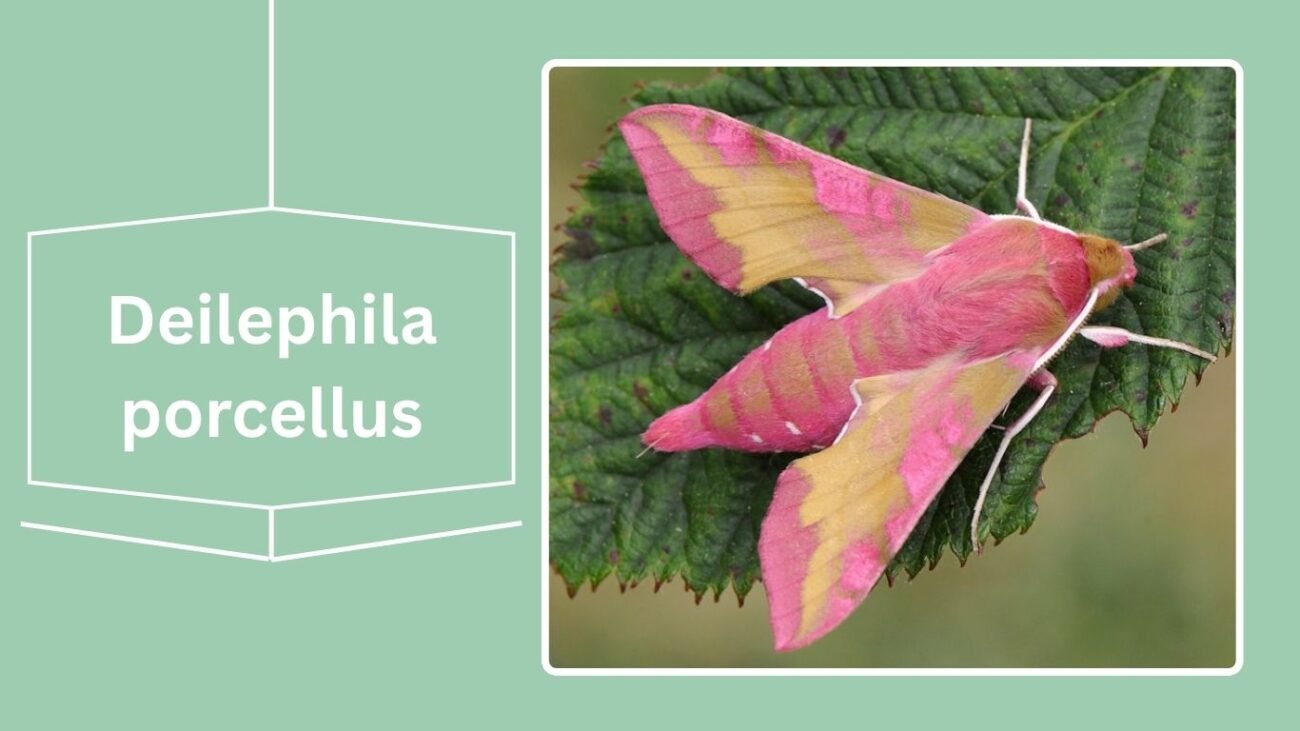
The Small Elephant Hawk Moth (Deilephila porcellus) is a smaller relative of the Elephant Hawk Moth, but equally eye-catching with its vivid pink and olive-green colors. Despite its smaller size, it is one of the most beautiful moths found in Europe.
Identification
- Wingspan ranges from 4–5.5 cm
- Forewings are olive-green with pink edges and markings
- Hindwings are bright pink with darker borders
- Body is slender, with alternating olive-green and pink shades
- Caterpillars are gray or brown with eye-like spots near the head and a short “trunk”
Habitat
This species is widely distributed across Europe and parts of western Asia. It thrives in grasslands, meadows, gardens, heathlands, and roadside verges where host plants such as bedstraw and willowherb are common.
Behavior
Adults are nocturnal, often flying at dusk and night in search of nectar. They hover over flowers like honeysuckle, valerian, and bedstraw, feeding in the same way as hummingbirds. Caterpillars are less frequently noticed but feed voraciously on low-growing plants.
Lifecycle
Eggs are laid on bedstraw and willowherb. Caterpillars pass through several growth stages, developing eye-like spots to deter predators. Pupation takes place in soil or plant debris, where the species overwinters. Typically, there is one generation per year, with adults flying from late spring to midsummer.
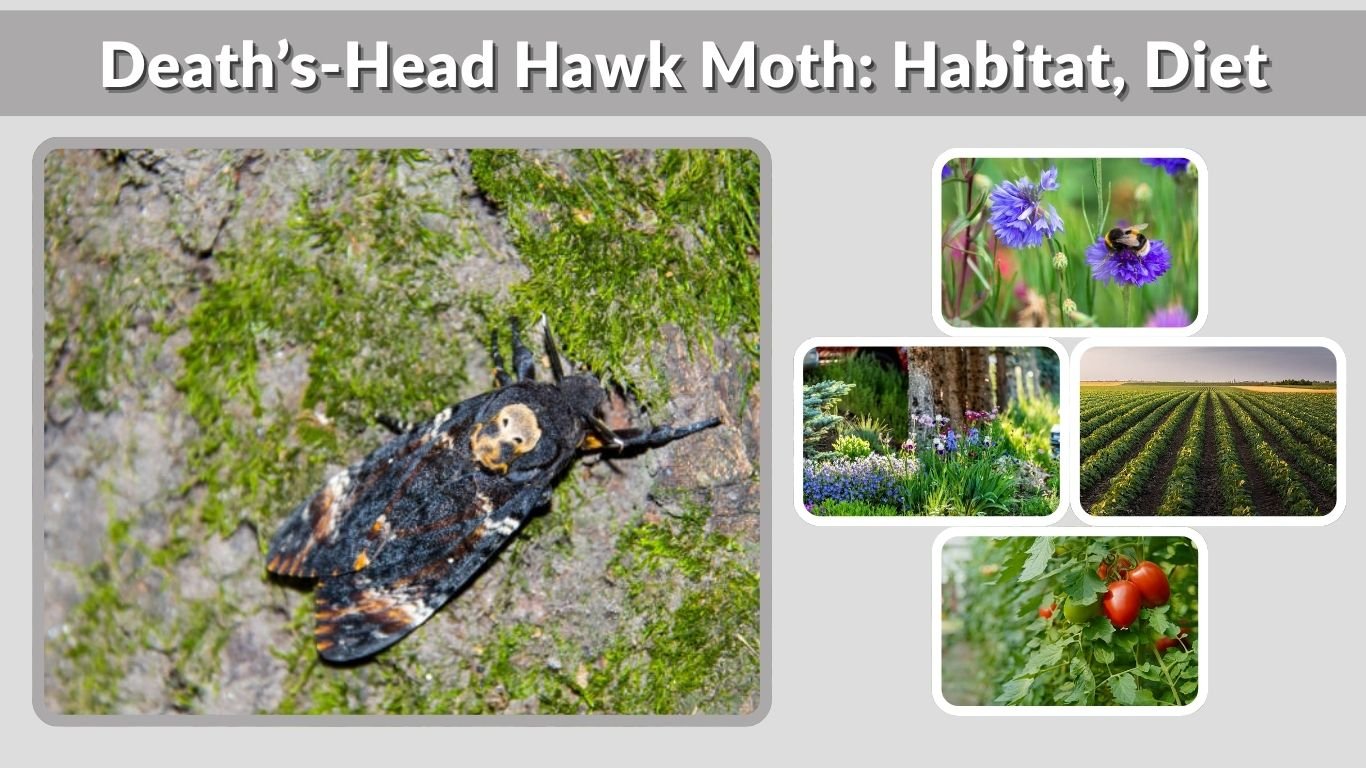
18. Acherontia atropos (Death’s-head Hawk Moth)
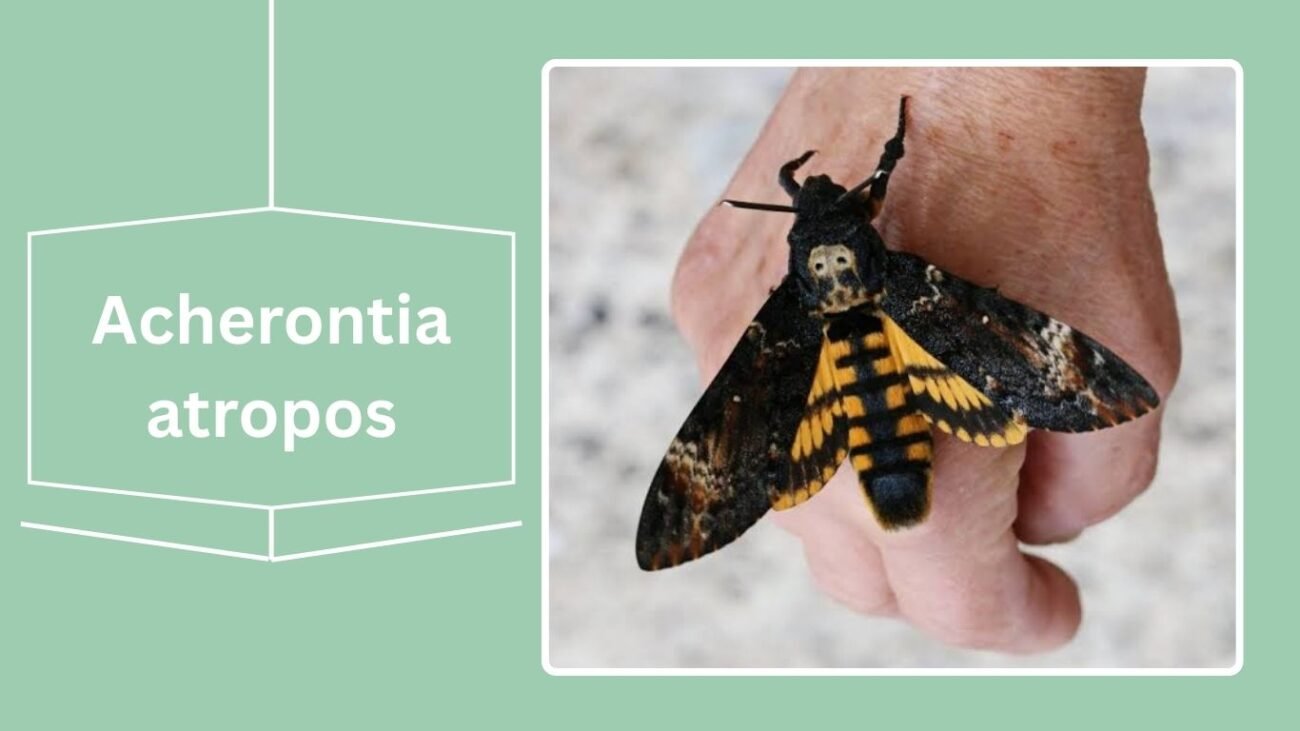
The Death’s-head Hawk Moth (Acherontia atropos) is one of the most famous and striking hawk moths, easily recognized by the skull-like marking on its thorax. It has long been surrounded by folklore and superstition due to its eerie appearance.
Identification
- Wingspan ranges from 9–13 cm
- Forewings are mottled brown, black, and gray, providing excellent camouflage
- Hindwings are yellow with distinct black bands
- Thorax bears a pale, skull-shaped marking, its most distinctive feature
- Caterpillars are large, yellow or green with diagonal stripes and a curved tail horn
Habitat
This species is found in Africa, southern Europe, and parts of the Middle East. It prefers warm regions, gardens, farmland, and scrublands, especially near host plants like potato, tobacco, and other members of the nightshade family.
Behavior
Adults are mostly nocturnal and strong fliers. Uniquely, they can emit a squeaking sound when disturbed by expelling air through their proboscis. They are also known for raiding beehives to feed on honey, tolerated by bees due to chemical mimicry of their scent. Caterpillars feed on solanaceous plants and can cause damage in fields.
Lifecycle
Eggs are laid on nightshade family plants such as potato and tobacco. Caterpillars grow through five instars, often reaching impressive sizes, before pupating underground. The pupal stage lasts several weeks, after which adults emerge. Depending on the climate, one to two generations occur per year, with adults often migrating long distances.
19. Acherontia styx (Lesser Death’s-head Hawk Moth)
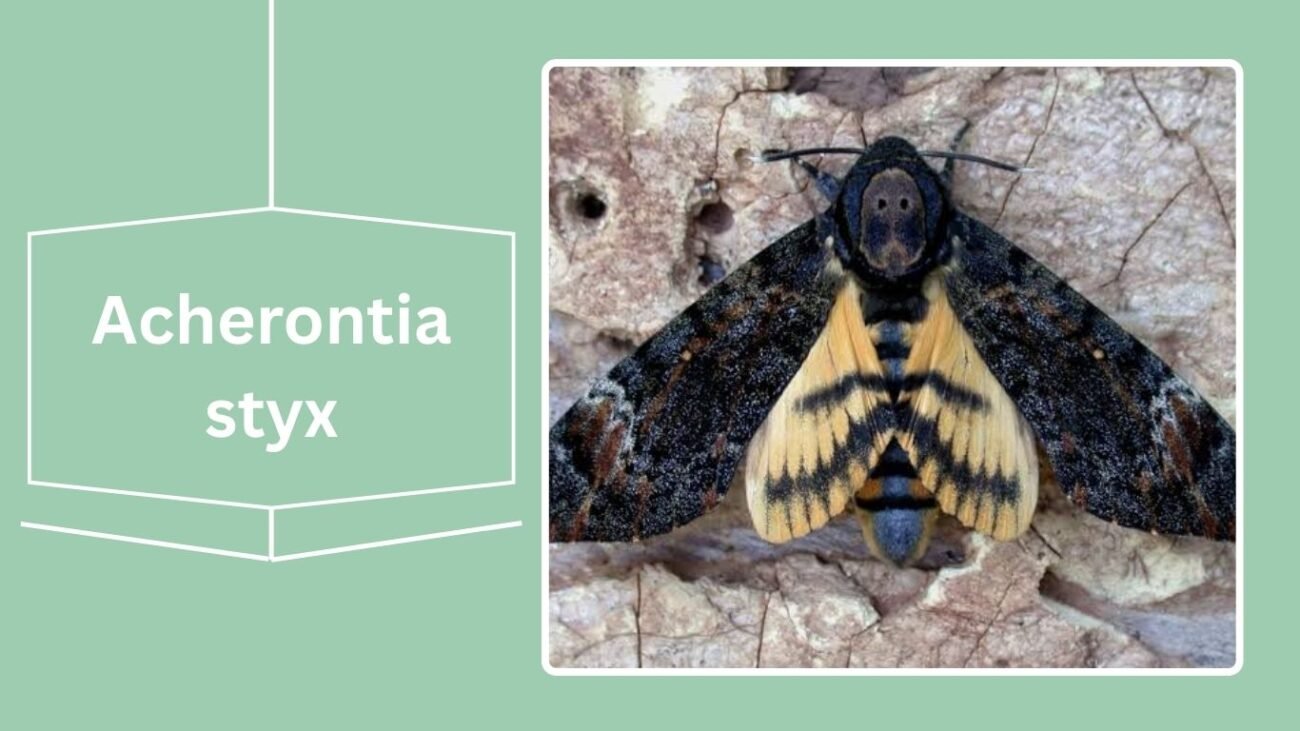
The Lesser Death’s-head Hawk Moth (Acherontia styx) is one of the three species of Death’s-head hawk moths, named for the skull-like marking on its thorax. It shares many similarities with Acherontia atropos but is smaller and more common in Asia.
Identification
- Wingspan ranges from 8–12 cm
- Forewings are mottled brown and gray with darker streaks
- Hindwings are yellow with bold black bands
- Thorax bears a pale marking resembling a skull, though less distinct than in A. atropos
- Caterpillars are large, yellow or green, with diagonal stripes and a curved horn at the rear
Habitat
This species is found widely across South and Southeast Asia, including India, China, and Thailand. It inhabits gardens, fields, and open woodland areas, particularly where nightshade plants such as potato, eggplant, and tobacco grow.
Behavior
Adults are nocturnal, strong fliers, and, like A. atropos, are capable of producing a squeaking sound when threatened. They are also known to raid beehives for honey, aided by their ability to mimic the scent of bees. Caterpillars feed voraciously on solanaceous plants and can become agricultural pests.
Lifecycle
Females lay eggs on the leaves of host plants. Caterpillars grow quickly through several stages before pupating in the soil. Adults emerge after several weeks, with multiple generations possible each year in tropical regions.
20. Acherontia lachesis (Greater Death’s-head Hawk Moth)
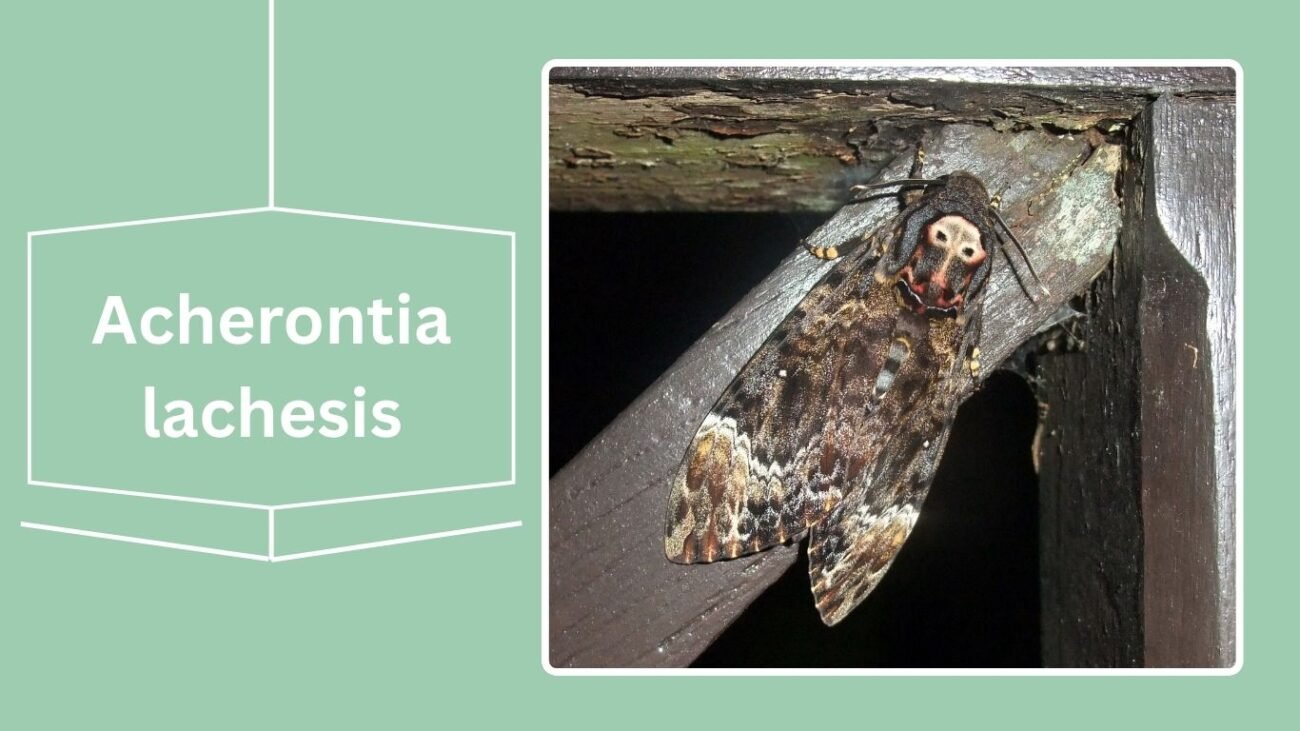
The Greater Death’s-head Hawk Moth (Acherontia lachesis) is the largest of the three Death’s-head species, notable for its size and the eerie skull-like marking on its thorax. Like its relatives, it has long been linked to myths and superstition.
Identification
- Wingspan ranges from 10–13 cm
- Forewings are mottled brown, gray, and black with irregular streaks
- Hindwings are yellow with thick black bands
- Thorax features a distinct pale marking resembling a skull
- Caterpillars are robust, yellow, green, or brown with diagonal stripes and a prominent curved horn
Habitat
This species is native to South and Southeast Asia, including India, Sri Lanka, and the Indonesian region. It inhabits farmlands, gardens, and forest edges where host plants such as potato, eggplant, and other nightshades grow.
Behavior
Adults are nocturnal and powerful fliers. Like the other Death’s-head moths, they can produce a squeaking sound by expelling air through their proboscis. They are also notorious for raiding beehives to steal honey, often tolerated by bees due to their chemical mimicry. Caterpillars feed heavily on solanaceous plants and can reach pest status in agricultural areas.
Lifecycle
Eggs are laid on host plants from the nightshade family. Caterpillars grow through five instars before burrowing into the soil to pupate. Adults emerge after several weeks, with multiple generations per year possible in warm, tropical climates.
21. Theretra oldenlandiae (Impatiens Hawk Moth)
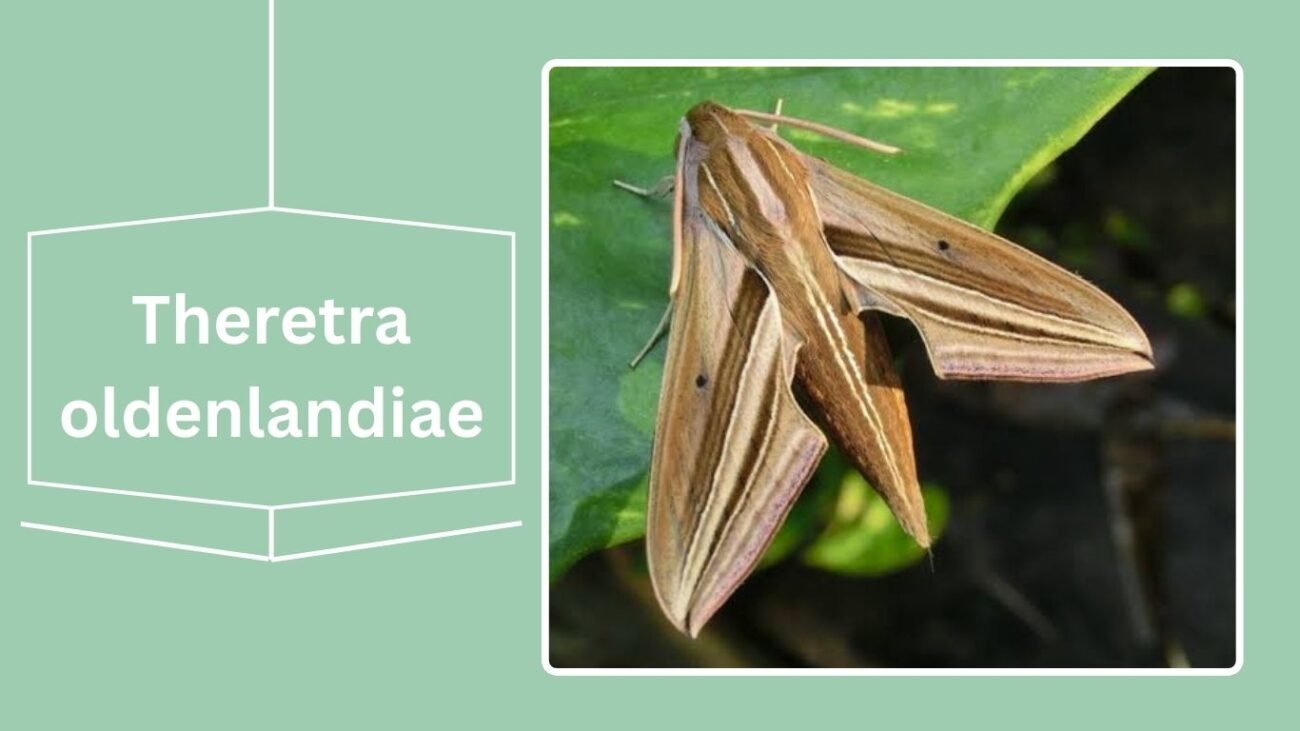
The Impatiens Hawk Moth (Theretra oldenlandiae) is a widespread species in Asia, known for its streamlined body and association with ornamental plants such as impatiens. It is a fast flier and an important pollinator in its range.
Identification
- Wingspan ranges from 7–10 cm
- Forewings are narrow, olive-brown to gray, with pale diagonal streaks
- Hindwings are brownish with lighter shading near the base
- Body is long, slender, and streamlined, with pale lateral stripes
- Caterpillars are green or brown, with eye-like spots on the thorax and a curved tail horn
Habitat
This species is distributed widely across South and Southeast Asia, extending to Australia and some Pacific islands. It inhabits gardens, agricultural fields, and open woodlands, especially where impatiens, taro, and related host plants grow.
Behavior
Adults are nocturnal and strong, swift fliers. They visit a variety of tubular flowers at dusk and night, often hovering while feeding, much like hummingbirds. Caterpillars feed on a range of plants including impatiens, taro, and grapevine, occasionally becoming garden pests.
Lifecycle
Eggs are laid singly on host plant leaves. Caterpillars grow through several instars before pupating in the soil or leaf litter. Adults emerge after several weeks, with multiple generations possible per year in tropical and subtropical climates.
22. Theretra alecto (Alecto Hawk Moth)
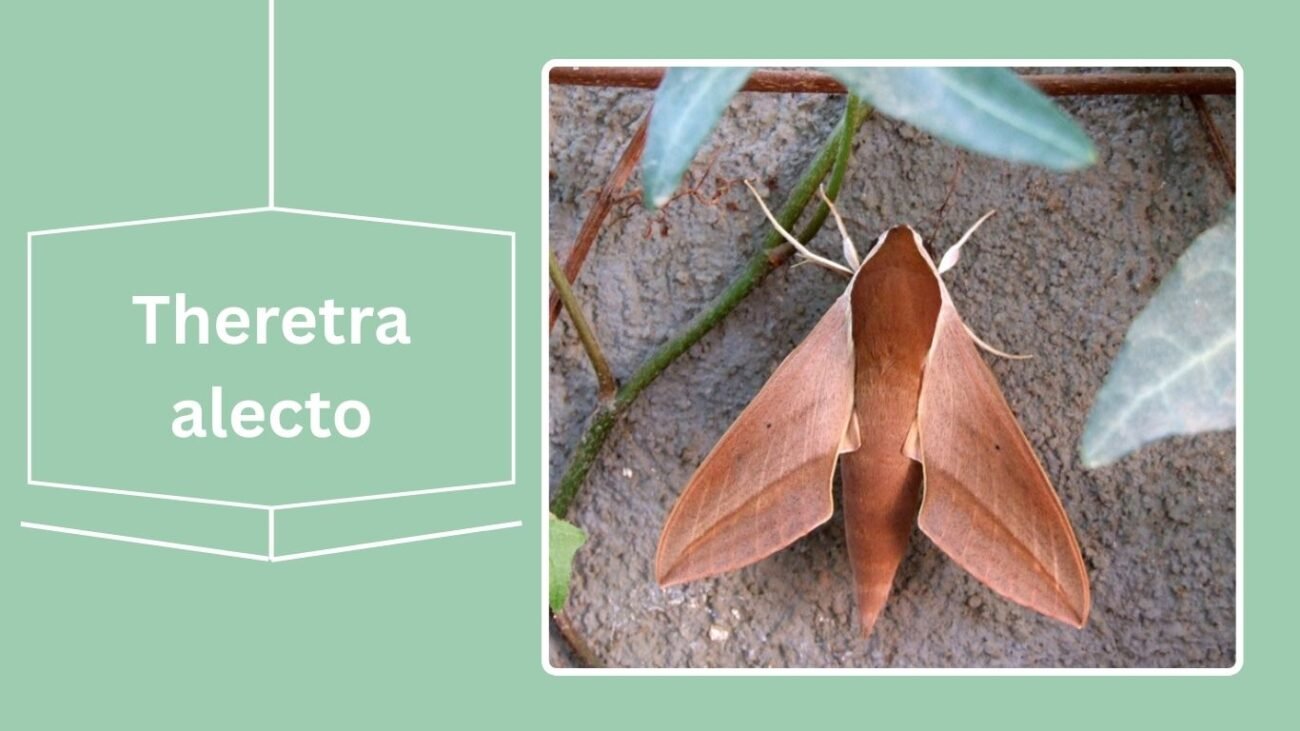
The Alecto Hawk Moth (Theretra alecto) is a sleek, fast-flying hawk moth found across Asia and parts of the Middle East. Its streamlined body and muted coloration help it blend into its surroundings, while its larvae feed on a wide variety of plants.
Identification
- Wingspan ranges from 8–10 cm
- Forewings are long, narrow, and olive-brown with lighter diagonal streaks
- Hindwings are dark brown to black with a lighter base
- Body is slender and striped with pale lateral lines
- Caterpillars are green or brown with distinctive eye-like spots and a tail horn
Habitat
This species occurs widely in South Asia, Southeast Asia, the Middle East, and extending into northern Australia. It thrives in gardens, farmlands, grasslands, and forest edges where host plants such as grapevine, taro, and amaranth grow.
Behavior
Adults are nocturnal, powerful fliers, and often visit deep-throated flowers at dusk and night. They hover while feeding, similar to hummingbirds. Caterpillars are generalist feeders and may sometimes be found on crops, though they rarely reach pest levels.
Lifecycle
Eggs are laid on leaves of host plants, particularly grapevine and taro. Caterpillars feed actively through several instars before burrowing into the soil to pupate. Adults emerge after a few weeks. In tropical climates, multiple generations occur annually.
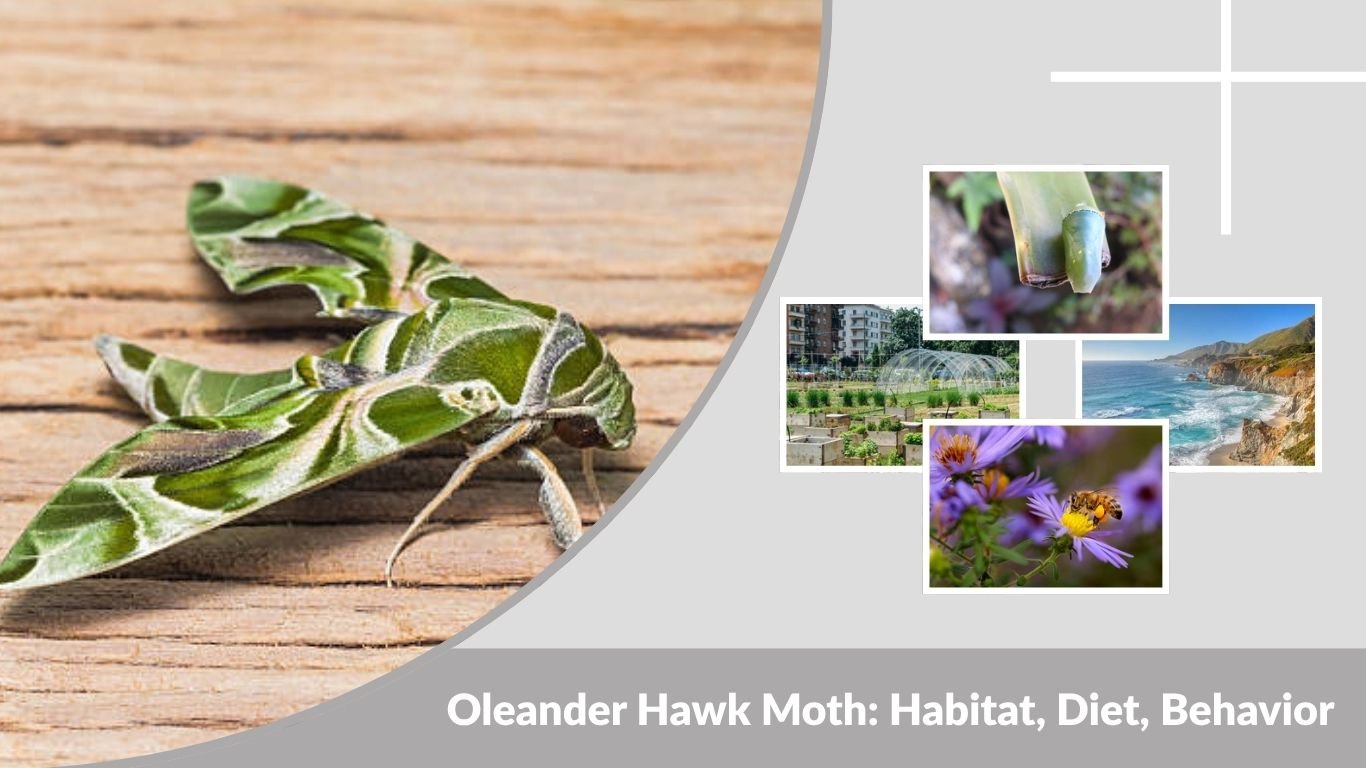
23. Daphnis nerii (Oleander Hawk Moth)
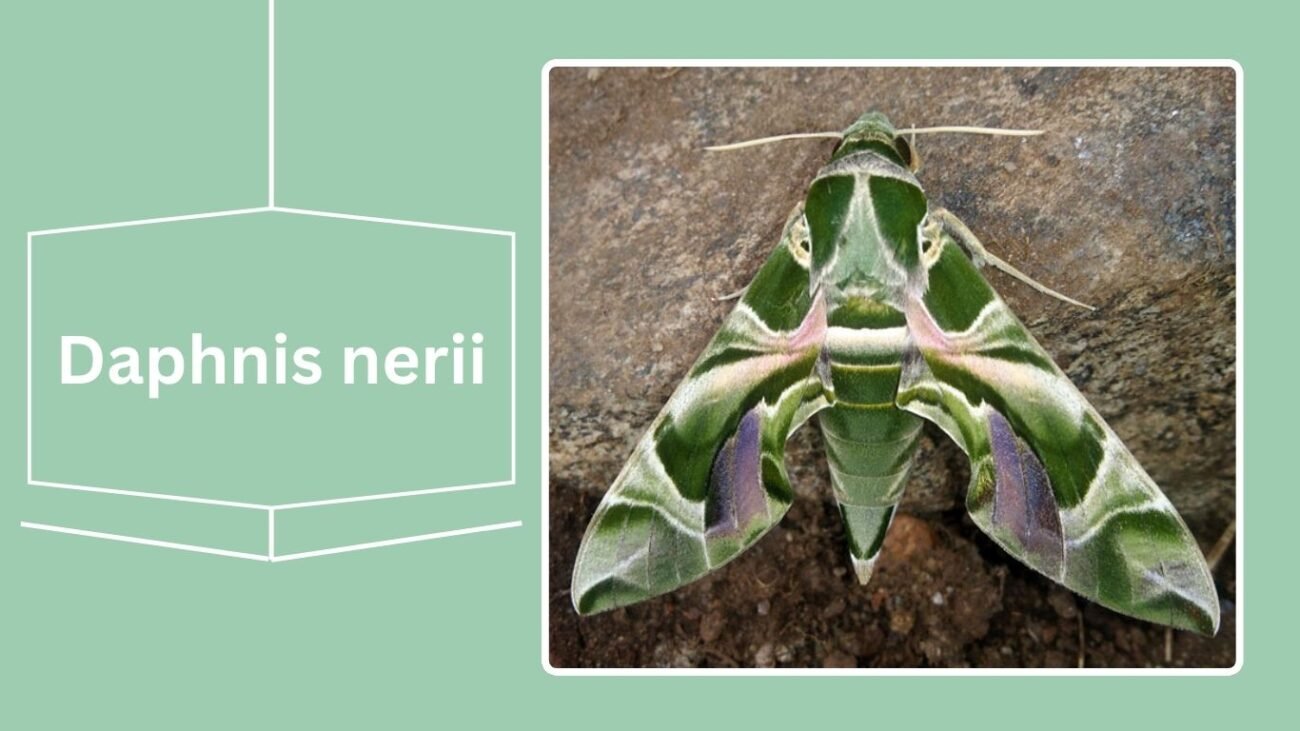
The Oleander Hawk Moth (Daphnis nerii) is one of the most spectacular and colorful hawk moths in the world. Its striking camouflage pattern of green and pink makes it highly distinctive and admired by moth enthusiasts.
Identification
- Wingspan ranges from 9–12 cm
- Forewings display a beautiful mosaic of olive green, dark green, and pinkish markings
- Hindwings are dark with lighter patches near the base
- Body is robust and patterned to match the wings, enhancing camouflage
- Caterpillars are large, green with eye-like spots on the thorax and a curved tail horn
Habitat
This species is native to Africa, Asia, and southern Europe but is also migratory, sometimes appearing in northern Europe. It inhabits gardens, farmland, woodlands, and scrublands, especially where oleander and periwinkle grow.
Behavior
Adults are nocturnal, powerful fliers, and are attracted to fragrant flowers such as jasmine and honeysuckle. They hover while feeding, similar to hummingbirds. Caterpillars feed mainly on oleander (Nerium oleander) and related plants, which are toxic to many animals but tolerated by the moth.
Lifecycle
Eggs are laid on oleander and other host plants. Caterpillars feed voraciously before pupating in the soil or leaf litter. Adults emerge after several weeks. In warm climates, multiple generations occur annually, while in temperate regions the species may migrate seasonally.
24. Hippotion celerio (Silver-striped Hawk Moth)
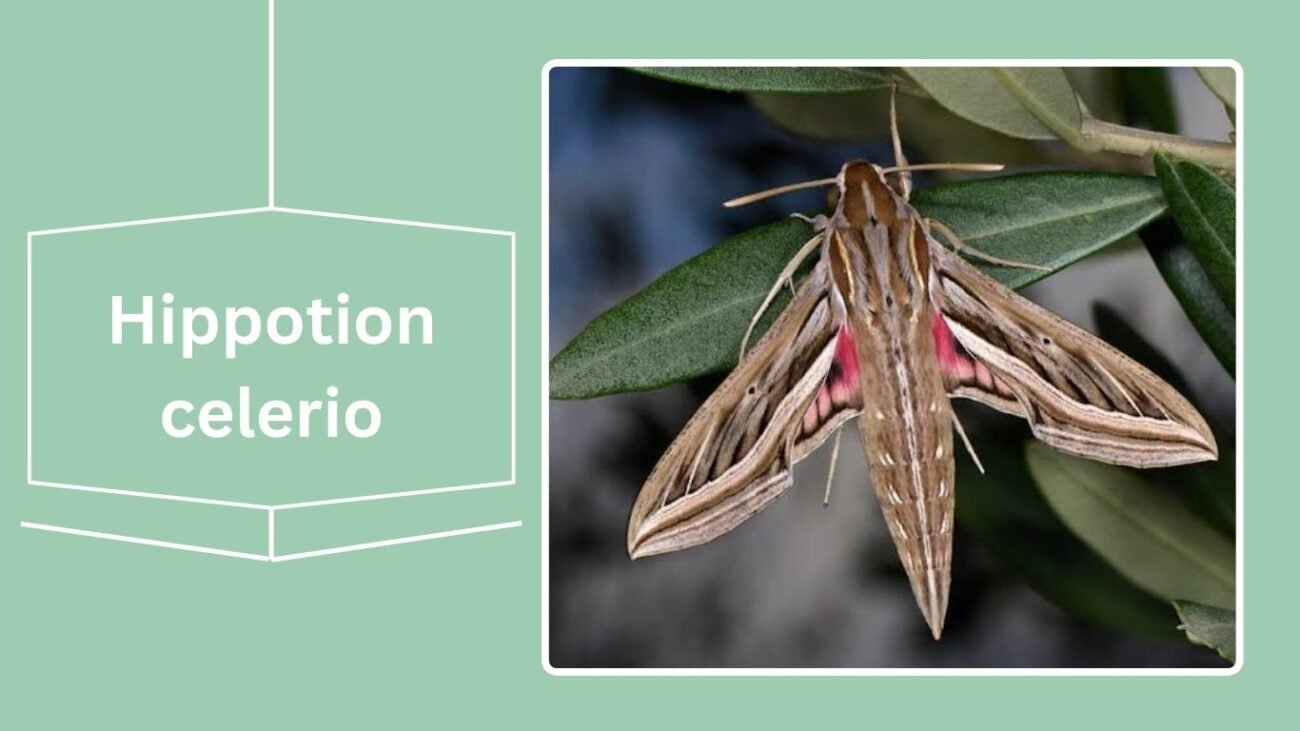
The Silver-striped Hawk Moth (Hippotion celerio) is a migratory species known for its sleek body and distinctive wing markings. It is widespread across tropical and subtropical regions and is often spotted during seasonal migrations.
Identification
- Wingspan ranges from 6–8 cm
- Forewings are brown with a bold silver-white diagonal stripe running across
- Hindwings are pinkish-orange with black bands
- Body is streamlined with pale lateral stripes
- Caterpillars are green or brown with eye-like spots and a tail horn
Habitat
This species is distributed throughout Africa, Asia, and parts of southern Europe, occasionally reaching northern Europe during migrations. It inhabits gardens, grasslands, open woodlands, and agricultural fields, especially where grapevine, taro, and related host plants grow.
Behavior
Adults are strong nocturnal fliers and often migrate over long distances. They visit tubular flowers such as petunia, jasmine, and honeysuckle, hovering while feeding. Caterpillars are adaptable feeders and can occasionally cause damage to grapevines and related crops.
Lifecycle
Eggs are laid singly on host plant leaves. Caterpillars pass through several instars, feeding heavily before pupating in the soil. Adults emerge after a few weeks. In warm climates, multiple generations occur annually, with populations boosted by migrations.
25. Macroglossum stellatarum (Hummingbird Hawk Moth)
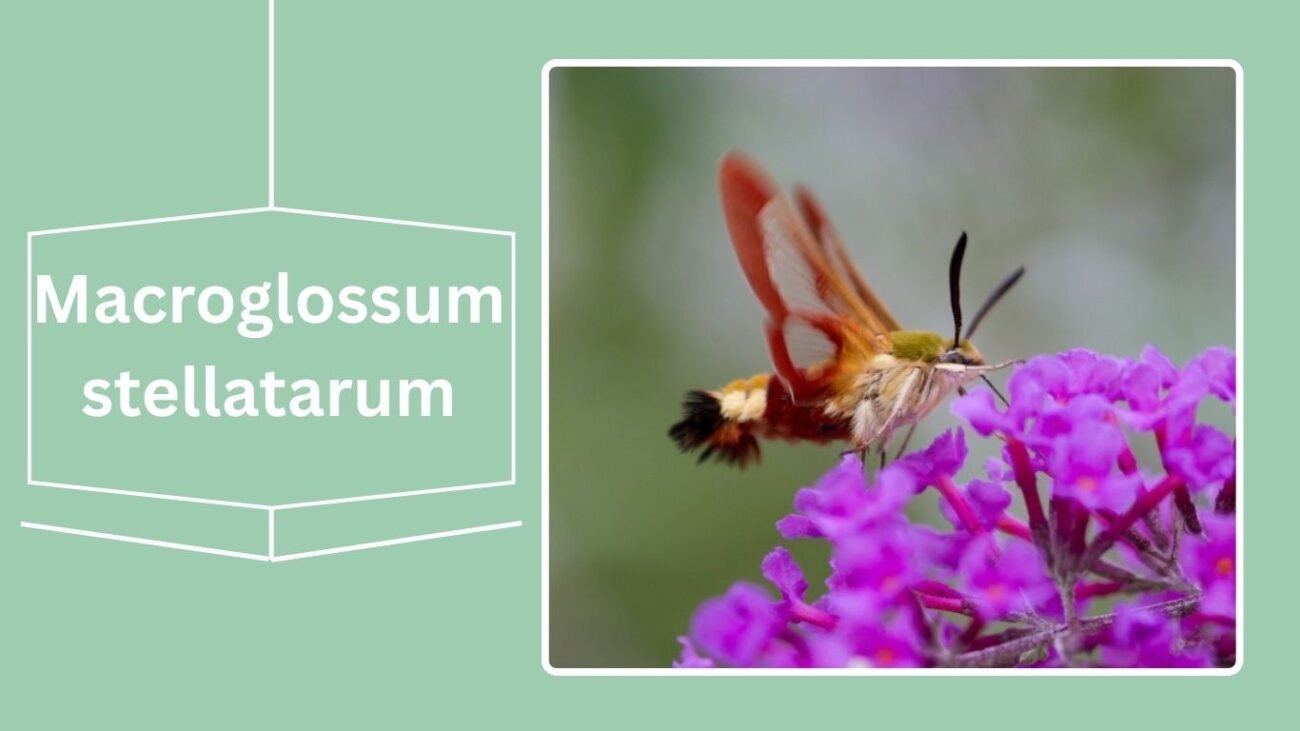
The Hummingbird Hawk Moth (Macroglossum stellatarum) is one of the most remarkable hawk moths, famous for its uncanny resemblance to a hummingbird in both appearance and flight. It is frequently seen in daylight, hovering at flowers with rapid wingbeats.
Identification
- Wingspan ranges from 4–5 cm
- Forewings are grayish-brown with darker streaks and spots
- Hindwings are orange with dark borders
- Body is stout and furry, grayish with white bands along the abdomen
- Long proboscis used for sipping nectar while hovering
- Caterpillars are green with pale stripes and a small tail horn
Habitat
This species is found across Europe, North Africa, and Asia, extending into temperate regions. It inhabits gardens, meadows, scrublands, and open countryside, especially where nectar-rich flowers are abundant.
Behavior
Unlike most hawk moths, the Hummingbird Hawk Moth is diurnal. It is active in bright sunlight, hovering over flowers such as valerian, honeysuckle, and petunias, often mistaken for a hummingbird due to its hovering and darting movements. It is also a migratory species, traveling long distances seasonally.
Lifecycle
Eggs are laid on bedstraw and related plants. Caterpillars feed and grow quickly before pupating in a loose cocoon among leaf litter or soil. Pupae overwinter in cooler climates. Depending on the region, two to three generations may occur annually, especially in warmer areas.