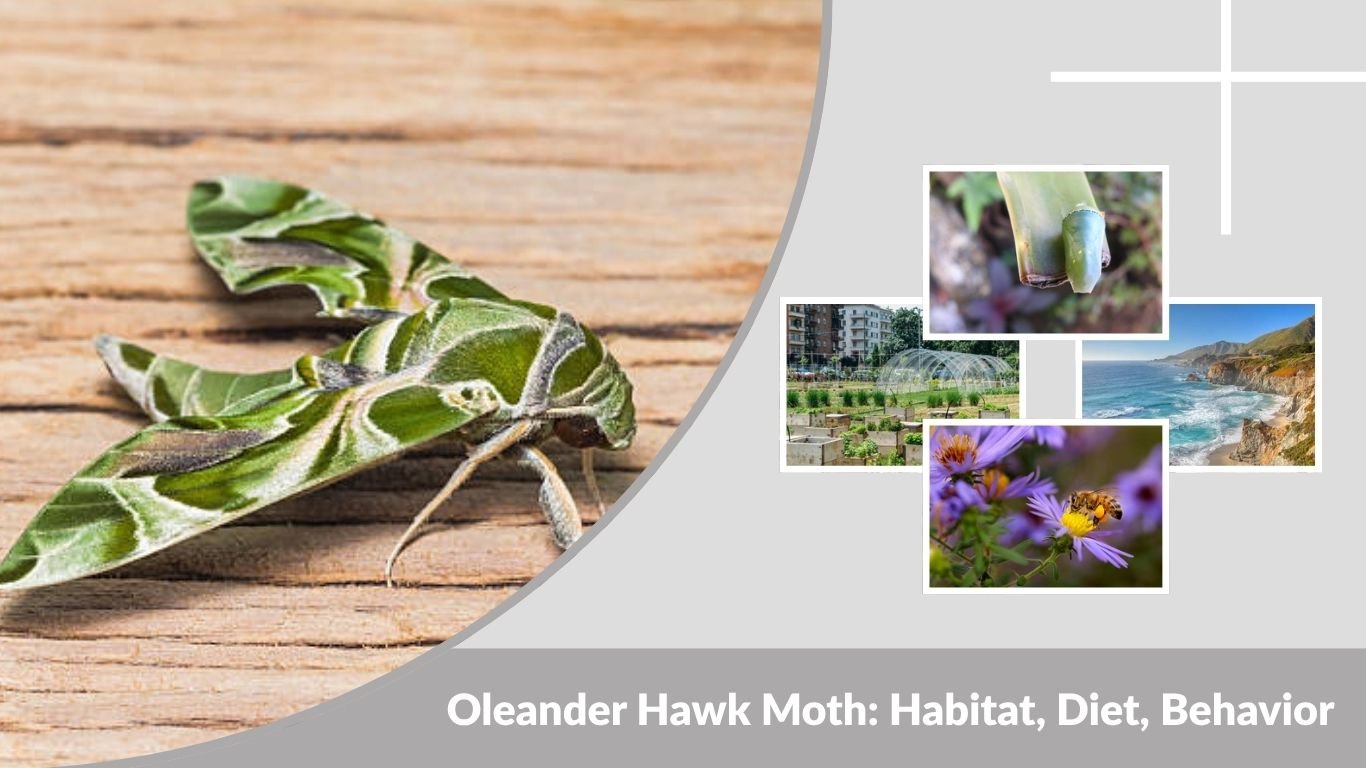
The oleander hawk moth is one of the most visually striking moths in the world, known for its beautiful green camouflage and intricate patterns. Unlike many moths that rely on dull colors, this species stands out with a mix of olive, pink, and white markings that help it blend seamlessly into foliage. Found across Africa, Asia, and parts of Europe, the oleander hawk moth fascinates both scientists and nature enthusiasts with its appearance, behavior, and connection to the toxic oleander plant.
What Is the Oleander Hawk Moth?
The oleander hawk moth (Daphnis nerii) is a large and fast-flying moth belonging to the Sphingidae family, commonly known as hawk moths or sphinx moths. These moths are famous for their ability to hover while feeding, much like hummingbirds.
This species is widely distributed across:
- Africa
- Southern Europe
- Asia
It is especially well known for its striking green camouflage, which allows it to blend into leaves and vegetation during the day. Despite its bright coloration, it is surprisingly difficult to spot in the wild.
The oleander hawk moth is also popular among insect enthusiasts due to its size, beauty, and relatively frequent sightings in warmer climates.
Why Is It Called the Oleander Hawk Moth?
The name “oleander hawk moth” comes from its strong association with the oleander plant, which serves as a primary food source during its caterpillar stage.
Key reasons behind the name include:
- Caterpillars feed on oleander leaves
- The plant is common in the moth’s habitat
- The species often lives near areas where oleander grows
The term “hawk moth” refers to the group’s powerful flight and hovering feeding behavior. Like other hawk moths, this species can remain suspended in the air while feeding on nectar, making it highly efficient.
Physical Appearance and Size
Adult Moth
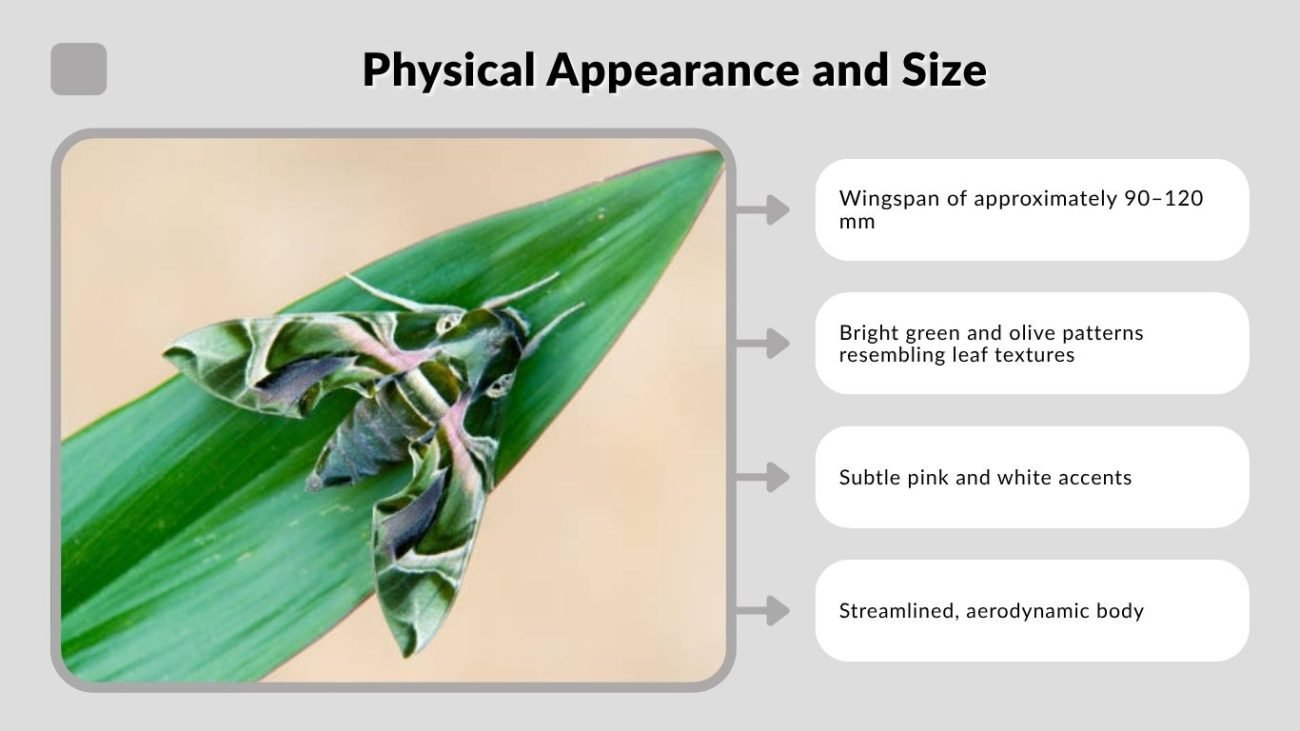
The adult oleander hawk moth is known for its stunning and complex coloration.
Key features include:
- Wingspan of approximately 90–120 mm
- Bright green and olive patterns resembling leaf textures
- Subtle pink and white accents
- Streamlined, aerodynamic body
This camouflage helps it remain hidden from predators during the day while resting on leaves or branches.
Caterpillar
The caterpillar of the oleander hawk moth is equally impressive and undergoes noticeable changes as it grows.
It typically has:
- Bright green or yellow body
- Prominent eye spots near the head
- Smooth, thick body structure
As it matures, its coloration may shift, and the eye spots become more pronounced. These markings act as a defense mechanism, making the caterpillar appear larger and more threatening to predators.
Life Cycle of the Oleander Hawk Moth
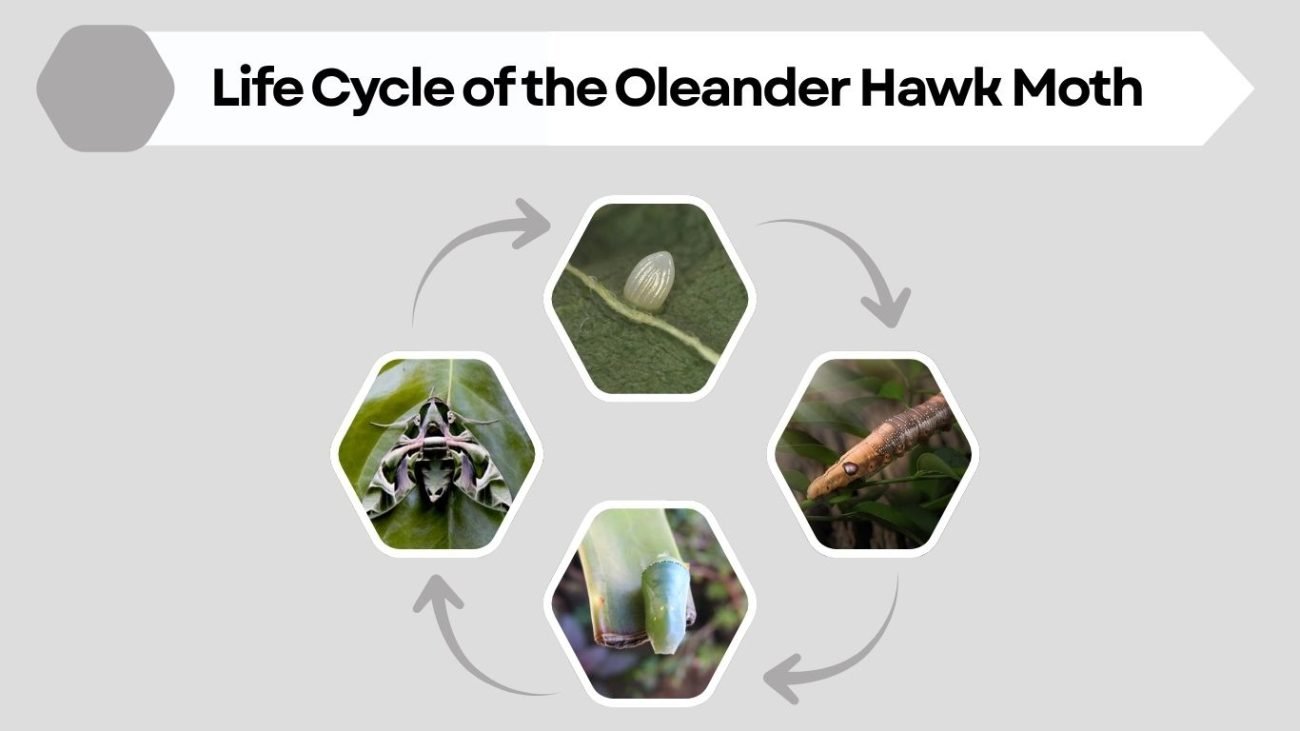
Like all moths, the oleander hawk moth goes through a complete metamorphosis with four distinct stages.
Egg Stage
Female moths lay small eggs on the leaves of host plants, especially oleander. The eggs are usually placed in safe, sheltered positions to protect them from predators and environmental conditions.
Larva (Caterpillar)
Once hatched, the caterpillar begins feeding immediately. This stage is focused on growth and development.
During this phase:
- The caterpillar consumes large amounts of leaves
- It grows rapidly and sheds its skin several times
- Its color and markings may change as it matures
This is the most visible stage and the one most commonly encountered by people.
Pupa
After reaching full size, the caterpillar moves to the ground and forms a pupa, usually among leaf litter or soil.
Inside the pupa:
- The insect undergoes a complete transformation
- Body structures reorganize into the adult form
This stage can last several weeks depending on environmental conditions.
Adult Stage
The adult moth emerges fully developed with wings ready for flight.
Adults are:
- Mostly active at night
- Strong fliers capable of hovering
- Focused on feeding and reproduction
They play an important role in pollination as they visit flowers for nectar.
Habitat and Distribution
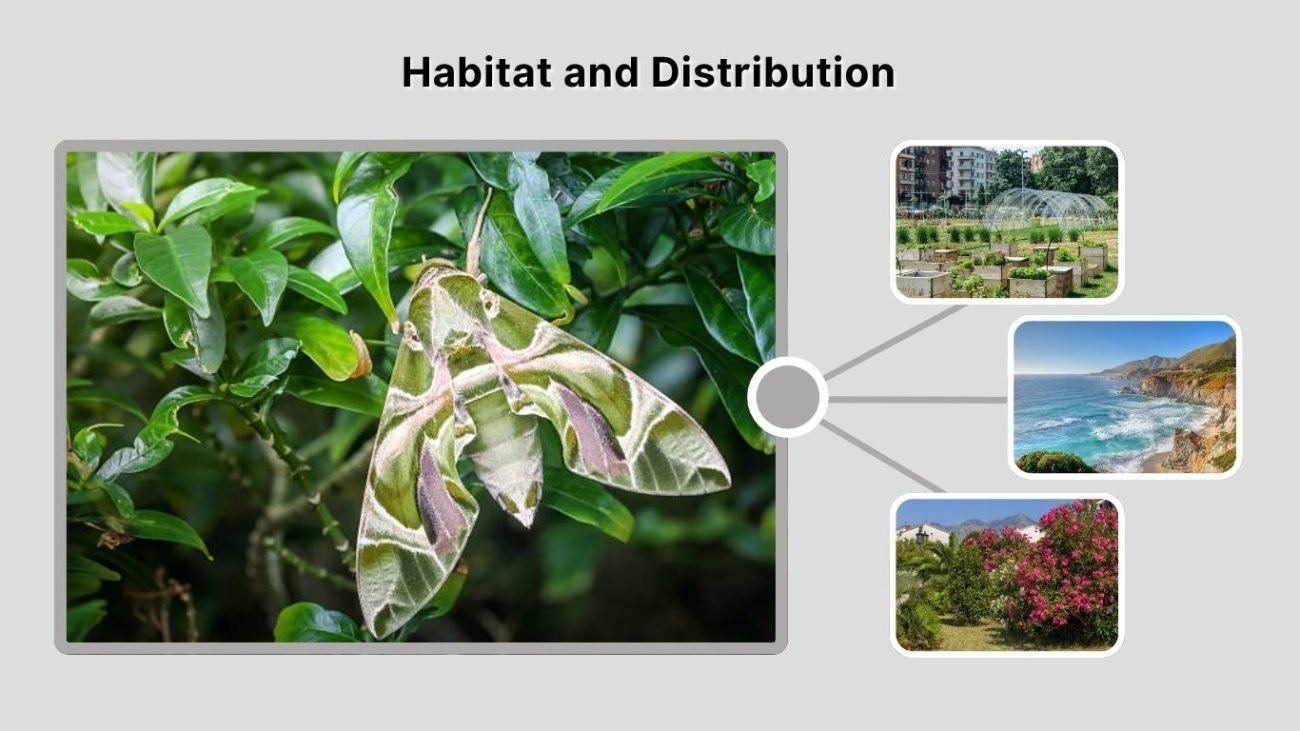
The oleander hawk moth is primarily found in warm and tropical regions, but it is also known for its migratory behavior.
It is commonly seen in:
- Africa
- Asia
- Mediterranean regions
In some cases, it migrates into parts of Europe, including the UK, especially during warmer months.
Preferred habitats include:
- Gardens and urban areas
- Coastal regions
- Areas with abundant host plants like oleander
Its ability to adapt to different environments makes it a widespread and successful species.
What Do Oleander Hawk Moths Eat?
Caterpillar Diet
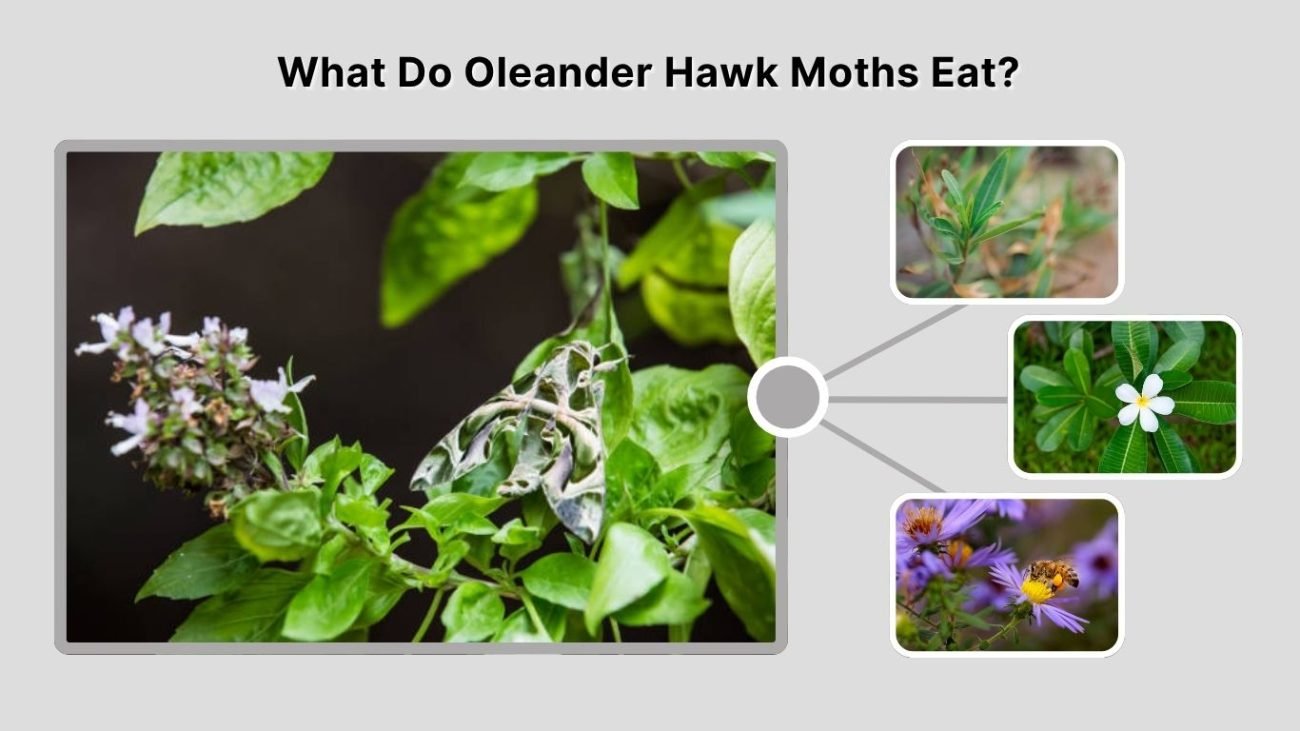
During the larval stage, the oleander hawk moth caterpillar feeds primarily on the oleander plant, which is known to be highly toxic.
Common food sources include:
- Oleander leaves
- Other plants in the dogbane family
The caterpillar is able to consume these toxic plants without harm. In fact, feeding on oleander may help it store toxins in its body, providing some protection against predators.
Adult Diet
As an adult, the oleander hawk moth shifts to a liquid diet.
It feeds on:
- Nectar from flowers
- Night-blooming plants
Using its long proboscis, the moth can hover while feeding, making it an efficient pollinator. This behavior is similar to hummingbirds and is common among hawk moth species.
Is the Oleander Hawk Moth Poisonous?
One of the most common questions about this species is whether it is dangerous.
- The caterpillar feeds on toxic oleander plants
- It may retain some of these toxins in its body
- This acts as a defense against predators
However, the oleander hawk moth is not dangerous to humans. It does not bite or sting, and simply observing it poses no risk. Still, it is best not to handle wild caterpillars unnecessarily.
Behavior and Interesting Facts
The oleander hawk moth has several fascinating traits that make it stand out.
- Nocturnal activity: Active mainly at night
- Hovering flight: Feeds while hovering like a hummingbird
- Excellent camouflage: Blends perfectly with green foliage
- Migratory behavior: Can travel long distances across regions
- Attracted to light: Often seen near artificial lights
These characteristics make it both difficult to spot in nature and exciting to observe.
How to Identify an Oleander Hawk Moth
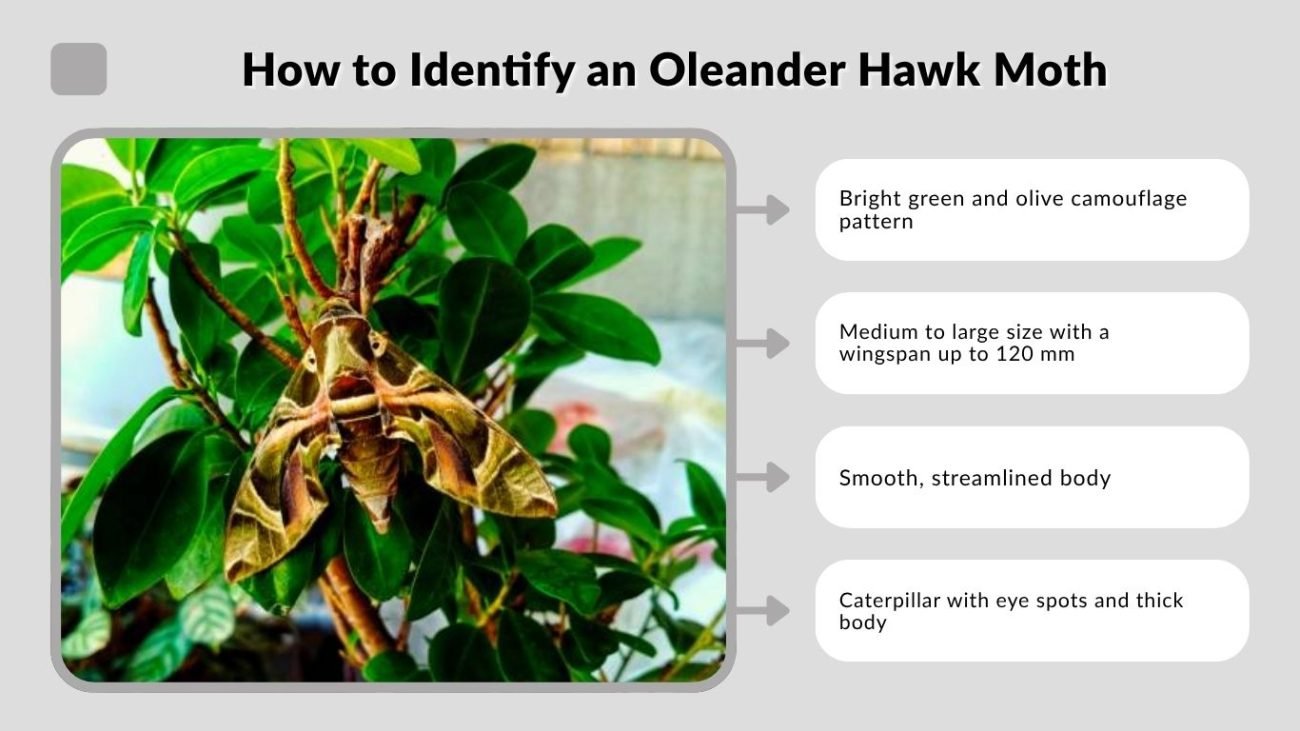
Identifying this moth is relatively easy once you know what to look for.
Key features include:
- Bright green and olive camouflage pattern
- Medium to large size with a wingspan up to 120 mm
- Smooth, streamlined body
- Caterpillar with eye spots and thick body
Its leaf-like pattern makes it unique among moths and helps distinguish it from other species.
Is the Oleander Hawk Moth Rare?
The oleander hawk moth is not considered rare globally, but its presence varies by region.
- Common in tropical and subtropical areas
- Less common in Europe, where it appears as a migrant
- Sightings depend on climate and season
In regions like the UK, it is considered an occasional visitor rather than a permanent resident.
FAQs
Is the oleander hawk moth dangerous?
No, it is harmless to humans and does not pose any threat.
What does the oleander hawk moth caterpillar eat?
It mainly feeds on oleander leaves and related plants.
Where can you find the oleander hawk moth?
It is found in Africa, Asia, and Mediterranean regions, and occasionally in Europe.
How long does the oleander hawk moth live?
The full life cycle lasts several months, while the adult moth typically lives a few weeks.
Why is the oleander hawk moth green?
Its green coloration provides camouflage, helping it blend into leaves and avoid predators.
Conclusion
The oleander hawk moth is a remarkable insect known for its vibrant green camouflage, strong flight, and unique relationship with toxic plants. From its striking appearance to its role as a pollinator, it highlights the diversity and adaptability of moth species. While often overlooked, this moth is a perfect example of how beauty and function come together in nature, making it a fascinating subject for anyone interested in wildlife.