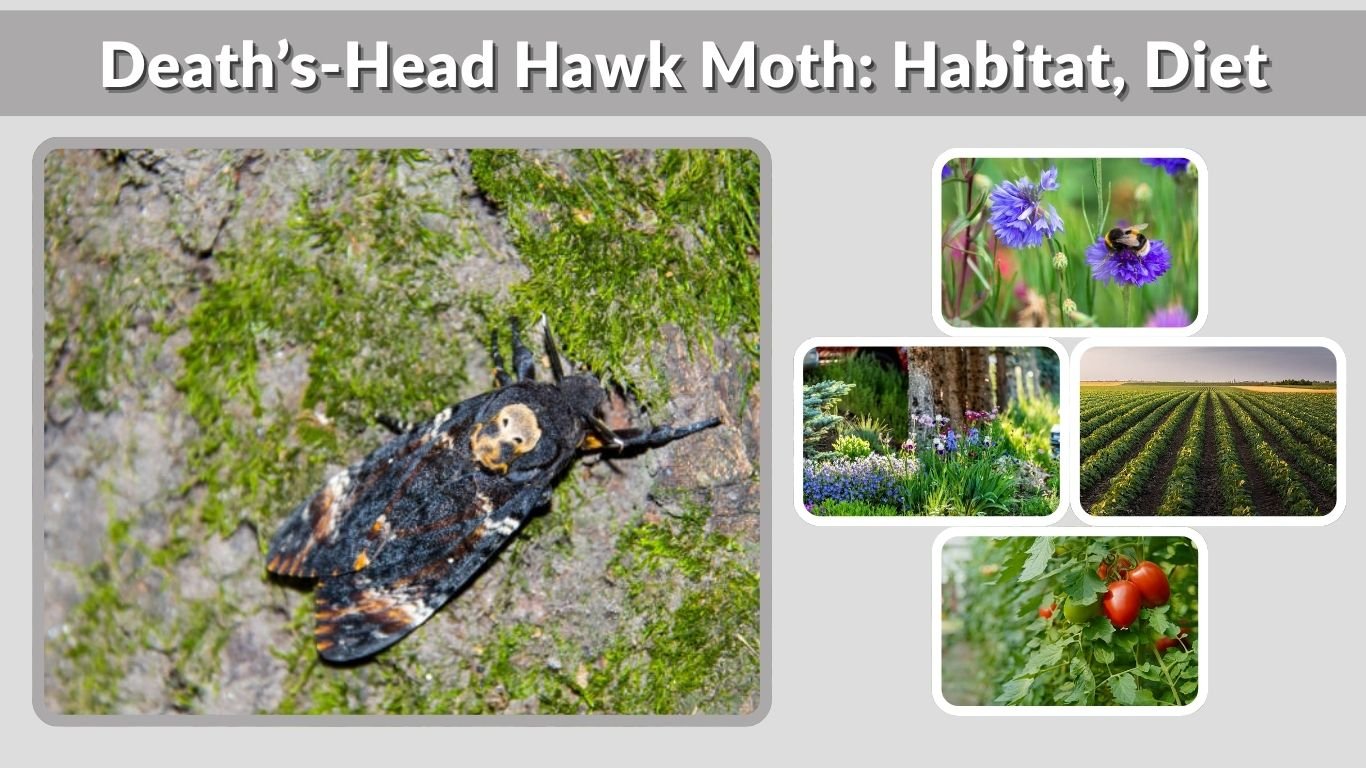
The death head hawk moth is one of the most intriguing and mysterious insects in the world, instantly recognizable by the skull-like marking on its body. This unusual feature has made it a symbol of fear, superstition, and fascination across cultures. Found across parts of Africa, Europe, and Asia, this moth is not only visually striking but also behaviorally unique. From producing eerie sounds to raiding beehives, the death head hawk moth continues to capture the curiosity of scientists and nature lovers alike.
What Is the Death Head Hawk Moth?
The death head hawk moth (Acherontia atropos) is a large species of moth belonging to the Sphingidae family, commonly known as hawk moths. These moths are known for their strong flying ability and streamlined bodies.
There are actually three closely related species:
- Acherontia atropos (most well-known)
- Acherontia styx
- Acherontia lachesis
The most famous, A. atropos, is widely found in Africa and migrates into Europe and parts of Asia during warmer seasons. This moth stands out due to its size, dark coloration, and the distinct skull-like marking on its thorax.
Unlike many moths that rely on camouflage, the death head hawk moth has evolved unique defensive traits and behaviors that make it one of the most recognizable insects in the world.
Why Is It Called the Death Head Hawk Moth?
The name “death head hawk moth” comes directly from the unusual pattern on the moth’s thorax that resembles a human skull. While not perfectly shaped, the marking is clear enough to spark strong associations with death and danger.
Historically, this resemblance led to:
- Superstitions and fear in many cultures
- Associations with bad omens and death
- Folklore linking the moth to the supernatural
In reality, the marking is simply a natural pattern with no harmful meaning. However, its appearance has been powerful enough to influence literature, art, and even modern films.
The term “hawk moth” refers to the insect’s strong and fast flight, similar to a hawk’s movement. These moths are capable of flying long distances and even migrating across continents.
Physical Appearance and Size
Adult Moth
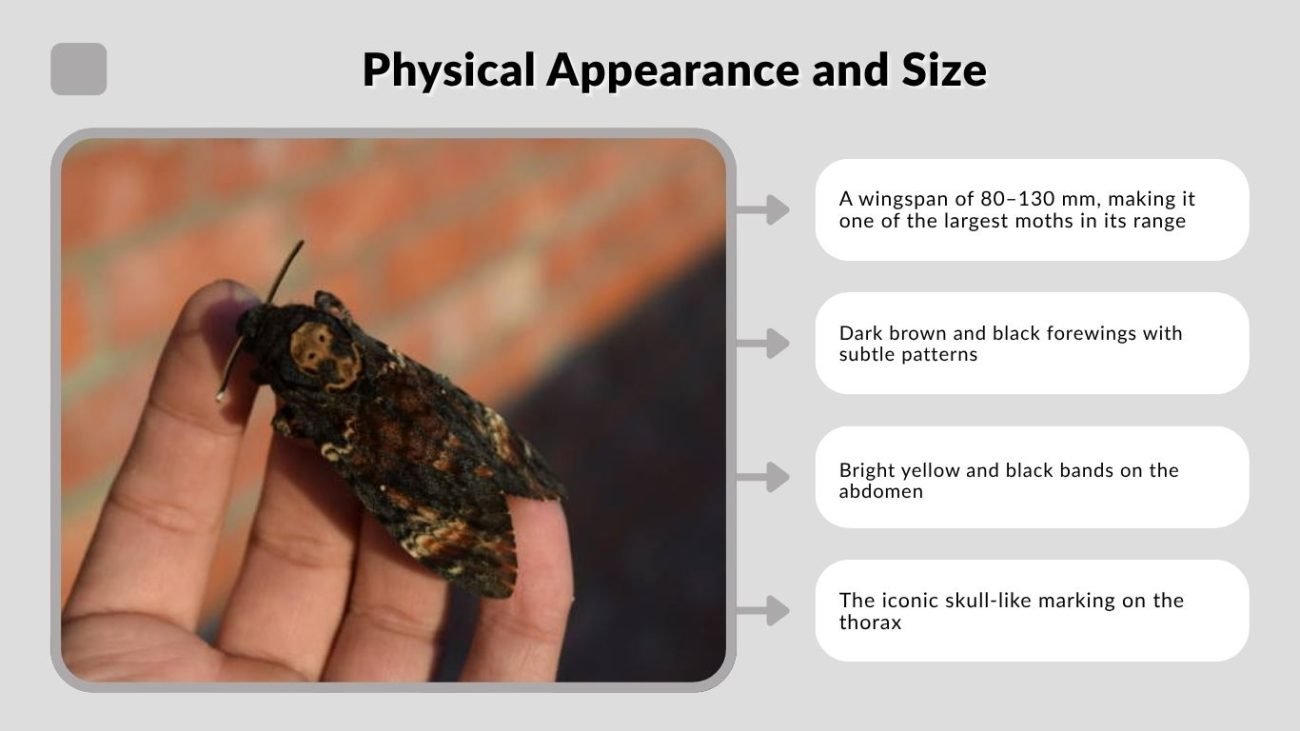
The adult death head hawk moth is large, heavy-bodied, and visually striking.
Key characteristics include:
- A wingspan of 80–130 mm, making it one of the largest moths in its range
- Dark brown and black forewings with subtle patterns
- Bright yellow and black bands on the abdomen
- The iconic skull-like marking on the thorax
Its thick body and powerful wings allow it to fly long distances and even enter beehives without being easily attacked.
Caterpillar
The caterpillar of the death head hawk moth is equally impressive in size and appearance.
It typically features:
- Bright green, yellow, or sometimes brown coloration
- Diagonal stripes along the body
- A curved horn at the rear (a common feature in hawk moth larvae)
These caterpillars can grow quite large and are often found feeding on plants in the nightshade family. Despite their size, they are harmless and play an important role in the moth’s life cycle.
Life Cycle of the Death Head Hawk Moth
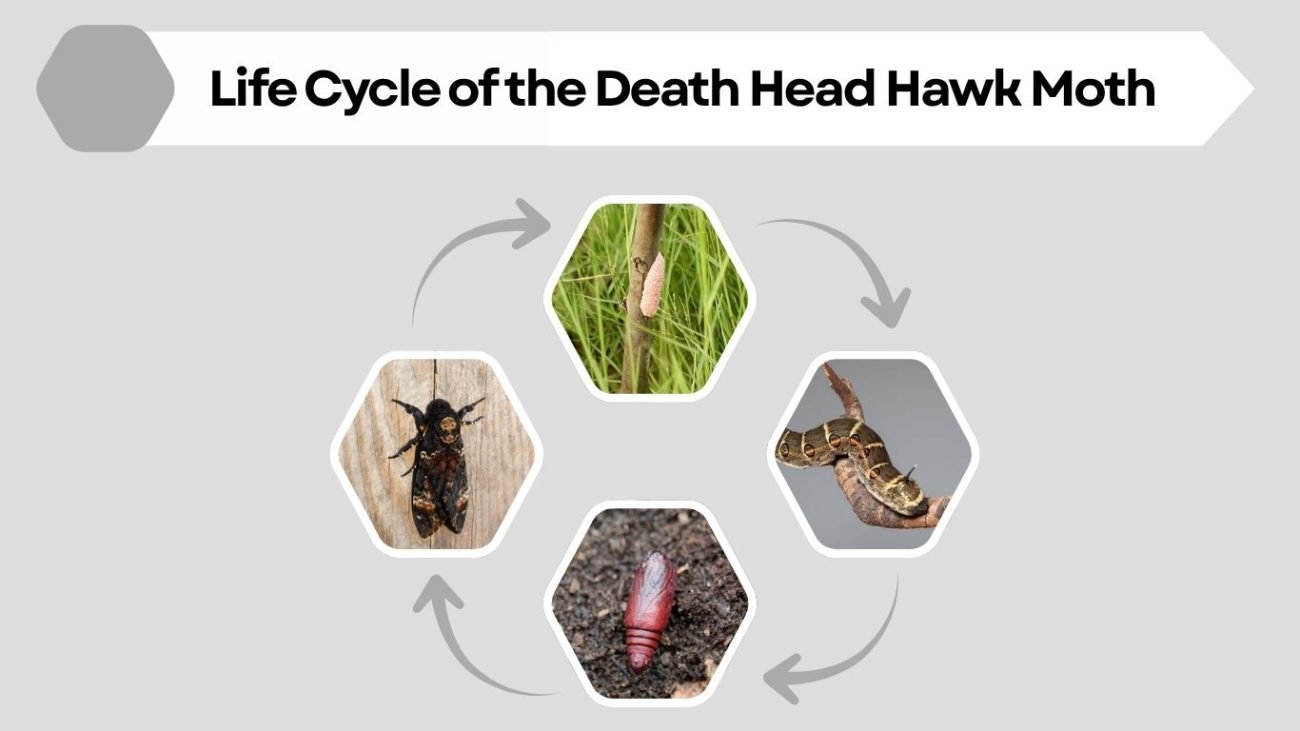
Like all moths, the death head hawk moth undergoes complete metamorphosis, passing through four main stages.
Egg Stage
Female moths lay their eggs on suitable host plants, particularly those in the nightshade family such as potatoes. The eggs are small and usually placed on the underside of leaves for protection.
Larva (Caterpillar)
Once hatched, the caterpillar begins feeding immediately. This stage is focused on rapid growth and can last several weeks.
During this period:
- The caterpillar consumes large amounts of leaves
- It sheds its skin multiple times as it grows
- Its coloration may change slightly depending on development
Pupa
After reaching full size, the caterpillar burrows into the soil to pupate. Inside the pupa, the insect undergoes a complete transformation.
This stage can last:
- Several weeks to months, depending on climate conditions
Adult Stage
The adult moth emerges from the soil with fully developed wings. Its primary goals are feeding and reproduction.
Adults are:
- Mostly active at night
- Strong flyers capable of long-distance travel
Habitat and Distribution
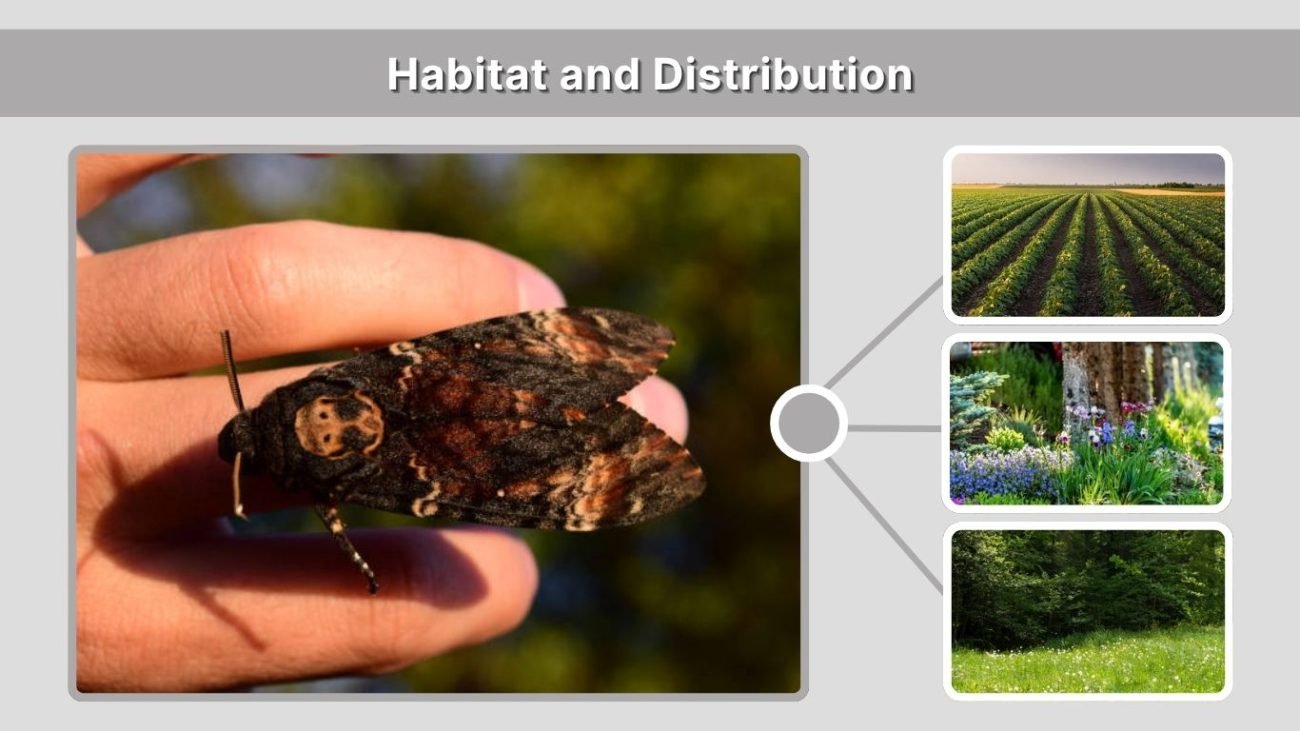
The death head hawk moth is native to Africa but is also found across parts of Europe and Asia, especially during migration seasons. It is known for its ability to travel long distances, which is why it occasionally appears in regions where it is not permanently established.
This moth prefers habitats such as:
- Farmland and agricultural areas
- Gardens and parks
- Woodland edges
Its presence is often linked to the availability of host plants, particularly those in the nightshade family. Warmer climates tend to support larger populations, while cooler regions see seasonal visitors.
What Do Death Head Hawk Moths Eat?
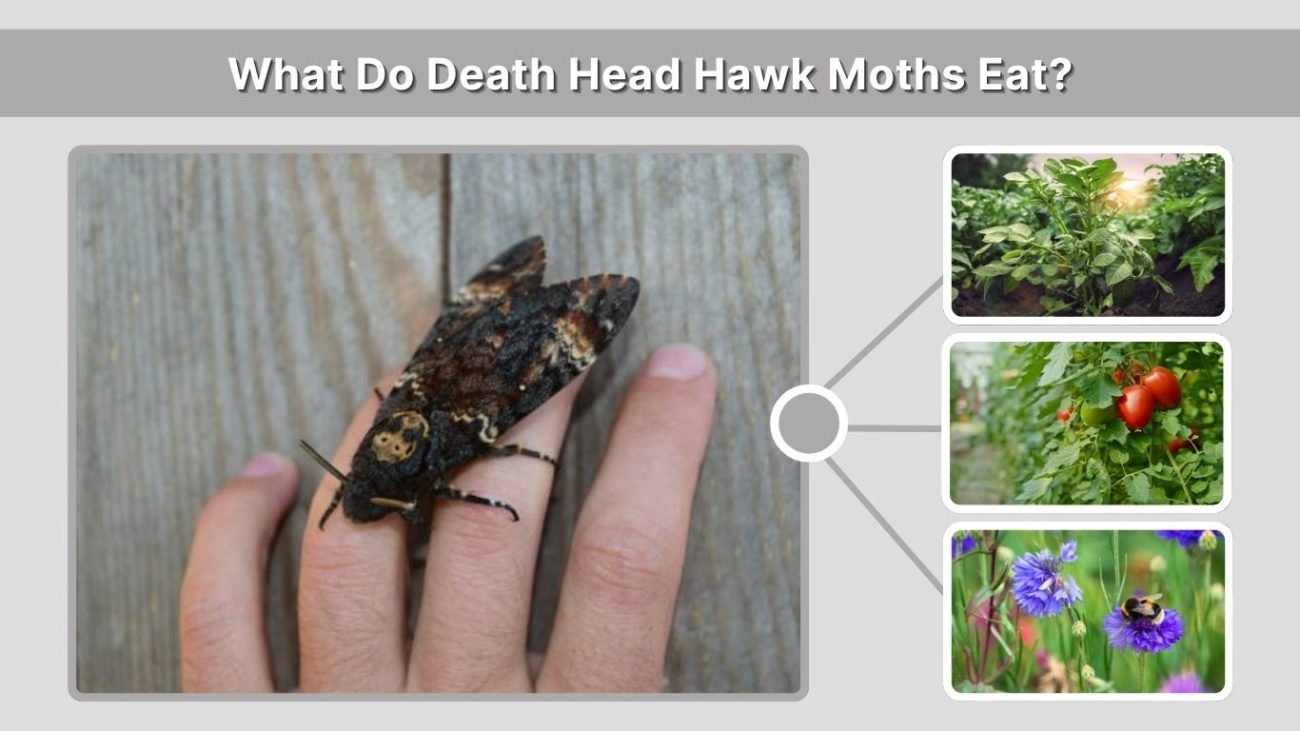
Caterpillar Diet
During the larval stage, the caterpillar feeds heavily on plants, especially those in the nightshade family (Solanaceae).
Common food sources include:
- Potato plants
- Tomato plants
- Other related vegetation
This feeding stage is crucial for storing energy needed for transformation into an adult moth.
Adult Diet
The adult death head hawk moth has one of the most unusual diets among moths.
It feeds on:
- Honey (a rare behavior for moths)
- Tree sap
- Nectar from flowers
One of its most fascinating traits is its ability to enter beehives and steal honey. It produces chemical signals that help it avoid detection by bees and has a thick body that provides some protection from stings.
Unique Behavior and Fascinating Facts
The death head hawk moth is famous for several unusual behaviors that set it apart from other insects.
- Squeaking sound: When disturbed, it can produce a high-pitched squeak by forcing air through its proboscis
- Beehive raiding: It invades hives to feed on honey, a rare trait among moths
- Strong flight: Capable of long-distance migration across continents
- Nocturnal activity: Most active during the night
These traits make it one of the most unique and studied moth species in the world.
Is the Death Head Hawk Moth Dangerous?
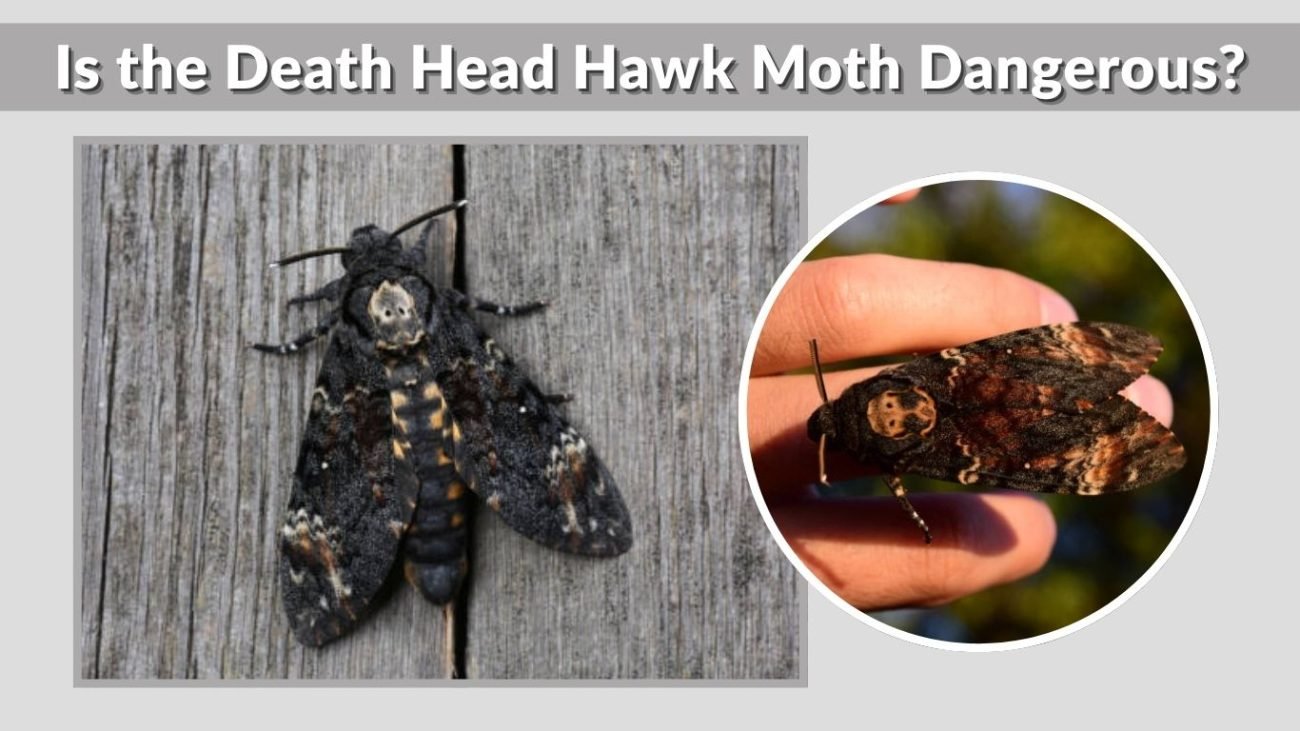
Despite its intimidating appearance and eerie reputation, the death head hawk moth is not dangerous to humans.
- It does not sting
- It does not bite in any harmful way
- It poses no threat to people
The fear surrounding this moth mostly comes from its skull-like marking and historical superstitions. In reality, it is a harmless insect that plays a role in pollination and the ecosystem.
Symbolism and Cultural Significance
The death head hawk moth has long been associated with mystery and symbolism due to its skull-like marking.
It is often linked to:
- Death and omens in folklore
- Superstitions in various cultures
- Themes of mystery and transformation
In modern culture, it gained widespread recognition through its appearance in the film The Silence of the Lambs, where it symbolized transformation and hidden identity.
Despite its dark symbolism, many people today see it as a representation of change, resilience, and the natural cycle of life.
How Rare Is the Death Head Hawk Moth?
The death head hawk moth is not globally rare, but its visibility varies depending on location.
- Common in parts of Africa
- Less common in Europe, where it appears mainly as a migrant
- Rare sightings in some regions make it seem more mysterious
Environmental factors such as climate, habitat availability, and food sources influence how often it is seen.
How to Identify a Death Head Hawk Moth
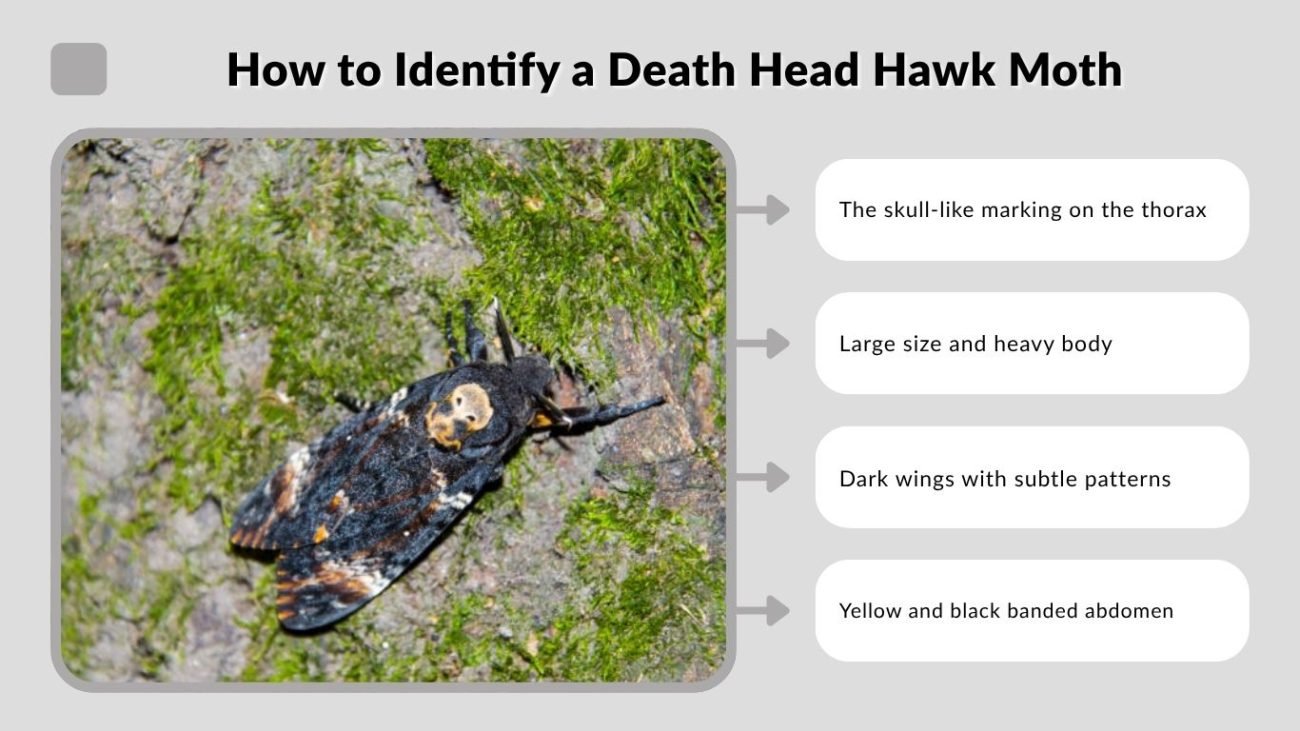
Identifying this moth is relatively straightforward due to its distinctive features.
Key identifiers include:
- The skull-like marking on the thorax
- Large size and heavy body
- Dark wings with subtle patterns
- Yellow and black banded abdomen
These characteristics make it stand out from other hawk moth species.
FAQs
Why does the death head hawk moth make a squeaking sound?
It produces a squeaking noise as a defense mechanism, possibly to startle predators or communicate distress.
Can the dead head hawk moth harm humans?
No, it is completely harmless and poses no danger.
Why does it enter beehives?
It enters hives to feed on honey, using chemical mimicry to avoid being attacked by bees.
How long does it live?
The full life cycle lasts several months, but the adult moth typically lives only a few weeks.
Is the death head hawk moth endangered?
No, it is not considered endangered, though sightings may be rare in some regions.
Conclusion
The death head hawk moth is a truly remarkable insect, combining striking appearance with unusual behavior. From its skull-like marking to its ability to produce sound and raid beehives, it stands out as one of nature’s most mysterious creatures. While often misunderstood due to myths and symbolism, it is harmless and plays an important ecological role. Understanding this moth helps replace fear with appreciation for one of the most fascinating species in the natural world.