Geometer moths (family Geometridae) are a diverse group of moths found worldwide, known for the looping movement of their caterpillars, often called inchworms. With delicate wing patterns, varied colors, and unique life strategies, these moths play an important role in ecosystems. This guide explores 17 fascinating types of geometer moths, covering their identification, habitats, behaviors, diets, and lifecycles, offering a detailed look at these remarkable insects.
1. Peppered Moth (Biston betularia)

The Peppered Moth is one of the most well-known geometer moths, famous for its role in studies of natural selection during the Industrial Revolution. It is widespread across Europe, Asia, and North America, and is recognized for its distinctive coloration that provides camouflage against tree bark.
Identification
- Medium-sized moth with a wingspan of about 45–62 mm
- Typically white or light grey wings with fine black speckles (“peppered” appearance)
- Melanic (dark) form exists, appearing almost completely black
- Slender body, with wings held flat when at rest
Habitat
The Peppered Moth inhabits woodlands, gardens, and parks. It prefers areas with tree trunks and lichen-covered bark, which provide natural camouflage against predators.
Behavior
These moths are nocturnal and rest on tree trunks during the day. Their coloration plays a vital role in avoiding predation, as they blend into their resting surfaces.
Diet
Caterpillars feed on the leaves of various trees and shrubs, including birch, willow, oak, and hazel. Adults typically do not feed and rely on stored energy reserves.
Lifecycle
The female lays eggs on host trees in late spring. Caterpillars hatch and feed during the summer before pupating in the soil. Adults emerge the following spring, continuing the cycle.
2. Winter Moth (Operophtera brumata)
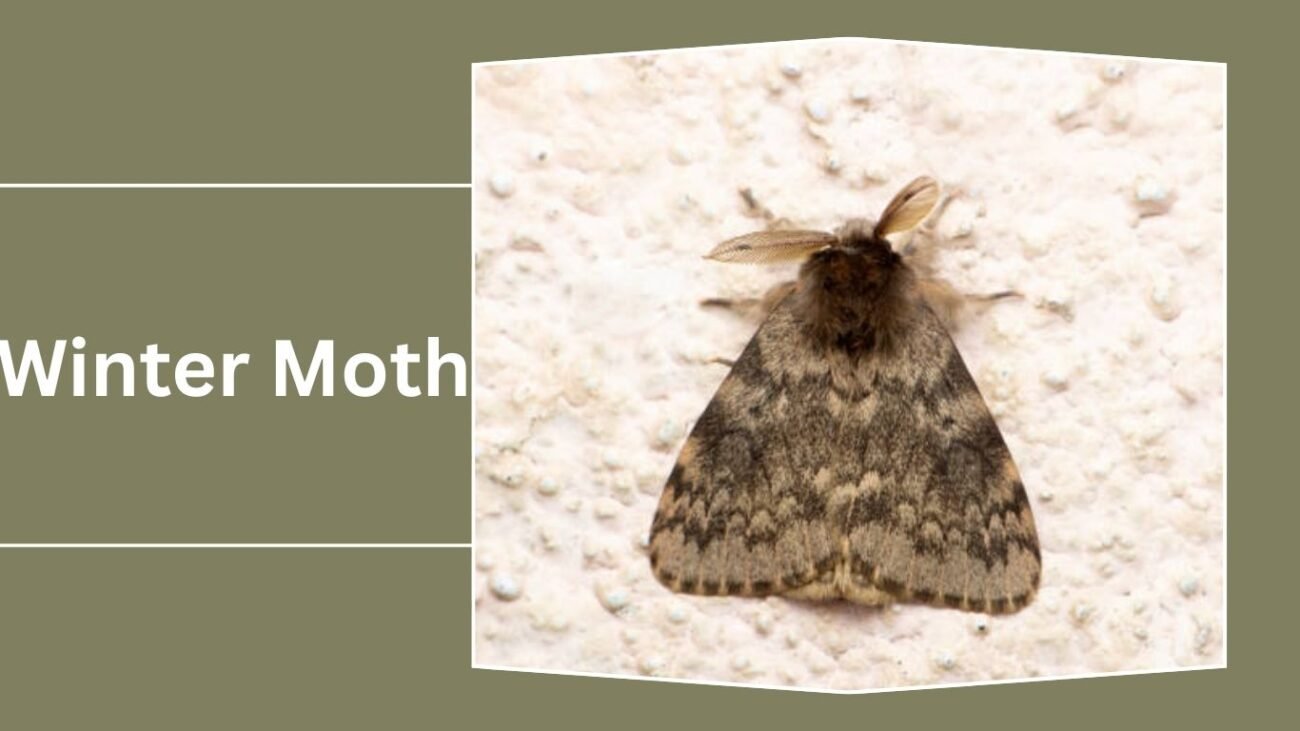
The Winter Moth is a geometer moth species that emerges unusually late in the year, often in November and December, when most other moths are absent. It is native to Europe but has become an invasive species in parts of North America.
Identification
- Small moth with a wingspan of 22–30 mm
- Males: light brown or gray with faint wavy cross-lines on the wings
- Females: almost wingless, grayish, and unable to fly
- Slender body with long antennae on males
Habitat
This moth inhabits woodlands, orchards, gardens, and hedgerows. It thrives in areas with deciduous trees, especially oaks, birches, maples, and fruit trees.
Behavior
The Winter Moth is most notable for its flight season, occurring in cold late autumn and winter months. Males fly at night, while females climb up tree trunks to lay eggs after mating.
Diet
Caterpillars feed on the buds and leaves of a wide range of deciduous trees and shrubs, including apple, oak, cherry, and maple. Heavy infestations can defoliate trees in spring.
Lifecycle
Eggs are laid on tree bark in late autumn and hatch in early spring. The larvae feed on young leaves, then drop to the ground to pupate in the soil by late spring. Adults emerge in winter, completing the cycle.
3. Common Emerald (Hemithea aestivaria)

The Common Emerald is a striking geometer moth, easily recognized by its vivid green coloration. It is widespread across Europe and parts of Asia, flying mainly during summer months. Its delicate appearance makes it one of the most beautiful moths in the Geometridae family.
Identification
- Medium-sized moth with a wingspan of 30–35 mm
- Bright green wings with thin white cross-lines
- Wing edges slightly scalloped
- Color may fade to yellowish or whitish with age
Habitat
This moth inhabits woodlands, gardens, heathlands, and hedgerows. It is especially common in areas with abundant shrubs and mixed vegetation.
Behavior
The Common Emerald is nocturnal and is strongly attracted to light. It rests during the day on leaves and shrubs, blending well due to its green coloration.
Diet
Caterpillars feed on a wide variety of shrubs and trees, including birch, oak, hawthorn, and heather. Adults typically do not feed.
Lifecycle
Eggs are laid on host plants in summer. Larvae overwinter in a sheltered spot and resume feeding in spring. Pupation occurs in leaf litter, and adults emerge in early to mid-summer.
4. Willow Beauty (Peribatodes rhomboidaria)

The Willow Beauty is a widespread and common geometer moth found throughout Europe and parts of Asia. Despite its name, it is not restricted to willow trees and feeds on a wide variety of plants.
Identification
- Medium to large moth with a wingspan of 40–48 mm
- Wings are light brown or grey with darker cross-bands and speckled markings
- Forewings have a distinct dark central spot
- Highly variable in coloration, which aids in camouflage against tree bark
Habitat
The Willow Beauty inhabits woodlands, gardens, hedgerows, and parklands. It is often found resting on fences, tree trunks, or walls where its mottled appearance blends with the background.
Behavior
This moth is nocturnal and attracted to artificial light. It is a strong flier and often observed in late summer. Adults rest with wings spread flat, enhancing camouflage.
Diet
Caterpillars feed on a wide range of deciduous trees and shrubs, including willow, birch, hawthorn, ivy, and fruit trees. Adults do not typically feed.
Lifecycle
Eggs are laid on host plants in summer. The caterpillars feed until autumn, then overwinter as pupae in soil or leaf litter. Adults emerge the following summer, continuing the cycle.
5. Large Emerald (Geometra papilionaria)
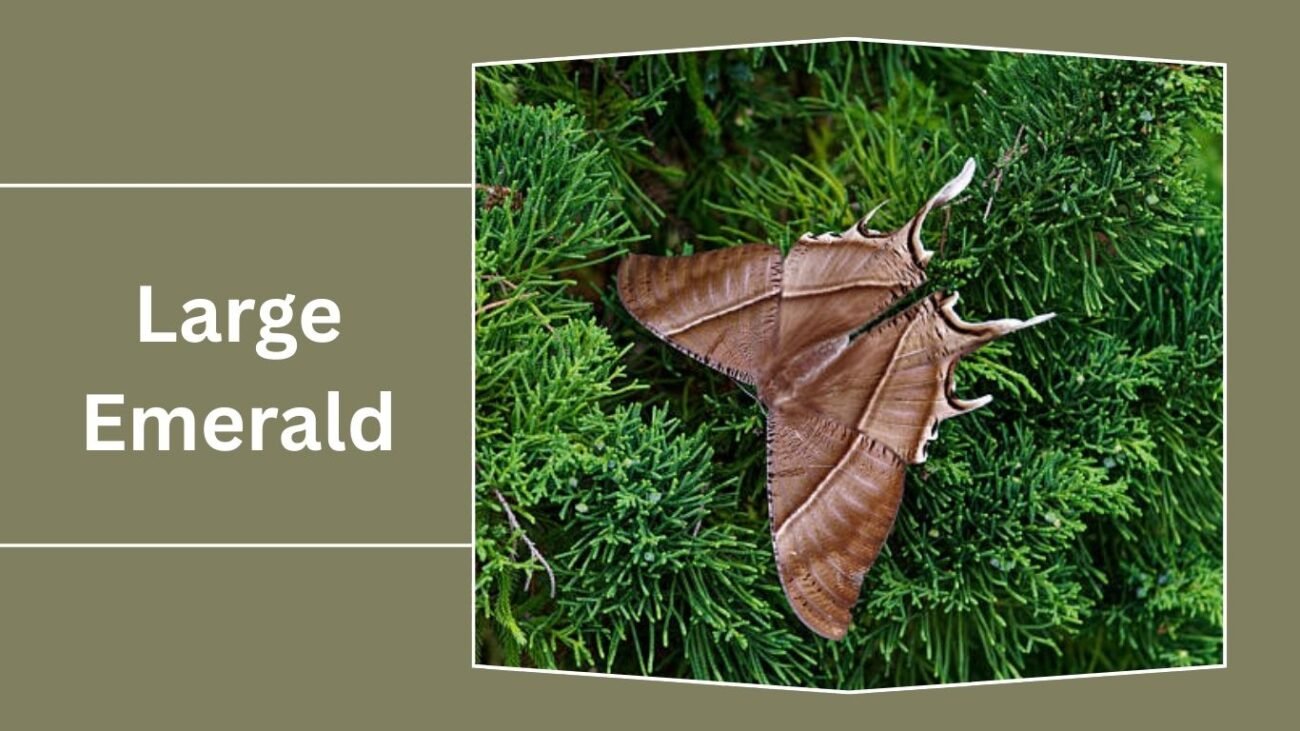
The Large Emerald is a beautiful and distinctive geometer moth, notable for its striking size and vivid green coloration. It is one of the largest emerald moths in Europe and is considered a classic species in the family Geometridae.
Identification
- Large moth with a wingspan of 50–60 mm
- Bright green wings with fine white cross-lines
- Wings slightly scalloped with a delicate translucent quality
- Green coloration fades to yellowish or whitish with age
Habitat
The Large Emerald prefers deciduous woodlands, forest edges, and gardens. It is most often associated with birch trees, which are its primary host plants.
Behavior
This moth is nocturnal and attracted to light sources at night. During the day, it rests on leaves and branches where its green coloring blends well with foliage.
Diet
Caterpillars primarily feed on birch leaves but may also utilize alder and hazel. Adults typically do not feed, relying instead on energy reserves.
Lifecycle
Eggs are laid on birch trees in summer. Larvae feed through late summer into autumn and overwinter as pupae in the soil or leaf litter. Adults emerge in early to mid-summer of the following year.
6. Riband Wave (Idaea aversata)
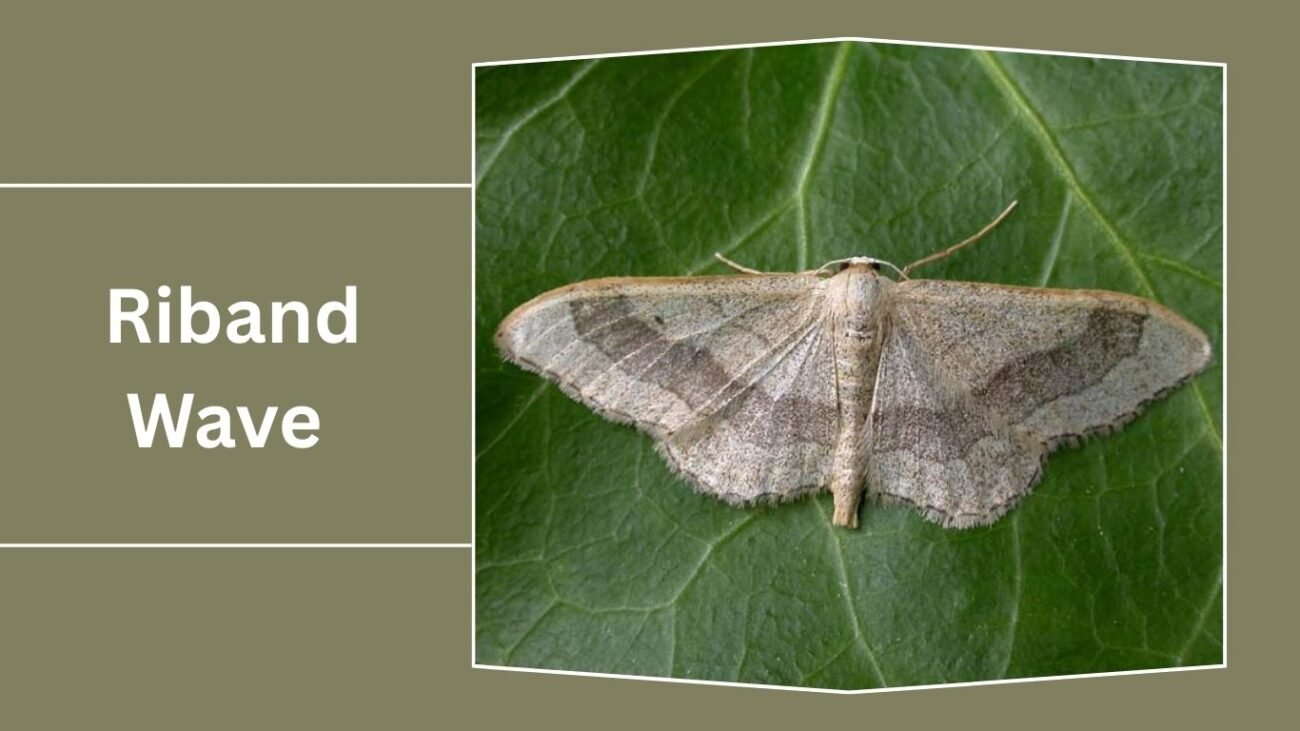
The Riband Wave is a common and widespread geometer moth found throughout Europe and parts of Asia. It is named after the distinctive dark band—or “riband”—that marks the wings of many individuals.
Identification
- Small to medium-sized moth with a wingspan of 30–35 mm
- Forewings pale brown or buff with two faint cross-lines
- A dark central “riband” often runs across the wings, though some forms lack it
- Hindwings paler with similar faint lines
Habitat
This species is highly adaptable, inhabiting woodlands, hedgerows, meadows, gardens, and urban areas. It thrives in locations where low vegetation and shrubs are present.
Behavior
The Riband Wave is nocturnal and frequently comes to light. It rests flat with wings spread, blending into walls, fences, or bark. Adults are active from late spring through summer.
Diet
Caterpillars feed on a wide range of low-growing plants, including dandelion, dock, and bedstraw. Adults do not usually feed.
Lifecycle
Eggs are laid on host plants during summer. Caterpillars feed in autumn, overwinter as larvae, and resume feeding in spring. Pupation takes place in soil or leaf litter, with adults emerging by late spring or early summer.
7. Mottled Beauty (Alcis repandata)

The Mottled Beauty is a widespread and variable geometer moth, commonly found across Europe and parts of Asia. Its highly mottled wing pattern provides excellent camouflage, making it one of the most cryptic species in its family.
Identification
- Medium-sized moth with a wingspan of 40–50 mm
- Forewings brown or grey with a complex mottled pattern of darker and lighter patches
- A distinct dark central spot is usually visible
- Very variable in coloration, which helps it blend into bark and lichen
Habitat
The Mottled Beauty inhabits woodlands, gardens, parks, and hedgerows. It is especially common in mixed and deciduous forests where its camouflage is most effective.
Behavior
This species is nocturnal and strongly attracted to light. Adults rest during the day on tree trunks, fences, and walls, relying on their mottled pattern to avoid detection by predators.
Diet
Caterpillars feed on a wide variety of deciduous trees and shrubs, including oak, birch, willow, hawthorn, and fruit trees. Adults do not typically feed.
Lifecycle
Eggs are laid on host plants in summer. Caterpillars feed through autumn and overwinter as pupae in the soil. Adults emerge the following summer, usually flying from June to August.
8. Brimstone Moth (Opisthograptis luteolata)

The Brimstone Moth is a bright and easily recognizable geometer moth, noted for its vivid yellow wings. It is widespread across Europe, Asia, and parts of North Africa and is often seen in gardens and woodlands.
Identification
- Medium-sized moth with a wingspan of 30–40 mm
- Bright lemon-yellow wings with reddish-brown markings near the edges
- Forewings slightly hooked at the tips
- Distinctive and rarely confused with other moths due to its color
Habitat
This moth inhabits a wide range of environments including gardens, woodlands, hedgerows, and scrubland. It is often found in places where hawthorn, blackthorn, and other shrubs are abundant.
Behavior
The Brimstone Moth is nocturnal but may sometimes be disturbed during the day. It flies from spring through autumn and often has multiple generations per year. It is strongly attracted to artificial light.
Diet
Caterpillars feed on hawthorn, blackthorn, ivy, and other shrubs. Adults typically do not feed, surviving on energy reserves.
Lifecycle
Eggs are laid on host plants in spring or summer. Caterpillars feed until autumn and may overwinter as pupae in the soil. In warmer regions, several broods may occur in a single year, with adults appearing from April to October.
9. Small Emerald (Hemistola chrysoprasaria)

The Small Emerald is a delicate and attractive geometer moth, smaller than its relative the Common Emerald. It is native to Europe and parts of Asia, favoring habitats with shrubby growth and hedgerows.
Identification
- Small moth with a wingspan of 26–28 mm
- Bright green wings with fine white cross-lines
- Forewings more angular compared to other emeralds
- Green coloration fades with age to whitish or yellowish tones
Habitat
This species prefers woodland edges, scrub, hedgerows, and gardens. It is especially associated with areas where climbing plants, particularly clematis, are present.
Behavior
The Small Emerald is nocturnal and comes readily to light traps. During the day, it rests among foliage where its green coloring provides camouflage.
Diet
Caterpillars primarily feed on clematis leaves, both wild and cultivated varieties. Adults generally do not feed.
Lifecycle
Eggs are laid on clematis in summer. Larvae feed through autumn and overwinter in the caterpillar stage, resuming feeding in spring. Pupation takes place among leaf litter, with adults emerging in early to mid-summer.
10. Scalloped Oak (Crocallis elinguaria)
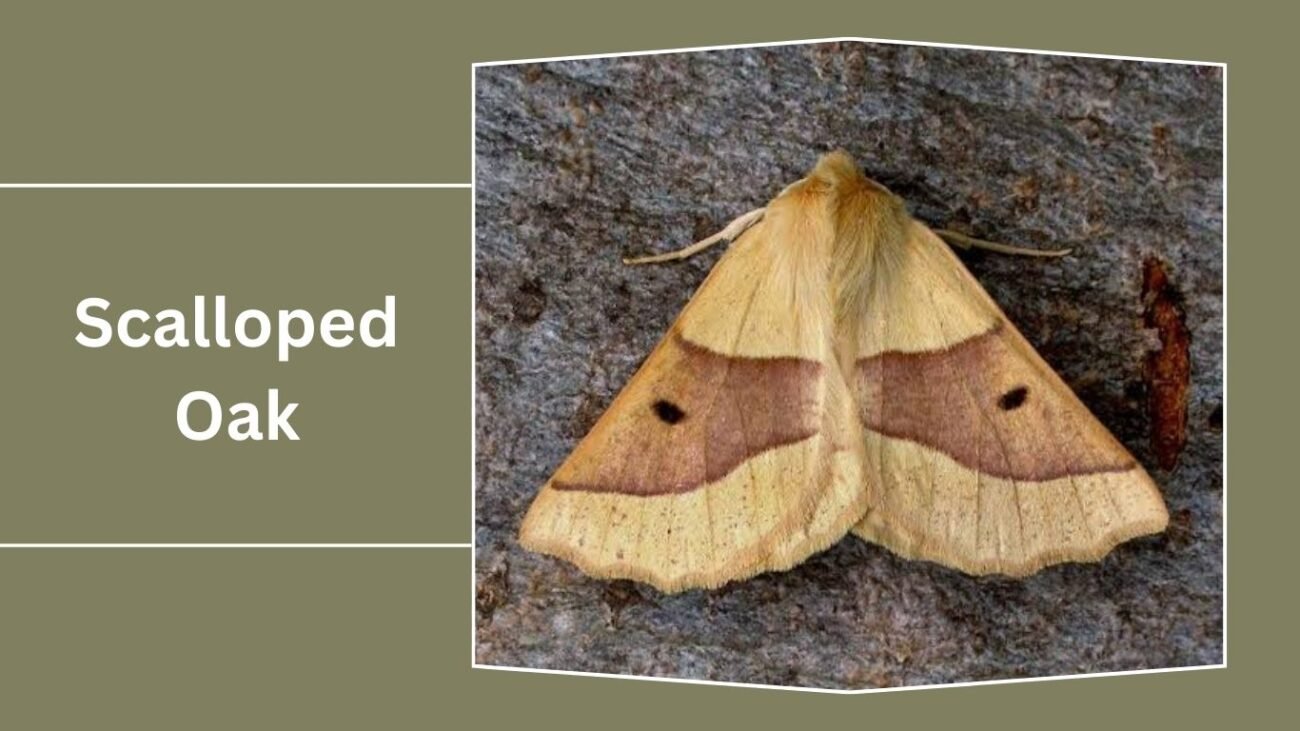
The Scalloped Oak is a widespread geometer moth across Europe and parts of Asia. Despite its name, it is not limited to oak trees and uses a wide range of host plants. Its scalloped wing edges give it a distinctive appearance.
Identification
- Medium to large moth with a wingspan of 35–40 mm
- Warm brown to orange-brown wings with darker cross-lines
- Wings have scalloped (wavy) edges, giving the species its name
- A small dark spot is usually visible on each forewing
Habitat
This species inhabits woodlands, hedgerows, gardens, and parklands. It adapts well to different environments where shrubs and deciduous trees are available.
Behavior
The Scalloped Oak is nocturnal and often comes to light. Adults are strong fliers and are most frequently seen from midsummer to early autumn. During the day, they rest camouflaged against tree trunks and fences.
Diet
Caterpillars feed on a variety of deciduous trees and shrubs, including oak, birch, hawthorn, and sallow. Adults do not usually feed.
Lifecycle
Eggs are laid on host plants in summer. Caterpillars hatch and feed during late summer and autumn, then overwinter as larvae. Pupation occurs in soil or leaf litter, with adults emerging the following summer.
11. Clouded Border (Lomaspilis marginata)

The Clouded Border is a small but distinctive geometer moth, easily recognized by its contrasting white and dark markings. It is common across Europe and Asia, frequently seen in woodlands and gardens.
Identification
- Small moth with a wingspan of 24–28 mm
- White wings bordered with irregular black or dark brown patches
- Forewings sometimes display blotches extending inward
- Highly contrasting appearance, making it easy to identify
Habitat
The Clouded Border prefers woodlands, gardens, and hedgerows, especially where willow and poplar trees are abundant. It also occurs in damp habitats near rivers and wetlands.
Behavior
This moth is nocturnal but may sometimes be seen flying at dusk. It rests on foliage during the day and is strongly attracted to artificial light at night.
Diet
Caterpillars feed mainly on willow and poplar species but may also use other deciduous trees and shrubs. Adults typically do not feed.
Lifecycle
Eggs are laid on host plants in spring and summer. Larvae feed throughout summer before pupating in leaf litter. Adults emerge the following year, usually flying between May and July.
12. Blood-vein (Timandra comae)

The Blood-vein is a striking geometer moth, named after the distinctive crimson line that runs across its wings. It is widespread in Europe and parts of Asia, often found in open grassy habitats.
Identification
- Medium-sized moth with a wingspan of 30–35 mm
- Pale cream or light buff wings
- A vivid crimson or pinkish-red line runs diagonally across both forewings and hindwings
- Wings are held flat and angled when at rest, giving a triangular appearance
Habitat
The Blood-vein favors meadows, grasslands, heathlands, coastal areas, and gardens. It thrives in habitats with plenty of herbaceous plants.
Behavior
This moth is nocturnal and comes readily to light. It often rests with wings outspread on vegetation, displaying its characteristic red line. It typically flies in two generations in warmer areas.
Diet
Caterpillars feed on low-growing plants such as docks, sorrels, and knotgrass. Adults generally do not feed.
Lifecycle
Eggs are laid on food plants in summer. Larvae feed during late summer and autumn, overwintering as caterpillars. Pupation occurs in spring, with adults emerging from May through September, depending on climate.
13. Swallow-tailed Moth (Ourapteryx sambucaria)

The Swallow-tailed Moth is one of the largest and most spectacular geometer moths in Europe. Its creamy-yellow wings and long tails make it instantly recognizable and butterfly-like in appearance.
Identification
- Large moth with a wingspan of 50–65 mm
- Pale yellow wings with two faint, curved brownish lines
- Hindwings possess long “tails,” giving a swallowtail-like shape
- When at rest, wings are spread flat, enhancing visibility of the tails
Habitat
This species inhabits woodlands, gardens, parks, and hedgerows. It prefers areas with abundant shrubs and climbing plants.
Behavior
The Swallow-tailed Moth is nocturnal and strongly attracted to light, often appearing in large numbers during its flight season. Adults are seen mainly in mid to late summer.
Diet
Caterpillars feed on a wide range of shrubs and climbing plants, including ivy, honeysuckle, privet, and elder. Adults generally do not feed.
Lifecycle
Eggs are laid on host plants in summer. Larvae feed until autumn, then overwinter as caterpillars. They resume feeding in spring before pupating in soil or leaf litter. Adults emerge from June to August.
14. Twin-spot Carpet (Perizoma didymata)
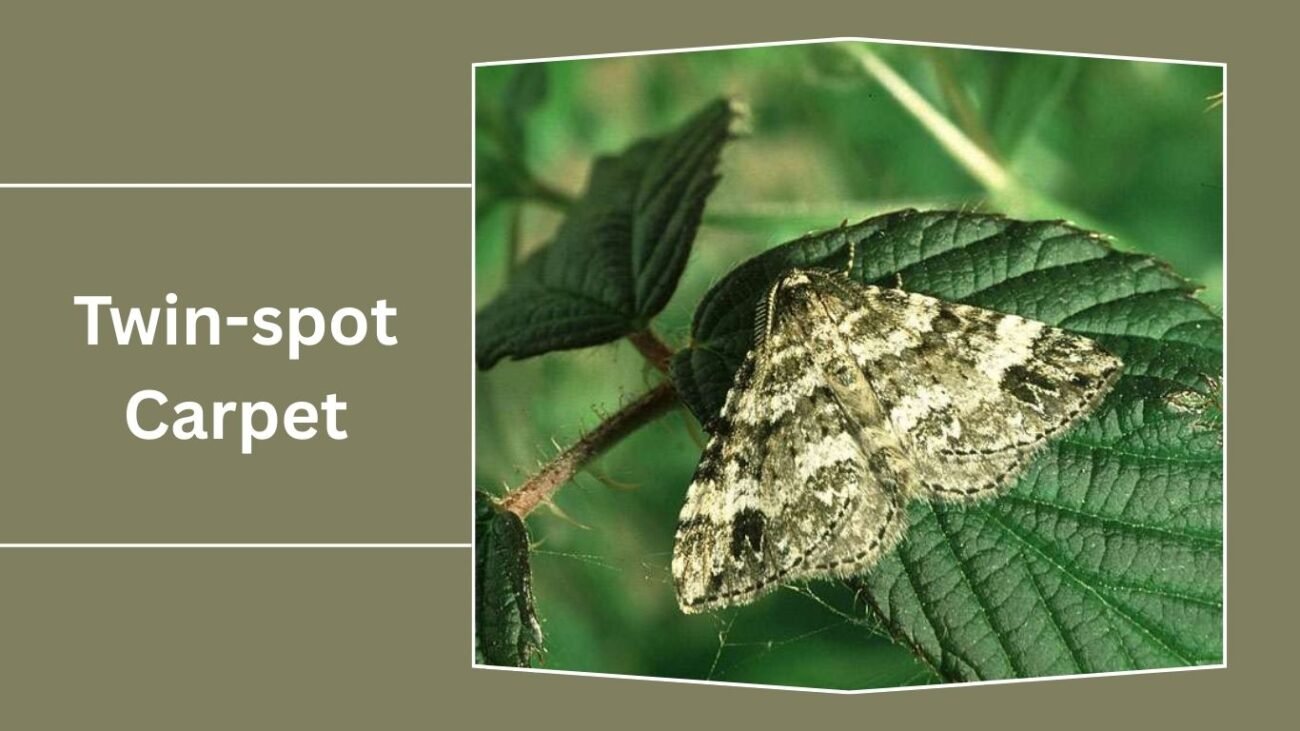
The Twin-spot Carpet is a small but distinctive geometer moth, named after the pair of dark spots on its forewings. It is widely distributed across Europe and parts of Asia, typically found in grassy or lightly wooded areas.
Identification
- Small moth with a wingspan of 18–22 mm
- Forewings greyish-brown with darker central band
- Two prominent dark spots near the middle of each forewing
- Hindwings are pale grey or whitish, plainer than forewings
Habitat
This moth inhabits meadows, woodland clearings, hedgerows, and grasslands. It favors damp or marshy locations where its larval food plants grow.
Behavior
The Twin-spot Carpet is nocturnal and readily comes to light. Adults typically fly in a single generation during summer, from June to August.
Diet
Caterpillars feed mainly on the seed capsules of champions (Silene species). Adults generally do not feed.
Lifecycle
Eggs are laid on champion plants in summer. Caterpillars feed inside seed capsules during late summer. They pupate in soil or plant debris and overwinter in this stage, with adults emerging the following summer.
15. Yellow-barred Brindle (Acasis viretata)

The Yellow-barred Brindle is a small and attractive geometer moth, known for its mix of green and yellow markings. It is widely distributed across Europe and parts of Asia, often favoring shaded habitats.
Identification
- Small moth with a wingspan of 20–25 mm
- Forewings mottled green with irregular black and white markings
- A distinctive yellow band crosses the wings, though its brightness varies
- Hindwings are pale grey or whitish with faint markings
Habitat
This species inhabits damp woodlands, shaded gardens, hedgerows, and marshy areas. It is particularly common in places with ivy and shade-loving plants.
Behavior
The Yellow-barred Brindle is nocturnal and flies from May to July, sometimes producing a second generation in autumn. It comes readily to light and often rests on shaded foliage during the day.
Diet
Caterpillars feed mainly on ivy, holly, and occasionally other low-growing plants. Adults usually do not feed.
Lifecycle
Eggs are laid on food plants in summer. Caterpillars feed until autumn and may overwinter in this stage. Pupation occurs in leaf litter or soil, with adults emerging the following summer.
16. Speckled Yellow (Pseudopanthera macularia)

The Speckled Yellow is a bright and eye-catching geometer moth, easily recognized by its yellow and black speckled wings. Unlike most geometer moths, it is a day-flying species, often mistaken for a butterfly.
Identification
- Small moth with a wingspan of 23–28 mm
- Bright yellow wings covered with irregular black spots and blotches
- Forewings broad with a distinctive speckled pattern
- Hindwings paler yellow with fewer markings
Habitat
This species prefers woodland clearings, meadows, and grassy slopes, especially in sunny areas where its larval food plants grow. It is often found near wood sage.
Behavior
The Speckled Yellow is diurnal, flying actively during the day in sunshine. It is most often seen fluttering low among vegetation in late spring and early summer. Unlike many geometer moths, it is not strongly attracted to light.
Diet
Caterpillars feed mainly on wood sage (Teucrium scorodonia). Adults occasionally take nectar from flowers.
Lifecycle
Eggs are laid on wood sage in late spring. Caterpillars feed during summer, then pupate in soil or plant debris. Adults emerge the following May and June, completing a single generation per year.
17. Feathered Thorn (Colotois pennaria)

The Feathered Thorn is a late-flying geometer moth, notable for the strongly feathered antennae of the males. It is widespread in Europe and parts of Asia, often appearing in autumn when few other moths are on the wing.
Identification
- Medium to large moth with a wingspan of 40–50 mm
- Forewings reddish-brown with darker cross-lines and a small central spot
- Hindwings paler with faint markings
- Males have very broad, feathery antennae used for detecting female pheromones
Habitat
This species inhabits deciduous woodlands, heathlands, gardens, and hedgerows. It prefers areas with oak and other broad-leaved trees.
Behavior
The Feathered Thorn is nocturnal and strongly attracted to light. It typically flies from September to November, making it one of the last months of the season.
Diet
Caterpillars feed on a wide range of deciduous trees, including oak, birch, hawthorn, and fruit trees. Adults do not usually feed.
Lifecycle
Eggs are laid on host trees in autumn. They overwinter in this stage and hatch in spring. Caterpillars feed until early summer, then pupate in the soil. Adults emerge in autumn, completing the cycle.