Tiger moths are among the most colorful and fascinating members of the moth family. Known for their bold patterns, striking hues, and unique behaviors, they inhabit diverse environments worldwide. From the famous woolly bear caterpillar to dazzling species like the Scarlet and Jersey Tiger Moths, each has its own story. This guide explores 15 types of tiger moths, highlighting their identification, habitats, diets, and lifecycles.
1. Garden Tiger Moth

The Garden Tiger Moth (Arctia caja) is one of the most recognizable tiger moths, admired for its striking wing patterns and vibrant colors. Found across Europe, Asia, and North America, it is often spotted in gardens, meadows, and open fields. Its bright appearance acts as a warning to predators about its unpalatability.
Identification
- Forewings are brown with distinctive white or cream-colored patches.
- Hindwings are bright orange or red with black spots.
- Furry thorax, usually brown with a reddish tinge.
- Caterpillars are known as “woolly bears,” covered in dense, bristly hairs.
Habitat
Garden Tiger Moths thrive in temperate regions, preferring gardens, grasslands, woodlands, and coastal dunes. They are often seen resting during the day and flying at night, attracted to light sources.
Behavior
These moths are nocturnal and rely on their bold coloration as a defense mechanism. When threatened, they reveal their hindwings to startle predators. The larvae, or woolly bears, roll into a ball to protect themselves.
Diet
As adults, they feed minimally, if at all. Caterpillars consume a wide range of herbaceous plants, including dandelions, nettles, and dock. Their varied diet contributes to their adaptability in different habitats.
Lifecycle
The lifecycle begins when eggs are laid on host plants. Woolly bear caterpillars emerge and feed until fully grown, then overwinter in a sheltered spot. Pupation occurs in spring, and adults emerge in summer to reproduce, completing the cycle.
2. Jersey Tiger Moth

The Jersey Tiger Moth (Euplagia quadripunctaria) is a striking day-flying moth, well known for its bold patterns and vibrant underwings. Originally common in southern Europe, it has spread northwards and is now frequently seen in the UK, especially in gardens and coastal areas. Its appearance makes it one of the most eye-catching tiger moth species.
Identification
- Forewings are dark brown to black with cream or white stripes, resembling tiger-like markings.
- Hindwings are vivid orange or red with black spots.
- The body is black with pale markings.
- Medium-sized moth, with a wingspan of about 52–65 mm.
Habitat
This species prefers warm, sheltered environments such as gardens, woodland edges, coastal cliffs, and urban green spaces. It is especially abundant in southern Europe but has expanded its range into central and northern regions.
Behavior
Unlike many moths, the Jersey Tiger Moth is both diurnal and nocturnal. It can often be seen flying in bright sunshine but is also attracted to artificial light at night. Its vivid underwings are used as a defense mechanism to deter predators when disturbed.
Diet
Adult moths feed on nectar from a variety of flowering plants, including buddleia, hemp agrimony, and ivy blossom. Caterpillars feed on a range of low-growing plants such as nettles, ground ivy, and dandelions.
Lifecycle
Eggs are laid on host plants in summer. The larvae hatch and feed throughout autumn, then overwinter as caterpillars. Pupation takes place in the following spring, and adults emerge in mid-to-late summer, completing the cycle.
3. Scarlet Tiger Moth

The Scarlet Tiger Moth (Callimorpha dominula) is a colorful species that stands out for its mix of metallic greens, deep blacks, and bright reds. It is widely distributed in parts of Europe and Asia, often spotted near rivers, meadows, and wetlands. Its vibrant colors serve both as camouflage among flowers and as a warning to predators.
Identification
- Forewings are black or dark green with striking white or pale yellow spots.
- Hindwings are bright red with black patches.
- Medium-sized moth with a wingspan of 45–55 mm.
- Caterpillars are black with yellow or orange stripes and bristly hairs.
Habitat
The Scarlet Tiger Moth favors damp areas such as riverbanks, marshlands, and wet meadows, though it can also adapt to gardens and hedgerows. It thrives in places with abundant wildflowers and lush vegetation.
Behavior
These moths are mainly active during the day, especially in sunny weather, but can also fly at dusk. When threatened, they flash their bright red hindwings to startle predators, relying heavily on their aposematic coloration for protection.
Diet
Adults feed on nectar from flowers such as valerian and thistles. Caterpillars are polyphagous, consuming a wide range of plants, including comfrey, nettle, and bramble. Their ability to eat various host plants contributes to their resilience.
Lifecycle
Eggs are laid on the underside of leaves in summer. Caterpillars emerge and feed until autumn, overwintering as partially grown larvae. They resume feeding in spring before pupating, with adults emerging in early to mid-summer.
4. Isabella Tiger Moth

The Isabella Tiger Moth (Pyrrharctia isabella) is best known for its larval stage, the famous “woolly bear caterpillar.” This species is native to North America and has become part of folklore, as its caterpillars are often associated with weather predictions. The adult moth itself, though less famous, is attractive with warm earthy tones.
Identification
- Adults have yellowish-orange to tan forewings with faint darker lines.
- Hindwings are orange with a few black spots.
- Woolly bear caterpillars are fuzzy, with black at both ends and rusty brown in the middle.
- Wingspan ranges from 30–55 mm.
Habitat
Isabella Tiger Moths are common across North America, from Canada to Mexico. They occupy diverse habitats such as meadows, gardens, grasslands, and forest edges. Caterpillars are often found wandering across open ground in autumn in search of a place to overwinter.
Behavior
The adults are nocturnal and attracted to light. Caterpillars display a unique survival strategy: they overwinter by freezing solid and reviving in spring due to natural antifreeze compounds in their bodies. The woolly bear caterpillar has become a cultural icon, linked to folklore predicting winter severity based on the width of its brown band.
Diet
Adult moths feed very little, if at all. Caterpillars have a broad diet, feeding on grasses and low-growing plants such as clover, dandelion, nettle, and plantain. Their generalist feeding habits make them highly adaptable.
Lifecycle
The life cycle begins with eggs laid on host plants in summer. Caterpillars feed and grow through autumn before overwintering in leaf litter or under logs. In spring, they resume feeding briefly, then pupate in a cocoon of their own hairs. Adults emerge in late spring to early summer, completing the cycle.
5. Woolly Bear Moth

The Woolly Bear Moth is another name often used for the Isabella Tiger Moth (Pyrrharctia isabella), due to its famous larval stage — the “woolly bear caterpillar.” While the adult moth itself is modest in appearance, the caterpillar has captured public imagination, especially in North American folklore predicting winter severity.
Identification
- Adult moths have light orange or tan forewings with faint, wavy lines.
- Hindwings are orange with scattered black spots.
- Caterpillars are fuzzy, with dense black hairs at both ends and a rusty brown band in the middle.
- Wingspan ranges from 30–55 mm.
Habitat
This moth inhabits a wide range of environments across North America, from open fields and meadows to gardens and forest edges. Caterpillars are commonly spotted crossing roads and lawns in autumn, searching for a sheltered place to hibernate.
Behavior
Adults are nocturnal and drawn to light, while caterpillars are more visible during the day in fall. Woolly bear caterpillars survive harsh winters by producing natural antifreeze in their bodies, allowing them to freeze solid and revive in spring.
Diet
Adult Woolly Bear Moths eat very little, if at all. The caterpillars are generalist feeders, consuming grasses, clovers, nettles, and dandelions. Their wide dietary range makes them highly adaptable to various ecosystems.
Lifecycle
Eggs are laid in summer on host plants. Caterpillars hatch and feed until late fall, then overwinter in leaf litter or sheltered crevices. In spring, they resume feeding briefly before pupating in cocoons made with their own hairs. Adults emerge in early summer, ready to breed and continue the cycle.
6. Clymene Moth

The Clymene Moth (Haploa clymene) is a uniquely patterned tiger moth native to eastern North America. It is especially admired for its bold geometric wing markings, which resemble stained glass or abstract art. Its striking appearance makes it one of the most distinctive tiger moths.
Identification
- Forewings are creamy white with bold black or dark brown lines forming a cruciform pattern.
- Hindwings are bright yellow with a dark border along the edges.
- Caterpillars are black with orange or yellow bands and covered in short bristles.
- Wingspan ranges from 40–55 mm.
Habitat
Clymene Moths are commonly found in meadows, fields, woodland edges, and gardens. They are most active in warm summer months and are often drawn to lights at night. Their wide range covers much of eastern and southeastern North America.
Behavior
These moths are nocturnal and rely on their distinctive wing patterns as a deterrent against predators. When disturbed, they flash their vivid yellow hindwings to startle birds or other threats. Caterpillars are solitary feeders but may be found in groups on host plants.
Diet
Adult Clymene Moths feed minimally, primarily on nectar from wildflowers. Caterpillars feed on a variety of host plants, including oaks, willows, asters, and eupatorium species, making them adaptable to different environments.
Lifecycle
Eggs are laid in clusters on host plants. Caterpillars feed through late summer, then overwinter in a dormant state. In spring, they resume feeding before pupating in loose cocoons made of silk and plant material. Adults emerge in midsummer, completing the cycle.
7. Virgin Tiger Moth

The Virgin Tiger Moth (Grammia virgo) is a large and visually striking species found across North America and parts of Eurasia. Its bold patterns and bright hindwings make it one of the most attractive tiger moths, often spotted in open fields and meadows during the summer months.
Identification
- Forewings are black with intricate cream or white lines forming net-like patterns.
- Hindwings are bright red, orange, or yellow with distinct black spots.
- Caterpillars, sometimes called “woolly bears,” are dark and covered in dense bristly hairs.
- Wingspan ranges from 45–75 mm, making it one of the larger tiger moths.
Habitat
This species prefers open habitats such as grasslands, meadows, pastures, and forest edges. It thrives in temperate climates and can be found from southern Canada through much of the United States, as well as parts of Europe and Asia.
Behavior
The Virgin Tiger Moth is nocturnal and strongly attracted to artificial lights. When threatened, it exposes its brightly colored hindwings as a warning display to predators. Caterpillars are solitary and often roam across the ground in search of food.
Diet
Adults feed sparingly on nectar from night-blooming flowers. Caterpillars are polyphagous, consuming a wide variety of low-growing plants such as dandelions, clover, plantain, and dock. This generalist diet allows them to adapt to diverse environments.
Lifecycle
Eggs are laid in clusters on host plants in late summer. Caterpillars feed actively before overwintering in leaf litter or soil. In spring, they resume feeding, then pupate within a cocoon made of silk and hairs. Adults emerge in midsummer, mate, and continue the cycle.
8. Harnessed Tiger Moth

The Harnessed Tiger Moth (Apantesis phalerata) is a beautifully patterned moth commonly found in eastern North America. Its bold, harness-like markings across the forewings give it its distinctive name. This species is well adapted to a variety of habitats, from fields to gardens.
Identification
- Forewings are black with yellowish or cream-colored lines forming a “harness” or grid-like pattern.
- Hindwings are bright orange to pinkish-red with irregular black spots.
- Caterpillars are dark and bristly, often resembling other woolly bear types.
- Wingspan ranges between 30–45 mm.
Habitat
The Harnessed Tiger Moth inhabits grasslands, meadows, forest edges, gardens, and agricultural fields. Its wide distribution covers much of eastern North America, from southern Canada to the Gulf of Mexico.
Behavior
This species is nocturnal and strongly attracted to lights. When threatened, it reveals its vivid hindwings to startle predators. Caterpillars are often seen wandering across open ground in search of food or pupation sites.
Diet
Adult moths do not feed extensively and rely mainly on stored energy. Caterpillars are polyphagous, feeding on clover, dandelions, goldenrod, plantain, and other herbaceous plants. Their varied diet makes them resilient in different environments.
Lifecycle
Females lay eggs in clusters on host plants. Caterpillars hatch and feed throughout summer, later overwintering in a sheltered place. In spring, they pupate in cocoons spun with their own hairs, with adults emerging in late spring to summer to reproduce.
9. Yellow Woolly Bear Moth

The Yellow Woolly Bear Moth (Spilosoma virginica), also known as the Virginia Tiger Moth, is a widespread species across North America. Its bright white adult form contrasts with its fuzzy, yellow-orange caterpillars, which are commonly known as yellow woolly bears.
Identification
- Adults have pure white forewings, sometimes with a few small black dots.
- Hindwings are also white, occasionally tinged with pale yellow and dotted with black spots.
- Caterpillars vary in color from yellow to orange or rusty brown, with dense tufts of bristly hairs.
- Wingspan ranges from 30–50 mm.
Habitat
This species inhabits gardens, fields, meadows, agricultural areas, and woodland edges. It is highly adaptable and found across most of North America, from Canada to Mexico.
Behavior
The Yellow Woolly Bear Moth is nocturnal and drawn to artificial lights. Caterpillars are active wanderers and can be seen crossing lawns, sidewalks, and fields in late summer and autumn. Their hairy bodies deter predators, while adults rely on their white wings for camouflage.
Diet
Adults feed little or not at all, while caterpillars are generalists, feeding on a wide variety of plants. Their diet includes dandelions, clovers, nettles, asters, cabbage, and other crops, occasionally making them minor pests.
Lifecycle
Eggs are laid in masses on host plants during summer. Caterpillars hatch and feed vigorously before overwintering in leaf litter or soil. In spring, they pupate in cocoons made of silk and their own hairs, with adults emerging in late spring and early summer.
10. Painted Tiger Moth

The Painted Tiger Moth (Arachnis picta) is a vibrant species native to the western United States and Mexico. Known for its bold wing patterns and vivid hindwings, it is one of the most eye-catching tiger moths in arid and desert habitats.
Identification
- Forewings are grayish-white with complex black and brown markings resembling brush strokes.
- Hindwings are bright orange to red with irregular black spots.
- Caterpillars are dark, bristly, and covered in tufts of hair, often with reddish bands.
- Wingspan ranges between 45–65 mm.
Habitat
This species prefers dry, open areas such as deserts, grasslands, scrublands, and foothills. It is especially common in the southwestern United States, including California, Arizona, and New Mexico, as well as parts of Mexico.
Behavior
The Painted Tiger Moth is nocturnal and attracted to lights. Its hindwings serve as a defense mechanism, flashing bright colors to startle predators. Caterpillars are often active at night, feeding on various host plants, and may wander across open ground when searching for pupation sites.
Diet
Adults rarely feed, relying mostly on energy reserves. Caterpillars consume a variety of herbaceous plants, including lupines, asters, and other low-growing vegetation commonly found in desert and semi-arid ecosystems.
Lifecycle
Females lay eggs in clusters on host plants. Caterpillars feed and grow during summer, then pupate in cocoons formed of silk and body hairs. Adults emerge in late summer and early fall, continuing the cycle before cooler weather.
11. Giant Leopard Moth
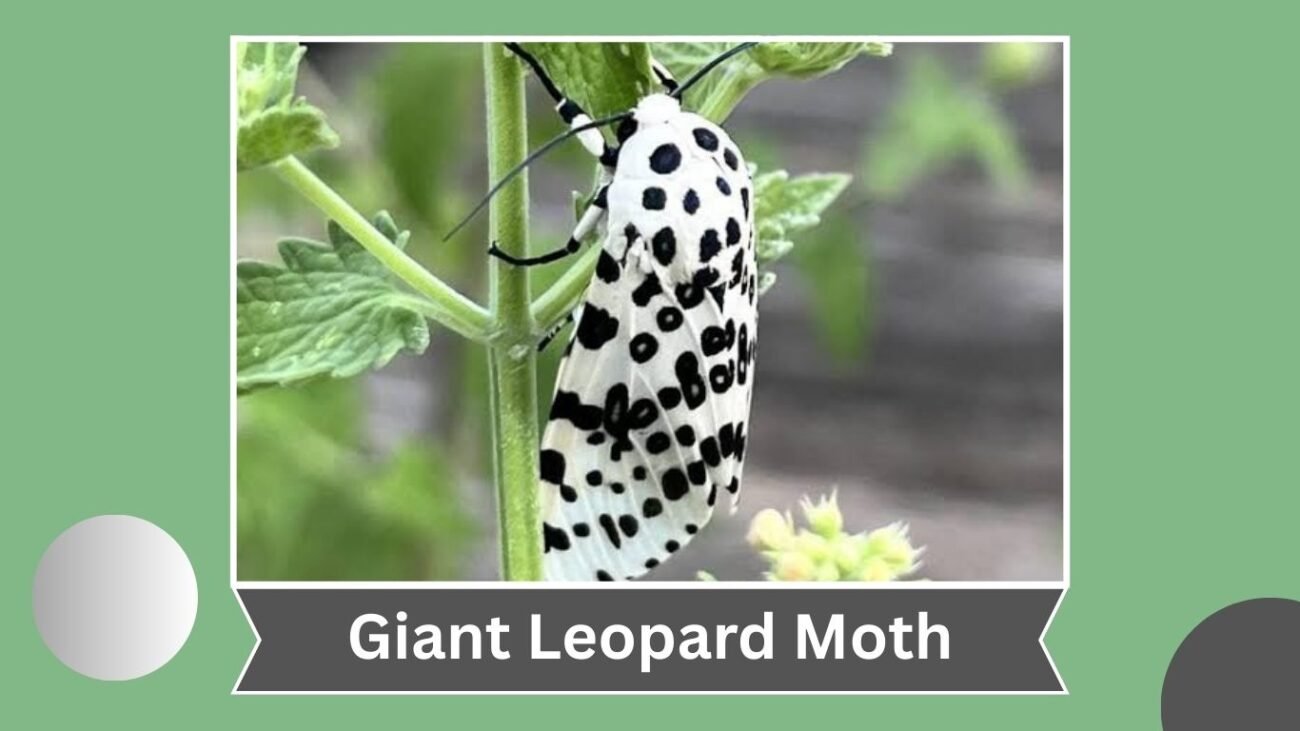
The Giant Leopard Moth (Hypercompe scribonia) is a striking North American tiger moth, admired for its bold black-and-white spotted wings and its large size. It is one of the most distinctive tiger moths in the United States and a frequent sight in gardens and woodlands during summer nights.
Identification
- Forewings are white with bold black leopard-like spots and ring-shaped markings.
- Hindwings are iridescent blue-black with white or yellow spots.
- Caterpillars are large, black, and spiny with red or orange bands visible when they curl up.
- Wingspan ranges from 50–95 mm, making it one of the largest tiger moths.
Habitat
This species inhabits woodlands, gardens, orchards, and meadows across the eastern and southern United States, extending into parts of Mexico. It thrives in warm, temperate regions with abundant host plants.
Behavior
Giant Leopard Moths are nocturnal and often come to lights at night. When threatened, caterpillars curl into a tight ball, exposing their bright red or orange bands as a warning to predators. Adults use their bold coloration as a deterrent, while their large size makes them less vulnerable to small predators.
Diet
Adults do not feed significantly, relying on energy stored from the caterpillar stage. Caterpillars are polyphagous, feeding on a wide variety of plants such as dandelions, violets, plantain, citrus, and broadleaf weeds.
Lifecycle
Eggs are laid on the leaves of host plants in summer. Caterpillars hatch, feed, and continue growing into autumn. They overwinter as larvae, sheltering in leaf litter or soil. In spring, they pupate within silk cocoons, and adults emerge in late spring to early summer.
12. White Ermine Moth
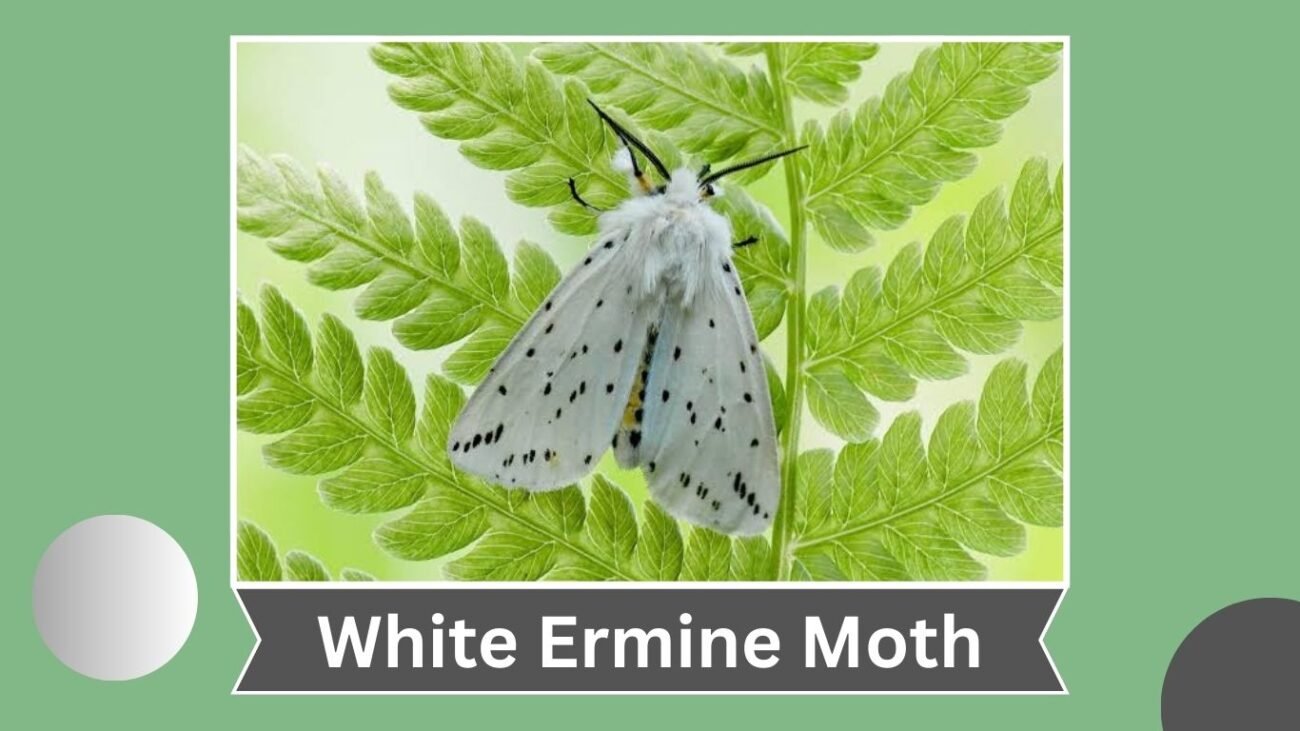
The White Ermine Moth (Spilosoma lubricipeda) is a beautiful and delicate tiger moth found across Europe and parts of Asia. Its snowy-white wings dotted with black spots give it a sleek, elegant appearance reminiscent of ermine fur, from which it takes its name.
Identification
- Forewings are pure white with scattered black spots (patterns vary between individuals).
- Hindwings are also white, sometimes with a few faint spots.
- Caterpillars are dark brown to black with tufts of bristly hairs and an orange stripe along the sides.
- Wingspan ranges from 34–48 mm.
Habitat
This species is widespread in temperate regions, inhabiting grasslands, gardens, hedgerows, woodlands, and meadows. It adapts well to both wild and urban environments, often seen near lights in summer.
Behavior
The White Ermine Moth is nocturnal and attracted to artificial lights. Its black-and-white patterning is an example of aposematism, warning predators of its chemical defenses. Caterpillars are often gregarious when young but become more solitary as they grow.
Diet
Adult moths rarely feed, relying primarily on stored energy. Caterpillars, however, feed on a wide variety of herbaceous plants, including nettles, dock, dandelion, and plantain, making them highly adaptable.
Lifecycle
Eggs are laid in clusters on the underside of host plants in summer. Caterpillars feed until autumn, then overwinter in a protected state. In spring, they resume feeding before pupating in a silken cocoon. Adults emerge in late spring to early summer, completing the cycle.
13. Cream-spot Tiger Moth
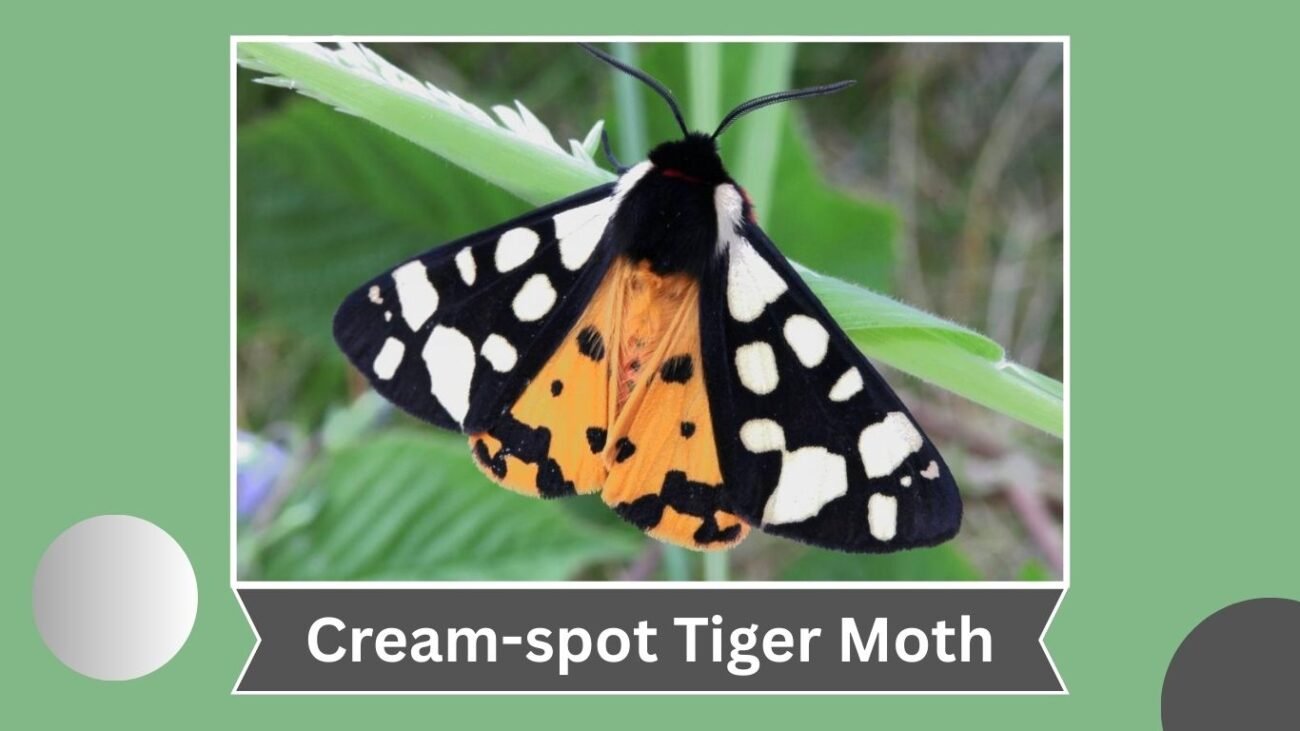
The Cream-spot Tiger Moth (Arctia villica) is one of the most striking tiger moths in Europe, well known for its bold black-and-white forewings and vivid hindwings. Its dramatic coloration makes it a highly recognizable species in gardens, meadows, and woodlands.
Identification
- Forewings are velvety black with numerous cream-white spots.
- Hindwings are bright orange or yellow with several large black spots.
- The body is black with orange markings.
- Caterpillars are dark, bristly, and hairy with reddish bands.
- Wingspan ranges from 45–60 mm.
Habitat
This moth thrives in warm, temperate regions across Europe, North Africa, and parts of Asia. It is found in gardens, meadows, grasslands, scrublands, and woodland clearings.
Behavior
Cream-spot Tiger Moths are nocturnal but sometimes active at dusk. They are often drawn to lights. When threatened, they flash their brightly colored hindwings to deter predators. Caterpillars are solitary and wander widely in search of food.
Diet
Adults feed very little, if at all. Caterpillars consume a wide range of herbaceous plants, including nettles, dandelions, brambles, and dock. Their generalist diet helps them survive in diverse habitats.
Lifecycle
Eggs are laid on host plants in spring. Caterpillars feed throughout summer and then overwinter in sheltered spots such as leaf litter. They pupate in spring, forming cocoons of silk and hairs, with adults emerging in late spring to early summer.
14. Rattlebox Moth

The Rattlebox Moth (Utetheisa ornatrix), also known as the Bella Moth, is a brightly colored tiger moth native to the Americas. Its striking patterns and association with poisonous host plants make it both beautiful and well-defended against predators.
Identification
- Forewings are white to pinkish with black spots and orange markings.
- Hindwings are bright pink or orange with black spots.
- The body is orange with black dots running along the back.
- Caterpillars are black with yellow bands and covered in fine hairs.
- Wingspan ranges from 30–46 mm.
Habitat
Rattlebox Moths are found in fields, meadows, open woodlands, gardens, and agricultural areas. They are especially associated with regions where rattlebox plants (Crotalaria species) grow, as these serve as their main larval host plants.
Behavior
These moths are active both during the day and at night, unlike many other tiger moths. Their bright colors serve as aposematic signals, warning predators of their toxicity. Both larvae and adults sequester alkaloid toxins from rattlebox plants, making them unpalatable.
Diet
Adults sip nectar from various flowers but also store defensive chemicals acquired during the larval stage. Caterpillars feed primarily on rattlebox plants (Crotalaria), from which they gain their toxic defenses.
Lifecycle
Eggs are laid on the leaves or seed pods of host plants. Caterpillars feed on the foliage and seeds, incorporating toxins into their bodies. Pupation occurs in silken cocoons, with adults emerging in summer. The species may have multiple generations per year in warmer regions.
15. Police Car Moth

The Police Car Moth (Gnophaela vermiculata) is a striking tiger moth native to western North America. Its bold black-and-white wing patterns, which resemble the markings of a police car, make it instantly recognizable.
Identification
- Forewings are black with distinct white spots arranged in irregular patterns.
- Hindwings are black with broad yellow or white patches.
- The body is dark with some pale markings.
- Caterpillars are black with tufts of hairs and may show orange or yellow striping.
- Wingspan ranges from 45–60 mm.
Habitat
This species is found in the western United States and parts of Canada, particularly in meadows, forest edges, grasslands, and mountainous regions. It prefers areas with abundant wildflowers.
Behavior
Unlike many tiger moths, the Police Car Moth is diurnal and often seen flying during the day, especially around flowers. Its contrasting wing patterns serve as a warning to predators of its unpalatability. Caterpillars are more secretive, feeding at night and hiding during the day.
Diet
Adults feed on nectar from a variety of flowers, including asters and thistles. Caterpillars feed on herbaceous plants such as borage, fiddleneck, and other wildflower species common in their range.
Lifecycle
Eggs are laid in clusters on host plants. Caterpillars feed through summer, then overwinter as larvae in sheltered spots. Pupation occurs the following spring in silken cocoons, and adults emerge in early to mid-summer to continue the cycle.