Sand flies are tiny but medically significant insects belonging to the family Psychodidae. Found across tropical, subtropical, and Mediterranean regions, they are best known as vectors of diseases such as leishmaniasis and bartonellosis. Despite their small size, they display unique physical traits, ecological preferences, and behavioral patterns. This guide explores 15 important sand fly species, covering their identification, habitats, diets, behaviors, and life cycles in detail.
1. Phlebotomus papatasi

Phlebotomus papatasi is one of the most well-known species of sand fly, widely studied because of its role in transmitting cutaneous leishmaniasis. It is commonly found in arid and semi-arid regions and is adapted to hot climates.
Identification
- Small in size, typically 2–3.5 mm long
- Pale-colored body with sandy appearance
- Long, hairy legs and wings held upright in a “V” shape when at rest
- Characteristic piercing mouthparts used for blood-feeding
Habitat
Phlebotomus papatasi thrives in dry, warm environments. It is frequently found in rural and semi-urban areas, often breeding in cracks of walls, animal shelters, rodent burrows, and dark, humid corners.
Behavior
This species is nocturnal and most active during the evening and nighttime. Females feed on blood to develop eggs, while males rely on plant juices. They are known for short, hopping flights rather than continuous flying.
Diet
- Females: Feed on blood from humans and animals (essential for egg development)
- Males: Primarily feed on plant nectar and sugars
Lifecycle
The lifecycle consists of four stages: egg, larva, pupa, and adult. Eggs are laid in dark, humid microhabitats such as soil rich in organic matter. The complete development takes several weeks, depending on temperature and humidity.
2. Phlebotomus argentipes

Phlebotomus argentipes is a primary vector of visceral leishmaniasis (kala-azar) in the Indian subcontinent. This species is of major medical importance because of its widespread distribution and close association with humans and domestic animals.
Identification
- Small, measuring about 2–3.5 mm in length
- Pale grayish or yellowish body with fine hairs
- Wings are narrow, pointed, and held upright when resting
- Antennae and legs are long and slender
Habitat
Phlebotomus argentipes is commonly found in tropical and subtropical regions, especially in India, Bangladesh, and Nepal. It prefers damp, shaded environments such as cracks in walls, cattle sheds, and human dwellings.
Behavior
This species is crepuscular and nocturnal, showing peak activity after sunset. It often rests indoors (endophilic) and feeds on both humans and animals, making it an efficient disease vector.
Diet
- Females: Depend on human and animal blood for egg maturation
- Males: Feed primarily on plant nectar and sugary secretions
Lifecycle
The lifecycle includes egg, larva, pupa, and adult stages. Eggs are deposited in moist soil or organic-rich environments. The development period varies with environmental conditions, typically taking 4–6 weeks.
3. Phlebotomus perniciosus

Phlebotomus perniciosus is one of the most important vectors of visceral leishmaniasis in the Mediterranean region. Its medical significance comes from its ability to transmit Leishmania infantum, affecting both humans and dogs.
Identification
- Medium-sized sand fly, around 3–3.5 mm long
- Pale or light brown body with dense hair covering
- Wings are long, narrow, and held in the typical “V” position
- Males can be distinguished by their characteristic genitalia, which aid in species identification
Habitat
This species is widely distributed in Southern Europe, North Africa, and parts of the Middle East. It prefers rural and peri-urban areas, often breeding in organic-rich soils, animal shelters, and cracks in walls.
Behavior
Phlebotomus perniciosus is nocturnal, with activity peaking after dusk. It frequently enters human dwellings (endophilic) and feeds on both humans and domestic animals, which supports disease transmission in endemic areas.
Diet
- Females: Rely on mammalian blood, especially from dogs, humans, and livestock, to produce eggs
- Males: Feed on plant nectar and other sugary sources
Lifecycle
The lifecycle passes through four stages: egg, larva, pupa, and adult. Eggs are deposited in humid, shaded environments with decaying organic matter. Development time varies with environmental conditions but typically takes several weeks.
4. Phlebotomus ariasi
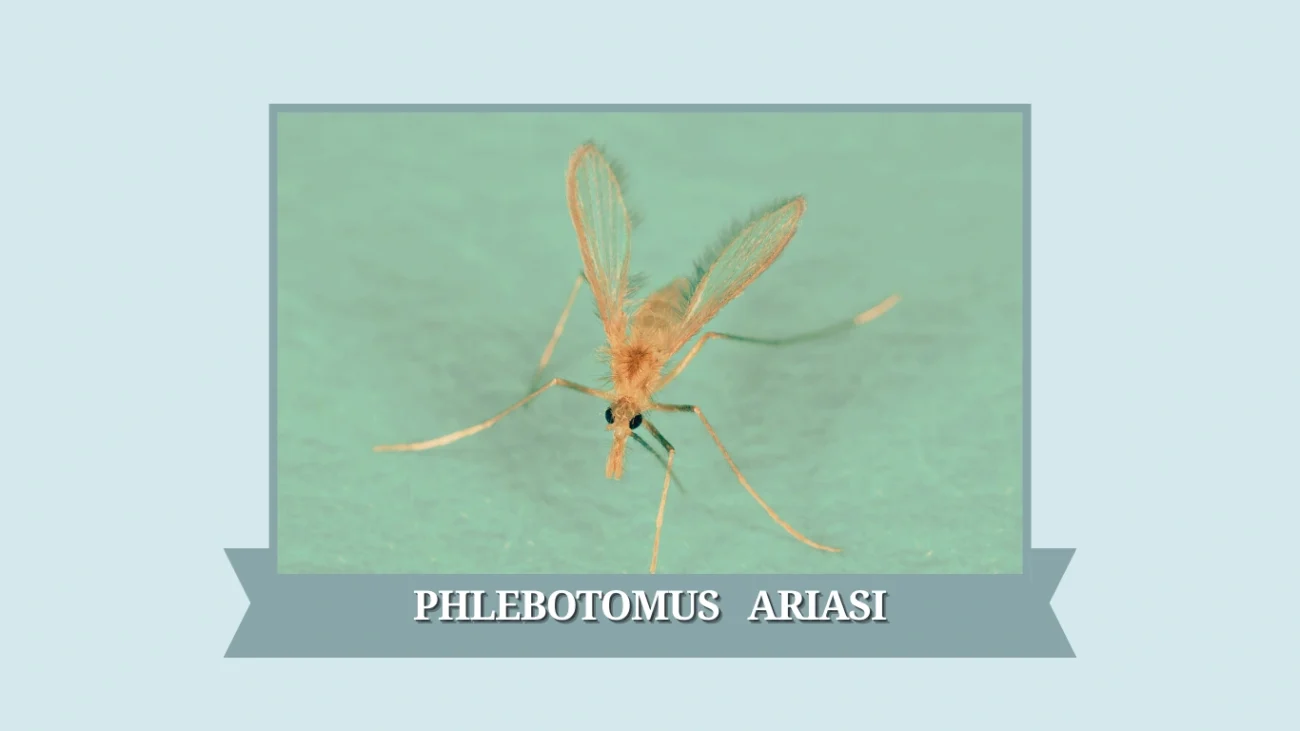
Phlebotomus ariasi is another medically important sand fly species in Europe, particularly recognized as a vector of Leishmania infantum. It is frequently studied in relation to leishmaniasis transmission in Mediterranean and temperate regions.
Identification
- Small to medium-sized, about 3–3.5 mm in length
- Light brown to grayish body with fine hairs
- Wings are narrow, pointed, and held upright in the typical sand fly resting position
- Easily distinguished from other species by male genitalia and female spermatheca structure under microscopic examination
Habitat
Phlebotomus ariasi is distributed in Southern Europe, especially in France, Spain, Italy, and Portugal. It prefers hilly or mountainous regions with abundant vegetation and shaded resting sites, such as animal shelters, caves, and cracks in stone walls.
Behavior
This species is nocturnal, with activity peaking during the first hours after sunset. It shows both endophilic (resting indoors) and exophilic (outdoor) tendencies, often feeding on humans, dogs, and livestock.
Diet
- Females: Require blood meals from mammals, particularly humans and dogs, for egg maturation
- Males: Feed primarily on plant nectar and sugar sources
Lifecycle
Like other sand flies, it undergoes four stages: egg, larva, pupa, and adult. The complete lifecycle takes several weeks, depending on environmental conditions such as temperature and humidity. Eggs are typically laid in moist, organic-rich microhabitats.
5. Phlebotomus sergenti

Phlebotomus sergenti is one of the most significant sand fly species because it is the primary vector of Leishmania tropica, which causes anthroponotic cutaneous leishmaniasis. Its distribution covers several regions across Africa, Asia, and the Mediterranean.
Identification
- Small, about 2.5–3 mm in length
- Darker in coloration compared to many other sand flies
- Wings are narrow and pointed, forming the characteristic “V” shape at rest
- Distinctive genitalia in males and spermatheca in females are used for precise identification
Habitat
Phlebotomus sergenti is widely found in arid and semi-arid areas, including the Middle East, North Africa, and Southern Europe. It often inhabits human dwellings, animal shelters, rocky terrains, and cracks in walls, favoring dry, warm conditions.
Behavior
This species is strongly anthropophilic, meaning it readily feeds on humans, making it a key disease vector. It is nocturnal, with peak activity after sunset, and has a relatively short flight range, preferring to stay near breeding and resting sites.
Diet
- Females: Depend on human and animal blood for egg development, strongly associated with transmitting Leishmania tropica
- Males: Feed on plant nectar and sugar sources
Lifecycle
Phlebotomus sergenti passes through egg, larva, pupa, and adult stages. Eggs are laid in dry, organic-rich microhabitats, such as soil and cracks. Development is influenced by climate conditions, generally taking 4–6 weeks.
6. Phlebotomus orientalis

Phlebotomus orientalis is an important sand fly species in East Africa and parts of the Middle East. It is recognized as a vector of Leishmania donovani, the causative agent of visceral leishmaniasis (kala-azar), making it a species of major medical significance.
Identification
- Medium-sized, around 3–3.5 mm in length
- Pale yellowish to light brown body, with hairy appearance
- Wings are long and narrow, held upright in the typical sand fly “V” shape
- Morphological differences in mouthparts and genitalia help in species-level identification
Habitat
This species is widely distributed in Sudan, Ethiopia, Eritrea, and parts of the Middle East. It prefers savanna and woodland regions, often associated with Acacia and Balanites trees. Breeding sites include cracks in the soil, termite mounds, and animal shelters.
Behavior
Phlebotomus orientalis is nocturnal, with peak biting activity during the evening and nighttime. It readily feeds on both humans and animals, contributing to its role in leishmaniasis transmission. Its flight range is short, and it tends to stay close to resting and breeding sites.
Diet
- Females: Feed on human and animal blood, essential for egg production
- Males: Rely on plant nectar and sugars for sustenance
Lifecycle
The species undergoes a complete metamorphosis: egg, larva, pupa, and adult. Eggs are usually deposited in moist, shaded microhabitats such as soil enriched with organic matter. Development duration is influenced by temperature and humidity, typically taking several weeks.
7. Phlebotomus duboscqi

Phlebotomus duboscqi is a major vector of Leishmania major, the parasite responsible for zoonotic cutaneous leishmaniasis in parts of Africa. It is closely associated with rodent burrows, which serve as both resting and breeding sites.
Identification
- Small to medium-sized, around 2.5–3.5 mm long
- Pale yellowish-brown body with long, hairy legs
- Wings narrow, pointed, and held in the typical sand fly “V” position
- Species-level identification is based on morphological details of genitalia and antennal structures
Habitat
This species is distributed mainly in West and East Africa, particularly in savanna and semi-arid zones. It commonly breeds in rodent burrows, termite mounds, and soil rich in organic matter.
Behavior
Phlebotomus duboscqi is nocturnal and strongly associated with rodents, which act as reservoirs for Leishmania major. It bites humans when they are present near rodent habitats, thus facilitating disease transmission. Its flight is limited to short hopping movements.
Diet
- Females: Feed on the blood of rodents, humans, and other mammals for egg production
- Males: Feed primarily on plant nectar and sugar sources
Lifecycle
The lifecycle includes egg, larva, pupa, and adult stages. Females lay eggs in rodent burrows and other humid, organic-rich environments. Development takes about 4–6 weeks, influenced by temperature and moisture availability.
8. Phlebotomus mascittii

Phlebotomus mascittii is a relatively rare sand fly species in Europe. Unlike many other Phlebotomus species, its role in disease transmission is still not fully clear, though it is under surveillance due to its potential as a vector in leishmaniasis-endemic areas.
Identification
- Small, about 2.5–3 mm long
- Pale yellow to light brown body with fine hairs
- Narrow, pointed wings held in the upright “V” position at rest
- Identified through subtle morphological features of genitalia and antennae under microscopy
Habitat
This species is mainly found in Central and Southern Europe, including Italy, France, Germany, and Austria. It prefers humid and temperate environments, often residing in caves, stables, cellars, and sheltered cracks in stone walls.
Behavior
Phlebotomus mascittii is nocturnal, with activity increasing after sunset. Unlike some other species, it shows a preference for sheltered, cooler habitats. It occasionally bites humans and animals, but its vectorial capacity remains uncertain.
Diet
- Females: Feed on blood from humans and animals to develop eggs
- Males: Rely on plant nectar and sugars as their primary food source
Lifecycle
The lifecycle includes egg, larva, pupa, and adult stages. Eggs are typically laid in moist, organic-rich environments such as caves or cellars. Development duration is variable and depends on environmental conditions.
9. Phlebotomus perfiliewi
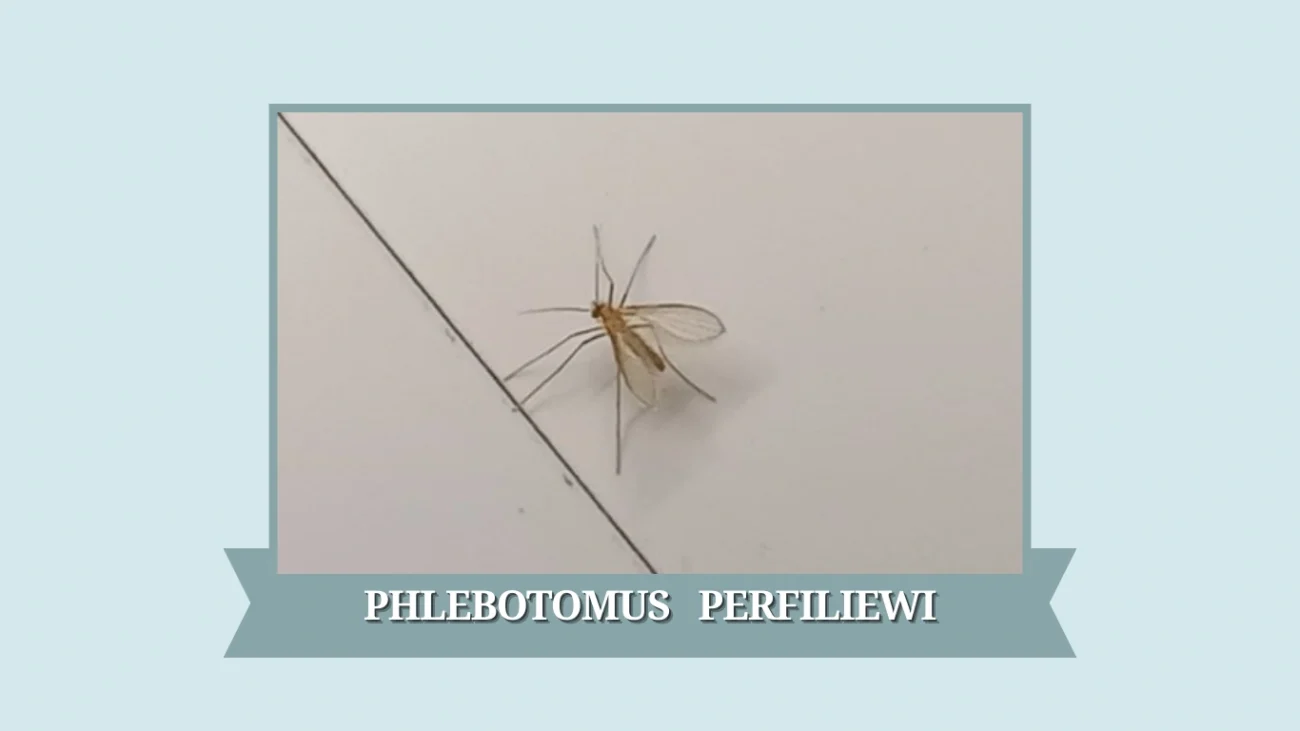
Phlebotomus perfiliewi is a significant vector of Leishmania infantum in the Mediterranean region, particularly important in transmitting visceral leishmaniasis to both humans and dogs. Its adaptability to different environments makes it a species of public health concern.
Identification
- Medium-sized sand fly, around 3–3.5 mm long
- Light brown to yellowish body with dense fine hairs
- Long, narrow wings held upright in the classic sand fly “V” position
- Species-level identification requires examination of male genitalia and female spermatheca
Habitat
This species is found across Southern Europe, North Africa, and parts of the Middle East. It thrives in humid and temperate regions, frequently resting in animal shelters, cracks in walls, and peridomestic environments.
Behavior
Phlebotomus perfiliewi is nocturnal, with feeding activity peaking after dusk. It is strongly zoophilic but also bites humans, supporting its role in zoonotic transmission. It is endophilic, often entering dwellings and shelters.
Diet
- Females: Feed on blood from mammals such as dogs, cattle, and humans for egg production
- Males: Depend on plant nectar and sugar secretions for sustenance
Lifecycle
Like other sand flies, its lifecycle includes egg, larva, pupa, and adult stages. Eggs are laid in moist, organic-rich microhabitats such as soil near animal shelters. Development typically takes several weeks, depending on environmental conditions.
10. Phlebotomus tobbi
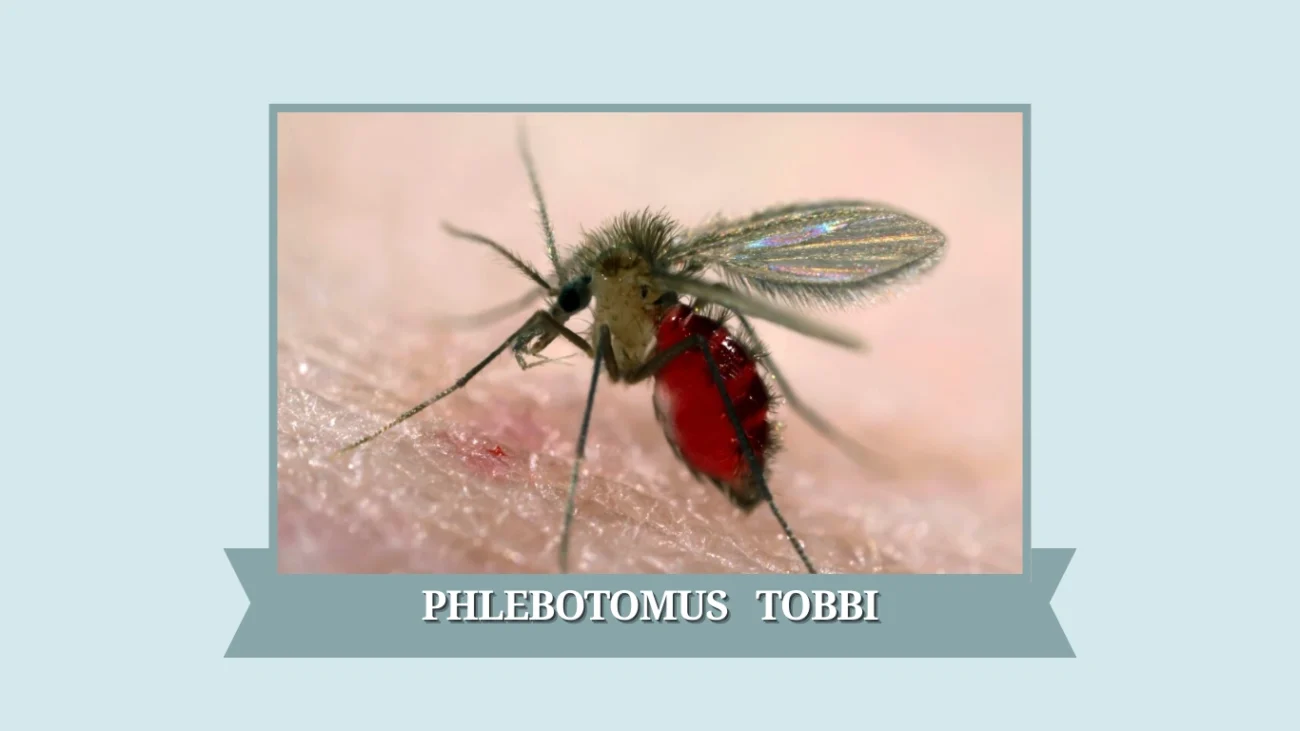
Phlebotomus tobbi is a medically important sand fly species in the Mediterranean and Middle Eastern regions. It is recognized as a vector of Leishmania infantum and is therefore linked to cases of visceral leishmaniasis in humans and dogs.
Identification
- Medium-sized, about 3–3.5 mm in length
- Pale yellowish to light brown body with fine hairs
- Wings long and narrow, held upright in a “V” shape while resting
- Species identification relies on male genital structures and female spermatheca examination
Habitat
This species is widely distributed in Southern Europe, the Middle East, and parts of North Africa. It thrives in rural and peri-urban environments, especially in cracks of walls, animal shelters, caves, and soil enriched with organic matter.
Behavior
Phlebotomus tobbi is nocturnal, with increased activity after sunset. It readily enters human dwellings (endophilic) and also feeds outdoors. Its strong attraction to dogs and livestock makes it an efficient zoonotic vector.
Diet
- Females: Depend on the blood of humans, dogs, and other mammals for egg development
- Males: Feed mainly on plant nectar and sugary secretions
Lifecycle
The lifecycle follows the four standard stages: egg, larva, pupa, and adult. Eggs are laid in shaded, humid places with organic material. Development duration varies but generally takes several weeks under favorable conditions.
11. Phlebotomus halepensis

Phlebotomus halepensis is a lesser-known sand fly species within the Phlebotomus genus but still of epidemiological interest due to its potential role in transmitting Leishmania infantum. It is mainly found in Mediterranean and Middle Eastern regions.
Identification
- Small to medium-sized, about 2.5–3.5 mm long
- Light yellowish-brown body with fine hair covering
- Narrow, pointed wings held in the upright “V” position at rest
- Microscopic features of male genitalia and female spermatheca used for accurate identification
Habitat
This species inhabits parts of the Middle East, North Africa, and Mediterranean Europe. It prefers rural areas, resting in animal shelters, caves, rock crevices, and cracks in walls. It is often associated with livestock-rearing environments.
Behavior
Phlebotomus halepensis is nocturnal, showing peak activity during the evening and nighttime hours. It is endophilic, often entering human dwellings, but also feeds outdoors depending on host availability.
Diet
- Females: Require blood meals from mammals, including humans, dogs, and livestock, to produce eggs
- Males: Depend on plant nectar and sugars for energy
Lifecycle
The species develops through four stages: egg, larva, pupa, and adult. Eggs are laid in humid, organic-rich soils or sheltered cracks. The full development cycle typically takes a few weeks, influenced by climate conditions.
12. Phlebotomus longicuspis
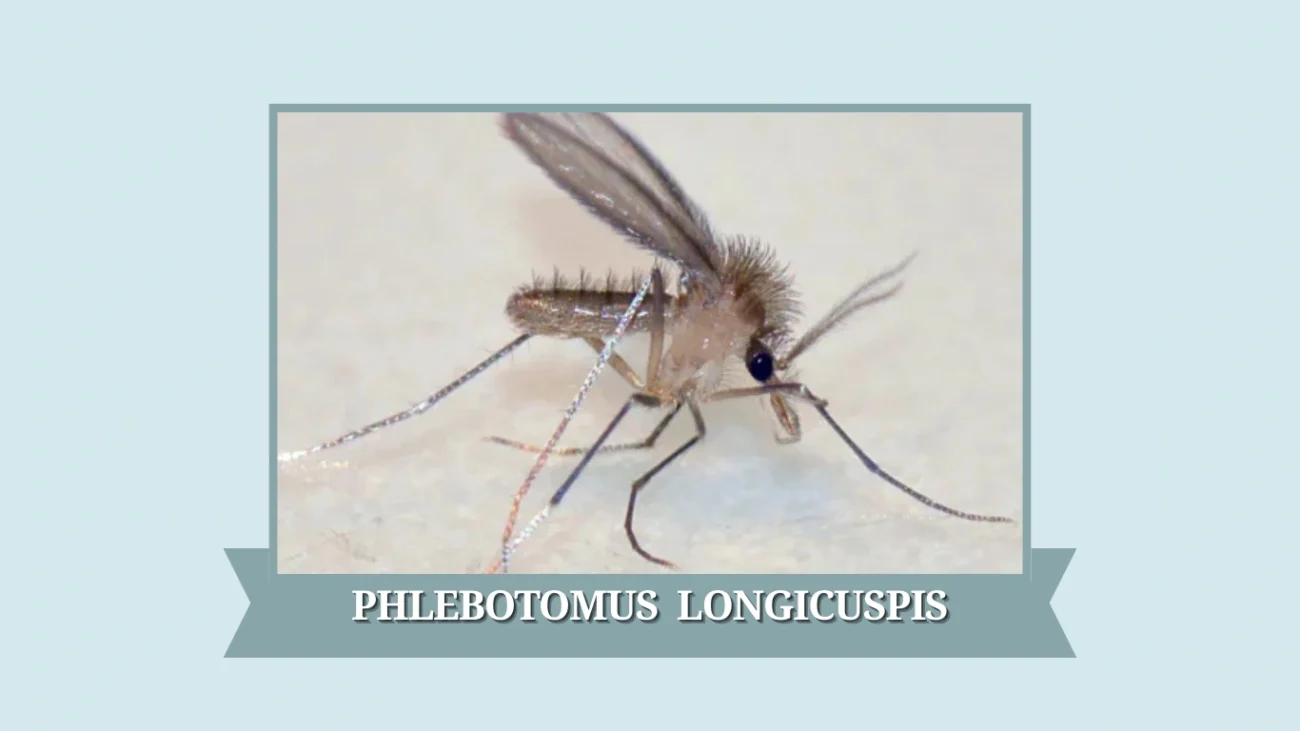
Phlebotomus longicuspis is an important sand fly species in North Africa and the Mediterranean region. It is a recognized vector of Leishmania infantum, contributing to the spread of visceral leishmaniasis in both humans and canines.
Identification
- Medium-sized, usually 3–3.5 mm long
- Light brown to pale yellow body with dense fine hairs
- Long, narrow wings held upright in the sand fly “V” position
- Males are distinguished by their elongated genitalia, which give the species its name
Habitat
This species is mainly found in North Africa (Morocco, Algeria, Tunisia) and parts of Southern Europe. It prefers rural and peri-urban environments, particularly animal shelters, cracks in walls, caves, and organic-rich soils.
Behavior
Phlebotomus longicuspis is nocturnal, most active after dusk. It is both anthropophilic and zoophilic, feeding on humans as well as dogs and livestock, which makes it a strong bridge vector between animals and humans.
Diet
- Females: Feed on mammalian blood (especially dogs and humans) to ensure egg development
- Males: Depend on plant nectar and other sugar sources for survival
Lifecycle
The lifecycle consists of egg, larva, pupa, and adult stages. Eggs are laid in shaded, moist microhabitats containing organic material. Development takes several weeks, depending on temperature and humidity.
13. Lutzomyia longipalpis
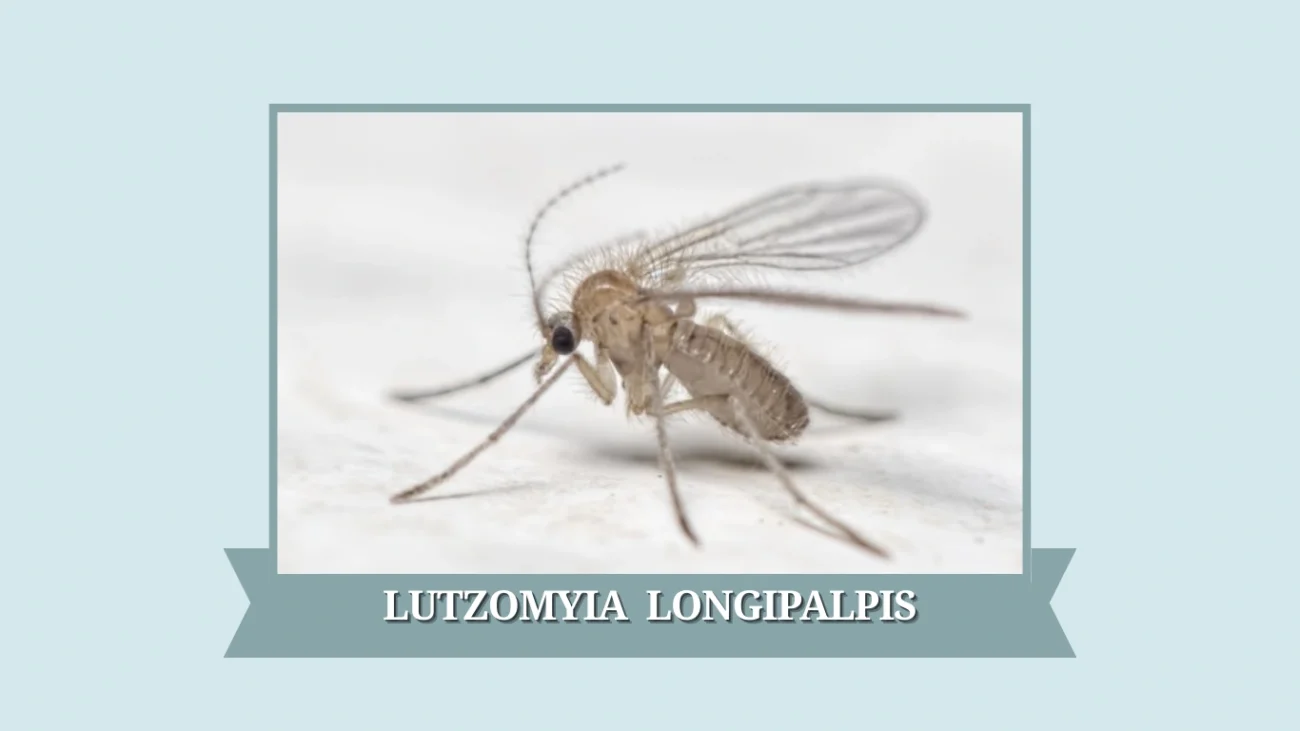
Lutzomyia longipalpis is the most important vector of Leishmania infantum in the Americas, especially in Latin American countries. It is the principal transmitter of visceral leishmaniasis in humans and dogs across this region.
Identification
- Medium-sized, about 3–3.5 mm long
- Pale yellow to light brown body with dense hairs
- Males have distinctive abdominal spots and produce pheromones used in mating
- Wings are long, narrow, and held upright in the typical sand fly “V” shape
Habitat
This species is widely distributed across Central and South America, including Brazil, Colombia, Venezuela, and Mexico. It thrives in peridomestic environments, especially in areas with dogs, chickens, and livestock, which provide shelter and blood sources.
Behavior
Lutzomyia longipalpis is nocturnal, showing peak activity after sunset. It is both anthropophilic and zoophilic, feeding readily on humans, dogs, and domestic animals. Its adaptability to urban and rural environments makes it a major health concern.
Diet
- Females: Feed on blood from dogs, humans, and livestock for egg production
- Males: Consume plant nectar and sugars; also release pheromones during mating behavior
Lifecycle
The lifecycle follows the standard pattern of egg, larva, pupa, and adult. Eggs are deposited in shaded, organic-rich areas such as animal shelters and soil with decaying matter. Development usually takes several weeks, depending on environmental factors.
14. Lutzomyia verrucarum

Lutzomyia verrucarum is a medically significant sand fly species in South America, especially in the Andean regions. It is a known vector of Leishmania peruviana, the causative agent of cutaneous leishmaniasis, and also associated with bartonellosis (Carrion’s disease).
Identification
- Small to medium-sized, about 2.5–3 mm long
- Light brown body with fine hairs
- Wings narrow, pointed, and held upright in a “V” shape
- Species differentiation relies on microscopic examination of antennal and genital structures
Habitat
This species is primarily distributed in the Andean valleys of Peru, Colombia, and Ecuador. It prefers high-altitude regions, often breeding in cracks of walls, animal shelters, and soil enriched with organic matter.
Behavior
Lutzomyia verrucarum is nocturnal and highly anthropophilic, meaning it has a strong preference for feeding on humans. It thrives in both domestic and peridomestic environments, making it a highly efficient vector of human diseases.
Diet
- Females: Feed on human and animal blood, essential for egg development
- Males: Feed mainly on plant nectar and sugars
Lifecycle
The lifecycle includes egg, larva, pupa, and adult stages. Eggs are usually laid in moist, shaded habitats such as soil with organic material near houses or animal shelters. Development takes several weeks, depending on temperature and humidity.
15. Lutzomyia peruensis
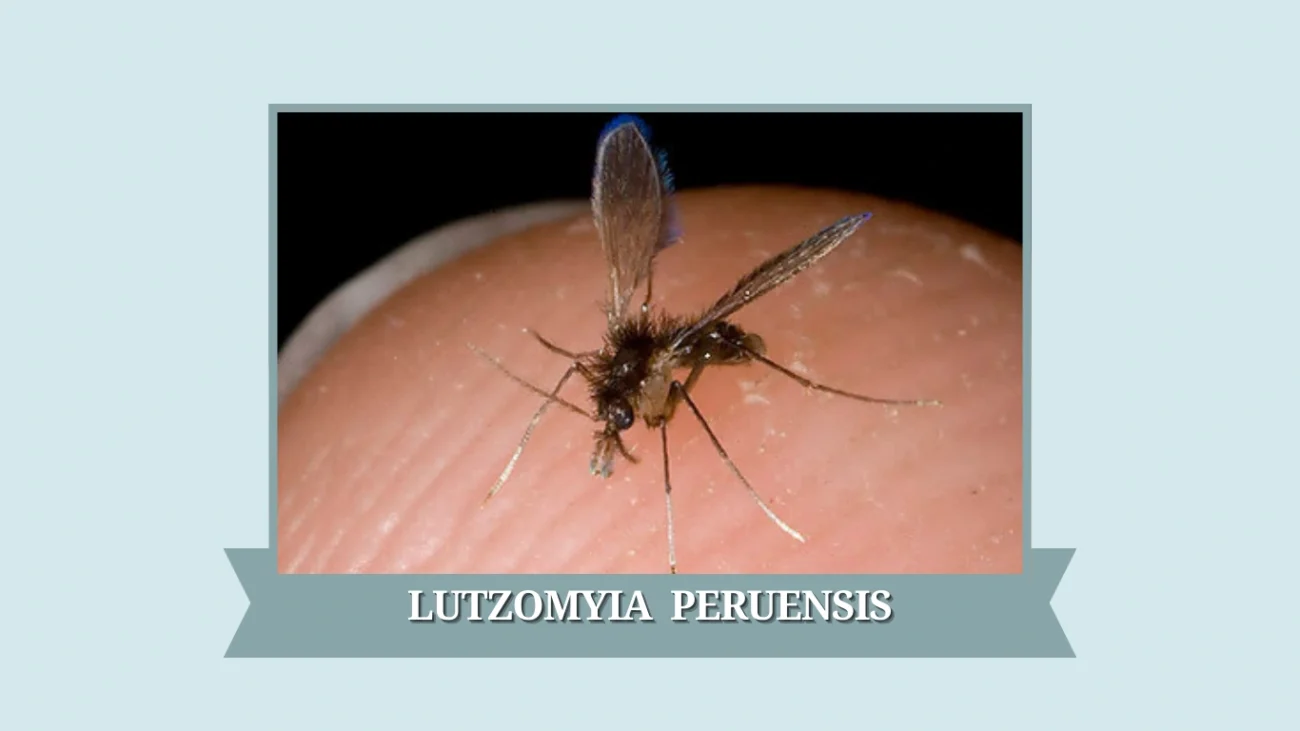
Lutzomyia peruensis is another important sand fly species in the Andean regions of South America. It is a major vector of Leishmania peruviana, responsible for cutaneous leishmaniasis, and plays a significant role in disease transmission in rural Andean communities.
Identification
- Small to medium-sized, about 2.5–3 mm long
- Pale yellow to light brown body with fine hairs
- Narrow, pointed wings held in the characteristic sand fly “V” position at rest
- Species-level identification depends on examination of genitalia and antennal morphology under a microscope
Habitat
This species is distributed mainly in Peru, with presence in high-altitude valleys and rural areas. It is commonly found in cracks of walls, animal shelters, and soil rich in organic matter near human dwellings.
Behavior
Lutzomyia peruensis is nocturnal and highly anthropophilic, feeding readily on humans. Its close association with rural settlements increases the risk of cutaneous leishmaniasis transmission.
Diet
- Females: Feed on human and animal blood to develop eggs
- Males: Survive on plant nectar and other sugar sources
Lifecycle
The lifecycle includes egg, larva, pupa, and adult stages. Eggs are laid in shaded, organic-rich soils, typically near human dwellings or animal shelters. Development usually requires several weeks, influenced by environmental factors such as temperature and humidity.