


Crane flies are delicate insects often mistaken for giant mosquitoes, though they are completely harmless to humans. Belonging to the family Tipulidae, they are found worldwide and play important roles in ecosystems, particularly through their soil-dwelling larvae. This guide explores 20 notable crane fly species, covering their identification, habitat preferences, behaviors, diets, and lifecycles to help distinguish them and better understand their ecological importance.
1. Tipula paludosa
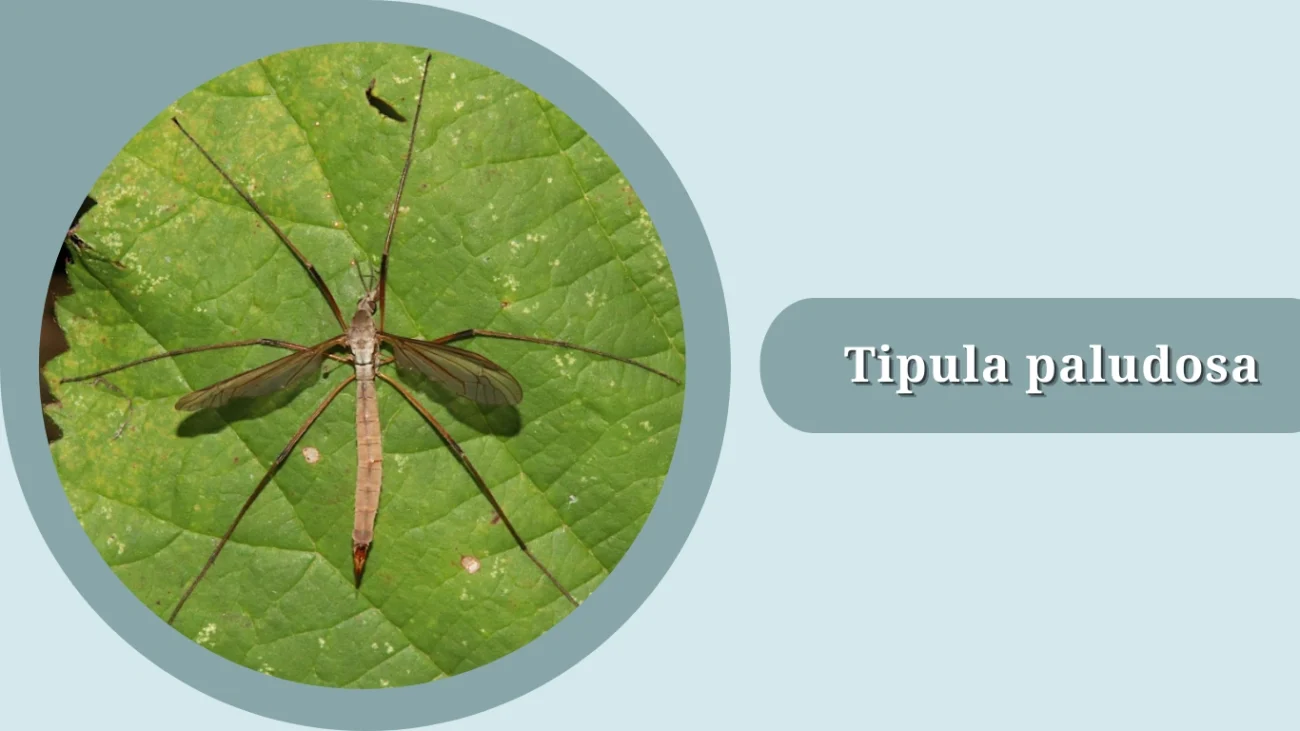
Tipula paludosa, commonly known as the European crane fly, is one of the most widespread species. It is often mistaken for a giant mosquito but is harmless to humans. Its larvae, called leatherjackets, are considered serious pests of lawns and agricultural fields.
Identification
- Slender body, brownish-gray in color
- Long, delicate legs that are easily broken
- Wings transparent with slight venation visible
- Body length: 12–16 mm
- Antennae with 13 segments
Habitat
Tipula paludosa is commonly found in moist environments such as grasslands, meadows, gardens, and agricultural fields. The larvae thrive in damp soil where they feed on grassroots and decaying vegetation.
Behavior
Adults are weak fliers and often rest on vegetation during the day. They are attracted to lights at night but do not bite or feed on blood. Their main role is reproduction, with adults living only a short time.
Diet
The larvae, also known as leatherjackets, feed primarily on the roots of grasses and crops, often causing serious damage to turf and cereal plants. Adults, however, do not feed significantly; they rely on stored energy reserves and may only sip small amounts of nectar or water during their short lifespan.
Lifecycle
The lifecycle includes four stages: egg, larva, pupa, and adult. Eggs are laid in moist soil, hatching into larvae that develop through several instars. Pupation occurs in the soil, and adults emerge in late summer or early autumn. The adult stage is short-lived, typically lasting only a few days to a week.
2. Tipula oleracea

Tipula oleracea, often called the marsh crane fly or cabbage crane fly, is another common European species that closely resembles Tipula paludosa. However, it can be distinguished by its larger size and longer life cycle. This species is also known for its larvae being destructive to crops, particularly vegetables and grasses.
Identification
- Larger body than Tipula paludosa, usually 16–23 mm
- Grayish-brown coloration with elongated, fragile legs
- Clear wings with distinct venation patterns
- Antennae with 14–15 segments
- Resembles a giant mosquito but harmless
Habitat
This species prefers damp meadows, marshes, gardens, and cultivated fields. It thrives in moist soil where eggs can develop into larvae that damage crops such as cabbages, lettuce, and grasses.
Behavior
Adults are clumsy fliers and are often seen resting on plants or flying weakly around fields and gardens. They are attracted to artificial lights at night. Like most crane flies, adults do not pose any direct threat to humans or animals.
Diet
The larvae feed extensively on the roots of vegetable crops, turfgrass, and cereals, which can lead to significant agricultural losses. Adults, in contrast, do not feed much during their short lifespan, relying mainly on stored energy and occasionally taking small amounts of nectar or moisture.
Lifecycle
The life cycle of Tipula oleracea involves eggs, larvae, pupae, and adults. Eggs are laid in soil, and the larvae—known as leatherjackets—cause damage as they feed on plant roots. Unlike Tipula paludosa, this species has two generations per year in some regions, making it an even more persistent agricultural pest. Adults usually appear in spring and again in late summer or autumn.
3. Tipula maxima

Tipula maxima, known as the giant crane fly, is one of the largest species of crane flies in Europe. Its striking size and elegant wings make it easy to recognize compared to other members of the Tipula genus. Despite its intimidating appearance, it is completely harmless to humans.
Identification
- Body length ranges from 20–30 mm, making it the largest European crane fly
- Long, delicate legs easily detached when handled
- Reddish-brown body with darker markings
- Large, clear wings with noticeable venation
- Antennae long and segmented, typical of crane flies
Habitat
Tipula maxima inhabits damp woodlands, marshes, meadows, and areas near streams or rivers. The larvae develop in moist soil rich in decaying vegetation, which provides them with ample organic matter for feeding.
Behavior
Adults are slow and weak fliers, usually seen resting on vegetation or hovering low in shaded, moist areas. They are often spotted in late spring and summer. Unlike pests such as T. paludosa and T. oleracea, T. maxima is not considered a significant threat to agriculture.
Diet
The larvae feed on decomposing plant material, roots, and other organic matter in moist soil. This diet helps recycle nutrients in the ecosystem. Adults do not feed significantly; they survive mainly on stored energy and occasionally sip water or nectar.
Lifecycle
The lifecycle consists of egg, larval, pupal, and adult stages. Eggs are laid in moist soil, and the larvae pass through several growth stages before pupating underground. Adults emerge during late spring to early summer, live only a few days, and focus on reproduction.
4. Tipula hortorum
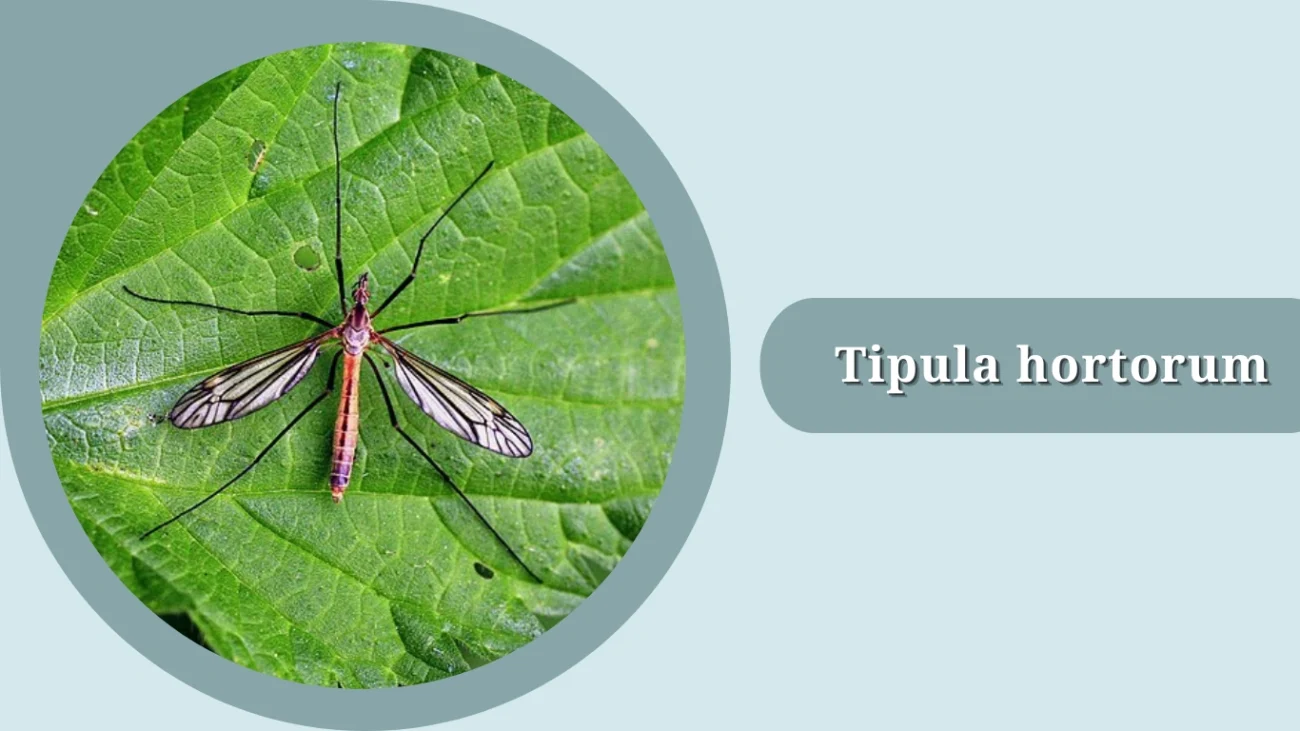
Tipula hortorum is a medium-sized crane fly commonly found across Europe. Although it resembles other species in the Tipula genus, it can be distinguished by its habitat preference and subtle physical traits. Unlike some agricultural pests, this species plays a minor role in damaging crops.
Identification
- Body length ranges from 12–18 mm
- Brownish-gray coloration with darker dorsal markings
- Transparent wings with characteristic venation
- Long, fragile legs typical of crane flies
- Antennae with multiple segments, relatively short compared to other species
Habitat
Tipula hortorum prefers damp, shaded areas such as woodlands, gardens, hedgerows, and grassy fields. Its larvae are most often found in moist soil rich in plant matter.
Behavior
Adults are poor fliers and often rest on leaves or stems during the day. They become more active at dusk and may be attracted to lights at night. Their flight is clumsy, and they are often mistaken for mosquitoes, although they do not bite.
Diet
The larvae feed on decaying vegetation, roots, and other organic matter in the soil, contributing to nutrient recycling. Adults generally do not feed; they rely on stored energy and may occasionally take in water or nectar.
Lifecycle
The lifecycle includes egg, larva, pupa, and adult stages. Eggs are deposited in damp soil, and larvae (leatherjackets) feed underground. Pupation occurs within the soil, and adults emerge in spring and summer. The adult phase is short-lived, usually lasting no more than a week, with the primary goal of reproduction.
5. Tipula lateralis

Tipula lateralis is a lesser-known species of crane fly found across parts of Europe and Asia. While it is not as widespread as some agricultural pest species, it plays an important ecological role in its preferred habitats.
Identification
- Medium-sized body, typically 14–18 mm long
- Brownish to yellow-gray body with subtle lateral stripes
- Clear wings with distinct venation and a slight smoky tint
- Long, slender legs that break off easily when disturbed
- Antennae with multiple segments, relatively short compared to larger species
Habitat
This species prefers moist meadows, marshes, and areas near streams or wetlands. It thrives in soil rich in organic matter where the larvae can develop efficiently.
Behavior
Adults are weak fliers and often stay close to vegetation in shaded or damp areas. They are most active during twilight and may be drawn to artificial lights at night. Despite their mosquito-like appearance, they are harmless to humans.
Diet
The larvae consume decaying plant material and fine roots, helping to recycle organic matter in wetland soils. Adults generally do not feed and rely primarily on the energy stored from their larval stage, sometimes sipping water or nectar when available.
Lifecycle
The lifecycle consists of egg, larval, pupal, and adult stages. Eggs are deposited in moist soils, hatching into larvae that grow through several instars. Pupation occurs in the soil, and adults emerge seasonally, typically in late spring or summer. Their adult life is brief, lasting just a few days, and is mainly dedicated to reproduction.
6. Tipula vernalis

Tipula vernalis, as its name suggests, is a spring-emerging crane fly species. It is relatively small compared to the larger members of the Tipula genus and is commonly encountered in temperate regions of Europe. Its seasonal appearance makes it one of the earlier crane flies observed each year.
Identification
- Body length ranges from 10–15 mm
- Light brown to grayish body with faint striping
- Transparent wings with clear venation and a slight sheen
- Legs long and delicate, easily broken when handled
- Antennae moderately long, with multiple segments
Habitat
This species prefers damp meadows, pastures, and woodland edges. The larvae are usually found in moist soils where they feed on plant roots and decaying organic matter.
Behavior
Adults emerge in early to mid-spring, often before many other crane fly species. They are weak fliers and can often be seen resting on low vegetation. They may also be attracted to lights at night but are generally inconspicuous.
Diet
The larvae feed on fine plant roots and decomposing vegetation, contributing to the soil’s nutrient cycle. Adults, like most crane flies, do not feed extensively and live primarily on stored energy, occasionally sipping water or nectar if available.
Lifecycle
The lifecycle begins with eggs laid in moist soil during spring. Larvae develop relatively quickly in comparison to some other species, feeding underground before pupating in the soil. Adults emerge early in the season, typically between April and May, and live only a short time, just long enough to mate and reproduce.
7. Tipula scripta

Tipula scripta is a distinctive crane fly species recognizable by the faint patterns on its wings and body. Although not as abundant as some other Tipula species, it is still fairly widespread across parts of Europe and is commonly found in damp habitats.
Identification
- Body length ranges from 12–18 mm
- Light brown or gray body with subtle dark markings
- Wings transparent but often show faint patterned lines or “script-like” markings (inspiring its name)
- Very long, fragile legs typical of crane flies
- Antennae segmented, moderately long
Habitat
Tipula scripta thrives in moist meadows, marshlands, gardens, and grassy fields. The larvae require damp, organic-rich soils for proper development, often found in places with decaying plant material.
Behavior
Adults are slow and weak fliers, often clumsily hovering low to the ground or resting on tall grasses. They are active during spring and summer and may be drawn to artificial lights at night. Though mosquito-like in appearance, they are completely harmless to humans.
Diet
The larvae feed primarily on roots of grasses and decaying vegetation within the soil, sometimes causing minor damage in grassy areas. Adults rarely feed; they survive on energy reserves accumulated during the larval stage and may occasionally sip water or nectar.
Lifecycle
The lifecycle follows the typical crane fly pattern: egg, larva, pupa, and adult. Eggs are laid in moist soil, and larvae (leatherjackets) pass through several growth stages while feeding underground. Pupation occurs in the soil, and adults emerge seasonally in warmer months. Their adult lifespan is short, typically just a few days to a week, during which reproduction is the main focus.
8. Tipula fascipennis

Tipula fascipennis is a recognizable crane fly species noted for the distinctive dark banding on its wings, which sets it apart from many of its close relatives. It is widely distributed across Europe and is commonly encountered in habitats with high moisture content.
Identification
- Body length ranges from 12–18 mm
- Brown to gray body with slender form
- Wings transparent but marked with dark fascia (bands), a key identifying feature
- Very long, delicate legs that break off easily
- Antennae multi-segmented, typical of Tipula species
Habitat
This species is often found in wetlands, damp meadows, woodland edges, and marshes. The larvae develop in soils rich in organic matter and moisture, favoring environments where roots and decaying vegetation are abundant.
Behavior
Adults are weak fliers and often remain close to vegetation in shaded or damp areas. Their distinctive wing pattern makes them more visible compared to other crane fly species. They are most active in late spring and summer and may be attracted to lights during the night.
Diet
The larvae feed on decomposing vegetation and plant roots, which sometimes results in minor damage to grasses. Adults do not feed significantly, relying on stored energy reserves, though they may occasionally take in moisture or nectar.
Lifecycle
The lifecycle includes egg, larva, pupa, and adult stages. Eggs are deposited in damp soil, and larvae grow through several instars before pupating. Adults emerge in spring or summer, live only a few days, and focus primarily on mating and reproduction.
9. Tipula vittata

Tipula vittata is a medium-sized crane fly species distinguished by the pale stripes running along its thorax, which give it a more patterned appearance than many other members of the Tipula genus. It is relatively common in moist habitats and is often encountered during the warmer months.
Identification
- Body length typically ranges from 12–17 mm
- Brownish-gray body with lighter longitudinal stripes on the thorax
- Transparent wings with clear venation
- Long, slender legs, fragile and easily detached
- Antennae multi-segmented, moderately long
Habitat
Tipula vittata inhabits moist meadows, riverbanks, gardens, and grassy lowlands. Its larvae thrive in soil with abundant organic matter and moisture, where they can feed effectively.
Behavior
Adults are most active from late spring into summer, flying weakly and often clumsily near ground level or vegetation. They are sometimes attracted to lights at night. Like other crane flies, they are harmless despite their mosquito-like appearance.
Diet
The larvae feed on plant roots, grasses, and decaying vegetation, which may occasionally lead to damage in lawns and pastures. Adults rarely feed and generally survive on energy reserves carried over from the larval stage, occasionally sipping water or nectar if available.
Lifecycle
The species undergoes the typical crane fly lifecycle of egg, larva, pupa, and adult. Eggs are laid in damp soils, and the larvae (leatherjackets) progress through several instars before pupating underground. Adults emerge seasonally, live only for a short time, and devote their energy to reproduction.
10. Tipula luna

Tipula luna is a graceful crane fly species that is relatively easy to recognize due to its pale body and delicate appearance. Although less frequently encountered than some other Tipula species, it is still widespread in suitable habitats across Europe.
Identification
- Body length typically 12–16 mm
- Pale gray to yellowish body, often lighter than related species
- Transparent wings with subtle venation and a faint sheen
- Long, thin legs, very fragile and easily detached
- Antennae slender with multiple segments
Habitat
This species prefers damp grasslands, marshy meadows, and areas along rivers or streams. Its larvae develop best in moist soils with a mix of plant roots and decomposing vegetation.
Behavior
Adults are gentle, weak fliers and usually remain low to the ground or rest on tall grasses and vegetation. They are most active during late spring and early summer, often appearing at twilight. Like other crane flies, they are harmless despite their resemblance to oversized mosquitoes.
Diet
The larvae consume a mix of decaying vegetation and fine plant roots in the soil, playing a role in nutrient recycling. Adults do not feed significantly; instead, they rely on stored energy from their larval stage, occasionally sipping water or nectar when available.
Lifecycle
The lifecycle consists of the usual four stages: egg, larva, pupa, and adult. Eggs are deposited in moist soil, larvae feed underground through several instars, and pupation occurs in the soil. Adults emerge in late spring, live only briefly, and focus primarily on reproduction before dying.
11. Tipula fulvipennis

Tipula fulvipennis is a medium-sized crane fly species named for the characteristic yellowish or “tawny” hue of its wings. It is not as commonly encountered as some other members of the genus but is widespread in certain parts of Europe where moist habitats are abundant.
Identification
- Body length typically 12–18 mm
- Brownish-gray body with a slender form
- Wings with a faint yellowish or tawny tint, distinguishing it from clearer-winged species
- Long, thin legs, fragile and easily detached
- Antennae multi-segmented and moderately long
Habitat
This species favors damp meadows, marshes, and areas along woodland edges where the soil retains moisture. The larvae thrive in soils with rich organic matter and decomposing vegetation.
Behavior
Adults are clumsy fliers and are often seen resting on grasses or low plants. They are mainly active during late spring and summer and are occasionally drawn to artificial lights at night. Despite their mosquito-like appearance, they are harmless.
Diet
The larvae feed on decaying plant matter and fine roots, helping to recycle nutrients in the soil. Adults do not feed extensively and instead rely on stored energy reserves from their larval stage, though they may occasionally sip nectar or water.
Lifecycle
The life cycle includes four stages: egg, larva, pupa, and adult. Eggs are laid in damp soil, larvae feed underground through several instars, and pupation occurs within the soil. Adults emerge seasonally, live only a few days, and focus primarily on reproduction.
12. Tipula abdominalis

Tipula abdominalis is a crane fly species most notable for its distinctive abdomen, which tends to be longer and more robust compared to many other Tipula species. It is widely distributed in suitable habitats and plays an important ecological role in soil health and nutrient cycling.
Identification
- Body length ranges from 14–20 mm
- Brownish body with a prominently elongated abdomen
- Transparent wings with clear venation
- Long, slender legs, easily broken when handled
- Antennae segmented and moderately long
Habitat
This species is typically found in damp meadows, woodland clearings, gardens, and near streams or marshy soils. Its larvae require moist soil enriched with decaying organic matter to thrive.
Behavior
Adults are weak fliers and often remain close to vegetation. They are most active in late spring through early summer and may be seen resting on tall grasses or low shrubs. Like other crane flies, they are completely harmless to humans.
Diet
The larvae feed mainly on decomposing plant material and plant roots, contributing to soil aeration and nutrient recycling. Adults rarely feed and live mostly on reserves built during their larval stage, occasionally sipping nectar or water if available.
Lifecycle
The lifecycle includes egg, larva, pupa, and adult stages. Eggs are laid in moist soil, and larvae (leatherjackets) progress through multiple instars underground. Pupation occurs in the soil, and adults emerge seasonally, living only a few days to reproduce before dying.
13. Tipula nubeculosa

Tipula nubeculosa is a widespread European crane fly species, commonly encountered in forests and wooded regions. It is one of the better-known members of the genus due to its abundance and preference for shady habitats.
Identification
- Body length typically 14–20 mm
- Brown to gray body with darker markings
- Wings slightly smoky or clouded in appearance, giving the species its name (“nubeculosa” = cloudy)
- Long, delicate legs, fragile when touched
- Antennae segmented and moderately long
Habitat
This species prefers damp woodlands, shaded meadows, and forest edges. It thrives in moist soils with plenty of leaf litter and organic matter, where larvae can develop successfully.
Behavior
Adults emerge in spring and are most commonly observed from April to June. They are weak fliers, often staying close to vegetation, particularly in shaded areas. They may also appear in large numbers, making them quite noticeable in forested habitats.
Diet
Larvae feed on decomposing leaves, plant roots, and other organic matter in soil, playing a role in breaking down litter and improving soil fertility. Adults do not feed significantly and rely on energy reserves, though they may occasionally drink water or nectar.
Lifecycle
The lifecycle follows the typical crane fly stages: egg, larva, pupa, and adult. Eggs are laid in damp soil, larvae pass through several instars feeding underground, and pupation occurs within the soil. Adults emerge in spring, live briefly, and focus on reproduction.
14. Tipula flavolineata

Tipula flavolineata is a distinctive crane fly species identified by the characteristic yellowish stripes running along its thorax. Though less commonly seen than some widespread Tipula species, it can be found in moist habitats where conditions favor larval development.
Identification
- Body length ranges from 12–18 mm
- Brownish-gray body with noticeable yellow longitudinal stripes on the thorax
- Transparent wings with clear venation
- Long, slender legs, easily detached if handled
- Antennae segmented, moderately long
Habitat
This species is associated with damp grasslands, riverbanks, marshy areas, and woodland edges. The larvae thrive in moist soils rich in roots and organic debris.
Behavior
Adults are clumsy fliers and are typically seen resting on tall vegetation during the day. They are most active in late spring and summer and are sometimes drawn to artificial lights at night.
Diet
The larvae feed on fine plant roots and decaying vegetation underground, sometimes causing localized damage in grassy areas. Adults rarely feed and rely mainly on stored reserves from their larval stage, occasionally sipping water or nectar when available.
Lifecycle
The lifecycle consists of four stages: egg, larva, pupa, and adult. Eggs are laid in damp soil, and larvae pass through several instars before pupating in the ground. Adults emerge seasonally, live for only a few days, and concentrate on mating and reproduction.
15. Tipula subnodicornis
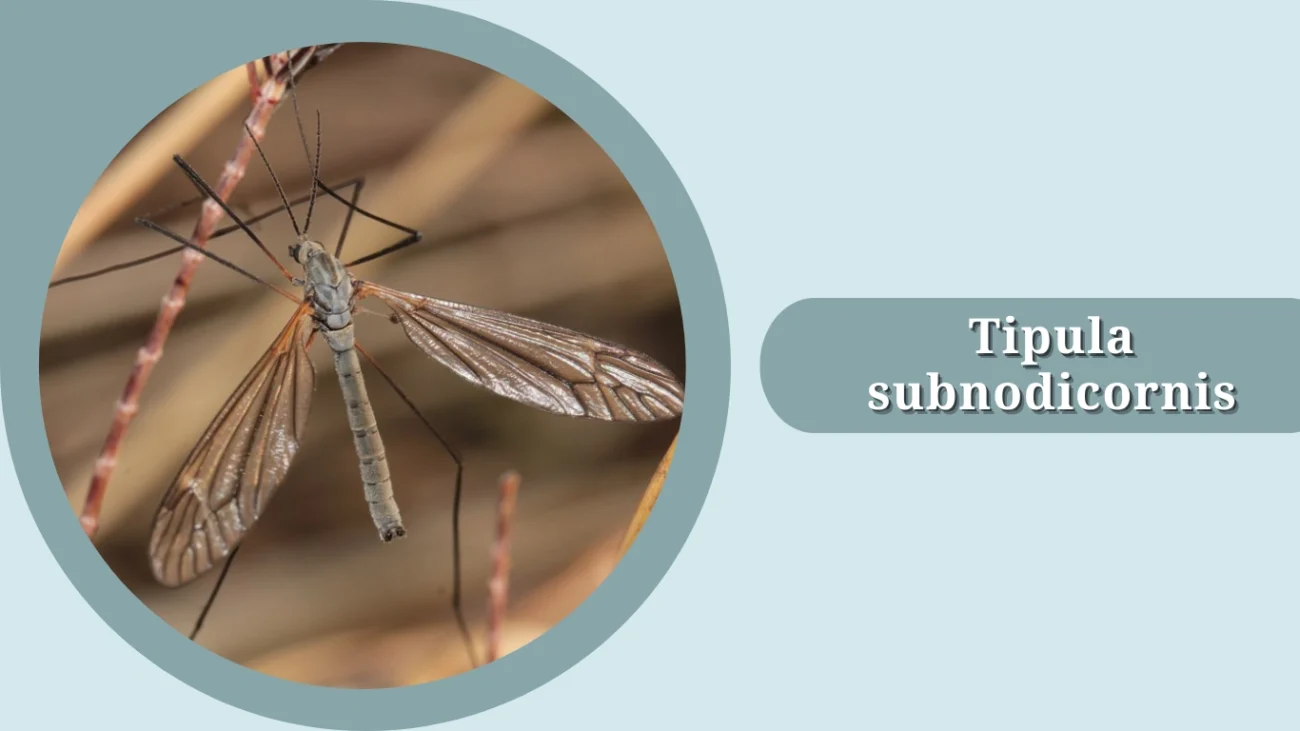
Tipula subnodicornis is a medium-sized crane fly species commonly encountered in grasslands and moist habitats across parts of Europe. It is less well-known than some agricultural pest species but still contributes significantly to soil ecology.
Identification
- Body length typically 12–16 mm
- Brownish-gray body with subtle darker shading
- Wings transparent with clear venation, lacking distinct markings
- Long, thin legs, easily detached when touched
- Antennae segmented, slightly shorter compared to some related species
Habitat
This species favors damp meadows, grassy lowlands, and areas with soft, moist soil. It thrives in places where larvae can burrow easily and feed on organic matter and plant roots.
Behavior
Adults are weak and clumsy in flight, often staying close to grasses and low vegetation. They are most active during late spring and summer and may occasionally be attracted to artificial lights at night.
Diet
Larvae feed primarily on plant roots and decaying vegetation within the soil, which can sometimes cause minor damage to lawns or pastures. Adults do not feed significantly; they survive mostly on energy reserves carried from the larval stage, occasionally sipping water or nectar.
Lifecycle
The life cycle includes egg, larva, pupa, and adult stages. Eggs are laid in damp soil, hatching into larvae (leatherjackets) that develop underground. After pupation in the soil, adults emerge seasonally, living for only a few days with reproduction as their main purpose.
16. Tipula pagana

Tipula pagana is a fairly common crane fly species found across much of Europe. Though not as agriculturally damaging as some species, it is still an important part of the ecosystem due to its soil-dwelling larvae.
Identification
- Body length ranges from 12–17 mm
- Grayish-brown body with faint darker patterns on the thorax
- Wings clear with visible venation, sometimes showing a slight smoky hue
- Long, slender, fragile legs characteristic of crane flies
- Antennae segmented and moderately long
Habitat
This species prefers damp meadows, grassy pastures, woodland edges, and occasionally gardens. It requires moist soils where its larvae can develop properly.
Behavior
Adults are weak fliers and tend to stay near vegetation, often resting on tall grass or low shrubs. They are active in late spring and summer and may appear in noticeable numbers. Attracted to lights at night, they are often confused with large mosquitoes but are harmless.
Diet
The larvae feed mainly on plant roots and decomposing organic matter underground, contributing to nutrient cycling but occasionally causing minor turf damage. Adults do not feed significantly and rely on stored reserves from their larval development, occasionally drinking water or nectar.
Lifecycle
The lifecycle consists of egg, larva, pupa, and adult stages. Eggs are deposited in moist soil, larvae develop through several instars while feeding underground, and pupation occurs in the soil. Adults emerge in late spring or summer, live only for a short time, and reproduce before dying.
17. Tipula pseudovariipennis
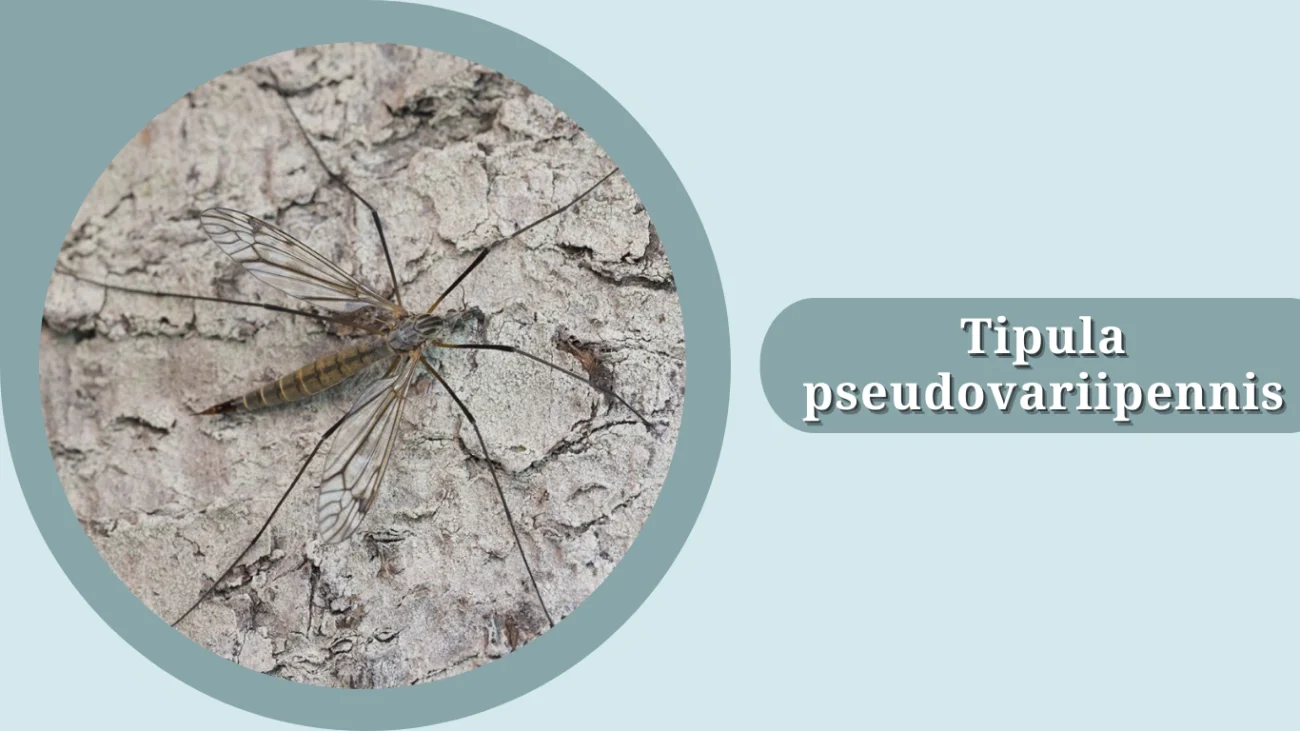
Tipula pseudovariipennis is a lesser-known crane fly species, often confused with closely related members of the genus due to its similar size and wing markings. It is typically found in moist environments across Europe.
Identification
- Body length ranges from 12–16 mm
- Brownish to gray body with subtle darker markings
- Wings transparent with faint venation, sometimes with slight smoky shading
- Long, fragile legs typical of crane flies
- Antennae multi-segmented and moderately long
Habitat
This species is most commonly found in damp meadows, marshy areas, and near woodland edges. The larvae require moist, organic-rich soils to grow and feed successfully.
Behavior
Adults are weak, clumsy fliers and tend to stay near grasses and low vegetation. They are most active in late spring and summer, often seen hovering close to the ground. Like other crane flies, they are attracted to artificial lights but pose no threat to humans.
Diet
Larvae feed on fine plant roots and decomposing vegetation, sometimes causing light damage in grassy areas. Adults generally do not feed, surviving on energy stored during their larval stage, though they may sip water or nectar occasionally.
Lifecycle
The lifecycle includes the four classic stages: egg, larva, pupa, and adult. Eggs are laid in moist soil, larvae develop underground through several instars, and pupation occurs in the soil. Adults emerge in warmer months, live only a few days, and focus on reproduction before dying.
18. Tipula varipennis
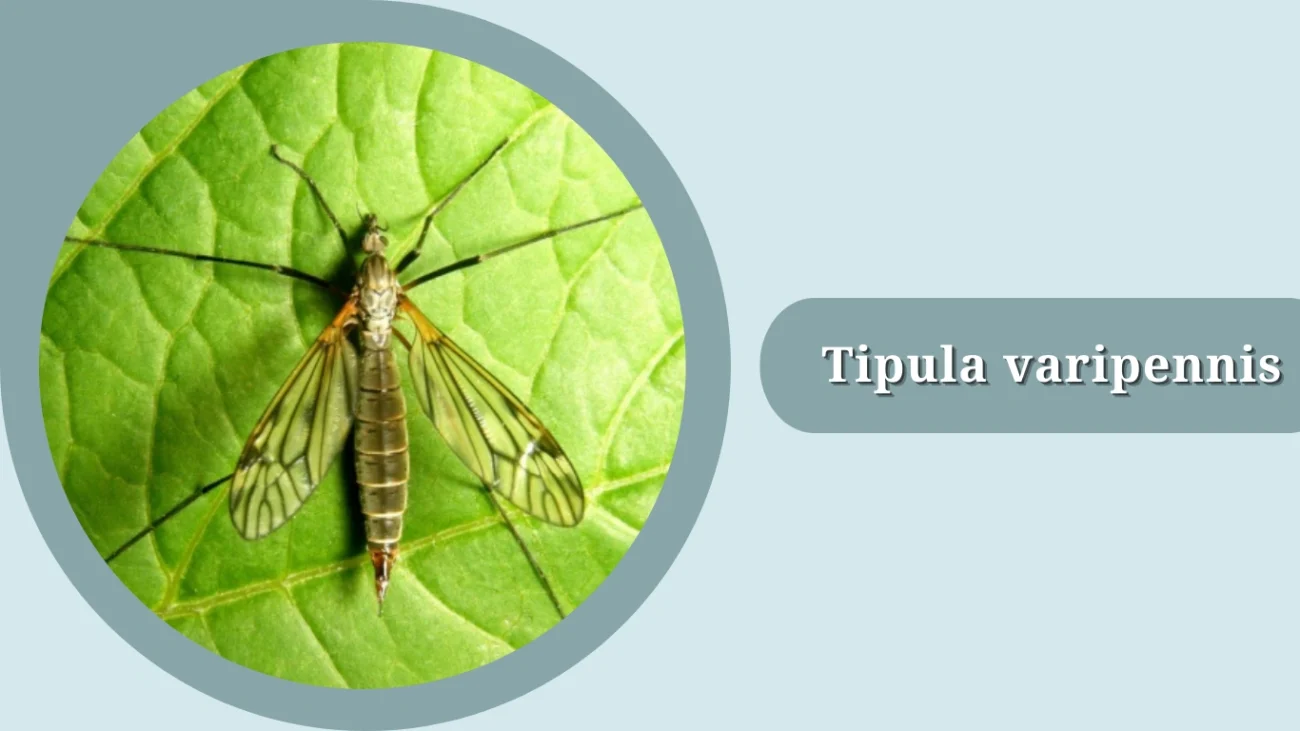
Tipula varipennis is a crane fly species noted for the variable patterning on its wings, which is the origin of its name. It is fairly widespread across Europe, particularly in regions with moist soils and abundant vegetation.
Identification
- Body length typically 12–18 mm
- Brownish-gray body with slender build
- Wings transparent but often showing variable smoky patches or markings
- Long, thin legs that are fragile and easily detached
- Antennae multi-segmented, moderately long
Habitat
This species inhabits damp meadows, wetlands, grassy fields, and woodland edges. It thrives in soils rich in organic matter where its larvae can feed effectively.
Behavior
Adults are weak fliers and usually stay close to vegetation, often resting on tall grass or shrubs. They are most active during late spring and summer and may be seen near lights at night. Despite their appearance, they are harmless and do not bite.
Diet
The larvae feed on decaying vegetation and plant roots in moist soils, contributing to soil nutrient cycling. Adults rarely feed; they survive mostly on stored larval energy, occasionally sipping water or nectar if available.
Lifecycle
The life cycle consists of egg, larva, pupa, and adult. Eggs are deposited in damp soil, hatching into larvae (leatherjackets) that develop underground. Pupation occurs in the soil, and adults emerge seasonally, living only a short time to reproduce before dying.
19. Tipula unca

Tipula unca is a relatively uncommon crane fly species, recognized for its slightly darker body tone and preference for moist, shaded environments. It is one of the many Tipula species that play a role in soil ecosystems while being harmless to humans.
Identification
- Body length typically 12–16 mm
- Dark brown to grayish body with a slender form
- Wings transparent with faint smoky shading
- Long, delicate legs that detach easily
- Antennae segmented and moderately long
Habitat
This species is usually found in damp meadows, marshes, and woodland edges. Moist soils with organic debris provide ideal conditions for larval development.
Behavior
Adults are weak fliers and tend to remain close to low vegetation. They are most active in late spring and summer and may occasionally be attracted to lights at night. Though mosquito-like in appearance, they are entirely harmless.
Diet
The larvae feed on fine roots and decaying plant material in the soil, aiding in decomposition and nutrient recycling. Adults do not feed significantly, relying on stored energy from their larval stage, though they may occasionally sip water or nectar.
Lifecycle
The lifecycle follows the typical crane fly pattern: eggs are laid in moist soils, larvae (leatherjackets) develop through several instars underground, pupation occurs in the soil, and adults emerge in the warmer months. The adult stage is short-lived, lasting only long enough to mate and reproduce.
20. Tipula alpium
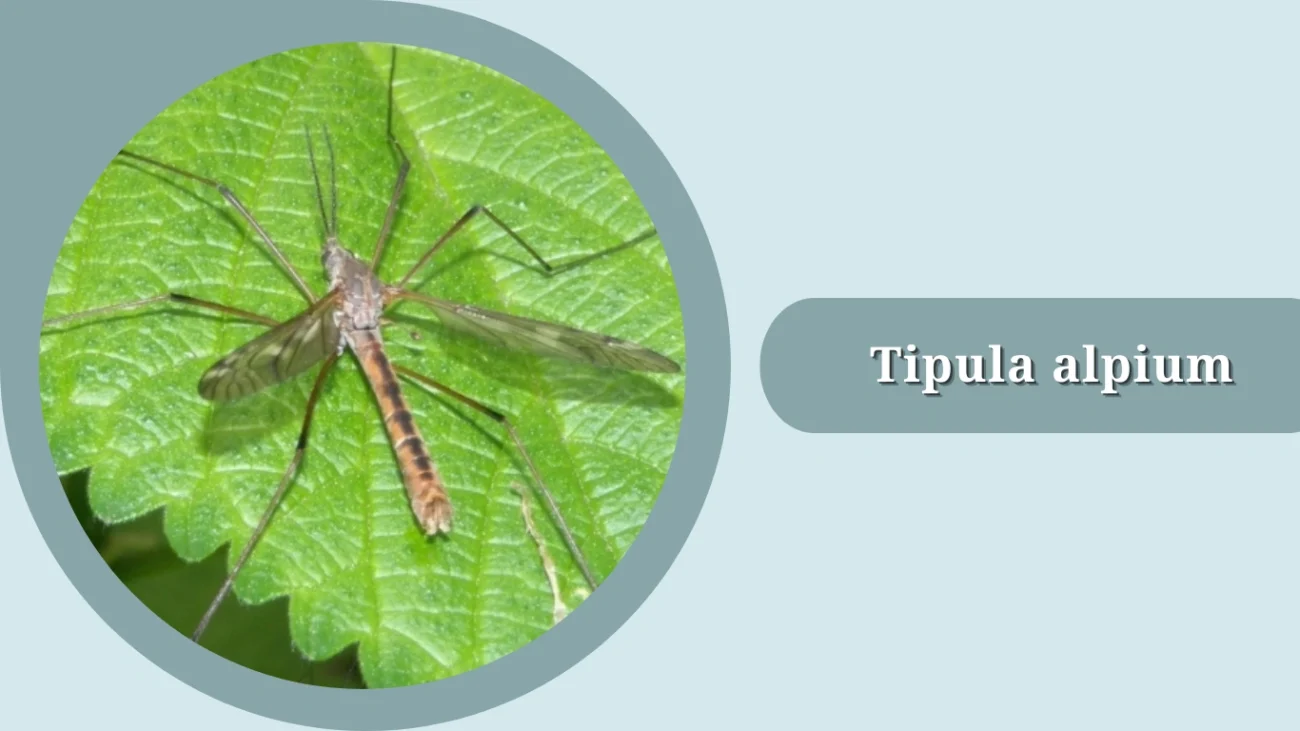
Tipula alpium is a crane fly species associated with higher elevations and cooler climates, as suggested by its name. It is less commonly encountered than many lowland Tipula species but is adapted to mountain meadows and alpine environments.
Identification
- Body length typically 12–17 mm
- Brownish to gray body with slender build
- Wings clear with visible venation, sometimes showing a faint smoky tint
- Long, delicate legs, easily detached when touched
- Antennae multi-segmented, moderately long
Habitat
This species inhabits alpine meadows, mountain slopes, and moist grasslands at higher elevations. It thrives in soils that retain moisture and organic matter, allowing its larvae to develop successfully.
Behavior
Adults are poor fliers, often staying close to the ground and vegetation in cool, shaded environments. They are most active in the warmer months of the alpine season but remain far less conspicuous than lowland crane fly species.
Diet
The larvae feed on plant roots and decomposing vegetation in the soil, contributing to nutrient recycling in alpine ecosystems. Adults feed very little, surviving mostly on reserves from the larval stage, with occasional sips of nectar or water.
Lifecycle
The lifecycle includes egg, larva, pupa, and adult stages. Eggs are laid in damp alpine soils, larvae develop slowly due to cooler temperatures, and pupation occurs within the soil. Adults emerge seasonally in summer, live only a short time, and focus primarily on reproduction.


