Stable flies (Stomoxys species) are blood-feeding insects closely related to house flies but notorious for their painful bites. They infest livestock, wildlife, and sometimes humans, causing irritation, stress, and economic losses in farming communities. Found worldwide, each species has distinct features and ecological preferences. This guide explores 15 types of stable flies, detailing their identification, habitat, behavior, diet, and lifecycle for better understanding and control strategies.
1. Stable Fly (Stomoxys calcitrans)

The stable fly, also known as the biting house fly, is one of the most common and widespread species in the genus Stomoxys. It closely resembles the common house fly but differs in its blood-feeding behavior, making it a major pest for livestock, pets, and humans.
Identification
- Looks similar to a house fly but slightly smaller (about 6–8 mm).
- Distinct forward-projecting piercing mouthparts (proboscis) used for sucking blood.
- Checkerboard pattern visible on the abdomen.
- Dark stripes on the thorax, similar to house flies but less prominent.
Habitat
Stable flies are cosmopolitan and thrive in both rural and urban environments. They are commonly found around livestock facilities, stables, barns, and areas with decaying organic matter mixed with moisture, such as soiled bedding, manure, and compost heaps.
Behavior
Stable flies are aggressive daytime biters. Unlike house flies, they feed exclusively on blood, attacking animals and humans mainly on the legs and lower body. They are persistent and cause irritation, stress, and reduced productivity in livestock.
Diet
Both male and female stable flies feed on blood, which is unusual compared to many other fly species where only females bite. They primarily target cattle, horses, dogs, and humans. They may also feed on wild animals when domestic hosts are scarce.
Lifecycle
The stable fly undergoes complete metamorphosis: egg, larva, pupa, and adult. Females lay eggs in moist decaying organic matter, often mixed with manure. Larvae develop in these substrates, pupating in drier soil or straw. The lifecycle can complete in 3–4 weeks depending on temperature, allowing multiple generations in a year.
2. Lesser Stable Fly (Stomoxys indica)

The lesser stable fly is another blood-feeding species of Stomoxys, often confused with the common stable fly. Although less widespread, it is still a significant pest in tropical and subtropical regions, particularly around livestock.
Identification
- Slightly smaller than the common stable fly (about 5–7 mm).
- Possesses a long, forward-projecting proboscis for blood feeding.
- Abdomen are usually slimmer and less distinctly patterned than S. calcitrans.
- Wings overlap flatly over the abdomen when at rest.
Habitat
This species is most abundant in warmer climates, especially across Asia and Africa. It favors rural and agricultural settings, particularly cattle farms, stables, and areas with rotting vegetation or manure where larvae can develop.
Behavior
Lesser stable flies are also aggressive daytime biters. They mainly attack cattle, buffalo, and horses, typically feeding on the legs and underbelly. Infestations can cause livestock stress, reduced milk yield, and weight loss.
Diet
Both males and females are obligate blood feeders. They prefer large mammals such as cattle and horses but will also feed on humans when livestock hosts are not available.
Lifecycle
The lifecycle is similar to that of the common stable fly. Eggs are laid in moist decomposing organic matter, such as dung mixed with straw or vegetation. Larvae develop through three instar stages before pupating in drier surroundings. Under favorable tropical conditions, development is rapid, with adults emerging in as little as 2–3 weeks.
3. Asian Stable Fly (Stomoxys sitiens)

The Asian stable fly is a blood-feeding species found mainly in tropical and subtropical Asia. It closely resembles the common stable fly but is less widely distributed. This species can be a notable pest of livestock in regions where it occurs.
Identification
- Medium-sized fly, about 6–7 mm long.
- Has a prominent forward-pointing proboscis adapted for piercing skin.
- Abdomen is darker and less distinctly patterned compared to S. calcitrans.
- Wings held flat over the body, slightly longer in proportion than in other Stomoxys species.
Habitat
The Asian stable fly prefers warm, humid climates and is most often encountered around livestock farms, particularly cattle and buffalo rearing areas. It breeds in moist organic matter, especially manure mixed with straw and plant debris.
Behavior
This species is a persistent daytime biter. It typically attacks cattle and buffalo but will bite humans when other hosts are scarce. Its biting behavior causes stress and discomfort in livestock, reducing feeding efficiency and overall productivity.
Diet
Both sexes feed on blood, which is essential for reproduction and survival. The species mainly targets large domesticated animals but may opportunistically bite dogs, wild mammals, and people.
Lifecycle
The Asian stable fly follows a complete metamorphosis: egg, larva, pupa, and adult. Eggs are deposited in moist decaying matter, with larvae developing quickly under tropical conditions. The lifecycle completes in 2–3 weeks during warm seasons, enabling rapid population growth and multiple generations per year.
4. Bengal Stable Fly (Stomoxys bengalensis)

The Bengal stable fly is a lesser-known but regionally significant species of Stomoxys, occurring mainly in South Asia. It is closely related to the common stable fly but shows some morphological differences. Like its relatives, it is an obligate blood feeder and a notable pest of livestock.
Identification
- Slightly smaller than S. calcitrans, measuring around 5–7 mm.
- Has a distinct forward-projecting proboscis used for biting.
- Abdomen is more elongated and darker with faint or less visible markings.
- Thorax has less pronounced striping compared to the common stable fly.
Habitat
This species is typically found in India, Bangladesh, and neighboring regions. It inhabits rural areas where cattle, buffalo, and other livestock are abundant. Breeding sites include moist, decaying vegetation mixed with animal waste, especially around cattle sheds and dung heaps.
Behavior
The Bengal stable fly is an aggressive daytime biter, preferring to attack cattle and buffalo, often on the legs and belly. When abundant, it may also bite humans and cause painful irritation. Infestations can result in livestock stress, lowered productivity, and transmission of pathogens.
Diet
Both males and females feed exclusively on blood. They mainly prefer bovines (cattle and buffalo), but goats, horses, and humans may also serve as hosts. Blood meals are essential for survival and reproduction.
Lifecycle
The lifecycle consists of egg, larva, pupa, and adult stages. Eggs are laid in moist organic substrates enriched with dung and urine-soaked straw. Under tropical conditions, development is fast, with adults emerging in about 2–3 weeks. Several generations occur annually, with peaks during warm and humid seasons.
5. Sub-Saharan Stable Fly (Stomoxys omega)
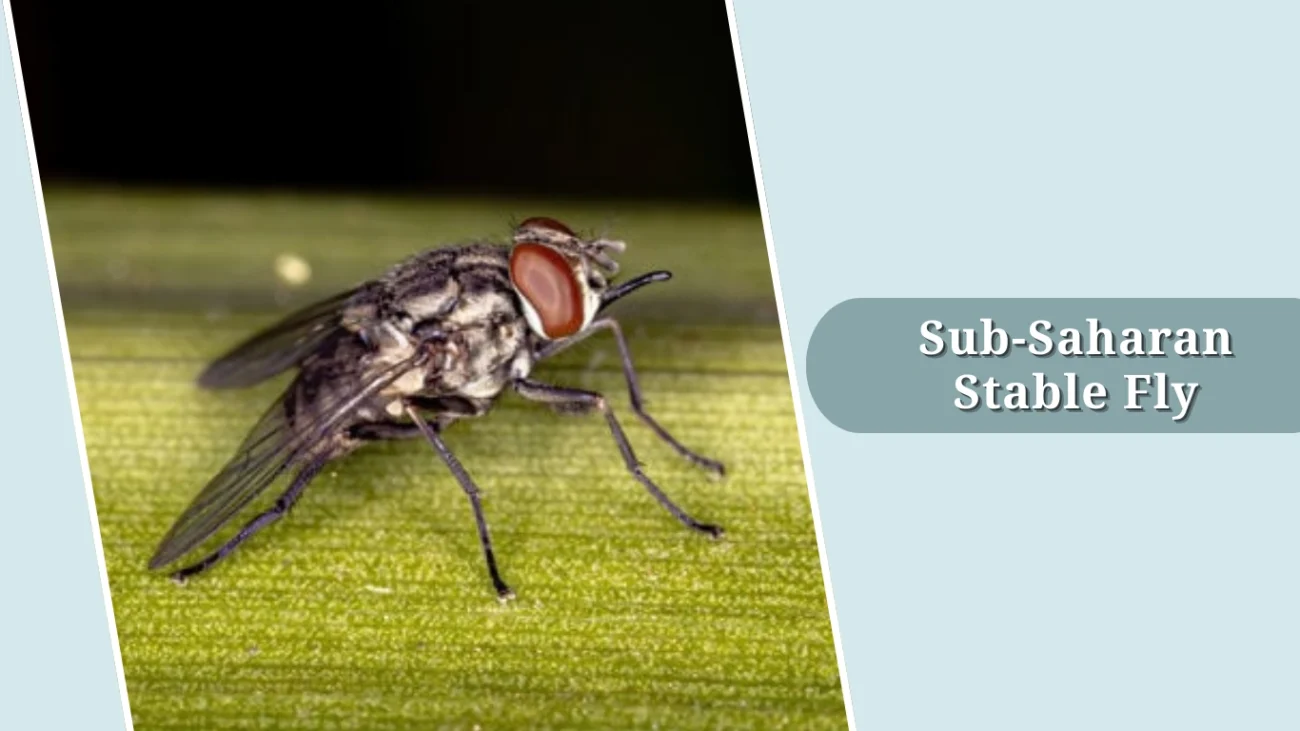
The Sub-Saharan stable fly is a blood-feeding member of the Stomoxys genus, occurring predominantly in Africa. It is closely related to the common stable fly but adapted to warmer, drier environments. It plays a role as both a biting pest and a potential disease vector among livestock.
Identification
- Medium-sized fly, about 6–7 mm long.
- Prominent forward-projecting proboscis, characteristic of Stomoxys species.
- Abdomen usually darker with subtle markings compared to S. calcitrans.
- Distinct wing venation that helps separate it from closely related species.
Habitat
This species is distributed across Sub-Saharan Africa. It thrives in rural areas, particularly around livestock enclosures, watering points, and places with organic waste. Breeding occurs in decaying vegetation mixed with manure or damp soil rich in organic matter.
Behavior
The Sub-Saharan stable fly is an aggressive biter active mainly during daylight hours. It prefers feeding on cattle, goats, and other livestock but will also attack humans when in close proximity. Its biting behavior causes irritation, stress, and economic losses in farming communities.
Diet
Both male and female flies are obligate blood feeders. They primarily target cattle and goats but can also bite other domestic and wild mammals, as well as humans.
Lifecycle
The lifecycle follows the complete metamorphosis of egg, larva, pupa, and adult. Eggs are laid in moist decaying matter, often near livestock facilities. Development is influenced by environmental conditions, with warmer climates favoring faster generation times. Multiple generations occur annually, especially during rainy seasons.
6. Tropical Stable Fly (Stomoxys uruma)

The tropical stable fly is a blood-sucking species within the Stomoxys genus, primarily found in warm and humid regions. It is less studied than the common stable fly but is still recognized as a pest of livestock in tropical environments.
Identification
- Small to medium-sized fly, about 5–7 mm long.
- Possesses a strong, forward-pointing proboscis for piercing skin.
- Abdomen typically darker with subtle banding, less distinct than in S. calcitrans.
- Wings rest flat over the abdomen, slightly translucent with visible venation.
Habitat
This species is most common in tropical Asia and other warm, humid regions. It thrives in livestock-dense environments, particularly cattle farms, stables, and rural areas where moist organic waste accumulates.
Behavior
Tropical stable flies are aggressive daytime feeders. They mainly attack cattle and buffalo but also bite horses, goats, and humans. Their persistence causes considerable stress in animals, leading to decreased milk yield, weight loss, and general discomfort.
Diet
Both male and female flies are obligate blood feeders. They favor large domestic animals but opportunistically feed on humans and smaller mammals when available.
Lifecycle
The lifecycle follows complete metamorphosis: egg, larva, pupa, and adult. Eggs are laid in damp, decomposing plant material and animal waste mixtures. Development is rapid in tropical conditions, with adults emerging in 2–3 weeks. Multiple generations occur annually, often peaking during rainy seasons.
7. Madagascar Stable Fly (Stomoxys niger niger)

The Madagascar stable fly is a darker variant of the Stomoxys genus, primarily distributed in Madagascar and surrounding regions. It is known for its distinct dark coloration and biting habits, which make it a significant pest for livestock and occasionally humans.
Identification
- Medium-sized fly, about 6–8 mm long.
- Distinctively dark body and abdomen compared to other Stomoxys species.
- Forward-projecting proboscis for blood feeding.
- Thorax often shows faint striping but appears darker overall.
Habitat
As its name suggests, this species is native to Madagascar but can also be found in nearby African regions. It inhabits areas around livestock enclosures, barns, and rural settlements. Breeding occurs in moist, decaying vegetation mixed with animal waste.
Behavior
The Madagascar stable fly is a persistent daytime biter, primarily targeting cattle, goats, and other livestock. Its dark body may provide some adaptation to local environmental conditions. Like other Stomoxys species, it causes irritation and stress in animals.
Diet
Both male and female flies are blood feeders. They prefer large domesticated mammals such as cattle and goats but may also bite humans when in close contact.
Lifecycle
The lifecycle includes egg, larva, pupa, and adult stages. Females deposit eggs in moist organic matter enriched with animal waste. Development is relatively quick under warm, humid conditions, with adults emerging in about 2–3 weeks. Multiple generations can occur within a single year.
8. Black Stable Fly (Stomoxys niger bilineatus)

The black stable fly is a dark-colored subspecies within the Stomoxys group, closely related to Stomoxys niger niger. It is recognized by its distinct black body and characteristic markings. Like other stable flies, it is an obligate blood feeder and a notable pest of livestock.
Identification
- Medium-sized fly, about 6–7 mm long.
- Predominantly black body with two faint longitudinal lines on the thorax (hence the name bilineatus).
- Forward-projecting proboscis specialized for piercing skin and sucking blood.
- Wings rest flat over the abdomen, which appears darker than in most other Stomoxys species.
Habitat
This species is distributed mainly in parts of Africa and Madagascar. It is often found near cattle farms, barns, and rural areas where animal waste accumulates. It breeds in moist organic matter, particularly manure mixed with decomposing vegetation.
Behavior
The black stable fly is a persistent daytime biter. It prefers feeding on cattle and goats but will also bite humans when in close proximity. Its aggressive feeding behavior causes irritation and stress in livestock, reducing productivity.
Diet
Both sexes feed exclusively on blood. They mainly target bovines but also feed on other large mammals and, occasionally, humans.
Lifecycle
The lifecycle follows complete metamorphosis: egg, larva, pupa, and adult. Eggs are laid in damp, decomposing substrates enriched with animal waste. Under favorable warm conditions, development takes 2–3 weeks, allowing multiple generations annually.
9. Dark Stable Fly (Stomoxys inornatus)

The dark stable fly is a lesser-known species within the Stomoxys genus. As its name suggests, it has a generally darker body and fewer distinct markings compared to more common species like S. calcitrans. It remains a biting pest of livestock in regions where it occurs.
Identification
- Medium-sized fly, approximately 6–7 mm long.
- Darker overall appearance with reduced or faint abdominal markings.
- Possesses a prominent forward-pointing proboscis for blood feeding.
- Thoracic striping is less distinct than in S. calcitrans.
Habitat
This species is found in tropical and subtropical regions, particularly in areas with livestock. It prefers rural settings, thriving around cattle farms, stables, and areas where moist organic matter mixed with manure provides suitable breeding grounds.
Behavior
The dark stable fly is an aggressive daytime feeder, attacking mainly cattle and horses but also capable of biting humans. Like other stable flies, its bites are painful and persistent, leading to stress and reduced productivity in livestock.
Diet
Both male and female flies are obligate blood feeders. Their primary hosts include cattle, horses, and goats, though they will opportunistically feed on humans and wild animals when available.
Lifecycle
The lifecycle is similar to other Stomoxys species, consisting of egg, larva, pupa, and adult. Eggs are deposited in decaying organic matter enriched with animal waste. Development is influenced by temperature and humidity, typically completing in 2–3 weeks in warm conditions. Several generations may occur annually.
10. Pale Stable Fly (Stomoxys pallidus)

The pale stable fly is a lighter-colored member of the Stomoxys genus. Unlike the darker relatives, this species has a paler body, which helps distinguish it from others. It is an obligate blood feeder and can cause irritation to livestock in areas where it is present.
Identification
- Medium-sized fly, about 6–7 mm long.
- Lighter, pale-colored body compared to most other Stomoxys species.
- Forward-pointing proboscis used for piercing and sucking blood.
- Abdomen shows faint or reduced checkerboard patterns.
- Thoracic stripes are less distinct but still visible.
Habitat
The pale stable fly is generally found in warmer, drier environments where its coloration provides better adaptation. It thrives in agricultural and rural areas, especially near livestock farms, stables, and sites with decomposing organic matter.
Behavior
This species is a persistent daytime feeder, primarily targeting cattle, goats, and horses. It is highly aggressive during warm hours of the day, often biting the legs and underbelly of livestock. When livestock hosts are limited, it will also feed on humans.
Diet
Both males and females require blood meals. Preferred hosts are large mammals such as cattle and horses, but smaller domestic animals and humans are also bitten when nearby.
Lifecycle
The pale stable fly undergoes complete metamorphosis: egg, larva, pupa, and adult. Eggs are laid in moist decaying plant matter and manure. Under favorable conditions, the development cycle may complete within 2–3 weeks, leading to rapid increases in population during warmer months.
11. Philippine Stable Fly (Stomoxys pullus)

The Philippine stable fly is a blood-feeding species primarily distributed in the Philippines and neighboring regions of Southeast Asia. Like other Stomoxys species, it is a persistent pest of livestock and can occasionally bite humans.
Identification
- Medium-sized fly, about 6–7 mm long.
- Possesses a strong, protruding proboscis for piercing skin and feeding on blood.
- Abdomen darker with faint or reduced checkerboard patterns.
- Wings rest flat and extend slightly beyond the abdomen.
Habitat
This species is most commonly found in the Philippines and nearby tropical regions. It thrives in humid agricultural areas, particularly where livestock are raised. Breeding grounds include moist organic waste, manure mixed with straw, and decaying vegetation.
Behavior
Philippine stable flies are aggressive daytime feeders. They primarily attack cattle and carabaos (water buffalo), but also bite goats, horses, and humans. Their painful bites disturb livestock, reducing productivity and causing stress.
Diet
Both males and females require blood meals for survival and reproduction. Preferred hosts include large domesticated animals such as cattle and buffalo, though humans and other mammals may also be targeted when present.
Lifecycle
The lifecycle follows complete metamorphosis: egg, larva, pupa, and adult. Eggs are laid in moist organic matter enriched with manure. Under tropical conditions, development is rapid, with adults emerging in about 2–3 weeks. Multiple generations can occur year-round due to the consistently warm and humid climate.
12. African Stable Fly (Stomoxys transvittatus)

The African stable fly is a region-specific species of Stomoxys found mainly across parts of Africa. It is less widespread than the common stable fly but remains a notable pest of livestock due to its blood-feeding behavior.
Identification
- Medium-sized fly, around 6–7 mm in length.
- Equipped with a prominent forward-pointing proboscis for piercing skin.
- Abdomen darker with subtle, sometimes indistinct markings.
- Thorax typically bears a transverse marking or faint striping, which gives the species its name (transvittatus = “cross-banded”).
Habitat
This species occurs primarily in Sub-Saharan Africa, particularly in rural areas where livestock are abundant. It is often found around cattle enclosures, watering points, and sites with decomposing vegetation mixed with manure.
Behavior
African stable flies are aggressive daytime feeders, preferring to bite cattle, goats, and horses. They typically attack the lower body, legs, and belly of animals, causing irritation and stress. When abundant, they may also bite humans.
Diet
Both male and female flies are obligate blood feeders. Their preferred hosts are large mammals such as cattle and goats, but they also feed opportunistically on other livestock and humans.
Lifecycle
The lifecycle is similar to other Stomoxys species. Eggs are deposited in damp organic matter such as manure mixed with straw or rotting vegetation. Development to adulthood usually takes 2–3 weeks under warm conditions. Multiple overlapping generations occur annually, with population peaks during rainy or humid seasons.
13. Coastal Stable Fly (Stomoxys calcitrans var. littoralis)

The coastal stable fly is a variant of the common stable fly (Stomoxys calcitrans), adapted to coastal habitats. It is often found in beachside environments and near fishing communities, where it breeds in decaying seaweed and organic matter.
Identification
- Similar in size to the common stable fly, about 6–8 mm.
- Forward-projecting proboscis for piercing and sucking blood.
- Abdomen shows a checkerboard-like pattern, though sometimes less distinct due to sandy environments.
- Wings are clear and rest flat over the abdomen.
Habitat
Unlike most stable flies, this variety thrives in coastal areas. It is commonly found on beaches, estuaries, and near fishing villages. Breeding occurs in rotting seaweed, fish remains, and other decaying coastal organic matter mixed with moisture.
Behavior
Coastal stable flies are persistent daytime biters. They attack both humans and animals, particularly along beaches, making them a nuisance in coastal communities. They are known to swarm during peak breeding times, causing significant discomfort.
Diet
Both male and female flies are obligate blood feeders. They feed on cattle, horses, dogs, and humans, especially in coastal villages where livestock and people are in close proximity.
Lifecycle
The lifecycle mirrors that of the common stable fly. Eggs are laid in moist organic debris, especially rotting seaweed and fish waste. Larvae develop quickly under warm, humid coastal conditions, completing the cycle in 2–3 weeks. Multiple generations occur year-round in tropical and subtropical coastal zones.
14. Indian Stable Fly (Stomoxys indicus)

The Indian stable fly is a species of Stomoxys commonly found in the Indian subcontinent. It closely resembles the common stable fly but is regionally restricted. It is an important pest of livestock in rural and agricultural areas.
Identification
- Medium-sized fly, about 6–7 mm in length.
- Possesses a strong, elongated proboscis for piercing skin and sucking blood.
- Abdomen slightly elongated with less distinct checkerboard markings than S. calcitrans.
- Thorax bears faint stripes but generally less pronounced.
Habitat
This species is distributed primarily across India, Pakistan, Bangladesh, and surrounding regions. It thrives in livestock-rich environments such as cattle farms, rural settlements, and stables. Breeding occurs in moist organic matter, particularly manure mixed with straw, crop residue, or other decomposing vegetation.
Behavior
The Indian stable fly is an aggressive biter active mainly during the day. It typically attacks cattle and buffalo, but will also bite goats, horses, and humans when nearby. Persistent feeding causes irritation, leading to stress and lowered productivity in livestock.
Diet
Both males and females are obligate blood feeders. Their preferred hosts are large domesticated animals, especially cattle and buffalo, but they can also feed on humans and other mammals when available.
Lifecycle
The lifecycle follows complete metamorphosis: egg, larva, pupa, and adult. Eggs are laid in moist decaying organic matter, often near cattle shelters. Development can be completed in 2–3 weeks in warm tropical conditions, resulting in multiple overlapping generations throughout the year.
15. Bush Stable Fly (Stomoxys taeniatus)

The bush stable fly is a species of Stomoxys often associated with more natural and wooded habitats compared to the common stable fly. While not as widespread or well-studied, it is still recognized as a biting pest of both livestock and wildlife.
Identification
- Medium-sized fly, approximately 6–7 mm long.
- Forward-projecting proboscis adapted for blood feeding.
- Abdomen tends to be darker, with faint or streak-like markings (hence the name taeniatus = “striped”).
- Wings are held flat across the abdomen when at rest.
Habitat
Unlike most stable flies that thrive in farm environments, the bush stable fly is often found in semi-natural and bushy areas. It breeds in moist, decaying vegetation, animal droppings, and organic matter in forest margins or rural grasslands.
Behavior
Bush stable flies are persistent daytime feeders. They bite cattle, horses, and goats, and are also known to attack wildlife in bushy areas. When humans pass through infested regions, they may also become targets.
Diet
Both males and females feed exclusively on blood. While domestic livestock are frequent hosts, this species is also adapted to feeding on wild mammals in bushland areas.
Lifecycle
The lifecycle consists of egg, larva, pupa, and adult stages. Eggs are laid in moist organic matter, often in shaded bush environments. The development time varies with climate, usually 2–3 weeks in warm, humid conditions. Several generations occur annually, especially in wet seasons.