

Gall midges are tiny flies belonging to the family Cecidomyiidae, many of which are notorious plant pests. Despite their small size, they cause significant agricultural and horticultural damage by inducing galls or deformities on leaves, stems, flowers, and pods. Each species has a preferred host plant and unique lifecycle pattern. In this guide, we explore 15 common types of gall midges, highlighting their identification, habitat, behavior, and lifecycle.
1. Apple Leaf Midge (Dasineura mali)
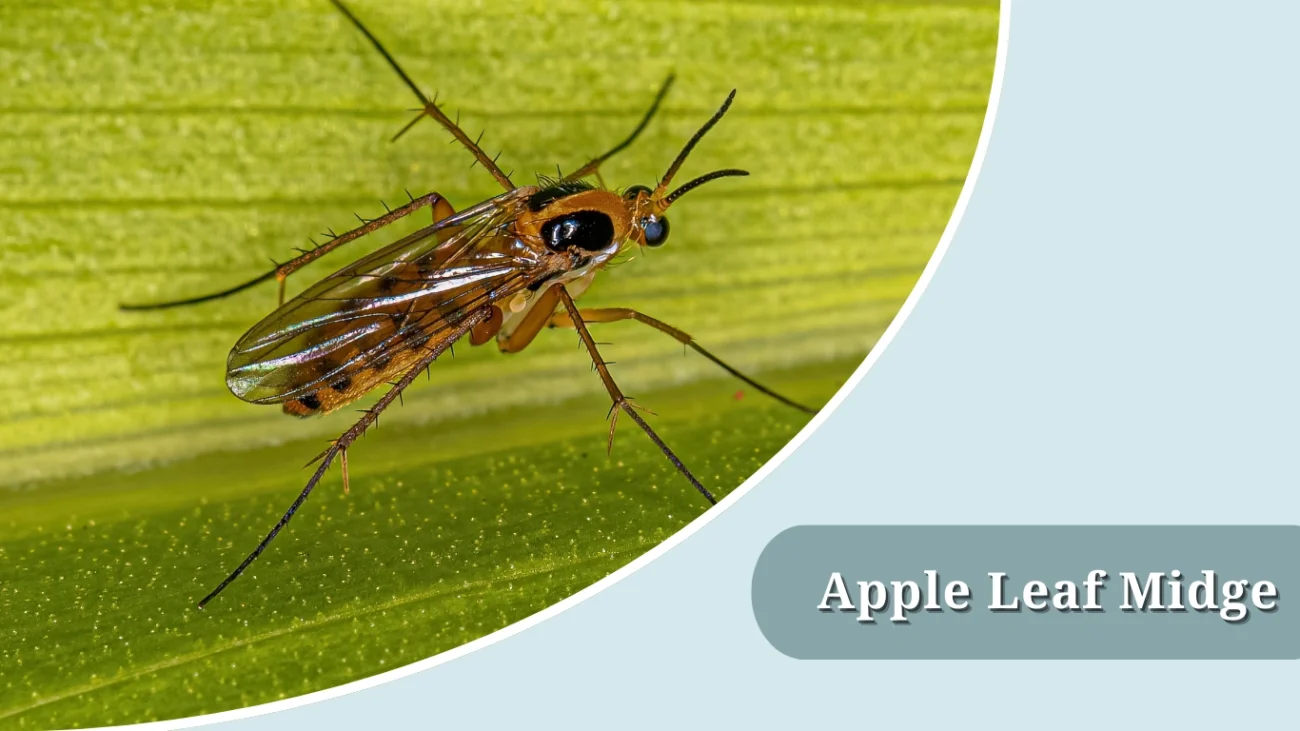
The Apple Leaf Midge is a small fly belonging to the Cecidomyiidae family, known for its ability to cause curling and distortion of apple tree leaves. It is a notable pest in apple orchards worldwide, especially where young trees and saplings are grown.
Identification
- Tiny fly, usually 2–3 mm in length
- Slender body with long legs and antennae
- Larvae are small, yellow to orange maggots
- Adults are delicate and mosquito-like in appearance
- Damage is most visible as curled and crinkled apple leaves
Habitat
This species primarily inhabits apple orchards and surrounding environments where host trees are present. It thrives in temperate regions and can persist in both commercial orchards and backyard gardens.
Behavior
Apple Leaf Midges lay eggs on the undersides of young apple leaves. Once hatched, the larvae feed inside the leaf tissue, causing distortion. Infestations weaken trees, reduce photosynthesis, and may slow down growth, especially in young plants.
Lifecycle
The lifecycle includes egg, larva, pupa, and adult stages. Several generations may occur per year, depending on the climate. The insect overwinters as a pupa in the soil, with adults emerging in spring to start new infestations.
2. Redcurrant Blossom Midge (Dasineura tetensi)

The Redcurrant Blossom Midge is a pest of currant plants, especially redcurrants and blackcurrants. It causes damage by attacking young flower clusters, often reducing fruit yield significantly.
Identification
- Small fly, about 2 mm long
- Delicate, mosquito-like adult with long antennae
- Larvae are tiny, pale orange to yellow maggots
- Infested flowers wither, shrivel, and fail to set fruit
Habitat
This species is commonly found in currant plantations and gardens across Europe and other temperate regions. It prefers areas with dense currant growth and thrives where currants are grown year after year.
Behavior
Adult females lay eggs inside the flower buds of redcurrants or blackcurrants. The larvae feed within the flowers, causing them to wilt and drop prematurely. Heavy infestations can destroy most of a season’s blossoms, resulting in very poor yields.
Lifecycle
The Redcurrant Blossom Midge has multiple generations per year. It overwinters in the soil as pupae, emerging in spring to coincide with currant flowering. New generations continue through the fruiting season, making management difficult without timely control.
3. Wheat Blossom Midge (Sitodiplosis mosellana)
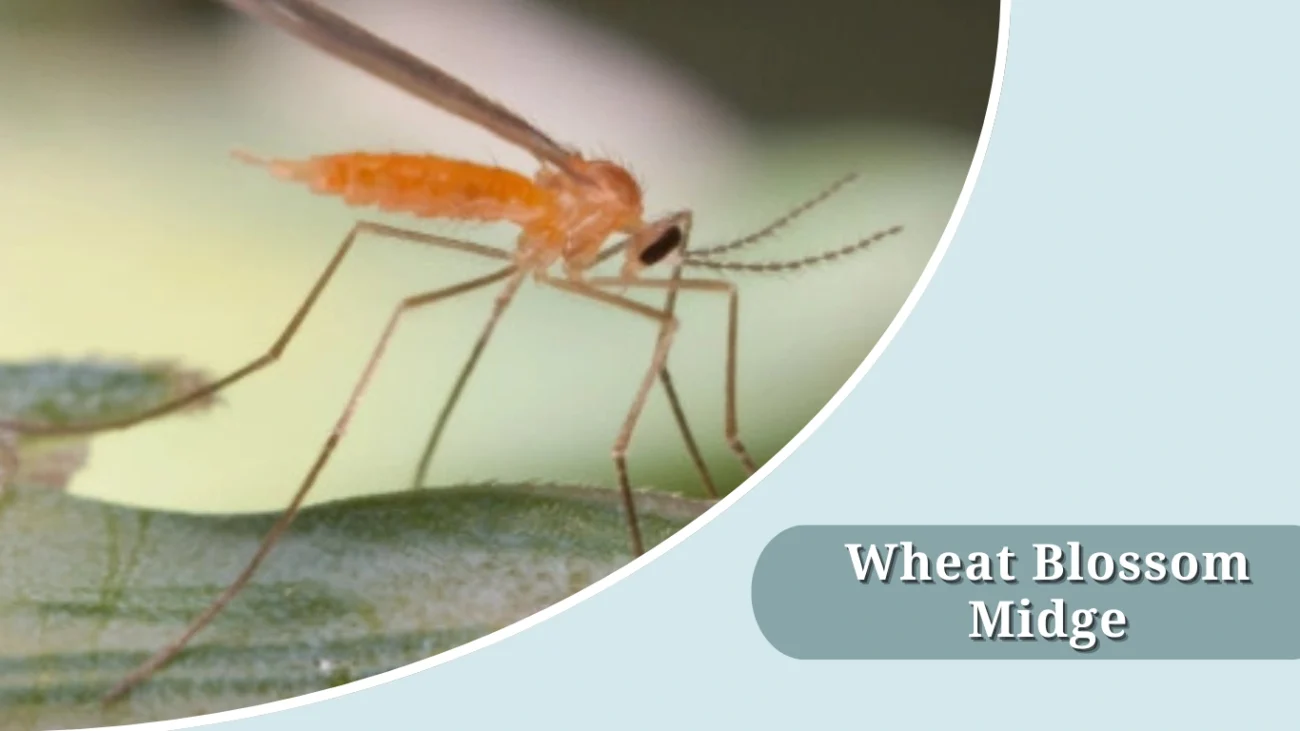
The Wheat Blossom Midge is a major agricultural pest that attacks wheat crops, particularly during the flowering stage. Its larvae damage developing grains, leading to significant yield loss if left uncontrolled.
Identification
- Very small fly, around 2 mm in length
- Adults are orange-colored with long legs and delicate wings
- Larvae are bright orange, worm-like maggots
- Damage appears as shriveled or empty wheat kernels
Habitat
This species is mainly associated with wheat fields in temperate regions of Europe, North America, and Asia. It is particularly problematic in areas with moist and mild spring weather, which favors adult emergence and egg laying.
Behavior
Females lay eggs on wheat florets during the evening hours when conditions are humid. The larvae feed on developing wheat kernels, reducing grain weight and quality. Severe infestations may cause large economic losses for farmers.
Lifecycle
The lifecycle involves egg, larva, pupa, and adult stages. Pupae overwinter in the soil within protective cocoons. Adults emerge in late spring to early summer, synchronized with wheat flowering. There is typically one generation per year, but weather conditions influence population size.
4. Barley Midge (Mayetiola hordei)
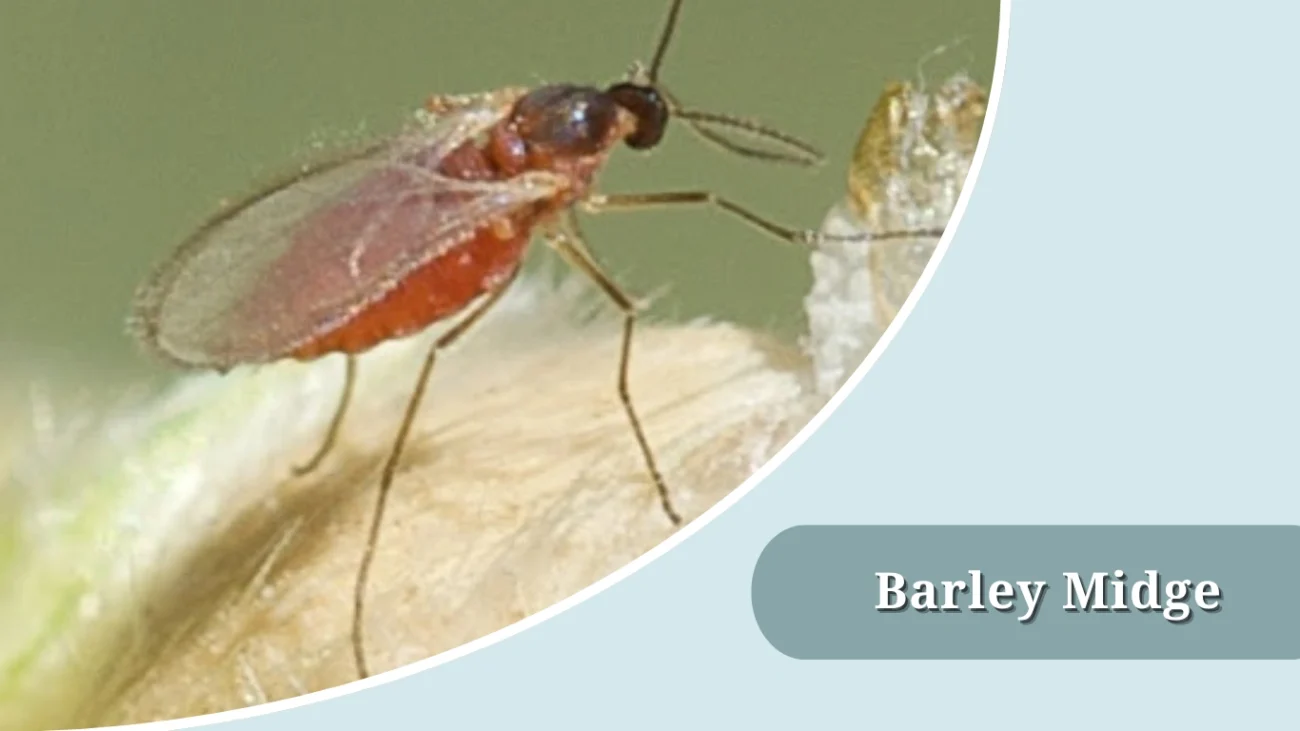
The Barley Midge is a destructive pest that primarily targets barley crops, causing damage to young shoots and reducing yield potential. It is closely related to the Hessian fly, which attacks wheat.
Identification
- Tiny fly, about 2–3 mm in length
- Adults resemble small mosquitoes with long legs
- Larvae are whitish to yellowish maggots
- Infested plants show stunted growth and weak stems
Habitat
This species is found in barley fields across various cereal-growing regions, especially in Europe, North Africa, and the Middle East. It thrives in agricultural areas where barley is cultivated extensively.
Behavior
Female midges lay eggs on young barley seedlings or shoots. The larvae burrow into plant tissue, feeding on the stems and bases of leaves. This disrupts plant growth, causing weakened stems and reduced grain production.
Lifecycle
The Barley Midge undergoes egg, larva, pupa, and adult stages. Larvae overwinter in crop debris or soil, then pupate in spring. Adults emerge to infest new barley crops, often producing more than one generation per season in favorable climates.
5. Pear Leaf Midge (Dasineura pyri)
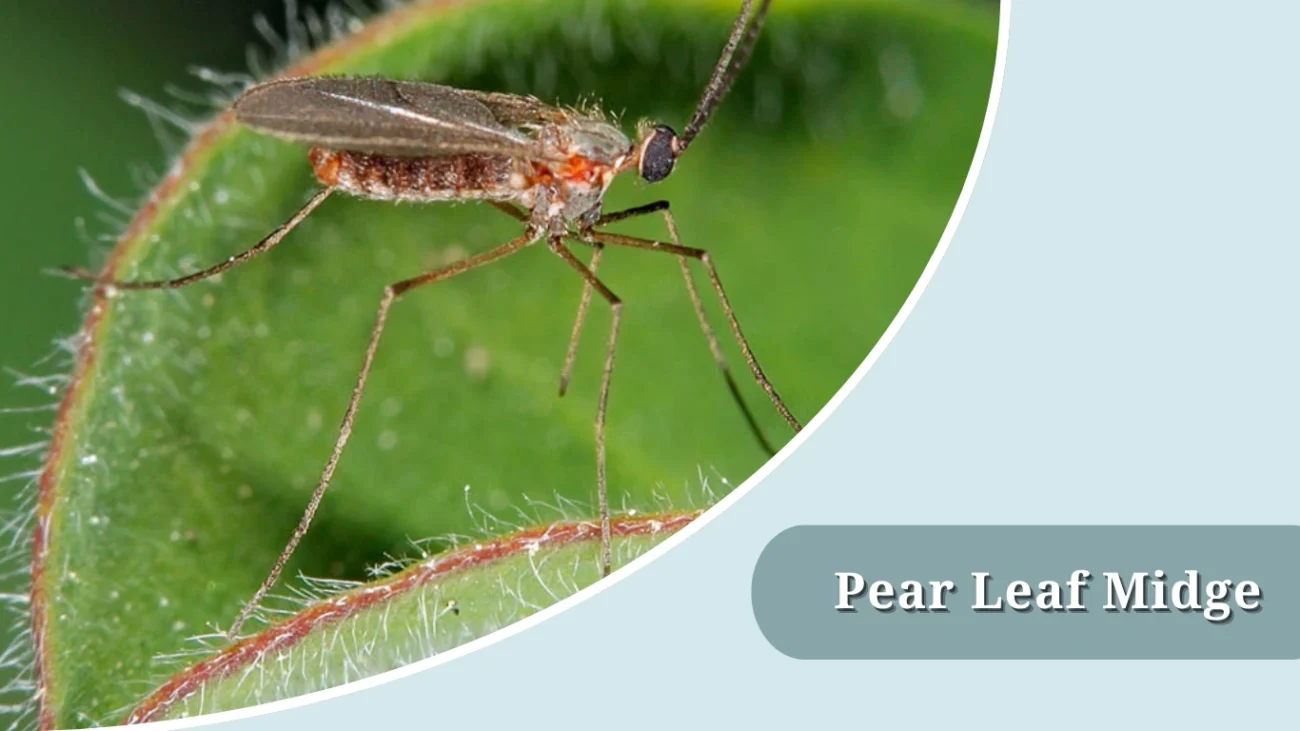
The Pear Leaf Midge is a pest that specifically targets pear trees, feeding on their leaves and causing curling and distortion. Young trees are especially vulnerable, as heavy infestations can hinder proper growth.
Identification
- Very small fly, about 2 mm long
- Slender body, mosquito-like appearance
- Larvae are yellow to orange in color
- Infested pear leaves curl, blister, and may drop prematurely
Habitat
This midge is commonly found in pear orchards and gardens in temperate regions of Europe and Asia. It thrives in environments where pears are grown continuously and can persist from season to season.
Behavior
Adult females lay eggs on the undersides of young pear leaves. The larvae feed within the leaf tissue, causing distortion and blister-like damage. High infestations weaken trees and reduce their vigor, making them more susceptible to other pests and diseases.
Lifecycle
The Pear Leaf Midge passes through egg, larva, pupa, and adult stages. Pupae overwinter in the soil, and adults emerge in spring. Several generations can occur in one growing season, with populations building up rapidly if not managed.
6. Blackcurrant Leaf Midge (Dasineura ribis)
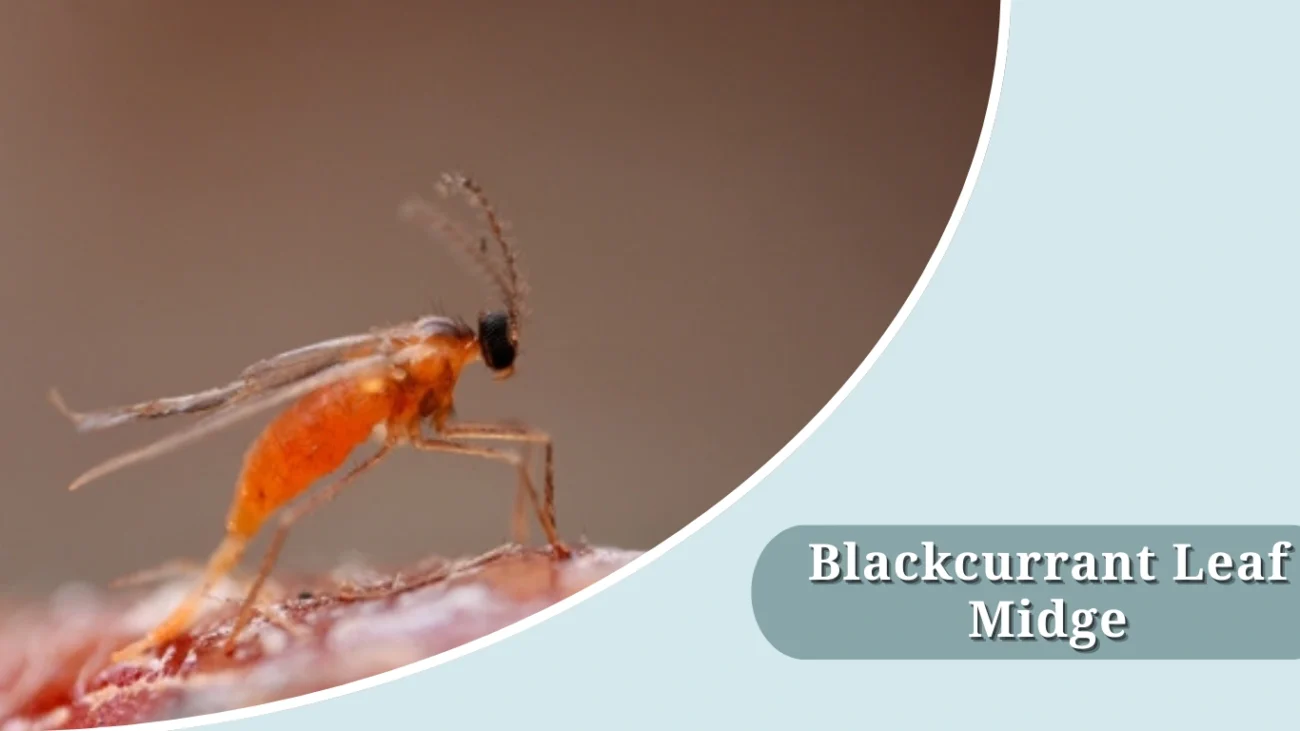
The Blackcurrant Leaf Midge is a pest of currant plants, especially blackcurrants, where its larvae feed on young foliage, leading to leaf damage and weakening of plants.
Identification
- Tiny adult fly, about 2 mm in length
- Slender and delicate, resembling a small mosquito
- Larvae are pale orange maggots
- Infested leaves appear distorted, curled, or torn at the edges
Habitat
This species is mainly associated with blackcurrant plantations and gardens in Europe and other temperate regions. It thrives in areas with dense currant growth and where currant crops are grown year after year.
Behavior
Female midges lay eggs along the margins of newly emerged blackcurrant leaves. The larvae feed on soft leaf tissue, which results in curling, distortion, and in some cases, premature leaf drop. Heavy infestations can stunt plant growth and reduce berry yield.
Lifecycle
The Blackcurrant Leaf Midge has several generations per year. It overwinters in the soil as pupae, emerging in spring. New generations continue through the growing season, allowing populations to build quickly if left uncontrolled.
7. Sorghum Midge (Stenodiplosis sorghicola)
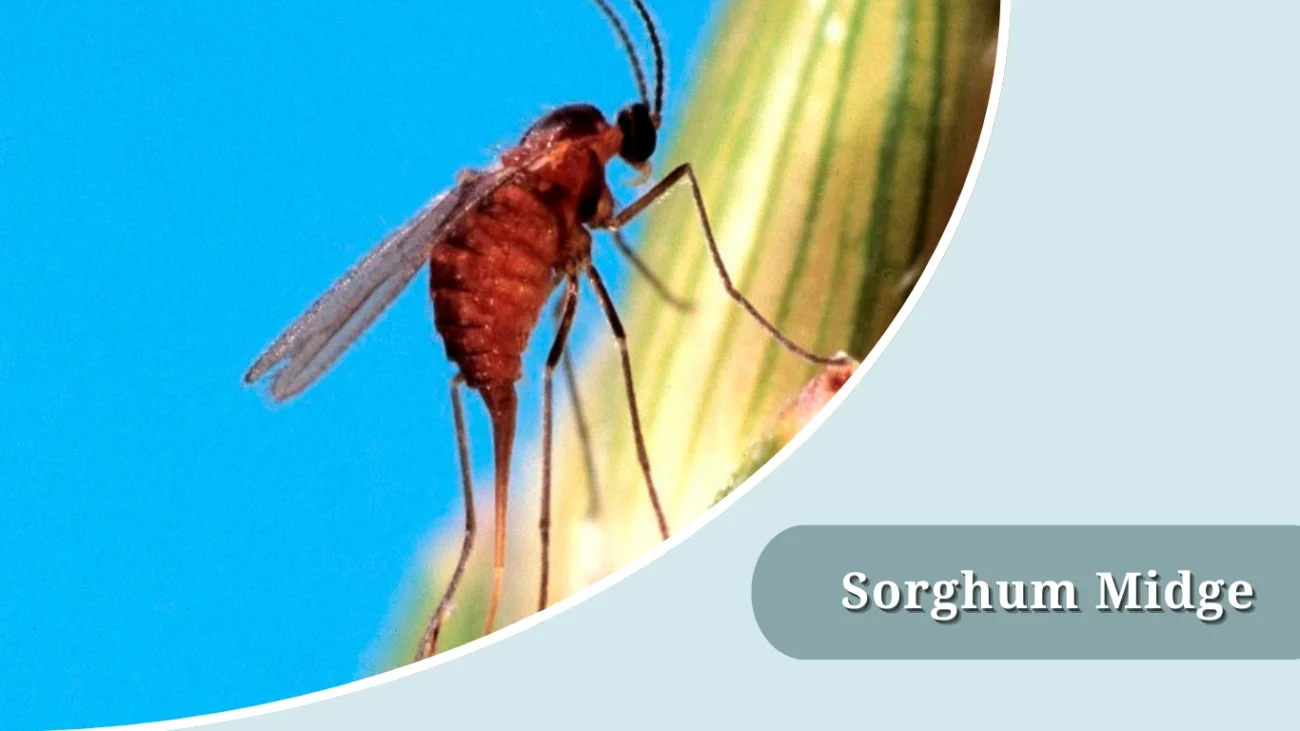
The Sorghum Midge is a serious pest of sorghum crops worldwide, especially in warm, tropical, and subtropical regions. Its larvae feed inside developing sorghum florets, reducing grain formation and yield.
Identification
- Small orange-red fly, about 1.5–2 mm in length
- Transparent wings held flat over the body
- Larvae are tiny, reddish-orange maggots
- Damage appears as empty or partially filled sorghum grains
Habitat
This midge thrives in sorghum fields across Africa, Asia, Australia, and the Americas. It is particularly problematic in hot, humid climates where sorghum is a staple crop.
Behavior
Adult females lay eggs in freshly opened sorghum florets. The larvae develop within the florets, feeding on developing grains and preventing seed set. Infestations can cause significant yield losses, especially in late-planted crops.
Lifecycle
The lifecycle includes egg, larva, pupa, and adult stages. Adults emerge in synchrony with sorghum flowering, and multiple generations occur during a growing season. The insect overwinters in crop residues or alternative host grasses.
8. Spruce Gall Midge (Mayetiola piceae)
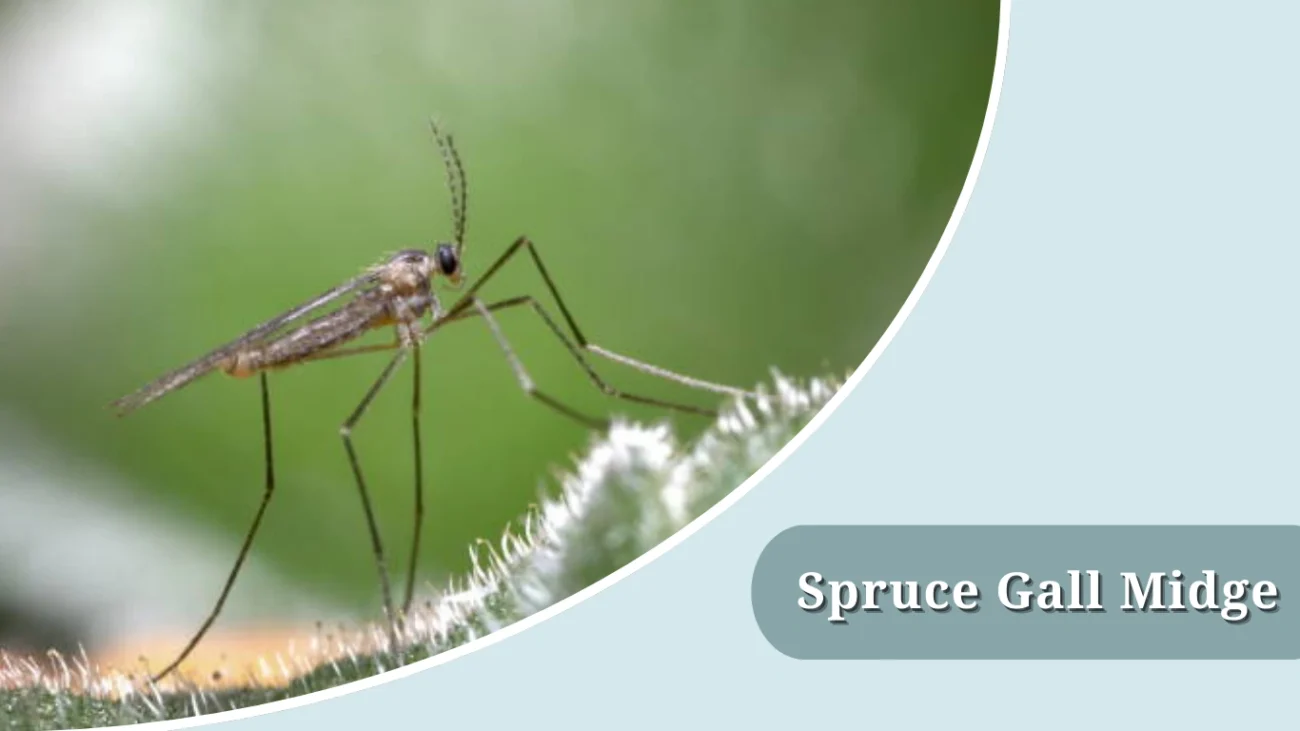
The Spruce Gall Midge is a pest of spruce trees, where its larvae induce gall formation on young shoots. These galls disrupt growth and can reduce the aesthetic and commercial value of spruce in forestry and landscaping.
Identification
- Very small fly, around 2 mm long
- Adults are delicate, mosquito-like insects
- Larvae are whitish to pale yellow maggots
- Infested shoots develop swollen, gall-like deformities
Habitat
This species is mainly found in spruce forests and plantations across North America and Europe. It prefers young spruce stands and ornamental trees planted in parks or gardens.
Behavior
Females lay eggs on young spruce shoots. After hatching, larvae feed inside plant tissue, stimulating abnormal growth that produces galls. These galls weaken shoots, reduce growth, and may kill young twigs in severe infestations.
Lifecycle
The Spruce Gall Midge undergoes egg, larva, pupa, and adult stages. It overwinters as larvae within galls, pupates in spring, and adults emerge as new growth begins. Typically, there is one generation per year, timed with spruce shoot development.
9. Boxwood Gall Midge (Monarthropalpus buxi)
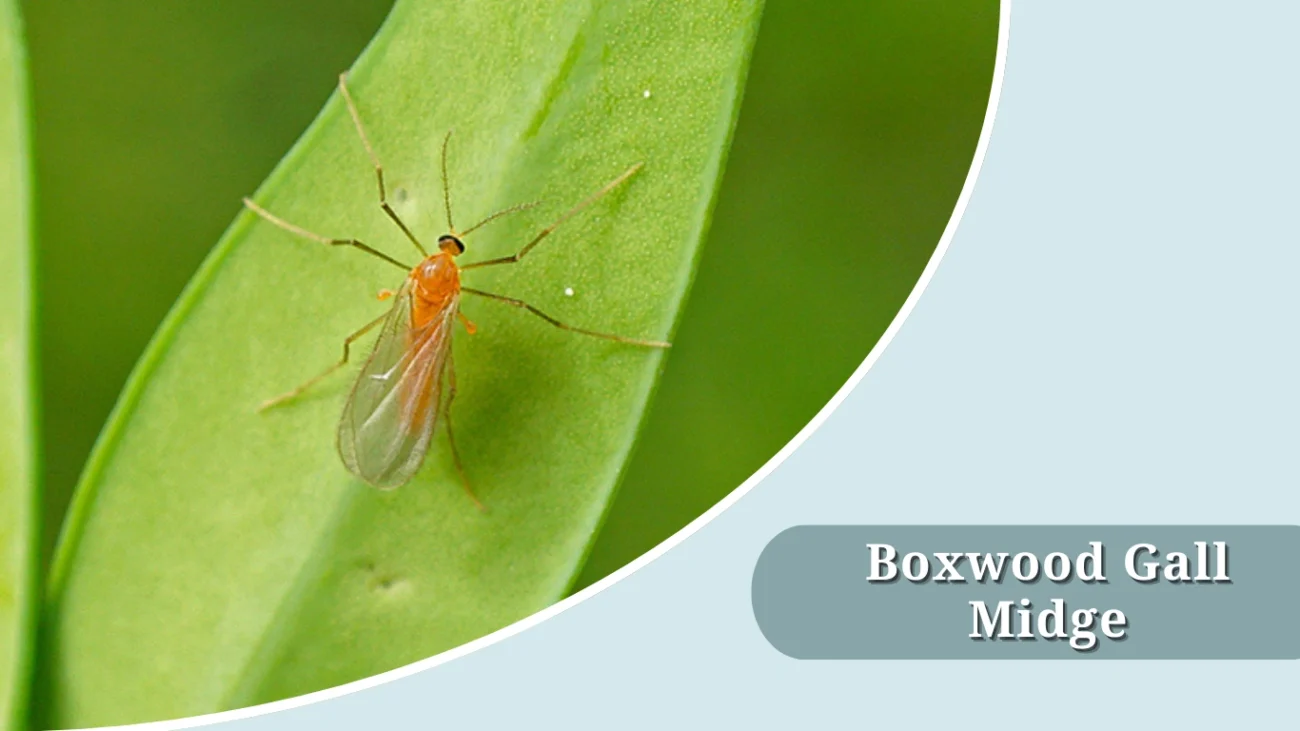
The Boxwood Gall Midge is a tiny insect pest that attacks boxwood plants, particularly damaging young leaves and shoots. It is an ornamental pest that reduces the aesthetic value of hedges and topiary.
Identification
- Very small fly, about 1.5–2 mm in length
- Slender, fragile body resembling a miniature mosquito
- Larvae are yellowish to orange maggots
- Infested leaves become blistered, swollen, and discolored
Habitat
This midge is commonly found in gardens, parks, and ornamental landscapes where boxwood is widely cultivated. It thrives in areas with dense plantings and where boxwood plants are frequently trimmed.
Behavior
Female midges deposit eggs inside young boxwood leaves. The larvae feed between leaf tissues, causing blister-like swellings on the upper surface. Heavy infestations lead to leaf distortion, discoloration, and premature leaf drop, reducing the plant’s decorative appeal.
Lifecycle
The Boxwood Gall Midge follows the standard midge cycle of egg, larva, pupa, and adult. It typically overwinters as pupae inside damaged leaves or soil. Several generations may occur annually in mild climates, making infestations persistent if not controlled.
10. Elm Leaf Gall Midge (Dasineura ulmaria)
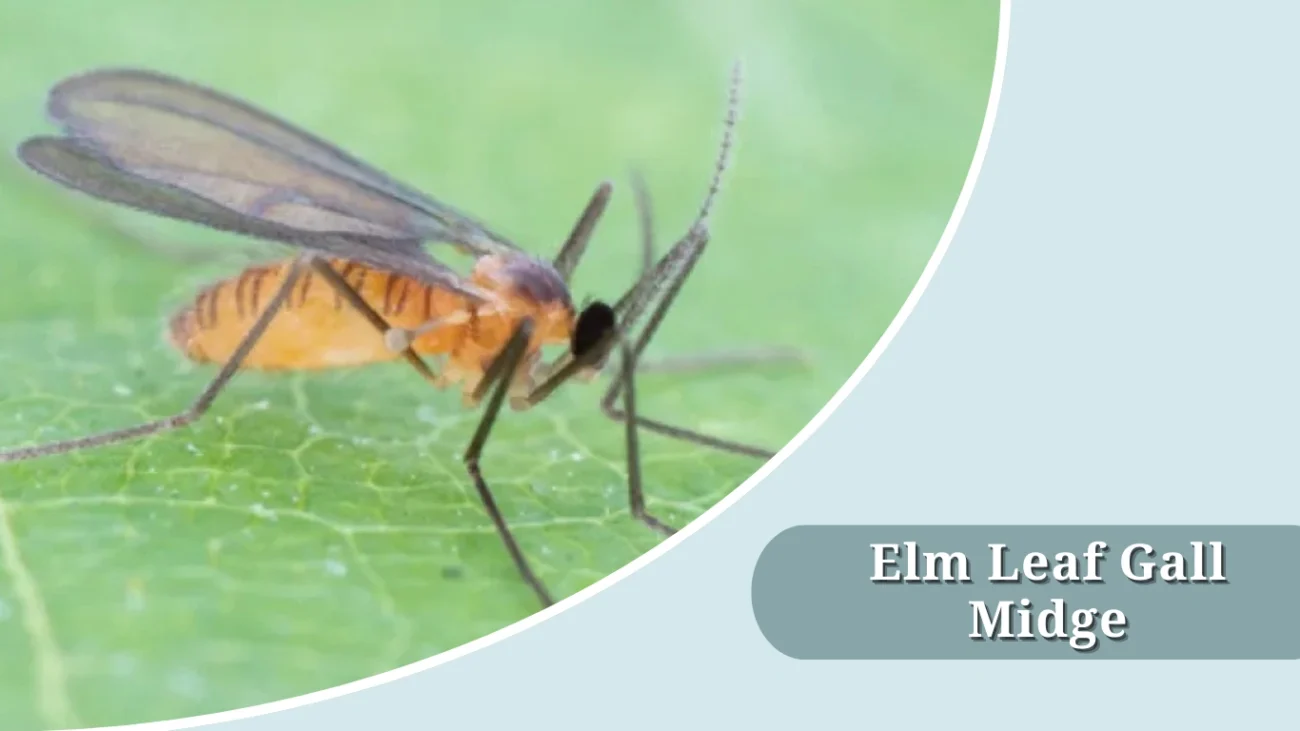
The Elm Leaf Gall Midge is a small fly that causes the formation of distinctive galls on elm leaves. These galls affect the tree’s foliage but usually do not cause serious long-term harm unless infestations are heavy.
Identification
- Tiny midge, about 2 mm long
- Adults are fragile, mosquito-like insects
- Larvae are pale yellow to orange maggots
- Infested elm leaves show blister-like swellings or pouch-shaped galls
Habitat
This species inhabits elm trees in forests, urban landscapes, and parks across Europe, Asia, and North America. It prefers areas with mature elm populations and can persist year after year in the same stands.
Behavior
Female midges lay eggs on young elm leaves. The larvae feed within the leaf tissue, stimulating abnormal cell growth that produces galls. These galls provide protection and nourishment for the larvae. Heavy infestations can reduce leaf function and overall tree vigor.
Lifecycle
The Elm Leaf Gall Midge develops through egg, larva, pupa, and adult stages. Larvae overwinter inside fallen leaves or soil, then pupate in spring. Adults emerge as new elm leaves unfurl, ensuring the next generation can immediately infest fresh growth.
11. Ash Gall Midge (Dasineura fraxini)
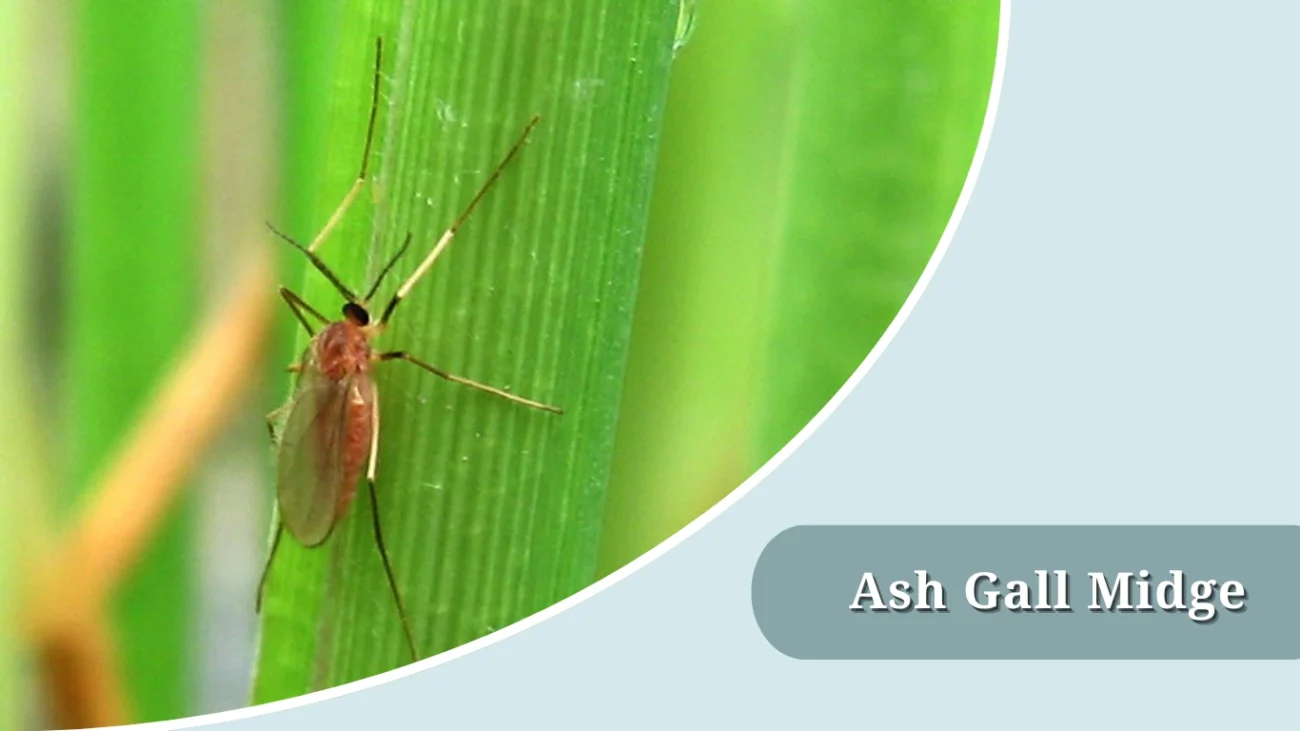
The Ash Gall Midge is a small fly that infests ash trees, where its larvae trigger gall formation on leaves and shoots. While not always lethal, repeated infestations weaken trees and may reduce their growth and vitality.
Identification
- Very small fly, about 2 mm long
- Adults are delicate, mosquito-like with long legs
- Larvae are whitish to yellow maggots
- Infested ash leaves develop blister-like or swollen galls along veins and margins
Habitat
This species is found in ash woodlands, urban plantings, and ornamental landscapes throughout Europe and parts of Asia. It thrives in areas where ash trees are abundant and can persist season after season.
Behavior
Females lay eggs on emerging ash leaves. The larvae feed inside the leaf tissue, stimulating the tree to produce gall-like swellings that shelter and nourish them. Heavy infestations may weaken trees, reduce photosynthetic capacity, and affect new shoot development.
Lifecycle
The Ash Gall Midge follows a complete metamorphosis of egg, larva, pupa, and adult. Larvae overwinter in soil or fallen leaves, pupating in spring. Adults emerge in time with new leaf growth, ensuring synchronization with their host plant. Several generations may occur per year in mild climates.
12. Clover Stem Gall Midge (Dasineura trifolii)
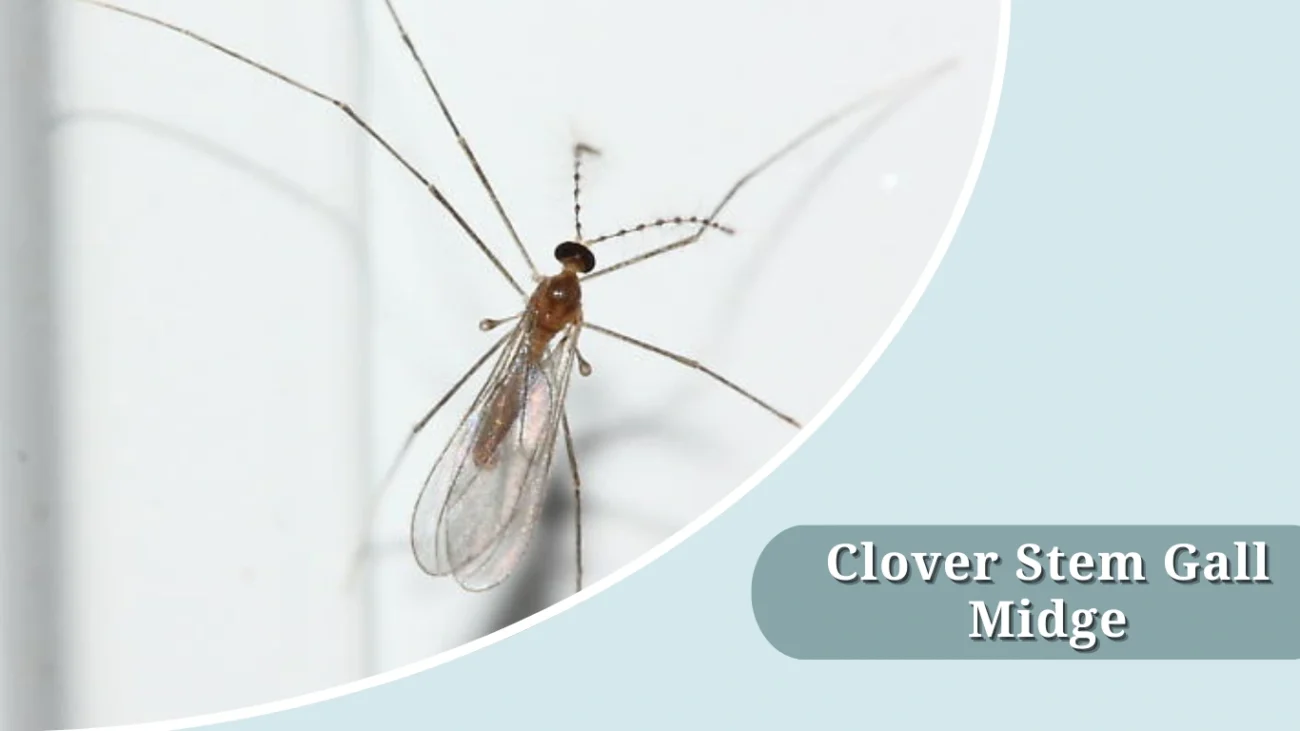
The Clover Stem Gall Midge is a pest that primarily targets clover plants, causing gall formation on stems and reducing both plant vigor and forage quality. It is of concern in regions where clover is grown as fodder or for soil improvement.
Identification
- Tiny fly, around 2 mm in length
- Adults are delicate, resembling small mosquitoes
- Larvae are pale yellow to orange maggots
- Infested stems swell, twist, or form visible galls
Habitat
This species is commonly found in meadows, pastures, and cultivated fields where red clover and related species are grown. It thrives in moist environments with dense clover stands.
Behavior
Female midges lay eggs inside tender clover stems. The larvae feed within the plant tissue, causing abnormal cell growth and gall formation. This disrupts the normal transport of nutrients and water, leading to stunted plants and lower forage quality.
Lifecycle
The Clover Stem Gall Midge has a lifecycle consisting of egg, larva, pupa, and adult stages. It overwinters as pupae in soil or crop residues. Several generations can occur each year, with infestations peaking during warm, humid periods.
13. Mango Leaf Gall Midge (Procontarinia matteiana)
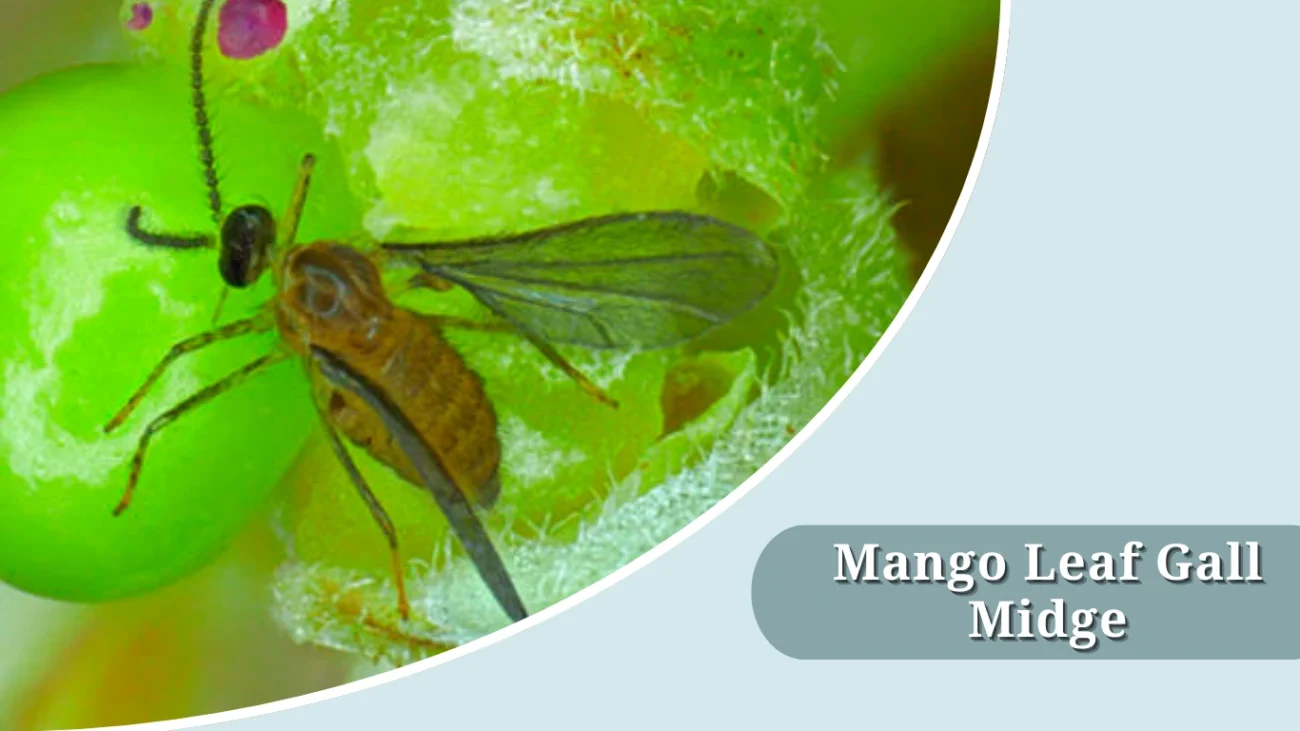
The Mango Leaf Gall Midge is a destructive pest of mango trees, known for causing gall formation on leaves. Heavy infestations can reduce photosynthesis, weaken trees, and impact fruit production.
Identification
- Very small fly, about 1.5–2 mm long
- Adults are slender, delicate, and mosquito-like
- Larvae are yellow to orange maggots
- Infested mango leaves develop blister-like galls or swellings
Habitat
This species is found in mango orchards across tropical and subtropical regions, including Asia, Africa, and the Middle East. It thrives where mango is cultivated commercially and can persist year after year on the same trees.
Behavior
Female midges lay eggs on tender young mango leaves. The larvae feed within the leaf tissue, inducing gall formation that provides food and shelter. Severe infestations can cause leaf curling, premature leaf drop, and reduced tree vigor.
Lifecycle
The Mango Leaf Gall Midge undergoes egg, larva, pupa, and adult stages. It overwinters as pupae in soil or leaf litter. Several generations may occur annually, often coinciding with mango flush cycles, making it a recurring pest in orchards.
14. Brassica Pod Midge (Dasineura brassicae)
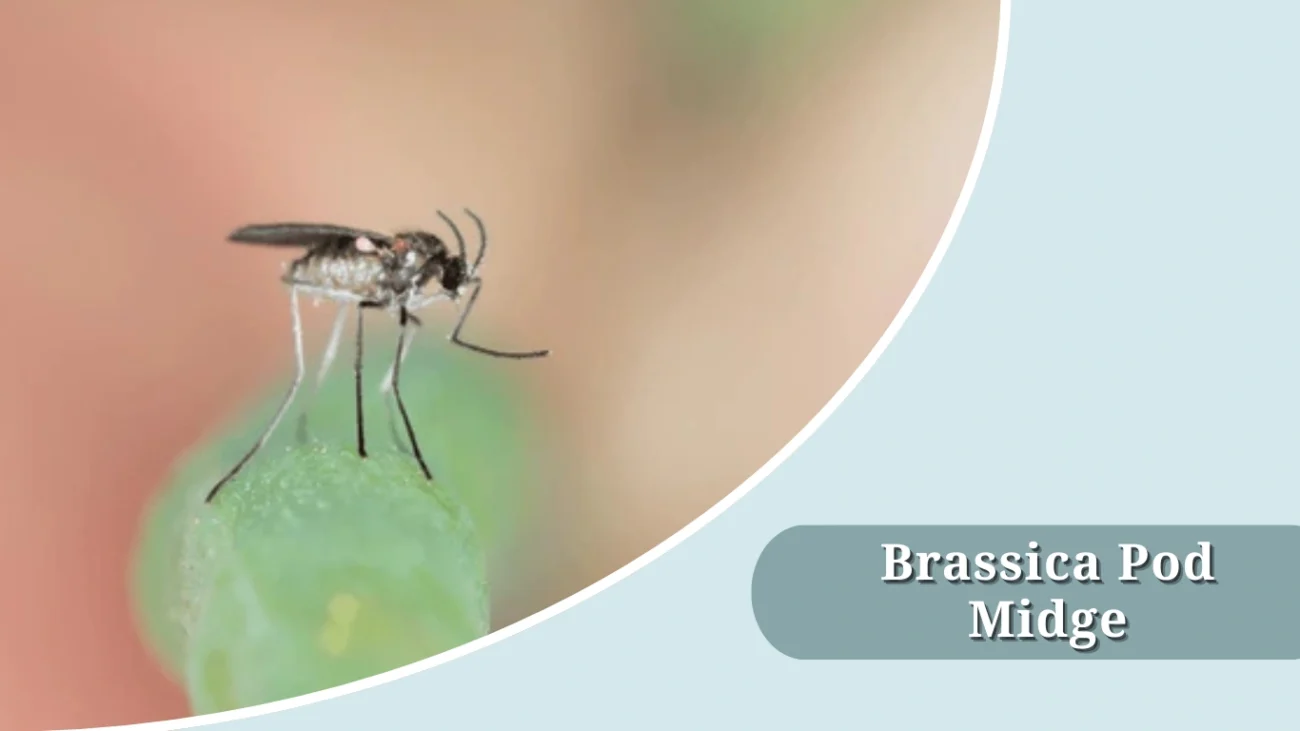
The Brassica Pod Midge is an agricultural pest that attacks oilseed rape, mustard, and other brassica crops. Its larvae feed within seed pods, causing distortion and premature pod splitting, which reduces seed yield.
Identification
- Tiny fly, about 1.5–2 mm long
- Adults are fragile, mosquito-like insects with long legs
- Larvae are small, white to yellowish maggots
- Infested pods appear swollen, twisted, or cracked prematurely
Habitat
This species is associated with fields of oilseed rape, mustard, and related brassica crops across Europe, Asia, and parts of North America. It thrives in large-scale monocultures of brassicas where host plants are abundant.
Behavior
Females lay eggs inside developing seed pods. The larvae feed on internal tissues, weakening pod walls and causing them to split open before seeds are mature. This results in significant seed loss, particularly under dry and windy conditions.
Lifecycle
The Brassica Pod Midge passes through egg, larva, pupa, and adult stages. Pupation occurs in the soil, where the insect overwinters. Multiple generations may occur within one growing season, depending on climate and crop cycles.
15. Swede Midge (Contarinia nasturtii)
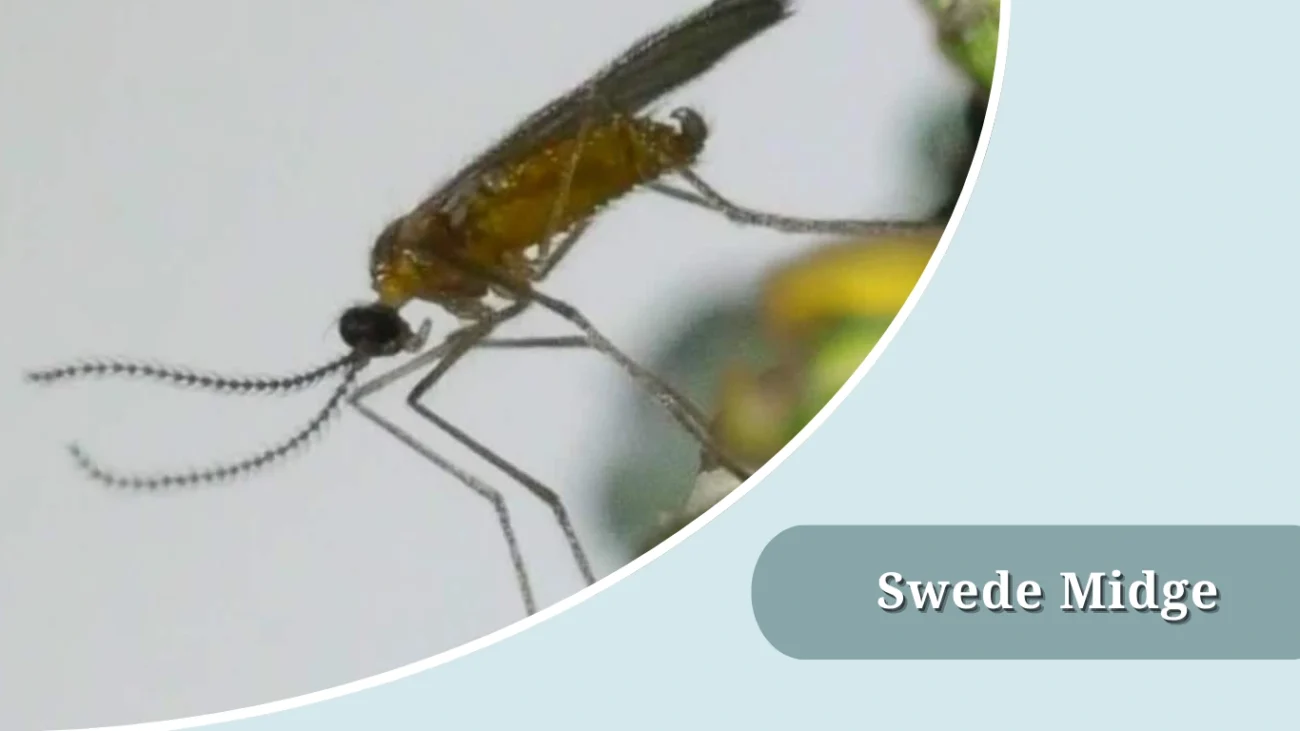
The Swede Midge is a destructive pest of cruciferous crops, including cabbage, broccoli, cauliflower, and swede (rutabaga). Its feeding causes severe distortion of growing points, making vegetables unmarketable.
Identification
- Tiny fly, about 1.5–2 mm in length
- Adults are fragile, mosquito-like with long legs and antennae
- Larvae are creamy-white to yellow maggots
- Infested plants show twisted, crumpled, or stunted shoots and heads
Habitat
This species is commonly found in brassica fields and vegetable gardens across Europe and North America. It thrives in areas where cruciferous vegetables are cultivated repeatedly, especially in moist and sheltered environments.
Behavior
Female midges lay eggs on tender growing points of cruciferous plants. The larvae feed on meristem tissue, disrupting plant development. Damage leads to swollen stems, distorted leaves, or failed heads, often making crops unsuitable for harvest.
Lifecycle
The Swede Midge passes through egg, larva, pupa, and adult stages. It overwinters in soil as pupae and can produce several overlapping generations per year. Infestations can escalate quickly, especially in continuous brassica cropping systems.


