March flies, belonging to the Tabanidae family, are known for their strong flight, painful bites, and significant role in both ecosystems and human-animal interactions. With over 4,000 species worldwide, they vary in size, appearance, and behavior. This guide highlights 15 notable species of march flies, detailing their identification, habitats, behaviors, and lifecycles to help in understanding and distinguishing these often troublesome yet fascinating insects.
1. Tabanus atratus
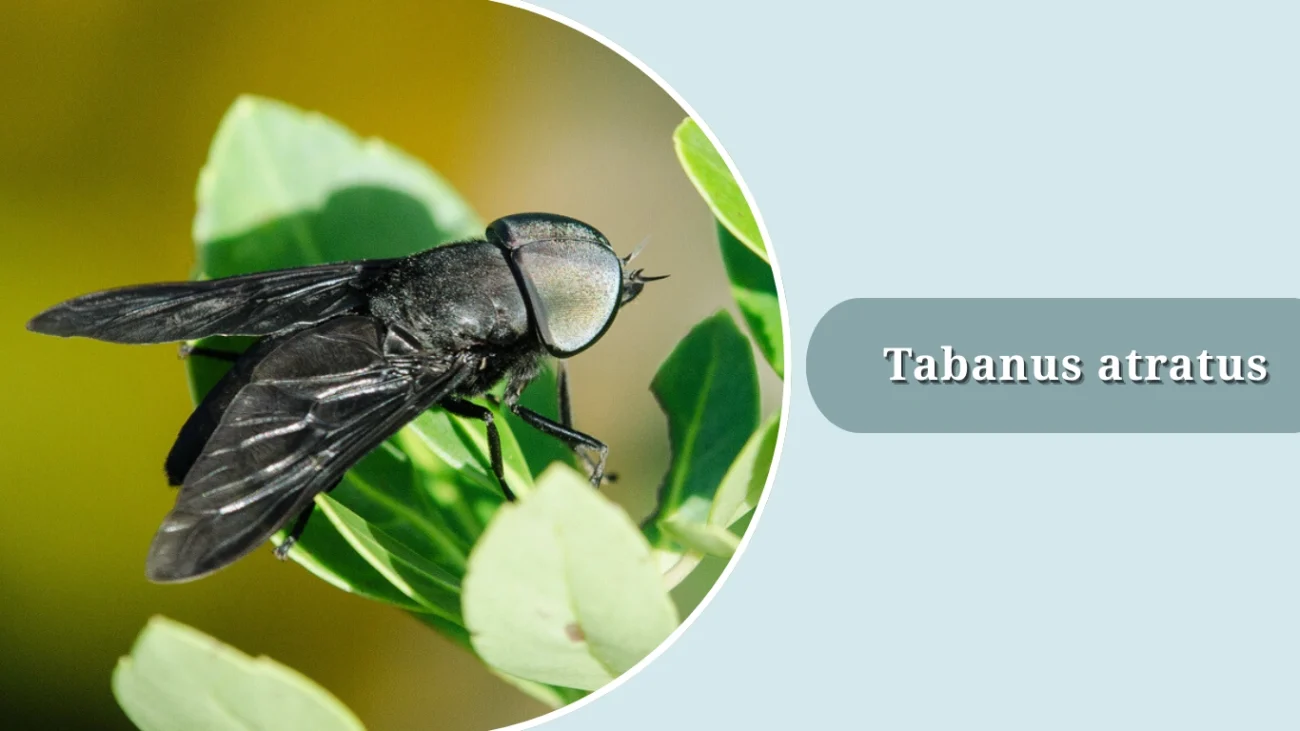
The Tabanus atratus, also known as the black horse fly, is one of the largest and most widely recognized march flies. It is notorious for its painful bite and is commonly found in wetlands, forests, and near livestock areas.
Identification
- Large, robust body reaching up to 25 mm in length
- Distinctive shiny black coloration
- Clear or slightly smoky wings
- Prominent green to black compound eyes
- Strong, slicing mouthparts adapted for blood-feeding
Habitat
Tabanus atratus thrives in warm, moist environments such as swamps, marshes, and riverbanks. They are often abundant in areas with livestock, where they have easy access to blood meals.
Behavior
This species is an aggressive biter, particularly the females, which require blood to develop their eggs. They actively pursue large mammals, including horses, cattle, and even humans. Males, on the other hand, feed on nectar and plant juices.
Lifecycle
The life cycle includes egg, larva, pupa, and adult stages. Eggs are laid in clusters on vegetation near water. The larvae develop in moist soil or mud, feeding on organic matter and small invertebrates, before pupating and emerging as adults.
2. Tabanus sulcifrons

The Tabanus sulcifrons, often referred to as the striped horse fly, is a distinctive march fly species known for its patterned appearance. It is moderately sized and frequently encountered in wooded and rural areas.
Identification
- Medium-sized body, usually around 15–20 mm long
- Brownish body with distinct stripes on the thorax
- Wings are clear with faint veins
- Eyes often exhibit iridescent patterns in sunlight
- Strong legs adapted for quick movement
Habitat
This species typically inhabits woodland edges, grasslands, and areas near streams or ponds. It prefers warm climates and often stays close to animals such as cattle, deer, and horses for blood meals.
Behavior
Female Tabanus sulcifrons are persistent feeders and will circle around potential hosts until they can land and bite. They are strong fliers and can be very difficult to swat away. Males focus mainly on nectar, aiding in pollination.
Lifecycle
Eggs are laid in masses on vegetation near water. The larvae are aquatic or semi-aquatic, feeding on organic matter and tiny organisms in damp soil or shallow water. After developing through several instars, they pupate and later emerge as adults during warmer months.
3. Tabanus nigrovittatus
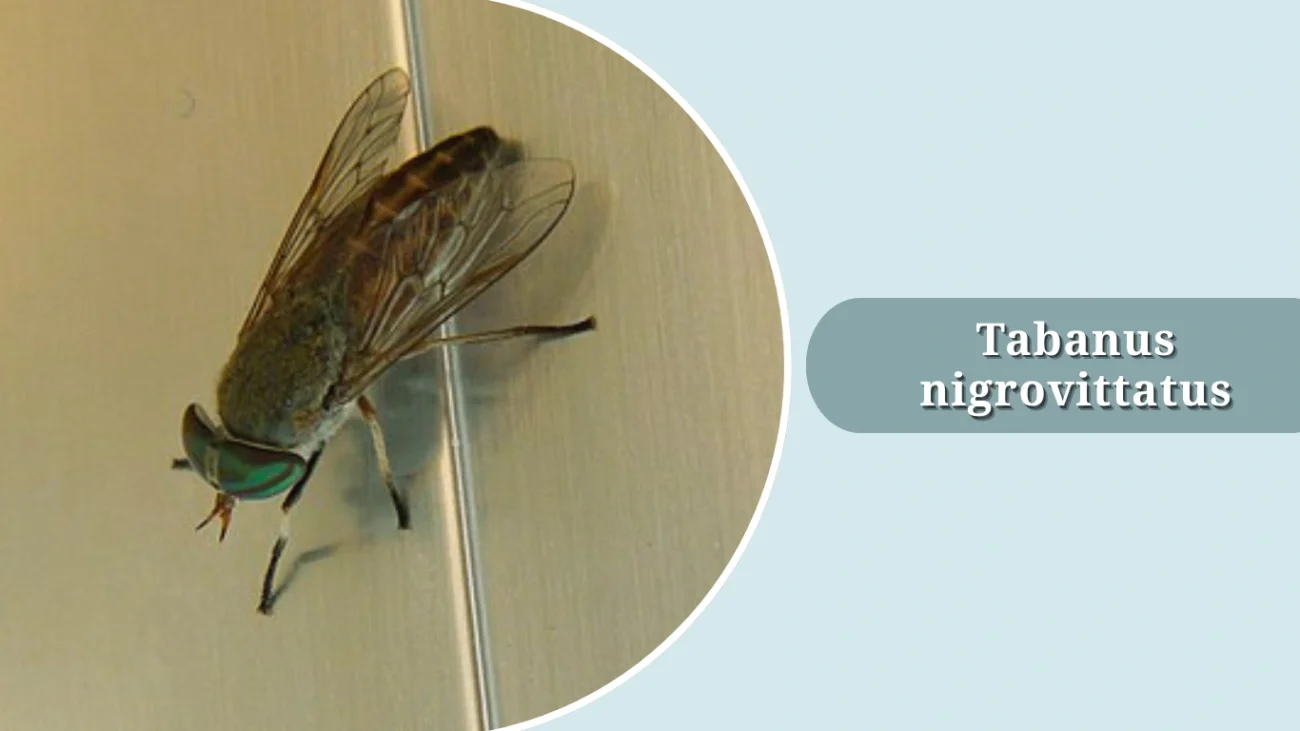
The Tabanus nigrovittatus, commonly known as the greenhead horse fly, is a coastal species widely recognized for its bright, iridescent green eyes. It is infamous for its painful bite and persistence in pursuing hosts.
Identification
- Medium-sized body, around 10–15 mm long
- Dark gray to brown body with faint dorsal stripes
- Shiny, iridescent green eyes (hence the name)
- Clear wings with visible veins
- Females with strong mouthparts designed for cutting skin
Habitat
This species thrives in salt marshes and coastal wetlands. It is especially abundant along the Atlantic coast of North America, where its larvae develop in moist, marshy soil.
Behavior
Female greenhead horse flies are aggressive and relentless blood-feeders, particularly active on hot summer days. They attack mammals, including humans, and are notorious for swarming beachgoers and fishermen. Males, however, feed on nectar and play a minor role in pollination.
Lifecycle
Females lay clusters of eggs on vegetation in marshes. The larvae drop into the damp soil, where they prey on small invertebrates. After developing through several instar stages, they pupate in the soil and emerge as adults, usually during peak summer months.
4. Tabanus lineola
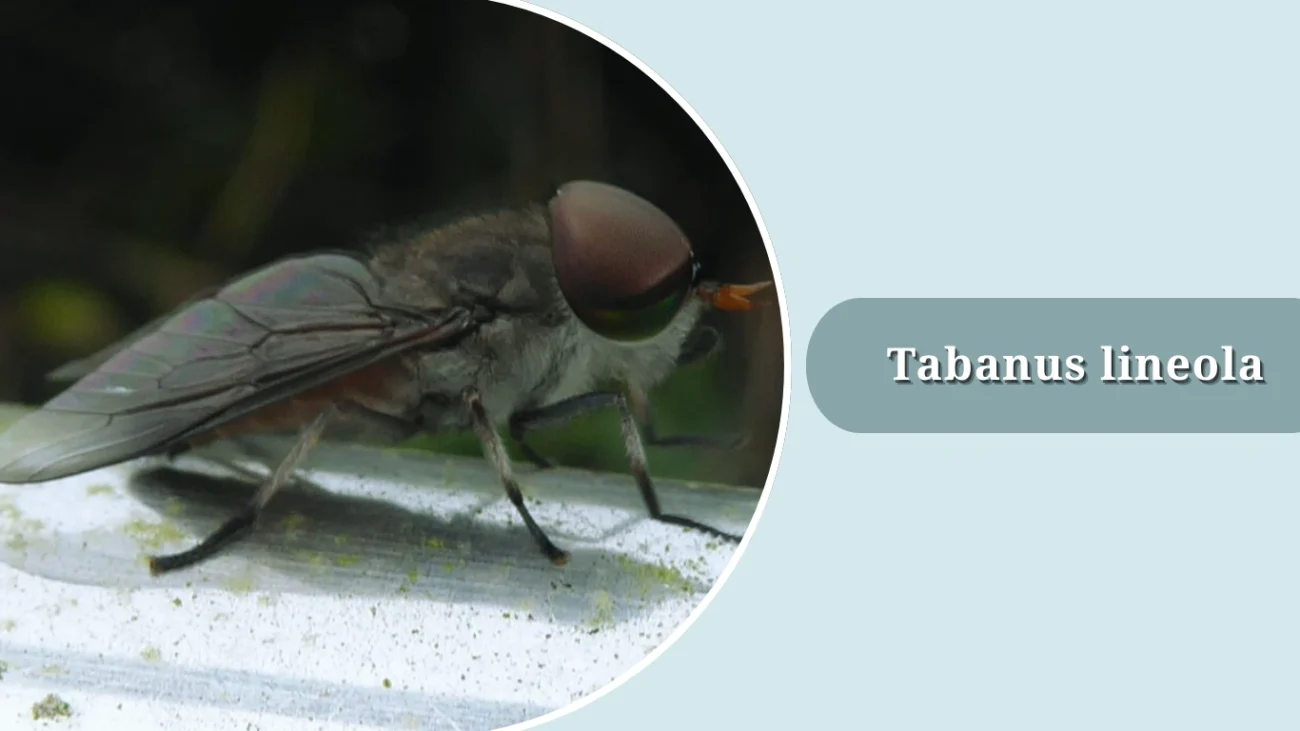
The Tabanus lineola, also known as the striped horse fly, is a widespread species recognized for the distinctive stripes running along its body. It is a strong flier and is commonly associated with livestock.
Identification
- Medium to large body, typically 12–20 mm long
- Brownish-gray body with clear longitudinal stripes on the thorax
- Abdomen often patterned with dark and pale markings
- Eyes may show banded or iridescent coloration
- Wings are transparent with well-defined venation
Habitat
Tabanus lineola is found in grasslands, farmlands, and wooded regions, especially near water sources. They thrive in warm climates and are highly attracted to livestock, making them a common pest in agricultural areas.
Behavior
Females are aggressive blood-feeders, targeting cattle, horses, and occasionally humans. They are persistent and capable of delivering painful bites. Males primarily feed on plant nectar, sometimes assisting in pollination.
Lifecycle
Eggs are deposited in clusters on plants near water. Once hatched, larvae drop to the moist soil or mud, where they feed on organic material and small invertebrates. After several growth stages, they pupate and then emerge as adults during the warmer months.
5. Tabanus trimaculatus
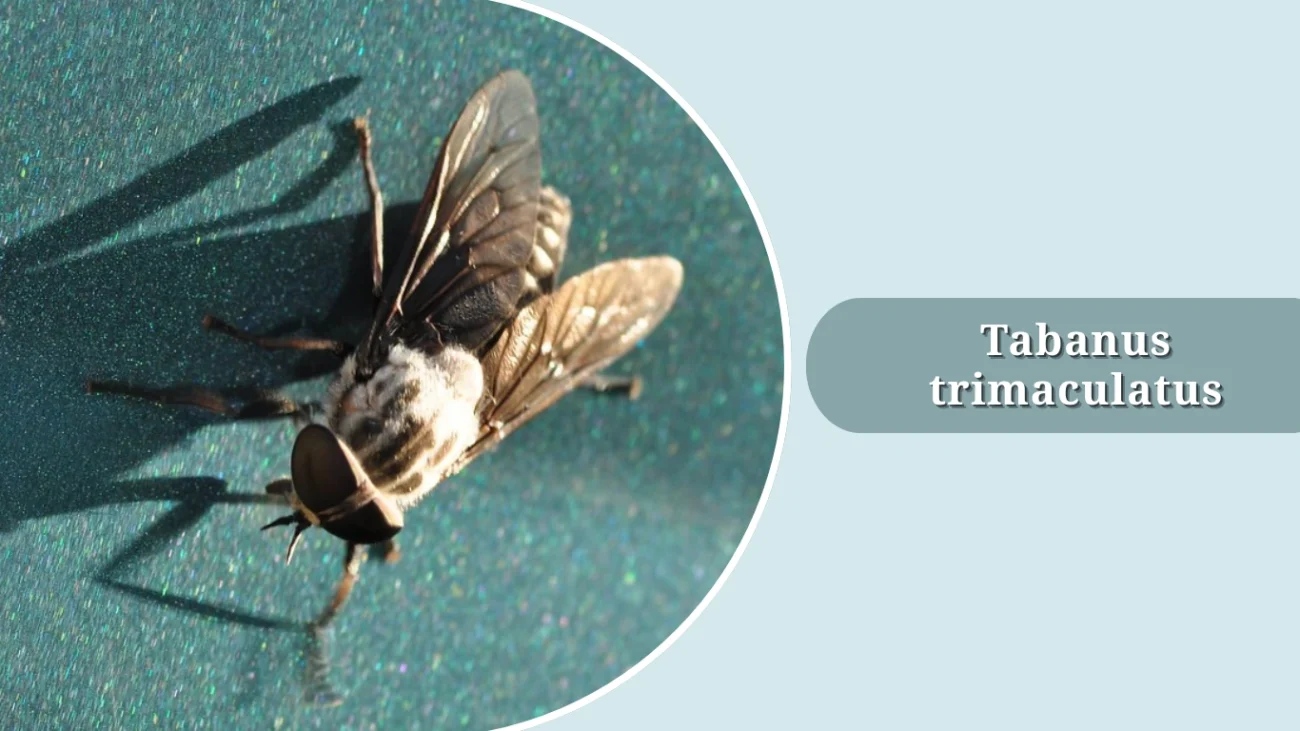
The Tabanus trimaculatus is a distinctive march fly species, easily recognized by its unique wing patterns. Though less common than some relatives, it is notable for its bold markings and strong flight.
Identification
- Medium-sized fly, around 15–18 mm in length
- Brown to gray body with a slightly hairy texture
- Wings marked with three dark spots, giving the species its name
- Abdomen usually patterned with pale and dark stripes
- Eyes can show iridescent hues under sunlight
Habitat
This species prefers wetlands, forest edges, and meadows near water sources. It is often seen in areas with dense vegetation that provide cover for larvae and easy access to host animals.
Behavior
Females are persistent and aggressive biters, primarily feeding on the blood of large mammals such as cattle, horses, and deer. Their bites are painful, causing irritation in both animals and humans. Males feed on nectar, playing a small role in pollination.
Lifecycle
Eggs are laid in batches on plants near moist soil or water. The larvae develop in damp environments, feeding on organic matter and small organisms. After pupation, adults emerge in warm seasons and become active during the day, particularly in summer.
6. Tabanus melanocerus
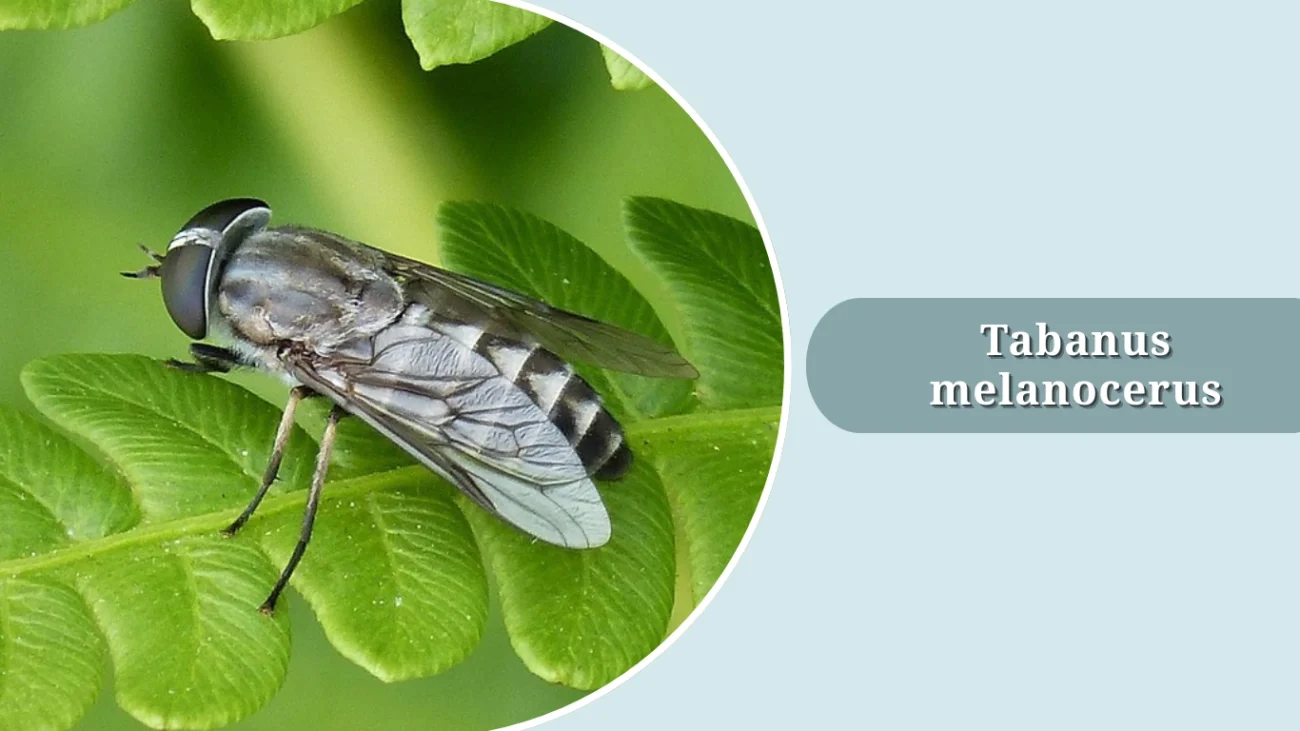
The Tabanus melanocerus is a robust species of march fly known for its darker features and strong biting behavior. Though not as widely distributed as some relatives, it is locally abundant in suitable habitats.
Identification
- Medium to large fly, averaging 16–22 mm in length
- Dark brown to nearly black body
- Antennae are noticeably black, which is a key identifying trait
- Wings are usually clear or faintly smoky
- Eyes may appear iridescent but less colorful compared to other species
Habitat
This species is often found in wooded areas, meadows, and wetlands, typically near livestock. They favor warm, humid regions where both adult and larval stages have access to food sources.
Behavior
Female Tabanus melanocerus are strong, persistent feeders, targeting large mammals for blood meals. Their bites are painful and can cause stress in livestock herds. Males, in contrast, feed on nectar and plant sap.
Lifecycle
Eggs are laid in clusters on plants close to moist ground or water. The larvae thrive in damp soil or muddy environments, feeding on small organisms and decaying matter. After passing through multiple larval stages, they pupate and emerge as adults during warm months.
7. Tabanus abdominalis

The Tabanus abdominalis is a striking march fly species named for its prominent abdominal markings. It is a large and strong flier, frequently encountered around livestock and open countryside.
Identification
- Large body, reaching 20–25 mm in length
- Abdomen features bold dark and pale banding
- Thorax is typically brownish with lighter stripes
- Clear wings with strong venation
- Eyes can be brightly iridescent in males, duller in females
Habitat
This species is found in grasslands, agricultural fields, and wet meadows, often near streams or ponds. It thrives in regions where livestock are abundant, as they provide reliable blood sources for females.
Behavior
Female Tabanus abdominalis are aggressive biters, feeding on cattle, horses, and sometimes humans. They are persistent and capable of traveling long distances in search of hosts. Males feed on nectar and plant juices, often seen hovering around flowering vegetation.
Lifecycle
Eggs are laid in masses on vegetation or stones near water. The larvae drop into moist soil or muddy areas, where they feed on small invertebrates and organic debris. After developing through multiple instar stages, they pupate and emerge as adults in the warm season, peaking in summer.
8. Tabanus americanus
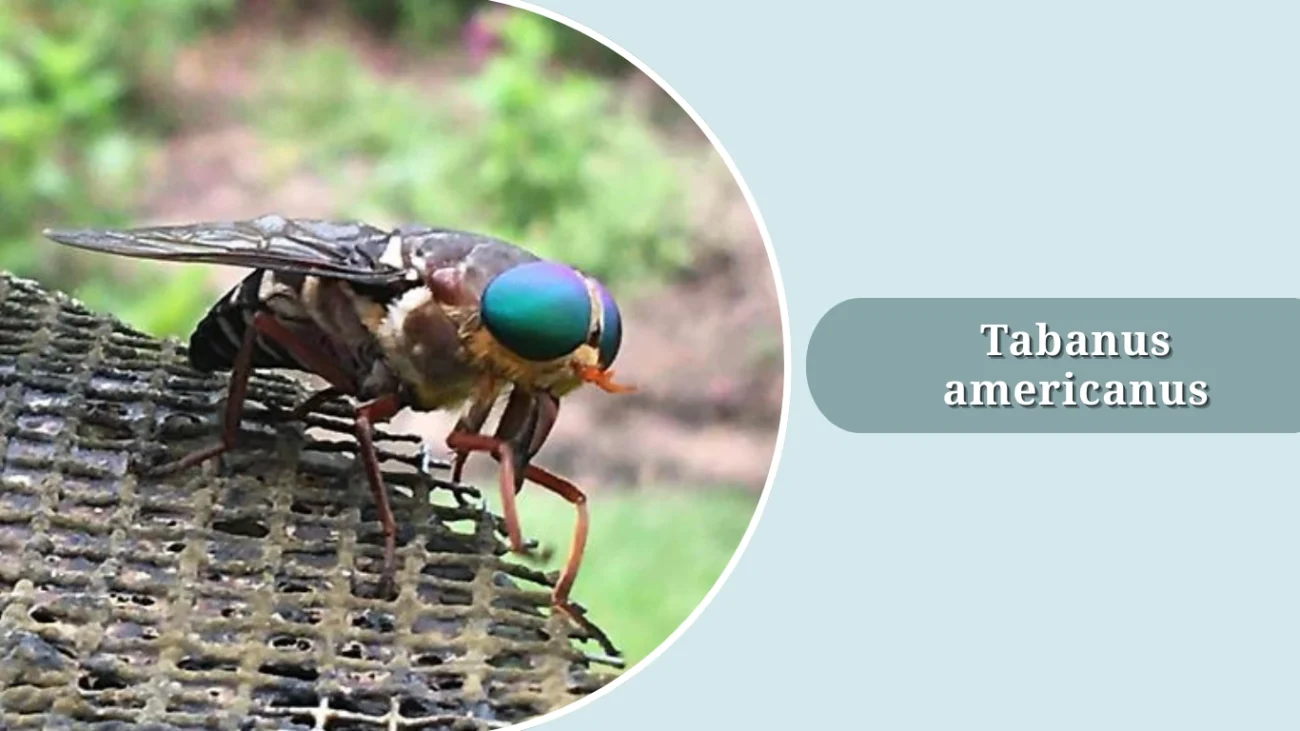
The Tabanus americanus, commonly known as the American horse fly, is among the largest march fly species in North America. Its intimidating size and painful bite make it one of the most recognized members of the Tabanidae family.
Identification
- Very large body, often 20–25 mm in length
- Dark brown to reddish-brown coloration
- Clear wings with strong venation
- Abdomen may show faint pale bands
- Prominent compound eyes, sometimes iridescent in males
Habitat
This species is typically found in wooded regions, farmlands, and wetlands across North America. It thrives in warm, humid environments and is often abundant in areas with livestock.
Behavior
Females are aggressive blood-feeders, targeting horses, cattle, and sometimes humans. They are strong fliers capable of pursuing hosts over long distances. Males feed on nectar and are less conspicuous than females.
Lifecycle
Eggs are laid in large clusters on plants near water or moist soil. The larvae drop into damp ground or muddy habitats, feeding on invertebrates and decaying matter. After several larval stages, they pupate and emerge as adults during the peak summer months.
9. Tabanus bovinus
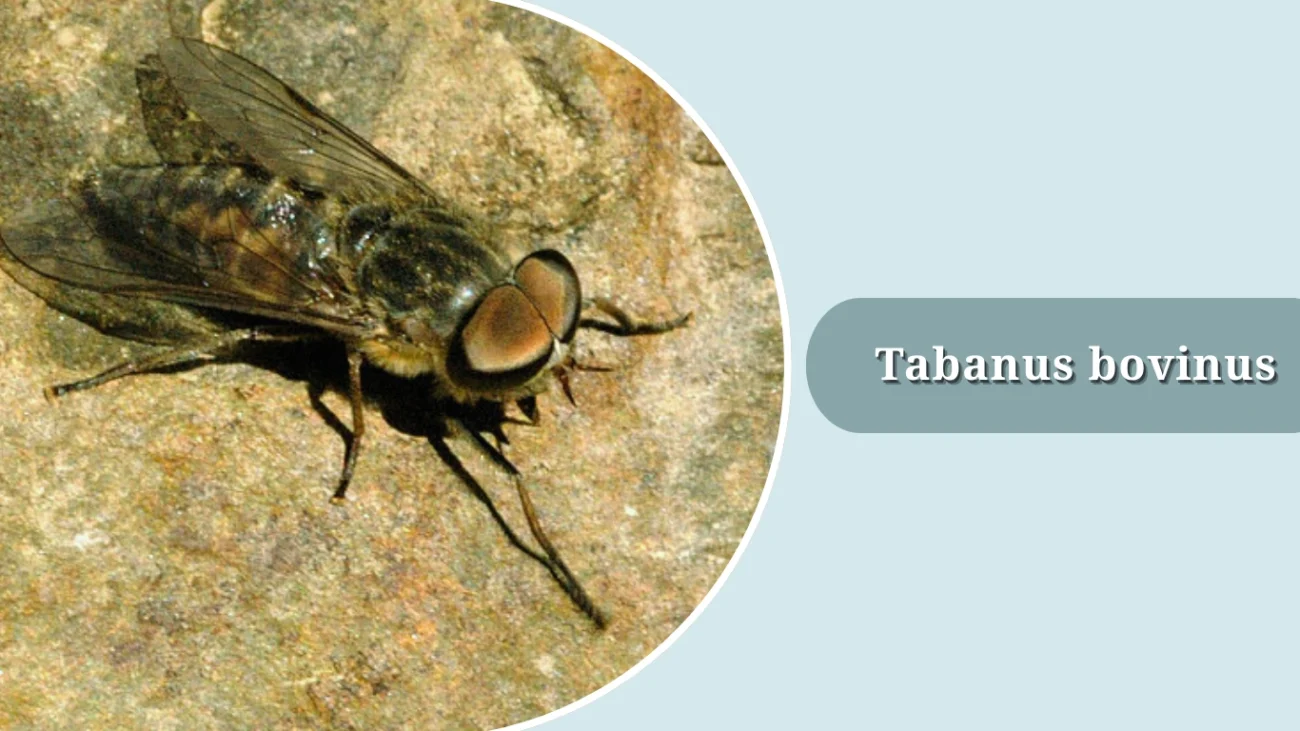
The Tabanus bovinus, commonly known as the pale giant horse fly, is one of the largest march fly species in Europe. Its size and buzzing flight make it easily recognizable, though it is less aggressive toward humans compared to some relatives.
Identification
- Very large body, reaching up to 25–30 mm in length
- Brownish-gray thorax with lighter stripes
- Abdomen patterned with pale yellowish bands
- Clear wings with brownish veins
- Eyes often exhibit a greenish or golden shimmer
Habitat
This species is widespread in Europe and parts of Asia, commonly found in meadows, forests, and farmland. It prefers areas near water bodies, which provide suitable conditions for larval development.
Behavior
Female Tabanus bovinus mainly targets cattle and horses for blood meals but rarely bites humans unless provoked. They are strong daytime fliers, often active during the warmest part of the day. Males feed exclusively on nectar and play a minor role in pollination.
Lifecycle
Eggs are deposited in clusters on vegetation near moist soil or water. The larvae develop in damp ground, where they prey on small invertebrates and consume organic matter. After pupation, adults emerge in mid to late summer, with their activity peaking during hot, sunny days.
10. Tabanus quinquevittatus
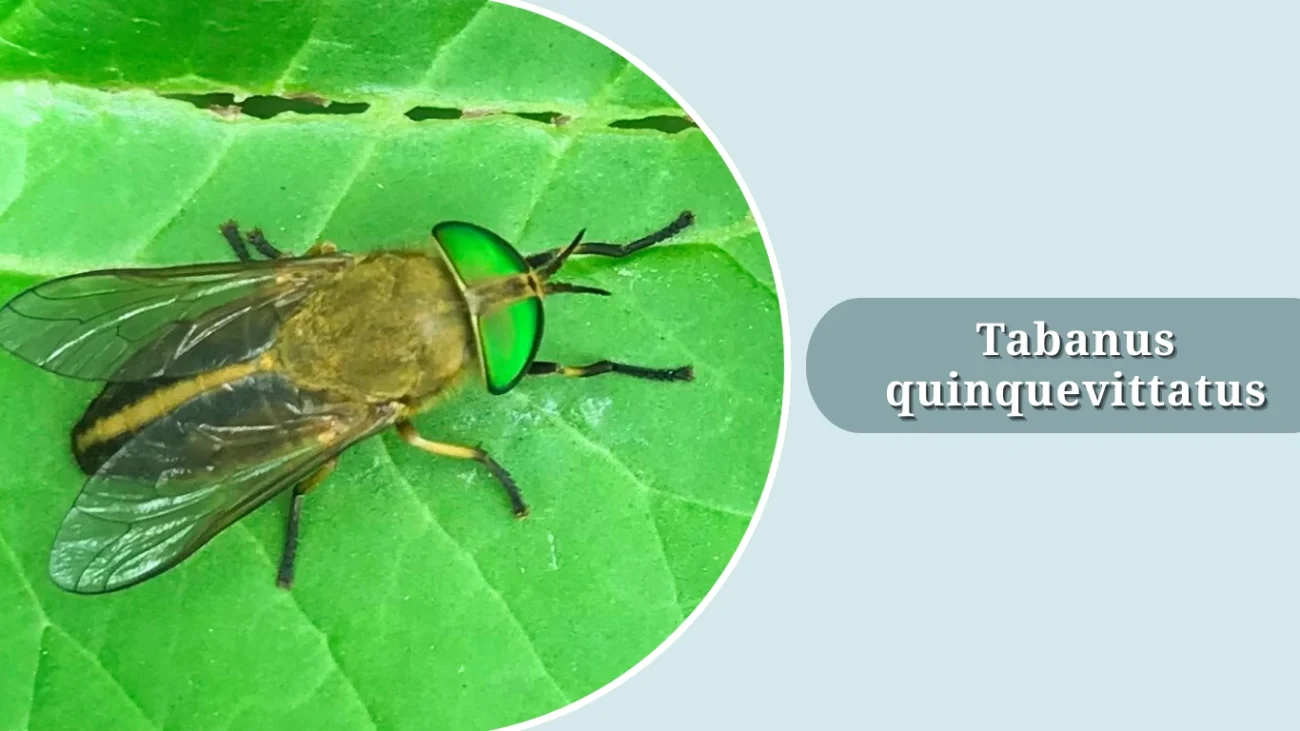
The Tabanus quinquevittatus is a recognizable march fly species, best known for the five distinct stripes running along its thorax. Its strong flight and painful bite make it a troublesome pest for both livestock and humans.
Identification
- Medium to large body, usually 15–22 mm in length
- Thorax marked with five longitudinal stripes (the name means “five-striped”)
- Abdomen patterned with alternating dark and pale bands
- Clear wings with prominent veins
- Eyes may exhibit bright or banded iridescence, especially in males
Habitat
This species inhabits open fields, wetlands, and forest margins, often near rivers or lakes. It is especially abundant in regions with cattle and horses, providing easy access to blood meals for females.
Behavior
Female Tabanus quinquevittatus are aggressive feeders, using their strong mouthparts to cut through the skin of hosts. They primarily attack livestock but will bite humans when disturbed. Males consume nectar and are commonly found hovering around flowering plants.
Lifecycle
Eggs are laid in clusters on vegetation near water or damp soil. The larvae develop in moist ground or mud, where they feed on small invertebrates and organic matter. After several growth stages, pupation occurs in the soil, and adults emerge during the warmer months of the year.
11. Tabanus punctifer

The Tabanus punctifer is a widespread species of march fly, notable for its pale abdominal markings and strong, persistent biting behavior. It is commonly found in rural and agricultural areas.
Identification
- Medium to large body, typically 15–20 mm in length
- Abdomen with pale spots or patches, giving it a distinctive appearance
- Thorax grayish-brown with fine hairs
- Clear wings with well-marked venation
- Eyes may show faint iridescence, especially in males
Habitat
This species is found in grasslands, meadows, and near farmlands, particularly where cattle and horses are present. It prefers warm regions with access to both vegetation for egg-laying and animals for feeding.
Behavior
Female Tabanus punctifer are aggressive and persistent blood-feeders, targeting large mammals and occasionally humans. Their bites are painful and can lead to irritation or secondary infections. Males feed on nectar, generally remaining near flowering plants.
Lifecycle
Eggs are laid in clusters on plants or other surfaces near water sources. After hatching, larvae drop into moist soil or muddy areas, where they feed on organic matter and small invertebrates. Pupation occurs in the soil, with adults emerging during hot summer months.
12. Tabanus marginalis
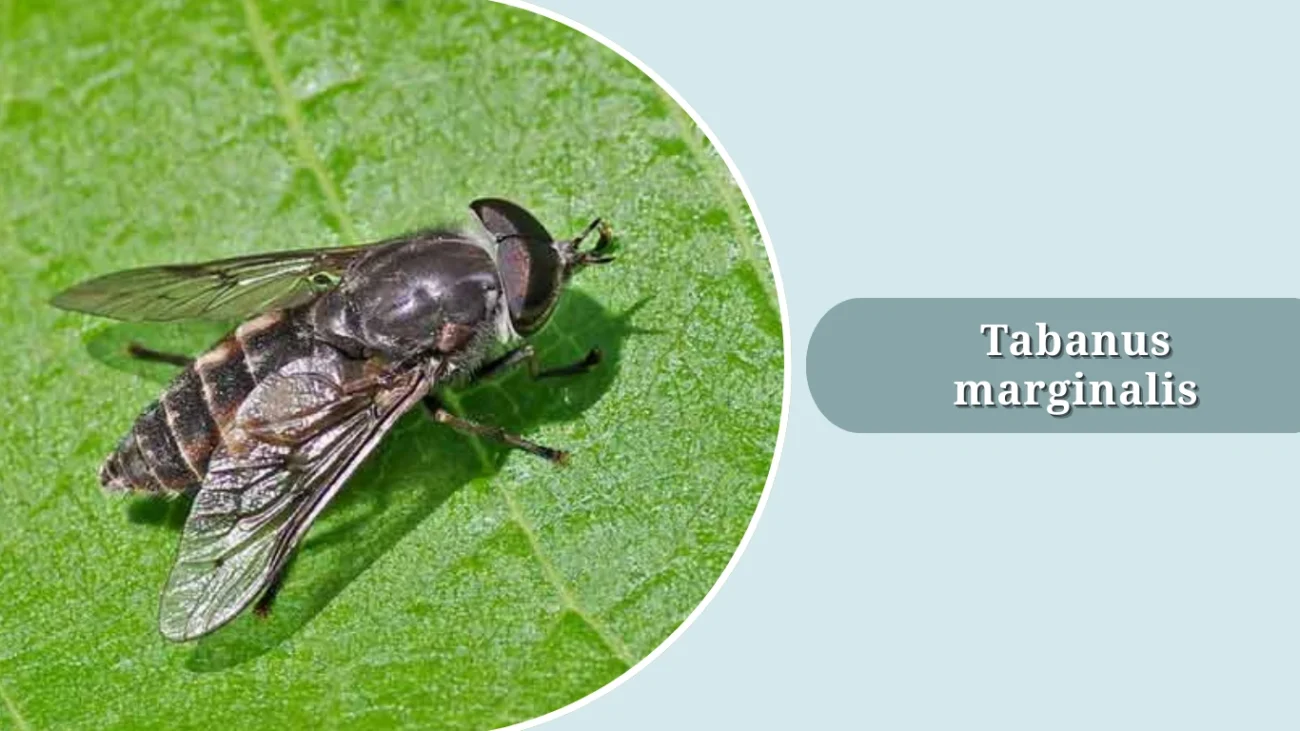
The Tabanus marginalis is a medium-sized march fly recognized for the distinct shading along the edges of its wings. Though less aggressive than some relatives, it is still a bothersome pest for livestock.
Identification
- Body length usually 12–18 mm
- Thorax grayish-brown with faint stripes
- Abdomen with alternating dark and pale bands
- Wings often show dark shading along the margins, hence the name
- Eyes may display metallic or iridescent colors in males
Habitat
This species inhabits wetlands, riverbanks, and wooded clearings, preferring areas with a good balance of vegetation and open spaces. It is commonly associated with grazing areas where cattle and horses are present.
Behavior
Female Tabanus marginalis are active daytime feeders, using their sharp mouthparts to bite livestock and occasionally humans. They are strong fliers but usually less aggressive compared to larger horse flies. Males are harmless nectar-feeders and often stay near flowers.
Lifecycle
Eggs are laid in batches on plants or other surfaces near damp ground. The larvae thrive in moist soil or shallow water, feeding on organic debris and tiny invertebrates. After several larval stages, they pupate in the soil, emerging as adults in late spring or summer.
13. Tabanus catenatus
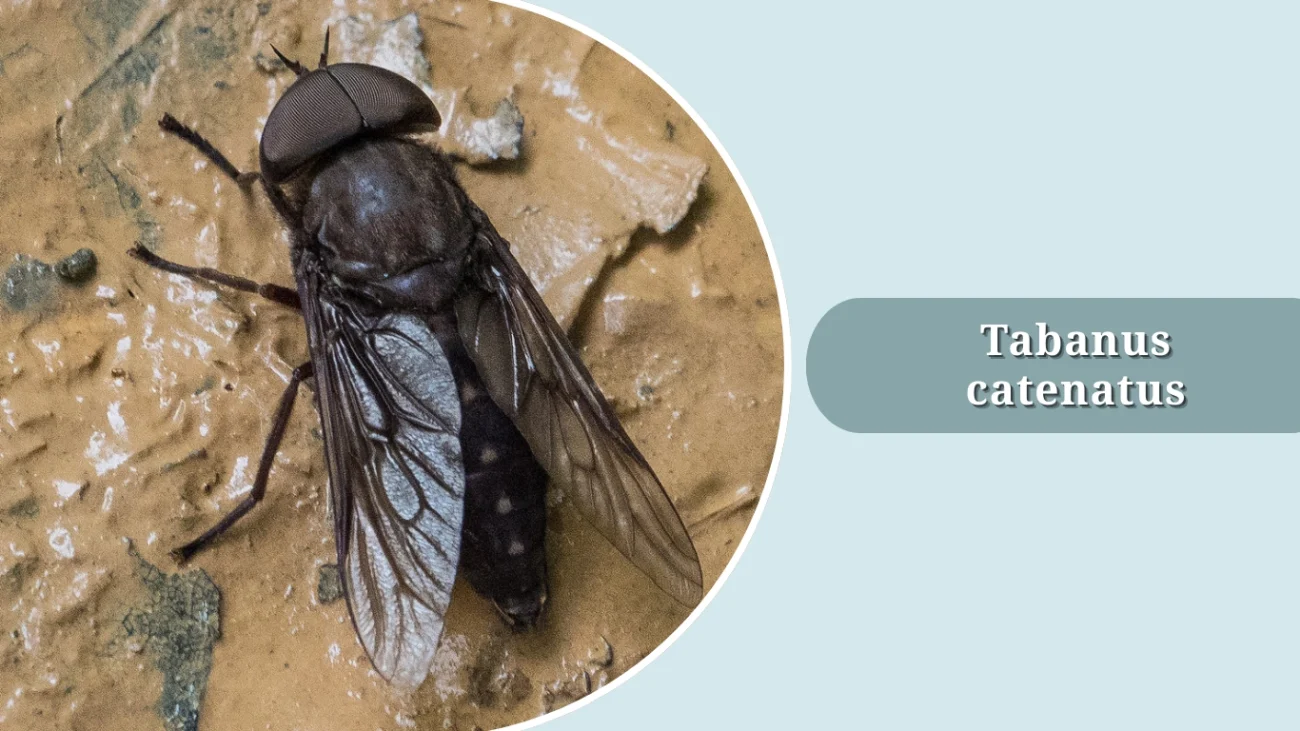
The Tabanus catenatus is a distinctive march fly species, well known for the unique chain-like markings along its abdomen. It is less common than some other horse flies but is easily recognized when encountered.
Identification
- Medium-sized body, about 14–18 mm long
- Abdomen marked with chain-like or linked pale spots (inspiring its name “catenatus”)
- Thorax grayish-brown with fine stripes
- Clear wings with defined venation
- Eyes can appear iridescent or patterned in males
Habitat
This species inhabits woodland edges, marshes, and open meadows, usually near water. It thrives in warm and humid conditions, especially in areas with large mammals for feeding.
Behavior
Females are aggressive and persistent biters, primarily targeting cattle, horses, and deer. They use their sharp mouthparts to cut skin and lap up blood. Males feed on nectar, often found near flowering plants, and are non-biting.
Lifecycle
Eggs are laid in clusters on vegetation near moist soil or water bodies. The larvae develop in damp ground or muddy areas, feeding on small invertebrates and decaying organic matter. After pupation, adults emerge in late spring and remain active throughout the summer.
14. Tabanus molestus
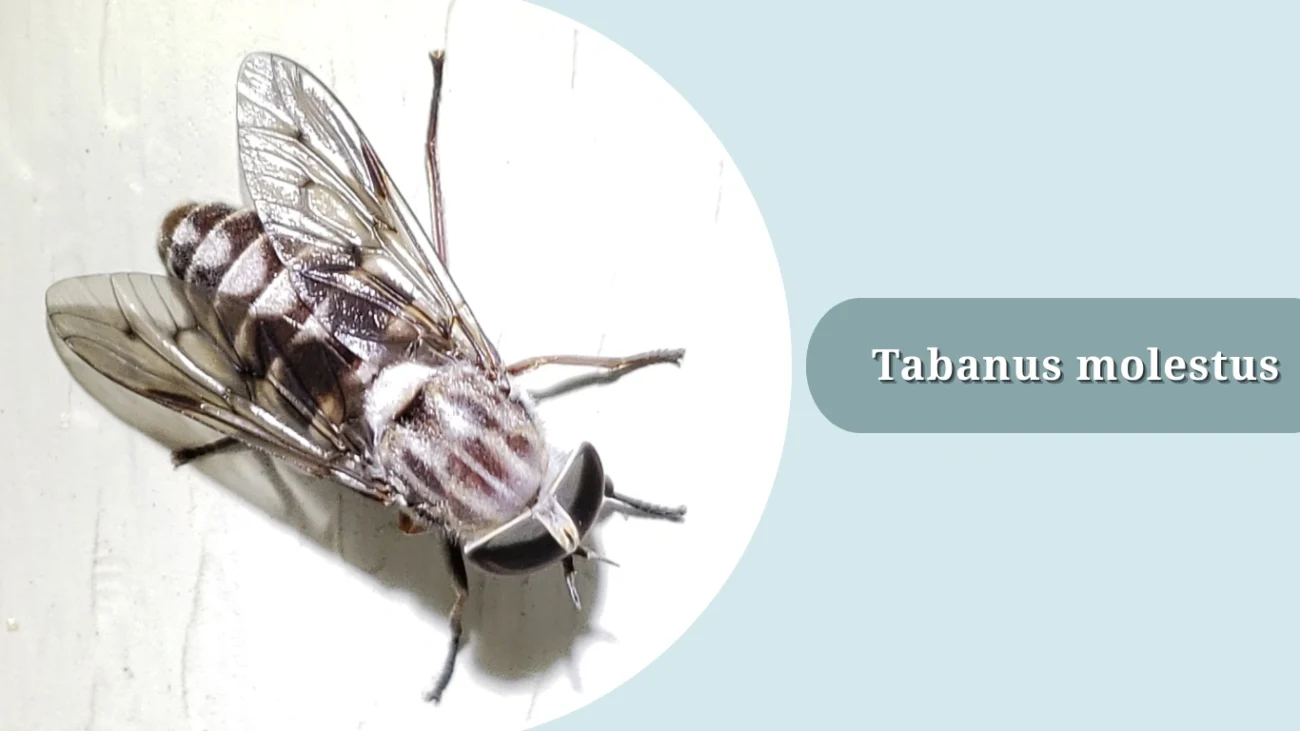
The Tabanus molestus is a march fly species notorious for its persistence and aggressive biting behavior, living up to the meaning of its name “molestus” (troublesome). It is often a serious pest for both humans and livestock.
Identification
- Medium to large body, about 15–20 mm long
- Thorax brownish-gray with faint stripes
- Abdomen patterned with alternating dark and pale markings
- Wings usually clear but may have faint shading
- Eyes can be brightly iridescent, particularly in males
Habitat
This species inhabits farmlands, marshes, and woodland edges, often near rivers or ponds. It prefers areas with abundant hosts such as cattle and horses, making it a frequent problem in agricultural regions.
Behavior
Female Tabanus molestus are highly aggressive feeders, often returning repeatedly to the same host until they are disturbed. They readily bite humans as well as animals, and their bites are painful and irritating. Males feed on nectar and remain harmless.
Lifecycle
Eggs are laid in clusters on plants or other surfaces near damp or wet soil. The larvae develop in moist ground or shallow water, feeding on organic matter and small invertebrates. After passing through several growth stages, they pupate and later emerge as adults in the warmer months.
15. Tabanus longiusculus
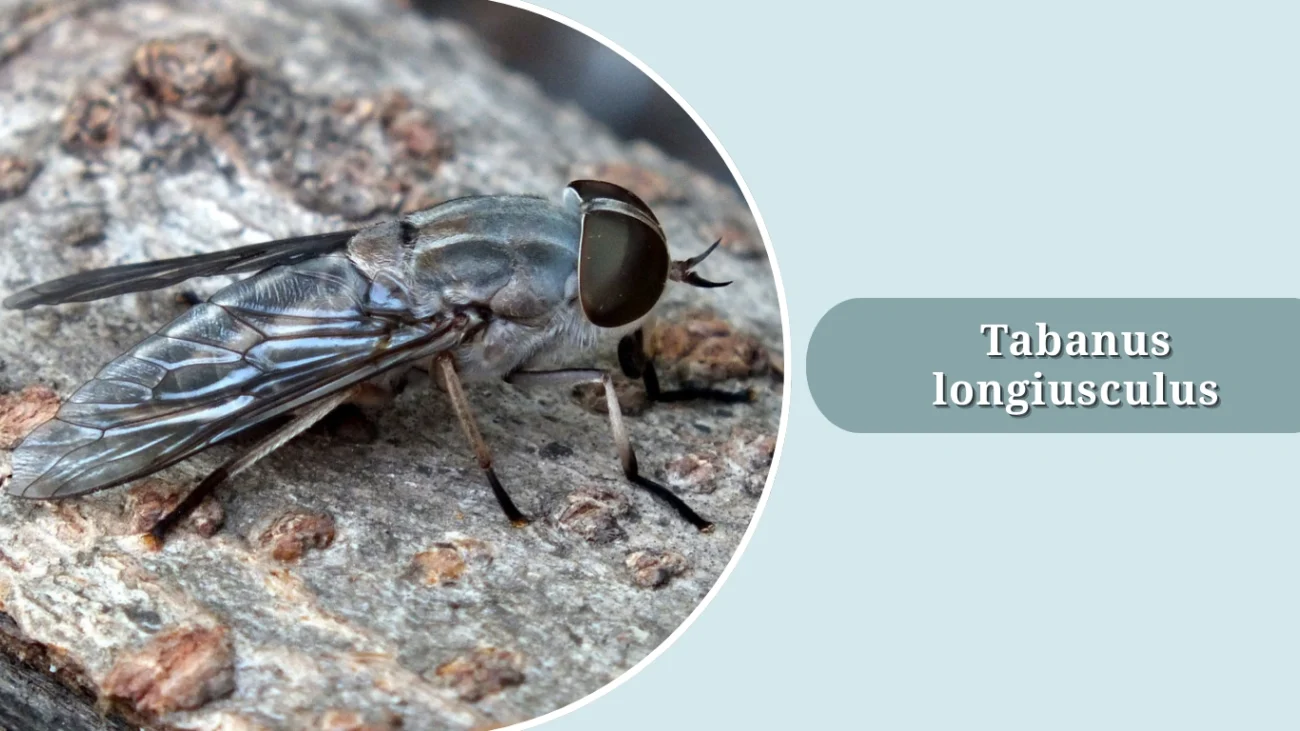
The Tabanus longiusculus is a lesser-known species of march fly, recognized for its elongated body structure compared to related species. Though not as widespread as others, it is significant in regions where it occurs.
Identification
- Medium-sized fly, about 14–19 mm long
- Abdomen elongated and slender compared to other horse flies
- Brownish-gray body with faint abdominal bands
- Wings are clear with visible venation
- Eyes may appear iridescent, especially in males
Habitat
This species inhabits wetlands, forest edges, and grasslands, often near rivers or lakes. It prefers warm, humid environments with sufficient vegetation for egg-laying and access to animal hosts.
Behavior
Female Tabanus longiusculus are active daytime feeders, targeting large mammals for blood meals. Their bites are painful, and they are persistent once they locate a host. Males feed harmlessly on nectar and plant sap.
Lifecycle
Eggs are laid in small clusters on vegetation near water sources. Larvae thrive in moist soil or mud, feeding on organic matter and tiny invertebrates. After several growth stages, pupation occurs in the soil, with adults emerging in the warmer months, usually late spring to summer.