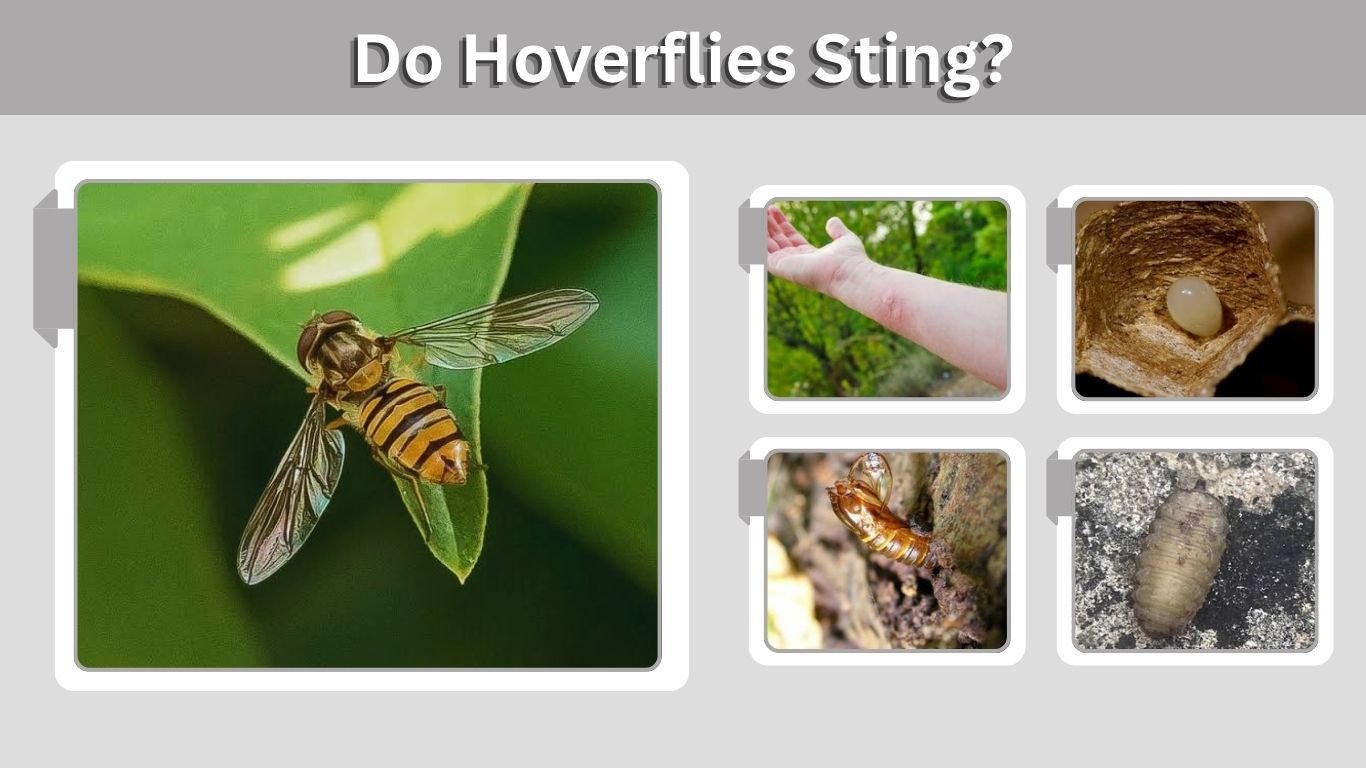
Hoverflies, also known as flower flies or syrphid flies, are fascinating insects admired for their mimicry of bees and wasps. Beyond their striking appearances, they play vital ecological roles as pollinators and natural pest controllers. Found in diverse habitats worldwide, hoverflies thrive in gardens, meadows, wetlands, and woodlands. This guide explores 17 common hoverfly species, highlighting their identification, habitat, behavior, diet, and lifecycle in detail.
1. Marmalade Hoverfly (Episyrphus balteatus)

The Marmalade Hoverfly is one of the most common and widespread hoverflies in the world. Known for its distinctive orange and black stripes, it is often mistaken for a wasp but is completely harmless. This species plays an important role in pollination and natural pest control.
Identification
- Small to medium-sized hoverfly (9–12 mm).
- Bright orange abdomen with thin black horizontal bands.
- Large red compound eyes.
- Transparent wings with a slight brownish tint.
- Short antennae.
Habitat
The Marmalade Hoverfly is found in a wide range of habitats, including gardens, meadows, hedgerows, parks, and woodland edges. It is particularly abundant in urban areas where flowers are plentiful.
Behavior
This species exhibits a characteristic hovering flight, often holding position in mid-air before darting quickly to another spot. It is known for long-distance migrations, with populations moving northward during warmer seasons.
Diet
Adults feed primarily on nectar and pollen from various flowers, favoring daisies, marigolds, and other open blooms. The larvae are aphidophagous, meaning they prey on aphids, making them valuable for natural pest control.
Lifecycle
The Marmalade Hoverfly undergoes complete metamorphosis with four stages: egg, larva, pupa, and adult. Eggs are usually laid near aphid colonies. The larvae feed on aphids for 1–2 weeks before pupating. Adults emerge within 10–15 days depending on environmental conditions. Several generations occur per year, especially in warmer climates.
2. Drone Fly (Eristalis tenax)

The Drone Fly is a widespread hoverfly species that closely resembles a honeybee in both appearance and behavior. Its mimicry serves as protection from predators, yet it is harmless and highly beneficial as a pollinator.
Identification
- Medium to large hoverfly (12–15 mm).
- Hairy body with brown and black coloration, mimicking a honeybee.
- Large, dark compound eyes.
- Broad, flattened abdomen with dark bands.
- Short antennae.
- Distinctive one-pair of wings (unlike bees which have two).
Habitat
Drone Flies thrive in gardens, meadows, farmland, wetlands, and woodland edges. They are common across Europe, North America, and Asia, adapting well to both rural and urban landscapes.
Behavior
Adults hover around flowers and can be seen basking in sunny spots. They fly with a bee-like buzz and can sometimes be found in large numbers. The larvae, known as “rat-tailed maggots,” live in stagnant water and use a long breathing tube to survive in low-oxygen environments.
Diet
Adults feed on nectar and pollen from a wide range of flowers, making them efficient pollinators. Larvae feed on organic matter and microorganisms found in stagnant water, helping with decomposition.
Lifecycle
The lifecycle includes egg, larva, pupa, and adult stages. Females lay eggs near stagnant water. The rat-tailed maggot larvae develop over 2–3 weeks before pupating in drier areas. Adults emerge after around 2 weeks. The species can produce multiple generations annually, especially in warmer climates.
3. Common Banded Hoverfly (Syrphus ribesii)

The Common Banded Hoverfly is one of the most abundant hoverflies across Europe and Asia. It is an important pollinator and biological control agent, often seen in gardens and meadows. Its striking yellow bands make it easily recognizable, though it can be confused with wasps.
Identification
- Medium-sized hoverfly (10–12 mm).
- Black thorax with a metallic sheen.
- Yellow bands across the abdomen, giving a wasp-like appearance.
- Large reddish-brown eyes.
- Transparent wings with a faint dark stigma.
- Females often have yellow hind femora (leg segments).
Habitat
This hoverfly is common in gardens, hedgerows, parks, woodland edges, and farmland. It thrives where flowers are abundant and aphid populations are present, as its larvae rely on them for food.
Behavior
The Common Banded Hoverfly exhibits a steady hovering flight and often visits flowers in sunny conditions. It is highly mobile and capable of traveling long distances. Adults are particularly active during summer and autumn, coinciding with peak flower and aphid abundance.
Diet
Adults feed on nectar and pollen from a wide variety of flowering plants, especially daisies, buttercups, and umbellifers. The larvae are voracious predators of aphids, making this species beneficial for natural pest control in agriculture and gardens.
Lifecycle
Females lay eggs near aphid colonies on plants. Larvae hatch and feed extensively on aphids for about two weeks before pupating. Adults emerge within 10–15 days, depending on temperature. Several generations occur each year, with numbers peaking in late summer.
4. Tiger Hoverfly (Helophilus pendulus)
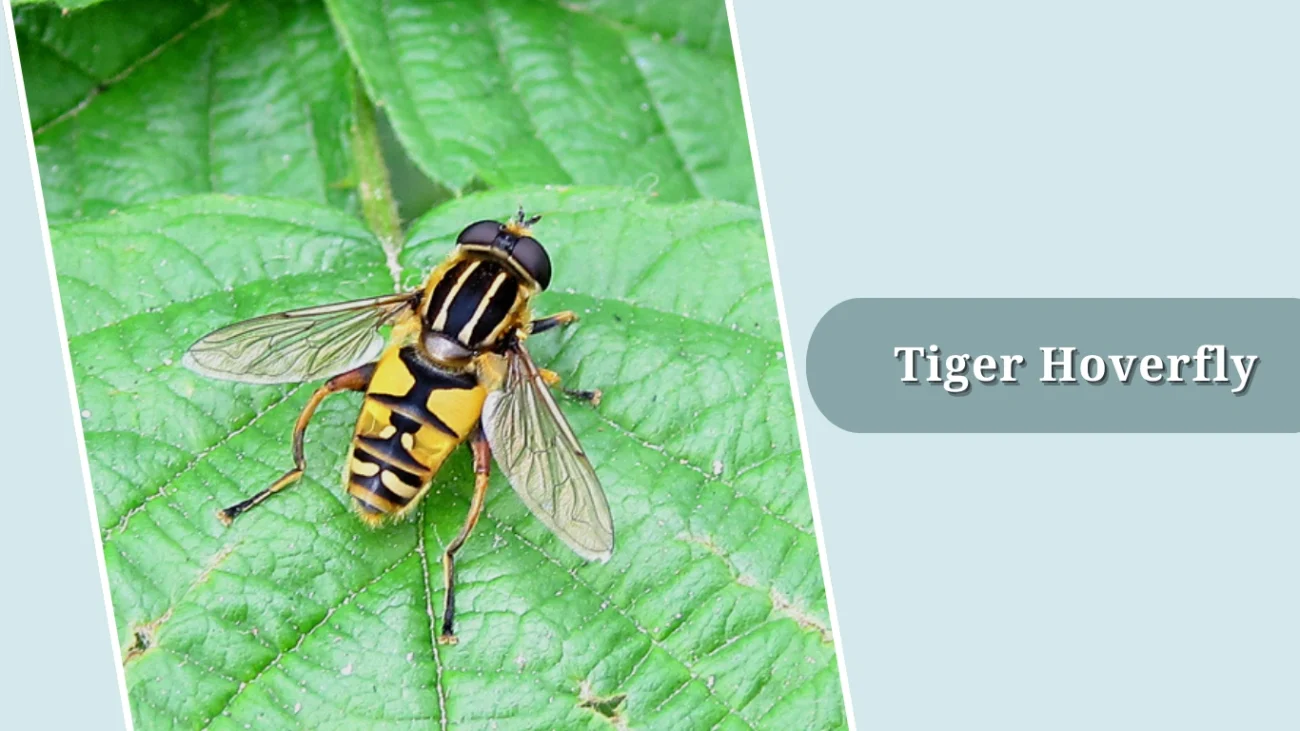
The Tiger Hoverfly is a striking species known for its bold black and yellow stripes, giving it a wasp-like appearance. It is one of the most common hoverflies in Europe and is frequently found around wetlands and gardens.
Identification
- Medium-sized hoverfly (10–14 mm).
- Abdomen with alternating black and yellow stripes resembling a tiger pattern.
- Thorax dark with pale longitudinal stripes.
- Large reddish-brown eyes.
- Long legs compared to many other hoverflies.
- Transparent wings with a slight brownish tint near the base.
Habitat
Tiger Hoverflies are strongly associated with damp habitats such as ponds, marshes, ditches, and wet meadows. However, they are also common in urban gardens, parks, and woodland clearings where flowers are plentiful.
Behavior
This species often hovers above flowers or rests on vegetation in sunny spots. They are agile flyers and can be seen darting rapidly between flowers. Males establish territories and patrol sunny clearings to attract females.
Diet
Adults feed on nectar and pollen from a wide variety of wildflowers, including thistles, umbellifers, and daisies. The larvae develop in waterlogged, decaying organic matter and are important for recycling nutrients in wet ecosystems.
Lifecycle
The lifecycle begins with eggs laid in damp or decaying organic material. Larvae thrive in wet conditions and feed on detritus for several weeks before pupating in drier areas nearby. Adults emerge after around two weeks. The species produces several generations annually, with peak numbers in late summer.
5. Dead Head Hoverfly (Myathropa florea)
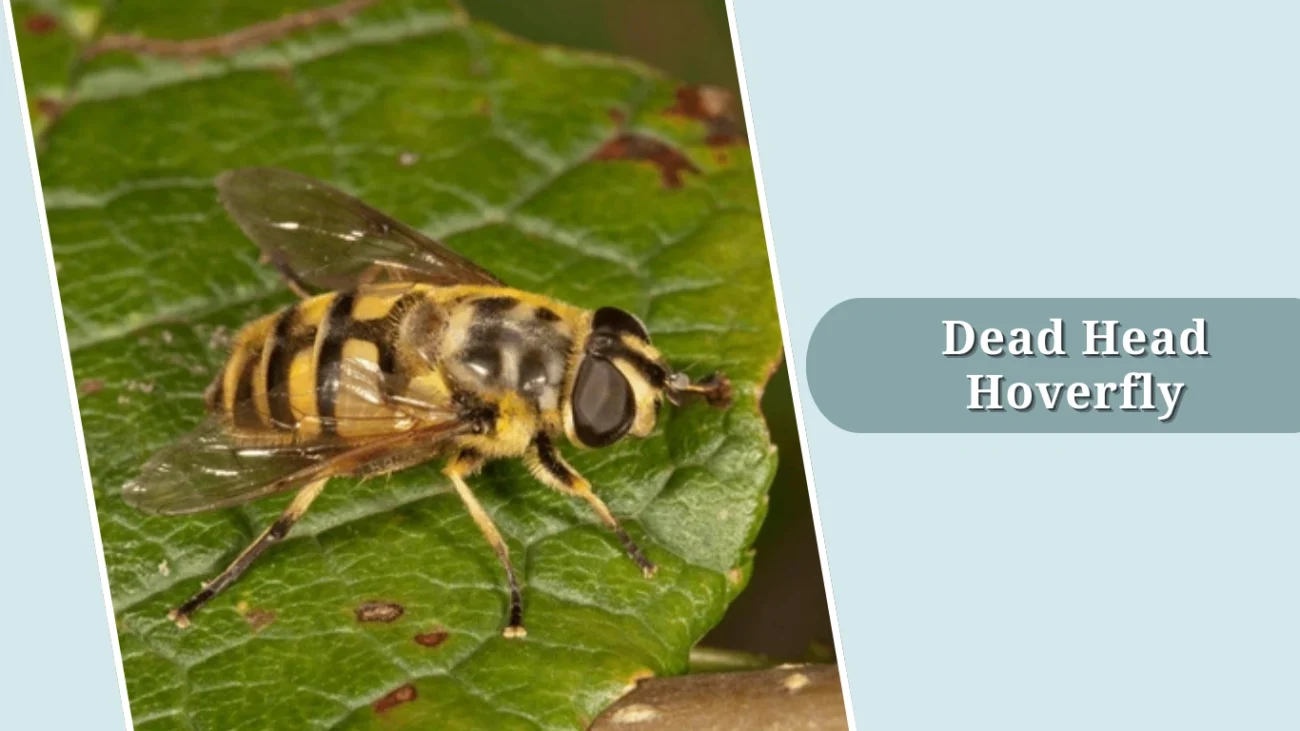
The Dead Head Hoverfly is a distinctive species often recognized by the unique skull-like marking on its thorax, which gives it the name “dead head.” It is a widespread and common hoverfly across Europe and parts of Asia.
Identification
- Medium to large hoverfly (10–14 mm).
- Thorax with a characteristic dark marking resembling a human skull or death’s head.
- Yellow and black patterned abdomen.
- Large reddish-brown eyes.
- Transparent wings with a light brown tinge.
- Robust, bee-like appearance.
Habitat
Dead Head Hoverflies are frequently found in woodlands, meadows, gardens, and near water sources. They prefer sunny clearings with abundant flowers and are often seen resting on leaves or flowers.
Behavior
This species has a strong, fast flight but can hover steadily in place. Adults are active from spring to late autumn, peaking in mid-summer. They are highly attracted to flowers for feeding and are also often spotted sunbathing on leaves.
Diet
Adults feed on nectar and pollen, particularly favoring umbellifers, daisies, and thistles. The larvae are saprophagous, developing in wet, decaying organic matter such as rotting vegetation, tree holes filled with water, and compost heaps.
Lifecycle
Females lay eggs in damp, decaying material. Larvae thrive in semi-liquid, organic-rich habitats where they feed and grow. After several weeks, they pupate in drier spots, with adults emerging within 2–3 weeks. Several generations occur throughout the year, with adults most common in summer.
6. Pellucid Hoverfly (Volucella pellucens)
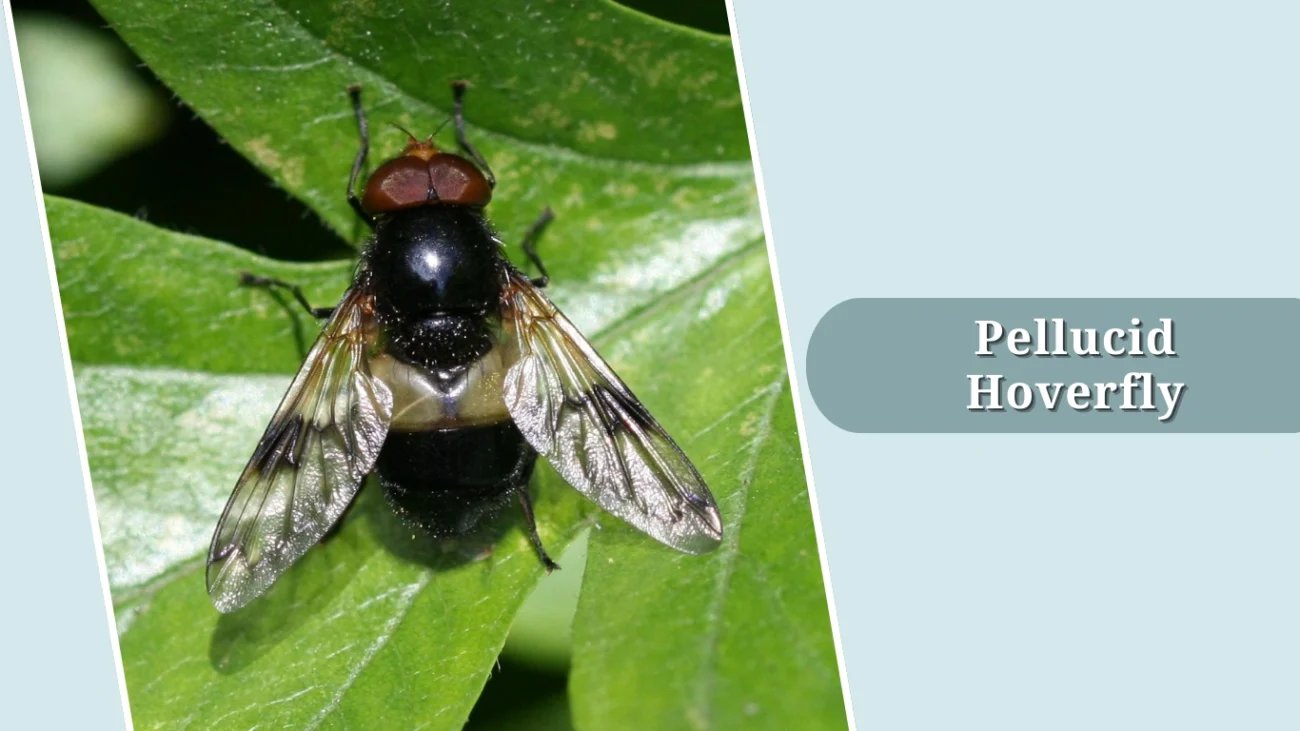
The Pellucid Hoverfly is one of the largest and most distinctive hoverflies in Europe. Easily recognized by its striking wing pattern and robust body, it is harmless despite its intimidating size and plays an important role as a pollinator.
Identification
- Large hoverfly (12–18 mm).
- Black body with a broad white band across the abdomen.
- Clear wings with a bold dark patch in the middle.
- Large reddish-brown eyes.
- Short antennae and a shiny thorax.
- Resembles a small bumblebee at first glance.
Habitat
This species is common in woodlands, hedgerows, parks, and gardens, especially near flowering shrubs and meadows. It prefers sunny, sheltered areas with abundant flowers.
Behavior
Pellucid Hoverflies fly with a slow, buzzing movement and are often seen hovering near flowers or resting on leaves. They are bold flyers and can be found in open sunny spots from late spring through early autumn.
Diet
Adults feed mainly on nectar and pollen, especially from brambles, umbellifers, and wildflowers. Larvae are scavengers, living in the nests of social wasps and bumblebees, where they consume waste material and detritus without harming the host colony.
Lifecycle
Eggs are laid inside wasp or bumblebee nests. The larvae feed on debris and organic matter within the nest, developing safely in this sheltered environment. After pupation, adults emerge in summer. Typically, there is one main generation per year, with peak numbers in June and July.
7. Hornet Hoverfly (Volucella zonaria)
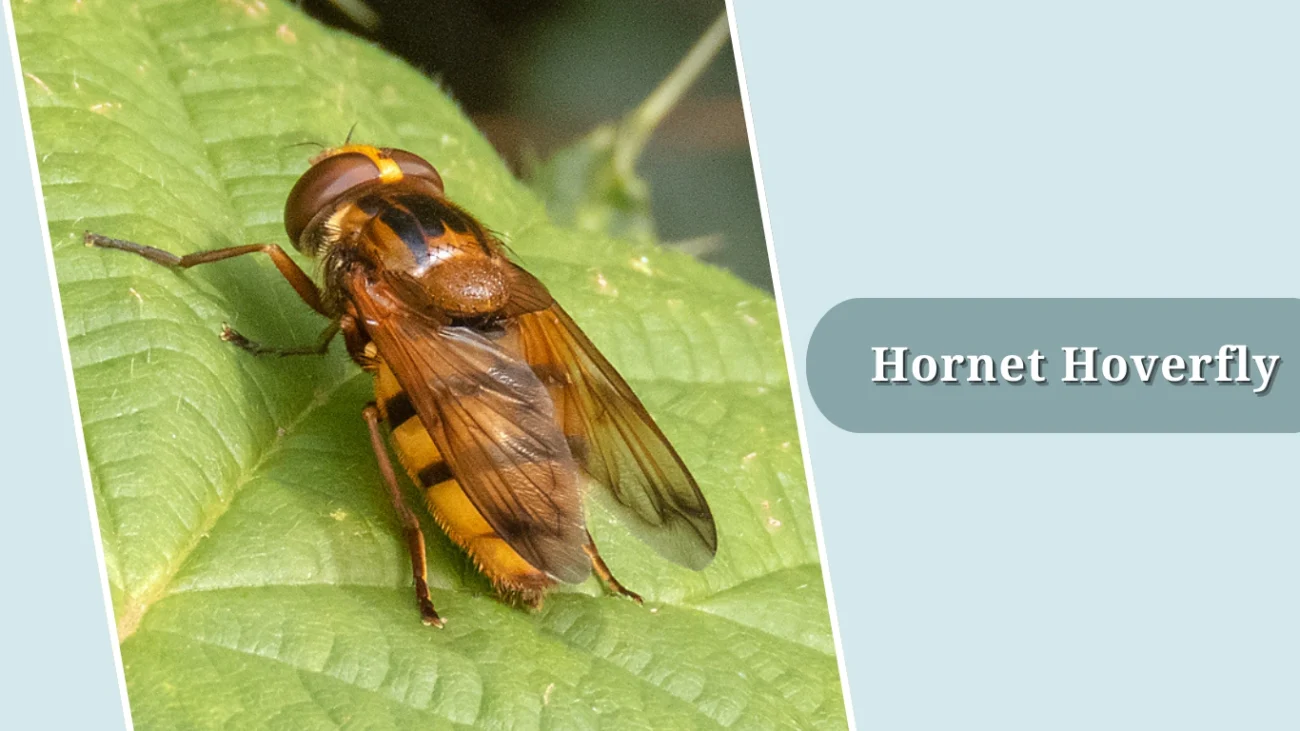
The Hornet Hoverfly is the largest hoverfly species in Europe and is an impressive mimic of the European hornet. Despite its intimidating appearance, it is completely harmless and plays a valuable role in pollination.
Identification
- Very large hoverfly (up to 20–25 mm).
- Abdomen with bold yellow and brown bands resembling a hornet.
- Reddish-brown thorax with golden hairs.
- Large reddish compound eyes.
- Clear wings with a slight brownish tint.
- Robust body, giving it a wasp-like presence.
Habitat
Hornet Hoverflies are often found in gardens, woodland edges, parks, and hedgerows. They prefer areas with flowering plants and are especially abundant in southern and central Europe, though their range is expanding northwards.
Behavior
This species is a strong and fast flyer, often buzzing loudly like a hornet. Adults are active from midsummer to early autumn, frequently seen hovering near flowers. They are also known to visit wasp nests, where females lay their eggs.
Diet
Adults feed on nectar and pollen, with a preference for buddleia, thistles, and other large flowering plants. The larvae are scavengers, living inside social wasp nests where they feed on detritus and waste material without harming the colony.
Lifecycle
Females deposit eggs inside wasp nests. The larvae grow in the nest environment, feeding on organic debris. After pupation, adults emerge in late summer. The species typically produces one generation per year, peaking in July and August.
8. Batman Hoverfly (Myathropa florea)

Often called the “Batman Hoverfly” due to the dark marking on its thorax that resembles the Batman logo, this species is the same as the Dead Head Hoverfly but popularly recognized under this nickname. It is widespread, attractive, and a frequent garden visitor.
Identification
- Medium to large hoverfly (10–14 mm).
- Thorax marked with a dark pattern resembling the Batman symbol.
- Yellow and black patterned abdomen.
- Transparent wings with a light brown shade.
- Robust body with a bee-like appearance.
Habitat
The Batman Hoverfly thrives in woodlands, gardens, parks, and meadows. It is particularly associated with areas that provide both flowers for adults and damp, decaying matter for larvae.
Behavior
Adults hover over flowers and bask on leaves in sunny conditions. They are strong, agile flyers and are most active during warm months, from spring through late autumn.
Diet
Adults feed on nectar and pollen from a variety of wildflowers, including daisies and umbellifers. The larvae develop in damp, decaying organic matter such as compost heaps, rotting vegetation, and water-filled tree holes.
Lifecycle
Eggs are laid in moist, decaying habitats. Larvae develop by feeding on decomposing organic matter, then pupate in sheltered spots. Adults emerge within weeks, with multiple generations produced throughout the summer.
9. Tapered Dronefly (Eristalis pertinax)
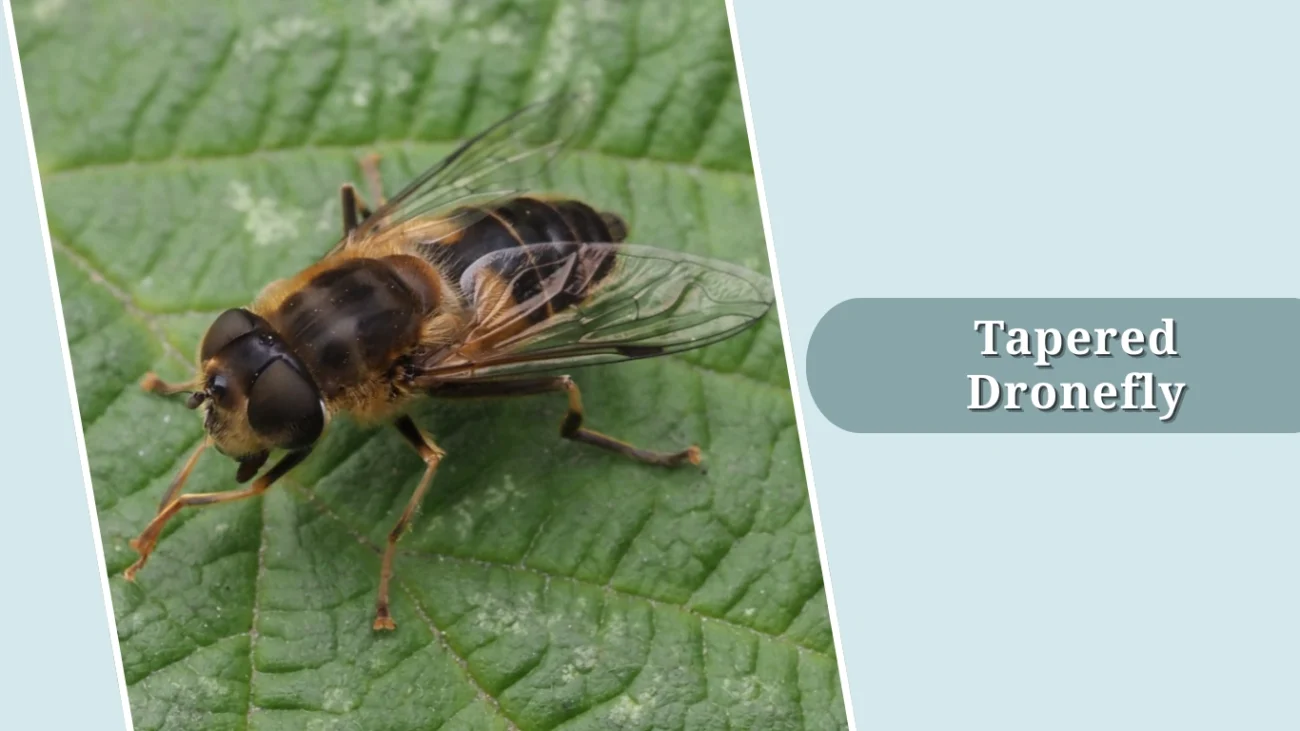
The Tapered Dronefly is a common species that closely resembles the honeybee. It is named for its tapered abdomen and is often seen visiting flowers in gardens and meadows. Like other droneflies, its larvae are known as “rat-tailed maggots.”
Identification
- Medium to large hoverfly (11–15 mm).
- Abdomen brown to black with yellowish side markings, slightly tapered at the end.
- Large, reddish-brown compound eyes.
- Legs with distinct yellowish tibiae (shin segments).
- Transparent wings with a faint brownish stigma.
Habitat
Tapered Droneflies inhabit gardens, parks, meadows, hedgerows, and wetlands. They are widespread across Europe and frequently found in sunny areas with abundant flowers.
Behavior
Adults fly with a bee-like buzzing sound and often hover around flowers. They are active from early spring until late autumn, with males defending territories in sunny clearings. The larvae develop in stagnant water rich in organic matter, using a long tail-like breathing tube.
Diet
Adults feed on nectar and pollen from a wide variety of flowers, especially umbellifers, dandelions, and thistles. Larvae feed on organic debris and microorganisms in polluted or stagnant water, playing an important role in nutrient recycling.
Lifecycle
Females lay eggs near stagnant or polluted water. The larvae develop over several weeks, then pupate in drier locations nearby. Adults emerge within 2–3 weeks depending on temperature. This species produces multiple generations per year, especially during warm seasons.
10. Bulb Fly (Merodon equestris)
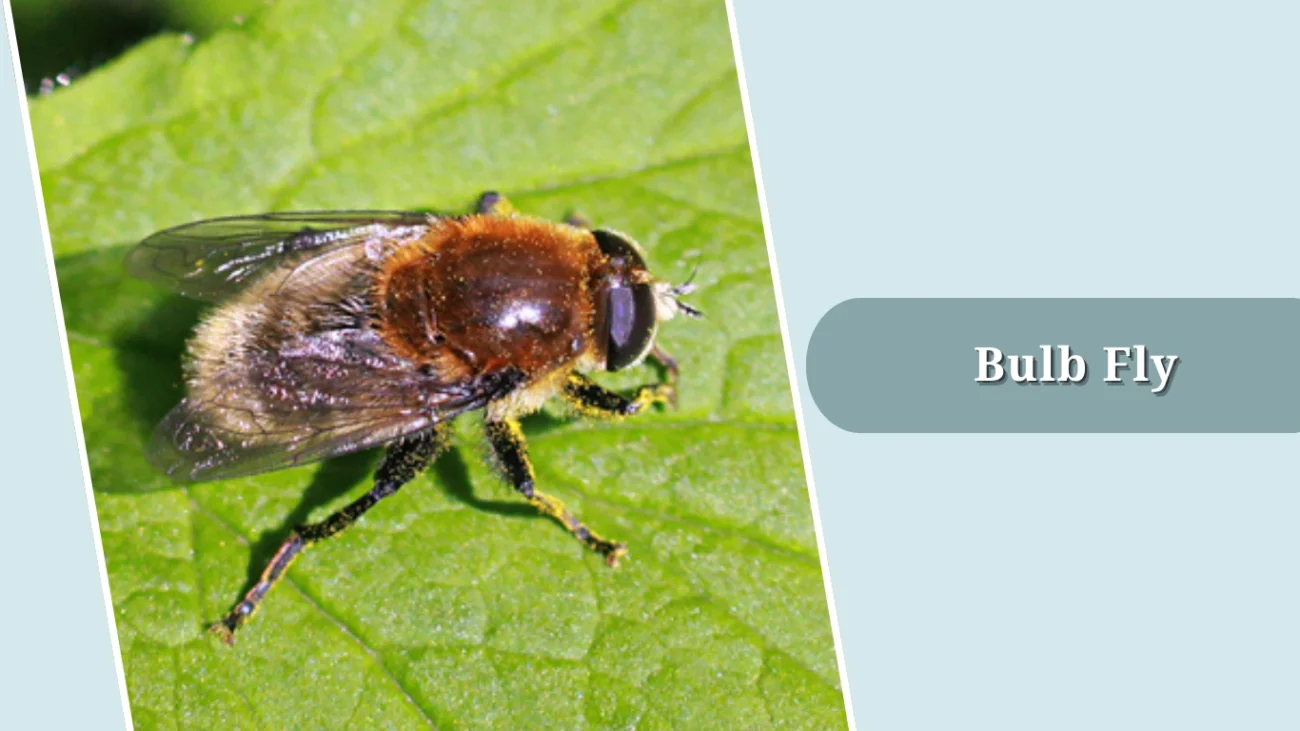
The Bulb Fly is a robust hoverfly that strongly resembles a bumblebee, a mimicry that helps deter predators. While the adults are beneficial pollinators, the larvae are considered pests because they feed on the bulbs of ornamental plants.
Identification
- Large hoverfly (12–14 mm).
- Thick, bumblebee-like body with dense yellow, brown, or black hairs.
- Short antennae and large reddish eyes.
- Broad wings, often slightly smoky in color.
- Abdomen color varies depending on form (several mimic patterns exist).
Habitat
Bulb Flies are found in gardens, parks, woodland edges, and flower-rich meadows. They are especially common in areas where ornamental bulbs such as daffodils and tulips are grown.
Behavior
Adults are strong, fast flyers and can often be seen hovering near flowers. They mimic bumblebees in both appearance and flight style, which provides protection against predators. Activity peaks during spring and early summer.
Diet
Adults feed on nectar and pollen from a wide variety of flowers, playing an important role in pollination. The larvae, however, bore into and consume the bulbs of plants such as daffodils, tulips, and hyacinths, often causing significant damage in gardens.
Lifecycle
Females lay eggs at the base of bulb plants. Larvae bore into the bulbs and feed internally for several weeks, sometimes destroying the entire bulb. They pupate in the soil near the plant. Adults emerge the following spring, usually producing one generation per year.
11. Sun Fly (Helophilus trivittatus)
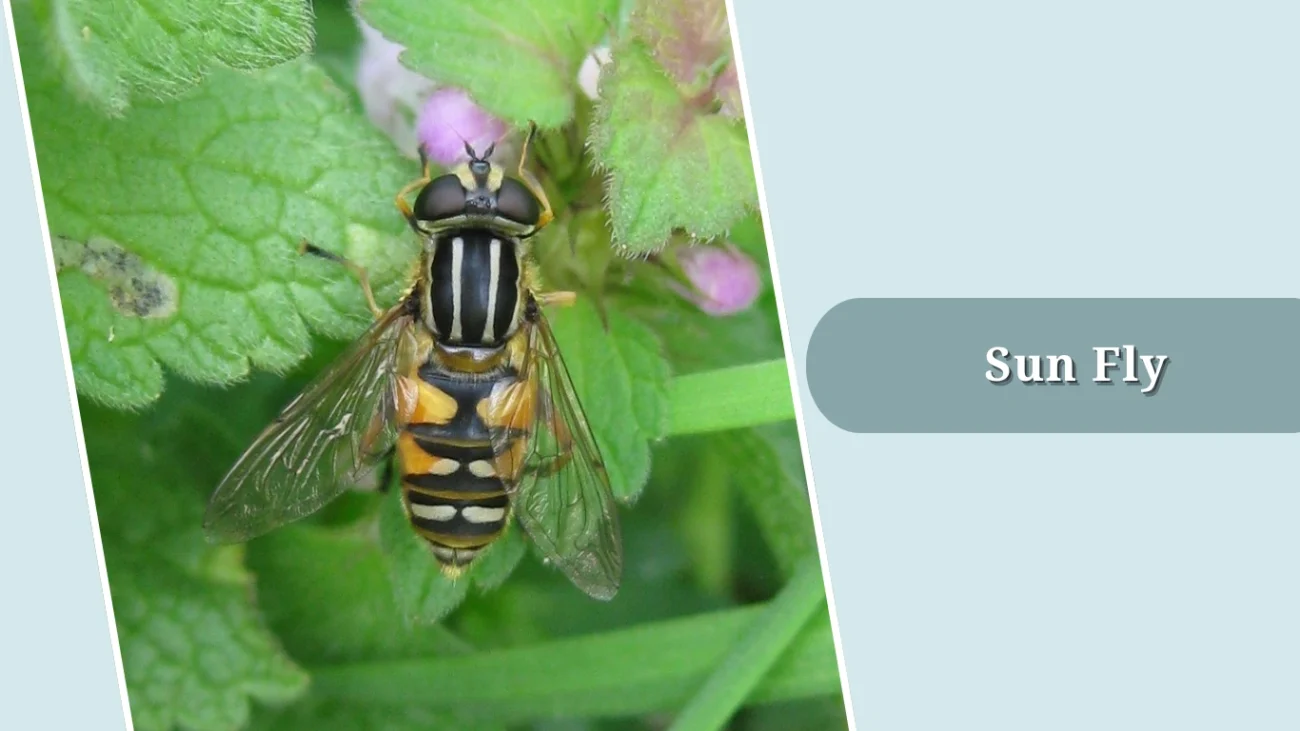
The Sun Fly is a large, attractive hoverfly often seen basking in sunny spots, which is how it gets its name. It is one of the most striking Helophilus species, easily recognized by its bold stripes and large size.
Identification
- Large hoverfly (12–16 mm).
- Thorax with three distinct pale longitudinal stripes.
- Abdomen patterned with yellow and black bands.
- Long legs, often yellowish in color.
- Transparent wings with a faint dark stigma.
Habitat
The Sun Fly prefers wetlands, marshes, riverbanks, and damp meadows but is also found in gardens and parks. It favors sunny, open areas rich in flowers and water sources.
Behavior
Adults are strong flyers and spend much time basking on leaves in sunny spots. They hover around flowers and are especially active on warm summer days. Males patrol territories to attract females, while females are often found feeding on flowers.
Diet
Adults feed on nectar and pollen from a wide variety of flowers, particularly umbellifers, dandelions, and thistles. Larvae live in wet, decaying organic matter, feeding on detritus and contributing to nutrient cycling in damp ecosystems.
Lifecycle
Females lay eggs in wet, organic-rich environments. Larvae develop in stagnant, waterlogged matter, growing over several weeks before pupating in nearby drier habitats. Adults usually emerge in late spring and continue to be active until early autumn, producing one or more generations per year depending on climate.
12. Large Pied Hoverfly (Volucella pellucens)
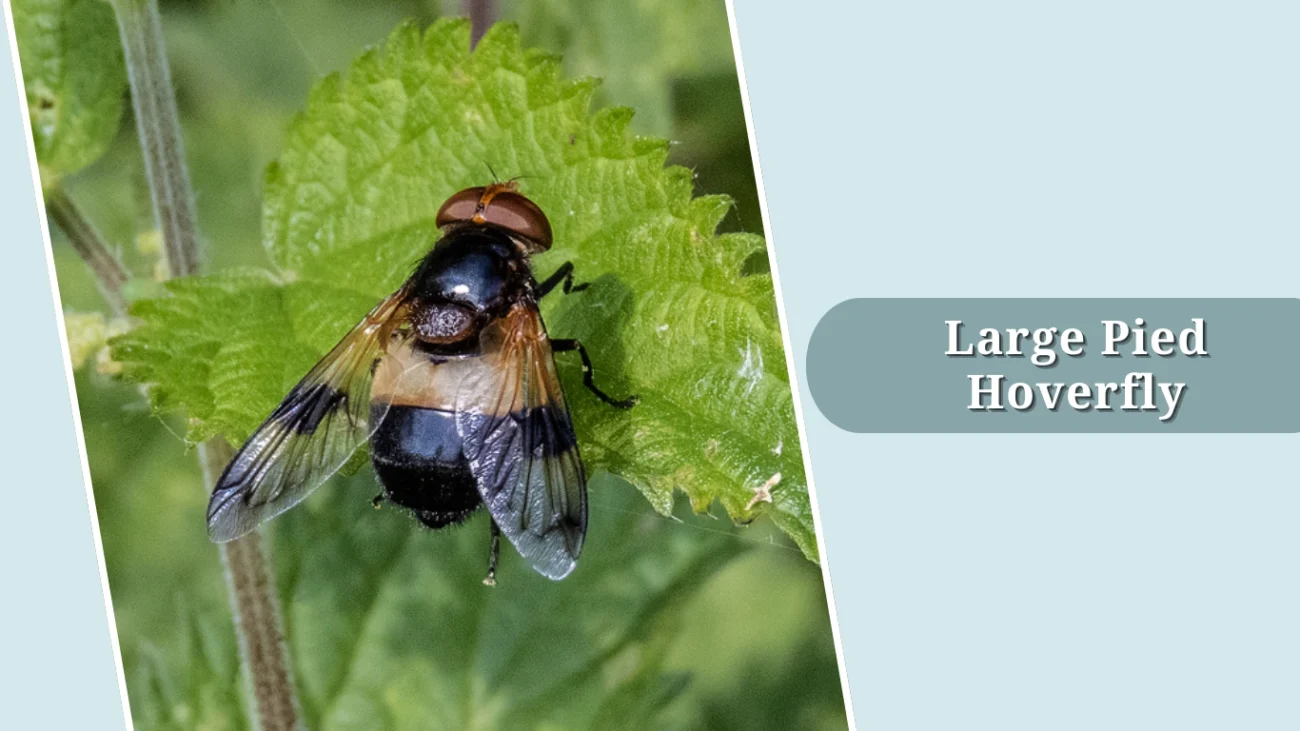
The Large Pied Hoverfly is a bold and unmistakable species, easily recognized by its black body and broad white band across the abdomen. It is one of the most common large hoverflies in Europe and often seen in gardens and woodlands.
Identification
- Large hoverfly (12–18 mm).
- Shiny black body with a conspicuous white band on the abdomen.
- Clear wings with a broad dark patch in the middle.
- Large reddish-brown compound eyes.
- Short antennae and a glossy thorax.
Habitat
This species inhabits woodlands, hedgerows, parks, and gardens. It is particularly frequent in sunny clearings and along woodland edges where flowering plants are abundant.
Behavior
Adults fly with a slow, steady movement and are often seen hovering over flowers or resting on vegetation. They are active from late spring through summer and are bold, often approaching people without fear.
Diet
Adults feed mainly on nectar and pollen, particularly from bramble flowers, umbellifers, and thistles. The larvae develop inside wasp and hornet nests, feeding harmlessly on waste and organic debris.
Lifecycle
Females enter wasp or hornet nests to lay their eggs. The larvae live safely inside, feeding on detritus without damaging the host colony. Pupation occurs within or near the nest, and adults emerge in early to mid-summer. Typically, there is one main generation per year.
13. White-Belted Hoverfly (Sphaerophoria scripta)
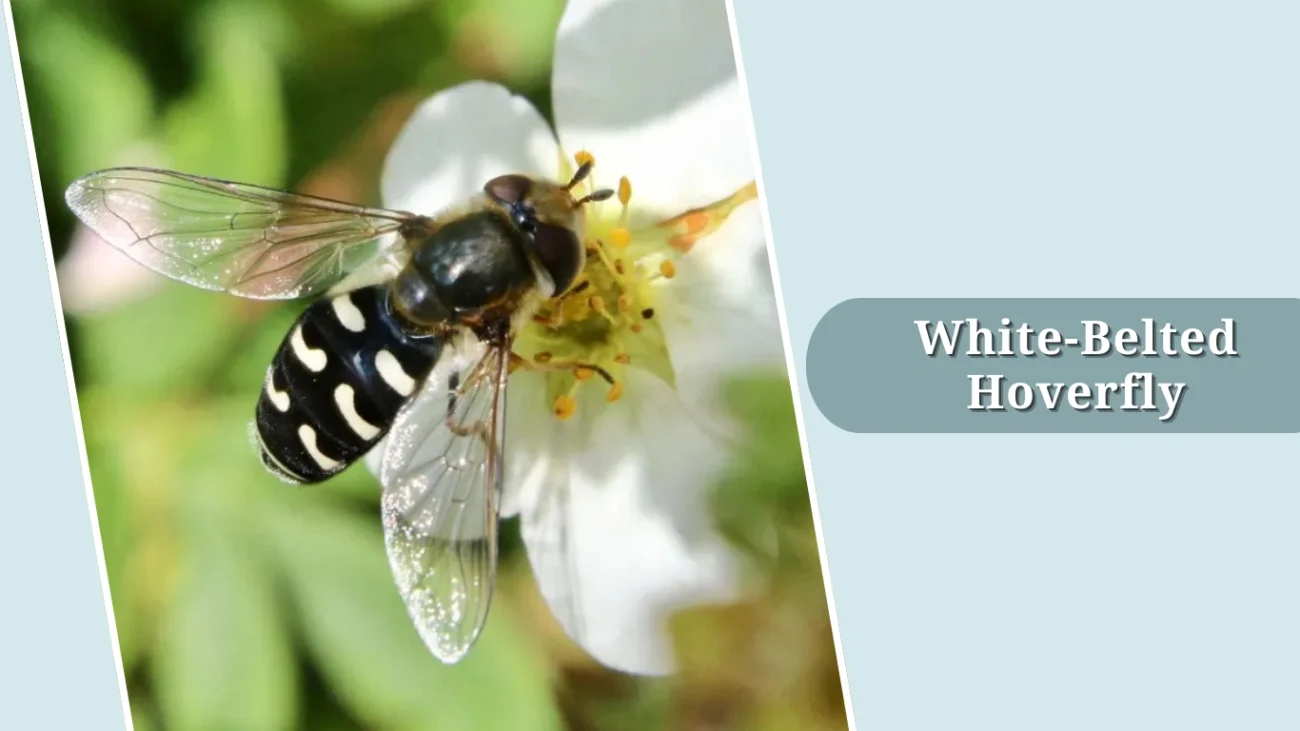
The White-Belted Hoverfly is a small, slender species widely distributed across Europe, Asia, and parts of North Africa. Despite its delicate appearance, it is an important natural pest controller thanks to its aphid-eating larvae.
Identification
- Small hoverfly (6–9 mm).
- Long, narrow body with yellow and black banding.
- White belt-like markings on the abdomen, varying in shape.
- Transparent wings with a faint stigma.
- Males usually have a longer, slimmer abdomen than females.
Habitat
This hoverfly thrives in gardens, meadows, farmland, hedgerows, and urban green spaces. It is especially common in flower-rich habitats and agricultural areas with high aphid populations.
Behavior
Adults are agile flyers, hovering close to flowers and darting quickly between them. They are migratory, often appearing in large numbers during summer. Active from spring to late autumn, they are abundant in warm conditions.
Diet
Adults feed on nectar and pollen from small flowers, especially umbellifers, daisies, and dandelions. The larvae are voracious predators of aphids, making this species highly beneficial in natural and agricultural pest control.
Lifecycle
Females lay eggs near aphid colonies on leaves and stems. The larvae hatch and consume large numbers of aphids over 1–2 weeks before pupating. Adults emerge within 10–14 days. Multiple generations occur each year, with numbers peaking in summer.
14. Glass-Winged Hoverfly (Scaeva pyrastri)

The Glass-Winged Hoverfly is a striking migratory species recognized by its bold white markings and transparent wings. It is widespread across Europe, Asia, and North America, often appearing in large numbers during summer migrations.
Identification
- Medium-sized hoverfly (10–15 mm).
- Black abdomen with three pairs of distinctive white crescent-shaped markings.
- Transparent wings with a slight iridescence, giving a “glassy” appearance.
- Large reddish-brown compound eyes.
- Slender body with a wasp-like look.
Habitat
This hoverfly is commonly found in gardens, grasslands, meadows, hedgerows, and agricultural fields. It prefers sunny habitats with abundant flowers and aphid populations.
Behavior
Glass-Winged Hoverflies are strong fliers and highly migratory, often traveling long distances across continents. They hover steadily around flowers and are particularly active during summer and early autumn.
Diet
Adults feed on nectar and pollen, showing preference for umbellifers, daisies, and dandelions. The larvae are predatory and feed heavily on aphids, playing an important role in natural pest control.
Lifecycle
Females lay eggs near aphid-infested plants. The larvae consume large numbers of aphids over 1–2 weeks before pupating. Adults emerge within 10–15 days. Multiple generations occur annually, often boosted by migratory influxes from southern regions.
15. Hairy-Eyed Hoverfly (Dasysyrphus albostriatus)
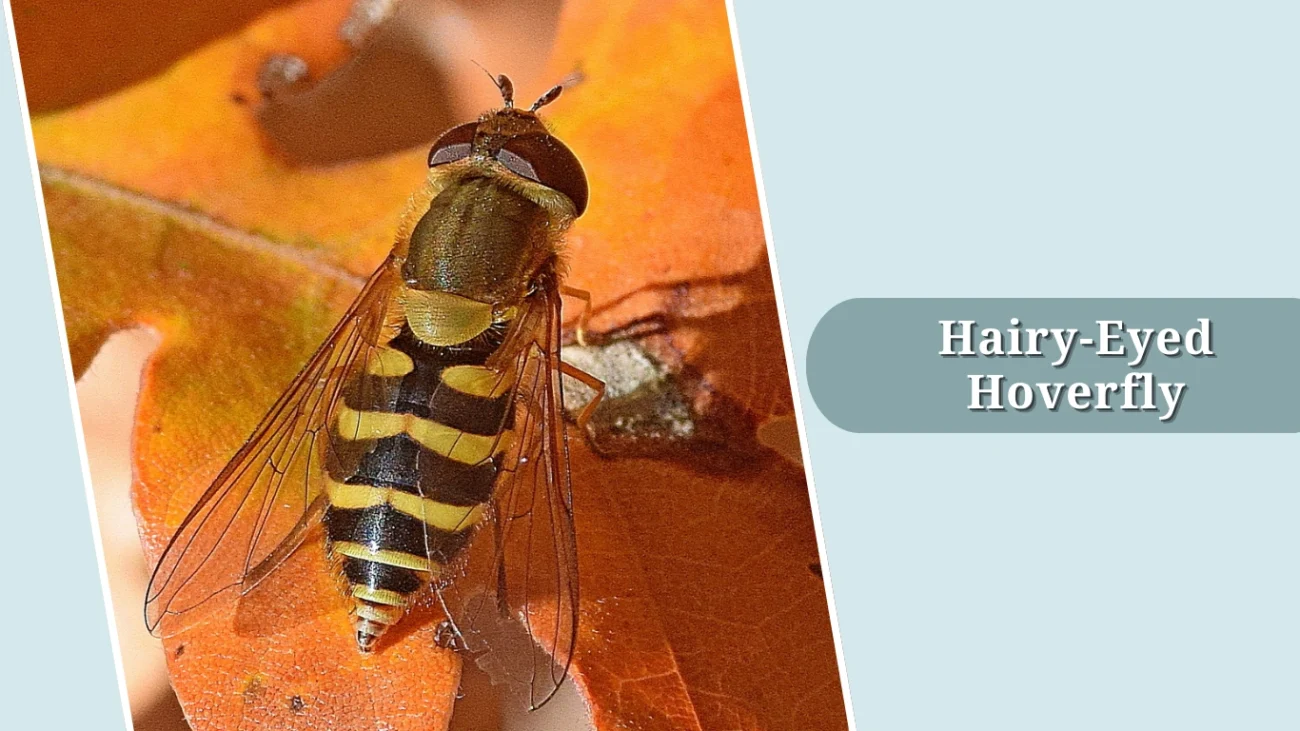
The Hairy-Eyed Hoverfly is a slender, medium-sized species recognized for its hairy eyes and distinctive abdominal patterns. Though less showy than some larger hoverflies, it plays an important role as a pollinator and aphid predator.
Identification
- Medium-sized hoverfly (8–12 mm).
- Dark abdomen with yellow oval or elongated spots on each segment.
- Thorax metallic dark with faint pale stripes.
- Eyes covered with fine hairs, visible under magnification.
- Transparent wings with a subtle brownish stigma.
Habitat
This species inhabits woodland edges, meadows, gardens, and hedgerows. It favors areas with abundant flowers and is often found in shaded or semi-shaded environments.
Behavior
Hairy-Eyed Hoverflies are agile and fast fliers, often hovering close to flowers before darting to another. They are most active from late spring through summer and are commonly seen in smaller numbers compared to more conspicuous species.
Diet
Adults feed on nectar and pollen from wildflowers, particularly umbellifers, daisies, and dandelions. Larvae are predatory and specialize in feeding on aphids, contributing to natural pest control.
Lifecycle
Females lay eggs near aphid colonies. The larvae feed on aphids for 1–2 weeks before pupating in soil or leaf litter. Adults emerge within 2 weeks, with multiple generations occurring each year, especially during warm months.
16. Common Hoverfly (Syrphus vitripennis)

The Common Hoverfly is a widespread species across Europe and Asia, frequently found in gardens, parks, and farmland. It is an important natural ally for farmers and gardeners because its larvae feed extensively on aphids.
Identification
- Medium-sized hoverfly (10–12 mm).
- Black abdomen with broad yellow bands.
- Thorax dark with a metallic sheen.
- Females have yellow hind femora (leg segments), while males do not.
- Transparent wings with a faint stigma.
- Reddish-brown compound eyes.
Habitat
This species is highly adaptable and found in gardens, woodlands, hedgerows, meadows, and agricultural fields. It thrives in environments with both flowers for adults and aphid populations for larvae.
Behavior
Adults exhibit the classic hovering flight pattern, often holding still in mid-air before darting quickly to another flower. They are active from spring through autumn, peaking in late summer when aphid populations are highest.
Diet
Adults feed on nectar and pollen from a wide variety of flowers, especially umbellifers, daisies, and buttercups. The larvae are voracious predators of aphids, consuming large numbers during their development.
Lifecycle
Females lay eggs directly on plants infested with aphids. The larvae hatch and feed on aphids for 1–2 weeks before pupating. Adults emerge after about 10–14 days, and several generations occur annually, especially during warm months.
17. Footballer Hoverfly (Helophilus pendulus)
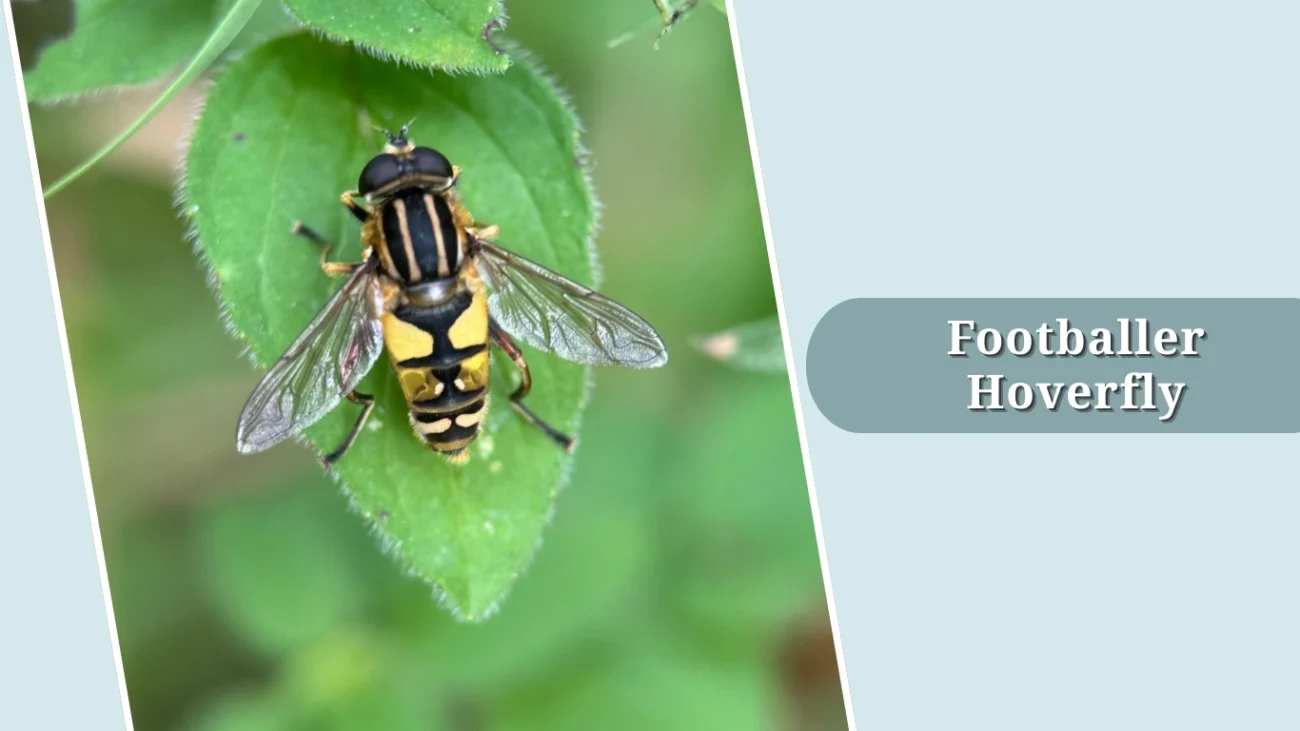
The Footballer Hoverfly is one of the most familiar hoverflies in Europe, easily recognized by the bold vertical stripes on its thorax that resemble a football (soccer) referee’s shirt. It is common in gardens, wetlands, and meadows.
Identification
- Medium-sized hoverfly (10–14 mm).
- Thorax marked with bold yellow and black vertical stripes.
- Abdomen patterned with yellow and black bands.
- Long legs, often with yellowish coloration.
- Transparent wings with a faint brownish stigma.
Habitat
This species is strongly associated with wetlands, ponds, ditches, and damp meadows, but it is also frequent in gardens, parks, and woodland clearings. It thrives where water and flowers are both available.
Behavior
The Footballer Hoverfly hovers around flowers and is often seen sunbathing on leaves in warm weather. Males defend sunny spots, patrolling for females. Adults are active from spring to late autumn, peaking in mid to late summer.
Diet
Adults feed on nectar and pollen from a wide variety of flowers, especially brambles, thistles, and umbellifers. The larvae live in stagnant, organic-rich water where they feed on decaying matter and microorganisms.
Lifecycle
Females lay eggs in wet or decaying habitats. Larvae, often called “rat-tailed maggots,” develop in stagnant water, breathing through a tail-like siphon. After several weeks of growth, they pupate in drier ground nearby. Adults emerge in summer, with multiple generations possible in warm climates.