Bee flies (family Bombyliidae) are fascinating insects that mimic bees while playing unique ecological roles as both pollinators and parasites. With their fuzzy bodies, hovering flight, and long proboscises, they are often mistaken for true bees. Found in diverse habitats worldwide, these flies exhibit intriguing behaviors and lifecycles. Below, we explore 13 distinct types of bee flies, detailing their identification, habitat, diet, and developmental stages.
1. Greater Bee Fly (Bombylius major)
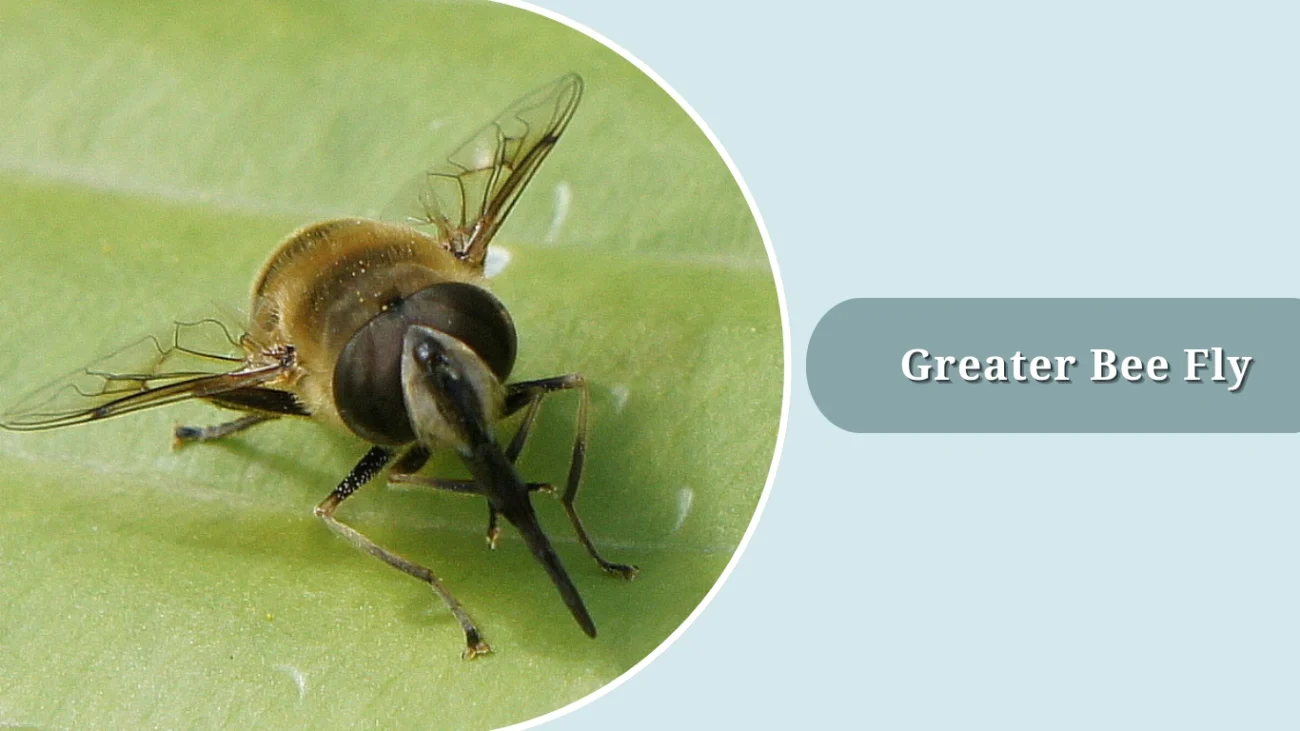
The Greater Bee Fly is one of the most common and widespread bee flies, often seen in spring hovering around flowers. Despite its bee-like appearance, it is a true fly that plays a unique ecological role as both a pollinator and a parasite of solitary bees.
Identification
- Fuzzy body resembling a bumblebee
- Long, rigid proboscis used for feeding on nectar
- Light brown to golden hairs covering the thorax and abdomen
- Wings held outstretched at an angle when resting
- Dark markings near the front half of the wings
Habitat
The Greater Bee Fly is commonly found in gardens, meadows, woodland edges, and open grasslands. They are especially abundant in areas with plenty of wildflowers and solitary bee nesting sites.
Behavior
These flies are strong fliers and are often seen hovering in front of flowers, sipping nectar with their long proboscis. Females flick their eggs into the burrows of solitary bees, where the larvae will later parasitize the host.
Diet
Adult Greater Bee Flies feed mainly on nectar and pollen from early-blooming flowers, acting as effective pollinators. The larvae, however, are parasitic and feed on the larvae of solitary bees and their stored food.
Lifecycle
The lifecycle begins when females scatter their eggs near solitary bee nests. Upon hatching, the larvae enter the bee burrows, consuming the bee larvae and food stores. Adults emerge in early spring, with their peak activity from March to May.
2. Tiger Bee Fly (Xenox tigrinus)
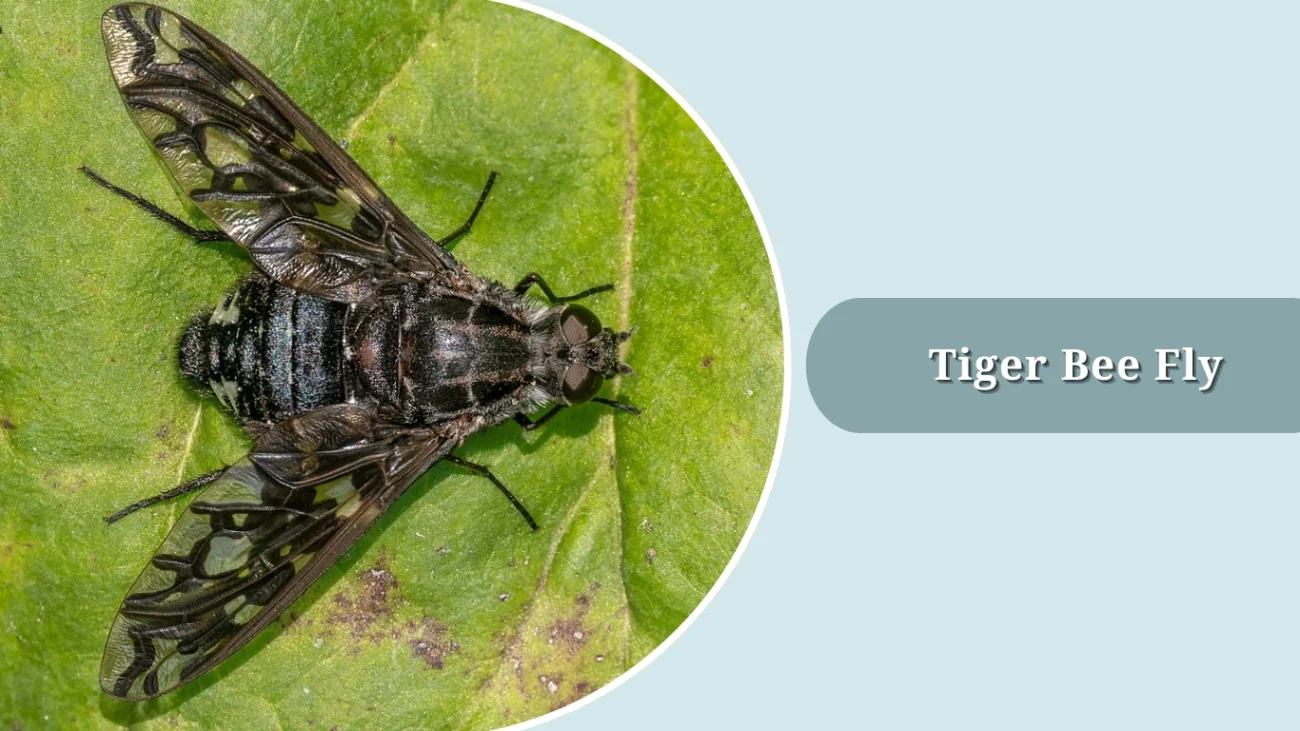
The Tiger Bee Fly is a striking bee fly species recognized for its bold black-and-white wing patterns. It is often seen in summer months and is known for targeting carpenter bee larvae as hosts for its young.
Identification
- Large body with a wasp-like appearance
- Distinctive black wings with white translucent patches
- Short, broad abdomen
- Dark, bristly thorax
- Powerful and fast flight
Habitat
Tiger Bee Flies are typically found near wooded areas, gardens, and old structures where carpenter bees nest. They are most common in North America, especially in regions with warm summers.
Behavior
These bee flies are agile fliers, often seen darting quickly around flowers or hovering in sunny spots. Females lay eggs in or near the burrows of carpenter bees. Their flight style and bold wing markings make them easily recognizable.
Diet
Adult Tiger Bee Flies feed primarily on nectar from various wildflowers, serving as pollinators. Their larvae, however, are parasitic and consume the larvae of carpenter bees inside wooden tunnels.
Lifecycle
The female lays eggs near carpenter bee nests. Upon hatching, the larvae invade the bee’s burrow, feeding on the host larvae and food provisions. Adults are most active during mid to late summer.
3. Poecilanthrax Bee Fly (Poecilanthrax lucifer)

The Poecilanthrax Bee Fly is a visually striking species known for its bold wing patterns and parasitic relationship with grasshoppers. It is considered one of the more flamboyant members of the bee fly family.
Identification
- Medium to large size
- Black wings with bold white or yellow banding
- Body covered with dark hairs
- Stout, compact abdomen
- Clear patches on wings forming distinct patterns
Habitat
This species is commonly found in arid and semi-arid environments, such as deserts, grasslands, and scrublands. They are often associated with sandy soils where grasshoppers and other insect hosts are abundant.
Behavior
Poecilanthrax bee flies are agile and often perch in sunny open areas. They are active during hot summer days, frequently hovering near flowers to feed. Females seek out grasshopper egg pods in sandy soil to lay their eggs.
Diet
Adults feed on nectar from flowering plants, acting as pollinators. The larvae are parasitic, consuming the eggs and young stages of grasshoppers.
Lifecycle
The lifecycle begins when the female deposits eggs near grasshopper egg pods. Once hatched, the larvae burrow into the soil to find and feed on grasshopper eggs. Adults emerge during warm seasons, coinciding with grasshopper activity.
4. Anthrax Bee Fly (Anthrax georgicus)
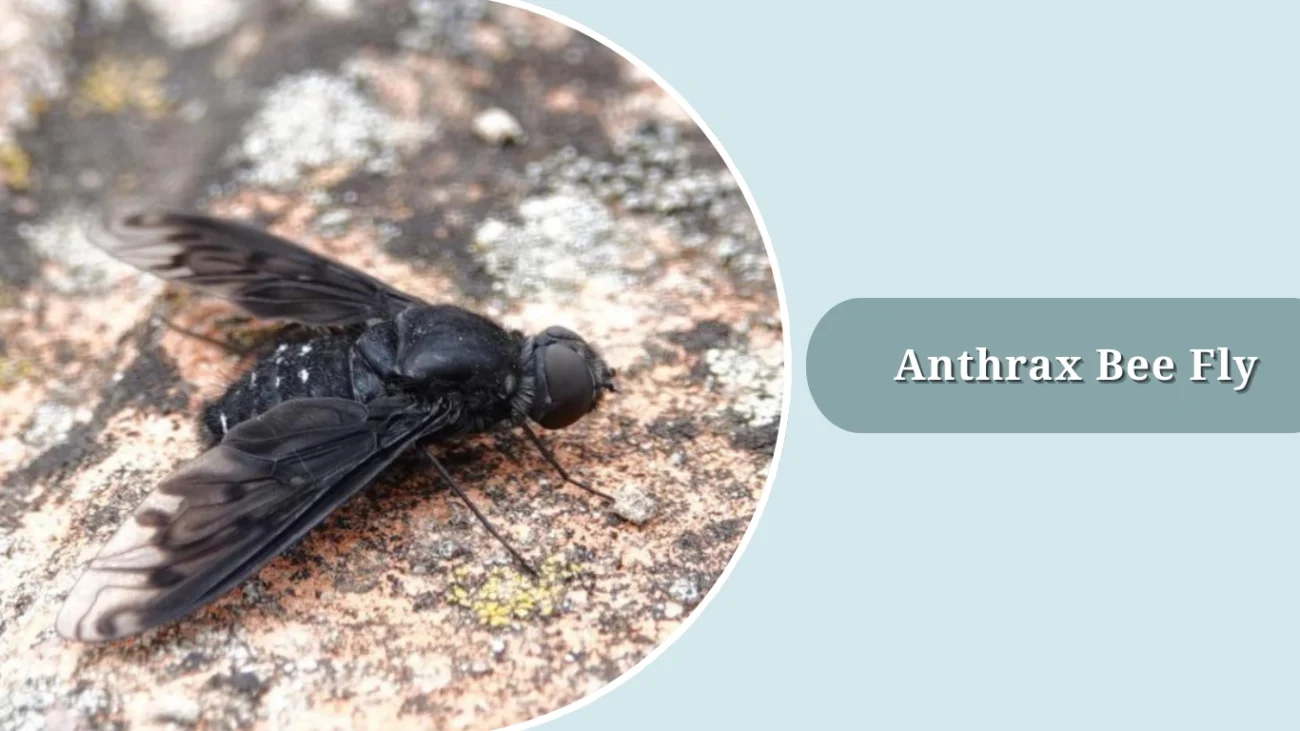
The Anthrax Bee Fly is a notable species with a dark, velvety appearance and distinctive wing markings. Despite its ominous name, it poses no threat to humans and plays a dual role as a pollinator and parasite.
Identification
- Medium-sized fly with a stout body
- Velvety black coloration
- Clear wings with dark margins or patterns
- Short antennae
- Long, slender proboscis for nectar feeding
Habitat
Anthrax Bee Flies are found in sunny, open habitats such as grasslands, meadows, gardens, and forest edges. They prefer areas where solitary bees and wasps nest in sandy soils.
Behavior
These flies are stealthy in their parasitic habits. Females scatter eggs at the entrances of bee and wasp burrows, allowing the larvae to invade the host nest. Adults are also active fliers and are often seen hovering at flowers.
Diet
Adults primarily feed on nectar from a variety of flowers, aiding in pollination. The larvae, however, are parasitic and consume the larvae of solitary bees and wasps along with their stored provisions.
Lifecycle
The female lays eggs near the entrance of host nests. Upon hatching, the larvae enter and feed on the host’s brood. Adults emerge during warm months, often peaking in mid-to-late summer.
5. Villa Bee Fly (Villa spp.)
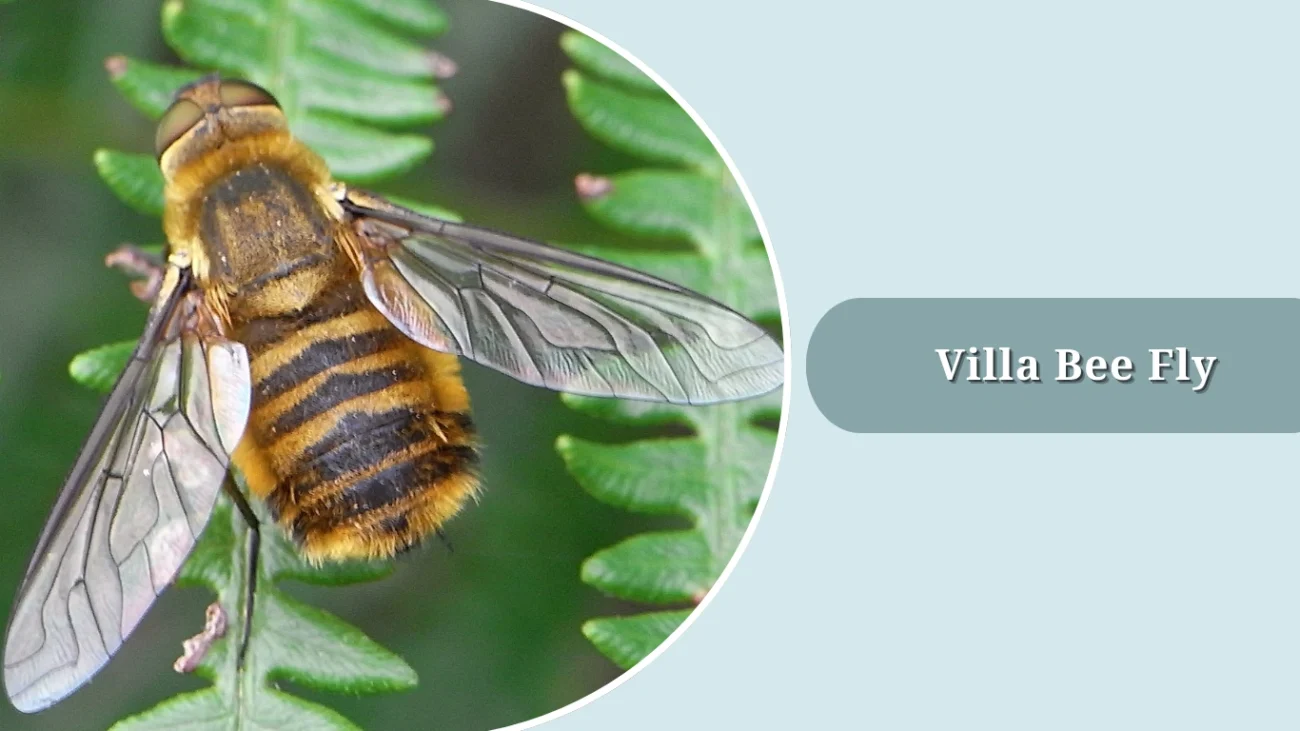
The Villa Bee Fly is a diverse group within the Bombyliidae family, known for their slender bodies and clear wings with dark edging. They are commonly seen in warm, open habitats and are important both as pollinators and as parasitoids.
Identification
- Slender, elongated body
- Covered with fine hairs, giving a fuzzy look
- Wings typically clear with dark borders or patches
- Long legs, often dangling during flight
- Long proboscis for sipping nectar
Habitat
Villa Bee Flies are widespread and are found in dry grasslands, sandy areas, gardens, and open woodlands. They thrive in regions where solitary bees and wasps are present for their larvae to parasitize.
Behavior
Villa species are strong fliers, frequently seen hovering near flowers or darting quickly through open areas. Females drop their eggs near host burrows, using a flicking motion of the abdomen.
Diet
Adults feed on nectar and pollen from a wide variety of flowering plants, making them efficient pollinators. Larvae develop as parasitoids, feeding on the larvae of solitary bees or wasps.
Lifecycle
Eggs are laid close to the nests of suitable hosts. Once hatched, the larvae enter the nests and consume the host brood and food provisions. Adults are most active in warm summer months.
6. Lepidanthrax Bee Fly (Lepidanthrax spp.)
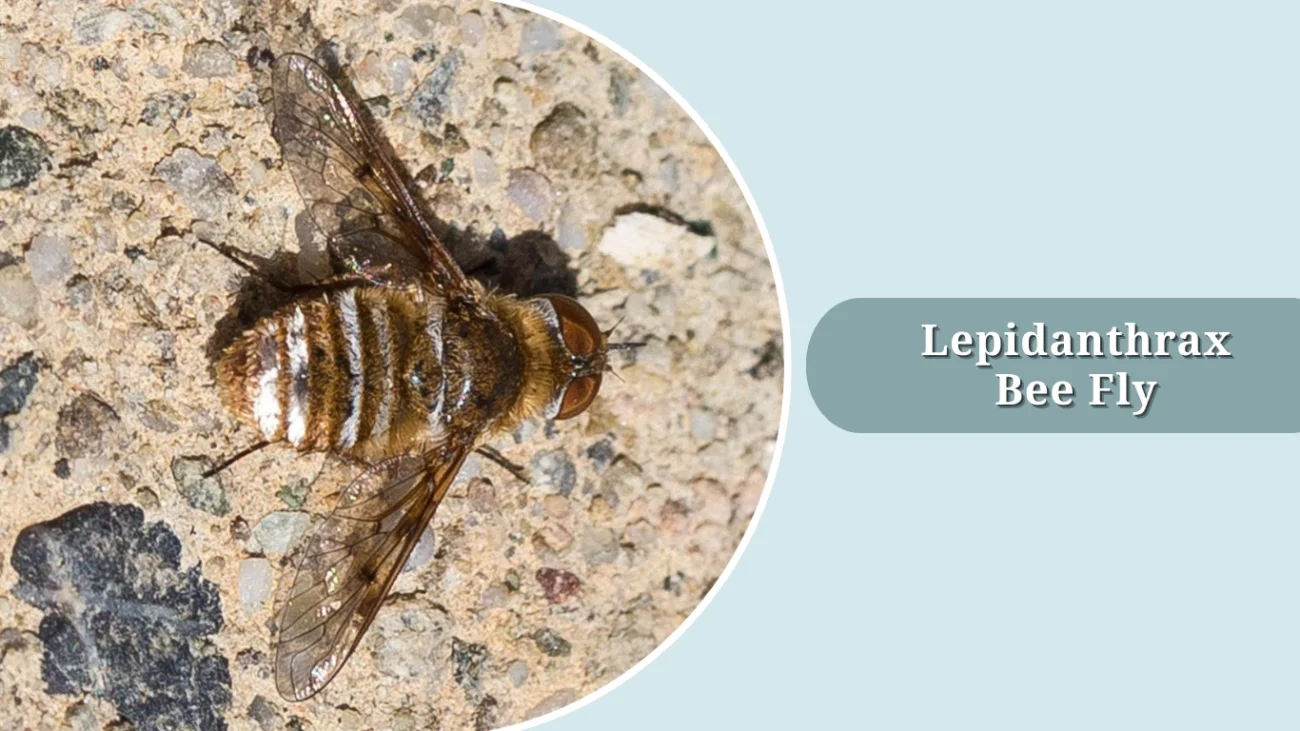
The Lepidanthrax Bee Fly is a lesser-known but fascinating member of the bee fly family, often recognized by its patterned wings and sandy-soil associations. These flies are primarily found in dry habitats and are linked to grasshopper egg predation.
Identification
- Small to medium-sized body
- Wings patterned with brown, gray, or spotted markings
- Slender abdomen with fine hairs
- Clear wing patches between darker markings
- Proboscis adapted for nectar feeding
Habitat
Lepidanthrax species prefer arid and semi-arid regions such as deserts, scrublands, and sandy grasslands. They are commonly encountered in habitats where grasshoppers lay their eggs.
Behavior
These flies are active in warm, sunny conditions, often seen resting on bare ground or hovering near flowers. Females lay eggs in sandy soils near grasshopper egg pods.
Diet
Adult Lepidanthrax bee flies feed on nectar from desert wildflowers and other blooms. Their larvae parasitize grasshopper eggs, helping to regulate grasshopper populations.
Lifecycle
The lifecycle begins when the female lays eggs near or in the soil where grasshopper eggs are deposited. After hatching, the larvae burrow into the soil, consume the eggs, and develop until emerging as adults during warm seasons.
7. Hemipenthes Bee Fly (Hemipenthes morio)
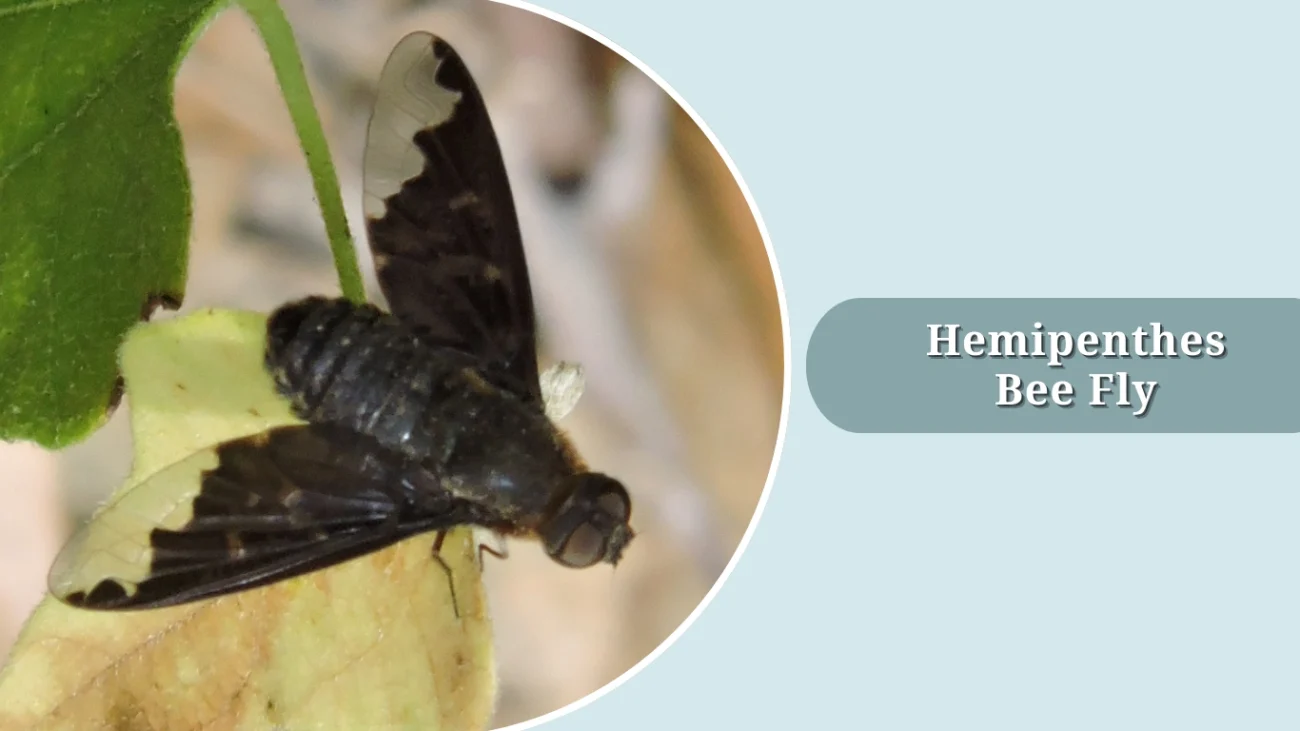
The Hemipenthes Bee Fly is a dark, elegant species distinguished by its striking wing patterns. It is widely distributed and frequently found in sunny habitats, playing both a pollination and parasitic role.
Identification
- Small to medium-sized body
- Dark, often black or brown coloration
- Wings marked with dark bands or patches, often mottled
- Compact body covered in short hairs
- Long proboscis suitable for nectar feeding
Habitat
Hemipenthes bee flies are usually found in meadows, woodland edges, fields, and open sunny habitats. They are especially common in areas with abundant flowers and host insect populations.
Behavior
These flies are quick and agile in flight, often hovering around flowers before darting away. Females scatter their eggs in soil or near insect burrows, targeting soft-bodied insects for their larvae to parasitize.
Diet
Adults feed on nectar and occasionally pollen, visiting a wide range of wildflowers. Larvae are parasitic, feeding on the immature stages of other insects such as beetles and solitary bees.
Lifecycle
The female deposits eggs close to host insect habitats. After hatching, the larvae actively seek out their prey, consuming host larvae to complete their development. Adults are typically active from late spring through summer.
8. Systoechus Bee Fly (Systoechus vulgaris)
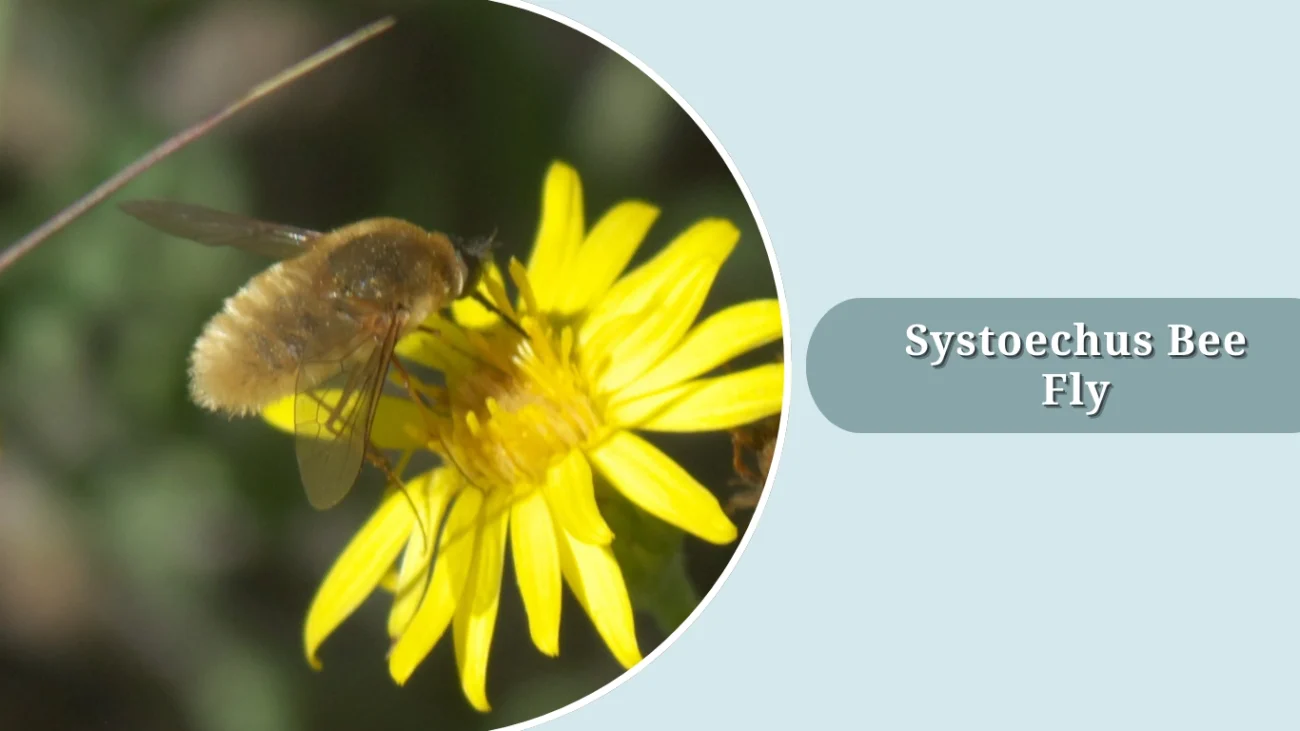
The Systoechus Bee Fly is a distinctive species known for its close relationship with grasshoppers, as its larvae are parasitic on their eggs. It is a specialized member of the bee fly family often found in drier habitats.
Identification
- Medium-sized body with dense hair
- Brown to gray coloration
- Clear wings with subtle smoky shading
- Slender legs and elongated proboscis
- Often resembles a small, fuzzy bee in flight
Habitat
Systoechus bee flies are most common in dry grasslands, scrublands, and sandy soils. They prefer regions where grasshopper populations are abundant, as their larvae rely on grasshopper eggs for development.
Behavior
These bee flies are strong and persistent fliers, frequently visiting flowers in open sunny areas. Females flick their eggs into sandy soils where grasshoppers have laid their egg pods.
Diet
Adults feed on nectar from various wildflowers, contributing to pollination. The larvae, however, are predators of grasshopper eggs, making them important in regulating grasshopper numbers.
Lifecycle
Females lay eggs in or near soil where grasshoppers deposit their eggs. Larvae hatch and burrow into the soil, seeking out and feeding on the grasshopper egg pods. Adults are typically active during warm summer months.
9. Geron Bee Fly (Geron spp.)
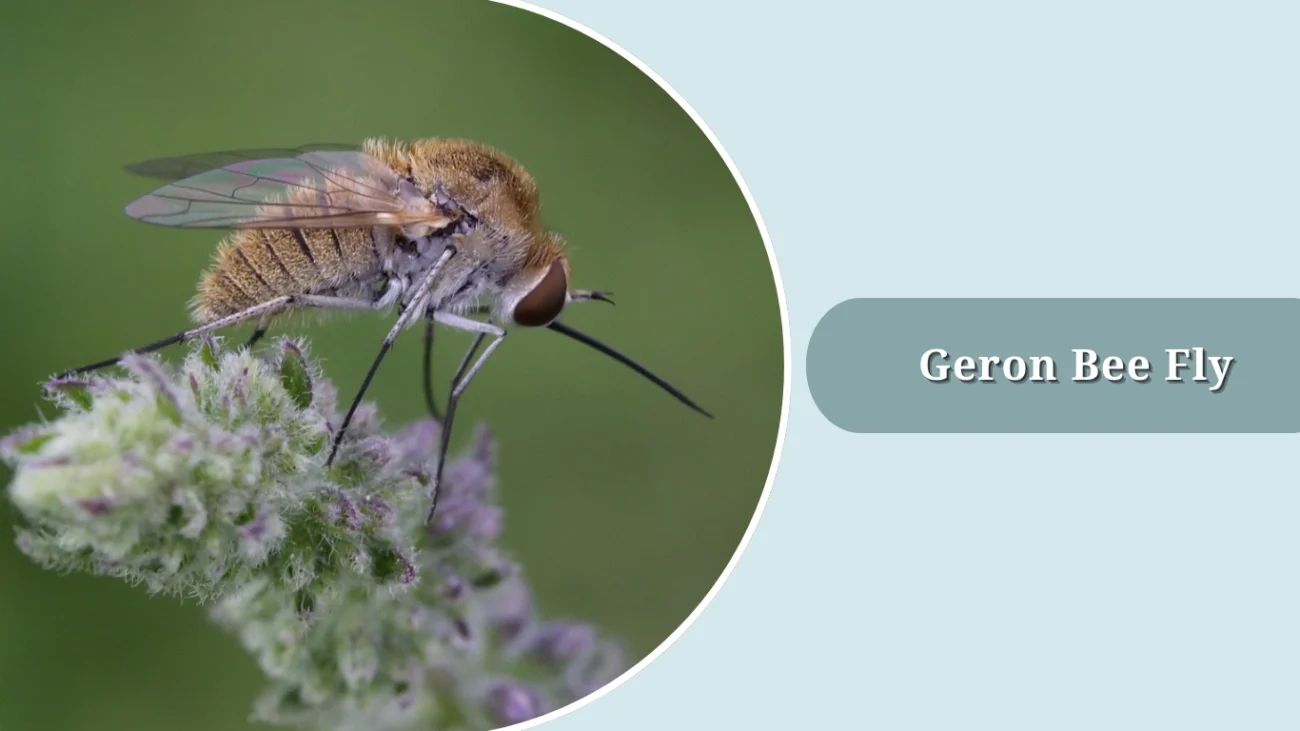
The Geron Bee Fly is a small, delicate member of the bee fly family, often mistaken for tiny bees due to its fuzzy body and hovering behavior. Unlike many other bee flies, its larvae primarily target moth caterpillars as hosts.
Identification
- Small-sized body compared to other bee flies
- Fuzzy covering of short hairs, often gray or brown
- Narrow, slender abdomen
- Clear wings held outstretched at rest
- Long, thin proboscis used for sipping nectar
Habitat
Geron bee flies are usually found in grasslands, meadows, and woodland clearings where wildflowers and moth populations are abundant. They thrive in warm, sunny environments with plenty of floral resources.
Behavior
These flies are delicate and agile fliers, often seen hovering close to flowers. Females lay their eggs near moth larvae, which serve as hosts for their developing young.
Diet
Adults feed mainly on nectar from small, open flowers, acting as pollinators. Larvae are parasitic, preying on moth caterpillars and consuming them internally.
Lifecycle
The lifecycle begins when eggs are deposited near moth larvae. Upon hatching, the bee fly larvae parasitize the caterpillar, eventually killing it. Adults emerge in late spring and summer, coinciding with peak moth activity.
10. Exoprosopa Bee Fly (Exoprosopa fascipennis)

The Exoprosopa Bee Fly is a large and eye-catching species, easily recognized by its boldly patterned wings. It is one of the more conspicuous bee flies and is frequently encountered in sunny habitats.
Identification
- Large body compared to most bee flies
- Dark wings with striking white or light-colored bands across them
- Fuzzy thorax, often gray or brown
- Long proboscis for feeding on nectar
- Distinctive resting posture with wings spread flat
Habitat
Exoprosopa bee flies are typically found in open fields, sandy areas, grasslands, and woodland edges. They thrive in regions with loose soil that provides nesting sites for their host insects.
Behavior
These flies are strong, fast fliers and are often observed basking in sunny spots with wings spread. Females lay eggs near the burrows of solitary bees or wasps, which serve as hosts for their larvae.
Diet
Adults feed on nectar from a wide range of flowers, often choosing those with open blooms. Larvae are parasitic, feeding on the immature stages of solitary bees and wasps.
Lifecycle
Eggs are laid near the entrance of bee or wasp burrows. The larvae invade the nests, feeding on both the host larvae and their stored food provisions. Adults are most active in late summer and early autumn.
11. Thyridanthrax Bee Fly (Thyridanthrax luminis)

The Thyridanthrax Bee Fly is a beautifully patterned species, often admired for its delicate wing markings. It is typically associated with sandy or arid habitats where host insects are present.
Identification
- Medium-sized body
- Wings with intricate, lace-like dark and clear patterns
- Fuzzy thorax, usually gray or brown
- Long proboscis projecting forward
- Compact abdomen with fine hairs
Habitat
Thyridanthrax bee flies are often found in deserts, sandy grasslands, and dry scrublands. They prefer open habitats where sunlight is plentiful and where their host insects, often moths or solitary bees, are active.
Behavior
These flies are highly agile, often hovering over flowers or darting quickly between resting spots. Females deposit eggs in sandy soils or near host insect burrows, ensuring their larvae find suitable hosts.
Diet
Adults feed mainly on nectar from flowering plants, acting as pollinators for desert and grassland blooms. Larvae are parasitic, preying on the immature stages of moths, bees, or wasps depending on the species.
Lifecycle
The female lays eggs near host burrows or in sandy soils. After hatching, the larvae locate host insects and consume them to complete development. Adults typically emerge in the hottest part of the year, peaking in midsummer.
12. Bombylius Bee Fly (Bombylius spp.)
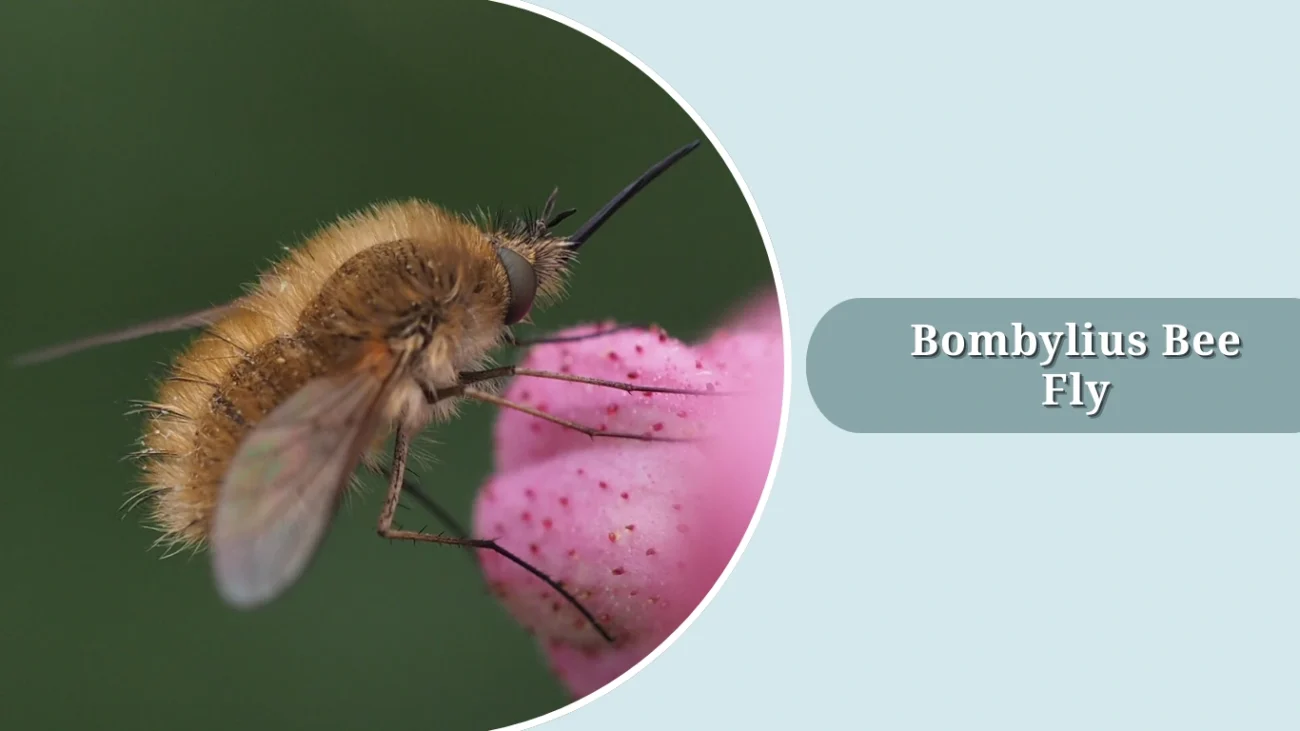
The Bombylius Bee Fly is one of the most recognizable groups within the Bombyliidae family, best known for mimicking bumblebees. Their hovering flight and long feeding proboscis make them stand out among spring pollinators.
Identification
- Medium-sized, fuzzy body resembling a small bumblebee
- Golden-brown or gray hairs covering thorax and abdomen
- Long, rigid proboscis projecting forward
- Wings often held out at an angle, partially shaded or patterned
- Quick, hovering flight similar to that of bees
Habitat
Bombylius bee flies are widespread across meadows, gardens, grasslands, and woodland edges. They are especially common in spring when early flowers bloom and solitary bees are active.
Behavior
These flies hover expertly in front of flowers while feeding, rarely landing directly on petals. Females lay eggs near the entrances of solitary bee nests, flicking them into the soil so larvae can find their way inside.
Diet
Adults feed mainly on nectar and sometimes pollen, favoring spring-blooming flowers such as primroses and violets. The larvae, however, are parasitic, feeding on bee larvae and their food stores.
Lifecycle
Eggs are deposited near solitary bee burrows. The hatched larvae enter the nests, feeding on both stored provisions and the bee larvae themselves. Adults typically emerge early in spring, with peak activity from March to May.
13. Chrysanthrax Bee Fly (Chrysanthrax cypris)
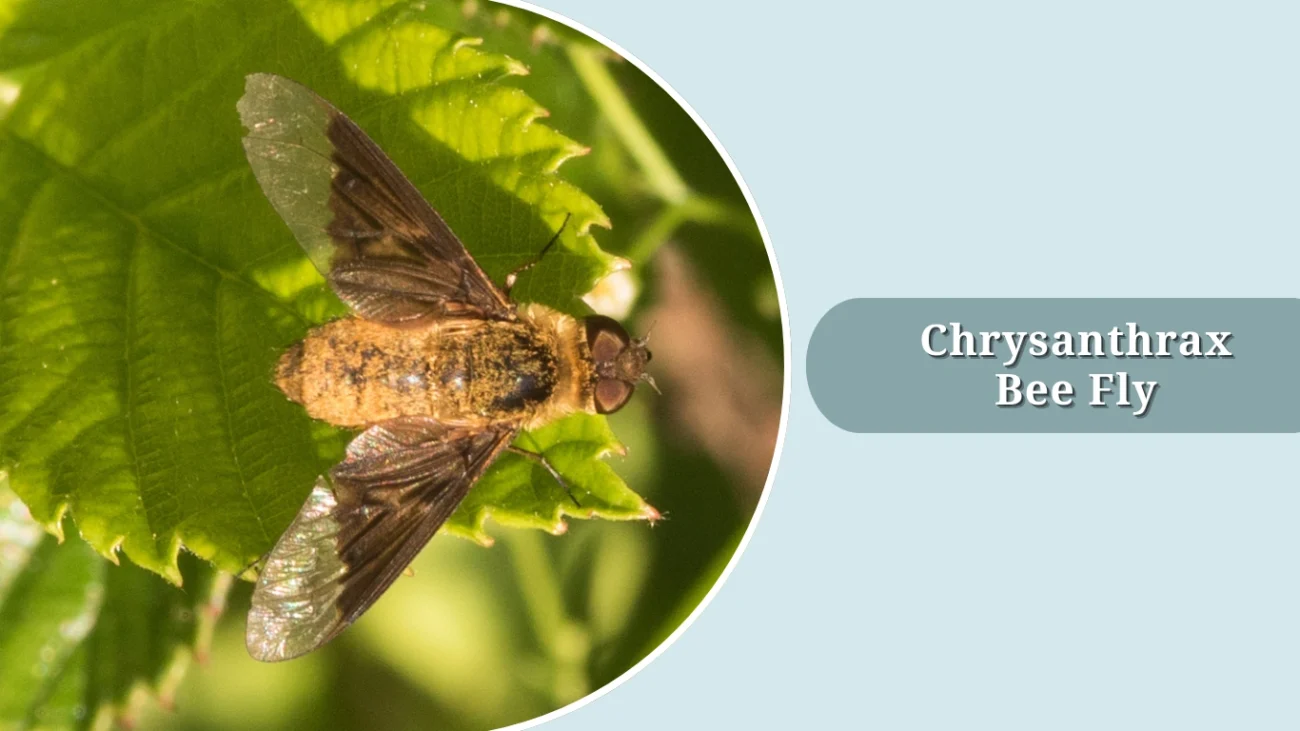
The Chrysanthrax Bee Fly is a distinctive species recognized for its dark body and striking wing patterns. Like many other bee flies, it plays a dual ecological role as a pollinator in its adult stage and as a parasite in its larval stage.
Identification
- Medium to large size
- Dark, often black or brown, hairy body
- Wings with bold dark patches contrasted by clear areas
- Sturdy body with short antennae
- Long proboscis for nectar feeding
Habitat
Chrysanthrax bee flies are commonly found in dry grasslands, open woodlands, and sandy soils. They are especially abundant in areas where their host insects, such as solitary bees and wasps, establish nests.
Behavior
These flies are active during warm, sunny weather, often seen basking or hovering near flowers. Females lay their eggs close to the entrances of host burrows, ensuring their larvae find suitable food sources.
Diet
Adults feed primarily on nectar, visiting a wide variety of flowers. Larvae are parasitic, feeding on the developing young of solitary bees or wasps and their stored provisions.
Lifecycle
The female scatters eggs near host nests. After hatching, the larvae penetrate the burrows and consume the host brood. Adults emerge in summer and are typically active until early autumn.