Caddisflies are fascinating aquatic insects found across streams, rivers, and lakes worldwide. With their unique case-building or net-spinning larvae, they play a vital role in freshwater ecosystems and serve as an essential food source for fish. This guide explores 16 important types of caddisflies, highlighting their identification, preferred habitats, behaviors, and lifecycles to help nature enthusiasts, anglers, and students better understand these remarkable insects.
1. Little Black Caddis

The Little Black Caddis is one of the earliest emerging caddisflies of spring, often seen swarming along rivers and streams when the weather begins to warm. Anglers prize this species for its abundance and the lively hatches it produces.
Identification
- Small in size, typically 6–8 mm in body length
- Dark black body and wings
- Tent-shaped wings when at rest
- Slender antennae often longer than the body
Habitat
The Little Black Caddis prefers cool, clean, fast-flowing streams and rivers. Larvae are often found clinging to rocks and submerged vegetation, where they build protective cases.
Behavior
Adults swarm in large numbers along streamside vegetation during emergence. Their flight is erratic, and they often gather in thick clouds above the water. Trout feed actively on both adults and pupae during hatches.
Lifecycle
The lifecycle follows the typical caddisfly pattern: egg, larva, pupa, adult. Larvae build cases from fine materials and feed on algae or organic matter. In early spring, pupae rise to the surface, and adults emerge in swarms.
2. Grannom Caddis

The Grannom Caddis is a well-known springtime species, often producing dense hatches that attract fish and anglers alike. It is particularly significant because of its consistency in appearing early in the fishing season.
Identification
- Medium-sized, usually 8–12 mm in body length
- Dark brown to black body
- Brownish wings with fine speckling
- Long antennae extending beyond the body length
Habitat
Grannom Caddis are typically found in moderate to fast-flowing rivers and streams with gravel or rocky bottoms. Their larvae build small cases using sand grains and bits of vegetation.
Behavior
During hatches, adults appear in vast swarms, often forming dense clouds along riverbanks. Fish actively rise to feed on pupae as they drift near the surface, making this species highly important for fly fishing.
Lifecycle
The lifecycle includes egg, larva, pupa, and adult stages. Females often dive underwater to lay eggs, attaching them to submerged stones. The larvae are case-builders, feeding primarily on algae and detritus. Pupation occurs in their cases until emergence.
3. Green Sedge Caddis

The Green Sedge Caddis is a widely distributed species, known for its vibrant larval coloration and importance as trout food in both rivers and streams. Anglers often recognize it by its active larvae, commonly called “Green Rock Worms.”
Identification
- Medium-sized, around 8–12 mm in length
- Adults have dark brown wings with a tent-like resting position
- Larvae are bright green with darker heads
- Antennae are long and threadlike
Habitat
Green Sedge Caddis thrive in cold, fast-moving streams and rivers, especially in clean, oxygen-rich waters. The larvae are free-living rather than case-building, often clinging to rocks and stones.
Behavior
Adults emerge throughout spring and early summer. Larvae are very mobile and are often dislodged during high water, making them a consistent food source for fish. Adults are strong fliers and often flutter close to the water surface, tempting fish to strike.
Lifecycle
Their lifecycle consists of egg, larva, pupa, and adult stages. Larvae are carnivorous, feeding on smaller aquatic invertebrates. Pupation occurs in shelters made from silk and debris before adults emerge in large numbers.
4. October Caddis
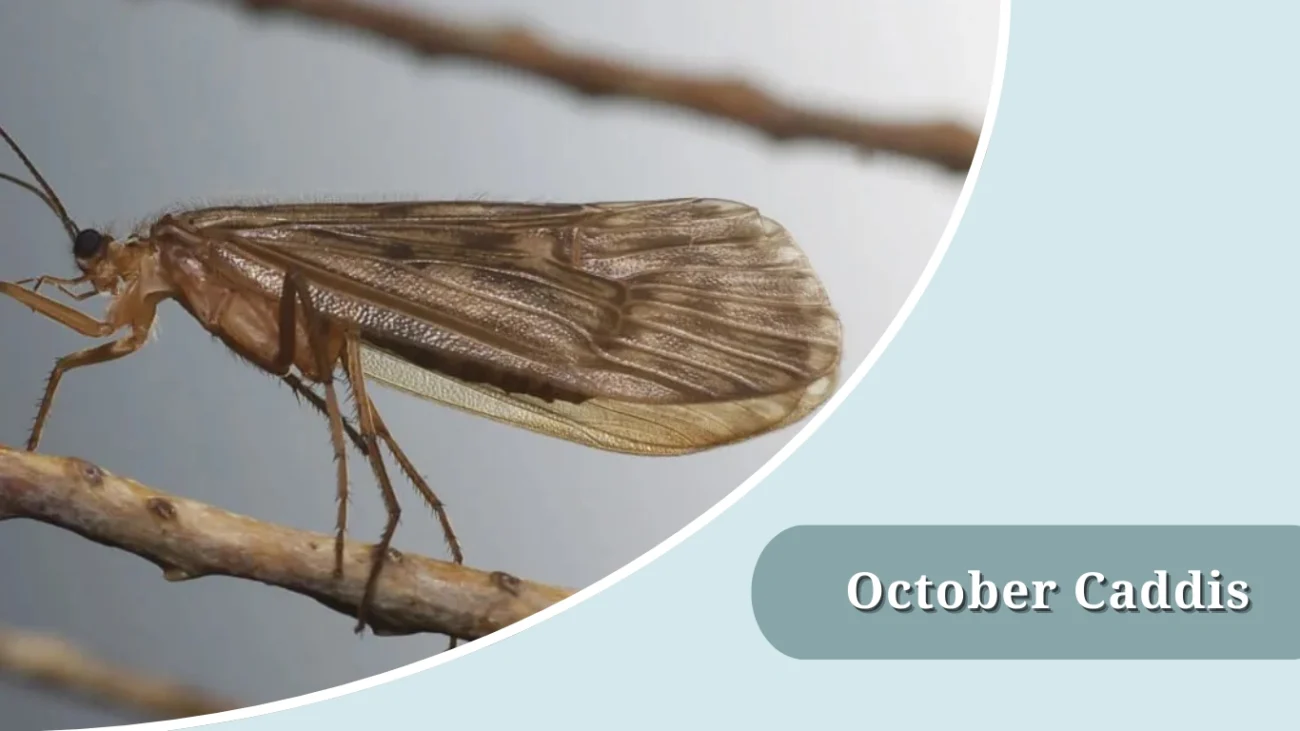
The October Caddis is one of the most famous fall-emerging caddisflies. Large in size and striking in color, it plays an important role in autumn river ecosystems and is a favorite among fly fishers targeting trout and steelhead.
Identification
- Large-bodied, usually 12–20 mm in length
- Bright orange to pumpkin-colored body
- Wings are brownish with a slight mottling
- Antennae are long, slender, and extend beyond the body
Habitat
The October Caddis is most often found in cool, fast-flowing streams and rivers with rocky substrates. The larvae construct protective cases using small pebbles or sand, attaching them firmly to stones.
Behavior
Emergence occurs in late summer through fall, peaking in October. Adults are strong fliers but often rest on streamside vegetation. At dusk, they may return to the water in large numbers, becoming highly attractive to fish.
Lifecycle
Following the standard egg, larva, pupa, and adult cycle, the October Caddis spends most of its life in the larval stage. Pupation occurs in pebble cases, and emergence happens near the surface. Adults live for several weeks, mating and laying eggs before winter sets in.
5. Spotted Sedge Caddis
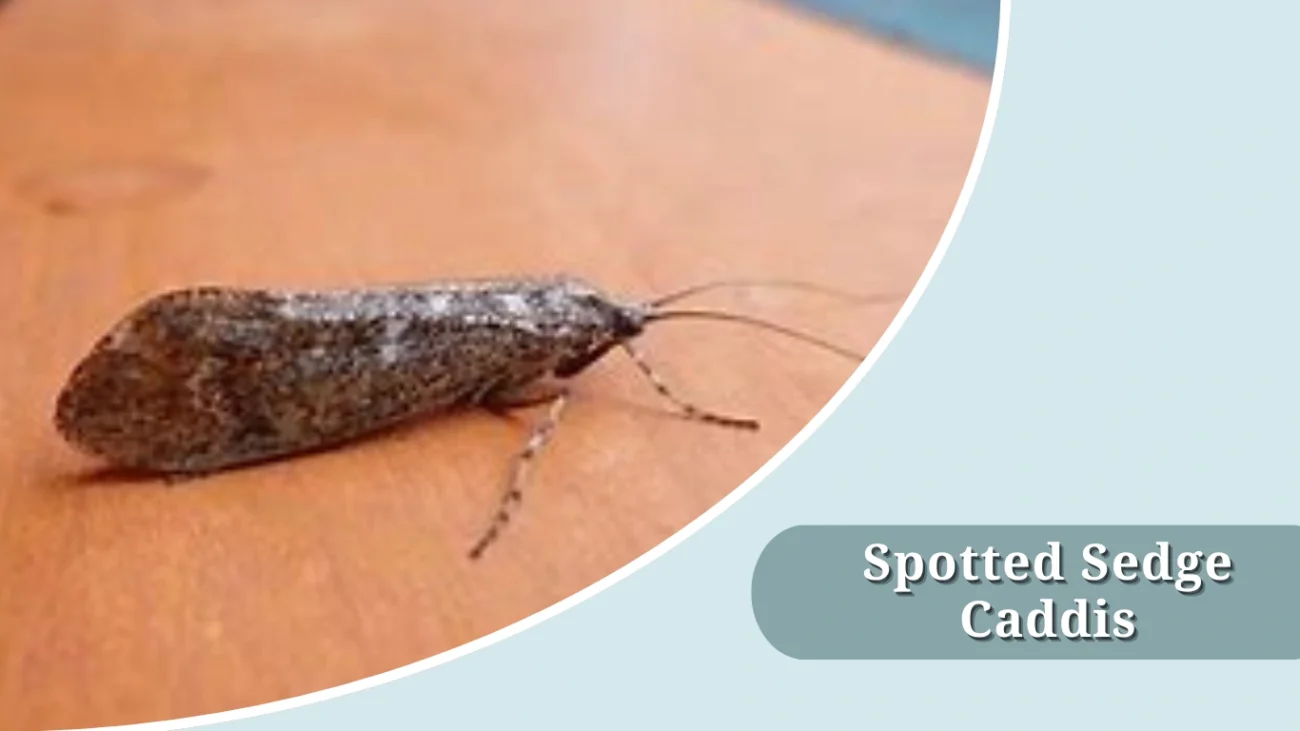
The Spotted Sedge Caddis is among the most abundant and widely recognized caddisflies. Known for its long hatching season, it provides consistent feeding opportunities for trout and is a key insect in fly fishing patterns.
Identification
- Medium-sized, about 8–14 mm in length
- Wings are grayish-brown with noticeable dark spotting
- Body color varies from olive to brown
- Antennae are long, usually longer than the body
Habitat
Spotted Sedge Caddis are found in rivers, streams, and lakes with moderate to fast currents. Their larvae are case-builders, often using small pieces of plant material or fine gravel.
Behavior
Adults emerge throughout the warmer months, sometimes lasting from late spring into early fall. They are strong fliers and often return to the water in the evening to lay eggs. Fish feed actively on drifting pupae as they rise toward the surface.
Lifecycle
The life cycle follows the usual egg, larva, pupa, and adult stages. Larvae feed on algae and detritus, living in portable cases. Pupation occurs underwater, and adults emerge in large numbers, ensuring steady populations across habitats.
6. Black Caddis
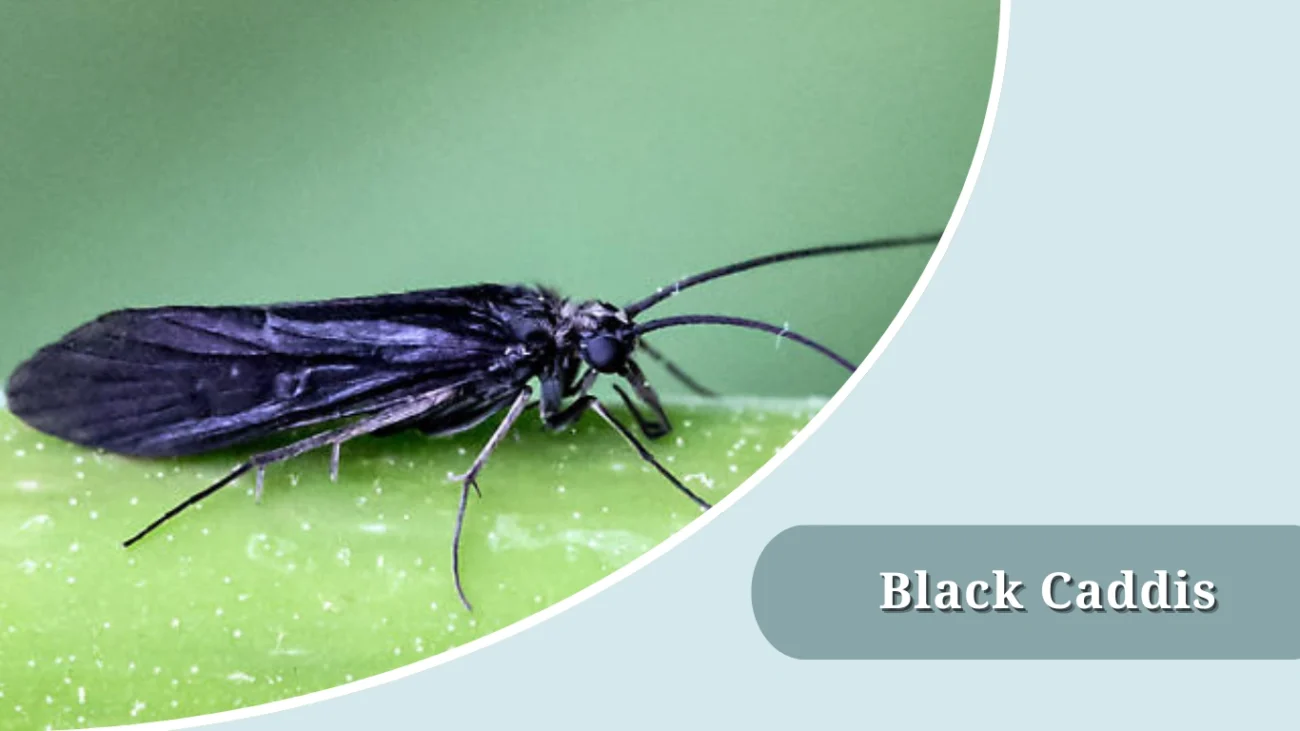
The Black Caddis is a distinctive and early-season caddisfly that appears in swarms during springtime. Its dark coloration and dense hatches make it easily recognizable along rivers and streams.
Identification
- Small to medium-sized, about 6–10 mm in length
- Solid black body and wings
- Tent-shaped wings when resting
- Antennae slender and often quite long
Habitat
Black Caddis thrive in cool, flowing streams and rivers, especially in clean, well-oxygenated waters. Larvae typically build cases from fine gravel or sand, attaching themselves to submerged stones.
Behavior
Adults emerge in early to mid-spring, often forming dense swarms along the water’s edge. Their fluttering flight attracts fish, which feed both on the emerging pupae and the egg-laying adults.
Lifecycle
The species follows the standard egg, larva, pupa, adult cycle. Larvae are case-builders, living on submerged stones. Adults lay eggs directly in the water or on the surface film, completing the cycle in preparation for the next spring emergence.
7. Brown Caddis
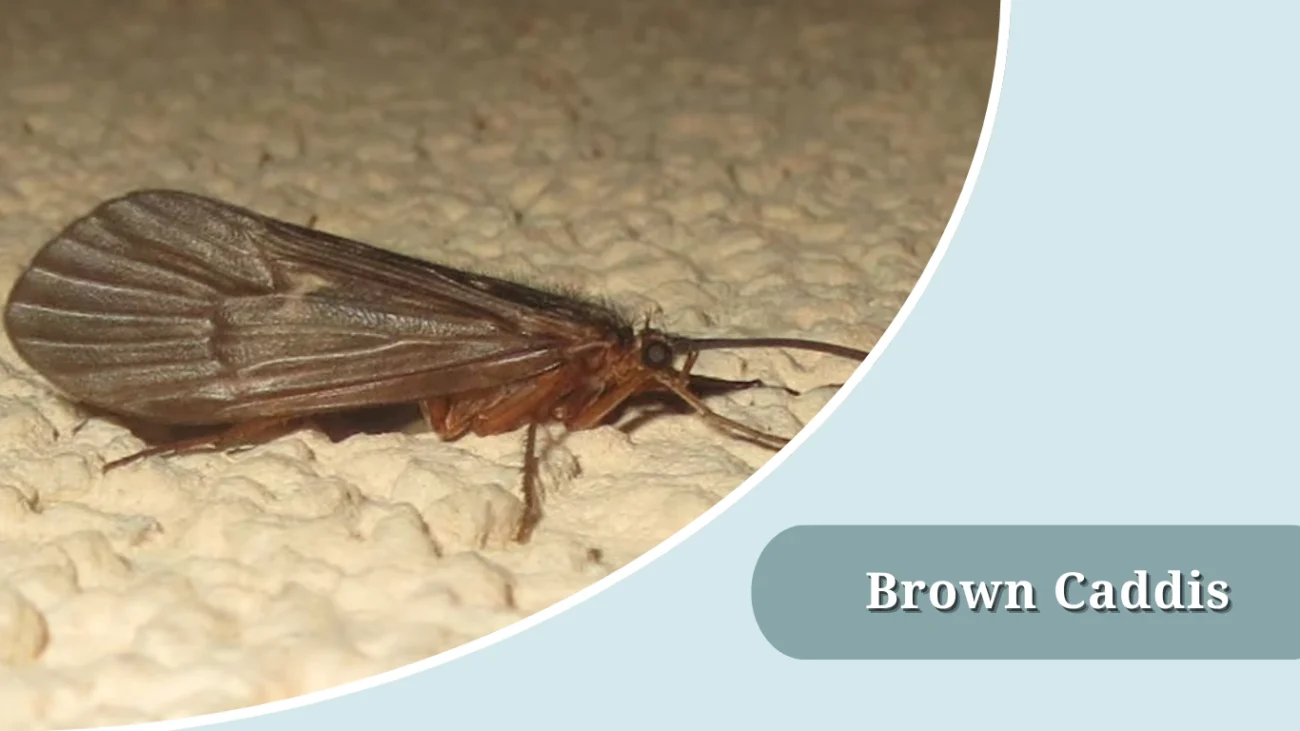
The Brown Caddis is a common and widespread species that emerges in various seasons, making it an important food source for many freshwater fish. Its subtle coloring often makes it less conspicuous than brighter caddisflies, yet its abundance ensures it plays a crucial ecological role.
Identification
- Medium-sized, about 8–12 mm in length
- Brown body with slightly lighter underbelly
- Wings are brownish, often with faint mottling
- Long, threadlike antennae extending beyond the body
Habitat
Brown Caddis are found in streams, rivers, and lakes with clean, cool water. Larvae typically live in portable cases constructed from sand grains, pebbles, or bits of vegetation.
Behavior
Adults are most active during dusk and evening hours, when they swarm near the water. They fly in a fluttering, erratic pattern, often dropping to the water surface to lay eggs. Fish frequently rise to feed on both drifting pupae and egg-laying adults.
Lifecycle
The lifecycle follows the standard egg, larva, pupa, and adult sequence. Larvae are case-builders and feed mainly on detritus and algae. Pupation occurs underwater, with adults emerging in gradual, extended hatches that provide steady fish activity.
8. Rhyacophila Caddis
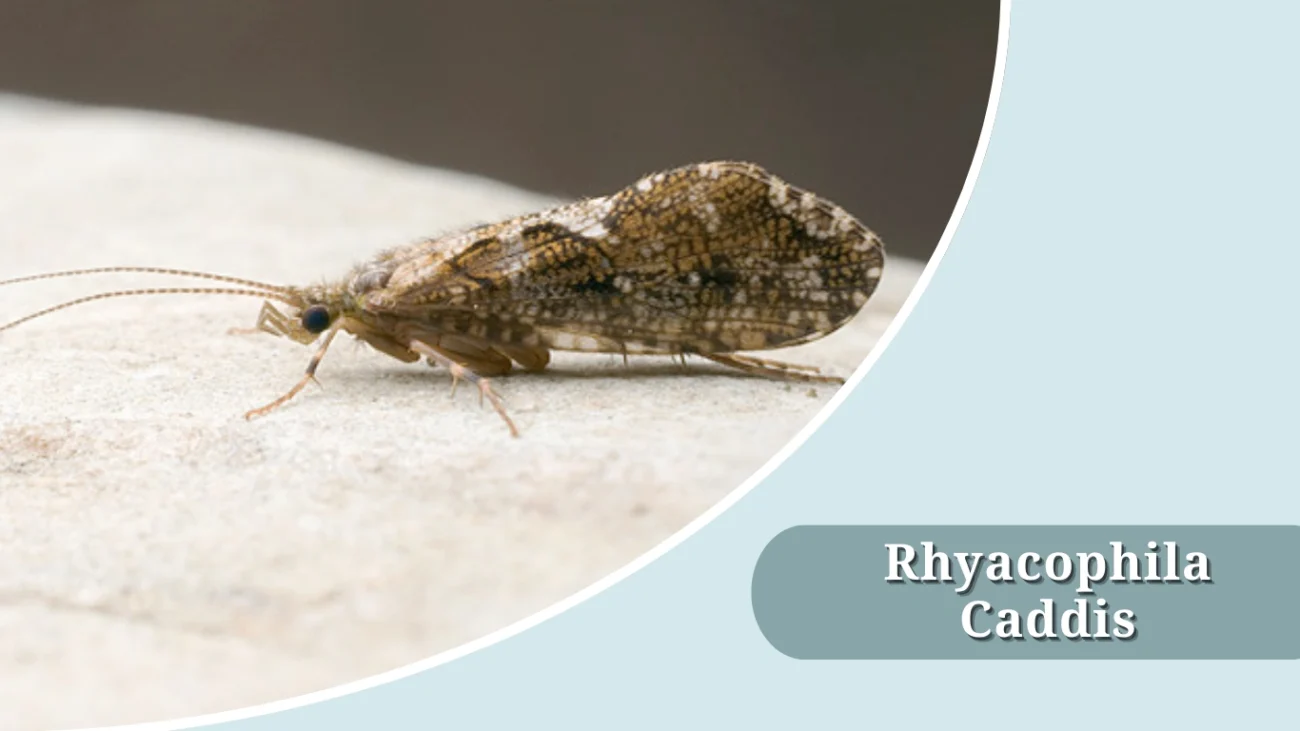
The Rhyacophila Caddis, often called the “Green Rock Worm,” is a distinctive free-living species that stands out from many other caddisflies because its larvae do not build protective cases. It is widespread and highly important in freshwater ecosystems.
Identification
- Medium-sized, usually 10–15 mm in length
- Adults have dark brown wings held tent-like at rest
- Larvae are bright green with darker head capsules
- Long, slender antennae extending past body length
Habitat
Rhyacophila Caddis prefer cold, fast-flowing, oxygen-rich streams and rivers. Larvae cling to rocks and boulders without constructing cases, making them well-adapted to turbulent waters.
Behavior
The larvae are active predators, feeding on other aquatic insects rather than algae or detritus. Adults emerge throughout spring and summer, flying erratically near the water. Fish feed readily on both the free-living larvae and the emerging adults.
Lifecycle
Their lifecycle includes the standard egg, larva, pupa, adult stages, but with one unique aspect: the larvae remain free-living instead of case-building. Pupation occurs in protective shelters made of silk and debris before adults emerge in swarms.
9. Net-Spinning Caddis
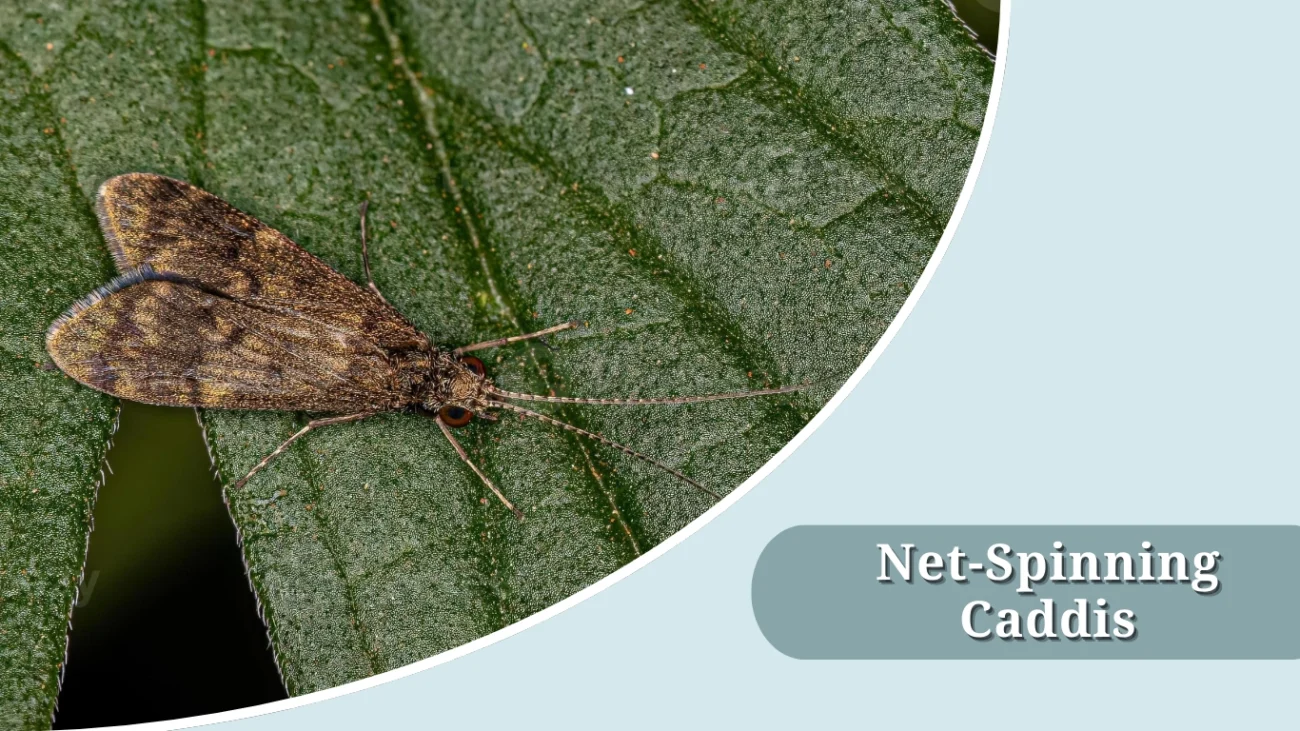
The Net-Spinning Caddis is one of the most common and ecologically important groups of caddisflies. Instead of building portable cases, their larvae construct silk nets to filter food particles from flowing water, playing a key role in stream ecosystems.
Identification
- Medium-sized, generally 8–15 mm in length
- Adults have grayish-brown wings held in a tent shape
- Larvae are often pale or greenish with darker heads
- Characterized by net-building rather than case-building behavior
Habitat
Net-Spinning Caddis thrive in fast-flowing streams and rivers with rocky or gravel substrates. The larvae attach their silk nets to rocks, capturing algae, detritus, and microscopic organisms drifting in the current.
Behavior
Larvae are stationary while feeding, waiting for food particles to become trapped in their nets. Adults emerge in large numbers during warmer months, swarming near stream banks. Fish often feed actively on drifting pupae as they rise toward the surface.
Lifecycle
Following the typical egg, larva, pupa, adult pattern, Net-Spinning Caddis larvae spend much of their lives in silk retreats with capture nets. Pupation occurs within a protective case spun from silk and debris, after which adults emerge to mate and continue the cycle.
10. Long-Horned Caddis
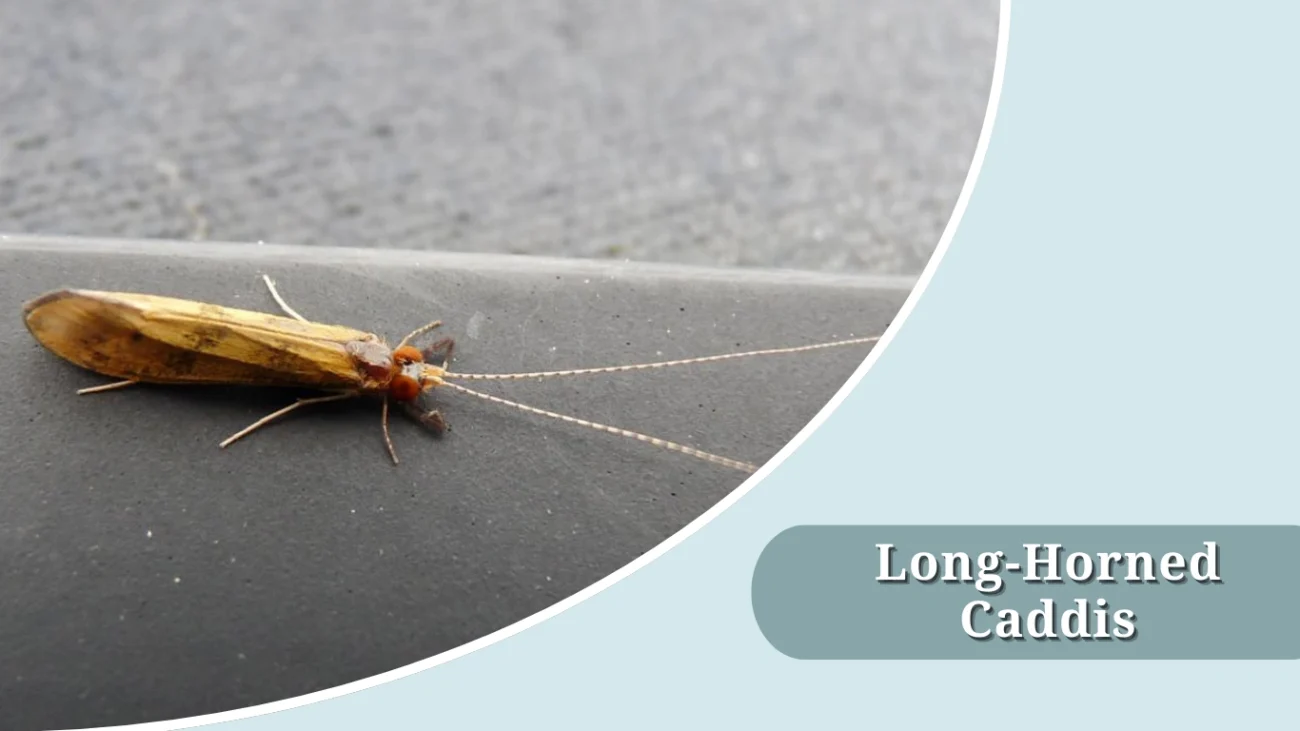
The Long-Horned Caddis is a distinctive species easily recognized by its extremely long, threadlike antennae. Found in many freshwater habitats, it is notable both for its appearance and its often erratic behavior near the water’s surface.
Identification
- Small to medium-sized, around 6–12 mm in length
- Very long antennae, often 2–3 times the body length
- Wings are light brown to greenish, held tent-like at rest
- Slender body with relatively delicate features
Habitat
Long-Horned Caddis can be found in streams, rivers, and still waters such as lakes and ponds. Their larvae are case-builders, often using fine plant material, bits of leaves, or silk to form protective coverings.
Behavior
Adults are easily noticed because of their long antennae and fluttery flight. They often hover over the water during evening hours and may gather in swarms near shorelines. Fish feed aggressively on both the pupae and the egg-laying adults.
Lifecycle
Their lifecycle includes the standard egg, larva, pupa, and adult stages. Larvae feed mainly on algae and plant matter while living in their protective cases. Pupation occurs underwater, and adults emerge in waves throughout the warmer months.
11. Giant Orange Sedge
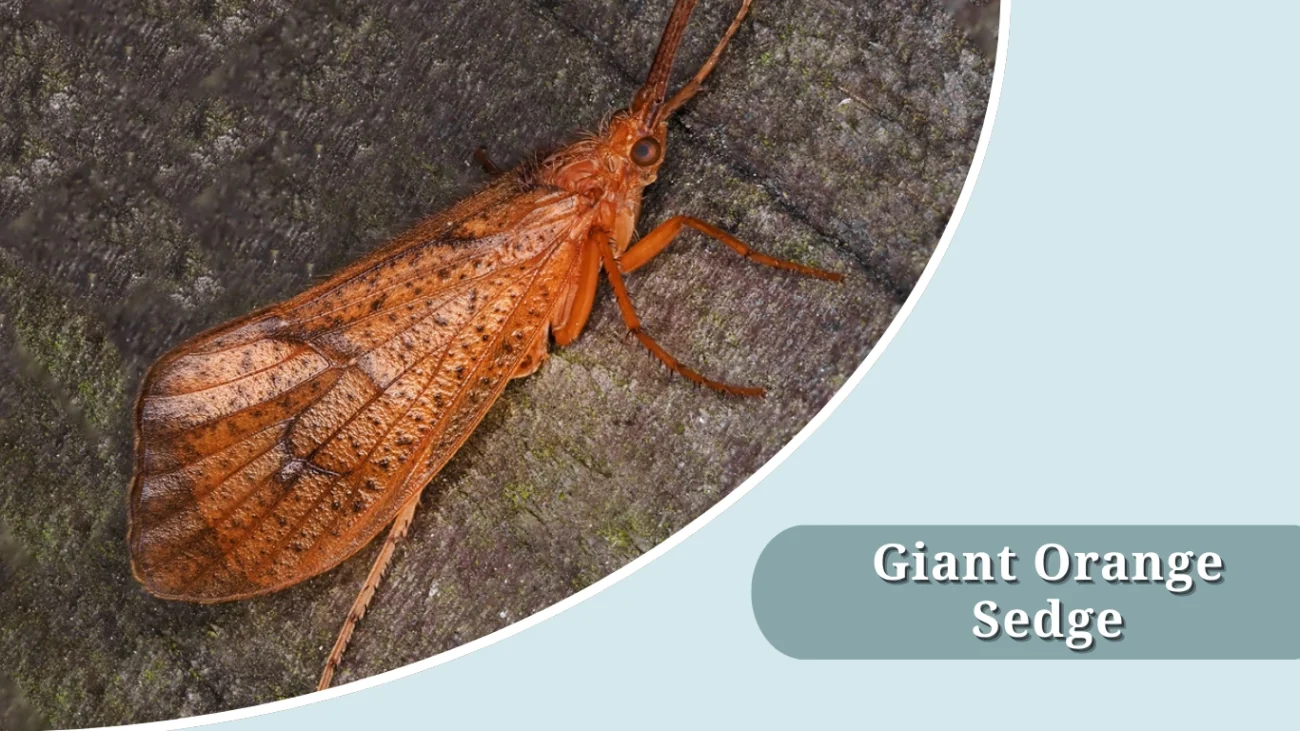
The Giant Orange Sedge is one of the largest and most striking caddisflies. Its bold orange coloring and large size make it easy to identify, and its strong hatches provide excellent opportunities for anglers, especially in colder seasons.
Identification
- Large-bodied, often 15–25 mm in length
- Bright orange to reddish-orange body
- Brownish to smoky wings, held tent-like at rest
- Long antennae extending beyond the body length
Habitat
This species inhabits cold, clean, fast-flowing rivers and streams, particularly in mountainous or forested areas. The larvae build sturdy cases from small pebbles, gravel, and plant matter, anchoring them to rocks.
Behavior
Adults emerge in late summer and autumn, often at dusk. Their large size and fluttering flight make them easy prey for fish. They return to the water to lay eggs, dipping onto the surface or crawling underwater to deposit them.
Lifecycle
The lifecycle includes the typical egg, larva, pupa, and adult stages. Larvae are case-builders and feed mainly on detritus and algae. Pupation occurs within the case, with adults emerging in staggered but noticeable hatches that extend the feeding season for fish.
12. Little Sister Sedge
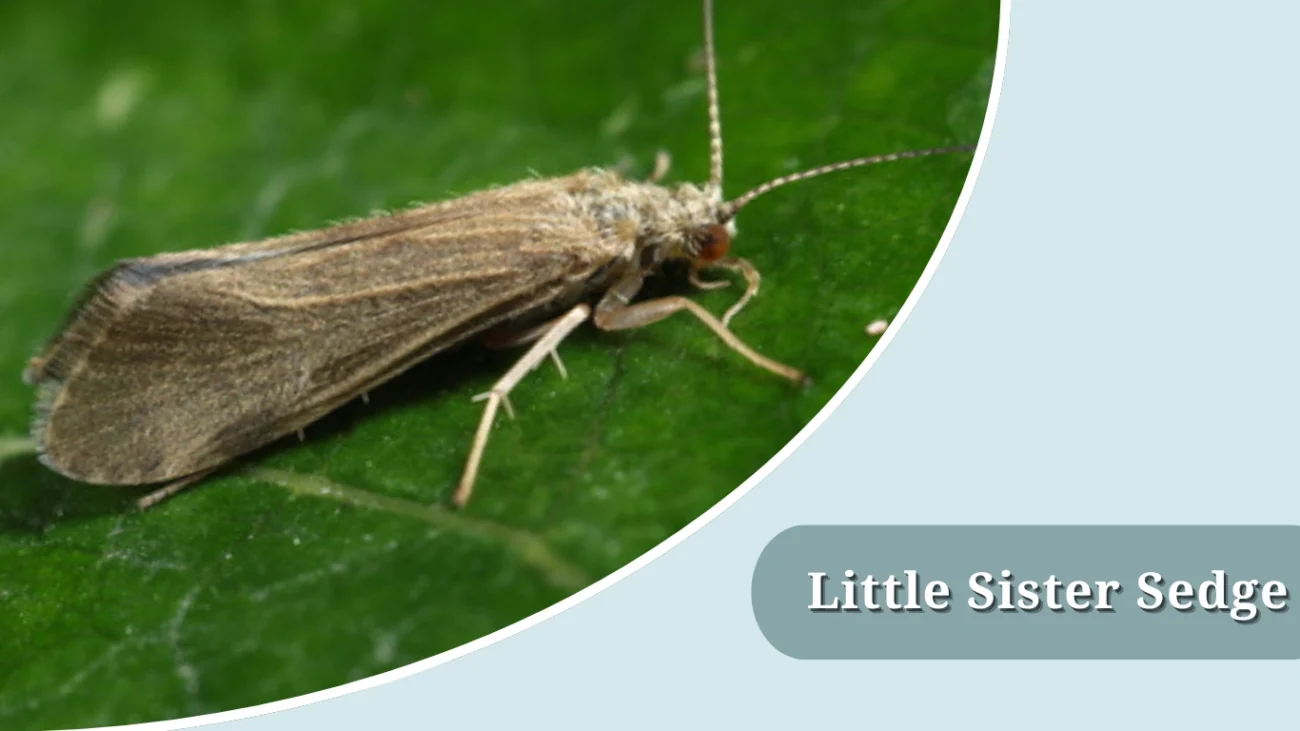
The Little Sister Sedge is a smaller, delicate caddisfly species that often emerges alongside larger relatives, providing steady insect activity throughout the season. Though less conspicuous, it is an important food source for many freshwater fish.
Identification
- Small-sized, usually 6–9 mm in length
- Light brown to tan body
- Wings are pale brown or gray, sometimes with faint mottling
- Antennae long and threadlike, though not as exaggerated as Long-Horned Caddis
Habitat
Little Sister Sedge inhabits streams, rivers, and still waters, particularly where aquatic vegetation is abundant. Larvae build portable cases from fine sand, silt, or bits of plant material, helping them blend with their surroundings.
Behavior
Adults are most active during evening hours, fluttering over the water surface in small swarms. Though less dramatic than larger species, they contribute steady insect activity, keeping fish engaged.
Lifecycle
Their lifecycle follows the standard egg, larva, pupa, and adult stages. Larvae are case-builders that feed on algae and organic debris. Pupation occurs underwater within their cases, with adults emerging in small but steady numbers across the season.
13. Cinnamon Caddis
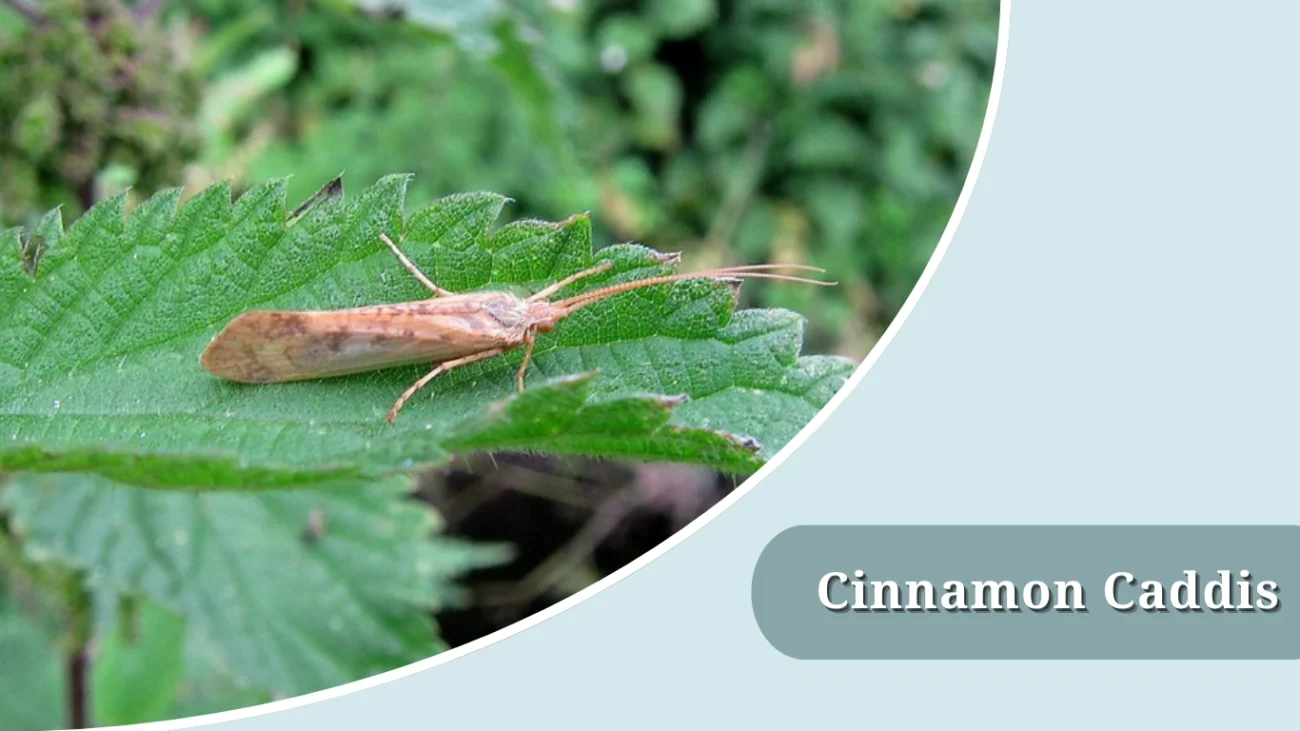
The Cinnamon Caddis is a common and widely distributed species, known for its warm-colored wings and reliable seasonal hatches. It is especially valued by anglers for the consistent surface activity it creates.
Identification
- Medium-sized, typically 8–14 mm in length
- Warm cinnamon-brown wings, often without markings
- Body color ranges from light brown to reddish-brown
- Long, fine antennae extending beyond body length
Habitat
Cinnamon Caddis are found in streams, rivers, and lakes with clean, well-oxygenated waters. Larvae are case-builders, often using fine plant material, sand, or detritus to construct their protective cases.
Behavior
Adults emerge steadily throughout the warmer months, often in the late afternoon and evening. Their fluttering flight makes them noticeable on the water, where fish eagerly feed on both adults and emerging pupae.
Lifecycle
The lifecycle includes the usual egg, larva, pupa, and adult stages. Larvae graze on algae and fine organic matter while residing in their portable cases. Pupation occurs underwater, with adults emerging in sustained hatches that extend through spring and summer.
14. Hydropsyche Caddis
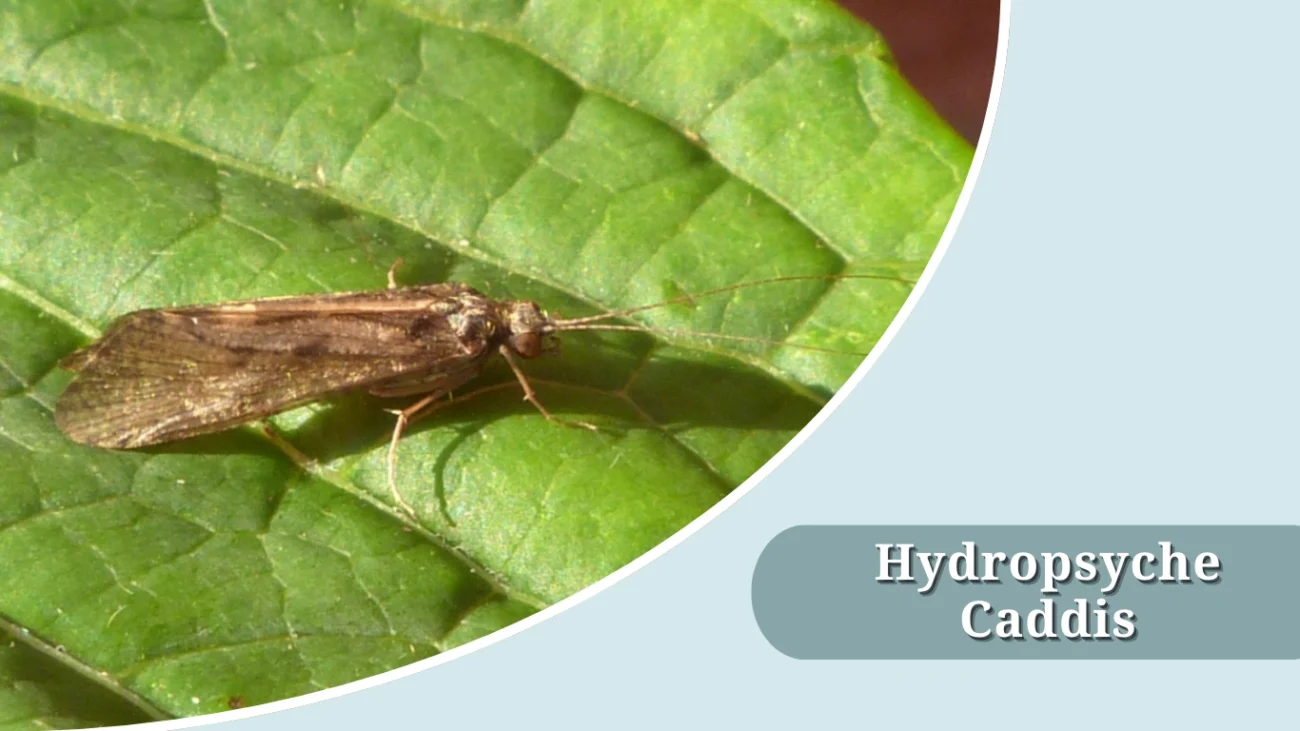
The Hydropsyche Caddis is one of the most widespread and abundant genera of caddisflies, often referred to as “Spotted Sedges.” Known for their net-spinning larvae, they play an important role in aquatic ecosystems and are a staple insect for anglers.
Identification
- Medium-sized, usually 9–15 mm in length
- Adults have mottled, grayish-brown wings with darker spots
- Body color varies from olive to brown
- Larvae are pale greenish to tan with darker heads
Habitat
Hydropsyche Caddis are commonly found in fast-flowing streams and rivers with rocky or gravel bottoms. Larvae build fixed nets on rocks to filter drifting organic particles from the current.
Behavior
Adults emerge from late spring through autumn, often in sustained numbers. They are strong fliers and return to the water at dusk to lay eggs. Fish feed eagerly on both the drifting pupae and adults, making this species highly important for fly fishing.
Lifecycle
The lifecycle includes the standard egg, larva, pupa, and adult stages. Larvae are filter feeders, capturing fine organic matter in their silk nets. Pupation occurs within a sealed retreat, after which adults emerge to swarm, mate, and reproduce.
15. Little Brown Sedge

The Little Brown Sedge is a modest but important caddisfly species, providing reliable insect activity across a wide range of freshwater habitats. Despite its unremarkable appearance, it plays a steady role in fish diets throughout the season.
Identification
- Small to medium-sized, about 7–11 mm in length
- Light to dark brown body with a slightly lighter underside
- Wings are plain brown, held tent-like when at rest
- Long, slender antennae reaching beyond body length
Habitat
Little Brown Sedge caddisflies are adaptable and found in streams, rivers, ponds, and lakes. Larvae build portable cases from fine sand grains, silt, or small plant fragments, allowing them to blend with the substrate.
Behavior
Adults emerge in steady numbers during late spring and summer. They are most active in the evenings, fluttering above the water surface before dropping to lay eggs. Their subtle presence ensures consistent feeding opportunities for fish even between larger hatches.
Lifecycle
The lifecycle follows the standard egg, larva, pupa, and adult stages. Larvae are case-builders and feed mainly on algae and organic debris. Pupation occurs inside the case, after which adults emerge in modest but reliable numbers.
16. Glossosomatidae (Saddle-Case Caddis)
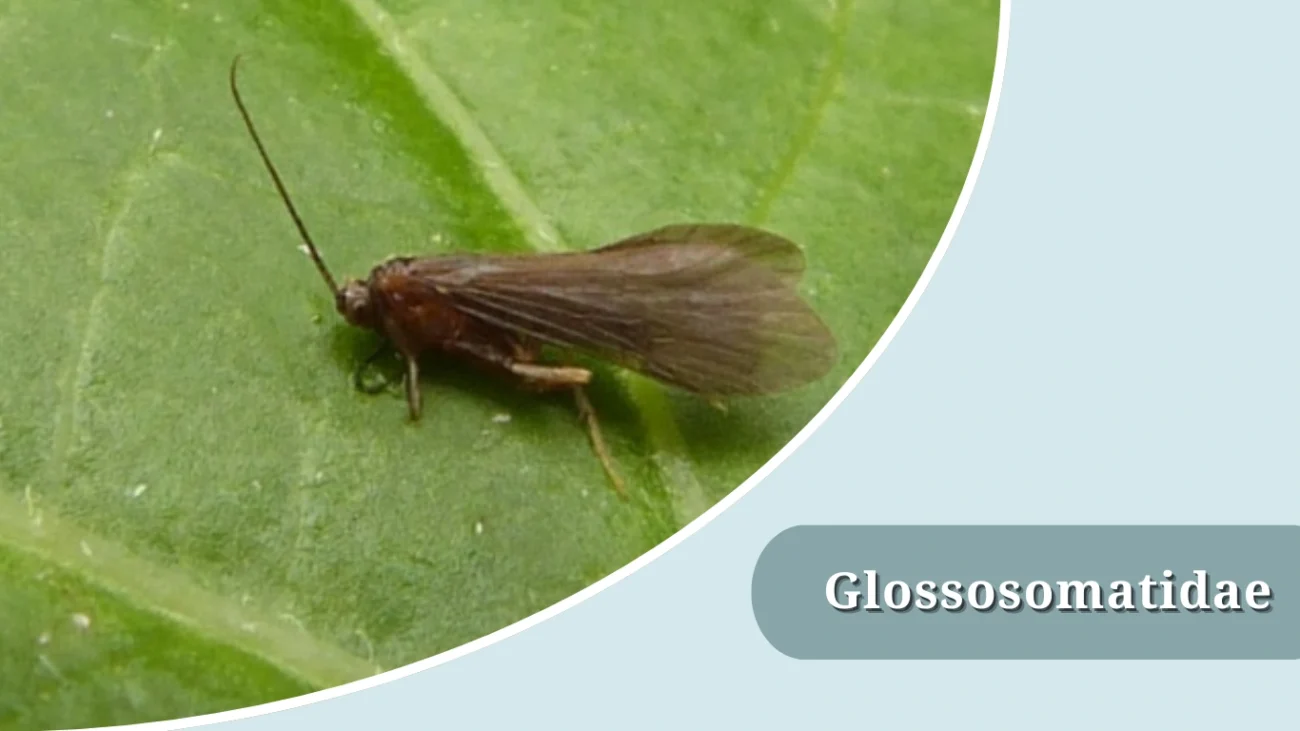
The Glossosomatidae, commonly known as Saddle-Case Caddis, are unique among caddisflies because of the distinct cases their larvae build. These insects are small but widespread, and their presence often signals clean, well-oxygenated water.
Identification
- Small-sized, usually 4–8 mm in length
- Adults are dark brown to black with plain wings
- Larvae construct saddle-shaped cases from small pebbles or sand grains
- Antennae are slender, about the length of the body
Habitat
Saddle-Case Caddis are found in fast, rocky streams and rivers, where their larvae cling tightly to stones in riffles. Their cases resemble tiny stone “turtles” resting on the rocks.
Behavior
Larvae are grazing feeders, scraping algae from submerged stones. Adults emerge in late spring and summer, often in small but steady numbers. Their low flight over water makes them easy prey for fish.
Lifecycle
Like other caddisflies, their lifecycle includes egg, larva, pupa, and adult stages. Larvae spend most of their life in their saddle-shaped cases. Pupation occurs inside these cases until adults emerge, completing the cycle.