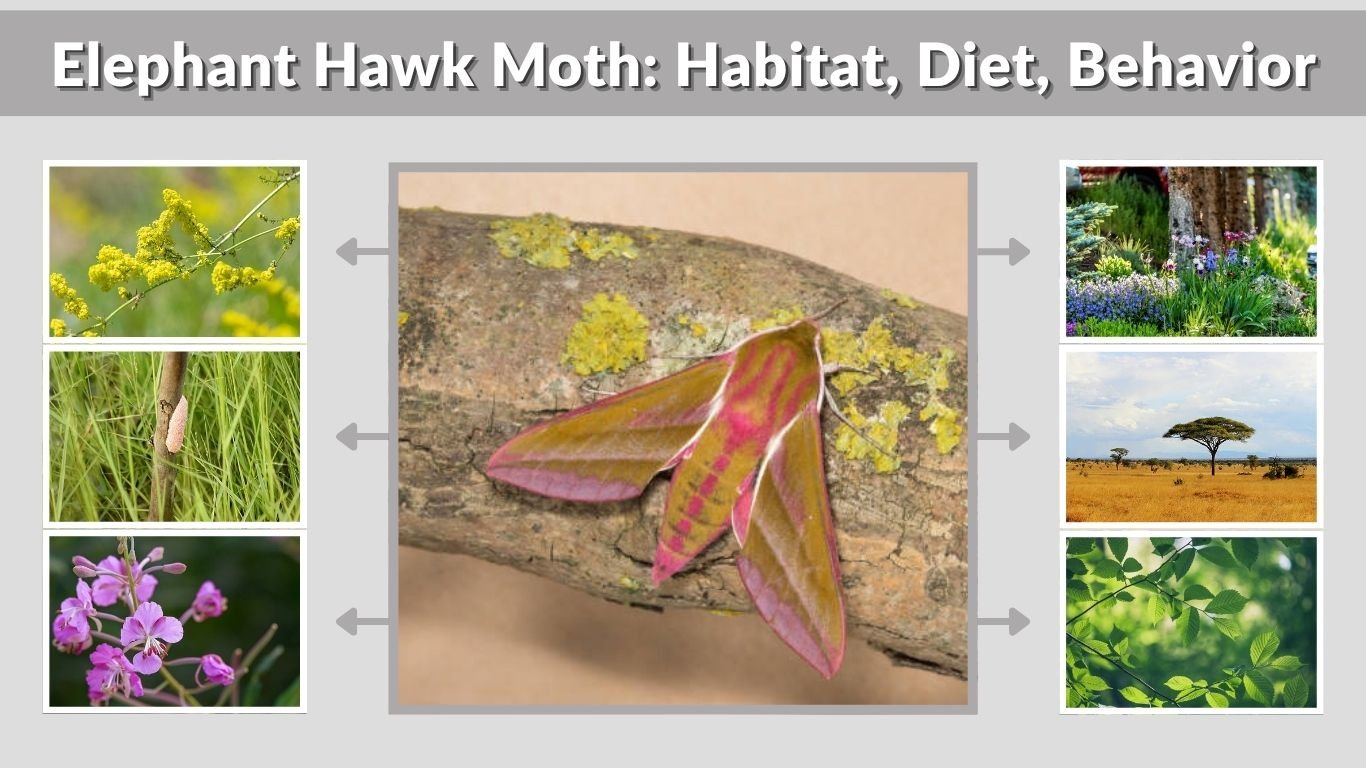
The elephant hawk moth is one of the most striking and fascinating moths found in nature, known for its vibrant pink and olive-green wings and its unusual caterpillar that resembles a tiny elephant’s trunk. Common across parts of Europe and Asia, this species often surprises gardeners and nature enthusiasts alike. Its unique appearance, interesting behavior, and important role in pollination make it a popular subject for curiosity and study.
What Is the Elephant Hawk Moth?
The elephant hawk moth (Deilephila elpenor) is a medium-sized moth belonging to the hawk moth family, Sphingidae. These moths are known for their fast flight and hovering ability, similar to hummingbirds.
This species is widely distributed across:
- The United Kingdom
- Most of Europe
- Parts of Asia
Unlike many dull-colored moths, the elephant hawk moth stands out due to its bright coloration and smooth, streamlined body. It is especially active during the warmer months and is often seen at dusk.
Why Is It Called the Elephant Hawk Moth?
The name “elephant hawk moth” comes from its caterpillar stage. The larva has a long, flexible front section that resembles an elephant’s trunk when extended.
This feature serves multiple purposes:
- Helps in movement and feeding
- Acts as a defense mechanism
When threatened, the caterpillar retracts its “trunk” and inflates the front part of its body, revealing large eye-like markings. This makes it look like a small snake, which can scare away predators.
The term “hawk moth” refers to the group’s strong and fast flying ability, similar to birds of prey.
Physical Appearance and Size
Adult Moth
The adult elephant hawk moth is instantly recognizable due to its vivid colors.
Key features include:
- Bright pink and olive-green wing patterns
- Streamlined body shape
- Wingspan of approximately 45–60 mm
Its coloration helps it blend into flowers while feeding, despite appearing flashy to human eyes.
Caterpillar
The caterpillar is equally remarkable and often more surprising to people who encounter it.
It typically has:
- Brown or green coloration
- Large eye spots near the head
- A thick, segmented body
The most distinctive feature is its elongated front section, which gives it the “elephant” appearance. This stage is when the insect is most commonly noticed in gardens.
Life Cycle of the Elephant Hawk Moth
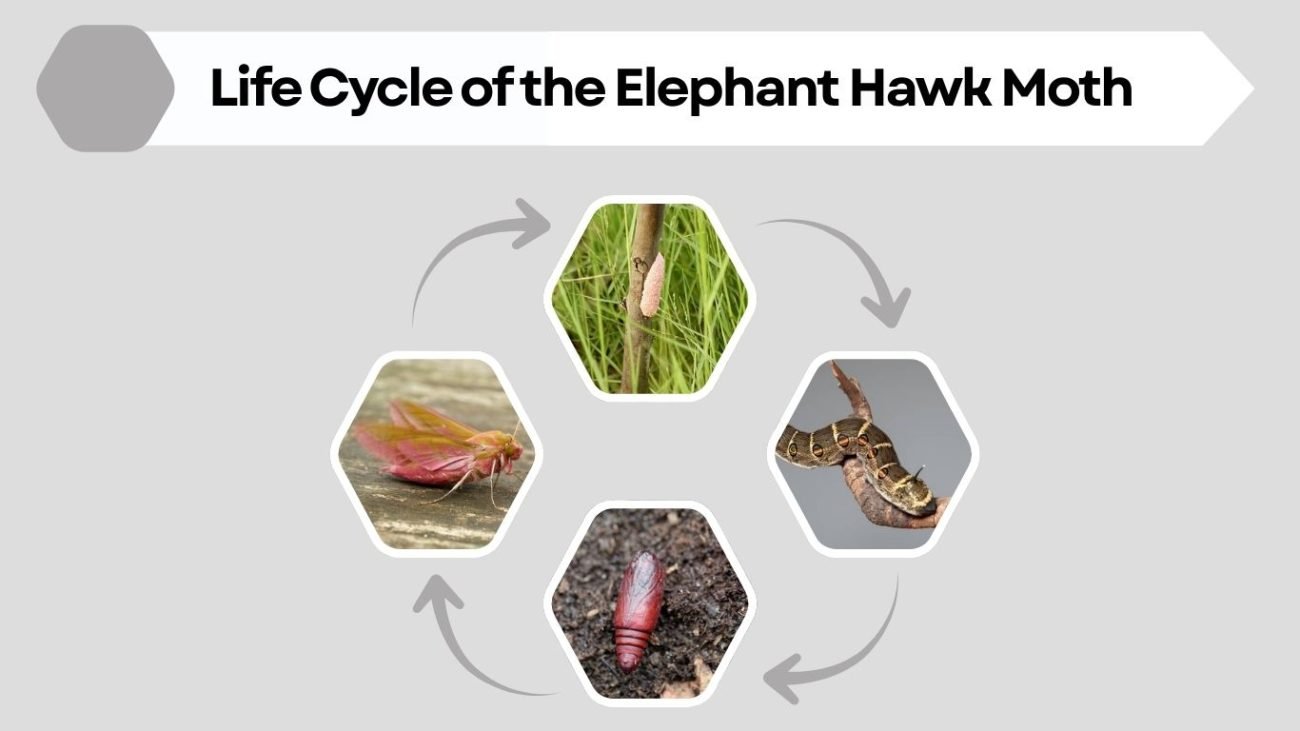
Like all moths, the elephant hawk moth undergoes complete metamorphosis, passing through four distinct stages.
Egg Stage
Female moths lay eggs on host plants such as willowherb or bedstraw. The eggs are small and usually laid individually.
Larva (Caterpillar)
After hatching, the caterpillar begins feeding on plant leaves. This stage is focused on growth and can last several weeks.
Pupa
Once fully grown, the caterpillar pupates in leaf litter or soil. During this stage, it transforms into an adult moth.
Adult Moth
The adult emerges with fully developed wings, ready to feed on nectar and reproduce. Adults are typically active during late spring and summer.
Habitat and Distribution
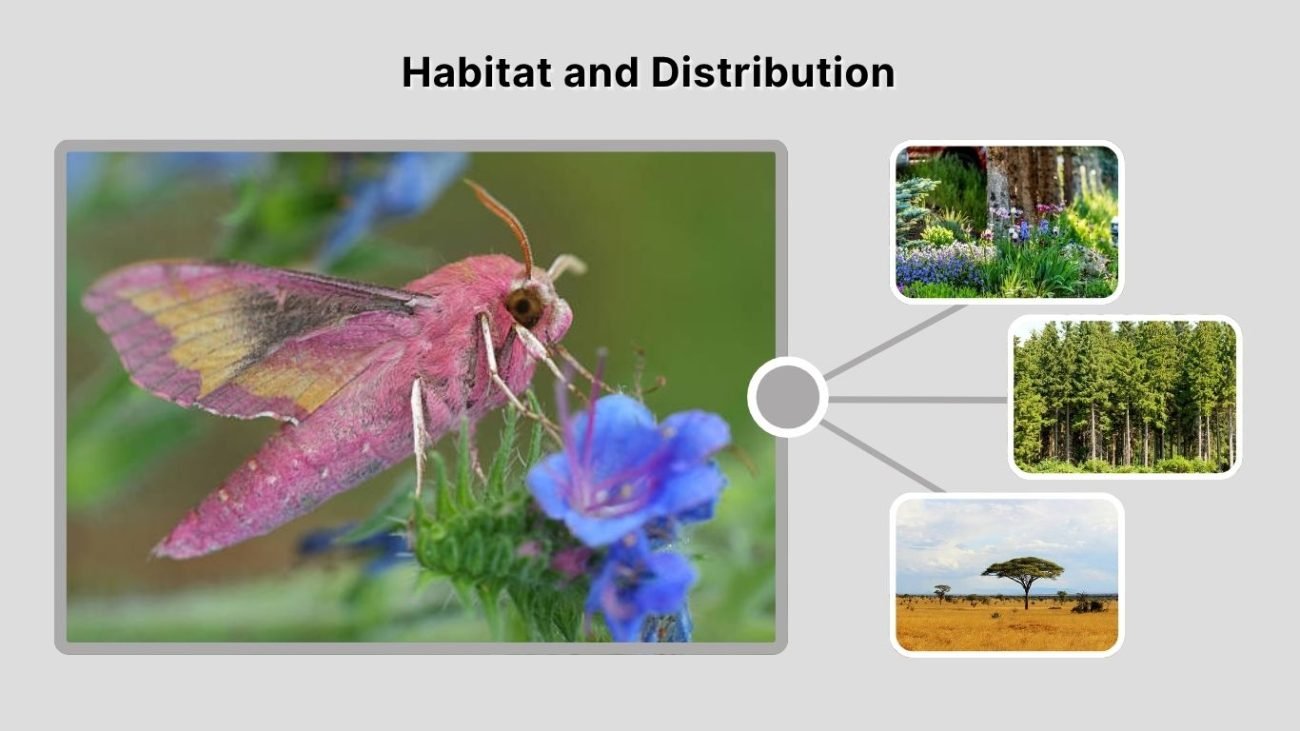
The elephant hawk moth is widely distributed and can be found in many regions across Europe and parts of Asia. It is especially common in the United Kingdom, where it is one of the more recognizable moth species.
This moth prefers environments such as:
- Gardens and parks
- Woodland edges
- Grasslands
- Wetlands and riverbanks
Its adaptability allows it to thrive in both rural and urban areas. The presence of suitable host plants plays a major role in determining where it lives.
What Do Elephant Hawk Moths Eat?
Caterpillar Diet
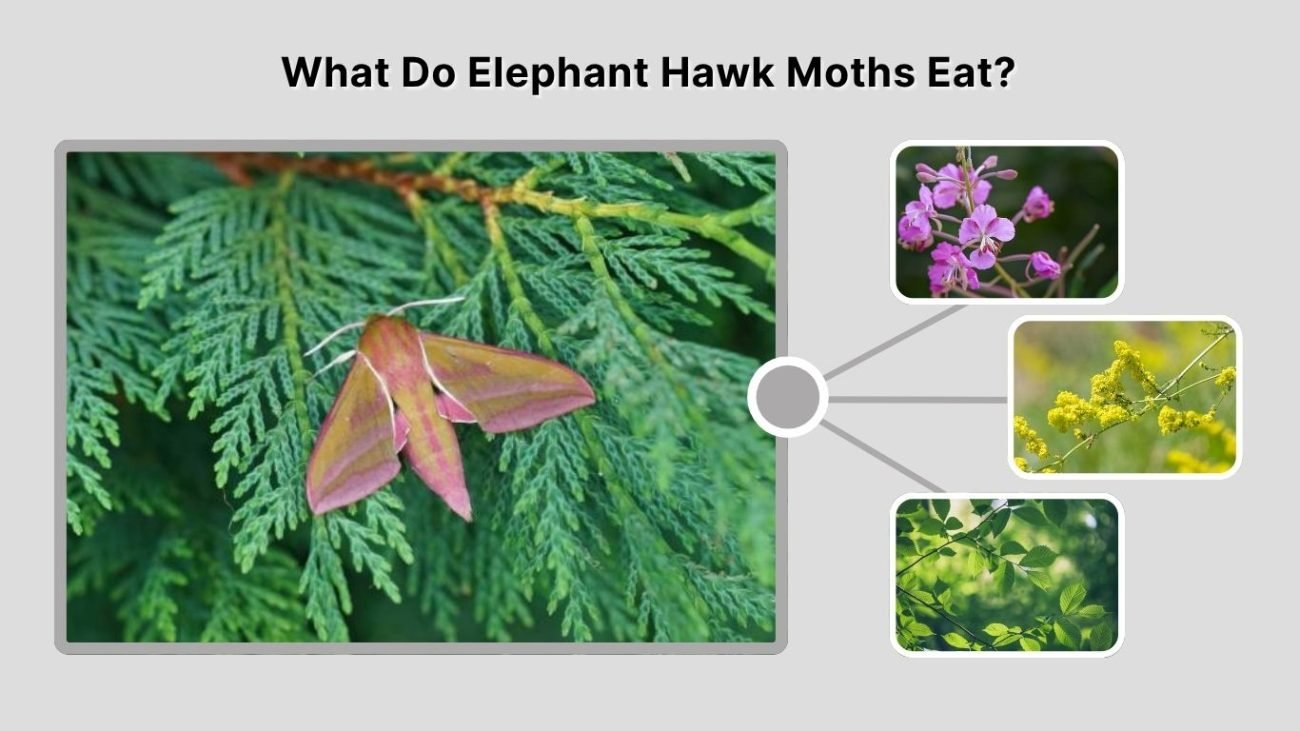
During the larval stage, the elephant hawk moth caterpillar feeds primarily on plant leaves. Its favorite food sources include:
- Willowherb
- Bedstraw
These plants provide the nutrients needed for rapid growth before pupation.
Adult Diet
As an adult, the elephant hawk moth switches to a liquid diet.
It feeds on:
- Nectar from flowers such as honeysuckle and fuchsia
Using its long proboscis, the moth can reach deep into flowers, making it an effective pollinator.
Behavior and Interesting Facts
The elephant hawk moth displays several fascinating behaviors that make it unique among insects.
- Nocturnal lifestyle: It is most active during the evening and night
- Hovering ability: Like a hummingbird, it can hover while feeding
- Strong flyer: It can travel relatively long distances in search of food
- Attracted to light: Often seen near artificial lights at night
These traits make it both efficient in feeding and easy to observe under the right conditions.
Is the Elephant Hawk Moth Rare?
The elephant hawk moth is generally not considered rare. In many regions, especially in the UK and parts of Europe, it is quite common.
However, its visibility can vary depending on:
- Local habitat conditions
- Availability of host plants
- Seasonal changes
While not endangered, maintaining natural habitats is important for sustaining its population.
Elephant Hawk Moth Symbolism and Meaning
Beyond its biological interest, the elephant hawk moth is sometimes associated with symbolic meanings.
Common interpretations include:
- Transformation: Due to its metamorphosis
- Adaptation: Its unique defense mechanisms
- Beauty in nature: Its striking coloration
These symbolic meanings often make it a subject of fascination in art and culture.
How to Identify an Elephant Hawk Moth
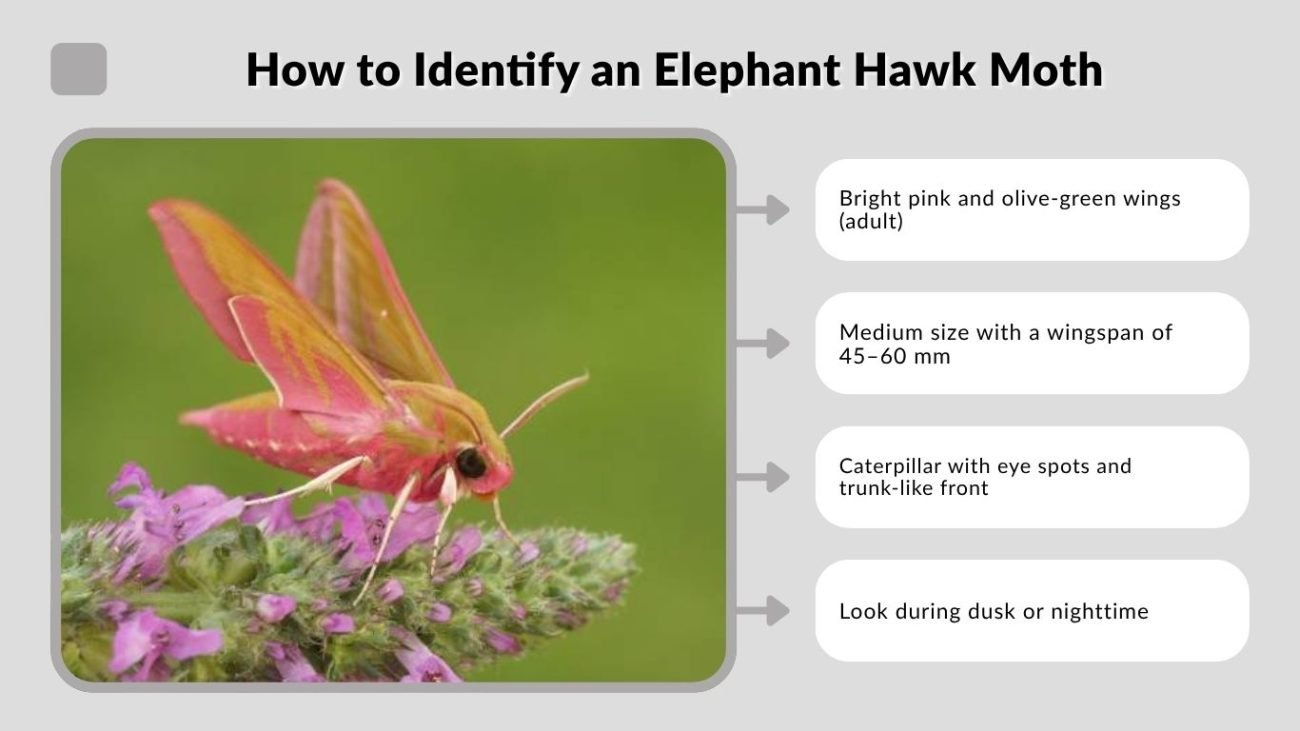
Identifying this moth is relatively easy once you know what to look for.
Key identification features:
- Bright pink and olive-green wings (adult)
- Medium size with a wingspan of 45–60 mm
- Caterpillar with eye spots and trunk-like front
To spot one in the wild:
- Look during dusk or nighttime
- Check near flowering plants
- Search for caterpillars on willowherb or bedstraw
FAQs
1. What makes the elephant hawk moth unique?
The elephant hawk moth is unique for its bright pink and olive-green wings and its caterpillar, which has a trunk-like feature resembling an elephant. It also uses eye spots to mimic a snake and scare predators.
2. Where can you find the elephant hawk moth?
It is commonly found across the UK, Europe, and parts of Asia. It lives in gardens, woodlands, grasslands, and areas where host plants like willowherb grow.
3. What does the elephant hawk moth caterpillar eat?
The caterpillar mainly feeds on plants such as willowherb and bedstraw. These plants provide the nutrients needed for growth before it becomes a moth.
4. When are elephant hawk moths most active?
They are nocturnal insects, meaning they are most active during the evening and night, especially in late spring and summer.
5. Is the elephant hawk moth dangerous?
No, the elephant hawk moth is completely harmless to humans. It does not bite, sting, or pose any threat.
Conclusion
The elephant hawk moth is a remarkable insect that captures attention with its vivid colors and unusual caterpillar form. From its unique defense strategies to its role as a pollinator, it plays an important part in the ecosystem. Whether spotted in a garden or studied up close, this moth offers a perfect example of nature’s creativity and adaptability, making it a favorite among both beginners and experienced wildlife enthusiasts.