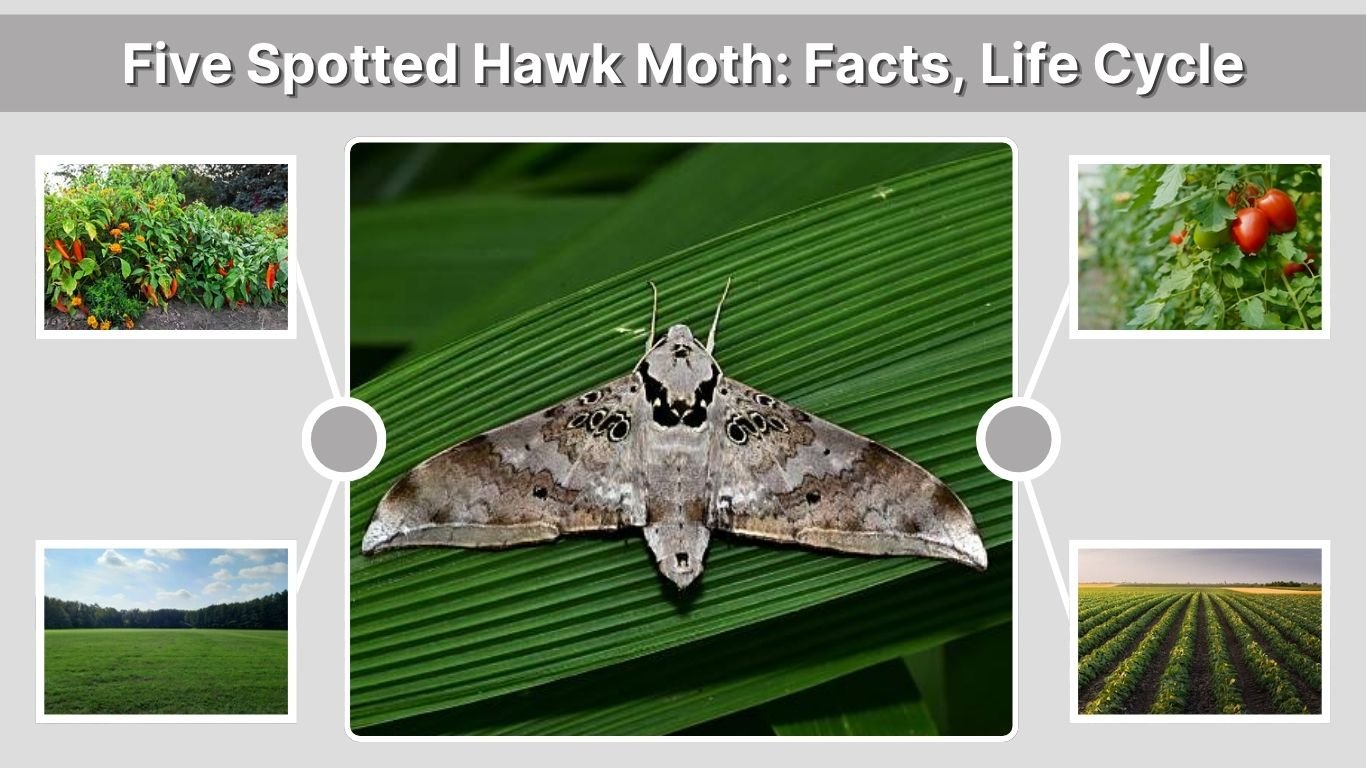
The five spotted hawk moth is a fascinating yet often misunderstood insect, best known as the adult form of the tomato hornworm—a common garden pest. With its large size, strong flight, and subtle gray markings, this moth plays both a destructive and beneficial role in nature. While its caterpillar stage can damage crops, the adult moth contributes to pollination, making it an important part of the ecosystem.
What Is the Five Spotted Hawk Moth?
The five spotted hawk moth (Manduca quinquemaculata) is a large moth species belonging to the Sphingidae family, commonly known as hawk moths or sphinx moths. These moths are known for their powerful flight and ability to hover like hummingbirds.
This species is native to North America and is especially common in:
- The United States
- Southern Canada
- Parts of Mexico
It is widely recognized because its larval stage—the tomato hornworm—is frequently found on garden plants. Despite its reputation as a pest in its early life, the adult moth plays a beneficial role as a pollinator.
Why Is It Called the Five Spotted Hawk Moth?
The name “five spotted hawk moth” comes from the distinctive markings on the adult moth’s abdomen. It has five pairs of yellow or orange spots along the sides, which are a key identifying feature.
The term “hawk moth” refers to:
- Its strong, fast flight
- Its ability to hover while feeding
This species is closely associated with the tomato hornworm, which is simply the caterpillar stage of the same insect. Many people are surprised to learn that the destructive green caterpillar eventually transforms into a large and important pollinating moth.
Physical Appearance and Size
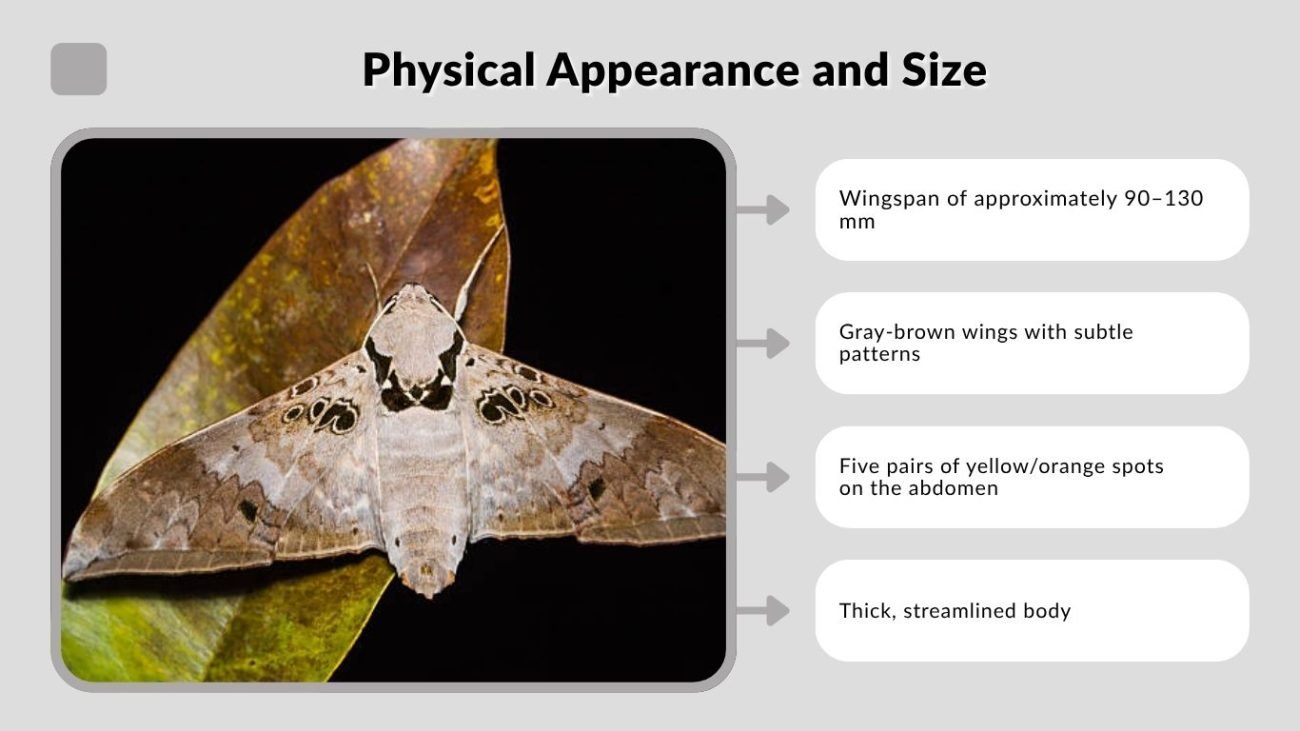
Adult Moth
The adult five spotted hawk moth is large and robust, with a body built for strong flight.
Key features include:
- Wingspan of approximately 90–130 mm
- Gray-brown wings with subtle patterns
- Five pairs of yellow/orange spots on the abdomen
- Thick, streamlined body
Its muted coloration helps it blend into tree bark and other natural surfaces during the day when it rests.
Caterpillar (Tomato Hornworm)
The caterpillar stage, known as the tomato hornworm, is much more noticeable and often causes concern for gardeners.
It typically has:
- Bright green body
- White diagonal stripes along the sides
- A curved horn at the rear end
- Large size, sometimes reaching up to 10 cm
This stage is when the insect feeds heavily and grows rapidly, often stripping leaves from tomato plants.
Life Cycle of the Five-Spotted Hawk Moth
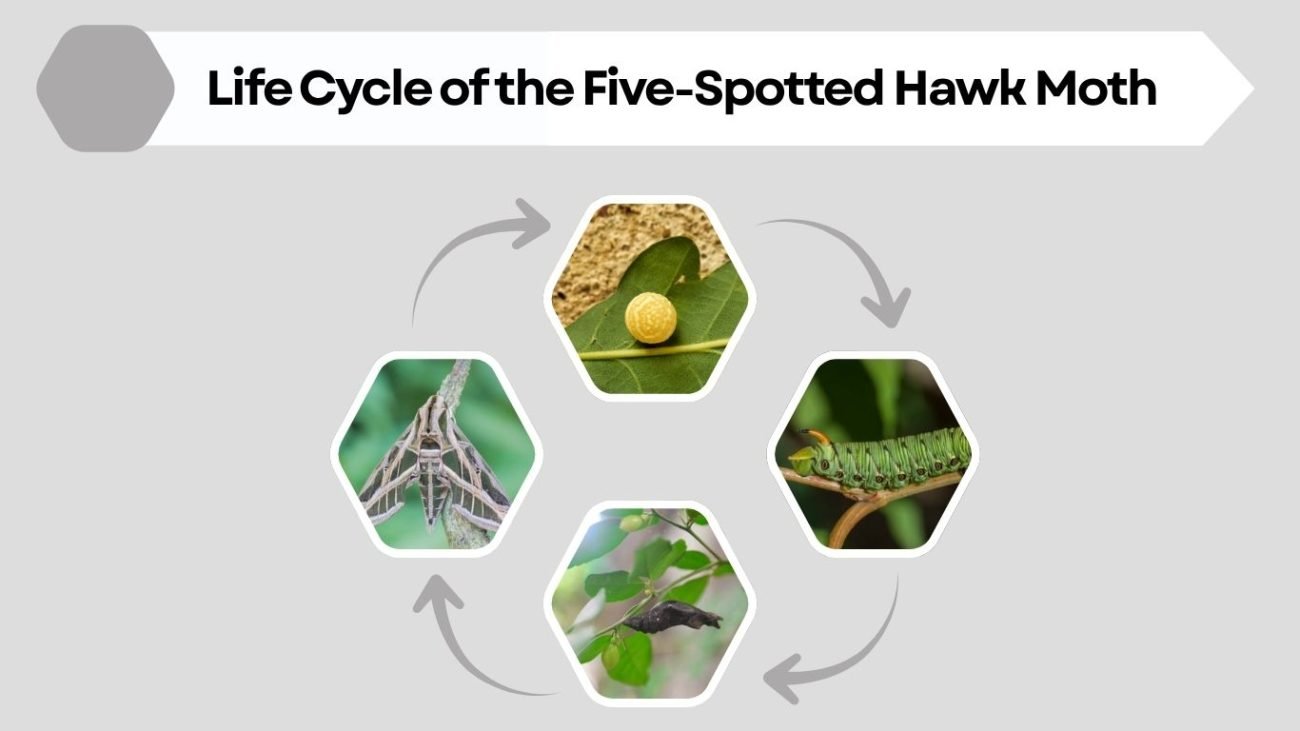
Like all moths, the five spotted hawk moth undergoes complete metamorphosis, consisting of four stages.
Egg Stage
Female moths lay small, round eggs on the leaves of host plants, especially tomato plants. These eggs are usually placed on the underside of leaves for protection.
Larva (Tomato Hornworm)
After hatching, the caterpillar begins feeding immediately. This is the most active and destructive stage.
During this phase:
- It consumes large amounts of plant material
- It grows quickly and molts several times
- It becomes one of the most recognizable garden pests
Pupa
Once fully grown, the caterpillar burrows into the soil to pupate. Inside the pupa, it undergoes transformation into an adult moth.
This stage can last:
- Several weeks, depending on temperature and environmental conditions
Adult Stage
The adult moth emerges from the soil and begins its short but important life.
Adults are:
- Nocturnal and active at night
- Strong fliers capable of hovering
- Focused on feeding and reproduction
Habitat and Distribution
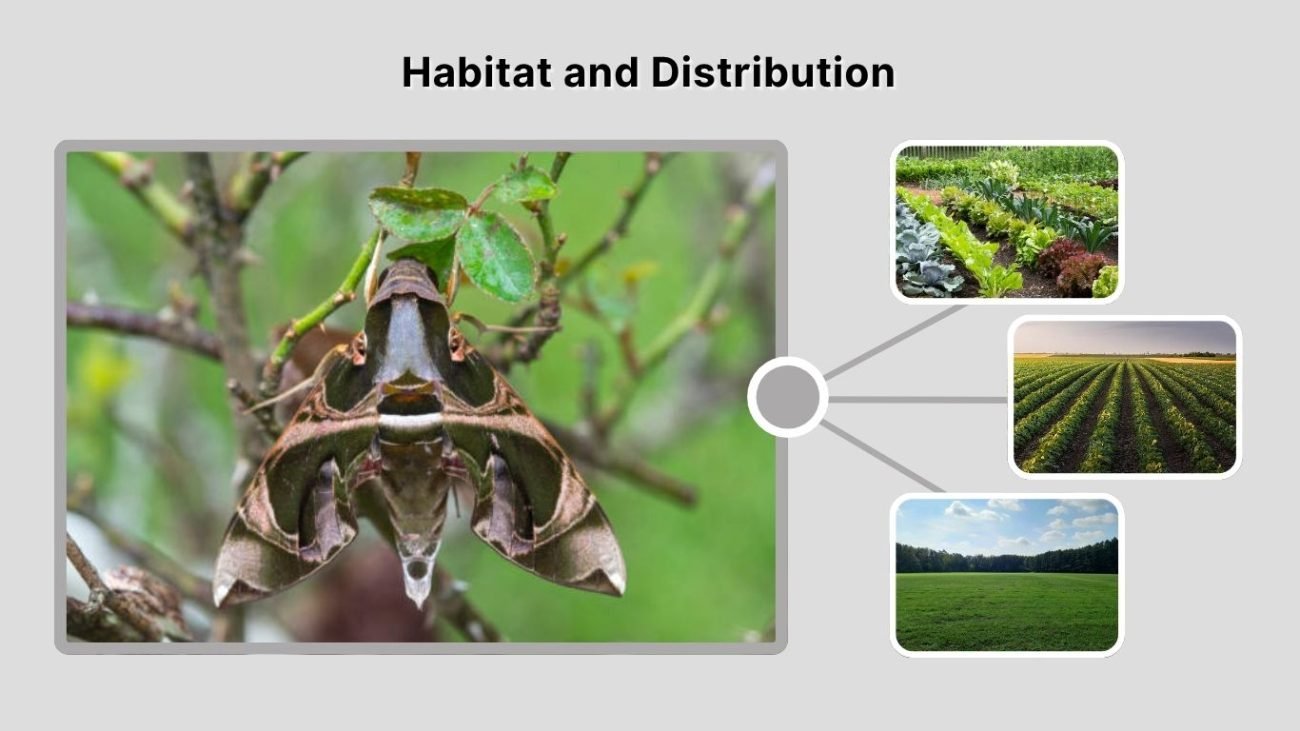
The five-spotted hawkmoth is widely distributed across North America, particularly in areas where its host plants grow.
It is commonly found in:
- Vegetable gardens
- Agricultural fields
- Open landscapes
This species thrives in warm climates but can also adapt to temperate regions during the growing season. Its presence is closely tied to crops like tomatoes, potatoes, and other nightshade plants.
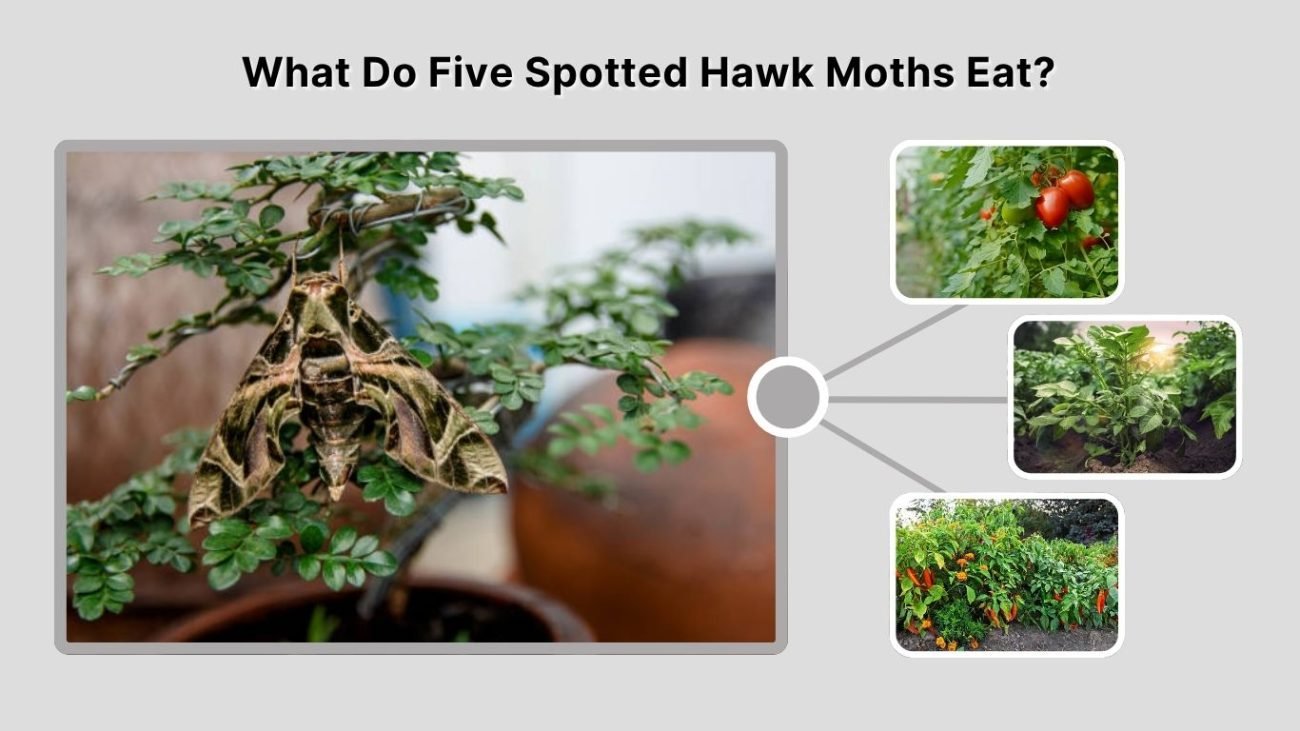
What Do Five Spotted Hawk Moths Eat?
Caterpillar Diet
During the larval stage, the tomato hornworm feeds heavily on plants in the nightshade family (Solanaceae). This is the stage when it is most destructive.
Common food sources include:
- Tomato plants
- Potato plants
- Pepper plants
- Eggplant
The caterpillar can quickly defoliate plants, which is why it is considered a major garden pest. Its green color helps it blend in with leaves, making it difficult to spot.
Adult Diet
As an adult, the five spotted hawk moth switches to a completely different diet.
It feeds on:
- Nectar from flowers
- Night-blooming plants
Using its long proboscis, the moth can hover and feed like a hummingbird. During this process, it also acts as a pollinator, helping plants reproduce.
Is the Tomato Hornworm Harmful?
The tomato hornworm is considered harmful primarily during its caterpillar stage.
It can:
- Strip leaves from tomato plants
- Damage fruits
- Reduce crop yield
Signs of infestation include:
- Missing leaves
- Dark droppings (frass) on lower leaves
- Large green caterpillars on stems
However, natural control methods exist, such as:
- Handpicking caterpillars
- Encouraging beneficial insects like parasitic wasps
Despite its pest status, it is still an important part of the ecosystem.
Behavior and Interesting Facts
The five spotted hawk moth has several interesting traits that make it stand out.
- Nocturnal activity: Active mainly at night
- Hovering flight: Feeds while hovering like a hummingbird
- Strong flier: Can travel long distances
- Camouflage: Blends in during the day to avoid predators
As an adult, it plays a beneficial role by pollinating flowers, balancing its earlier impact as a pest.
How to Identify a Five Spotted Hawk Moth
Identifying this moth is relatively easy if you know the key features.
Look for:
- Five pairs of yellow/orange spots on the abdomen
- Large size and thick body
- Gray-brown wings with subtle markings
It is often confused with similar species, but the number and arrangement of spots help distinguish it.
Five Spotted Hawk Moth vs Tomato Hornworm
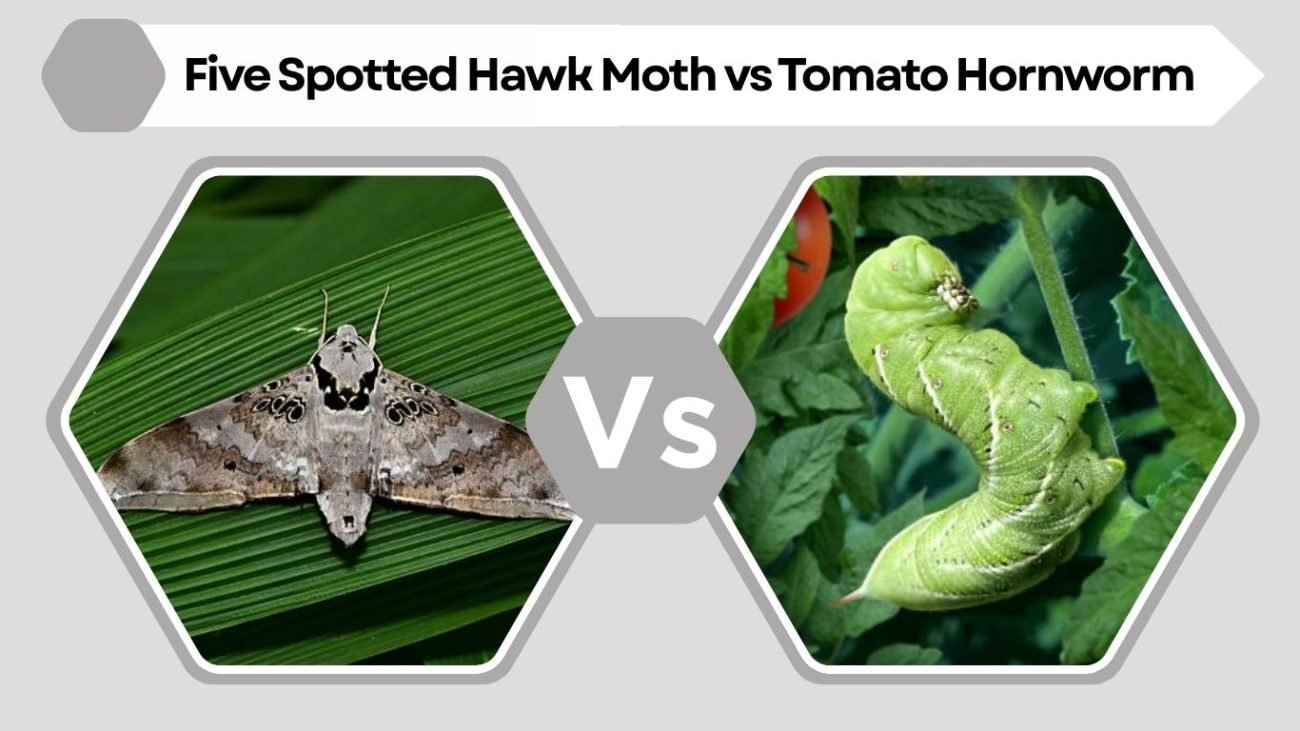
Many people think these are two different insects, but they are actually the same species at different life stages.
- Tomato hornworm: Caterpillar stage (plant-eating, destructive)
- Five spotted hawk moth: Adult stage (nectar-feeding, pollinating)
This transformation highlights the importance of understanding the full life cycle before labeling an insect as purely harmful or beneficial.
FAQs
Are five spotted hawk moths harmful to humans?
No, they are completely harmless and do not bite or sting.
How do you get rid of tomato hornworms?
You can remove them by hand or encourage natural predators like parasitic wasps.
What do adult five spotted hawk moths do?
They feed on nectar and help pollinate flowers.
How long does a five spotted hawk moth live?
The full life cycle lasts several months, but the adult moth lives only a few weeks.
Are they beneficial or pests?
They are both—pests as caterpillars and beneficial pollinators as adults.
Conclusion
The five spotted hawk moth is a perfect example of how one species can play multiple roles in nature. While its caterpillar stage, the tomato hornworm, can be damaging to crops, the adult moth contributes positively through pollination. Understanding its life cycle helps gardeners and nature enthusiasts see beyond its pest reputation and appreciate its ecological importance.